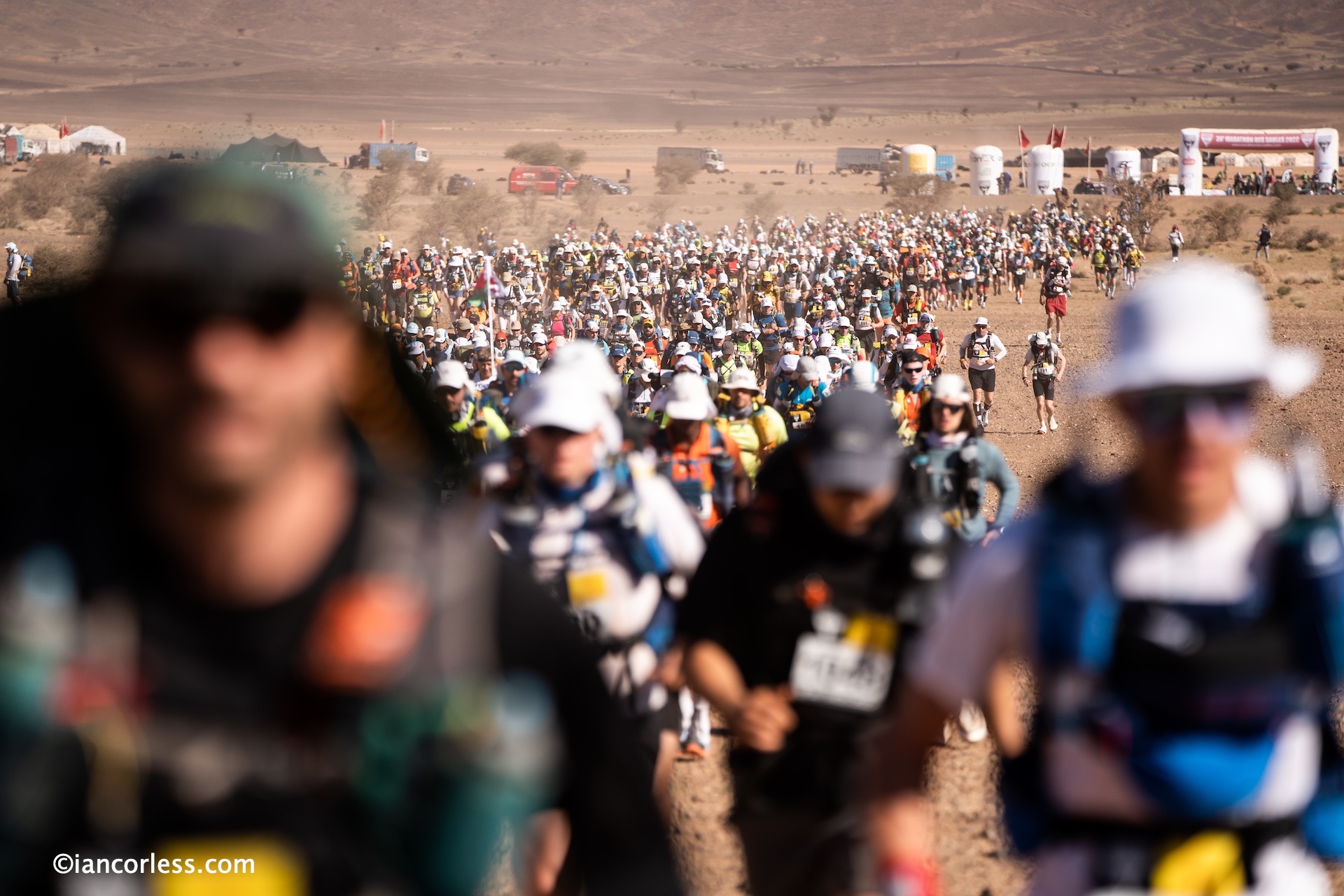
Arrival in to the Sahara for many was harsh, with strong and relentless sand storm lasting several hours, gladly they subsided for Patrick Bauer’s welcome to the desert.
Saturday, is admin day. Each runner passes through protocols of equipment checks, health checks, bib collection and once dinner has been completed, self-sufficiency begins.
It has been a good first day with a great deal of apprehension, positivity, excitement and of course, an urge to ‘get underway!’
Stage 1 covering 36km with 2 aid stations is split in to 3 distinct sections. The early section is flat with a passing through Jebel Mech Irdane followed by soft-sand and Oued Rheris. Cp1 is followed by harde, faster terrain and small rolling hills that leads to dunettes and the arrival of Cp2. From here in, the running is good and fast to complete a potentially challenging first day of the 2023 MDS.
The 2023 MARATHON DES SABLES draws near and as usual, here is a preview of the coming edition. We will look at the top contenders for the male and female podiums, provide an overview of MDS history and look at some crazy statistics.
Since 1986, well over 22,000 participants have raced at the Marathon des Sables and we have record (or close to record) for 2023, with1200+/- toeing the line. As per usual, the race is multi-national with over 50 represented. The French and British providing the largest contingent.
THE TOP MEN AND WOMEN
Rachid El Morabity returns looking for his 10th victory, all eyes will be on him, but he is in for a fight! 2019 female champion, Ragna Debats returns and is without doubt the hot favourite for the top of the women’s podium.
THE WOMEN RACE
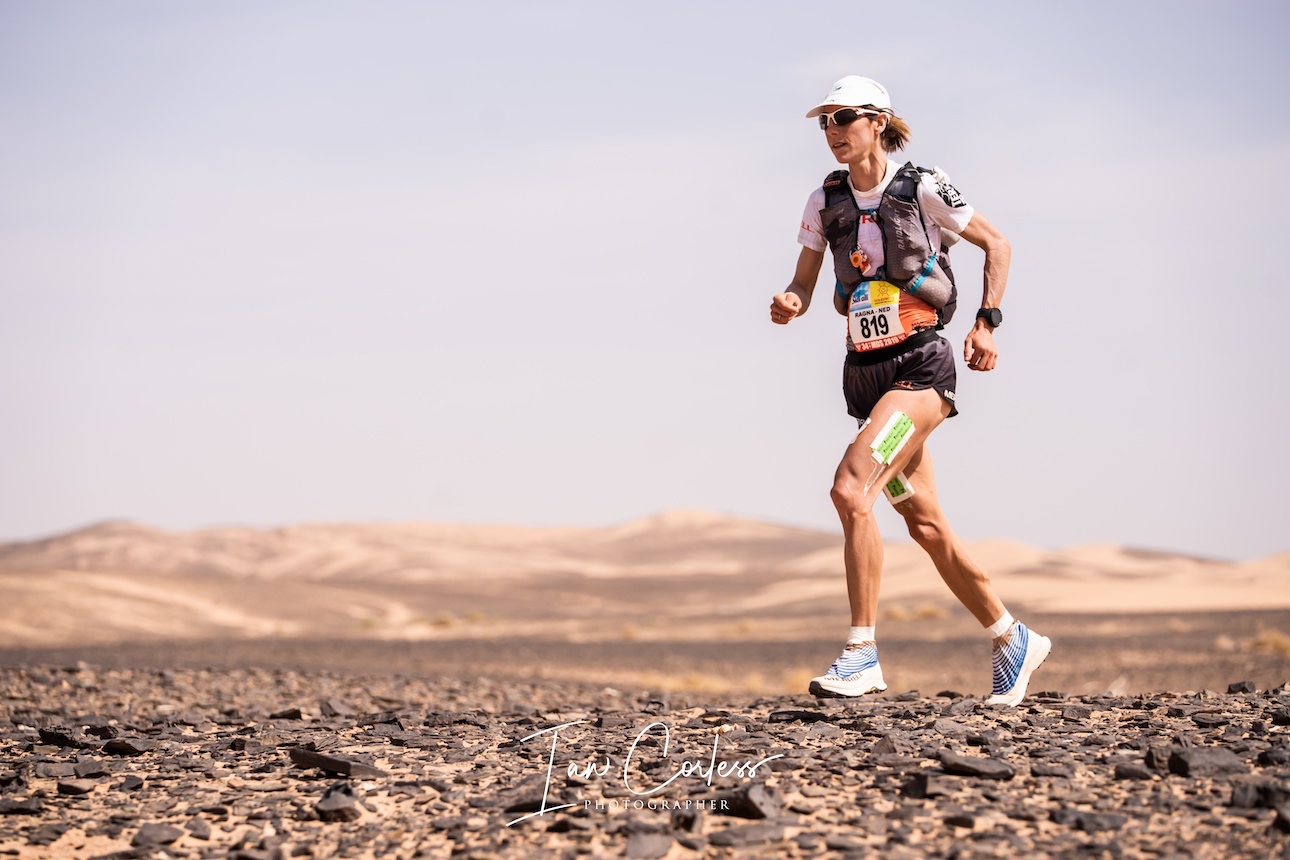
Ragna Debats
Ragna Debats dominated the race in 2019 and in recent years has become one of the top trail, ultra and skyrunner’s in the world. When in form, she is incredibly difficult to beat. In 2022 she had an incredible season with four top victories, Transgrancanaria 129km, Istria by UTMB, Montreux Trail Festival and the 100m Nice Côte d’Azur by UTMB. Ragna has had a relatively quiet start to 2023 and recently she has changed her coach of 13-years. She will be meticulously prepared for MDS 2023.
Gemma Game
Gemma Game from the UK has been on the podium of MDS twice, 2018 and 2019, on both occasions placing 3. Gemma most definitely can win MDS but, as she will tell you, she runs for fun and MDS is an escape from a very busy and hectic life with a high-powered job and family. Is she wants to, she will be on the podium again in 2023.
Manuela Socco from Belgium is not a runner I am very aware of; however, two results stand out, victory at Cappadocia Medium Trail in 2019 and Tarawera 100km in 2020. She has also represented Belgium at the Olympic Games in the marathon distance. With a 35min 10km, a 1:16 half marathon and a 2:37 marathon, she has all the running fire power to create a stir in the Sahara.
Maryline Nakache from France has a string of top results, she often wins! However, stand-out markers come from Templiers (3rd) 90km du Mont-Blanc (3rd), CCC (5th) Transgrancanaira Advanced (1st), Tenerife Blue Trail (1st), UTMB (6th) and in 2022 alone she was never out of the top-5.
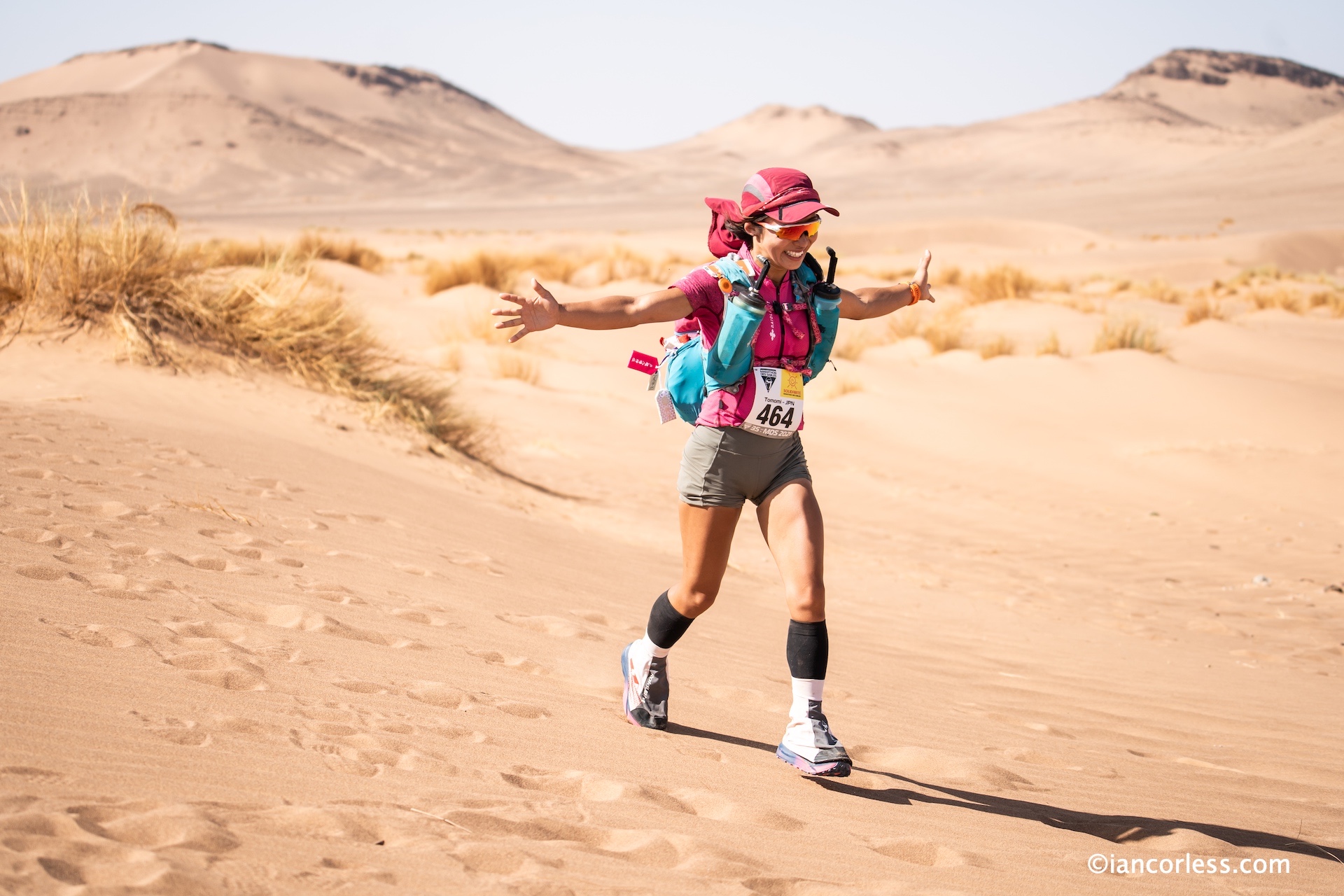
Tomomi Bitoh
Tomomi Bitoh from Japan was 3 in the 2021 MDS and has recently participated in The Coastal Challenge in Costa Rica. She is an incredible personality, a fierce competitor and although the podium is a possibility in 2023, I feel that she will just be outside the top ranking.
Elise DELANNOY (France) was 18th in the 2016 MDS in 38-hours. This is a long way off the pace required to podium in 2023… But a great deal has happened since then, notably a 7th place at UTMB in 2019, so, Elise cannot be ruled out of shaking up the front of the race.
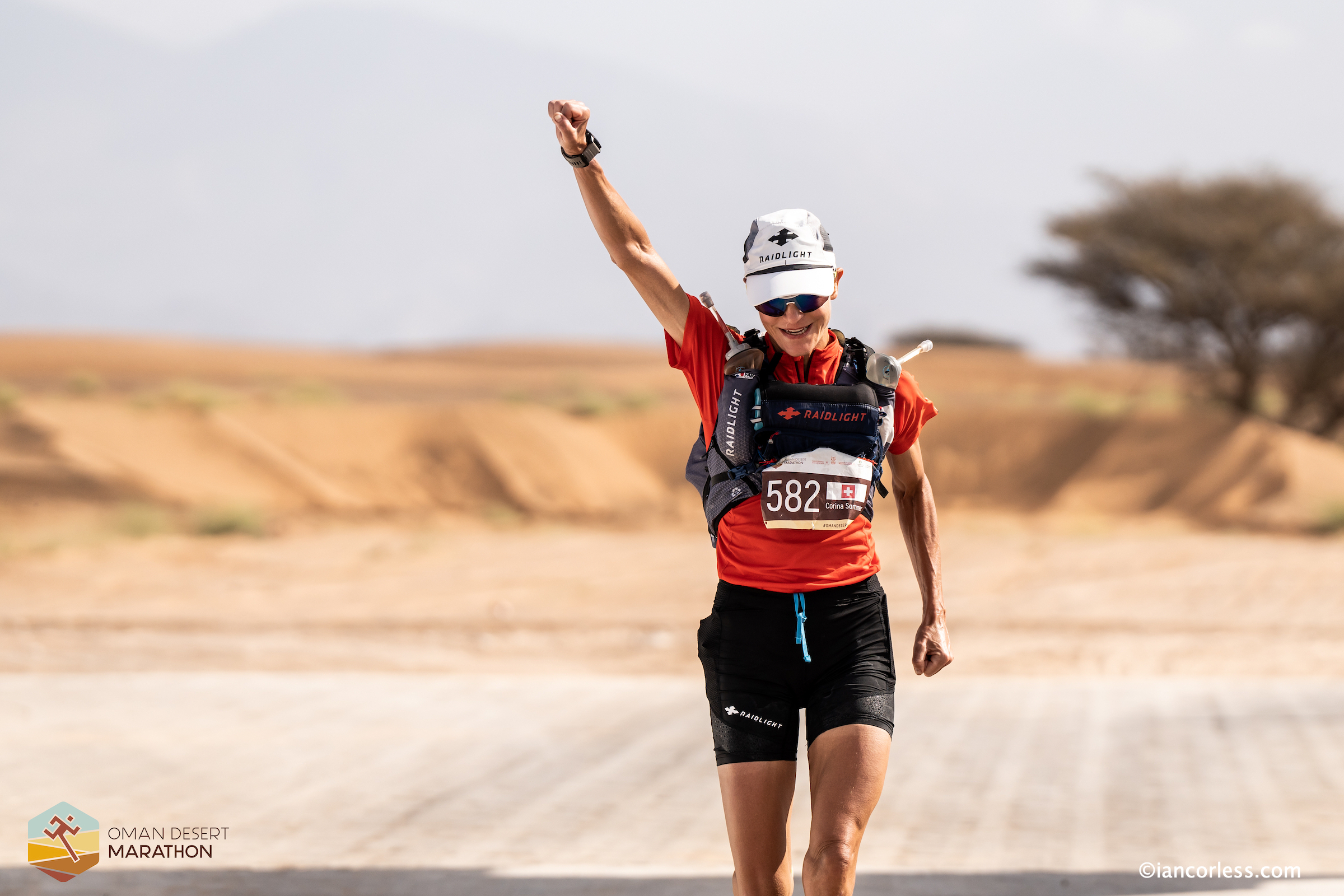
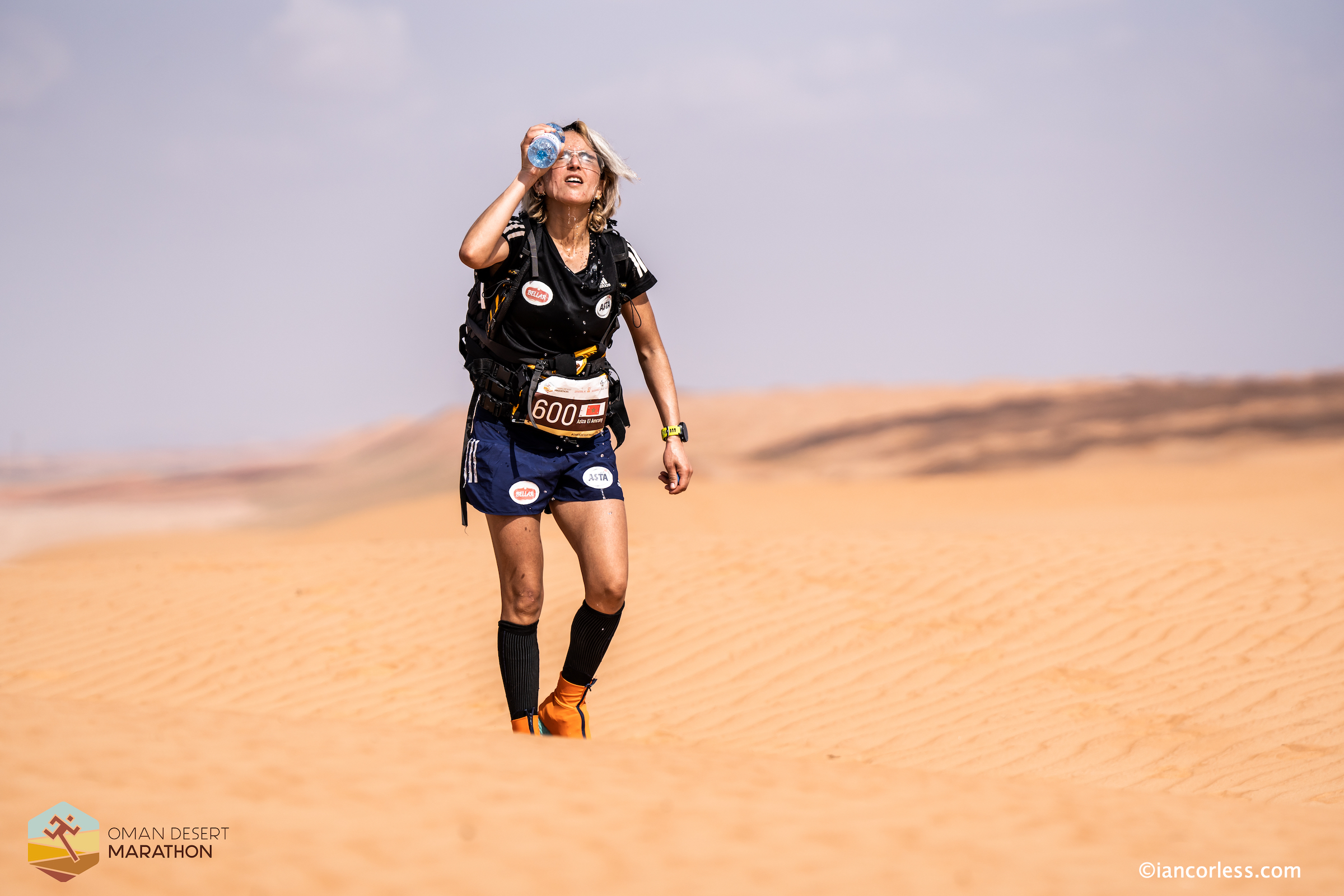
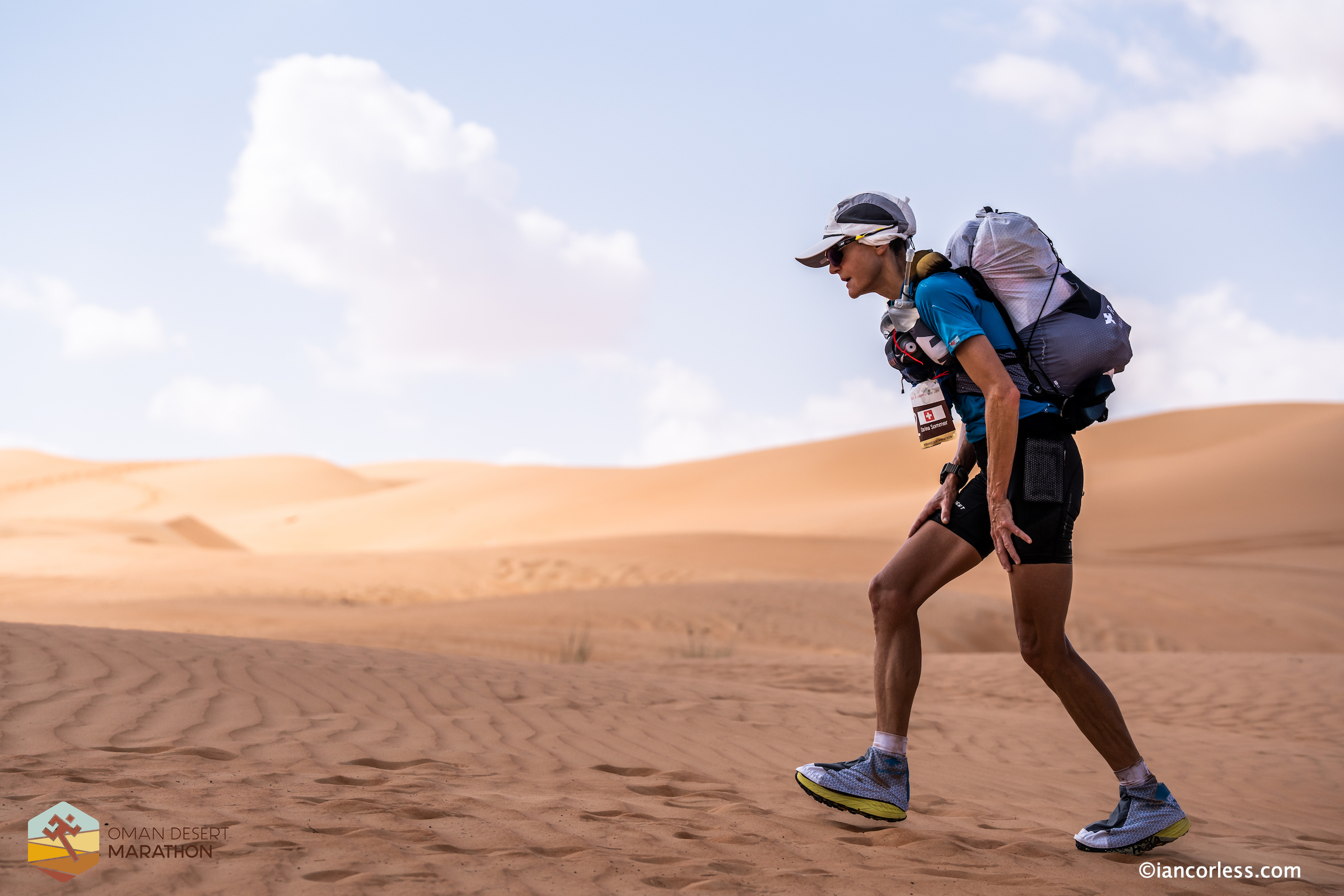
Corina Sommer from Zurich recently won the Oman Desert Marathon against Aziz Raji (past MDS champ) and Aziza El Amrany who had led the race only to have Corina run two incredibly strong days and take the victory. New to trail, she placed 18th at Templiers and 3rd at Istria by UTMB for the 68km. She will need a great week to make the podium, but it’s a distinct possibility.
Jodie Moss from the UK was 8th at MDS in 2019 and has been preparing meticulously for the 2023 edition. However, recent injury issues placed the race in question, but it looks like she will be in the Sahara, hopefully in great shape.
Ester Alves won The Coastal Challenge in 2016 and placed 3rd in 2017. She also raced MDS in 2017 but the race did not go to plan… In recent years, she has had time away from the sport, but last year, Ester raced Everest Trail Race which will have no doubt provided some great momentum for the Sahara.
Maria Semerjian has results going back to 2009 and without doubt, she enjoys the tough mountain courses, UTMB, Raid de la Reunion, Grand Raid Pyrenees, UTMF, and more… The distance won’t be a problem, however, the speed to make the top-5 may well be the problem.
Brunhilde Girardet recently won Trail de Cité de Pierres as a warmup for MDS. It’s her first edition, so, let’s see…
Wild card – Katie Young from the UK.
Laurence Klein returns, she has won MDS three times, with no disrespect to the Queen of the desert, there is no chance of victory in 2023, but she will no doubt bring colour to the race.
Currently, Aziz Raji and Aziza El Amrany are NOT on the start list, but I hope they do make it to the 2023 edition. It’s important that Morocco has female representation and of course, both of them have great potential for the top 5. Raji has won the race and El Amrany was 3rd in 2022.
THE MEN RACE
The men’s race is extremely notable in 2023 as Rachid El Morabity will look for a 10th victory. This will without doubt add an extra dynamic to the race, particularly after the superb tactics which played out in the 2022 edition.
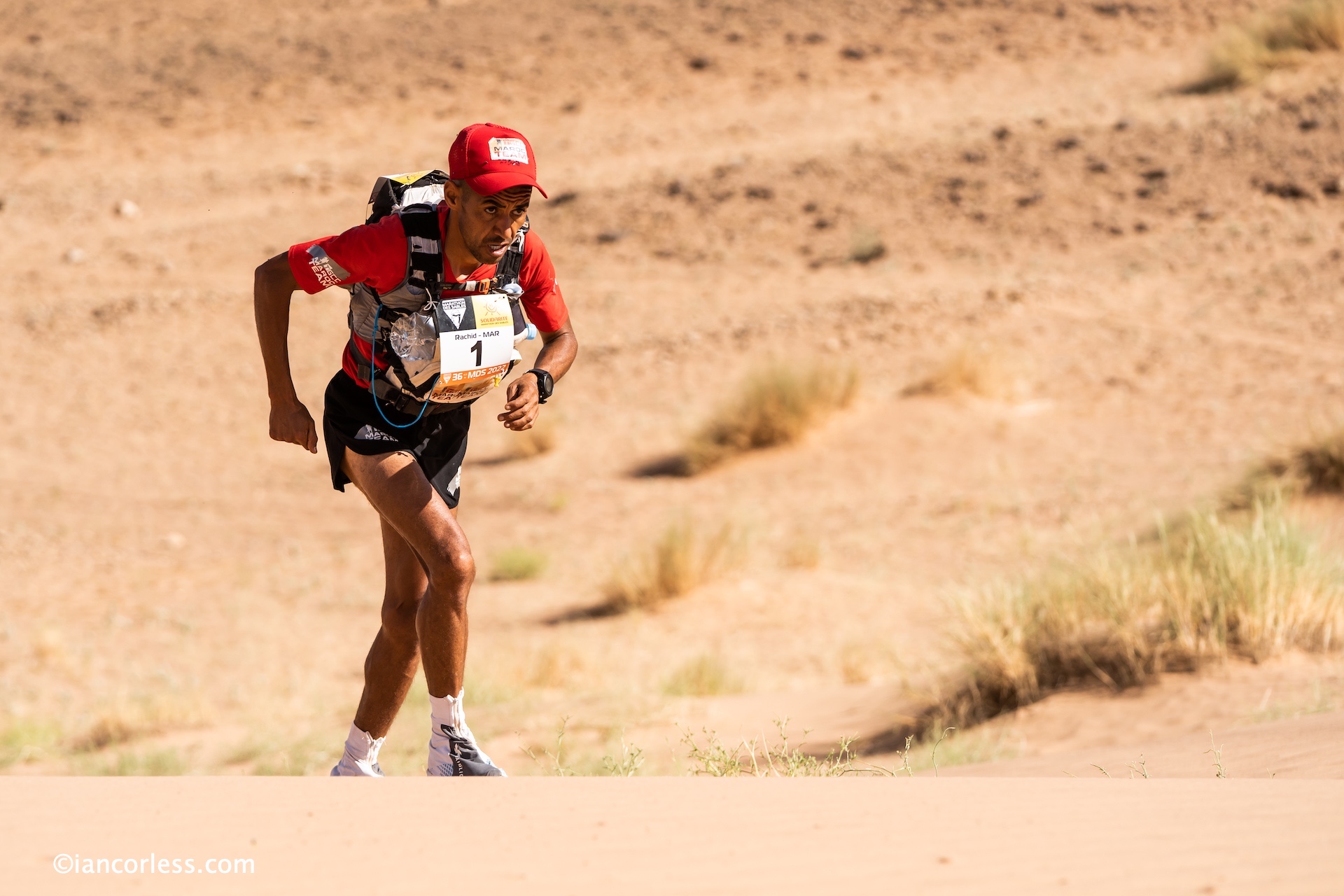
Rachid El Morabity
Rachid El Morabity is the boss of the Sahara and the hot favourite. BUT, I believe this year will be his toughest challenge. There are multiple reasons for this… Rachid has expectation on him, this is not really an issue, he can handle that. He has raced a great deal in the past 12-months, he may be tired? The Moroccan team is probably at its weakest, especially when compared to the past ten editions, so, the support network will be less. The competition, namely Mathieu Blanchard and Aziz Yachou are a serious threat. Will Rachid win? It is very hard to bet against him, but 2023 has the potential to be the upset year.
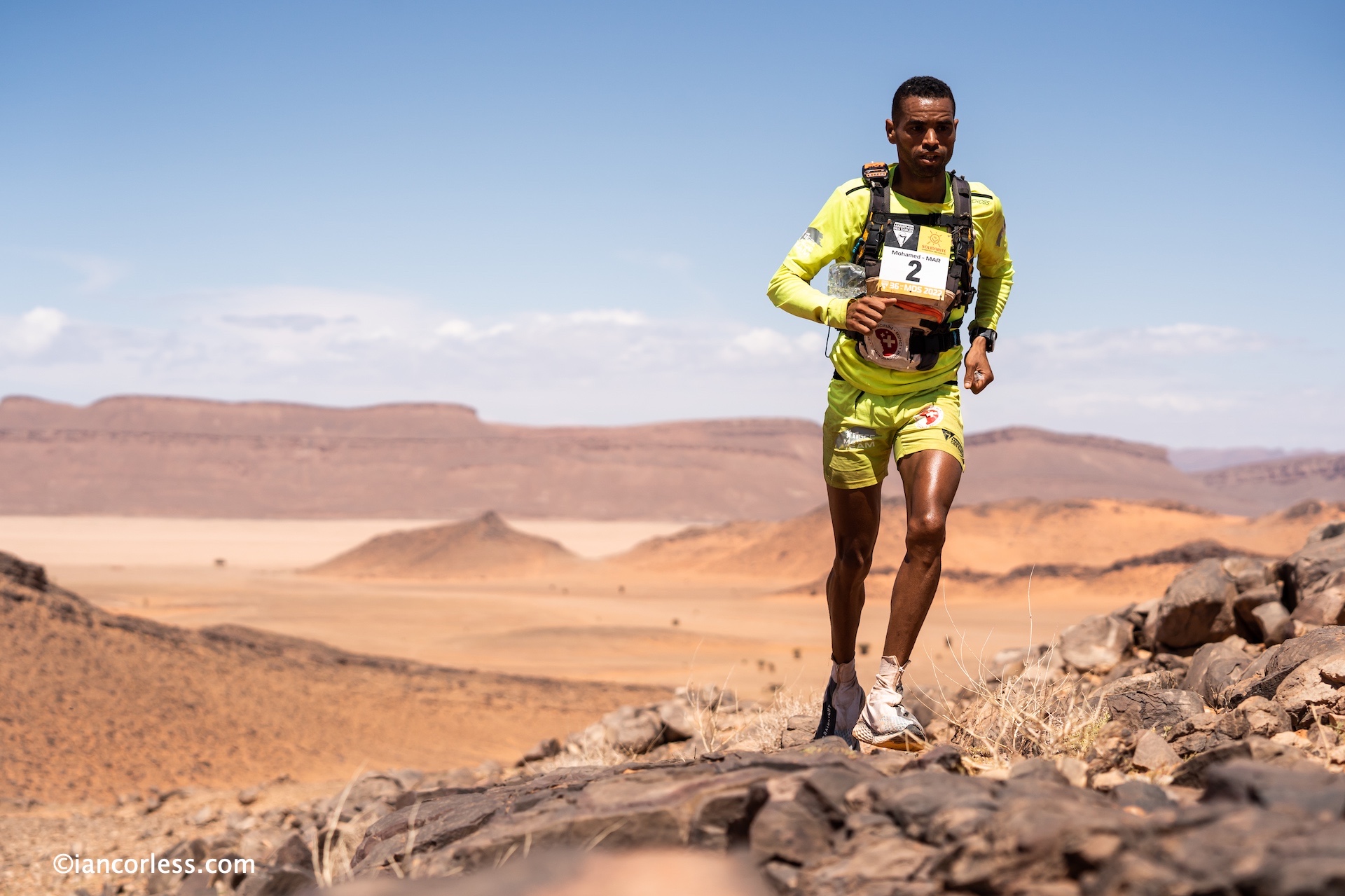
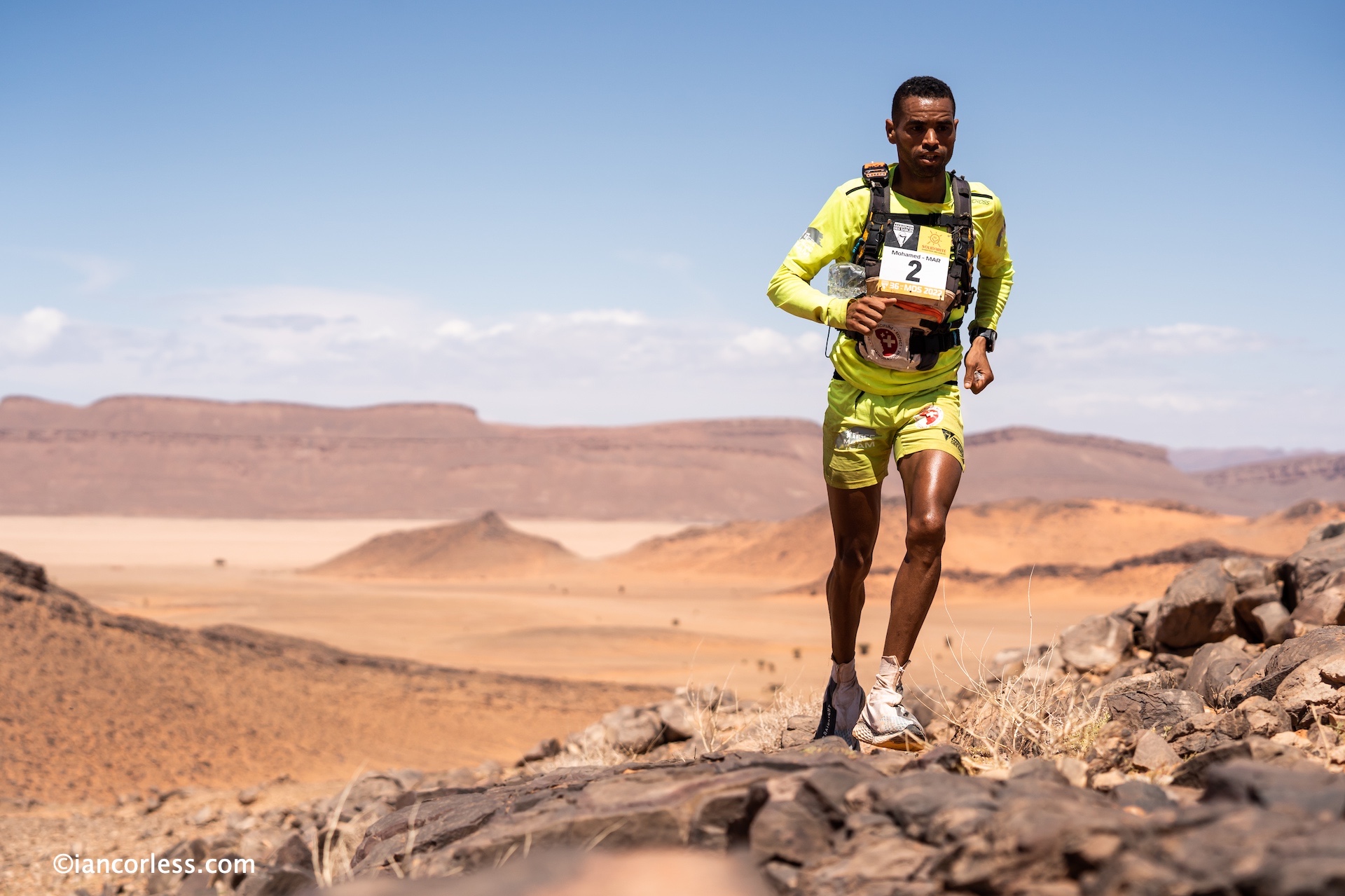
Mohamed El Morabity
Mohamed El Morabity is the eternal 2nd at MDS and his possibilities of victory in 2023 are zero if Rachid is in good form. The only opportunity for Mohamed is if Rachid falters and he gets the green light from his elder brother to attack. In Oman Desert Marathon earlier in the year, Mohamed took victory ahead of Rachid, don’t be fooled in to thinking Mohamed was stronger, he was gifted the win as credit for April and the 2023 MDS. Mohamed can win the race, but just as we saw in 2022, he will be the super domestique for Rachid.
Aziz Yachou
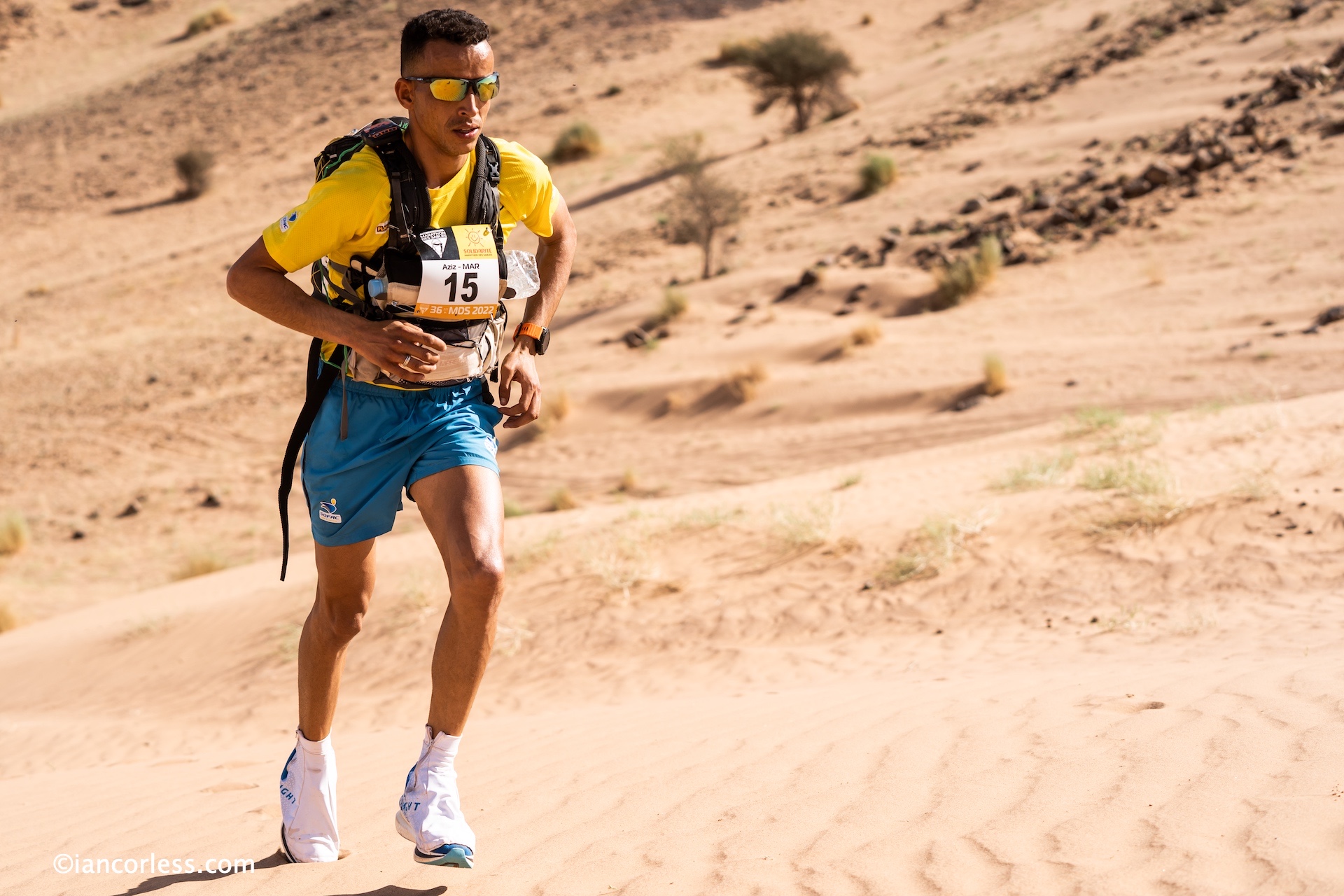
Aziz Yachou is the fly in the Moroccan ointment and 1-year on, has the potential to create fireworks and upset Rachid’s dream. He was 4th in 2021 and 3rd in 2022. Last year he was worked over by the tactics of Rachid and Mohamed, he will be prepared for that this year. Little is known about his training in the early part of 2023.
Mathieu Blanchard
Mathieu Blanchard raced MDS in 2021 and finished 5th – he was hit by the bug that swept through camp just in time for the long day. One thing is for sure, after placing 2nd at UTMB in 2022, we are looking at a different Mathieu. He raced The Coastal Challenge in February and placed 2nd, he recently summited Kilimanjaro and most recently ran a 2:22 marathon in Paris. Mathieu can win MDS and the French have put a team together to potentially make that happen. Beating the Moroccans on home soil (sand) is tough, but THIS may be the year.
David KILGORE from the USA has been top-10 at Leadville 100, and recently 7th at Tarawera 50km. On paper, he is not an MDS podium contender, but he will be in the mix for the top-5.
Erik Clavery adds more fire power to the French line-up. He was 5th at MDS in 2016 and a fierce competitor. He has raced UTMB, WSER, Eiger Ultra and even 24H championships, so, he brings something special to the MDS.
Vasily Kortytkin (Russia) comes to MDS with a history in 6H and 24H races, he has PB’s of 86.493 and 260.570 respectively. He has won some trail races in Russia in 2021 and 2022, how he performs in the Sahara is a big question.
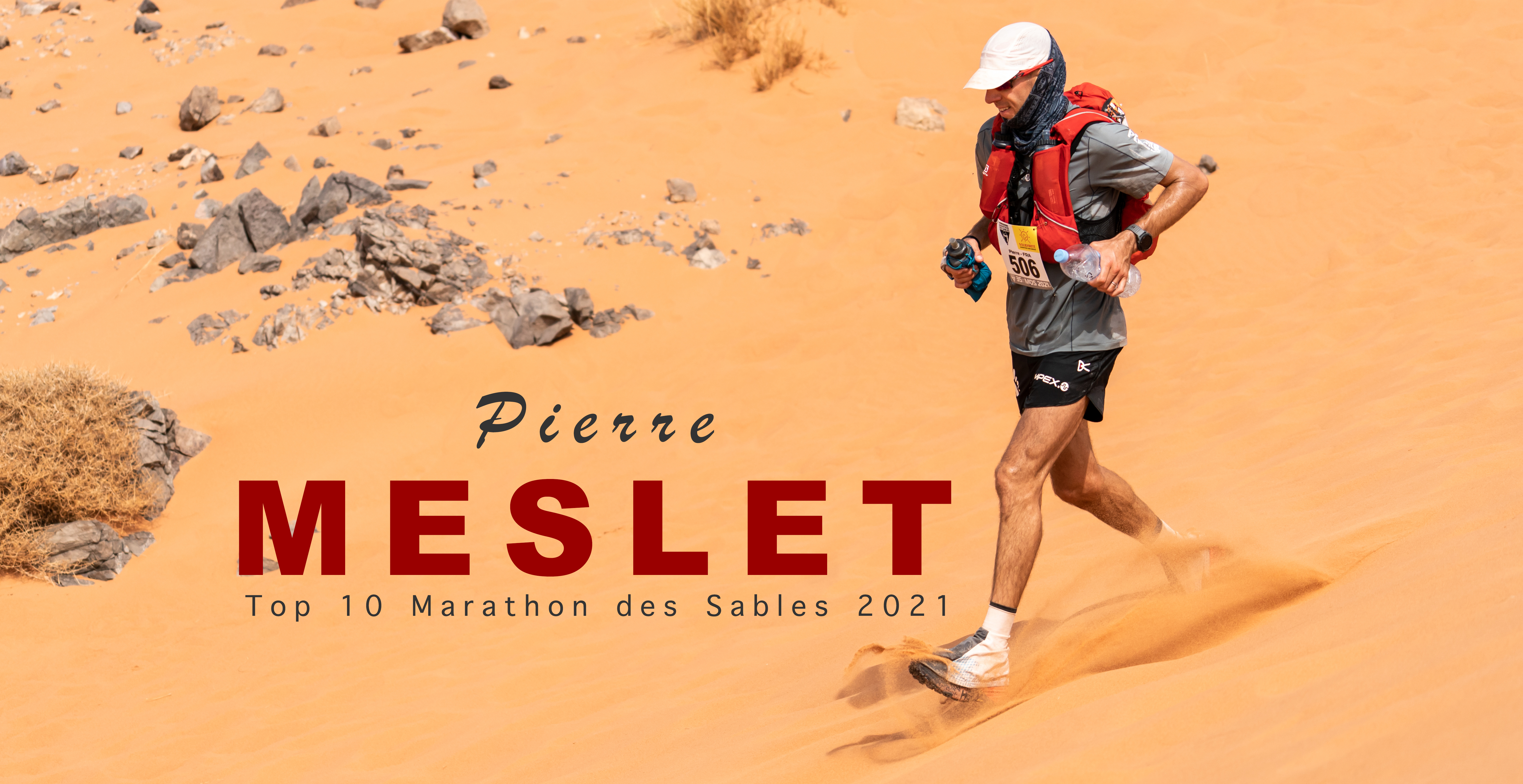
Pierre Meslet (France) placed 9th at MDS in 2021 and returns in 2023 not only to perform to the best of his ability (top-10) but to also help the French maybe win the race and also get the team prize.
Anton Samokhvalov also from Russia has been racing trail since 2014. He has a list of solid results but nothing spectacular, in 2021 he made 10th at Transgrancanaria Advanced.
Notable mentions:
Duncan Slater from the UK lost both legs during a mission in Afghanistan, he’s back this year for another medal!
Christian Ginter, dinosaur of the desert, returns for the 35th time!
Finally…
1150 runners will toe the line (1263 were registered) and the youngest runner is 16-year-old Girard Fialon (she will run with her father, Grégory) and the eldest, Henry Botha, 81!
Crazy Statistics of the MDS
“The logistics are a big headache, and we organize every detail in advance! We’re a village of 2,000 people that must be set up and dismantled every day. We need to be self-sufficient in energy, food, water, and fuel. As one of my friends says, ‘Let’s expect the worst because the best will never surprise us!’ We also benefit from the infallible support of the Royal Moroccan Army, which makes available about 25 6WD military trucks to transport all our equipment.” – Patrick Bauer
You must see Marathon des Sables to appreciate the size and scale of the event. It’s like the largest moving circus you will ever see and it’s impressive to witness.
Following statistics provided by the Marathon des Sables office:
▪ 150 volunteers to supervise the race,
▪ 450 general support staff,
▪ 120,000 liters of bottled mineral water,
▪ 300 Berber and Saharan tents,
▪ 120 all-terrain vehicles and trucks,
▪ 2 Squirrel helicopters and 1 Cessna plane,
▪ 8 Transavia ‘MDS special’ commercial planes,
▪ 30 buses,
▪ 4 dromedaries,
▪ 1 incinerator lorry for burning waste,
▪ 5 quad bikes to monitor race environment and safety,
▪ 14 km/hr.: average maximum speed, 3 km/hr.: average minimum speed,
▪ 15 years of age for the youngest competitor and the oldest, 83!
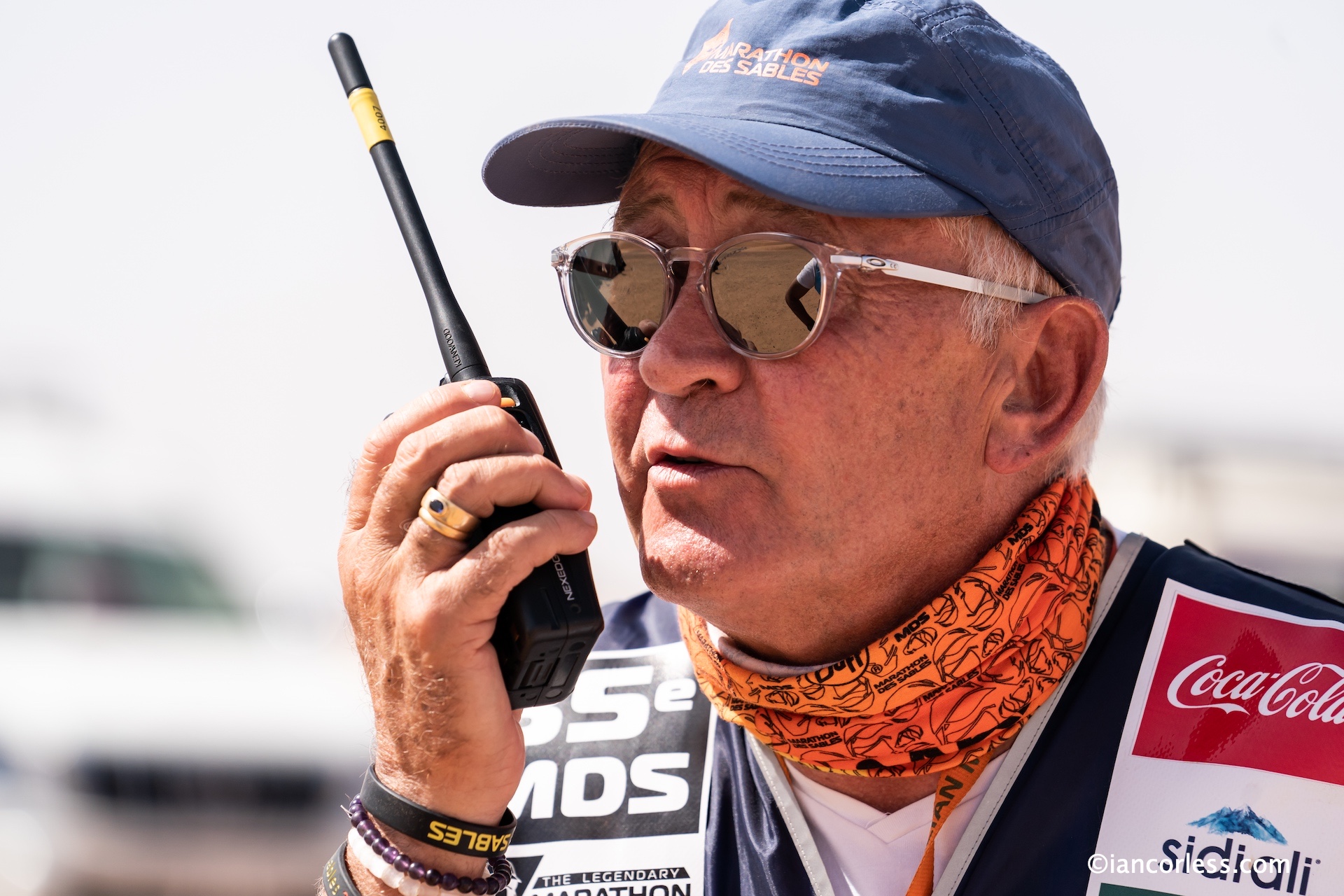
Patrick Bauer
A brief history of the MDS
1984: At 28 years of age, Patrick Bauer decided to make for the Sahara to try to traverse a 350km expanse of uninhabited desert, on foot, alone, where he wouldn’t come into contact with a single village, oasis or watering place. Totally self-sufficient, with a rucksack weighing 35kg and containing water and food, he set off on a journey that was to last 12 days. It was the starting point of what was to become the MARATHON DES SABLES.
1986: The creation of the first MDS in the Moroccan Sahara. The 23 pioneers who took the start never imagined that their footprints would mark the start of a legendary event, which has today become a must among the major adventure sport meets. The creation of a non-mechanical competition in the Moroccan sands offers adventure runners a wealth of new prospects.
1987: Creation of the MDS logo: the face of a runner covered by a keffiyeh, the eyes protected by a pair of sunglasses and the pipette from the runner’s water container clenched between the teeth.
1989: 170 competitors take the start of the race.
1991: The gulf drama puts the MDS at a disadvantage and the financial partners withdraw. Fortunately, some runners answer the call. For these competitors, the true victory lies in meeting athletes from different backgrounds and their communion in the desert around the same goal. Sport proves once again that it can bring people together and create bonds.
1992: One and the same regulation for everyone. This year sees the establishing of unexpected draconian tests, to ensure that each participant properly transports all his or her gear from one end of the course to the other. A 30-point charter is drawn up.
First participation by the Moroccan Lahcen Ahansal
1994: Arrival of the Doc Trotters at the event.
1995: 10th anniversary. Since the start, over 1,500 men and women have left their footprint and their passion in the desert. Installation of water-pump for the inhabitants of the village of Ighef n’rifi (South of Er-Rachidia) – an idea by competitor Gilles Flamant and backed by Rolland Barthes and Patrick Bauer. Its success is to be repeated.
1996: First participation by Mohamed, a younger sibling of Ahansal. The two Moroccan brothers set off together and rank 4th and 5th respectively.
1997: This year heralds the start of the Ahansal saga. Morocco is honored with Lahcen’s first victory. He beats his two pursuers by nearly 30 minutes, despite them being international long-distance running champions.
1999: A mobile hospital on the MDS comes into being. There are around thirty practitioners on the ground, with doctors and nurses joining the caravan. A dedicated helicopter and ten all-terrain vehicles track the competitors each day. On- board these vehicles there are doctors of course, as well as high-tech equipment. The village boasts a genuine field hospital.
2000: Internet appears in the large MDS village. The organization decides to broadcast the texts and photos of the race live, day after day. The competitors can communicate with their nearest and dearest and receive messages of encouragement.
2001: For the first time the long leg, traditionally called “The 70”, exceeds the 80km barrier to reach 82km. The threshold of 240km is also surpassed since the 16th MARATHON DES SABLES spans 243km. Another first relates to the fact that there are no Moroccans on the podium this year.
2002: This edition is punctuated by a sandstorm, involving headwinds, which lasts the entire week. The doctors invent a machine for ‘low pressure cleansing’ to rinse out the runners’ eyes. Despite the difficult conditions, there are few retirements to report as the wind considerably reduces the temperature.
2005: The Luxembourg runner Simone Kayser is the first woman to win 3 MARATHON DES SABLES. For this 20th edition, the total number of runners exceeds 700 for the first time, with no fewer than 777 runners taking the start.
2006: A drying wind and very high humidity levels cause damage to the runners’ bodies. Despite additional allocations of water, a whole series of retirements ensues. There are a total of 146 retirements ultimately, which equates to double that of the previous record… Race management decides to shorten the long leg by over 10km given how tired the runners seem.
2008: The Solidarité MDS association is created. The aim: to develop projects to assist children and disadvantaged populations in the domains of health, education, and sustainable development in Morocco.
2009: MDS is disrupted by flooding and the 1st and 6th stages are not able to take place. To avoid the flood zones, the organization is obliged to improvise new legs on a day-to-day basis. In this way, the edition goes down in legend for its 3rd leg, which is the longest ever contested: 92km of sand, loose stones, and rocks… The leg even sees the retirement of Lahcen Ahansal… At the prize giving the 2 winners admit to having competed in their hardest MDS. However, it was also the shortest: 202km.
2010: For its 25th edition, the number of participations reaches a record high of 1,013 participants. It is to be the longest MARATHON DES SABLES. It spans 250 kilometers with a course considered by former entrants to be the most difficult ever organized.
2012: A dramatic turn of events on the longest leg as the then leader in the overall standing, Rachid El Morabity (MAR) injures himself one kilometer from the finish. Medical examinations reveal a serious muscular lesion in the quadriceps. After over five years on the 2nd or 3rd step of the podium, Jordanian Salameh Al Aqra secures the title.
2013: 1,027 competitors on the start line make this a new participation record. New feature: a final “Charity” stage sponsored by UNICEF and traversing the Merzouga dunes round off the race. Sportswise, Mohamad Ahansal and Megan Hicks are the champions of the 231.5km event. On a human level, all of the finishers pull off their crazy bet.
2014: 2011 winner, Moroccan Rachid El Morabity (MAR) wins the overall ranking and takes Mohamad Ahansal’s crown. In the women’s category, another American stamps her mark, Nikki Kimball. The French revelation is one Michaël Gras, 22 years of age, 8th overall and top Frenchman. A major athletics star, Moroccan Hicham El Guerrouj lines up to take the start of Saturday’s Unicef Charity leg.
2020: The Corona virus takes over the world.
2021: The Marathon des Sables returns but with an October edition due to the global pandemic. Celebrating 35-years, it is remembered as on one of the hottest editions and almost 50% not completing the race due to a possible Norovirus that swept through bivouac.
2022: Rapid El Morabity wins his 9th edition setting himself up for 10 in 2023. Sandstorms made for some difficult and challenging days.
Follow the race here with a daily update and selection of images. Also, follow on IG @iancorlessphotography.
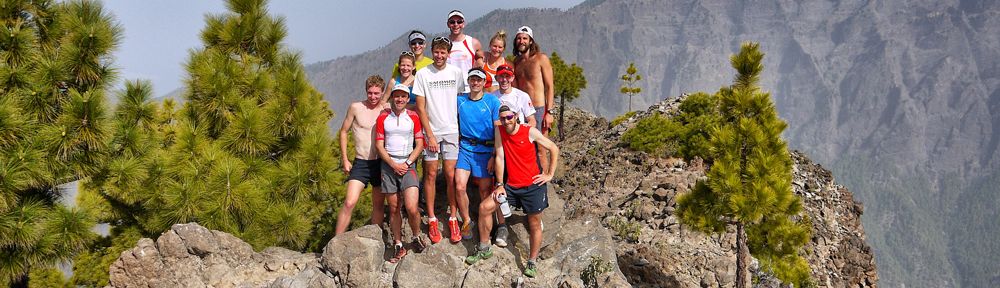
Located at the iconic Club La Santa resort, our training camp will provide you with all the knowledge, experience and practical training you need to make your next trail, ultra and multi-day adventure a success.
Hosted by IAN CORLESS, the training camp is the perfect place to hone your skills for multi-day, fast packing and running in general.
With
2024 LINE UP
ANNA COMET PASCUA, PIERRE MESLET,
LAUREN GREGORY and INGE NIJKAMP.
GUESTS – KEVIN WEBBER and STEVE DIEDERICH.
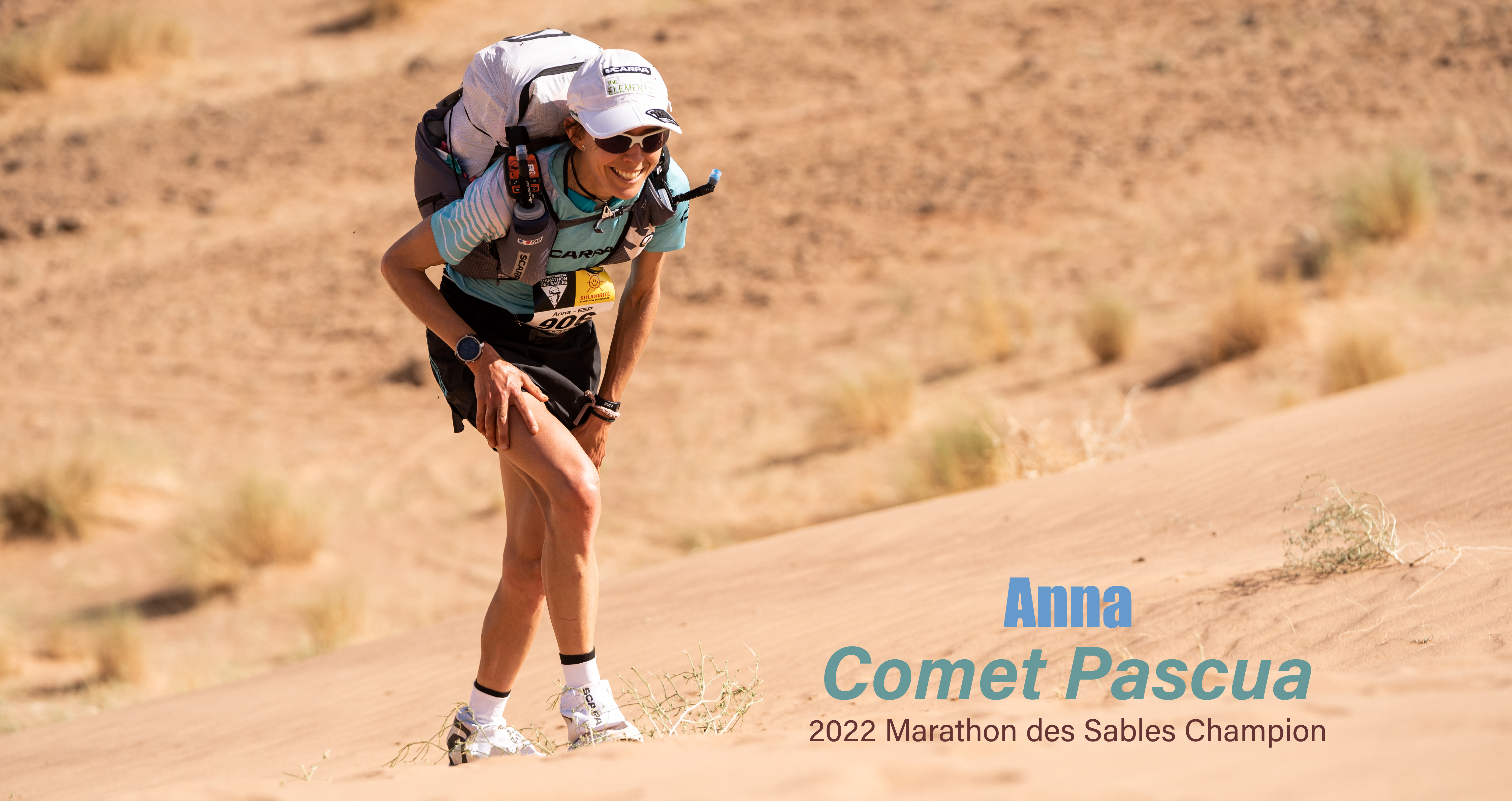
Anna Comet Pascua won the 2022 Marathon des Sables in a dominant performance. An experienced sky, mountain and ultra-runner, Anna is also a multi-day specialist with victories at The Coastal Challenge in Costa Rica and the Everest Trail Race in Nepal. A runner for the Scarpa Team, it’s a pleasure to have Anna join us in Lanzarote.
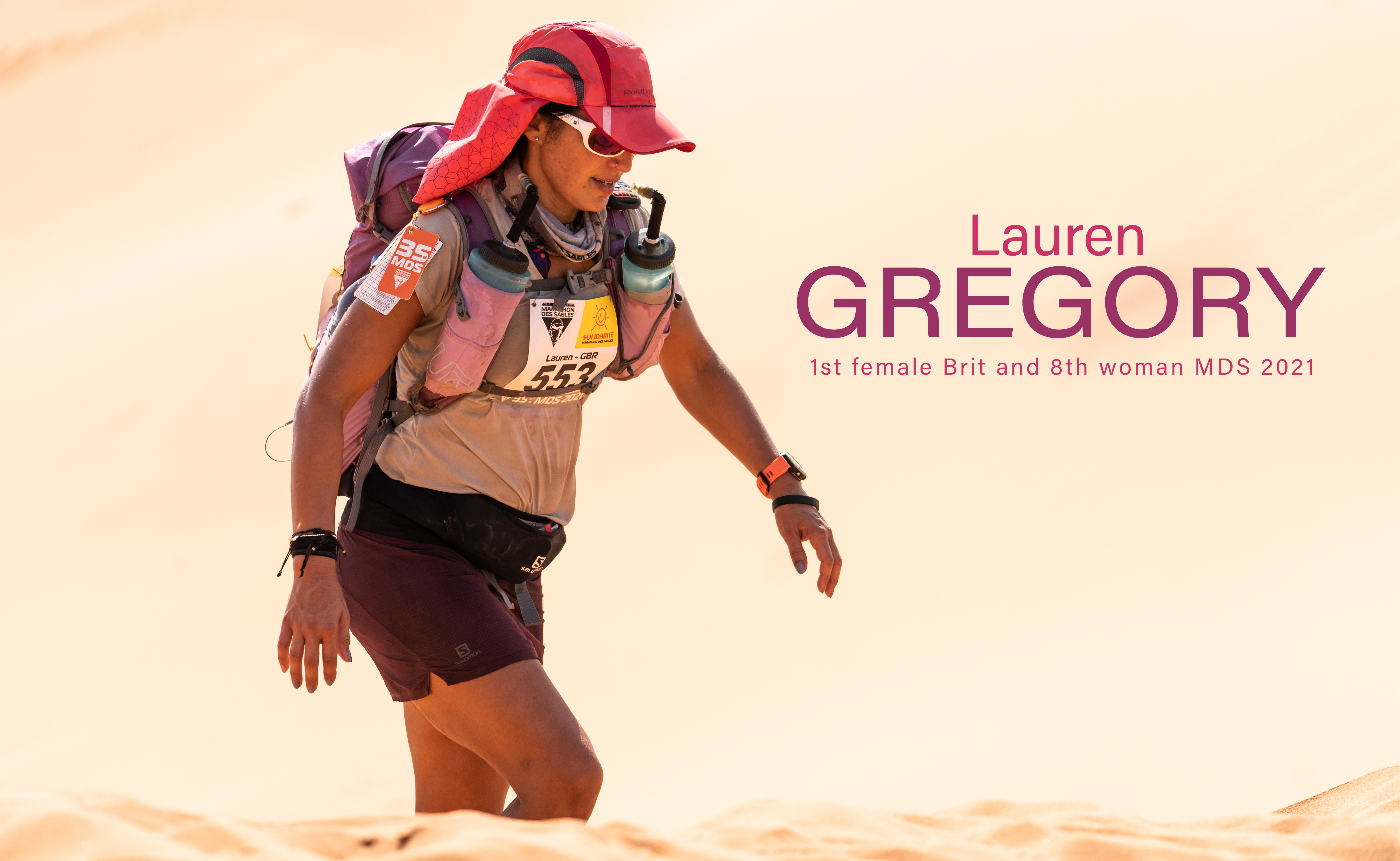
Lauren Gregory ran the 2021 (toughest) Marathon des Sables and was first British woman and 8th in the women category. A personal trainer, Lauren will guide a run group, host yoga sessions will provide a talk.
Pierre Meslet joined the Lanzarote Multi-Day Training Camp in 2022 after placing 9th at the 2020 Marathon des Sables. His attendance was a success, not only from the perspective of leading a run group but also his profession as a physio – He was able to provide ‘on-site’ treatment for our training camp. Pierre is back in 2023!
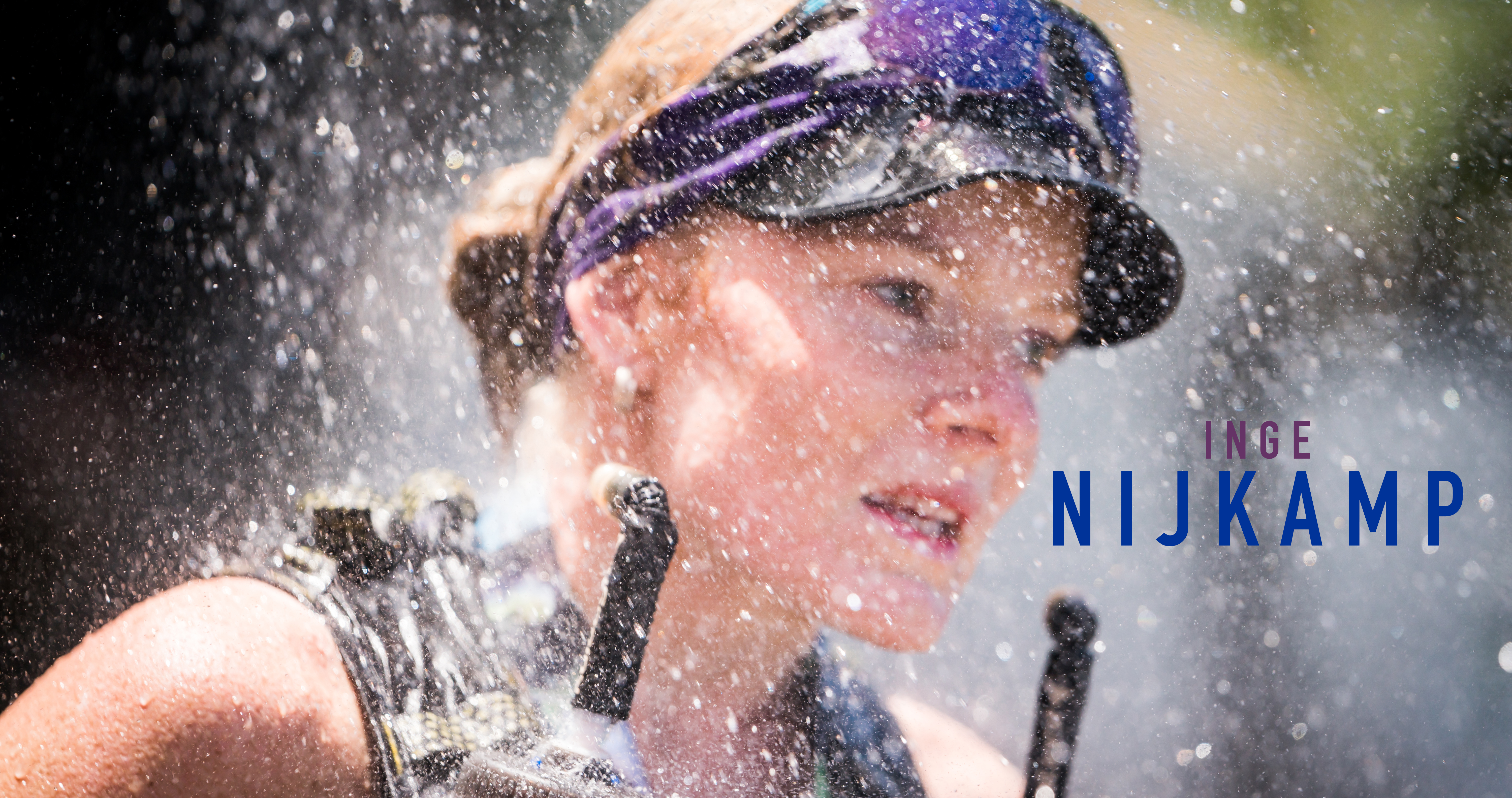
Inge Nijkamp has been top-10 at Marathon des Sables and The Coastal Challenge. A qualified nutritionist, she will guide a group, provide a nutrition talk specific to multi-day running and be on-hand for one-to-one nutritional consultations.
Kevin Webber after a successful 2023 camp has requested that he come back in 2024 for more… In his words, “I just loved this, great location, great people, great running, what’s not to like?” He will once again guide a group, provide an inspiration and moving talk about running with a terminal cancer diagnosis. He has many stories to tell.
Steve Diederich is the UK agent for Marathon des Sables, The Coastal Challenge and Everest Trail Race, he will be on-hand to provide advice about all three races and answer any questions. Currently studying Sports Psychology and come Lanza 24 he will be qualified and on-hand to discuss the mental side of sport and running.
“I wanted to say a big thank you for this week – I’ve left so energised and inspired after the week… I thought the camaraderie from other runners was incredible. If felt as if everyone had left their ego at home which really made for such open and honest sessions. I hope you have the opportunity to reflect on how impactful and enjoyable the camp was. The fact that the organisation was seamless doesn’t just happen and I know the layers of detail and spreadsheets that go into an event like this. I’ll be back I’m sure and when I do get to the start line of MDS I will be much more likely to succeed based on all the advice.” – EB
The purpose of any training camp is to provide you with specific information and training designed specifically to help you with your future objectives. Although you may run (train) more in this condensed week, it’s not designed to break you! Therefore, all training sessions are flexible and you can dip-in and dip-out as required. Most importantly, just as in any race, we will have a very mixed ability base. You will therefore train at your appropriate pace with like minded people.
Each day will be broken down into one or two specific training sessions, one workshop and leisure time.
Lanzarote offers a variety of terrain that can be found in many desert races and therefore it’s the ideal training ground to prepare and acclimatise for an up and coming challenge. Club La Santa as a resort offers a great base and all facilities are included. This is great for relaxation, an opportunity to cross train or more importantly it’s perfect for friends and family to join you as a plethora of opportunities are available.
£1095 pp* shared occupancy / Solo Occupancy apartment £1695*
A £300 deposit secures a place for shared occupancy, £600 for solo-occupancy. Deposits are non-refundable in any circumstance and cannot be carried forward to a following year.
This includes a self-catering apartment on a share basis. Inclusion in the above schedule and access to all facilities within the Club La Santa complex.
A non-training partner is welcome to join a training partner for a cost of £975 pp* and they are able to use all the facilities at Club La Santa.
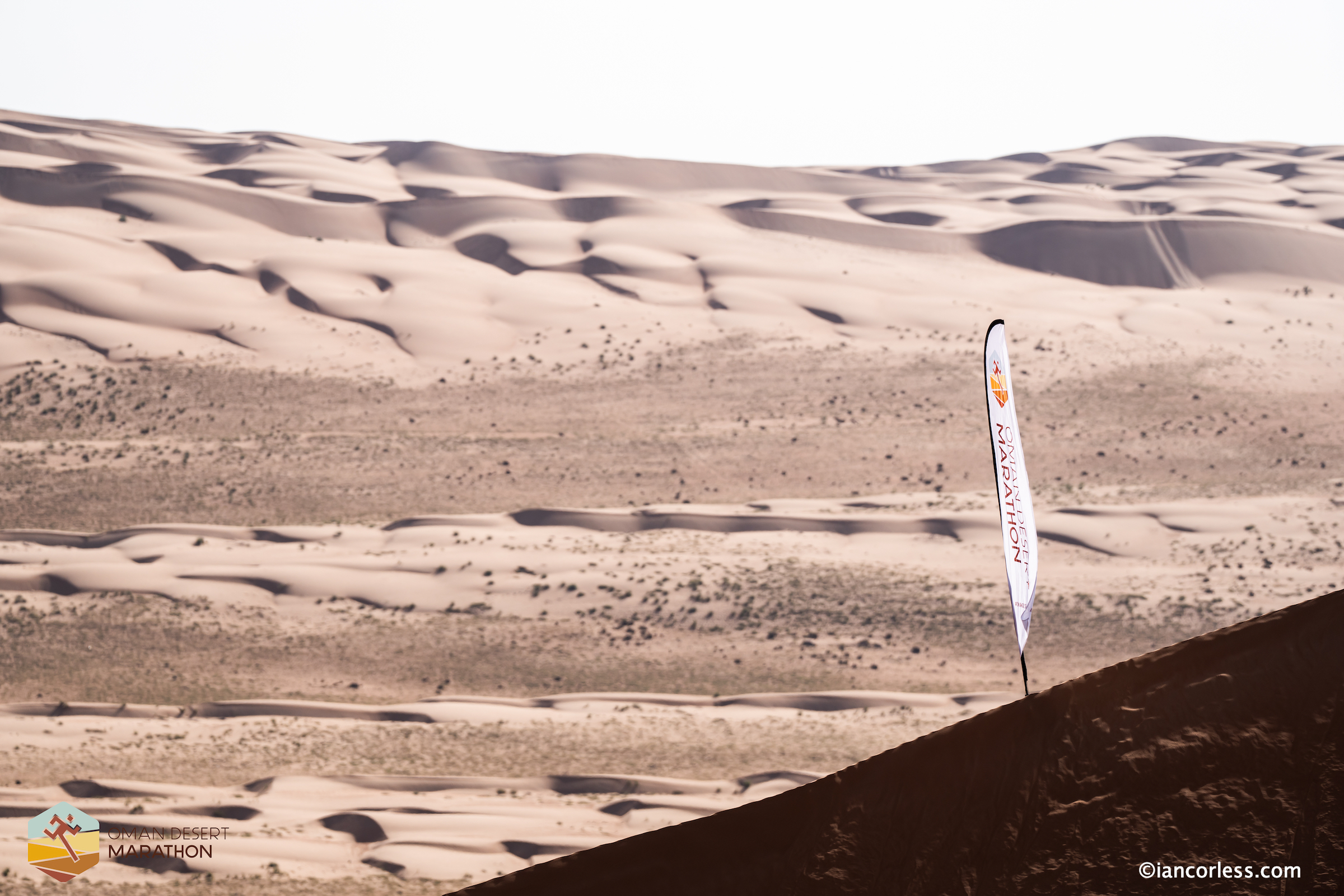
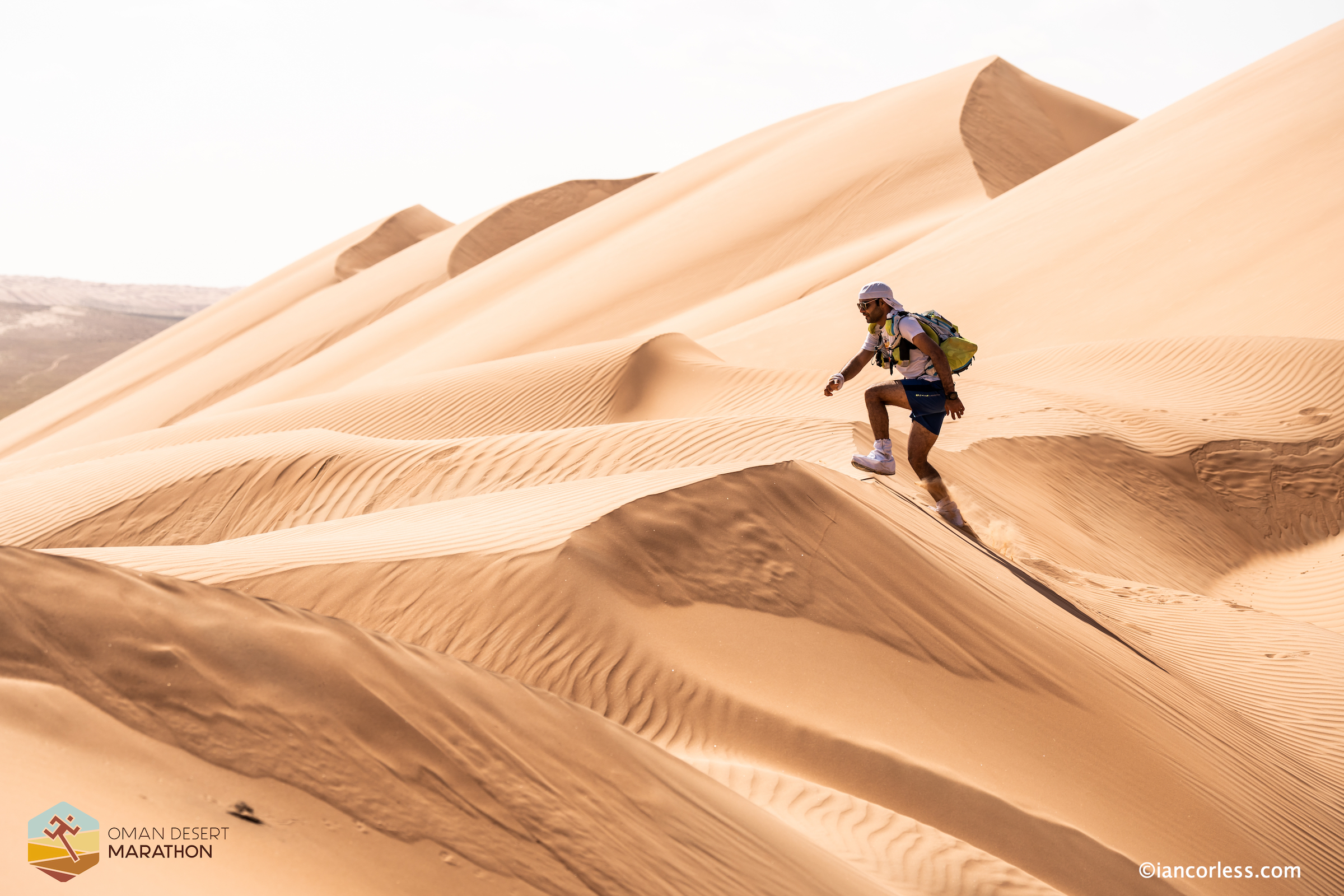
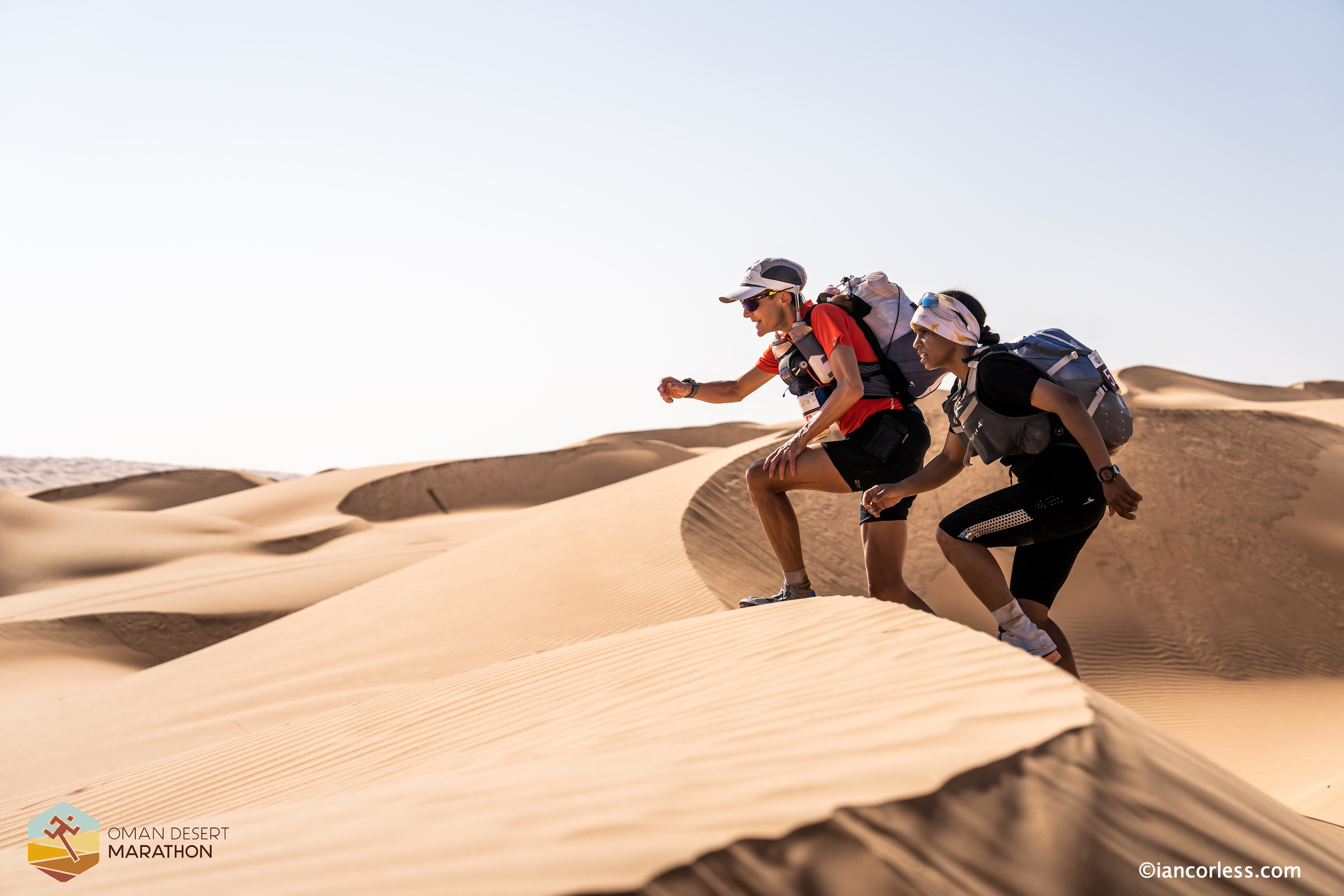
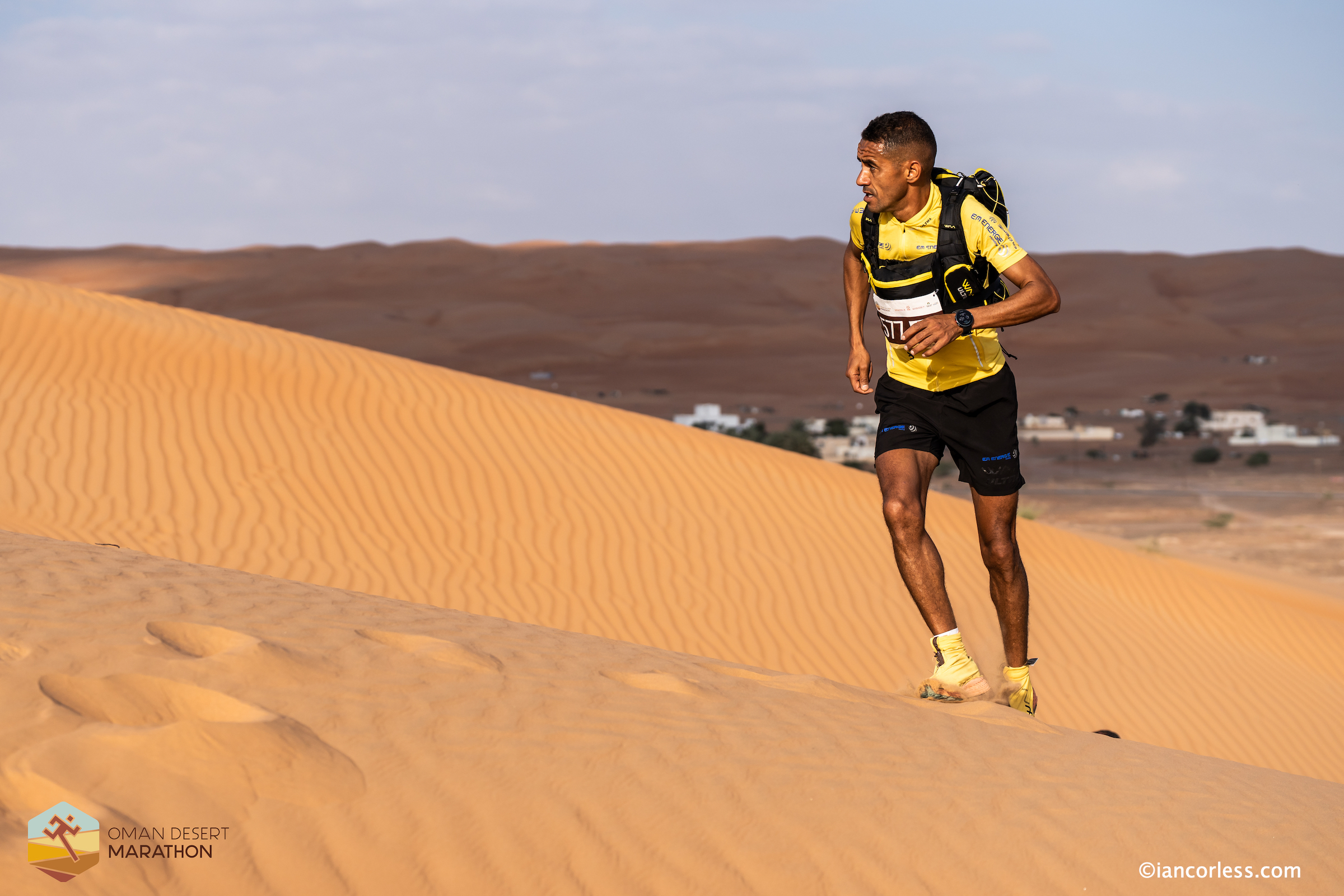
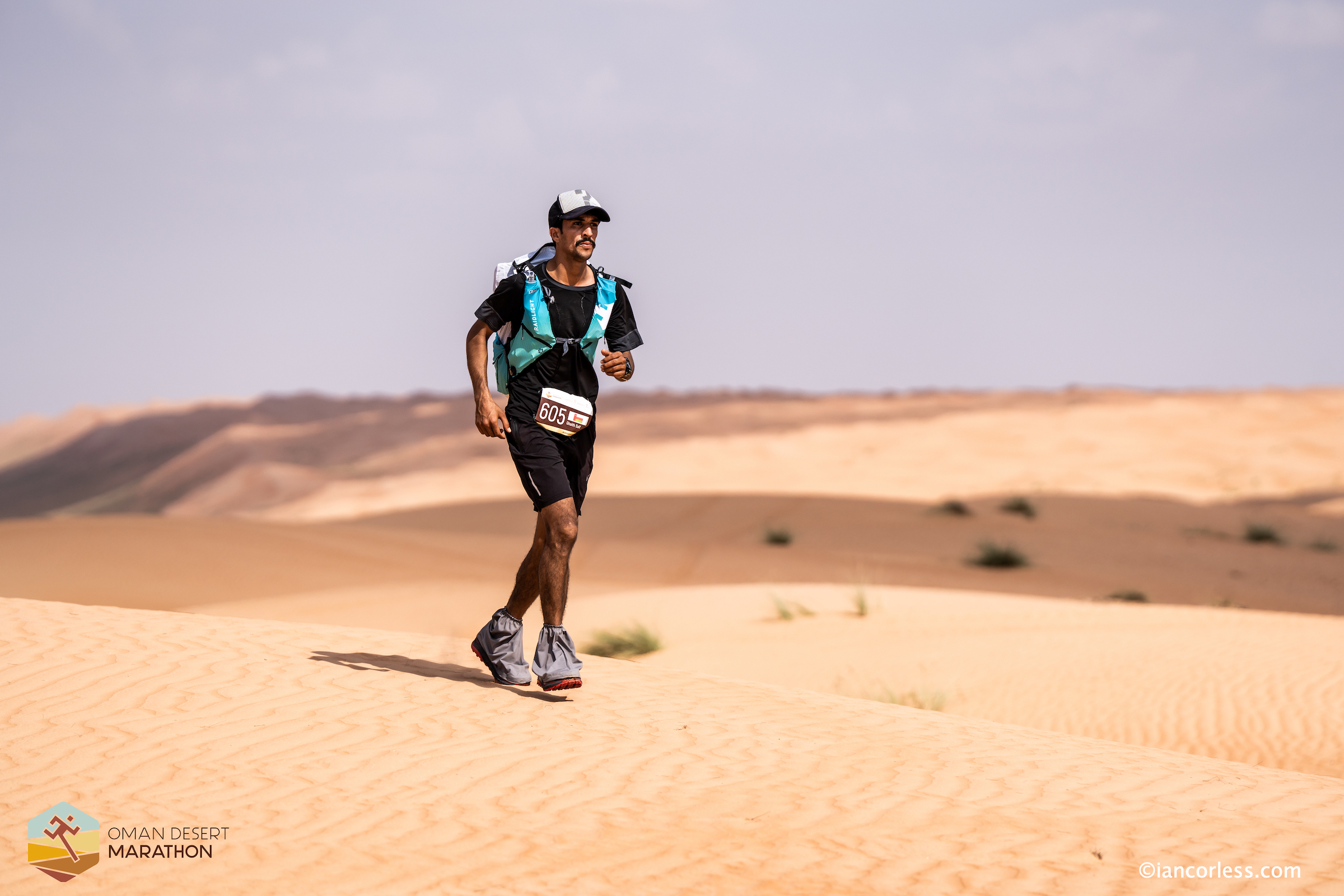
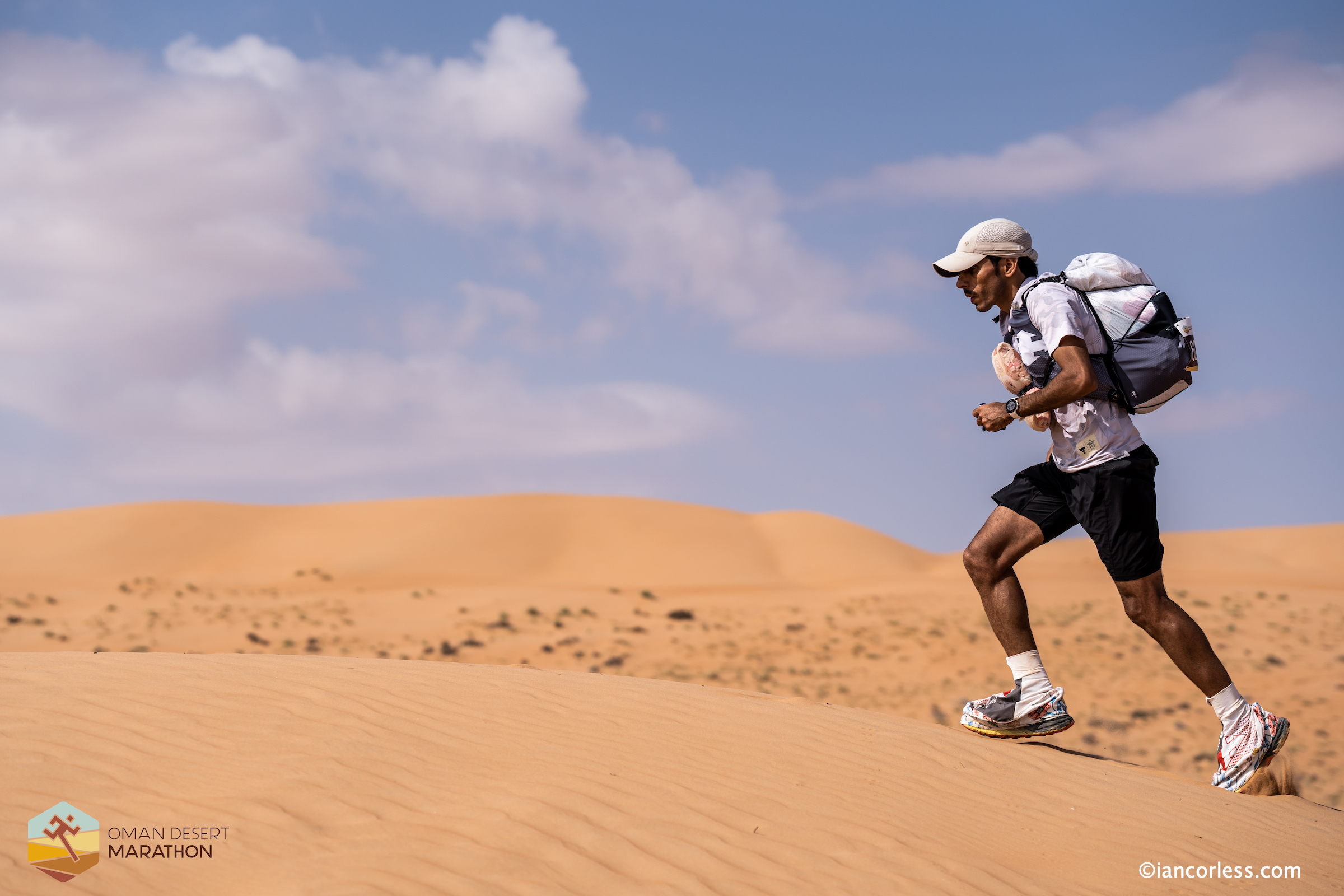
From here, the big dunes waited and what a magnificent sight they are. Stretching far and wide, they are a relentless rollercoaster of torture for the participants.
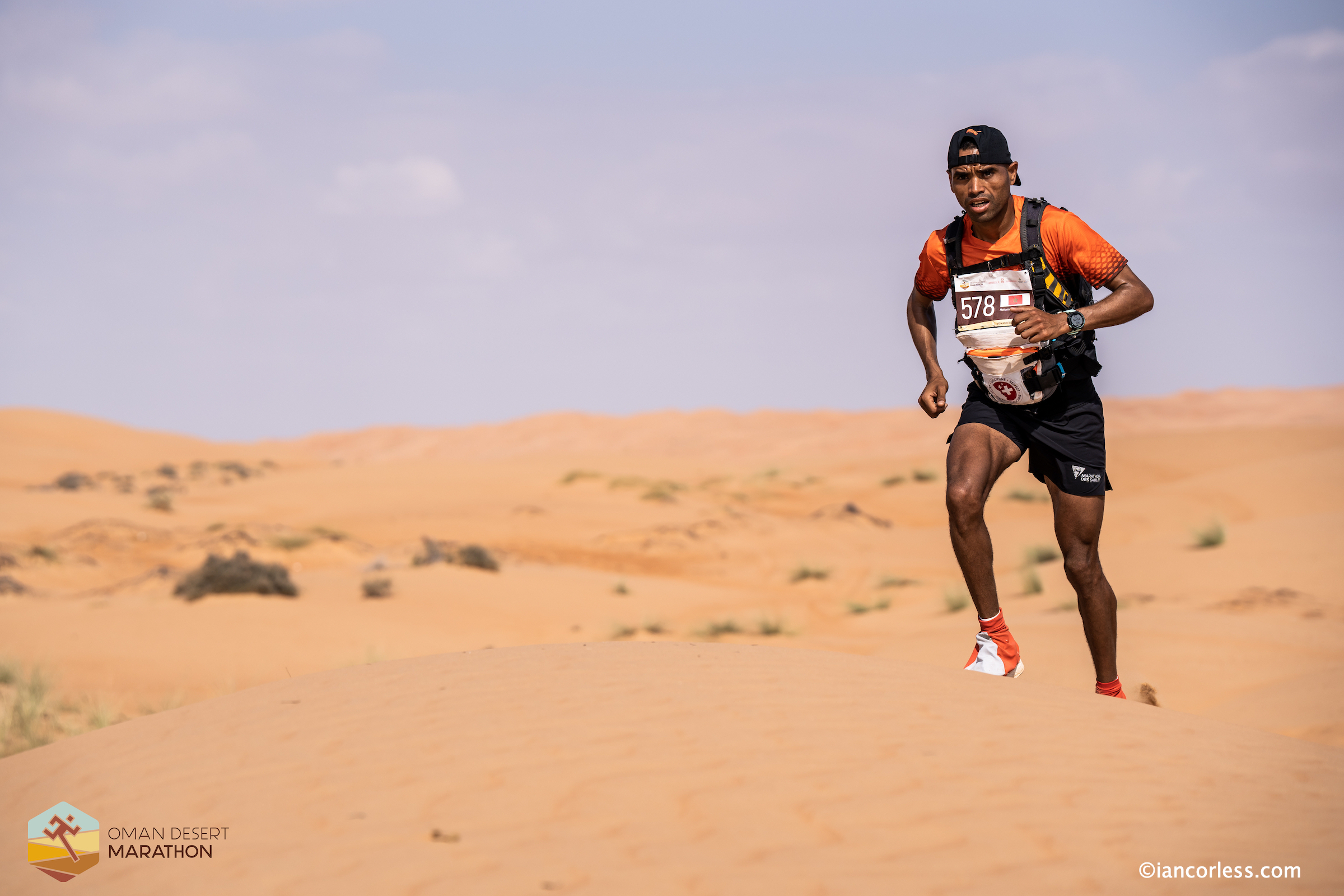
Rachid and Mohamed, not surprisingly, dictated the pace from the start, often running side-by-side and chatting. They are true masters of this terrain and they make it look ridiculously easy.
In many resects, the writing was on the wall and it was once again Mohamed who beat Rachid to the line, this time, just by seconds. For the Alsadai brothers, Saleh finished 3rd and secured his 3rd overall on GC.
Aziza was too strong for the chasing duo and took another victory. This time, Corina broke away from Raji and managed to claw back over 4-minutes for the GC.
The 4-stage, 165-km, 2023 Oman Desert Marathon started today with a challenging 47-km stage.
After a 3-year hiatus due to the Covid Pandemic, it was once again a pleasure to see runner’s travelling through the Oman Desert in self-sufficiency. The only items provided to participants is water and a place to sleep at the end of each day.
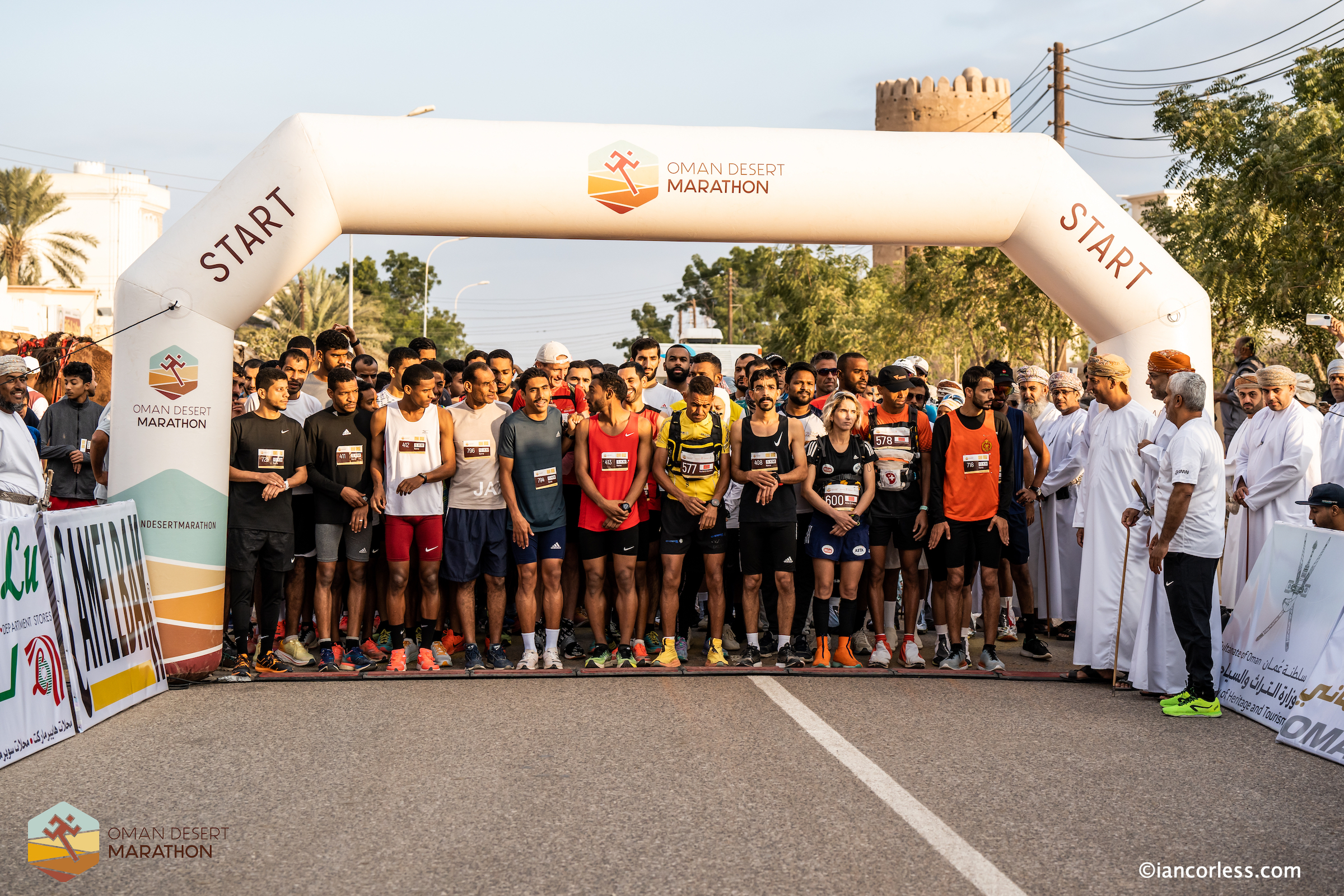
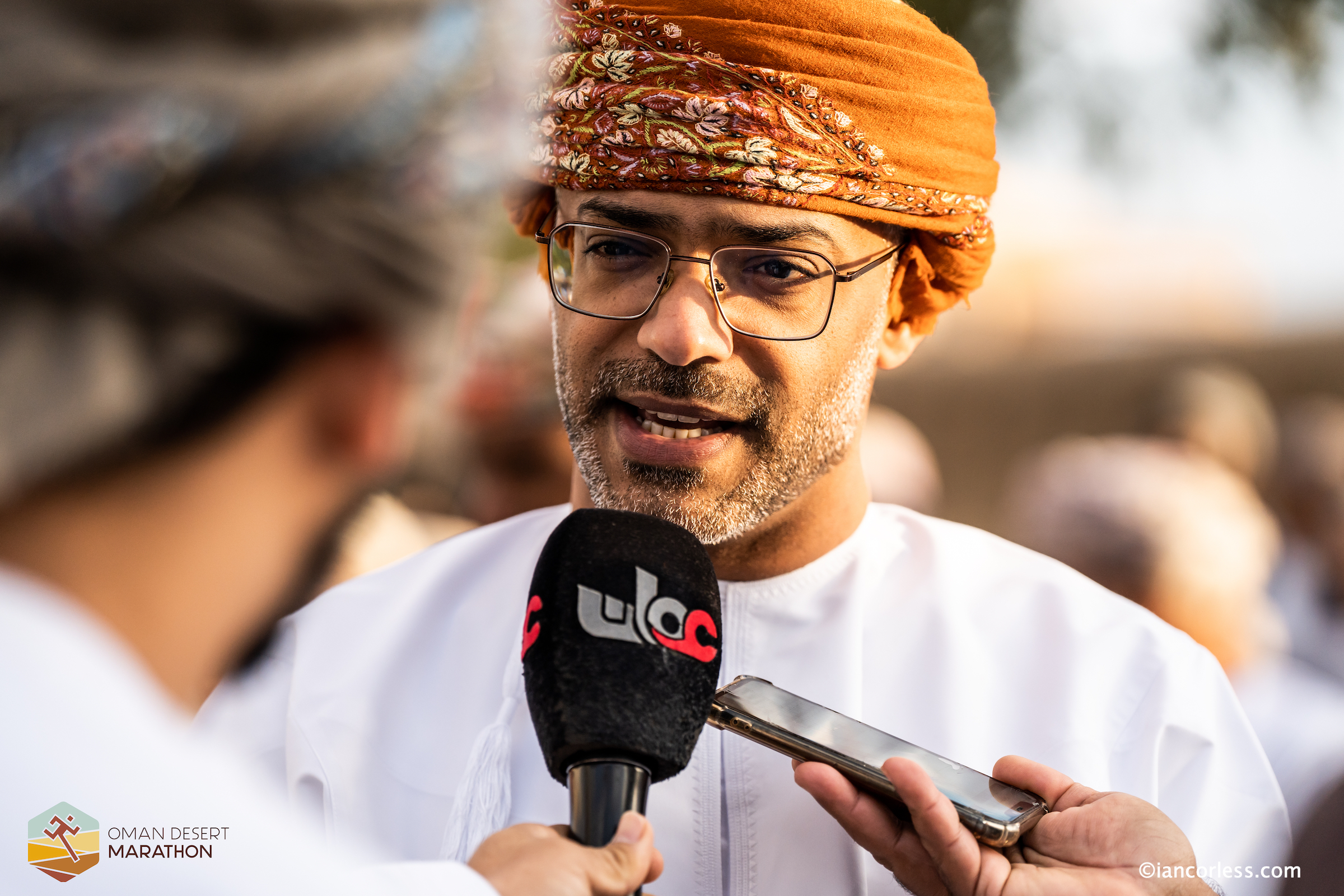
The atmosphere at the start was one of celebration with local vip’s present and many locals who would participate in the ‘free’ 10km, 5km and a 2km kids race.
Rachid and Mohamed played cat an mouse but in the last significant dune section, with just over 10-km’s to go, Mohamed opened a gap which he held to the line crossing in 3:53:31. Rachid surprisingly came in over 7-minutes later. The earlier hard pace set by Sami Alsaidi took it’s toll and it was Saleh who finished 3rd.
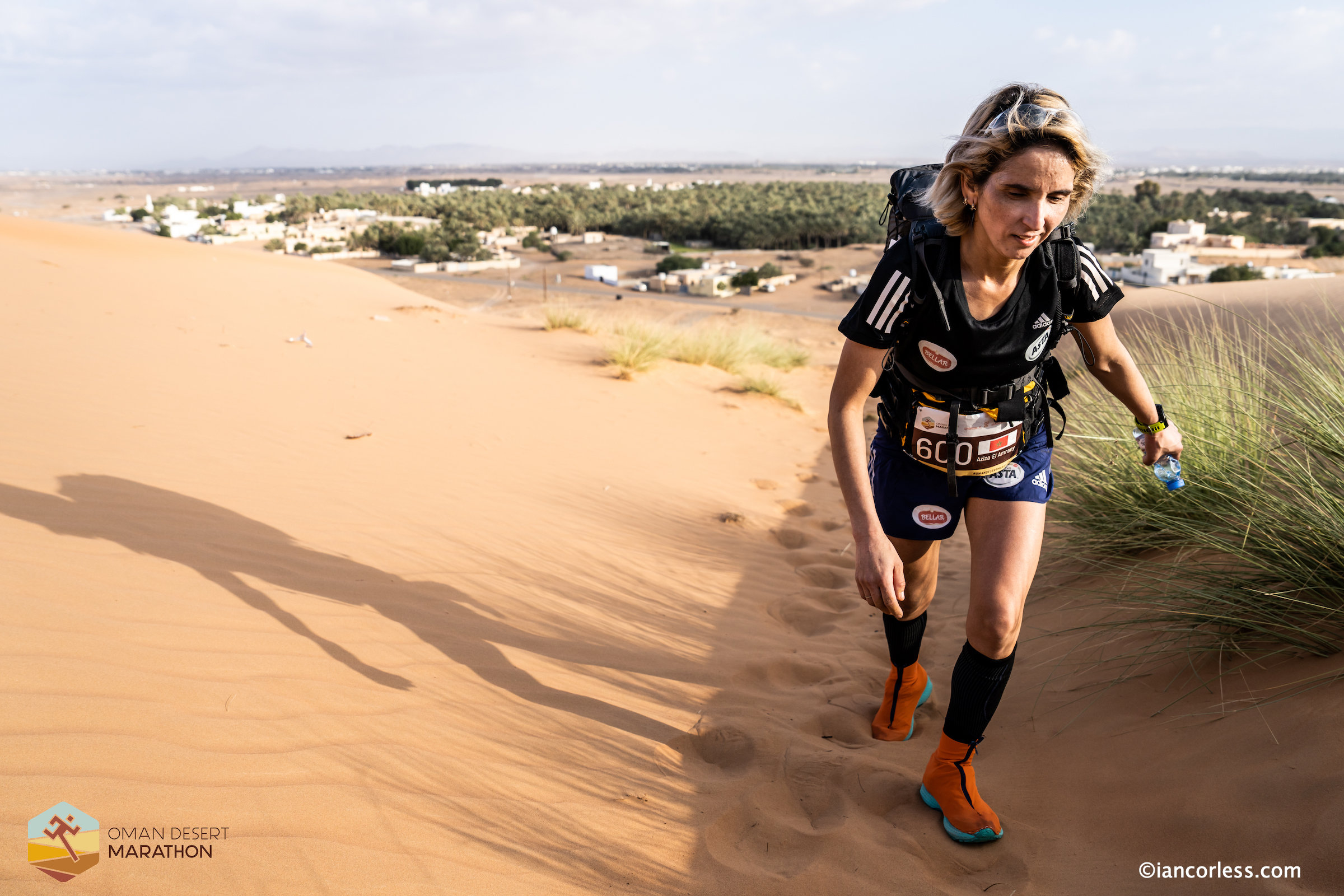
Aziza El Amrany looked very strong for the first two-thirds of the day but later looked to be suffering in the heat. She never lost her lead though and finished in 5:31:29. Despite Corina looking strong all day, Aziza Raji played the waiting game and pounced in the latter third of the day taking 2nd place in 5:37:53 to 5:45:57 for the Swiss.
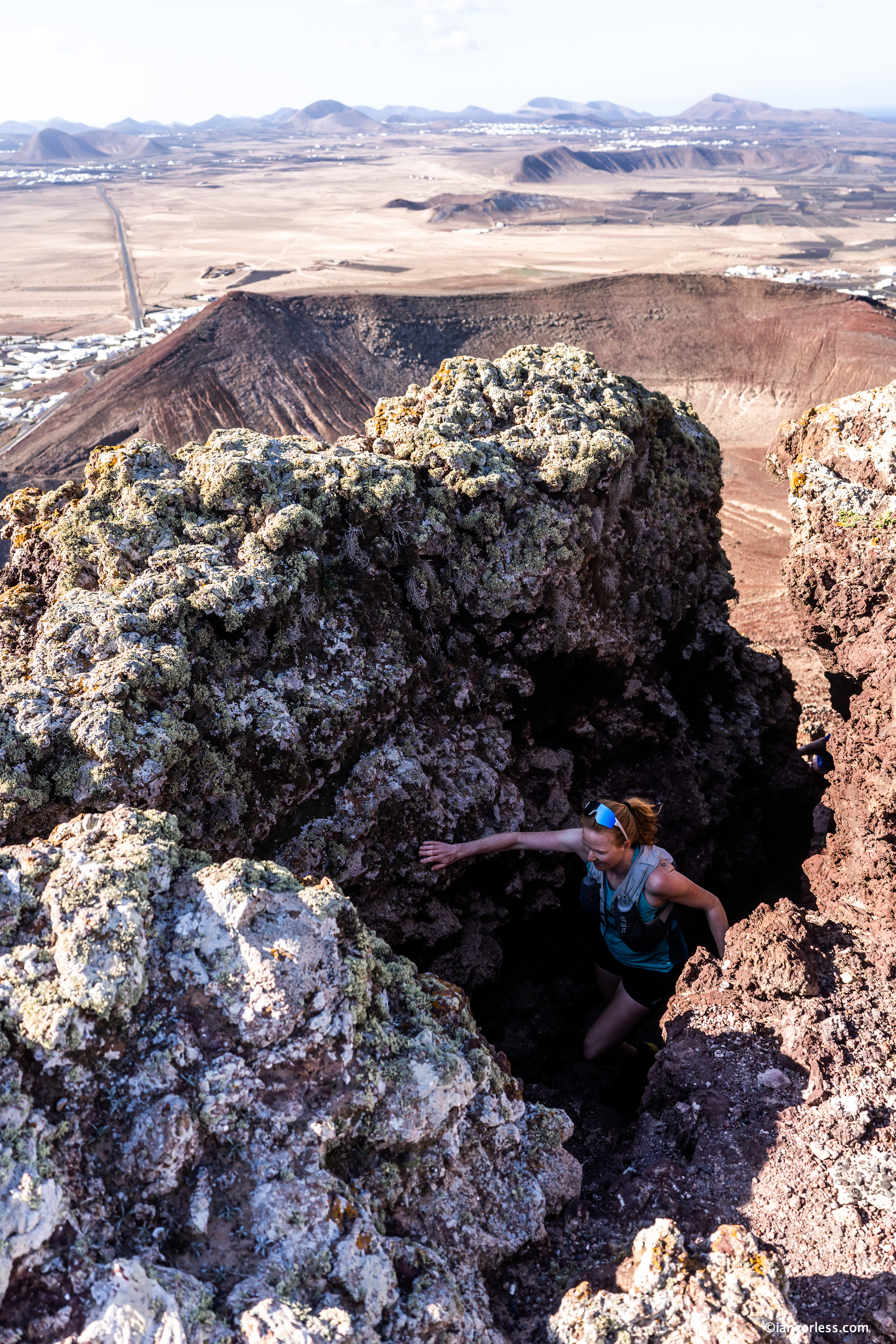
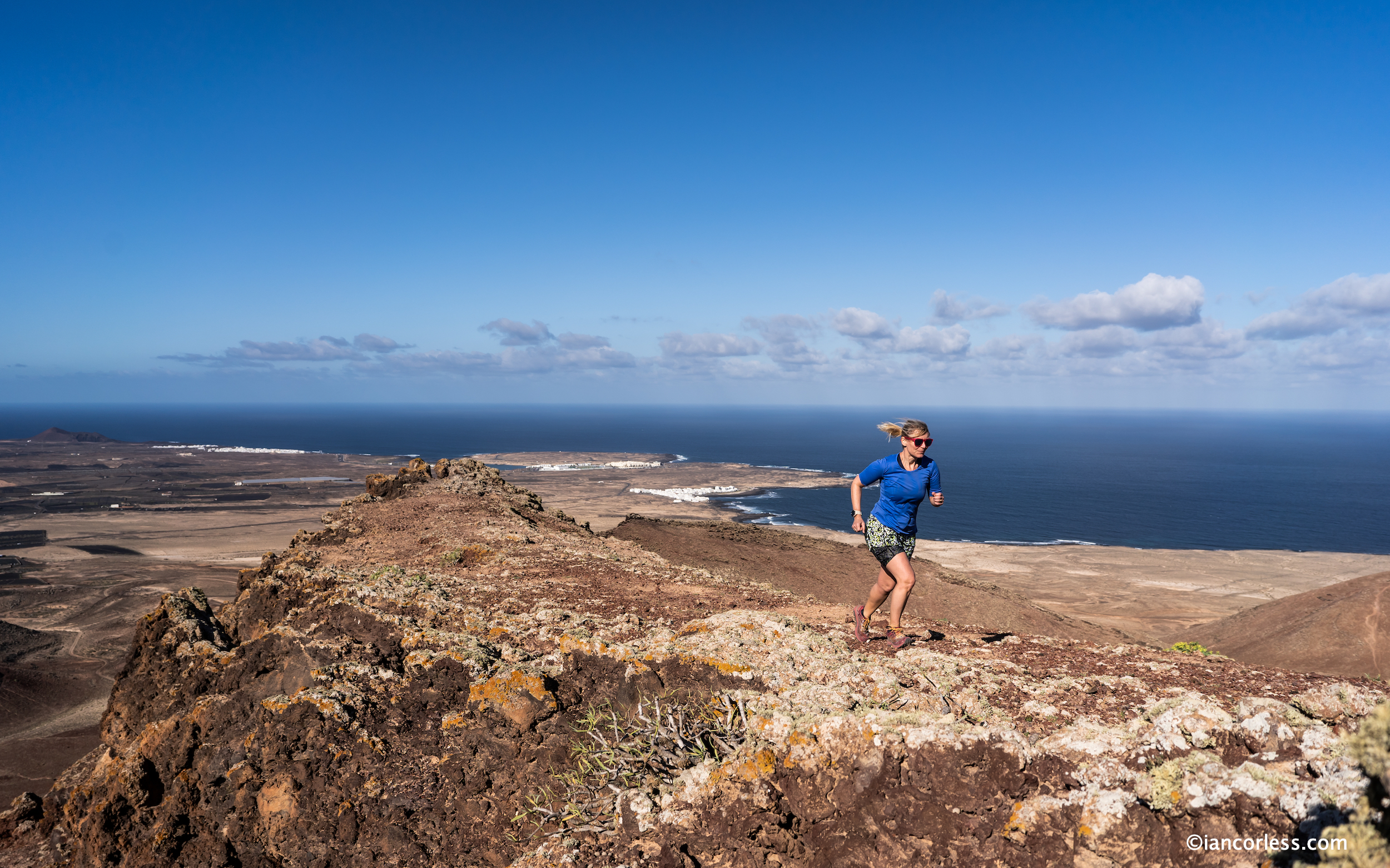
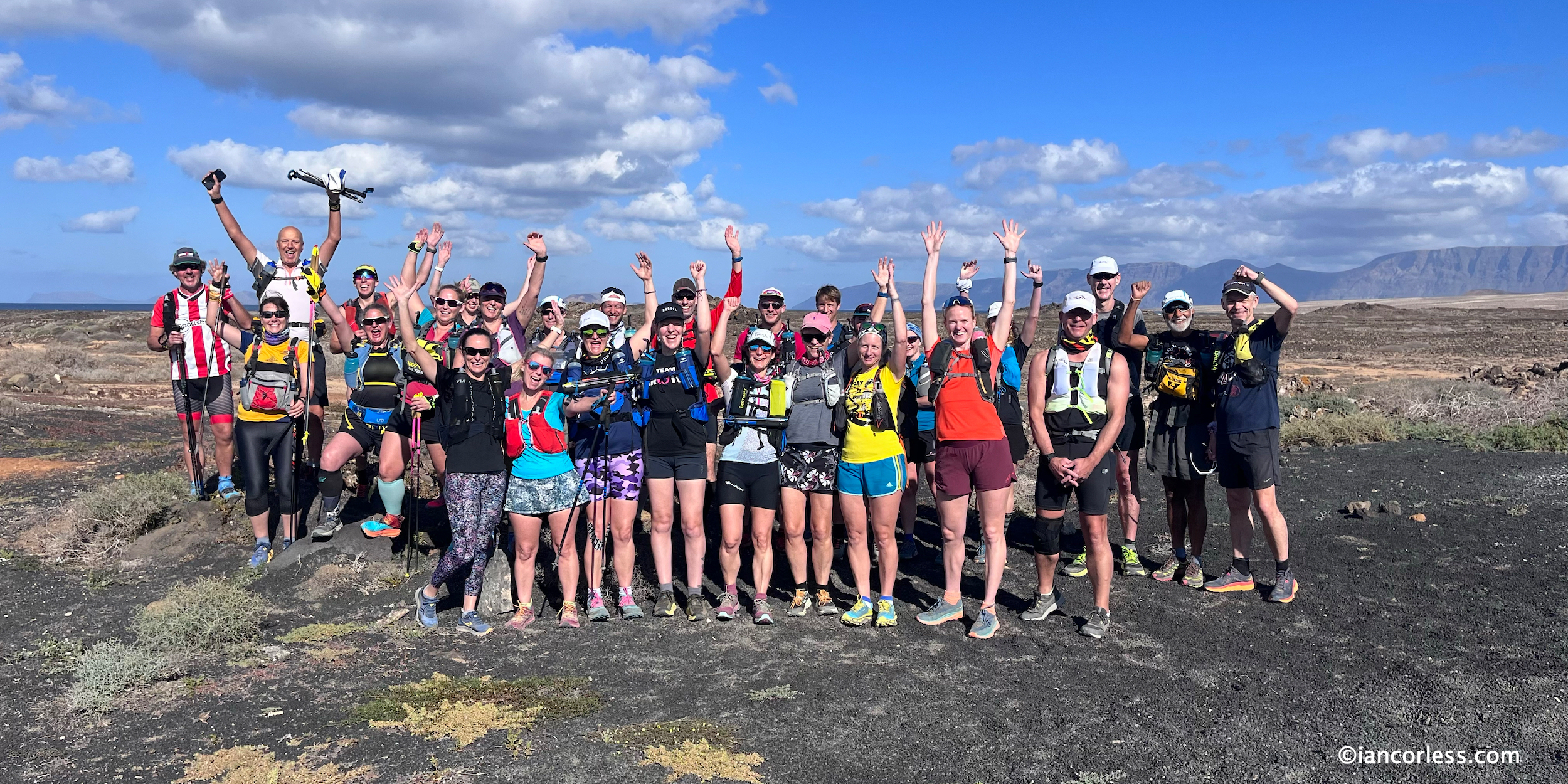
Caldera Trasera is a wonderful loop from our base location, Club La Santa. It provides a short and hilly technical route that more ‘more’ exposure than many are used to. The Lanzarote Multi-Day Training Camp is all about pushing boundaries and learning.
Hands-on action provided some mega smiles, especially when the summit was reached. The level of comradeship was superb, everyone supporting each other to achieve their goal.
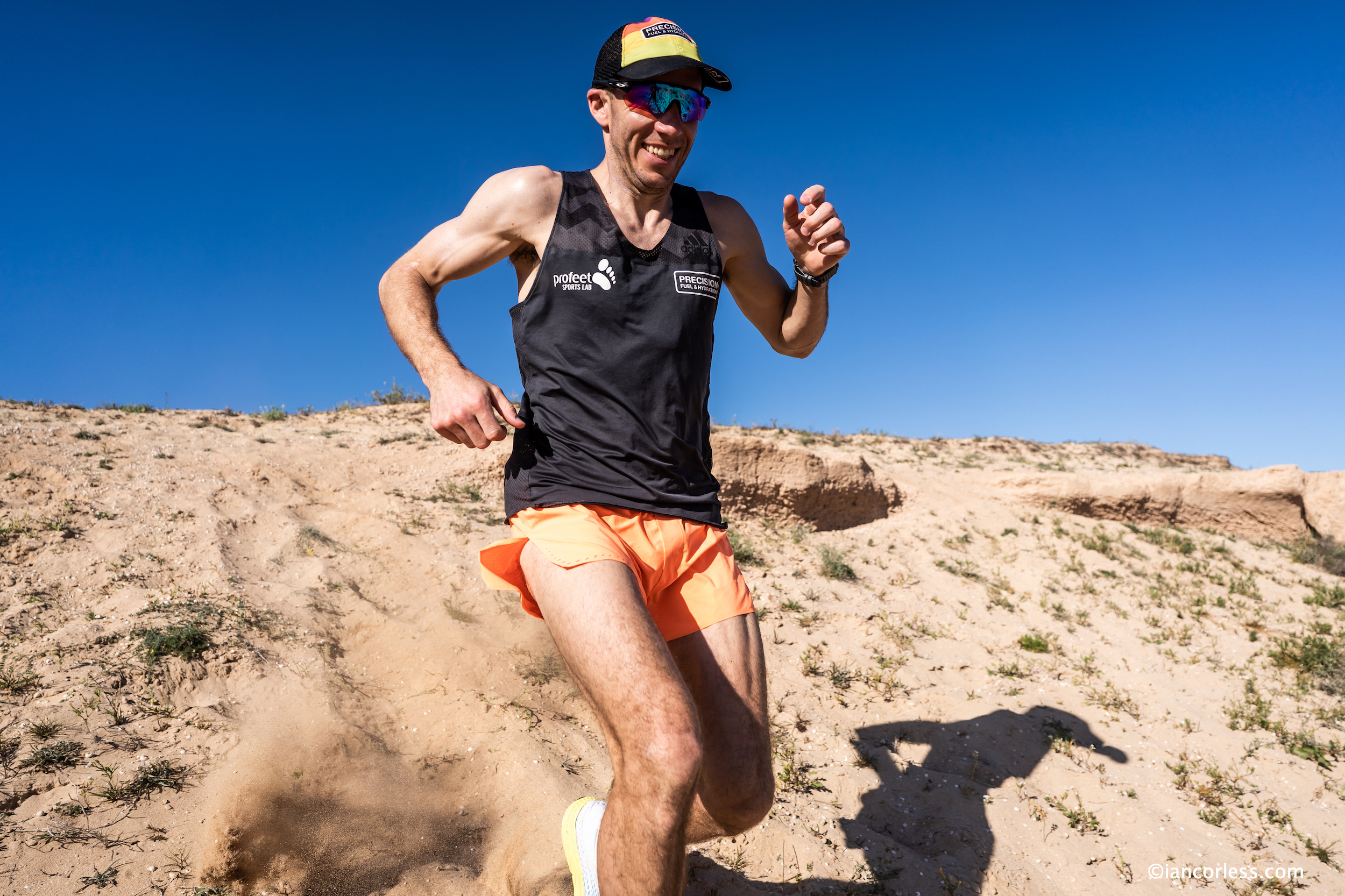
Day 3 of the Lanzarote Multi-Day Training Camp and a long run that included soft sand practice. It was a perfect day… Clear skies, hot temperatures and an opportunity to understand how to run up , down and across soft sand.
After a break, the afternoon session on ‘Fast and Light’ provided an insight on Fastpacking by Ian Corless and Abelone Lyng. While an emphasis was placed on Marathon des Sables, other races and environments were considered, such as rainforest, mountain and snow/ ice.
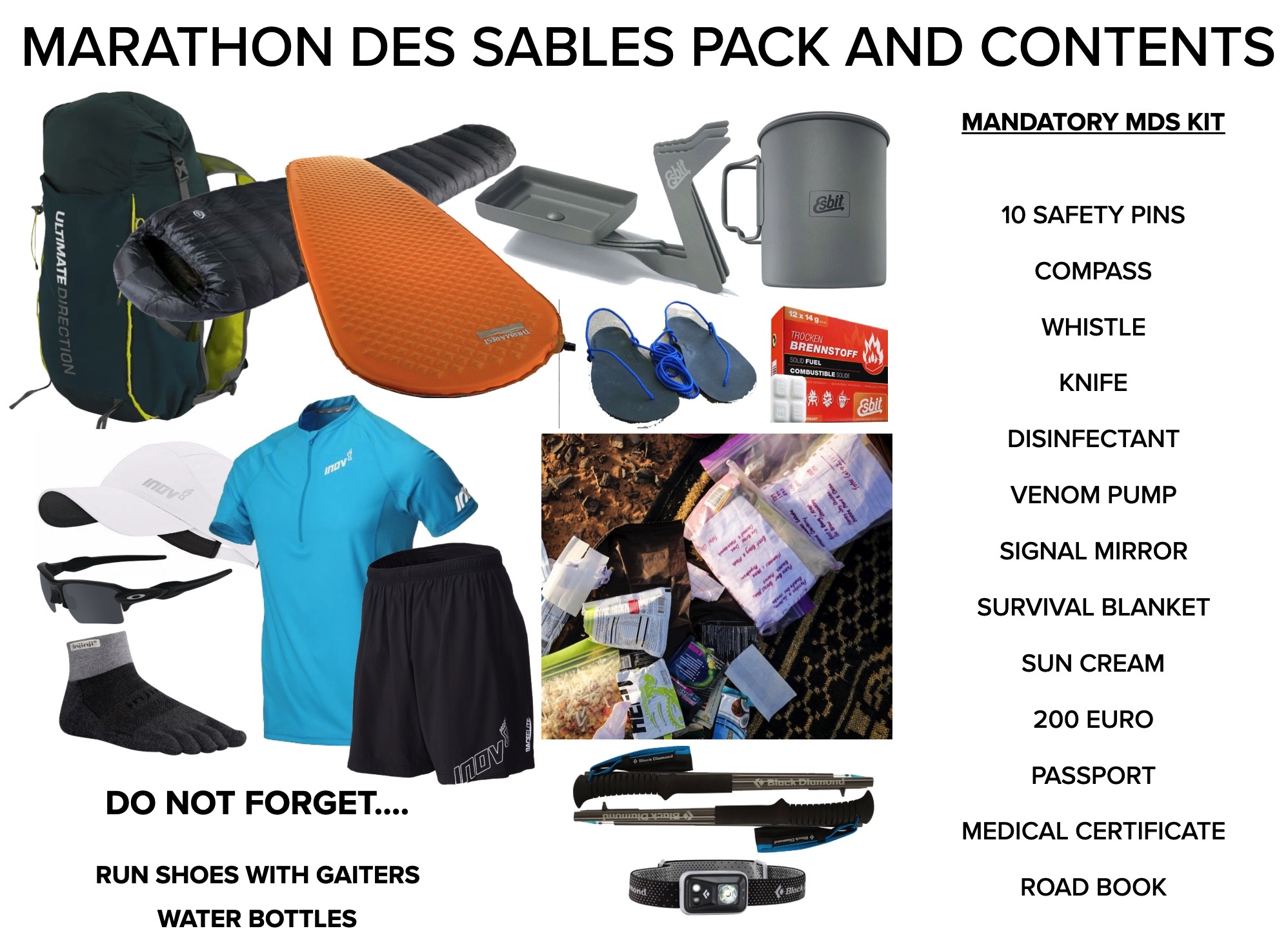
MDS Kit
Once again a short recovery run concluded the day.
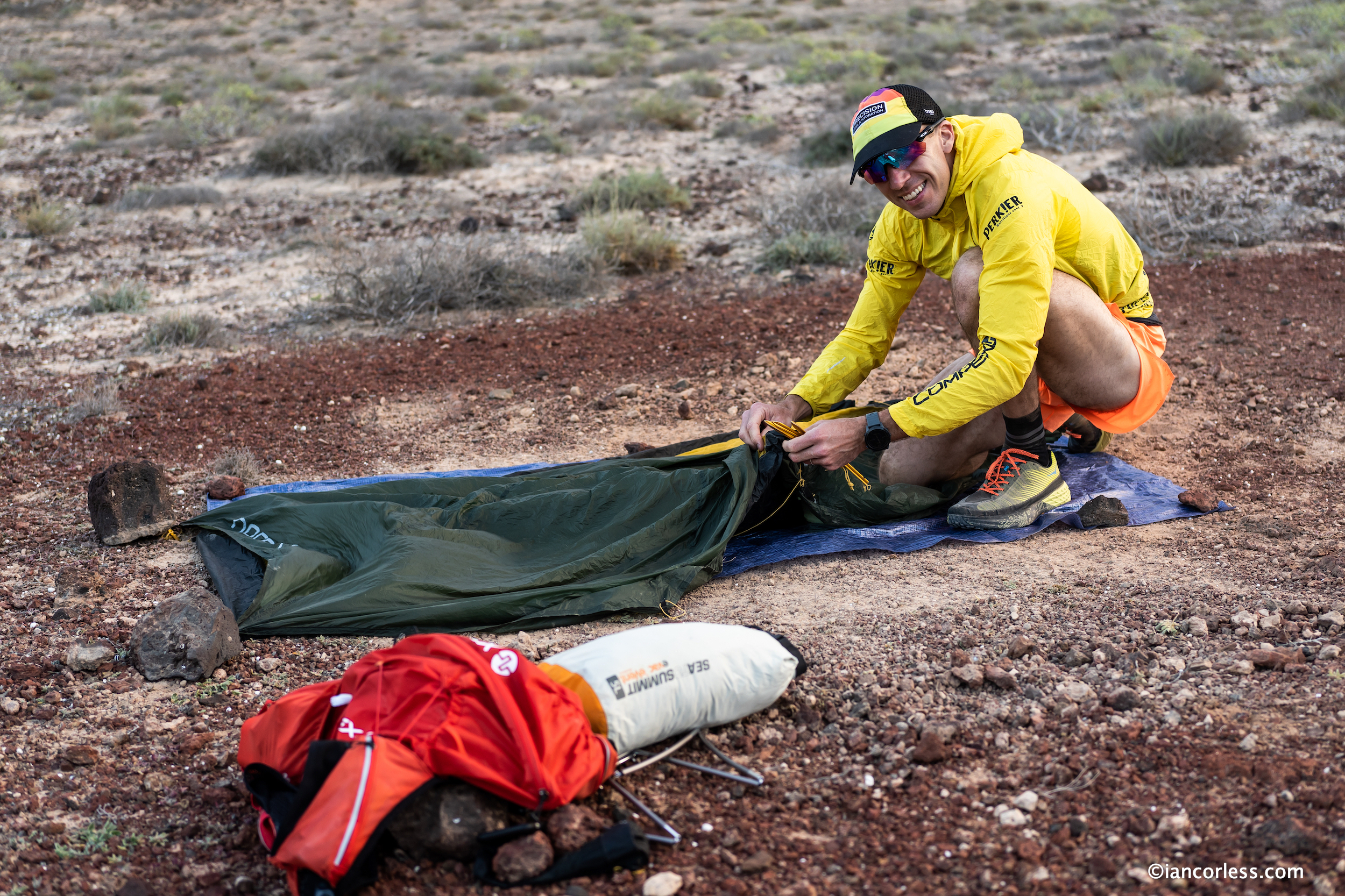
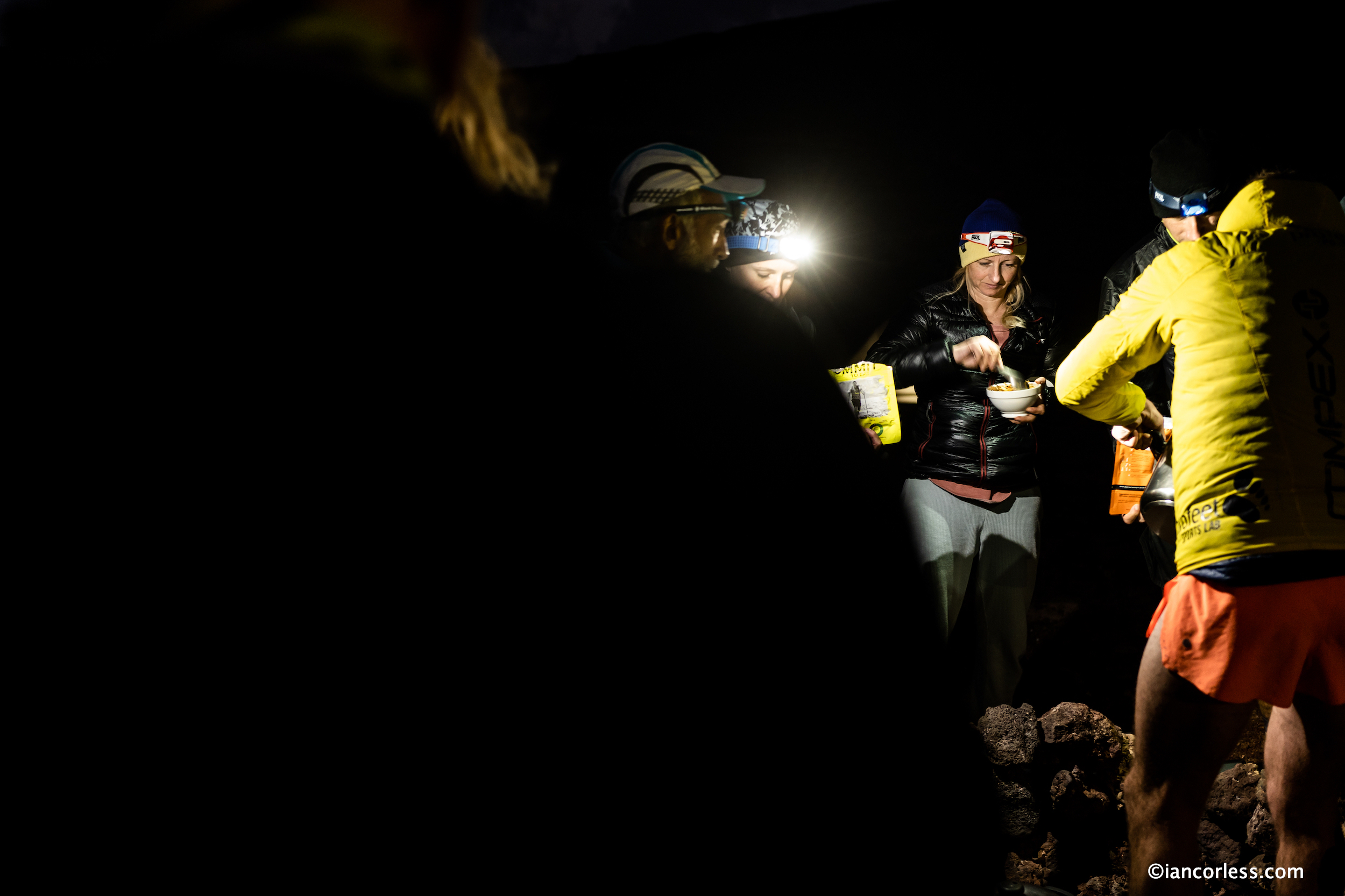
Tomorrow, participants will spend a night under the stars, in bivouac, fine-tuning their self-sufficient skills in a real environemnt, with rationed water and just a tent provided.
Interested in joining us? 2024 is open for booking HERE
It’s countdown time to the 2023 Oman Desert Marathon.
Now in its 8th edition, the Oman Desert Marathon will take place January 21st to 24th. A self-sufficient race, the race takes place over 4-stages with a total distance of 165-kms.
January offers excellent conditions for a desert adventure, with highs anticipated and 25-degrees and lows of 17-degrees.
A unique race, the route provides participants the opportunity to explore and discover untouched sands and the highest dunes of Oman while running 47, 55, 42 and 21km.
“The OMD, changed my perspective on ultra-marathon running for the better. The desert is magical and beautiful, but will test you mentally and physically to your limit, but you will be a better person from it. The OMD event should be on every runner’s calendar.” – Adam May.
Arrival in Oman will be on January 20th with transfers to Al Jawharat Resort in Bidiyah. The afternoon will taken up with admin protocols and a race dinner.
Stage 1 – 47km
Satge 2 – 55km
Stage 3 – 42km
Stage 4 – 21km
Daily start times fluctuate and interestingly, Stage 3 has three starts, 1200, 1400 and 1600.
Stage 4 has an 0800 start with the race concluded by 1300 at the Al Jawharat Resort in Bidiyah resort. In the evening, an award ceremony and prize giving will take place.
The Runner’s
While Omani runner’s will make up the majority of the field, there are participants from Spain, France, Ukraine, Italy, Germany, Poland, Britain, Belgium, Switzerland and not surprisingly, Morocco will have the main contenders for overall victory.
King of the desert, Rachid El Morabity, 9x winner of the Marathon des Sables will once again lead the field and he is without doubt, the hot favourite for overall victory.
Mohammed El Morabity
Rachid’s brother, Mohammed, will be his main contender and should Rachid have a bad day, his brother will be able to pounce.
Aziz Raji
For the women, desert specialist, Aziz Raji, also a winner of Marathon des Sables, will be the main protagonist not only for the female victory, but quite possibly, a highly-ranked overall placing.
How to follow:
Daily reports and images will be issued on this website (connection allowing) each evening and a full and detailed race summary will follow after January 24th. On IG, @iancorlessphotography and @marathonoman
We look forward to welcoming you to the Oman Desert Marathon experience.
Before you start a multi-day, be that a race or a personal challenge, one thing is for sure, NOW is the time to set a goal and focus, fine-tune everything, including training, so that you can be at the start in the best shape possible.
First and foremost, have a complete understanding of the task ahead and set a goal or target. This is key not only in the physical adaptations that are required, but also the mental adaptations. There is a huge difference in doing something supported and in doing something self-sufficient. Marathon des Sables a prime example, understand the nature of the event and set a realistic but challenging goal.
MDS is an extreme event that takes place in the Sahara. The nature of the event is self-management both physically and mentally to endure the challenge, survive and reach the finish line. The weather (heat) is one of those challenges and surviving the weather is integral to the nature of the event. As is the ‘self-sufficient’ nature. Other than rationed water and a bivouac, be prepared to endure and complete this event with no outside assistance. Of course, help is at hand, but that help is and should be a safety element that is required in emergency. Equally, if undertaking a solo multi-day experience, do the research, plan routes, look at back-up options, can you re-supply with food, is water available?
Plan and prepare.
TRAINING
We are all unique and individual. Some of us are faster, some are mentally tough, some have a capacity to go for hours and hours and even days and yes, some runners combine all those elements.
Therefore, a multi-day training plan must be used as a template and framework to provide a structure for you, the individual, to achieve your goal.
Be sensible and adjust training plans so that they fit your ability, aspirations, training history and time available.
Think about when you place rest days, when you do long runs and when you work on hills and faster running. A training plan is like a jigsaw puzzle and managing the pieces and adding them together sensibly is how you make a successful and complete picture.
Any training plan is designed to progressively build strength, endurance, and confidence with gradual load increases. Rest is an important element of any training plan, so, rest with the same intensity that you train. Ultimately, you have decided to undertake this adventure, so, enjoy the process and make it fun.
Be specific. Make sure the training terrain, as much as possible, simulates your target event.
Always focus on the goal. Training plans for me start with the goal date and I then count back in time to a start point. That start point for you may well be before the 12-weeks but once you start the plan, focus on the target, and always make every session is as specific to the goal as possible.
For example, if participating in Marathon des Sables, you already know some key and important information:
It will be hot.
You will need to deal with hard and rocky plateaus, but you will also need to deal with soft sand and dunes.
You will be on rationed food/ calories.
You will only be supplied water to drink, and this is *rationed. In extreme weather such as the October 2021 edition, water rations were increased.
Everything (not the tent) will be carried in a pack, on day 1 this will be at a minimum weight of *8kg. (*Minimum pack weight is 6.5kg but you must carry 1.5 liters of water which equates to 1.5kg.)
You will sleep in an open tent, on the floor using a mat and sleeping bag.
The long day comes on day 4 after approximately 90-100km of running, so, you need to be able to run for consecutive days and manage your pace and effort.
The long day is (typically) between 70 and 90km and you have one full day, one night and most of the next day to complete it.
After the ‘rest day’ is a marathon.
You can complete the race by covering just 3km’s per hour.
In 2019, the MDS was won by Rachid El Morabity and Ragna Debats in 18:31:24 and 22:33:36 respectively. The last runner was Ka Chun Chan from China in 69:29:16. For perspective, Rachid could have run the race nearly four times in 69:29! We are all individual.
Key elements each runner needs for a multi-day like MDS.
You need to be mentally tough.
Physically strong to endure multiple days of back-to-back exercise.
Strong enough to carry a loaded pack and still move at a good pace.
Adapted to function on restricted calories and food choices.
Able to drink only water.
Adapted to perform and function in heat.
You need to be able to walk.
You need to be able to handle un-planned situations.
Have A, B and C goals.
Be self-sufficient.
Multi-day racing and multi-day adventures are unique and particularly self-sufficient ones when you must carry all you need for the duration of the event. In a race, you will carry clothing, sleeping bag, sleeping mat, essential items and food for the duration of the event. At MDS minimum weight is 6.5kg plus water. Just as you prepare physically and mentally, also be meticulous with equipment and food preparation. You ideally need your pack to be 6.5kg and no more… Additional weight is additional stress.
If fastpacking, you may possibly be as above, but you will need to carry your own tent and you will need to re-supply with water en-route either using natural water supplies or utilizing retail outlets.
Be specific and understand the demands of the event you are undertaking and plan accordingly.
WHAT SHOULD A TRAINING PLAN LOOK LIKE?
All plans need to be progressive and geared towards the end goal of a multi-day like Marathon des Sables or a fast-packing adventure.
Remember, we are all individual, so while a generic plan may provide a guide and structure from which to work from, it’s important to adapt and tweak to individual needs. For example, the training plan for someone who is trying to be top 100 at a race will vary greatly to someone who hopes to complete and not compete.
Each week will typically have one or two rest days.
A simple strength training structure that can be done at home or in a gym.
Hill sessions and speed sessions (tempo/ intervals/ fartlek) have a place in any training plan, but the quantity and duration will depend on what type of runner you are and what your aspirations are.
Long sessions are essential and most certainly, an element of back-to-back sessions will help adapt the mind and body for the challenge ahead. However, injury risk goes up with any block like this, so, it needs to be placed carefully with adequate rest and recovery.
Learn to walk. There is a huge difference walking with purpose and pace to ‘just’ walking. Except for the top runners, walking is an integral element to a successful completion of a multi-day race or adventure. Many only realise during the event. Get walking dialed in training.
Do some specific work with a pack and weight BUT be careful as it is easy to get injured.
Think of training as blocks of 4-weeks, build for 3-weeks and then rest/ take it easier on the 4th. An example could be as below.
The final phase of a training plan should taper to allow you to be strong and fresh when the start comes, typically this 2 or 3-weeks long. This a perfect time to add specific race adaptations such as heat training, preparing for humidity, preparing for a cold environment and of course fine-tuning equipment and packing.
CONCLUSION
Multi-day running or racing is exciting and adds many more elements to think about than ‘just’ running. Taking time to plan training and working to a goal is a worthwhile and constructive – it gives you something to aim for!
Further reading:
MDS 2021 Summary HERE The Ultimate Guide to Desert Multi-Day HERE
Choosing a sleeping bag for an adventure can be tedious, especially when the costs are so high. Never fear, this article will answer all the questions you may have re a sleeping bag for a multi-day desert/summer adventure or similar.
First and foremost I recommend you read THIS in-depth article on ‘How to Choose a Sleeping Bag for an Adventure.’
In this article, I will look at three down filled sleeping bags:
Down as a higher warmth-to-weight ratio than synthetic fill. In simple terms, a down bag can achieve the same warmth (or be warmer) than a synthetic bag for less weight. A key consideration when weight is crucial.
Is down warmer? If synthetic insulation was the same weight as the down, down nearly always will be warmer. Down traps warm air, while synthetic fibers pack densely to reduce heat loss. Both offer great warmth, especially when you use high quality products.
Is down always best? No, not always. Down cannot get wet. If it does, the feathers clump together, and all insulating power is lost. Synthetic retains heat, even when wet. So, if you are using a sleeping bag in a wet and humid environment, synthetic will probably be the best choice… BUT, many brands now do hydrophobic down which is treated to be efficient in wet conditions.
Size is extremely important in any adventure and quite simply down compresses considerably more than synthetic.
Cost is always a key consideration and typically, down will be more expensive than synthetic.
SLEEPING BAG KEY QUESTIONS
First and foremost, consider several key things before choosing a bag.
Where are you going?
Will it be dry and what are the risks of rain?
Do I sleep cold or warm?
Am I tall or small (sleeping bag length is crucial for comfort)?
Do I have wide shoulders?
Do I need a zip, if so, half zip or full zip?
How light does it need to be?
What temperatures can I expect at night?
Quite simply, a sleeping bag needs to be as light as possible without compromising the above if you are carrying it.
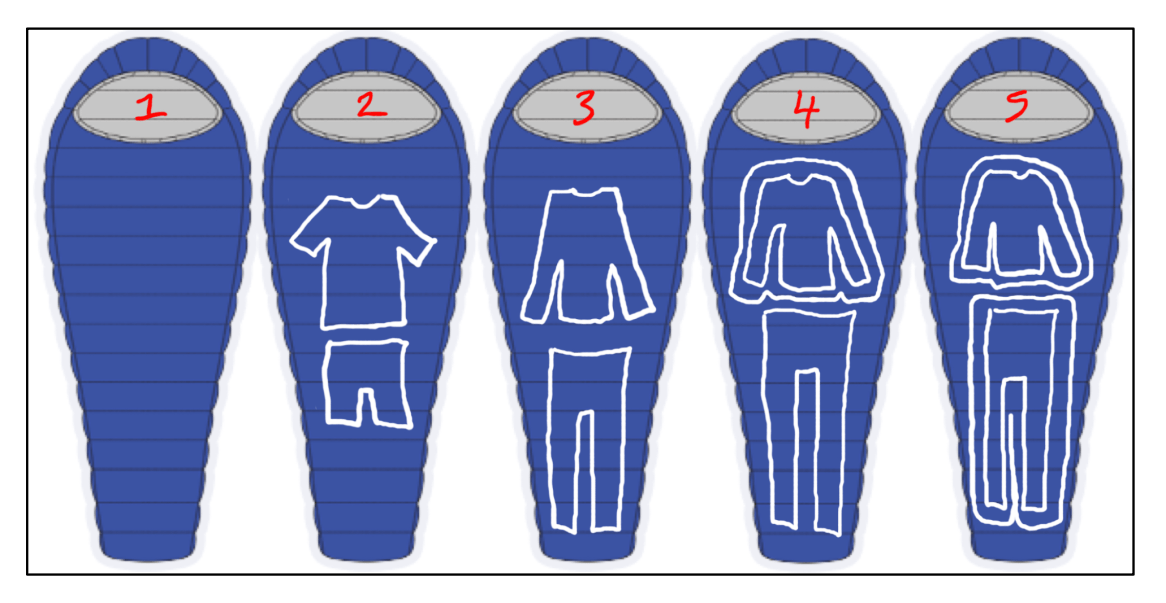
Also consider that it is often a wise choice to choose a sleeping bag that has less warmth and lower weight if you are also carrying top/ bottom base layers and a down jacket. These clothing items can be used to layer and add warmth.
Layering adds warmth
WEIGHTS AND PRICE
Rab Mythic Ultra 180 retails at £550.00 and weighs 400g (900 fill down)
Sea to Summit SP1 Retails at £260.00 and weighs 350g (850 fill down)
PHD Minimus K Retails at £484.00 and weighs 330g (this bag has no zip but has 1000 fill down)
The Mythic Ultra utilizes breakthrough technology with TILT (Thermo Ionic Lining) which in simple terms works a little like a space blanket offering exceptional warmth. The down is hydrophobic treated and therefore can be used in wet/ damp conditions. It is offered in regular and long. It has a ⅛ zip by YKK on the left, an excellent hood with baffles and is provided with a dry bag and a drawstring storage bag.
The SP1 is tiny and provided in a zipper storage bag and a small compression sack is provided. Using ‘ultra-dry’ 850 fill down, the bag has excellent water repellent property and warmth. It has a YKK zipper, available in regular and long with excellent hood and baffles.
PHD are unique in that they make all the products in their factory in the UK. Therefore, it is possible to purchase any bag ‘off-the-shelf’ as a standard product OR you can order and have a product custom made. For example, you can specify, no zip, half zip or full zip. You can ask for wider shoulders, longer length, warmer toe box and so on. All of this comes at a price, so if bespoke is for you, PHD is the place to go. You can see options HERE.
The Minimus bag has a Drishell outer, no zip, standard length, standard width and 900 fill. Should you require the bag a different length, the price varies, short is no extra charge, long adds 8% and extra-long adds 14%. Equally, if you require extra width, slim is no extra charge, wide is plus 11% and extra-wide adds 20%. Need a zip? Short is £25 extra and full is £41.00 extra.
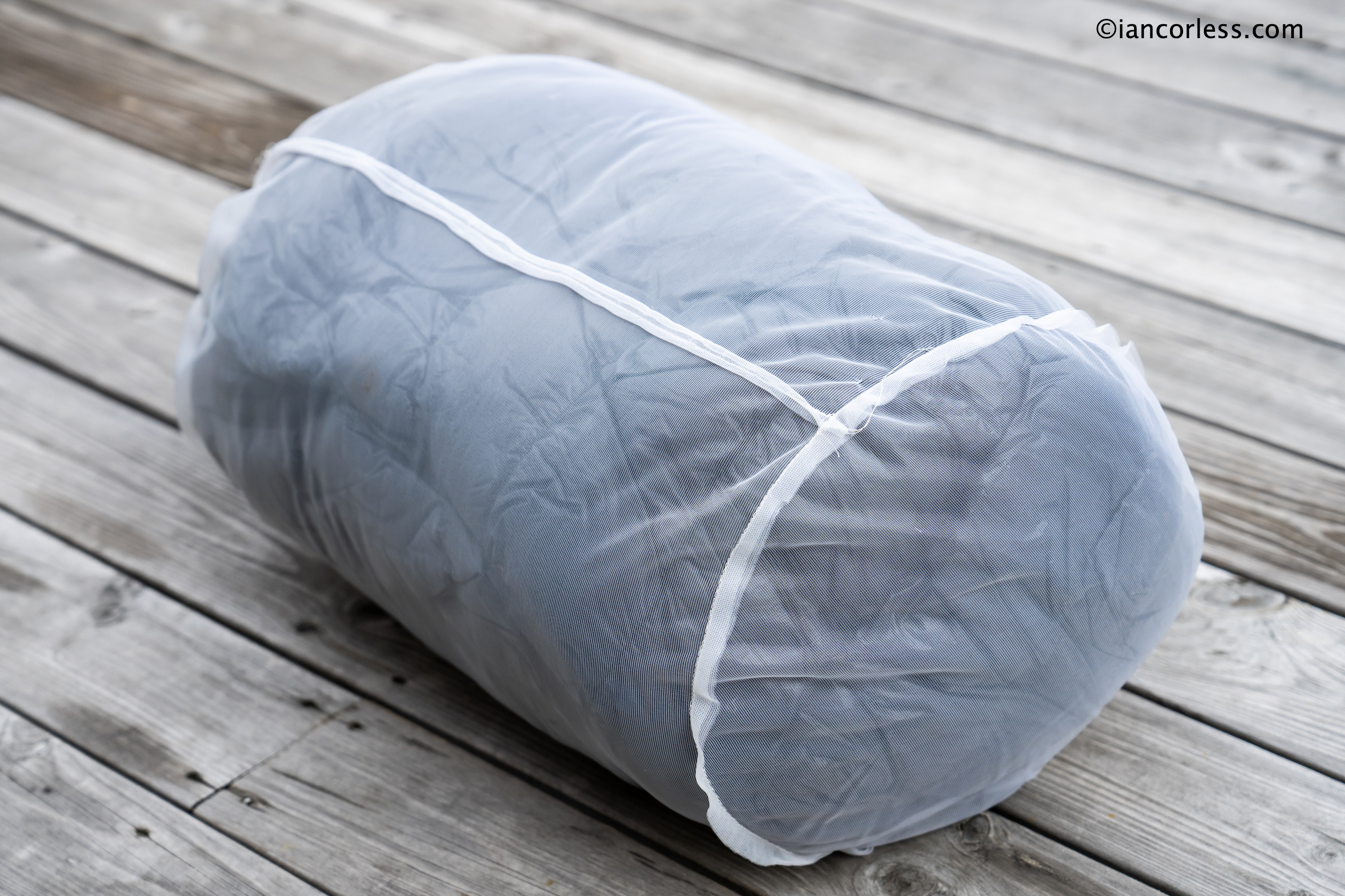
Quite simply, PHD are the Tesla of the sleeping bag world. Great comfort, weight and warmth. It has a mesh bag for storage and comes with a nylon stuff sack*
First and foremost, weight is a key consideration, and these three bags are so close in weight, it is hard to say one is better than the other. The Sea to Summit wins though, a full 100g lighter than the PHD.
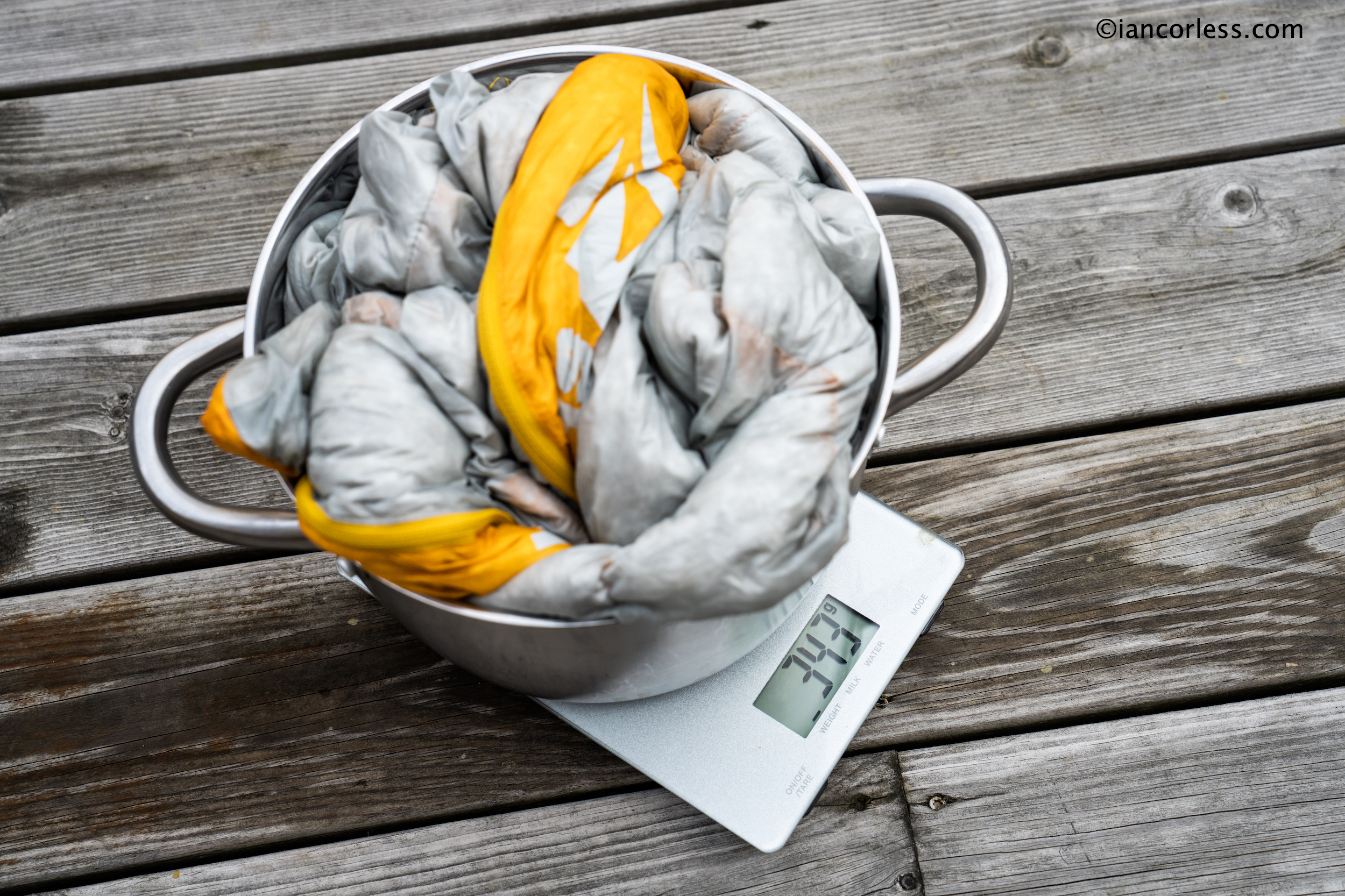
On my scales:
Rab 397g Rab has a tiny eighth zip.
Sea to Summit 344g *Sea to Summit a half zip.
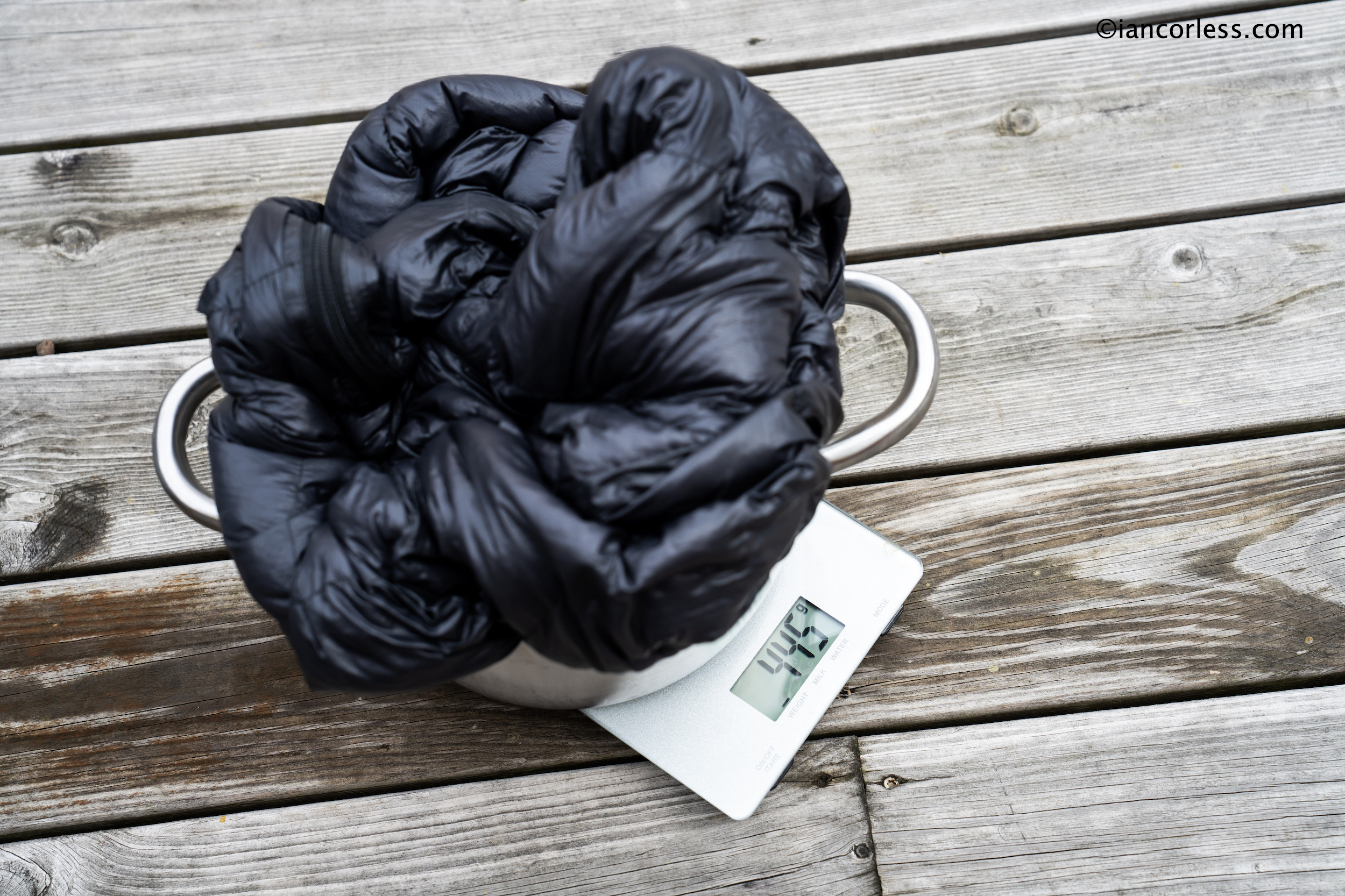
PHD 445g **The PHD has a full-length zip.
When one considers the PHD has a full zip, the weight is impressive. A full zip offers more flexibility and on a hot night, the bag can be used more like a blanket. Not an option with the other two.
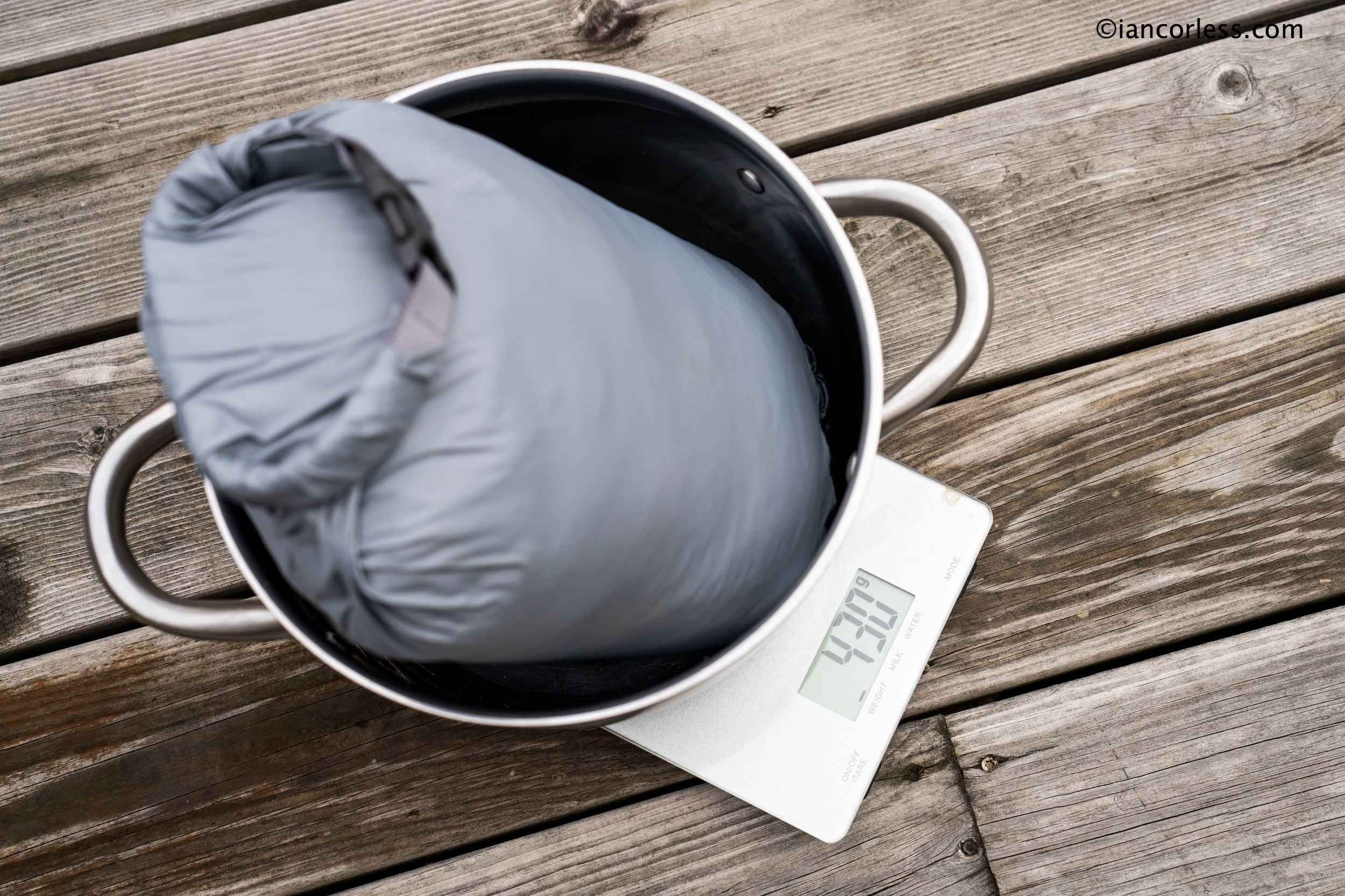
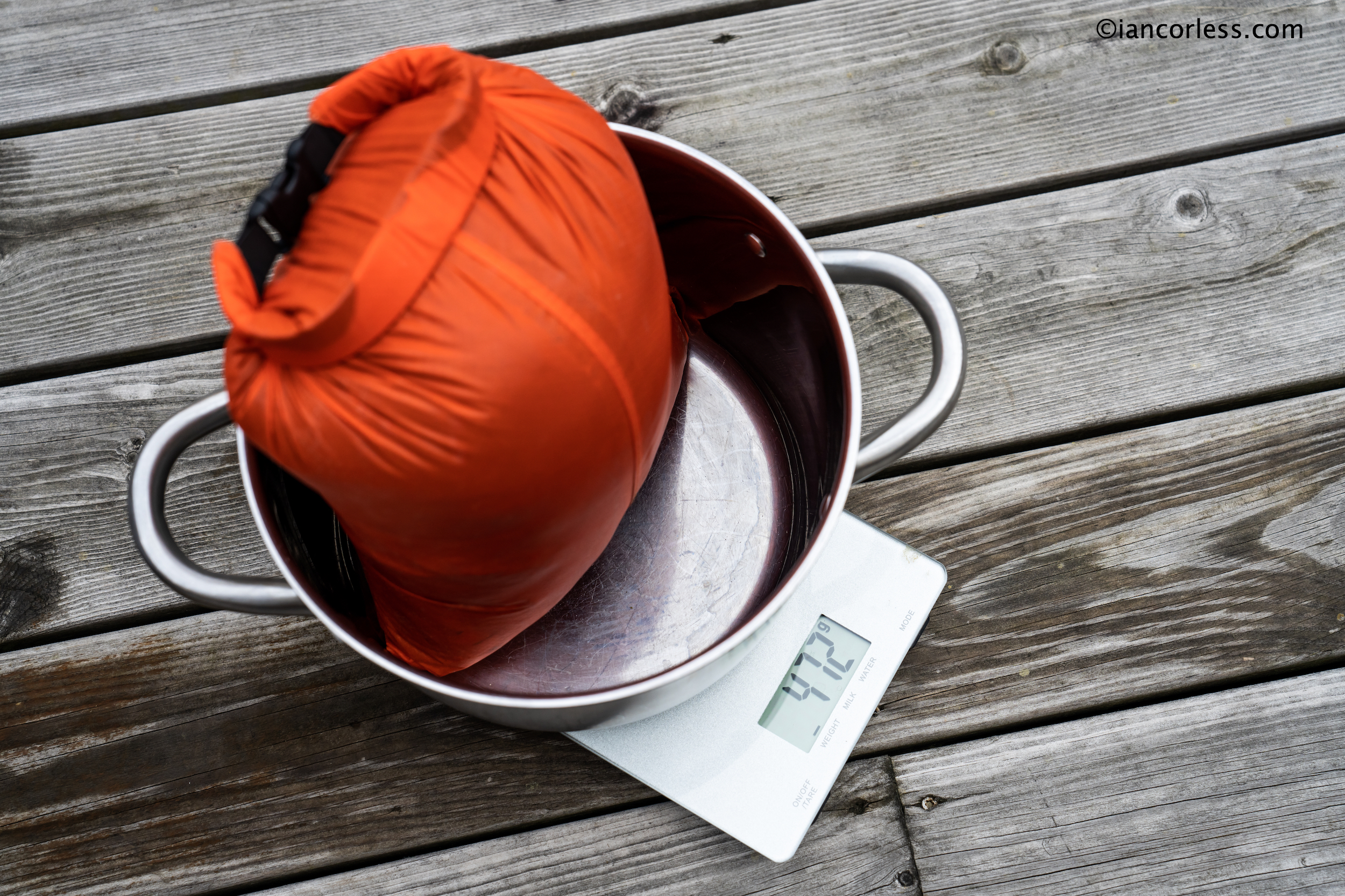
Size can be as crucial as weight and the Sea to Summit is a standout packing to an incredibly small size with the compression sack provided – 38g.
The Rab is supplied with a dry bag and I should point out it would be possible to use a smaller bag and compress the Mythic Ultra 180 smaller – 34g
For the PHD I used a generic 4L dry bag – 31g
It’s worth noting though, often when fast packing, it’s better not to store the sleeping bag in a storage bag as it makes for an odd, sausage like shape that does not utilise the space available.
WARMTH
Remember, a sleeping mat is an essential accessory not only for comfort but warmth. I recommend a Sea to Summit ultra light.
The three bags are very similar in weight, fill and design. However, each brand describes their bags warmth differently. The Comfort Rating indicates the minimum temperature where an individual can sleep in a relaxed position and get a good night’s sleep.
Rab – Sleep limit 0 deg
Sea to Summit – 9 deg comfort
PHD – 5 deg typical.
Based on the above if we take Rab 0 deg minimum rating, Sea to Summits 9 deg comfort and PHD’s 5 deg typical rating, it’s fair to assume that all are good for around 5 deg as a good sleeping temperature. In theory, the Sea to Summit should be the one that ‘may’ struggle at 5 deg but that is not the reality after testing. It is a warm bag and certainly trades blows the Rab and PHD. All three perform exceptionally well at 5 degrees or above.
The Limit of Comfort Rating is the temperature range where an individual sleeping in a curled position and fighting against the cold can still sleep through the night – 0 degrees would apply here. I had several summer nights with temperatures dropping and all three bags performed exceptionally well with the addition of Merino top and bottom layers, a pair of socks and the use of a Buff or hat.
COMFORT and FEEL
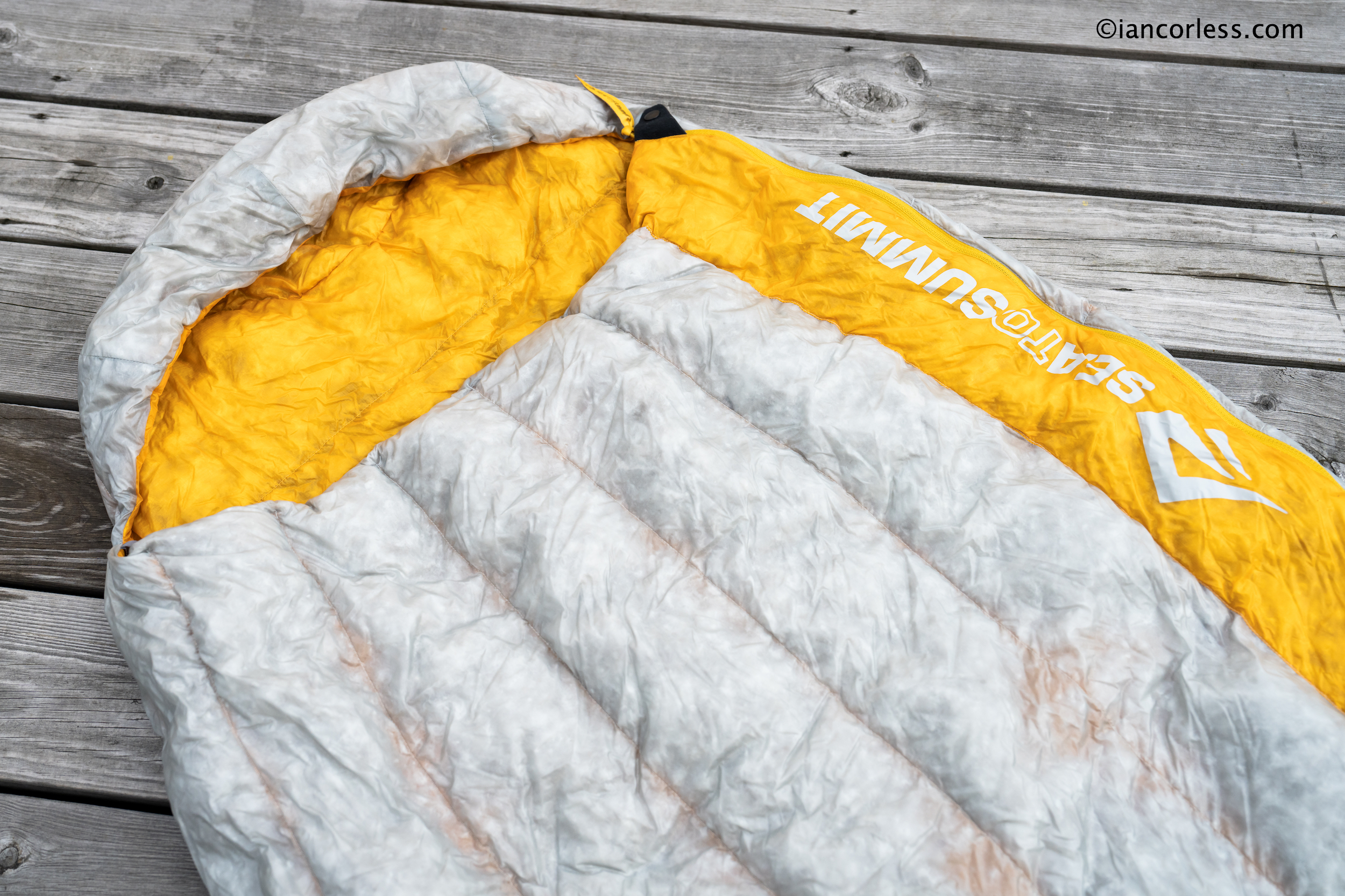
All three bags win out on feel and comfort. Each have their own attributes. The PHD wins on full comfort as it has a full zip. The Rab though has the best hood of all three bags and a superb baffle to keep out drafts. The SP1 has a half zip, good hood and no baffle.
All are silky smooth to the touch and comfortable.
The Rab with black outer, silver logos and silver TILT lining feels and looks premium. Equally, the SP1 has a superb look of grey/ yellow and excellent logos/ branding. The PHD is a no fuss bag. If the other too are Tesla and Porsche, the PHD is a Land Rover but you know it will get the job done.
VALUE FOR MONEY
These are three excellent sleeping bags offering the best option in their class. Quite simply, you cannot go wrong with any of them. They have all been used and tested in similar environments, conditions and temperatures whilst camping. However, when looking at weight, pack size, warmth and price, we have a clear winner.
The standout is the Sea to Summit SP1 which offers an unbeatable package of low-weight, small packing size, incredible warmth, and a low price. It is half the price of the competition and does not compromise on any features. It’s a winner. More info HERE.
The Rab is a great bag, which offers a little more warmth, larger pack size and just a fraction more weight. The black colour is a plus for me and the hood/ baffles are the best of the three. The zip is of no real use and for me I would prefer either no zip to save on weight or prefer the additional weight and half a zip that offers more practical use. The treated down offers incredible flexibility and certainly if I planned on using one bag for different conditions and environments, the Mythic Ultra 180 would be a great choice. More info HERE.
PHD are always a winner, and they make incredible products. But ‘off-the-shelf’ it’s difficult to justify the cost in comparison to the excellent Sea to Summit SP1. However, long, tall, short, wide, large, small, zip or no zip, PHD will make a bag just for you and it will be perfect. That comes at a price though and it will be arguably, the best sleeping bag you have ever had. More info HERE























 IAN CORLESS