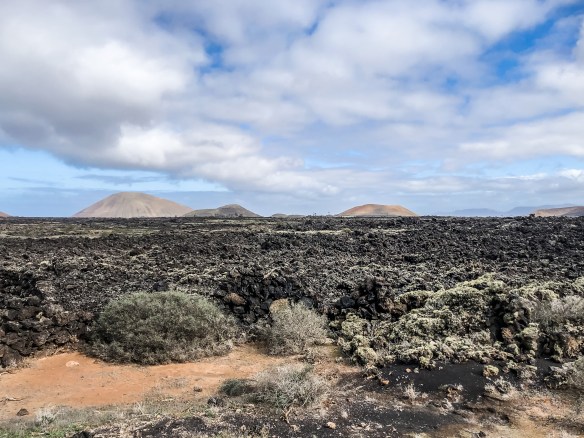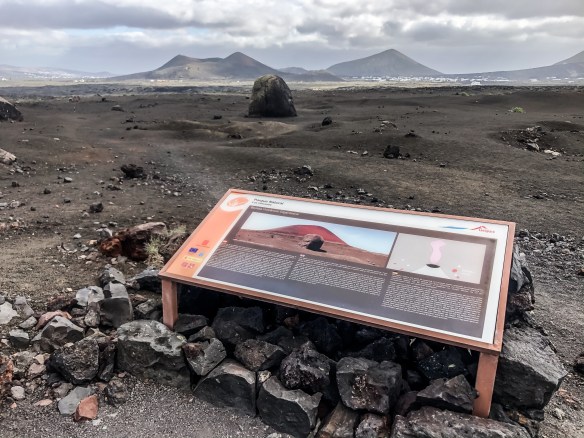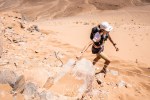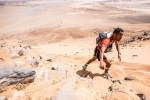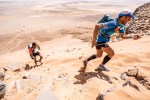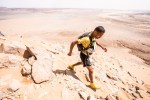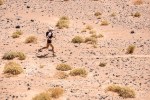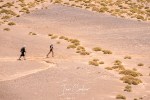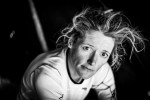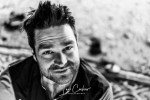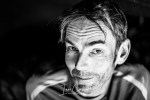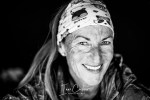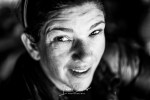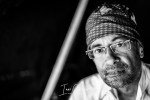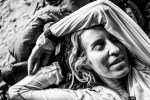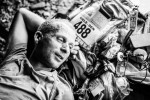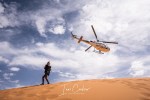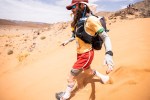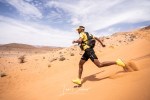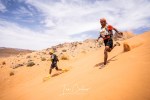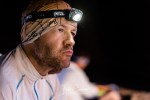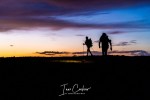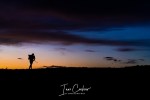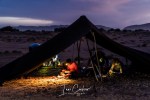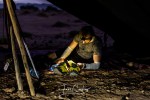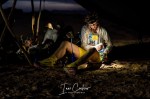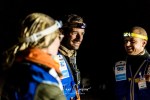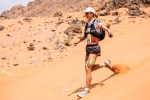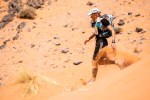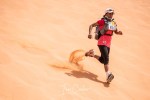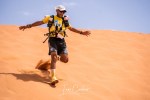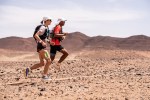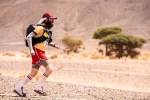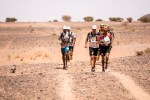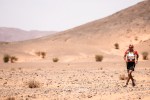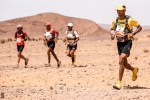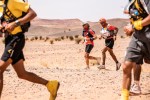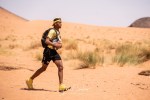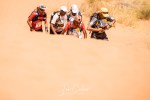
Lanzarote Training Camp 2020 – Day 7

It was a cloudy day but the anticipated rain never came, thank goodness! In some respect, today was an easier day with just two run sessions and no talks.

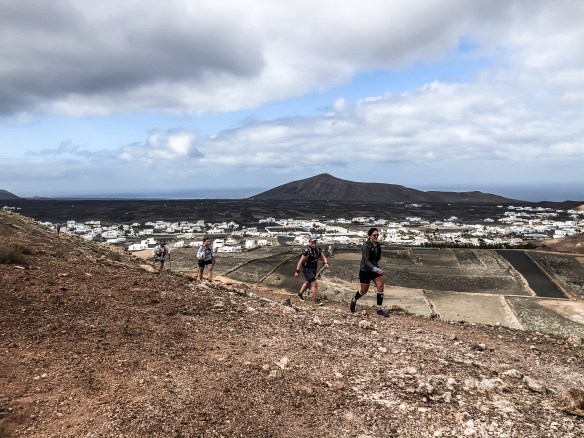
But… the day did include the in-famous Volcano Hill Reps.

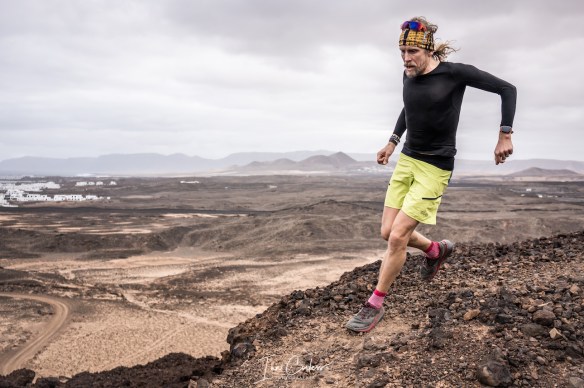
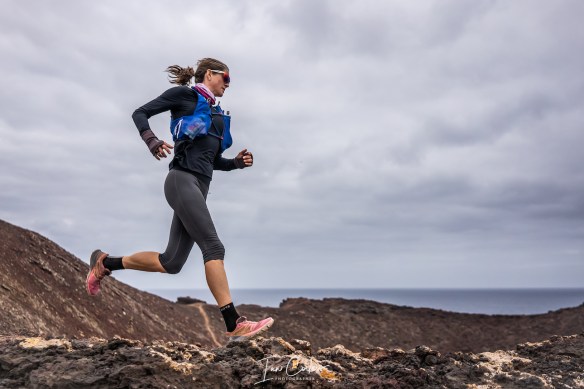
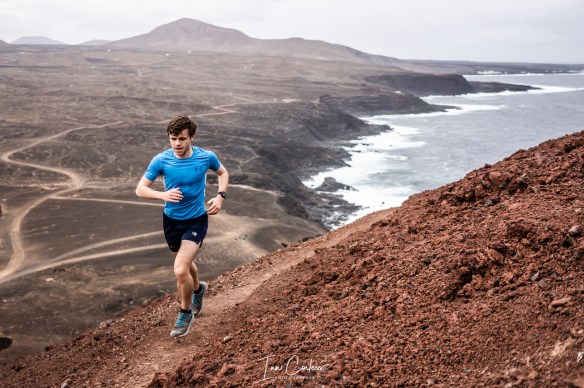
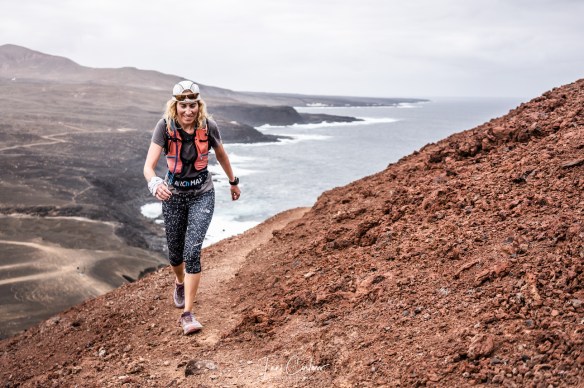
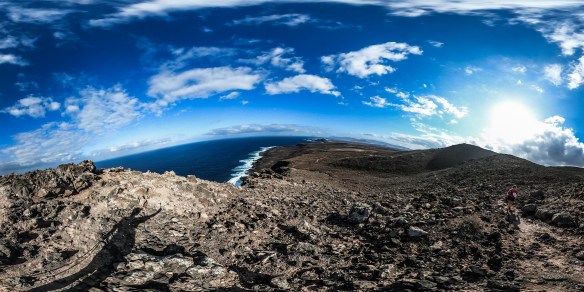
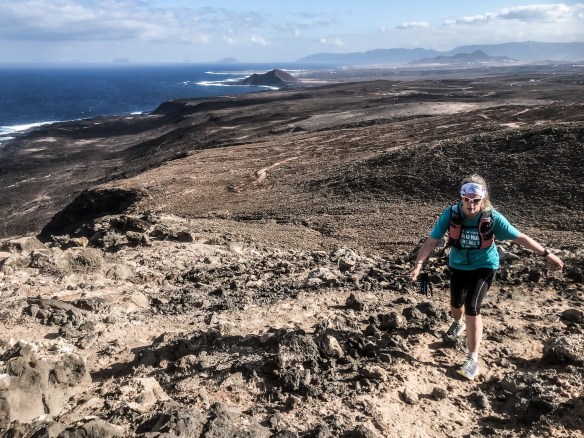
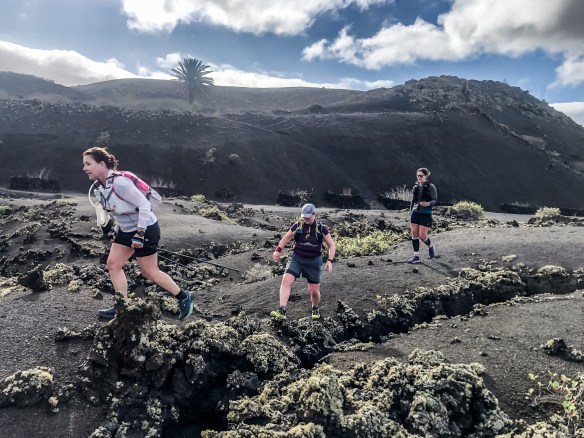
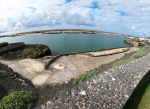
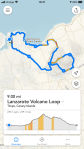
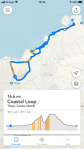
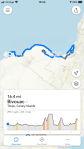
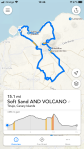
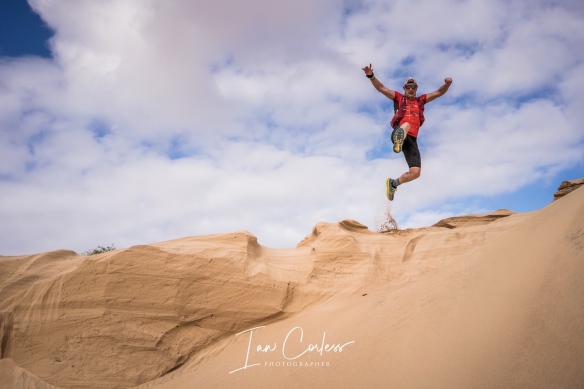
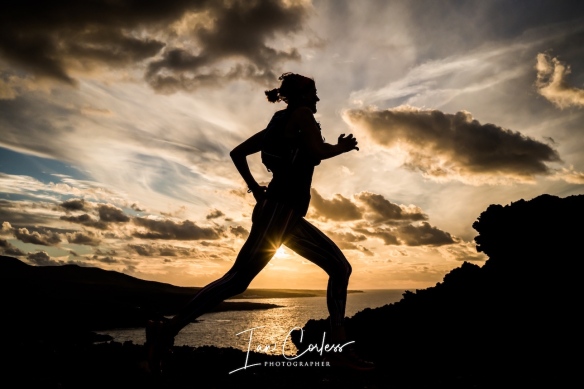
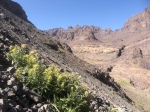
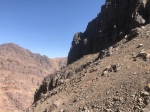
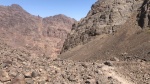
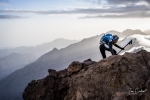
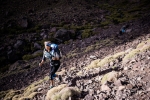
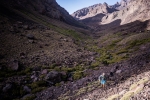
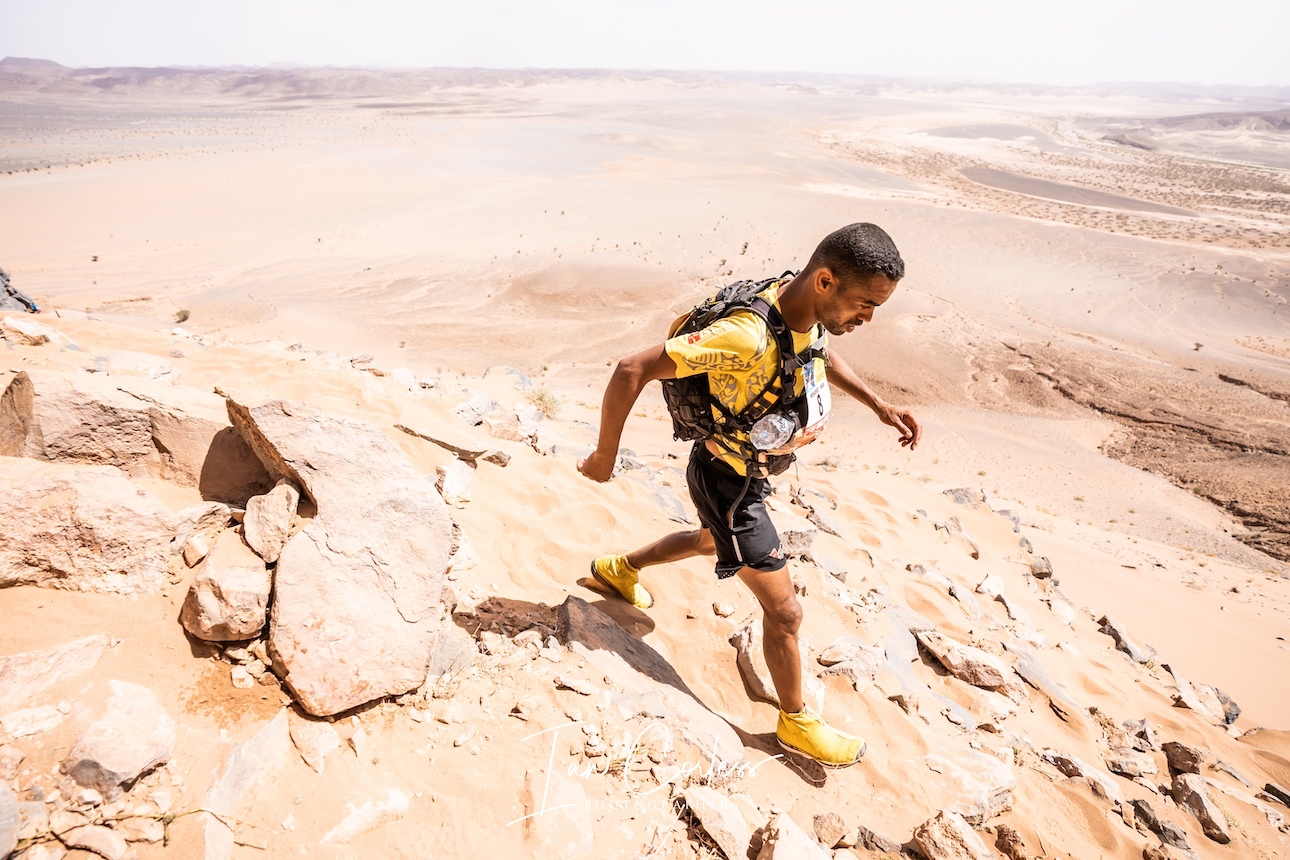
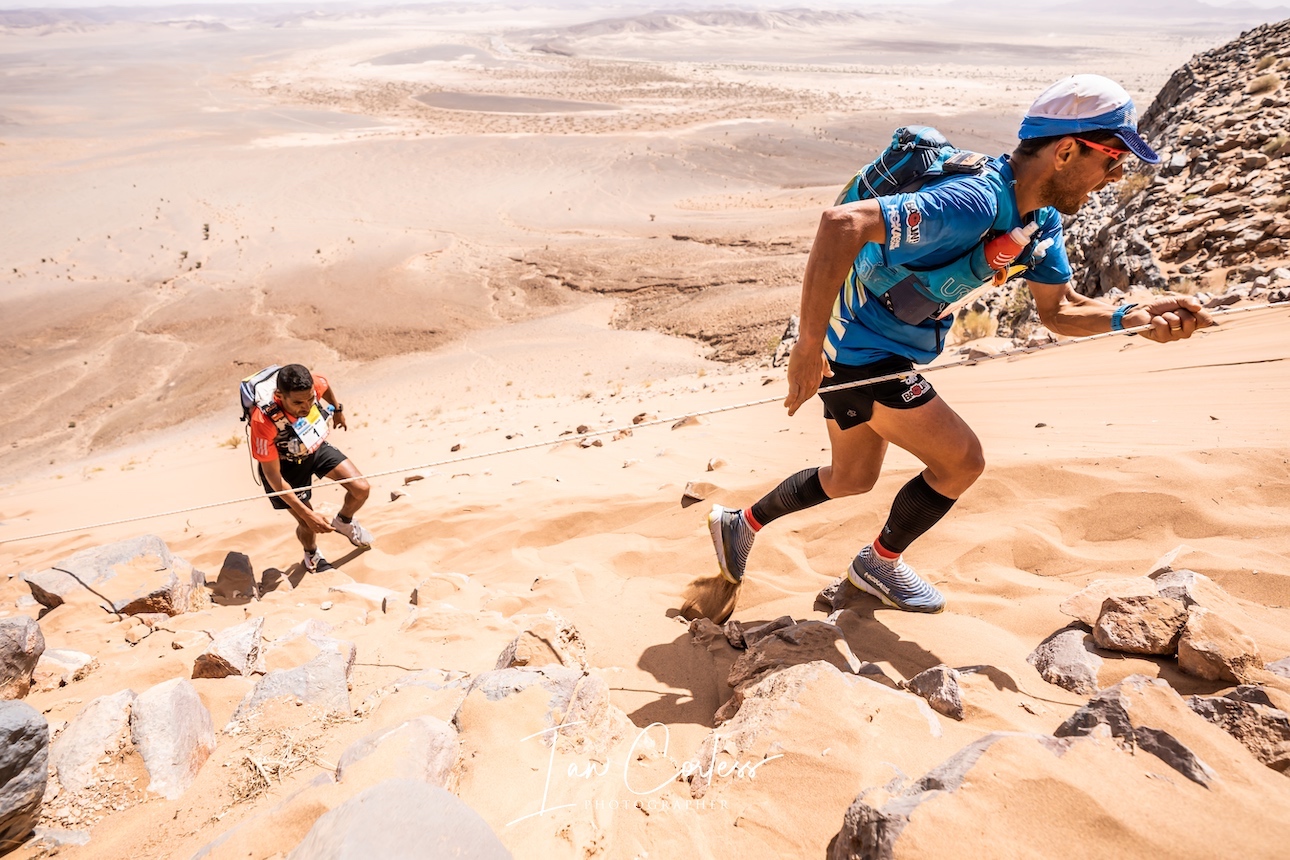
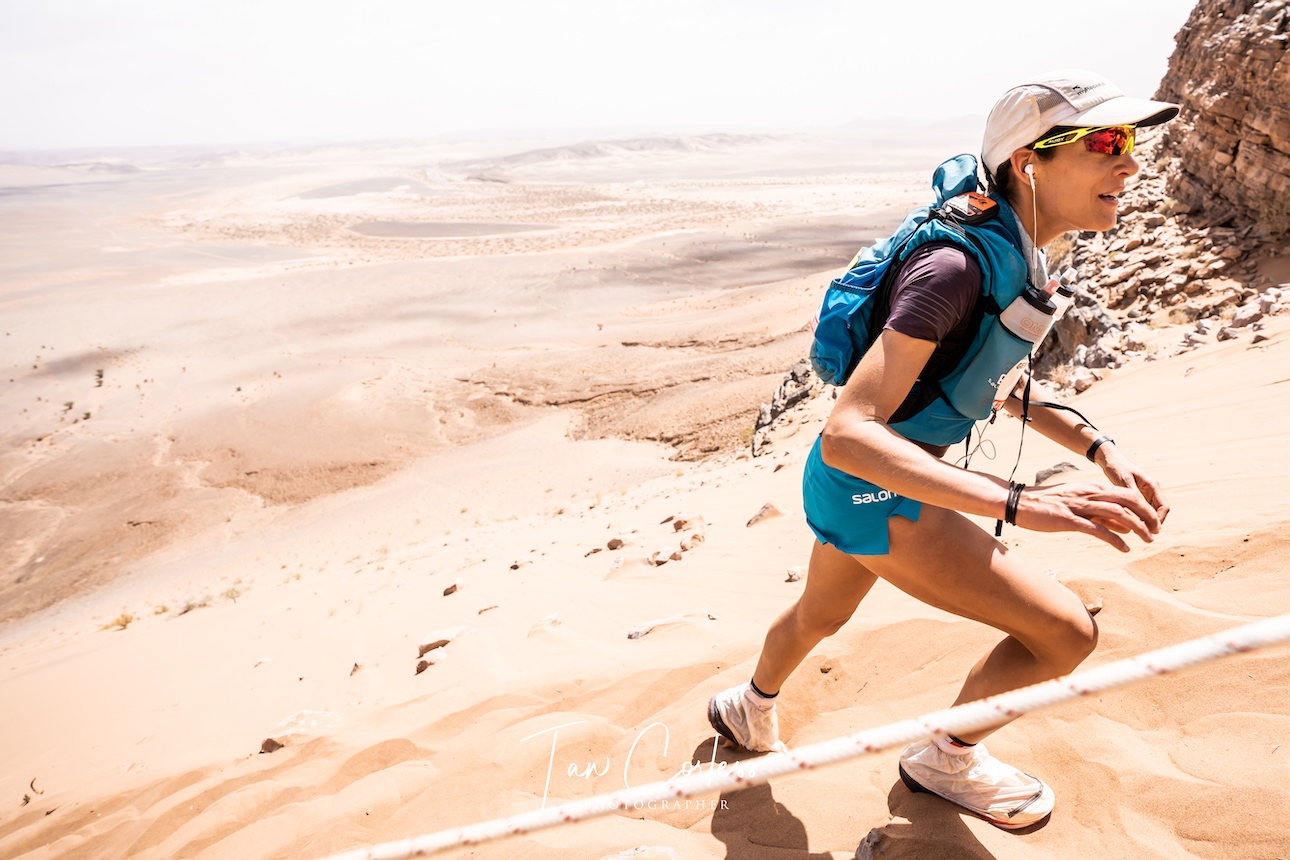
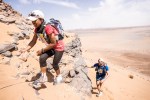
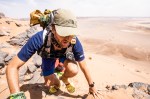
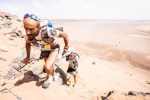
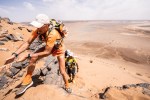
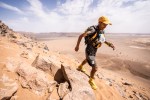
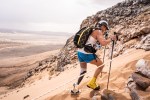
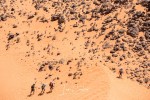
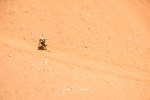
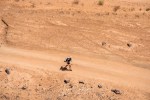
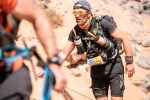
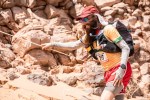
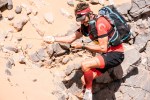
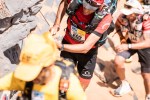
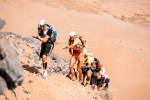
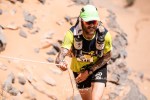
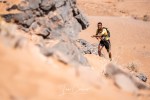
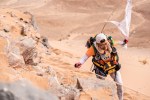
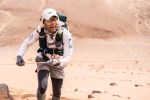
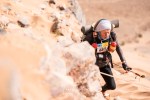
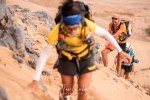
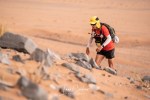
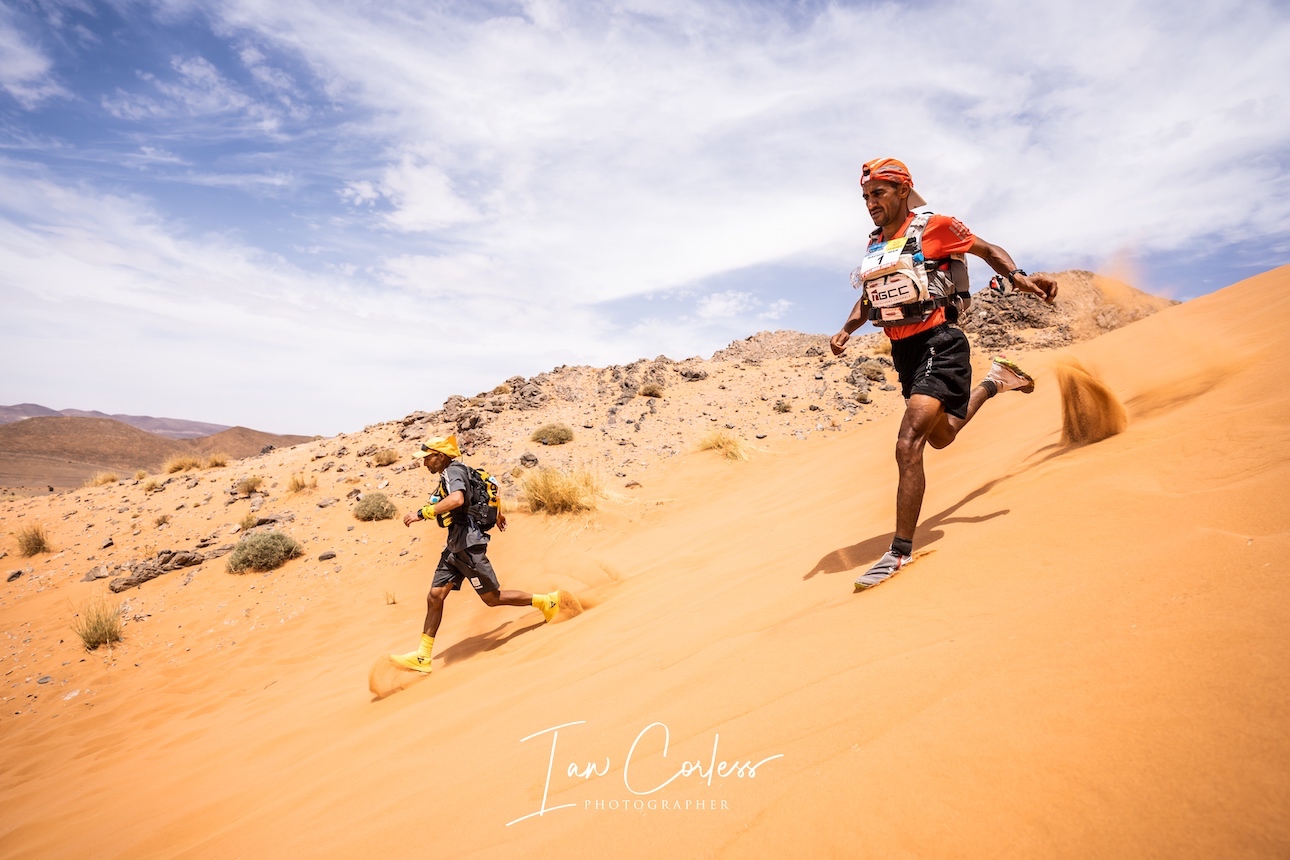
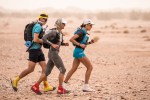
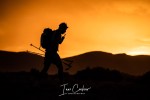
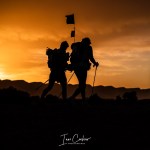
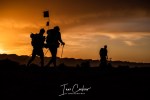
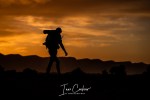
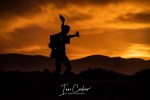
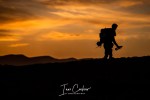
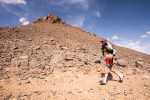
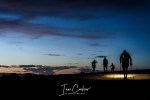
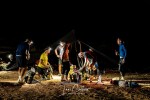
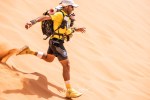
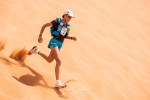
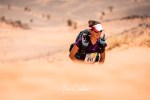
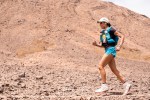
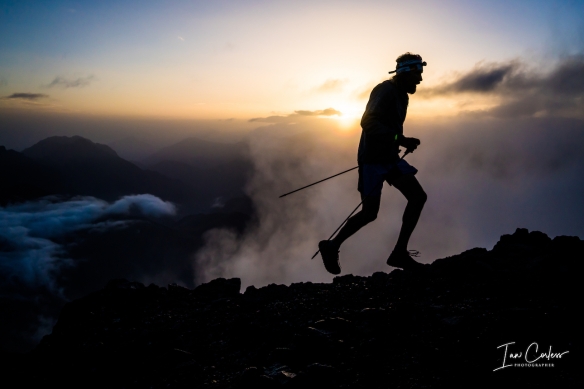
This kicks off with an easy 5km along the coast and then ideally, 6 repetitions of a loop up and down a volcano. It’s a perfect session that requires strength, running skill, an ability to handle technical terrain, good lungs and at time, nerves of steel.

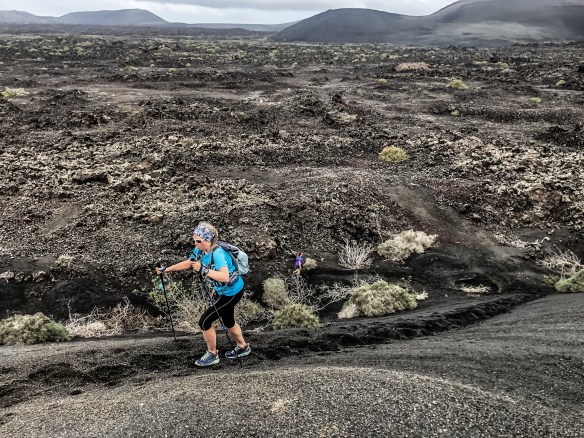
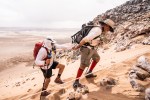
The climb is approximately 100m up a narrow path of stoney sand. It requires commitment and depending on ability, some strong will and nerve.

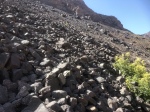
The descent is very stoney with lots of loose rock, sand and gravel. As Elisabet Barnes said post the session:

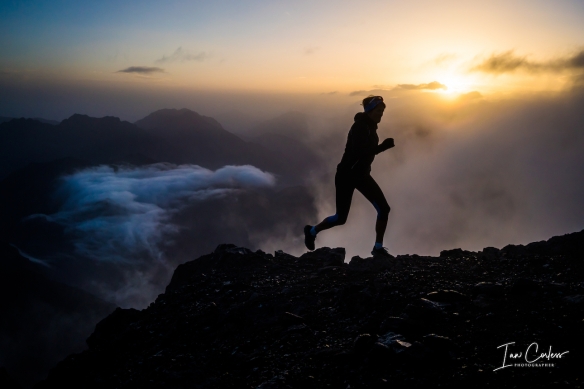
“πŸŒ‹ Volcano hill reps in a moody landscape was on the menu today. I’ve been nursing a cold so if I’m honest this shot was more a case of posing for the camera πŸ˜‚πŸ™ˆ, but the others did work hard! πŸ’ͺπŸ’ͺ I love this session. Some people just fearlessly bang out the reps and thrive on the technical terrain, but for others it’s a huge challenge and they may need to overcome fear of heights, fear of slipping or falling on the technical trail, step outside their comfort zone, and hopefully they leave a little more confident as a result.”

Elisabet nailed it in her words. It was great to see confidence increase along with speed on loops, 3, 4, 5 and 6. Several even did a 7th and even an 8th loop.

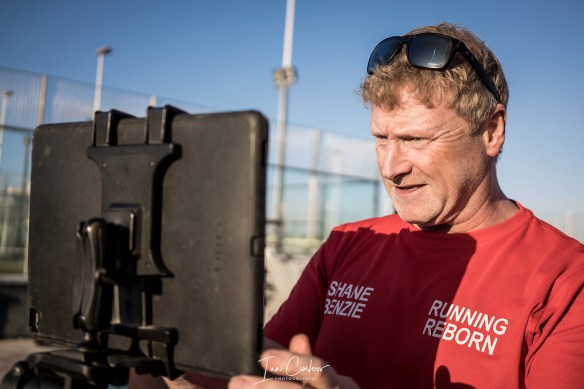
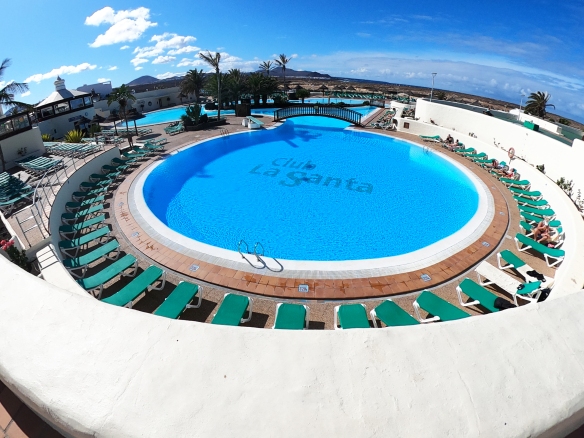
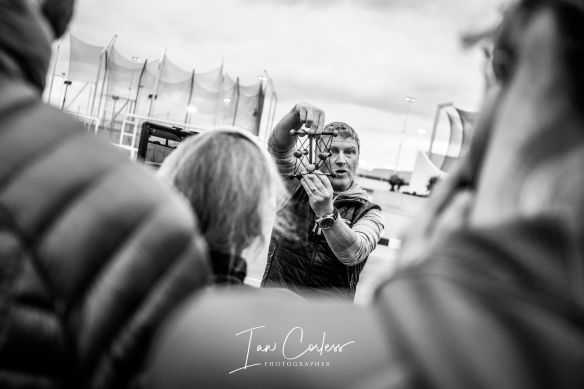
Back at Club La Santa, Shane Benzie was doing some one-to-one coaching sessions using his skills to improve running technique.

An extended break for lunch was followed with an ‘easy’ run for all groups to shake out the legs after what has been an intensive block of running.

2021 Training Camp dates and information will be available HERE soon.

Follow on:

Instagram – @iancorlessphotography

Twitter – @talkultra

facebook.com/iancorlessphotography

Web – www.iancorless.com

Web – www.iancorlessphotography.com

Image sales –www.iancorless.photoshelter.com

Lanzarote Training Camp 2020 – Day 5 and 6

The sun quite literally has been shining on the camp providing us with perfect training days to replicate scenarios that one would find in the Sahara at MDS or technical situations that one would find in races like The Coastal Challenge or Everest Trail Race.

We did a long Coastal Run of 24km on Thursday morning in a self-sufficient manner, the camp attendees broken down in to 4-groups, Gemma Game, Sondre Amdahl, Elisabet Barnes and Ian Corless each leading 4-8 participants at a pace relevant to the group ability.

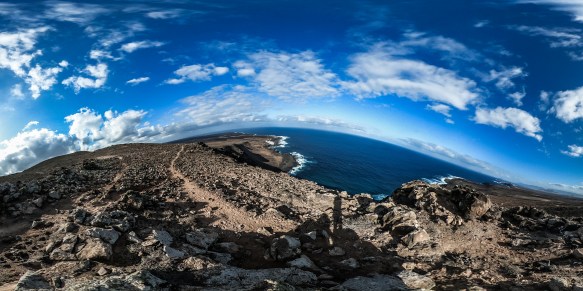
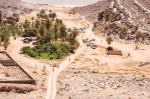
The coastline here is stunning offering a wonderful views with the smell of the sea in the nose and a wind blowing in from Africa.

There was plenty of climbing too and tough, technical and hard terrain. Of course what goes up, must come down.

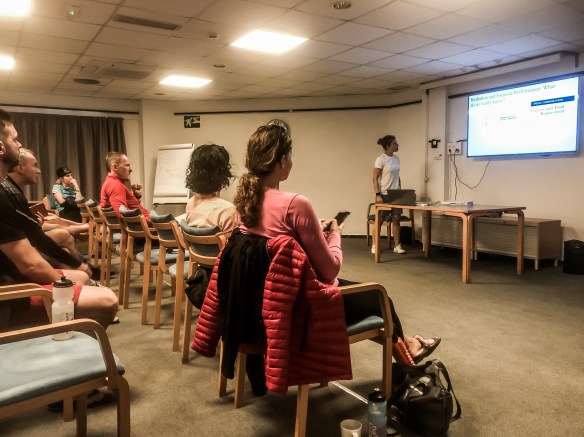
In the afternoon, after a relaxing lunch, Jodie Moss who placed 8th at the 2019 MDS did a talk on heat acclimation and how one should prepare for specifically MDS and the differences one needs to consider if going to a humid race like TCC.

The day concluded with a night-skills session with Sondre and Elisabet leading. All about the skills needed and required to run at night and they then did a short 5km run.

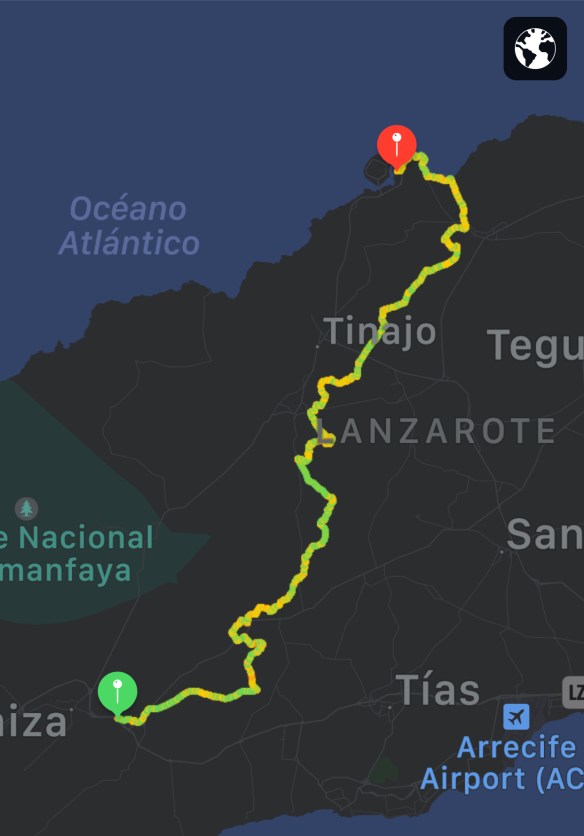
Friday was all about the ‘Long Day!’ For the first time on our camp, we did a point-to-point route of almost marathon distance that crossed the island from Uga and back to Club La Santa.

Ironically, the day started with a little light rain as we were transferred to Uga. It soon left us though leaving us with a perfect, if not windy day.

The terrain is constantly mixed in Lanzarote and the volcanic landscape at all times exciting. We managed 1800m vertical in constantly challenging terrain that replicated a day at MDS perfectly.

Many got an opportunity to use poles and test them, vital if they plan to use them in a race. There is a real technique and once mastered, a real benefit can be gained especially if walking will make a up a bulk of your multi-day pace.

We had just one aid station at 22km (Thanks John and Carmen), so, for much of the day, everyone was carrying a pack of 4-5kg, ideal preparation for self-sufficient multi-day.

The ‘Long Day’ proved to be stunning with the fastest group completing in around 4h 15m and the walkers in 6h 40m. They all now have a real confidence boost knowing that a day at MDS, TCC or ETR is completely doable.

The day concluded with Elisabet Barnes leading a talk and practical session on foot care.

It has been a great couple of days!

Info the 2021 Training Camp will be updated soon HERE

Follow on:

Instagram – @iancorlessphotography

Twitter – @talkultra

facebook.com/iancorlessphotography

Web – www.iancorless.com

Web – www.iancorlessphotography.com

Image sales –www.iancorless.photoshelter.com

Lanzarote Training Camp 2020 – Days 1-3

A year soon passes and once again I am in Lanzarote for our annual Lanzarote Training Camp which is geared towards providing 7-days intensive training for ultra-runners and multi-day runners.

I arrived 3-days a go so that I could check out routes and in particular test a ‘long day’ route which would be a new addition to the camp.

It was a real pleasure to travel from almost one side of Lanzarote to the other on foot. The new route is a point-to-point covering approximately marathon distance with 1800m of vertical gain.

Taking in the best of Lanzarote, the route is extremely varied with a mixture of terrain and gladly has very little road. Some sections cover little used paths and offer a real sense of adventure.

One again the base for the training camp is the sports complex of Club La Santa which is the perfect environment for an intensive week of training with a plethora of facilities on hand.

The camp takes place from Tuesday to Tuesday for 2020 and a full week of activity is planned with routes of varying distance and difficulty.

We have typically 4-5 groups guided and this allows for runners/ walkers to work at a pace that is comfortable for them. Our core team is myself, Elisabet Barnes who has won MDS twice and ranked highly in multi-day races all over the world. Sondre Amdahl who is an experienced single-stage and multi-day ultra-runner with an impressive list of results from all over the world.

Last year we had Running Reborn specialist, Shane Banzie join us and he is back in 2020.

Our additional guides for 2020 are Gemma Game (multiple times top-10 at MDS and 3rd in 2018 and 2019) and Jodie Moss who placed top-10 at the 2019 MDS and who has just completed a PHD and who will provide a talk on heat acclimation.

All the preparation is now done and we patiently await the clients arrival on January 7th. We ease them in to the camp with an easy 1-hour run, a welcome talk and then a group dinner.

Day 1 starts with an 0800 call and 9-mile volcano run. Note news to follow as the days progress.

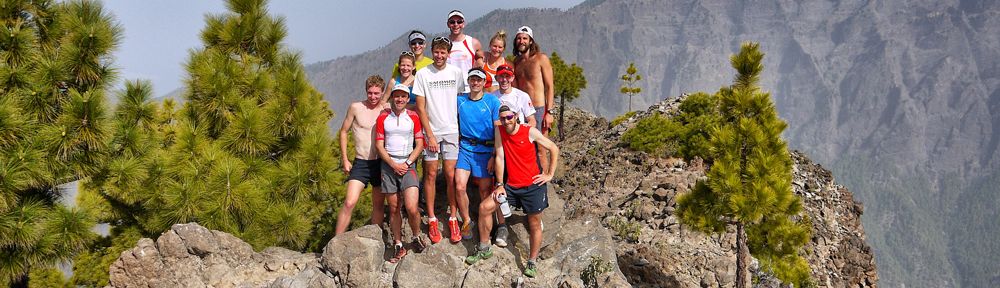
You can view images from the 2019 Training Camp below and HERE

Dates will be announced soon for the 2021 camp HERE

Follow on:

Instagram – @iancorlessphotography

Twitter – @talkultra

facebook.com/iancorlessphotography

Web – www.iancorless.com

Web – www.iancorlessphotography.com

Image sales –www.iancorless.photoshelter.com

Multi-Day Racing – It’s not complicated

It’s Not Complicated…

Let’s get one thing clear, multi-day racing is simple, it is often over complicated and this creates too many questions and too much confusion.

Let’s hark back to Patrick Bauer’s pioneering days and simplify the process, just like he did. Over the years I have interviewed and chatted with many runners in bivouac and after racing who have done just that, they had applied simple logic and worked out what would work for them.Β 

Yes, they had taken advice, looked at websites, processed information but importantly they had found out what worked for them. They realized early on that they were an individual and as such, they needed a personal approach to multi-day racing and not a generic one. Not all multi-day races are the same, some are completely self-sufficient, some are semi self-sufficient and others are supported where all you need is transported for you.

When you break a race down, particularly a self-sufficient race, key things are really important:

Pack

Must fit and be comfortable when loaded. Have enough room (but not too much) for all your equipment and provide easy access to fluid. You must also make sure that your race number is visible as per race rules. Think about additional pockets, such as a waist belt for snacks.

Sleeping Bag

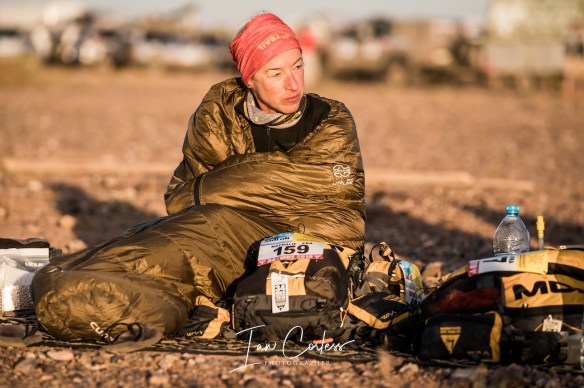
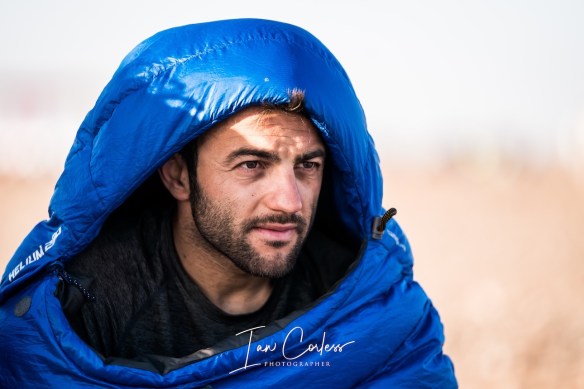
Lightweight, packs small and warm enough. I would always recommend a sleeping bag and jacket as it offers more flexibility, reduced weight and reduced pack size. Popular sleeping bags year-on-year are PHD, Yeti and OMM. Read HERE on how to choose a sleeping bag.

Clothes

You just need what you will run in. However, a spare pair of socks is often commonplace and many runners have one or all of the following: a warm base layer, a lightweight down jacket or waist coat, buff and maybe long lightweight pants. Remember, you have to carry everything, so, it’s all about getting the pack as close to minimum weight. At MDS that is 6.5kg plus water.

Sleeping Mat

It’s optional but a good nights sleep is important and usually those who do not take one wish they had. It provides comfort and importantly an insulating layer between you and the ground. Two options exist – inflatable and roll out solid foam. The choice is yours. The inflatable ones offer more comfort, more flexibility in packing but with poor admin, you do run the risk of a puncture. I’ve used inflatable for many years with no issue. A solid foam Matt will last the week with no risks of problems but they roll large and need to sit outside the pack.

Shoes and Gaiters

Shoes (more below) are personal, just make sure they have a good fit, appropriate drop for your needs and suit your run/walk style with enough durability for you. I say β€˜you’ because someone like Rachid El Morabity can complete the whole of MDS race in say 21-hours whereas most people won’t even do just the long day in that time – his shoe shoe choice will and can be very different to what most of us need!

Continue reading

Choosing a Sleeping Bag for an Adventure

If you are going on an adventure, taking part in a multi-day race or basically going on a one night jolly in the wilds somewhere, a sleeping bag is going to be an essential item.

Choosing a sleeping bag one would think is easy… Go to a shop, find one that fits into your budget, purchase and use.

The reality is, the above is far from the truth.

Need Coaching or a Training Plan? Information HERE

ASK INITIAL QUESTIONS

A good sleeping bag is not cheap and going cheap is most certainly not a good idea. So, from the off, accept that you will need to dedicate a good portion of your hard earned cash.

One sleeping bag will not work in all situations, however, if one is clever, one can make a sleeping bag adapt to other situations and therefore it is possible to increase the range of use and temperatures that a sleeping bag will work in.

Sleeping bags mainly use two fillings: Down or synthetic such as Primaloft.

  • Down: Is lighter and the weight to warmth ratio is higher. It packs smaller and can be compressed to a very tiny package if required. Down however cannot get wet. If it gets wet it all sticks together and will offer no warmth at all. Down is expensive and one should make sure that if purchasing down that it is ethically sourced.
  • Primaloft: A synthetic product, it is heavier and packs larger than down. It’s a cheaper product than down and importantly it can get wet and still retains warmth.

The first questions one should ask are:

  1. Am I using the sleeping bag in a dry or wet climate?
  2. Is the weight of the bag really important. Normally the answer here is, if you are carrying it, yes, the weight is important.
  3. Do I need the sleeping bag to pack as small as possible?
  4. Do I need the bag to work in one or more situations? Another way of looking at this is, do I need to compromise on points 1-3 to get value for money.

Ask some personal questions:

  1. Do I sleep warm?
  2. Do I like to be warm and if not warm, am I miserable?
  3. Am I prepared to be a little cold to be as light as possible?
  4. Do I need a full-length zip, half-zip or am I happy to have no zip?

Consider other factors:

  1. If you are tall, wide, have big shoulders etcetera, etcetera then some sleeping bags will just not work for you as they will be too small.
  2. If you are small/ petite an off-the-shelf sleeping bag actually could be too big for you, this is not a huge problem, but if you wanted the bag to be as small and light as possible, you could go custom made.

Sleeping bags have a β€˜Comfort Rating’ as follows:

Upper limit – the highest temperature the average male can expect to have a comfortable night’s sleep at without too much sweating.

*Comfort – the temperature at which the average adult woman can expect to have a comfortable sleep. *This is the ideal for most people choosing

Lower limit – the temperature at which the average adult male can expect to have a good night’s sleep in a curled position.

Extreme – the lowest temperature at which the average adult woman can survive. This rating comes with caution and additional consideration should be given if you plan to sleep in temperatures this low.

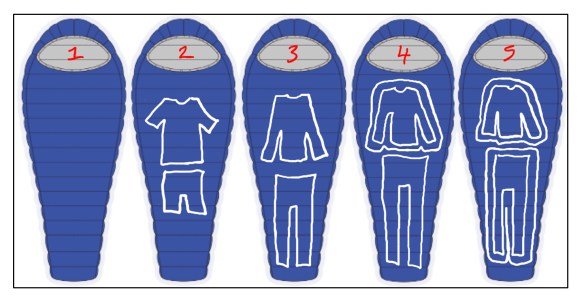
Layering:

Irrespective of what sleeping bag you choose. Layering for me is a key consideration when choosing a sleeping bag and this is one key factor that helps make a sleeping bag stretch over a multitude of uses and temperatures. (See the image below.)

  1. Sleeping alone.
  2. Sleeping bag, T-Shirt and shorts.
  3. Sleeping bag, L/S top and long leggings.
  4. Sleeping bag, L/S top, long leggings and Jacket (down or primaloft).
  5. Sleeping bag, L/S top, long leggings, Jacket (down or primaloft) and over-trousers (down or primaloft).

Note – By wearing a hat/ Buff/ balaclava or combination of all three, you will retain a great deal of body heat – remember this!

With the above diagram, you suddenly see how one sleeping bag can cover at least 5 temperature ranges and still provide comfort.

From a personal perspective, I prefer a sleeping bag that is probably not quite warm enough as stand alone for my chosen environment. Why?Β 

  1. Should the weather be warm, I know my sleeping bag will be fine on it’s own and if it has a zip, I can regulate even more.
  2. I know that I can get warm by incorporating layers.

How do I know what layers I will need and what about additional weight?

The answer to the above is actually part of the process and in some ways, part of the fun of what works for you. Let’s take two scenarios, Desert and Himalayas:

Desert:

Multi-day desert races such as Marathon des Sables, require runners to carry all they need for the duration of the event. Therefore, weight is critical. However, desert temperatures can vary greatly. Some evenings can be mild and even hot. Other nights you can be blasted by wind and sand and the temperature drops to zero or below. So, the sleeping system needs to potentially cover a range of temperatures, let’s say 10 degrees. If you purchase a sleeping bag that is warm at say zero, it is going to be way too hot at 10 degrees. The sleeping bag will also be heavier and pack larger. By contrast, if you had a sleeping bag that was good for say 5 degrees, not only will it be lighter, pack smaller but importantly it will be more comfortable in warmer temperatures. You then make the bag warmer, should you need by adding layers… hat, T, shorts, longer leggings and then finally jacket. A question is often raised about the need for a jacket? I personally think it is essential – they are perfect in the morning and evening when sitting around and importantly, they are that extra important layer if you get a cold night. From my drawing sample, you would be looking at 1 to 4.

β€œSmart lightweight campers have been using their clothes to boost the warmth of their sleeping bags for years and climbers do it when they have to. Yet most of us are still carrying bags much bulkier and heavier than we need.” – Peter Hutchinson Designs

Himalayas:

The principal of the desert applies to the Himalayas. But obviously, one would not use the same sleeping bag. The initial starting point will be a warmer bag that is obviously heavier and larger. Also, down would almost certainly be the choice. The layering would go from 1 to 5. The reason being that daily temperatures in the Himalayas can be say, 10/15 or even 20 degrees. In the evening, depending where you are and how high you are, the temperatures can be -20. That is a huge difference and therefore you need a system that works over a huge range – this can only come from layering! Read about my Three High Passes Trek HERE

NOTE: Both of the above systems benefit greatly from a good sleeping matt that provides a layer between you and the ground. This is an essential item in my opinion. Not only does it add a barrier, it importantly adds comfort. If you are comfortable, you will sleep better. A good nights sleep means you are fresh and recovered for the next day’s challenges.

Professional explorer, Eric Larsen commented to Outside online:

β€œLarsen firmly believes in layering heavily in the cold, an opinion developed after years spent sleeping in subfreezing temps. β€œThere is no such thing as a cold night’s sleep, only not enough layers,” he says. β€œI layer when I’m inside the bag just as much as I do while outside the bag. When you’re climbing Everest, you’re not naked under your down suit. The more heat you can preserve in a warm layer next to your body, the better.”

url https://www.outsideonline.com/2271191/how-experts-layer-sleeping-bag

PRODUCTS

Choosing a sleeping bag is something very personal and we are all individual. A 6ft 2” guy weighing 85kg is going to need something very different than a 5ft 6” woman weighing 55kg, so, keep that in mind!

You know you! It’s ok to ask for advice and recommendations, but you need to keep the points above high in your mind.

There is a general rule with sleeping bags and down jackets, the more you spend, the better they are. But there are many options out there.

Understand that when purchasing a sleeping bag that often it is possible to choose a size, just like when purchasing clothing.

A UK based company PHD (Peter Hutchinson Designs) takes things one step further and can custom make a sleeping bag to your exact specifications and needs. β€œ…a footzip, which adds 10g and allows some air circulation around the feet.Β Zips are an option on the Minim bags, but most competitors don’t ask for one. A short zip with draft tube adds about 55gm (2oz): a full zip andΒ tube adds about 120gm (4oz). Zips also add to the packed size.” One of the advantages of PHD is you can get exactly what you need.

A few years ago I compared PHD, OMM and YETI at the Marathon des Sables HERE

In a recent article, I compared Rab, Sea to Summit and PHD HERE

CONCLUSIONS

Sleeping bags are an essential piece of equipment. Choosing the correct one can make or break an adventure. In simple terms, a good nights sleep allows you to rest and recover for the next day’s demands.

Nobody likes being too cold, especially at night, so keep this in mind and embrace the layering system.

Understand that we are all individual, what works for one, does not work for all.

Research the race and environment you are racing and check the highest and lowest temperatures. Start looking at sleeping bags with the appropriate *comfort rating and narrow down a search from here.

Remember, not two places are the same! For example, there is a huge difference in the desert/ weather say for Morocco, Atacama and the Grand to Grand in the USA.

Also understand the specifics of your adventure and what bag best suits your needs. To clarify on this, if you are going to the desert and the Himalayas, you will need two sleeping bags as the demands are very different. However, if you are going to the desert and then going back-packing in France in summer, the same sleeping bag will almost certainly work.

A sleeping mat is a no brainer when it comes to sleeping. It adds comfort and a barrier between you and the ground. For example, in the Himalayas when the ground is frozen and hard, why would you not put a barrier between you and basically a hard block of ice.Β 

Please support this website.Β I believe everyone deserves to read quality, independent and factual articles – that’s why this website is open to all. Free press has never been so vital. I hope I can keep providing independent articles with your help. Any contribution, however big or small, is so valuable to help finance regular content. Please support me onΒ PatreonΒ HERE.

Follow on:

Instagram – @iancorlessphotography

Twitter – @talkultra

facebook.com/iancorlessphotography

Web – www.iancorless.com

Web – www.iancorlessphotography.com

Image sales –www.iancorless.photoshelter.com

Mount Toubkal, Morocco – Embrace the highest peak in North Africa

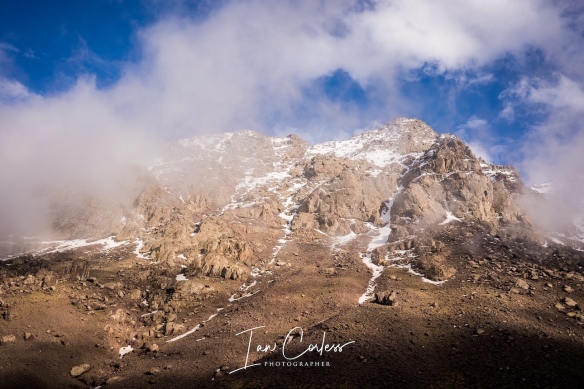
Located in the Toubkal National Park, Morocco, at 4167m, Jebel Toubkal is the highest peak in the Atlas Mountains. It is also, the highest peak in North Africa and the Arab World.

Located just 75-minutes drive from Marrakech (approximately 40-miles) the National Park and the Toubkal summit has long been an excellent opportunity for those looking for a challenge, either for a specific purpose or as an add-on to an active holiday. As ultra-running, mountain running and the desire to explore new places grows. Morocco and Toubkal is a great place to adventure. Toubkal is considered by many as a great entry level mountain and it’s altitude is a great allure.

Toubkal has two-seasons, Winter and Summer. In winter, summiting the peak brings different challenges as it is completely covered in snow and ice. Winter mountain skills are required and the use of crampons are essential.

So, in this article, we look at Toubkal as a summer adventure and in due course, I will follow up with a Winter article.
PRACTICALITIES

Flights to Marrakech are in abundance and if you plan ahead, you can get very good deals, particularly from some of the budget airlines.
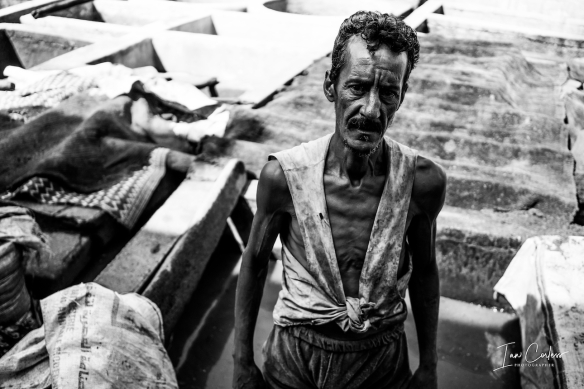
If you have not been to Marrakech before, I would say it is essential to soak up the atmosphere of the place by staying in the Medina (souk) in a typical Riad. Riad’s are standard Moroccan accommodation and like anywhere, you can go cheap or expensive. I have several favourites. My all time favourite, the β€˜Dixneuf La Ksour’ (http://www.dixneuf-la-ksour.com ) which has only 6-rooms, excellent staff and they serve wonderful local food in the evenings and they have a licence to serve alcohol, if that is your thing!

My advice would be, arrive Marrakech and then spend two days sightseeing. Visit the Medina, get lost and haggle for a bargain. On the following day you could visit the Yves-Saint-Laurent Museum (https://www.museeyslmarrakech.com/fr/ ) and the Jardin de Marjorelle (https://www.jardinmajorelle.com)  both worth the effort. There are many other things that one can do, but this is a good starting point. You could then go to Imlil/ Toubkal for your adventure and the return back to Marrakech for another day or two before returning home.

TOUBKAL

Depending on your budget, you can either get a taxi or a private car to the village of Imlil. This is the starting place for all summit attempts. A taxi will be 35-40 euro and private car 80 euro.

OPTION ONE:
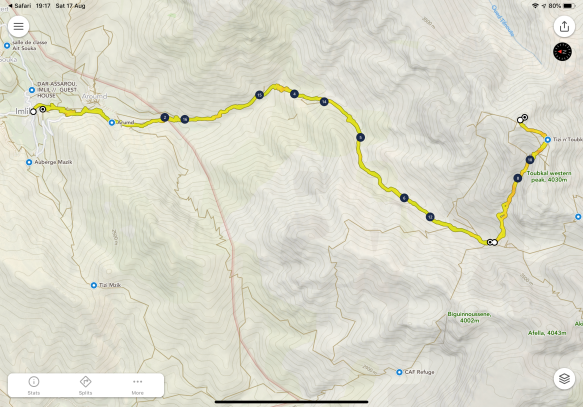
This is a standard option for Toubkal, and what most people do on a first attempt.

They leave Marrakech after breakfast, looking to arrive Imlil, say for 11am. You then meet your *guide, have tea (nearly always compulsory) and then leave for the refuge.

*A guide is now compulsory in the National Park and you cannot enter without one. There are currently three checkpoints that you go through and on each occasion your guide must provide your passport and the details are logged.

Imlil to the refuge is designed to introduce you to the terrain and slowly adapt you to the altitude. Imlil is at 1800m and the β€˜Les Mouflons’ refuge is at 3207m. Depending on experience and adaptation, Imlil to the refuge can take 3-6 hours. 
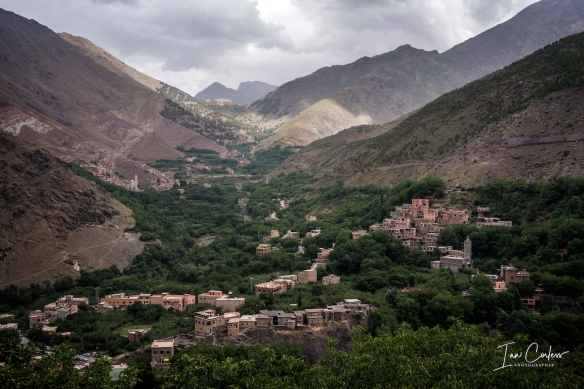
Leaving Imlil, you have a narrow trail that rises quickly to a road and then the village of Aroumd. Here you will meet the first passport control and then you cross a floodplain before starting the climb to the refuge. The terrain is rocky and rough but not dangerous.
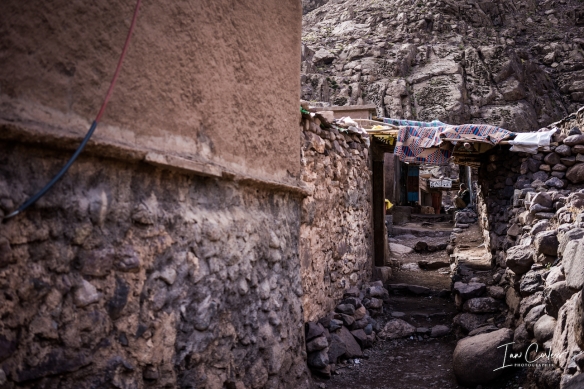
Chamharouch is the next passport control and here you will see a large white rock that is a Muslim Shrine. Here it is possible to get water, food if required and soft-drinks such as Coke.
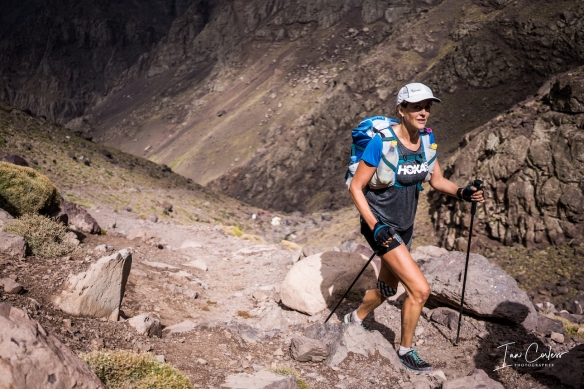
The path now climbs steeply and gently reaches upwards, once again the terrain is rocky. You will arrive at two disused building that now sell drinks and here is the 3rd and final passport check. Before you know it, you will arrive at the refuge located at 3207m.
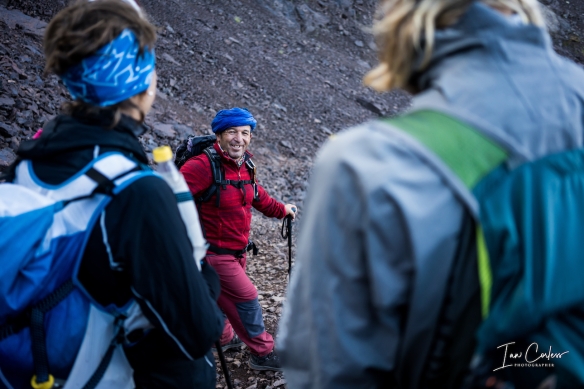
Depending on what you have arranged with your guide, you will have a meal at the refuge and then you will stay in a shared dorm with all the other climbers. These dorms are often unisex, so be prepared. You also need to be self-sufficient in terms of sleeping bag, additional clothes and warm layers. Everyone usually sleeps by 8/9pm.
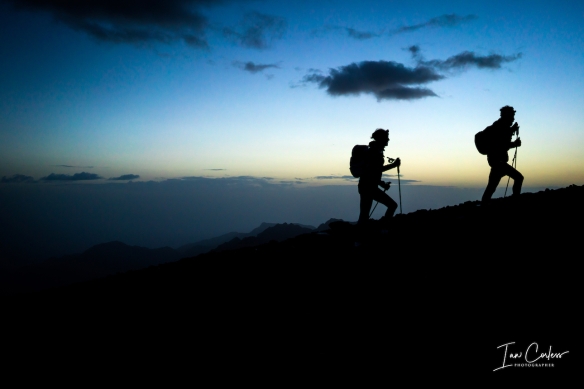
The summit day will typically start at 0400 with breakfast and the intention will be to start the climb asap. Sunrise is approximately 0700, so, depending on your projected speed, the guide will advise on a departure time so you can climb from 3207m to 4167m.
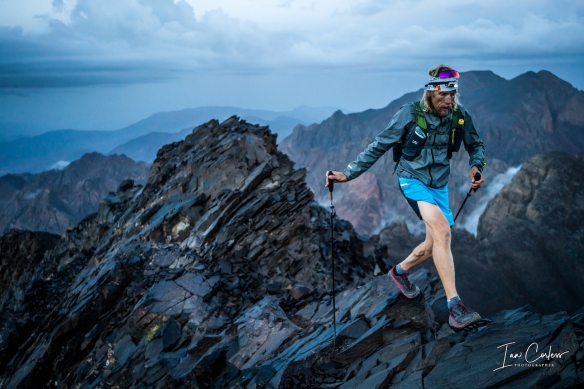
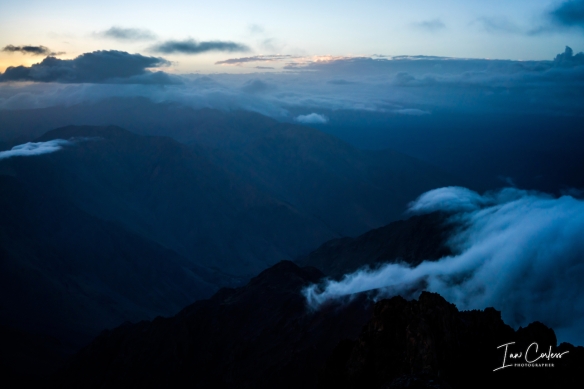
In summer, the trail is very dry and although not a technical climb, Toubkal does have a great deal of loose scree and rocks. With the addition of the demands of altitude, the climb can provide an excellent challenge for someone new to experiences like this. Or, experienced runners and climbers can use it as a form of training. The trail goes straight up often zig-zagging to ease the gradient. Once at the saddle, the trail goes left and right. Here you go left for a final push to the summit. On a clear day, the views are magnificent and if you time it correctly, the sunrise can be truly magical.

Importantly, be prepared for the cold. It may be 30-40 degrees in Marrakech but the summit can be very cold and windy. Make sure you have wind proof jacket/ trousers, warm layer, hat and gloves as a minimum.

Most arrive at the summit between 0700 and 0900, you spend time soaking the views and taking photos and then return via the path you came. (There is another way down, more on that later!)
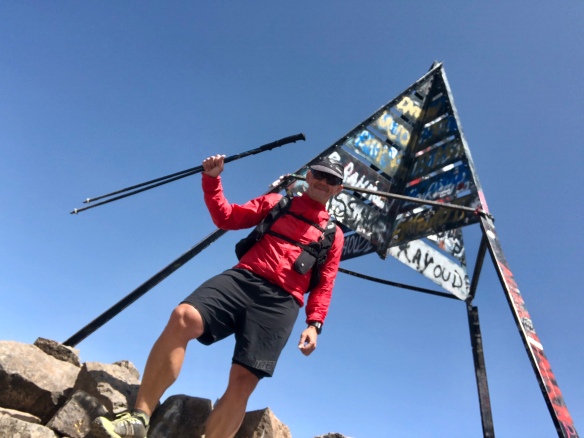
Descending becomes easier from an altitude perspective, with every meter you go down, the easier it will become to breathe. However, I think many find the descent harder and more challenging than the climb. This is due to the loose scree and rocky terrain. If experienced, one can drop from the summit to the refuge in 60-75 minutes. However, many eek their way down and falling/ slipping is a very real possibility. To clarify, there are no exposed ridges or real danger. It will just be a slip and a slide.

Once back at the refuge, many take a break for lunch and they will look to descend back to Imlil in the afternoon via the exact same route they went up the previous day. The out and back route is approximately 22 miles.

Once back in Imlil, it makes sense to book a local Riad, they are very inexpensive and serve great Tagine. The following morning you can arrange for a taxi/ car to collect you and you will be back in Marrakech for lunch.

OPTION TWO:

If you are experienced or want a challenge. Imlil-Toubkal-Imlil can be done in one day. I have done this twice now, once in Winter and once in Summer.

Most recently (August) I left Marrakech at 0530. I met my guide at 0700. We summited at midday and I was back in Imlil before 4pm in the afternoon. I had a car collect me and I was back in Marrakech before 7pm.

The above is not for everyone, but for me, it was an ideal opportunity to fit an action packed day between holiday days, before and after in Marrakech.
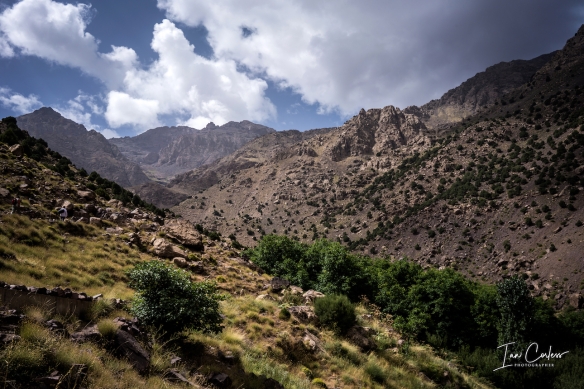
OPTION THREE:
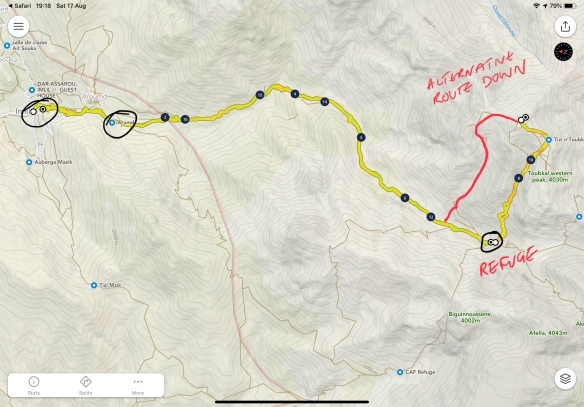
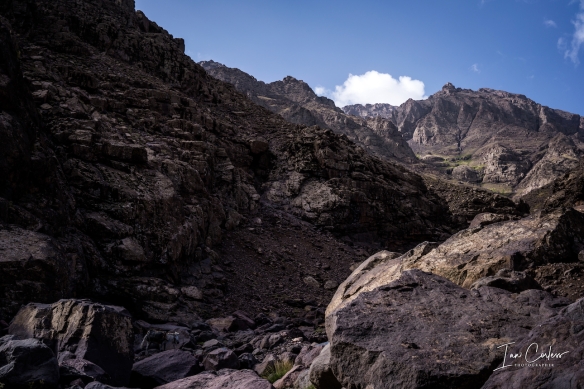
As option two, but from the summit it is possible to take another route down. This is a more challenging descent with some exposure, very loose scree and lots of technical rocks. In terms of distance, it is maybe a little less than the standard up and down route but it does offer more excitement! I took this route down on my first trip to Toubkal. It rejoins the path up to the refuge below Les Mouflons.

EQUIPMENT:

During the day, shorts and t-shirt is ideal for the climb to the refuge. Shoes should be good trail running shoes with toe protection. Hikers will probably use walking shoes, approach shoes or boots. I used VJ Sport MAXx shoes which were perfect on these trails. You will need a pack and in that pack a change of clothes, warm layers, a sleeping bag and the capacity to carry liquid and some snacks. Refuge to the summit and back can be cold and windy. Be prepared with a Primaloft warm layer, gloves, hat and wind proof pants and jacket. It is recommended to have waterproof (just in case!)

I think poles for most people are an essential item. They will considerably help on the climb up and on the descent, they will add a security blanket.

TIME OF YEAR:

August for me is perfect. Marrakech is hot but has less tourists. Expect 30-40 degrees during the day. Imlil to the refuge, temperatures will be somewhere between 15 degs at 0700 and 30 deg in the afternoon. May can still have snow, so, be careful.
BOOKING:
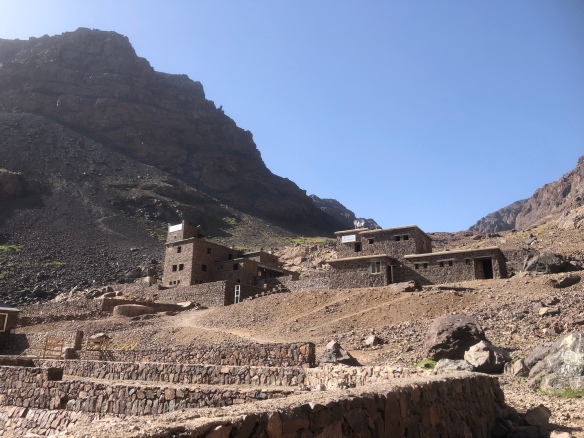
The refuge at Toubkal is a great place to liaise with in regard to booking. 

refugetoubkal@gmail.com  – Liaise with Hamid.

Refuge Tariffs:

34.5 euro per person per night full board ( Dinner, breakfast and lunch )

29.5 euro per person per night half board ( Dinner and breakfast  )

19.5 euros per person per night ( without meals )

The refuge can also arrange the following for you:

Transport from and back to Marrakech

Accommodation in Imlil

Mountain Guide – A guide will be approximately 80 euro per day and is payable in cash only.

IMLIL HOTEL:

The Riad Atlas Prestige is located on the climb out of Imlil. It’s cozy, provides an excellent service and the food is great. It also very inexpensive at typically 30 euros a night for 2-people.

The hotel is on booking.com or you can contact directly +212 666 494954

SAFETY:

Morocco is safe. I have been travelling in different areas for over 7-years and I have always had a great time with wonderful experiences. Of course, there are cultural differences and as a tourist, it is we that must adapt. Women in particular should consider β€˜covering up’ a little more, particular if running. But, in Marrakech, there are so many tourists that pretty much anything goes. Taking photographs, one should be careful. The locals really do not like it, and this I know from first hand experience.

Unfortunately, in December 2018 two girls were murdered between Imlil and Toubkal and this created a stir worldwide and locally. Hence the need for a guide and three passport controls now. I cannot emphasise enough that this incident was a one-off and to clarify, I have been back to Morocco and Imlil twice since this incident and at no point was I worried.

CONCLUSION:

An active weekend away or part of a longer trip to Morocco, Imlil and Toubkal is a real adventure and is highly recommended. For example, it would be quite feasible to fly from the UK (for example) on a Friday and return on Monday having visited Imlil and summited Toubkal over the weekend.

For those with more time Imlil is also a great place for a longer stay. There are many trails to explore in the area and the place is a hidden gem.

For those combining holiday and adventure, Imlil and Toubkal is a great active outlet amidst a more relaxed time in Marrakech. If you are planning to be in Morocco for longer than 7-days, also consider heading to the coast to visit Essaouira which is a 4-hour drive. It’s an old place with a very different feel to Marrakech. Of course, the options are only limited by your imagination and budget – it is also possible to go and stay overnight in the desert and have a bivouac experience.

As destinations go, Morocco is a magical place.
Strategy for Completing and not Competing

The last time I toed the line with purpose as a runner was in 2012. It was at the Lakeland 50 in the UK. I was confident, I was really fit and in April, I had won an ultra in Turkey.

However, everything was not ok.

I was getting constant knee pain and I kept ignoring it… Ultra runners are good at that!

Anyway, for much of Lakeland 50 I was near the front, that is until Ambleside and then it all fell apart with constant knee pain. My hopes of a top-10 disappeared and I eventually crossed the line in 36th place in 9:59. My target had been to run around 8:40. In retrospect, I should have been happy. But I wasn’t. I went away knowing that my knee issue had stopped me performing and it needing addressing. 

My knee injury was chronic and required two, maybe three operations. I declined all knowing that knee surgery success is hit and miss. So, ever since, I have managed that pain, changed my goals and loved adventures. Gladly, big hikes and fast packing/ multi-day is what I really love. I still get pain, but I manage it. So, all is good. I am happy to do what I can. I run regularly, daily sometimes and even now, 30-50km training runs are a regular. But walking has always been something I have used to keep moving and rather than it being a negative, I always made it a positive.

So, why am I writing?

Well, I started running after cycling and triathlon. I have to say, I have never considered myself a good runner. I dropped my marathon PB to 2:53 which was creditable but in doing so, I lost the true reason for running. FUN! Do not get me wrong, I had loads of fun running but PB’s, time, diet and training all took over from a healthy outlook on my running. 

I was obsessed by my running. I must clarify, I was previously obsessed by cycling and triathlon and that is why I stopped…!

Being a photographer and journalist has allowed me to look at running in many different ways. I mostly follow the elites, but multi-day races, such as Marathon des Sables, allow me to follow runners achieving a life time goal. I must clarify, achieving a life time goal may be a 5km, 10km, half-marathon and so on. I use longer distances as this is the area I usually deal in – ultra.

Many are looking to complete and not compete.

I have learnt since 2012 that I normally complete anything I set my mind to in sport and the reason for that is strategy, planning, getting the mind in the right place and yes, embracing walking!

The Older I Get, The Better I was!

So much truth here… For me anyway. As the time has passed from 2012 I have worked on races worldwide and all of those races have required me to have a level of fitness. For example, Everest Trail Race, I do pretty much most of the race with cameras – it is the only way. For personal adventure, I have done big treks, several in Nepal, the most recent being the β€˜High Passes’ with the additions of Kala Pather, Everest Base Camp and Ama Dablam BC. In 2020 I have done more multi-day adventures than ever before; regularly moving in a self-sufficient (with tent) way for over a week. A recent trip to Jotunheimen in Norway lasted 9-days and in Trysil, I completed 100km in 2-days with an overnight wild camp. So, all is good!

NEED COACHING and a TRAINING PLAN? HERE

There is one truth in completing. YOU NEED TO BE ABLE TO WALK.

Walking is often looked on as a negative. To be honest, I have heard some people say, β€˜I don’t care what time I do, as long as I do not walk!’

The reality is, if walking is embraced, learned and practiced, finishing times will not only get faster but more enjoyable.

For perspective, we now include walking as a key training element at our Lanzarote Training Camp (HERE) with a specific walking group and one day dedicated to a long walk, for all!

So, how do you start?

Firstly, there is a big difference between walking to the shop for a carton of milk and walking in a race/ training. If there is not, there should be!

Walking in a race (or training) should be meaningful, strong and powerful.

There are many strategies one can use.

For example, one strategy I use is a thing I call β€œ7’s” or β€œ5×2”.

Quite simply, it is about covering 7km by walking 5km and running 2km.

JOIN MY LANZAROTE TRAINING CAMP, JANUARY HERE

The Strategy:

Firstly, with my coaching clients I ask them to walk 5km and time it. We then look at technique and discuss how to get faster.

I need to clarify here, we keep the route flat on road or good hard trail.

I am aiming for, where possible, sub 10-minute km’s. Now of course, many variables come in to play – terrain, weather, climbing and descending to name but a few. But let us assume flat terrain, good weather and fast trail.

Once we get the walking of 5km in under 50-mins, I then add running. Firstly 1km. So, walk 5km and run 1km. Once that fees comfortable, I add another 1km. And here is where the β€œ7’s” or β€œ5×2” comes in.

Basically, the plan is walk 5km and jog 2km.

Like any plan it is progressive, starting with walk 5 and jog 2. Then walk 5, jog 2, walk 5. Then, walk 5, jog 2, walk 5, jog 2 and so on…

This teaches the mind to break down distance and time in manageable blocks. You can focus on the walking, knowing that a jogging break is coming up. You can endure the jogging, knowing that a walking break is coming up.

Why, β€œ7’s” or β€œ5×2.”

Well, 7 conveniently goes in to a marathon – 7/14/21/28/35 and 42.

I think a marathon is something we all understand and although I will round numbers up (for ease) 50-miles is two marathons and 100-miles is four marathons, 7’s provides a great strategy.

So, you see my thinking?

Let’s say, you trained your walking to be so good, that you could walk 5km and jog 2km in under 1-hour. Suddenly, you are doing a 6-hour marathon with actually only maybe 50-60 minutes of total running.

So, if that pace is maintainable, you could do 50-miles in sub 12-hours and maybe even 100-miles in the desirable sub 24-hours!

Here is an example and of course, pace fluctuates based on terrain conditions, but it provides a good perspective.

Continue reading

Marathon des Sables 2019 #MDS #MDS2019 – Stage 5 42.2km

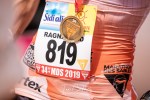
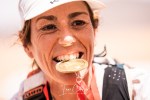
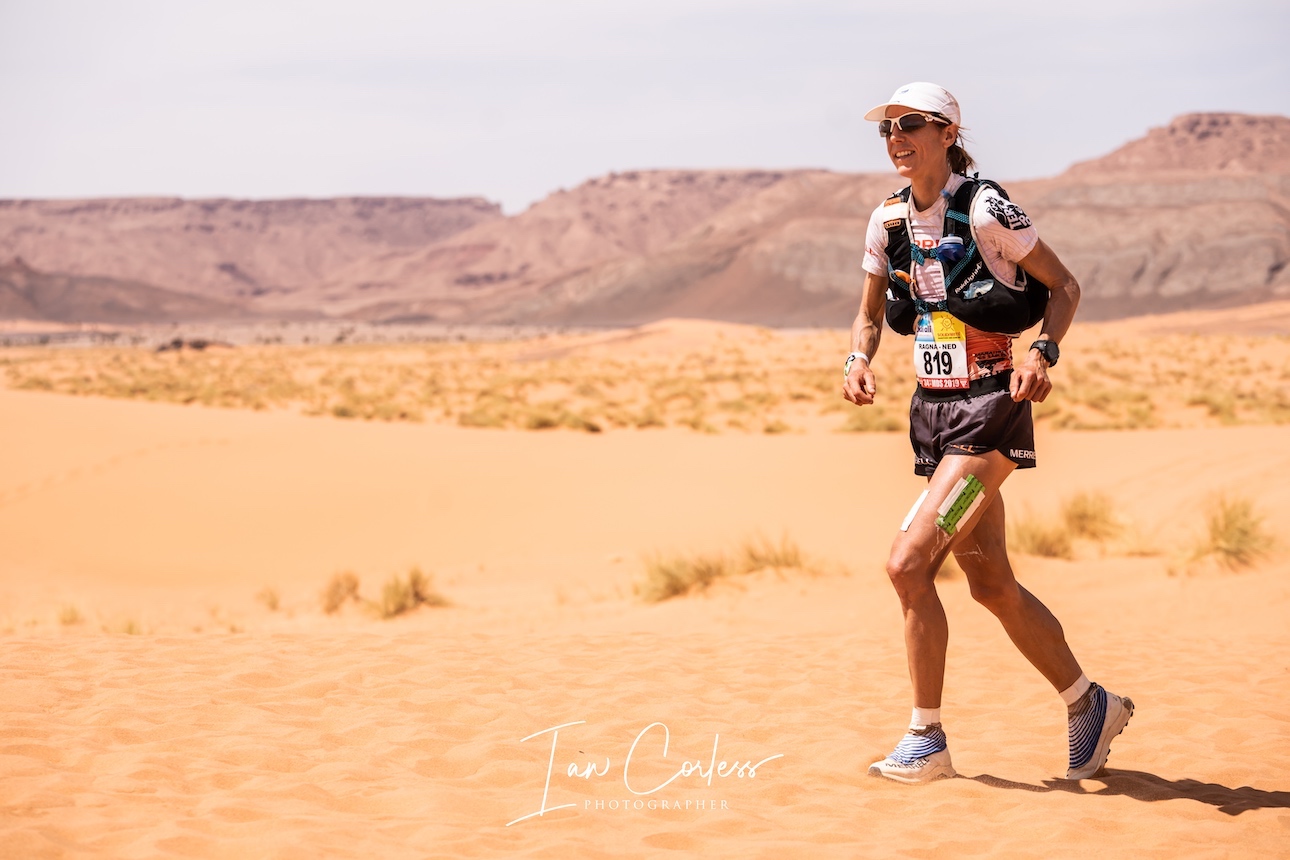
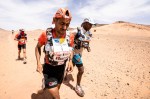
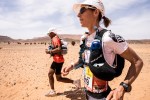
Rachid El Morabity and Ragna Debats are the 2019 champions of the iconic Marathon des Sables.

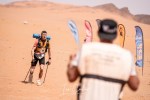
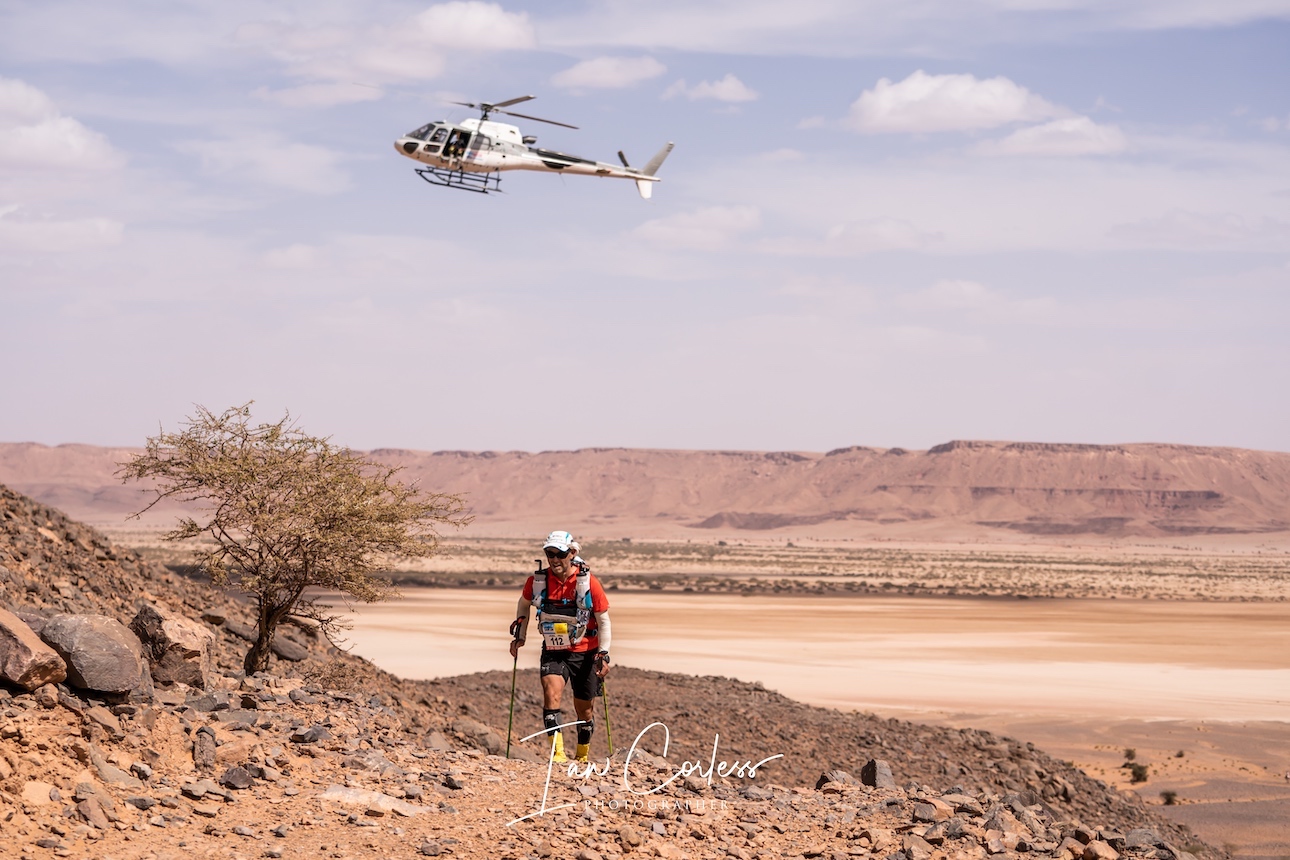
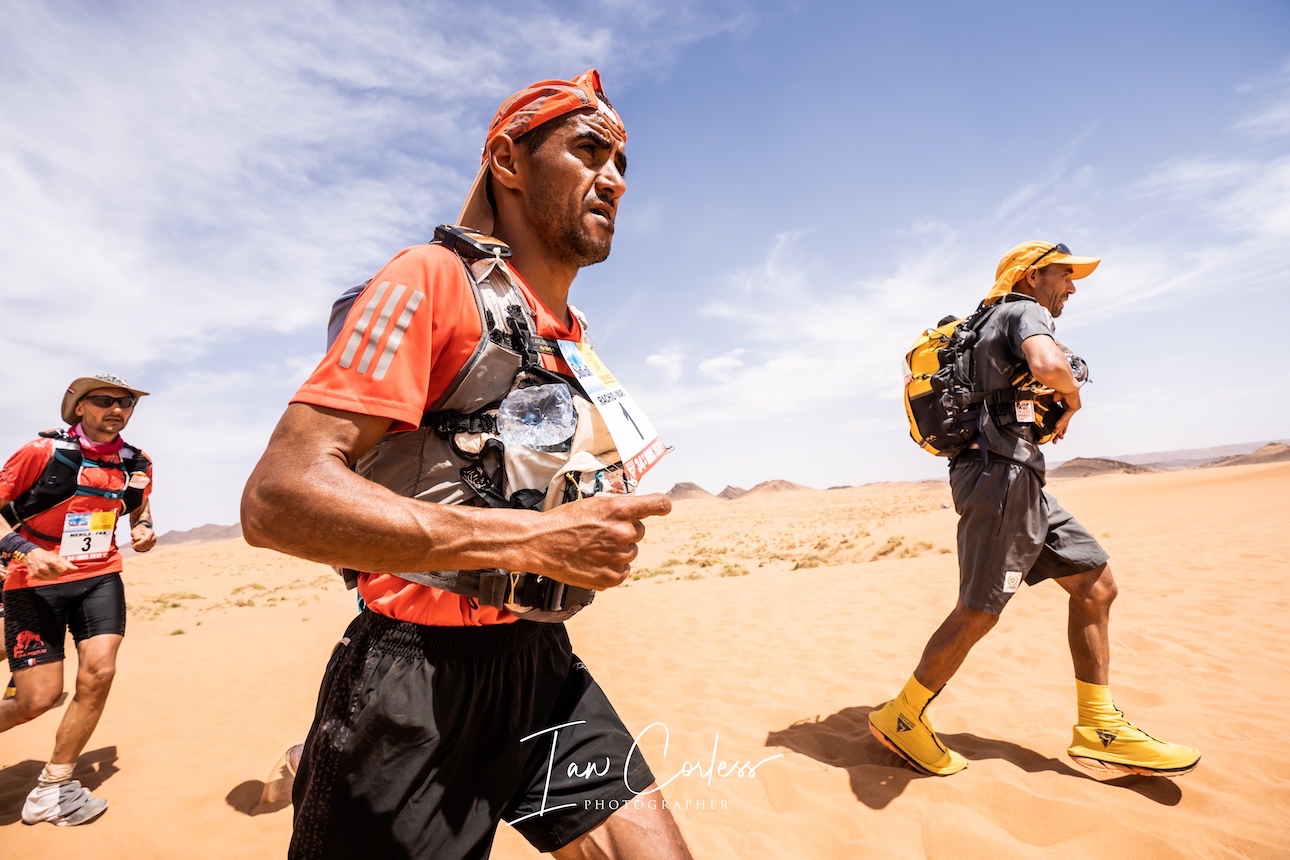
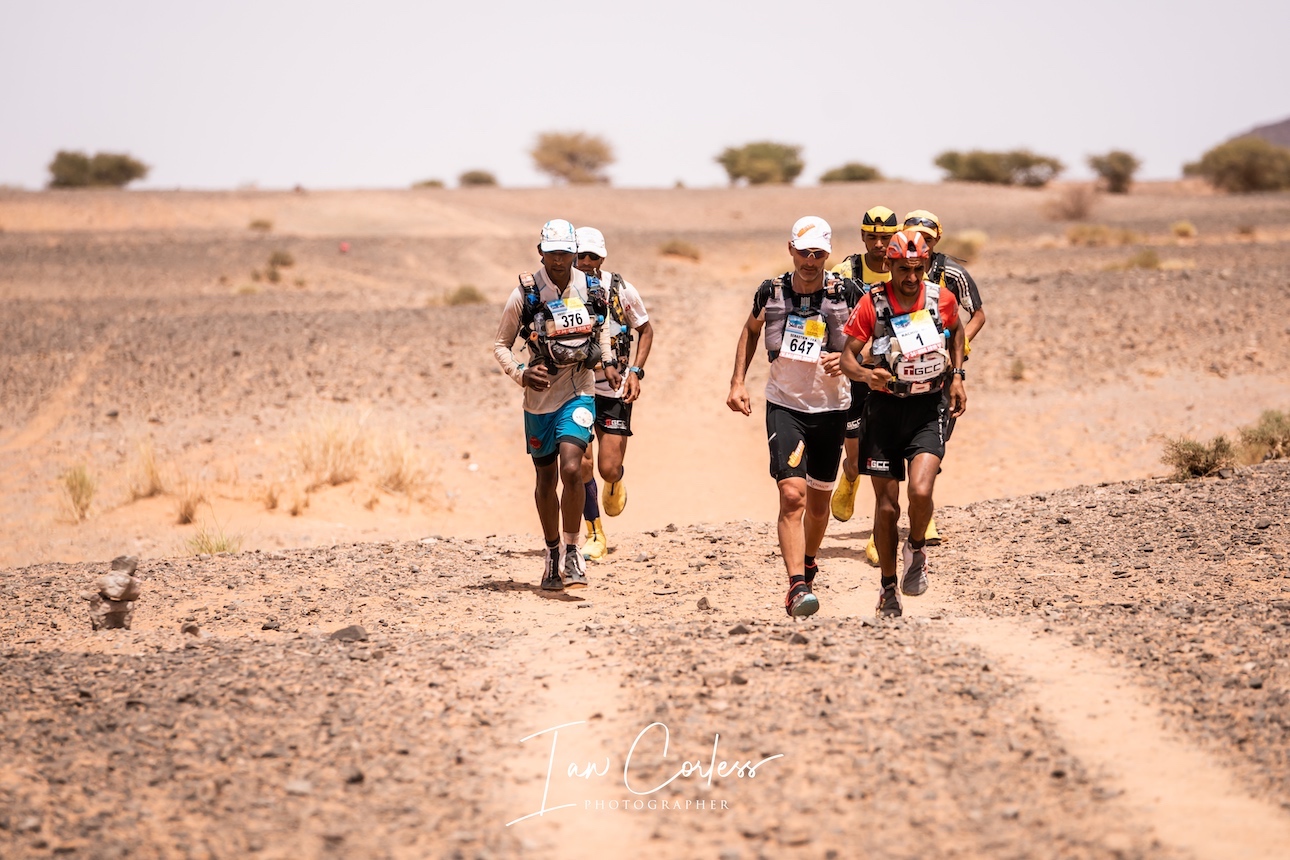
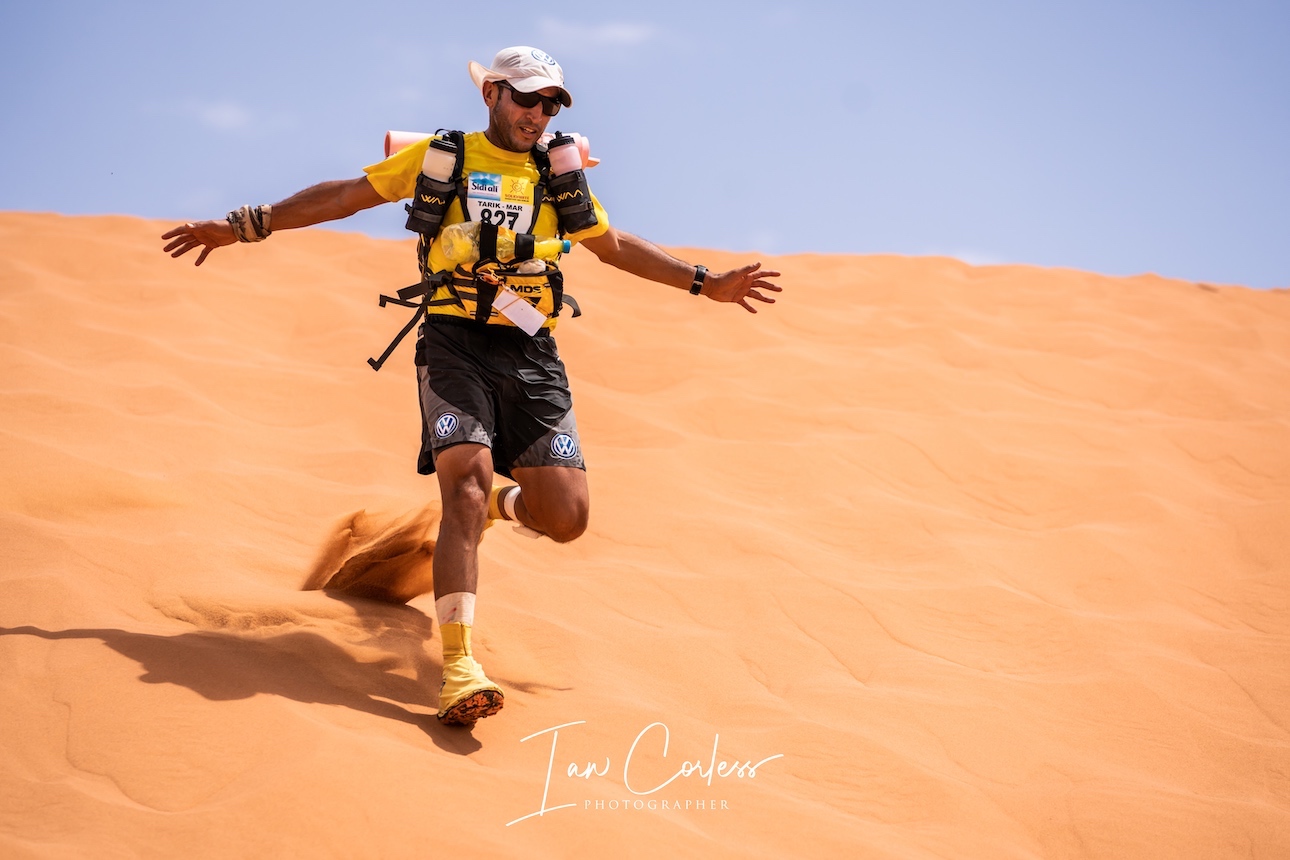
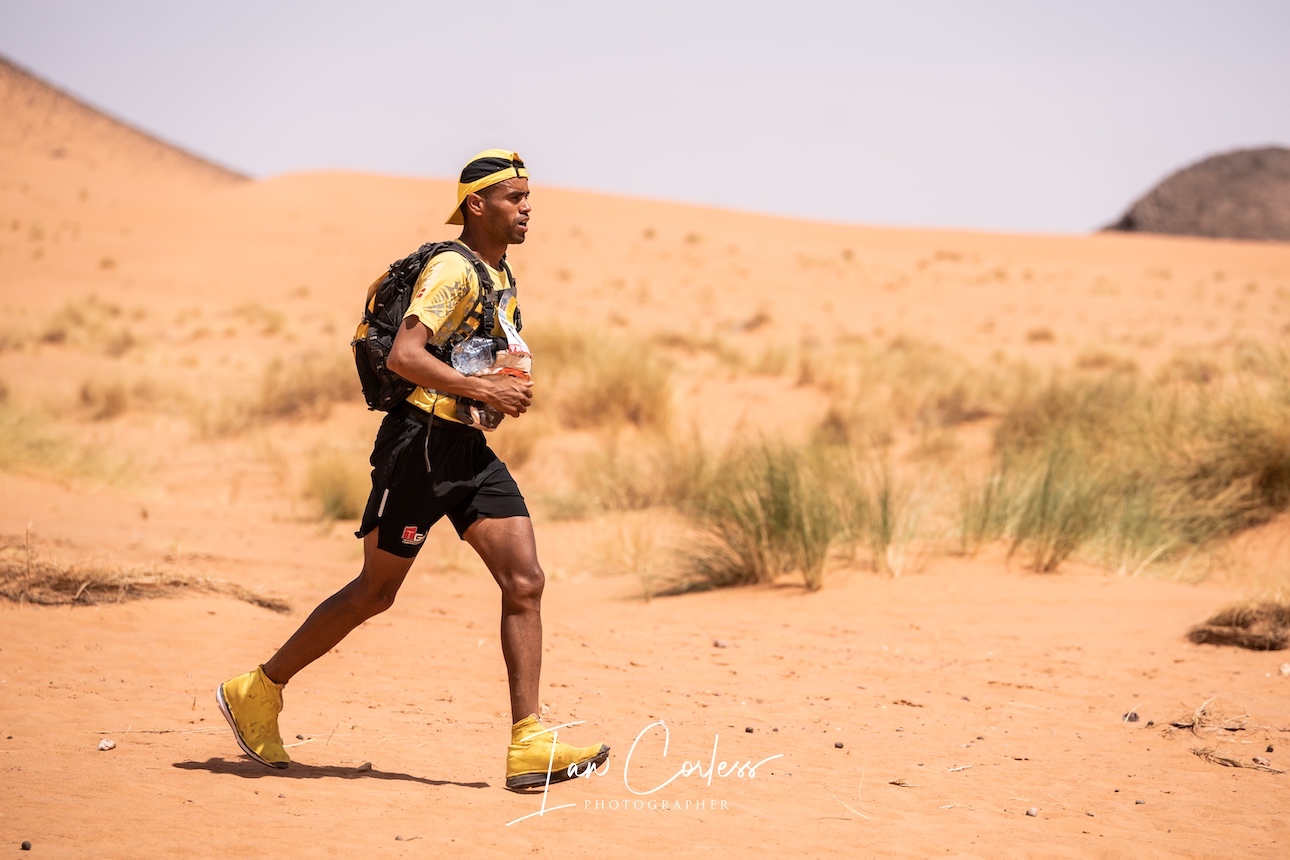
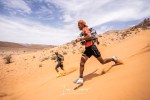
Today. stage 5, ‘The Marathon Stage’ concluded just a short distance away from Tafraout. It was a day that started with cool temperatures as runners climbed the infamous, Djebel Oftal after a 3km warm up.

As the minutes ticked by, the sky cleared, the weather warmed up and the runners were treated to a classic MDS day and a truly beautiful course that provided the best of the Sahara.

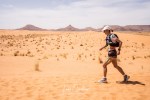
Dunes, rocky plateau, salt flats, the oasis of El Maharch, gentle climbs, soft-sand descents and then a run in to the finish backed by a mountain range.

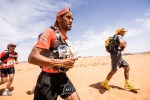
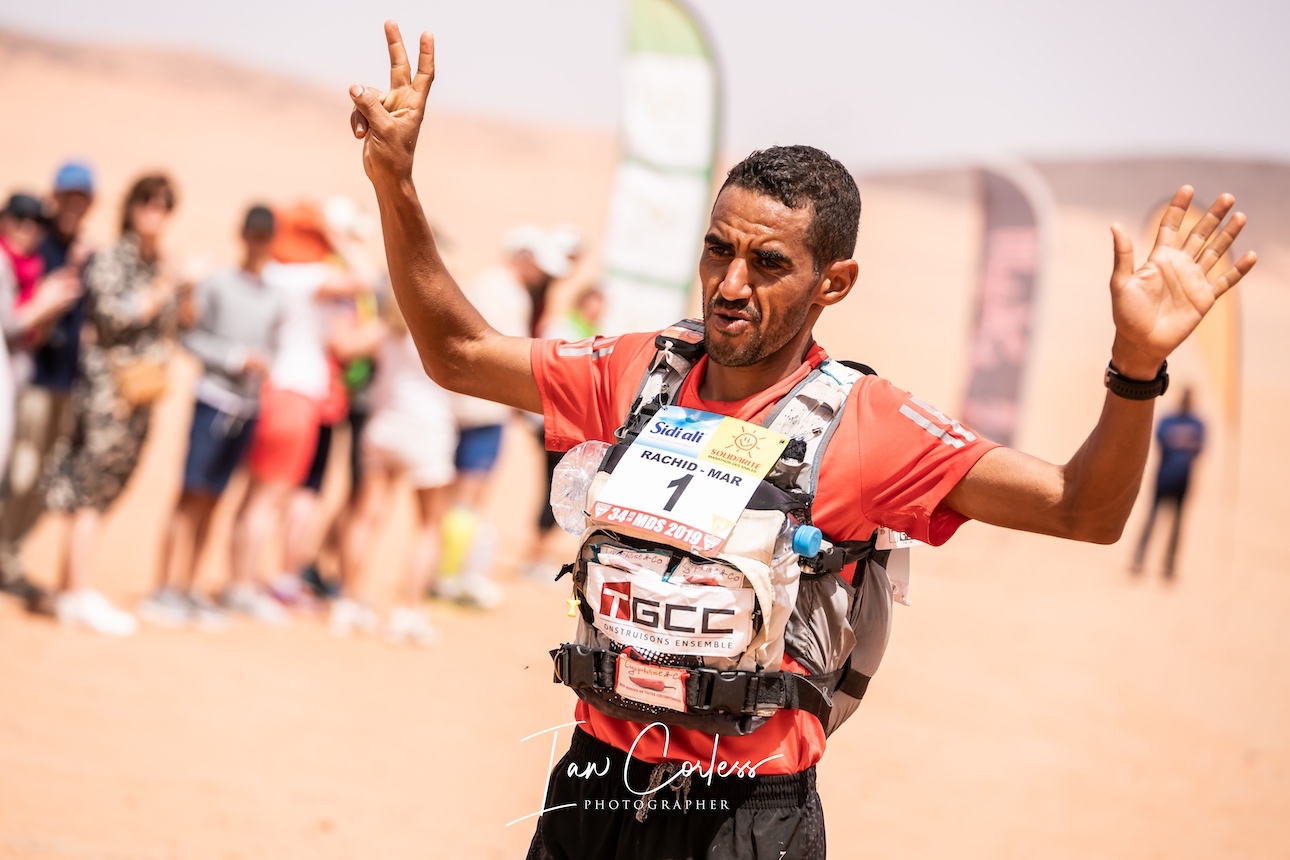
Despite early attacks in the men’s race including his brother Mohamed, Rachid El Morabity once again won the final stage and became the 2019 champion of the MDS once again. He really is the desert king. Mohamed El Morabity placed 2nd overall with Abdelaziz Baghazza completing the podium.

For the women, it may come as no surprise that Ragna Debats made 5 stage wins out of 5 and completely dominated the women’s race.

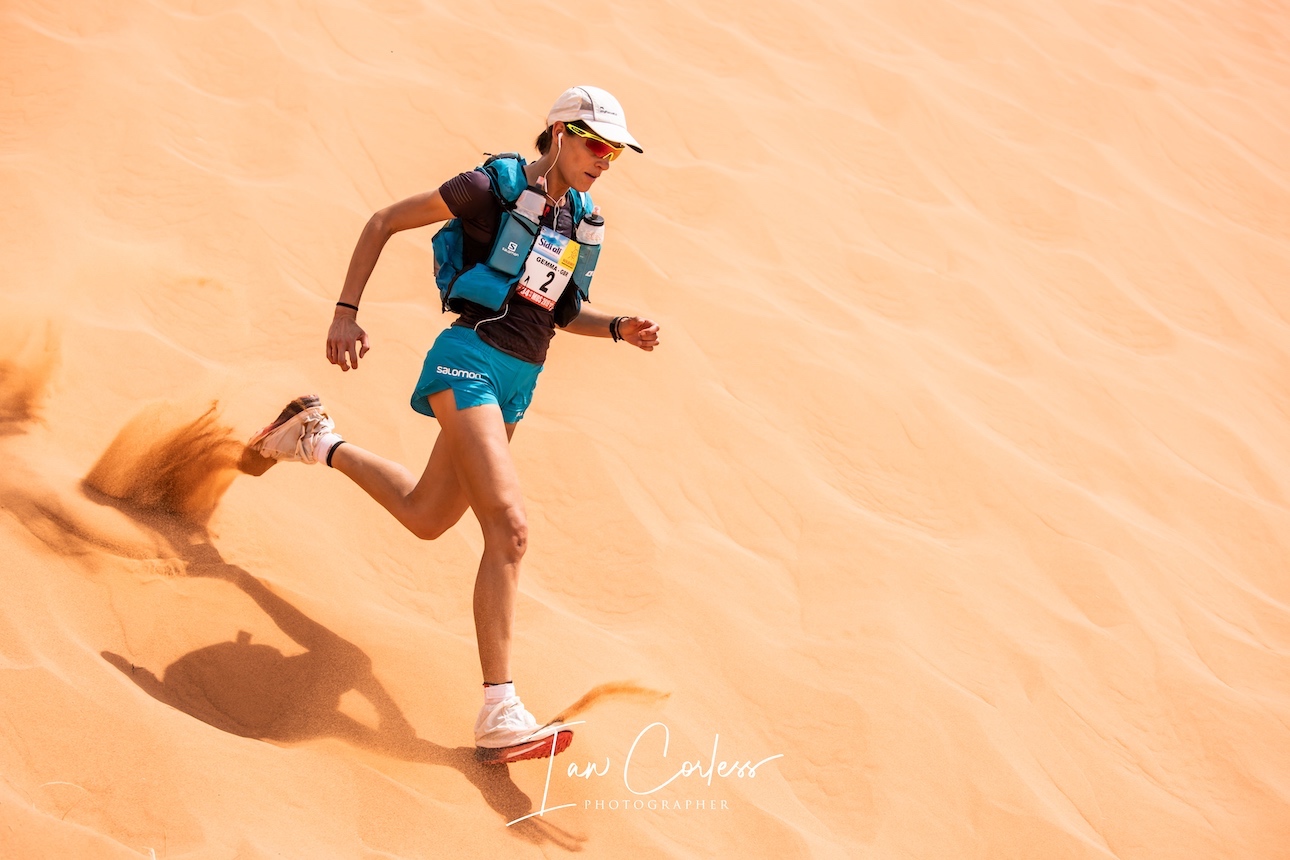
Credit must go to local runner, Aziza Raji who battled throughout the week to secure a very solid 2nd place for Morocco. Also, Gemma Game from the UK had a tough day-1 but battled and moved her way through the field throughout the week and once again rounded out the podium with 3rd place.

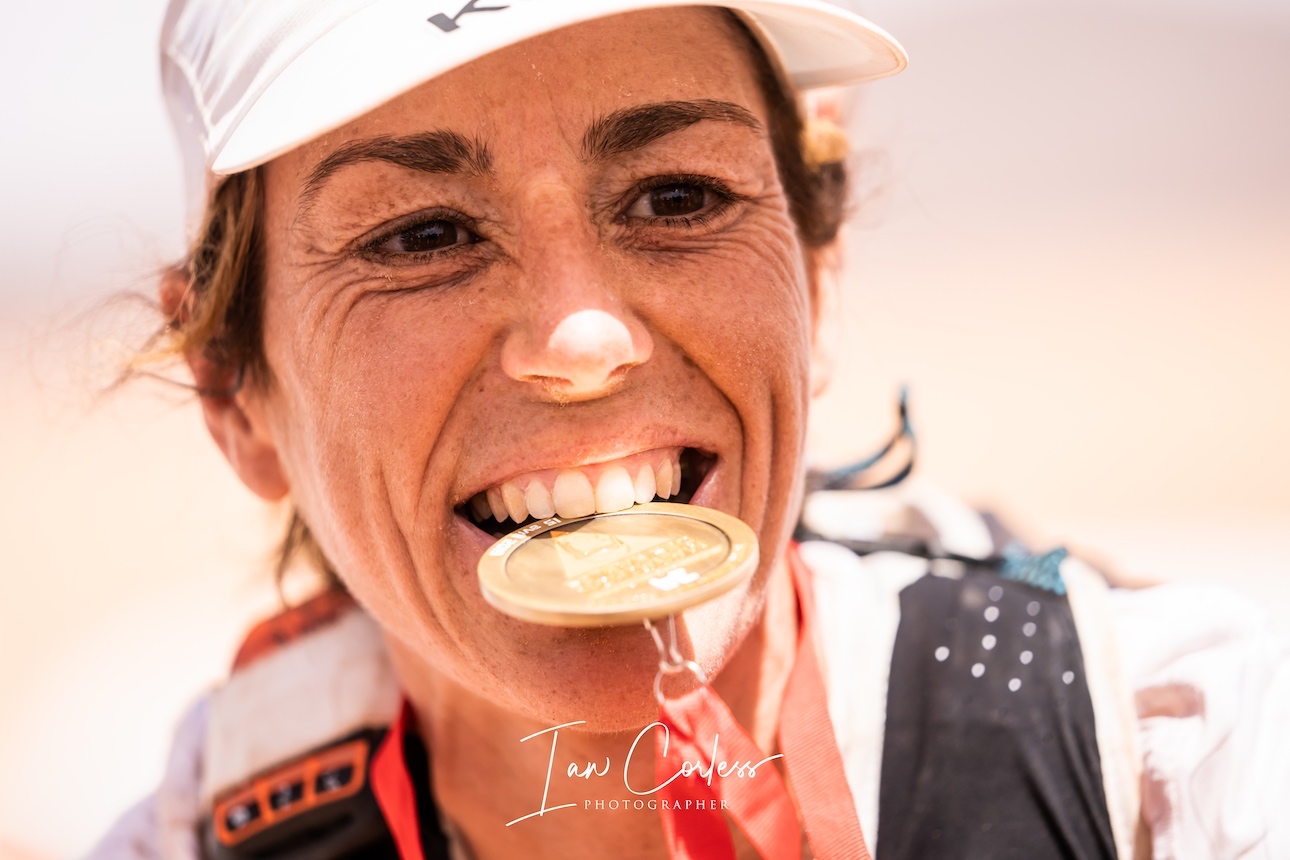
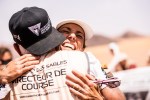
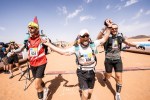
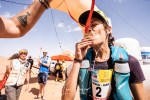
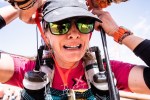
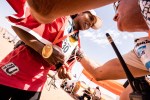
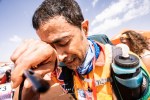
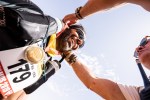
The MDS is all about every single runner and the finish line really does focus and release the emotions as tears flows, cries of joy are heard and the embraces of Patrick Bauer, the race creator, are received. The MDS is truly a magical journey and experience. It is a life -changer for many and I personally have experienced the transformation the desert and this race brings.

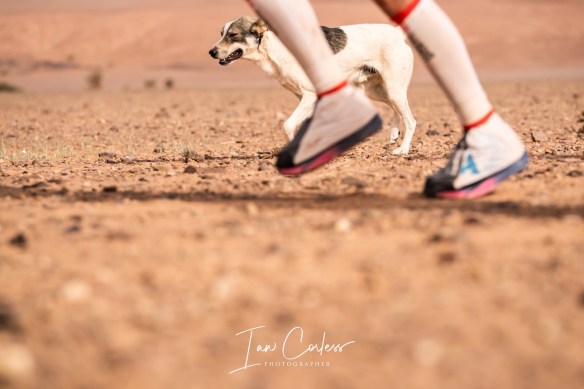
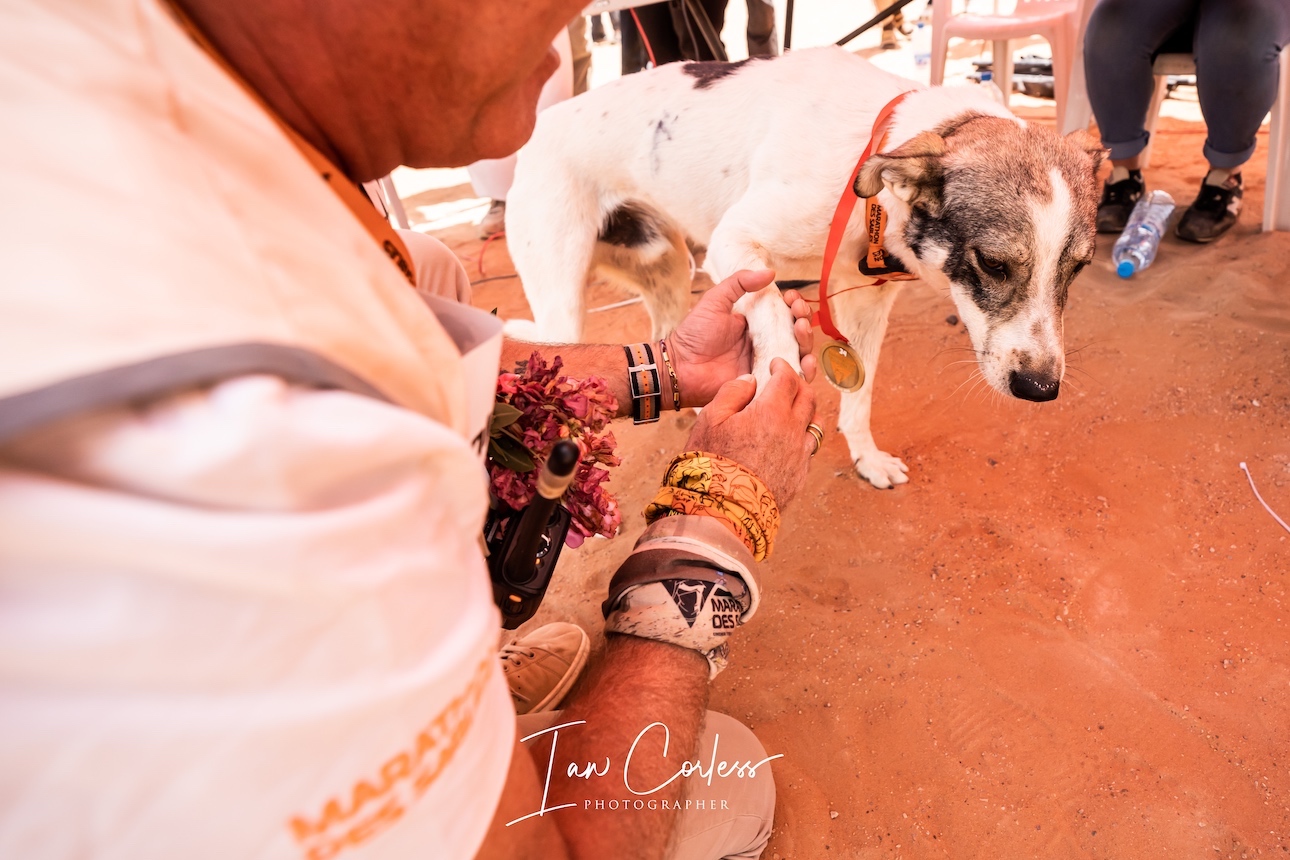
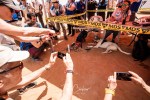
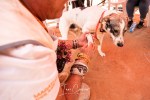
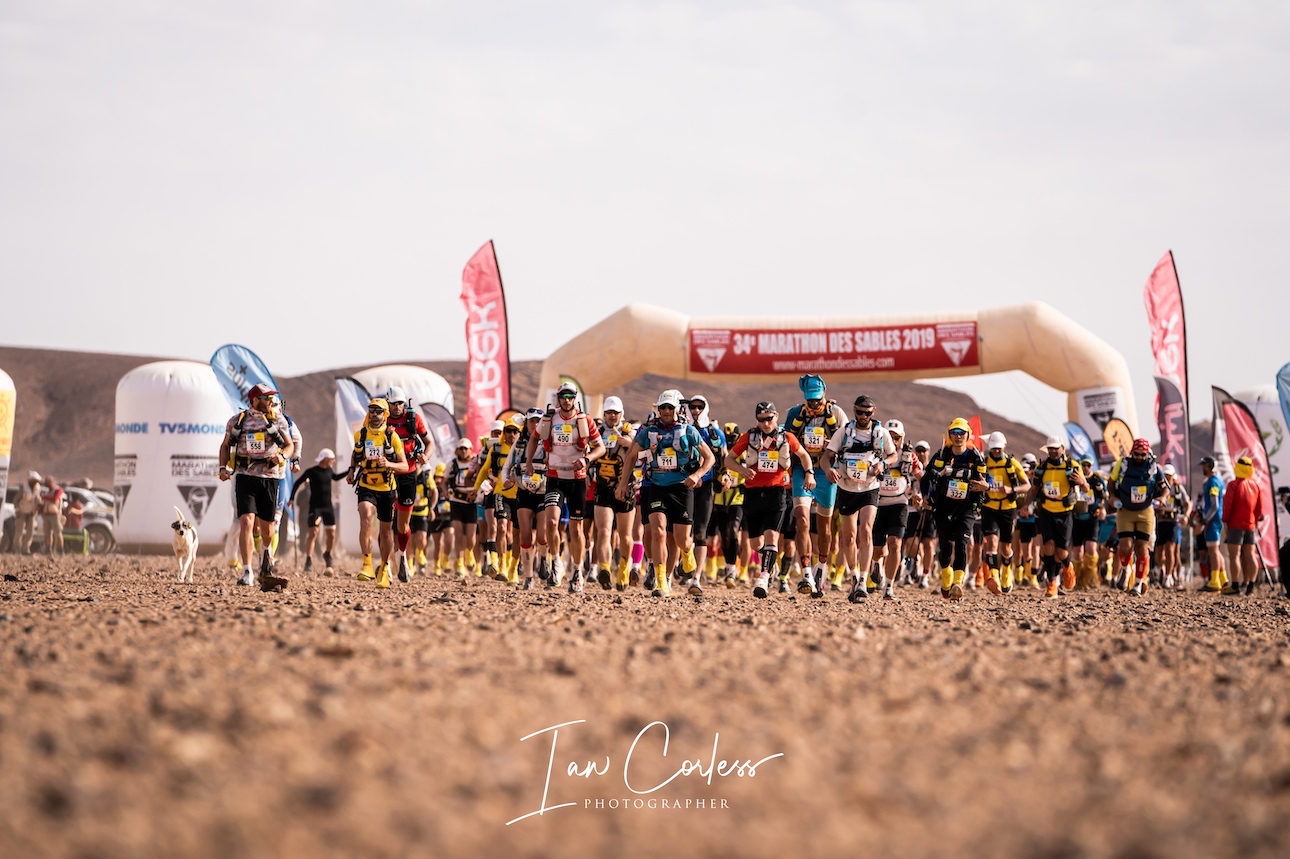
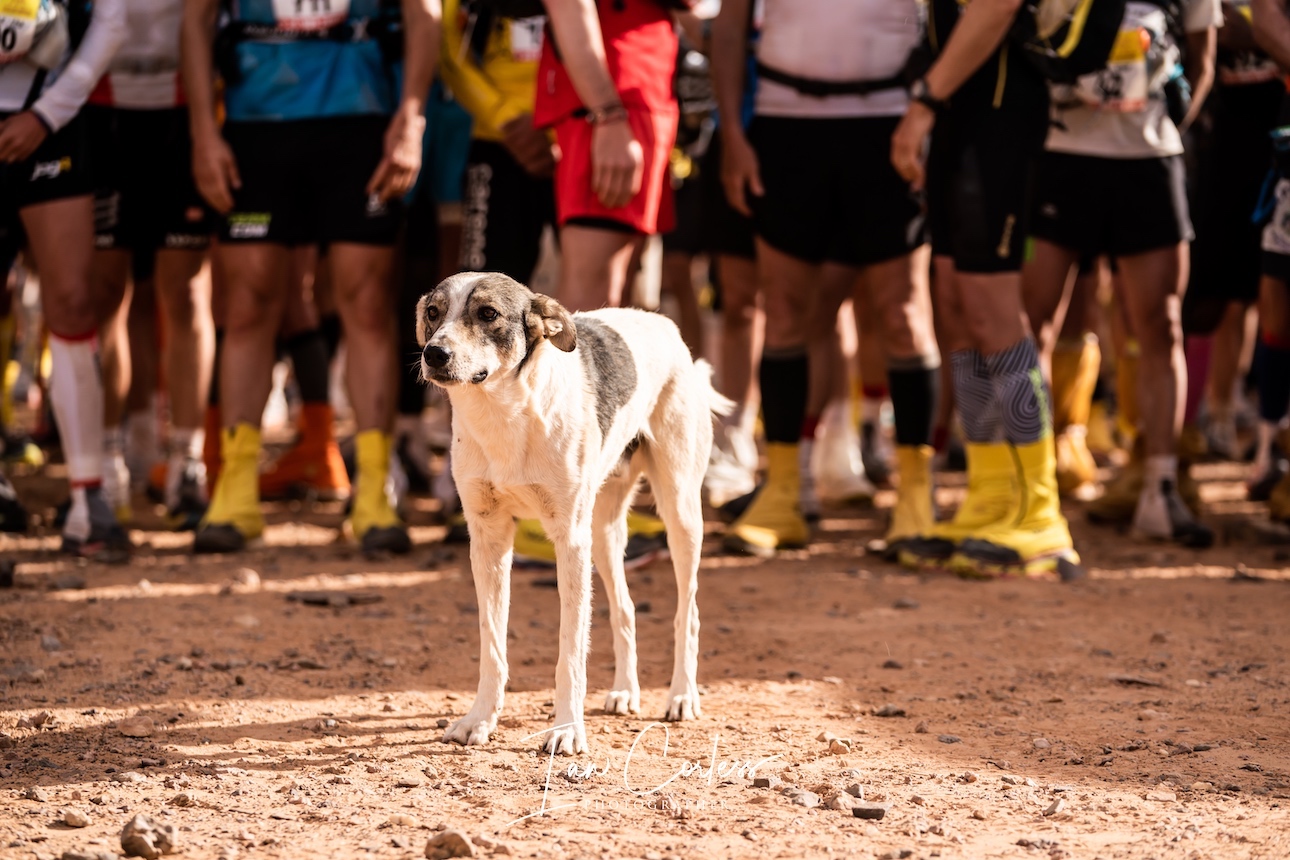
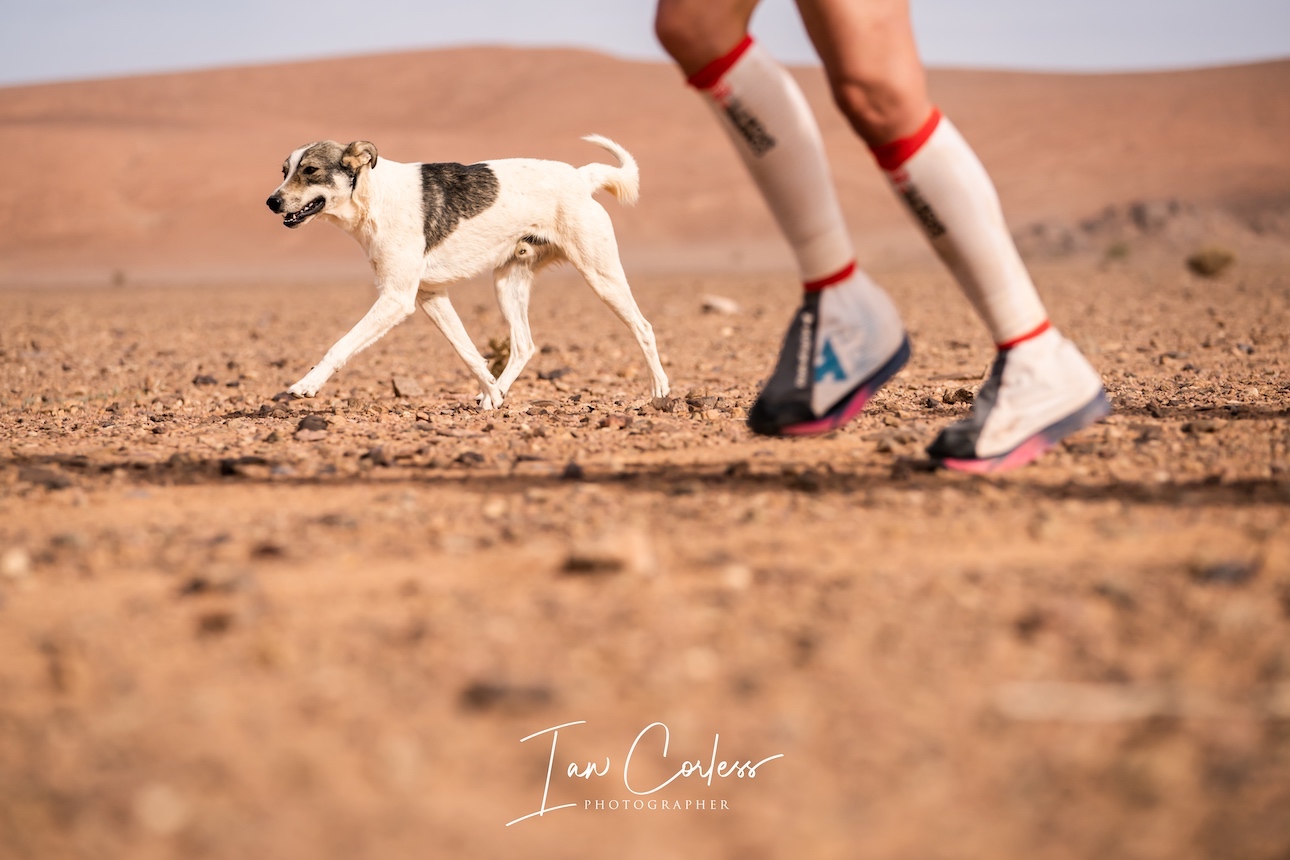
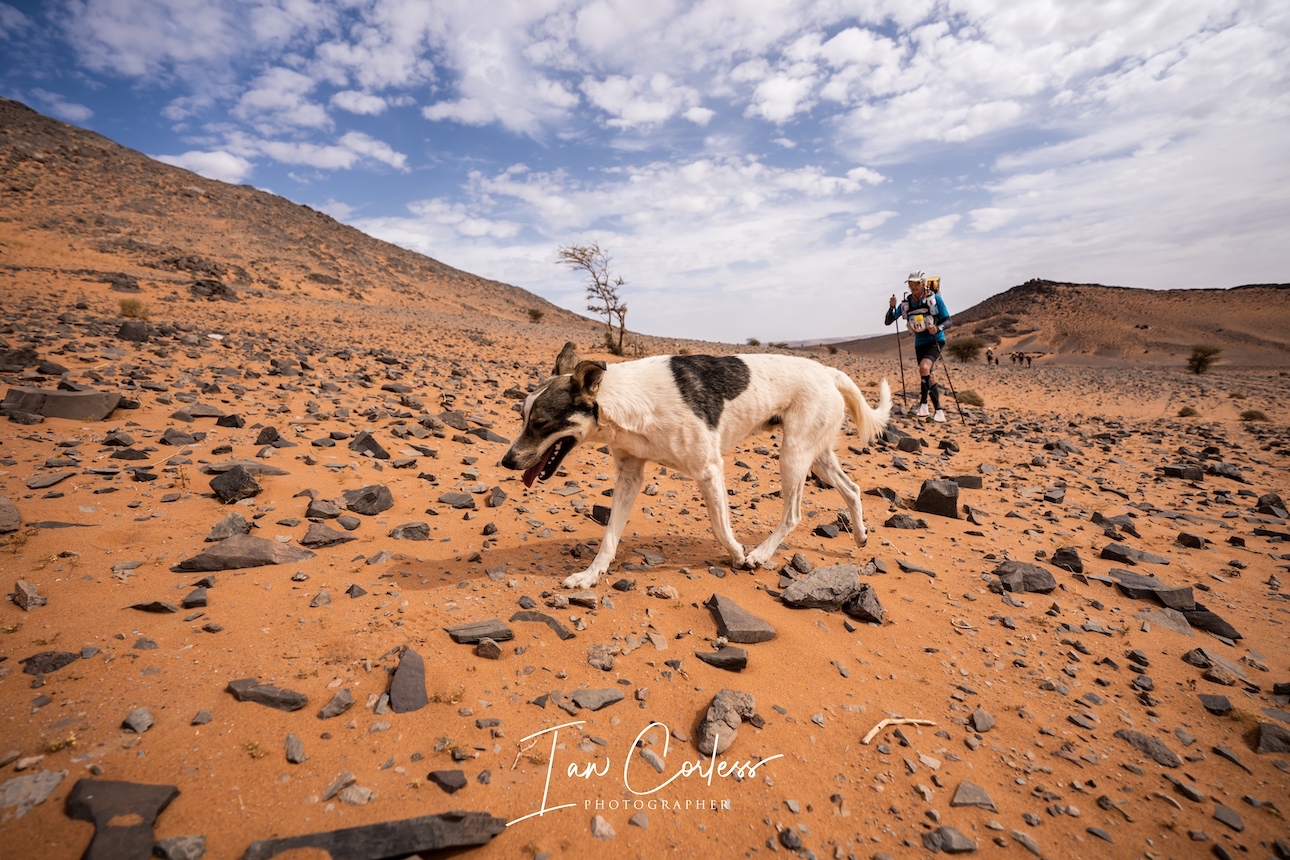
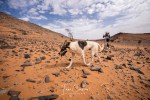
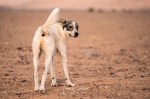
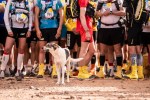
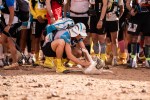
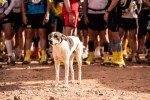
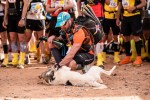
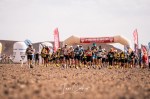
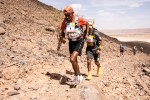
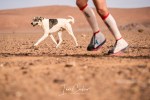
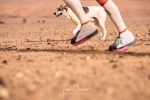
The 2019 edition certainly gained additional notoriety from a wonderful dog called Cactus. he joined us on day-2 and went on to complete day-3, 4 and today, day-5. This little dog has captured the hearts and minds of the world, not only in the media. There is a lesson to be learned from Cactus – to live life free and completely. He embraced the true spirit of what MDS stands for without realising it. And, in doing so, he has reconfirmed to all of us that life is for the living. I for one, am truly blessed to have experienced Cactus and all the 800+ plus runners on a truly magical 34th edition of the iconic ~Marathon de Sables.

Marathon des Sables 2019 #MDS #MDS2019 – Stage 4B Rest Day

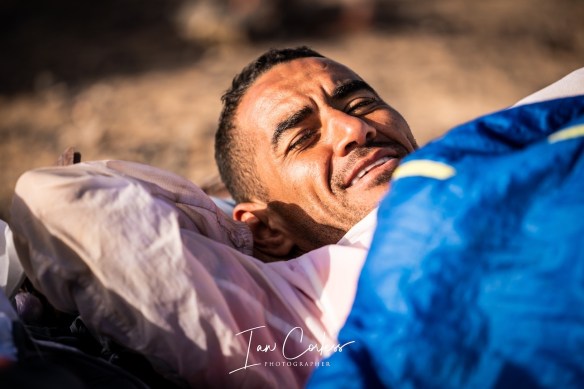
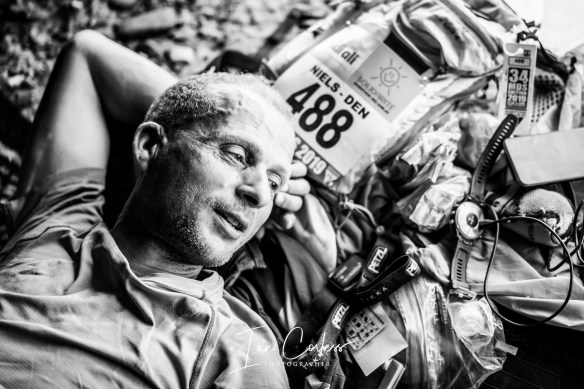
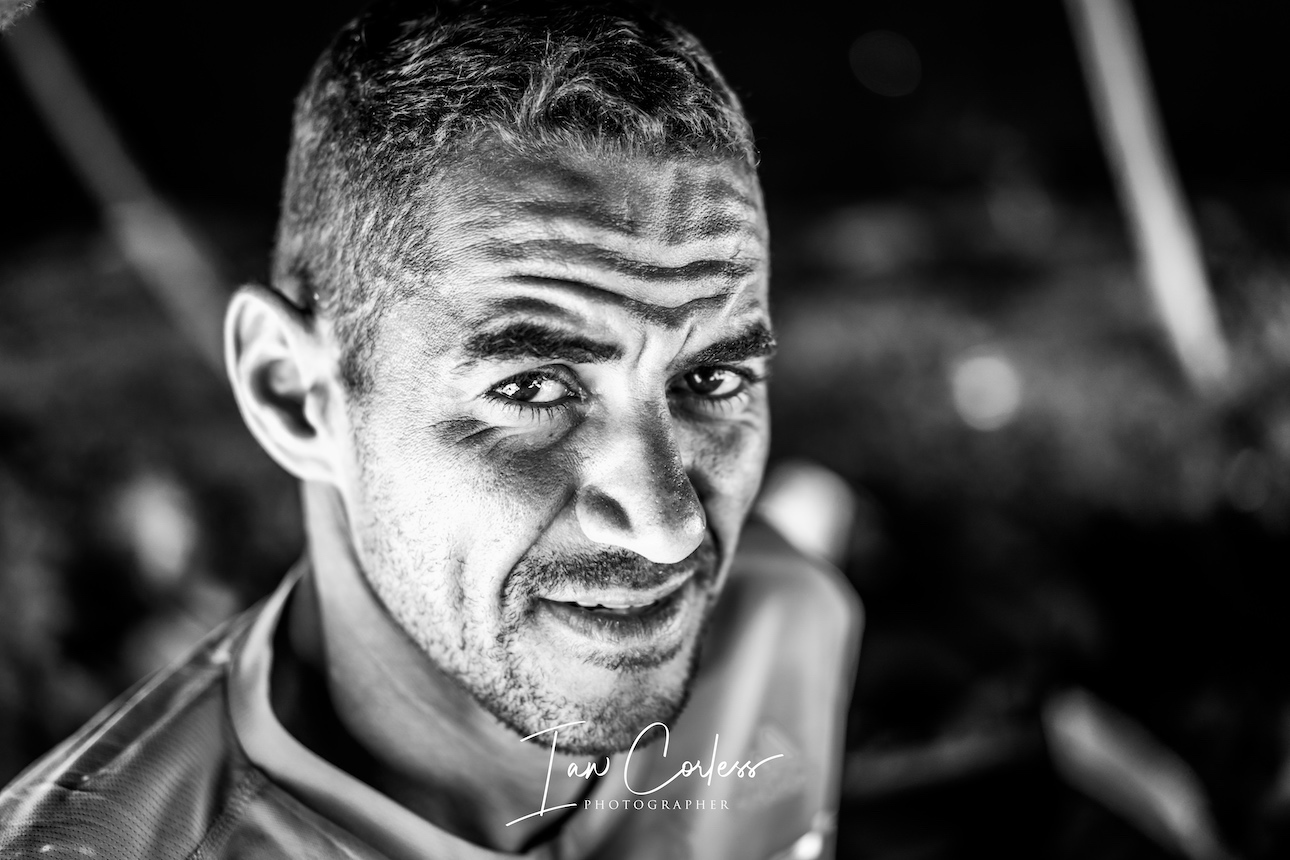
The face of the Marathon des Sables after stage-4, ‘The Long Day’

Β the 2019 edition of this iconic, self-sufficient multi-day race.

Follow on:

Instagram – @iancorlessphotography

Twitter – @talkultra

facebook.com/iancorlessphotography

Web – www.iancorless.com

Web – www.iancorlessphotography.com

Image sales –www.iancorless.photoshelter.com

Marathon des Sables 2019 #MDS #MDS2019 – Stage 4 76.3km

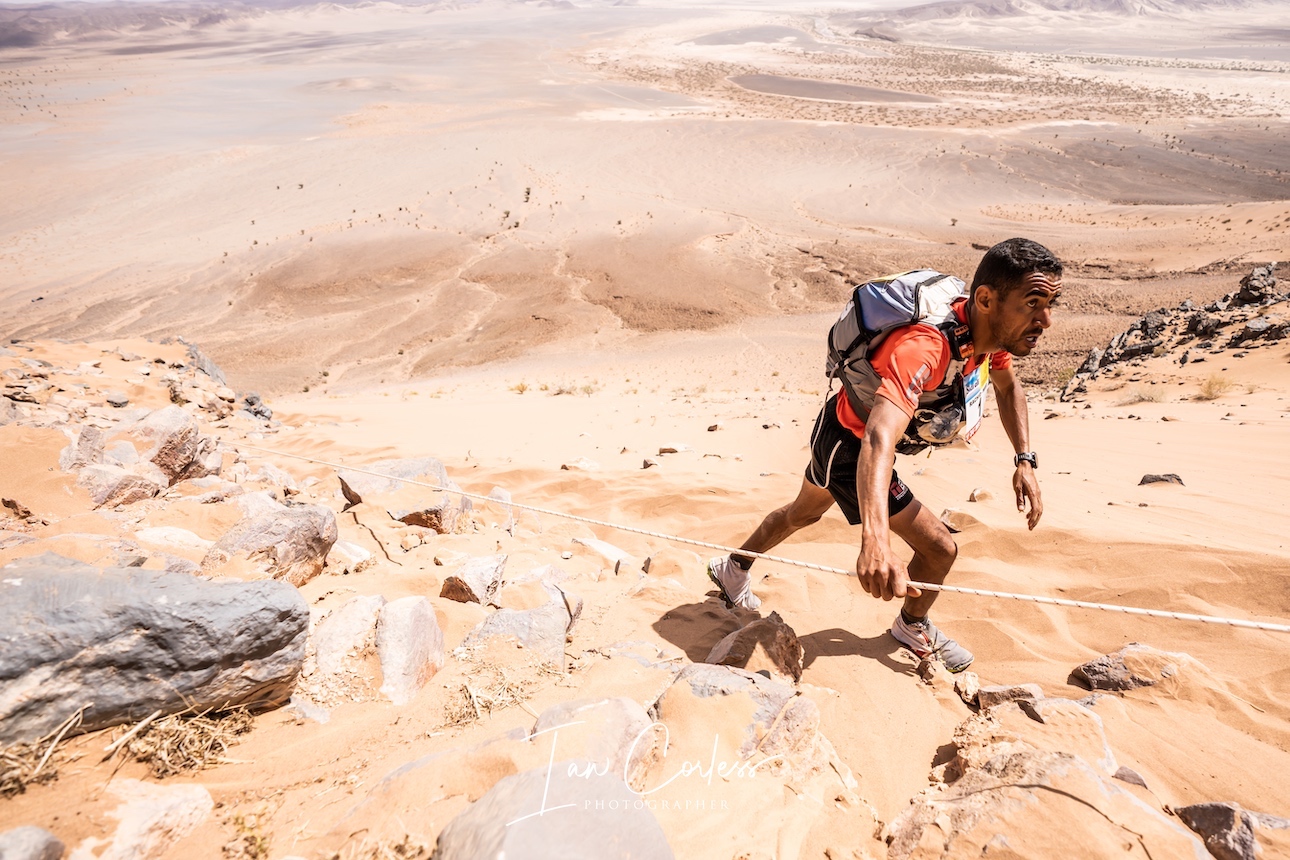
Day-4, the feared and loved ‘long day’ of the MDS. A brutal 76.3km route that for many, personifies what the Marathon des Sables is. A journey of survival, through the varied terrain that the Sahara has to offer.

For most people, it is all about survival and getting through the day, the night and maybe the next day as easy as possible.

The day started at 0815 for the majority of the filed and the top-50 and top-5 women started at 1115 with the prospect of chasing the whole field down.

The day started to cool and cloudy and it looked like the conditions would play in to the runners hands, allowing a comfortable journey throughout the day. Not so. By 10am, the heat of the day came and it stayed that way, just a gentle breeze helping to provide some illusion of cooler temperatures.

The elite race as in previous day’s was all about two people or maybe three if we include Cactus the MDS dog.

Ragna Debats was once again on fire, For sure, she respected the long day and started at a more relaxed pace, but her speed and ability is so far ahead of the rest of the women, that she almost cruised to the line. In all honesty, Ragna’s biggest threat is possibly herself! She is chasing a top-10 ranking overall and that does come with some risk. To push in the Sahara needs a fine balance, get it wrong and dehydration could prove to be the end of an adventure. Ragna is managing everything well and looks incredible.

The real story of the long day was the rise of the UK’s Gemma Game. She looked incredible all day, ran an amazing and controlled race and she moved up the field to now make 3rd on the women’s podium. Aziza Raji ran a solid day and is still 2nd overall, approximately 36-minutes ahead of Gemma. Past winner, Meghan Hicks from the USA had a tough day of sickness and finished well down the field allowing Lauren Woodwiss to move to 4th overall.

In the men’s race, many tried to attack the boss, Rachid El Morabity, but the king of the desert is too smart. He really is a joy to watch in this terrain. He holds back, paces himself, runs within a group and at all times watches what the other runners are doing. He does not panic, he manages his effort and then all of a sudden, he moves to another gear and accelerates away to take the lead and win.

This year’s long day was no different. Attacks came from Julien Chorier, Rob Pope and even Mohamed El Morabity, but the boss watched them and then made his move. Taking another stage victory, once again ahead of his brother, Mohamed. The duo now 1st and 2nd on the overall ranking with Abdelaziz Baghazza 3rd.

The long day will be remembered for a sand-storm that cam in around 5pm. It was quite incredible as the wind brought in a blanket of grating mist that covered all the runners and bivouac making visibility impossible. Runner’s halted in their tracks not able to see a hand place ahead of them. Luckily it was a storm that lasted less than 30-minutes but the carnage was visible to see.

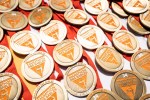
Covering 76.3km’s is no easy task and while the top men and women can make it look easy, the real story is about the 800+ runners who look to survive and endure the conditions to earn a respected MDS medal.

This is the MDS, the human story of fighting conditions, hunger, dehydration and pain to achieve the glory of the finish line.

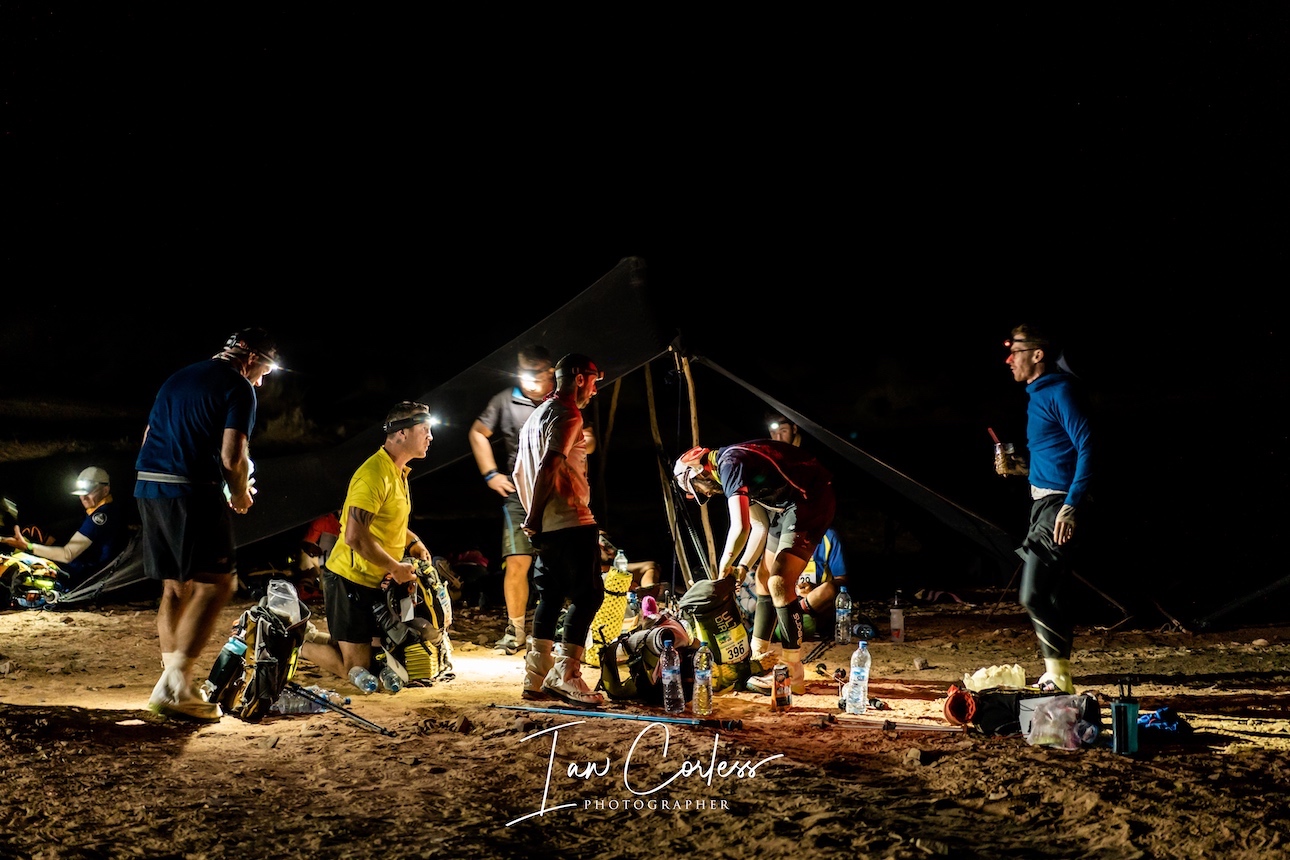
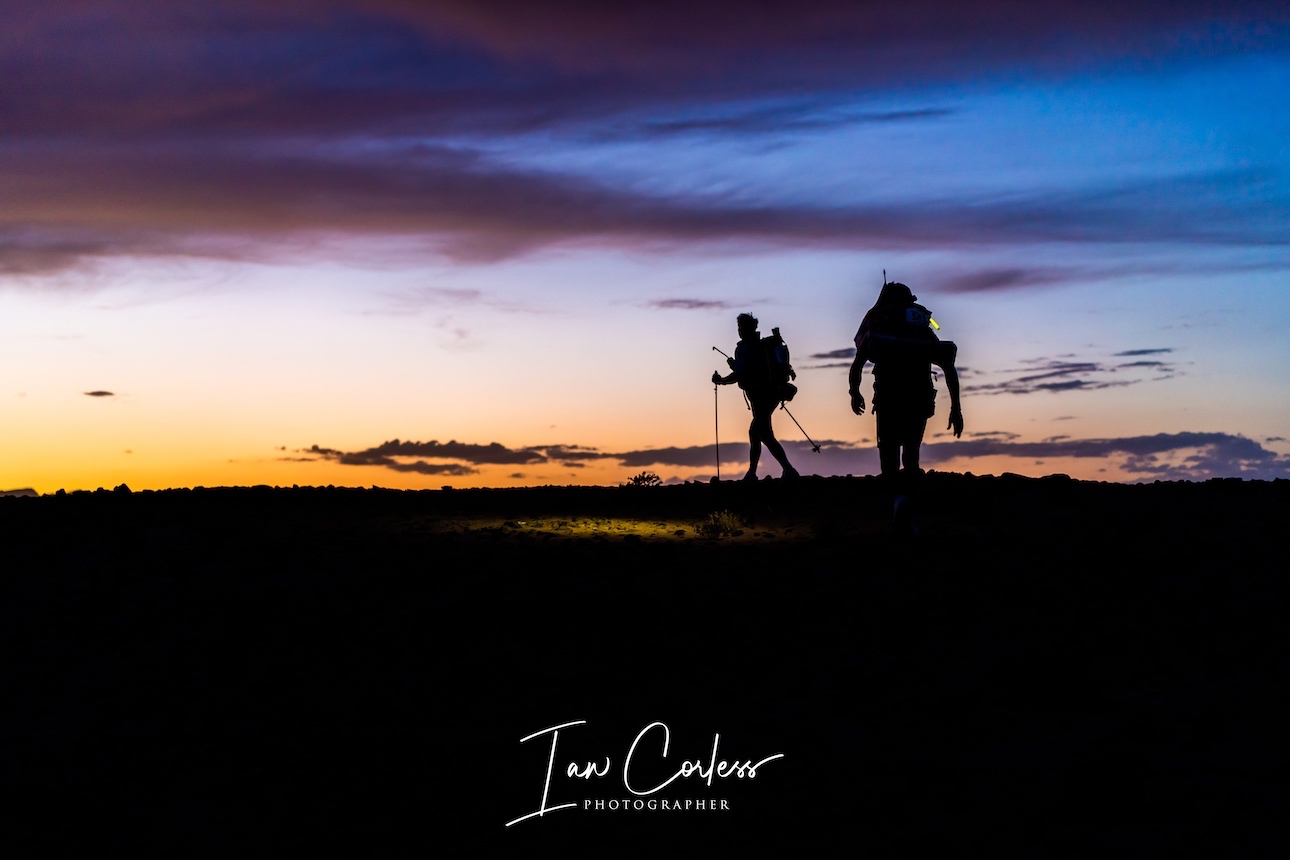
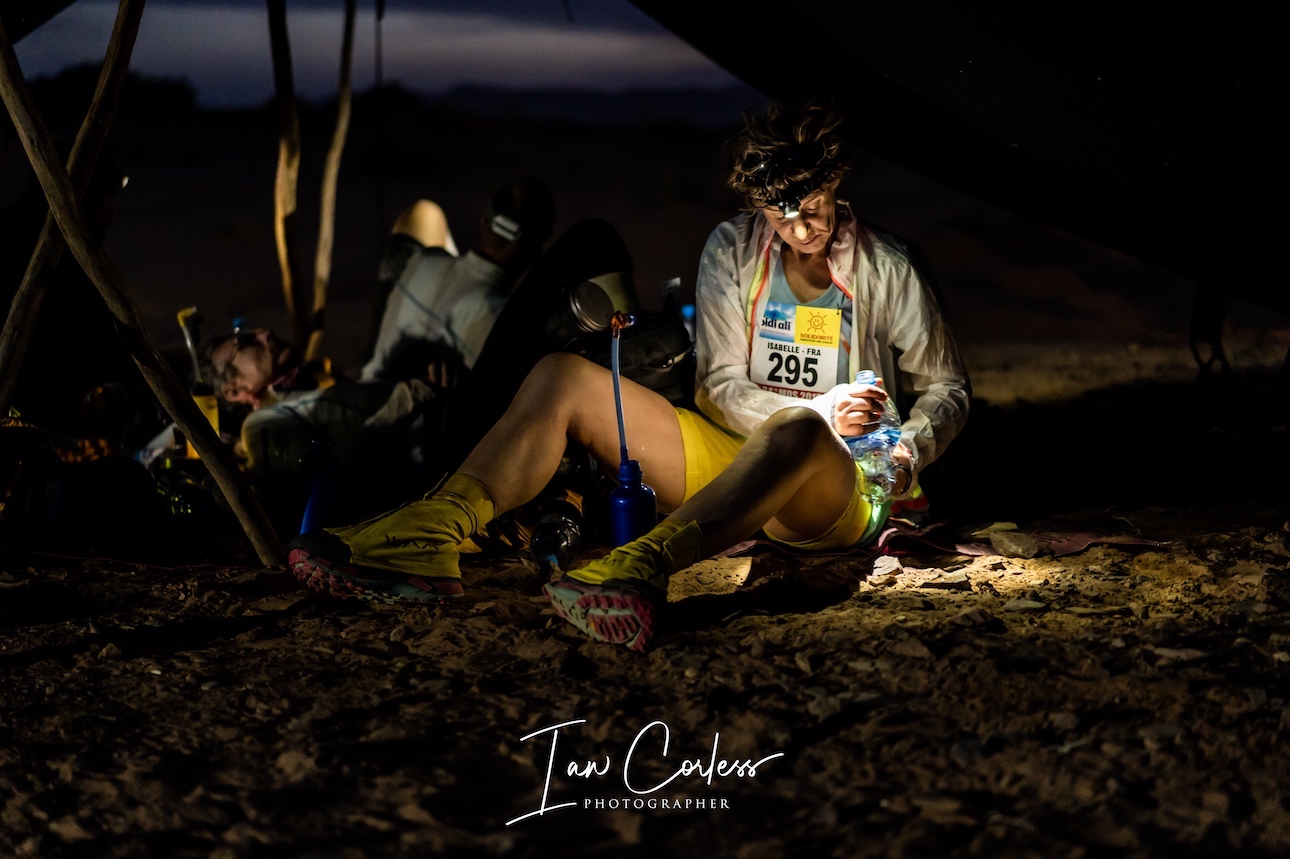
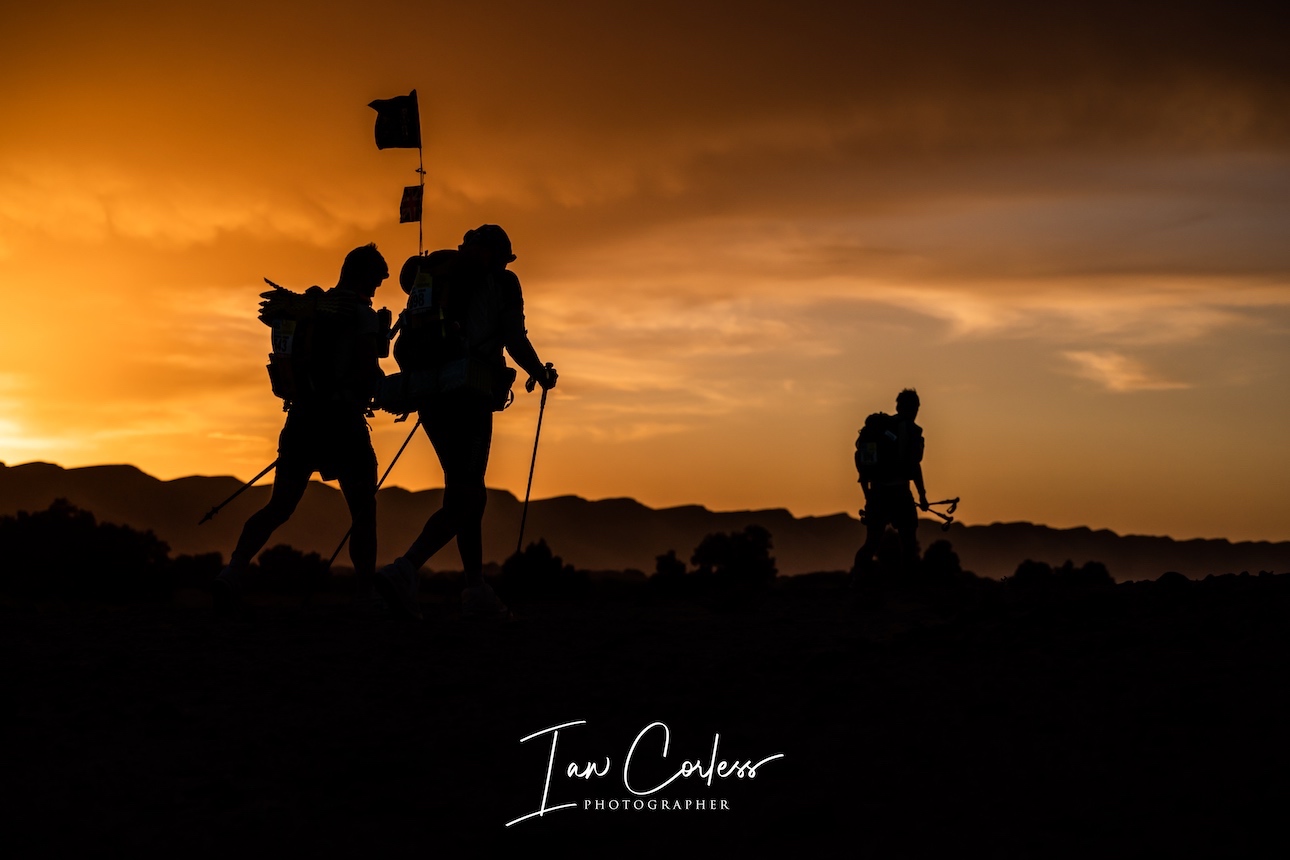
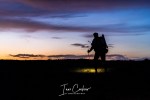
As darkness came, runner’s pushed in to the void with just the glow of a headlamp and the stars for company. For many, they will also see dawn and travel through another day. MDS is truly a life changing journey.

And finally, Cactus the MDS dog. What a story. The dog joined us on day-2, ran the whole of day-3 and yes folks, he ran the long day. He has become a mascot of the 34th edition. A heart warming story that has travelled the world. Many have worried about the dogs health and his ability to run long distances.
Rest assured, this fella is a true free spirit, a true nomad, a perfectly adapted animal for the terrain. He was checked by a vet and was given the all-clear. Calls for the dog to be ‘rescued’ and taken out of Morocco are well intended but wrong in my opinion. Cactus is in his home, doing what he loves. He should be allowed that freedom. And yes, he has an owner, a hotelier in Merzouga who has confirmed Cactus’ true nomadic spirit.
Tomorrow, the marathon day and the confirmation of the 2019 MDS male and female champions.

Overall Ranking

  1. Rachid El Morabity 15:23:31
  2. Mohamed El Morabity 15:29:12
  3. Abdelaziz Baghazza 16:08:27


  1. Ragna Debats 18:46:11
  2. Aziza Raji 20:54:23
  3. Gemma Game 21:29:11

Instagram – @iancorlessphotography

Twitter – @talkultra

facebook.com/iancorlessphotography

Web – www.iancorless.com

Web – www.iancorlessphotography.com

Image sales –www.iancorless.photoshelter.com