![]()
Tag Archives: Ultra
the INTERVIEWS Season 1-Episode 4 : Geoff Roes
![]()
Geoff Roes was raised in Cleveland, New York and excelled in track and cross country at Paul V. Moore High School in Central Square, NY. He competed in cross-country at Syracuse University for one year before becoming injured. Roes took a hiatus from competitive running until trying his hand at ultra marathon running in 2006 when he won his first event, the Little Susitna 50K. In 2007, he set a course record in the process of winning the Susitna 100 miler. In 2010 Roes won the American River 50 Mile Endurance Run. Roes also won the 2010 Western States Endurance Run in a record time of 15:07:04. Roes set the still-standing course record for the Wasatch 100 (a 100-mile race along the Wasatch Front range of the Rocky Mountains near Salt Lake City, UT) in 2009 with a time of 18:30:55, beating the previous course record by nearly one hour and five minutes. Roes now resides in Juneau, Alaska. (Reference wikipedia)
First recorded in 2013
Episode 0h 43m 13s
Talk Ultra back catalogue HERE

Lanzarote Training Camp 2020 – Day 8 and 9

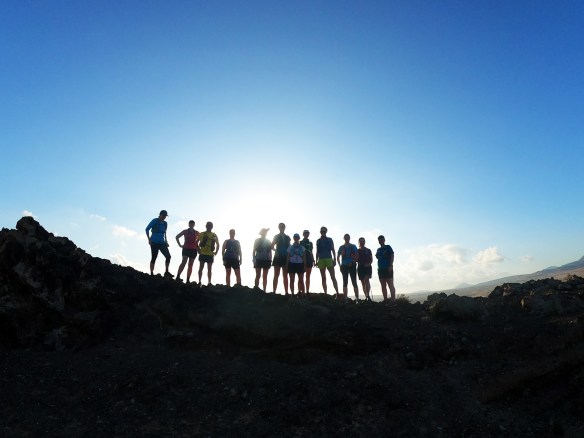
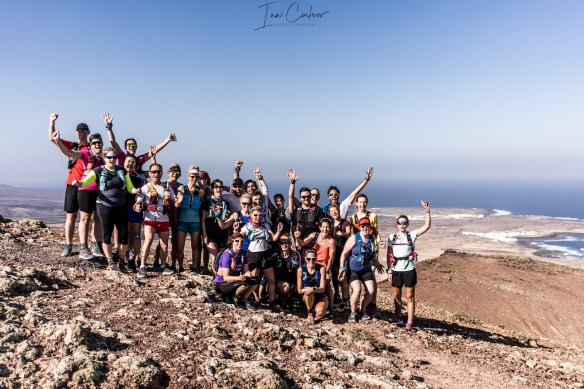
The penultimate day of our training camp was a cracker and one that many of the camp attendees have called a highlight.
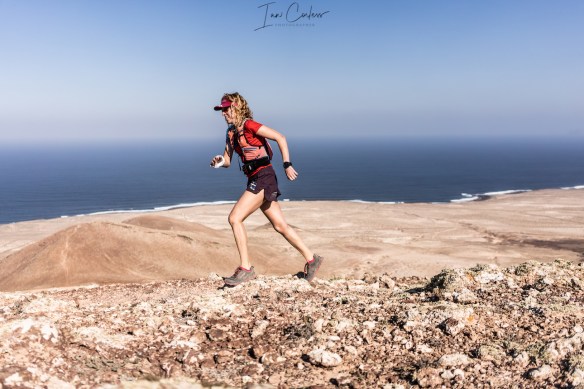
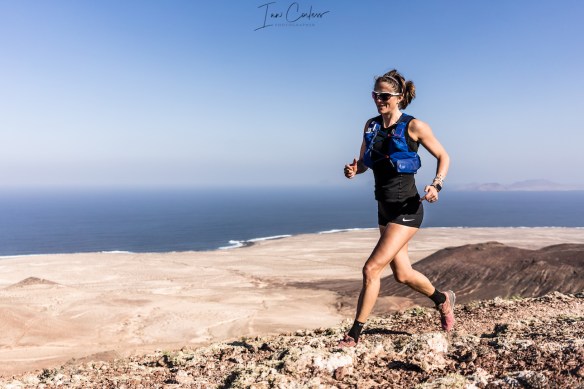
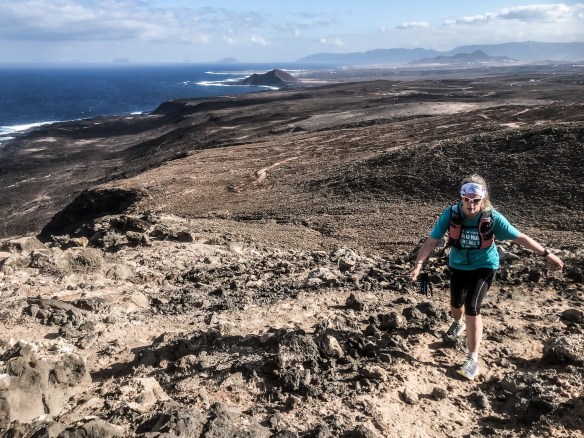
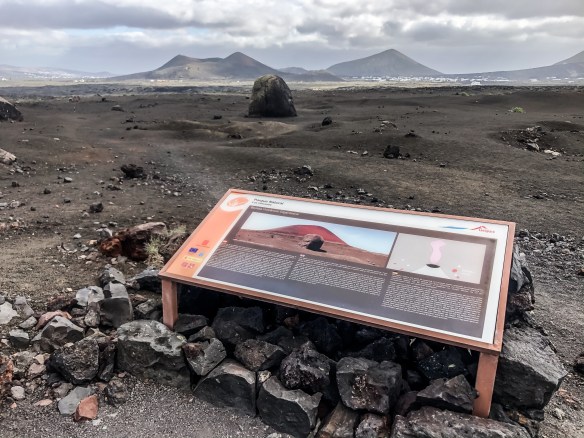
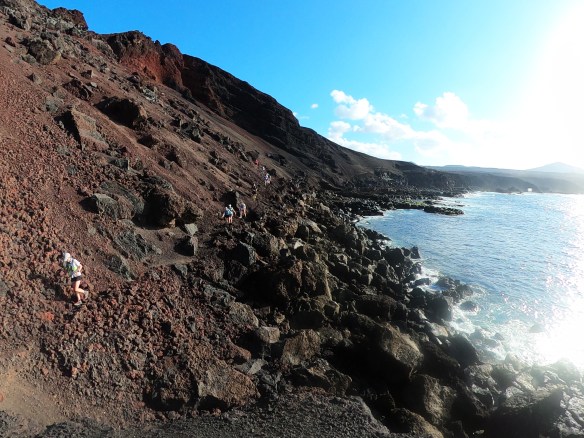
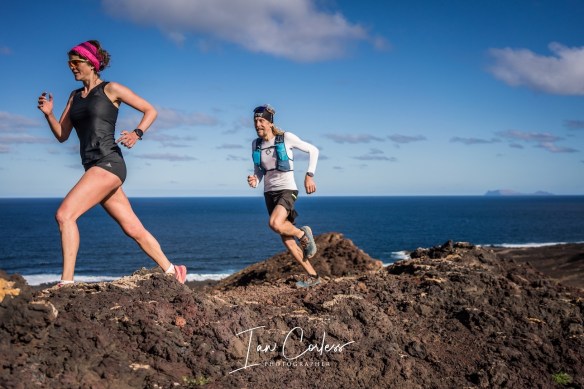
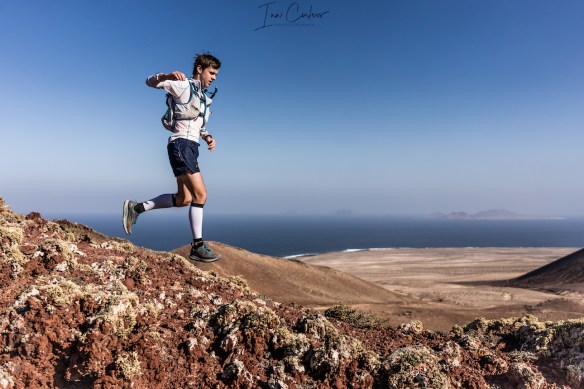
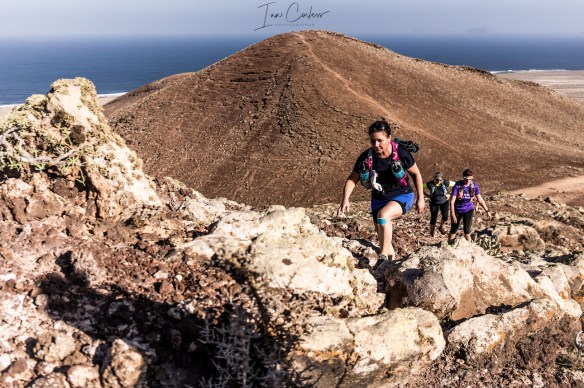
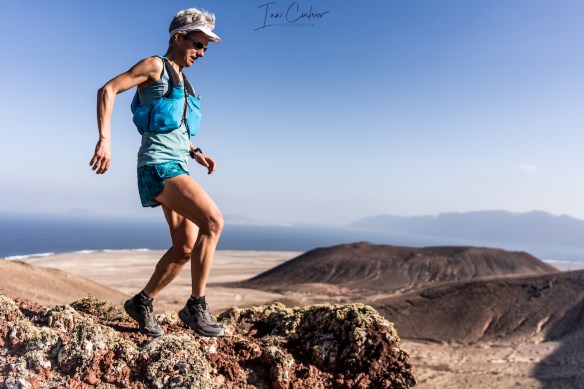
Our first run was between 8-10 miles and included a climb, traverse and descent of the Montana Soo. It’s a great route and one that pushes many out of their comfort zone as the terrain is often steep, technical and challenging with loose stones.

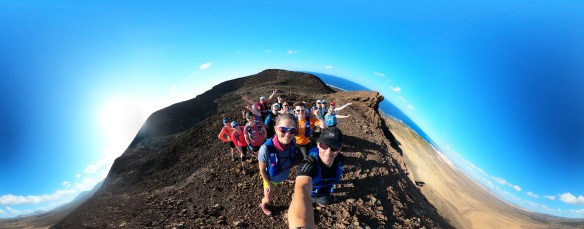
At the summit it provides a great photo opportunity with Club La Santa off to the right in the distance.

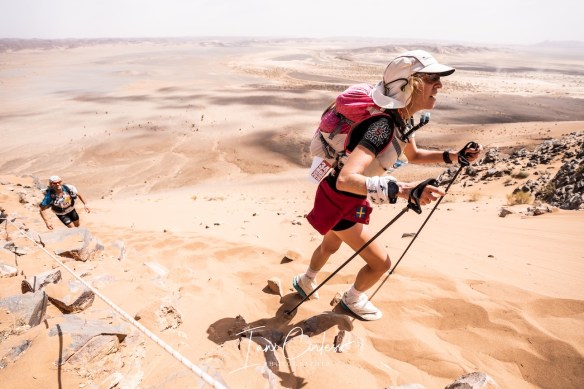
For the more experienced runners, they move fast over the terrain embracing the challenge that it brings. Others move slower, more deliberate and thoughtful. We include it in the camp as it closely replicates the feeling and exposure that one can get at the large Djebel at Marathon des Sables.

After the mountain loop, we all returned back to CLS for a 3 hour break before a self-sufficient run. This is our mini multi-day experience that allows all our clients to run to a bivouac location in ability based groups with packs carrying sleeping bag, essential, dehydrated food for dinner and breakfast and a minimum of 1.5ltr of water. Most packs weigh around the 5kg mark.

We transport tents to the bivouac, rationed water and two gas burners to provide hot water for cooking. Once the runners leave CLS, they are self sufficient.
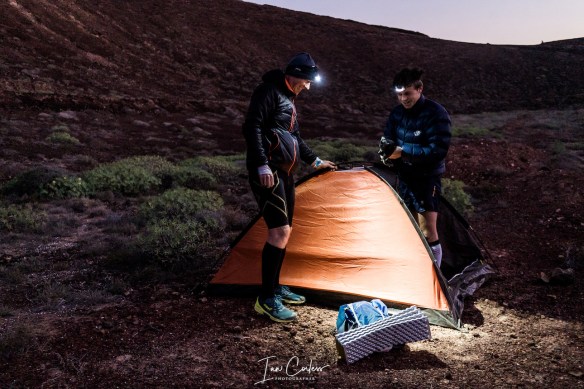
At the bivouac, they put up tents.

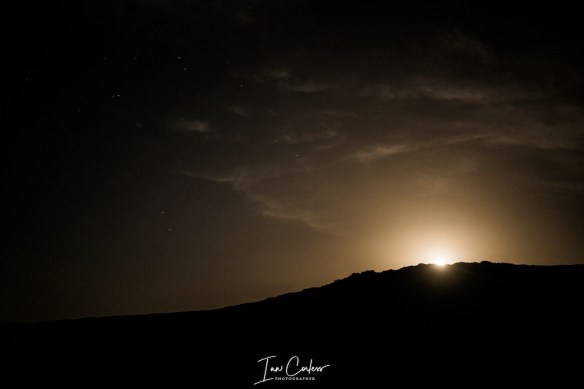
As the sun disappears they test out dehydrated food and simulate a bivouac experience. They understand the weather, the need for warmth and then they sleep under the stars.

Our night started perfectly with beautiful clear skies. Amazing star views and warm temperatures. As the night progressed, the wind increased and very much simulated a stormy night in the Sahara. For many, it was a sleepless night with shaking tents and sand being blown everywhere.
An early breakfast call, self-sufficient breakfast, water rations given and they were then off for another 13-miles of soft-sand and dune training before returning back to CLS.
Our final day has one final talk by Elisabet Barnes and Sondre Amdahl and then a group dinner to say farewell…
The next time we will all meet will be in Morocco for the 35th Marathon des Sables.
Our 2021 Training Camp will be announced soon HERE
Huge thanks to our coaches guides
Elisabet Barnes 2x MDS champion
Sondre Amdahl MDS top-10 and Trans Atlas winner
Gemma Game 2x 3rd place at MDS
Jodie Moss 8th at MDS

Follow on:
Instagram – @iancorlessphotography
Twitter – @talkultra
facebook.com/iancorlessphotography
Web – www.iancorless.com
Web – www.iancorlessphotography.com
Image sales –www.iancorless.photoshelter.com

Lanzarote Training Camp 2020 – Day 5 and 6

The sun quite literally has been shining on the camp providing us with perfect training days to replicate scenarios that one would find in the Sahara at MDS or technical situations that one would find in races like The Coastal Challenge or Everest Trail Race.
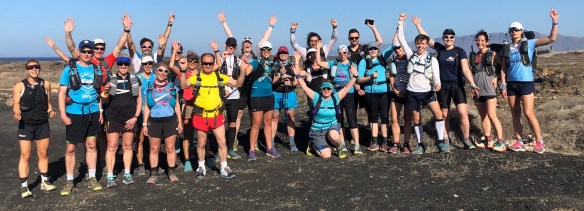
We did a long Coastal Run of 24km on Thursday morning in a self-sufficient manner, the camp attendees broken down in to 4-groups, Gemma Game, Sondre Amdahl, Elisabet Barnes and Ian Corless each leading 4-8 participants at a pace relevant to the group ability.
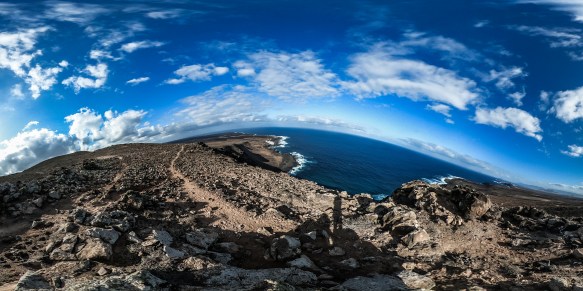
The coastline here is stunning offering a wonderful views with the smell of the sea in the nose and a wind blowing in from Africa.

There was plenty of climbing too and tough, technical and hard terrain. Of course what goes up, must come down.
In the afternoon, after a relaxing lunch, Jodie Moss who placed 8th at the 2019 MDS did a talk on heat acclimation and how one should prepare for specifically MDS and the differences one needs to consider if going to a humid race like TCC.

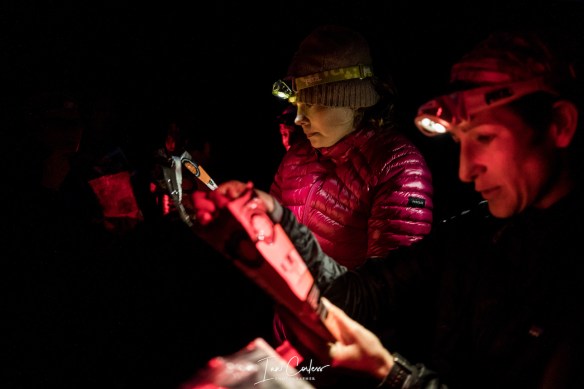
The day concluded with a night-skills session with Sondre and Elisabet leading. All about the skills needed and required to run at night and they then did a short 5km run.
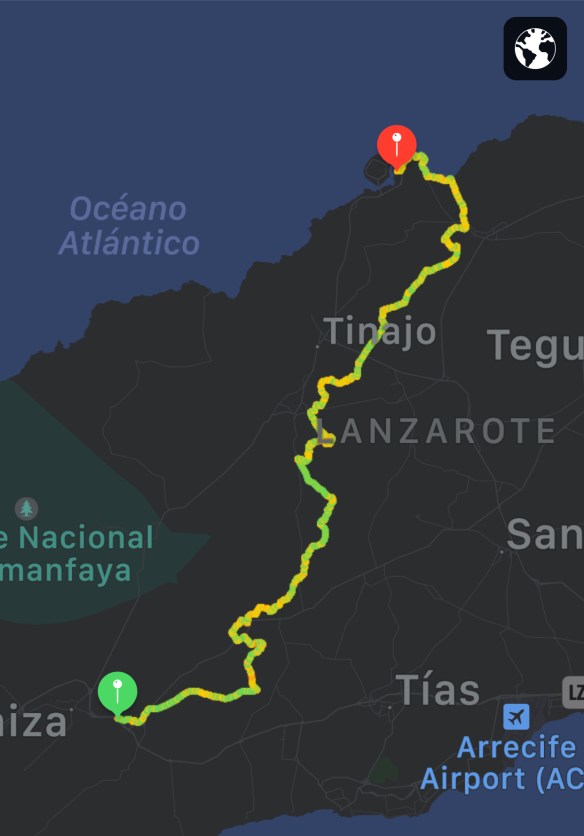
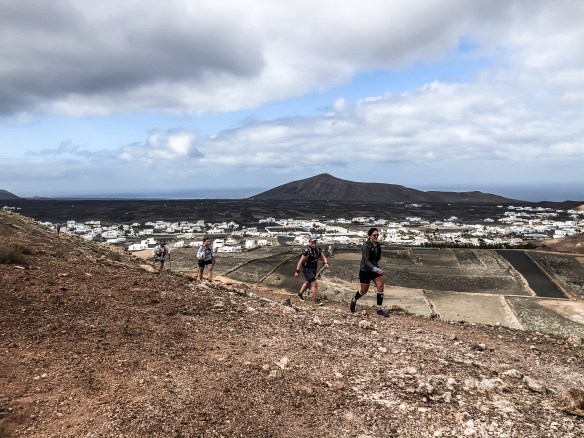
Friday was all about the ‘Long Day!’ For the first time on our camp, we did a point-to-point route of almost marathon distance that crossed the island from Uga and back to Club La Santa.

Ironically, the day started with a little light rain as we were transferred to Uga. It soon left us though leaving us with a perfect, if not windy day.

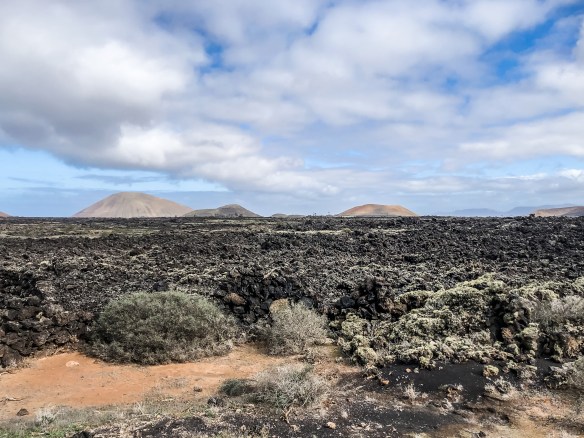
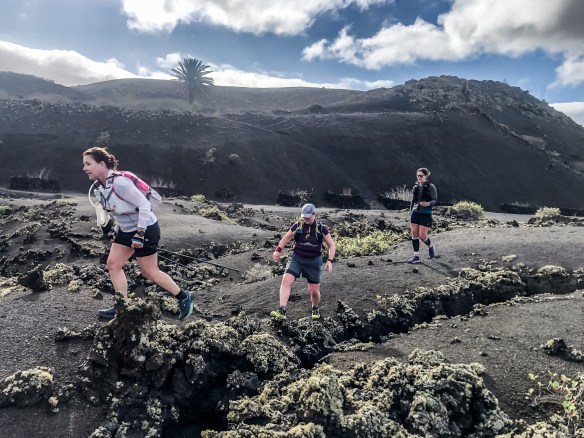
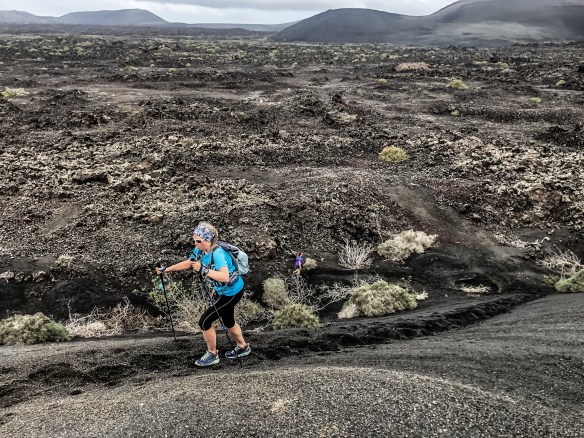
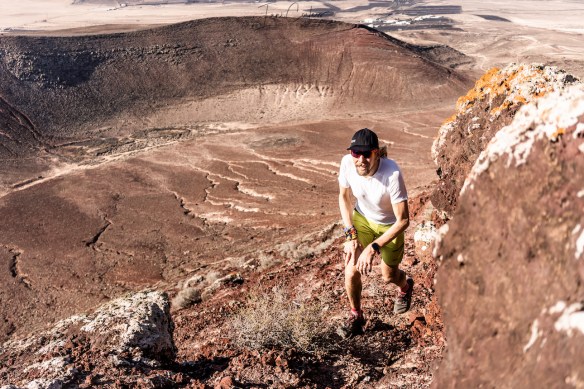
The terrain is constantly mixed in Lanzarote and the volcanic landscape at all times exciting. We managed 1800m vertical in constantly challenging terrain that replicated a day at MDS perfectly.


Many got an opportunity to use poles and test them, vital if they plan to use them in a race. There is a real technique and once mastered, a real benefit can be gained especially if walking will make a up a bulk of your multi-day pace.

We had just one aid station at 22km (Thanks John and Carmen), so, for much of the day, everyone was carrying a pack of 4-5kg, ideal preparation for self-sufficient multi-day.

The ‘Long Day’ proved to be stunning with the fastest group completing in around 4h 15m and the walkers in 6h 40m. They all now have a real confidence boost knowing that a day at MDS, TCC or ETR is completely doable.
The day concluded with Elisabet Barnes leading a talk and practical session on foot care.
It has been a great couple of days!
Info the 2021 Training Camp will be updated soon HERE

Follow on:
Instagram – @iancorlessphotography
Twitter – @talkultra
facebook.com/iancorlessphotography
Web – www.iancorless.com
Web – www.iancorlessphotography.com
Image sales –www.iancorless.photoshelter.com
Episode 181 – Gordy Ainsleigh, Kilian Jornet and Timothy Olson
![]()
Talk Ultra needs your help!We have set up a Patreon page and we are offering some great benefits for Patrons… you can even join us on the show! This is the easiest way to support Talk Ultra and help us continue to create!Many thanks to our Patrons who have helped via PATREON
the INTERVIEWS
![]()
Lanzarote Training Camp 2020 – Day 4

It was a double run day today in Lanzarote starting at 0800 with a really great 9-miles with sunrise with trails along the coast leading to the volcanoes around the village of Soo and then a re-route back down to Club La Santa.

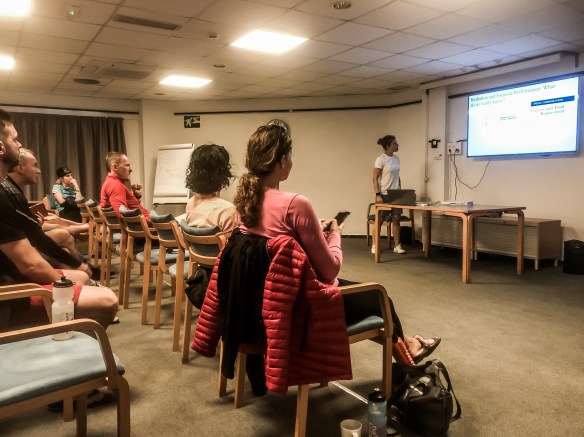
We then had a very quick turnaround to a 2-hour presentation by Running Reborn coach, Shanne Benzie. Shane is a the forefront of discussing and analysing run technique to increase performance and reduce injury, as usual it was fascinating.

A break for lunch and then the afternoon was split in to two 2-hour sessions.
Groups 1 and 2 remained on the run track and had analysis with Shane Benzie while groups 2 and 4 ran along the coast to play on one of the volcanoes climbing to the summit and descending.

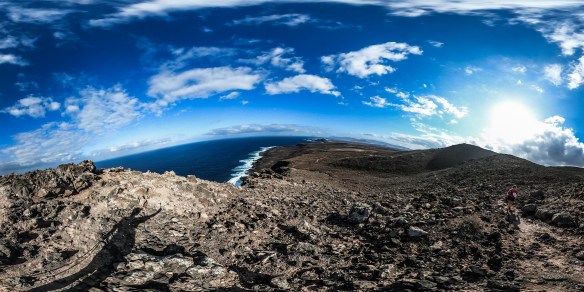
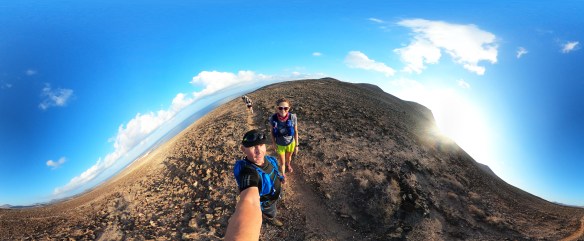
You can move around the video image by using the toggle button that appears on the left of the video screen.
And then coasteering one of the technical paths returning back to Club La Santa.

Back at Club La Santa, the groups swapped with 3/4 remaining on the track with Shane and 1/2 heading out on the trails.
The day concluded at 7pm with everyone exhausted and exhilarated after a very full day.
Dates for our 2021 Camp will be announced soon HERE

Follow on:
Instagram – @iancorlessphotography
Twitter – @talkultra
facebook.com/iancorlessphotography
Web – www.iancorless.com
Web – www.iancorlessphotography.com
Image sales –www.iancorless.photoshelter.com
the INTERVIEWS Season 1-Episode 3 : Timothy Olson
![]()

Hosted on ANCHOR (HERE) the INTERVIEWS will also be available to listen on many other players, including SPOTIFY (HERE).
ANCHOR app on Apple HERE and Google HERE
Download links will be added in due course.
Follow on:
Instagram – @iancorlessphotography
Twitter – @talkultra
facebook.com/iancorlessphotography
Web – www.iancorless.com
Web – www.iancorlessphotography.com
Image sales –www.iancorless.photoshelter.com
the INTERVIEWS by Talk Ultra

New for 2020, TALK ULTRA podcast will bring you the INTERVIEWS from the extensive podcast back catalogue.
The USP of Talk Ultra has always been long shows designed to be listened to during long journeys, or ideally, during a long run!
Over the year’s we have been asked to release the interviews that make up a show, typically 3, as stand-alone interviews. So, for 2020 and moving forward, we will release the interviews, randomly and not in chronological order.
Talk Ultra podcast will still be released and published as normal.
![]()
Released using ANCHOR, the INTERVIEWS will be available on many different formats and importantly, Spotify.
Our first show will go back to February 2012 and an interview with Gordy Ainsleigh who has a special place in ultra-history as being the first person the run the Western States Endurance Run on foot.

Listen on SPOTIFY HERE
The podcast will also be listed and available on many other outlets, as listed below (links added when appropriate):
Follow on:
Instagram – @iancorlessphotography
Twitter – @talkultra
facebook.com/iancorlessphotography
Web – www.iancorless.com
Web – www.iancorlessphotography.com
Image sales –www.iancorless.photoshelter.com
AZORES and JORDAN 2020 with ULTRA X and MYRACEKIT

With a New Year looming it’s finally great to announce that in May 2019 I agreed to join forces with ULTRA X and myRaceKit to work with them in promotion of two events on the 2020 calendar:
Azores April 23rd to 26th
Jordan October 3rd to 11th
ULTRA X have had a great 2019 with events in Sri Lanka, Jordan, Mexico and the Azores, in 2020 they move forward:
- Sri Lanka – March
- Azores – April
- Jordan – October
- Mexico – November
- Bolivia – tbc
- China – tbc
ULTRA X have brought a new experience to the multi-day world offering race entry at accessible prices, easy registration, a global series, a community and club for all and uniquely, they a proposing a ULTRA X World Championship that will take place every 2-years, starting in 2021.
Although new to the multi-day world, ULTRA X had significant growth in 2019 and now with the help of myRaceKit, specialist equipment supplier for multi-day races, 2020 looks set to be a great year.

Rebeca from myRaceKit is an accomplished ultra-runner, here at the 2019 Marathon des Sables.
Many will know myRaceKit through two-times Marathon des Sables and multi-day specialist, Elisabet Barnes. Elisabet was the owner of myRaceKit until she sold to the new owner, Rebeca Ehrnrooth, Elisabet remaining as a shareholder.
Moving in to 2020, myRaceKit are the exclusive equipment partners for ULTRA X events including pre-race weekends. At the Azores and Jordan races, Elisabet Barnes and Sondre Amdahl will fly the myRaceKit flag amongst two hotly contested races with runners from all over the world attending.

Elisabet and Sondre training in Lanzarote in 2019. They will return again, January 2020.
AZORES

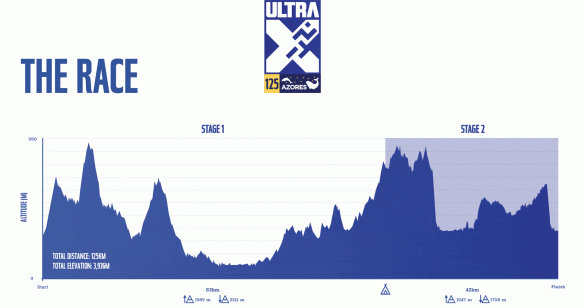
The ULTRA X Azores 125 is 2-day event in April and is designed as introduction to the multi-day format. It is the first half-distance race Ultra X have offered. The Azores are truly spectacular situated 1000-miles in the Atlantic Ocean. Close to Portugal, this tiny archipelago of islands offers incredible trails along volcanoes, through amazing green valleys and past stunning lagoons.
Taking place on the island of Sao Miguel, nicknamed “the Green Island”. It is one of the nine volcanic islands based out in the Mid Atlantic. Governed by Portugal, this wild and remote archipelago is characterised by dramatic landscapes, fishing villages and green pastures. The climate of the Azores is very mild for such a northerly location, due to the marine influence, temperatures remain around 20c all year-round.
Racing takes place over 2-days, with 83km to cover on day-1 and 42km to cover on day-2. It’s not an easy challenge! Included in entry is accommodation during the race, race entry, rationed water, medical team, ground assistance and a medal at the finish. The race is self-sufficient, so runners must come prepared to survive for the duration of the race.
Enter here https://tickets.trumin.com/ultra-x-azores-2020 £295.00
JORDAN

Ultra X Jordan (previously the Wadi Rum Ultra) takes participants through the land of Lawrence of Arabia. The mystical course takes competitors through historic sites, into dramatic Wadis and over magnificent sand dunes.
Wadi Rum’s nickname is ‘the valley of the moon’ and you will see why.
Its landscape, characterised by unique towering rock formations will truly blow you away, as will the challenge. As locations go, this place is unrivalled in its beauty.
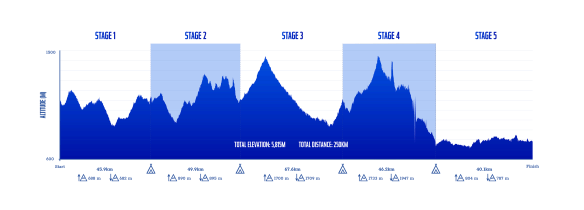
A 5-day race, the race will cover daily distances of 46km, 50km, 70km, 46km and finally, 38km. As will all ULTRA X races, the event is self-sufficient, so, runners need to carry food, clothes, sleeping bag and all they need for the event. Rationed water and a tent is provided.
Enter here: https://tickets.trumin.com/ultra-x-jordan-2020-deposit Deposit is £300.00
Speaking to Sam Heward from ULTRA X in October, I expressed how happy I was to be joining in 2020:
“It is great to see that Ultra X are creating new races, in new locations around the world. Ultra X 125 Azores is something a little different with it being just a two day race, this will appeal to many as a mini adventure and an opportunity to test themselves before stepping up to a 5-day format. I have heard much about the Azores and it’s a place I am keen to visit and explore.”
Roll on 2020, some new trails and experiences.
Contact ULTRA X https://ultra-x.co/
Contact myRaceKit https://www.myracekit.com/


Follow on:
Instagram – @iancorlessphotography
Twitter – @talkultra
facebook.com/iancorlessphotography
Web – www.iancorless.com
Web – www.iancorlessphotography.com
Image sales –www.iancorless.photoshelter.com
THE LONG RUN – Running Long, but how long?

We all run long, but the length of a long run can really vary depending on many factors such as age, fitness, race and training history, targets, objectives and available time. I get asked and read, time and time again, the question, ‘How long should I run?’
‘What session you doing?’
‘Long run today,’ the answer.
But, what is a long run and how long should a long run be?
Before that question can be answered, one needs to understand why one is running long and for what purpose. Typically this will be a long-term event that is planned in the diary that may or may not be a race.
Having a date to work too is a great starting place as it provides a deadline point. This helps focus the mind and plan the time accordingly.
Ask yourself, what your objectives are? For example, there is a difference between competing and completing?
What distance is the event? (What is the time limit, what are intermediate cut-off times?)
If you are used to running 5k and 10k events, a long run for you may well be 75-90 minutes? If you are a marathon runner, your long run may be 3 to 3.5-hours. If you are running an ultra, this is where it gets tricky.

Why do we run long?
In summary, we put an emphasis on 3 key points:
- Mental Strength
- Muscular and physical adaptation
- Efficiency to use fat as a fuel

Mental Strength:
If you have never run for more than 1 hour in training, then 3 hours on your feet just feels like a really long time, so, you need to adapt mentally for the challenge ahead and you need to be strong to get the job done. This time on feet, needs to be appropriate to the challenge one has planned.

Muscular and Physical Adaptation:
Muscle soreness will come for everyone, however, we can train to reduce the impact or delay the process by progressively running longer in training. With recovery periods, we allow our muscles to adapt to the stress and they become stronger. Delayed onset of muscle soreness (DOMS) is not pleasant and it something that can really be painful in the 24/ 48 and 72 hour period after hard/ ;long training or racing. By running long in training we adapt to delay or reduce the DOMS.

Efficiency to use fat as a fuel:
Our bodies can only store so much carbohydrate and once those stores are used up we have only two options left: top them up or slow down and maybe even stop if they have got very low. As an endurance athlete we need to tap into our almost unlimited fat stores. We do this by teaching our body to use fat as a fuel during the long run. The more efficient you become at this, the longer you can run and the longer you can maintain a pace. Ultimately it means the whole race/training experience will be better and more enjoyable.

The Long Run
Running longer requires running slower, especially if we are going to switch fat burning on. It requires a pace that one can maintain for hours and hours and yes, that pace can be walking. The long run/ walk is specific to you and nobody else!
Running hard and faster has its place and yes, top elite runner can and will incorporate faster paces within a long run to adapt. But be specific and think of your objectives and what you are trying to achieve.
Be specific with terrain. No point for training for a 50-mile trail race with loads of vertical and technical trail and then run all sessions on the road.
Runners get stressed and worried by mileage, pace, miles per minute and so on. Relax. Think of your long run in terms of time, not distance. Particularly important if running off-road.
To help provide perspective, 3-hours on the road you may well allow one to cover 20-miles, but on the trails or in the mountains, one may only cover 12-miles.
Slow down!
A common mistake is that we make our long run too fast and our faster runs not fast enough. We therefore end up one paced. Make longer sessions slow and make hard sessions hard. If in doubt, use RPE, Rate of Perceived Exertion. Quite simply, when running long and easy you should have a perceived effort of breathing calmly and being able to talk. If running hard, you should have a perceived effort of difficulty, shortness of breath, discomfort and an inability to hold a conversation.

The big question, how long should the long run be?
Short distance runners often run ‘over distance’ in training. For example, a 10k runner may run a long slow half marathon to build endurance. A half marathon runner may run a long and slow steady 16-20 miles in preparation for a fast race.
This all falls apart when we go to the marathon and beyond. How often have you heard in marathon training that the long run should be 21/22 miles or 3-hours 30-minutes in preparation for a race. But these generic terms do not take in to account the individual. Think of Kipchoge, if he did long runs at 3.5 hours, even running slow (7 min miles for him,) he would cover over 30-miles!
Long runs and adapting for an endurance run such as an ultra comes from not one run but a combination of all runs. It’s about your accumulative run history. They all add up to make you an endurance machine. So, typically, if you are running longer than a marathon, you will have been running for some time.
First and foremost, consistency is key and long runs should be progressive and based on ability and experience. A long run should test you but not break you.
What do I mean by progressive?
Let’s use a 12-week scenario based on a runner who can currently run 2-hours in a long run. I am not looking at base training here, but the specifics of a long run and how to make the long run longer. I’m a big fan of building over 3-weeks and recovering for 1-week.
Example:
Month 1
- Week 1 – Sunday 2:30 hours
- Week 2 – Sunday 2:45 hours
- Week 3 – Sunday 3:00 hours
- Week 4 – 2 hours
Month 2
- Week 1 – Sunday 2:45 hours
- Week 2 – Wednesday 90min / Sunday 3:00 hours
- Week 3 – Wednesday 90min/ Sunday 3:20 hours
- Week 4 – Sunday 2:30 hours
Month 3
- Week 1 – Wednesday 90min/ Sunday 3:00 hours
- Week 2 – Wednesday 1:45 hours/ Sunday 3:30 hours
- Week 3 – Wednesday 2:00 hours/ Sunday 4:00 hours
- Week 4 – Wednesday 60min/ Sunday 3:00 hours
The above scenario provides a structured example on how to build up from running 2 hours comfortably to 4 hours. But remember the above scenario is 12-weeks of running with over 37-hours of running, just in the long runs!. That is huge and a great place to start for any endurance challenge.

But my race is 50-miles, can I run the distance?
As mentioned above, it’s not wise or sensible to run too long in anyone session. But the 12-week plan above on a 3/1 scenario shows you how it’s possible to build time and confidence. As you gain more experience you can look at doing back-to-back sessions and plan long training weekends all as part of a long term plan (see below.) Ultimately though, running too long in terms of distance or time is something that should be very carefully planned. You will always here about runners who can do 200-mile weeks or 50-mile training runs; they are exceptions and not the norm. Don’t be lulled into a false sense of security and don’t feel inadequate, we are all individuals and this is maybe the most important aspect.
Example:
Month 1
- Week 1 – Saturday 2:00 hours/ Sunday 3:30 hours
- Week 2 – Sunday 4:00 hours
- Week 3 – Wednesday 90 mins/ Saturday 2:30 hours/ Sunday 4:30 hours
- Week 4 – Sunday 3:00 hours
Month 2
- Week 1 – Saturday 2:30 hours/ Sunday 3:45 hours
- Week 2 – Wednesday 90min / Sunday 4:00 hours
- Week 3 – Wednesday 2 hours / Saturday 3:00 hours/ Sunday 5:00 hours
- Week 4 – Sunday 2:30 hours
Month 3
- Week 1 – Wednesday 90min/ Saturday 3:00 hours/ Sunday 3:00 hours
- Week 2 – Wednesday 1:45 hours/ Sunday 5:00 hours
- Week 3 – Wednesday 2:00 hours/ Saturday 3:00 hours/ Sunday 6:00 hours
- Week 4 – Wednesday 60min/ Sunday 3:00 hours
Running or walking long is a voyage of discovery and you need to balance long-distance with adequate recovery.
Listen to your body.
Training should be about preparing you to tackle the challenge, but it will never FULLY prepare you. There’s always going to be a bit of extra and a bit of unknown on the day of the event, but surely that’s why you’ve entered?

Follow on:
Instagram – @iancorlessphotography
Twitter – @talkultra
facebook.com/iancorlessphotography
Web – www.iancorless.com
Web – www.iancorlessphotography.com
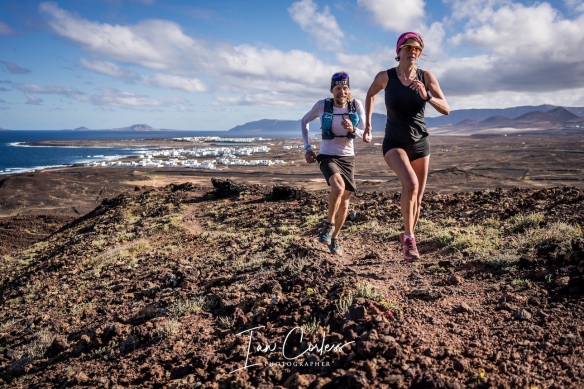
Image sales –www.iancorless.photoshelter.com