Ultra, trail, mountain and Skyrunning is booming in Portugal. In recent years the sport has grown from strength-to-strength and now a plethora of races are available. Most certainly, Carlos Sa paved the way for this new breed of runner and recently, runners like Ester Alves have kept that momentum flowing. Ester in particular has just recently won The Coastal Challenge multi-day race in Costa Rica.
Go Outdoor are embracing the rise and demand in the sport and in March 2016 (18th to 20th) they will host a series of races, the AXtrail®series.
The Aldeias do Xisto Ultra Trail, offers a series of races that is all encompassing with six races on offer: Da Inclusivo, Kids, Mini-Trail Do Xisto, Trail Do Xisto, TSL and the main event, the UTAX (the largest event in the territories of the Shist Villages) which is 110km’s in length, has 5300m of vertical gain and a 26-hour cut-off time for the participants.
A breakdown of the events is as follows:
UTAX – 110 Km
TSL – 50 Km
TX – 22 Km
MTX – 10 Km
Axtrail Kids – For kids with 6 to 16 years old
Axtrail Inclusion – For people with reduced mobility.
It’s this foresight and ell encompassing attitude that has seen Portugal rise as key influencer in the sport of trail and mountain running. Of course, trail running brings tourism and this is an important element in any growing race series. The natural conditions of the region combined with the hospitality of the local population ensures that visitors to Portugal are extremely happy with their stay, whether participating in one of the six event, or in relation to the destination where an event takes place.
As the event race director says:
“The AXtrail®series is an event for everyone, with a comprehensive character. Children, youth, adults, experienced athletes, sports teams or families, everyone is welcome and will find a place!”
The UTAX is the main event of the weekend and first took place in 2013 with shortened course, Salomon Portugal athlete, Armando Teixeira won in a time of 7:44:29. The first lady was Ester Alves, her time of 10:03:48 reflecting the reduced distance. Alves won again in 2014 but this time it took 16:53:49 for victory and in the men’s race, Luis Duarte recorded a time of 13:06:46. Current course records were set in 2015 by Jérôme Rodrigues and Sofia Lopes Roquete, their respective times of 12:49:57 and 16:12:53 set the benchmark for the 2016 edition.
Alves was missing in 2015 but returns in 2016 and no doubt she will be looking not only for victory but maybe setting a new fas time for the UTAX course. Her recent growth in the sport with top results at UTMB, Transvulcania and recent victory in Costa Rica certainly bodes well. A big question mark will come in regard to Alves’s recovery, The Coastal Challenge was only four weeks ago! Sofia Lopes Roquette, 2015 champion will return to defend her crown.
In the men’s race, the battle for the front to f the race may well come down to Jêrome Rodrigues who ran 12:49 in 2015 and Luis Duarte who ran 13:06 in 2014. However, it may not be that simple? Anything can happen in 110km’s and Nuno Silva along with Ricardo Silva will look to mix things up at the front of the race.
Other names to watch and look out for are: Amândio Antunes, Rui Luz, Luis Mota (veteran), Guilherme Lourenço, Rui Seixo, Raquel Campos, André Rodrigues, Cláudio Quelhas, Juan Delgado (veteran), Nádia Pasteleiro, and Júlia Conceição. A full list of all participants in UTAX ( 230) – HERE
UTAX 110 km – 5300 D+
This year the UTAX race will start and finish in Miranda do Corvo, in the Plaza José Falcão, this will be the logistical center of the race. The first village to be visited will be Gondramaz, allowing athletes enjoy a beautiful single-track but the opening limiters are hard and technical. Lousã follows and here the most anticipated moment of the race will come as this local location is known as the “Amazon.” After Candal runners only travel about 3 km to the village of Cerdeira which offers panoramic views of the mountains and is a place of peace and tranquility. The Schist Villages are magical places where time passes more slowly and the villages are hidden between rock and lush vegetation – Góis, Aigra Nova, Comareira and Pena. From Pena a climb starts to the highest point of the race and then down to Castanheira de Pera. Following a northwest direction for Ameal, a fantastic single-track rises up and winds to a farm at the top of Lousã, the trail continues in the direction of the House of the Forest Guard. It is then that begins the descent to the villages of Catarredor and Vaqueirinho, and follows to the Schist Villages Talasnal and Casal Novo. Following the route for the “Terreiro Halloween”, runners go up to the Vila Nova which is in the Miranda Municipality of Corvo. The end is now getting close, Fluvial Beach Louçainha (Municipality of Penela), Vila Nova and then heading back to the Square José Falcão in Miranda do Corvo for the finish.
It is a weekend party where everyone without exception can practice and enjoy the wonderful sport to trail and mountain running.
You can follow the race in words and images on this website,iancorless.com and on my other media channels: Facebook HERE, Twitter HERE and Instagram HERE.
You can download a PDF race information document HERE
Aldeias do Xisto Ultra Trail race coveragewould not be possible without the support of AXtrail® Go Outdoor andmany thanks toCentro de Portugal Touristic Office www.centerofportugal.com.
Endurance athletes are familiar with the terms “aerobic” and “anaerobic,” but what do they really mean? Marc Laithwaite provides a very simple explanation to one of the most misunderstood subjects in endurance sports.
The Aerobic and Anaerobic Engines.
We need energy for every minute of our lives. When we are resting, we don’t need much and when we are exercising we need considerably more. The energy is created by ‘burning’ fuels such as carbohydrates and fats and we have 2 engines within our body which are responsible for making this happen; Aerobic and Anaerobic.
1. The Aerobic Engine
The aerobic engine can burn both fat and carbohydrates and needs oxygen to make this happen. When we are at rest, we don’t need much energy, so we take in a small amount of oxygen and our aerobic system breaks down carbohydrates and fats to provide the small amount of energy required.
As we become more active (light exercise), our energy demand goes up. Generally this isn’t an issue for most of us. We take in more oxygen and break down more carbohydrates and fats to generate the extra energy required.
If we start to exercise at harder intensities, then at this point the aerobic energy system may start to struggle a little. The aerobic system has the choice of burning fat or carbohydrate and as the intensity of your exercise increases, it will favour the carbohydrate. The reason for this is that fat requires a lot more oxygen to break down, so it’s not the most efficient fuel. It’s fine when you are exercising at an easy intensity as your energy demand is small, but when you’re asking for higher amounts of energy, your aerobic system just goes for the easier option and prefers to burn carbohydrates. This is why we see a shift in fuels used as exercise intensity gets harder, from higher fat to higher carbohydrate.
If you continue to increase the intensity of exercise, your aerobic system may get to the point where it is finding it hard to match the energy requirement. At this point it asks for help from your ‘second engine’.
2. The Anaerobic Engine
When you reach that point where your aerobic system is struggling to generate the amount of energy required, it will call upon the anaerobic system to help out. Engine number 2 will ‘fire up’ and give you the extra energy required. At this point you will have 2 engines working together to supply the energy required.
IMPORTANT: We often hear the term ‘going anaerobic’ and it implies that we switch from aerobic to anaerobic energy. That isn’t the case, when the anaerobic engine starts to ‘help out’, the aerobic engine continues to work alongside. In essence, both engines are now working together rather than switching from one to the other.
The anaerobic engine can only use carbohydrate as fuel, so at this point your carbohydrate use will be pretty high. CRITICALLY, the anaerobic system also can’t use oxygen to break down the carbohydrate, so as a result it produces LACTIC ACID and CARBON DIOXIDE as waste products. At this point you’ll notice a significant rise in your breathing rate, this is due to the build up of carbon dioxide and as a result, you breathe faster to try and exhale as much and as quickly as possible!
If you continue to increase towards maximal intensity exercise, both engines are working together and both are close to their maximal capacity. At this point you’ll reach VO2 maximum, which is the maximum capacity of your aerobic system. IMPORTANT: As we said earlier, your aerobic system is still working, we don’t switch from aerobic to anaerobic, hence your VO2 maximum, a measurement of aerobic capacity, is only reached at maximal intensity.
As you approach maximal intensity, the anaerobic system is producing so much waste product (carbon dioxide) that no matter how fast you breathe, you can’t get enough carbon dioxide out. At this point, it’s like bailing out a boat which is filling quicker than you can bail! The carbon dioxide levels continue to rise , despite you nearly hyperventiliating and at that point, your brain will say stop!
How does fitness change the above?
As your fitness improves, the aerobic engine becomes more capable. At some point as your exercise intensity increases, your aerobic engine will start to struggle and will ask your anaerobic engine to ‘fire up’ and help out. Improvements in aerobic fitness mean that you can run and cycle at higher speeds and your aerobic engine can manage on it’s own. You’ll be able to reach much faster speeds and higher power outputs before it calls on the anaerobic engine to help out.
*****
About Marc:
Sports Science lecturer for 10 years at St Helens HE College.
2004 established The Endurance Coach LTD sports science and coaching business. Worked with British Cycling as physiology support 2008-2008. Previous Triathlon England Regional Academy Head Coach, North West.
In 2006 established Epic Events Management LTD. Now one of the largest event companies in the NW, organising a range of triathlon, swimming and cycling events. EPIC EVENTS also encompasses Montane Trail 26 and Petzl Night Runner events.
In 2010 established Montane Lakeland 50 & 100 LTD. This has now become the UKs leading ultra distance trail running event.
In 2010 established The Endurance Store triathlon, trail running and open water swimming store. Based in Appley Bridge, Wigan, we are the North West’s community store, organising and supporting local athletes and local events.
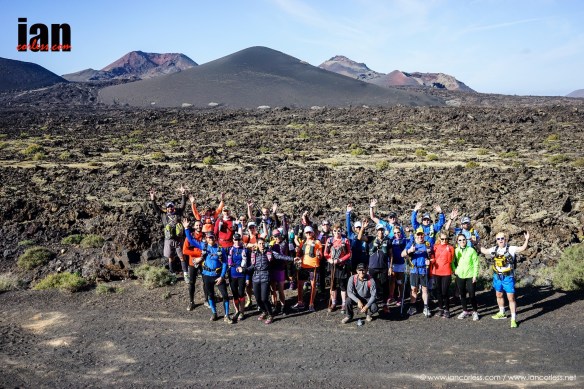
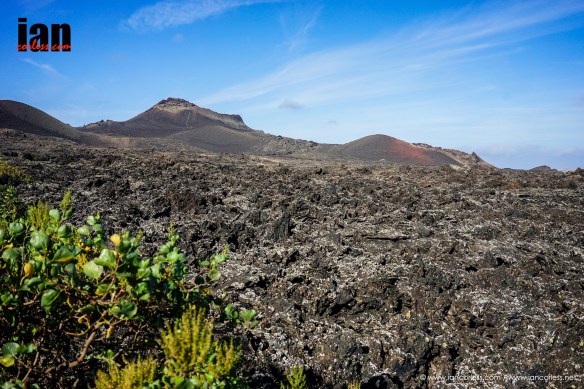
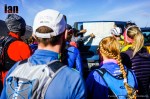
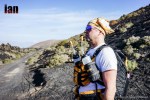
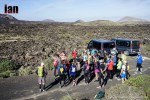
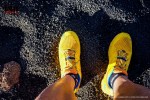
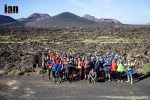
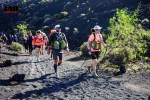
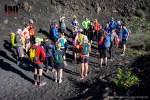
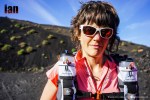
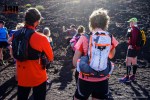
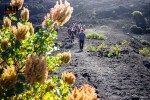
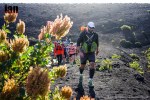
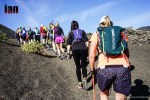
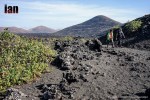
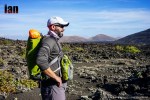
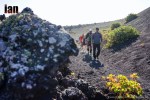
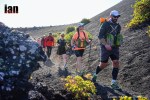
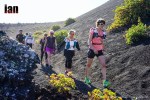
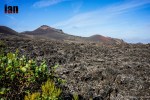
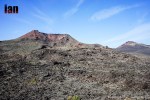
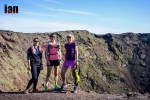
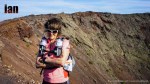
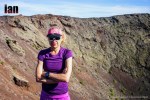
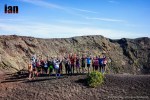
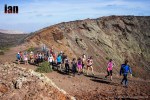
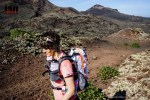
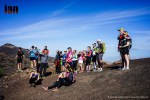
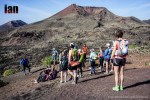
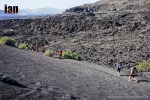
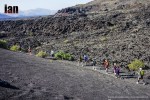
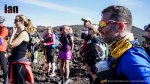
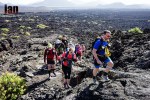
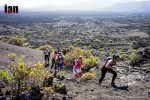
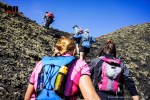
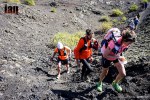
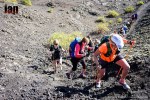
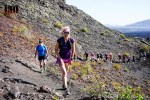
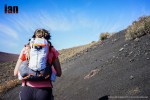
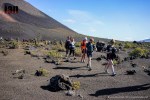
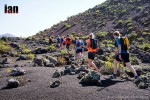
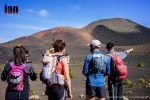
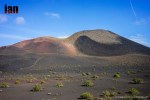
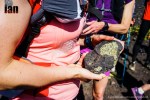
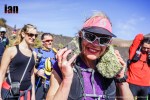
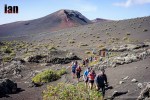
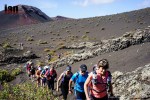
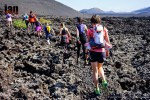
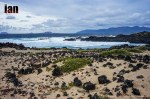
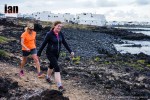
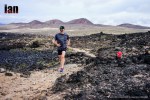
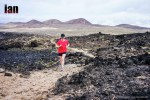
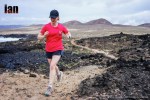
It was an active recovery day at the 2016 Lanzarote multi-day training camp. It was kicked off with a guided 3-hour walk through some of the islands most stunning volcano sections close to the Timanfaya National Park.
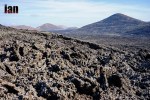
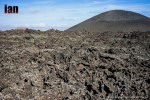
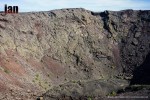
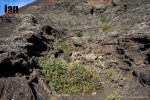
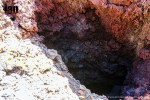
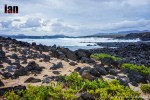
Famous for it’s volcanic landscape, today everyone was able to appreciate up close how dramatic and tough these trails can be. Black lava sand, interspersed with jagged rocks but ultimately everyone was blown away with the dramatic and somewhat eerie vistas. In the early 1700’s, this area had six continuous years of volcanic eruptions that created this stunning landscape.
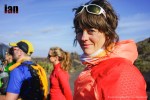
Elinor Evans, a yoga expert undertaking Marathon des Sables for the first time in 2016 commented after the walk:
“It’s been a really special day in this environment. We have walked with our packs, covered some miles and in the process had a wonderful learning experience. It has been magical.”
It was a sentiment echoed by everyone in the camp and with 5-hours of running waiting for everyone tomorrow, the opportunity to walk today was welcome.
The evening discussion was all about food and hydration for multi-day racing and we discussed the different nutritional needs for someone who may be looking to compete, the mid-packer and the walker. Of course, it’s all very personal, but many similarities from all three scenarios crossed over providing all the participants with plenty of key and essential information that they can now take away and formulate their own strategies for their chosen race.
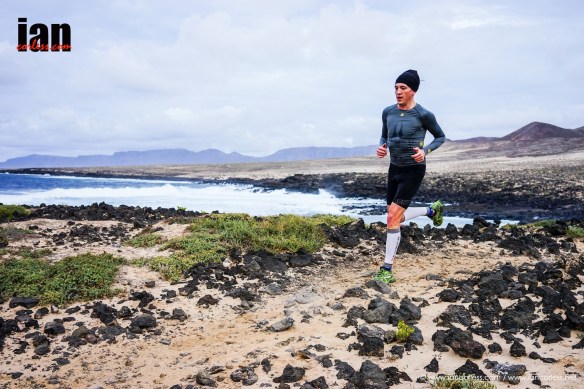
Tomorrow, Sunday, kicks off with a 5-hour run along a new coastal section that will involve some climbing, scrambling and of course a plethora of mixed terrain.
If you are interested in a multi-day training camp, our 2017 dates are set and you can view HERE
Many thanks to:
Raidlight, OMM, inov-8, Berghaus, PHD, MyRaceKit and Scott Running for the support with this camp.
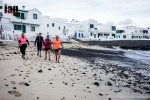
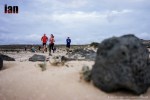
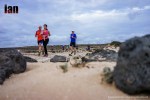
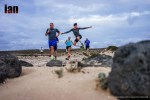
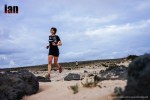
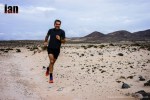
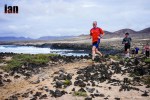
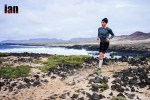
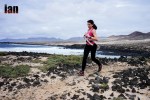
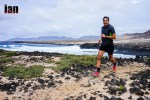
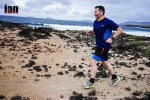
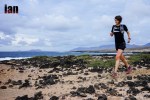
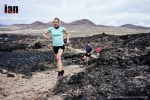
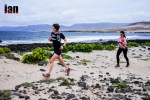
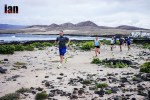
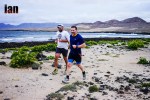
The Lanzarote 2016 multi-day training camp got underway today with an easy 1-hour run along the coastal trails of La Santa to Famara.
In total, we have a group of 27 runners with a broad range of 2016 objectives such as Marathon des Sables (Morocco), The Coastal Challenge (Costa Rica), Big Red Run (Australia), Cape Wraith Ultra (UK) and the Everest Trail Race (Nepal).
It’s always great to see so many runners of mixed ability come together with one goal in mind; completion of a challenging multi-day race!
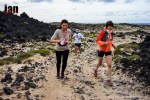
Tomorrow, 4-hours of classic desert terrain awaits the runners as they depart in three groups lead by Elisabet Barnes, Niandi Carmont and Marie-Paule Pierson. Ian Corless, camp co-ordinator and planner, will move through the groups, running out-and-back to ensure that everyone is on track and comfortable.
In the afternoon, a group talk and discussion followed with an easy 30-60 min run.
Lanzarote, situated off the coast of Morocco provides the perfect environment to simulate many of the conditions that runners will experience in a classic multi-day race; wind, sand, rocks, tough terrain, climbs and maybe even a little scrambling.
If you are interested in a multi-day training, dates for 2017 have been set and you can view HERE
Many thanks to the following brands for helping with this camp:
MyRaceKit, OMM, inov-8, Berghaus, PHD, Raidlight, Scott Running
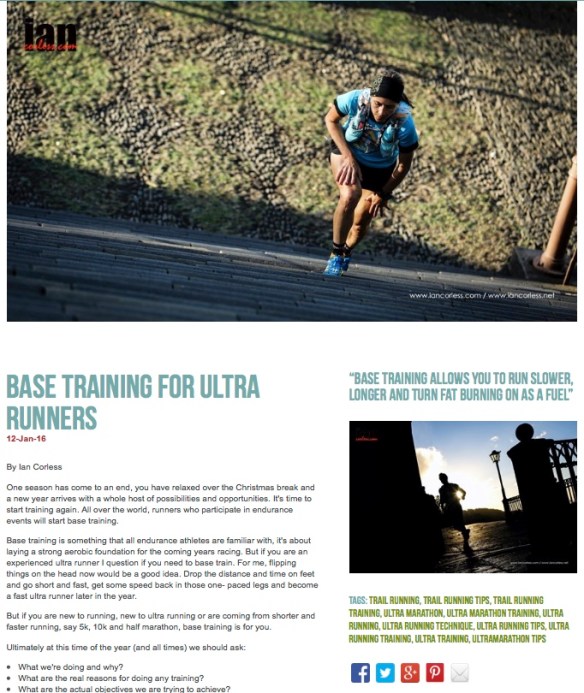
Recently I have been writing a series of posts about training and starting a new year of running on the right foot, no pun intended. A recent post called, ‘Planning a Running and Racing Year’ HERE.
Base training is something that all endurance athletes are familiar with, it’s about laying a strong aerobic foundation for the coming years racing. But if you are an experienced ultra runner I question if you need to base train. For me, flipping things on the head now would be a good idea. Drop the distance and time on feet and go short and fast, get some speed back in those one- paced legs and become a fast ultra runner later in the year. Read a post, ‘To Base Train Or To Not Base Train’ HERE that discusses these points.
But if you are new to running, new to ultra running or are coming from shorter and faster running, say 5k, 10k and half marathon, base training is for you.
Ultimately at this time of the year (and all times) we should ask:
What we’re doing and why?
What are the real reasons for doing any training?
What are the actual objectives we are trying to achieve?
Without understanding your objectives, you will never be able to understand how to structure your training and maybe more importantly, you won’t know when you have achieved your goal so that you can then move to the next phase.
Since 2012 I have been using Scott shoes, yes, Scott make run shoes in addition to bikes. I say that, because that is what I get when other runners look at my shoes and say, ‘Scott, oh, thought they made bikes?’
Since the original T2 Kinabalu, I have been a fan. I remember the original incarnation in 2012 which I used to run all over the Transvulcania course (Review HERE). Since the original model, the T2 Kinabalu has had a few tweaks and the current incarnation is the 3.0HERE.
Scott launched the Kinabalu Supertrac (original look HERE) and this shoe went on to be my favourite shoe of 2015. I even went through many other shoes I had been testing to work out which shoe (for me) was the best. The ‘Supertrac’ won, see HERE.
As 2015 came to a close, Scott informed me of several new shoes, one being the Enduro.
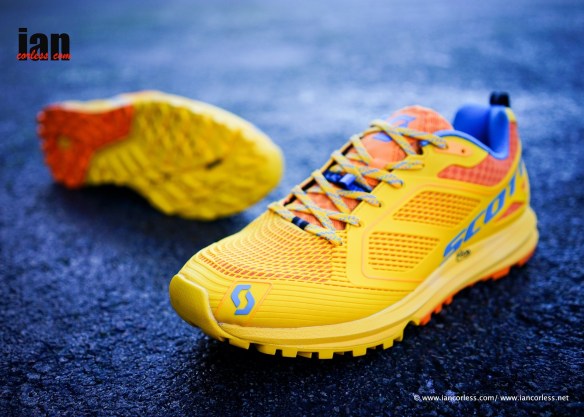
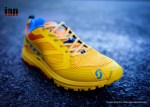
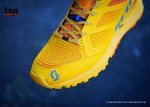
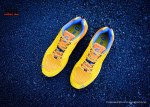
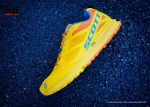
Well, the Scott Kinabalu Enduro has arrived and here are our first impressions and look.
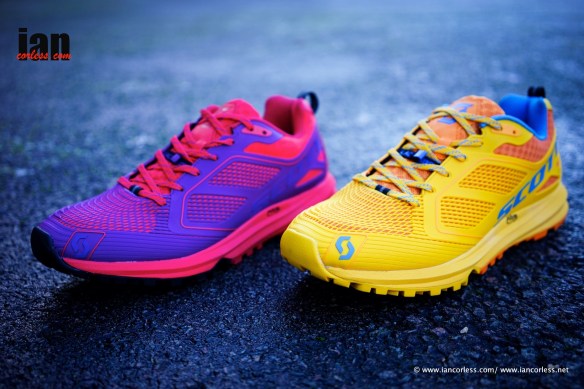
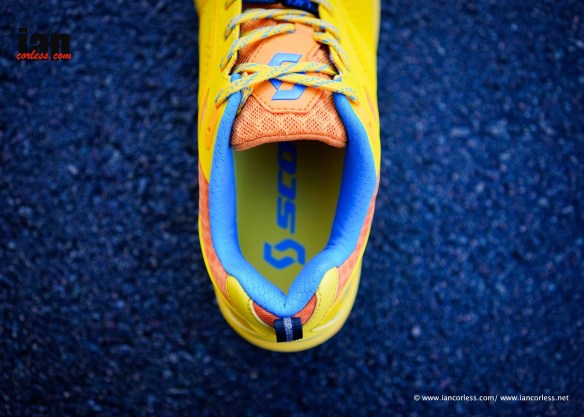
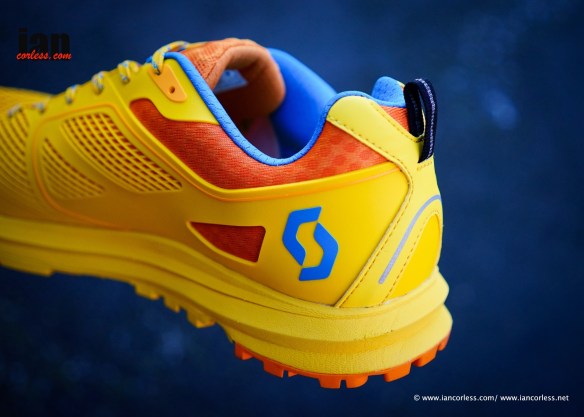
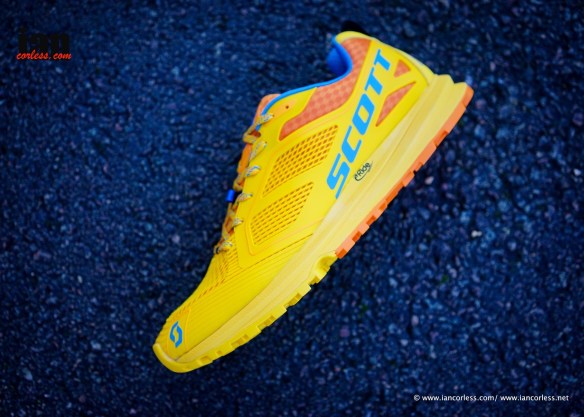
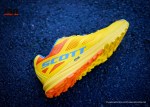
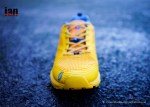
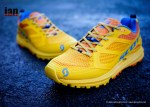
One thing is for sure, there is no hiding in the male version. Bright yellow, these shoes from the off say that they mean business. The ladies version is also bright but considering that many women wear bright apparel, I’m sure the colours will appeal. Certainly the original reaction from Niandi (who will test the ladies shoe) was wow, I LOVE the colours.
The shoes are not light. In all honesty, they were both noticeably heavy when removed from the boxes. The ladies a UK 8 weighs 380g and the mens UK9.5 weighs 418g. That is heavy; no doubt about it and I have to say initially disappointing.
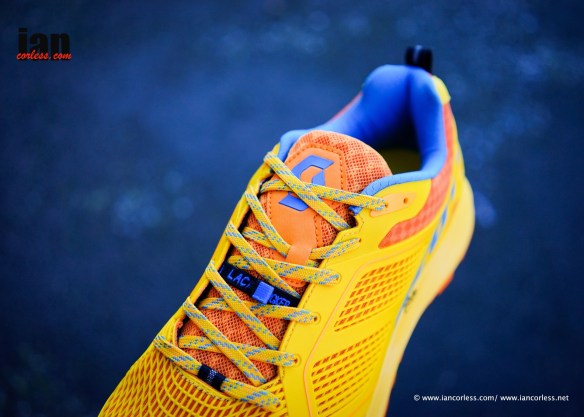
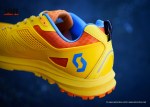
Looking at the shoe closely, you soon realise why. The whole upper of the shoe has a plastic coating on top of the mesh below.
I have to say, I asked why? Why is it necessary to add some much structure and protection to the upper of the shoe? Scott call this: Protective-High-Abrasion-Casing.
I took a look at Scott’s website and the description is as follows:
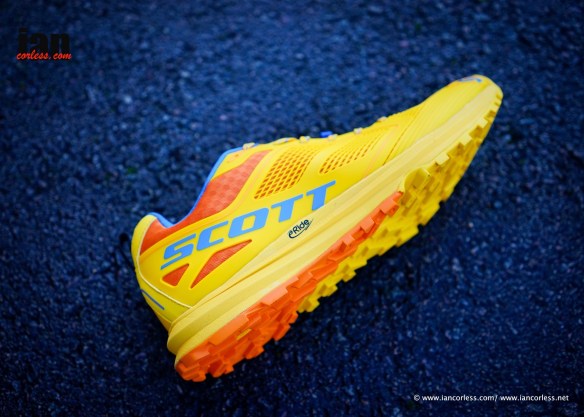
The brand new SCOTT Kinabalu Enduro is the latest addition to the range. The seemless one piece upper offers protection and comfort for all day adventures while the eRide tuned midsole and VIBRAM outsole provide performance and stability during your run.
Seamless upper – perfect
Protection – great
Comfort – brilliant
eRide – works, so great.
Vibram – tried and tested, so great
I still have to question though, why so heavy? My only point of question on the excellent Kinabalu Supertrac was the weight. Here Scott have beefed up the Kinabalu and made it bullet proof, it’s obviously way to early to tell but on first impressions, if you want a shoe to last and get value for money from, this may be the one!
Cushioning as you would expect from Scott is good with 28mm at the rear and 17mm in the forefoot. However, these two figures cause me a little confusion, why for 2016 are Scott releasing a shoe with an 11mm drop? They dropped the ‘Supertrac’ from the Kinabalu’s original 11mm drop to 8mm drop and this for me made perfect sense. 8mm is a perfect sweet spot that appeals to many a runner and when running long it’s not too low to cause any issues. Having said that though, after just 2 runs in the ‘Enduro’ they do feel comfortable and offer a great feel. I have said this before, the ‘rocker’ system that Scott uses does give the shoes a feeling of lower drop due to the rolling action. I must point out too that I do fore foot strike so that will also help.
eRide – “Dynamic stability is the body’s own way to run efficiently and safely over uneven terrain. The eRIDE TUNED midsole has strategic flex zones to provide asymmetric flexibility and enhance ground adaptation while a EVA foam provides cushioning.”
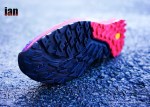
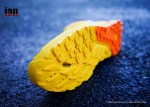
The outsole sits somewhere between the T2 Kinabalu and the Supertrac and therefore it will be a great all rounder for those who may well be looking for a ‘one shoe does all’ scenario. Made by Vibram, the outsole uses ‘MEGAGRIP’ as witnessed on the Supertrac but this version is less aggressive. From repeated year long use of the Supertrac I can confirm that this outsole is tried and tested and a favourite. This version does feels stiffer and less supple than the Supertrac version, we shall see?
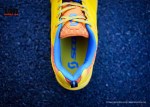
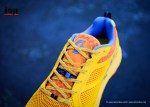
Lacing is standard and incorporates the ‘lace bungee’ for storing excess lace after you have tied your shoes. It’s a very simple and effective way for removing something that may catch on branches or trail obstacles.
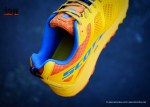
Heel box is very plush and secure. Always a key feature of Scott shoes and it really does add a secure and confident feel to the shoes.
Sizing feels a little larger than normal. I always take a UK9.5 and the ‘Enduro’ does feel just a little more spacious, so, if you are new to Scott or if you have used Scott in the past, you may just want to check on sizing. The toe box is a little narrower than the T2 Kinabalu 3.0 and Kinabalu Supertrac and this may be why they size a little larger? If you like a wide roomy toe box, this may not be the shoe for you?
Technologies:
Lace Bungee
Protective-High-Abrasion-Casing
Seamless-One-Piece-Upper
Rock-Protection-Plate
Vibram-Megagrip
Initial Conclusion
Our initial reaction to the ‘Enduro’ was shock. We were surprised at how ‘protected’ this shoe is. But having run in them on just 2 occasions and reflected on what Scott are trying to do, I completely understand the the addition of this shoe to the Kinabalu range. This is not a shoe to replace the T2 Kinabalu or the Kinabalu Supertrac it’s a shoe to be used in addition. So, if you like the other 2 models you will like this.
I’m still perturbed that the shoe is 11mm drop and not 8mm but it runs well; so why worry?
What’s the shoe for?
Well I guess you can use the shoe for any running, from groomed trail, fire trail to mountains. But considering the protection that has been added to the ‘Enduro,’ one has to think that this is intended for the rough stuff; rocks, snow, ice, gravel, slate and so; anything that can really batter a shoe and reduce its life.
For perspective, I recently ran for 1-month in La Palma on the Transvulcania course, I used a brand new pair of Supertrac and I used them every day, at the end of the month I threw them away. I am not saying the ‘Supertrac’ was no good, on the contrary, I love the Supertrac but the trails out in La Palma are harsh and abrasive; it eats shoes. The Enduro may well be a good shoe for a course like that due to the key elements of:
Protective-High-Abrasion-Casing
Seamless-One-Piece-Upper
Rock-Protection-Plate
Vibram-Megagrip
We will be reporting back in a couple of months after long term testing and only then will we really know how the Scott Kinabalu Enduro stacks up.
This is Episode 103 of Talk Ultra. A very happy new year! Talk Ultra is 4 years old and to signify this landmark we are bringing you 4 interviews from our back catalogue, one from 2012, 2013, 2014 and 2015. In addition, we may well bring you a few sounds, music and memories.
Niandi is back with me….
The La Palma story continues – watch our GoPro story of tackling the Transvulcania route (GR131) over 2 days HERE
La Palma, (Transvulcania) photo galleries can be viewed HERE (more to follow)
00:01:31 Show Start
00:26:45 NEWS
00:28:30Remember the 10 Commandments?
00:32:16Remember the Christmas Do’s and Dont’s from 2013? Don’t mention Mingling
Guess what, very little news… but hey David Laney and Magdalena Boulet were voted ultra runners of the year via UltraRunning Magazine.
The incredible Ed Ettinghausen aged 53 ran 481.86 miles at the Across the Years 6-day to beat David Johnson’s 450.37. Full results from the weekend are HERE
00:50:49 MUSIC The Comrades special is still maybe one of our most popular shows and I am pleased to say we have had countless messages about how we inspired so many to run this iconic race. Episode 8 way back in 2012. A magic show and too long to replay here but due to popular demand here is Shozolossa – I can’t listen to this without a tear in my eye and we interviewed the Comrades King –
00:53:01 INTERVIEW Bruce Fordyce
In episode 48, we featured Nepal and the Everest Trail Race, hiking down a mountain on the 2nd day I was joined by Nepalese children who sand for me… pure magic!
And in the last episode in the wee hours of a December morning I walked the streets of La Palma with Niandi listening to the amazing sounds of Divinos san Francisco.
01:24:19 INTERVIEWOkay our first interview comes from 2012 and it is from Episode 12 and the inspiring and mind blowing story of Timmy Olson.
02:16:44 INTERVIEWIt may come as no surprise but in 2013, episode 43 I interviewed Kilian Jornet just a day after his incredible Matterhorn Summit record.
02:52:21 INTERVIEWEpisode 57 in 2014 provided an inspiring interview with David Johnston about his incredible Iditarod Trail Invitational record breaking run.
03:42:24 INTERVIEWAnd finally, the Jureks from episode 95. Scott and Jenny nailed the AT and provided one of the most insightful and entertaining interviews ever.
Believe me, choosing 4 interviews from 4 years has been incredibly tough. I can’t tell you how many amazing memories and moments there are. It has been incredible to refresh my mind by looking back. Please go back to the archives and take a look – Ryan Sandes, Marshall Ullrich, Gordy Ainsleigh, Eliie Greenwood, Max King, Lizzy Hawker, Anna Frost and so on and so on…
05:01:35 INTERVIEWConsidering Niandi is co-hosting it only seems appropriate that we give you a bonuss interview from Episode 78 with legendary, Sir Ranulph Fiennes
This is Episode 102 of Talk Ultra. Happy Christmas everyone! We speak with Mike Bialick about that storming 100 mile run, Sally McRae talks all about her running and finding balance and we have a tribute to fellow photographer, Mark Gillett who sadly passed away. Niandi co-hosts.
00:01:31 Show Start
00:19:10 NEWS
Divinio San Francisco, walking the streets of La Palma HERE
Running the Caldera de Taburiente rim, Roques de los Muchachos HERE
DESERT SOLSTICE INVITATIONAL
Zach Bitter ran 11:40:55 for 100-miles – he went through 50 in 5:33 and 100k in 6:58 he broke his own 100 record by 7min but missed the world record which is still a good chunk of time away.
Katalin Nagy dropped from the 24-hour but won the 100 in 14:48 and set a US Track record for 200k in 19:19:05
BARCELONA 24HR
Well done to Marco Consani winning #barcelona24 with 256km (159miles) course record and PB. Now that’s awesome and a long way!
Finally we want to thank you for all the support over the last 12-months. Difficult to believe that another year has passed. We wish you all a very Merry Christmas and we hope 2016 is awesome!
Recently I have produced a couple of articles about how to ensure that you are an efficient walker when participating in long or mountainous events. You can read them HERE and HERE.
The first article discusses Training to Walk for Ultra, Trail and Mountain Running and the second article is about Walking, Running and Climbing with Trekking Poles.
JOIN OUR YEARLY MULTI-DAY TRAINING CAMP IN LANZAROTE – HERE
On December 15th, the University of Colorado Boulder released a document called, CU-Boulder researchers discover optimal range of slopes for extreme uphill running.
This article made me take a look and read in-depth for two reasons: first and foremost it ties in nicely with my previous two articles but more importantly and secondly, research into VK data dates back some 16-years and was pioneered by the ISF (International Skyrunning Federation) who created the VK format as a racing discipline.
To clarify a VK is 1000m of vertical ascent and the objective is to climb the elevation gain as quickly as possible. The original context of the VK always was about research and data.
VK courses vary greatly but the ISF consider a true VK to be under 5km in length. To understand the variables, some VK’s, for example the Dolomites are just over 2km in length. By contrast, Limone Extreme is a considerably longer course with a less extreme gradient.
Fully, Switzerland has long been a testing ground for VK performance and a post from the ISF which was updated 22nd October 2012 adds some very clear and specific points to consider:
“Italy’s Urban Zemmer rocketed up the 1,000m vertical course, only 1.9 km long, in just 30’26”, 20 seconds faster than the standing world record set here in 2011.”
In addition, the ladies records tumbled:
“French runner Christel Dewalle was first in 36’48” followed by Axelle Mollaret in 37’44” and third, Maude Mathys from Switzerland in 37’56, all beating the previous world record set two years ago by Italian Valentina Belotti in 38’50.”
Notably, the ISF commented:
“The new men’s record nears a speed of 2,000 vertical metres per hour (precisely 1,971m) an incredible ground-breaking performance that the ISF has been monitoring for many years in a scientific research project… Depending on the course and type of start, poles are permitted and yesterday, most of the runners used them. However, to date, the advantages of using poles has not been scientifically demonstrated.”
In 2014, the record for the VK was once again broken by Urban Zemmer at Fully, Switzerland with the incredible time of 29’ 42”.
Remi Bonnet prefers to run a VK and never walks
So by simple logic (I am no scientist), it would suggest that the steepest course is the fastest as Fully is only 1.9km long. To quote, Run the Alps,”The Vertical KM race in Fully, Switzerland is considered to be the fastest vertical kilometer course in the world. The race, held on a former funicular route, is home to both the men’s and women’s world records.”
You can watch a YouTube clip of the 2013 Fully race HERE
Watch the video of Fully and you will see varying techniques, some walk, some walk/ jog, some (most) use poles but one thing is consistent, the effort is almost maximal for all. Therefore, in a non-scientific look at Fully, the fastest performances come from the genetically gifted who have all the elements required for an optimum VK performance: lung capacity, V02max, lactate threshold, power to weight ratio, technique and so on.
Marco de Gasperi like to mix running and walking
But what about the optimal slopes for uphill running as questioned by CU-Boulder. They posed the question:
“Imagine that you are standing in Colorado at a trailhead where the base elevation is 9,000 feet. Your friend challenges you to race to the summit of the mountain, which tops out at 12,280 feet, roughly 1,000 meters of elevation gain. There are several different trails that go to the summit. They are all steep and some are extremely steep. One trail averages a 10 degree incline and the sign says it is 3.6 miles long. A second trail averages 30 degrees, but is only 1.25 miles long. A third trail averages 40 degrees, but only 1 mile long. To get to the summit the fastest, which trail should you choose and should you walk or run?”
Poles or no poles on a steep gradient?
This is a question that the ISF have asked and researched for many years. A paper titled, “Energy costs of walking and running uphill and downhill at extreme slopes” looks into this:
Davide Susta, Alberto E. Minetti*, Christian Moia and Guido Ferretti
Département de Physiologie, Centre Médical Universitaire, 1211 Genève 4, Switzerland, *Department of Exercise and Sport Science, Manchester Metropolitan University, Alsager ST7 2HL, U.K.
The energy costs of walking and running (Cw and Cr, respectively, in J kg-1 m-1) increase with the slope uphill (up to +20%) and decrease with the slope downhill (down to -10%) (Margaria, 1938; Margaria et al, 1963). Outside this range, no measurements of Cw and Cr are available in the literature, even though walking and running on the mountains at greater slopes is becoming commoner and commoner practice in leisure and sport. We therefore set out to carry out the present study, the aim of which is to determine Cw and Cr on men walking and running at slopes up to +45% and -45% on the treadmill. After local ethical approval, 10 subjects (Skyrunners) were admitted to the study (age 32.6 + 7.5 years, body mass 61.2 + 5.7 kg, maximal O2 consumption 68.9 + 3.8 ml min-1 kg-1). They are all endurance athletes practicing mountain racing. O2 consumption at the steady state was measured by the open circuit method, using Leybold O2 and CO2 analysers and a Singer dry gas meter. Heart rate was measured by cardiotachography. Blood lactate concentration was determined after each run as a check for submaximal aerobic exercise.
Each subject performed up to three walking and three running trials at progressively increasing speeds on the level, and at the slopes of 10, 20, 30, 35, 40 and 45 % uphill and downhill. The duration of each trial was 4 min, and expired gas was collected during the 4th min of exercise. Minimum Cw on the level was:
1.85 + 0.57 J kg-1 m-1 (n = 10) at the speed of 0.69 m s-1. During uphill walking, Cw increased with the slope, to attainthevalueof18.08+1.57Jkg-1 m-1 (n=9)atthespeedof0.69ms-1 andat the slope of +45%. During downhill walking, minimum Cw was lower at the slope of -10% (0.81 + 0.37 J kg-1 m-1, n = 9) than on the level. At slopes below -10%, it progressively increased. At -45%, it was 3.46 + 0.95 J kg-1 m-1(n = 5). Cr on the level was 3.40 + 0.24 J kg-1 m-1(n = 30). Cr increased with the slope, to attain 18.69 + 1.42 J kg-1 m-1(n = 6) at +45%.
During downhill running, Cr decreased and attained its lowest value at the slope of -20% (1.73 + 0.36 J kg-1 m-1, n = 24). At lower slopes, it increased. At -45%, at speeds higher than 1.38 m s-1, it was equal to 3.79 + 0.57 (n = 7). The mechanical efficiency for vertical displacement was 0.216 + 0.015 at +45% and 1.078 + 0.275 at -45%. This data on the level and at slopes up to 20% correspond to those found by others on non-athletic subjects (Margaria, 1938). At higher slopes, the increases in Cw and Cr are such as could be predicted assuming that all energy is used to lift the body. By contrast, at -10% and -20%, both Cw and Cr are lower than in non- athletic subjects (Margaria, 1938), suggesting greater recovery of elastic energy at each step in the present athletes. At slopes below -20%, the increases in Cw and Cr are such as could be predicted assuming that all energy expenditure is for negative muscle contractions.
REFERENCES
Margaria, R. (1938). Atti Acad. Naz. Lincei 7, 299-368.
Margaria, R., Cerretelli, P., Aghemo, P. & Sassi, G. (1963). J. Appl. Physiol. 18, 367-370. This work was supported by a grant from the FSA- Federation.for Sport at Altitude
Referring back to the CU-Boulder research:
“Based on our research, we now know that choosing the second trail (30 degrees) and walking as fast as you can within your aerobic capacity is the fastest way to go,” Kram said. “For either running or walking, slopes between 20 and 35 degrees require nearly the same amount of energy to climb the hill at the same vertical velocity.”
This new study (HERE), which was recently published in the Journal of Applied Physiology, is believed to be the first to examine the metabolic costs of human running and walking on such steep inclines (suggested by the CU-Boulder researchers.) However, I would question this and refer to research by the FSA – “Energy cost of walking and running at extreme uphill and downhill slopes.” Received 29 November 2001; accepted in final form 29 April 2002. You can download this detailed documentation HERE and it is essential reading.
Who is the most efficient?
It would appear that gradients of 20-35 degrees require the same amount of effort and interestingly, CU-Boulder research found in a study:
“A vertical rate of ascent of just over 1 foot per second, is a pace that high-level athletes could sustain during the testing. At that speed, walking used about nine percent less energy than running. So, sub-elite athletes can ascend on very steep uphills faster by walking rather than running.”
In simple terms, this is something I have found out by attempting VK’s in my own time in and around events. More often than not, the effort required to run is so hard that it becomes counter productive. I have even found that including run sections to be counter productive as this raises my heart rate, increases lactate acid and requires me to recover while still climbing. However, if I maintain a constant effort walking, this produces the best results for me.
CU-Boulder research went on to say:
“The study examined 15 competitive mountain runners as they ran and walked on the treadmill at seven different angles ranging from 9 to 39 degrees. The treadmill speed was set so that the vertical rate of ascent was the same. Thus, the treadmill speeds were slower on the steeper angles. The athletes were unable to balance at angles above 40 degrees, suggesting a natural limit on the feasible slope for a VK competition.”
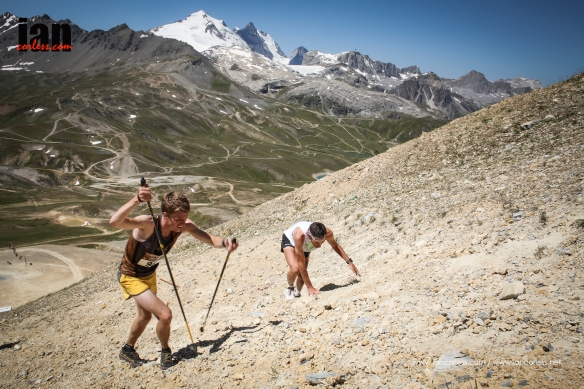
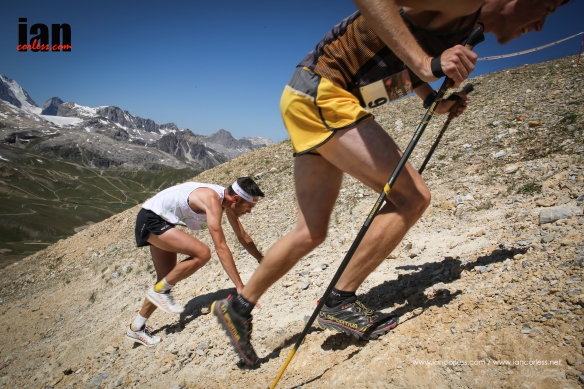
In regard to the latter point, this in some respects relates to Fully, Switzerland and brings in another element, the use of poles and if poles allow a faster ascent when the gradient steepens. One only has to look at the Dolomites VK and Fully VK where poles are used by nearly all participants. The ISF plan to do a new test with and without ski poles, but it is not easy to do a serious test. Although not scientifically proven, it’s fair to say that using poles with gradients under 20% it will mean more Kcal and a reduced performance. However, with gradients steeper than 25 or 30%, the use of poles can correct style, etcetera and can improve the overall performance.
The CU-Boulder article is available to read in full HERE.
I can quote technical papers and research all day, however, as a runner you want to know the answer to the question, should I walk or should I run uphill and should I use poles?
Irrespective of if you plan to run a VK or not, the research and thoughts provided by the FSA and CU-Boulder confirm that running or walking uphill provides an incredible workout. Importantly though, research confirms that walking should be a key element in any training plan, (*…walking used about nine percent less energy than running) especially if you are racing or training on hilly or mountainous terrain.
When participating in ultra events, reverting to periods of walking may well produce greater results and faster times. This is very evident when the terrain steepens; running will only expend more energy and produce slower times. The use of poles appears to benefit performance when gradients steepen, this is not scientifically confirmed.
On a final note though, many other factors come into play when looking at results and as with everything, there are exceptions. Urban Zemmer, Remi Bonnet, Laura Orgue, Christel Dewalle and so many more are able to run when others need to walk. We can’t choose our parents or our genetic pool. Ultimately, find out what works for you but practice makes perfect and the more climbing you do, the better and the faster you will become.
Getting your head in the right place is something that we all need to do. I am in La Palma, the home of Transvulcania Ultramarathon. It’s a place that I have been coming back to since 2012. It holds a special place for me, especially at this time of year.
The days are a little longer, the weather is perfect and the island is beautiful.
I’m writing a book called, Running Beyond which will be published late in 2016. In real terms it is a photography book with words. However, after a year on the road I realised the only way I was going to get the words written was by getting myself, or should I say my head in the right place.
The plan is to get back to some regular time on the trails and split my days 50/ 50.
I’ve been here since Friday, so only 4-days but I can already feel it working.
The writing process is taking place and I seem to be slowly but surely making my way through the list of things I need to do. Plus Niandi and myself have had some time to relax, taking in sights at local towns and we have been on the trails; hiking, jogging and at times, running!
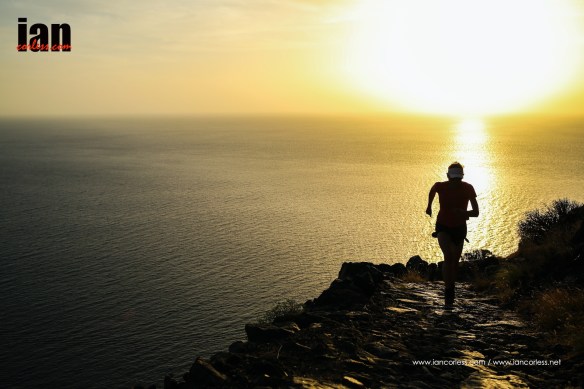
On day 1 we went to Los Llanos, the finish of the Transvulcania race. Its a beautiful place of cobbled streets and pastel coloured buildings. In the late afternoon we went up and down the VK route from Tazacorte Port; always a favourite. We timed it just right as the sun was setting as we made the final descent.
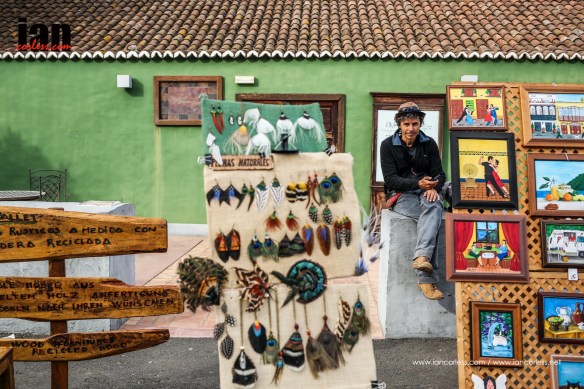
The following day, Sunday, we visited a local market at Argual. It is a place I have visited many times before but the people and some of the sights are always interesting. We followed this with a run from El Pilar, taking in an out-and-back route through the Volcano route. It was a little cloudy and windy along the tops but it is always stunning. Back at our car we had the best Tuna Bocadillo ever; the simple things huh?
Monday I did a 90-minute run alone. It was the end of a long day of writing and I needed an outlet and a release. Run? it was actually a hike up and a run down. Nothing special but it helps get my head in the right place. I even took a selfie!
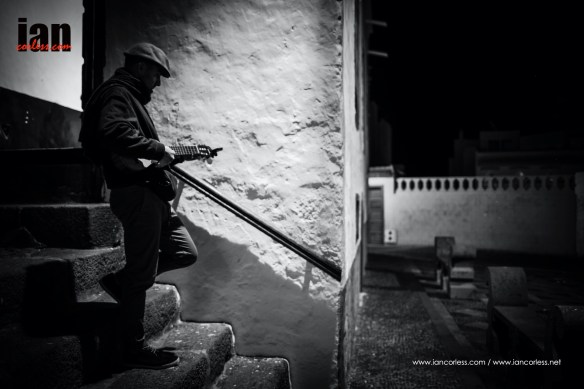
Last night, (this morning) – I walked the streets of Santa Cruz from 3am with Niandi and Divino San Francisco, a group of singers who move from house-to-house and sing traditional Christmas songs. My good friend Angel, is one of the singers and it was he who told me about this. For 9-days (not always at 3am I must add) in the lead up to Christmas they sing every night to represent the 9-months of pregnancy.
It was something quite special! Quiet lonely streets with just string instruments and stunning voices to welcome in a new day. It was so special; it made me realise why I was here, to get my head in the right place.
Despite a night of no sleep, today I can feel the positive vibes from a stunning night. It’s a night that Niandi and myself won’t forget. Families opened their doors to us in the early hours, they welcomed a large group of musicians in and then proceeded to feed them and provide drinks, it made me realise what this time of year is about.
We all need to get our heads in the right place. Make sure you make it a priority to find your place, I guarantee 2016 will be better because of it.



































 IAN CORLESS