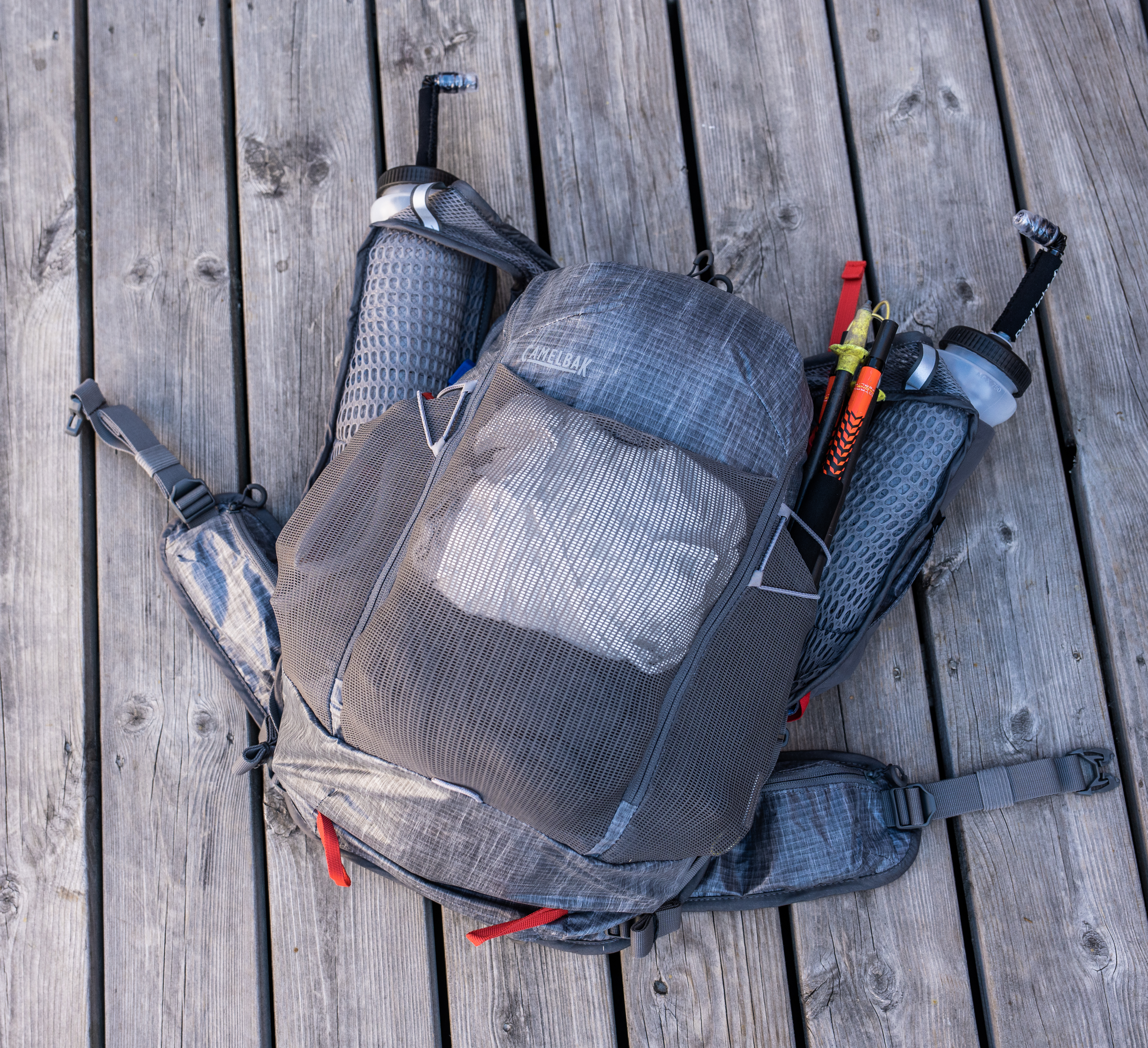
Octane 25 fully packed with tent,sleeping bag, apparel and food for a 1-night fastpack.
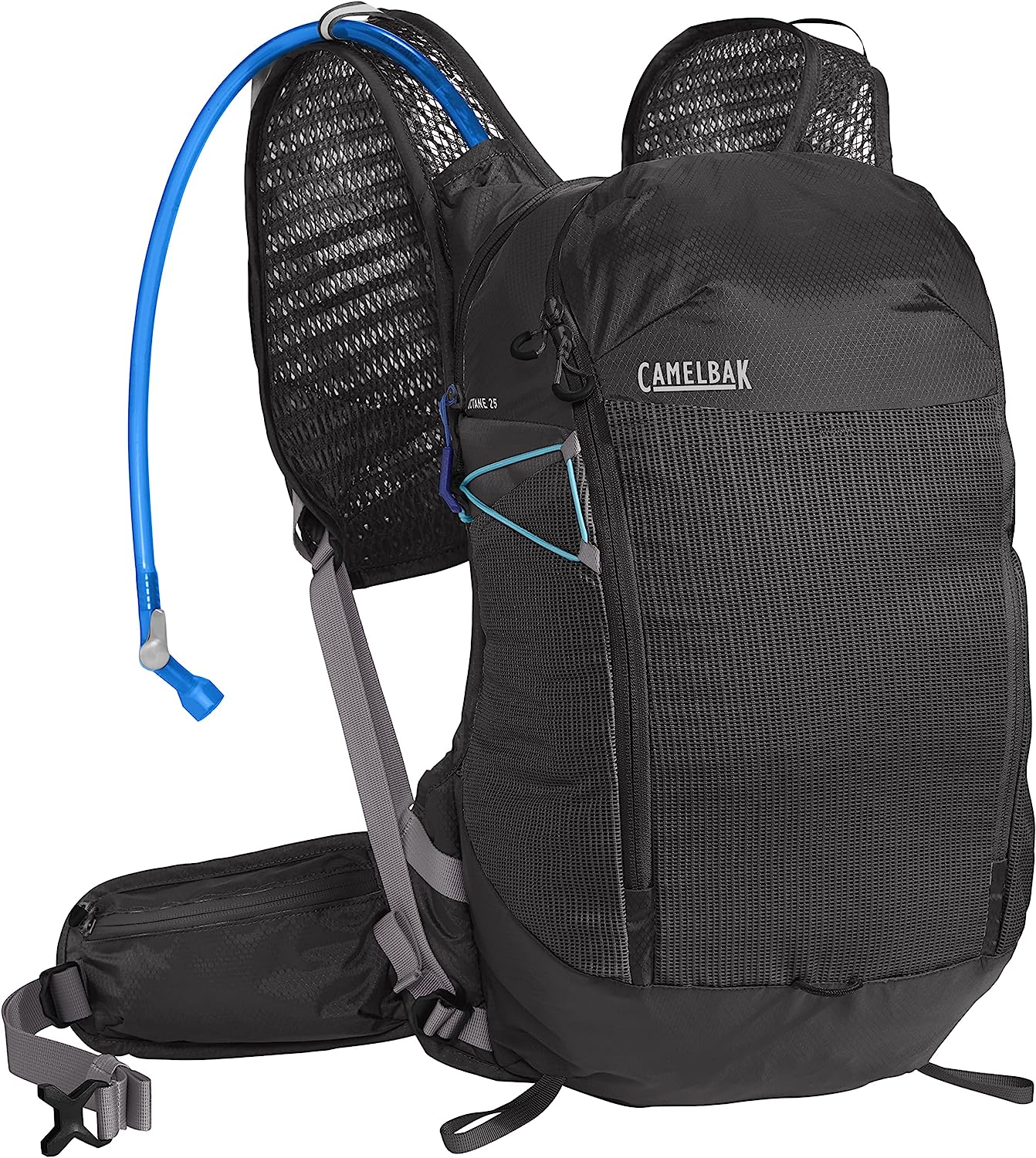
Streamlined, lightweight, full of features and storage, CamelBak have brought together the best of both the trail running and hiking worlds with Octane 25 LE.
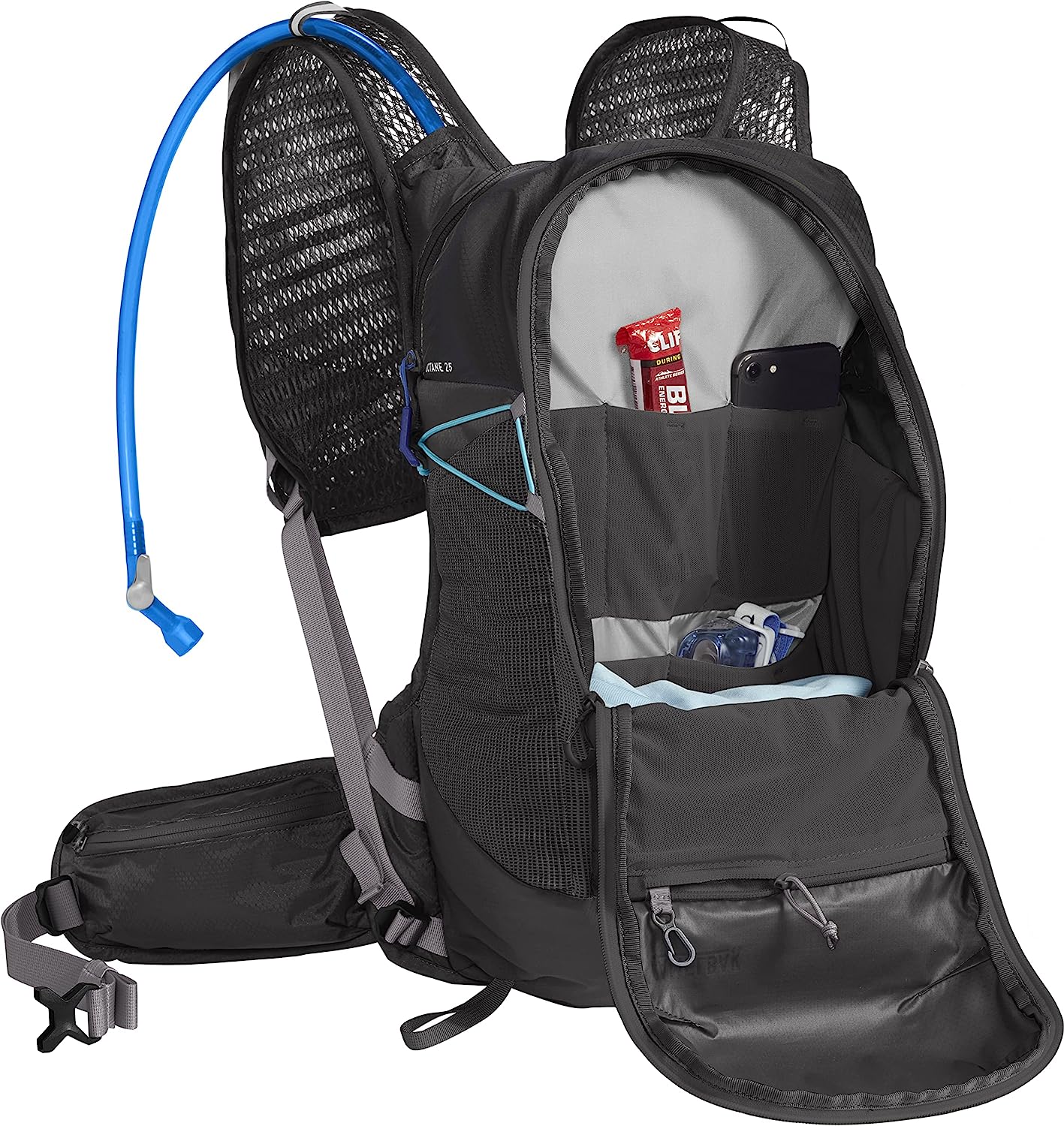
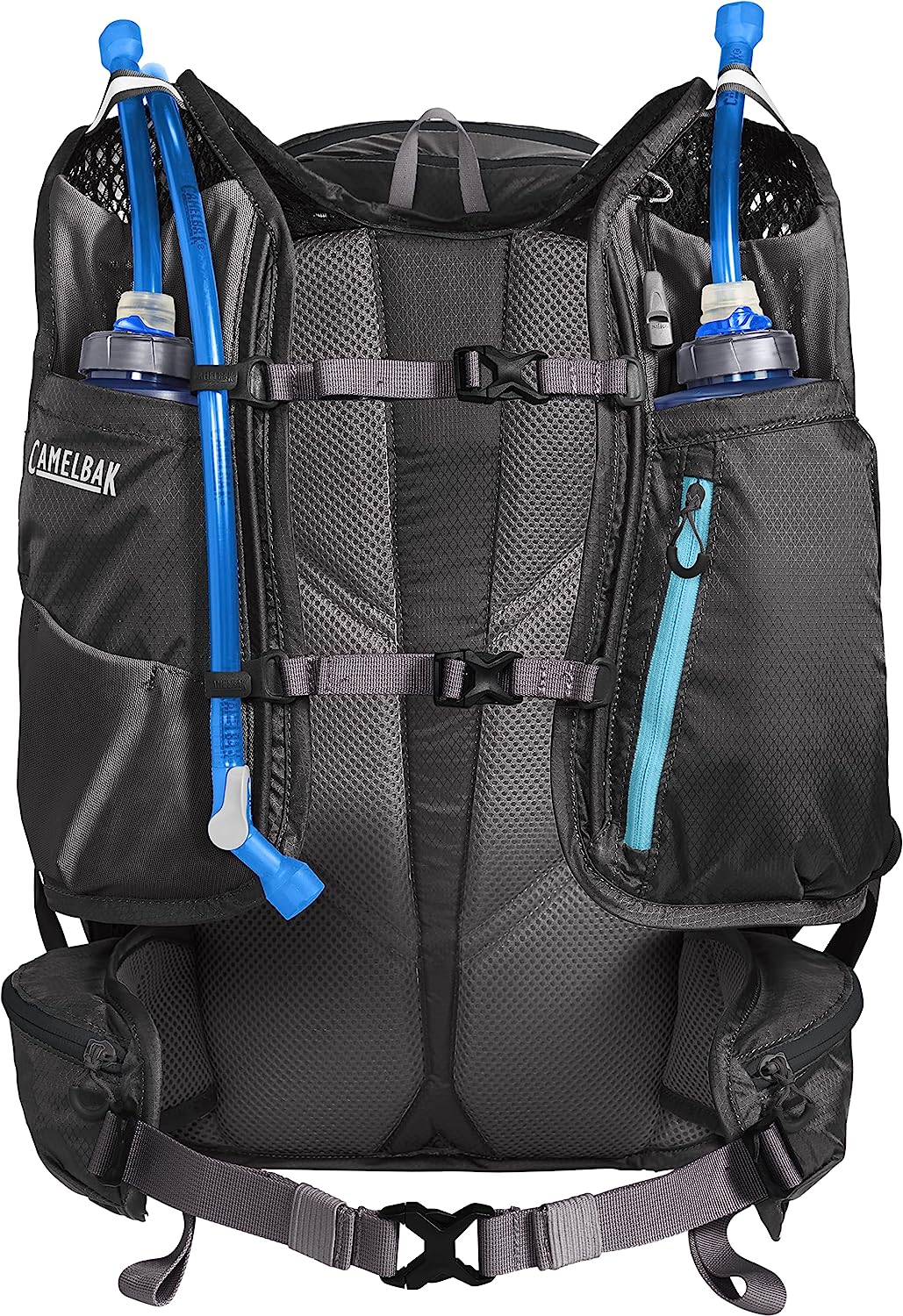
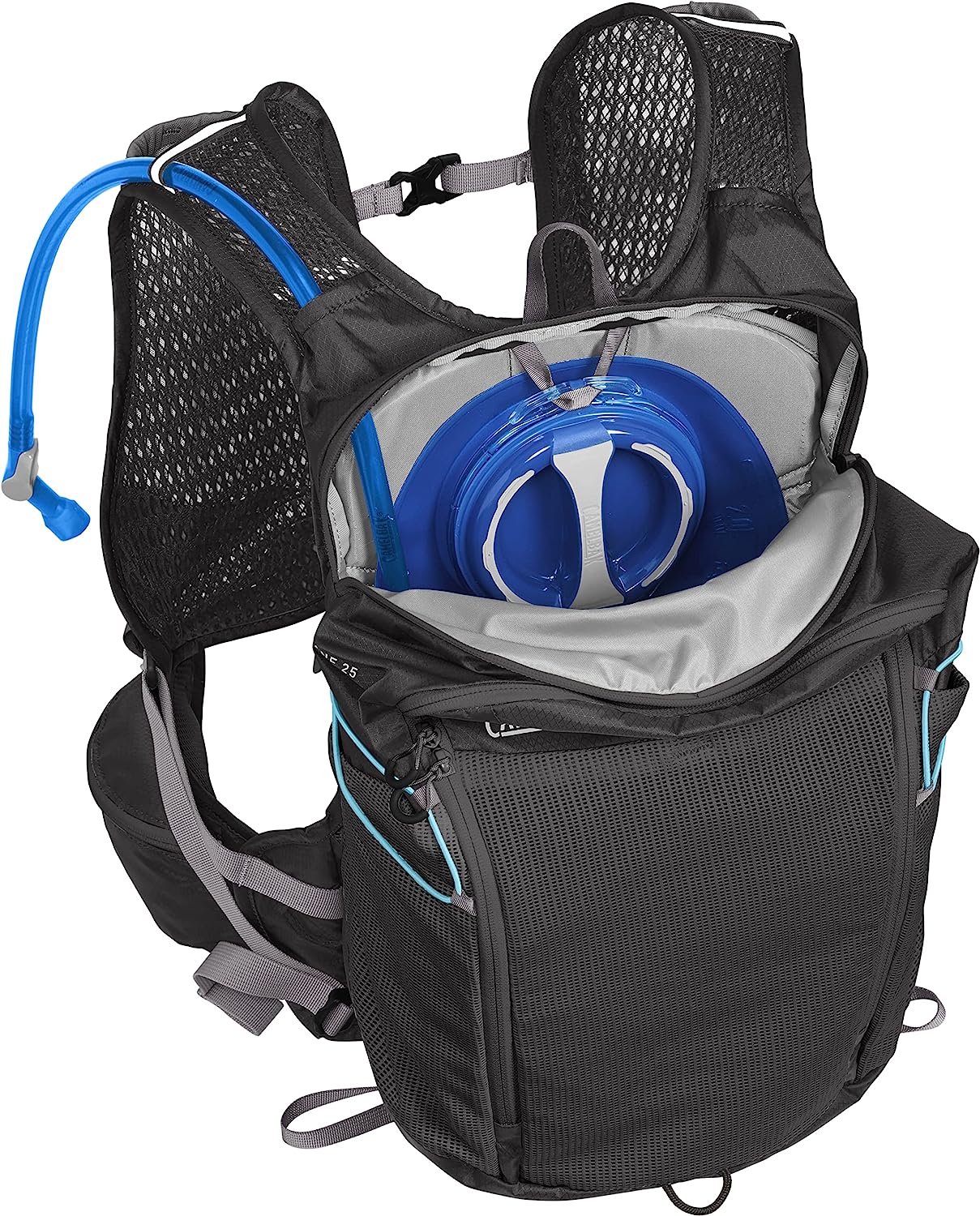
As you would expect, CamelBak has integrated a system to keep the bladder secure and easy to access, with the hydration hose tucked in and out of the way with secure fixings at the front. For many though, the use of the bladder can be a plus or a minus, so, removal is easy. At the front, there is storage for two large bottles or soft-flasks.
Ultimately, this pack with 25L of storage is perfect for fast packing and multi-day stage events. It is optimised for those who want to stay light and move fast. It is full of features and after packing and testing, this is a piece of equipment that is ideal for a race such as Marathon des Sables.
Key features are:
Belt with two zippered pockets for ‘on-the-go’ snacks.
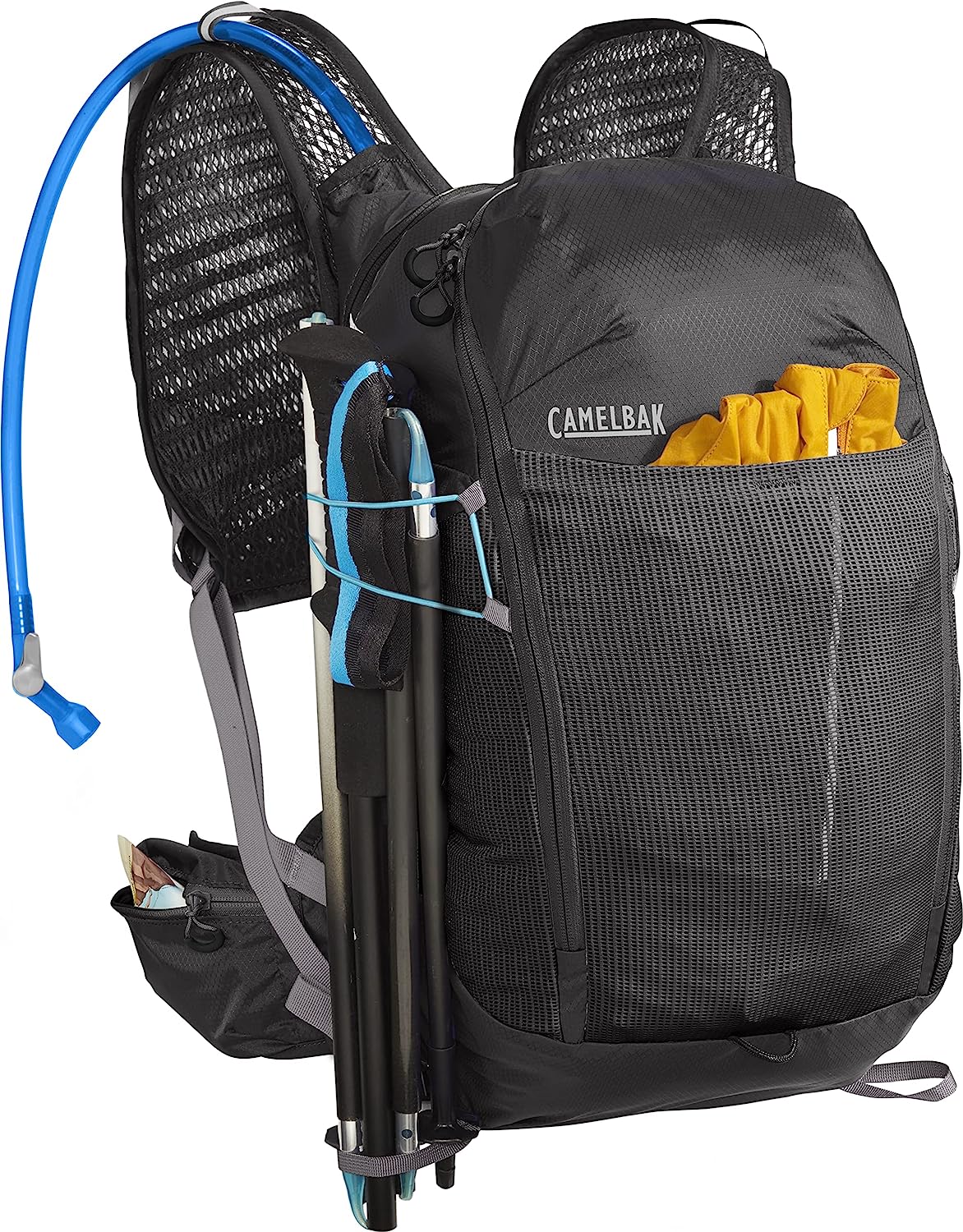
Trekking pole storage via left or right side.
11 exterior pockets one with zipper and two for bottles/ soft flasks.
8 interior pockets one with zipper and key holder
2 chest straps
A large zipper opens up the pack like a suitcase, therefore adding and removing contents is easy. Inside the pack are multiple small stretchy storage pockets, 8 in total. On the rear insides 5, 2 longer pockets on the sides of the inside. In the lid of the pack is a zipper pocket ideal for wallet, passport with an integrated key holder.
Outside there are 11 exterior pockets and a giant compartment that is dedicated to hold the bladder, or, if doing multi-day, this is a great place to put a sleeping mat or even some clothing. Three large mesh pockets are ideal for external storage that may require quick access, for example, waterproof jacket, pants, hat, gloves, additional liquid and so on. Two elastic straps not only will hold poles in place but also help compress the pack smaller.
Pockets help keep things in place, and the dual chest straps keep it all closely attached to the body. The addition of the waist belt and two zippered pockets only adds to a secure feel and the increased pockets are welcome for ‘on-the-go’ snacks.
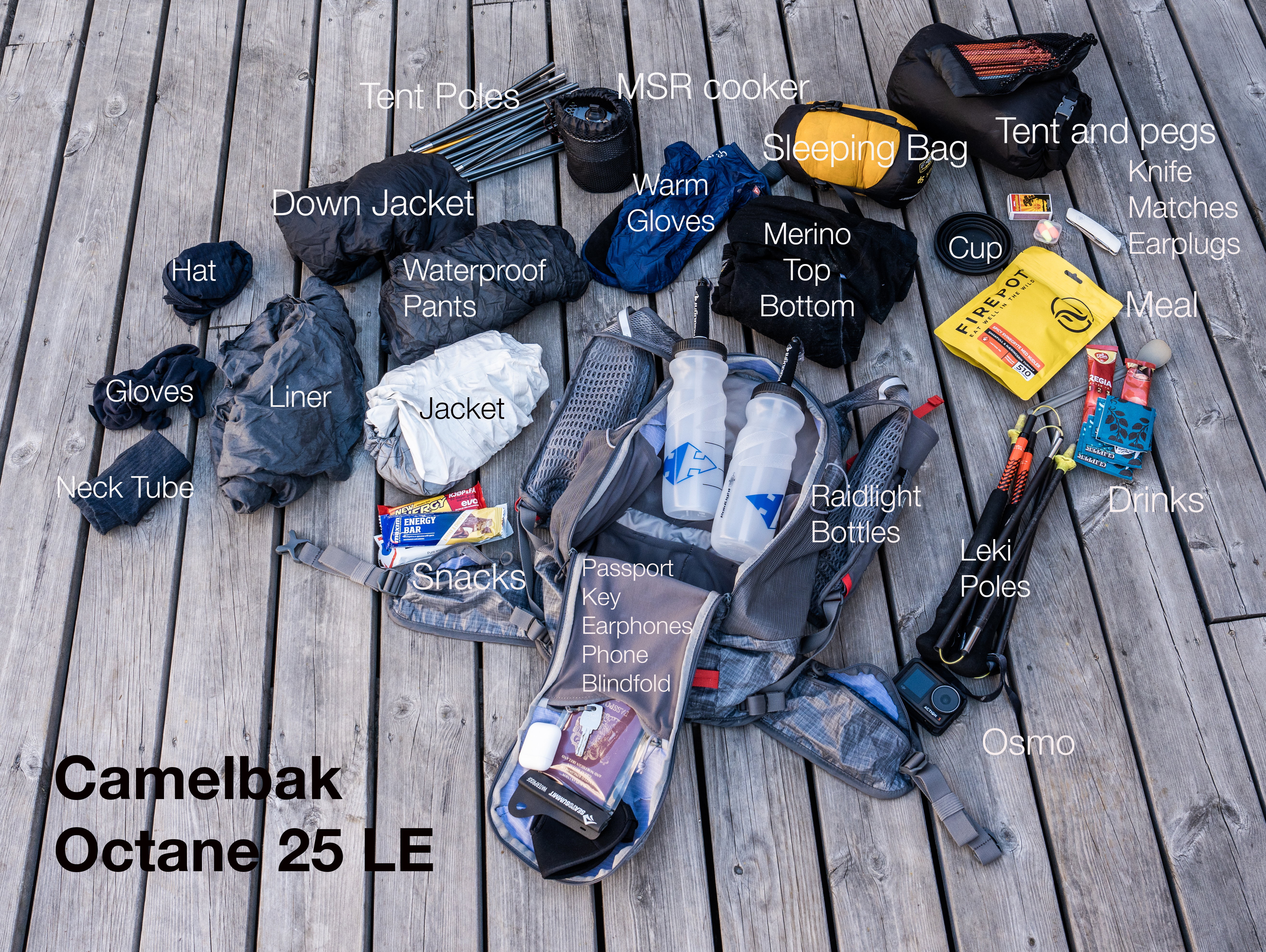
To provide perspective I removed the bladder and added a sleeping mat in to the bladder compartment (not shown in the video) and the items you see are as follows:
2 large Raidlight bottles
Big Agnes solo backpacking tent with poles and pegs.
Sea to Summit Sp1 sleeping bag.
Sea to Summit sleeping bag liner.
Merino LS top and bottoms.
Waterproof jacket.
Waterproof pants.
Down jacket.
Warm gloves.
Leki poles.
Merino beanie, neck roll and gloves.
MSR solo cook kit.
Sea to Summit spoon
Knife, matches, hot chocolate sachets, tea, earplugs, blindfold, snacks, and cup.
Firepot food and bars.
Osmo Active.
Phone, passport, and credit card.
To wear, the pack hugs the body, is comfortable and if adjusted correctly provides a run with minimal bounce. Made from ultralight sail cloth, the Octane 25 feels very durable. 3D vent mesh helps comfort and breathability.
While not one of the obvious choices for a multi-day or stage race, this pack is proving hard to beat. The features, the storage capacity and the fit against the torso is superb. It really is one of the best, if not the best, we have tried. Coming in one size, smaller or larger individuals would need to try on and make sure fit and comfort works. The side adjustments do compensate for many sizes and the waist belt adds to a secure feel and it helps spread the carry load.
Is there a downside? The only possible problem could be the zip. Zips can break, particularly when under pressure from holding in contents or from harsh environmental conditions, such as sand. However, this is just a thought process that needs considering, there is nothing in testing that would suggest there to be a problem.
Ultimately, one of the best fast packing and multi-day packs I have tried and one that I am using on all adventures for the foreseeable future.
The 37th was a tough one from many perspectives, heat, sandstorms, route and a very long, long day at 90km. You can read my summary HERE.
30% did not make the finish, the second highest in the race history, the highest coming in 2021.
Now, all eyes, look ahead to the next edition, the 38th in 2024. Many were looking to register in May, however, Marathon des Sables communicated a delay in registrations opening till the end of June. Of course, delays are never good and of course, questions get asked.
There has been many rumours if the 37th edition would be Patrick Bauer’s last? There has been no communication on this and no confirmation, equally, for clarity, there has been no official communication of new ownership. This, I assume, will be communicated in due course.
In recent days, Marathon des Sables has communicated in multiple languages to notify of significant changes that will take place for the 38th MDS. There are 3 key points:
Words as provided by Marathon des Sables.
Point 1:
The 38th MARATHON DES SABLES will take place over 5 stages instead of 6 previously. The total distance, around 250 km, does not change, and this will only slightly change the distance of each stage:
Stage 1 from 28 to 35 km
Stage 2 from 28 to 39 km
Stage 3 from 28 to 39 km
Stage 4 (The Long One) from 75 to 85 km (over 2 days)
Stage 5 (Marathon Stage) of 42.195 km
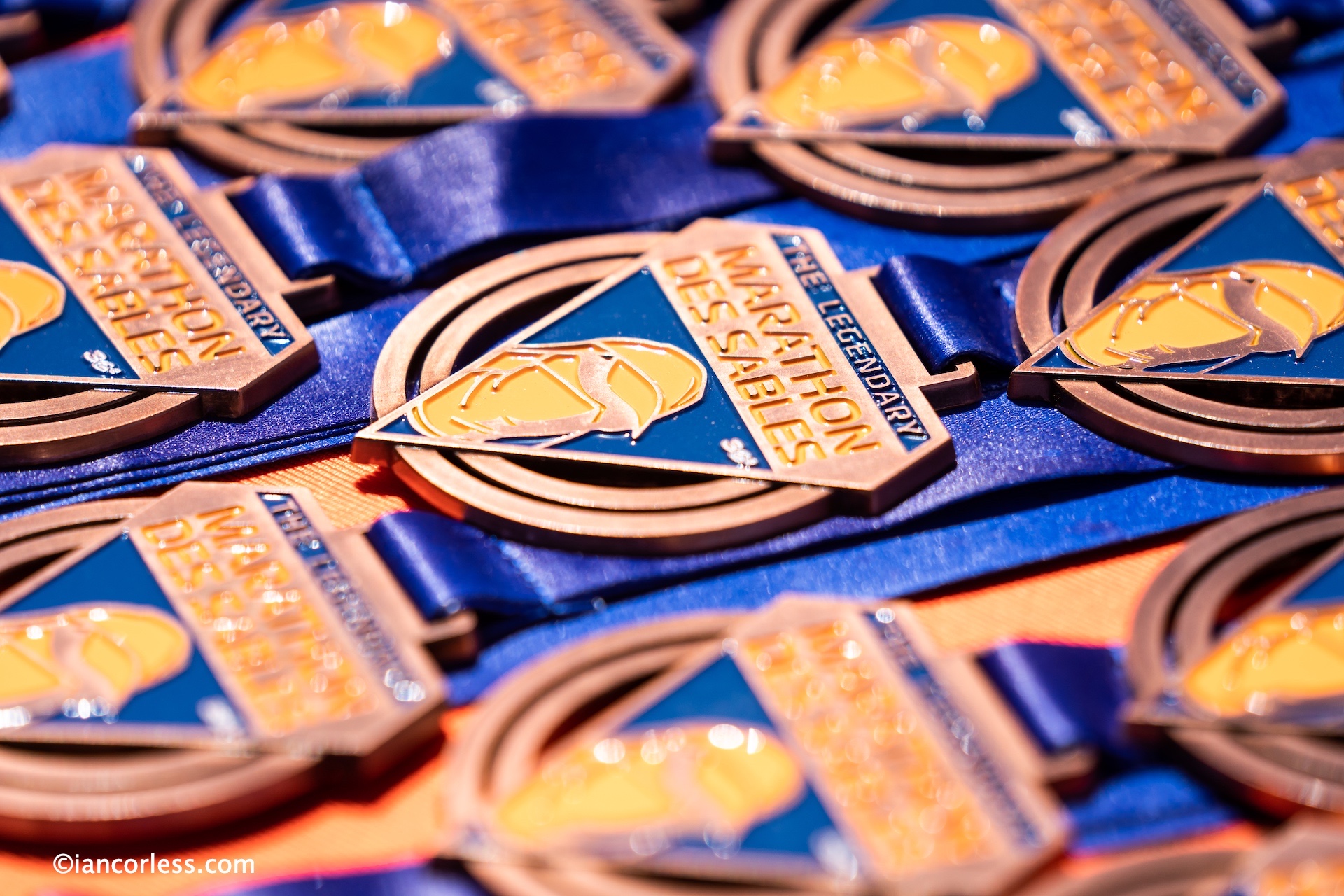
The removal of the sixth stage will allow everyone to celebrate obtaining the Finisher medal at the end of the Marathon stage: no more stress about the ten kilometers of the sixth stage! This will also allow us to offer a more substantial Solidarity program associated with this same Marathon stage, which will strengthen support for the Solidarity MARATHON DES SABLES association.
Point 2:
The MARATHON DES SABLES is contested in food self-sufficiency: only water, in limited quantities but sufficient to cover the needs of an athlete evolving in the desert, is provided to you each day. You must take along for your entire stay in the desert everything you need to eat and prepare to eat (freeze-dried meals, semolina, cereal bars, stove, etc.). This self-sufficiency will include for this 38th edition the day of your arrival in the desert, and the day of control preceding the race. These first two days will allow you to test yourself in real desert conditions, and to reduce sanitary risks.
Point 3:
To offer you more flexibility, and to reduce the carbon footprint of the event, we will charter fewer planes than in previous years. Only 400 places will be available from Paris, and 200 from London. As usual, we will of course take you from OUARZAZATE airport to the first bivouac, in the heart of the desert. And for those who wish, free shuttles will be set up from MARRAKECH to allow you to easily reach OUARZAZATE. You will thus have the possibility of anticipating or extending your stay, or of being joined by your family, much more simply than before.
SUMMARY AND THOUGHT PROCESS
The Marathon des Sables is loved and it’s fair to call the participants, staff and volunteers a family. Without doubt it’s a community that is 37-years in the making. So, when changes come, they are often taken with a sense of held breath. Some will dislike them, some will like them, some will be indifferent and if you are new to Marathon des Sables, you will probably be no wiser as you have nothing to compare to.
For perspective, Marathon des Sables has gone through many changes in its 37-years.
In 1989 participation increased to 170. I am sure competitors from previous years did not like the increase.
In 1991 the Gulf War impacted on the race and sponsors.
In ’92’ the establishment of regulation regarding equipment and food were implemented.
’94’ Doc Trotters arrives.
In ’99’ a mobile hospital becomes part of MDS.
Internet arrives in 2000.
In 2001, the ‘long day’ originally called §The 70’ exceeds 80km.
2006 146 DNF due to heat and humidity.
In 2008 Solidarité MDS is created.
Flooding at MDS in 2009.
For the 25th edition, 1013 participants.
In 2013 the final “Charity” stage sponsored by UNICEF is introduced.
2020 Coronavirus.
2021 and D&V sweeps through MDS and causes the highest DNF rate.
2023 heat impacts on the race with 30% DNF.
Quite simply, if anything can be learned from the above, change and changes happen, planned or not. So, let’s look at the new 3 changes and see the pros and cons.
The charity stage has always been a discussion point, from my perspective, having been at the past 10-editions is that the stage has been pointless. The race is over, so, it just drags out the agony for one more day.
But the counter argument is that it provides this great opportunity for a ‘tent’ to spend the time together, in the desert as a moment of celebration.
For 2024 this stage will go. Give MDS one or two editions and I don’t think it will be missed.
The downside may well be the impact on the charity and fund raising, however, the communication says, ‘…offer a more substantial Solidarity program associated with this same Marathon stage…’ So, this addresses this point.
The race will be 5-Stages. This is no different to what has happened since 2013. The race has been 5-stages and the medal is provided at the end of the ‘marathon’ stage, stage 5. However, the release outlines the following:
Stage 1 from 28 to 35 km
Stage 2 from 28 to 39 km
Stage 3 from 28 to 39 km
Stage 4 (The Long One) from 75 to 85 km (over 2 days)
If we take the longest distance from the above, 35, 39, 39, 85 and 42.195 this provides a total distance of 240.195km.
If we take the shorter distances, 28, 28, 28, 75, and 42.195 this provides a total distance of 201.195km.
So, moving forward, the Marathon des Sables has the potential to be as long as 240.195km (a significant way from 250km) and potentially as short as 201.195km and an average distance of 220km.
In fairness, the potential to have a shorter distance race could reflect or compensate for a very difficult route, for example, a great deal of soft sand, dunes, climbing and technical terrain. And by contrast, a longer route could reflect an ‘easier’ more runnable route.
For the race to live up to ‘The Toughest Race on The Planet’ and the tag of 250km or 6 marathons may/ will need to be addressed.
One of the key attractions and challenges of MDS is the self-sufficiency. It makes the race exceptionally difficult, and this is why the race is so hard. Carrying all one requires, food, clothing and equipment is THE Marathon des Sables, and this has been copied worldwide.
This self-sufficiency is manageable as before the race, one is not self-sufficient and post-race, one is NOT self-sufficient, just ask any hotel, restaurant, or cafe in Ouarzazate!
So, the new point 2, ‘Self-sufficiency will include for this 38th edition the day of your arrival in the desert, and the day of control preceding the race. These first two days will allow you to test yourself in real desert conditions, and to reduce sanitary risks.’
The above has some pros and cons.
PROS: Ironically the mention of ‘sanitary risks’ does make one ask what element of food poisoning or similar took place in 2021? Certainly, reducing any outside risk does improve one’s chance of making the stage 1 starting line without a problem, so, being self-sufficient and relying on one’s own food addresses this.
CONS: You should NOT be testing your food strategy in the two days before the race, this should have been done before! Catering by MDS took away stress and worry, getting dinner on arrival day and then breakfast, lunch, and dinner the following day offered an opportunity to fill up on calories and dine with tent mates and others, to remove this IMO it will be seen as a negative. BUT, if you haven’t been to MDS before, you will not know difference!
My initial reaction to the removal of catering was negative. The more I have thought on it, I have started to appreciate some of the benefits. But my conclusion is that the removal of catering impacts on the MDS experience, especially for those who have been before and experienced it.
POINT 3:
Quite simply, if you are someone who likes or needs a more ‘package’ holiday experience and you are French or English, you need to enter early to make sure you are one of the 200 or 400 who will have a flight included.
Outside of this, once you enter the race, you would need to arrange your own travel. For perspective, this has always been the case for anyone outside the UK and France, flights were chartered because entries made a charter possible.
PROS: The option to arrange one’s own travel offers flexibility, such as arrive early and or depart late. You may be able to get better prices. MDS are offering free shuttles to Ourzazate from Marrakech, it roughly takes 6-hours. Carbon footprint will be saved as charter planes fly out full of runners and then home empty. They would then fly out empty and return full back to UK or France.
CONS: With only 400/200 flight options for French and UK participants, this may will impact on those ‘who want’ this option and cannot have it, maybe they will not enter? Meet point in Ouarzazate will mean increased costs as it will require a hotel stay. It’s also a 6–8-hour drive to bivouac 1 the following day. For the past few years, planes have flown to Errachidia requiring only a short drive to B1 and no hotel stay.
One point not addressed is the option to meet at Bivouac 1. This would make more sense, particularly if one is arranging one’s own travel. I personally would fly to Marrakech, then fly to Errachidia and then taxi to B1.
PRICES:
The prices for the MARATHON DES SABLES 2024 are as follow:
Offer with flight included from Paris: 3,990€/person for an individual registration and 4,090€ for a team registration (priority to the participants with French residency; then reservation has to be requested by email for other countries according to the availabilities). This offer is limited to 400 people. It includes the round trip flight from Paris to Ouarzazate.
Offer without flight: 3,540€/person for an individual registration and 3,640€ for a team registration This offer does not include flight. Participants will meet at the airport in Ouarzazate on April 12.
The prices for participants living in Great Britain, Ireland and the British Islands are as follows (different service):
Offer with flight included from London: 5,280€/person for an individual registration and 5,380€ for a team registration This offer is limited to 200 people. It includes the return flight from London to Ouarzazate.
Offer without flight: 4,680€/person for an individual registration and 4,780€ for a team registration This offer does not include a flight. Participants will meet at Ouarzazate airport on April 12.
CONCLUSION
Change is always difficult. Runners who been before may not be happy, but can they learn to accept the change? If not, they may well never enter MDS again. For those who have never done the race before, they will have nothing to compare it to, so, it will be the norm! For them, it will still be an amazing experience and one that they will prepare for based on the rules.
In regard to prices: “In the history of the MARATHON DES SABLES, many crisis have affected the organization and endangered the sustainability of the event. The Covid-19 crisis is not the least, and yet, since 2018, our rates have only increased by €90 (for an individual participant taking our planes from Paris). At the same time, the costs related to the organization of the event exploded (transport, equipment, security, etc.). The increase between the 37th and 38th editions therefore acts as a rebalancing to ensure the future of the legendary desert event. And that’s without counting on the novelties, like this famous gala evening which will close the event in style! We are fully aware that this registration fee can make it difficult for some people to participate, and we will do everything to help you make your dream come true (payment in several times, advices in your sponsorship process, etc.).”
As I was told, this is evolution, not revolution. Do you agree?
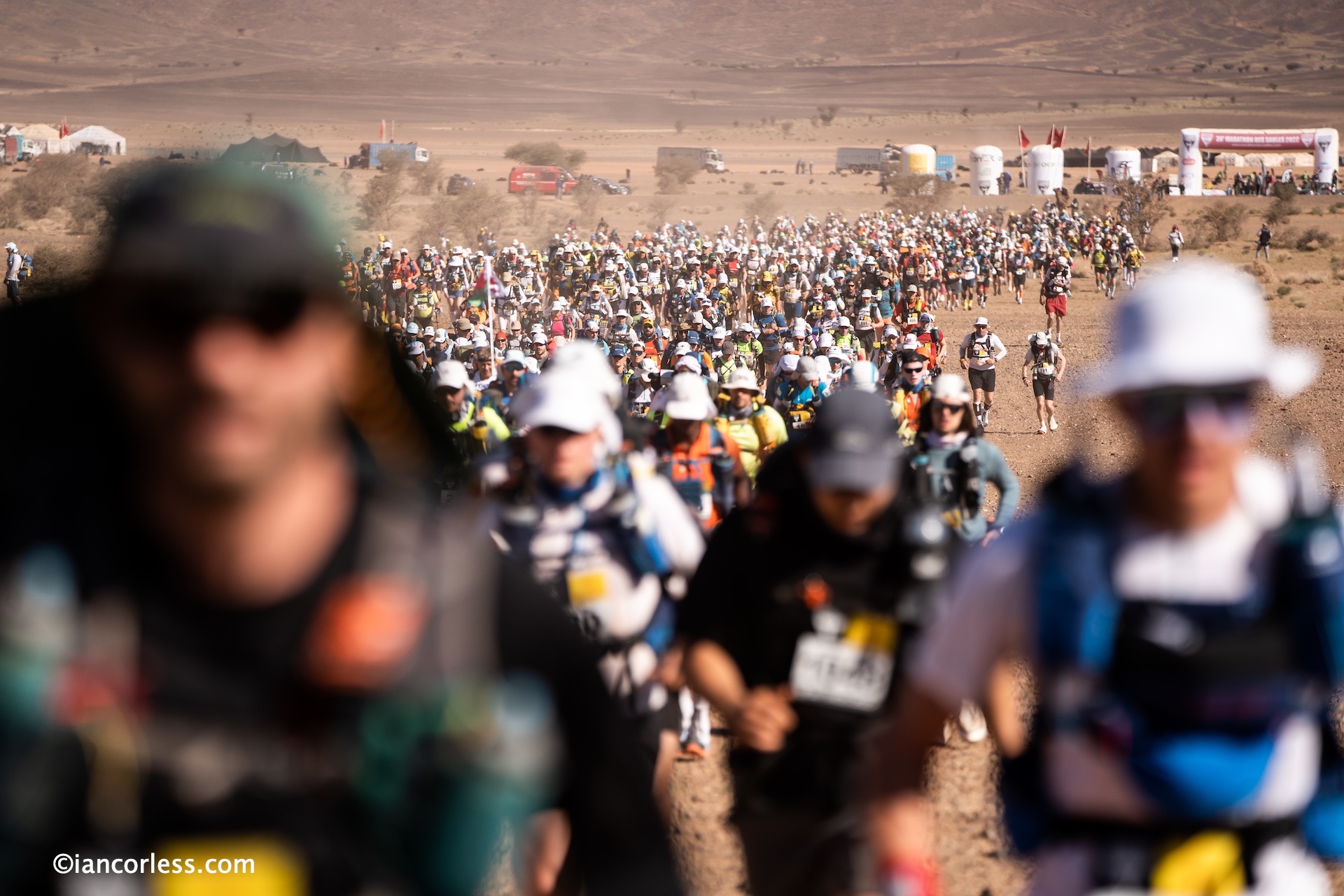
The 37th edition of the iconic Marathon des Sables concluded at Merzouga Dunes (Erg Chebbi) after what is considered, one of the hardest and most challenging editions of the race, 2021 an exception.
Coming later in April due to Ramadan, the predictions were always for hotter temperatures and an increased chance of sandstorms – we got them both!
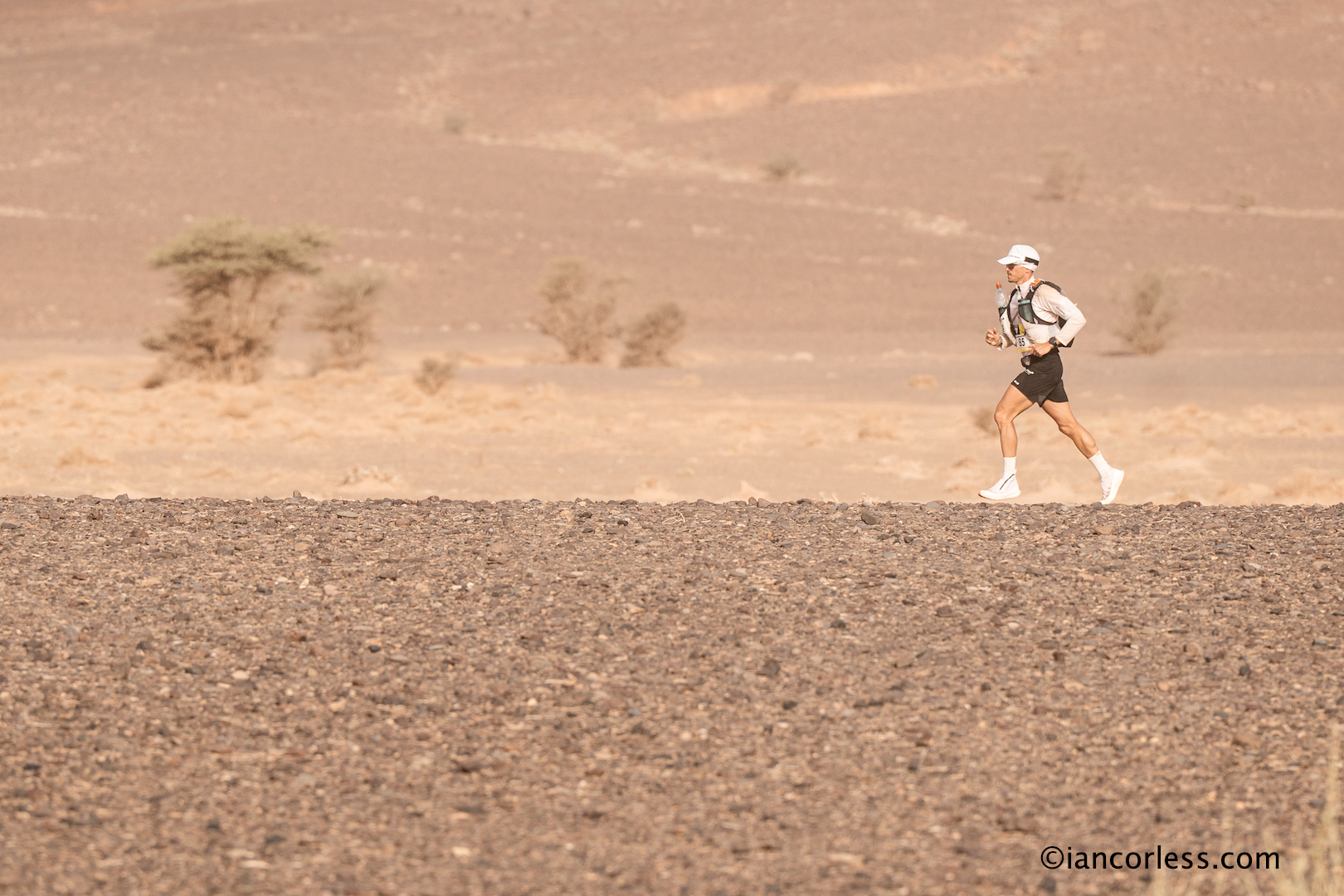
Gladly, the intense sandstorms subsided after stage 2, but the heat grew in intensity as the week progressed with 42 degree temperatures in the shade and low 50 degree temperatures recorded in the direct sun.
This of course impacted on every participant and every member of staff.
October 2021 and the 35th edition was plagued by a Norovirus that debilitated many of the staff and runner’s, also, some of the most sustained and intensive heat that the race has experienced. It was a perfect storm that resulted in nearly 50% not completing the race. An in-depth article is HERE.
The 36th edition by contrast was the opposite, only confirming that extreme endurance challenges can bring anything and being prepared and adapting is key and integral for successful completion. However, significant sandstorms did increase the DNF rate to around 10%.
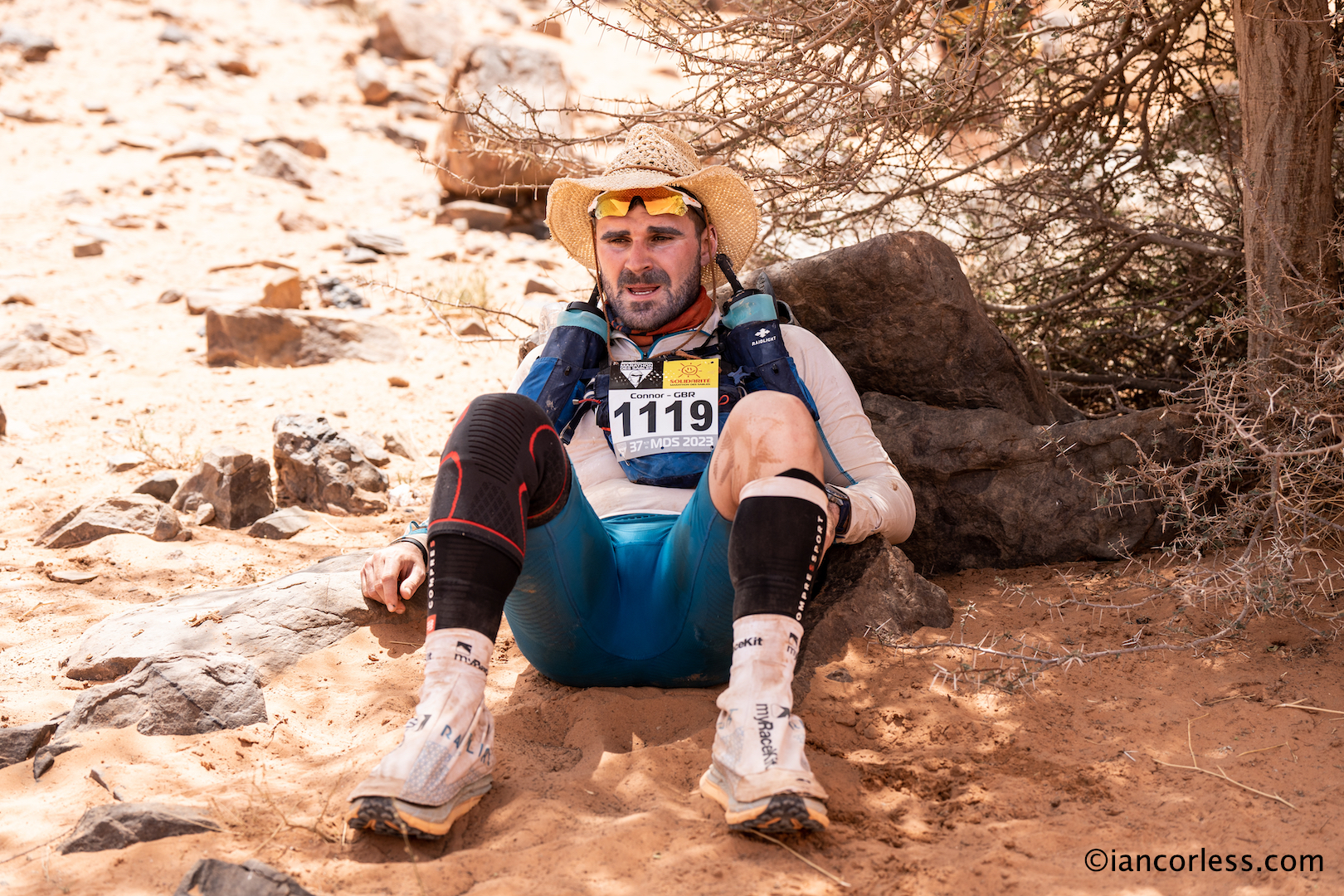
Here in 2023 there was no Norovirus, just intense heat that resulted in heat stroke, exhaustion and the second highest dropout rate in the 37-year history of the race – 30%.
What can be learnt from the 2023 edition and why such a high DNF rate?
Preparation – The 2021 edition of the race and huge dropout rate was a wakeup call for any racer, I would say that the 2023 edition of the race had participants who were well aware and understood the nature of the challenge. If the 35th and 36th editions can teach us anything, the key take away is you MUST be prepared for anything; intense heat, cold, sandstorms and the unexpected.
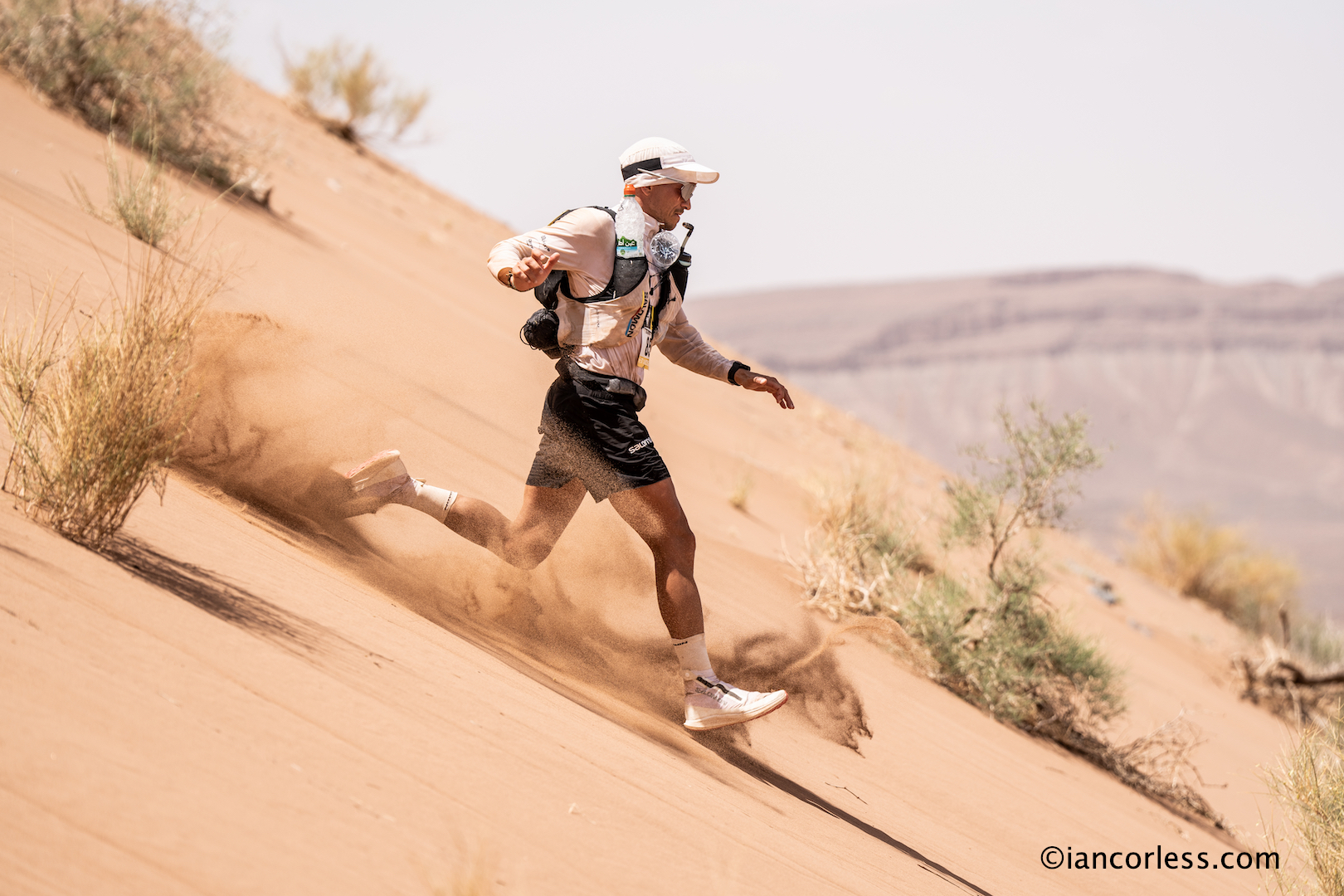
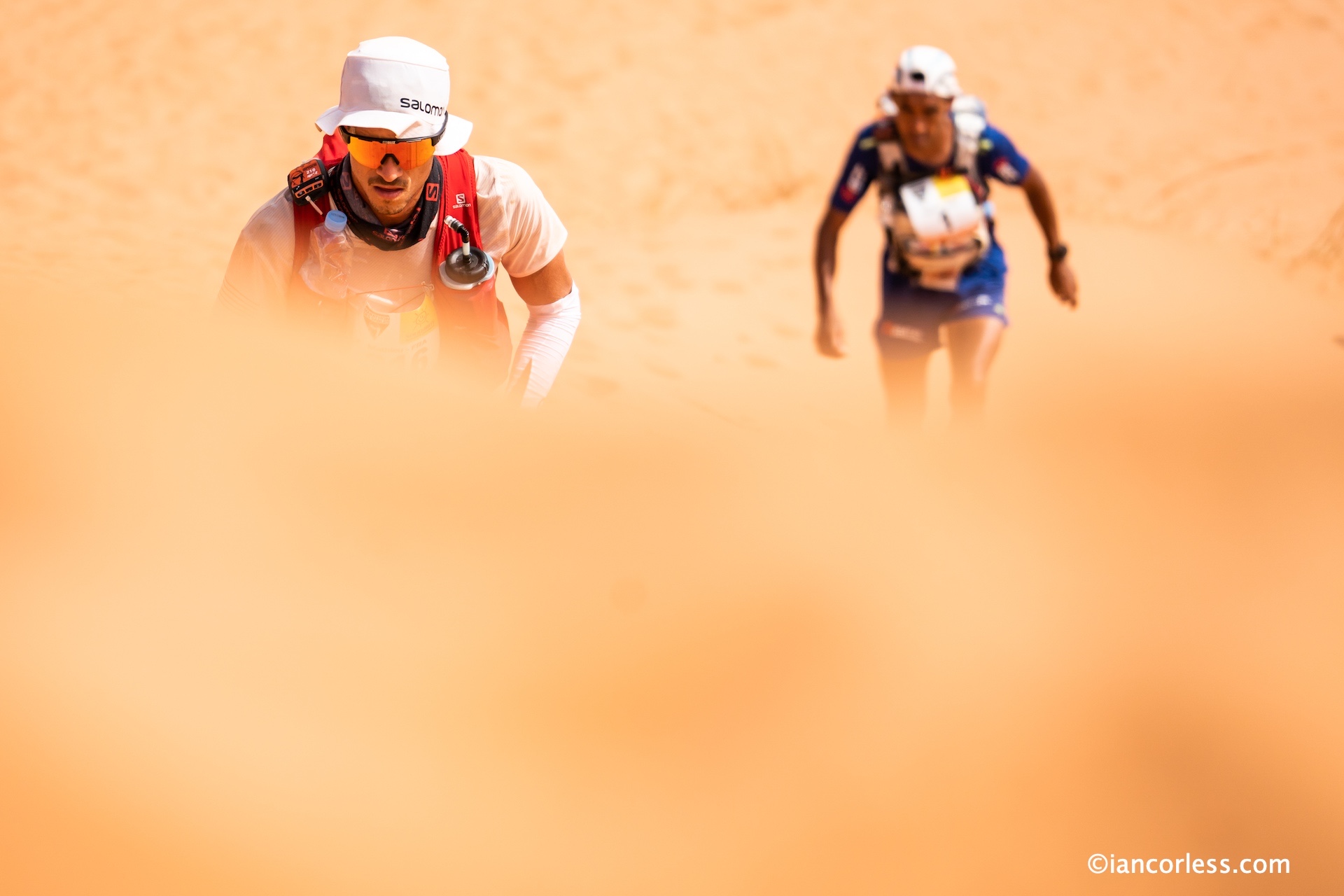
Sandstorms – They plagued the early stages of the 2023 edition, however, lessons had definitely been learnt from the 2022 edition when sandstorms increased the DNF rate. Far more runners in the 37th edition were prepared with specific eyewear that functions in harsh conditions. It’s a key item that to all intents and purposes should be mandatory on an MDS kit list. Gladly, sandstorms did not really impact when runners were on the course, the latter part of stage 2 an exception. The sandstorms impacted on camp life and comfort. Had they hit during racing, DNF rates may well have been higher.
Heat – It’s the Sahara, it gets hot! May sound silly to say, but, this is the nature of the event. Now of course, we can get extremes, 2021 and 2022 a perfect example, arguably the hottest and the coldest. 2023 sits most definitely in the hotter end of the 37-year history of the race and the DNF rate shows this. Quite simply heat adaptation and preparation is key coming in to the MDS in the 14-days before the race. If you do not do this, the adaptation will take place during the race and quite simply, the body cannot handle it and boom, you overheat, dehydrate, get sickness and withdraw. Stage 2 shows the impact with 106 abandons. I would normally say here, that by the time the ‘long day’ comes, DNF rates reduce due to adaptation taking place, BUT for the 37th edition they increased, why? Quite simply, temperatures continued to rise, the long day was arguably the hottest day of the race, it placed tired bodies in more intense heat and the knock on effects are easy to see. Also, let’s not forget the race distances.
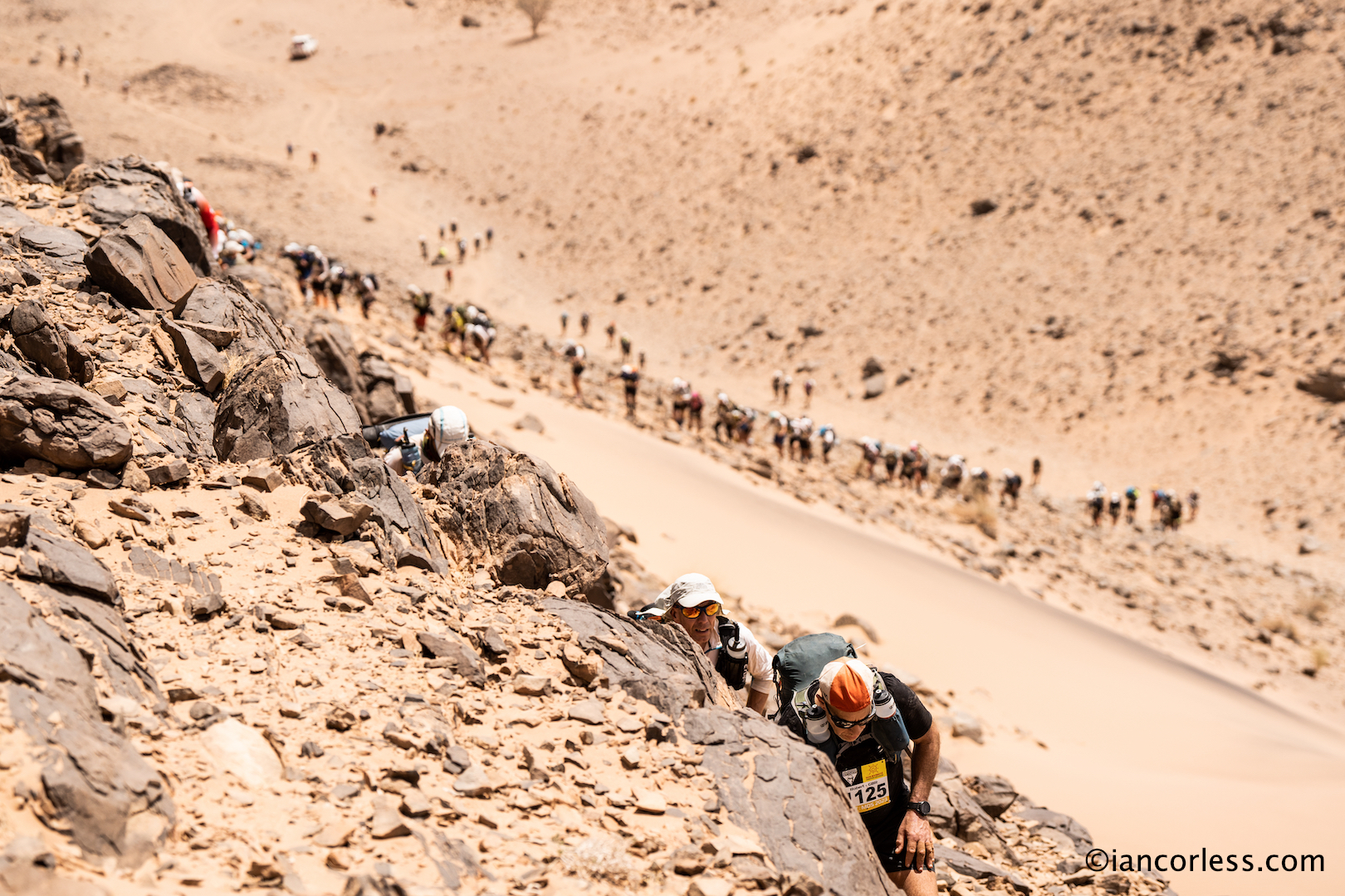
Race Distances – The DNF rate in 2023 is without doubt a result of the intense heat, however, I do feel the race stages also contributed. To be clear here, I am not asking for easier stages, just providing an overview. Stage 1 at 36km was a long stage. When one considers that day 1 is ‘typically’ 29-32km, the additional distance adds to an immediate stress and strain. It’s easy to look on and say, but it is only 4km to 6km! True, but 4 to 6km for some can be 2 to 3-hours in the heat. It takes a toll. Stage 2 was a beautiful stage and a classic distance, however, this stage had more technicality and additional vertical gain, this in itself added a stress and strain, add intense heat and sandstorms towards the end of the day, plus carry over fatigue from stage 1 and we can see how 106 did not finish. Stage 3 is always a cautious stage as many want to preserve energy for stage 4, the long day. Starting with km after km of flat running, the stage was in comparison to other stages, an easier day, however, 72 abandoned. Stage 4 at 90km was the second longest ever stage of the MDS, coming in a brutality hot year, it was always going to be a tough challenge. A beautiful route that included climbing Jebel Otfal, the route had relentless soft sand and intense heat. Darkness and cooler temperatures were the saviour of many runners and despite this, 119 did not make the line. Stage 5 and the medal is in sight, no matter how tough the day is, the hug and kiss from Patrick makes one more day of pain manageable, despite this, sadly, 3 did not make the line.
Heat Stroke – D&V did happen during the race and while some questioned if a virus was present, it was clear to see that any resemblance to 2021 was not there. Heat stroke has very similar symptoms to a bug: tiredness · dizziness · headache · feeling sick or being sick · diarrhea. I saw countless runners with heat rash on their legs and bodies.
Pack Weight – Again and again, one of the key easy gains for MDS completion is getting pack weight as close to 6.5kg as possible. Additional weight is additional strain. In intense heat this is only magnified.
Walking – If I had a euro for every time I have preached, ‘learn to walk’ I would be a rich man. MDS always makes people walk far more than they want or anticipate. Add intense heat, walking becomes normal for everyone, the elite excluded. Rising core temperatures require you to reduce stress on you and the body, even if you do not want to walk you will be forced too. Continue raising internal temperature and eventually you’ll need to stop, hopefully seek shade and reset and carry on. The DNF’s in 2023 show that heat just wiped people out. So, effective walking is a key MDS strategy.
Poles – Quite simply, poles and knowing how to use them are a key weapon in helping achieve an MDS finish for those typically outside the top-50. However, Norwegian runner Gaute Løset was the personification of great pole technique and placing 11th overall. Poles provide 4-wheel drive, stability and help reduce some fatigue by helping to distribute load stresses. Trust me, poles are a key weapon for most at MDS.
Mind – Broken and tired bodies were willed to the end through thick and thin due to incredible mental strength and fortitude. Training is not only physical, but mental.
Be Prepared – Hot or cold, dry or humid, windy or not, the Sahara can throw anything at you. Racing MDS is not complicated, understand the challenge and prepare accordingly. The greater the preparation, the greater chance of completion!
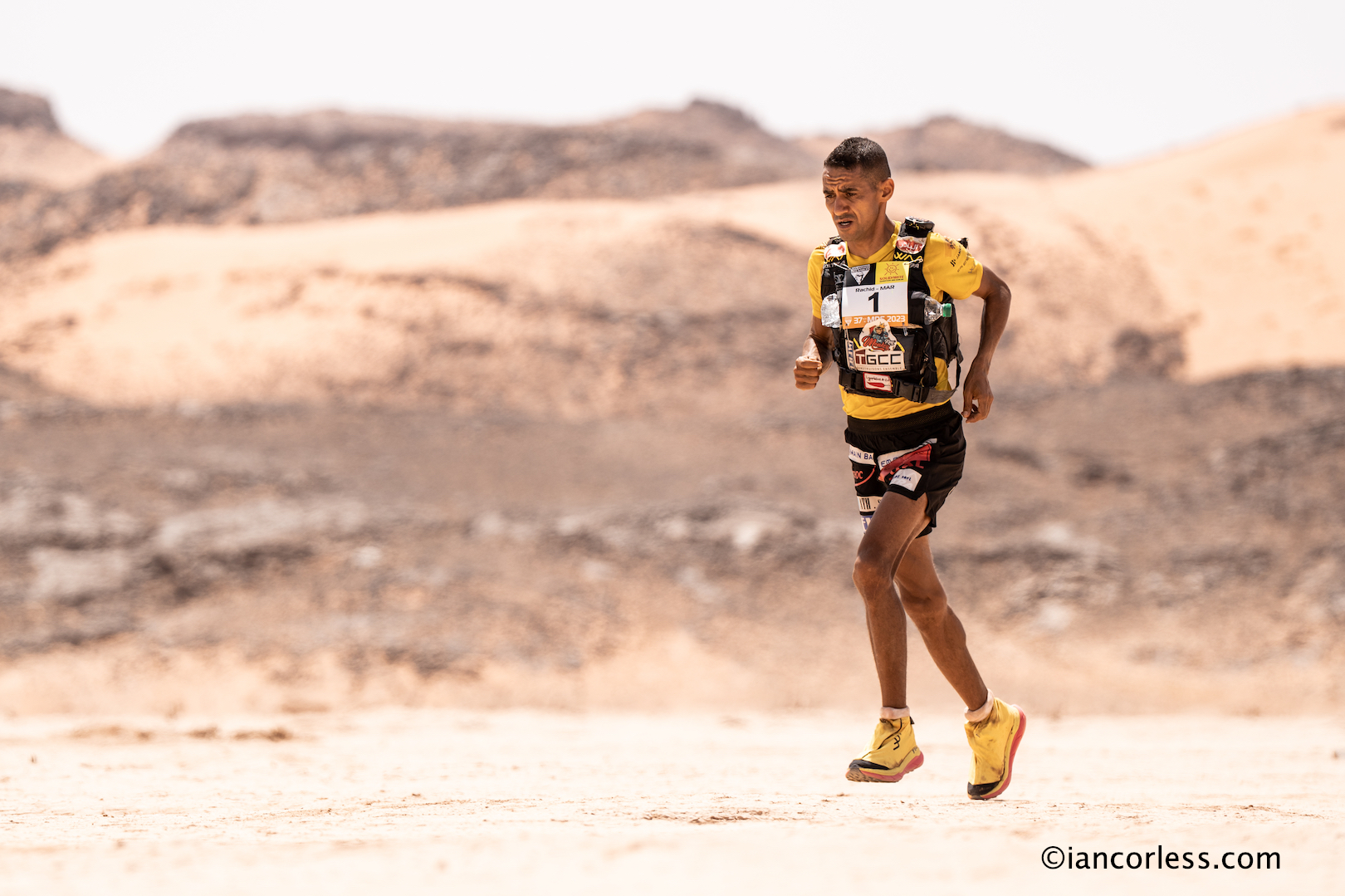
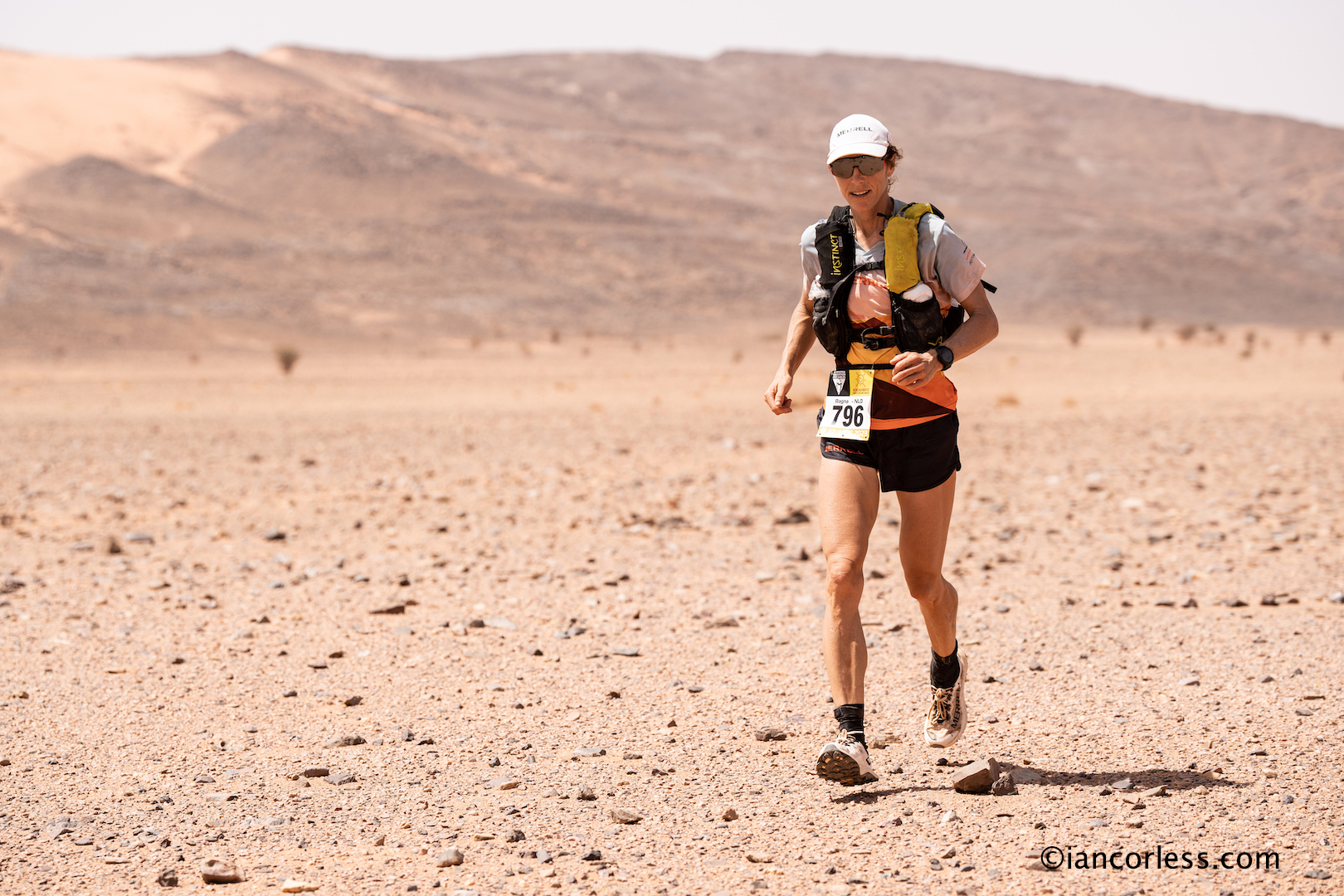
Rachid El Morabity was going for a 10th MDS victory and all eyes were on him. Ragna Debats was returning to MDS after winning the race in 2019, she was the odds-on favourite for victory. It was not to be for either of them.
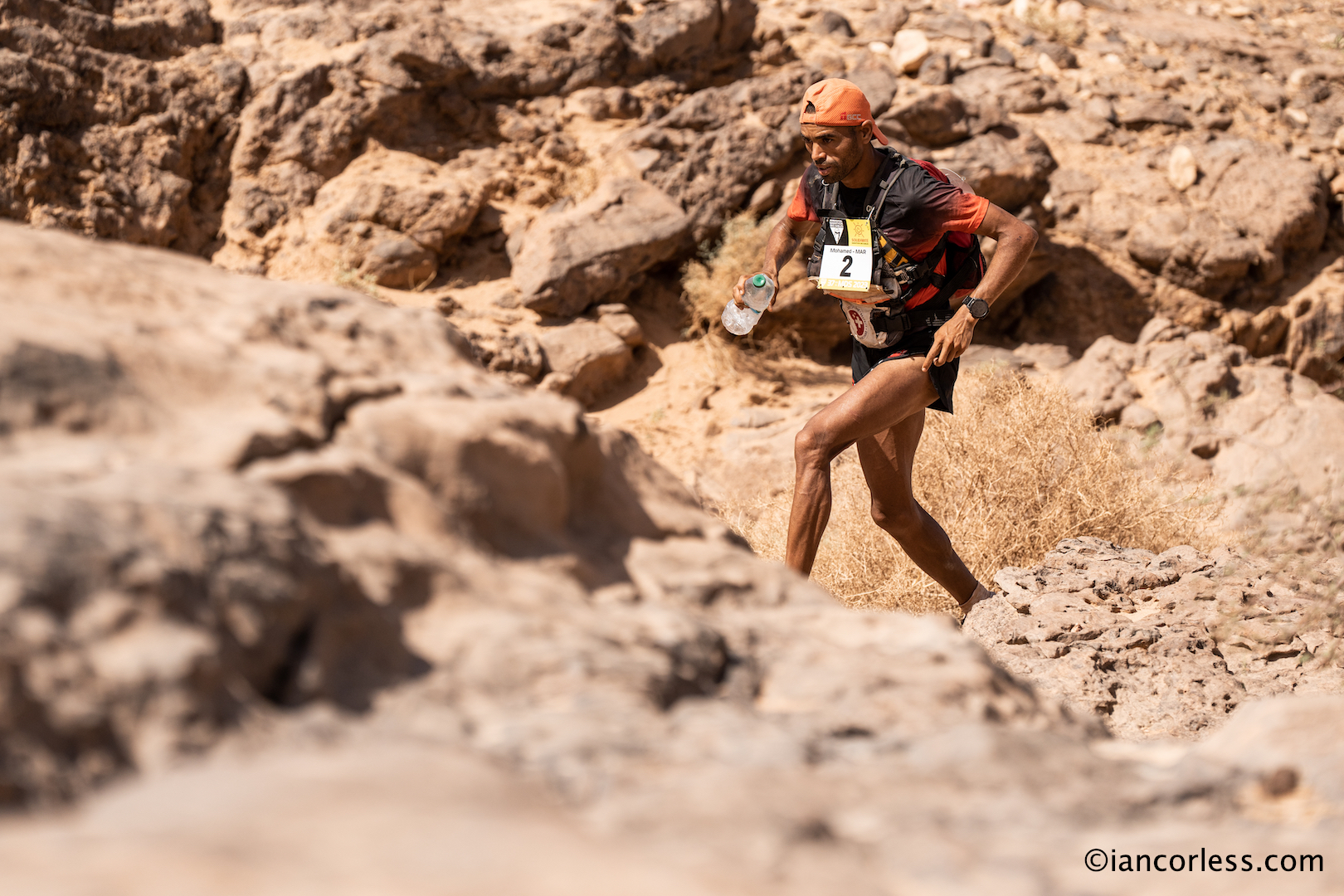
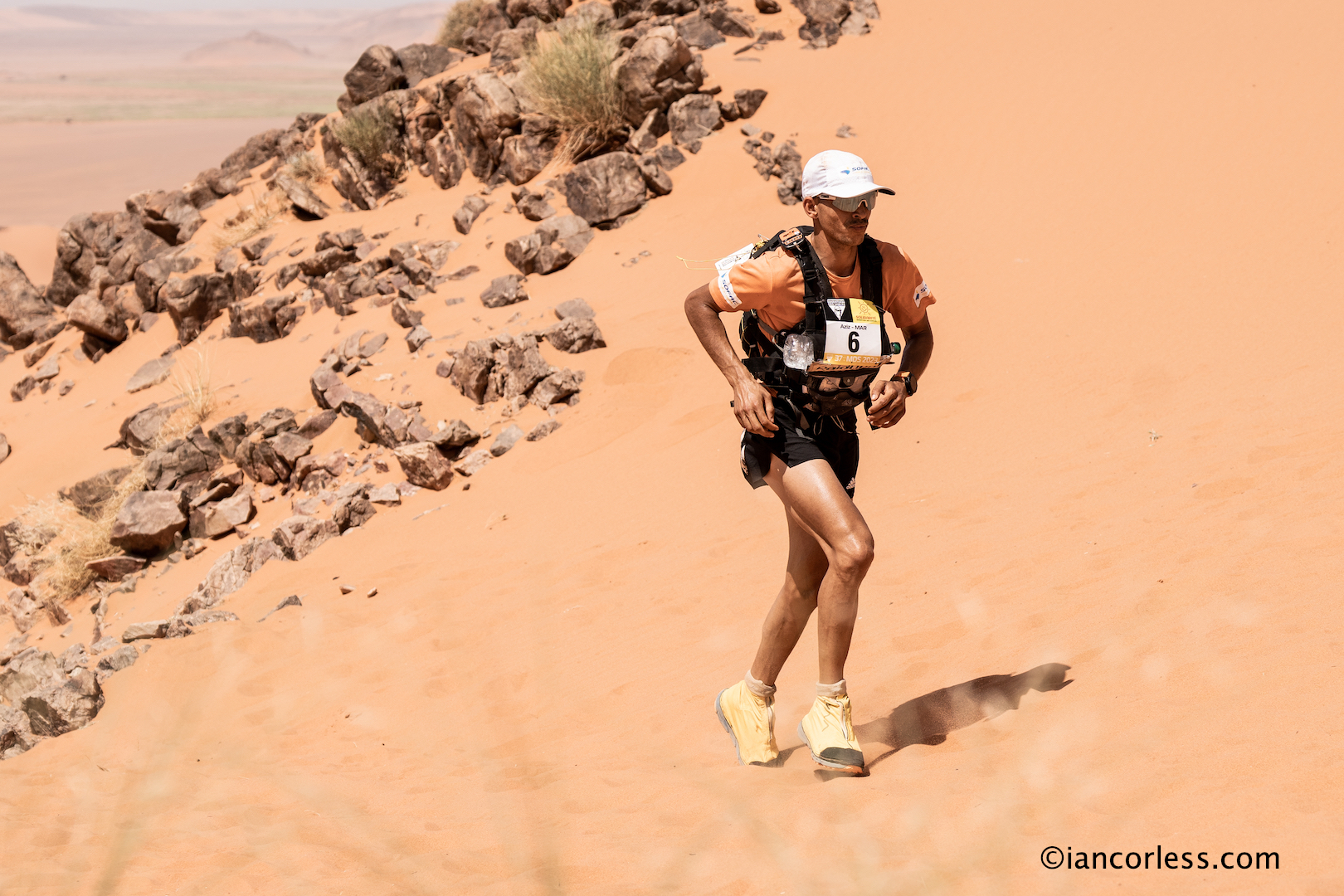
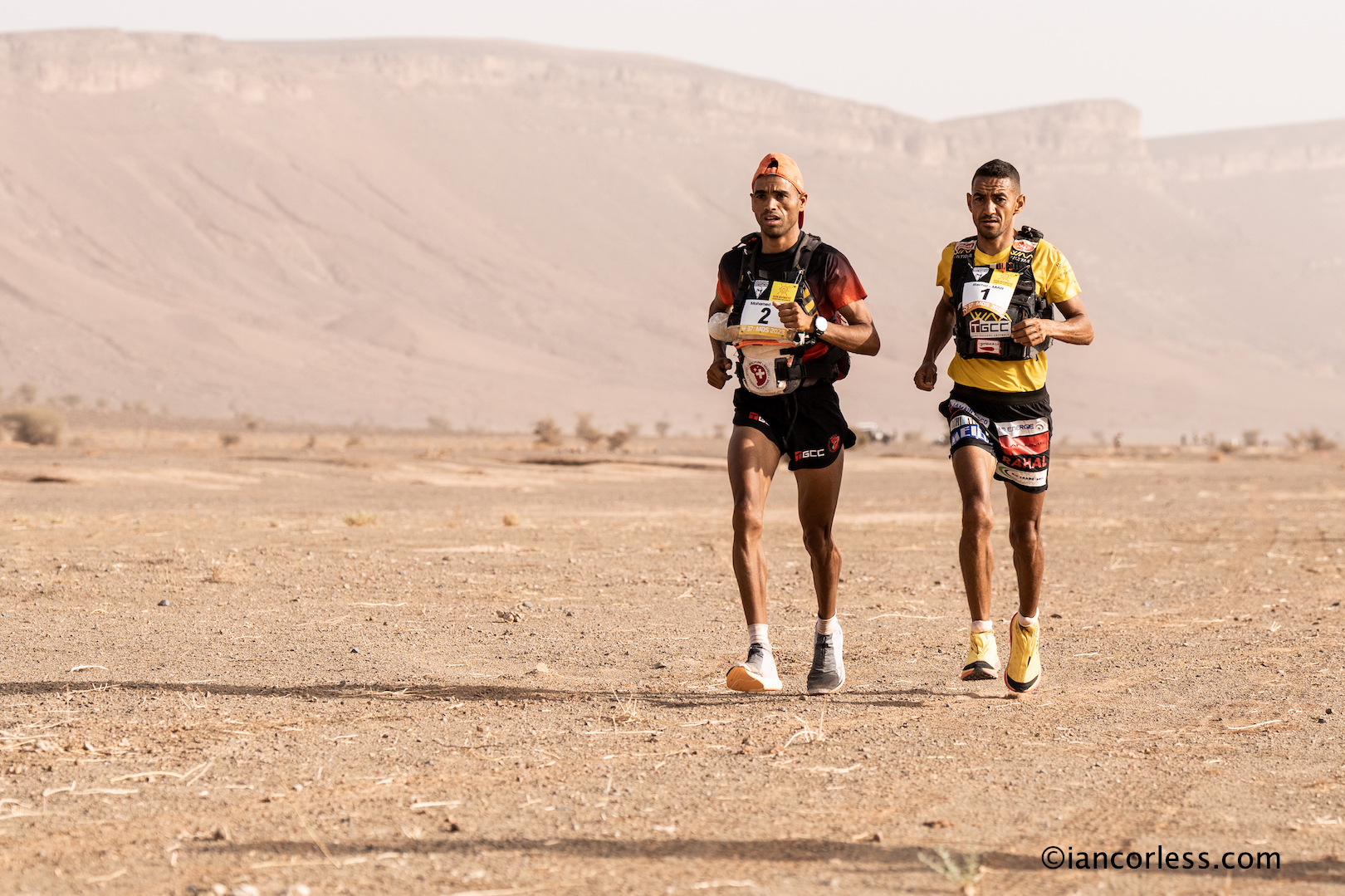
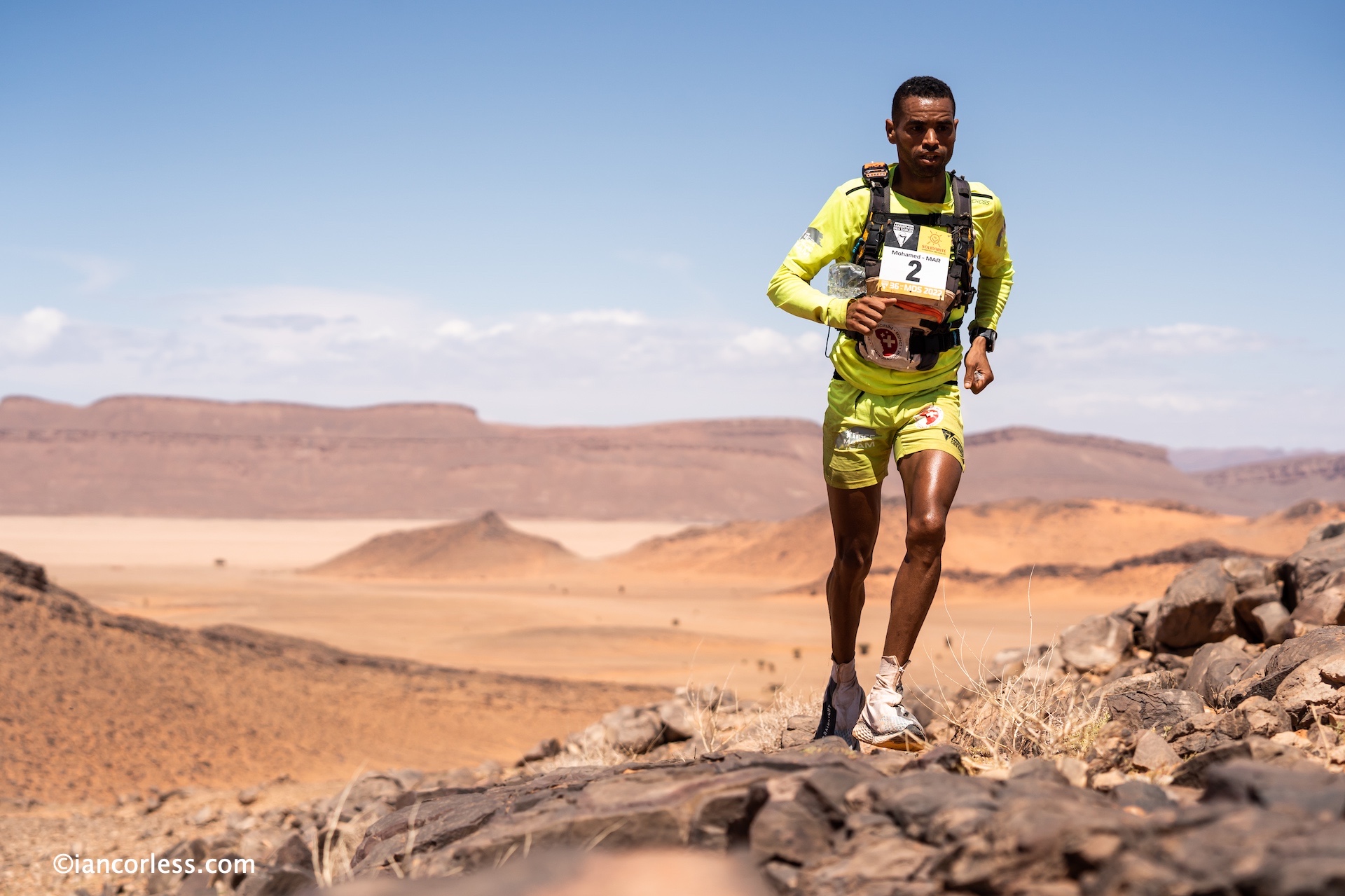
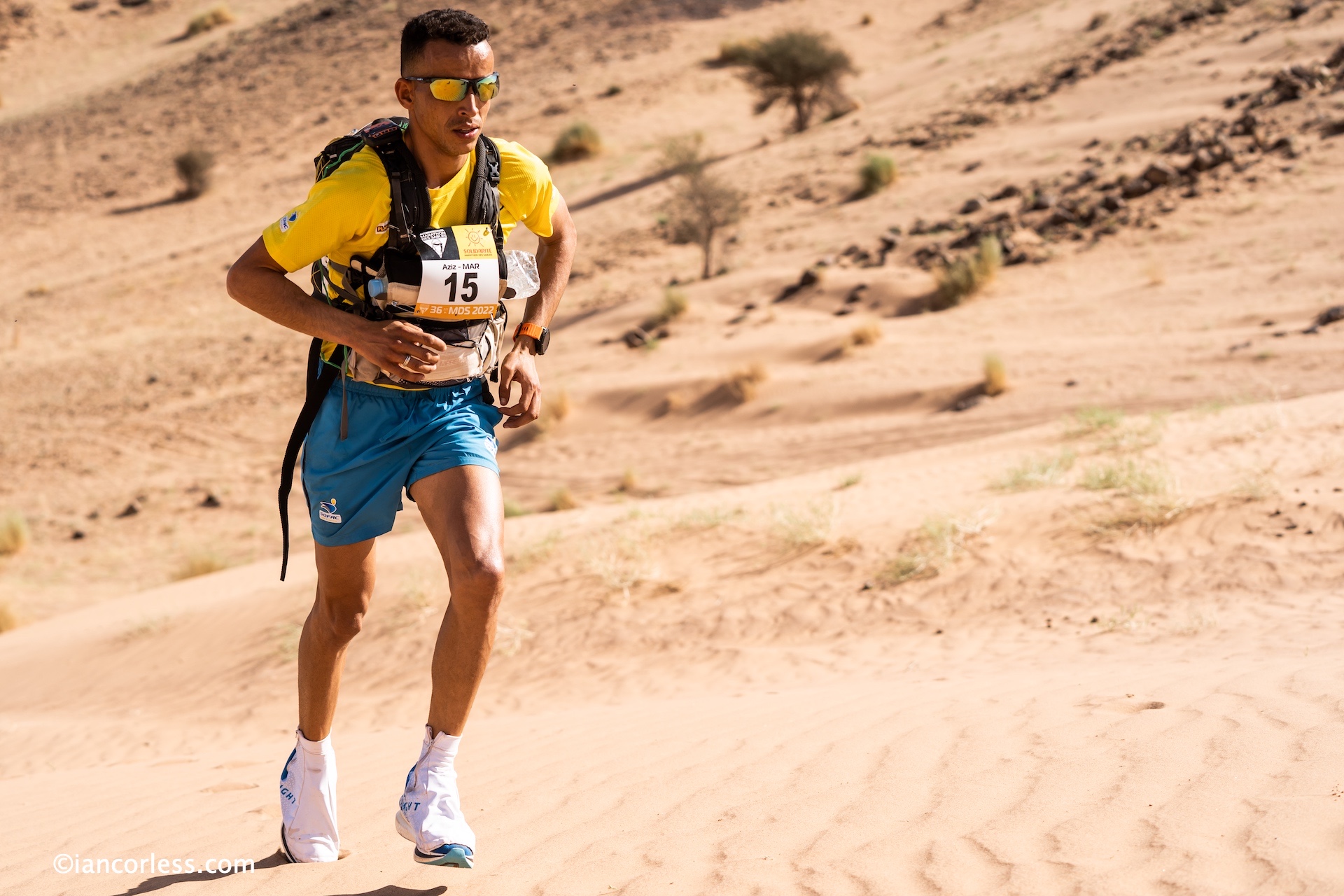
Rachid was running a typically smart race using his brother, Mohamed as a decoy to counter any threat from Aziz Yachou and Mathieu Blanchard. Fireworks were expected come stage 4 but the race felt nuetralized with Rachid, Mohamed and Aziz all finishing within 1-minute. This placed Mohamed the leader of the race. During the ‘rest day’ thoughts for the race strategy come the marathon stage were simple, Rachid would mark Aziz, Mohamed would police the race and then conveniently lose enough time to place Rachid winner of the race and gain his 10th victory. However, at 2pm on the rest day, Rachid and Aziz El Akad were both issued with 3-hour time penalties after failing a bag check just before the start of stage 4. The reason being ‘outside assistance!’
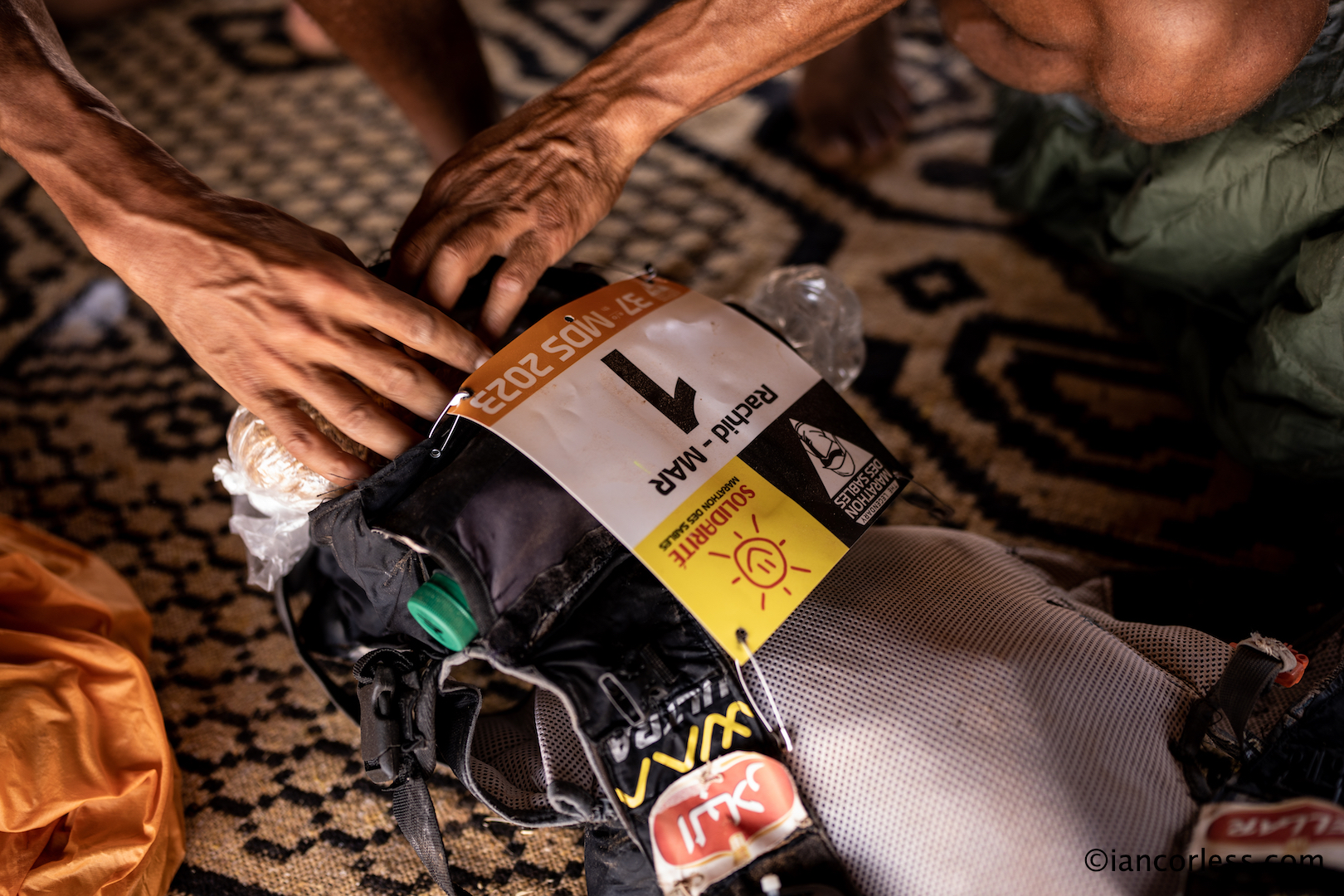
They both had items that could only have been provided by another person therefore giving them an advantage. To be clear here, many other runners were also tested before stage 4. Rachid’s chances of victory were over, he and Aziz withdrew from the race. Finally after many years being domestique to his elder brother, Mohamed clinched his first victory with Aziz Yachou placing second and Mathieu Blanchard third.
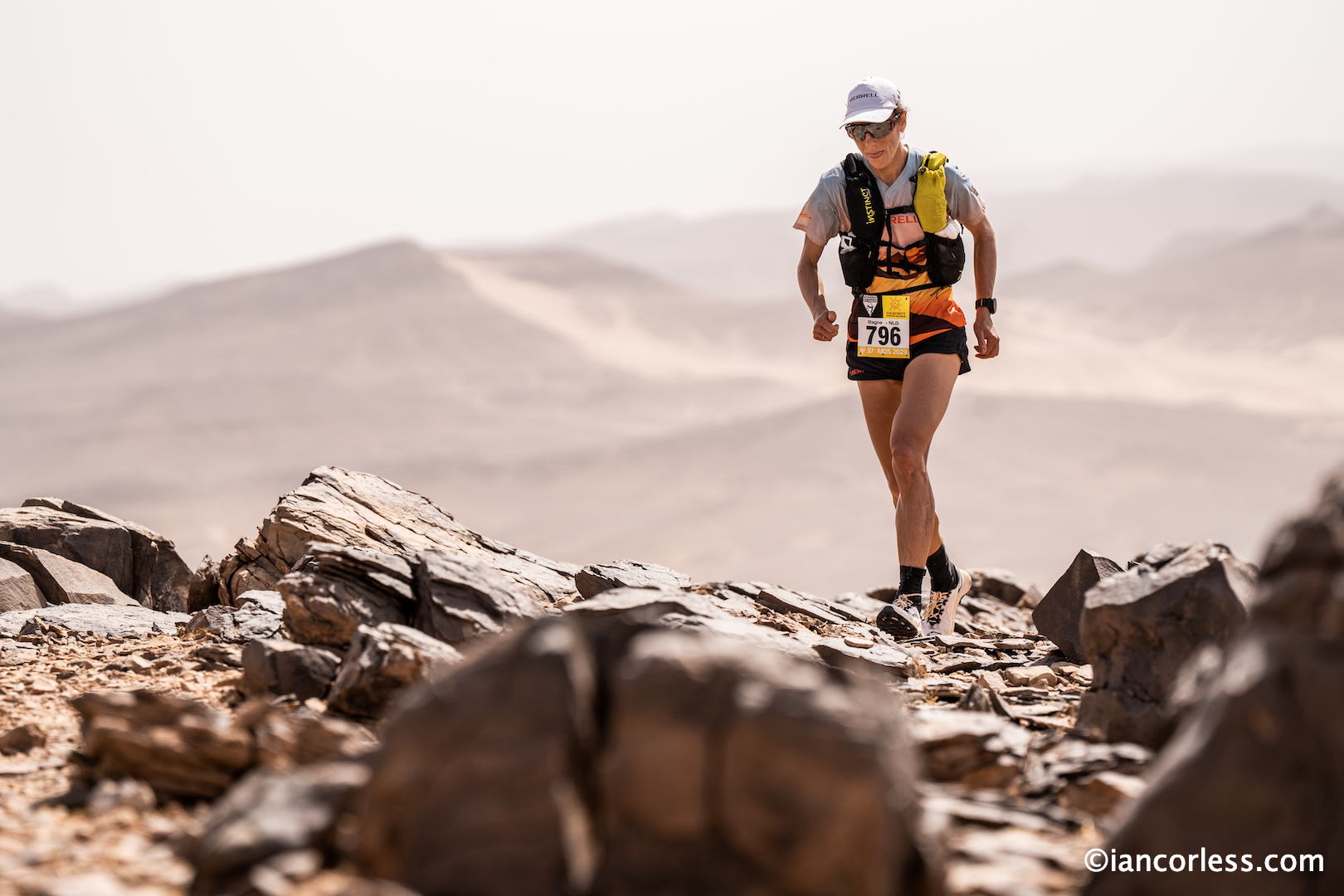
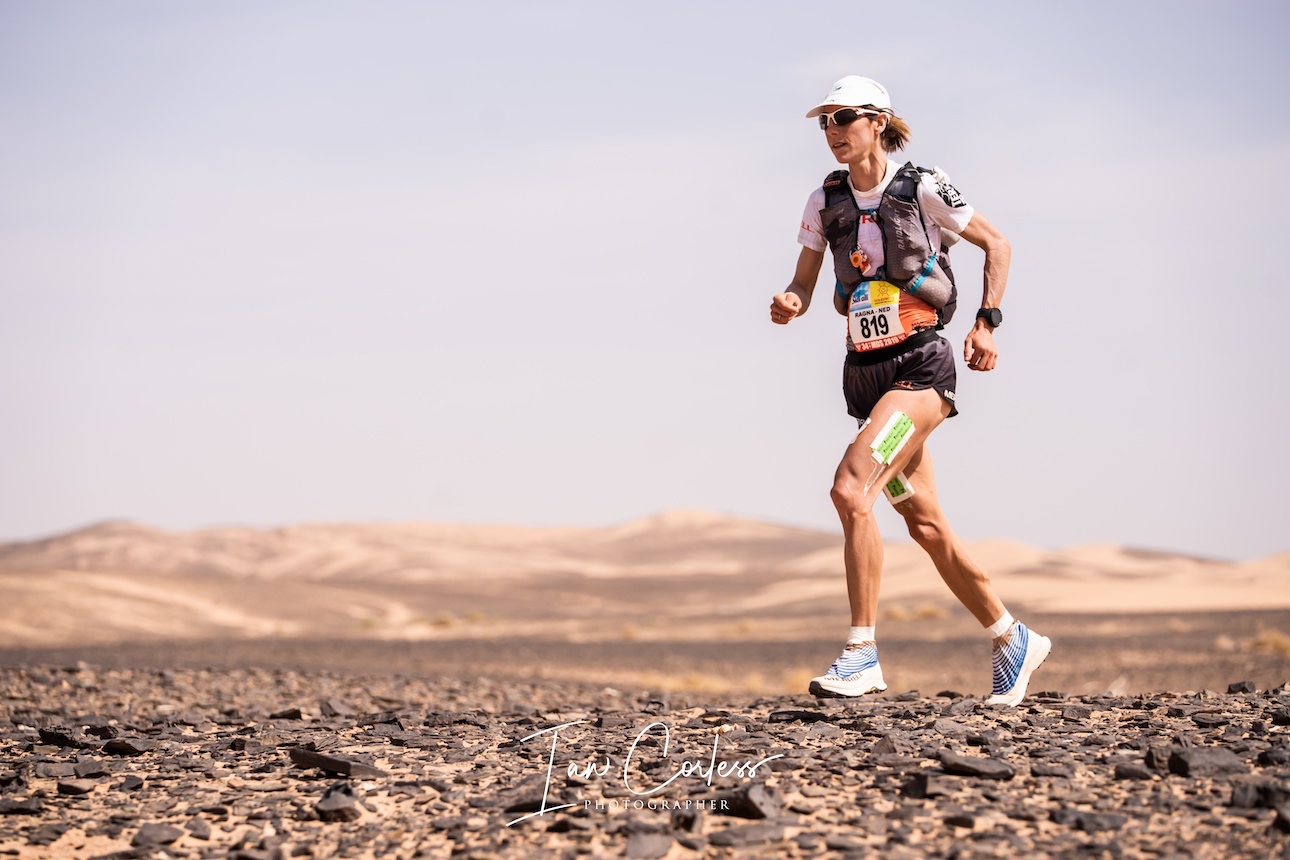
Ragna Debats dominated the early stages of the race building a huge time gap, we all thought the race was over. Signs of some fatigue and distress were visible on stage 3. However, come stage 4, the race unfolded for Ragna and she fought a long and hard day to finish many hours outside the top 3 women and therefore there was no longer a chance of victory or podium.
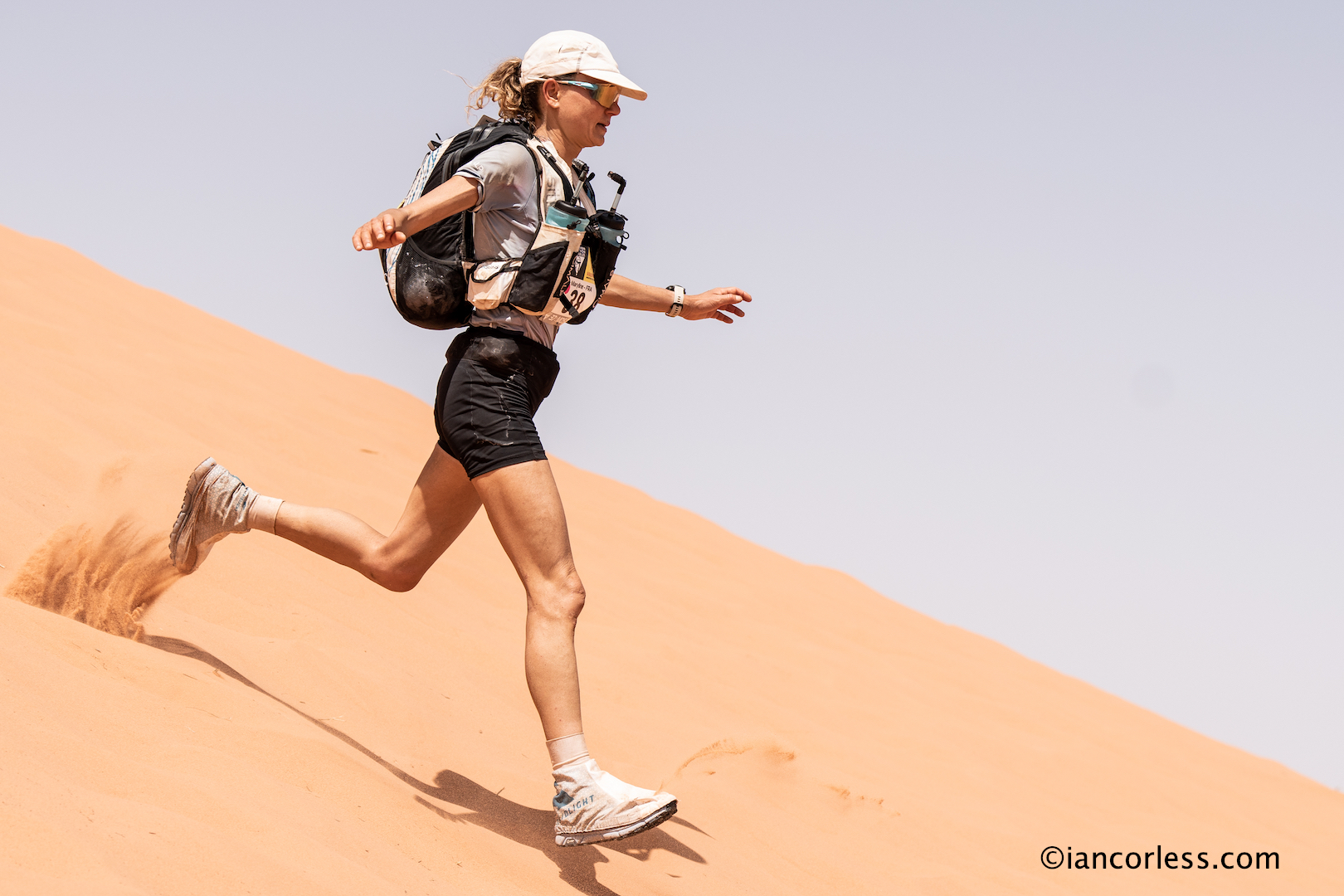
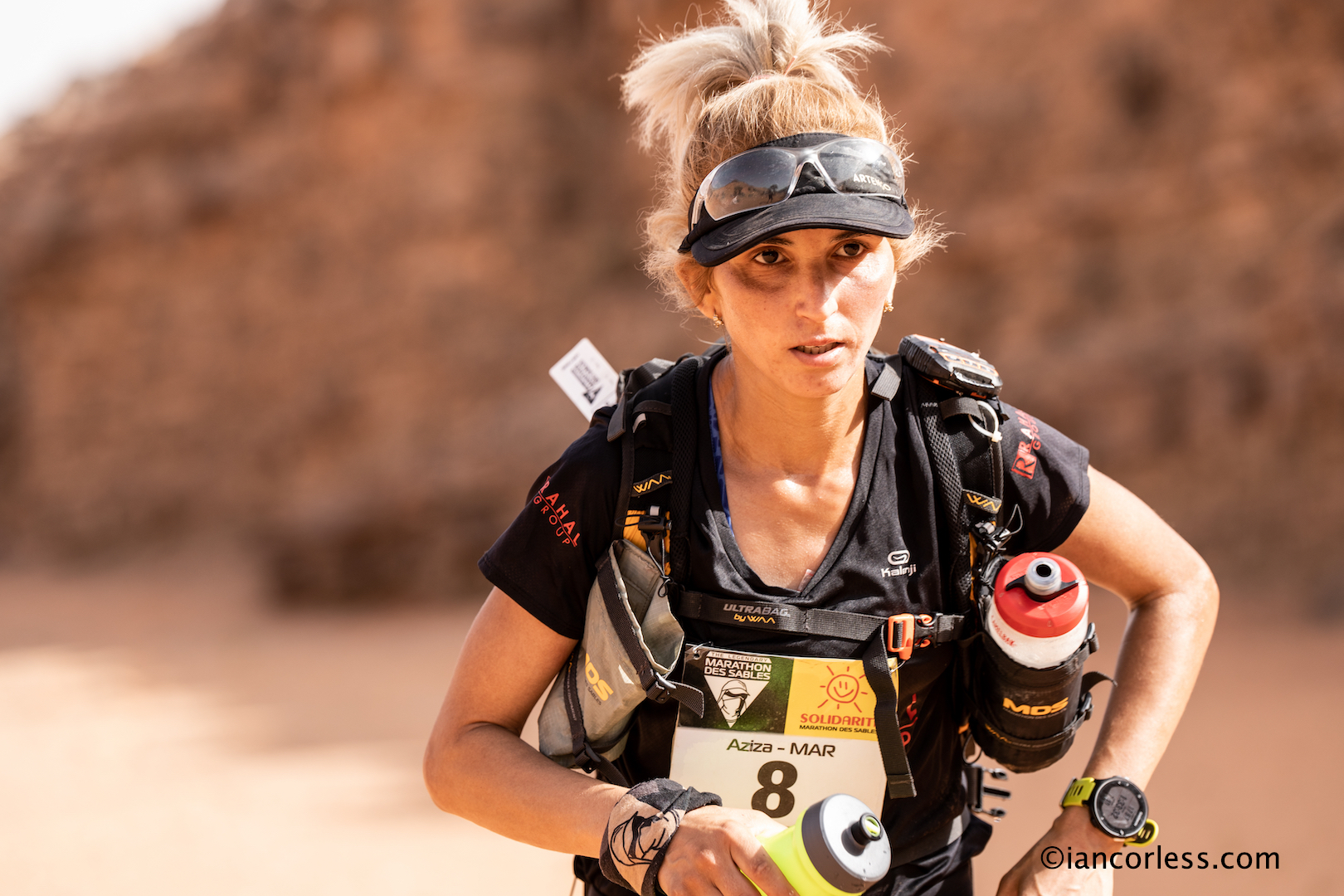
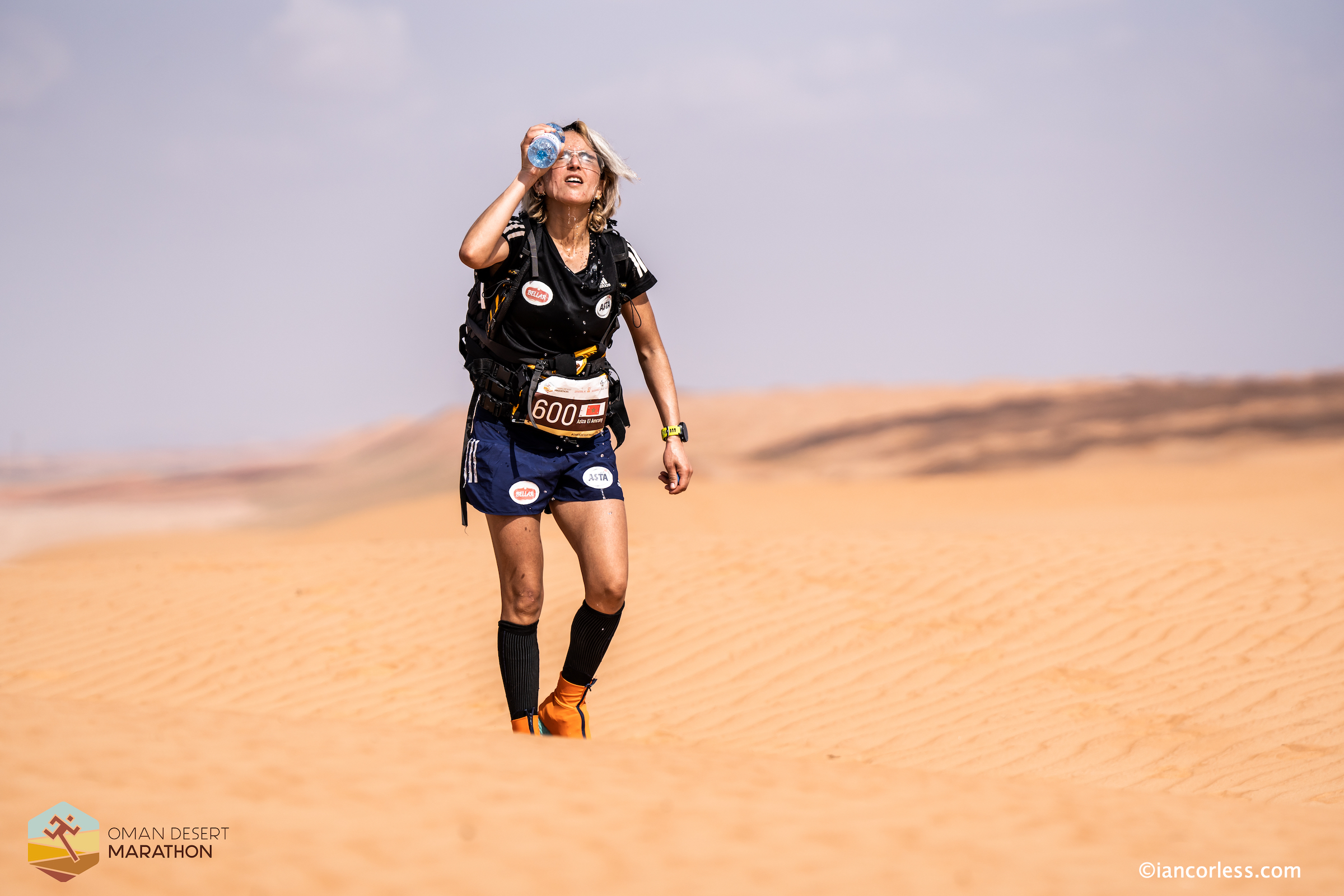
Maryline Nakache took over the reigns and despite Aziza El Amrany winning the long stage, she held on to victory with Aziza second and Tomomi Bitoh once again placed 3rd as she did in 2021.
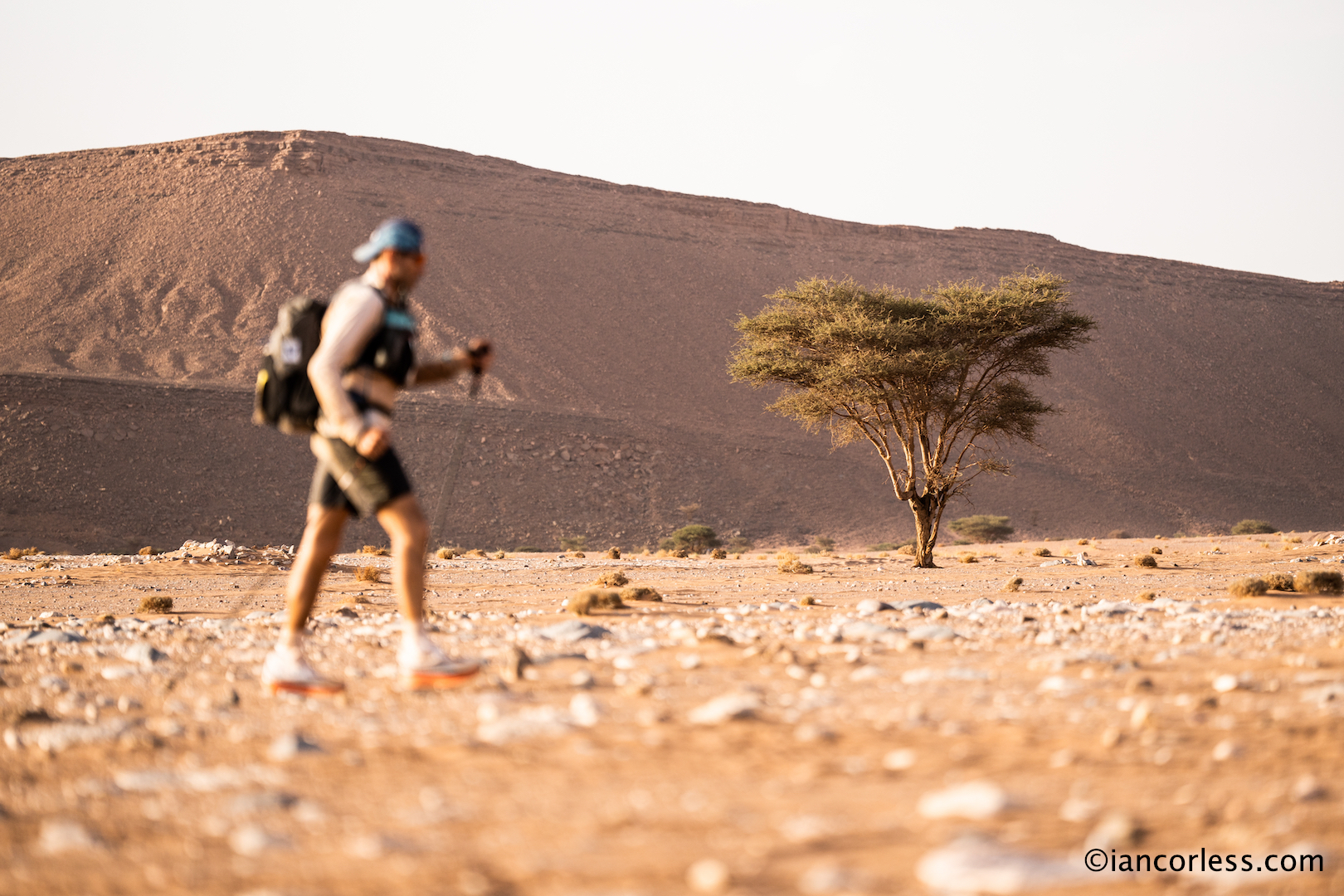
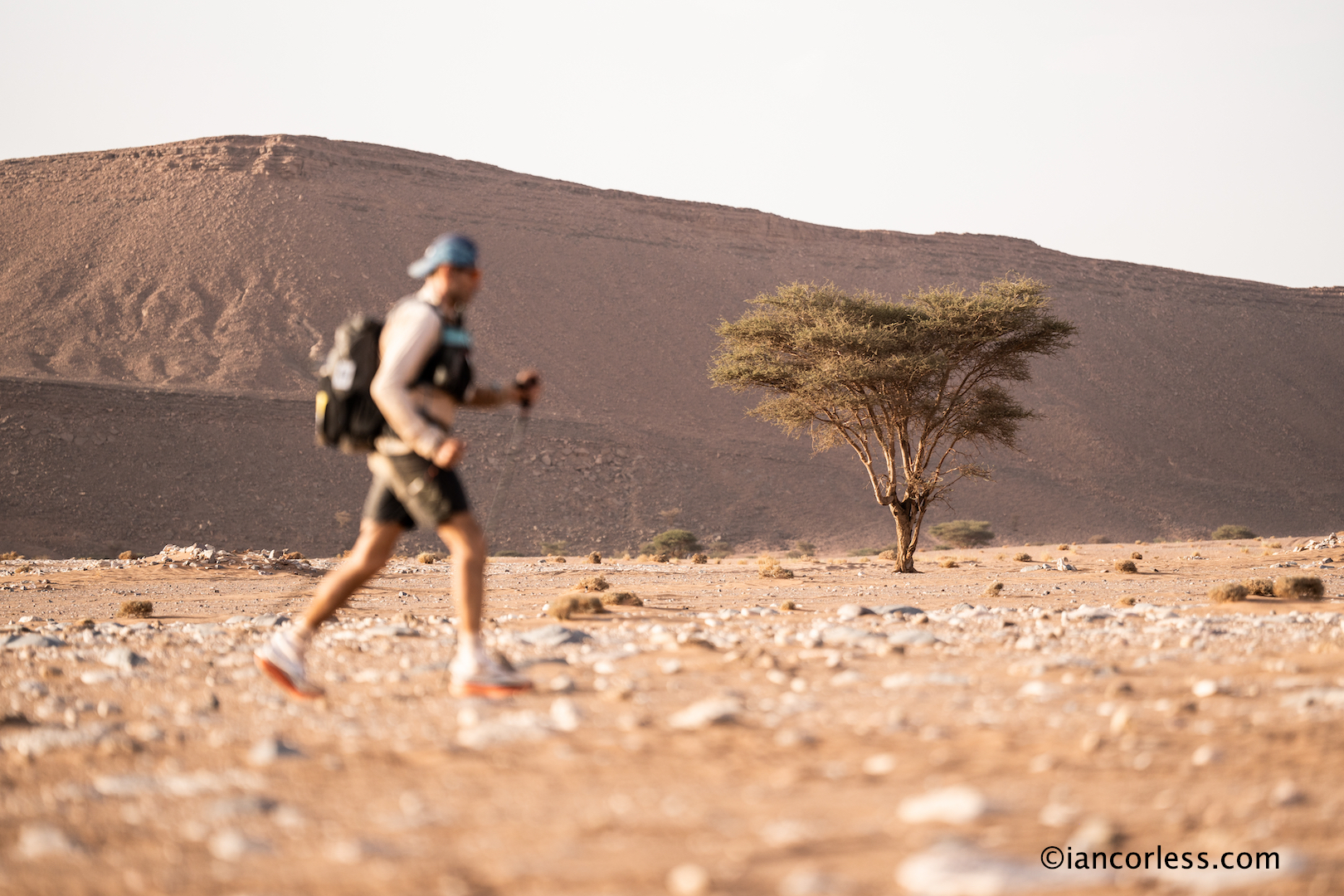
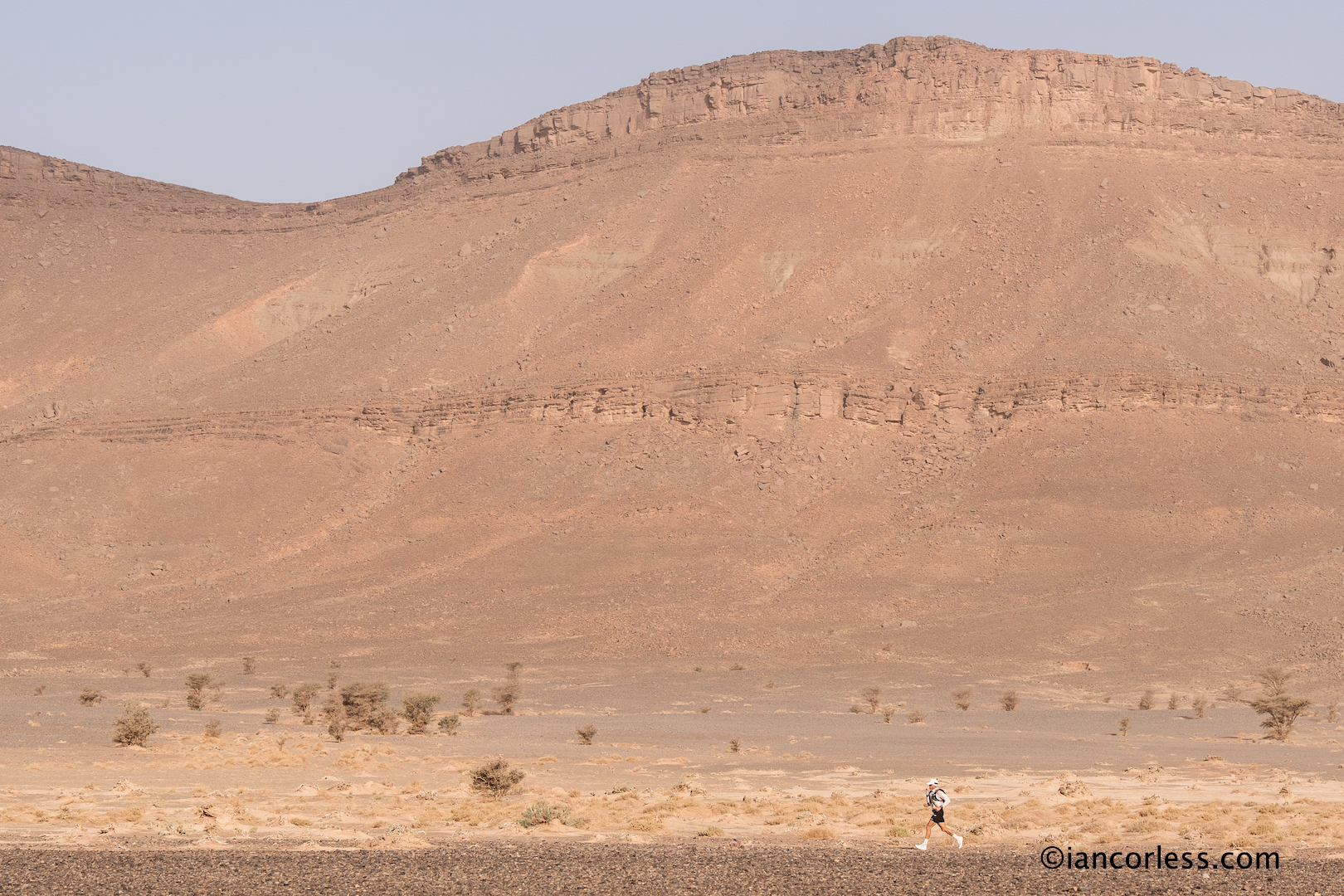
The 2023 was classic, stage 2 and the long day providing the best of this region of the Sahara. Combined with the intense heat, it was a tough race. The long day, while not the longest (92km in 2009) was a significant challenge with an abundance of soft sand. Stunning views, ridges, climbs, soft sand, two crossings of Jebel Otfal, salt flats and oasis, the 2023 route was special.
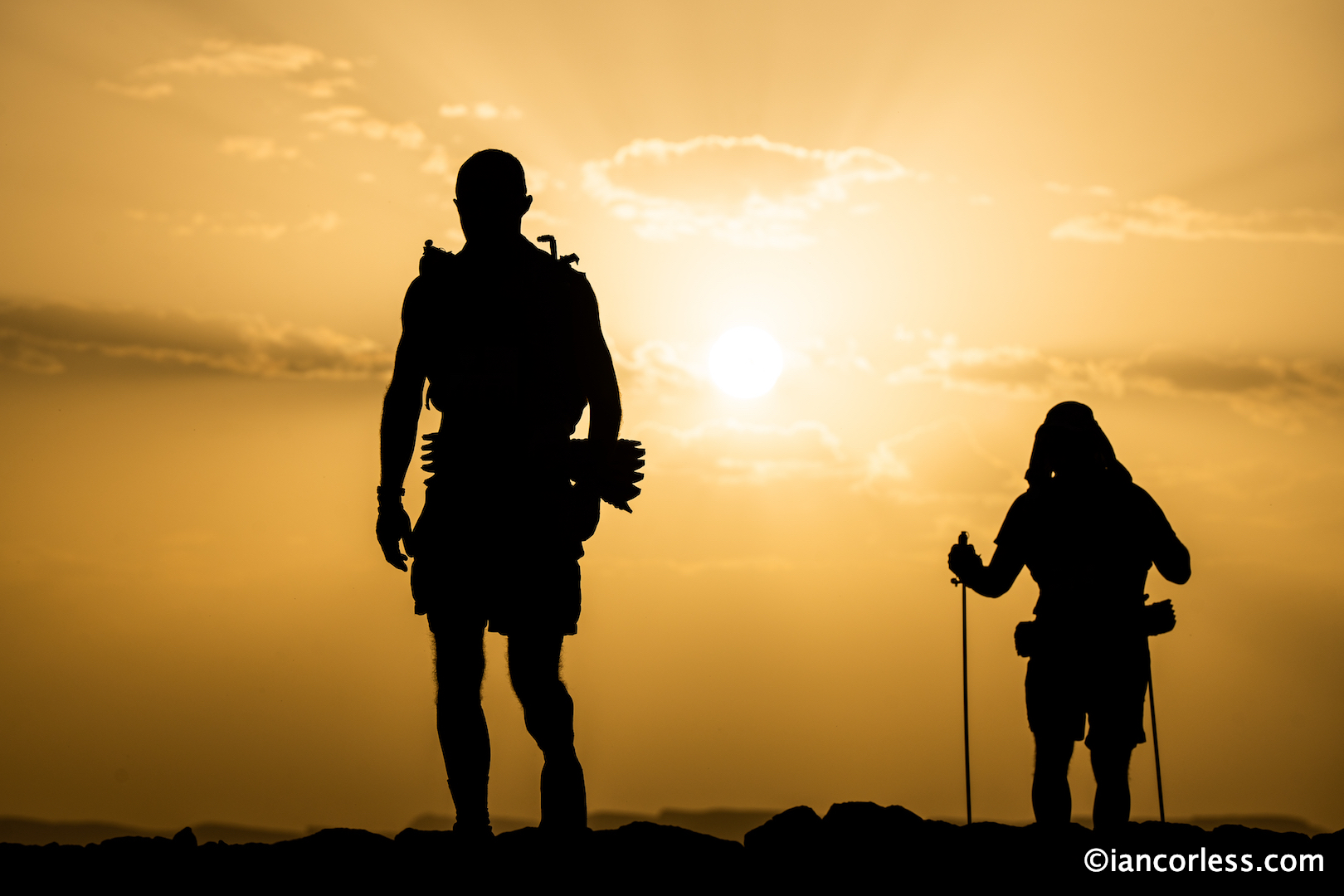
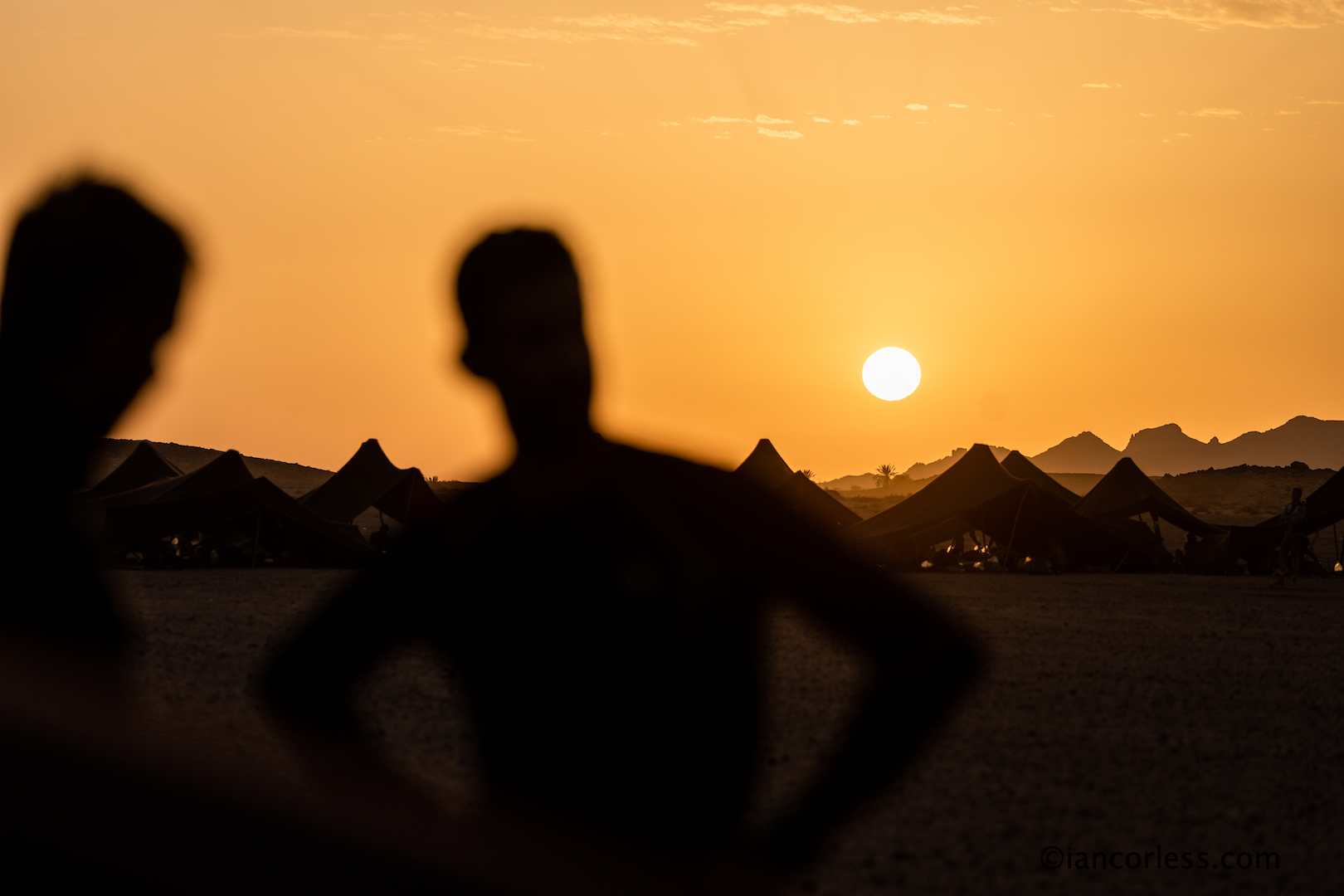
MDS is a magical Saharan experience that really is one of the greatest experiences in running. A small city moves seamlessly and like clockwork day-by-day, a wonderful, magical, moving road show that is difficult to understand and appreciate until you are living it.
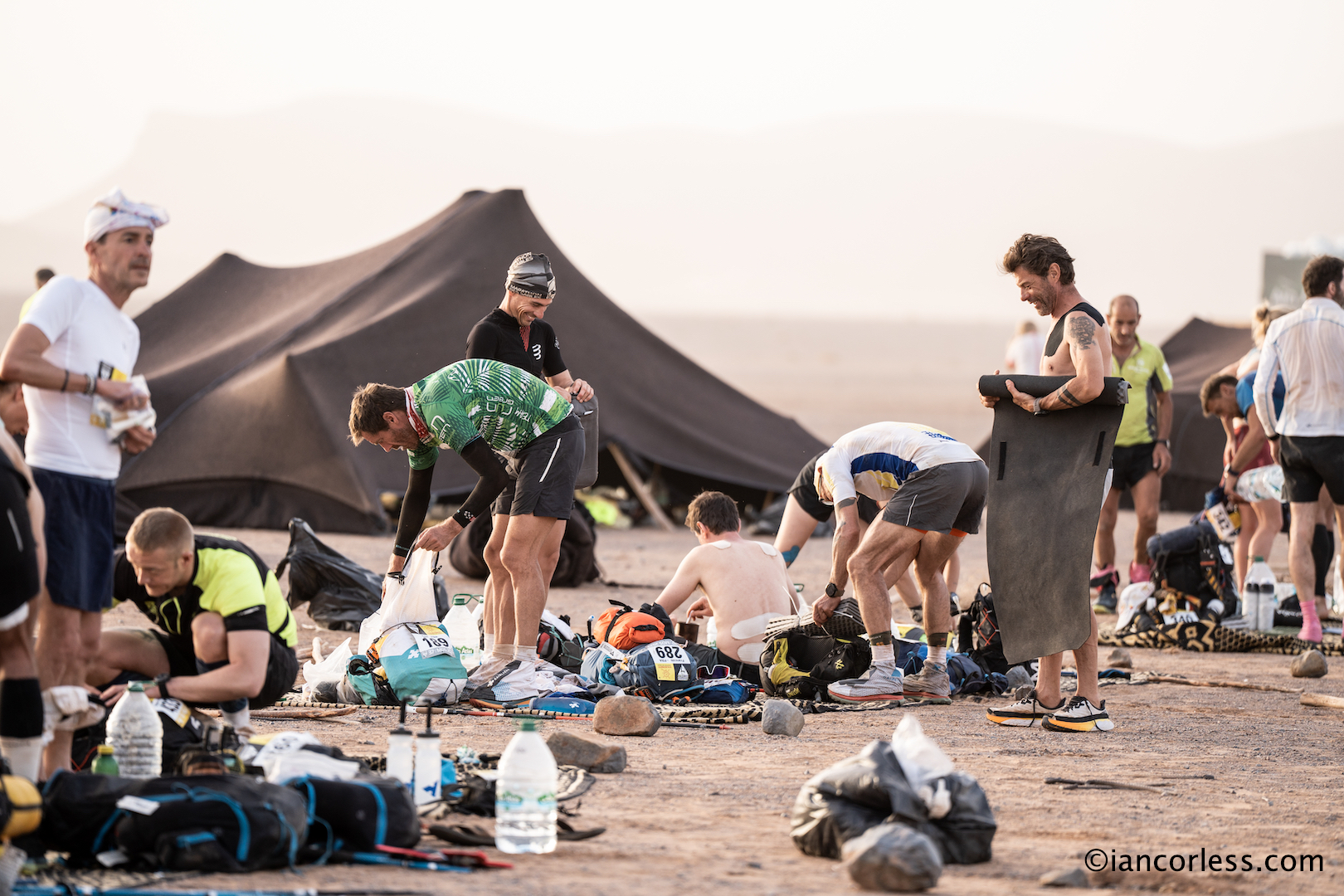
Stripped back from connection and technology, MDS is one of the ultimate raw experiences in this crazy modern and connected world; one tent, 8-people, one bag per person; rationed food, clothing, sleeping bag, sleeping mat, mandatory equipment and rationed water, it gets no simpler or basic. For those who have experienced it, they know the life changing process that the experience brings. They dared to place themselves in the arena knowing that if at least they fail, they do so while daring greatly.
The marathon stage had been highly anticipated as it was expected, that Rachid El Morabity would come from behind and gain time on his brother, Mohamed and clinch his 10th victory. However, this was not to be!
Rachid, along with Aziz El Akad failed an equipment check before the long stage (stage 4) of the Marathon des Sables. This check showed items that were not present at the initial kit check on admin day. The items, coincidentally, were provided each day in lunch packets for MDS staff. In simple terms, Rachid and Aziz were obtaining ‘outside assistance’ to gain an advantage and this, of course, is outside the rules of the race and the sense of fair play. On the rest day, a penalty of 3-hours was given to Rachid and Aziz and also, the Moroccan team was penalised. Rachid and Aziz decided to leave the race and not participate in the last stage.
Rachid has since posted on his Instagram account, and I quote:
“…it is with heavy heart I have decided to quit Marathon des Sables because I was punished unfairly for a mistake I dod not commit. When you are wrongly accused, it’s better to stand with your head high than to remain to suffer injustice…”
Sadly, this is a sad chapter in the history of the Marathon des Sables and the legacy of Rachid. However, it’s greatly important that self-sufficiency in the true nature of the MDS is held and when applicable, penalties are given, irrespective of if you have won 9 editions or not.
The 2023 edition will go down in the history of the race as one of the toughest! A beautiful but tough route, was made considerably tougher with intense heat that not only lasted the week, but increased in temperature daily. Also, early days were impacted with multiple sand storms. At the time of writing, the DNF rate is approximately 30% with just 771 runner’s starting the marathon stage.
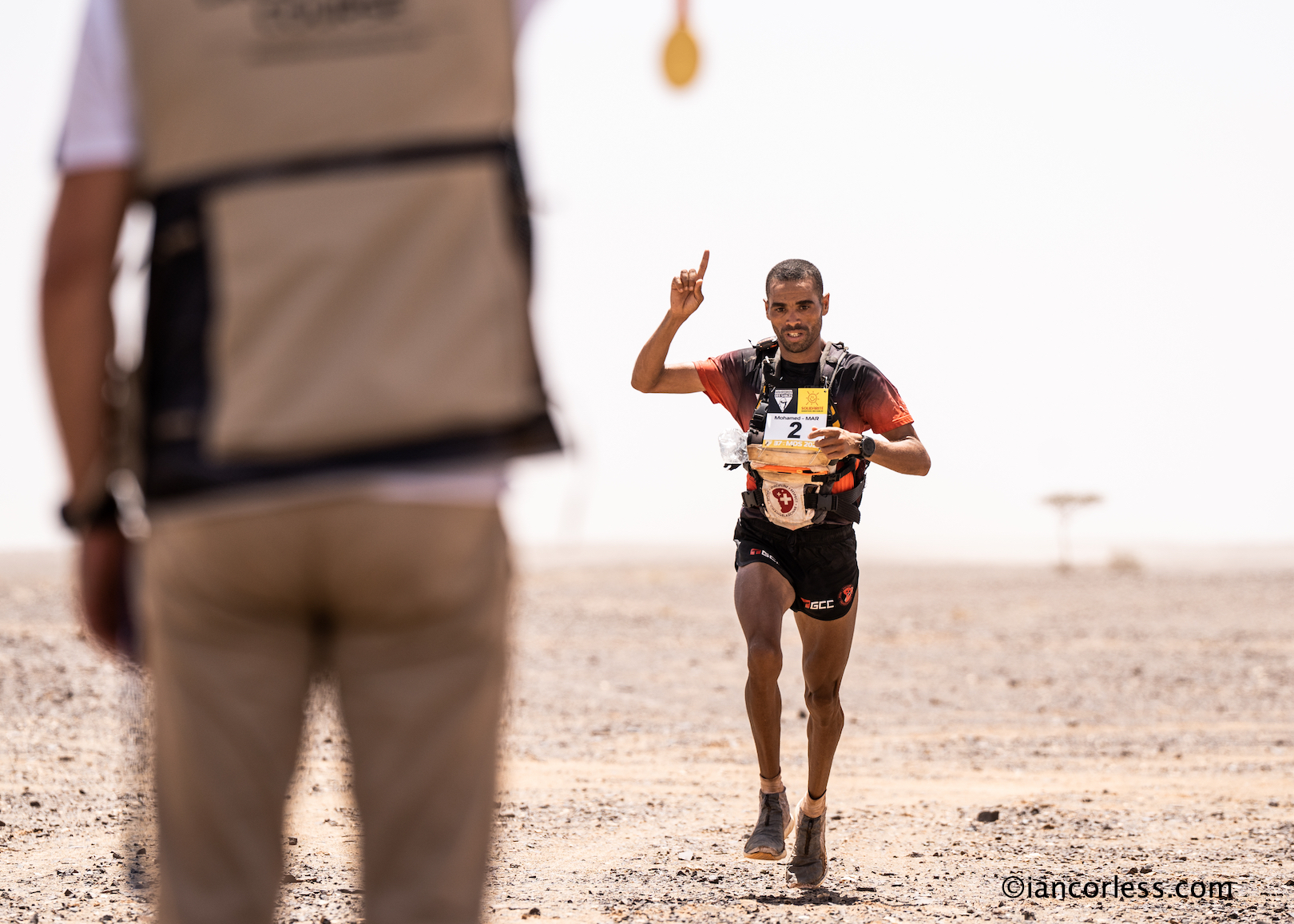
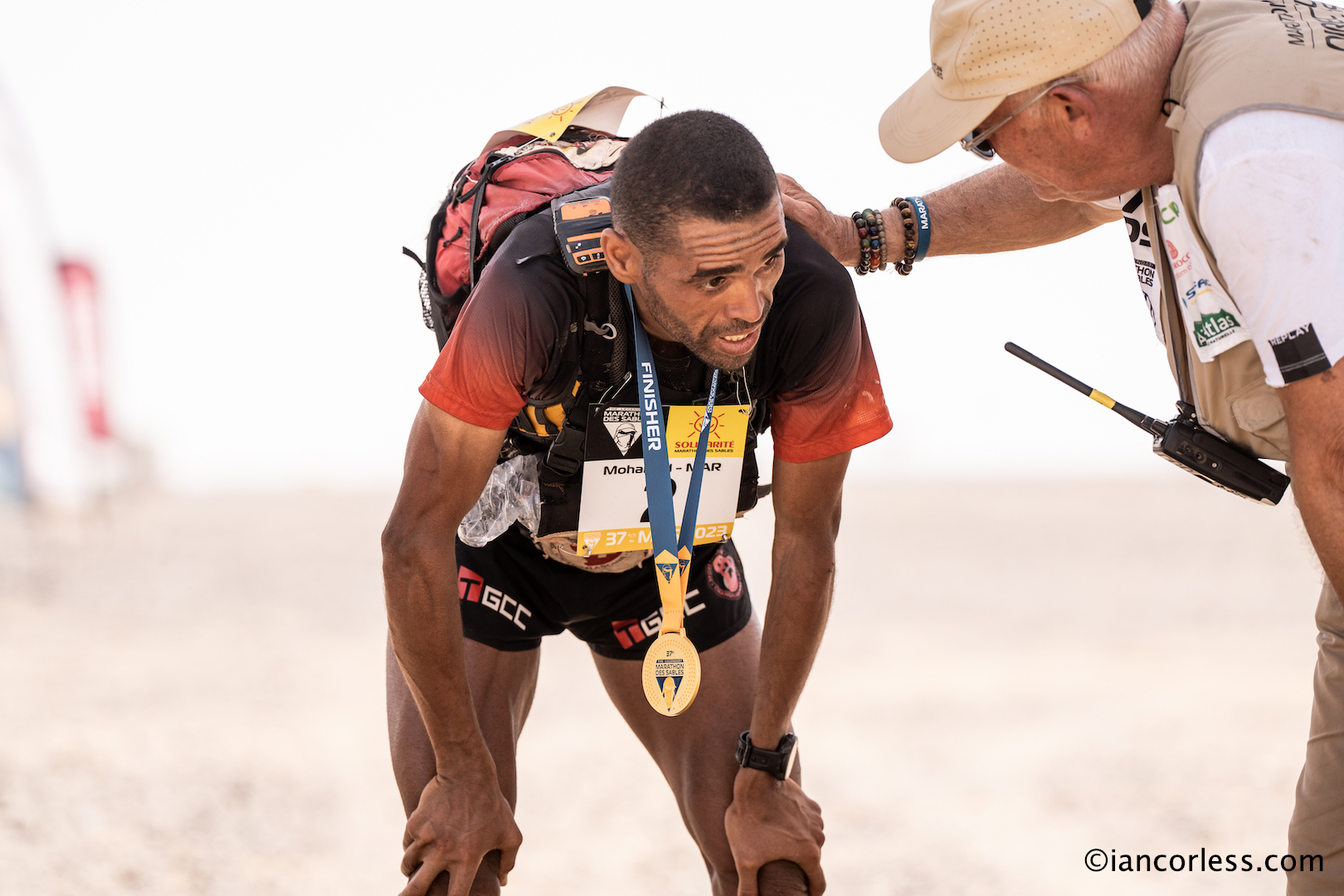
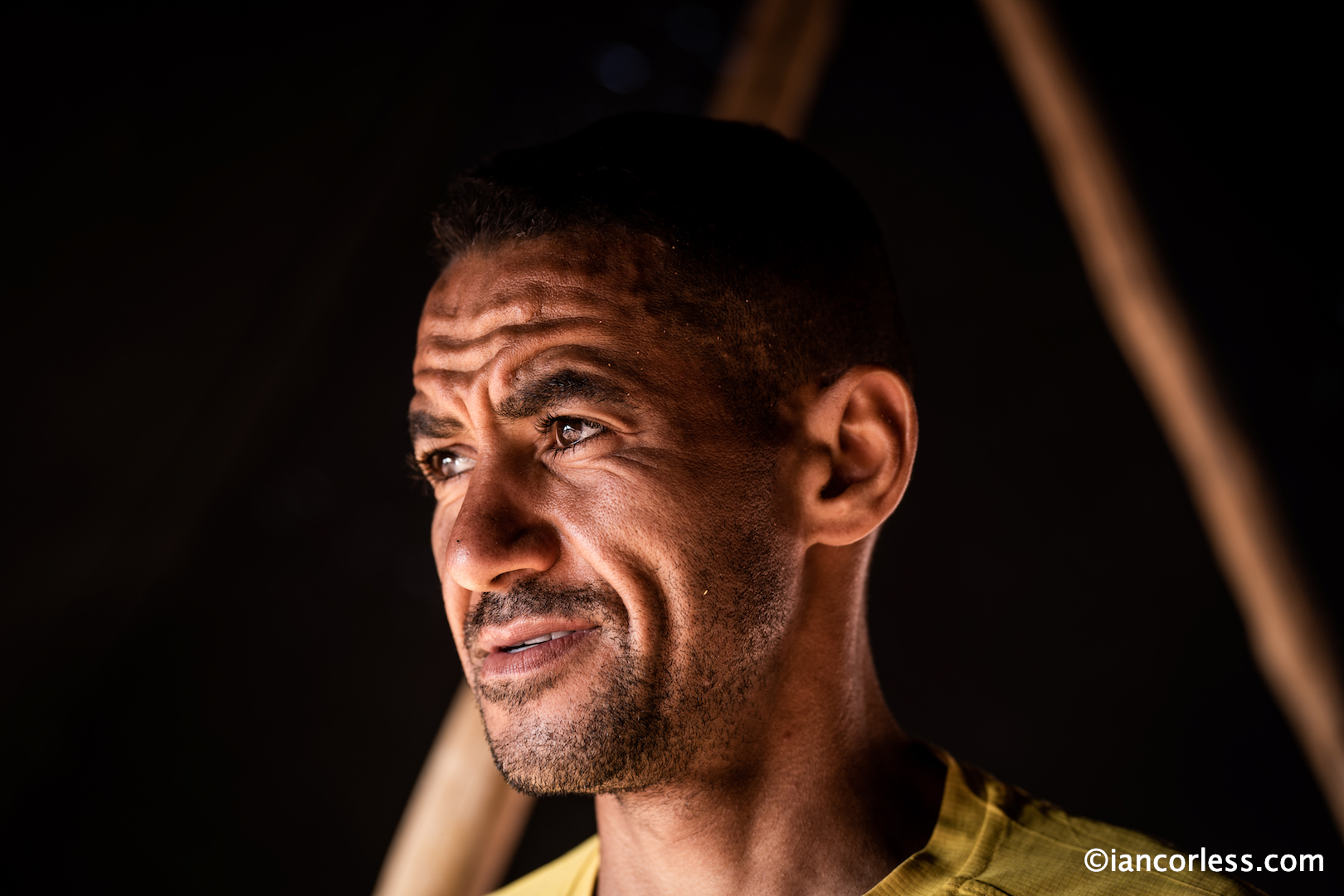
It was a day full of emotion, finally, Mohamed El Morabity was finally released from the pressures of working for an elder brother and ran a smart race. He consolidated his lead by marking his closest rival Aziz Yachou and then in the final km’s he opened a gap crossing the line in 3:18. A huge victory for the Moroccan.
Aziz placed 2nd on the stage and 2nd overall on GC with Visiili Korytkin rounding out the stage podium. Mathieu Blanchard placed 3rd overall on GC, a great step up from his 2021 5th place.
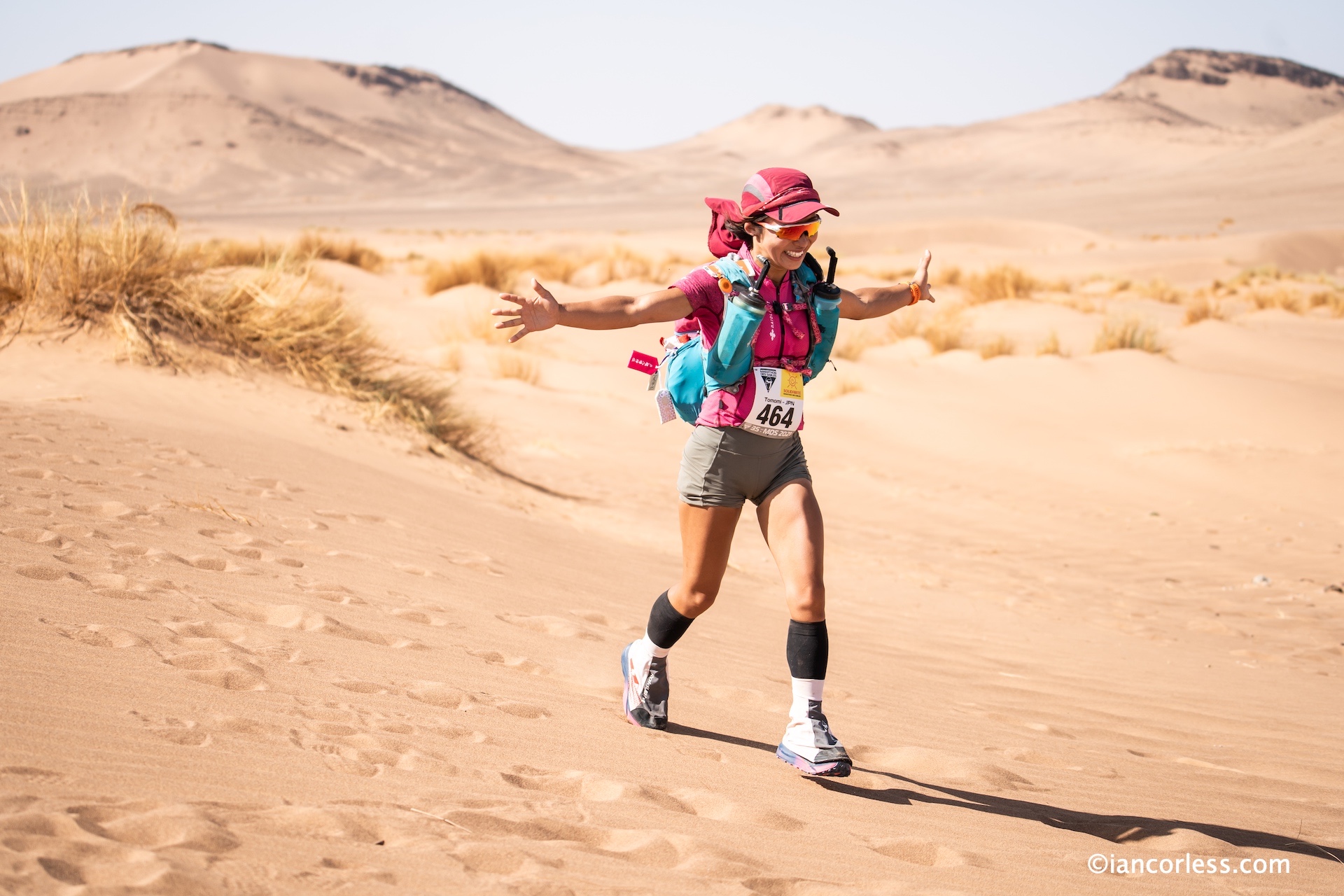
For the women, Maryline Nakache won the stage and the overall GC. Tomomi Bitoh who won the marathon stage the last time she raced MDS today placed 2nd and 3rd on GC. Aziza El Amrany placed 3rd on stage and 2nd oveall.
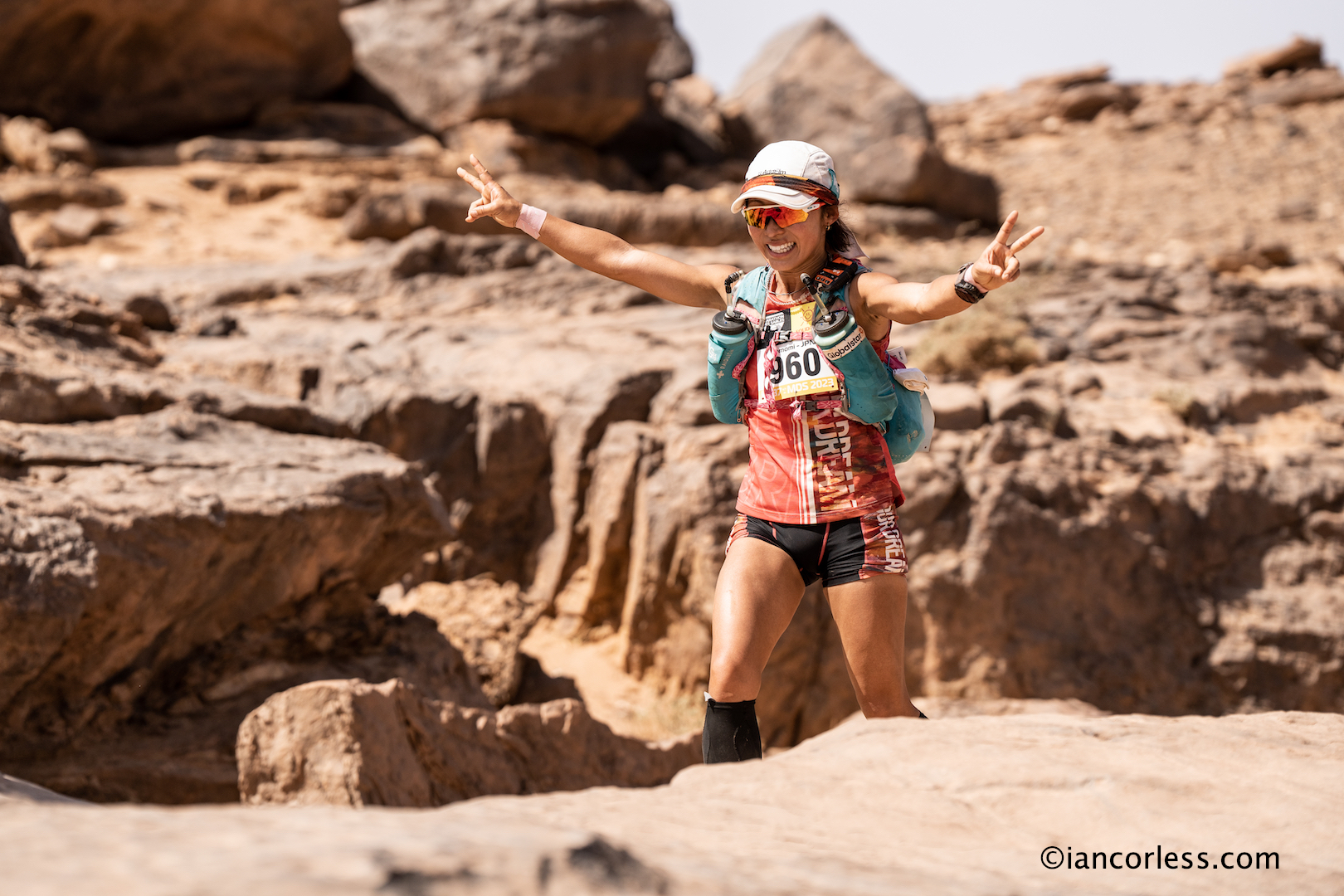
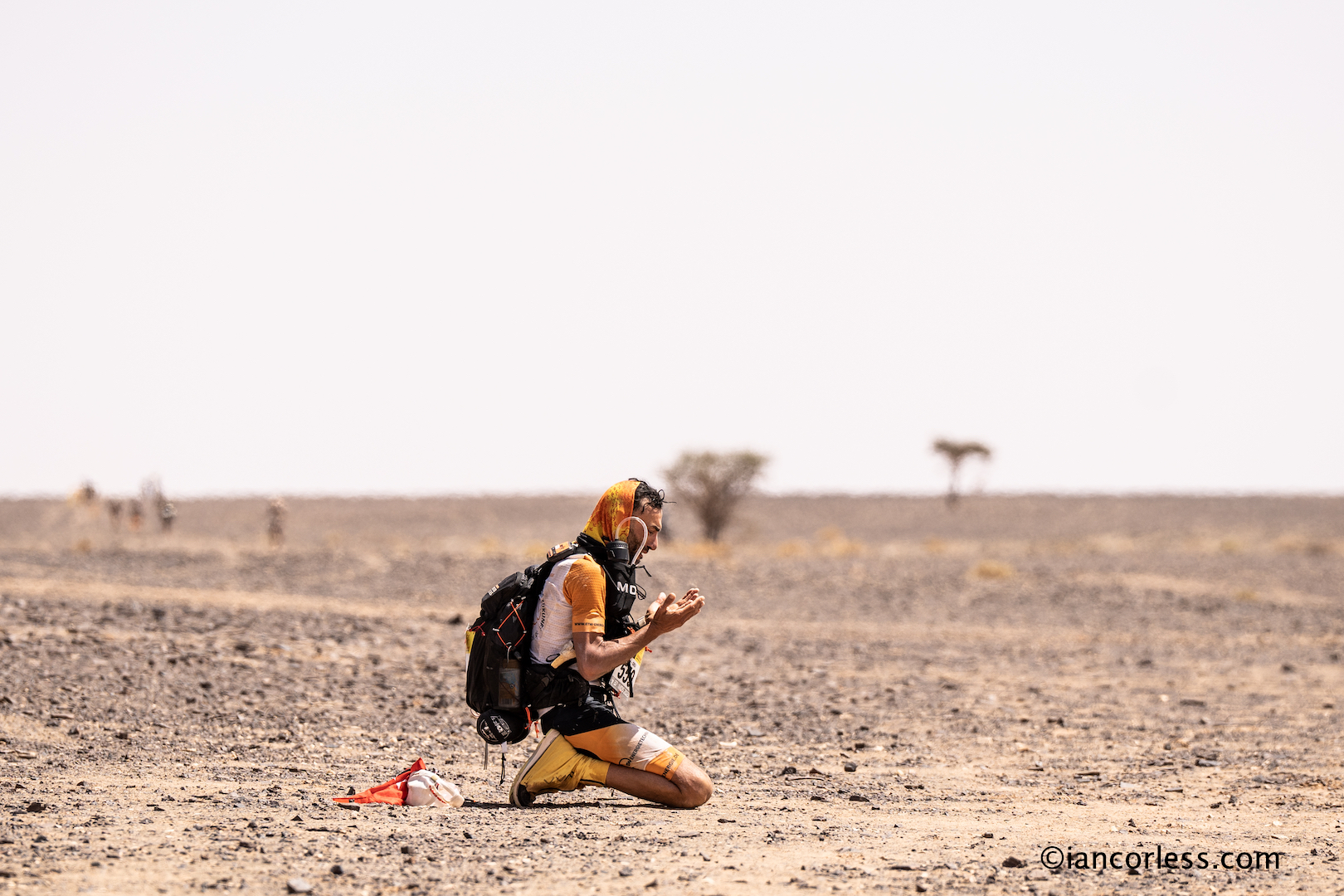
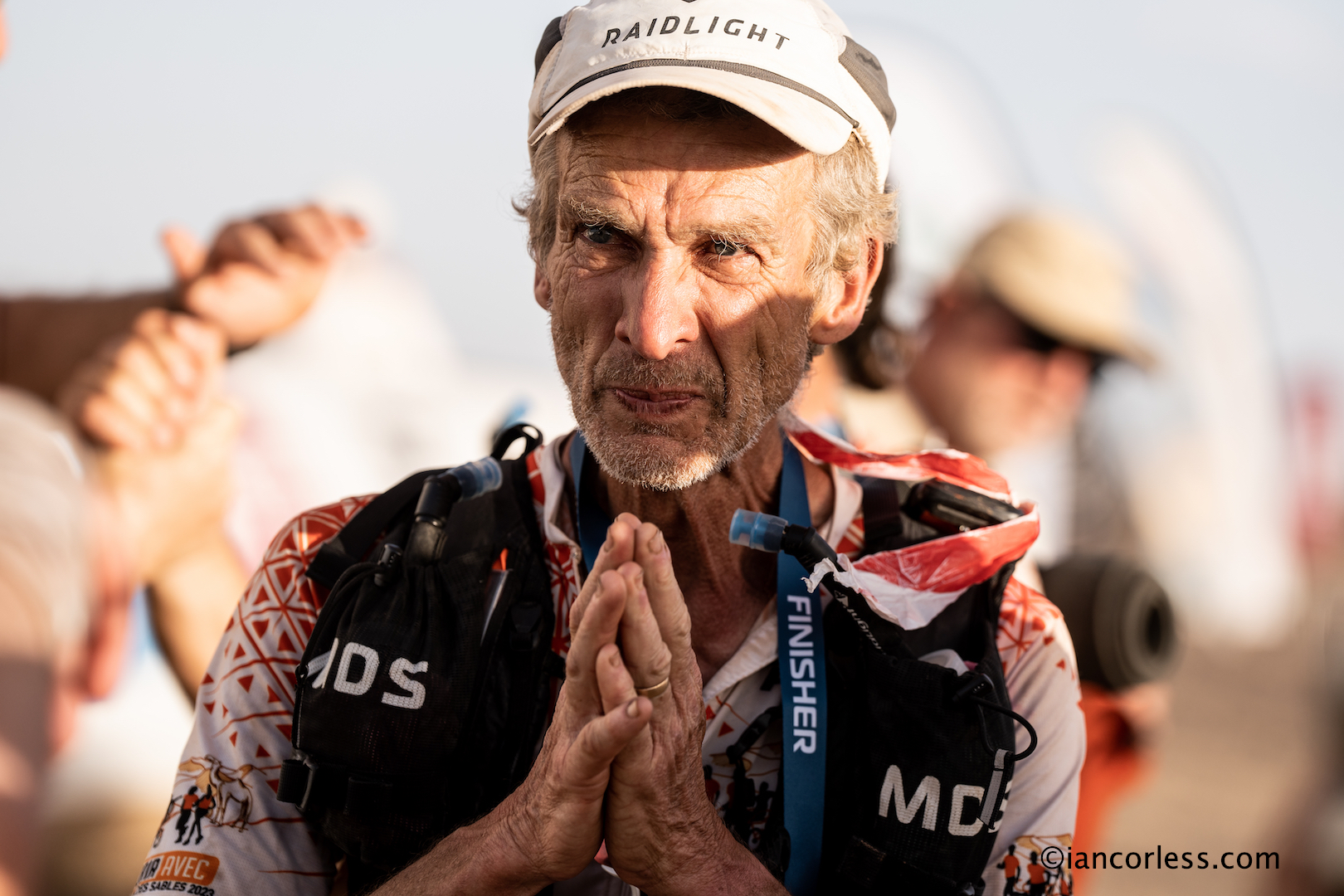
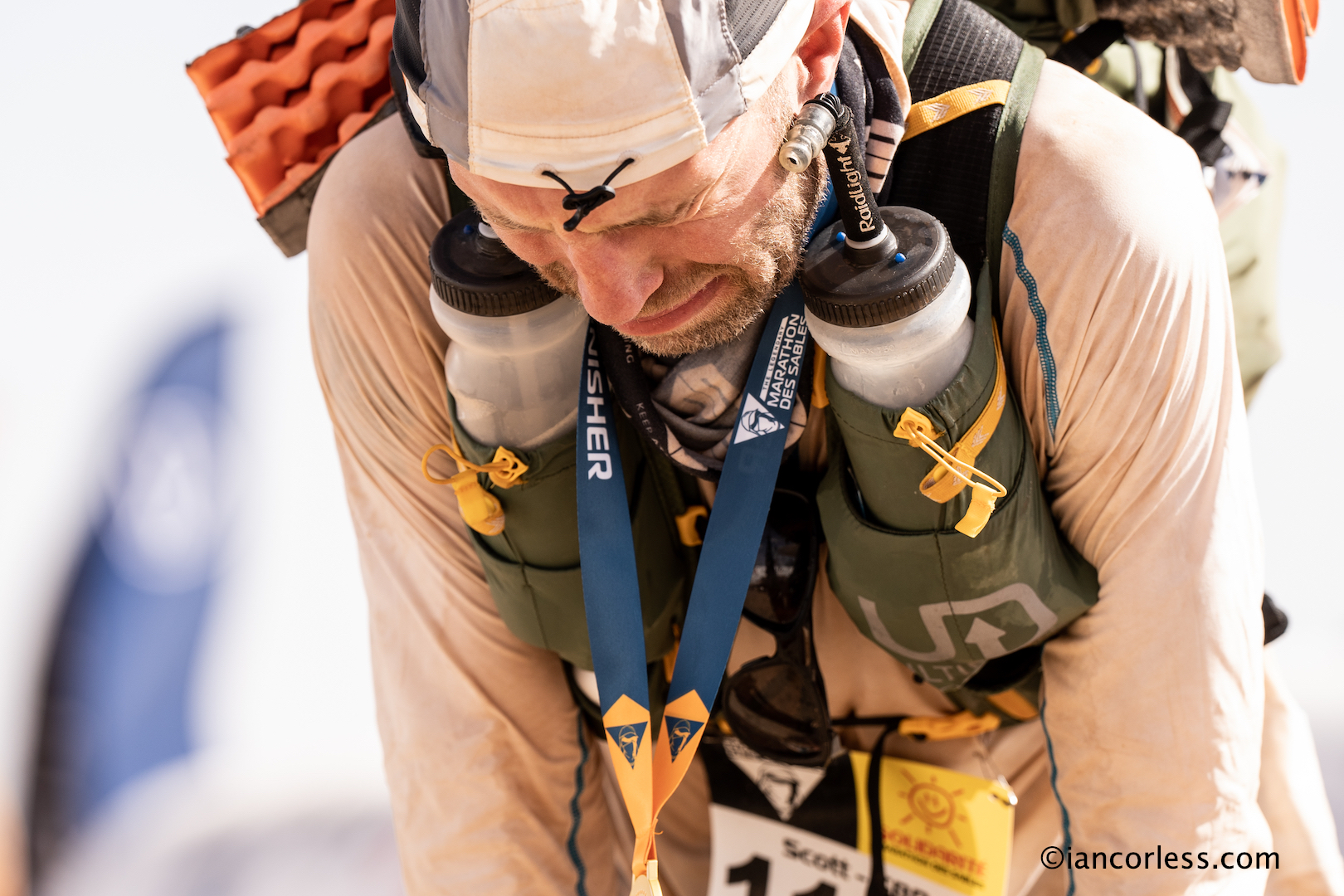
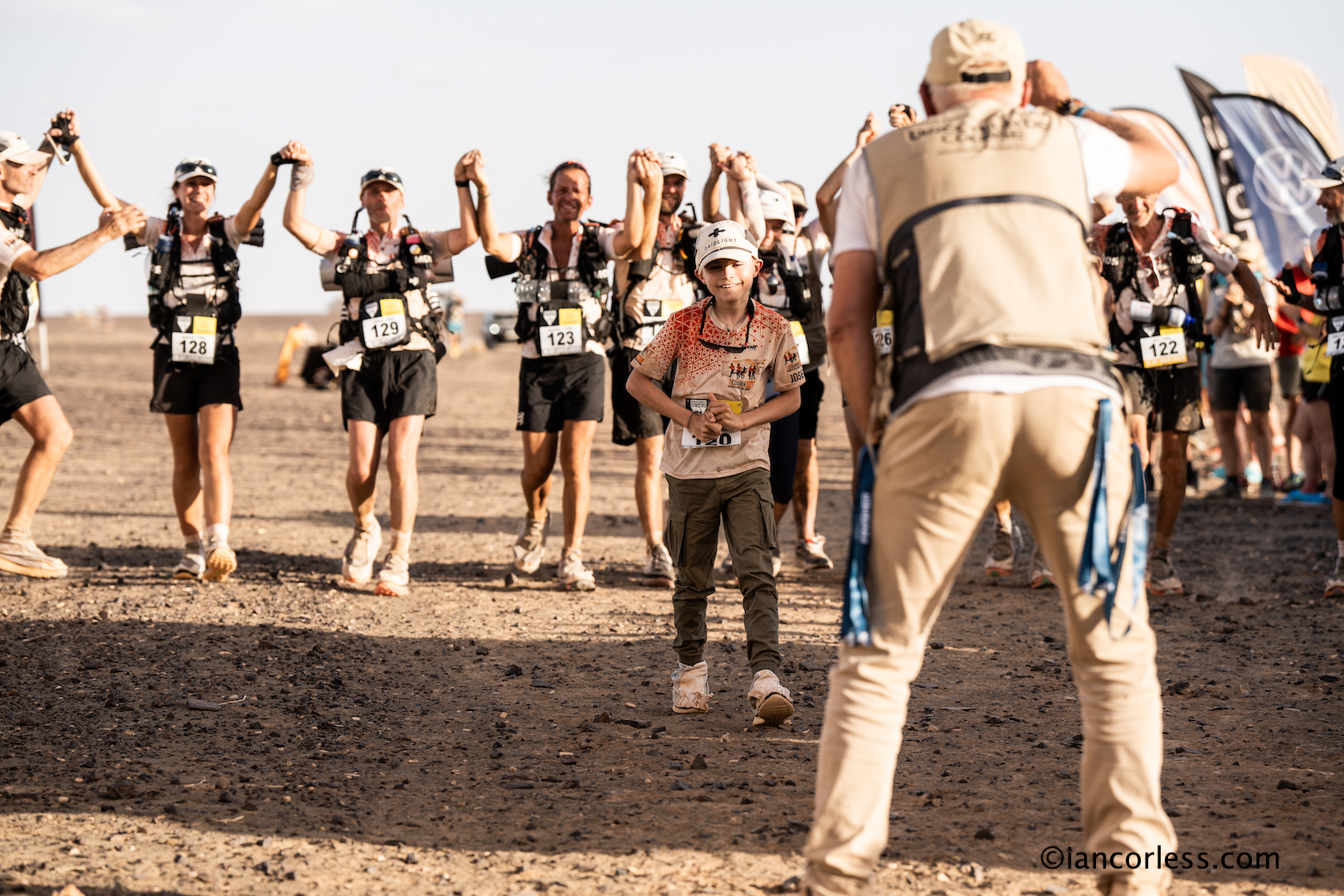
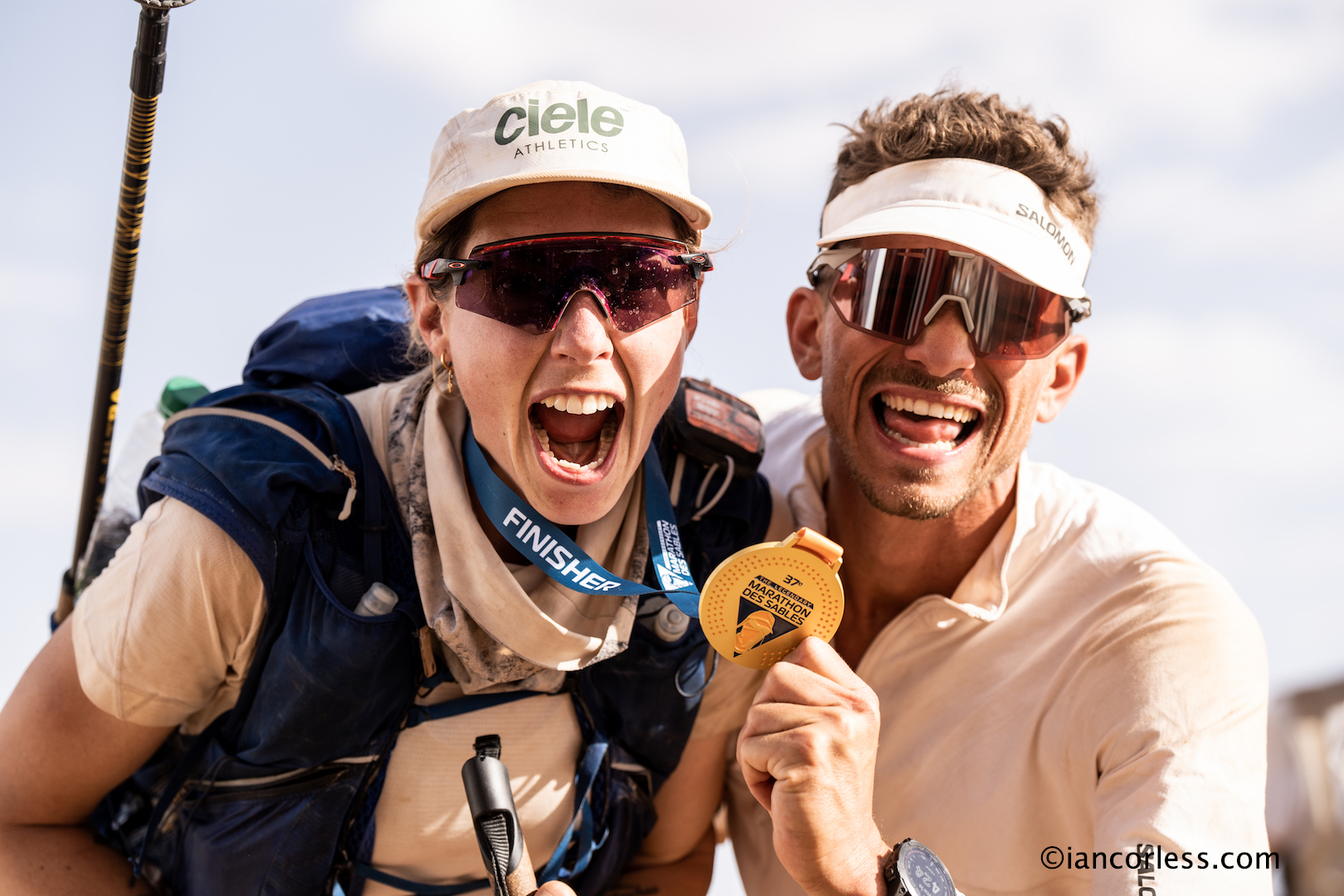
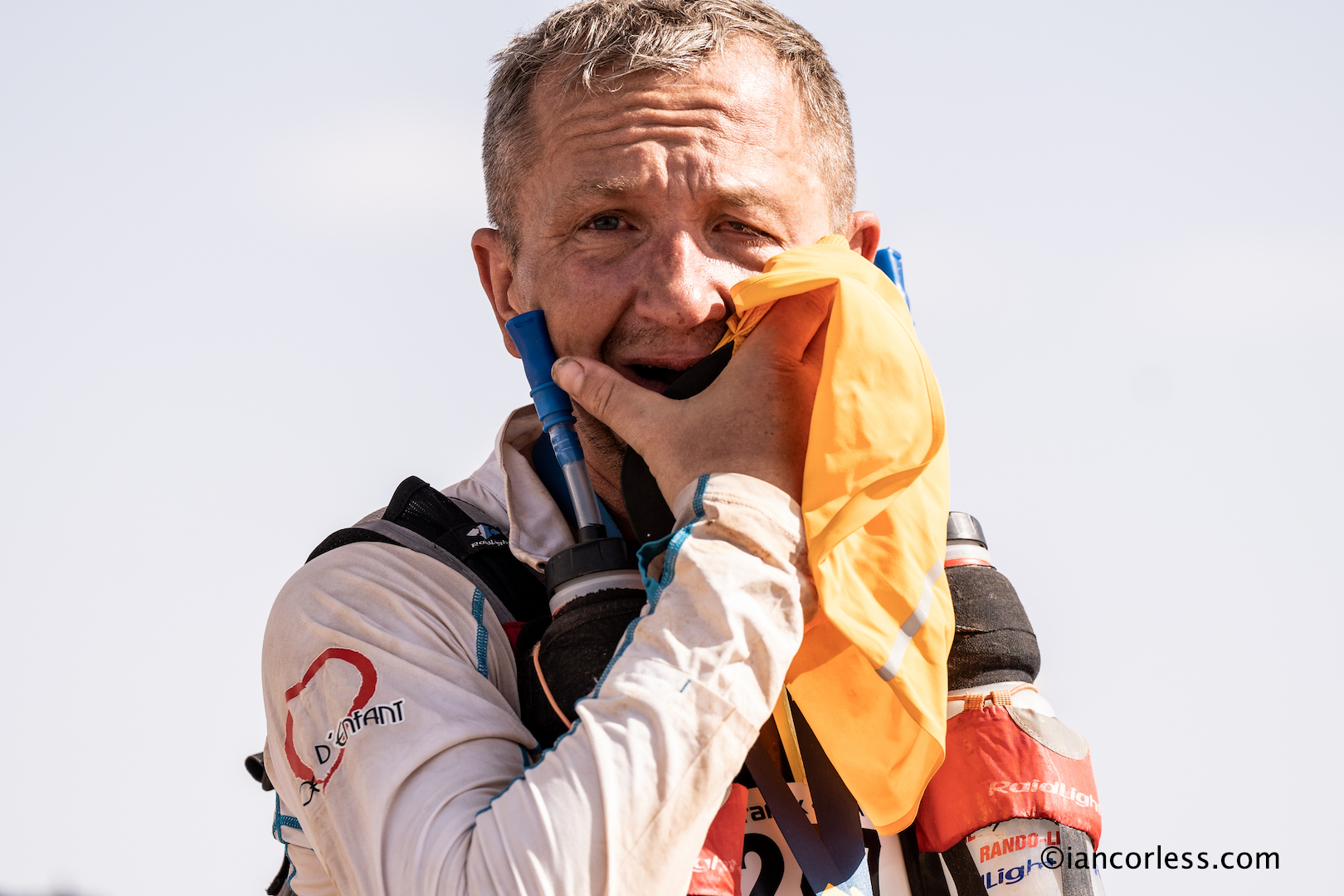
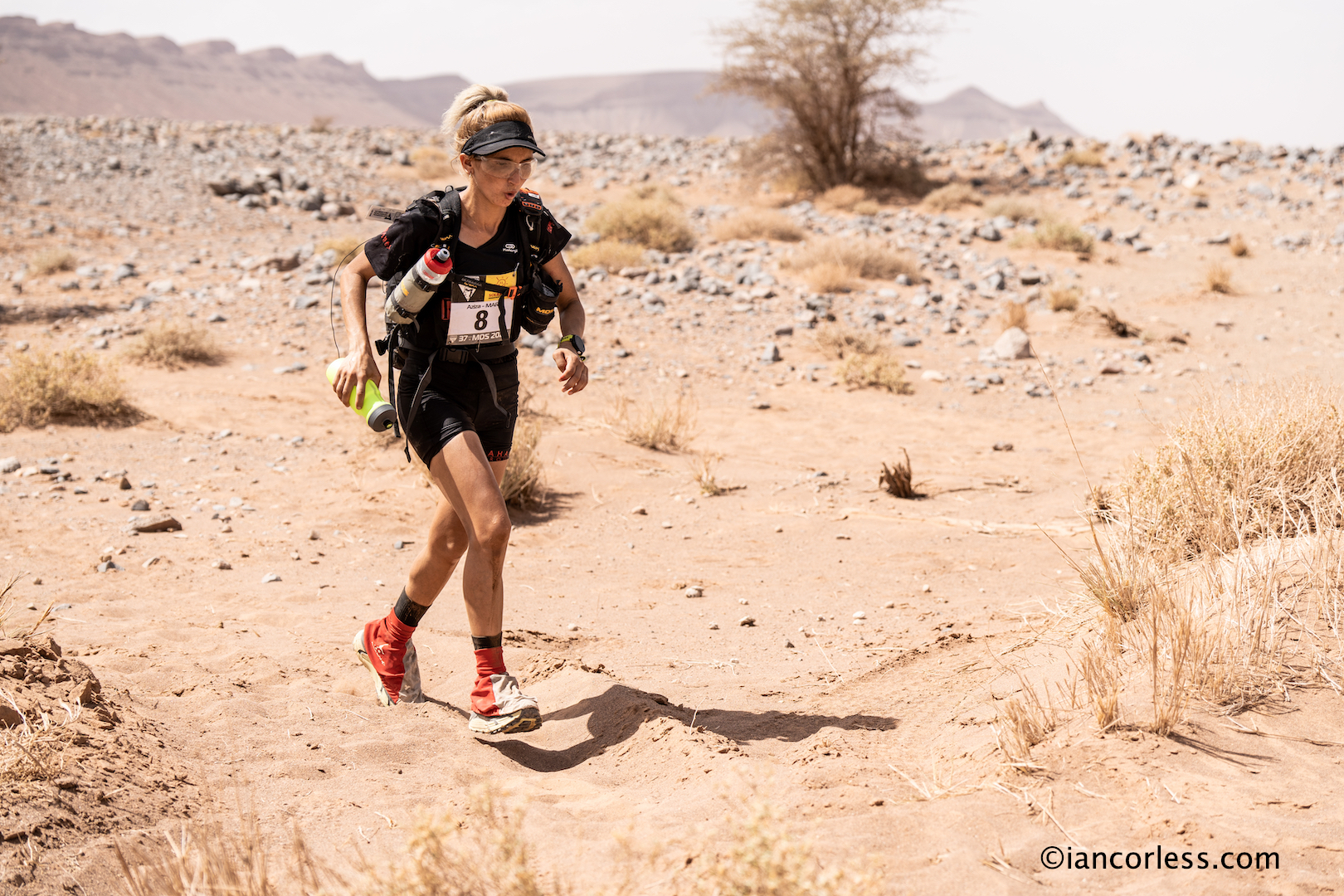
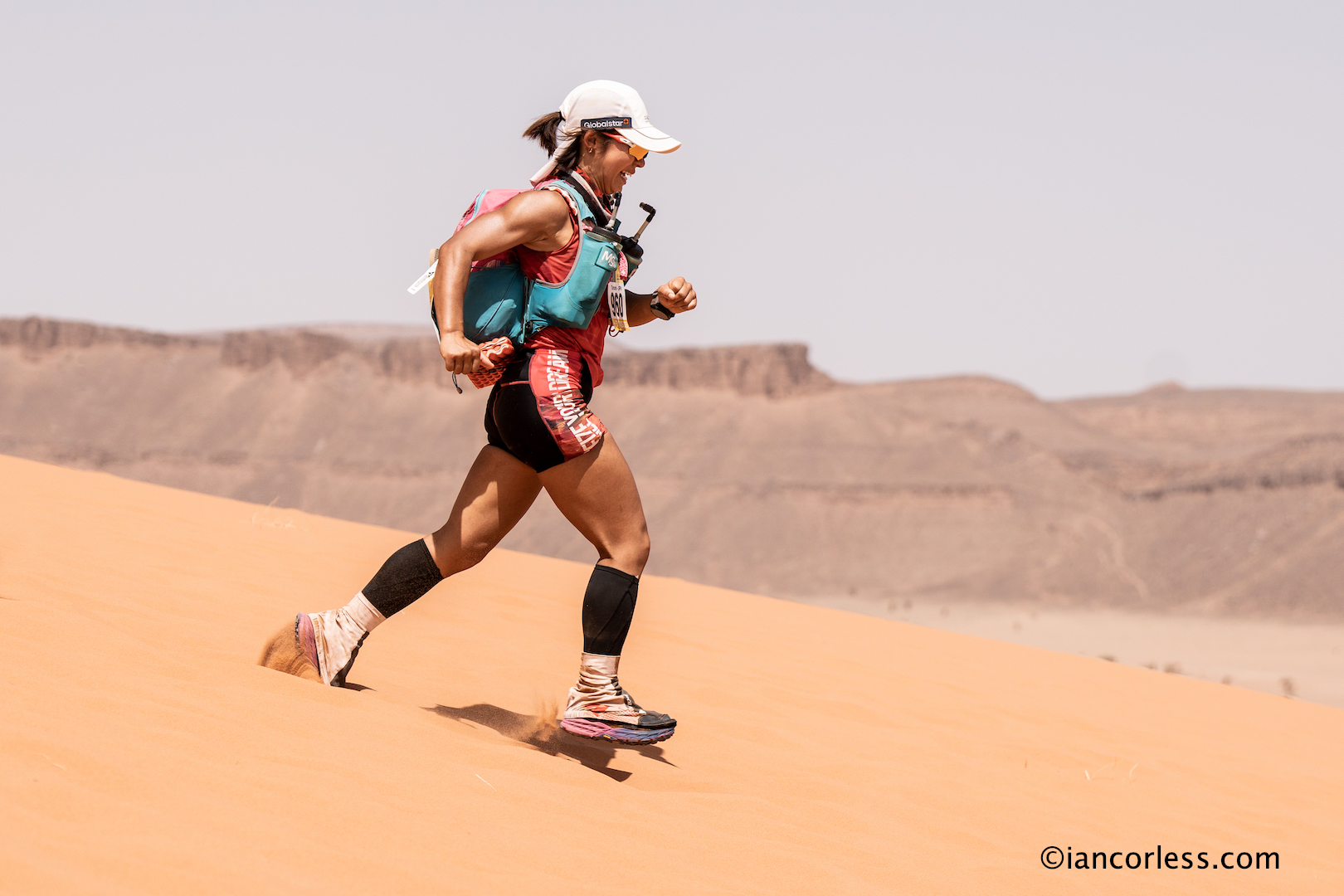
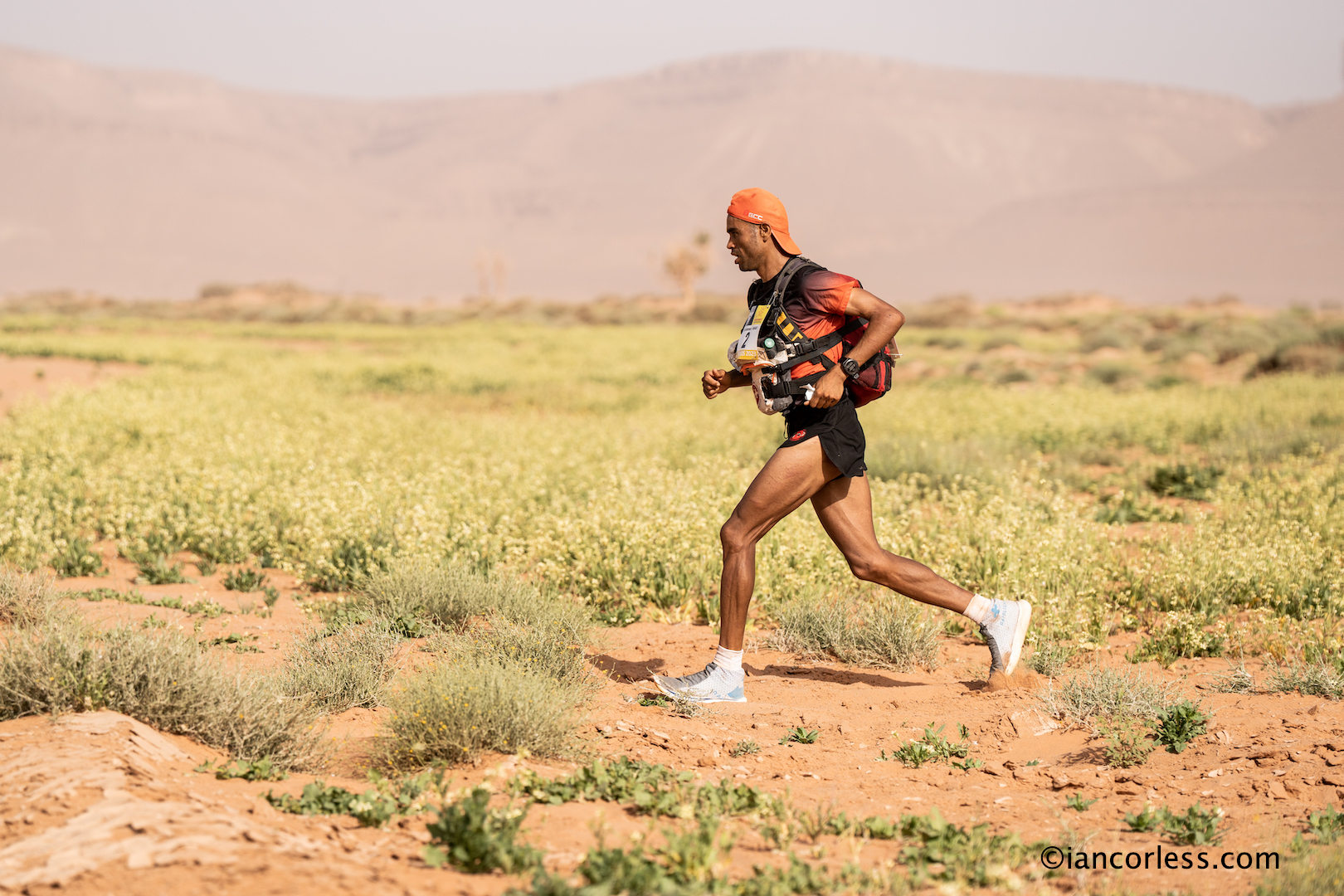
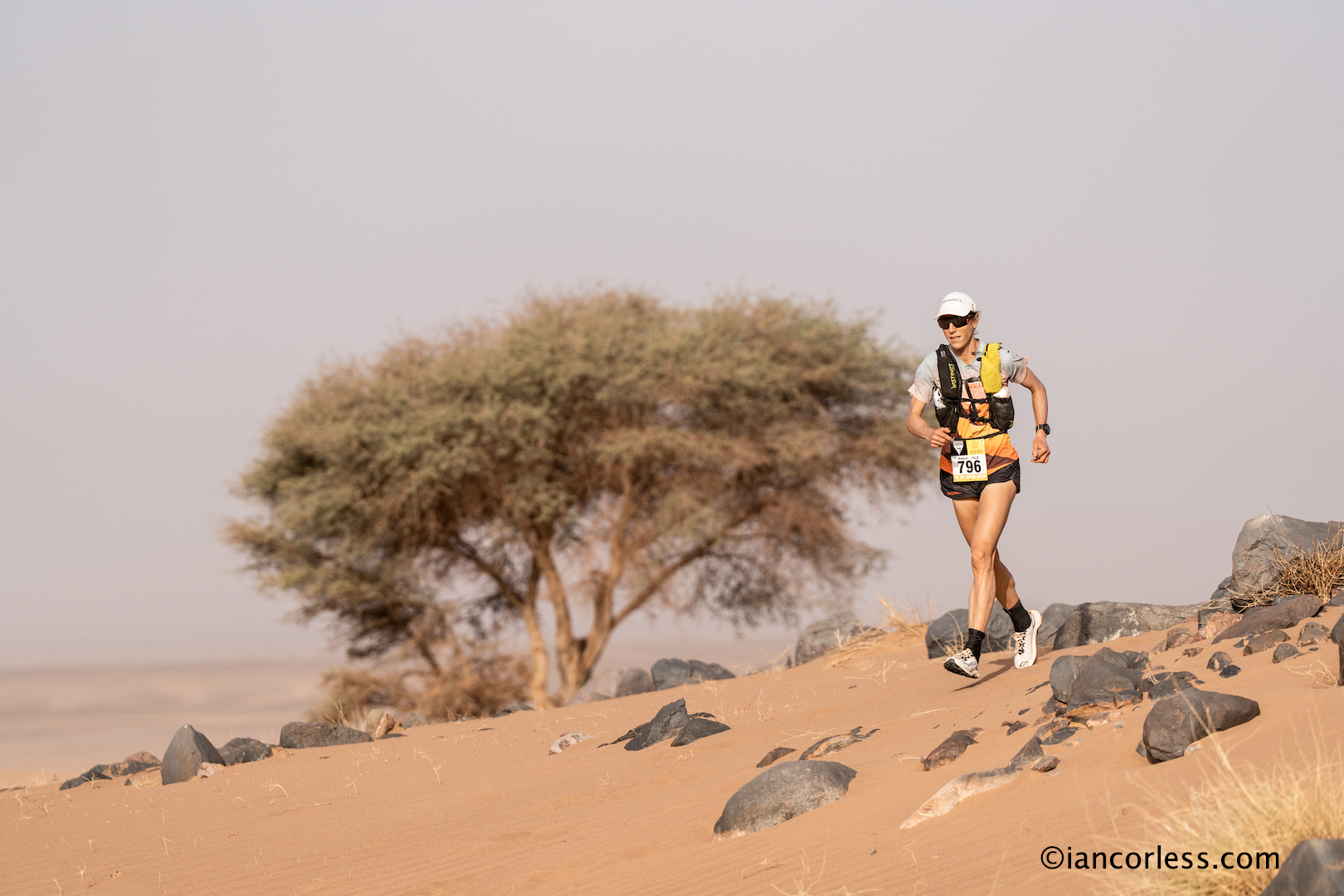
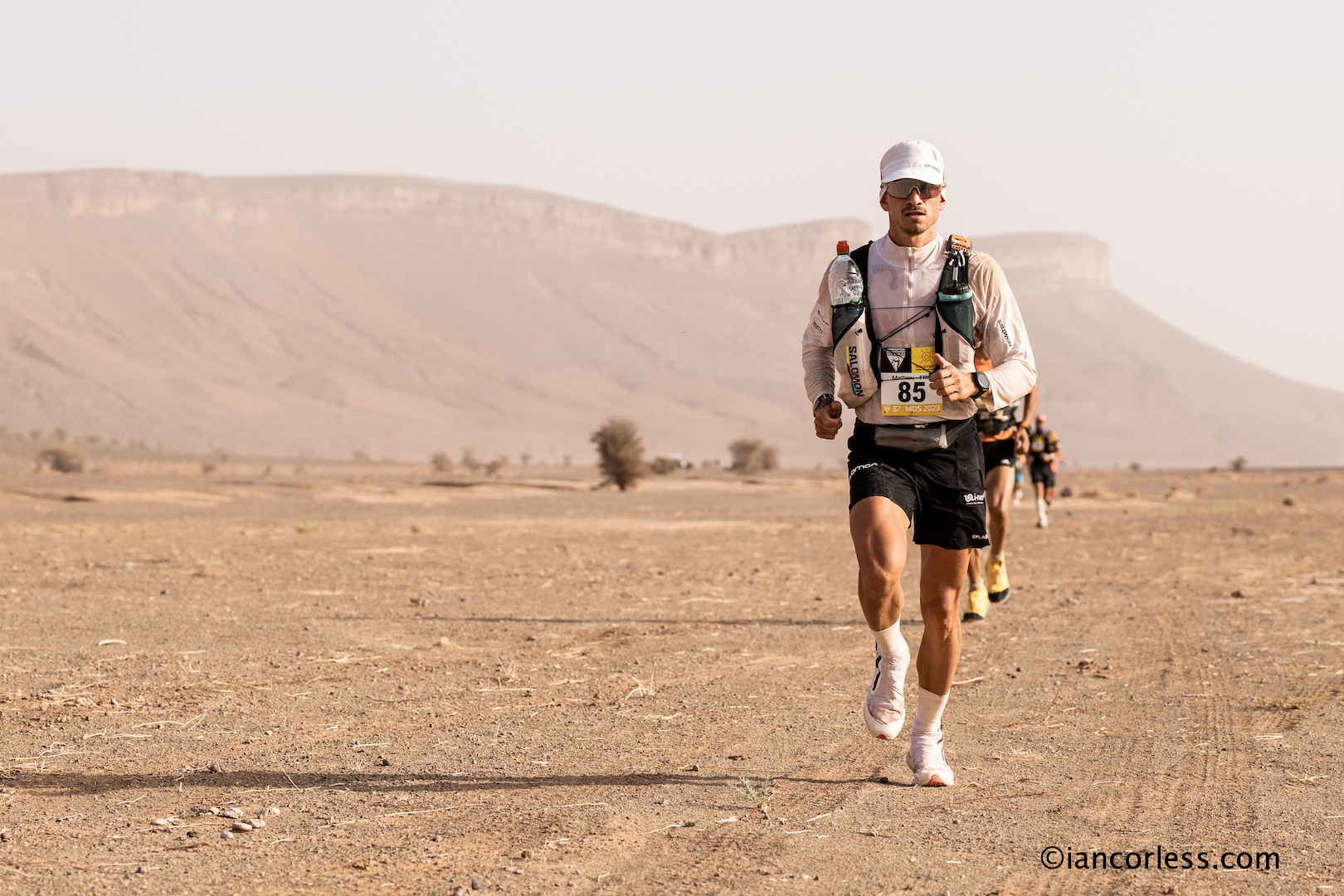
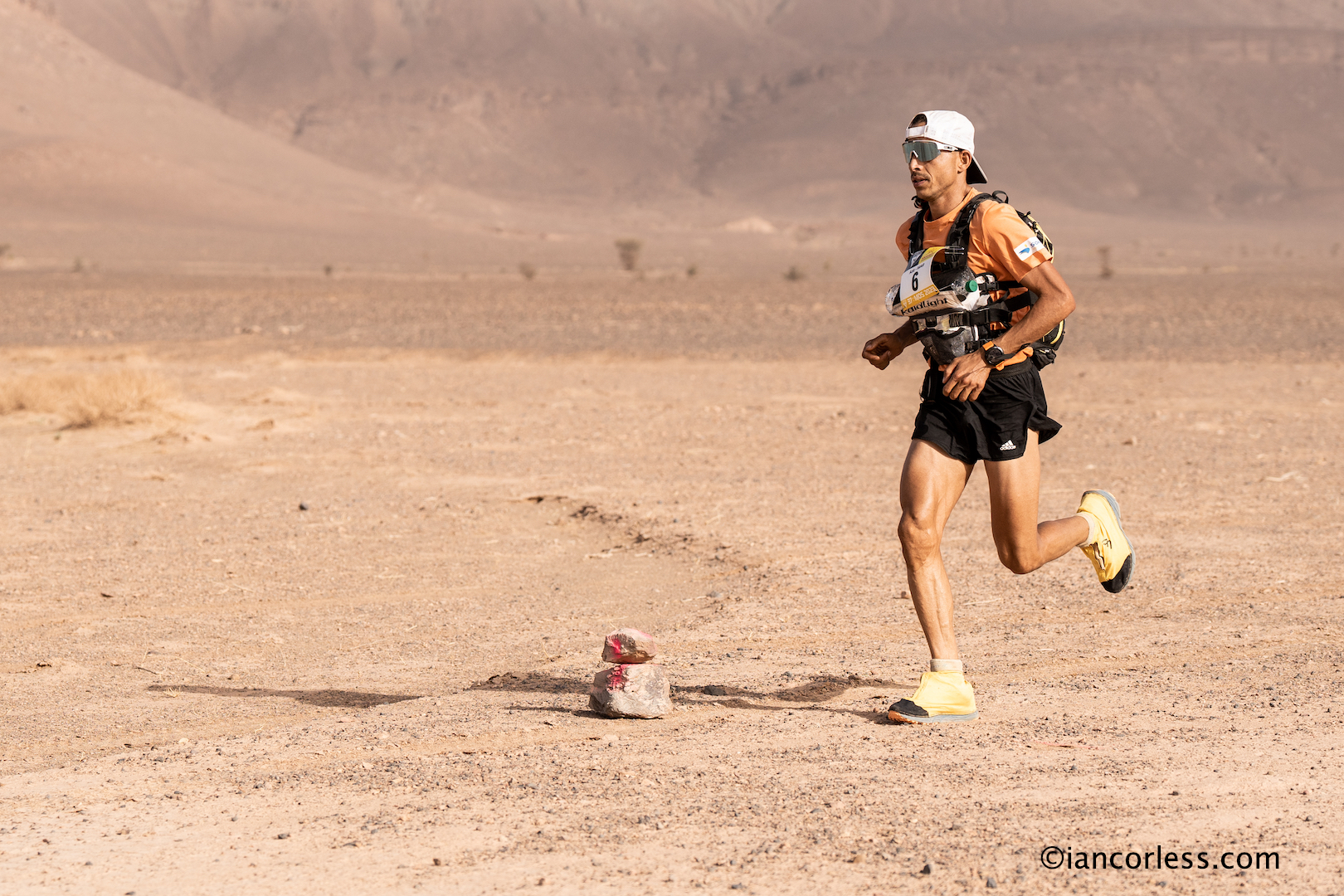
Of course, today, the finish is full of tears, joy and emotion. The 37th edition has been a tough one and it’s clear to see the elation as the line is crossed and finally, it’s possible to relax and let go. There have been many highs and lows for all. As always, there are countless stories that transcend running and in time, those stories will be told. But just look at the images below to get a glimpse of the inspiration, the journey, the transformative process that MDS brings.
The long day at Marathon des Sables. It is always feared and rightly so. Coming on day 4, bodies are already tired and depleted. This year, the challenge is 90km, the second longest long day in the races 37th year history.
With 36 hours allowed to complete the challenge, it was going to be a tough challenge for all. The race start was brought forward by 1-hour once again, 0700 instead of 0800. The top 50 staring at 1000.
Self management is key. With aid stations approximately 10km’s apart, the race can be broken down, Cp by Cp and for most, the welcome of sunset and cooler temperatures makes travelling by foot easier.
The front of the race was highly anticipated with Rachid, Mohamed and Aziz close together on the GC. But really, all eyes were on Rachid looking for a 10th victory.
The day started with Rachid pushing the pace ahead of the other contenders but no real gaps opened up, for much of the day, the trio were close together and it stayed this way all the way to the end with Mohamed finishing 1st (8:14:39), Aziz 2nd (8:14:45) and Rachid 3rd (8:14:58), the GC staying with Mohamed as leader. It’s all to fight for come the marathon stage. Mathieu Blanchard once again ran consistency securing 4th place on GC.
Update: 1400hrs 27/04
Rachid El Morabity and Aziz El Akad both failed a mandatory kit check ahead of the stage 4 start. The reason, ‘outside assistance.’ This has resulted in a 3-hour time penalty given against Rachid and Aziz and the Morocan team will be penalised.
Ragna Debats had dominated the first three stages and barring disaster, was almost guaranteed victory. But, there are no guarantees in the Sahara. The terrain brutal, the heat intense and the challenge extreme.
Ragna struggled early on, looking uncomfortable and lacking power. She started to fade and eventually she started to fall back with Maryline Nakache and Aziza El Amrany pulling away. The gaps opened and Maryline became the provisional leader on the trail.
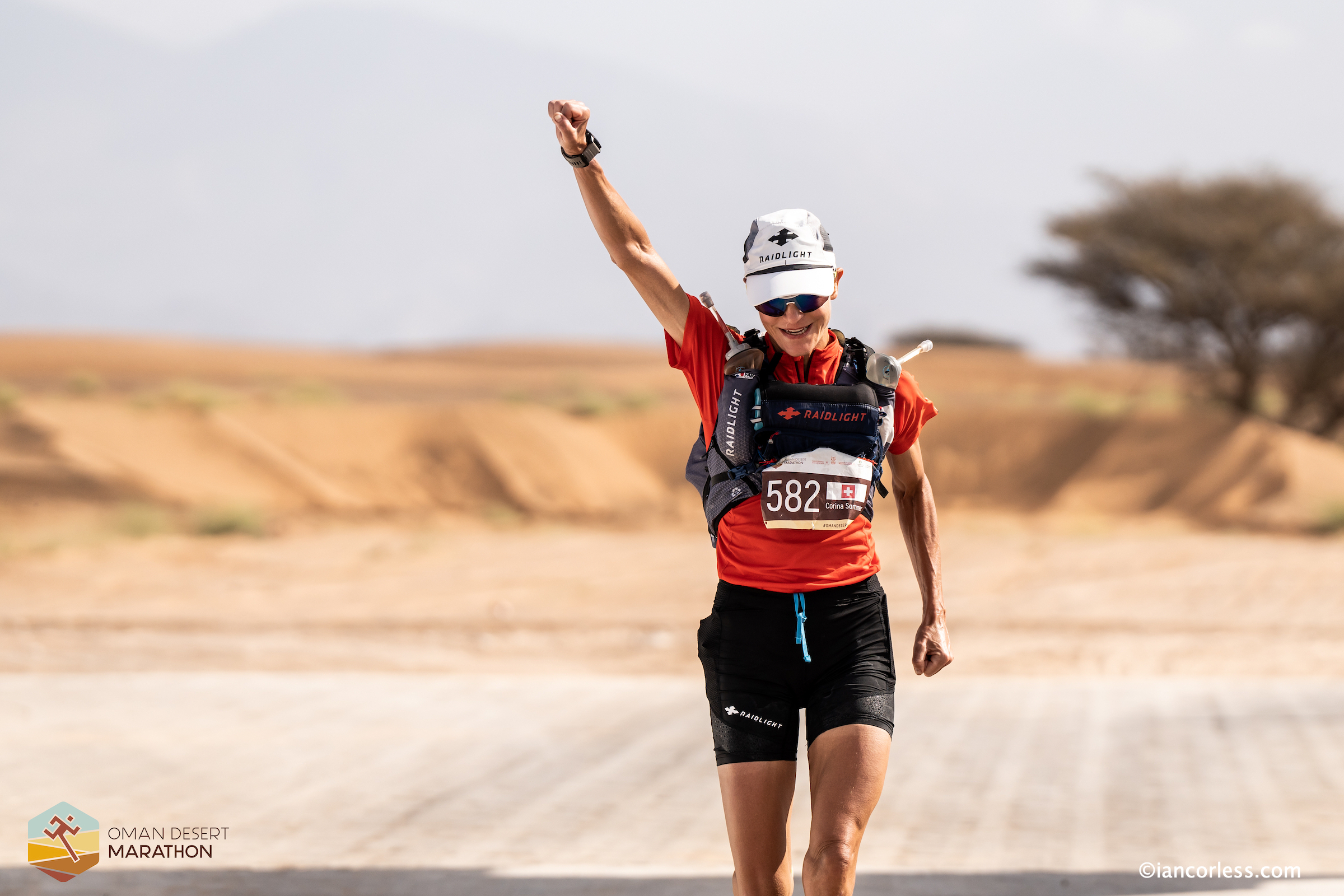
Aziza forged ahead to take a well earned stage victory in 11:44:39. Maryline is now the women’s leader of the 37th Marathon des Sables finishing stage 4 in 11:50:04. Tomomi Bitoh, Corina Sommer and Catherine (Katy) Young all moved up in the rankings. The marathon stage will be interesting!
For many, today, Thursday is a rest day, recovering from the long day. But remember, runner’s have till 1700 hours to complete the stage, another day of intense heat to fight against.
The MDS is called ‘The Toughest Race in the World,’ in 2023 it is proving to be true. The combination of distance, heat, challenging terrain, self-sufficiency and rationed water make this an ultimate challenge.
Day 2 was tough. It was a challenging route, incredibly beautiful but the added technicality, vertical gain and intense heat took its toll with many DNF’s.
The organisation made a decision to bring the stage 3 start forward by 1-hour, 0700 instead of 0800. It maybe caused some logistical, admin and timing issues for all but it was a good call.
At 34km, stage 3 had less challenges than stage 2, but still a tough day.
With flat km’s to Cp1, the pace was high and Mathieu Blanchard was a main protagonist. He often pushed the pace, closely followed by Aziz, Mohammed and Rachid.
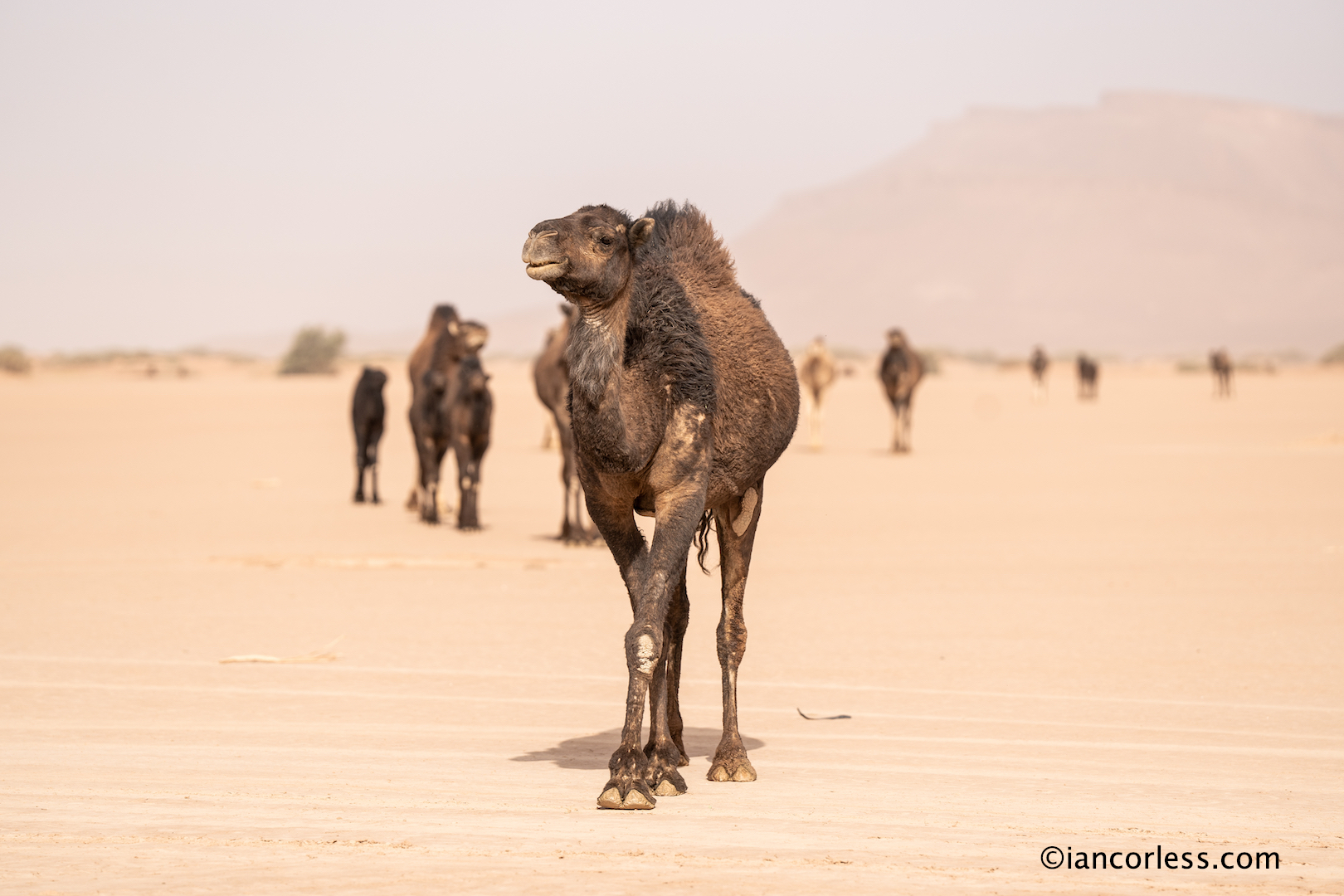
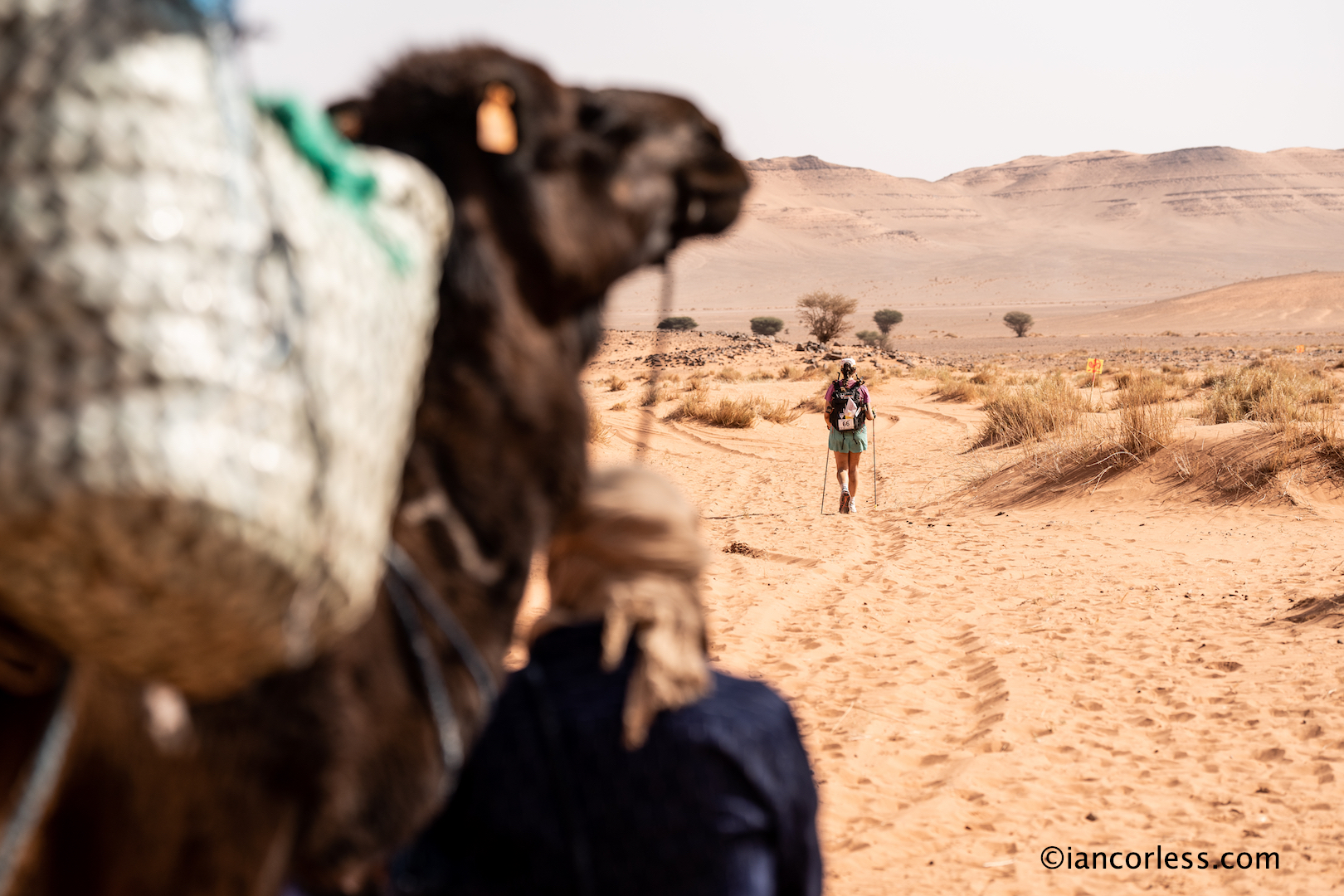
After Cp2 a resplendent area of green vegetation brought a different life to the Sahara. Camels, birds and reptiles, rare to see so much wildlife in one area.
As I expected, Mohammed attacked and not only took the stage but the overall lead. It’s what I expected. The ‘brothers’ have a plan for the long day, but, at 90km’s, anything can happen.
For the women, it was business as usual with Rgna leading. But, after Cp1 she went through a bad patch and Aziza El Amrany took over the front of the race with Ragna complaining of, ‘…feeling fine and lacking power.’
Maryline Nakache once again ran a strong and consistent stage to not only catch Aziza, pass her and put time into her, the duo finishing in 3:4104 and 3:42:36.
Tomorrow is the big day! It’s beautiful route with some MDS classics in the terrain. At 90km, it will be extremely tough for all. The race will start 1-hour earlier than planned, 0700. The top-50 will start at 1000.
The 2023 MARATHON DES SABLES draws near and as usual, here is a preview of the coming edition. We will look at the top contenders for the male and female podiums, provide an overview of MDS history and look at some crazy statistics.
Since 1986, well over 22,000 participants have raced at the Marathon des Sables and we have record (or close to record) for 2023, with1200+/- toeing the line. As per usual, the race is multi-national with over 50 represented. The French and British providing the largest contingent.
THE TOP MEN AND WOMEN
Rachid El Morabity returns looking for his 10th victory, all eyes will be on him, but he is in for a fight! 2019 female champion, Ragna Debats returns and is without doubt the hot favourite for the top of the women’s podium.
THE WOMEN RACE
Ragna Debats
Ragna Debats dominated the race in 2019 and in recent years has become one of the top trail, ultra and skyrunner’s in the world. When in form, she is incredibly difficult to beat. In 2022 she had an incredible season with four top victories, Transgrancanaria 129km, Istria by UTMB, Montreux Trail Festival and the 100m Nice Côte d’Azur by UTMB. Ragna has had a relatively quiet start to 2023 and recently she has changed her coach of 13-years. She will be meticulously prepared for MDS 2023.
Gemma Game
Gemma Game from the UK has been on the podium of MDS twice, 2018 and 2019, on both occasions placing 3. Gemma most definitely can win MDS but, as she will tell you, she runs for fun and MDS is an escape from a very busy and hectic life with a high-powered job and family. Is she wants to, she will be on the podium again in 2023.
Manuela Socco from Belgium is not a runner I am very aware of; however, two results stand out, victory at Cappadocia Medium Trail in 2019 and Tarawera 100km in 2020. She has also represented Belgium at the Olympic Games in the marathon distance. With a 35min 10km, a 1:16 half marathon and a 2:37 marathon, she has all the running fire power to create a stir in the Sahara.
Maryline Nakache from France has a string of top results, she often wins! However, stand-out markers come from Templiers (3rd) 90km du Mont-Blanc (3rd), CCC (5th) Transgrancanaira Advanced (1st), Tenerife Blue Trail (1st), UTMB (6th) and in 2022 alone she was never out of the top-5.
Tomomi Bitoh
Tomomi Bitoh from Japan was 3 in the 2021 MDS and has recently participated in The Coastal Challenge in Costa Rica. She is an incredible personality, a fierce competitor and although the podium is a possibility in 2023, I feel that she will just be outside the top ranking.
Elise DELANNOY (France) was 18th in the 2016 MDS in 38-hours. This is a long way off the pace required to podium in 2023… But a great deal has happened since then, notably a 7th place at UTMB in 2019, so, Elise cannot be ruled out of shaking up the front of the race.
Corina Sommer from Zurich recently won the Oman Desert Marathon against Aziz Raji (past MDS champ) and Aziza El Amrany who had led the race only to have Corina run two incredibly strong days and take the victory. New to trail, she placed 18th at Templiers and 3rd at Istria by UTMB for the 68km. She will need a great week to make the podium, but it’s a distinct possibility.
Jodie Moss from the UK was 8th at MDS in 2019 and has been preparing meticulously for the 2023 edition. However, recent injury issues placed the race in question, but it looks like she will be in the Sahara, hopefully in great shape.
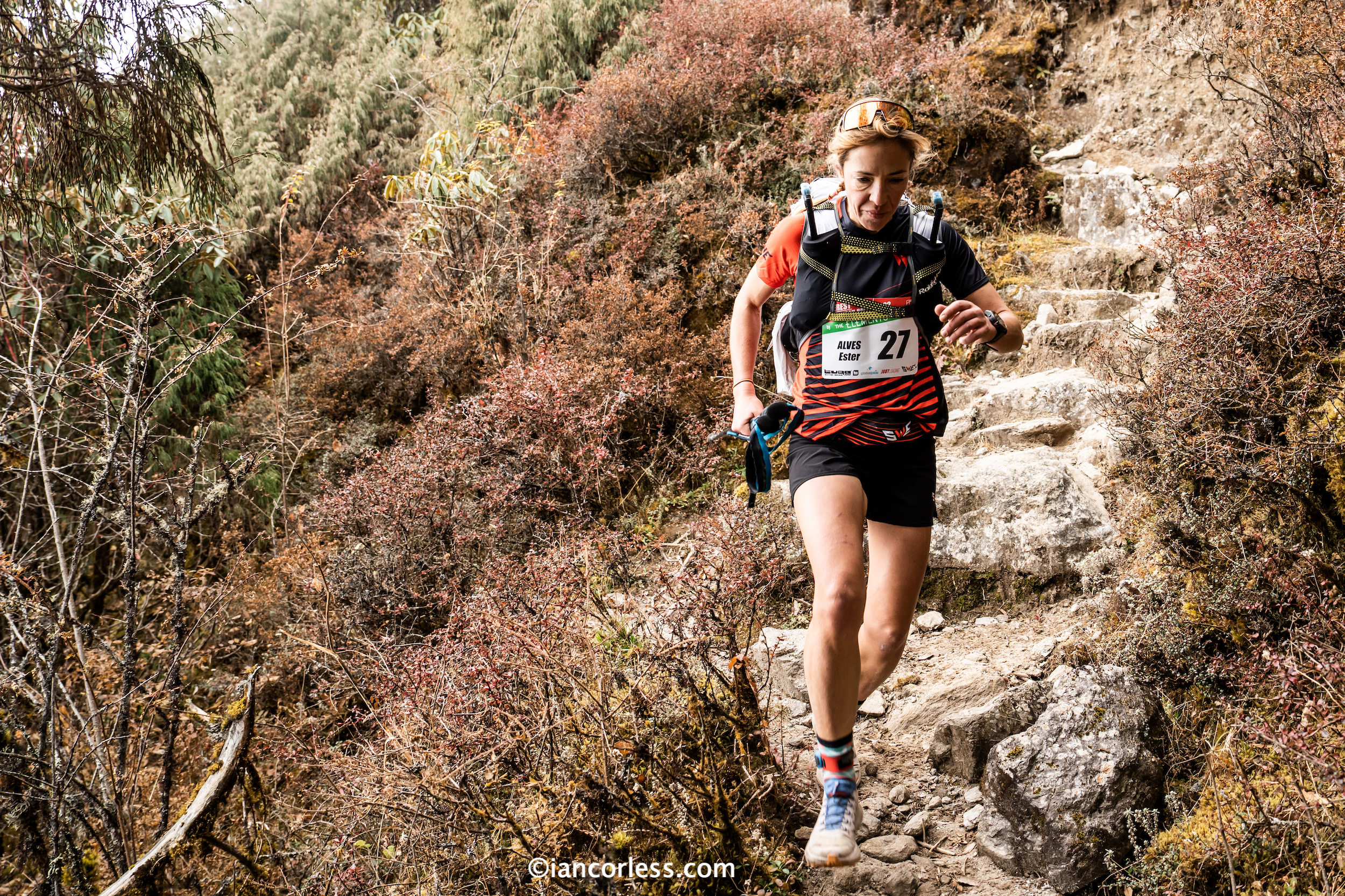
Ester Alves won The Coastal Challenge in 2016 and placed 3rd in 2017. She also raced MDS in 2017 but the race did not go to plan… In recent years, she has had time away from the sport, but last year, Ester raced Everest Trail Race which will have no doubt provided some great momentum for the Sahara.
Maria Semerjian has results going back to 2009 and without doubt, she enjoys the tough mountain courses, UTMB, Raid de la Reunion, Grand Raid Pyrenees, UTMF, and more… The distance won’t be a problem, however, the speed to make the top-5 may well be the problem.
Brunhilde Girardet recently won Trail de Cité de Pierres as a warmup for MDS. It’s her first edition, so, let’s see…
Wild card – Katie Young from the UK.
Laurence Klein returns, she has won MDS three times, with no disrespect to the Queen of the desert, there is no chance of victory in 2023, but she will no doubt bring colour to the race.
Currently, Aziz Raji and Aziza El Amrany are NOT on the start list, but I hope they do make it to the 2023 edition. It’s important that Morocco has female representation and of course, both of them have great potential for the top 5. Raji has won the race and El Amrany was 3rd in 2022.
THE MEN RACE
The men’s race is extremely notable in 2023 as Rachid El Morabity will look for a 10th victory. This will without doubt add an extra dynamic to the race, particularly after the superb tactics which played out in the 2022 edition.
Rachid El Morabity
Rachid El Morabity is the boss of the Sahara and the hot favourite. BUT, I believe this year will be his toughest challenge. There are multiple reasons for this… Rachid has expectation on him, this is not really an issue, he can handle that. He has raced a great deal in the past 12-months, he may be tired? The Moroccan team is probably at its weakest, especially when compared to the past ten editions, so, the support network will be less. The competition, namely Mathieu Blanchard and Aziz Yachou are a serious threat. Will Rachid win? It is very hard to bet against him, but 2023 has the potential to be the upset year.
Mohamed El Morabity
Mohamed El Morabity is the eternal 2nd at MDS and his possibilities of victory in 2023 are zero if Rachid is in good form. The only opportunity for Mohamed is if Rachid falters and he gets the green light from his elder brother to attack. In Oman Desert Marathon earlier in the year, Mohamed took victory ahead of Rachid, don’t be fooled in to thinking Mohamed was stronger, he was gifted the win as credit for April and the 2023 MDS. Mohamed can win the race, but just as we saw in 2022, he will be the super domestique for Rachid.
Aziz Yachou
Aziz Yachou is the fly in the Moroccan ointment and 1-year on, has the potential to create fireworks and upset Rachid’s dream. He was 4th in 2021 and 3rd in 2022. Last year he was worked over by the tactics of Rachid and Mohamed, he will be prepared for that this year. Little is known about his training in the early part of 2023.
Mathieu Blanchard
Mathieu Blanchard raced MDS in 2021 and finished 5th – he was hit by the bug that swept through camp just in time for the long day. One thing is for sure, after placing 2nd at UTMB in 2022, we are looking at a different Mathieu. He raced The Coastal Challenge in February and placed 2nd, he recently summited Kilimanjaro and most recently ran a 2:22 marathon in Paris. Mathieu can win MDS and the French have put a team together to potentially make that happen. Beating the Moroccans on home soil (sand) is tough, but THIS may be the year.
David KILGORE from the USA has been top-10 at Leadville 100, and recently 7th at Tarawera 50km. On paper, he is not an MDS podium contender, but he will be in the mix for the top-5.
Erik Clavery adds more fire power to the French line-up. He was 5th at MDS in 2016 and a fierce competitor. He has raced UTMB, WSER, Eiger Ultra and even 24H championships, so, he brings something special to the MDS.
Vasily Kortytkin (Russia) comes to MDS with a history in 6H and 24H races, he has PB’s of 86.493 and 260.570 respectively. He has won some trail races in Russia in 2021 and 2022, how he performs in the Sahara is a big question.
Pierre Meslet (France) placed 9th at MDS in 2021 and returns in 2023 not only to perform to the best of his ability (top-10) but to also help the French maybe win the race and also get the team prize.
Anton Samokhvalov also from Russia has been racing trail since 2014. He has a list of solid results but nothing spectacular, in 2021 he made 10th at Transgrancanaria Advanced.
Notable mentions:
Duncan Slater from the UK lost both legs during a mission in Afghanistan, he’s back this year for another medal!
Christian Ginter, dinosaur of the desert, returns for the 35th time!
Finally…
1150 runners will toe the line (1263 were registered) and the youngest runner is 16-year-old Girard Fialon (she will run with her father, Grégory) and the eldest, Henry Botha, 81!
Crazy Statistics of the MDS
“The logistics are a big headache, and we organize every detail in advance! We’re a village of 2,000 people that must be set up and dismantled every day. We need to be self-sufficient in energy, food, water, and fuel. As one of my friends says, ‘Let’s expect the worst because the best will never surprise us!’ We also benefit from the infallible support of the Royal Moroccan Army, which makes available about 25 6WD military trucks to transport all our equipment.” – Patrick Bauer
You must see Marathon des Sables to appreciate the size and scale of the event. It’s like the largest moving circus you will ever see and it’s impressive to witness.
Following statistics provided by the Marathon des Sables office:
▪ 150 volunteers to supervise the race,
▪ 450 general support staff,
▪ 120,000 liters of bottled mineral water,
▪ 300 Berber and Saharan tents,
▪ 120 all-terrain vehicles and trucks,
▪ 2 Squirrel helicopters and 1 Cessna plane,
▪ 8 Transavia ‘MDS special’ commercial planes,
▪ 30 buses,
▪ 4 dromedaries,
▪ 1 incinerator lorry for burning waste,
▪ 5 quad bikes to monitor race environment and safety,
▪ 14 km/hr.: average maximum speed, 3 km/hr.: average minimum speed,
▪ 15 years of age for the youngest competitor and the oldest, 83!
Patrick Bauer
A brief history of the MDS
1984: At 28 years of age, Patrick Bauer decided to make for the Sahara to try to traverse a 350km expanse of uninhabited desert, on foot, alone, where he wouldn’t come into contact with a single village, oasis or watering place. Totally self-sufficient, with a rucksack weighing 35kg and containing water and food, he set off on a journey that was to last 12 days. It was the starting point of what was to become the MARATHON DES SABLES.
1986: The creation of the first MDS in the Moroccan Sahara. The 23 pioneers who took the start never imagined that their footprints would mark the start of a legendary event, which has today become a must among the major adventure sport meets. The creation of a non-mechanical competition in the Moroccan sands offers adventure runners a wealth of new prospects.
1987: Creation of the MDS logo: the face of a runner covered by a keffiyeh, the eyes protected by a pair of sunglasses and the pipette from the runner’s water container clenched between the teeth.
1989: 170 competitors take the start of the race.
1991: The gulf drama puts the MDS at a disadvantage and the financial partners withdraw. Fortunately, some runners answer the call. For these competitors, the true victory lies in meeting athletes from different backgrounds and their communion in the desert around the same goal. Sport proves once again that it can bring people together and create bonds.
1992: One and the same regulation for everyone. This year sees the establishing of unexpected draconian tests, to ensure that each participant properly transports all his or her gear from one end of the course to the other. A 30-point charter is drawn up.
First participation by the Moroccan Lahcen Ahansal
1994: Arrival of the Doc Trotters at the event.
1995: 10th anniversary. Since the start, over 1,500 men and women have left their footprint and their passion in the desert. Installation of water-pump for the inhabitants of the village of Ighef n’rifi (South of Er-Rachidia) – an idea by competitor Gilles Flamant and backed by Rolland Barthes and Patrick Bauer. Its success is to be repeated.
1996: First participation by Mohamed, a younger sibling of Ahansal. The two Moroccan brothers set off together and rank 4th and 5th respectively.
1997: This year heralds the start of the Ahansal saga. Morocco is honored with Lahcen’s first victory. He beats his two pursuers by nearly 30 minutes, despite them being international long-distance running champions.
1999: A mobile hospital on the MDS comes into being. There are around thirty practitioners on the ground, with doctors and nurses joining the caravan. A dedicated helicopter and ten all-terrain vehicles track the competitors each day. On- board these vehicles there are doctors of course, as well as high-tech equipment. The village boasts a genuine field hospital.
2000: Internet appears in the large MDS village. The organization decides to broadcast the texts and photos of the race live, day after day. The competitors can communicate with their nearest and dearest and receive messages of encouragement.
2001: For the first time the long leg, traditionally called “The 70”, exceeds the 80km barrier to reach 82km. The threshold of 240km is also surpassed since the 16th MARATHON DES SABLES spans 243km. Another first relates to the fact that there are no Moroccans on the podium this year.
2002: This edition is punctuated by a sandstorm, involving headwinds, which lasts the entire week. The doctors invent a machine for ‘low pressure cleansing’ to rinse out the runners’ eyes. Despite the difficult conditions, there are few retirements to report as the wind considerably reduces the temperature.
2005: The Luxembourg runner Simone Kayser is the first woman to win 3 MARATHON DES SABLES. For this 20th edition, the total number of runners exceeds 700 for the first time, with no fewer than 777 runners taking the start.
2006: A drying wind and very high humidity levels cause damage to the runners’ bodies. Despite additional allocations of water, a whole series of retirements ensues. There are a total of 146 retirements ultimately, which equates to double that of the previous record… Race management decides to shorten the long leg by over 10km given how tired the runners seem.
2008: The Solidarité MDS association is created. The aim: to develop projects to assist children and disadvantaged populations in the domains of health, education, and sustainable development in Morocco.
2009: MDS is disrupted by flooding and the 1st and 6th stages are not able to take place. To avoid the flood zones, the organization is obliged to improvise new legs on a day-to-day basis. In this way, the edition goes down in legend for its 3rd leg, which is the longest ever contested: 92km of sand, loose stones, and rocks… The leg even sees the retirement of Lahcen Ahansal… At the prize giving the 2 winners admit to having competed in their hardest MDS. However, it was also the shortest: 202km.
2010: For its 25th edition, the number of participations reaches a record high of 1,013 participants. It is to be the longest MARATHON DES SABLES. It spans 250 kilometers with a course considered by former entrants to be the most difficult ever organized.
2012: A dramatic turn of events on the longest leg as the then leader in the overall standing, Rachid El Morabity (MAR) injures himself one kilometer from the finish. Medical examinations reveal a serious muscular lesion in the quadriceps. After over five years on the 2nd or 3rd step of the podium, Jordanian Salameh Al Aqra secures the title.
2013: 1,027 competitors on the start line make this a new participation record. New feature: a final “Charity” stage sponsored by UNICEF and traversing the Merzouga dunes round off the race. Sportswise, Mohamad Ahansal and Megan Hicks are the champions of the 231.5km event. On a human level, all of the finishers pull off their crazy bet.
2014: 2011 winner, Moroccan Rachid El Morabity (MAR) wins the overall ranking and takes Mohamad Ahansal’s crown. In the women’s category, another American stamps her mark, Nikki Kimball. The French revelation is one Michaël Gras, 22 years of age, 8th overall and top Frenchman. A major athletics star, Moroccan Hicham El Guerrouj lines up to take the start of Saturday’s Unicef Charity leg.
2020: The Corona virus takes over the world.
2021: The Marathon des Sables returns but with an October edition due to the global pandemic. Celebrating 35-years, it is remembered as on one of the hottest editions and almost 50% not completing the race due to a possible Norovirus that swept through bivouac.
2022: Rapid El Morabity wins his 9th edition setting himself up for 10 in 2023. Sandstorms made for some difficult and challenging days.
Follow the race here with a daily update and selection of images. Also, follow on IG @iancorlessphotography.
It has been a long journey, and here you are, 14-days to the start of the Marathon des Sables.
DO NOT PANIC!
You – You signed up for the challenge, you wanted to be on the start line and therefore you are responsible for the outcome. Believe me, the you that leaves the Sahara is not the same you that entered. Arguably, you changed the moment you paid the deposit, the transformation process had already begun. Embrace the journey ahead and apply yourself. But keep perspective, the MDS journey is an enhancement of you as a person. It’s easy to become too obsessed. Ultimately the majority of runners at MDS are enthusiasts, if you keep that in mind the journey will be a complete one.
Pack – Minimum pack weight is 6.5kg plus water (8kg,) get as close to this as you can. Additional weight is additional stress and just makes the journey harder.
Friends – You are going to share bivouac with 7 other people and you are going to have some serious highs and lows. These tent mates will pull you through and motivate you. They will become friends for life. Ideally find tent mates before you head out to the Sahara and create a support network. Now, with 14-days to go is the perfect time to do this, if you haven’t already done so.
Feet – Look after them, along with dehydration, blistered and damaged feet are a key reason for failure in any multi-day race.
Extras – Mandatory kit is as one would expect, mandatory! So purchase what is on the list. You can save weight by shopping around. Simple rule; the lighter and smaller, the more expensive it will be! Optional extras are very personal and my advice would be take nothing extra other than a MP3 player and earphones.
Mental Game – The legs, lungs, heart and feet will only get you so far. The mind is what will get you to the finish. Broken individuals with bodies in tatters but mentally strong can make the finish. Despite the hardships and pain, they embraced the journey and mentally where superior in strength. It was the mind that got them to the line.
Laugh – If you laugh, you are having fun. Laugh when you hit rock bottom, why not. Laugh when you are going the toilet in a brown plastic bag and most of all laugh with and at your tent mates and fellow runners. The comradeship of MDS is quite unique, embrace it.
Heat – In the final 14-days, make sure you get some heat acclimation, bikram yoga, sauna, heat chamber, hot batch, whatever it may be, get 6-8 sessions before the race. You have signed up for a race in the Sahara, no point in complaining it is ‘too hot!’ This is the challenge you signed up for. Dehydration is one of the main causes for NOT finishing the race.
TOP TIPS BEFORE THE RACE STARTS
Take essentials on the plane and wear your run apparel and shoes. That way, should a baggage disaster happen your chances of racing improve.
Take food with you for the travel and on the plane.
The journey from the airport to bivouac 1 is now typically 1-hour or less, this helps considerably with fatigue and tiredness.
Night 1 and night 2 in bivouac are NOT self-sufficient so take extras such as an inflatable bed, food and luxuries. Don’t use them? Give them away to the berbers. May as well have 2 comfortable nights and a comfortable day before the racing starts.
Food before the race starts is by Moroccan caterers. It is excellent food BUT for some, may be too challenging for the stomach. Take options to be self-sufficient should you need to make the choice.
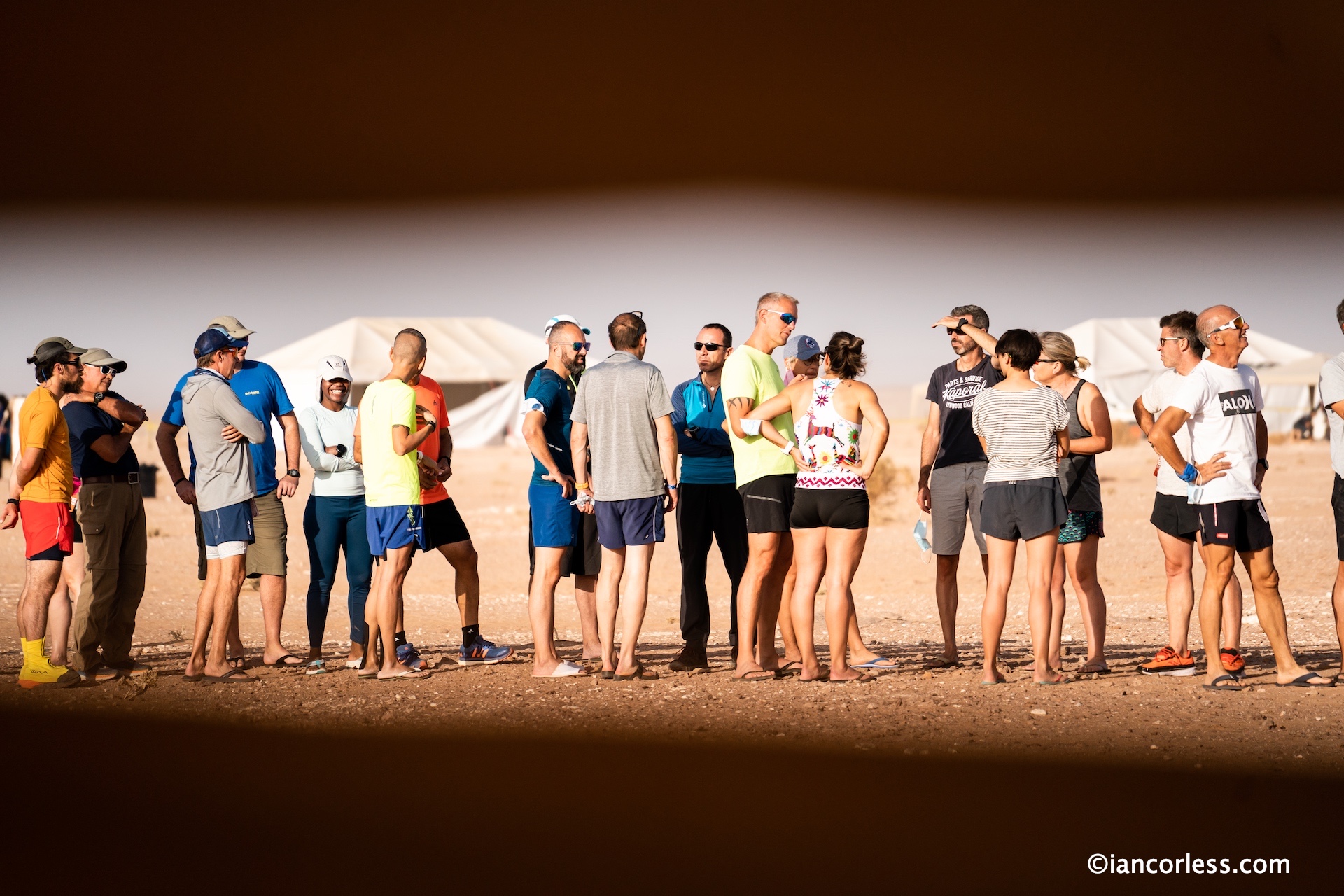
Admin day is slick and streamlined now, but, you may be in the sun for over 1-hour. Wear a hat, take shade (an umbrella) and have water and snacks.
Keep sun screen on and keep hydrated. No need to drink vast volumes – drink to thirst before the racing starts.
Have additional items such as a base layer, sleeping bag liner and other items that may be on a ‘question’ list for the race. On night 1 and before you go to admin, you can make final decisions of what to and what not to take. Particularly important if you think you may be cold at night.
Remember that after bag drop and check-in you have no access to any additional items, however, you only become completely self-sufficient when you start the race. With that in mind, you can have additional food and luxuries with you until day 1 kick-off, it’s a useful tip and does mean that you can have additional comfort for a good 12-hours.
Marathon des Sables is a magical and life changing journey as are most if not all multi-day races. It really is a true challenge of mind and body to race over many days, irrespective of finish time. It’s a hark back to a more primitive time, a time without clutter and modern technology. Embrace this. Embrace the silence of the surroundings and the simplicity of placing one foot in front of the other, eating, resting and sleeping and then doing it all again.
Finally, set yourself a realistic goal (that may just be to finish) so that you manage not only your expectations but pace. Way too many start off too quick and most dropouts come on days 1 and 2.
Runner’s have arrived in San Jose, Costa Rica ahead of the 2023 edition which starts on Sunday February 5th.
Admin day, pre-race protocols and race briefing will soon be completed and then an early morning journey to Quepos and the start line of stage 1 awaits.
For 2023, the runner’s in both Expedition and Adventure categories will experience some new route changes and distances. Notably, the expedition category, on paper, appears to be a tougher race.
Stage 1 is always brutal as for many, the heat and humidity really takes a hold and exhausts the un-prepared body. In the past, this stage has hovered around the 30km mark, for 2023 it will be 41km with 1071m+ for the Expedition category.
Stage 2 40km and 1828m+
Stage 3 49km and 1884m+
Stage 4 35.5km and 2434m+
Stage 5 40.6km and 1670m+
and the final stage 6 35.7km and 875m+
This makes a total 0f 241.8km and 9762m+.
For the shorter Adventure race, unlike in past editions, stage 1 will be shorter than the expedition at 32km.
Stage 2 17km
Stage 3 16.5km
Stage 4 12.5km
Stage 5 22.3km
Stage 6 35.7km
The Adventure race totals 136km with 4032m+.
With an International line-up, all eyes will be on the front of the race with a stellar male and female line-up.
Mathieu Blanchard, Didrik Hermansen, Sebastian Krogvig, Dani Jung and Peter van der Zon will go head-to-head for the TCC crown. Sadly, local ever-present and multi podium finisher of the TCC, Erick Aguero will not start due to injuries sustained in a fall.
UTMB one and two, Katie Schide and Marianne Hogan will once again do battle along with Tomomi Bitoh from Japan.
Departing from San Jose around 0330am, the journey to the coast will be undertaken in darkness. The hope is that runner’s can start the stage as early as possible, therefore taking advantage of cooler temperatures before the heat of the day arrives.
The TCC is the ultimate Costa Rican multi-day adventure. The route hugs the coastline of the tropical Pacific, weaving in and out of the Talamancas; a coastal mountain range in the Southwest corner of this Central American country. The terrain is ever-changing and challenges each participant, from wide, dusty and runnable fire trails to dense and muddy mountain trails. Add river crossings, boulder hopping, swimming through rivers, passing under waterfalls, and long and relentless beaches, TCC is a unique experience. Finally, the finish will come in the incredible Corcovado National Park, a Unesco World Heritage site with a stunning final loop around Drake Bay. After an evening relaxing, the runner’s will depart for their journeys back to San Jose via speedboat to Sierpe and then a follow on coach trip.
“TCC has always grabbed my attention, February is early in the year, so, there are not many races. For me, it will be a challenge, I’m usually home skiing in Norwegian winter and in 2023 I will be in an exotic race in the Jungle – it’s exciting! The landscapes and nature looks spectacular! The trails look challenging and fun, a perfect mix of racing and adventure.” – Sebastian Krogvig
The Everest Trail Race (ETR) finally was all systems go after an extended break due to the Coronavirus situation. Needless to say, the return was welcome, not only by ETR staff but all the runner’s, many who had postponed entries for 12 or even 24-months.
Nepal is a magical place and to be back in the magic was special.
ETR organisation had not been dormant between 2020 and 2022, the opposite. With the ever expansio of gravel roads leading toward Lukla, it was important to return ETR to more isolated and raw trails, so, in comparison to pre-2020, the 2022 race would be a new experience, particularly over stages one to four with stages five and six remaining roughly the same to 2019.
Travel is coordinated so all participants meet in Istanbul for an onward red-eye flight through the night to arrive in Kathmandu mid morning. During the Covid period, Kathamandu has not stood still either. There have been major improvements to the airport and what was a very painful arrival and immigration procedure is now considerably less painful if you have the relevant documents, photos and cash to pay for an entry visa.
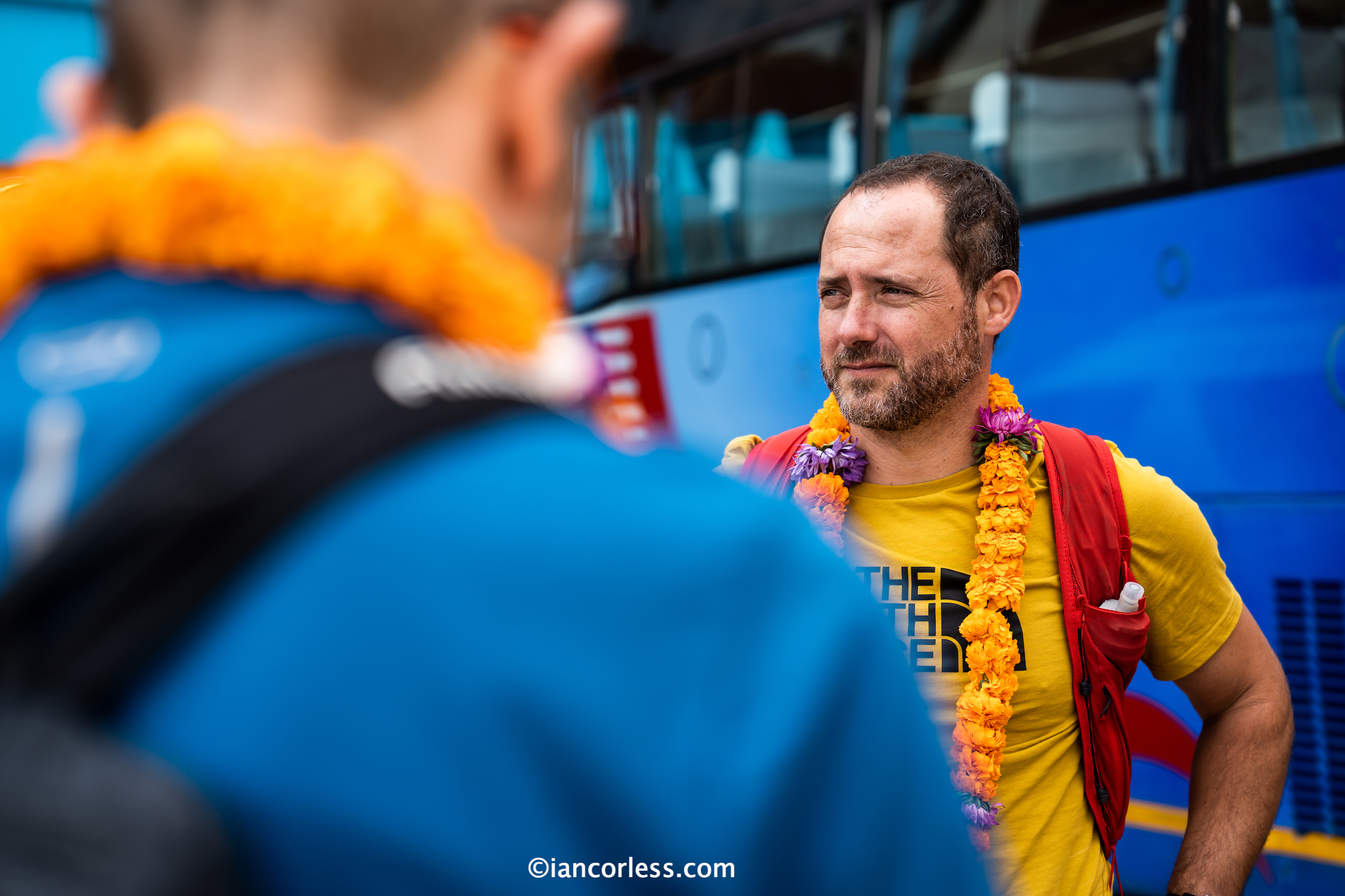
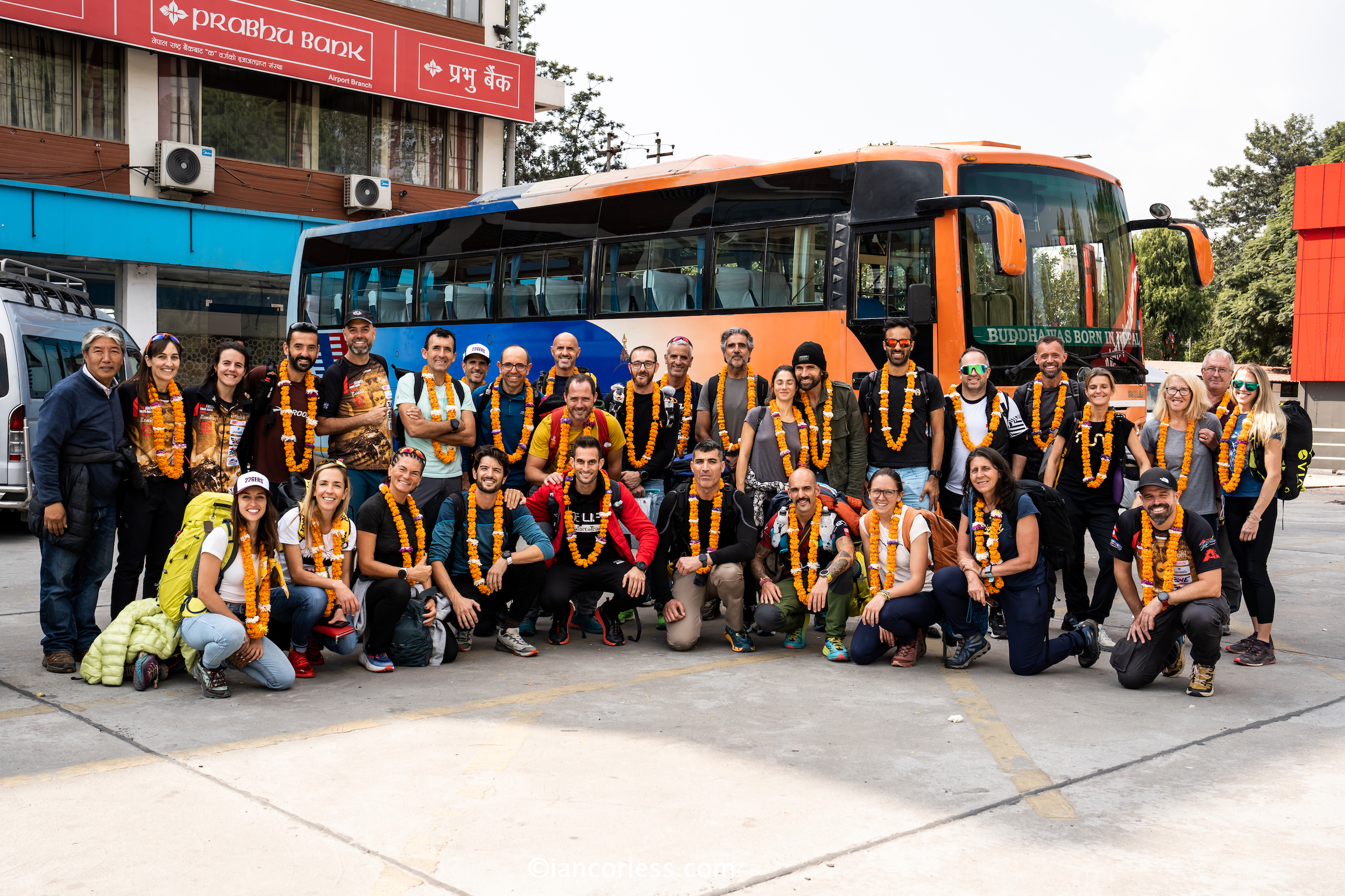
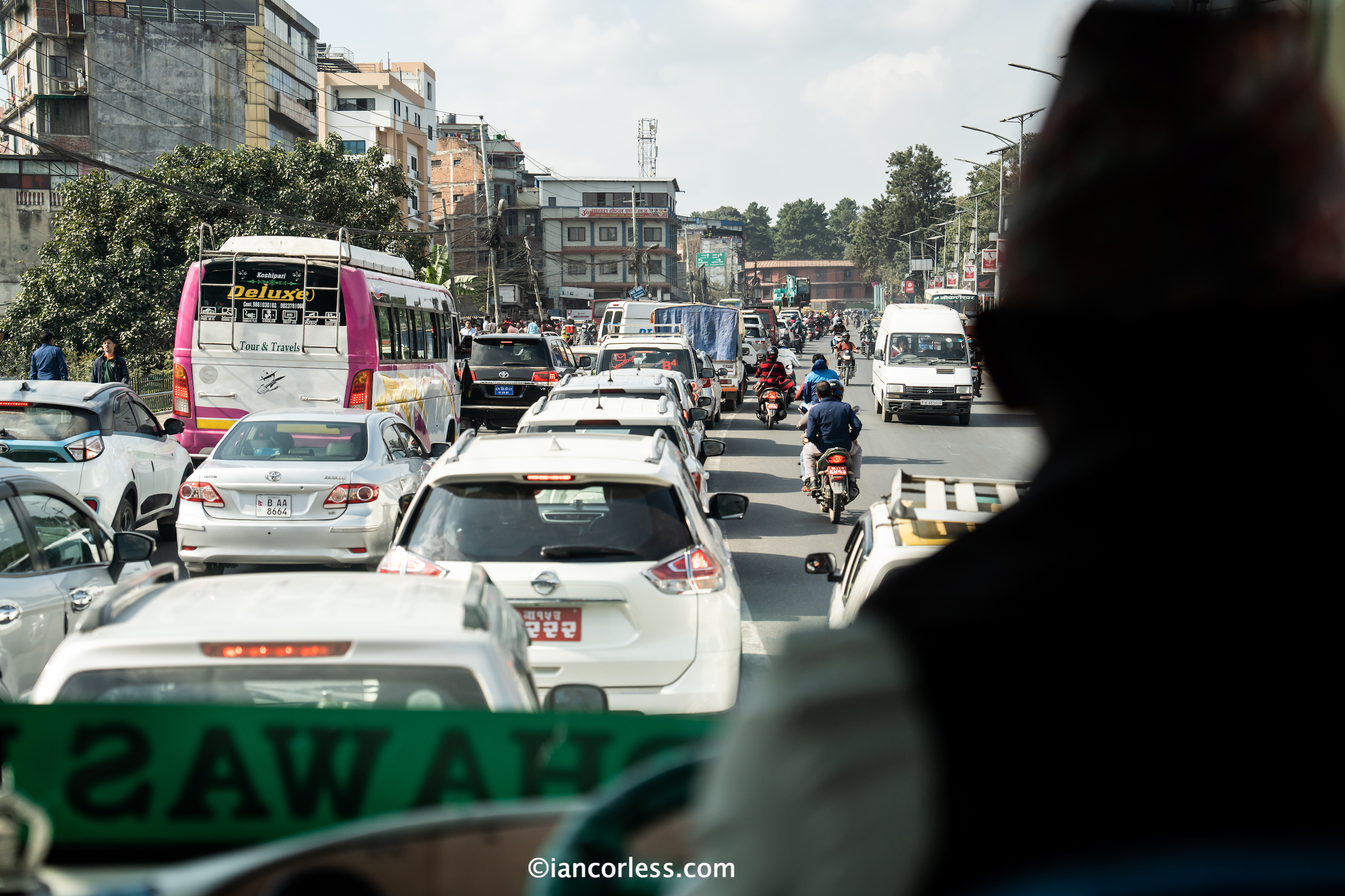
Everyone is welcomed at the airport with a traditional garland and then it’s transfer time to the hotel which will be home for the next two days. For those who have not been to Kathmandu before, the driving is always somewhat of a shock. Organised chaos is the easiest way to explain it.
Arrival at Hotel Shanker, a calm and hidden oasis in noise and craziness of Kathmandu is welcome. Everyone is greeted and then it’s straight into initial race admin before relaxation time after long travel.
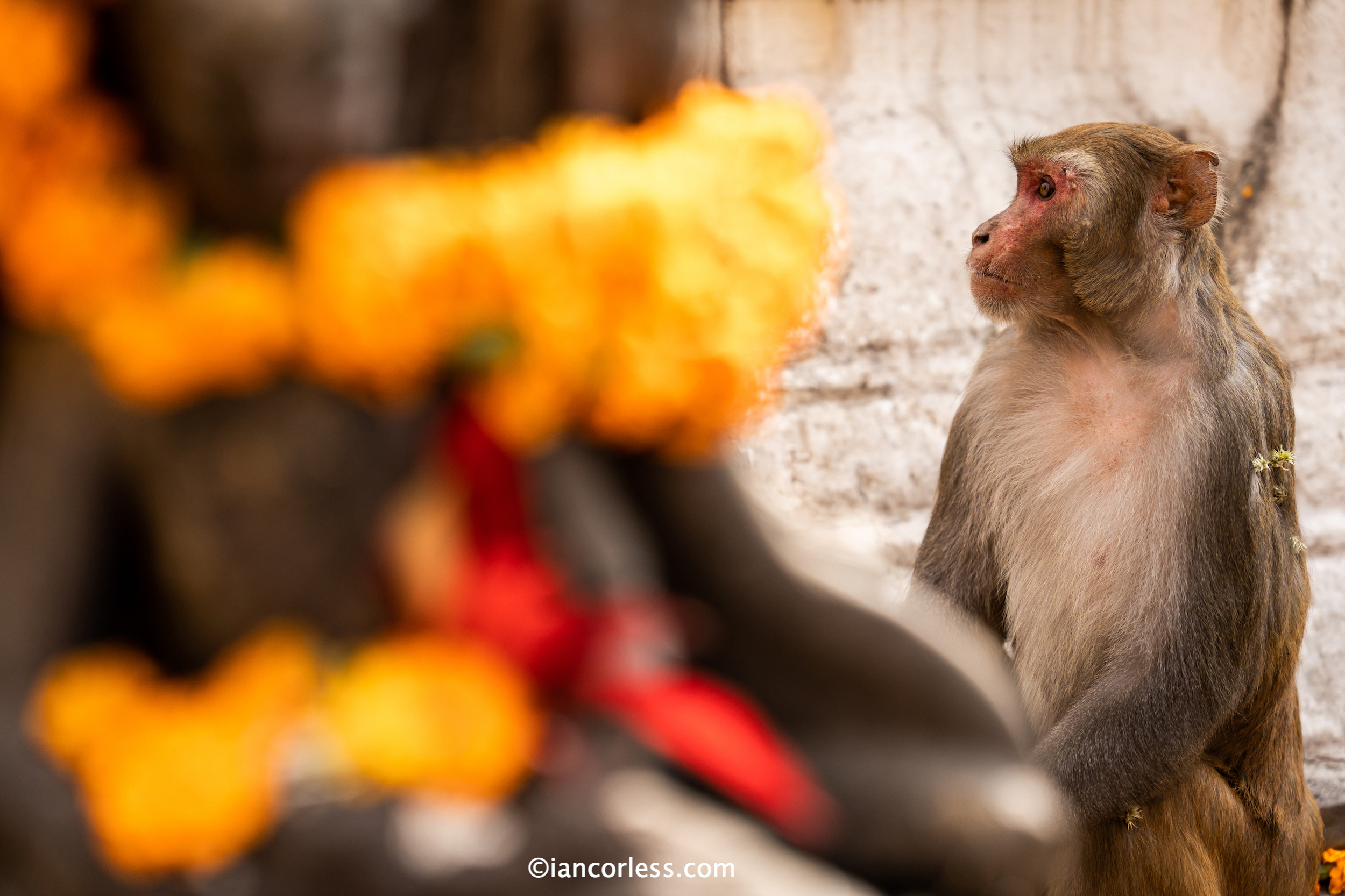
Day 1 morning is a group excursion to the Monkey Temple and Patan. The Monkey Temple for 2022 was considerably busier than other years due to timing of an important religious festival. It was rammed with people but that only added to the atmosphere.
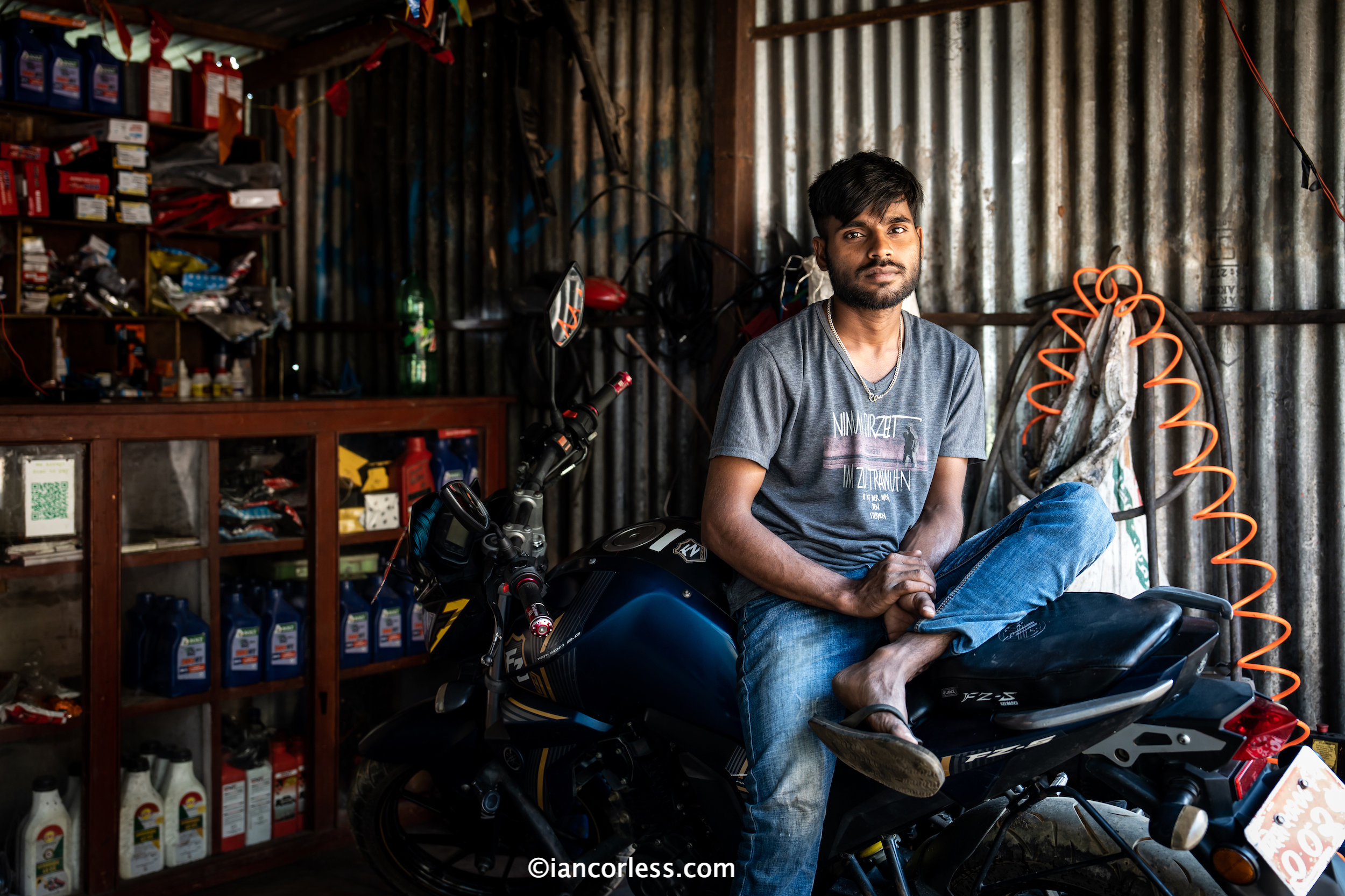
Of course, it’s always an eye-opener to experience a place like this. No matter how many times you visit, there is always something new and of course, it’s a popular place for beggars who hope to monetise the charity of the visitors.
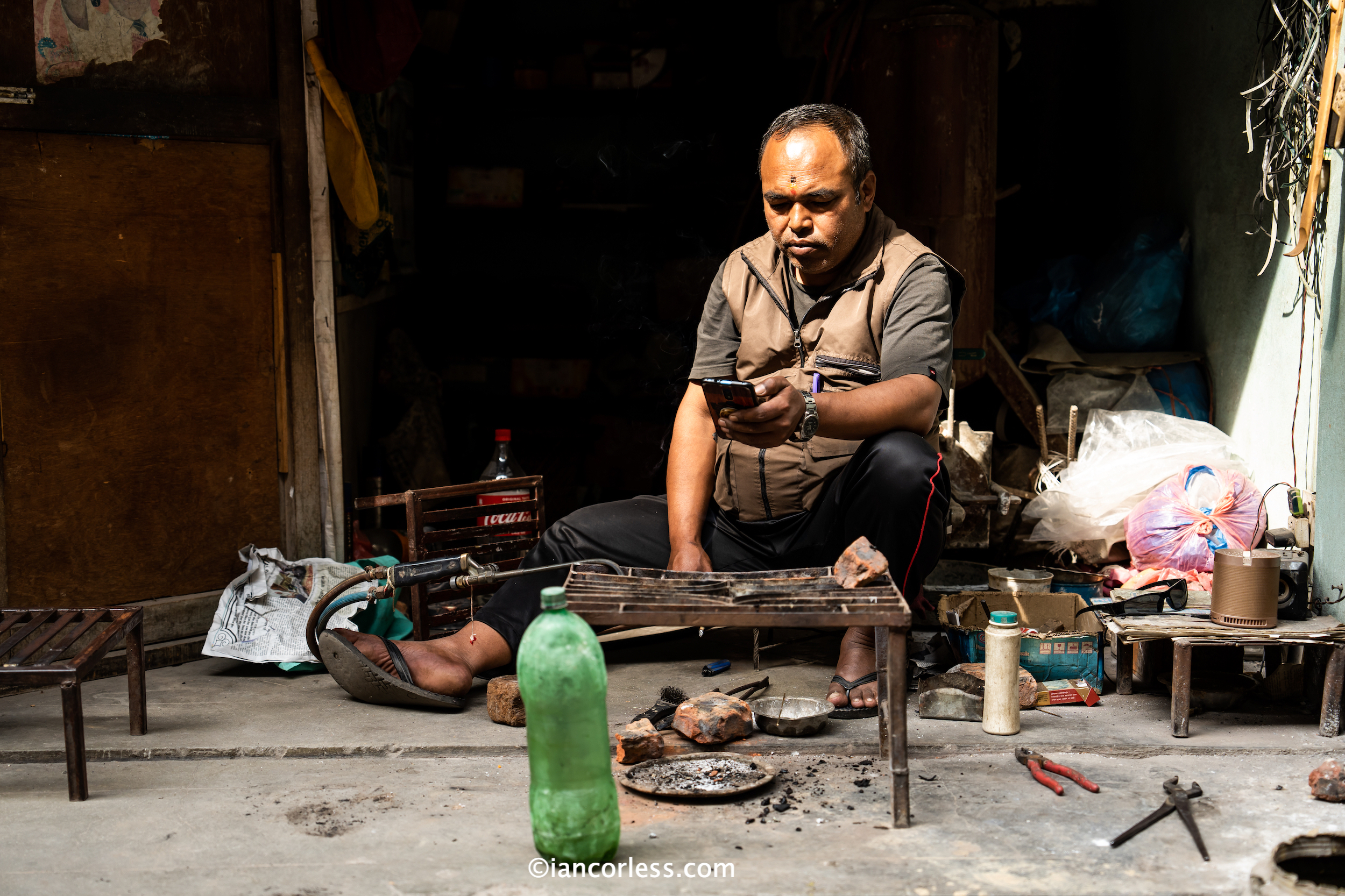
From the Monkey Temple to historical Patan. *Patan, also known as ‘Lalitpur’, the city of artisans, lies 5 km southeast of Kathmandu, and is home to the valley’s finest craftsmen who have preserved such ancient techniques as the repoussé and lost wax process used to produce exquisite sculptures. The city retains much of the old charm with its narrow streets, brick houses and multitude of well-preserved Hindu temples, Buddhist monasteries (vihars) and monuments. (*https://ntb.gov.np/patan).
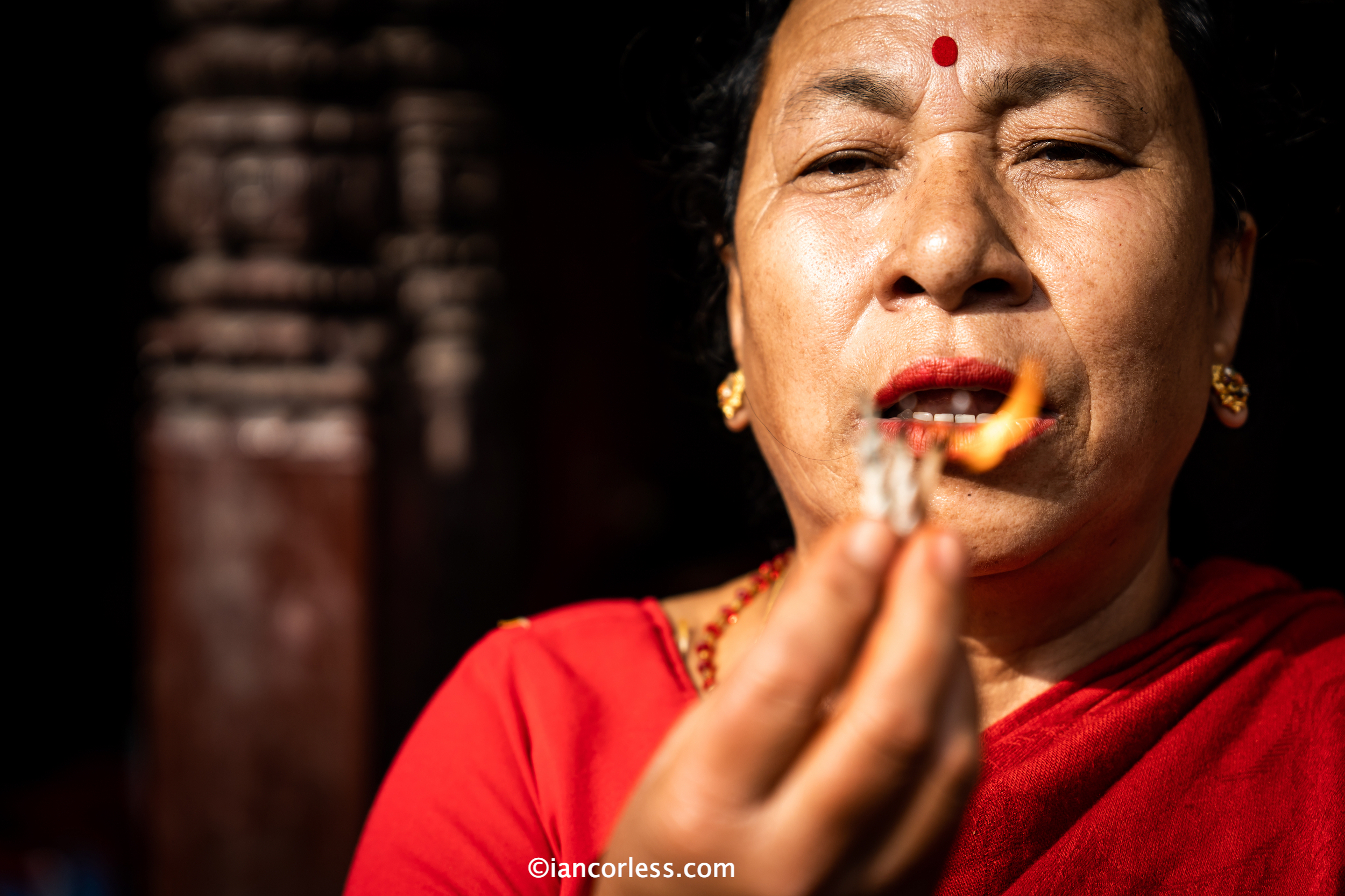
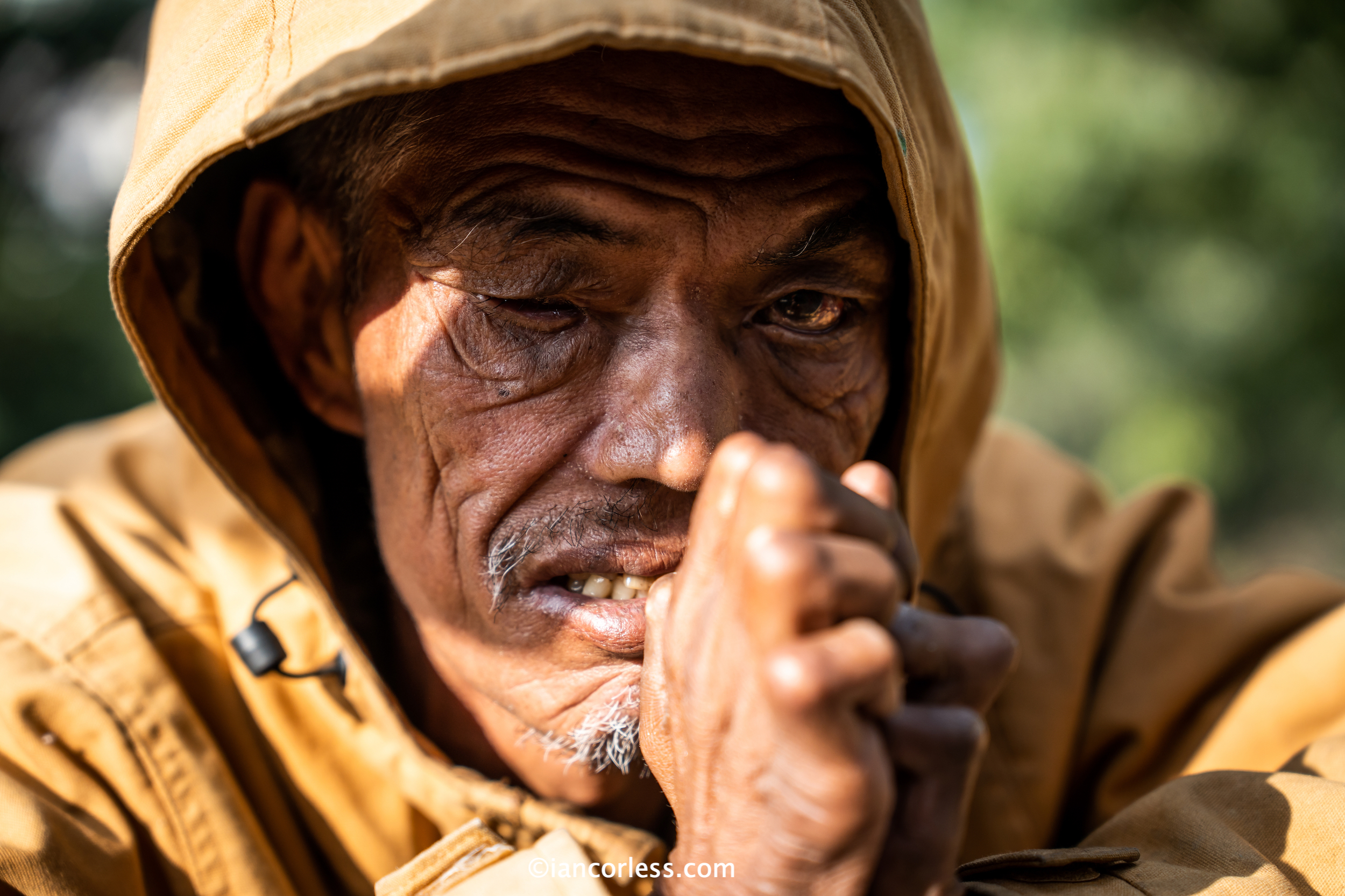
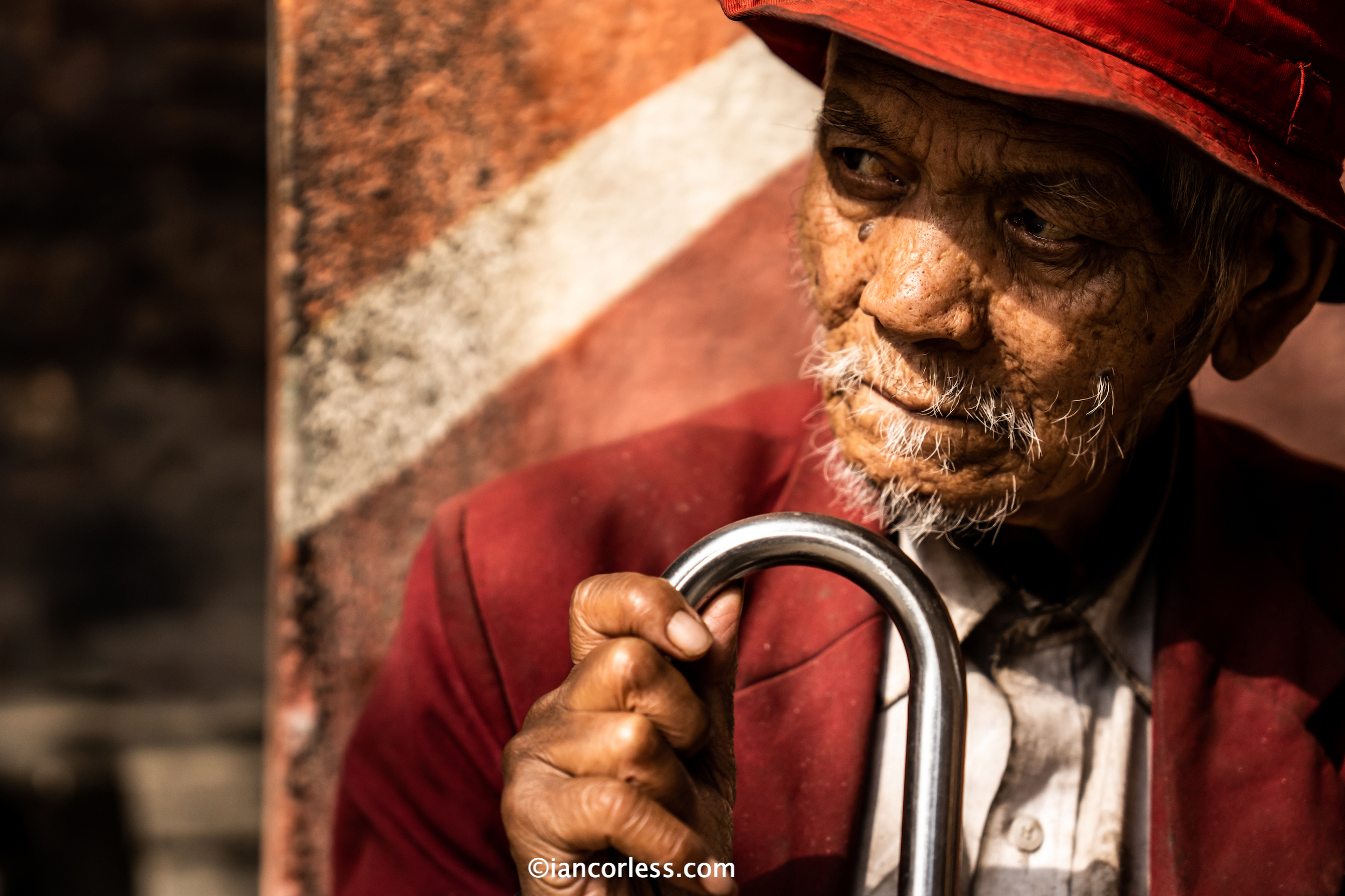
The buildings, the winding streets, the noise and colour – always special. But for many, the people are what is interesting… So many characters full of life, history and colour.
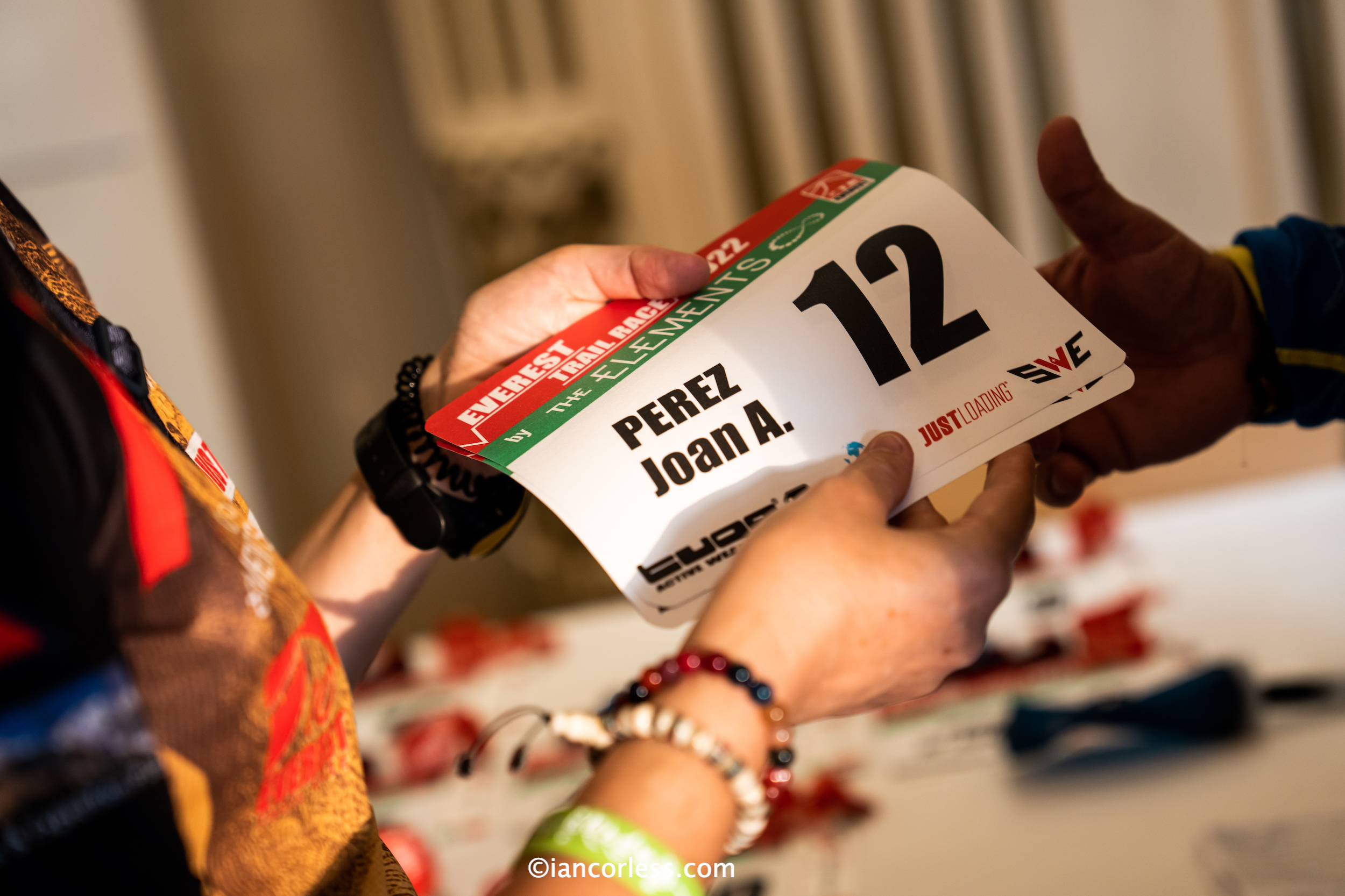
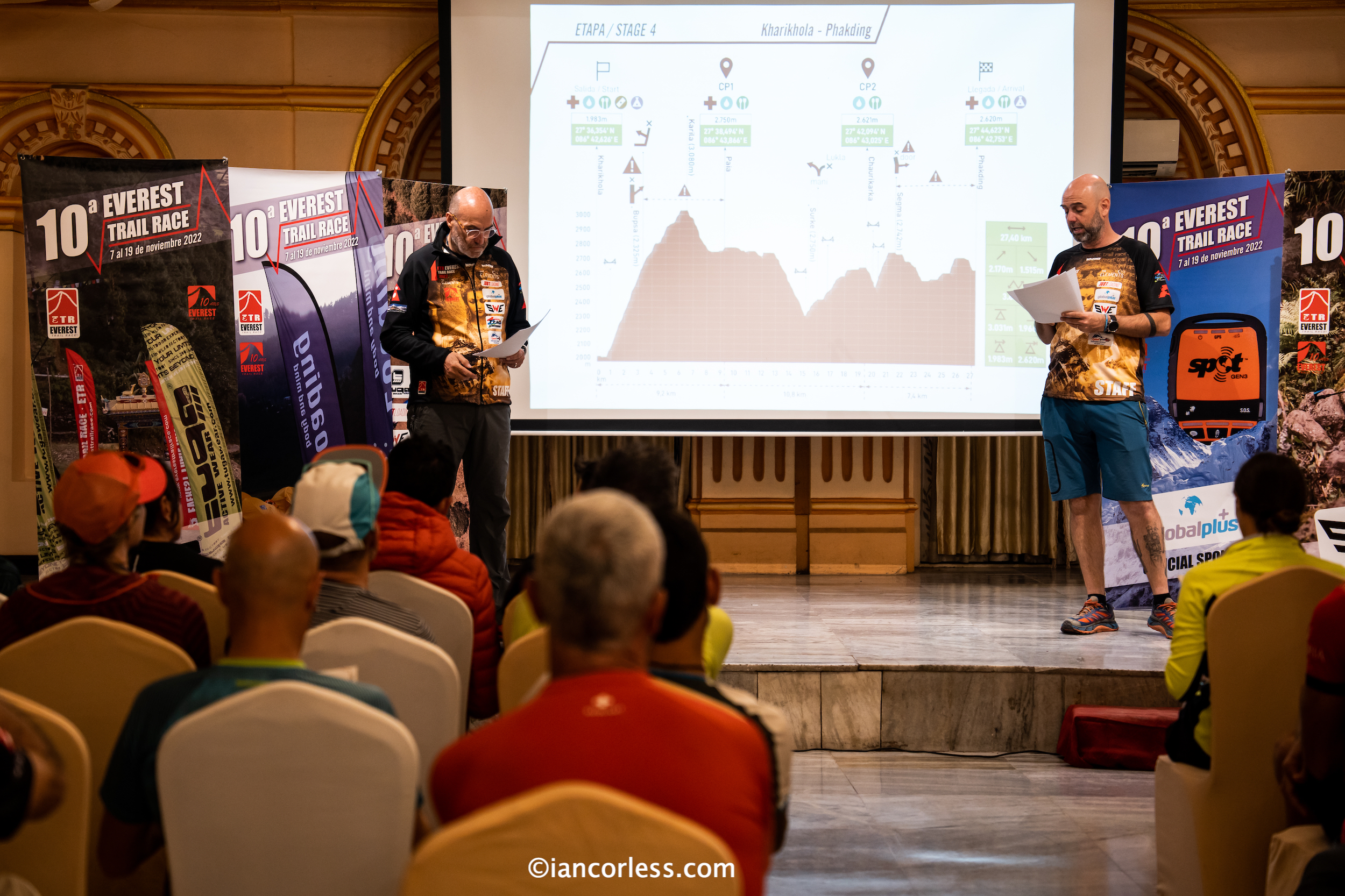
After a morning of relaxation and sightseeing, late afternoon is taken up with pre-race admin checks, number collection, medical checks and onwards to the evenings welcome dinner and race briefing.
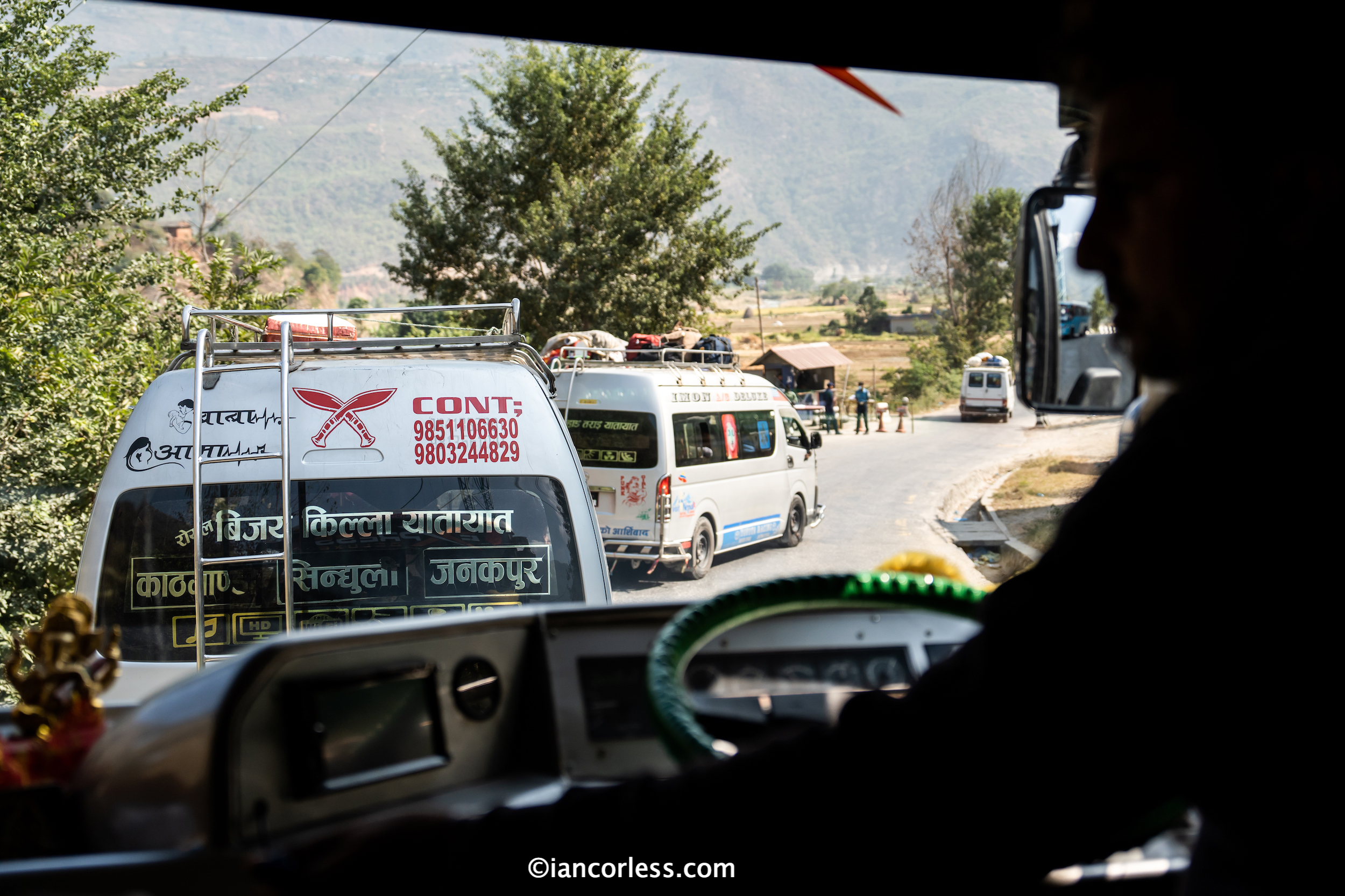
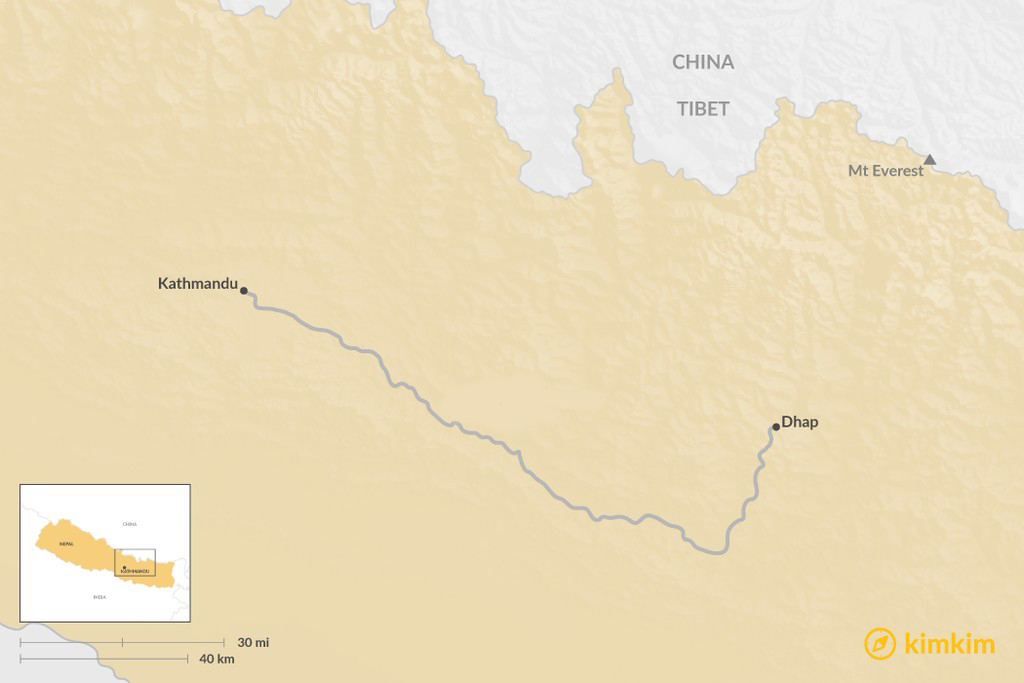
Travel to camp 1 in Dhap is via bus and it’s a long and lengthy journey of 8 to 12-hours.
Of course regular stops break up the journey and there is an opportunity to see local colour and character on the way, one of the real benefits of travel via road in comparison to taking internal flights.
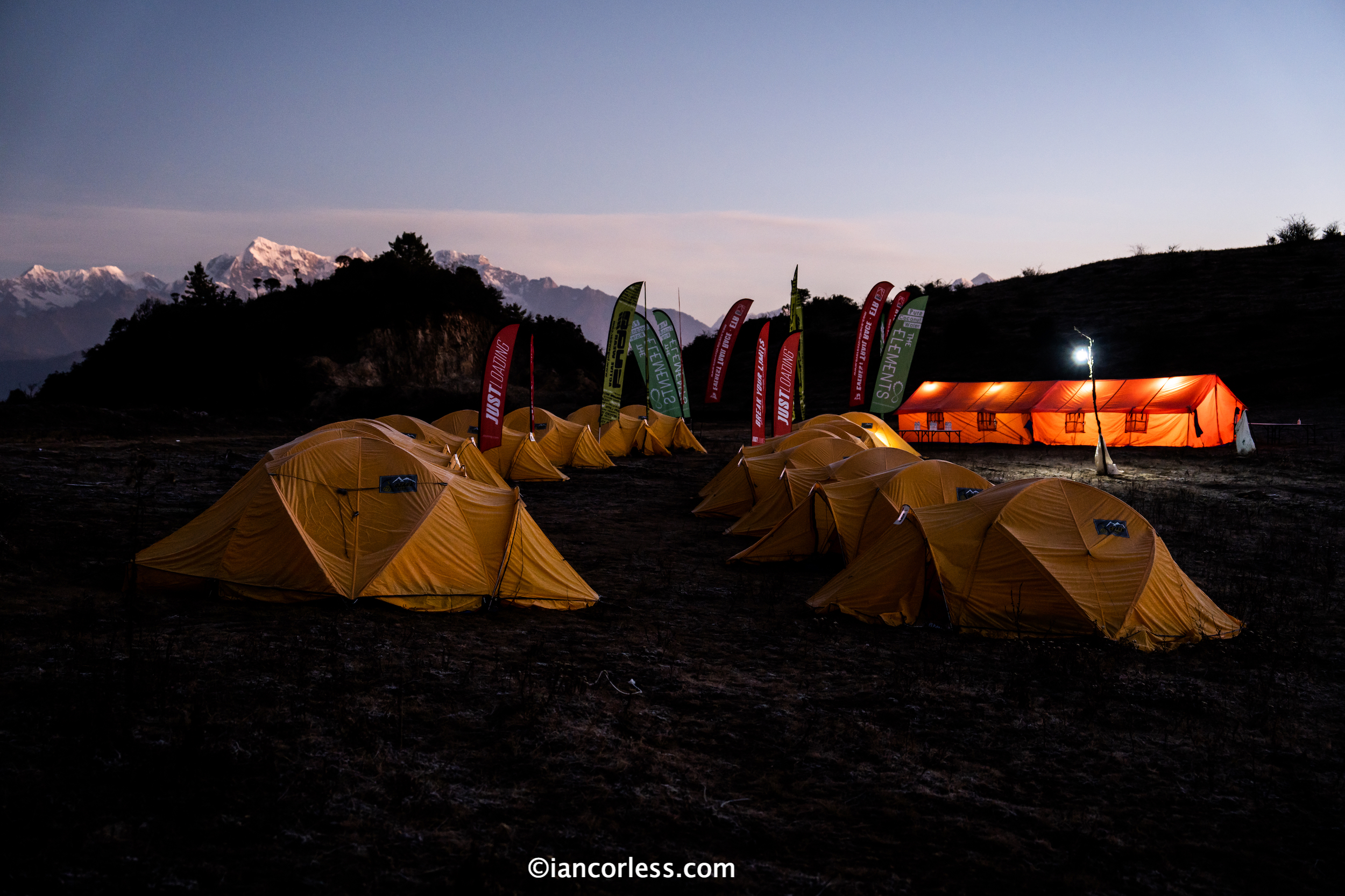
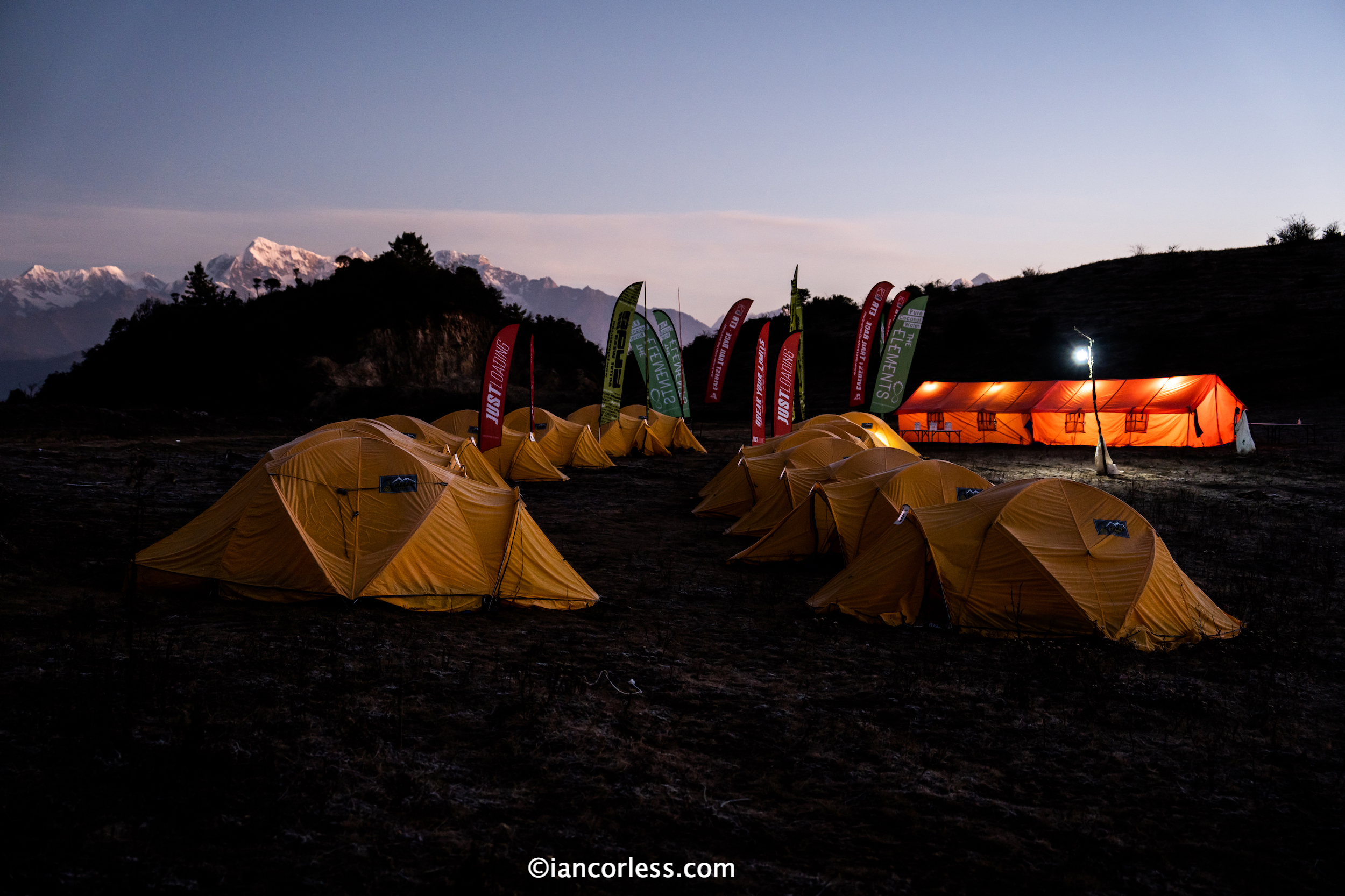
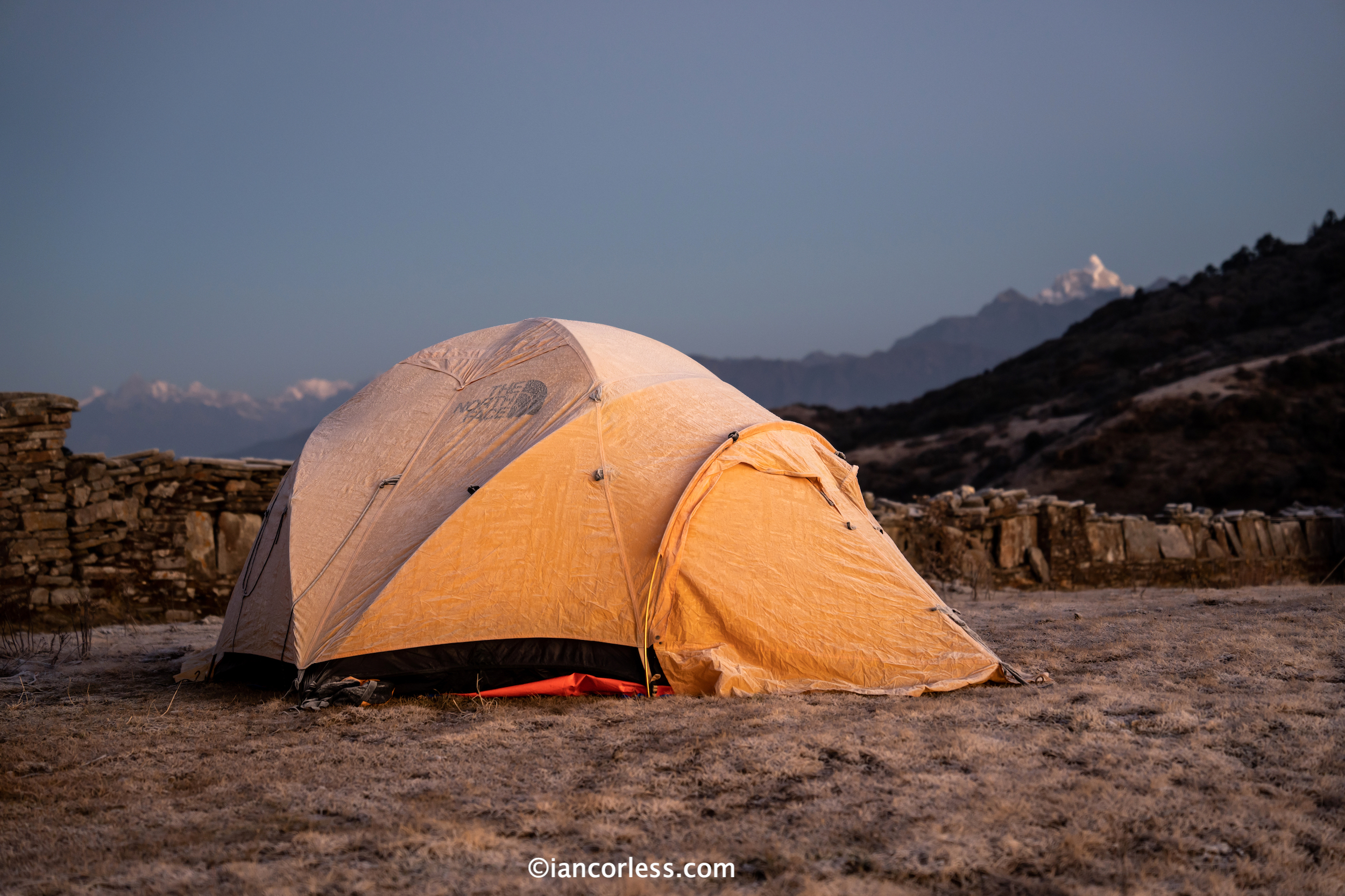
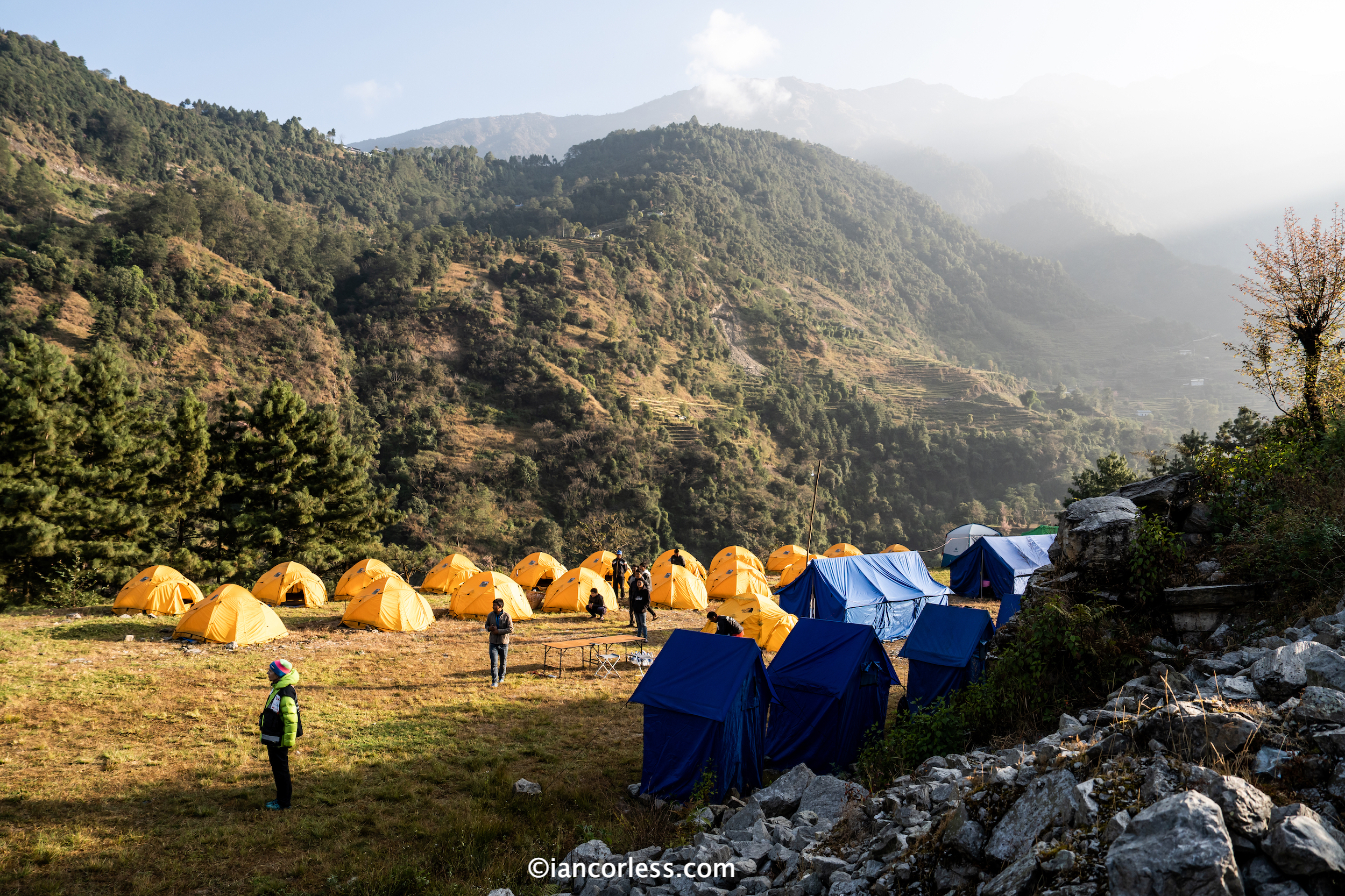
Arrival at camp 1 eventually comes. Camp is set up in advance and the glow of lights and yellow tents suddenly makes the whole experience come to life. Now, the ETR finally begins and everyone spends a first night in a tent.
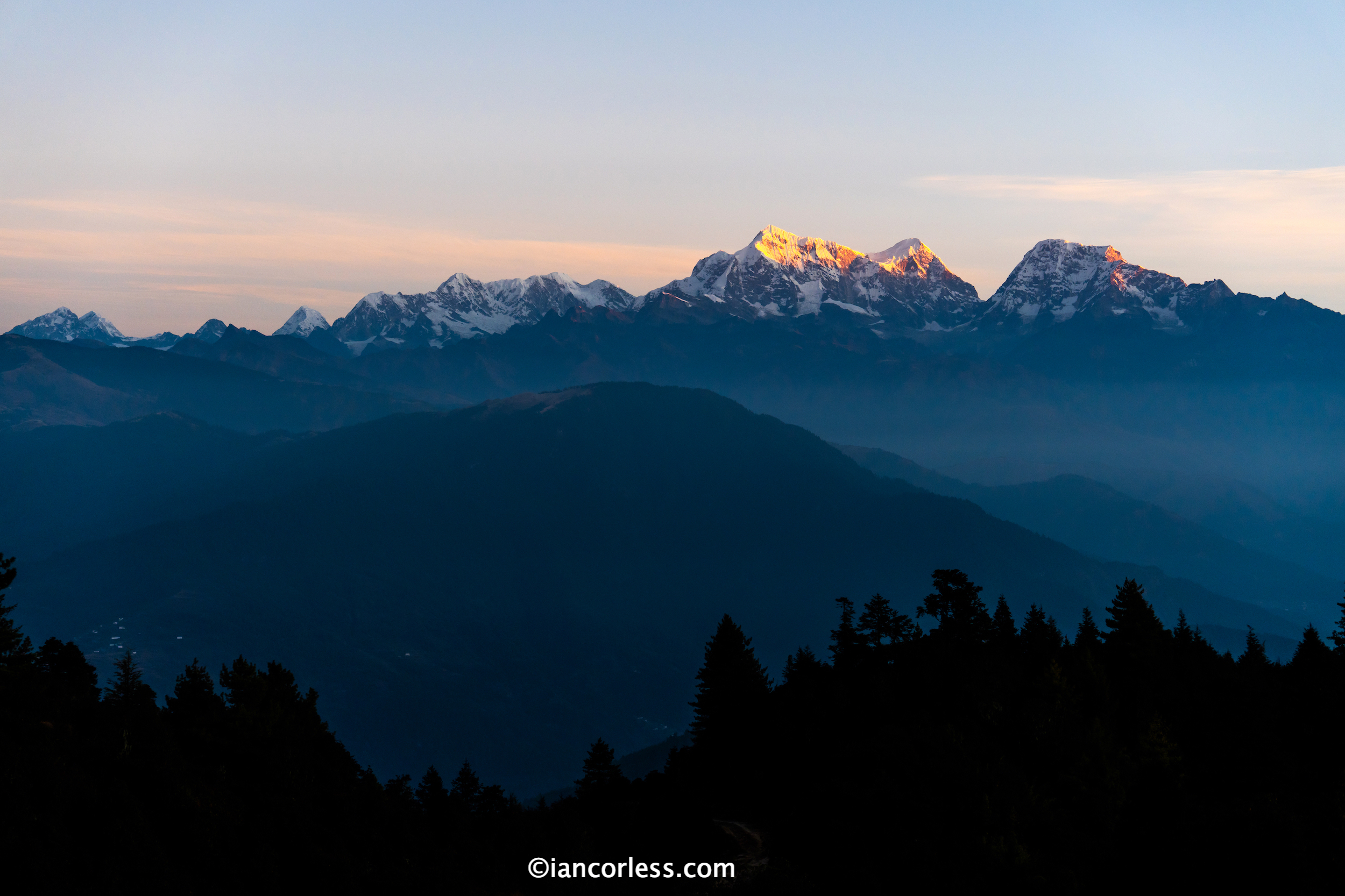
A first night under the stars and by Nepal standards in November, it was a relatively mild despite the layer of frost on all the tents and on the ground.
Participants were undecided if it had been cold or not, basically this came down to how good and warm their sleeping bags were. If a runner felt cold last night, the omens are not good for how well they will sleep in the coming days.
Warm sweet tea is a great way to start a day, especially while relaxing in a sleeping bag. But despite that luxury, breakfast called and the need to add layers and absorb calories for the day ahead was an immediate priority.
The sun came and with it warmth. The glow of head torches replaced, bags were packed and racing apparel was made ready.
Rationed water, gels and bars were provided and at the stroke of 0830 the runner’s departed for Stage 1 of the 2022 Everest Trail Race.
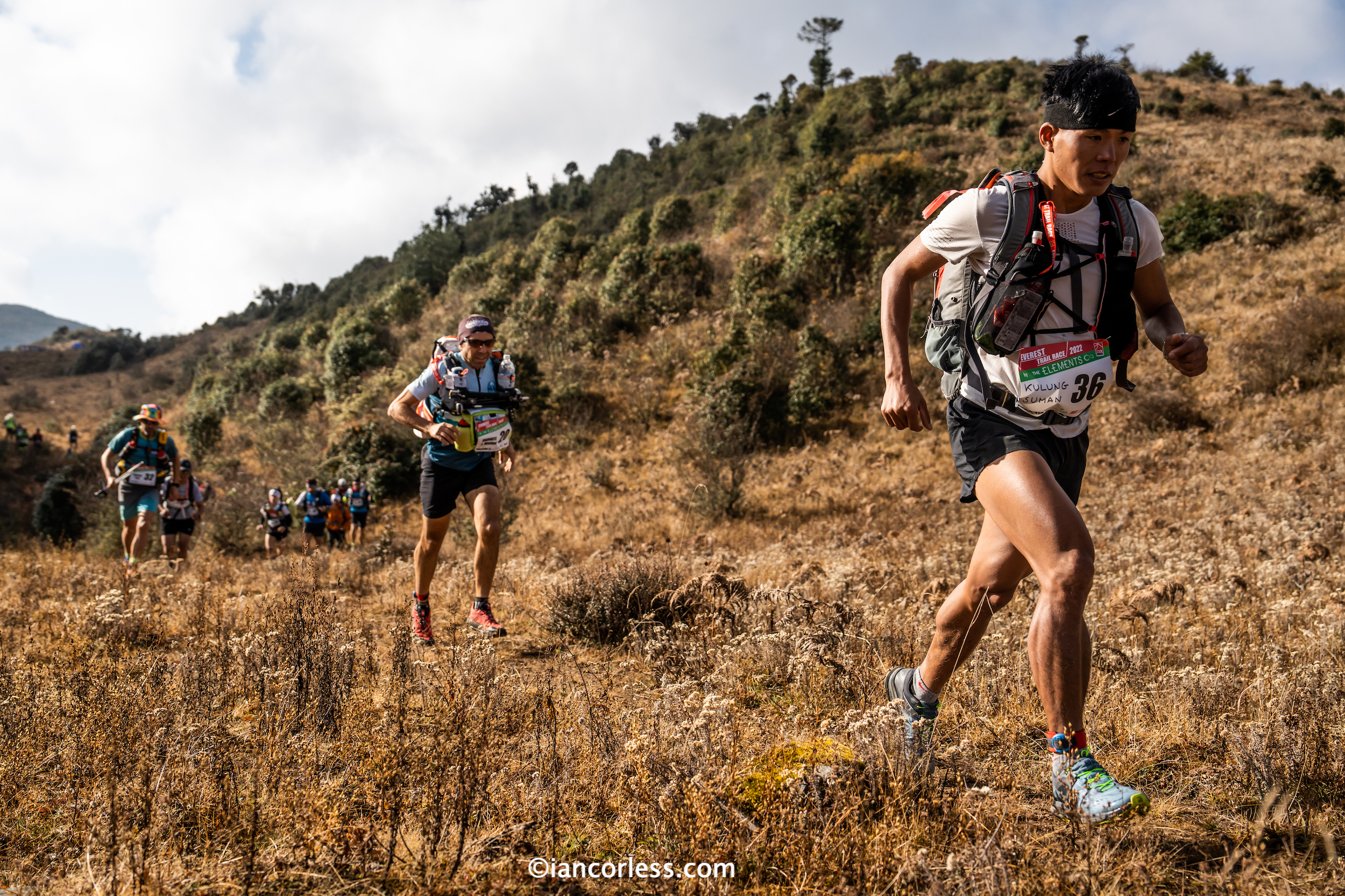
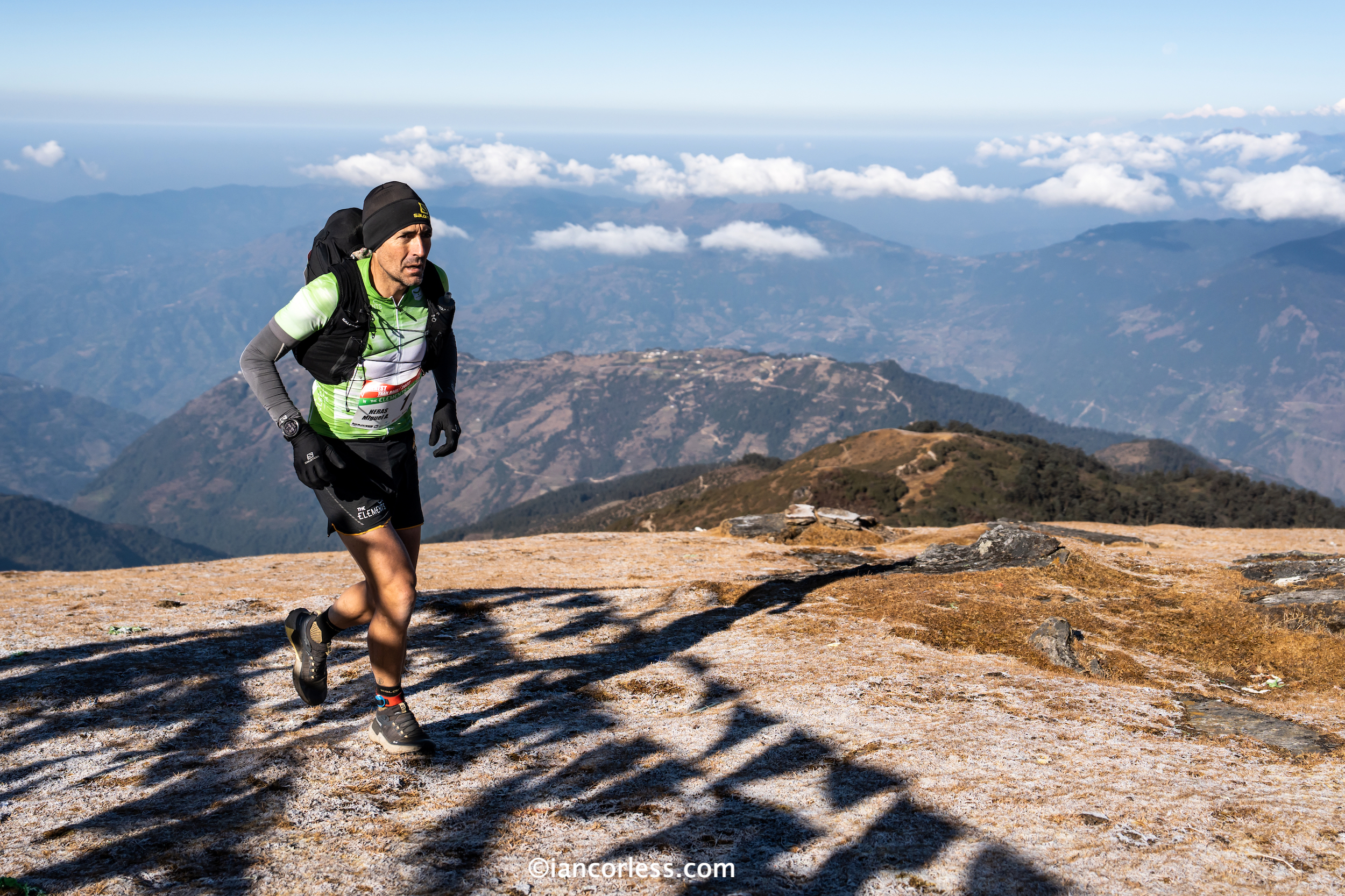
At 23.08km with 1551m+/ 1012m- the day was expected to be completed quickly by the front-runners. Miguel Heras did not disappoint crossing the line at exactly 1100am, behind, the 2019 ETR Suman Kulung finished just a couple of minutes later with the 2018 ETR champion, Jordi Gamito, finishing 3rd off the pace.
Miguel explained how he had made a silly mistake immediately after Cp2 whilst eating at not concentrating, he missed a marker and went off course. The mistake cost him first place and many minutes… He chased, caught Suman, and still obtained victory; a great run. However, he did say, “There are 5-days to go, anything can happen!”
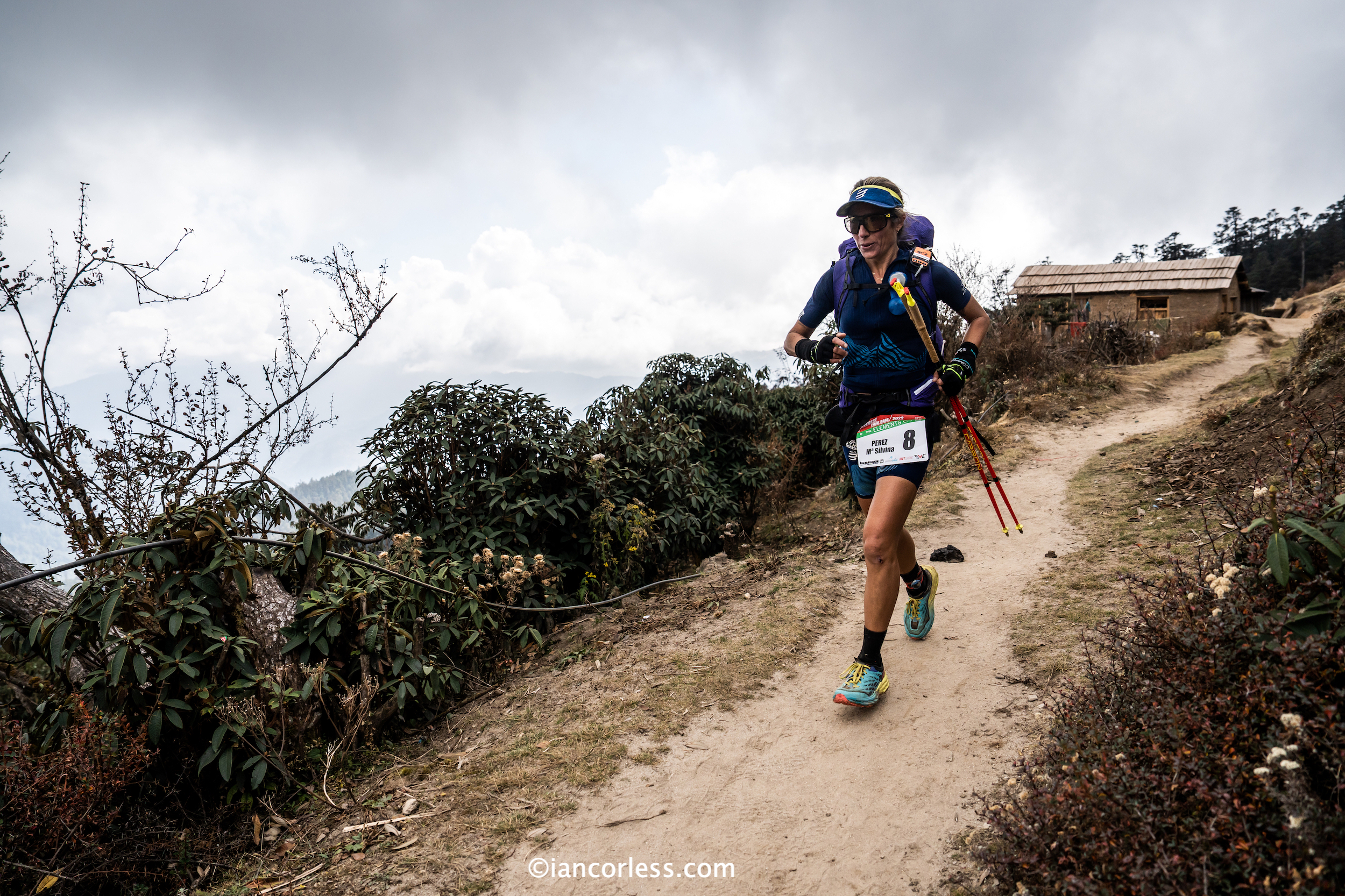
For the women, Silvina Perez ran a strong stage ahead of Nepali, Ang Furba Sherpa. Ester Alves from Portugal finished 3rd ahead of pre-race favourite, Caroline Turner, who summed her day up with a simple summary, “The altitude and the last climb kicked my ass!”
It was a successful day-1 with all participants completing the course before 1700hrs.
It was a cold night at 3500m. The wind and cloud adding to the chilly temperatures. For those who have raced light, today is the day that they understand the importance of layers and a warm sleeping bag. A lack of sleep with a tired body is not pleasant, even warm tea and a hot breakfast could not lighten the mood of some. After day-1, based on finish times, ETR operates two starts for stage, 0700 and 0800, thus allowing slower competitors additional time to complete the stage.
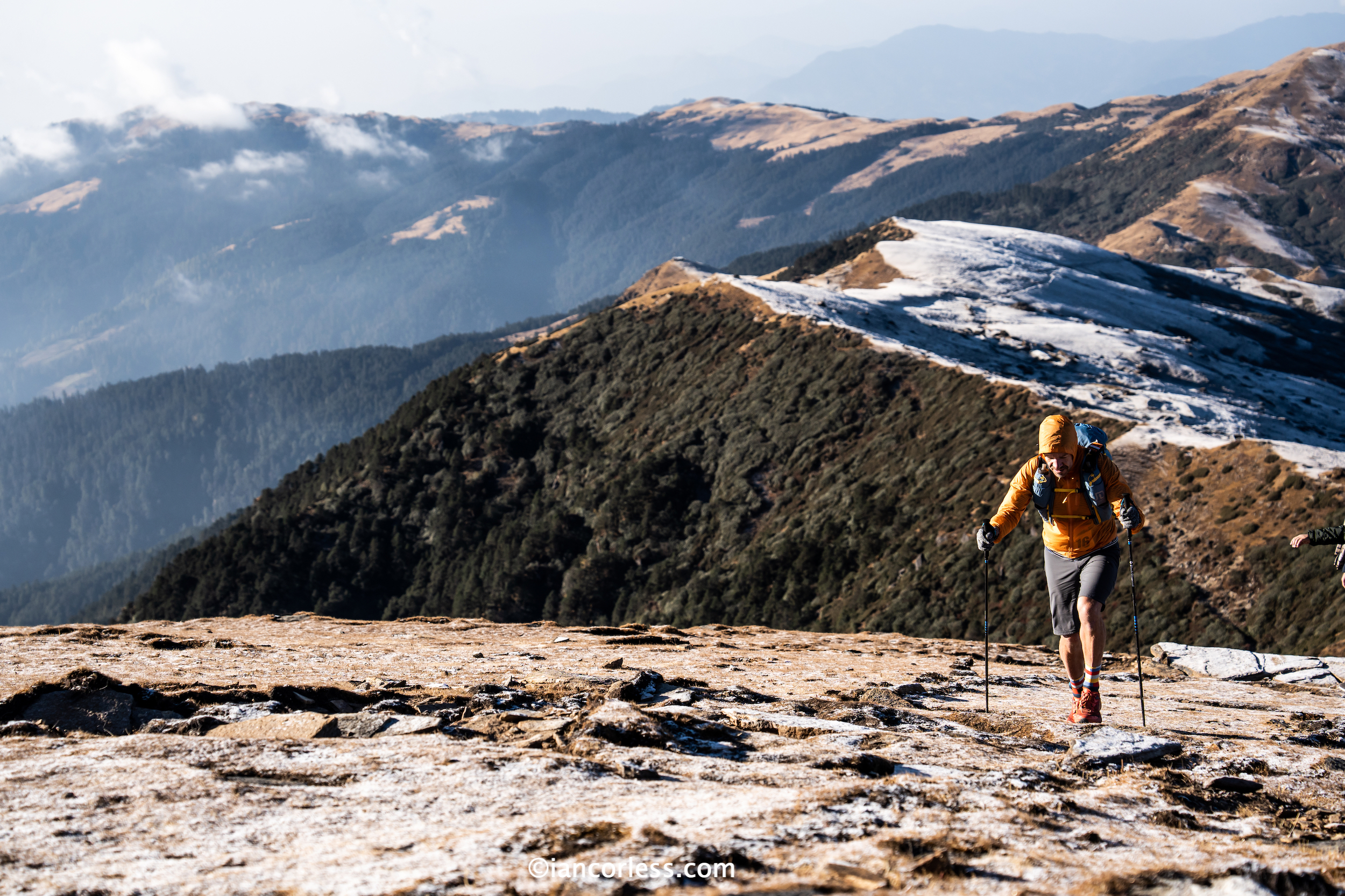
The day started with a 500m climb to the summit of Pikey Peak at 4041m. From here a twisting and technical descent to Jase Bhanjyang (3510m) and the Lamjura Pass towards Langate Peak and onward to Pungmuche and Thumptencholing. From 20.5km another climb to 24.5km, and then a tough finish with a long climb, descent and then a final short climb to the camp at Rinmo.
Everyone was unanimous, it was a seriously tough day and although we missed a peak due to landslide, it added distance, many recording between 34-36km.
The race at the front was intense and today, with so much altitude and added distance, Nepali Suman had the advantage over Miguel Hera, Jordi Gamito once again placing 3rd.
Nothing better than starting a 30km day with a 1200m climb to just under 4000m through forest trails. The downside, depending on viewpoint and preferences, was the 2700m of descent that followed via steep, technical, challenging and rocky trails. And then just when you think it’s all over, you finish the day with 500m of vert followed by another short decent to camp. It was a tough day!
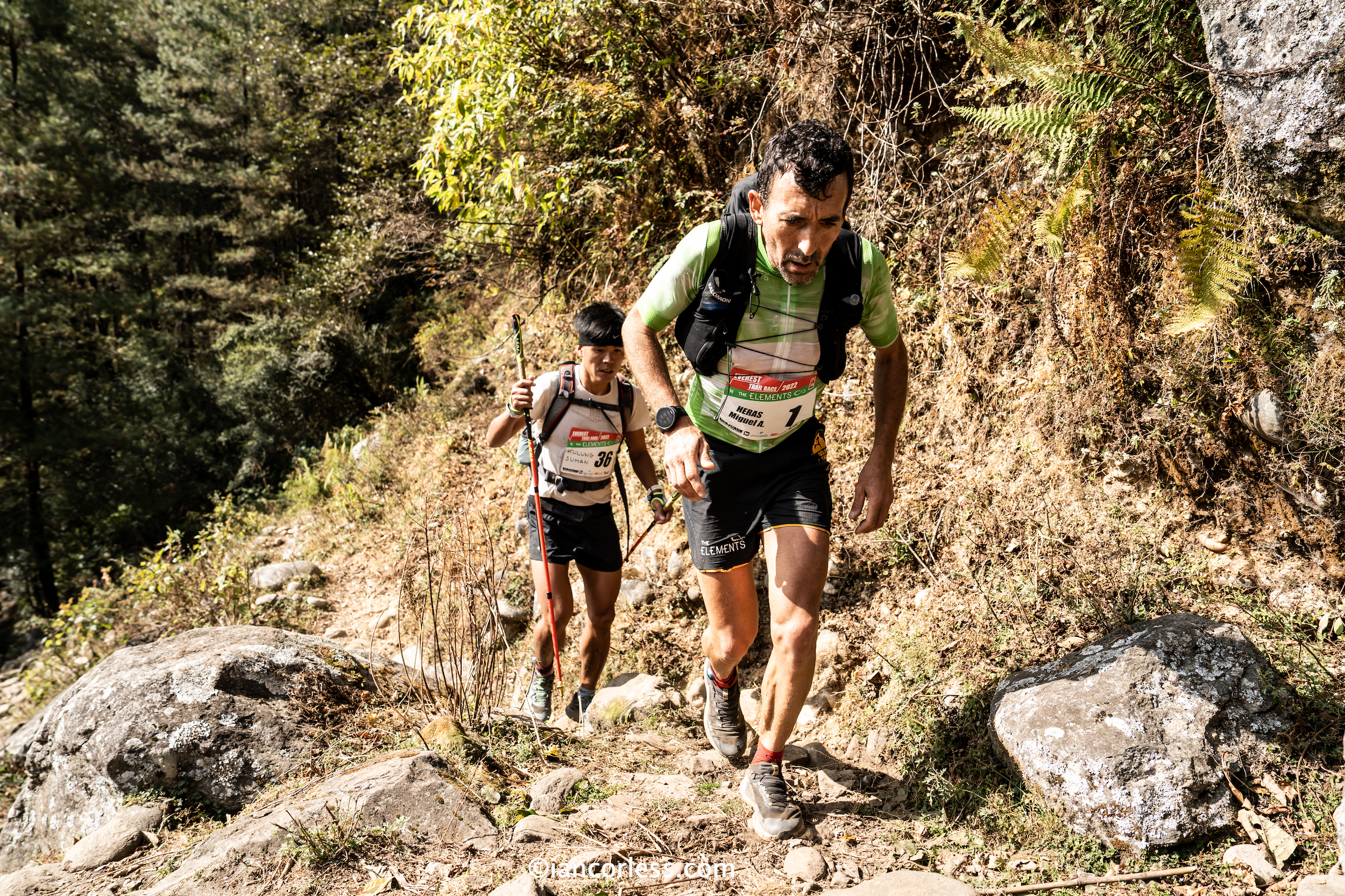
The action started early with Miguel Heras and Sumun Kulung setting a harsh pace up the first climb, they were inseparable. Event the relentless descent could not break them. It was at the last checkpoint, with approximately 5km to go, 500m of vert, that Miguel put the hammer down and opened up an 11min gap over the Nepali. Quite incredible.
Purwha Lhamu Sherpa certainly has settled in to women’s race and once again took victory. Ester Alves, equally has found her comfort on the Nepal trails and today relished the relentless downhill trails to finish second. Day 1 victor, Silvina Perez, finished third.
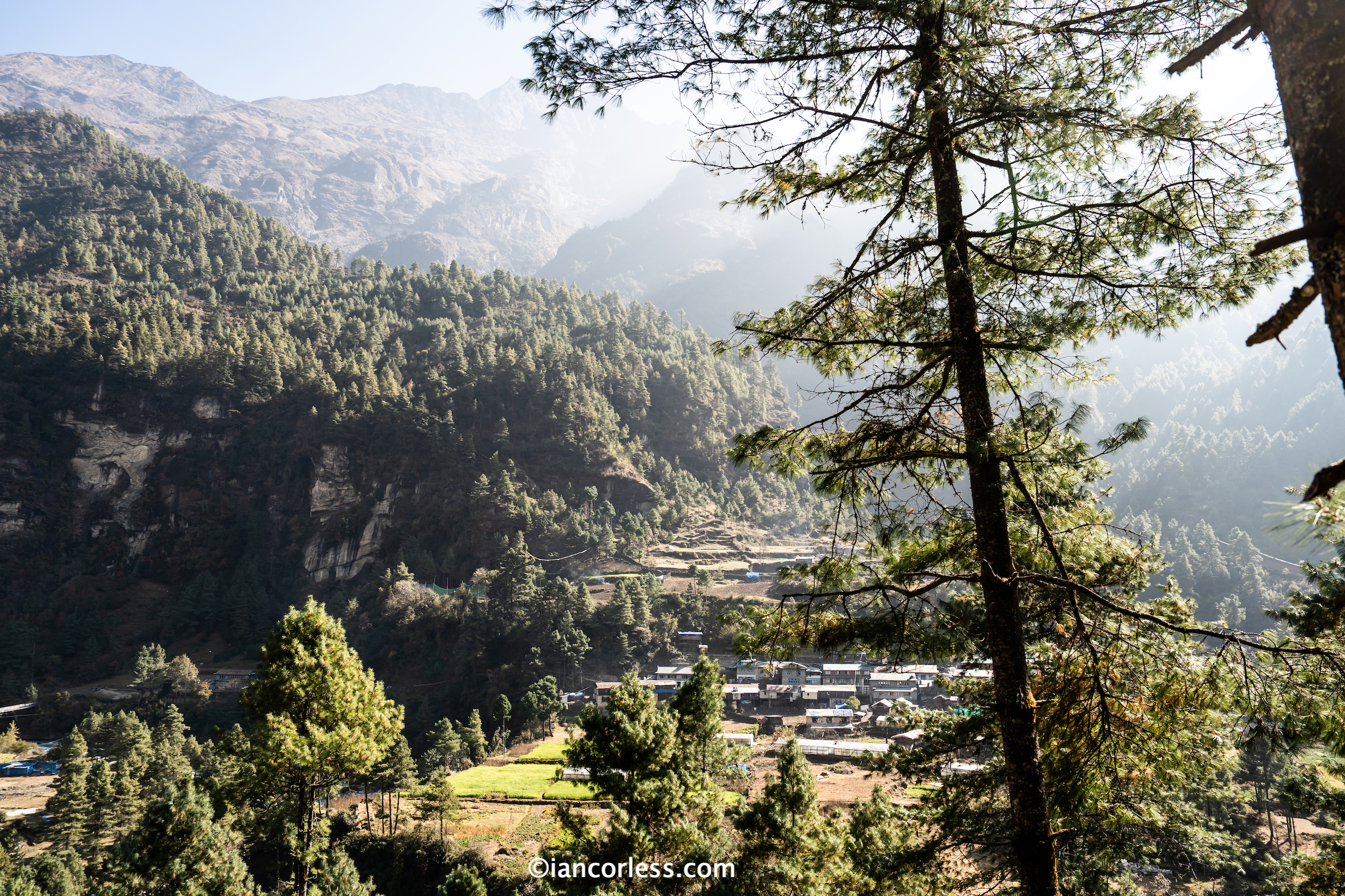
Mood in the camp was positive after the stage, these trails are quiet and remote. It was only in the final 5km, the climb to Kharikola, that it was possible to see homes and locals working the fields.
KhariKola has been the stage 3 camp, day 4 start for many years. However, for 2022, the ETR no longer camped at the monastery but a little lower down in an isolated spot. Temperatures were mild for the night, just dipping below zero. So, runner’s were refreshed for the start of day 4 with a good nights sleep.
A tough 1000m climb kicked off the day to Karila at 3080m and then technical rocky trails to the lowest point of the day, Surke at 2300m. From here, a climb to Chaurikara (2621m) a steep descent and then a steep climb to Segma at 2742m. The ETR is now on new trails on the opposite side of the river all the way to the Phakding finish.
Once again it was the Miguel and Suman show at the front, the duo running together, again at a relentless pace. With the longest and arguably the toughest day of the race tomorrow, they crossed the line together, just a 1-second apart, no doubt saving some reserves.
Jordi Gamito finished third, quite a long way behind the leading two, his overall position is safe and he is no doubt just running a smart race now.
The women’s race was different today, with all three women running extremely close together, separated by just minutes. Today, the glory went to Ester Alves who gets better with each day, In the final km’s, Silvina Perez caught a fading Purwha Lhamu Sherpa to place second.
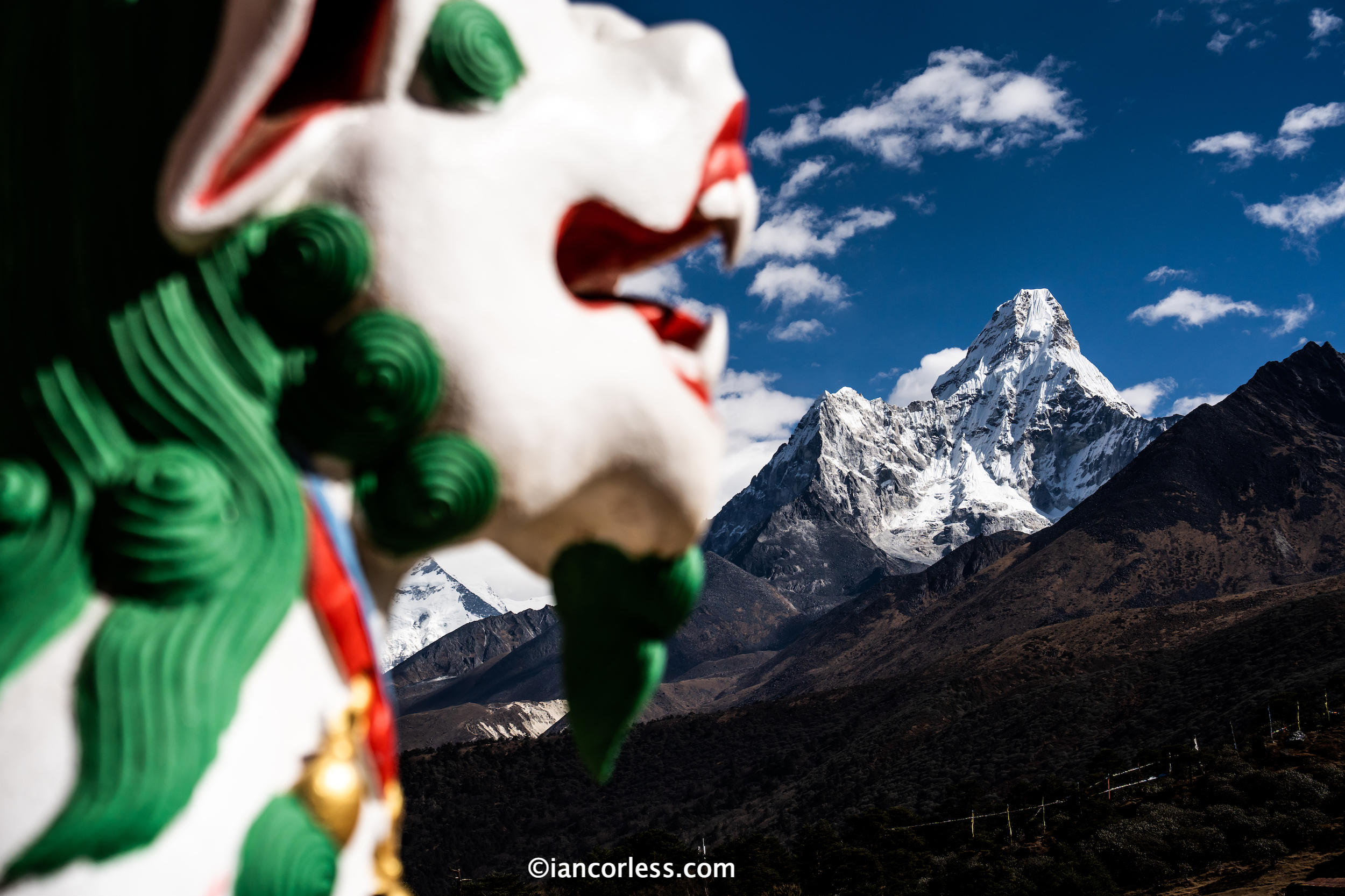
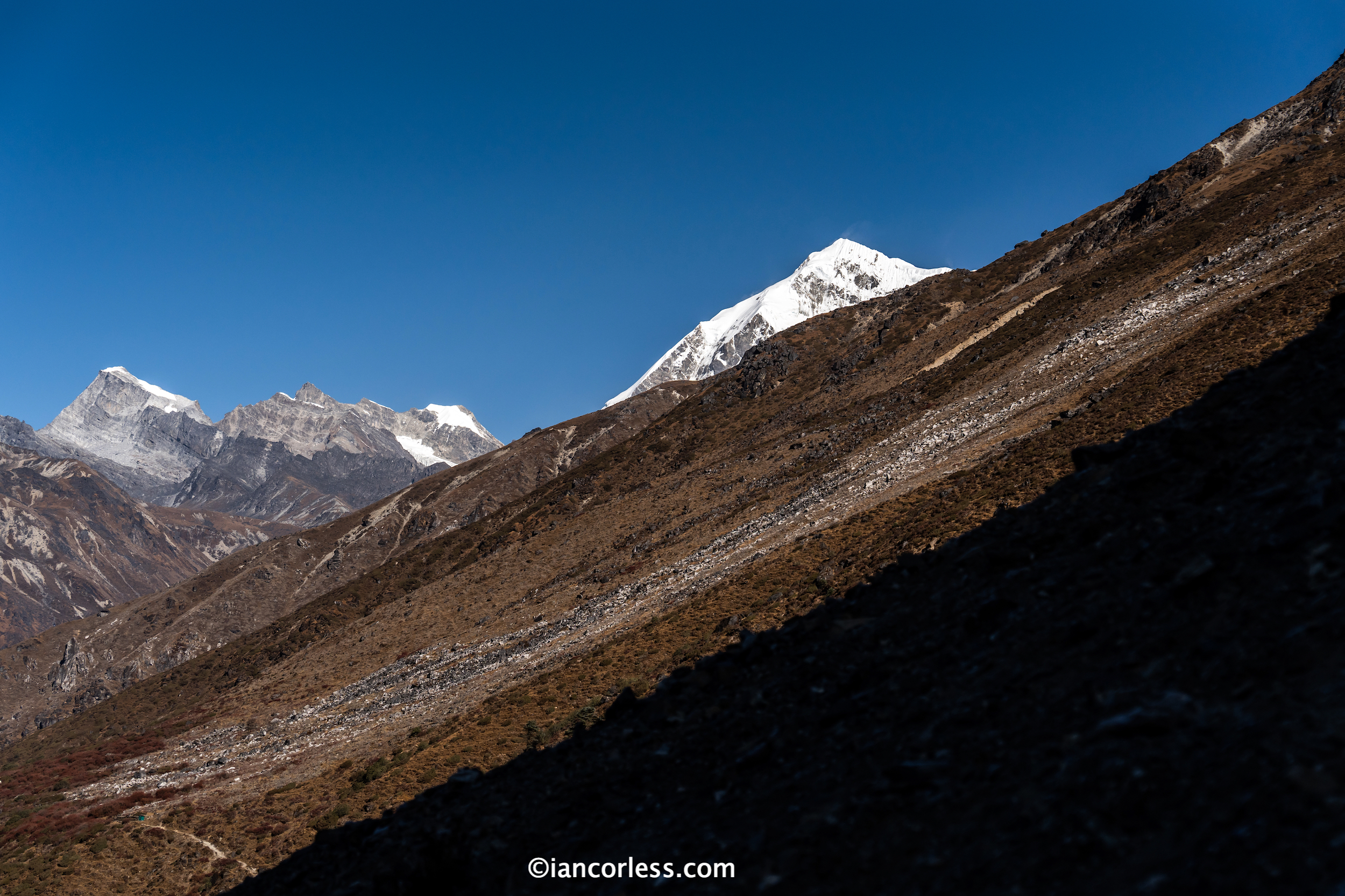
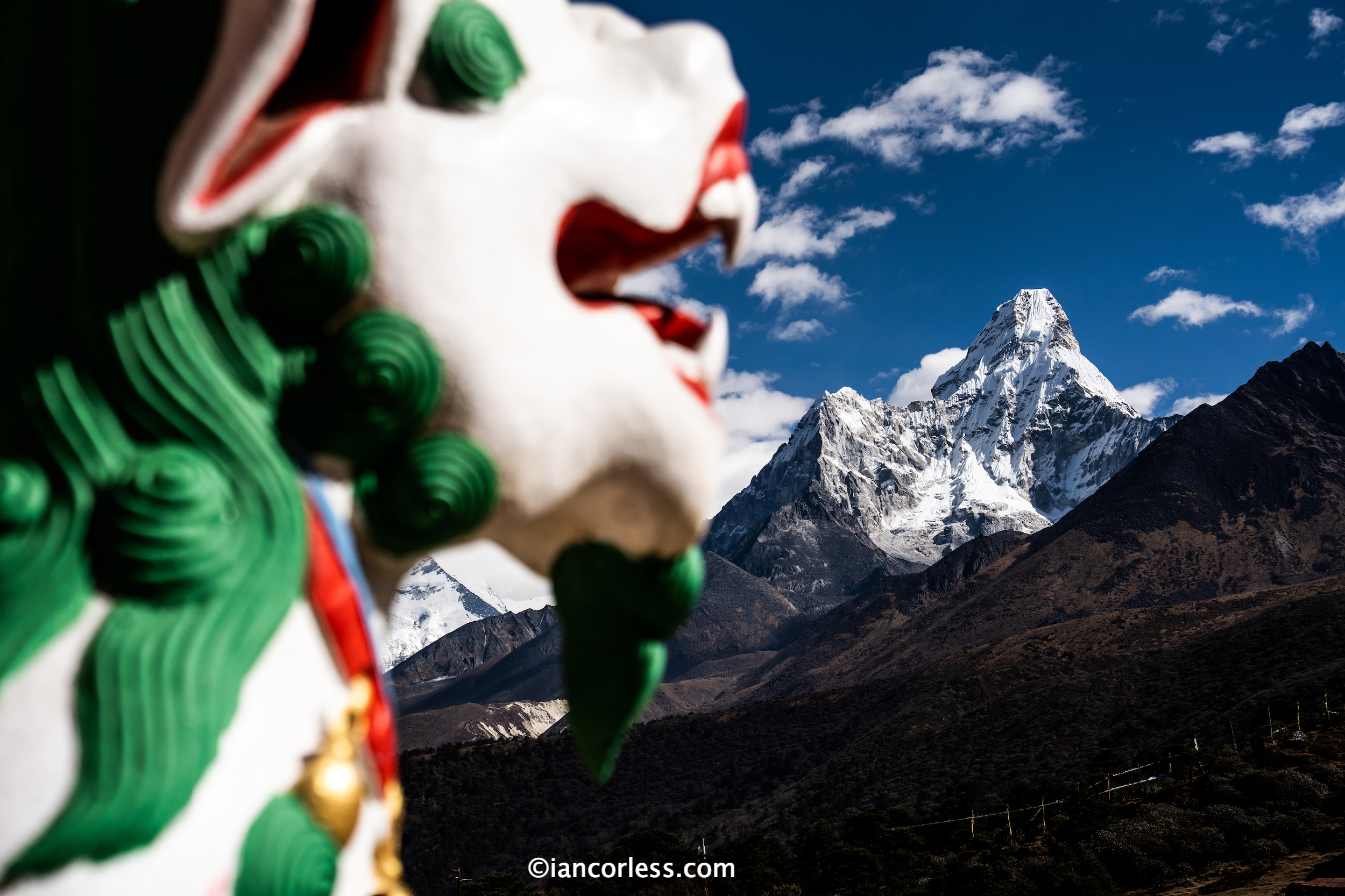
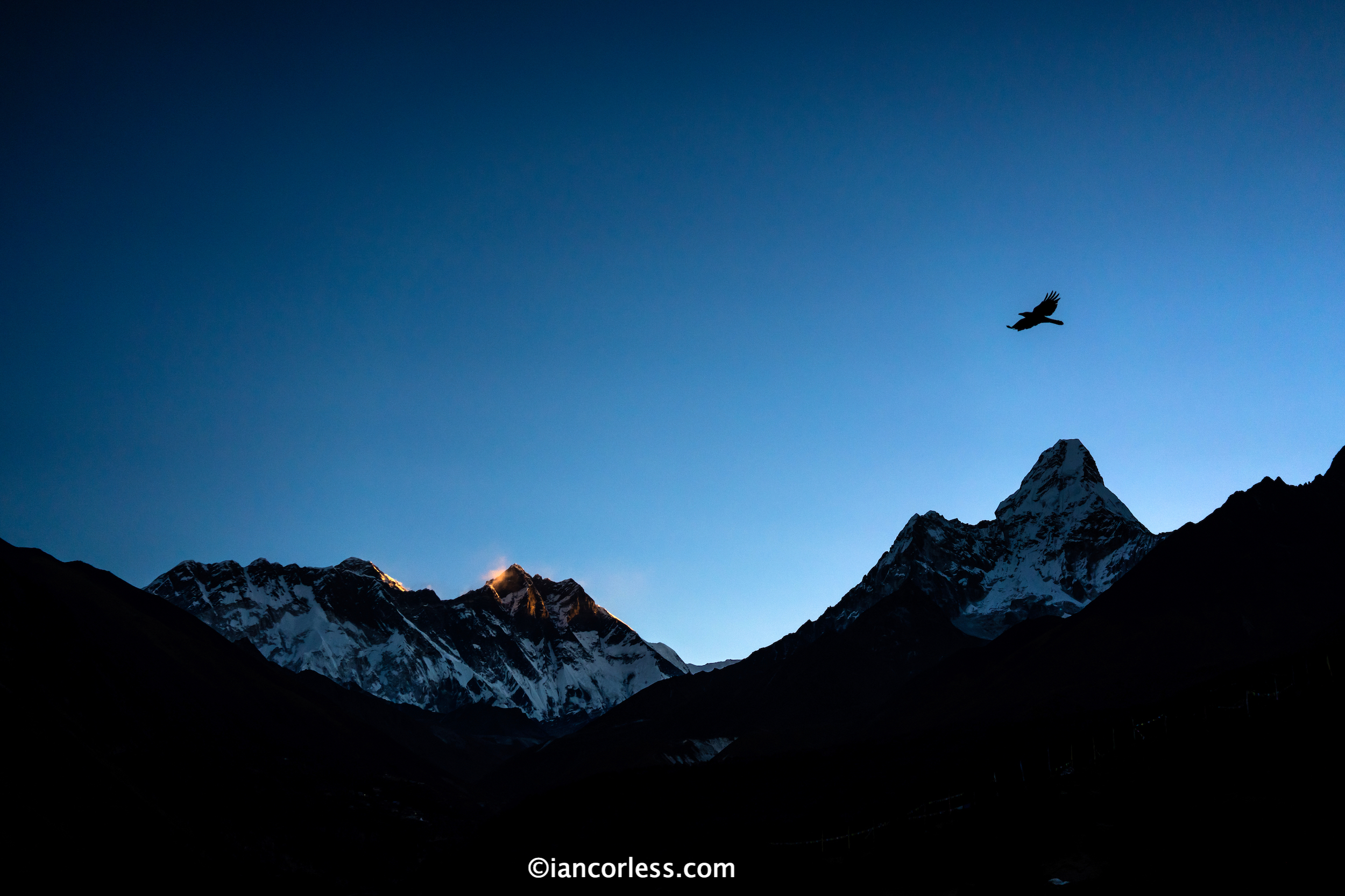
With much of the day above 3800m, it’s a brute, but the compensation is the magnificent backdrop of Everest, Lohtse, Nuptse and the stunning and iconic Ama Dablam.
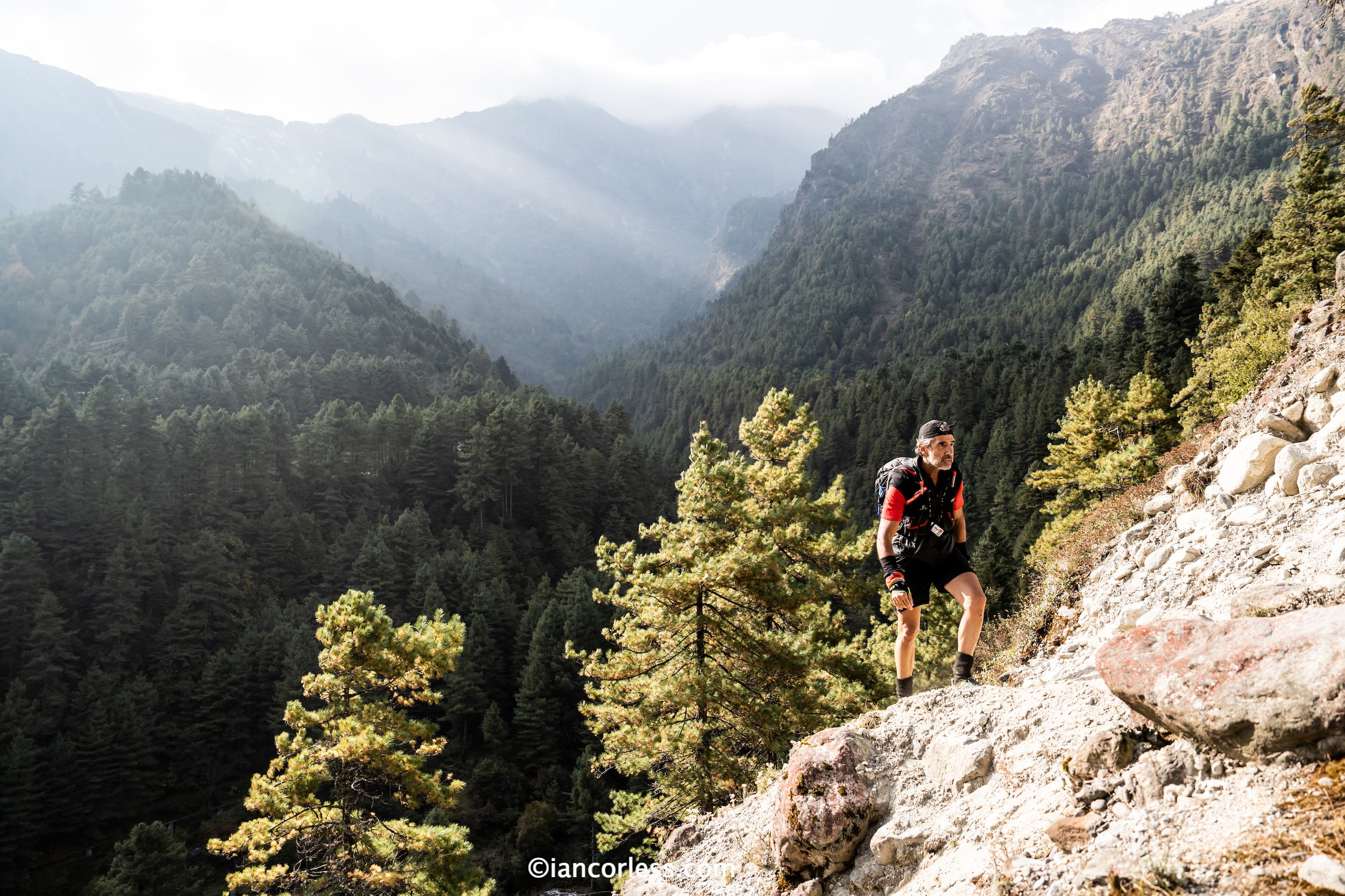
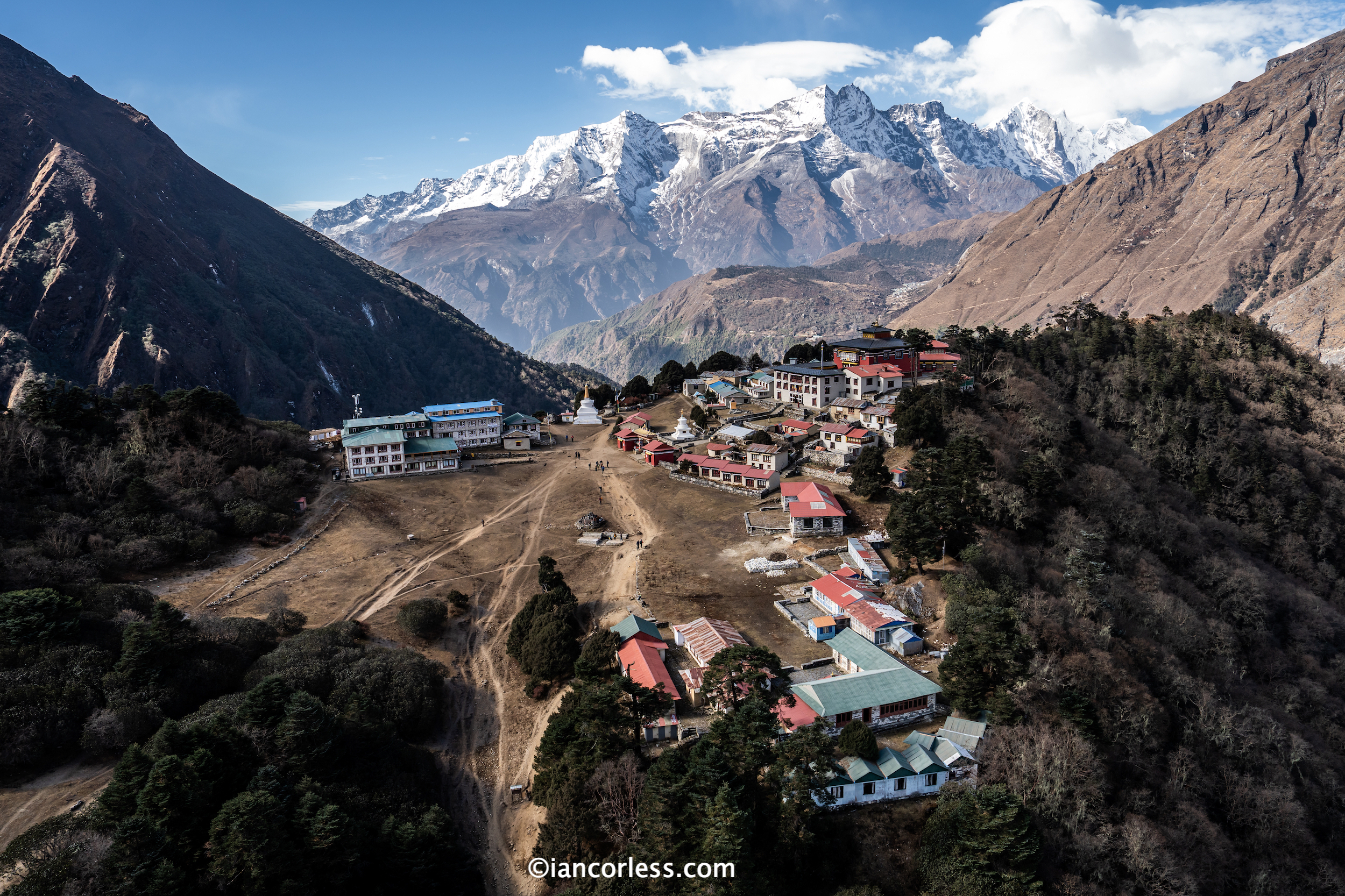
Starting in Phakding, it’s up, up and up to Namche and then onwards to Syangboche at 3760m. From here, a descent to Kumjung and then a climb to Mong La, 3973m. Phortse and a stunning single-track trail to Pangboche with amazing views is the cream on the Himalayan cake as the route travels at 4000m. Finally a descent to Debuche, 3741m, and then the climb to the finish at Tyangboche at 3875m.
The day held no surprises with Miguel and Suman running together and at tge line it was red-line effort from the Spaniard to take the stage win. Jordi Gamito once again placing third.
Purwha Lhamu Sherpa for the women took the stage with a truly gritty performance. With one ankle heavily taped and carrying an injury, she still managed a stellar performance, the altitude no doubt being an advantage. Ester Alves finished second, exhausted, expressing, “One of the hardest things I have ever done!’ Once again, Silvina Perez placed 3rd.
The final stage back to Lukla. At 29km with 1770m+/ 2802m- it is by no means and easy day or chilled day and that was reflected in Miguel and Suman pushing hard all the way to the line finishing well under 3-hours and in course record for the stage. Miguel Heras was the 2022 ETR champion.
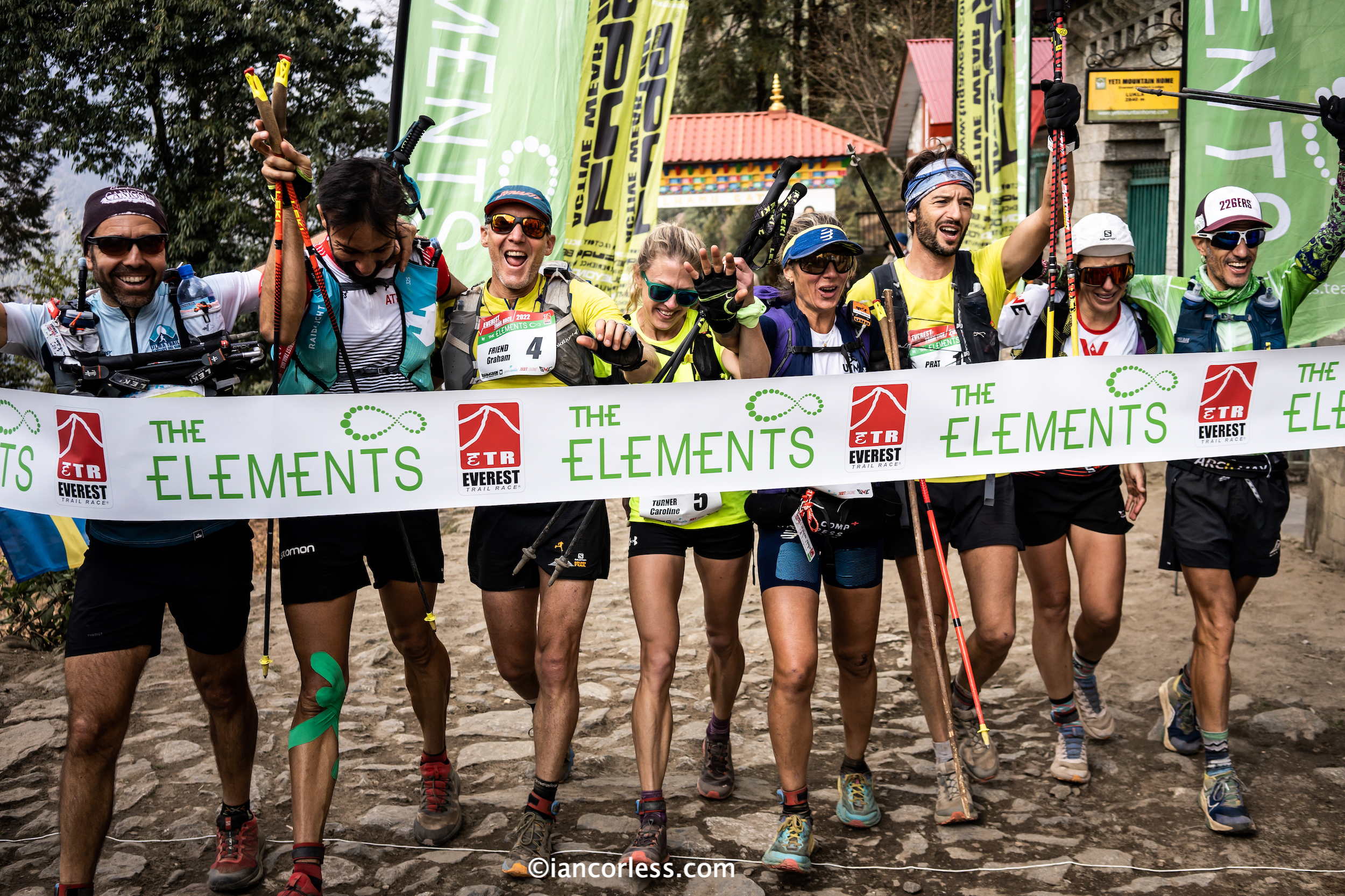
For the rest of the participants, the day was one of victory, the finish line providing the completion of an epic journey. The top women and a group of others, decided to enjoy the day and they all finished together.
Lukla provided an end to the 2022 ETR and the mood was high. For many, the experience had been a tough one. The altitude, climbing and descending providing a much harder and more challenging experience than other multi-day adventures.
“MDS is a walk in the park in comparison to the ETR. MDS may well be self-sufficient, but the terrain here is so much harder, add the altitude and cold nights, the challenge is considerably harder.”
Now attention turn to 2023 and the next edition of the ETR. It really is one of the ‘must-do’ races not only for the challenge but for the immersive beauty and experience that Nepal brings.






















 IAN CORLESS