For my English speaking friends and followers. Here is a transcript in English.
*****
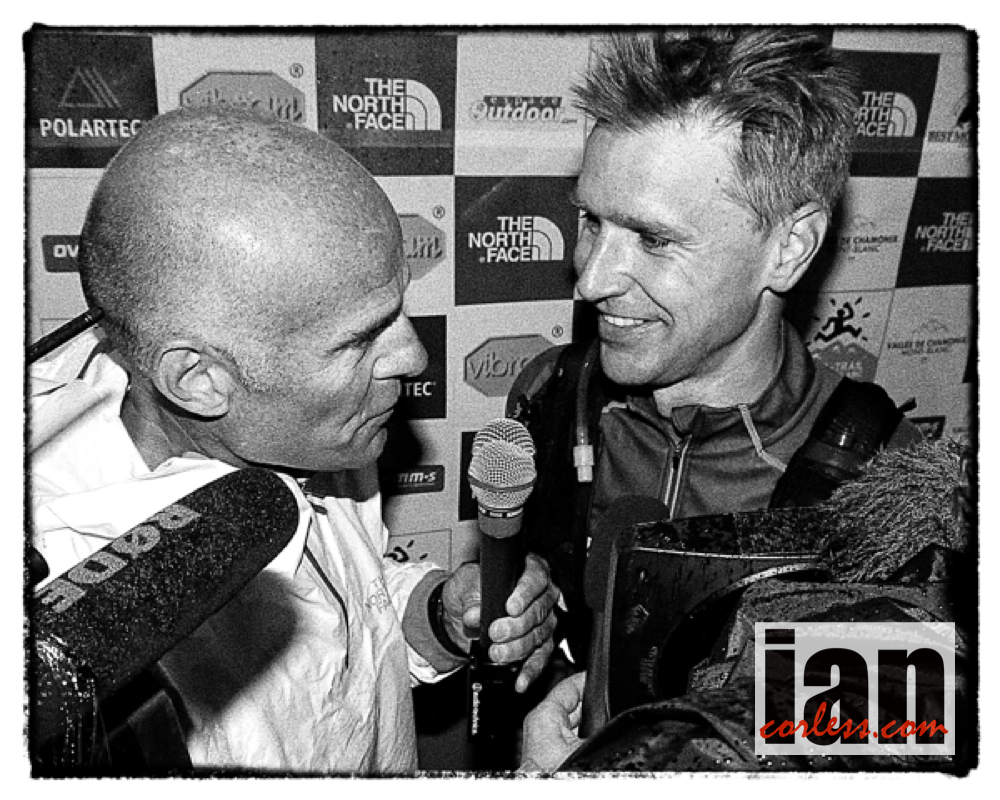
Tells us about how you got involved with Skyrunning reporting
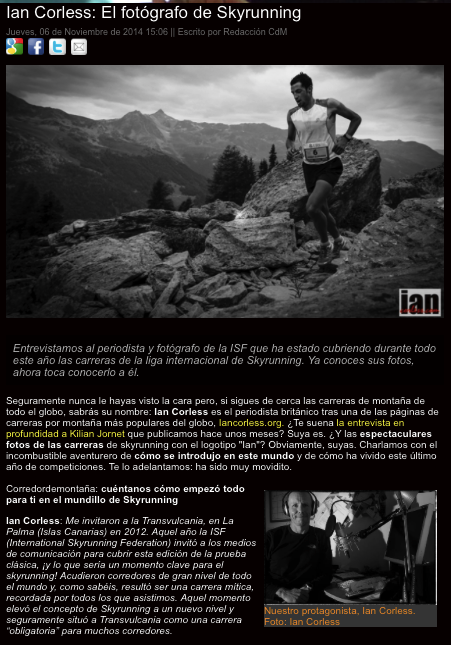
I was invited to Transvulcania La Palma in 2012. The ISF (International Skyrunning Federation) invited media specialists from all over the world to witness what turned out to be a turning point for Skyrunning. It was a key moment. World-class athletes travelled from all over the world and in doing so created what turned out to be a classic race. It elevated Skyrunning to a new level and certainly placed Transvulcania on the ‘to do’ list of many runners.
How long have you been at it now?
I started to work with the ISF as a media partner after Transvulcania in 2012. I went to Zegama-Aizkorri and then followed this by attending many (but not all) Skyrunner® World Series events in 2012. In 2013 I attended most races on the calendar. As you know, the Skyrunner® World Series is made up of five races in each of the categories – VK, SKY and ULTRA. In 2014 I continued this format working on pretty much the whole calendar with the exception of the two races in the USA.
What exactly do you do? Does it take up all your time or do you combine your Skyrunning photography with other jobs?
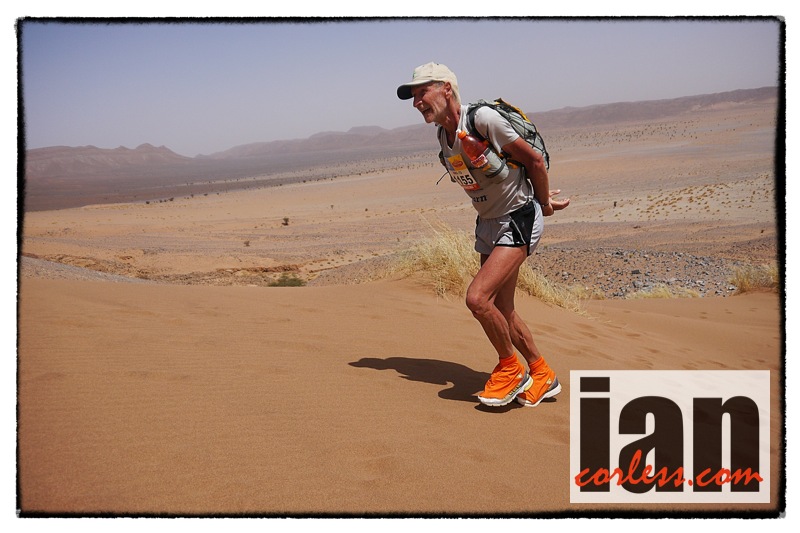
I work freelance in the world of ultra, mountain and trail running. I work on many other projects and not just Skyrunning. For example in 2014 I worked on The Coastal Challenge in Costa Rica, Marathon des Sables in Morocco and this month I go to Nepal for Everest Trail Race and then South Africa for the Salomon SkyRun. I have a very busy calendar and at my last count, I will have worked on thirty-one races in 2014. Depending on what my clients require will very much depend on what services I provide, however, it usually consists of writing and photography to help promote a race and provide feedback for the ultra, trail and mountain running community worldwide. In addition to all this, I have my podcast, Talk Ultra which is available every two weeks for free on iTunes and via my website.
Your opinion of the state of Skyrunning in 2014 and how things might develop next season
Skyrunning has grown incredibly over the past few years. We have all witnessed the boom! The vision of Lauri van Houten and Marino Giacometti is certainly coming to fruition. They had a vision of what Skyrunning may be… risks taken in 2012 at Transvulcania have paid off. However, many forget that Skyrunning dates back to 1989 when Giacometti first ascended the Monte Rosa. I most definitely believe they were ahead of the time. We are all just catching up… I also believe that Kilian Jornet has been an incredible vehicle for the sport, His rise and dominance has coincided with the growth in Skyrunning.
You will notice that the 2015 Skyrunning calendar has recently been announced and we see some changes. In addition the Skyrunner® World Series we now have the Continental Series. This shows how the sport is growing and how the ISF needs to appeal to a worldwide audience. It’s very exciting.
Any amazing anecdotes to tell from last season?
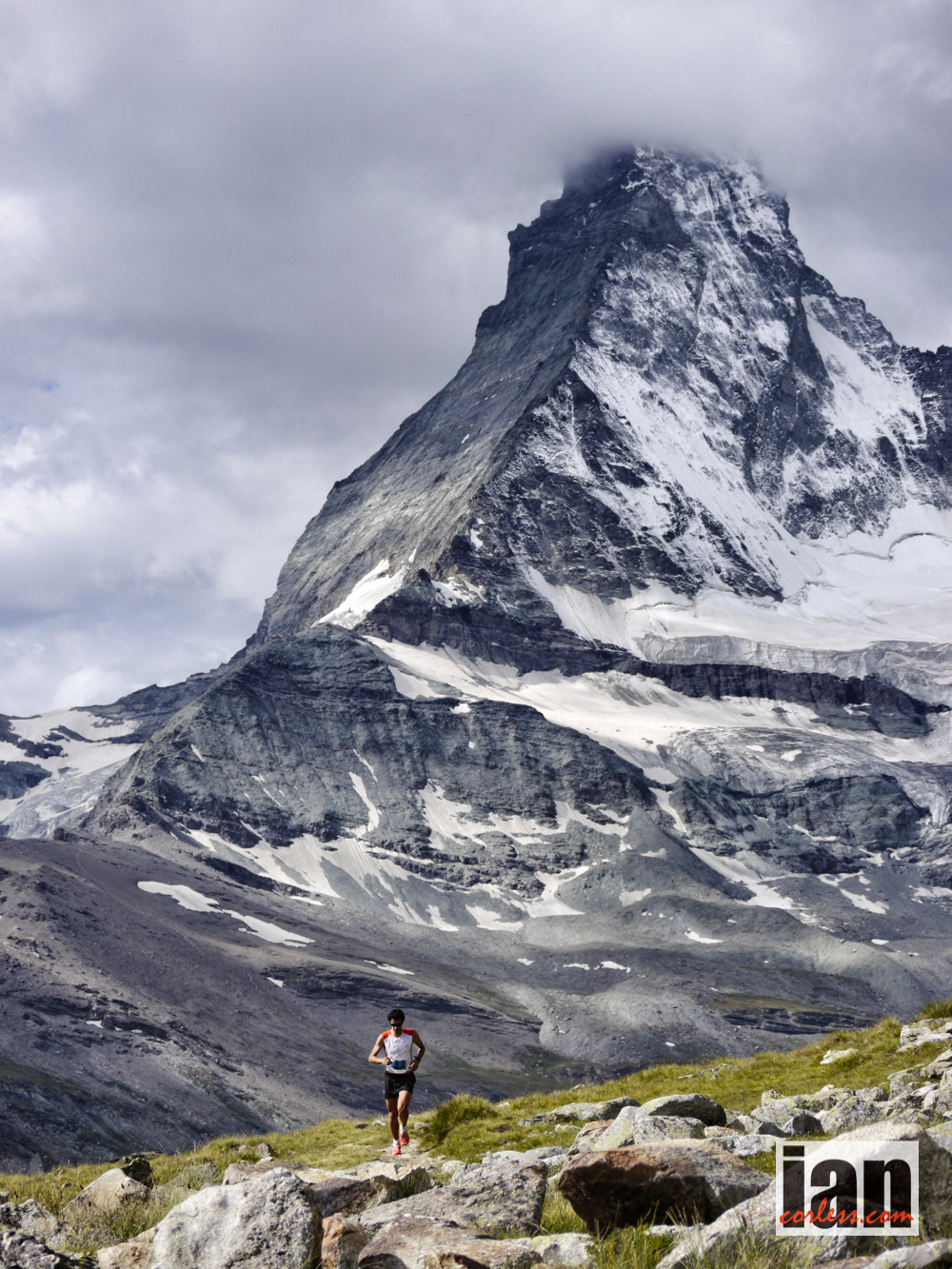
I am very fortunate to spend a great deal of time working with, photographing and talking to some of the best athletes in the world. I truly feel blessed. I have so many great memories and moments. If I had to pick one surreal moment, I think back to Matterhorn Ultraks. Kilian Jornet didn’t run the race but decided to take photographs and support his Salomon teammates. I had climbed just over 1000m vertical to get to a location that would allow me to photograph runners as they came to me with the Matterhorn in the background. I waited for hours, photographed all the front-runners and I was about to make my way down the long descent to make my way to the finish when I received a text from Kilian asking:
‘Are you making your way down?’
I replied, ‘yes!’
‘I will wait for you,’ Kilian said.
I added my cameras to my large pack (it weighs about 10-12kg) and then I made my way to the long and technical descent. After 10-minutes or so, I saw Kilian waiting. We then ran all the way down to the finish… it was ridiculous. I was following the best mountain runner and definitely the best downhill runner in the world with a huge pack and trying to keep up. However, Kilian was extremely kind and ran well within himself. I however was at my limit! But to follow and see his ability first hand was a highlight of the year.
Do you plan to be present at all ISF race events next season?
The calendar for 2015 is larger as we now have the World Series and the Continental Series, so, it will not be possible to attend all events. However, I will hopefully attending as many as possible and following the series as it unfolds.
How do the logistics work out when you travel to new race locations & have to discover where you need to be for your photos?
It is all about preparation. I usually arrive at a race venue two days before the race. I do my research. I look at maps, talk to staff and race officials and then I plan where I want to be to capture the best images. Longer races are easier as they allow me more flexibility. By contrast, a race like Limone Extreme is just over 2-hours from start to the first finisher, so you need to be 100% prepared. A real plus is that I am able to fulfill my passions for the sport in photography, words and podcasting but also get some exercise. I usually have to climb or hike to many of the locations I work from. Occasionally we are spoilt with a helicopter but that does not happen very often! Trofeo Kima is a perfect example where myself and other photographers/ cameramen are transported all over the course by helicopter. Kima or me is still a favourite race, it is so extreme and visually stunning.
Do you always find the right place to get decent pictures at races? Does it ever not quite work out?
Yes, I always ensure that I am in the correct place. That is my job. However, I may not always get ‘the’ image I want. It is what is so great about our sport and what I do. Nothing is guaranteed and I work on adrenaline to help me maximize my potential.
Tell us about your unfortunate “incident” at the Transvulcania 2014.
2014 has been an interesting year with a couple of incidents that I hope don’t happen again…
In May at Transvulcania La Palma I had photographed the race start and then I was making my way to the mountains to a location I had found to photograph the front-runners. On the coastal road I felt my car twitch and then I lost control. I veered to the right and lost control. A huge concrete block stopped me going over the edge. I was not going too fast but the car was completely written off. I jumped out of the car with no personal damage. I was so lucky! My first priority was that I needed to get to the mountains…
Later in the year I had a second incident. I was in Barcelona transferring to go to a race in Catalonia. I was at a restaurant and I had ALL my camera equipment and computer stolen. It was horrendous as you can imagine. My whole life in my bag: gone! It was a pretty tough two weeks that followed and my insurance only covered two thirds of the cost of all the stolen items. However, I managed to replace everything.
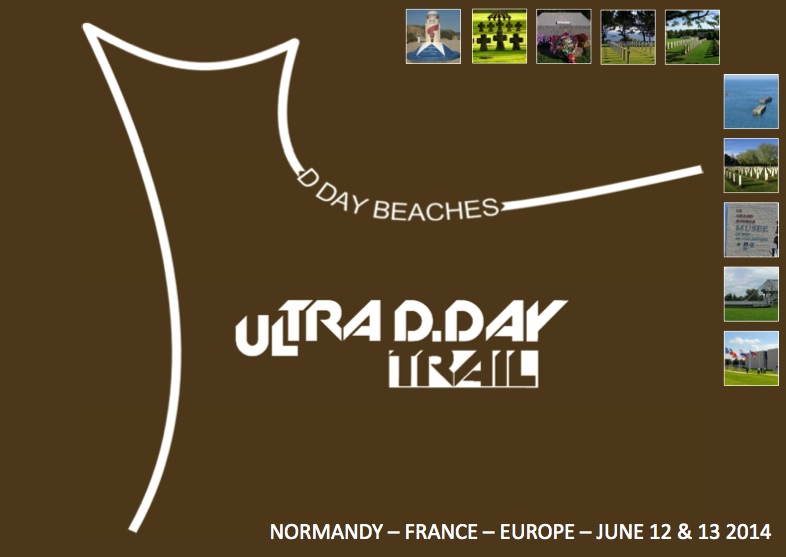
I was recently contacted by Sebastien Chaigneau (The North Face) to be involved in a project to celebrate the D-Day landings in Normandy, June 6th 1944.
2014 is the 70th anniversary!
The Project
Representing 7 important nations from the D-Day landings, 7-ultra runners will join 7-soldiers from prestigious military academies:
The United States Military Academy West Point
The French Special Military School of Saint-Cyr
The British Royal Military Academy Sandhurst
The Canadien Royal Military College Saint-Jean
The officer of the Army School in Dresden
14-athletes will run 100-miles together and will stop at ‘check-points’ that will not only allow some downtime but will also allow an opportunity to commemorate past events.
This ‘Ultra-Trail’ will use a majority of paths and trails with respect of the environment and natural spaces.
“Honoured to be named as one of 7 international runners (along with 7 military runners) running together for 100 miles along the landing beaches/commemoration sites of France in June to commemorate the 70th anniversary of the D Day landings that changed the name of our game. Change your game by writing your own rules!”Jason Loutitt
The runners (tbc)
CANADA = Jason LOUTITT
USA = Dian Van DEREN
FRANCE = Bertrand COLLOMB PATTON
GERMANY = Philip REITER and Thomas WAGNER
POLAND = Natalia SIERANT
UNITED KINDOM =
BELGIUM =
Schedule
Starting at 0400hrs on Thursday June 12th at Utah Beach, the 14-runners will progress along the 100-mile route with the objective to finish at the ‘Memorial’ in Caen at 1400hrs Friday June 13th.
It’s an incredible opportunity
This is an incredible opportunity for a UK ultra runner to be involved in a moment in history.
IS THIS RUNNER YOU?
If you think it is, please email iancorless@mac.com explaining why you think you should be considered and please provide a running CV.
IMPORTANT: A UK RUNNER HAS NOW BEEN CHOSEN. IF YOU’D LIKE TO BE CONSIDERED AS A RESERVE, PLEASE FORWARD DETAILS AS REQUESTED.
Please note:
You must be able to run 100-miles within 32-hours, including breaks within the context of this D-Day project.
You must be available ideally June 11th – June 14th tbc.
All expenses will be covered
Deadline for application – January 22nd.
This event will be open to the public and the media. You will be representing your country in a key moment in history. Please, only email if you are serious and committed.
I am able to provide a PDF document that outlines the whole experience with more specific details should you require it.
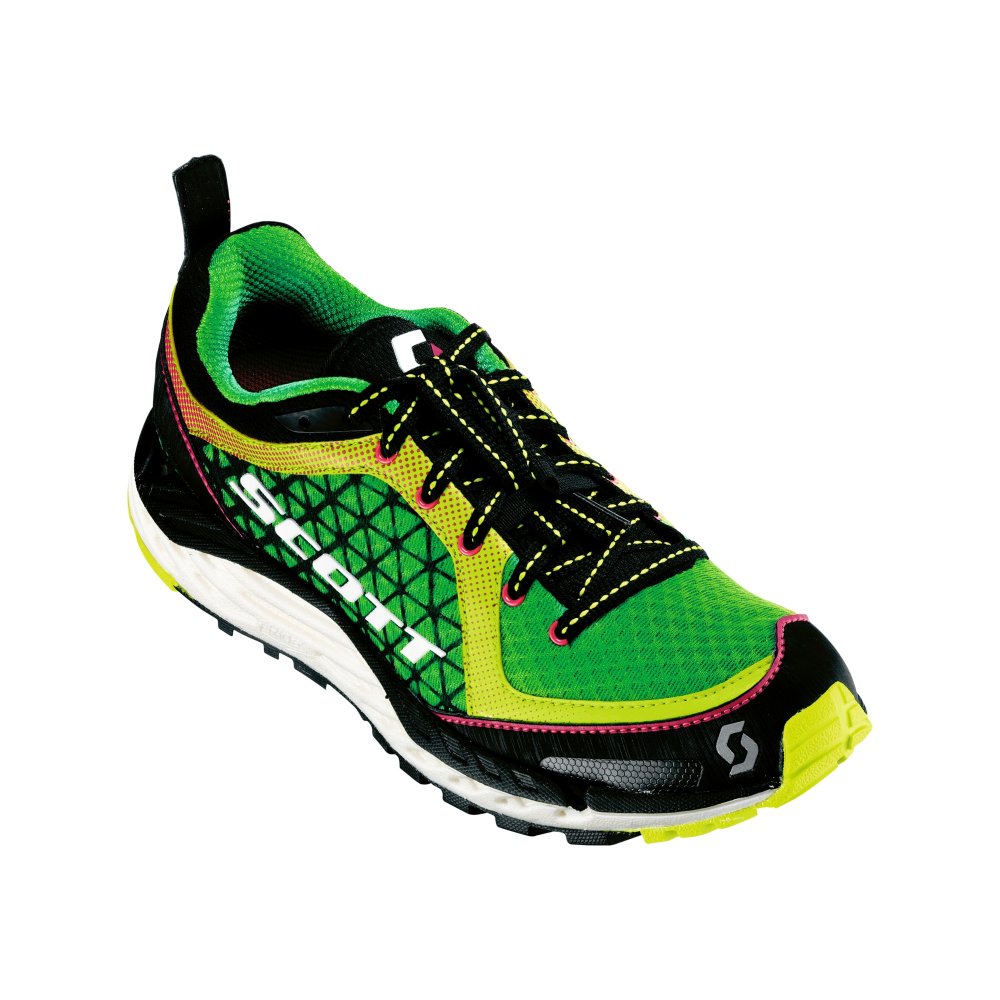
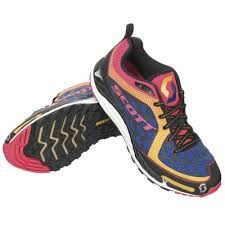
When Scott asked me to test the Women’s T2 Kinabalu, I was very excited to try out a brand of shoe that is not as well known to UK and French trail runners… ‘Scott make bikes don’t they?’ was a typical comment!
Love at first sight… Like most female trail runners, I like a run shoe to look good and admittedly on the outside it’s a sexy shoe – bright green, sporty and light-weight.
But what about the technical and practical specs which are equally important? Well, after having tested the shoe on 200km of intense rocky mountainous terrain in France over one week, I can definitely confirm it is:
• Durable
• Comfortable
• Lightweight
• Energy efficient
• Stable
The above qualities were exactly what I was looking for and all my expectations were met.
Durability, stability and eRide™ Technology
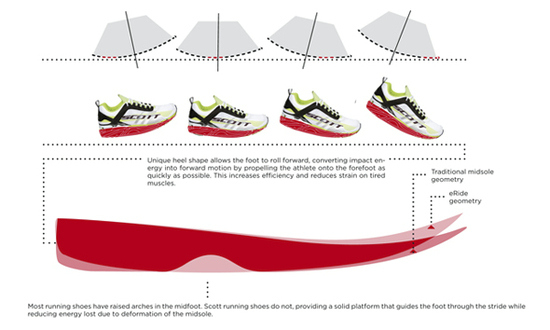
Usually after intense weeks on hard trail terrain like that, my trail shoes “have done their time” but I was surprised to find that the soles were hardly worn. I have an atypical and asymmetrical running gait, which means I heel strike heavily on one foot and the wear shows after only a few runs on my trail shoes. Not the Scotts though. But then the Scott shoe is built using the patented and scientifically-researched SCOTT’s eRide™ Technology – that unique rocker shape creating a very stable midstance which heel strikers like me strive for. Initially it took a few runs to get used to but I quickly felt the benefit of the rocking motion provided by the shoe and it meant I was heel-striking less and running more efficiently.
The shoe has an 11mm drop; in this current climate of ‘low drop is best’ it may mean the T2 will be snubbed by many! Don’t be too hasty. In use, this shoe feels like a much lower drop shoe, primarily due to the eRide™ (rocker). It keeps you on your forefoot with good technique. They are a pleasure to run in.
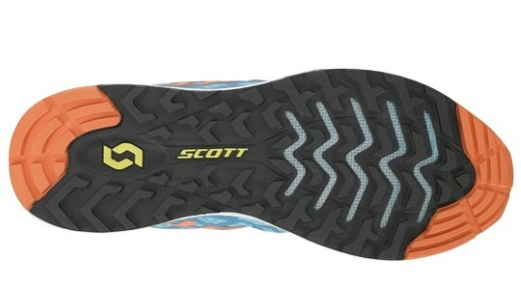
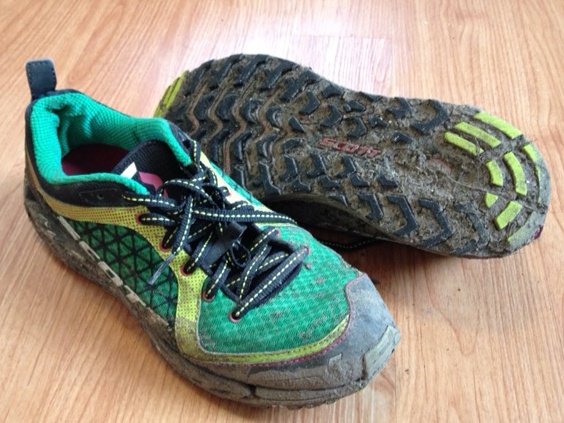
After the week on rock French trail my soles had hardly worn. My podiatrist who is an avid cyclist took one look at them and said “this is true Scott quality, great grip, rolling resistance, durability and ride quality”.
Shortly after that I departed on a 10-day multi-stage event to Northern India, Rajasthan and as I had luggage restrictions, was faced with the dilemma of taking only one pair of run shoes. I knew I would be doing a mix of trail, desert, tarmac and dirt road. No hesitation, my multi-purpose, train-adaptable Scotts were in my luggage. Although a winter shoe, they were perfect on all types of terrain. I had no issues transitioning from the Thar Desert to the tarmac road leading to the Taj Mahal. Conditions were hot and humid and as much as the shoes kept my feet dry and warm on muddy, wet British towpath and boggy fells, the breathable mesh upper equally kept my feet cool in Rajasthan. And although I didn’t use gaiters as the desert/dune stages were not too long, I had very little sand in my shoes.
Lightweight
The shoe features an Aerofoam midsole for reduced weight and it’s definitely lightweight at 265g (UK8) a bonus for me, especially over long ultra-distances or long training sessions. More importantly – it is lightweight but not at the expense of durability or stability. After several runs the midsole ‘bedded’ in and started to mould to my foot providing additional comfort. The sock liner is perforated and the midsole has ‘drainage’ ports to allow water to escape; great for water crossings or wet weather running.
Comfort and adaptability to varied terrain.
Comfort with a capital “C”. This is an important criterion for me whatever the shoe ….but even more so if I’m going to be running long distances on arduous, rocky terrain. Not a blister or hot spot and no chafing. I ran in mud, on dry dusty rocks, shingle, slippery descents – the shoe adapted to all the changes in terrain and weather. Not surprising as the shoe features wet traction rubber and a water-drainage system. The grip in muddy terrain is great and much appreciated by runners like me who prefer a drier terrain. I felt as in control tackling muddy, British bog as I did on dusty and slippery rocky mountainous French trail or even running down shingly, stony descents.
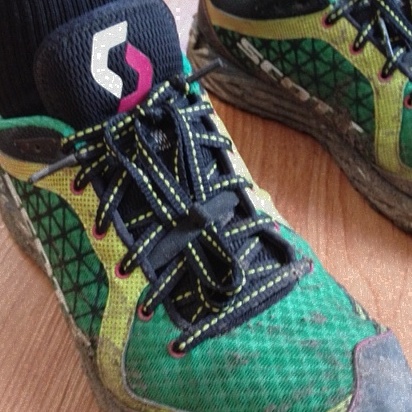
I also liked the bungee lacing system (elastic on the front of the shoe to stow laces) – extra security for a runner like myself who doesn’t want to be tripping over loose laces on a tricky, technical descent.
All in all, this is definitely a great winter shoe with great protection and traction at minimal weight.
Female-specific
Needless to say Scott thinks about us ladies too, not only as far as the colour is concerned but also the female-specific fit. By the way, I opted for the bright green colour but the shoe comes in a trendy girly pink too!
Conclusion
Love them! And I get noticed to:
“Are you wearing Scotts? Didn’t know they made trail shoes!” I get asked.
“Well you bet! And pretty damn good ones at that!” I quickly reply.
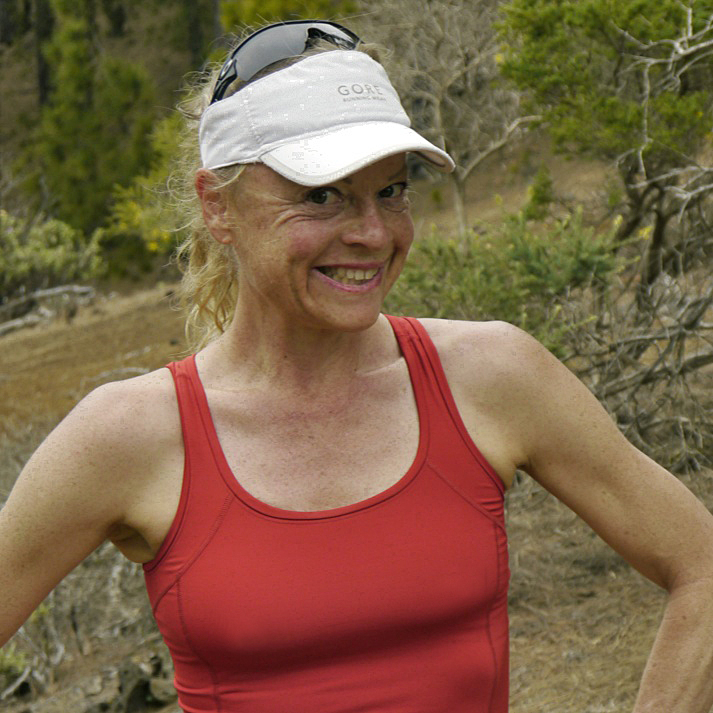
Niandi is South African born, a former resident of Paris, she now lives in the UK. A runner for over 20-years; Niandi has completed Comrades Marathon 13-times, Washie 100 2-times and has finished well over 100 marathons and ultras all over the world. Currently residing in the UK, Niandi splits her work life between the UK and France.
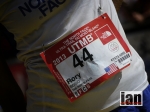
Once again, the races of The North Face® Ultra-Trail du Mont-Blanc® have gathered at the heart of the valley more than 50 000 people who came from around the world to be a part of this celebration of ultra running. Today early afternoon, the young frenchman, Xavier Thévenard from the Jura région won the TNFUTMB, along with an absolutely incredible performance by TNF athlete, Rory Bosio who not only set a new course record but placed 7th overall.
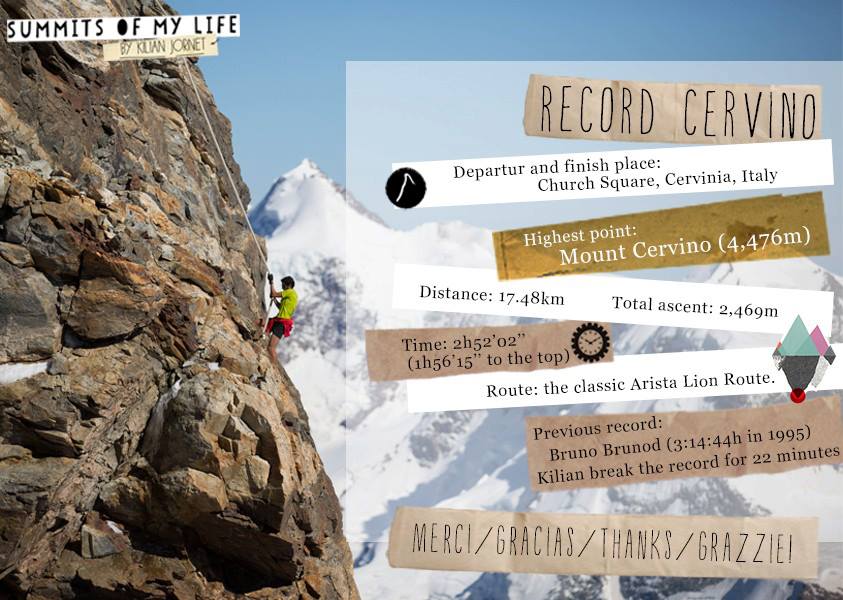
It’s the day after the Matterhorn Ultraks and just four days after Kilian Jornet’s successful attempt on the Matterhorn Summit record attempt from Cervinia. It has been quite a few days for this iconic mountain and although Kilian has excelled on both occasions, we all know, the mountain is still the boss.
Kilian arrives with Emelie Forsberg looking relaxed and fresh after a late breakfast. I congratulate him (and Emelie) once again on topping the podium at the Skyrunning Matterhorn Ultraks race and ask him how he feels, ‘I am a little tired but feel good. I was certainly tired in the race but I didn’t push too hard. I just did what I needed to do to win the race’.
Our conversation turns the TNF UTMB and we discuss how the race will unfold for the men and women. Kilian and Emelie are animated at the prospect of Julien Chorier, Miguel Heras, Anton Krupicka and the other contenders going head-to-head. Emelie gets excited at the thought of Nuria Picas in the ladies race, it’s her first 100-mile race and of course Emelie knows the Catalan well. We could talk all day but eventually I settle down with Kilian in a quiet corner and we discuss the Matterhorn.
IC: It’s the day after the Matterhorn Ultraks, firstly Kilian, congratulations on your win! Another great race with Luis Alberto Hernando but maybe what is more impressive is that it comes just a couple of days after your Matterhorn Summits. How are you feeling?
KJ: I feel good. It was a super good race with a great atmosphere. To run with Luis Alberto Hernando was super nice. I was very tired before the race, particularly the day before. I used a strategy for the race to take it easy and take the win in the last kilometers. Yes, I think I was much more tired than in other races this year.
IC: We spoke in the Dolomites and we discussed then that your next Summit would be the Matterhorn. You travelled to Cervinia and you lived here for weeks to train. You had the utmost respect for Bruno’s record of 3:14:44. The Matterhorn is a dangerous mountain. You said you needed to learn the mountain, to understand every step. I think in that time you went up and down the mountain multiple times. Just before your attempt you said that the record was in your grasp… what is it like to look at something that is perceived as being an iconic record, a record from 1995, you said in a quote that it was a record you had dreamt of. Something from childhood that you wished you could achieve. It is a massive undertaking. For you it is more than a record, it’s your life.
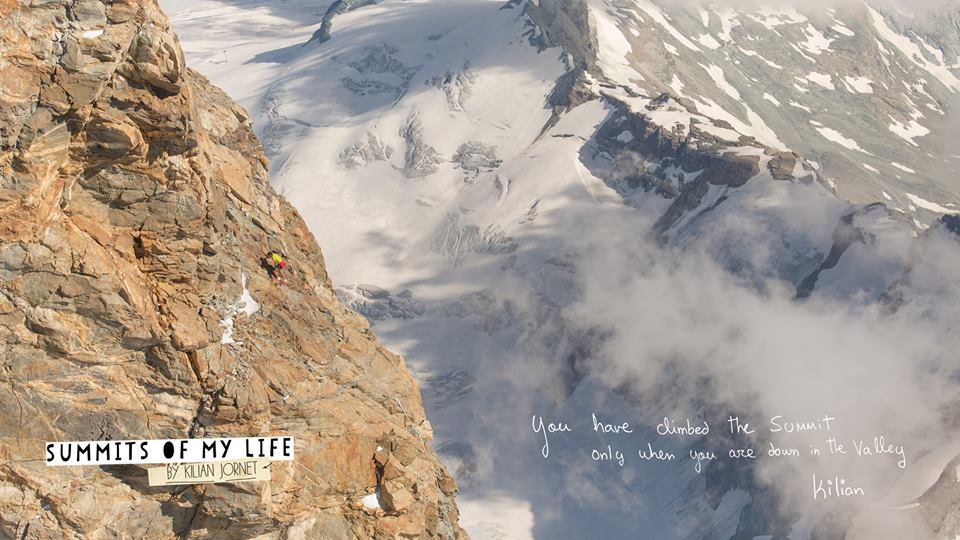
KJ: I remember it well; I was 13 years old. I entered into a mountaineering center; I was talking to Jordi, the trainer. I said at the time that the record was impossible. I spoke to Jordi recently and he reminded me that I was dreaming about the Matterhorn all those years back and about the record. I thought it was the ultimate expression of our sport. It’s a beautiful summit. It has a logical line. It is a hard record, it is push running and climbing, so, it was in mind for many years… more than Mont Blanc and all the other records. About five years ago when I started to think about Summits of my Life, the Matterhorn was my goal. The other summits were really preparation for the Matterhorn and Bruno’s record. For me, it was the most difficult record in Skyrunning and mountain running. For example, Pikes Peak is not Skyrunning. I was really afraid, not of the mountain as I was climbing a lot but of the time. I summited the Matterhorn nine times before the ascent. The first time you climb you become aware of what is possible. You go up and down and say, wow, this is the time I need to beat. After going up and down nine times I think okay, I know the mountain, I am not going to fall, I know this mountain well. I was aware of where I could go hard and where I needed to go easy. However, the morning of the attempt I was nervous. I thought to myself, will I do this record or will I do four hours?
IC: A few people asked why you made the attempt at 3pm; it seems quite logical that the Matterhorn is a busy mountain so I assume the mountain would have been less busy?
KJ: Yes for sure. It is a busy mountain when conditions are good. When I climbed nine times I saw hardly anyone, just two or three teams. I was alone. The week of the attempt we had good days with warm and dry conditions and everyone was on the mountain. Over one hundred teams! So, I was talking with all the guides and the helpers. We asked the question, what do we do? So many people on the mountain and it would have been impossible. My first idea was to start between 7-8am but it would have been crazy to pass people. We decided to start later. It was the perfect decision. It was warm at the summit and I wore just a t-shirt and nobody was in the way. Everyone was going down or in the hut. I just had the safety guides to help. It was perfect!
IC: In the build up to the record, you actually met up with Bruno Brunod. Did he go on the mountain with you or did you just talk about your attempt?
KJ: Bruno said he never climbed the Matterhorn after his attempt. We met in Cervinia and discussed his record. What conditions he had, how he prepared, how he was mentally and then we discussed the rope, the short cuts and how he made time. It is funny, Bruno stopped running in 2003 but last year he started running again and he is now preparing Tor des Geants. He never ran long distances; he was afraid. I said, c’mon man, you are strong, and you can do well in these races.
IC: So, Bruno has gone from no running to doing one of the longest races on the calendar, I guess when you are Bruno Brunod you don’t do things by half. When you go on the mountain to learn and understand, what process does that involve? Do you have several options to attempt the summit and therefore you try them or do you have a defined route and then you put that route in your mind so that you know every step. You know you can push in one place and you won’t slip in another place?
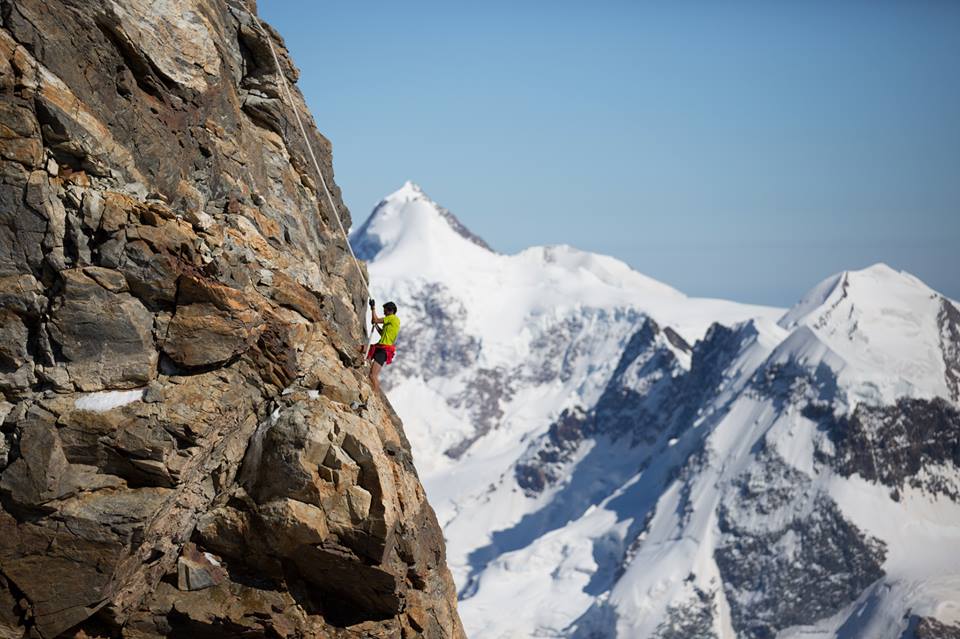
KJ: It’s one route. The Lion Ridge is the classic route and the fastest. It is the historical route and the same as Bruno used and those before him. You work out the differences but it is a thin ridge, you have several places that you can pass but yes, it is about planning. It is about knowing where to put your feet, knowing where to push and when not. I think you need to understand the mountain. You have parts in the west and north face and they are thin in the ridge and you can have ice. If you go in the morning you will have ice. If you go after 10am then this will be water so you can go there. You need to spend time to understand how it works, to understand the mountain and its life. Always in the north face it was icy, so I was aware I needed more care. On the west side I could push harder as the rock was warm and the rubber of my shoes would have better grip. It is important to spend time and understand that exactly. For example, if it is cold or windy, my shoes don’t grip the same as a warm day. I need to know this so I know exactly where to go. It is super important to understand the mountain and how the weather conditions are.
IC: On the face of it, people look at you and think you are very relaxed and casual. I know, I have seen you work and I have seen you study a mountain, you know the history, you go into in depth research to make sure these attempts are correct and that you know what you are doing. It is obviously very important. You have mentioned a simple thing like shoe rubber. Did you have special shoes?
KJ: Yes I tried different rubbers. I always used the Salomon Sense but I had different soles, different grades of rubber. For the attempt I used a softer rubber for grip. In the snow any shoe glides. You just need the technique of a flat foot and the ability to push.
IC: What is great about these attempts in comparison to Bruno, for example, in 1995 I guess Bruno stood in the square in Cervinia and just a few people were around probably having a beer, but Marino Giacometti and Lauri Van Houten were instrumental in Bruno’s attempt. They helped finance it, they arranged the safety, they arranged a helicopter and of course they got involved in your attempt. Fortunately for us we had the opportunity to have Seb Montaz follow the process, for those who know Seb, he is like your self a master of his craft. We have had some great glimpses of your summit; short videos are already on YouTube. Clips of you running a ridge jumping a crevice, or sliding down snow. It brings what you do into perspective. We can talk about you going up and down the Matterhorn but it’s easy to think, ok! But we may not have an idea of the difficulty or danger. These videos convey this. It is an important aspect. Is it a way to record you achievement but is it also a way to attract people to the mountains and also let people understand the beauty and danger?
KJ: It is the second for sure. It is not about my achievement. When I stop it will be in my mind. It is more a learning process. It enables the people to join us in the mountain and it enables everyone to understand. It’s beautiful, it is nice but it is also very difficult. It takes preparation, we do take some risks but the videos help motivate and inform. The way I go the mountain is possible but you need to learn. For me, my summit was the Matterhorn; I understood my capacity, my ability and my technical skill. I accept the risk. For everyone else it may be here or close to the home. We want to show and share that you can be light in the mountains and hopefully more people will understand. I go naked to the mountain.
IC: The actual record. You started 3pm from Cervinia. You are in Salomon Sense, shorts, T-shirt and a jacket around your waist. You look like you are going for a run… of course that is what you are doing! You start and in the early stages it is easy and then it becomes tricky, technical, you have ropes, ridges, faces to ascend and so on, how do you process the attempt in your mind. Did you have specific targets, so, did you know what time you wanted to be at a certain place or do you go on feel? I know in the early stages you only had about 3 minutes on Bruno’s record, it was maybe a little too hot but once past a certain point you really opened up time. Of course on the descent you came down super quick. You did 2:52:02 instead of 3:14:44. I believe Bruno predicted 2:52! Were you surprised?
KJ: I was really surprised. When Bruno said 2:52 I said, no way. I was thinking, I might break the record by 2-3 minutes maximum. Maybe 3:10 would be a good time? During my practice runs I never ran fast because in the hard parts you don’t want to go hard. It’s like a lottery and taking numbers… you leave taking numbers for race day! The only time I went faster was the second day when I trained. I thought, wow, maybe I can beat Bruno’s time. If I am close to Bruno’s time then I can go faster. I spoke to Seb Montaz on the morning of the attempt, he said if you are at the summit within 2 hours it will be so good, you will have time for the downhill. I said, yeah I will be so very happy. When I started the summit attempt it was the afternoon so this was good at the top because it was warm, however, it was warm in the valley too. I don’t like warm. I started with a good pace but it was hard to find the strength. I saw lots of people and friends. Bruno was shouting at me, ski friends shouted, guides from Cervinia, Nuria Picas was there and so on… they gave me energy. I said to myself, I must keep going, I must push. I had Bruno’s time in my mind but I had no prediction of what I could do.
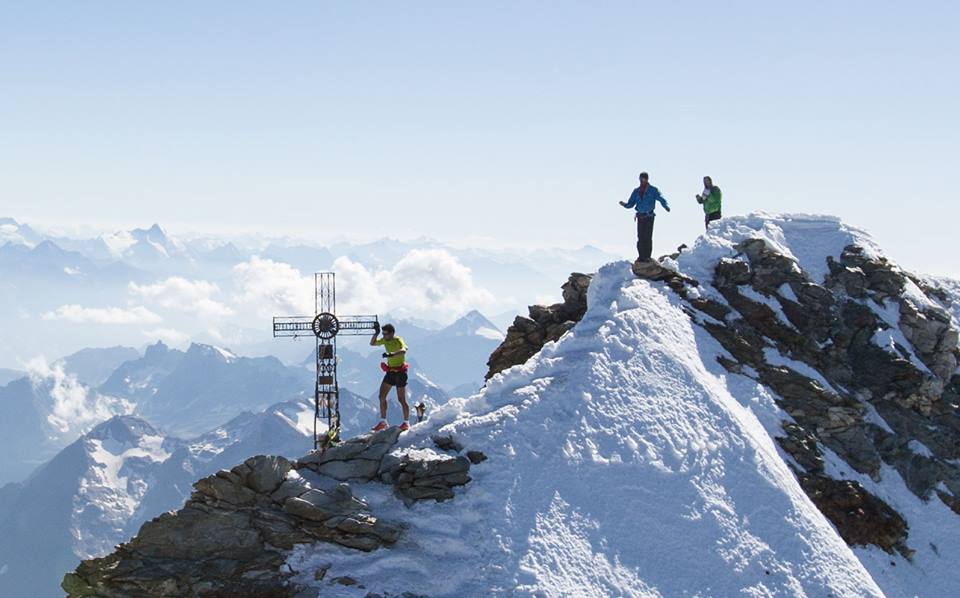
I was close to Bruno’s time until the Leone Col then the ridge starts and then I came into my own. It is where I love to run. It’s technical, you need to climb and you need to push. It is exposed. I love to be exposed on the mountain. From here I was not moving fast but fluid. This is the way to move in this terrain, if you go fast and you go more than you can you will have an accident. Moving fluid allows me to move quickly. I started to gain time all the way up to the summit. I looked at my watch and I saw I was almost 12 minutes in front of Bruno’s time, I said to myself, wow, this is incredible. It is possible! Okay, I said, I can do it. I was happy but I could not disconnect. It is a long down hill to Cervinia; I needed to be sure of every step. The boss of the guides in Cervinia said to me at the summit, you can do it! I started down in deep concentration. I was enjoying it so much; I love to run the technical sections. You don’t push with your legs; you push with your mind. Where to put your feet, where to put your hands, when to glide, when to go faster, when to stop, this is what I love, I was enjoying it so much. When the most technical part stopped, I realized I was almost 20 minutes in front of Bruno; so, the last part was just pushing to the finish.
IC: Myself and many other people were very worried about the Matterhorn. We respected the mountain and we anticipated that you would push; pushing brings danger, so when you got to the summit and you knew you were ahead of Bruno’s time did that mean that the descent was easier, you took less risks than if the time had been very close.
KJ: Yes of course. If I had been at the summit in 2:10 I wouldn’t have come down at the speed I did. I would have taken more risks. I also think that this doesn’t work! Many people who saw me said that I was going down very fast, they said I looked really fluid and that I wasn’t taking risks yet I was very fast. I think this is the way to go down the mountain. If you take risks the body position is different, you can’t glide as well and so on. You lean back and this slows you. If you feel confident, you can go fast. I think maybe I could have gained 6-7 seconds by taking risks. It’s nothing! These 6 or 7 seconds may have been my life… I knew the route very well and I had no need to take additional risks. I just wanted to be confident. My mother was on the mountain and she had bad memories of when she climbed the Matterhorn for the first time but if you climb again and again, you know it’s risky but it isn’t necessary to take risks, it is about being confident.
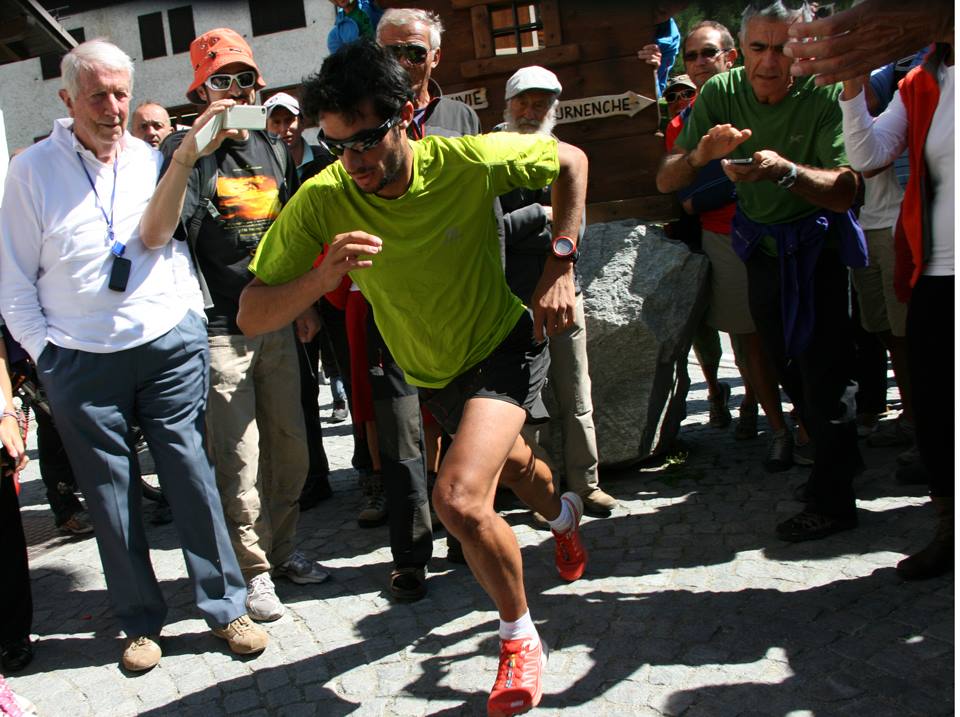
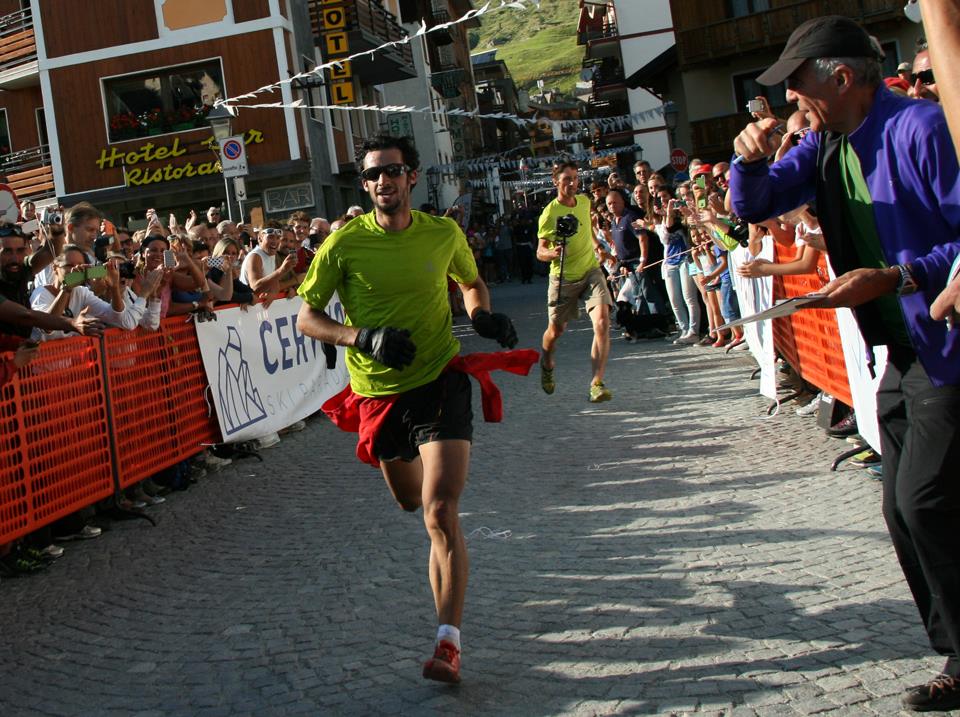
IC: When you arrived in Cervinia, it was like the end of a race. It was incredible. The barriers were out. It was almost like the race finish here in Zermatt. Did this surprise you?
KJ: Yes, I was completely surprised. I was in Cervinia for three weeks sleeping in my van in preparation for the attempt. I was surprised by the reception by everyone. For example, the first day I climbed the Matterhorn I was with Emelie. We climbed with running shoes and when we reached the top, the mountain guides said, ‘wow, you are going with run shoes. Congratulations. Do you want to try the Matterhorn record, can we help you? Tell us the day, we want to help you’. There is not another place that is like this, we usually get the response of, ‘What are you doing here in run shoes, this is ridiculous’. Not in Cervinia, they wanted to help us right from the start. Every time I climbed it was so open, the support was great. I was always asked, ‘tell us what day you go and we will help. We want to be on the mountain to help and support you’. It was the same for the hotels in Cervinia, they offered me showers or they said if I needed anything such as Internet that I could use the Wi-Fi. It was an incredible ambience. People were happy that I was in Cervinia to do the record and they got behind me. I think this was the most beautiful part of the record. I went just with my van, I was alone to climb but everyone was supporting the team and myself. It was so easy then to do the record. The day before my attempt, I made a call to the mountain rescue and said, ‘Tomorrow I go’. He replied, ‘Okay, how many people do you need? We will put people in the mountains for safety in case you have a mistake’. He called the mountain guides and they said, okay, we will put people here and here. The guides had finished work at midday on Wednesday and then they returned to the mountain to support me. It is unique. The reception was so fantastic.
IC: It was incredible the level of support you got. Knowing you, you would have quite happily got out of your van, started in the square and returned with no fuss. Marino Giacometti made a very good point, these record attempts do need to be verified, it does need an element of proof that you do go to the top and do come back down. Of course we are not questioning your honesty. But for future records a structure needs to be in place. I guess if we set a standard for the future it can only be a good thing. Does that mean for future attempts such as Elbrus in Russia, will you start to incorporate this system.
KJ: Yes, I know I need someone to do the chrono and I am aware I need someone at the summit. For Mont Blanc, I had people from the Tourist Office to confirm my attempt and I had guides at the summit. I also have the gps files on my Suunto. At the Matterhorn it wasn’t an issue, we had everyone in place and it was almost taken out of my hands. For example, Marino Giacometti did the chrono in Cervinia but the guides etc. were fully behind the attempt and they verified the route. My chrono was radioed to all the guides on the mountain so my progress could be monitored. It is important to be true. It is just like doping control… it is about integrity, my intentions are 100%, it is important to do a record in the correct way. I am aware that many ‘FKT’s have no control, I personally believe in the people but when you see the world and see the problems, I am aware of the issues of how people can not be honest.
IC: What was great about this attempt, because you had a team of people up the mountain, we had time checks back that meant that we could Tweet and Facebook times to the world. This was so exciting. Social media became alive following you. I think we stopped so many people from working. They wanted to follow. It is interesting from my perspective because it is what I do, but I guess the concept of someone running up and down a mountain and that message being sent around the world, some may think, why is that interesting? But it is so exciting; the updates had people glued to your progress. Can you relate to it or do you just think about the mountain?
KJ: When I am on the mountain. I am 100% focused. I need to be in my moment and think about where I put my feet, how fast do I go. If my mind wanders I will loose time or maybe my life, so I was super focused on moving as quickly as possible. It is just the mountain and I. The social media and the photography I leave to others. For example, Seb was in the helicopter but I never saw or heard it even though he was so close. This is because I needed to be 100% committed. I think this is nice. In racing I think for the last three years I have managed my effort and therefore I don’t need to focus as much but this was completely different. It was like the first time I raced ten years ago when I was super focused. It is a super nice feeling.
IC: Certainly social media has made what you are doing so accessible which is great for us but it is also great for you and everyone else involved. I guess now your energy focuses on Russia and Mt Elbrus?
KJ: Yes, I need to relax a little first…
IC: You said that to me last time, when I interviewed you in the Dolomites. You told me you wouldn’t race for a month and then you went to Sierre-Zinal.
KJ: Ah yes, I was close to Sierre-Zinal, it was just the other side of the Matterhorn, so it was good training. Plus it was the 40th edition. Now I take a couple of weeks with no racing but I will train a lot, I love that; I need to do it to be alive. I will train but not race until UROC in the US. I will focus on Elbrus for the next few weeks; I want to go to Russia before UROC, maybe the 15th September. I will plan around that date and train at altitude.
IC: So does that mean you will do the Elbrus summit before UROC?
KJ: Yes, I think so. After UROC I have Skyrunner World Series,Limone Extreme and the then Diagonale des Fous, so, after this I want a break.
IC: You say a break, does that mean ski mountaineering?
KJ: It means one week of no training and then I will be in the mountains for November and December but I won’t race.
IC: Okay, we will follow you and see if you do race… Kilian it has been fantastic for you to give me so much time to talk about the Matterhorn. It’s great to get such an insight. Finally, when are we going to see the full edited Seb Montaz movie of this year or the recent summit?
KJ: We are working on it and of course we will work more after Elbrus. November and December will see much of the work being done in edit, so we hope before the end of the year. Maybe late December?
“It is a technical mountain. Bruno Brunod has a record of 3:14:44. It is a technical route that is not difficult BUT if I fall, I will die! I need to know the route very well, I need to spend time on the mountain, and I need to learn every step.” Kilian Jornet, July 2013.
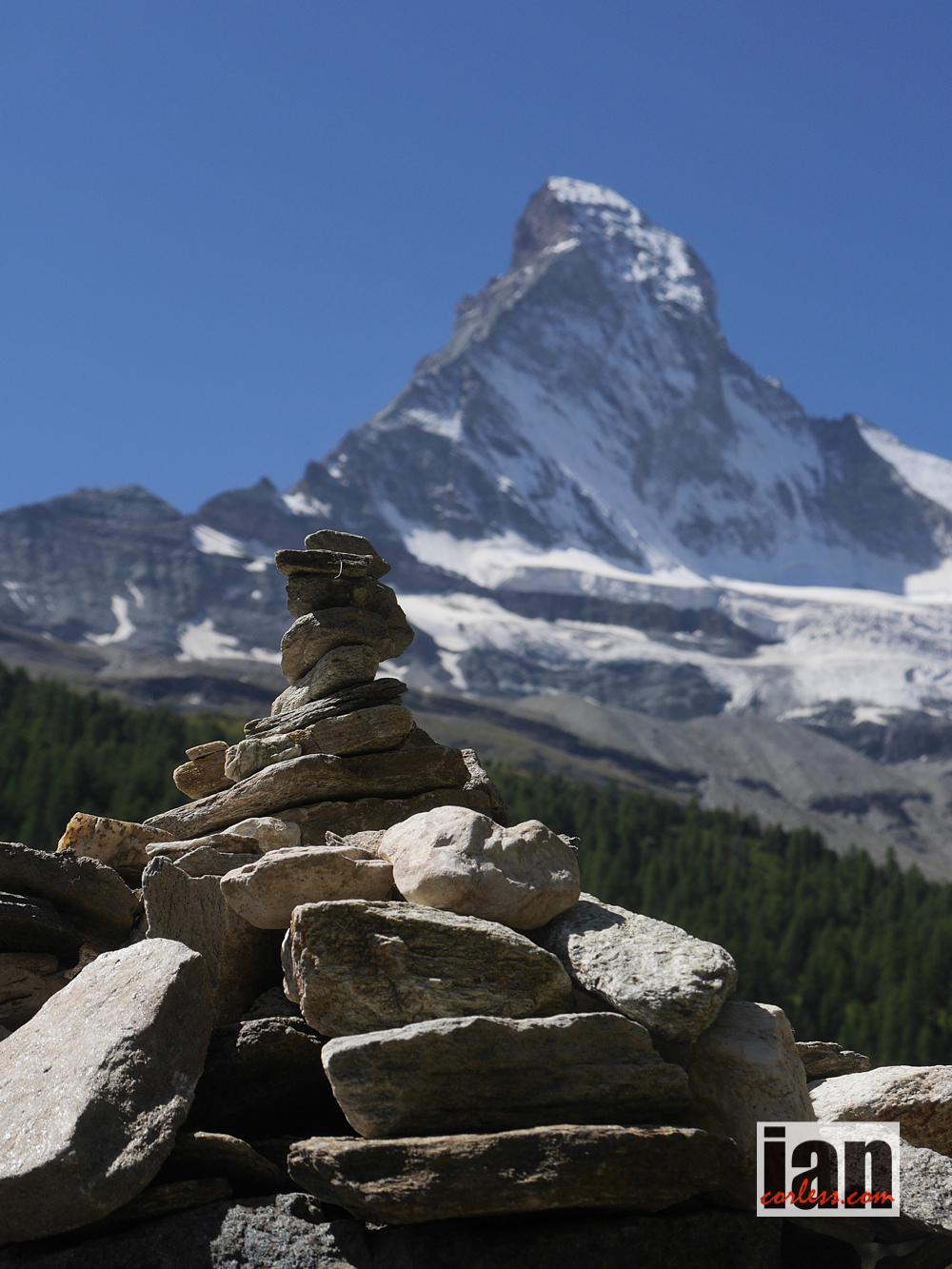
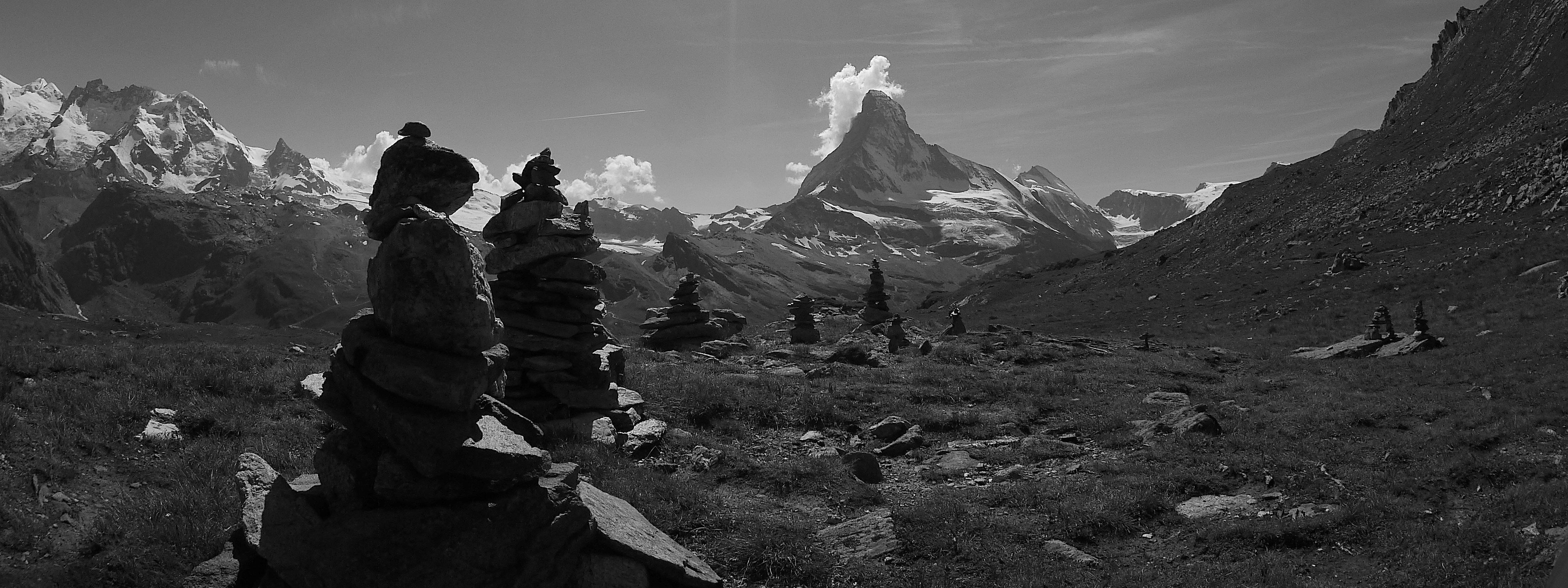
Monte Cervino (Italian) or Mont Cervin (French) or Just the Matterhorn is a mountain on the border between Switzerland and Italy. At 4,478 meters (14,690 ft) high, it one of the highest peaks in the Alps. It consists of four steep faces, striking above the glaciers that surround it. Overlooking the town of Zermatt it is an iconic mountain and possibly ‘the’ most photographed mountain in the world. It is a mountain that dreams are mad of. Kilian Jornet is no different, “I have been dreaming about this record since I was 15”.
Ironically, the Matterhorn was one of the last great Alpine peaks to be climbed and the first ascent by Edward Whymper in 1865 brought an end to the ‘Golden age of alpinism (The period between Alfred Wills ascent of the Wetterhorn in 1854 and Whymper’s ascent of the Matterhorn in 1865, this period saw many peaks in the Alps have first ascents)
Since 1865 to 1995 it has been described as one of the deadliest peaks in the Alps, over five hundred lives have been lost in this 130yr period. I guess the first ascent in 1865 showed us the danger potential when four climbers fell to their deaths on the descent.
The Matterhorn has two distinct summit, both situated on a 100-metre-long rocky ridge: the Swiss summit with a height of 4,477.5 meters (14,690 ft) on the east and the Italian summit with a height of 4,476.4 meters (14,686 ft) on the west. Their names originated from the first ascents, not for geographic reasons, as both are located on the border. Each summer a large number of mountaineers try to climb the Matterhorn via the northeast Hörnli ridge, the most popular route to the summit.
Small patches of snow and ice cling to the faces of the Matterhorn, but the faces are steep and regular avalanches occur. Snow hurtles down the four sides and accumulates on the glaciers at the base of each face.
Four main ridges separate the four faces of the Matterhorn and therefore it offers four distinct routes. The least difficult technical climb and by far the most popular is the Hörnli Ridge, which lies between the east, and north faces and it faces the town of Zermatt. The Zmutt Ridge (west), between the north and west faces is, according to Collomb, “the classic route up the mountain, it’s the longest ridge and also the most disjointed.
The Lion Ridge, lying between the south and west face is the Italian normal route. It is the shortest route on the mountain and has fixed ropes in place but many think it to be a far superior climb, particularly when compared to Hörnli Ridge. Furggen Ridge is the final offering, it is the hardest offering and in good conditions is not too difficult, and it does however have a reputation.
J.J and J.P Maquignaz made the first ascent of the Italian ridge as it is climbed today in 1867 but Kilian Jornet had his eyes on Bruno Brunod’s record set in 1995 when he did Breuil-Cervinia to the Matterhorn summitand back in an astonishing time of 3:14:44. In addition, Bruno also has the record for climbing the Matterhorn, again from Breuil-Cervinia just to the summit in a time of 2:10.
Back in 1995, Skyrunning president, Marino Giacometti and Executive Director, Lauri Van Houten were not only present but also helped finance Bruno’s attempt. Lauri still says how the thought of it, “brings shivers down my back”. Lauri and Marino both acknowledge the danger and undertaking that Kilian had given himself. “I remember standing in the square in Cervinia and about 3 hours 10 min had elapsed. There was a real buzz and noise and then somebody shouted, he’s coming! We all ignored it; we thought it couldn’t be possible… but minutes later Bruno appeared. It was a magical moment, one I will never forget”, says Lauri.
Bruno is very much considered the father of Skyrunning. His exploits, to this day seem to go beyond human limit. Without doubt, Kilian Jornet is in the same mold and in real terms, Bruno has lead the way for what Kilian now wants to achieve with his Summits project. Kilian’s final Summit will be Everest. Bruno himself attempted Everest; he however gave up when at a height of 8.200mt (26,900 feet) due to very hard weather conditions.
Bruno’s passion and time is now focused on his construction company, however, just recently he joined Kilian on the Matterhorn as he prepared for his Matterhorn attempt. Two masters together discussing the mountain. Without doubt, Bruno played a big part in the successful attempt by Kilian and ironically he predicted a time of 2:52:00. Maybe Bruno knows Kilian better than Kilian?
Bruno’s records:
Matterhorn uphill and downhill from Cervinia in 3:14
Monte Rosa uphill and downhill from Gressoney in 4:45
Aconcagua uphill and downhill in 5:57
Kilimanjaro uphill on the Marangu Route in 5:38
Mount Elbert uphill in 1:54
Three times winner of the Becca di Nona SkyRace (2002 – 2003 – 2004)
What an exciting prospect the 2013 TNF UTMB is going to be! Just a few months ago it looked as though the 2013 edition was lacking some really strong top competition, but a surge of confirmed US entries has brought this race to life and to be absolutely honest, if a US runner doesn’t take top slot this year, then maybe they never will…
It’s a quality field and the list of top men has incredible depth. For the purposes of a preview I am going to highlight who I consider to be the contenders for the top three slots and then give notable mentions to those who most certainly stand a chance to make the top ten and if on a great day, they may make the podium.
So, who is going to win? Or should I say, whom do I think stand a chance of the podium? In no particular order, here are my contenders:
Favorites:
Jonas Buud, Anton Krupicka, Julien Chorier, Miguel Heras, Timothy Olson, Jez Bragg, Sebastien Chaigneau, Mike Foote, Mike Wolfe, Carlos Sa, Dylan Bowman, Gary Robbins, Yoshikazu Hara, Francois Faivre, Tsuyoshi Kaburaki, Jean-Yves Rey and Arnaud Lejeune.
Preview:
Jonas Buud – UTMB 2012
Jonas Buud placed second last year over the shortened UTMB route behind Francois D’Haene. It was a great run and a superb confidence boost for this year’s race. His recent run at Comrades when he moved up through the field from around 40th to the podium was not only an incredible lesson in pacing but also how to execute a great race strategy. I am pretty sure that this will be something he will bring to Chamonix. Without doubt he has speed but the full UTMB is a very different race to the shortened version and in this field a podium place will be a great result.
What can we say about Anton Krupicka? With a long time out of the sport due to injury, his return seemed guaranteed at the end of 2012 when he placed 2nd behind Kilian Jornet at Cavalls del Vent. We had hoped to see Anton run at Tarawera but just a week or so before the race he pulled out due to a niggle. Racing Ronda dels Cims was on the cards but he decided an attempt at Nolans-14 was a better option; it didn’t go well leaving him in pieces on the trail. One thing that is guaranteed is that Anton is fit and can climb. His recent 2nd placing at Speedgoat is going to be a great boost and he has been in and around Chamonix for several weeks now training with Joe Grant who will be his support during the race. It may be Anton’s year?
Julien Chorier is meticulous in planning, knows the UTMB route very well and after watching him run and dominate the 2013 Ronda dels Cims, if he brings ‘that’ form to Chamonix, then he will win! He was consistent, strong and a machine. Julien has been on the podium at UTMB before, 2007 and 2008 but this was relatively early on in his run career (a former cyclist). Since then he has won Hardrock, UTMF, Raid de la Reunion and so on. He will bring his ‘A’ game to UTMB with just one position in mind. A hot favorite!
Miguel Heras has had a tough time recently with injury. Running UTMB was a big question mark, however, I heard just the other day that he has confirmed he will run. His training has been hampered for sure and it is impossible to say at this stage, how that will affect his race. His most recent notable performances came in 2012 with La Templiers and San Fran 50. Like Julien Chorier, he is meticulous in planning and outside of Kilian Jornet; I would have said that an in form Miguel Heras would be the stand out favorite for this race along with Julien.
A little like Julien Chorier, Timothy Olson picks his races, plans, trains, turns up and wins. Anyone who can win Western States two years on the run knows how to bring the ‘A’ game to the right race. Timothy placed well at Tarawera and Transvulcania but his notable words to me at the end of Transvulcania were, ‘it just needed to be longer, I was getting warmed up’. Racing at Speedgoat recently he placed in the top ten but that doesn’t reflect a lack of form, in fact the opposite, it shows focus; focus on the big target, which is now UTMB. He has been in Chamonix and getting out on the course and so will now fully understand what he needs to do come this Friday. Along with Anton, he is a key favorite for the outright win, the only thing I can see going against him is the lack of experience in a European 100-mile race particularly in the Mountains.
I am going to stick my neck out and say that in the 2013 UTMB we will see a new Jez Bragg. He will run UTMB in a way that he has never run it before. We all know he was the 2010 winner of the race but quite frankly, and no disrespect to Jez, it wasn’t the full race and that makes a big difference. In recent years things have not gone well for him and post 2012 UTMB we discussed certain health issues that may have affected his performance. With those issues under control and then his incredible run in New Zealand on the Te Araroa Trail, Jez will mentally and physically be in a different place when on the start line this year and in the famous Speedgoat Karl words he will be thinking, ‘a 100-miles is not that far’. Jez will have his best UTMB ever! Listen to Jez Bragg talk about UTMB kit HERE
Sebastien Chaigneau has already had an incredible year. His win at the recent Hardrock 100 in a course record time (counter clockwise) is a dream come true for Seb. He actually only got the go ahead for that race just a couple of weeks before as he was a reserve, so, I can’t help but think his long term training was for UTMB but also meticulously preparing for the hope to participate at Hardrock. His early season win at Transgrancanaria and then 3rd place at UTMF will no doubt all take its toll. Seb has all the abilities and experience to win this 2013 edition, however, he may very well be just a touch jaded.
Mike Foote placed third last year on the shortened course and by all accounts is in great shape and has been training really hard. However, he has been plagued by injury. His second place at Hardrock 100 in 2012 most certainly means that if he his 100% fit, he will mix it up at the front of the race and be in contention for the podium.
Teammate and great friend of Mike Foote is Mike Wolfe. Mike had a year to forget in 2012 after an incredible 2011. He has loads of skill, great fitness and can run like the wind when he needs to. After some time away to recoup, Mike has now found some form and fitness in 2013. He had a win at Pocatello 50 and recently raced to a podium slot at Lavaredo Trail in Italy. Most recently he set a ‘FKT’ on the John Muir Trail with teammate, Hal Koerner. Now no doubt this was great training and great preparation for a 100-miles in the mountains, but, and this is a big but, was it too close to UTMB?
Carlos Sa placed 4th at UTMB in 2012 and earlier this year won Badwater 135. I witnessed him run at close quarters at the Marathon des Sables where he consistently performed well and eventually finished 7th overall. UTMB is a very different race and with strong competition from ‘mountain men’, Carlos will need a great day to make the top three.
Another American joining the mix is Dylan Bowman. Dylan may well be the dark horse of the US contingent. For sure, European eyes will focus on Krupicka, Olson, Wolfe and Foote and therefore allowing Dylan a little more freedom and a little less pressure. They should take note; Dylan has had consistent top performances at Leadville and Western States. What Dylan’s resume of results lacks is experience on tough mountain courses and that will be the crux of how well he performs. Will he be able to take the ups and downs that the UTMB throws at him? *update 26th August, pulled out due to injury
Finally, my last contender is Gary Robbins from Canada. He had time away from the sport after having some horrendous injuries that almost stopped his career. With patience and rehabilitation he came back to his nemesis, Hurt 100 and not only won, but also set a course record. He has experience of UTMB and finished outside the top fifty last year, so why pick him as a possible contender? He knows what it is about now and to be honest, a full course is probably much more preferable than a short course for Gary. Also, he placed 4th at UTMF earlier this year behind Hara, Chorier and Chaigneau… that’s good company to be running with!
Yoshikazu Hara was the surprise winner of the 2013 UTMF putting Julien Chorier and Sebastien Chaigneau in 2nd and 3rd respectively. He is coming to this years race prepared and may well cause a few shocks!
Francois Faivre trainer of the French cross-country ski team from the Jura region, was recovering from some health issues at the start of the season. After signing up for the cancelled Maxi Race and after withdrawing from the Lavaredo Ultra Trail, François felt he lost some form. He finished 9th in 2011 and 7th in 2012! UTMB without doubt is his main goal for the season.
Tsuyoshi Kaburaki is extremely experienced at UTMB and has placed from 3rd to 11th in five outings. This year he won Bighorn 100 with some incredible running in the latter stages of the race. The jury is out on 2013 and I will update with more info as and when I have it on Thursday.
Jean-Yves Rey was 6th last year and is very much a dark horse. In his early 40’s he has had some impressive results over the years, 3rd at the iconic Sierre-Zinal in 2000, winner of the CCC in 2009 but recently he started the Eiger Trail and did not finish, so, his form is unknown.
Finally, Arnaud Lejeune is in his early 30’s placed 8th at UTMB and 3rd at Raid de la Reunion in 2012. He also had a string of top results with wins in; Faverges Trail, Trail de Savoyards, Trail Glieres, Quecha Trail Fiz, Verdon canyon Challenge and the Guyan Trail at 186km long. A resident of Annecy, he has access to the UTMB terrain on a regular basis and this is a distinct advantage. However, 2013 seems to have been very quiet. He may be a surprise!
As mentioned, the race has no shortage of possible winners, for example:
Sebastien Buffard 10th at UTMB and then of course we have Marco Olmo won UTMB at the age of 59yrs and in doing so became a legend. He most certainly won’t win this year but he deserves a mention.
Vincent Delabarre, Siu-Keung Tsang,Jason Loutitt, Gustavo Reyes, Armando Jorge Teixeira, Zigor Iturrieta, Giuliano Cavallo, Minehiro Yokoyama, Vajin Armstrong, Paul Giblin, Adam Perry and Terry Conway.
The TNF UTMB has gained a reputation as being one of the most iconic 100-mile races in the world. With over 2,000 participants, I will have missed several contenders who will create a stir and surprise us. Do you know who they may be?
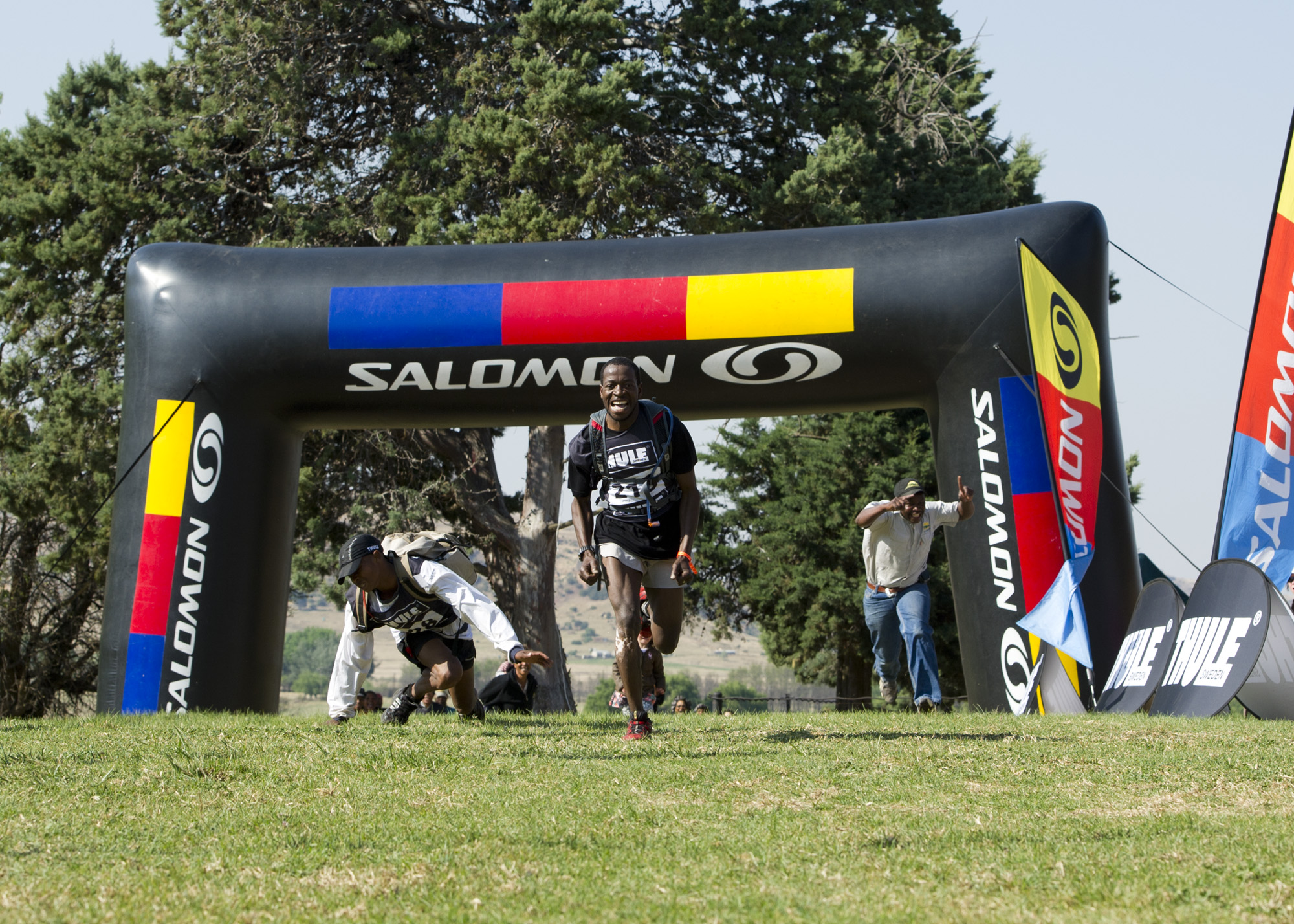
The 11th THULE 4 Peaks Mountain Challenge in Association with SALOMON takes place on the weekend of the 23rd / 25th August 2013. The 24km mountain run is through the beautiful and challenging Witteberg mountain range near Ficksburg in the Eastern Free State. Last year saw the introduction of the ‘Pyramid Challenge’ where athletes have the chance to take on the ‘beast’ 40 % gradient vertical ascent and descent of the first pyramid at Moolmashoek Nature Reserve. The THULE 4 Peaks Mountain Challenge provides a weekend festival of Free State hospitality and an introduction to ‘mountain-running’ where both the accomplished trail runners and weekend warriors get to challenge themselves. The hospitality is rooted in the management of the Moolmanshoek Guest Lodge and the beautiful private nature reserve serves as HQ for the weekend activities.
Moolmanshoek Private Nature Reserve is situated 360km from Johannesburg and 230km from Bloemfontein and the unique scenery with mountain peaks such as Visierskerf, the highest in the Witteberg mountain range, provides a perfect venue to run, to explore and to challenge yourself against the elements. The 24km mountain run is a great introduction to the ultimate running challenge – mountain -running, with the 24km distance being the equivalent of a road ultra-marathon. The THULE 4 Peaks Mountain Challenge is an un-supported off road run, the concept derived from British ‘fell running’ whereby runners will conquer slopes to then enjoy superb vistas that the Witteberg mountain range ridgelines provide. The course is not marked but follows a circular route starting at 1460m, with a total vertical ascent over the race of 1420m to the highest point at 2312m. The concept of mountain running is one of expedition and adventure, where crossing the finish line is about conquering the elements, navigating your way through the rough terrain the course provides and feeling a sense of achivement not matched by any traditional running event. Participants must be totally self sustainable carrying their own fluids and nutrition for the entire race. The top competitors usually complete the race in 3 hours or less with some runners taking up to 9 hours, the cut off, to receive the revered Four Peaks medal.
The weekend see’s the main event, the THULE 4 Peaks Mountain Challenge kicking off at 6am on Saturday the 24th. Entries received already include Salomon runners such as Thabang Madiba, Ryno Griesel, Jock Green and Matt Kretzmann against the local knowledge of multiple winner Isaac Mazibuko . In the ladies race we expect to see Salomon’s Jackie Moore racing with Takalani Ndandani and Megan Mackensie. This front pack of runners will be followed by the weekend warriors challenging themselves to the next level of running – building some bravery for ‘the ultimate’ the Salomon Skyrun hosted in November each year. After Saturday’s nights festivities, we kick off Sunday morning with the Red Bull Pyramid Challenge which will see runners tackle a net altitude gain of 850m over 3km ascent and descent of the first pyramid.
Scott Jurek, Leadville 100 2013, pre race interview
It has been some years since Scott Jurek lined up on a 100-mile start line, but he is back! After some time away from competitive running, Scott has recently got married, wrote a book and successfully promoted that book all over the world. He will be 40 in October and although he admits that he may not race competitively for too much longer, he does say he has some good racing left in him…
IC – I am joined by Scott Jurek just days ahead of Leadville 100. Welcome back Scott.
SJ – Thanks Ian it is great to be here.
IC – Scott Jurek lining up on a 100-mile start line causes some interest and we are all wondering what is tempting you back. What is bringing you back to a 100-mile start line again?
SJ – I always had it in the back of my mind to come back to Leadville after I ran here in 2004 as part of the ‘Grand Slam’. Now that I live in Colorado it made perfect sense to run the home course so to speak. I am looking forward to getting back in the swing. I have been very busy for a few years with my book and I had a ton of effort prior to its release to get that done. It has been fun training hard and getting up high again. Leadville is a great race. It has lots of excitement around it. I have done Western States so many times that it made sense to come back to a race that I had not been at for almost a decade.
IC – Is Leadville the start of something new or is this is a one-off?
SJ – Laughs, new as in racing 100’s again?
IC – Exactly.
SJ – I have mentioned before that I will retire. I turn 40 in October. I have a few more goals and I know many people would love to see Scott Jurek race forever. I love to race, I love the sport, and you know it is almost twenty years now since I started. At some point, maybe next year I will wind things down. I have goals, particularly the 24-hour, I want the American record back and I am interested in the world record. We have so many great races now that it is hard to know what to do. I have a few more in me and I want to give it a go!
IC – You mentioned twenty years in the sport. We look back at your career, nobody questions your ability, multiple wins at Western States, in many ways you have created the community and the sport, not single-handed, other people obviously were influential. Do you feel the sport has moved on, although 40 is not old do you feel that at 40 you can’t be competitive anymore?
SJ – It’s a great question. Look at Western States this year! Mike Morton came back after a long hiatus and he was up at the front, he is in his 40’s. He had an incredible race. I believe that we only have so many great races and great years. I want to continue to have a great taste for the sport. I don’t want to burnt out. I want to be involved, help out and run for fun as a mid-packer. From a competition point of view, I would be lying, particularly if you look at research that it is hard to be at the top of the game. My body feels great but mentally it is hard to get out of the door sometimes. Day after day, month after month, particularly if you want to win. You come to a point, maybe it’s physical or mental, but we know muscles and nerves don’t react as quick, so, it’s definitely one of those things. I don’t limit myself but it does get harder, Scott Jurek is getting older and the field is getting younger and younger. I started in my 20’s; it is different to starting in your 30’s.
IC – Yes, you must look back now over you’re career and think to yourself that you are in a great place. You were setting the standard, you have seen the sport grow and expand. Ultra has never been stronger. We have never had so many races. We have never witnessed so many new CR’s. It must be satisfying?
SJ – It’s great. I came into the sport and I remember the old timers saying, ‘things are changing, we need to keep it the same’. I think like anything we have evolution and change, it’s a great thing for the sport. Of course we have some issues. Races are harder to get into. Twenty years ago you could enter Leadville at the last minute, not now! We have drawbacks but we have so many benefits. People are inspired and have great life experiences. We need to share what we have. Obviously we hold on to tradition and the simple aspects of the sport that make it special. More changes will come; prize money, competition and hopefully we will see more drug testing. At the core the sport will remain the same. I want to be involved in that even if I am not racing at the top level. It is something I have life experience with and I want to make sure that is passed on.
IC – I posted on Facebook asking, were people excited Scott Jurek was racing at Leadville. Of course we had great comments and support. Funnily enough, within twenty-four hours I found out that Ann Trason was toeing a 100-mile start line in September, so there is hope you may continue… we never thought Ann would run again.
SJ – I have known Ann for years particularly in her peak. She retired through injury. I think from what I have heard that Ann has a great attitude. She was even pacing at Western States this year randomly. That is a true champion. I am not sure what her goals are. Will she race or is she racing for fun? She may want to be part of the community. She was a competitive force. It’s just great to see her back out in the community. She also race directed for a few years. It’s a great sign; it is what the sport is about. It is about giving back. We all love to see champs come back and win but maybe Ann does not have that desire, it’s just super to see her back.
IC – One thing I did say when I posted was that as far as I was concerned, it didn’t matter if Ann was first or last. What was important was that she was back racing. That was all that counted. You mentioned that you personally don’t want to stop running and that you are more than happy to be a mid-packer. Do you think that Scott Jurek can ever be a mid-packer?
SJ – Definitely. I have gone to races and paced, I have helped at races. I have run an event for the fun; I have run with my wife. For me I have the right approach to it. It is hard sometimes to be a top athlete and not be pushing for the win. It is healthy for me though. It is nice to cruise along, hang out at feed stations and have fun. I am at the point that I can turn off the competitive juices as and when I want to. I am looking forward to doing the events that I haven’t been able to do. I want to do lower key events and that includes International races. It’s a good place to be and it is a good lesson for all, it is not always about goals and PR’s.
SJ – You can get bogged down. Just go out and embrace the experience. That is why we do it isn’t it? Experiences are what count.
IC – You mention competitive juices and Leadville 100 is about to take place. An out and back course in the Colorado Rockies with plenty of altitude and Hope Pass the highest point. Are you going into this to win?
SJ – You bet! I am here to do whatever it takes to run my best time and ideally win this race. I have put in the training. I am mentally prepared. My goal is to win… Ryan Sandes is here from South Africa, he and I ran together a few weeks back. Nick Clark and Ian Sharman are doing the Grand Slam; they may be a little tired. Nick is a Colorado guy, used to altitude and is tough. Mike Aish dropped last year but he may put it right this year. Leadville has no qualifier, you can literally have never run a 10k and sign up. This can throw up some surprises. Someone may turn up and pull it off. It is an exciting race. Many people don’t realize it is our biggest race, 1200 people will toe the line on Saturday. It has loads of excitement and fun because of the out and back; 50 out, 50 back.
IC – Of course you will get to see how the race unfolds on the out and back too. In the past you have paced Anton Krupicka at Leadville, earlier this year you paced Seb Chaigneau at Hardrock 100. Who will pace you at Leadville?
(Laughs)
SJ – Well my old buddy Justin will pace, he has paced and crewed for me at Badwater, and Spartathlon he has seen me in some high moments and some low moments. It’s great to have him back. I have a surprise pacer; I wont release that info just yet. It’s a secret. You’ll see at Hope Pass. I went old school with my pacers, guys who have been around for a few years…
IC – Is Ann Trason going to pop up and pace?
(Laughter)
SJ – I will give you a clue, not Ann Trason! You have to remember at Leadville you can ‘mule’. Pacers can carry bottles and food and whatever may be required. It is in recognition of the miners who used to use mules. So, a pacer may be carrying three bottles. It’s kind of unique. It makes it harder for the pacer…
IC – Sounds like you have got it easy Scott. The pacer has the tough job.
(Laughter)
SJ – Maybe in some respects but they only need to do 25 miles.
IC – Awesome. I am going to let you go. I am taking up precious recovery time getting ready for the race. We will catch up with you after the race and get the lowdown on the action. Obviously on behalf of everyone I would like to wish you all the best. It’s great to see you back on a 100-mile start again.
SJ – I am looking forward to it. It’s gonna be fun and we will catch up after!
The 40th edition of Sierre-Zinal is over. The results are in if you read my pre race post (here) then you will see that a few surprises came once the finish line was passed.
One of the surprises of the day was from Sage Canaday. As he says in his post race report, “After having a string of strong ultra-trail race performances for the early part of this year (two 100km wins, two 50 mile wins, a 3rd at Transvulcania and a 3rd at Mt. Washington, and a 50km win) I figured I was due to have a tough day and get “lit up” soon enough.”
It’s tough being at the top! And I have to say, to remain at the top you need to be smart. Lets look at the lessons Geoff Roes is currently giving out on how to burn out! We are not invincible. Sometimes we may think we are and I guess when you have success to the level that Sage has had in the last twelve months, then, as the multitude of race invites arrive, it must be difficult to say no!
“The thing is a lot of times you learn the most from your biggest disappointments.” It may very well be that Sage is start that learning process now. It’s a good thing. Better to learn to kick back and make smart choices in your early years and race for a lifetime than find out in 5-10 years that you can no longer carry on.
Here are some things that Sage learned from this Sierre-Zinal experience:
Lessons Learned:
1. Prior course knowledge is essential for not only executing proper race-day tactics/strategy, but also for specificity in training and knowing what demands will be placed on the body. I should have figured this out after Transvulcania this year.
2. Racing ultras in the US does not carry over the same fitness required for shorter distance (or perhaps any distance) mountain races in Europe. The mountains here are steeper and less forgiving compared to running up the more reasonable slopes of US trails. I think this goes along with still not having enough vertical in my weekly training as it’s takes a certain type of musculature to be able to pull of power hiking 30% grades and then running (and switching back and forth) for hours on end. Furthermore, I should have had more intense training to generate more muscle tension in my legs…a couple Vertical K’s would’ve been much more specific prep!
3. It takes me longer than 2 weeks to recover from an ultra…even “just” a 50km like Speedgoat. I remember in my days at Hansons I had a good seven-week block averaging 130 miles a week and I hammered a 20-mile long run (with a final 3 miles in 14:50) about 3 weeks before the Boston marathon in 2010. I thought I was in the best shape of my life but I ended up tanking and had “dead legs” early on in the race. In retrospect I’ve learned that my body is fragile and I can easily overtrain (and over race) myself before I get injured or mentally “burnt-out.” My climbing legs couldn’t fire at 100% during this race and taking a full 7 days totally off after Speedgoat probably made my Vo2max drop a good 2-3% anyway. Unlike certain other ultra-mountain runners I can’t recover very fast.
On a final note. Sage will be back! No doubt. He has heaps of talent, he is young and ultimately, as he says, “The thing is a lot of times you learn the most from your biggest disappointments.”














































































 IAN CORLESS