Ian is a photographer, writer, reviewer and blogger at iancorless.com. Ian is currently travelling the world capturing stories from some of the most iconic ultras on the planet. Ian is also creative director and host of an ultra running podcast called Talk Ultra. The show is available every 2 weeks 'for free' on iTunes and talkultra.com.
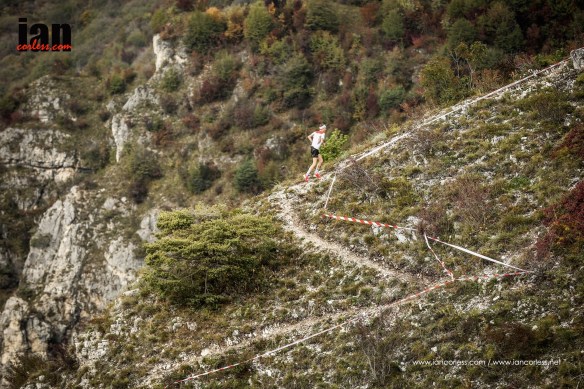
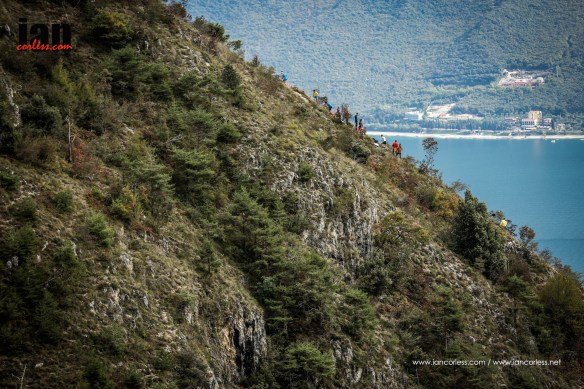
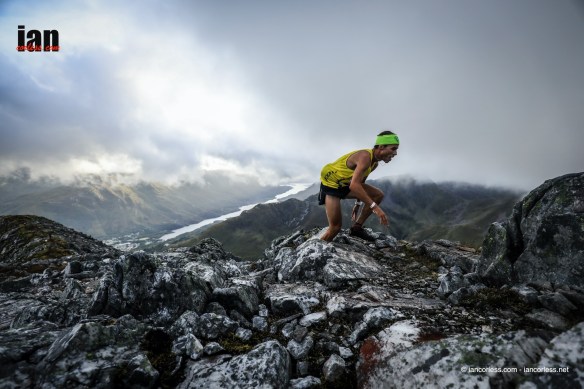
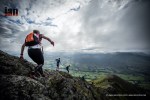
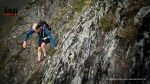
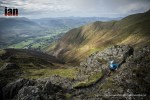
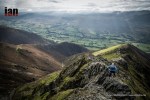
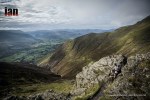
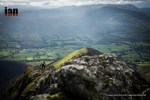
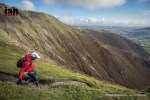
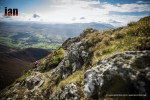
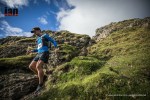
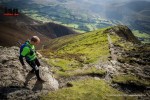
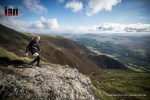
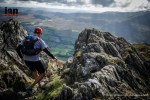
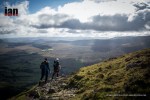
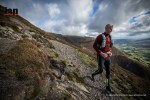
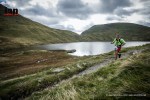
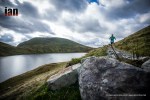
The 2016 Skyrunner® World Series draws to a conclusion in Limone, Italy. The stunning Lake Garda and the mountains that back onto this iconic location provide a wonderful playground to Friday’s VK and Sunday’s SkyRace.
It’s been a long season of Skyrunning with many new races, new experiences and with four champions already announced – Jasmin Paris and Jon Albon for the EXTREME and Cristofer Clemente and Gemma Arenas for the ULTRA – VK and SKY champions will be confirmed in Italy.
VK starts – 1800 Friday Oct 14th/ 3.7km 1080m+
Ferran Teixido currently leads the 2016 VK ranking ahead of Jan Margarit Sole and Andrej Fejfar. All three will race in Limone looking for maximum points and the crucial 20% bonus. For the ladies, Laura Orgue leads Christel Dewalle and Maria Zorroza – as with the men, the top 3 contenders will race.
But the racing does not stop there, arguably, Limone Extreme VK has the best VK line-up of the year with a multitude of talent toeing the line. Marco Moletto, Hannes Perkman, Nejc Kuhar, Rolf Einar Jensen, Luka Kovacic and the unstoppable Urban Zemmer. It’s going to be a seriously competitive race but more top names will contest the top 3 podium places.
Pascal Egli and Alexis Sevennec will race hard along with Oriol Cardona Coll. Pere Rullan may also race after long injury problems and the possibility of Philip Goetsch racing against Remi Bonnet and Stian Angermund is a very exciting prospect. This may well be a course record year!
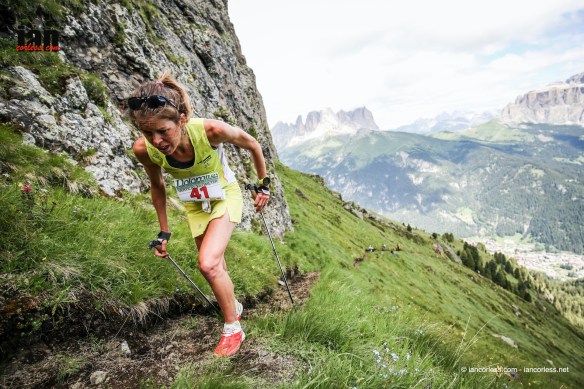
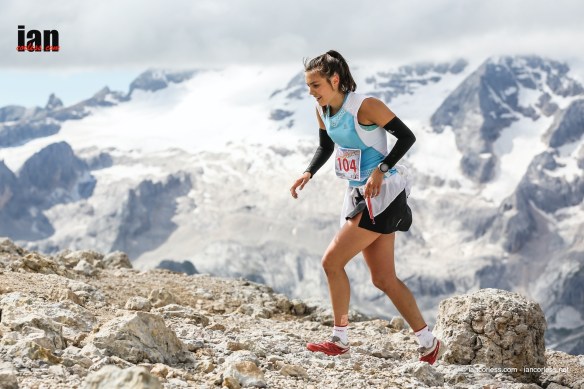
Racing in the ladies’ race is equally competitive, for sure, Laura Orgue and Christel Dewalle and pre-race favourites but Francesca Rossi, Serena Vittori, Oihana Kortazar, Beatrice Deflorian and Celia Chiron amongst others will push hard up the winding trails to the summit that looks over Lake Garda.
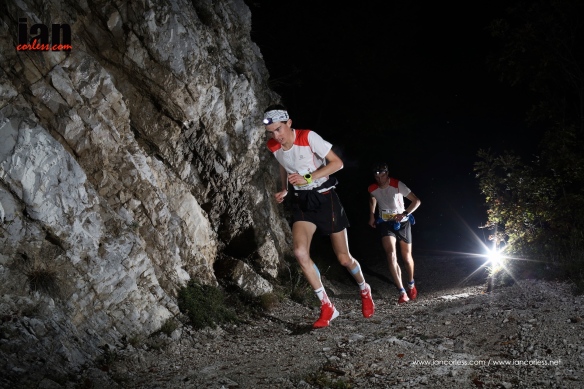
A unique feature of the Limone Extreme VK is that start time! Starting as darkness arrives, the runners ascend the 1000m under the illumination of head torches as lights of Limone glow in the background – it is a truly spectacular VK!
SKY – 11am Saturday Oct 15th/ 27km 2450m+
Tadei Pivk heads up the 2016 Skyrunner World Series ranking with Hassan Ait Chaou and Pablo Villa Gonzales in 3rd. Young gun, Jan Margarit Sole is placed 4th and he may will be a surprise contender for a top 3 placing but he will have a tough fight from the Casal Mir brothers, Oscar and Marc. In addition, Kiril Nikolov, Adrien Michaud, Alexis Sevennec and Andre Jonsson will run – victory could come from any of these top runners.
But as in the VK, the list does not stop there; Ondrej Fejfar, Aritz Egea, Albert Garcia, Rolf Einar Jensen and a potential victory may well come from Mr. Skyrunning, Marco De Gasperi. But ultimately, Remi Bonnet will return after a year plagued by injury. Last year he dominated the Limone SkyRace and VK, can he do it again?
If he does, he will have to beat the Skyrunning World Champion for the VK and SKY distance, Stian Angermund. Stian has been on fire in 2016 and is without doubt a favourite for victory! Salomon will also send Micha Steiner, Davide Magnini, Stian Aarvik and Stefan Knopf.
As stated, the line-up for the Limone Extreme SkyRace is extensive and dark horses will no doubt appear from the sidelines.
Megan Kimmel has been on fire in 2016 and leads the Skyrunner World Series ahead of Laura Orgue and Ragna Debats. Last year, Megan had a below performance at Limone and it lost her the Series title, I don’t think that will happen this year! Laura has had a long year of racing and has shown some fatigue at times, however, she has had an opportunity to recover recently and for sure she will push Megan all the way to the line.
Yngvild Kaspersen will also run and has great potential for a podium place. Caroline Chaverot (Skyrunning World Champion for the ultra-distance) is a surprise entry and my gut reaction is that this race will be too short for her? It will certainly be interesting to see how she performs – she is an incredible talent!
Celia Chiron, Sheila Castano, Aitziber Ibarbia, Michaela Mertova, Maria Zorroza and Nuria Dominguez all add to a stellar line-up!
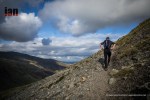
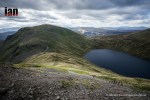
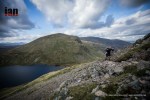
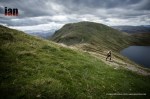
Skyrunning was born in Italy, it only seems appropriate that the traditions and ethos created on the slopes of the snowy Alps should now be carried forward on new mountains and in new places such as the Creste Della Mughera mountains that back on to Limone sul Garda.
Race website here VK information here SkyRace information here
Thanks to the support of our Partner Migu Xempower, Sponsor Alpina Watches and Official Pool Suppliers, Scott Running, Compressport and Salomon.
About Skyrunner® World Series
Skyrunning was founded in 1992 by Italian Marino Giacometti, President of the International Skyrunning Federation which sanctions the discipline worldwide and sports the tagline: Less cloud. More sky.
The Skyrunner® World Series was launched in 2004 and has grown to represent the peak of outdoor running defined by altitude and technicality. In 2016, the Series, composed of four disciplines, features 23 races in 15 venues on three continents.
iancorless.com is the official photographer and media partner for the
Chris Baynham-Hughes writes about his experience of participating in the 2016 Salomon Glen Coe Skyline, the final race in Skyrunner® World Series for the ‘Extreme’ category.
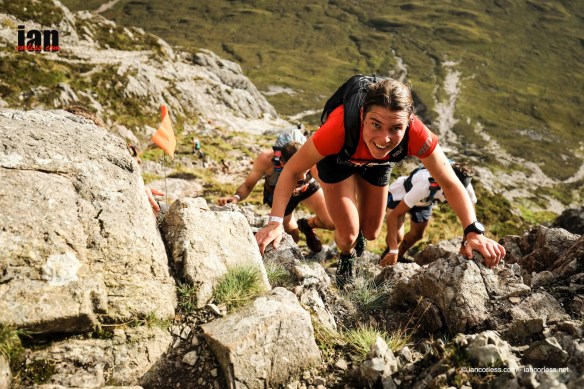
Judging by the way the internet has exploded over the past week with a constant stream of comment, videos and pictures on social and traditional media; I think it is fair to say that the Scotland Skyline events were a success. What a weekend of running! Kicking off with the first UK vertical kilometre (VK) on the Friday it was a fascinating spectacle – not just the breath-taking scenery, time trial format, facial expressions that silently screamed for the end to be in sight or the cruel, deceptively deep, bog early on in the course, but in the stripped down nature of the race; an ultimate mountain test.
If the VK was the amuse bouche, then the Ring of Steall was the starter. 400 competitors toed the line for a spectacular course and the best of the weekend’s weather. Many had doubled up from the VK to take part in the Ring of Steall and didn’t regret it as the course simply kept on giving.
As part of the event team I’d spent seven hours on the Friday up Munros playing with the radio repeater (test, move, test, repeat) until ultimately we had to give up and bring it down. The Saturday had consisted of seven and a half hours on Sunday’s course marking the route with Pin flags and signs ready for the main course… well, the main course and the desert all in one really.
The Glencoe Skyline had grabbed my attention from its conception. The combination of scrambling, exposed ridge lines and epic territory had me intrigued. Missing the first running of the event due to other commitments meant I could only read quotes from our sports most respected ambassadors such as Emelie Forsberg and blog postings from those that took part; they did nothing to dissuade me from wanting to run this race.
Whilst my interest was piqued, it wasn’t without a tinge of doubt. I wasn’t concerned about the organisation or running of the event – I knew that with Shane at the helm as RD the event would be of the highest possible standard. My doubts came from not knowing the key elements of the route and thus a fear that it may not flow, that it may in some way be a little contrived; putting in gnarly sections because they were gnarly rather than because they fit in the flow of the journey.
Having now run it I can state without a shadow of a doubt that this fear was totally unfounded. Not only that, I can do nothing but agree with the long line of people stating that it is one of the best if not the best race they’ve had the pleasure to run. It is truly stunning, a total cracker jack of a course that just keeps on testing and rewarding relentlessly for as long as you’re out there for. Everything fits; it feels like a natural journey and, frankly, does what it says on the tin, it takes in the skyline of Glencoe.
Having raced too much over the year and not long since returned from completing UTMB I was not expecting much performance wise. Sometimes we need to turn the racer off and the adventurer on and I had entered for the adventure. Getting out in the mountains for the two days before hand had been part of that overall adventure, so by the time I started it felt like the victory lap, the one to savour.
That time on the hill had allowed me to see parts of the course at its best. The main thing that struck me was that the mountains in Scotland are familiar but somehow different; like an aging celebrity that has “had some work done”… but this is not just a misguided effort to freeze/ preserve what was there, this is “Wow, have you seen what they’ve done to their…” type work. I’m lucky in that I primarily play in Snowdonia; an area of true beauty. Hard slogs are generally rewarded by long ridgelines and the mountains generally find their limits within your vision, whereas the mountains of Scotland are not conquered quite so easily.
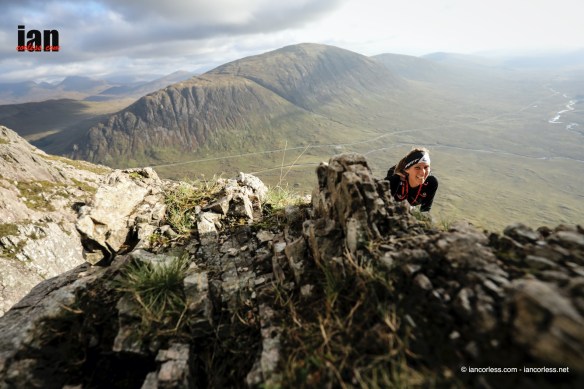
Ok, so there are nice ridgelines enabling one to bag a number of tops, but there are also many tops that require a decent amount of descent and ascent for you to tick it off. They stand alone as a mountain within a mountain and give away more to their half million year old volcanic heritage. The second thing I noticed was the sheer scale – not only are the a bit taller in general, but they stretch as far as the eye can see and beyond. The scale of the lochs and the frequently angry skies provide additional beauty and drama to frame this picture; inspiration on a massive scale.
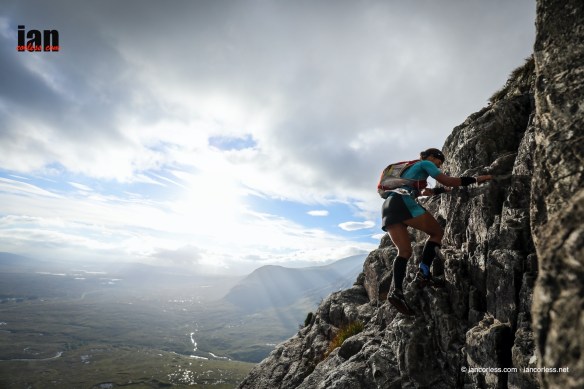
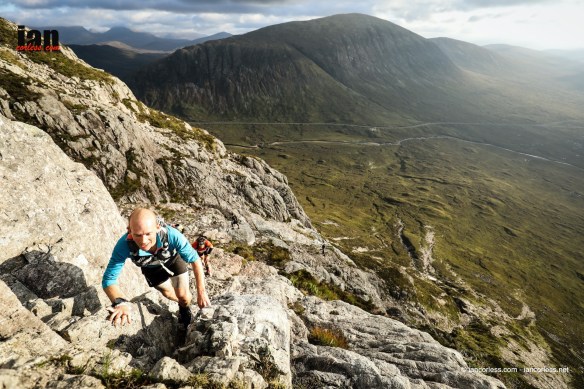
The race starts with a fair trot out on the West Highland Way from Kinlochleven to one of the key features of this course; curved ridge. I’m not a climber so the grade III scrambles had been weighing a little in the back of my mind. One of the key reasons for the long trail run out was to spread the competitors as this section becomes a natural bottleneck and can cause frustration. My experience was very positive though. Yes it would have been great to have monkeyed up the rock faces at my own speed, but in the sections I had to wait I found there were no issues between the competitors waiting their turn and, frankly, the views were so stunning that I was quite happy to drink those in for a change.
The support on the course was excellent. There were plenty of people out on curved ridge cheering, ringing bells, taking photos, giving hugs (to the people they knew I assume!) Don’t get me wrong, this was no Transvulcania with the whole local community out cheers, but it still had the feel of a world championship race. I’ve little doubt that this will build in successive years although I suspect it may be weather dependent.
Hitting the top the running was a delight. Technical, but very runnable undulating paths and single track descents were a joy to run. I don’t expect every year will include a helicopter hovering overhead filming, but it certainly added to the feeling like this race was special, like Skyrunning had really come to town.
Joyous as this was there was always going to be some payback and the bump between us and the next section was steep and unforgiving on both sides of the top. The terrain became boggier underfoot on the climb and the descent was just the right gradient to encourage each competitor to trash their quads. The pockets of support continued before we hit a fast runnable section out to the second of the three main areas with Bidean Nam Bian as the main prize.
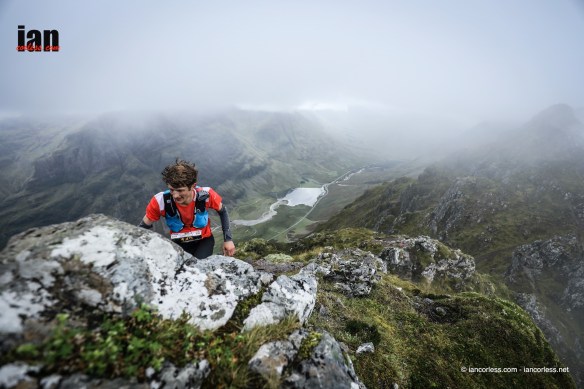
Having marked this section of the course I couldn’t wait to get to the ridge line and the incredible views. Sadly on the Sunday they were shorter lived as the mizzle came in determined not to reveal the surrounding beauty. This served me well over the tops allowing me not to be distracted and to knuckle down, but it also gave me another reason to be grateful for having been out on the course the day before.
Again, this part of the course didn’t disappoint. Even the out and back that seemed so unnecessary whilst marking the course served its purpose perfectly. The section is one of those descents and ascents to ensure you earn the bagging of the next peak, but the primary purpose is to allow competitors to see how far/ behind they are of their rivals. I can only imagine that at the front of the race this is vital, but the opportunity to see other friends and rivals was certainly welcomed by me.
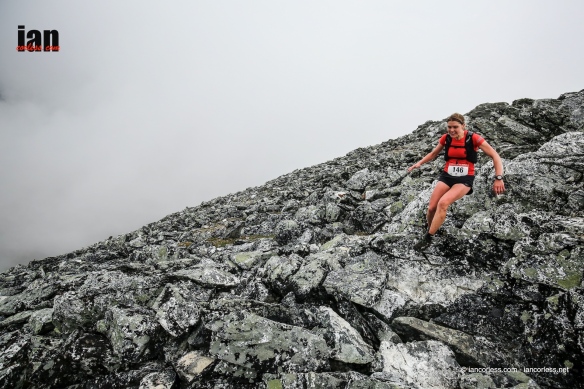
The subsequent descent along the ridge is spectacular and quick, but step off the ridgeline and you know you’re in different territory. This section caught a lot of people out as they slipped and over balanced their way down. The rock was now wet and for my money that made this the most dangerous part of the course once the stone steps came into play with a friction akin to ice. There was a clear exception to this in the form of Naila Jornet who dropped like a stone! Her hip movement and grace gave away her skiing background as she flew past scores of people on this 800+ metre straight descent.
The aid station at the road crossing provided a huge boost and psyched me up for the big climb ahead up to the Aonach Eagach ridge – it also provided me with a finger of fudge; something I don’t think I’ve had since I was 12! The crowds were in full voice and I was still buzzing a couple of hundred vertical metres up the hill. Stretching back into the mizzle it was clear to see that competitors were tiring. The final big climb took chunks out of people as it demanded payment for admission to its playground.
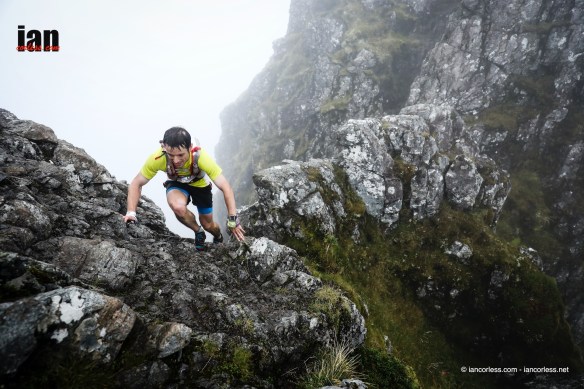
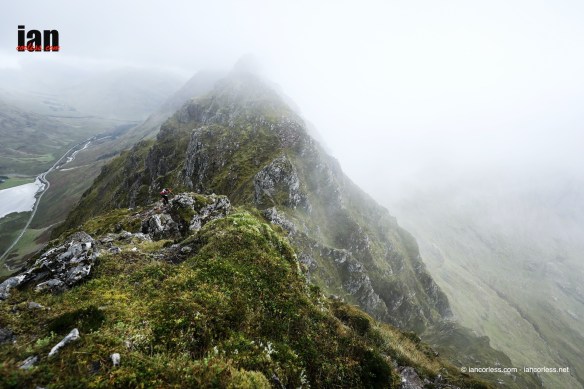
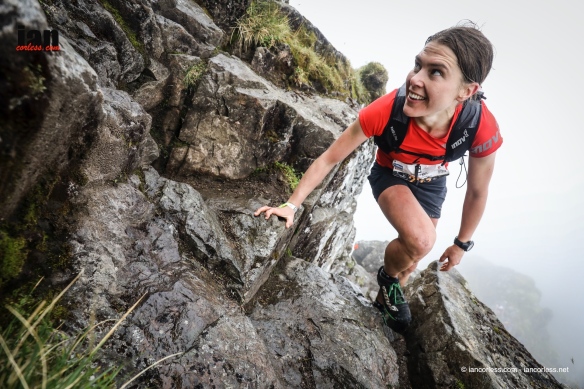
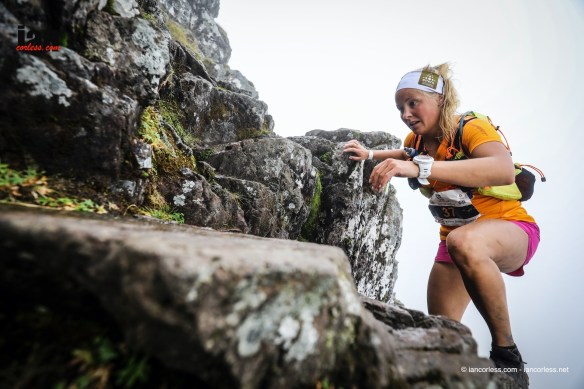
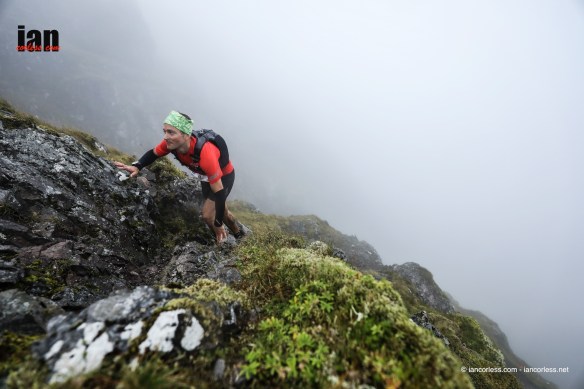
Traversing the Aonach Eagach ridge was a pure delight. I can only imagine how spectacular it is on a clear day, but frequently either side of me just dropped off into the cloud I was occupying. The narrow band of rock floated in the clag as it was slowly soaked to add extra tension. Traversing exposed ridges at speed is about those few crucial first moves. Get them right and confidence starts to flow along with the speed. Get them wrong and the pace slows to a crawl as doubts get the better of you. Fortunately for me the first few moves went well and had all thrills and no terror.
The roped support on key sections was a welcome comfort before the rocky/ boggy run off back to the West Highland Way and that that crucial left turn that signals the final straight (which is actually very bendy). I have a tendency to finish strong, like my mind won’t allow my legs to unleash until it knows it will finish. Naturally this didn’t stop me feeling like the path was twice as long as it had been on the way out, but at least it was primarily downhill and fast.
Crossing the line I piled into the water, desperate to rehydrate and make up for the lack of water source on the Aonach Eagach ridge. Entering the Ice factor climbing centre the warmth hit me in two ways, but the physical was nothing compared to the warmth provided by the sentiment and camaraderie of other competitors. Tucking into some post-race food, chatting and surveying the room the buzz was electric. Something very special went on in Glencoe that day; and I feel privileged to have been a part of it.
Images from the Salomon Glen Coe Skyline are available HERE
You can read about the Salomon Mamores VK Here, the Salmon Ring of Steall Here and Salomon Glen Coe Skyline Here
The Skyrunning UK Series concludes on October 22nd at the Garmin Mourne Skyline MTR.
The stunning English Lakes provided an inspirational and magnificent backdrop for the 2016 Lakes In A Day – 50-mile point-to-point journey from north to south organised by James Thurlowand the Open Adventure team.
Renowned for putting the adventure into racing, James and Open Adventure really have created a spectacular event that provides the participants a truly amazing journey that encompasses a whistle stop tour of some of Lakeland’s highlights. For the fleet of foot the journey may take 10 or so hours (if lucky), for the rest it can literally take 24-hours, hence, Lakes In A day!
Last year, Kim Collison and Helen Leigh blasted around the course to set two new course records and in the process they each netted £500 for their efforts. Once again in 2016, £500 was on offer for a new course record. Would the records fall? Would James be heading off to the bank again?
Lakes In A Day is a race that requires endurance, technical skill and the ability to navigate via map with a pre-marked route specified, which must be adhered too! The only exception being in the early stages when the runners leave Nether Row and head to the summit of Blencathra. From Blencathra summit, the most technical section of the route waits – Hall’s fell. A technical ridge this early in the race intimidates, for those who do not know the area or have recced the route may well think a seriously tough 50-miles awaits… not so. It’s tough for sure but less technical. Helvellyn follows, a long and hard climb up Fairfield and then a drop down to Ambleside.
Runners often think that from Ambleside it’s an easy run in to the finish through lowland fells. Think again! This terrain rolls along like a series of small rollercoasters and the final section of the route provides a surprising 1000m of vertical gain. Travelling to the west of Windermere, the route heads down in a snake like line that weaves left and right, eventually it passes through Newby Bridge and on to the finish in Cartmel.
Weather conditions are always a critical element in any race, in the Lakes, good weather can make the difference between an incredible day and cold, wet, miserable and claggy day of survival. I am pleased to say, that for 2016, the weather was incredible. Early cloud lifted to reveal blue skies and although darkness seemed to arrive a little early, the weather remained good into the night with mild temperatures.
The men’s race was lead in the early stages by James Osborn who later went on to finish 7th. The day was won by Paul Nelson in 10:16:28 after a well run and controlled day, his time though some way off the record set by Kim in 2015. Chris Buck finished 2nd less than 10-minutes later and Nick Green placed 3rd, their times 10:25:11 and 10:32:42.
For the ladies, James managed to save another £500 with Elizaveta Ershova taking victory over a closing Kristina Jackson, their times 11:56:28 and 12:06:16 respectively. Sarah Bailey placed 3rd lady in 12:14:00 making a very close race for the top 3!
As the names suggests, many runners ran through the night to really experience the Lakes In A Day – Helen Richards and Hugh Wright achieved notable finishes squeezing in the 50-mile journey under the allowed 24-hours, their times 23:23:48 and 23:21:25 respectively.
I often get asked, ‘what is he best way to see the English Lakes?’ Well, the Lakes in A Day certainly is a stunning way to see the best of what the Lakes has to offer – it may not be the easiest way though… Take note though, with records unbroken in 2016, the prize purse for 2017 will double, £1000 for a male and/or female record.
“This is a long run in wild terrain. If you are at the start line wearing a t-shirt and shorts carrying nothing but a bum bag, expect us to be asking a few questions. If the weather is bad, then pack extra kit. This event is not like many other ultras in the UK calendar – it goes up on to the high fells and STAYS up there so don’t take any chances.”
The ‘Lakes in a Day’ is a point-to-point race that starts in the northern Lakeland town of Caldbeck. The route heads directly south all the way to Cartmel passing through four major points; Threlkeld, Ambleside, Finisthwaite (a small hamlet) and then Newby Bridge before the finish in Cartmel.
It’s a race that requires endurance, technical skill and the ability to navigate – this is not a race with a marked route! Maps for the race are provided with a very clearly defined route which must be adhered to, the only exception being in the early stages when the runners leave Nether Row and head to the summit of Blencathara.
Unlike many ‘true’ navigation events, the use of a GPS is allowed and a GPX route is provided for runners in advance so that they can download it.
The route is almost split into two halves. The tough and challenging terrain of the high fells in the early stages takes in some classic Lakeland terrain such as Blencathra, Hall’s Fell, Helvellyn and Grizedale Tarn before heading up Fairfield and dropping down to Ambleside.
After Ambleside, there is a transition into the lowland fells from Ambleside. The second half of the race is all about survival after the tough opening miles.
The route heads to the west of Windermere and heads down in an almost straight line passing through Newby Bridge an on to Cartmel.
Kim Collison was the champion in 2015 and his time obliterated the old course record, his time of 9:12:07 won him £500 which is also on offer in 2016 for the fleet of foot!. Post race he said, ‘It was one of those days. I felt really good and the conditions were perfect. I just made the most of it!’
Helen Leigh was equally impressive in 2015 and it turned out an expensive day for race director James Thurlow – Helen also set a course record 11:00:10 to bag £500.
The 2016 line-up can be viewed here and the race website is available here for any last minute information. The race route is available to view and download here and on race day, it is possible to follow live by tacker here.
Race start is 0800 Saturday 8th October.
Over 400 runners will toe the line for an epic, if not lengthy and challenging day in the Lakeland mountains and fells.
Episode 120 – Alex Nichols tells us all about his first 100-miler and how how he won it! Emelie Forsberg tells us about her return to Kima and finding solace and new skills in India. Jasmin Paris is on fire and we sum up an incredible 2016 and ‘another’ round record and finally Speedgoat Karl answers your questions about the Appalachian Trail FKT.
KARL ON THE AT
Some questions from listeners:
Daniel “DJ” Denton Funny: will he burn the van because it has his permanent stench after not showering for over 40 days, and, Serious: did the experience result in a deeper bond/relationship with is father and wife?
Seth Holling What was his thoughts on the smokies? Was the smokies tougher or easier than expected? Would he recommend tacklinnog the smokies first (NB) or last (SB)? Also, did he find a sixer that was left for him at Davenport gap where the AT crosses I-40 🍺
Chris Morgan Ask Karl if he had to push through any injuries?
And if he did how did he do it and did they go away? Or did they become something that needed constant management.
Florian Schuetz What made the difference compared to his previous attempts? Why did he manage to break the time this year? Better fitness, no injuries, mental game, etc.
Brett Slater I’d be interested in his foot care regimen and how he avoids calf issues.
David Nowaczewski Ask him what the heck happened on the day he was found face down on the trail?
Ray Jackson Jr. Ask him how it feels to finally be home and in a place where he can rest without deadlines.
Stephen Cousins What are Karl’s thoughts about Kaiha Bertolini?
Paul Weir I’d ask Karl, what was it like having scott help you beat his record?
Brett Hillier Advice for anyone trying to attempt a long distance FKT?
Gary Broughton When Scott Jurek broke the record, people called it his ‘masterpiece’. Does Karl consider this his masterpiece?
Meghan Kennihan Ask his thoughts on the supposed girl that broke his record unsupported two days after him Kailia
Francis Pardo Details on fueling strategy. Did it change over the course of time?
Matt Dooley Was there any luxury he missed /craved on the trail
Finn Melanson In almost every aspect for a speed record attempt, going SOBO is a completely different hike than going NOBO. Should there be separate records for direction?
Garrett English Does he still feel 2190 miles isn’t that far?
RUNNING BEYOND BOOK is now available in Spain, Germany and Italy and the UK edition will be delivered to UK audiences, USA audiences and Southern Hemisphere audiences from November 3rd: more info – HERE
In the SkyRace (39km) Joe Gray did the double ahead of Tayte Pollman and Patrick Parsel – 4:00, 4:00.3 and 4:11 respectively.
Alicia Shay (now Vargo) won the ladies 4:51 ahead of Kristi Knecht and Sandi Nypaver 4:53 and 4:54
GRAND TO GRAND
Florian Vieux and Emilie Leconte won the self-supported race with Sebastien Nain and Elisabet Barnes taking 2nd.
UTMF
Became a ‘really’ short race due to bad weather and Dylan Bowman and Fernanda Maciel ran great races to win the 27-mile race
ULTRA PIRINEU
Miguel Heras was back to winning ways with a dominant performance and just missed Kilian’s record. he finished in 12:05.Jessed Hernandez and Cristofer Clemente was 3rd. Cristofer became Skyrunner World Series champion for the Ultra distance.
Gemma Arenas tool the race win and Skyrunner World Series. Hillary Allen and Anna Comet placed 2nd and 3rd in the race.
Jasmin Paris sets another FKT on a UK round in wales
00:29:00 INTERVIEW with Jasmin Paris
BEAR 100
Kaci Lickteig and Mick Jurynec/ Ryan Weibel (joint) won in 20:27 and 19:33
Rob Krar was back with a victory at Berkeley Trail Adventure 50 mile
Racing in any running race requires a specific and targeted approach to your objective. The objective can be a one day race of a short distance, a medium distance race such as a marathon or maybe you are going to run long, 50 miles or more… You may even be running for multiple days?
The important thing to remember is that ‘training’ and ‘racing’ are 2 separate things and your fuelling approach should reflect this.
Any long distance event will require you (a unique individual) to utilise fat as a fuel source. You can teach your body to utilise a greater amount of fat as fuel and also to use less calories overall, making you more economical.
Other factors come into play, for example, someone who will be in the top 5% of the race results will have different needs to a runner in the final 5%. However, fat as a fuel is used and we can all adapt.
If you follow the guidance below over a 12-16 week training period you will adapt to fat usage.
Run at the correct intensity -slow and steady. Find out a specific heart rate zone in which to work. Maffetone method is a good starting place.
Avoid fluctuations in intensity when training long, average heart rate or power output are NOT the critical figures, it’s TIME IN ZONE that counts.
Eat foods which are balanced with low GI (glycemic index) carbohydrates and fats to encourage fat usage and avoid sugar spikes.
Avoid gels and sugar products based on point 3 above.
What happens during the race?
Let’s assume that while racing you burn 700kcal per hour, 50% of which comes from carbohydrate and 50% of which comes from fat. Carbohydrate loss is the one to worry about, in this scenario, 350cals (50% of 700). 350kcal of carbohydrate equates to 88 grams of carbohydrate (4 kcal per gram).
Here’s the big problem!
Most individuals can only absorb approximately 60g+/- of carbohydrate per hour.
A simple way to look at this is by looking at ‘you’ as a car ferry. The cars that you will fit in the ferry boat carry carbohydrate, lets say 10g per car. Your car ferry only holds so many cars… in our scenario it is 6!
But we have already worked out that you as an individual burning 50/50 carb and fat require 88g of carb. That is 8.8 cars.
So, you line up 9 cars on the dock every hour but only 6 fit. This leaves 3 on the dock. The boat sails away, comes back 1-hour later and 9 new cars have arrived in addition to the 3 you left waiting…
This is the same as adding carbs through your intestine wall to your blood stream. If you carry on missing 2.8 cars every hour, one thing is guaranteed to happen – you will either need to slow down or you will blow up!
As stated, a typical person can absorb 60gram +/- per hour.
For our example above, that means that you’re going to fall short. You’re using 88 grams per hour and you can only replace 60 grams per hour. That’s a 28 gram / 112 kcal per hour deficit.
If you try to eat more (an additional 2.8 cars) every hour, it’s unlikely to be digested and will simply sit in your stomach or intestines without providing energy. That may be okay for 1-hour, possibly 2 but then the classic scenario of stomach distress happens. How many runners have you talked to that have complained of stomach distress while running?
It’s really important that you understand, eating more food doesn’t mean you’ll have more energy and it may well mean that you’ll face stomach upsets.
Our above scenario works on the presumption that you are only using 700kcal per hour, bigger people and less efficient people may be using more? Our scenario also assumes that 50% is coming from fat and 50% fro carb – that may not be the case at all! In-fact, as much as 80-100% of energy may be coming from carbohydrate! A disaster for the endurance athlete.
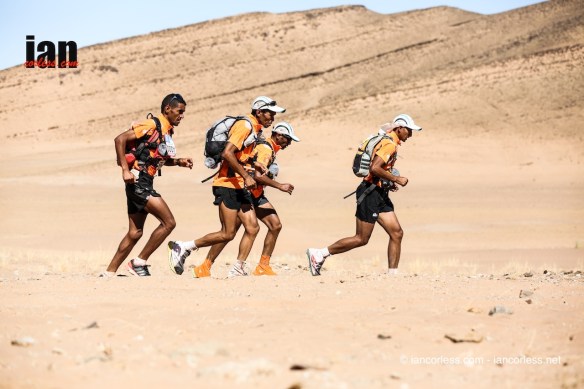
Take multi-day racing for example when you are racing day-after-day with compromised recovery and limited calories. You just simply cannot carry enough carbohydrates to sustain you over the period of an event, particularly if it is a self-sufficient event such as the Marathon des Sables.
To move forward effectively armed with good knowledge about you as a person, you need to address 3 questions:
How many calories do I burn per hour?
How many of those calories come from fat and carbohydrate?
How many calories and what percentage of fat/ carb should I be taking in as a consequence?
Do a 1 hour run at your ‘race pace’ and then use your heart rate monitor to calculate how many calories per hour you are using when exercising at that intensity. These figures can be somewhat unpredictable but it will provide a starting point from which to work from.
Most heart rate monitors will use your age and weight to work out kcal per hour. This will only give you an approximate calorie burn per hour and won’t tell you what % of energy comes from carb/ fat. There are some tools on the internet such as: http://www.braydenwm.com/calburn.htm which can help to give you a basic idea.
Working scenario:
Billy is 43, weighs 82 kg and is racing a 100 mile race, he falls into a category of 65 carb /35 fat fuel usage. Billy has one main objective – to complete the event without major disaster and to run as much as possible. Billy running at his proposed race pace will use 820 Kcal per hour, so the calculation works like this:
65/35
Fat contribution: 820 Kcal x 35% = 287 Kcal
Carbohydrate contribution: 820 Kcal x 65% = 533 Kcal
Calories from fat do not need to be replaced – we all have plenty of stores. However, carbohydrate NEEDS replenishing and the body can only hold so much. 1g of carb is 4kcal. So, Billy will require 133g per hour!
Uh oh! We have already clearly said that around 60g of carb per hour is all that we can take. Billy is in trouble… he is missing out on 73g per hour. Remember the car ferry and the cars sitting on the dock waiting to get on the boat – Billy, racing over 100-miles will need a multi-story car park for the cars that won’t fit on his boat.
Although Billy is a ’sample’ case, this scenario happens time and time again in races all over the world.
How do you solve this problem?
Billy needs to utilise fat as a fuel more and be less reliant on carb.
The body is pretty clever. It is able to switch its metabolism. So, in the case of Billy, the availability of carbohydrate is becoming an issue, as a result the body will start to utilise fat stores. This is a good thing. Yes? Well yes but one thing will have to happen – Billy will need to slow down. Now for many of us, that is not an issue as a finish is a primary goal. However, this can be hard to take and yes, you may well feel lousy. More importantly, pre-race objectives may go out of the window… target times will be lost and a possible top-10 (if that was an objective) will also go out of the window.
Let’s cut to the chase
If more of your energy comes from fat, you’re less likely to run out of carbohydrate. The best athletes in the world require energy (Kcal) to run at race speed. If a large chunk of that energy requirement comes from fat, their total carbohydrate use is reduced.
As an example, by making changes to Billy’s training and diet, the new version arrives for the 100-mile race using only 700Kcal per hour and 55% of energy is being provided by fat.
A quick maths calculation reveals the following:
1. He’s using 315 Kcal of carbohydrate per hour on the run, compared to the previous figure of 533
2. With his intake of 60 grams per hour (240 Kcal), he now only has a deficit of 75 Kcal per hour compared previously with 292 Kcal (73 grams)
3. As a consequence, Billy could run the whole 100-mile race with a smile.
In conclusion:
For you to run an ultra feeling comfortable, relaxed, efficient and on target, you need to go away and find out:
How many calories do you burn per hour?
How many of those calories come from fat and carbohydrate?
How many calories and what percentage of fat/ carb should I be taking in as a consequence?
You may well find that you need some specific help in working out some of the data and figures outlined above.
A Metabolic Rate Test HERE and a Metabolic Test is the way forward HERE.
In training (not all training, just the slow/ steady runs):
To recap earlier points:
Run at the correct intensity – slow and steady. Find out a specific heart rate zone in which to work. Maffetone method is a good starting place.
Avoid fluctuations in intensity, average heart rate or power output are NOT the critical figures, it’s TIME IN ZONE that counts.
Eat foods which are balanced with low GI (glycymic index) carbohydrates and fats to encourage fat usage and avoid sugar spikes.
Avoid gels and sugar products.
Finally, daily diet plays a key role in overall adaptation. Simple sugars, processed food and so on are all bad in day-to-day life for an endurance athlete. Keep them at a minimum and as a treat.
Periodise your eating just as you would training.
Think about dietary fat and fat-burning and think low carb.
A low carb and high fat (LCHF) diet forces ones body to burn fat. As you will now know, fat stores are pretty much unlimited even in the skinniest guy or girl. Optimising ones body to use fat will use less carbs and allow you to perform longer. This becomes even more relevant in long endurance events, especially when the pace is slower and the energy requirement to run at a certain pace is lower.
Notice I say low carb and not no carb! Carb has a place in your diet, it just needs to be consumed at the correct times and make sure the carbs you eat are low GI and good quality. Avoid white pasta, white bread, anything refined and potatoes for example (high GI) and eat sweet potato, beans, whole grains (but be careful) and plenty of vegetables (low GI).
Protein is also key for recovery, muscle growth and repair.
A typical runners diet, broken down into percentages of fat, protein and carb would have often (and in many cases still does) look like this:
Carb 60%
Protein 15%
Fat 25%
The modern day ultra, endurance or multistage runner has percentages that look like this:
Fat 50%
Protein 30%
Carb 20%
Of course, we have all been told that high fat is bad for us but sugar and in particular, refined sugar is the real evil and in day-to-day life it just doesn’t help you as an ultra runner.
Note though, fat should be good quality – oily fish, nuts, seeds, good quality meat, olive oil and so on. Bad fats are the obvious ones such as crisps etc.
Periodise your food intake
Just like you will plan training – intervals, hills, long runs and so on. Food should also be planned in-line with training and racing needs. I will write more on this in another post.
In simple terms:
Train fasted for long runs and keep your pace low to promote fat burning. Actually eating fat before a long run has benefits in helping and promoting fat burn. As does coffee. Try Bulletproof coffee before long and slow runs, read here
Recovery consume a little good quality carbohydrate post training, ideally within a window of 30 to 40-minutes and include good quality lean proteins.
Racing
When racing a long distance race, you as a runner will be far more efficient at using the calories that you have within your body if you follow the guidelines above. We have already said that the body can only hold so much carbohydrate, so, if you have your fat burning turned on you will go longer. Your food requirements whilst racing will also change and you will require less sugary products to keep you going.
Pace (the speed you run) will also impact on how the carb/ fat ratio is used. Runners who are racing (looking for a top placing) incorporate different methods to perform. Often called, ‘train low and race high’ – Timothy Olson for example is a good example. Timothy eats high-fat and low carb in training and day-to-day life but when he races he uses sugar (such as gels) to fuel him during the run. His training has adapted him to use less gels (he uses more fat as fuel), last longer and each sugar smack he gets while racing has less work to do as his carb stores are always being used in conjunction with fat.
Carb loading has been used for years and it’s often misunderstood. How many times have you seen or heard a runner gorging on carb for days before a race – why? We already know that our body can hold so much stored carb (approx 2500 cal) so, when we ‘carb load’ we are basically making sure that our carb stores are full pre a race. Don’t over indulge. It will just sit in your stomach, cause discomfort and make you feel lethargic and more than likely, you will add weight to your frame. As a guide in the 24-hour period before your race, keep a balanced diet but up the carb % say from 20 to 35/40%. Again, make this good carb – low GI.
What is key here is finding what works for you.
“The benefits of low carbs really start to distinguish themselves when you get beyond the marathon, because you’re definitely running out of carbs then,” – Jeff Volek
Always check with a medical professional before making any drastic change to your eating or training regime. The information provided in this post is designed to make you question and pursue an opportunity to enhance your training and racing and we stress that you must find out what personally works for you.
Thanks to Marc Laithwaite for his contribution to this post.
Jasmin Paris does it again…. following on from her incredible 15:24 Bob Graham Round and her 16:13 Ramsay Round. This weekend, Jasmin completed the Paddy Buckley in 18:33 (tbc). That is the UK’s ‘BIG 3 ROUNDS’ completed.
“Paddy Buckley round in 18.33. Had to dig deeper than ever before. Huge thanks to an incredible team for making it possible. Time for a rest!” – Via Jasmin on Twitter
The Paddy Buckley, also sometimes known as the WCR, (Welsh Classical Round) is the Welsh equivalent of the BGR. Considered tougher than the BGR, a record attempt can be considered to take at least 1-hour longer.
Covering approximately 61-miles and 8500m +/- of ascent, the route takes in 47 ‘tops’ within Snowdonia.
Wendy Dodds was the first to complete the round way back in 1982, her time was 25:38. Like most rounds, the aim is to complete the round in sub 24, this was first done in 1985 by Martin Stone. He ran 23:26.
The route as one may guess, was devised by Paddy Buckley and it may be started at any point and can be completed in a clockwise or anti-clockwise direction.
Jasmin very clearly had a desire to complete and maybe set three records on all three rounds in 2016. An incredible feat, especially when one considers what she has also achieved in addition. A 3rd place at the Skyrunning World Championships, 6th place at her first 100-mile race; UTMB. Victory at Tromso SkyRace and the Salomon Glen Coe Skyline which also provided a world series title for the Skyrunner World Series in the Extreme category.
This Paddy Buckley result, in addition to all the other results listed, well and truly places Jasmin as one of the most interesting prospects in the fell, trail, mountain, ultra and Skyrunning world.
Congratulations Jasmin!
The previous ladies record was set in 2013 by Nicky Spinks in a time of 19:02. Therefore, once ratified, Jasmin Paris will hold records on all 3 rounds.
Fastest aggregate time for the three rounds in one year was by Adrian Belton – completed over 29 days in 1989.
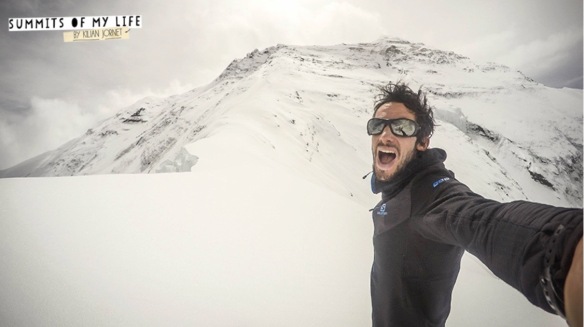
“Time was running out and conditions on the mountain weren’t changing. The unstable weather continued and there continued to be a high risk of avalanches on the higher reaches. We left the mountain feeling somewhat frustrated. We were well acclimatized and could climb without taking serious risks, but at the same time we were very satisfied with the activities that we had been able to carry out.” – Kilian Jornet
The mountain is always the boss. The day that you don’t respect the mountain may well be the last day that you spend in the playground. I am pleased to say that Kilian as an adventurer and mountaineer has progresses not only physically but mentally. He some this up well when despite obvious eagerness to reach the summit of Everest, he was able to step back and think, ‘We had to postpone the challenge of climbing Everest because a rapid ascent would expose us to the risk of accidents.’
I for one am happy to hear Kilian speak these words. The mountain will always be there.
“I’m very happy with what I’ve learned these last few weeks in the Himalayas. We’ve seen what things work and what needs to change. We have learned and personally I have grown as a climber. The expedition has left us feeling very positive in spite of not being able to reach the summit.” – Kilian Jornet
Importantly, Kilian looks at this expedition not as failure but as a stepping stone to a future successful attempt.
In his own words you can read his thoughts on his SOML post HERE.
In 2015, we came up with a challenge to run 256 miles in one month. Yes, 256 miles! December can be a tough time for many when the motivation to get outdoors can be hard. So….
Who fancies the #256CHALLENGE ?
Kick start 2017 feeling strong and motivated with a fantastic base of endurance from which to build.
How does it work?
Well actually it is pretty simple…
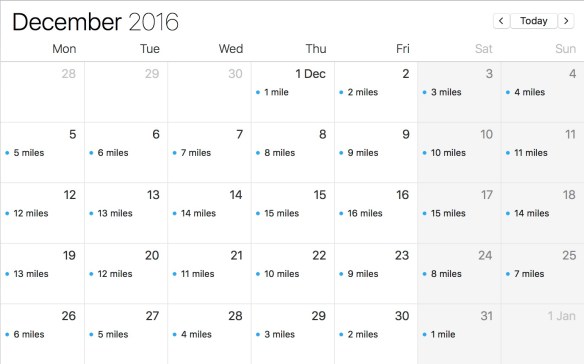
For the first 16 days of December you run the miles that correspond to the day. 1-mile on the 1st, 2 on the 2nd, 3 on the 3rd and so on to the 16th.
On the 17th you go back down… 15, 14, 13, 12 and so on.
It’s a brilliant pyramid session and one that will give you 256-miles for the month of December. No one day is too long but just look at the week of the 12th when you will rack up 99 miles. For many that may well be a ‘normal’ training week but for most it will be the biggest week of their training life!
The advantage of the #256CHALLENGE is that it builds slowly, stresses you (and probably makes you overreach) and then allows you to step back down gradually, allowing for recovery and all in time for a serious blow out for the New Year!
Who is in?
To help add additional motivation we encourage you to monitor and share your progress. You can download a log sheet PAGES HERE (for Mac) or EXCEL HERE (for word).
Share your daily runs on Facebook and Twitter using #256CHALLENGE log your runs on one of the log sheets above and ideally upload your run sessions to Strava. Once December is completed forward your log sheets and we will pick a winner.
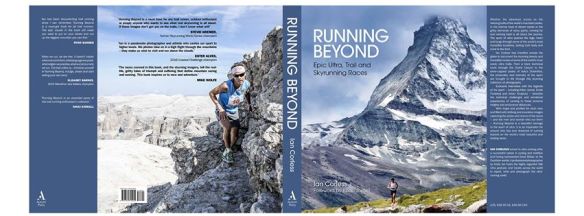
The first person drawn from the hat will receive a signed copy of



























































 IAN CORLESS