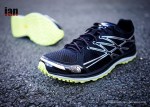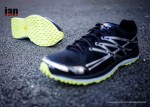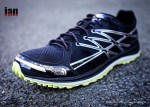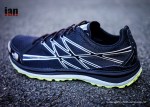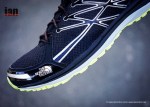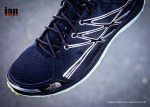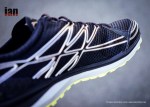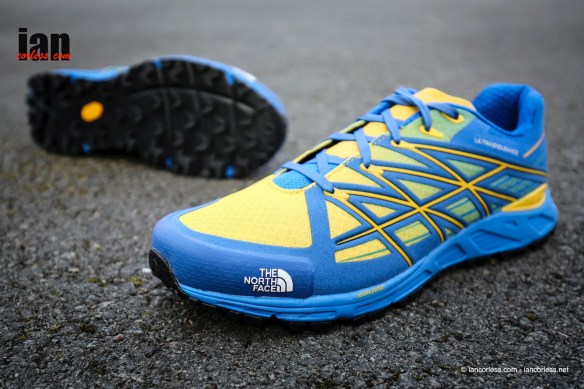
The North Face #TNF Ultra Endurance Shoe Review

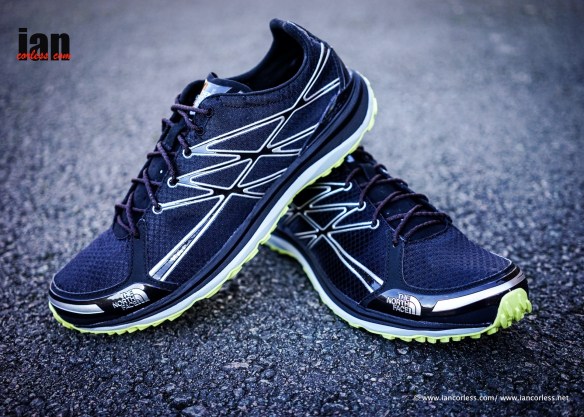
©iancorless.com_TNFUltraEndurance-3919A couple of weeks ago I took a look at the TNF Ultra TRII, I said then that TNF are really getting their act together with run shoes. The recent products from the brand have continued to impress and the addition of the ULTRA ENDURANCE adds another quality shoe that offers runners another option to tackle the trails. The current TNF line up is as follows:

ULTRA TRII read my review HERE

ULTRA CARDIAC read my review HERE

ULTRA MT read my review HERE

and the ULTRA ENDURANCE

In a review toward the end of 2015, when I compared many leading shoes against each other (not all shoes I must stress) the Ultra Cardiac very nearly took top honours, it was just pipped by the Scott Kinabalu Supertrac. (Read the review HERE).

If I did that review now, I strongly feel that the battle between the Scott Kinabalu Supertrac and the TNF Ultra Endurance may well be even closer but the Supertrac would still get the nod from me due to the outsole which is extreme and made from a superior wet traction rubber compound that works really well on a multitude of surfaces, overall comfort and flexibility.

To provide some clarification, we need to look at the current TNF line up and see how (in simple terms) the shoes are to be used so that you can decide which shoe is for you:

ULTRA TRII – Is a dry trail, light and fast shoe for a runner who like a more minimalist feel. Cushioning is 8mm/ 16mm and It has an 8mm drop.

ULTRA CARDIAC – Is a cushioned trail/ mountain shoe that feels plush, fits snugly and works well and on dry trail, wet rock and very moderate mud. Cushioning is 12mm/ 20mm and it has an 8mm drop.

ULTRA MT – Has an aggressive outsole and is designed for off-road use in mud, mountains and demanding terrain. Cushioning is 9mm/ 17mm and it has an 8mm drop.
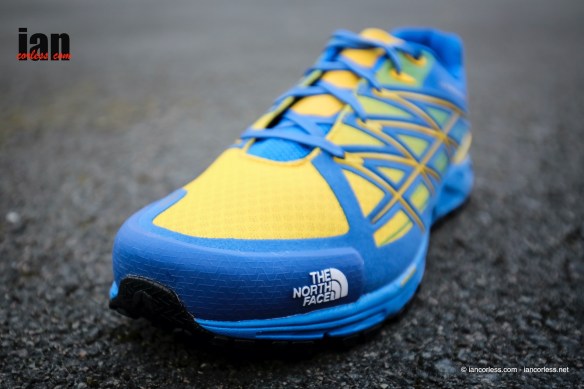
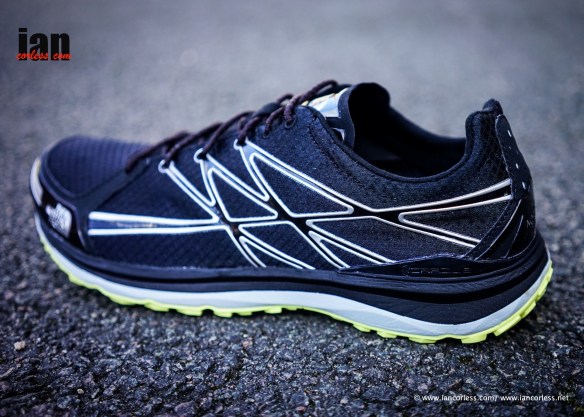
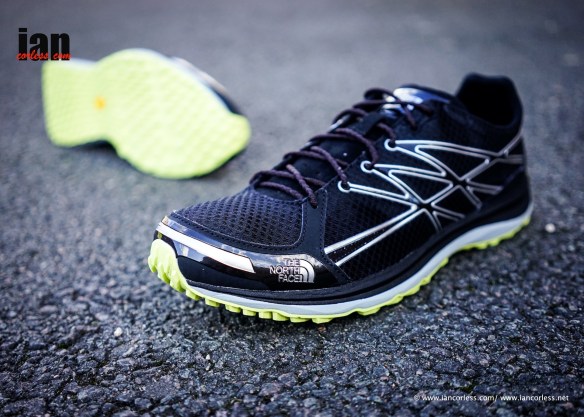
©iancorless.com_TNFUltraEndurance-3927

Enter the ULTRA ENDURANCE – 9mm/17mm with 8mm drop.

This new shoe from the TNF brand sits somewhere between the CARDIAC and MT and as you would expect, has an 8mm drop. I like this! But then again I would… I am a real fan of 8mm drop shoes and as I have said many times before, this drop sits in the perfect middle ground that can work for most people. TNF have obviously thought about this and hence the continuity between the ‘ULTRA’ range. It’s also fair to say that as the name suggests, the ‘ULTRA’ shoes are designed for running longer and therefore 8mm will be more forgiving.
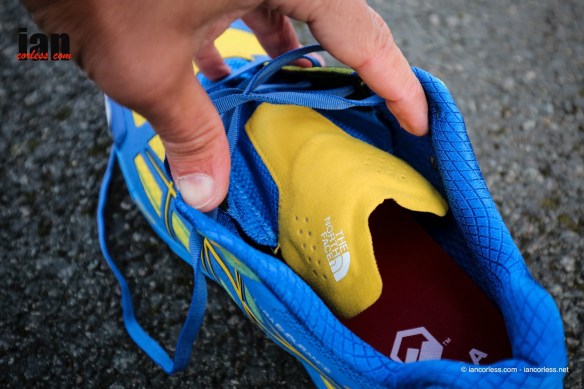
©iancorless.com_TNFUltraEndurance-3960

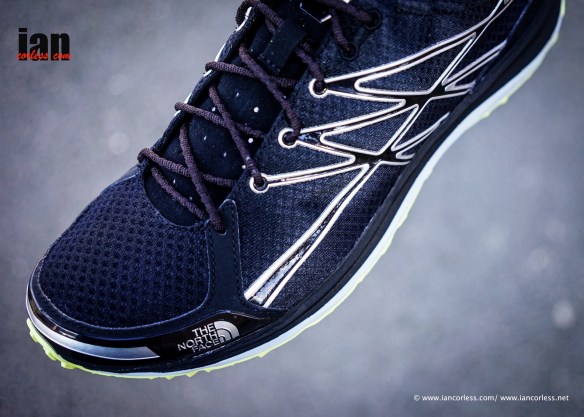
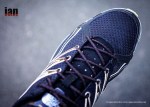
Slipping the shoe on, it does feel different to the CARDIAC but more similar to the MT. This primarily due to the gusseted tongue which is secured within the shoe – this holds the foot firmer and in addition reduces the chance of debris getting in the shoe. It’s a winning combination that I love.
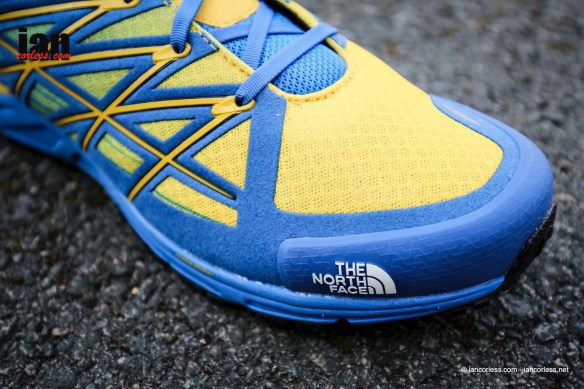
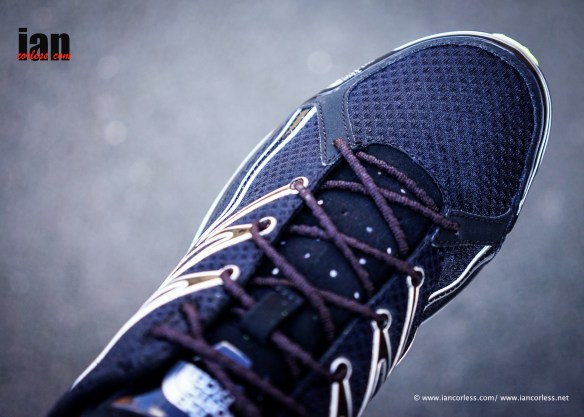
©iancorless.com_TNFUltraEndurance-3930

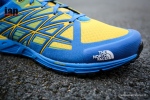
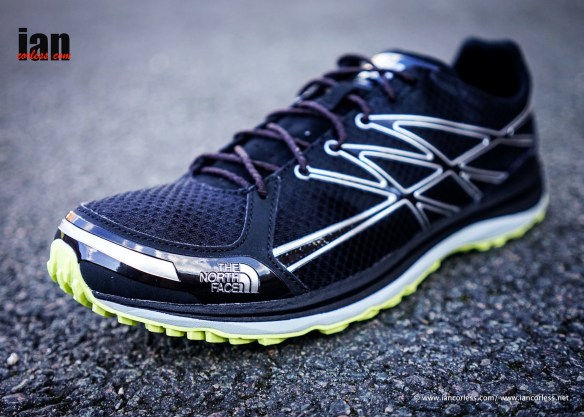
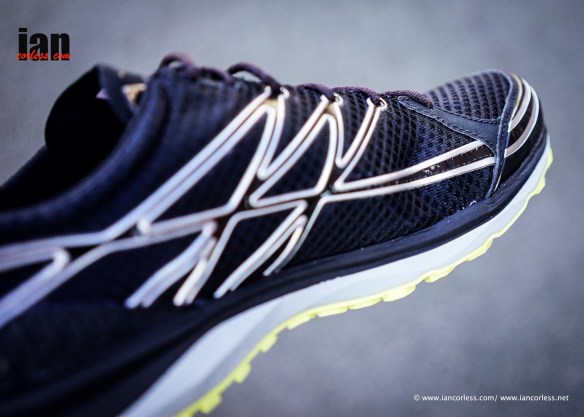
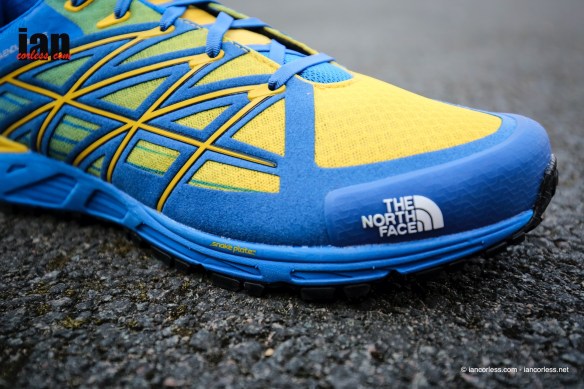
The front (toe box) is wider than both the CARDIAC and MT and therefore allows the toes to splay a little more. Protection at the front is excellent with a very reinforced toe box bumper that will definitely protect against all those unplanned collisions with rocks, stones or other debris.
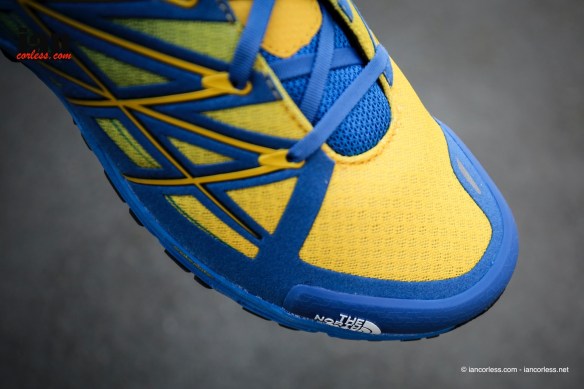
©iancorless.com_TNFUltraEndurance-3948

Heel box is plush, padded and holds the foot secure and has FlashDry technology.
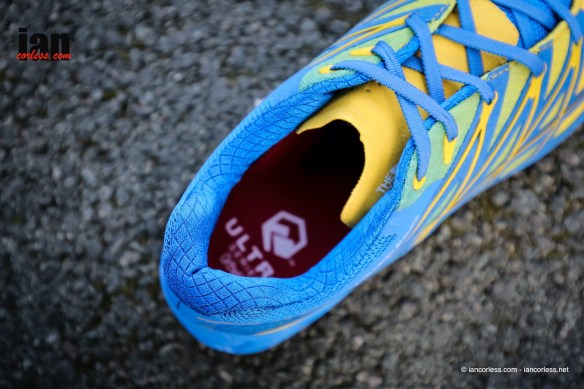
©iancorless.com_TNFUltraEndurance-3963

Key features of many TNF shoes is ‘Snake Plate’ and the ‘Cradle,’ these two elements are present here in the Ultra Endurance and add to the overall benefits of the shoe.
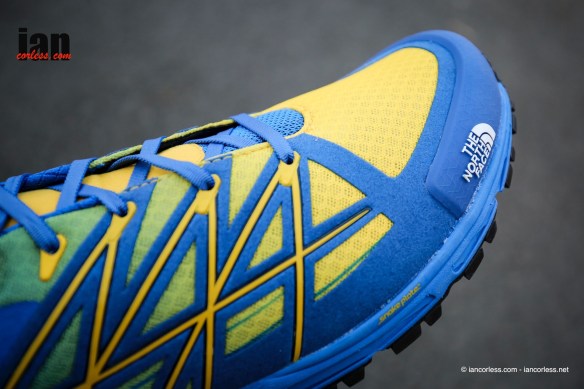
©iancorless.com_TNFUltraEndurance-3941

Snake Plate adds protection to the forefoot of the shoe and protects against rocks/ impact and so on, TNF vary the plates from one shoe to the next depending on what they consider to be necessary. In other shoes this would be called a rock plate.
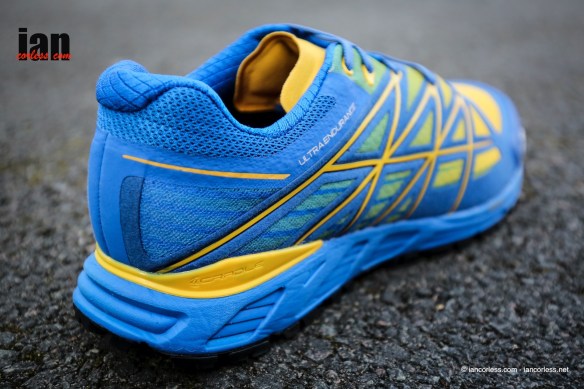
©iancorless.com_TNFUltraEndurance-3932

The cradle is designed to hold the rear of the foot more secure and stable.
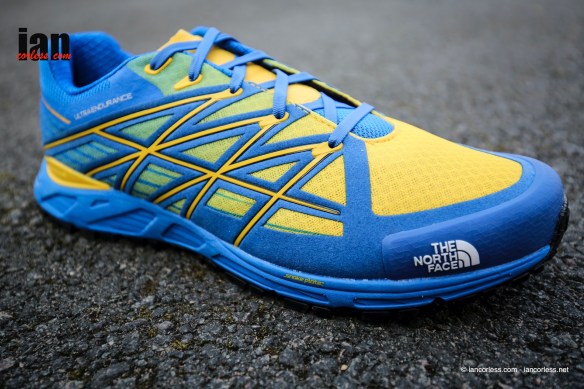
©iancorless.com_TNFUltraEndurance-3938

The upper is breathable and most importantly seamless, therefore reducing the chance of rubbing, hot spots or the chance of blisters. The upper is welded TPU with suede overlays.
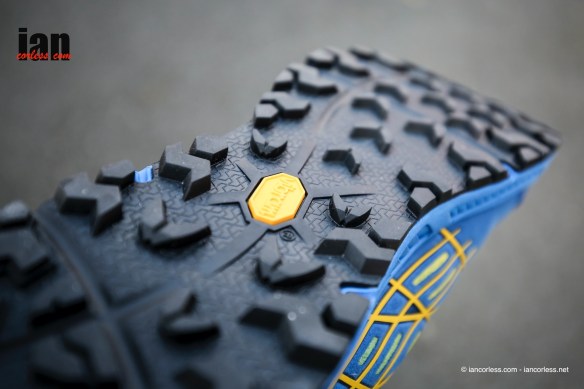
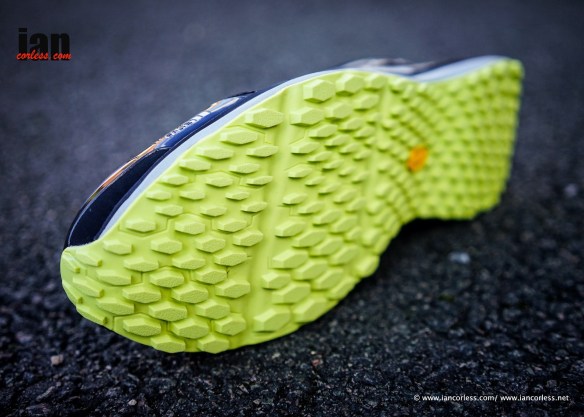
©iancorless.com_TNFUltraEndurance-3944

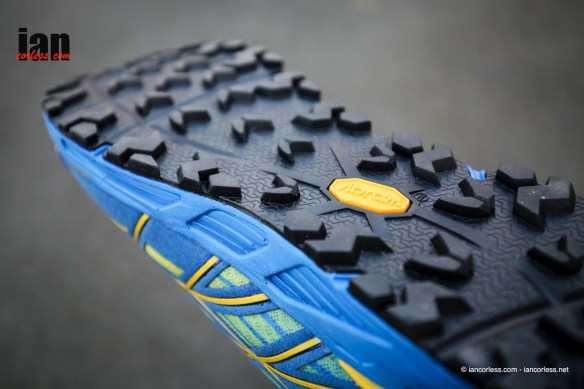
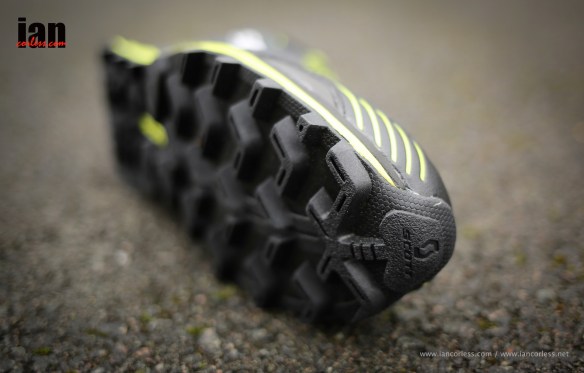
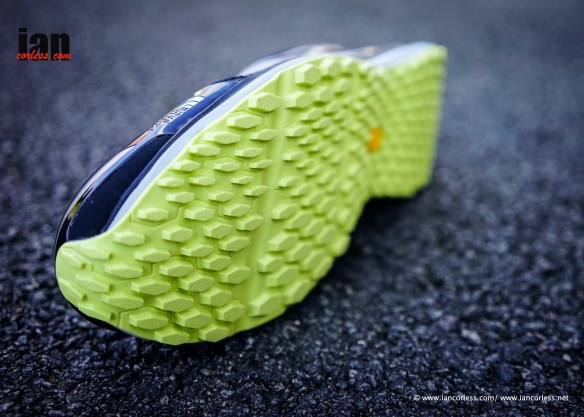
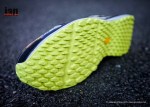
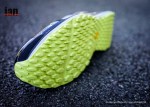
The outsole is Vibram Megagrip which is making an appearance on countless shoes in the trail world. I need to clarify here that Vibram don’t only make one Megagrip outsole (see here). They do many variations, so, please check! A classic example is the outsole on say the TNF ULTRA CARDIAC and TNF ULTRA ENDURANCE – they use Megagrip but they each have three different variations of the product. The Ultra Cardiac having a more subtle version, the Ultra Endurance a more aggressive outsole for mixed terrain and to draw comparisons, the Scott Kinabalu Supertrace (has a special Scott outsole) that is basically just aggressive, extreme and made from a superior wet traction rubber compound that works really well on a multitude of surfaces.

For example:

Ultra Cardiac outsole:
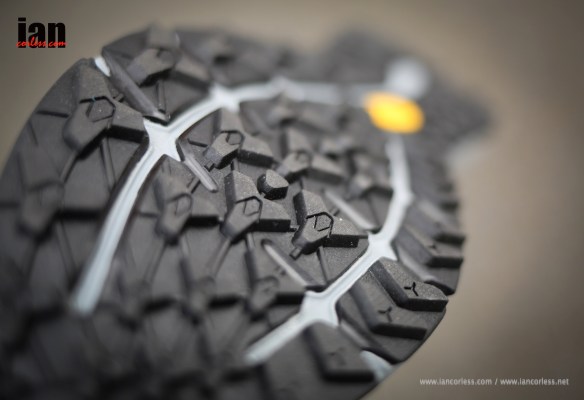
©iancorless.com_TNFUltraCardiac-7017

Ultra Endurance outsole:

©iancorless.com_TNFUltraEndurance-3946

Scott Kinabalu Supertrac outsole:

©iancorless.com_ScottSupertrac-5061

Cushioning in the Ultra Endurance is single-density compression folded EVA which does a great job of allowing you to feel the ground but provide enough cushioning for a long day out.
©iancorless.com_TNFUltraEndurance-3937

IN USE

The upper is seamless and snug and the gusseted tongue is a real pleasure which holds the foot firm. The toe box feels noticeably more roomy in comparison to say the Cardiac or MT.  The shoe feels relatively light but not super light. You really feel as though you are wearing a shoe that will take a battering. This in many respects is reflected in the shoes name, Ultra Endurance.

8mm drop for me is perfect, it provides a drop that allows me to run longer and when I can’t keep my form, the extra height allows for some compensation. As I mentioned above, this is obviously something that TNF have really thought about and the whole ‘Ultra’ range of shoes has an 8mm drop. This is also great as it means I can seamlessly move from one who to the other shoe without having a shock. A clear example of this is that I have been doing road runs in the Ultra TRII and I have been out in the really muddy stuff in the MT.

The shoe works well in mud but it’s not an out-and-out shoe for muddy trails, better get the MT if that is what you need. The Ultra Endurance is a great trail/ mountain shoe that works well and transitions from a multitude of surfaces. As I mentioned above, I believe it would give the Scott Kinabalu Supertrac a run for it’s money as a potential best ‘all rounder!’

To emphasise a point, if you were looking to but just one shoe that could handle many terrains and provide you with happy and many days out on the trail, then the Ultra Endurance would be a good place to start. It’s not a great road shoe, but it will gladly provide a cushioned and responsive ride for road sections between trail. It’s not an excellent performer in very muddy conditions but it does provide some grip that will allow you to progress. Where the shoe excels is when all these elements combine, say on a long training run, long hike or a race when you may well be mixing from road to trail, to rocks, to mud, to scree and so on, here the Ultra Endurance works so well.

It’s a shoe that excels of dry trail, rocky trail (wet or dry) and some road. It has actually become a real favourite when travelling when space is limited and I need a ‘one shoe does all’ scenario. Feel for the ground is good and has improved the more I have run. The first few runs felt a little hard and flat but the shoe bedded in nicely. The Vibram® Megragrip sole is as mentioned, almost becoming a standard feature on trail shoes. the version applied to the Ultra Endurance compliments the shoe perfectly.

Grip in mud is compromised, it always is in a shoe that is designed for trail. That is not a criticism as the shoe is definitely designed to be an all rounder. If you need out-and-out grip and a shoe that will just be used for soft-ground, mud, fells or other messy terrain, you’d be better looking at the TNF Ultra MT or a fell shoe from say inov-8 – the Mudclaw 300 for example is a great off-road shoe.

The heel box holds the foot secure with no slipping. It’s snug and reassuring.

The relatively seamless upper and sewn in tongue really holds the foot secure and has given me no hot spots. It’s a real bonus and it’s great to see that TNF are incorporating this more. For anyone who has used a Salomon S-Lab shoe with ‘endofit,’ a gusseted tongue really is just so much more comfortable. Although the TNF version is different to the Salomon version, similarities can be drawn.

The shoe has a neutral fit as does all the TNF ‘Ultra’ range and so therefore you could add an insert or orthotic if required. Drop is 8mm. Sizing is true to size, I take a UK9.5 in most shoes and my Ultra Endurance is UK9.5. However, due to the wider toe box the shoe does feel different to the Cardiac or MT so you may want to just make sure by trying in-store.

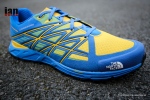
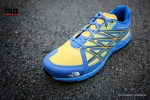
This is not the lightest shoe on the market but I don’t think that is really an issue. It’s not trying to be the lightest. What it does, is offer cushioning, protection and longevity in an attractive package that will last for many days, weeks and months. The colour-way of blue and yellow also looks pretty swish.

©iancorless.com_TNFUltraEndurance-3952

Conclusion

This shoe is a great all-rounder and may well be a perfect ‘one shoe’ purchase for anyone who is looking for something that can do many things well. It excels on dry trails and loose surfaces such as scree, stones, sand etc. Grip from the Vibram sole is good on wet rocks and the shoes transition from trail to road well and the cushioning allows for plenty of happy miles.

The Ultra Endurance can handle mud as part of a mixed terrain trail run but if you wanted an out-and-out shoe for muddy trail, this is not it. It’s a really solid shoe with some serious toe protection, a plus for anyone heading out into mountainous terrain.

I have been working with and running myself in harsh, rocky, desert like terrain in Lanzarote, La Palma and so on and I think the Ultra Endurance would potentially make a great shoe for someone participating in a multi-day race like the Marathon des Sables. The combination of features sits well, the slightly wider toe box, protection, grip and cushioning all combine to make it a great shoe for such an adventure. I will feedback on this after the 2016 Marathon des Sables where I will test the shoe daily.

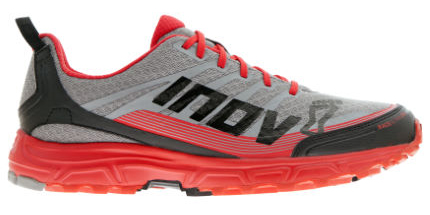
To draw a comparison, I think those runners who have enjoyed the inov-8 Race Ultra 290 will find the TNF Ultra Endurance very appealing. The plus side being the TNF who has more grip.

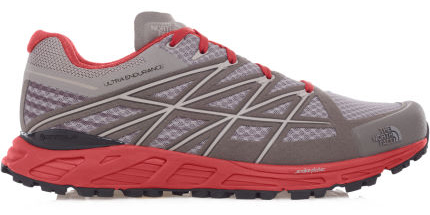
The TNF ULTRA ENDURANCE alternative colour-way
The-North-Face-Ultra-Endurance-Shoes-SS16-Offroad-Running-Shoes-Silver-Grey-Pompeian-SS16-2

The inov-8 RACE ULTRA 290

Inov-8-Race-Ultra-290-Shoes-SS16-Offroad-Running-Shoes-Grey-Red-Black-SS16-5054167431

The downsides are minimal for me. It’s a slightly heavier shoe and I have touched on the reasons why above. Longevity in TNF shoes has been an issue in the past so I will hold judgement on this and feedback. Currently after 100+ miles of mixed terrain, the shoes are holding up well with no issues.

The North Face say: With its Vibram® Megagrip outsole, Snake Plate™ forefoot protection and Ultra Protect™ CRADLE™ stability, the Ultra Endurance will keep you tearing up the trail without tearing up your feet. CRADLE™ technology provides extra heel stability on uneven terrain, a gusseted tongue keeps loose trail debris out, while the rigid-yet-flexible ESS Snake Plate™ delivers on lightweight, heavy duty forefoot protection.

▪Welded TPU and suede mid-foot support overlays

▪Molded-TPU toe cap for protection

▪Gusseted tongue for protection from trail debris

▪Ultra Protect™ CRADLE™ heel-stability technology

▪Single-density, compression-molded EVA midsole

▪Vibram® Megagrip outsole for durable sticky traction in all conditions

▪ESS Snake Plate™ forefoot protection

▪Cushioning 9mm front/ 17mm rear

▪8 mm offset

▪Weight per shoe 260g+/- for a UK8

▪Approximate Weight Pair: 510 g

TNF Technologies explained:

Snake Plate™

The patent-pending Snake Plate™ consists of a forefoot plate that winds back and forth between the medial and lateral sides of the foot. Because it is not one solid element, it is not as uncompromisingly rigid from side to side and front to back. The result is a forefoot plate that allows the foot to do what it is physiologically designed to do: flex, bend, and contort to changing terrain. At the same time, the Snake Plate™ delivers rigidity where and when it is still needed. The thickness, composition and size of the Snake Plate™ vary from style to style as appropriate. For example, a thicker, more rigid Snake Plate™ addresses the technical, ever-changing demands of a mountain run. A thinner, more flexible Snake Plate™ reconciles flexibility with a decreased demand for protection while on smoother dirt paths.

Vibram® Outsole Technologies

The North Face® collaborated with Vibram, long respected for quality and durability, to create various outsoles (Vibram® Humbolt Outsole, Vibram® Mikeno Outsole, Vibram® Walsh Outsole, and Vibram® Rubber Outsole Compound) with superior traction, stability and protection.

Ultra Protect™

A shank plate for torsional rigidity and consistent underfoot feel.

THRESHOLD TRAINING by Marc Laithwaite

©iancorless.com_TCC2016-0742

Is ‘Threshold’ the most misunderstood sports physiology term? It certainly does cause confusion and in many cases, a runner’s perception of threshold is different. Marc Laithwaite takes a look and strips it back-to-basics.

What is threshold?

To start this conversation, we need to first point out that there are many different types of threshold and this is where the confusion begins. To give a few examples:

1. Lactate threshold

2. Aerobic / Anaerobic threshold

3. Ventilatory threshold

4. Functional threshold

There’s lots of magazine articles which outline the benefits of calculating your threshold and how you can use it for training purposes, but many of them are poorly written and incorrect, so here’s our low down.

Lactate Threshold

You can complete a lactate threshold test by cycling or running, gradually increasing your pace and taking finger prick blood samples at regular intervals to measure lactate in the blood. As the exercise gets harder, the lactate levels will increase.

There are technically 2 lactate threshold points. The first one is very early in the test, when your lactate levels start to rise above their resting levels. In practical terms, if you can hold a full conversation whilst riding your bike, then suddenly you feel that your breathing rate rises slightly, this is your true ‘lactate threshold’. This occurs very early and generally the heart rate at your lactate threshold will be the border of zone 1 and zone 2, so relatively comfortable.

As the test continues your breathing will get harder and harder and then you’ll reach a second lactate threshold. Up until this time your lactate has been steadily rising, but this is followed by a sudden and sharp kick upwards. As the test continues, your lactate will continue to rise sharply and you’re on borrowed time… you will be stopping soon as the lactate accumulates in your muscles. This second and sharp ‘kick up’ or ‘deflection point’ is what we tend to incorrectly refer to as ‘lactate threshold’. This is the figure that most people have completed the test for, technically, this is the ‘lactate turn-point’ or ‘Onset of Blood Lactate Accumulation’ (OBLA).

So why should I measure my lactate threshold / lactate turn-point?

Well, your lactate threshold is a very good marker for many endurance events. Optimal Ironman bike pace tends to be very close to lactate threshold for many people (for training zones we use, it’s the border of zone 1 / 2, but this is not the case for other calculated zones).

The lactate turn-point is the measurement that most people really want to find out. When does my lactate start to rapidly accumulate, what’s the running speed / heart rate / power output at that point? Many magazine articles generally state that your hard / sustained exercise pace coincides with lactate turn-point, but in practical terms, that’s incorrect.

Let’s give an example of a runner who completes a lactate turn-point test and we calculate the heart rate at lactate turn-point to be 165bpm. If we ask this runner what their heart rate generally is during a 5-10k race, they will generally give is a figure 5-8 beats higher than the lactate turn-point. Initially this is confusing, as most people think that the heart rates will match. In terms of calculating heart rate training zones, we will therefore have to guess by adding 5-8 beats to the lactate turn-point, to calculate a ‘threshold heart rate’.

So why do a lactate threshold / lactate turn-point test?

Lactate testing does provide some information, but it can also be relatively limited in it’s use. One of the key things it does provide is a bench mark. If you repeat the test and the turn-point occurs at a later speed or power output, then your fitness has improved. From a coaching perspective, if we want to use the test results to provide coaching advice and training zones, then it’s not the best option for us to choose.

So what’s the other options?

Aerobic/Anaerobic and Ventilatory thresholds can be calculated by measuring expired gases and breathing rates during testing. These tend to fall much more accurately as predictors or training intensities. Functional threshold, is a completely different concept.

We don’t need to take blood (as we do for lactate) to measure these thresholds. They can be calculated by measuring the air going in and out of your lungs. Primarily, there are 3 things we measure, how quickly you’re breathing, how much air moves in and out and what the air is made up of e.g. oxygen and carbon dioxide.

The role of carbon dioxide

Carbon dioxide is a waste product produced by muscles and other tissues. It’s pretty toxic so when we produce it, we need to get rid of it. Your body has sensors which detects when carbon dioxide level increase, it triggers your breathing rate to speed up so you can exhale it.

When you run harder, you need more oxygen so you breathe harder; yes?

Technically yes, although the main trigger is carbon dioxide. When you start to run, you produce CO2, this triggers breathing and heart rate to go up. The harder you work, the more CO2 you produce, this triggers breathing and heart rate to increase further.

How do we use this to calculate thresholds?

This is very simple. We can measure the increase in breathing rate when you exercise and we can measure how much oxygen your body absorbs. When you breathe faster, you do it for 2 reasons: to get more oxygen in and to remove waste carbon dioxide. If your breathing rate goes up but your body doesn’t absorb any more oxygen as a result, then you must be breathing faster for the other reason… to get rid of carbon dioxide.

Calculating thresholds

During a cycle or run testing session, there are 2 key thresholds. The aerobic threshold occurs quite early, this is the point when your breathing rate increases above rest. The best example of this is being able to exercise and hold a full conversation, then as the pace increases, you notice a change in your breathing and can’t hold a full conversation. This threshold occurs quite early during an exercise test.

As the exercise test gets harder, your breathing rate increases steadily to match. Eventually you hit a second ‘anaerobic threshold’ point where your breathing starts to rapidly increase. During a 10k / 5k running race at your fastest pace, your breathing will be fast and hard, but it will remain ‘stable’. If you push the pace just a little too much, it becomes ‘unstable’ and you start to hyperventilate. The only way to change this is to slow down and regain control of breathing.

These 2 thresholds can be measured during a Vo2 max testing session, by using a mask and gas analysis machine. Their description sounds similar to lactate thresholds but we find that the heart rate calculations are generally higher than during a lactate threshold test. Measuring thresholds as above tends to be more accurate for most athletes, when lactate threshold tends to calculate lower than expected and is therefore less practical.

Ventilatory threshold

The test we’ve outlined above involves the measurement of breathing rate to identify changes, for this reason, they are often referred to as ventilatory thresholds (VT). Next time you are riding with a friend and approaching a hill, listen to their breathing (and your own) and you can identify the 2 thresholds. Start at an easy conversation pace and climb steadily, the conversation will soon stop at VT1. Continue to climb and increase the pace and your breathing will become more laboured but still under control. For the last few minutes, ride at a pace which is harder than you can sustain, you’ll sense and hear your breathing rapidly increasing beyond control, this is VT2. On a long, hard climb, most people know where their VT2 is, and instinctively ride/run a few beats below it, to ensure that they don’t ‘blow!!’.

Now we’re talking ‘functional threshold’ which is a term more commonly used amongst cyclists in particular.

What is functional threshold?

The clue is in the name ‘functional’. The lactate / anaerobic / ventilatory thresholds are all valuable physiological markers but what’s their practical use? A cyclist riding a time trial really only needs to know one thing, how much power can they sustain for the full ride. The more power they can sustain, the faster they will complete the course.

There is often a misunderstanding with regards to lactate / anaerobic threshold. If you visit a lab and have your lactate threshold measured, that doesn’t tell you the power or speed you are able to sustain for a long period of time. To find the answer to that question, there is a more simple / practical / functional approach. Simply get on your bike and ride as hard as you can for an hour, then you’ll know the answer.

Functional Threshold Power

The FTP is a real ‘buzz term’ in cycle coaching and I’m sure most cyclists and triathletes will have heard it mentioned by someone at some point! FTP is quite simply the highest amount of power you can average for an hour. To complete this test, you need a power meter on your bike or turbo trainer.

Riding for an hour on the turbo is a killer!! So to get round that, most people complete a 20 minute test and take the average power reading. If you then calculate 95% of that figure, that’s your predicted FTP (average power for hour). For example:

1. Bob completes a 20 minute maximal test and averages 250 watts.

2. 95% of 250 = 237.5, this is Bob’s FTP and what he should be capable of holding for an hour.

Is this just for cycling or can it be used for running and swimming?

The issue with running and swimming is that you don’t have access to power data, so you can’t calculate the figures as you can with cycling. Having said that, the functional threshold is really just a ‘practical test’ to calculate what you can hold for a period of time.

Swimmers will often complete a ‘critical swim test’ which is basically the same thing. The test is simply swimming as far as you can in 20 minutes. For running, the same applies, you could complete a 15-20 minute test and measure distance on the running track.

So why are functional tests popular?

They’re popular because they are very practical. If you want to find out how fast you can complete a 25 miles time trial, the figure which is most likely to give you the answer is how much power can you average for an hour. Doing a lab test to calculate your lactate threshold or anaerobic threshold is valuable and useful for many reasons, but it will not give you the answer to the above question. Ultimately, functional tests tell you how fast you can swim/cycle/run for a set period of time and that’s the best indicator of race performances.

About Marc:

Sports Science lecturer for 10 years at St Helens HE College.

2004 established The Endurance Coach LTD sports science and coaching business. Worked with British Cycling as physiology support 2008-2008. Previous Triathlon England Regional Academy Head Coach, North West.

In 2006 established Epic Events Management LTD. Now one of the largest event companies in the NW, organising a range of triathlon, swimming and cycling events. EPIC EVENTS also encompasses Montane Trail 26 and Petzl Night Runner events.

In 2010 established Montane Lakeland 50 & 100 LTD. This has now become the UKs leading ultra distance trail running event.

In 2010 established The Endurance Store triathlon, trail running and open water swimming store. Based in Appley Bridge, Wigan, we are the North West’s community store, organising and supporting local athletes and local events.

Check out the endurance store HERE

Endurance Store Logo

Marmot Dark Mountains™ 2017 Open for Registration

©iancorless.com_MDM2015-8660

Marmot Dark Mountains™ 2016 saw an unprecedented 200 competitors take to the Northern Fells of the Lake District, starting from the event centre in Mungrisedale, in what can only be described as windy and wintery conditions.  As Andrew Higgins (competing on the Elite course with Adam Stirk) put it:

 “…one of the best challenges of sound mountain judgement, endurance and skill that I have ever had the pleasure of competing in. By retiring with windburned eyes after 8.5hrs of pretty full on fun – I think Adam and I passed the test, despite not completing the challenge. We will be back…”.


©iancorless.com_MDM2015-0669

Marmot Dark Mountains™ follows the usual two-day mountain marathon format but condenses it into one winter’s night.  Elite, A, B, C and Score categories set off in pairs on a staggered start, the longer courses followed by the shorter ones, all hoping to converge back at the event centre as dawn breaks.  Live GPS tracking enables the organisers, alongside friends, family, and any other keen followers, to track the progress of the competitors through the night.

On the back of a sell out 2016 event, entries have just opened for the fifth edition of Marmot Dark Mountains™, the world’s only overnight winter mountain marathon, which will take place on 28-29th January 2017.

Race Director Shane Ohly said:

“There are very few events that are as demanding as Marmot Dark Mountains™ and require such an all-round skill set from the competitors. When I started the event in 2013 I had no idea how many mountain runners would step up to the challenge and it has been a delight to see the event grow year on year. I can’t wait for 2017 and to reveal the brilliant area we have lined up”.

Marmot have been the title sponsor of the event from day one, and UK Sales Director Hugh Harris added:

“We’ve been on board with this event right from the start in 2013, and we couldn’t be happier with how it’s grown over that time. Very demanding events like Marmot Dark Mountains™ are perfect for us to showcase our brand and we look forward to supporting it again in 2017”.

 Janet Hill, who was competing with John Williams on the Short Score course got in touch to say, “First of all I would like to say how much I enjoyed this event, and I am in awe about the amount of time and effort it must take to put on an event like this. The snow, strong winds, river crossings and darkness made this a challenging but exhilarating event… …Thanks again for a great weekend. I hope to be there in 2017”.

©iancorless.com_MDM2015-0454

Marmot Dark Mountains™ has something for everyone; the Elite course to challenge the most seasoned of competitor through to the C and short score courses which would be suitable for a first timer.

We look forward to revealing the location of the 2017 event on Monday 5th December 2016, and welcoming both new and old competitors to another superb race area.

Ourea_Events_Logo(600)

Key Event Information
Date: Weekend 28th 29th January 2017
Venue: Final venue disclosed December 2016.
Courses: Elite, A, B, C, Long Score and Short Score
Entry Fee: From £55.00
Image ©iancorless.com - Marmot Dark Mountains

Image ©iancorless.com – Marmot Dark Mountains

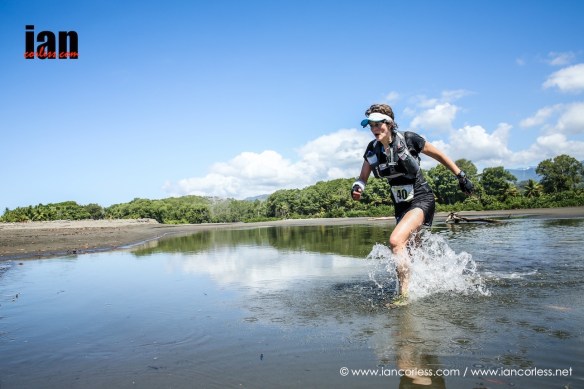
BARNES is BACK! The Coastal Challenge 2017 #TCC2017

©iancorless.com_TCC2016-4874

2017 UK registrations now open HERE

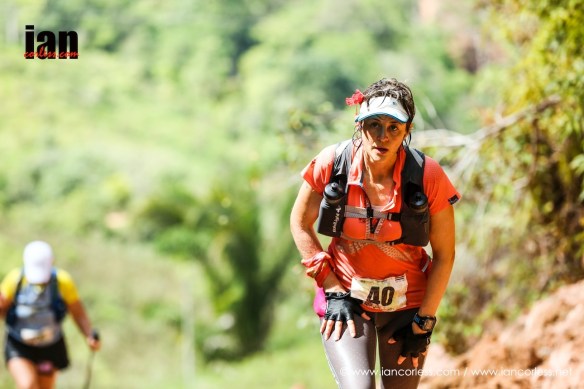
The Coastal Challenge are pleased to announce that Elisabet Barnes (Sweden/UK)), female winner of the 2015 Marathon des Sables, Oman Desert Marathon and runner up in the 2016, The Coastal Challenge will return once again to Costa Rica in 2017.

“TCC is a magical race and this has been echoed by so many participants after the 2016 edition. I loved the variety of the course, the challenges in terms of heat, humidity and terrain and the friendly atmosphere. I am really looking forward to returning in 2017 already!”

A multi-day race over 6-days starting in the southern coastal town of Quepos, Costa Rica and finishing at the stunning Drake Bay on the Osa Peninsula, The Coastal Challenge is an ultimate multi-day running experience that offers new challenge even to the most experienced runner.

“I now know what aspects of the course and the terrain I coped well with and what aspects I can improve on.” Elisabet said after the 2016 edition. “The good thing is that I have quite a few improvement areas on this type of terrain so if I manage to do specific enough preparations there is certainly potential to do better next time around. I think this is encouraging and it will help me develop as a trail runner, broadening my skill set.”

©iancorless.com_TCC2016-4677

Intense heat, high humidity, ever-changing terrain, stunning views, Costa Rican charm, exceptional organisation; the race encompasses Pura Vida! Unlike races such as the Marathon des Sables, ‘TCC’ is not self-sufficient, but don’t be fooled, MDS veterans confirm the race is considerably harder and more challenging than the Saharan adventure.

“Not carrying equipment makes the running easier and that is nice of course. However, if I look at my strengths I like the completely self-sufficient races too. I am tall and strong and I run well with a backpack. In many cases this means I can get a relative advantage over runners who are less experienced running with a pack or who have a smaller frame than me. I still felt that the TCC was a tough race due to the humidity and terrain and if it was self-sufficient it would be incredibly hard.”

©iancorless.com_TCC2016-0831

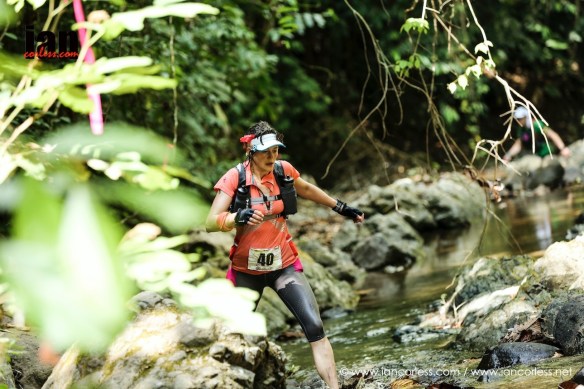
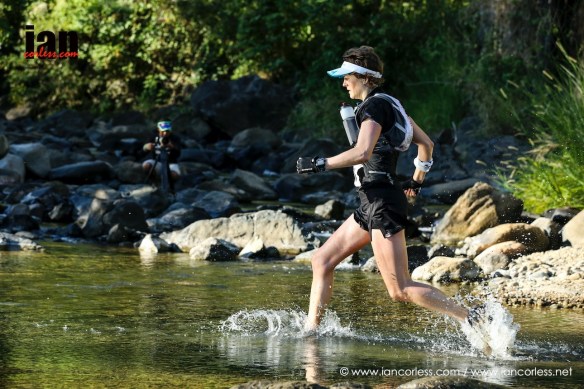
Hugging the coastline, the race travels in and out of the stunning Talamanca mountain range via dense forest trails, river crossings, waterfalls, long stretches of golden beaches backed by palm trees, dusty access roads, high ridges and open expansive plains. At times technical, the combination of so many challenging elements are only intensified by heat and high humidity that slowly but surely reduces even the strongest competitors to exhausted shells by the arrival of the finish line.

“You always have an advantage when you have done a race once. I know the course and the challenges better now. In terms of the heat and humidity I found it tough but not a major problem. Time was a limiting factor before the race but ideally I would have spent a bit more time acclimatizing to the conditions.”

©iancorless.com_TCC2016-9354

2017 will signify the ‘lucky for some’ 13th edition and building on the success of the 2016 edition, Central America’s most important multi-day race looks set to elevate itself to new heights. The race has already announced that Anna Comet, winner of the 2014 and 2015 editions of the Everest Trail Race will participate in 2017. Anna Comet in recent years has shot to fame as a trail and mountain runner after a very successful career as an Alpine skier and ski mountaineer. Her 2014 victory at the Everest Trail Race (also a multi-day race) paved the way for a strong and consistent Skyrunning year in 2015.

But Elisabet Barnes is a multi-day expert and before 2017 comes around, a very busy calendar awaits:

“First I am going back to Marathon des Sables in April and it will be my third race. I am looking forward to it and I predict a very competitive women’s race this year with several top runners coming back from previous years and also some new, extremely competent runners participating. It should be interesting. After this I am going to Richtersveld Transfrontier Wildrun in South Africa in June, followed closely (1 week!) by the Big Red Run in Australia. Later in the year I am going to the US for Grand to Grand. I am very excited about all of these races and the year ahead.”

©iancorless.com_TCC2016-9342

The 2016 edition of TCC tested Elisabet and unlike the MDS, the race is not self-sufficient. In many respects it was a learning curve but 2017 will be very different.

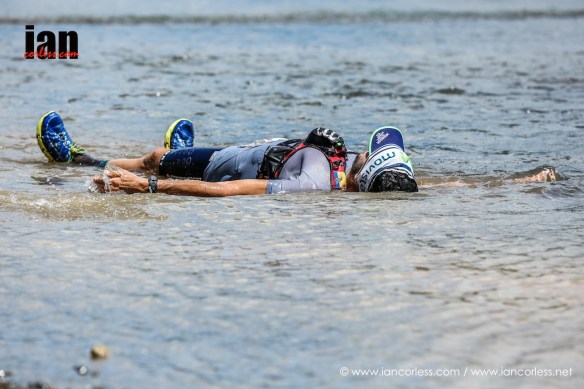
“The TCC is not self-sufficient so you can afford to take some more luxuries like a fresh set of running gear for every day, a few pairs of shoes etc. Also not having to cook reduces admin time in camp and means you can spend more time relaxing. From the perspective of the terrain it is completely different with a lot more ascent and descent and technical parts of trail. It requires a different skill set than running in sand and over flat hard packed desert terrain. Finally, the humidity makes it a different beast. Heat is always tough but when you add humidity you have another element to deal with and possibly have to monitor your body even more closely. The same is true with all the water you run through which means that your feet are wet pretty much 100% of the time.”

©iancorless.com_TCC2016-8610

Anna Comet will no doubt push Elisabet every step of the way on the 2017 TCC journey and of course, at this stage, other female elite racers may decide to enter the race. The TCC has a long history of top female competition – Anna Frost, Jo Meek, Julia Better and Nikki Kimball to name just a few. Of course, Elisabet’s main concern may well be the possibility that 2016 champion Ester Alves from Portugal may return?

“It was great to race against Ester in 2016. She is a lovely girl and a genuinely nice person. I am very happy for her that she won the race. I now know more about her strengths relative mine and how I can improve to reduce the gaps that led her to victory. I know that Ester is very focused though, so should she decide to return I am sure she will work very hard to keep improving too. If our paths don’t cross in TCC next year, I am sure we will see each other in another race before long.”

©iancorless.com_TCC2016-0130

In a very short space of time Elisabet has rose through the ranks to be one of the most respected multi-day races in the world. A very busy 2016 will only add to that reputation! The 2017 TCC is already looking like an incredibly exciting race.

©iancorless.com_TCC2016-1229

All images ©iancorless.com – all rights reserved

Contact Information

Email: HERE

Website: HERE

Facebook: HERE

Twitter: @tcccostarica

Global Contacts: HERE

TCC_2017_JoinUs?

More information:

Read the full 2016 TCC race story HERE

View and purchase images from the 2016 TCC race HERE

You can read daily reports from the 2016 TCC edition HERE


Ultra Trail Aldeias do Xisto #UTAX, Portugal – Race Preview

UTAX

Ultra, trail, mountain and Skyrunning is booming in Portugal. In recent years the sport has grown from strength-to-strength and now a plethora of races are available. Most certainly, Carlos Sa paved the way for this new breed of runner and recently, runners like Ester Alves have kept that momentum flowing. Ester in particular has just recently won The Coastal Challenge multi-day race in Costa Rica.

Go Outdoor are embracing the rise and demand in the sport and in March 2016 (18th to 20th) they will host a series of races, the AXtrail®series.

The Aldeias do Xisto Ultra Trail, offers a series of races that is all encompassing with six races on offer: Da Inclusivo, Kids, Mini-Trail Do Xisto, Trail Do Xisto, TSL and the main event, the UTAX (the largest event in the territories of the Shist Villages) which is 110km’s in length, has 5300m of vertical gain and a 26-hour cut-off time for the participants.

A breakdown of the events is as follows:

  • UTAX – 110 Km
  • TSL – 50 Km
  • TX – 22 Km
  • MTX – 10 Km
  • Axtrail Kids – For kids with 6 to 16 years old
  • Axtrail Inclusion – For people with reduced mobility.

It’s this foresight and ell encompassing attitude that has seen Portugal rise as key influencer in the sport of trail and mountain running. Of course, trail running brings tourism and this is an important element in any growing race series. The natural conditions of the region combined with the hospitality of the local population ensures that visitors to Portugal are extremely happy with their stay, whether participating in one of the six event, or in relation to the destination where an event takes place.

As the event race director says:

 “The AXtrail®series is an event for everyone, with a comprehensive character. Children, youth, adults, experienced athletes, sports teams or families, everyone is welcome and will find a place!”

©iancorless.com_TCC2016-4537

The UTAX is the main event of the weekend and first took place in 2013 with shortened course, Salomon Portugal athlete, Armando Teixeira won in a time of 7:44:29. The first lady was Ester Alves, her time of 10:03:48 reflecting the reduced distance. Alves won again in 2014 but this time it took 16:53:49 for victory and in the men’s race, Luis Duarte recorded a time of 13:06:46. Current course records were set in 2015 by Jérôme Rodrigues and Sofia Lopes Roquete, their respective times of 12:49:57 and 16:12:53 set the benchmark for the 2016 edition.

Alves was missing in 2015 but returns in 2016 and no doubt she will be looking not only for victory but maybe setting a new fas time for the UTAX course. Her recent growth in the sport with top results at UTMB, Transvulcania and recent victory in Costa Rica certainly bodes well. A big question mark will come in regard to Alves’s recovery, The Coastal Challenge was only four weeks ago! Sofia Lopes Roquette, 2015 champion will return to defend her crown.

In the men’s race, the battle for the front to f the race may well come down to Jêrome Rodrigues who ran 12:49 in 2015 and Luis Duarte who ran 13:06 in 2014. However, it may not be that simple? Anything can happen in 110km’s and Nuno Silva along with Ricardo Silva will look to mix things up at the front of the race.

Other names to watch and look out for are: Amândio Antunes, Rui Luz, Luis Mota (veteran), Guilherme Lourenço, Rui Seixo, Raquel Campos, André Rodrigues, Cláudio Quelhas, Juan Delgado (veteran), Nádia Pasteleiro, and Júlia Conceição. A full list of all participants in UTAX ( 230) – HERE

UTAX 110 km – 5300 D+

This year the UTAX race will start and finish in Miranda do Corvo, in the Plaza José Falcão, this will be the logistical center of the race. The first village to be visited will be Gondramaz, allowing athletes enjoy a beautiful single-track but the opening limiters are hard and technical. Lousã follows and here the most anticipated moment of the race will come as this local location is known as the “Amazon.”  After Candal runners only travel about 3 km to the village of Cerdeira which offers panoramic views of the mountains and is a place of peace and tranquility. The Schist Villages are magical places where time passes more slowly and the villages are hidden between rock and lush vegetation – Góis, Aigra Nova, Comareira and Pena. From Pena a climb starts to the highest point of the race and then down to Castanheira de Pera. Following a northwest direction for Ameal, a fantastic single-track rises up and winds to a farm at the top of Lousã, the trail continues in the direction of the House of the Forest Guard. It is then that begins the descent to the villages of Catarredor and Vaqueirinho, and follows to the Schist Villages Talasnal and Casal Novo. Following the route for the “Terreiro Halloween”, runners go up to the Vila Nova which is in the Miranda Municipality of Corvo. The end is now getting close, Fluvial Beach Louçainha (Municipality of Penela),  Vila Nova and then heading back to the Square José Falcão in Miranda do Corvo for the finish.

It is a weekend party where everyone without exception can practice and enjoy the wonderful sport to trail and mountain running.

You can follow the race in words and images on this website, iancorless.com and on my other media channels: Facebook HERE, Twitter HERE and Instagram HERE.

Facebook LogoTwitter_logoInstagram

The race website is available HERE

You can download a PDF race information document HERE

Tourism Portugal

Aldeias do Xisto Ultra Trail race coverage would not be possible without the support of AXtrail® Go Outdoor and many thanks to Centro de Portugal Touristic Office www.centerofportugal.com.

GoOutdoor

Aerobic and Anaerobic Energy Explained by Marc Laithwaite

©iancorless.com_TCC2016-6579

Endurance athletes are familiar with the terms “aerobic” and “anaerobic,” but what do they really mean? Marc Laithwaite provides a very simple explanation to one of the most misunderstood subjects in endurance sports.

The Aerobic and Anaerobic Engines.

We need energy for every minute of our lives. When we are resting, we don’t need much and when we are exercising we need considerably more. The energy is created by ‘burning’ fuels such as carbohydrates and fats and we have 2 engines within our body which are responsible for making this happen; Aerobic and Anaerobic.

©iancorless.com_TCC2016-6552

1. The Aerobic Engine

The aerobic engine can burn both fat and carbohydrates and needs oxygen to make this happen. When we are at rest, we don’t need much energy, so we take in a small amount of oxygen and our aerobic system breaks down carbohydrates and fats to provide the small amount of energy required.

As we become more active (light exercise), our energy demand goes up. Generally this isn’t an issue for most of us. We take in more oxygen and break down more carbohydrates and fats to generate the extra energy required.

If we start to exercise at harder intensities, then at this point the aerobic energy system may start to struggle a little. The aerobic system has the choice of burning fat or carbohydrate and as the intensity of your exercise increases, it will favour the carbohydrate. The reason for this is that fat requires a lot more oxygen to break down, so it’s not the most efficient fuel. It’s fine when you are exercising at an easy intensity as your energy demand is small, but when you’re asking for higher amounts of energy, your aerobic system just goes for the easier option and prefers to burn carbohydrates. This is why we see a shift in fuels used as exercise intensity gets harder, from higher fat to higher carbohydrate.

If you continue to increase the intensity of exercise, your aerobic system may get to the point where it is finding it hard to match the energy requirement. At this point it asks for help from your ‘second engine’.

2. The Anaerobic Engine

When you reach that point where your aerobic system is struggling to generate the amount of energy required, it will call upon the anaerobic system to help out. Engine number 2 will ‘fire up’ and give you the extra energy required. At this point you will have 2 engines working together to supply the energy required.

IMPORTANT: We often hear the term ‘going anaerobic’ and it implies that we switch from aerobic to anaerobic energy. That isn’t the case, when the anaerobic engine starts to ‘help out’, the aerobic engine continues to work alongside. In essence, both engines are now working together rather than switching from one to the other.

The anaerobic engine can only use carbohydrate as fuel, so at this point your carbohydrate use will be pretty high. CRITICALLY, the anaerobic system also can’t use oxygen to break down the carbohydrate, so as a result it produces LACTIC ACID and CARBON DIOXIDE as waste products. At this point you’ll notice a significant rise in your breathing rate, this is due to the build up of carbon dioxide and as a result, you breathe faster to try and exhale as much and as quickly as possible!

If you continue to increase towards maximal intensity exercise, both engines are working together and both are close to their maximal capacity. At this point you’ll reach VO2 maximum, which is the maximum capacity of your aerobic system. IMPORTANT: As we said earlier, your aerobic system is still working, we don’t switch from aerobic to anaerobic, hence your VO2 maximum, a measurement of aerobic capacity, is only reached at maximal intensity.

As you approach maximal intensity, the anaerobic system is producing so much waste product (carbon dioxide) that no matter how fast you breathe, you can’t get enough carbon dioxide out. At this point, it’s like bailing out a boat which is filling quicker than you can bail! The carbon dioxide levels continue to rise , despite you nearly hyperventiliating and at that point, your brain will say stop!

©iancorless.com_Transgrancanaria2016-1844

How does fitness change the above?

As your fitness improves, the aerobic engine becomes more capable. At some point as your exercise intensity increases, your aerobic engine will start to struggle and will ask your anaerobic engine to ‘fire up’ and help out. Improvements in aerobic fitness mean that you can run and cycle at higher speeds and your aerobic engine can manage on it’s own. You’ll be able to reach much faster speeds and higher power outputs before it calls on the anaerobic engine to help out.

*****

About Marc:

Sports Science lecturer for 10 years at St Helens HE College.

2004 established The Endurance Coach LTD sports science and coaching business. Worked with British Cycling as physiology support 2008-2008. Previous Triathlon England Regional Academy Head Coach, North West.

In 2006 established Epic Events Management LTD. Now one of the largest event companies in the NW, organising a range of triathlon, swimming and cycling events. EPIC EVENTS also encompasses Montane Trail 26 and Petzl Night Runner events.

In 2010 established Montane Lakeland 50 & 100 LTD. This has now become the UKs leading ultra distance trail running event.

In 2010 established The Endurance Store triathlon, trail running and open water swimming store. Based in Appley Bridge, Wigan, we are the North West’s community store, organising and supporting local athletes and local events.

Check out the endurance store HERE

Endurance Store Logo

The North Face #TNF Ultra TRII Shoe Review

©iancorless.com_TNFUltraTRII-06121

I keep saying it but TNF are really getting their act together with run shoes, no doubt the signings of Timmy Olson, Rob Krar and so on are having a huge influence in how the brand not only look at run shoes, but design them. The Ultra TRII is a shoe that has elite (or should I say fast) runners written all over it. It’s a light shoe designed to tackle long runs that can include road and dry trail trail. Ultralight, this durable running shoe has been designed with a glove-like fit and the non aggressive Vibram® soles provides excellent traction.

©iancorless.com_TNFUltraTRII-06080

The TRII is an update to the award-winning Ultra TR and the shoe has the same exceptional traction and featherlight ripstop construction that has taken influences from track shoes or a racing flat.

The TRII has an 8mm drop which for me is just perfect, I keep saying it but 8mm (for me) is the perfect all round drop and particularly when running longer, the 8mm allows for a little more leeway when technique gets sloppy with fatigue.


These shows feel fast before you even run in them. A neutral shoe, they are designed for runners with a good run style. When you slip them on, they feel like slippers and the tongue of the shoe is attached to the upper enhancing that glove like feel. Toe protection is minimal but the shoe has ‘Snake Plate’ and the TNF ‘Cradle’ to offer excellent protection for road or trail.

©iancorless.com_TNFUltraTRII-06087

The heel ‘Cradle’ in particular is something that TNF have used for sometime and it most certainly helps with foot positioning, support and energy return.

©iancorless.com_TNFUltraTRII-06095

The shoe has ‘Airmesh’ and is designed to keep the foot cool and thus avoid hot spots, using FlashDry™ fibres in the lining adds to the plush feel. The upper is ripstop fabric from the tent industry and it therefore should be very durable. The shoe has a suede forefoot and the black/ silver upper contrasts nicely against the brightly coloured sole.
©iancorless.com_TNFUltraTRII-06098

Cushioning is good with 8mm at the front and 16mm at the rear, drop as mentioned is 8mm. The weight is very good at 230g (UK8).

©iancorless.com_TNFUltraTRII-06110

The sole is Vibram, say no more. It works exceptionally well for its intended use; dry trail, rocky terrain or road.

In Use

©iancorless.com_TNFUltraTRII-06073

The shoe feels great the first time you slip it on and the upper is seamless and snug. The shoe feels light and fast but yet it still has plenty of cushioning for long runs.

8mm drop for me is perfect, it provides a drop that allows me to run longer and when I can’t keep my form, the extra height allows for some compensation, especially with the 16mm cushioning at the rear.

The shoe is not for muddy runs, not at all. It’s a shoe that excels of dry trail, rocky trail (wet or dry) and road. It has actually become my preferred road shoe and at least once or twice a week I have used this shoe for shorter/ faster road sessions. They feel great and actually encouraged me to run faster. Feel for the ground is great and the Vibram® full-length road-to-trail outsole engineered for optimal traction and balance really does a great job.

On trail, the shoes feel great and for example, I can see this shoe have a great influence from Rob Krar. I can almost certainly see him blazing a trail to another Western States victory in a shoe like the TRII. As mentioned, it’s a dry trail shoe and on the odd occasion when I have encountered mud, the shoe has had little grip. That is not a criticism as the shoe is definitely not designed for anything other than dry, slick or rocky trail.
©iancorless.com_TNFUltraTRII-06082

The heel box holds the foot secure with no slipping. It’s snug and reassuring. The toe box is generous but not wide, so you would need to try the shoes on if you have a wider foot. Because this shoe is designed for faster running and due to the influences from track spikes, the TRII should have a snug feel as this adds to the security when running on technical trail. It’s all about personal preferences, for me, they are spot on!
©iancorless.com_TNFUltraTRII-06099

The relatively seamless upper and sewn in tongue really holds the foot secure and has given me no hot spots, the very breathable upper obviously adds to this.

Sizing is true to size. I use a UK9.5 and this shoe fits perfectly.

Conclusion

Using the ripstop technology and minimising cushioning definitely has definitely paid off. The upper is very breathable, the laces are slightly textured and stay fastened; ideal! The Vibram sole has enough grip for the intended purpose.

It’s a great shoe for those who want something light, fast, 8mm drop and will run on road and dry trail. It’s not an all rounder and therefore if you are looking for a ‘one shoe does all’ this is not it. It’s a shoe to add to other shoes and one that you will use every now and gain for specific runs. It would make a great race shoe.

Transgrancanaria 2016 – Race Summary and Images

©iancorless.com_Transgrancanaria2016-1485

The 2016 Transgrancanaria concluded in Maspalomas this morning at 5am after many runners battled through two nights and a long hot day to achieve the goal of completing the 125km journey from the north to the south of the island. It’s a race of many challenges!

The first big European race on the calendar, Transgrancanaria always attracts a high quality elite field and this year was no different. Starting at 2300 hours on Friday under warm skies, runners left the coastal town of Agaete and then weaved a route through many climbs and descents on what is a very demanding island to run on.

Aurelien Collet and Caroline Chaverot started the race like two possessed animals, constantly pushing and dictating the pace at the front. Chaverot was not a surprise after her string of recent high quality results and her 2nd place in Transgrancanaria last year. Collet though was a surprise!

As the runners ran into the night, Artenara was one of the first key aid stations and it soon became clear that the evening temperatures were causing many problems. A wind had started to increase off the coast and with it temperatures dropped.

By contrast, day temperatures were very warm and in the men’s race Roque Nublo became a significant point in the race as 2015 winner, Gediminas Grinius closed on Collet who had dictated the pace from the start.

Hermansen was also closing on Grinius and we knew the race was on!

In the ladies race, Chaverot’s lead was so huge it would have taken an injury for her to lose her lead, particularly after the withdrawal of Nuria Picas in the night with an injury. Emelie Lecomte, Andrea Huser and Uxue Fraile were pursuing but they were in a different race.

Hermansen finally took hold of the race in the section between Garanon and Pico de las Nieves when he overtook Collet. Grinius pursued but Hermann was committed to victory, something that he had prepared meticulously for having placed 2nd in 2015. He stopped the clock in 13:41:48 which established a new course record*

Pau Capell, winner of Transgrancanaria’s Advanced race in 2015, moved up a notch to finish on the podium jointly with Diego Pazos for third.

Caroline Chaverot was in a league of her own this year, committed, focused and dedicated, she was like a machine! Despite her huge lead, Chaverot continued to push the pace all the way to the finish and she also, like Hermansen, set a new course record and finished in the top-20 overall. Her closest rival was Andrea Huser who was almost 2 hours behind. Uxue Fraile finished 3rd.

*This years course has now been changed over the final 25km which is slightly less distance but more technical.

Results

  1. Didrik Hermansen 13:41:48
  2. Gediminas Grinius 13:45:08
  3. Pau Capell and Diego Pazos 14:11:02
  1. Caroline Chaverot 15:23:40
  2. Andrea Huser 17:21:43
  3. Uxue Fraile 17:28:05

Transgrancanaria 2016 – Elite Press Conference

©iancorless.com_Transgrancanaria2016-9556

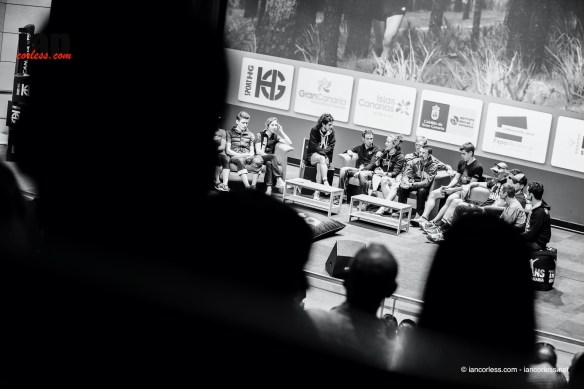
Many of the top elite runners assembled in Maslpalomas, Gran Canaria yesterday evening for the Transgrancanaria 2016 elite press conference.

In the past few years, Transgrancanaria has grown as the first big European race that in many ways sets the scene for what is to come later in the year.

The 2016 edition of the race is no different.

©iancorless.com_Transgrancanaria2016-9328

2015 champion Gediminas Grinius is back and looking to defend his crown but he is going to have a tough job. He said:

“I feels no pressure now but as I stand on the start, the tension will come and then will be soon released. I am here to perform to the best of my ability.”

©iancorless.com_Transgrancanaria2016-9793

Seth Swanson from the USA is considered to be a dark horse, his repeat 2nd places at the past editions of Western States and 4th at UTMB not only means that he has pace to run fast but that he can also climb and descend.

“I’m really happy to be back in Europe and the opportunity to run across an island, from the top to the bottom, is one of the unique attraction of the Transgrancanaria race.”

Julien Chorier, Yan Long Fei, Antoine Guillon, Didrik Hermansen, Jonas Buud, Tim Tollefson, Sondre Amdahl, Andy Symonds, Seb Chaigneau, Yeray Duran are just some of the other top elite men who will contest the finish line on Saturday outside the Palais de Congress in Maspalomas.

©iancorless.com_Transgrancanaria2016-9399

The ladies race has less depth but two time champion Nuria Picas is back and of course a hot favourite for victory. Last years 2nd placed lady, Caroline Chaverot is also one to watch:

“I want to have a good race, a pleasant journey and I hope I don’t get lost… last year I made a couple of mistakes.”

©iancorless.com_Transgrancanaria2016-9355

The USA’s Angela Shartel was also present and excited to be racing in Europe for the first time.

Dong Li, Uxue Fraile, Manuela Vilaseca, Lisa Borzani, Anrea Huser and Silvia Trigueros are also hot contenders for the top-3 podium places.

Racing starts at 2300 (local time) on Friday March 4th

Read a full race preview HERE

Episode 106 – The Coastal Challenge 2016 Special #TCC2016

A_GRAVATAR

This is Episode 106 of Talk Ultra. This show is all about The Coastal Challenge multi-day race in Costa Rica. We talk in-depth about Niandi’s experience and we bring you a selection of interviews to give you a feel for the race.

Book writing – RUNNING BEYOND will be released in November 2016 by Aurum Publishing.

00:01:04 Show Start

00:04:58 NEWS

ACONCAGUA – Fernanda Maciel established the first women’s FKT on , Aconcagua, earlier this month and I caught up with her immediately afterwards.

06:07:00 INTERVIEW

Fernanda said at the time should the weather be okay for a 2nd attempt that she would return. Return she did to established the first women’s FKT on the longer route. She traveled from the Horcones entrance gate to the summit and back – 60 kilometers and 4,100 meters of climb in 22:52. The mens record is almost have this time set by Karl Egloff who took the record from Kilian Jornet

ADDO ELEPHANT in South Africa

“As the only national Park in the world that offers visitors a chance to see the ‘Big Seven’ (elephant, lion, leopard, rhino, buffalo and the southern right whale and the great white shark in the marine area), we’re thrilled to be hosting the race again this year,” says Fayroush Ludick, SANParks Regional Communications Manager. “Because athletes will be running through areas of the park that they wouldn’t traditionally have access to, they will experience the park and its residents as never before.”

1 – Bennie Roux and Tom Adams finished together 21:45:08

2 – Chris Darke 22:24

3 – Ryno Griesel 24:55

1 – Linda Doke 29:25:34

2 – Kim Van Kets 33:34:12

ROCKY RACCOON 100 

1 – Ian Sharman 13:45, Paul Terranova 2nd and Will Swenson 3rd.

1 – Sabrina Little ran the 2nd fastest lasted time of 14:55, Amy Clark and Olga Buber were 2nd

and 3rd.

Notably, WSER legend Gordy Ainsleigh ran 28:31 to gain his WSER entry slot which many feel should have been guaranteed anyway!

TARAWERA

Jonas Buud won the race in 8:00 followed by David Bryne in 8:22 and Ryan Sandes 3rd in 8:30

Fiona Hayvice won the ladies race in 10:34 despite Ruby Muir leading for much of the race and then dropping with injury. Melissa Robertson and Fiona Eagles placed 2nd and 3rd with 10:56 and 11:24.

This weekend as the show comes out Transgrancanaria will be staring and it is quite a stacked field, certainly the first big race of 2016. Read the preview HERE

01:16:56 INTERVIEW THE TCC INTERVIEWS

Read the daily reports from Costa Rica HERE

The Coastal Challenge 2016 – The Full Story HERE

Images from The Coastal Challenge 2016 HERE

UP & COMING RACES

Australia

Australian Capital Territory

100km | 100 kilometers | March 05, 2016 | website

50 km | 50 kilometers | March 05, 2016 | website

New South Wales

Wild Women on Top Sydney Coastrek 100 km Team Challenge | 100 kilometers | March 04, 2016 | website

Wild Women on Top Sydney Coastrek 50 km Team Challenge Day: Party All Night | 50 kilometers | March 04, 2016 | website

Wild Women on Top Sydney Coastrek 50 km Team Challenge Day: Sun, Sand, Surf | 50 kilometers | March 04, 2016 | website

Belgium

Wallonia

55 km | 55 kilometers | March 12, 2016 | website

Canada

British Columbia

Dirty Duo 50 km Ultra | 50 kilometers | March 05, 2016 | website

Yukon

Likeys Ultra 6633 – 120 Mile | 120 miles | March 11, 2016 | website

Likeys Ultra 6633 – 350 Mile | 350 miles | March 11, 2016 | website

Costa Rica

51 km | 51 kilometers | March 05, 2016 | website

80 km | 80 kilometers | March 05, 2016 | website

France

Gard

Trail aux Etoiles | 58 kilometers | March 05, 2016 | website

Ultra du Bout du Cirque | 100 kilometers | March 05, 2016 | website

Ille-et-Vilaine

Endu’Rance Trail des Corsaires | 64 kilometers | March 05, 2016 | website

Pas-de-Calais

Le Poilu | 51 kilometers | March 13, 2016 | website

Puy-de-Dôme

Ultra trail de Vulcain | 81 kilometers | March 06, 2016 | website

Germany

Bavaria

Chiemsee-Ultramarathon März | 108 kilometers | March 05, 2016 | website

Hong-Kong

Translantau 100 km | 100 kilometers | March 11, 2016 | website

Translantau 50 km | 50 kilometers | March 12, 2016 | website

Hungary

BSI Lake Balaton Marathon+ Fonyód – Szigliget | 52 kilometers | March 18, 2016 | website

BSI Lake Balaton Supermarathon | 195 kilometers | March 17, 2016 | website

Italy

Umbria

Trasimeno Lake Ultramarathon | 58 kilometers | March 06, 2016 | website

Malaysia

KubUltra 60 | 60 kilometers | March 05, 2016 | website

TITI 200KM | 200 kilometers | March 18, 2016 | website

New Zealand

Old Ghost Ultra | 85 kilometers | March 12, 2016 | website

Te Houtaewa Challenge 60 km Open Ultra Marathon | 60 kilometers | March 12, 2016 | website

Waiheke Round Island 100 km Relay | 100 kilometers | March 12, 2016 | website

Philippines

All Women Ultra-Marathon | 50 kilometers | March 12, 2016 | website

Portugal

75 km | 75 kilometers | March 05, 2016 | website

South Africa

Om Die Dam 50 km Marathon | 50 kilometers | March 12, 2016 | website

Spain

Andalusia

150 km | 150 kilometers | March 04, 2016 | website

73 km | 73 kilometers | March 04, 2016 | website

Canary Islands

Transgrancanaria | 125 kilometers | March 04, 2016 | website

Transgrancanaria – Advanced | 84 kilometers | March 05, 2016 | website

Catalonia

Marxa dels Castells PLUS | 81 kilometers | March 13, 2016 | website

UT les Fonts | 120 kilometers | March 11, 2016 | website

UT les Fonts – Trail de les Fonts | 70 kilometers | March 12, 2016 | website

Valencian Community

84 km | 84 kilometers | March 12, 2016 | website

Sri Lanka

The Wild Elephant Trail | 210 kilometers | March 12, 2016 | website

Taiwan

100 km | 100 kilometers | March 12, 2016 | website

120 km | 120 kilometers | March 12, 2016 | website

60 km | 60 kilometers | March 12, 2016 | website

United Kingdom

Aberdeen City

D33 Ultra | 33 miles | March 12, 2016 | website

Bihar

Green Man Ultra | 44 miles | March 05, 2016 | website

Bradford

Haworth Hobble | 32 miles | March 12, 2016 | website

Dorset

Jurassic Coast Challenge | 78 miles | March 18, 2016 | website

Telford and Wrekin

Millennium Way | 38 miles | March 06, 2016 | website

Wiltshire

Imber Ultra Marathon | 33 miles | March 06, 2016 | website

USA

Alabama

Delano Park 50 Mile Solo | 50 miles | March 05, 2016 | website

Arizona

50K | 50 kilometers | March 12, 2016 | website

50M | 50 miles | March 12, 2016 | website

Old Pueblo 50 Miler | 50 miles | March 05, 2016 | website

Arkansas

3 days of Syllamo | 150 kilometers | March 18, 2016 | website

California

Deo 50K | 50 kilometers | March 13, 2016 | website

Marin Ultra Challenge 50K | 50 kilometers | March 12, 2016 | website

Marin Ultra Challenge 50 Mile | 50 miles | March 12, 2016 | website

Razorback 100K Endurance Race | 100 kilometers | March 06, 2016 | website

Razorback 100 Mile Endurance Race | 100 miles | March 06, 2016 | website

Razorback 50K Endurance Race | 50 kilometers | March 06, 2016 | website

Razorback 50 Mile Endurance Race | 50 miles | March 06, 2016 | website

Way Too Cool 50k | 50 kilometers | March 05, 2016 | website

Florida

100K Individual | 64 miles | March 13, 2016 | website

100K Team ( 3-4 Person Teams ) | 64 miles | March 13, 2016 | website

50K Individual | 32 miles | March 13, 2016 | website

DWD Green Swamp 50K | 50 kilometers | March 12, 2016 | website

DWD Green Swamp 50M | 50 miles | March 12, 2016 | website

Georgia

Bear Blaster 50k | 50 kilometers | March 12, 2016 | website

Kentucky

50 mile run | 50 miles | March 12, 2016 | website

60k | 60 kilometers | March 12, 2016 | website

Maryland

Seneca Creek Greenway Trail 50K | 50 kilometers | March 05, 2016 | website

Mississippi

Carl Touchstone Mississippi Trail 50 K | 50 kilometers | March 05, 2016 | website

Carl Touchstone Mississippi Trail 50 Mile | 50 miles | March 05, 2016 | website

Nevada

50K | 50 kilometers | March 12, 2016 | website

50M | 50 miles | March 12, 2016 | website

New Jersey

Lenape Trail Run | 34 miles | March 05, 2016 | website

North Carolina

Graveyard 100K Ultramarathon | 100 kilometers | March 12, 2016 | website

Graveyard 100 Mile Ultramarathon | 100 miles | March 12, 2016 | website

Long Course | 39 miles | March 12, 2016 | website

Ohio

Green Jewel 50K Fun Run | 50 kilometers | March 05, 2016 | website

Pennsylvania

Naked Bavarian 40M | 40 miles | March 06, 2016 | website

South Carolina

Foothills 50k | 50 kilometers | March 05, 2016 | website

Texas

50K | 50 kilometers | March 12, 2016 | website

Utah

Antelope Island 100 Mile | 100 miles | March 18, 2016 | website

Red Mountain 50K | 50 kilometers | March 05, 2016 | website

Vermont

PEAK Snowshoe 100 Mile Race | 100 miles | March 18, 2016 | website

Virginia

50K | 50 kilometers | March 12, 2016 | website

50 mile | 50 miles | March 12, 2016 | website

Thomas Jefferson 100k | 100 kilometers | March 12, 2016 | website

02:39:31 CLOSE

02:47:13

ITunes http://itunes.apple.com/gb/podcast/talk-ultra/id497318073

Libsyn – feed://talkultra.libsyn.com/rss

Website – talkultra.com

Enter The Coastal Challenge 2017 HERE

TCC_2017_JoinUs?