Santa Caterina VK 2017 Summary and Images – Vertical Kilometer® World Circuit

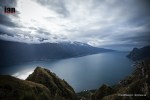
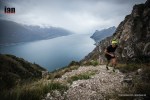
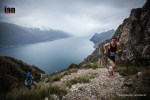
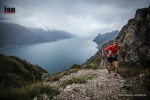
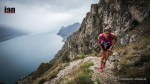
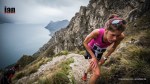
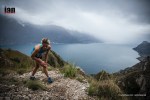
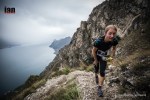
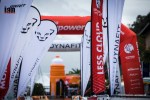
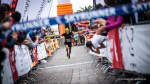
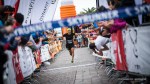
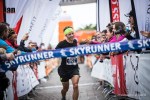
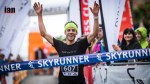
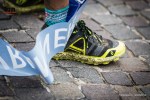
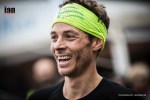
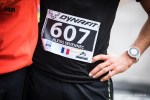
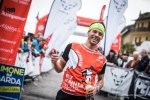
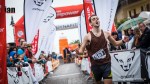
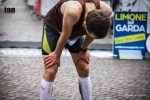
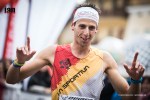
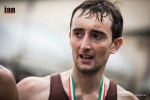
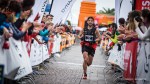
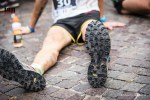
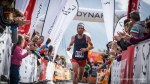
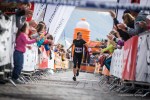
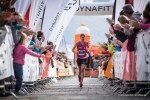
Michele Bosacci and Valentina Belotti were the 2017 champions of the Santa Caterina VK, the 6th race in the Vertical Kilometer® World Circuit.

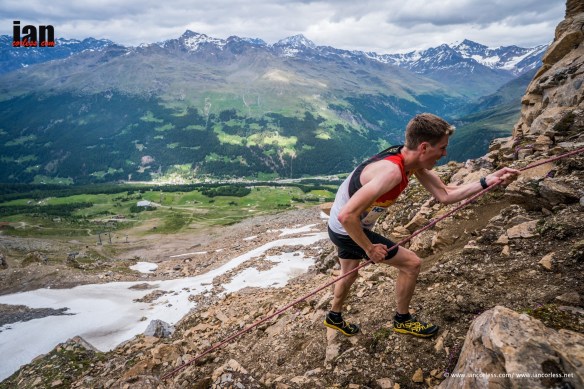
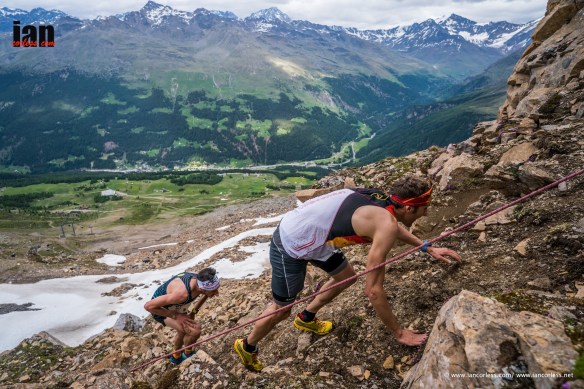
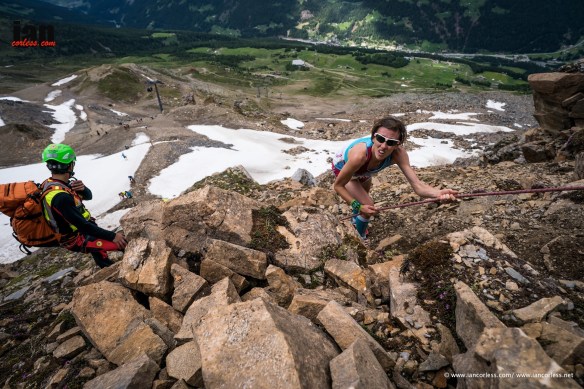
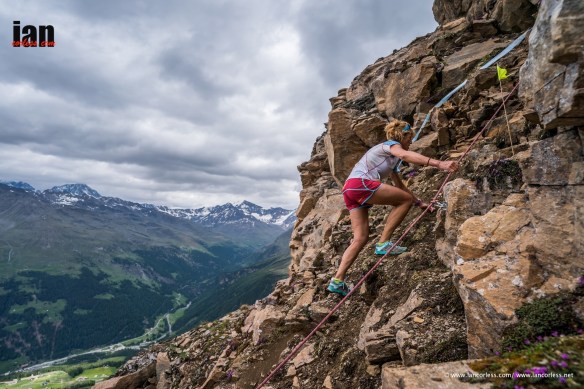
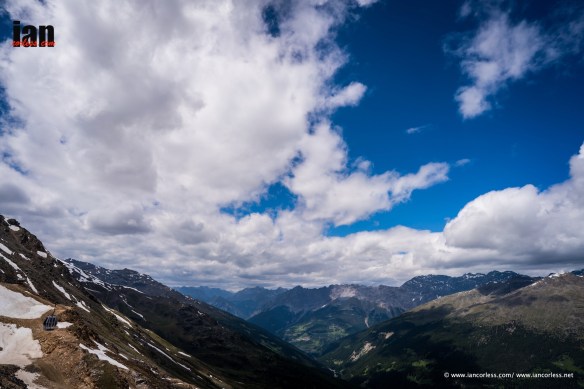
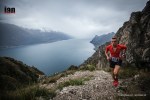
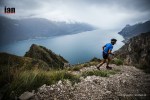
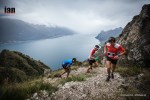
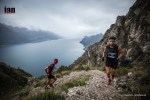
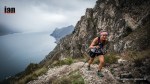
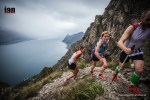
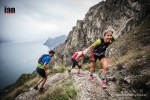
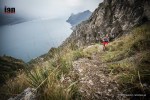
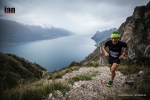
The route starts from Santa Caterina (1,739 m) and climbs 1000m to Costa Sobretta (2,739 m). Starting at 3pm in the centre of Santa Caterina, the runners departed en-mass. The early road section allowing for a fast getaway and then the 2.9km course soon pointed upwards as the runners fought position through a mixture of terrain – grassland, pastures, ski pistes and trails across scree slopes. The final section is equipped with a fixed rope to guarantee participants’ safety as they fought to the finish line.

Michle Boasacci dictated a song pace ahead of Nejc Kuhar, Patrick Facchin and race director Marco De Gasperi. However, despite a last minute surge by Kuhar, Bosacci had too large a gap before entering the final technical section of via feratta where it would have been almost impossible to pass.

Boascci took the victory in 34-minutes 56-seconds, Kuhar crossed 18-seconds later and Facchin held of De Gasperi finishing in 35:40 to the race directors 35:41.

For the ladies, Valentina Belotti had a convincing lead over 2nd placed lady, Susanna Saapunki and her victory never looked in doubt. She crossed the line in 41:26 in comparison to the Finish ladies’ 42:23.

Pre-race favourite and VK specialist Francesca Rossi finished 3rd despite nursing a knee injury, her time 43:08.

Attention now turns to Sunday for the 34km Livigno SkyMarathon, the next race in the Migu Skyrunner World Series.

ELISABET BARNES and MARCUS SCOTNEY – THE COASTAL CHALLENGE 2018 #TCC2018

2015 and 2017 Marathon des Sables ladies champion Elisabet Barnes will join 2016 Cape Wrath Ultra and 2017 Dragons Back Race champion Marcus Scotney on the start line in Quepos for the 2018, The Coastal Challenge.

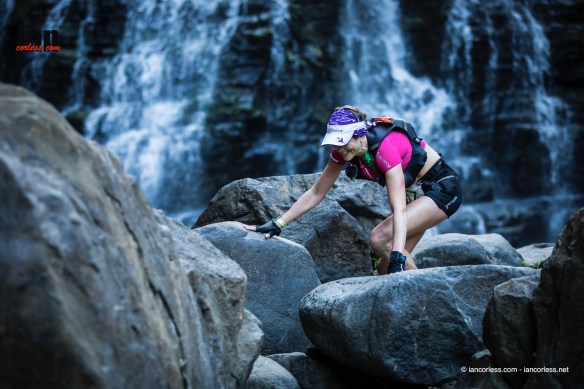
TCC as it is affectionately known is a multi-day race starting in the southern coastal town of Quepos, Costa Rica and finishing at the stunning Drake Bay on the Osa Peninsula. It is an ultimate multi-day running experience that offers a new challenge even to the most experienced runner. Taking place over 6-days, the race hugs the coastline of Costa Rica, traveling in and out of the stunning Talamanca mountain range. Even the strongest competitors are reduced to exhausted shells by the arrival of the finish line due to the combination of technical trails, dense forest, river crossings, waterfalls, long stretches of golden beach, dusty access roads, high ridges and open expansive plains.

The 14th edition of the race is set to be a classic in the making with the confirmation of Barnes and Scotney. Barnes is a two-time winner of the iconic Marathon des Sables and is a two-time finisher of the TCC – 2015 and 2016.

Bitten by the Costa Rica bug and the ‘Pura Vida’ lifestyle, Barnes has repeatedly said that the Central American race is her most favourite.

“Costa Rica is a magical place and the TCC is spectacular in so many ways. I work hard in this race because technical running is not my strength, but I love the fact that I get to push my boundaries and challenge myself. The course is just breath taking with great variety, always interesting but not always easy! After a tough day on the trails you are rewarded with yet another stunning campsite, a warm welcome by the dedicated volunteers, and excellent food provided by the hard-working catering team. It’s a race that every runner should add to their bucket list.”

The race looks set to elevate itself to new heights in with the confirmation of Marcus Scotney. Scotney is a highly-respected runner within the UK who has on multiple occasions represented his country on the world ultra-stage. In recent years, he has participated in multi-day races – The Cape Wrath Ultra in Scotland and The Dragons Back Race in Wales. Both races are tough, technical races with many 1000m’s of vertical gain. Scotney won them both and now looks forward to testing himself in the high heat and humidity of Costa Rica.


‘The Coastal Challenge has been on my bucket list of races since 2014, it looks like an amazing beautiful race with a stunning mixture of trail, beach and jungle running. I can’t wait to visit Costa Rica and experience the culture and run a multi-stage race which has a brilliant reputation. I am sure it will live up to that reputation and all that I expect; I feel very privileged to run the race.’

Unlike races such as the Marathon des Sables, TCC is not self-sufficient. Don’t be fooled though, the racing, terrain, heat and climbing make the stages considerably harder and more challenging than the Moroccan adventure. 

“Not carrying equipment is convenient, as is having access to your gear so you can run in fresh clothes every day and change for camp,” Barnes says. “However, the terrain is at times far more difficult than in MDS, and when adding to that the high humidity, you really have a challenge on your hands. Still, I couldn’t think of a better way to spend a week”

Will it be third time lucky for Barnes in Costa Rica, who knows? She certainly has knowledge of the course, an understanding of how to run in the heat and yes, she also knows how to maximize her time to make the most of her racing experience. For Scotney, the challenge will be a new one. He will love all the faster sections of the course where he will be able to unleash his natural running speed. The challenges will come with the technical terrain and of course the heat combined with the humidity.

The 2018 edition of TCC is already looking like a stunning race and in the coming months, several other elite athletes will be announced who will participate in this classic race.

Follow #TCC2018

Twitter @talkultra

Instagram @iancorlessphotography

facebook.com/iancorlessphotography

The Coastal Challenge

Facebook HERE

Website (UK) HERE

Website (Global) HERE

Karl “Speedgoat” Meltzer – “Made To Be Broken” The Appalachian Trail Movie

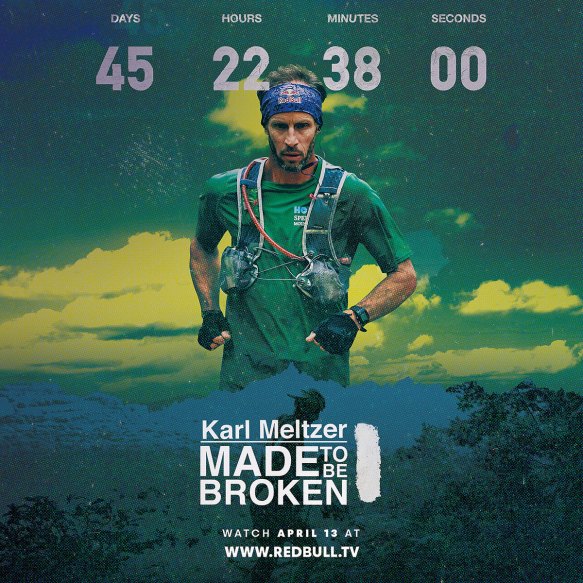
Last September, Red Bull athlete and ultra-runner Karl “Speedgoat” Meltzer finally captured his white whale when on his third attempt in eight years, he set a new Appalachian Trail thru-hike speed record with a time of 45 days 22 hours and 38 minutes. Now, the story behind the trek from Mt. Katahdin, Maine, to Springer Mountain, Ga., is told in the new documentary “Karl Meltzer: Made To Be Broken” which will debut on Red Bull TV and can be streamed for free beginning April 13.

The 42-minute documentary captures the ups and downs of Meltzer’s world record run, from injuries and sleep deprivation to the challenges faced by his close-knit crew, which included his father, wife and former Appalachian Trail record holder, Scott Jurek.

Read the daily reports from Karl’s FKT HERE

Read the full in-depth interview HERE

Listen to Karl talk in-depth and discuss the highs and lows HERE 

“The trail challenges people. It has changed a lot of people’s lives and visions of what they can do and what they can’t do,” Meltzer proclaims in the film’s opening minutes. “The A.T. is the hardest, most iconic trail in the United States, and I’ve always been drawn back to it.”

The Appalachian Trail runs from Maine to Georgia stretching 2,190 miles through 14 states.  It is roughly the distance between Los Angeles and Washington, D.C., as the crow flies.  A thru-hiker will experience 464,500 feet of elevation change, or 16 climbs of Mt. Everest.  Thousands of people attempt an Appalachian Trail thru-hike every year, yet only one in four hikers finish the journey, and they typically take five to seven months to complete the entire trail, according to the Appalachian Trail Conservancy.

For more information on the project visit www.redbull.com/atrun.


Episode 128 – Michael Wardian, Hayden Hawks and Pushpa Chandra

A_GRAVATAR

Episode 128 of Talk Ultra is here and what a show… we speak in-depth with the incredible Michael Wardian after his record breaking World Marathon Challenge. We speak to star in the making, Hayden Hawks and Niandi Carmont brings us her first female ‘one-to-one’ interviews with Pushpa Chandra. We have the news, chat, gossip and of course Speedgoat co-hosts.

New Year and Talk Ultra needs your help! 

We have set up a Patreon page and we are offering some great benefits for Patrons you can even join us on the show! This is the easiest way to support Talk Ultra and help us continue to create! 

Many thanks to our January Patrons

Rene Hess, Daniel Weston, Dan Masters, Kerstin Palmer, Sarah Cameron, Neil Catley, Sam Wilkes, Melissa Bodeau, Lindsay Hamoudi, Aaron Aaker, Simon Darmody, Philippe Lascar, Rohan Aurora, Mathew Melksham, Brian Wolfkamp, Thomas Mueller, Mark Moromisato, Jamie Oliver, Rand Haley, Ron van Liempd, Mike Hewison, Steve Milne and Rupert Hitzenberger.

Donate HERE

support_patreon

It was our 2017 Lanzarote Training camp and I have to say what a huge success it was. We had 40-clients who came from as far afield as Canada to take part in our 7-days of fun. It really was special and so great to get so much awesome feedback. I will post a link to images and audio feedback in our show notes.

We had some inspiring people attend and in future shows we will have audio following some of the incredible stories. To kick it off and following on from my discussion with Niandi in our last show. Niandi brings you the very first of female ‘one-to-one’ interviews with Pushpa Chandra.

00:27:30 INTERVIEW with Pushpa Chandra

01:12:28 NEWS

World Marathon Challenge

Well, the big news is Mike Wardian ran 7-marathons on 7-continents in 7-days. Wow. He ran 2:54 in Antarctica, 2:45 in South America, 2:42 in North America, 2:37 in Europe, 2:45 in Africa, 2:49 in Asia, and 2:45 in Australia. In the process he set a new world record average time of 2:45.

01:22:54 INTERVIEW with Michael Wardian

Women’s winner, Chile’s Silvana Camelio ran 4:14 in Antarctica, 3:45 in South America, 3:58 in North America, 4:08 in Europe, 4:10 in Africa, 4:34 in Asia), and 4:37 in Australia. The last result almost gave away her overall victory but she held on by just 6-minutes That 4:37 in Australia left her just six minutes ahead of China’s Guoping Xie.

The Spine

Carol Morgan blasted around the tough course in 109-hours 54-minutes – unbelievably, 43-hours quicker than the previous ladies best.

In the men’s race it looked to be a battle between two previous winners, Pavel Paloncy and Eugeni Rosello Sole but Tom Hollins came from behind and clinched victory in 99-hours 25-minutes. Tom won the 2016 edition of The Challenger, the Spines ‘fun run’ race! We hope to have an interview with Tom in the next show.

Coming up…

The Coastal Challenge in Costa Rica has a super stacked field with Chema Martinez, Tom Owens, Sondre Amdahl, Jason Schlarb and so many more in the men’s race.

For the ladies we have to previous champions, Veronica Bravo and Ester Alves heading up strong competition from Elisabet Barnes and Anna Cometi.

In the US it’s the Sean O’Brien 100k.

RUNNING BEYOND BOOK

This week I will be in Amsterdam on Feb 3rd, 4th and 5th for a Trails in Motion event and Running Beyond book signing with Mud Sweat and Trails

We are going to have Running Beyond Event which will take place 3, 4 and 5th March in London, plans are progressing for that… watch this space.

I will be also going to Sofia in Bulgaria on the 17th, 18th and 19th March for a trail, mountain and Skyrunning expo

02:36:50 INTERVIEW with Hayden Hawks

UP & COMING RACES

Australia

Queensland

Caboolture Historical Village Dusk to Dawn 100km | 100 kilometers | February 11, 2017 | website

Caboolture Historical Village Dusk to Dawn 50km | 50 kilometers | February 11, 2017 | website

Tasmania

The Cradle Mountain Run | 82 kilometers | February 04, 2017 | website

Belgium

Wallonia

65 km | 65 kilometers | February 04, 2017 | website

Canada

Yukon

Yukon Arctic 100M | 100 miles | February 05, 2017 | website

Yukon Arctic 300M | 300 miles | February 05, 2017 | website

Yukon Arctic 430M | 430 miles | February 05, 2017 | website

Chad

Half TREG | 90 kilometers | February 12, 2017 | website

TREG | 180 kilometers | February 12, 2017 | website

Chile

60K | 60 kilometers | February 11, 2017 | website

Costa Rica

Adventure Category | 155 kilometers | February 10, 2017 | website

Expedition Category | 236 kilometers | February 10, 2017 | website

Finland

Lapland

66° North Ultra Race | 66 kilometers | February 17, 2017 | website

Roavve Polar Ultra 300 | 308 kilometers | February 17, 2017 | website

Rovaniemi 150 | 150 kilometers | February 17, 2017 | website

Rovaniemi 300 | 300 kilometers | February 17, 2017 | website

Rovaniemi 66 | 66 kilometers | February 17, 2017 | website

France

Aude

Gruissan Phoebus Trail | 50 kilometers | February 12, 2017 | website

Côtes-d’Armor

Défi Glazig (45 + 18) | 63 kilometers | February 04, 2017 | website

Germany

Lower Saxony

Brocken-Challenge | 86 kilometers | February 11, 2017 | website

India

Gujarat

135 Miles | 135 miles | February 10, 2017 | website

160 km | 160 kilometers | February 10, 2017 | website

50 km | 50 kilometers | February 10, 2017 | website

Run the Rann 101 km | 101 kilometers | February 10, 2017 | website

Run the Rann 161 km | 161 kilometers | February 10, 2017 | website

Ireland

Kildare

Donadea 50K | 50 kilometers | February 11, 2017 | website

Italy

Marche

Maratona sulla sabbia – Ultra maratona | 50 kilometers | February 12, 2017 | website

Kenya

Kimbia Kenya 100 km | 100 kilometers | February 03, 2017 | website

Kimbia Kenya 50 km | 50 kilometers | February 03, 2017 | website

New Zealand

Tarawera 100K Ultramarathon | 100 kilometers | February 11, 2017 | website

Tarawera 60K Ultramarathon | 60 kilometers | February 11, 2017 | website

Tarawera 85K Ultramarathon | 85 kilometers | February 11, 2017 | website

Oman

Wadi Bih Run | 72 kilometers | February 03, 2017 | website

Spain

Canary Islands

Marathón ‘Isla del Meridiano’ – 86 km | 86 kilometers | February 04, 2017 | website

Region of Murcia

100 km | 100 kilometers | February 11, 2017 | website

Thailand

100 km Run | 100 kilometers | February 04, 2017 | website

50 km Solo | 50 kilometers | February 04, 2017 | website

66 km | 66 kilometers | February 17, 2017 | website

75 km Run | 75 kilometers | February 04, 2017 | website

Jungle 100 | 100 kilometers | February 17, 2017 | website

United Kingdom

Cornwall

Arc of Attrition | 100 miles | February 10, 2017 | website

Devon

Coastal Trail Series – South Devon – Ultra | 34 miles | February 04, 2017 | website

Oxfordshire

Thames Trot 50 | 50 miles | February 04, 2017 | website

Surrey

The Pilgrim Challenge North Downs Way Multistage Ultra | 66 miles | February 04, 2017 | website

USA

Arizona

50K | 50 kilometers | February 04, 2017 | website

Pemberton Trail 50K | 50 kilometers | February 11, 2017 | website

Arkansas

White Rock Classic 50K | 50 kilometers | February 04, 2017 | website

California

American Canyon 50K Ultramarathon | 50 kilometers | February 04, 2017 | website

Fort Ord Trail Run 50K | 50 kilometers | February 04, 2017 | website

Jed Smith Ultra Classic – 50K | 50 kilometers | February 04, 2017 | website

Jed Smith Ultra Classic – 50 Miler | 50 miles | February 04, 2017 | website

Ordnance 100K | 100 kilometers | February 04, 2017 | website

Sean O’Brian 100K Trail Run | 100 kilometers | February 04, 2017 | website

Sean O’Brian 50K Trail Run | 50 kilometers | February 04, 2017 | website

Sean O’Brian 50-Mile Trail Run | 50 miles | February 04, 2017 | website

Florida

110 With Donna Ultra Marathon | 110 miles | February 12, 2017 | website

Iron Horse 100 km | 100 kilometers | February 11, 2017 | website

Iron Horse 100 Mile | 100 miles | February 11, 2017 | website

Iron Horse 50 Mile | 50 miles | February 11, 2017 | website

Lost 118 | 118 miles | February 11, 2017 | website

Massachusetts

50 km | 50 kilometers | February 04, 2017 | website

North Carolina

Uwharrie 40-Mile Mountain Run | 40 miles | February 04, 2017 | website

Oregon

Bristow 50K Trail Run | 50 kilometers | February 04, 2017 | website

South Carolina

Mill Stone 50K | 50 kilometers | February 11, 2017 | website

Rut Rogue 40s – 40 Mile 3-5 Person Relay | 40 miles | February 04, 2017 | website

Rut Rogue 40s – 40 Mile Run | 40 miles | February 04, 2017 | website

Texas

100K | 100 kilometers | February 11, 2017 | website

100K Relay | 100 kilometers | February 11, 2017 | website

100 Mile | 100 miles | February 11, 2017 | website

100M Relay | 100 miles | February 11, 2017 | website

50K | 50 kilometers | February 11, 2017 | website

50 mile | 50 miles | February 11, 2017 | website

Piney Woods TrailFest 50K | 50 kilometers | February 04, 2017 | website

Rocky Raccoon 100 Mile | 100 miles | February 04, 2017 | website

Rocky Raccoon 50 Mile | 50 miles | February 04, 2017 | website

Virginia

The Wild Oak Trail 100 | 100 miles | February 11, 2017 | website

Washington

Orcas Island 50K | 50 kilometers | February 04, 2017 | website

Wisconsin

John Dick Memorial 50K | 50 kilometers | February 04, 2017 | website

Venezuela

Ultra Laguna de Urao | 65 kilometers | February 04, 2017 | website

03:16:20 Close

03:21:44

We say this every show, but Talk Ultra is nothing without downloads and listeners so please help us spread the word.

Share us on Facebook

Tweet us on Twitter

And use good old word mouth.

Importantly, go to iTunes and subscribe so that you automatically get our show when it’s released we are also available on Stitcher for iOS, Android and Web Player.

Our web page at www.iancorless.com has all our links and back catalogue.

Please support Talk Ultra by becoming a Patron at www.patreon.com/talkultra 

He is Karl Meltzer and I’m Ian Corless

Keep running

ITunes http://itunes.apple.com/gb/podcast/talk-ultra/id497318073

Stitcher You can listen on iOS HEREAndroid HERE or via a web player HERE

Libsyn – feed://talkultra.libsyn.com/rss

Website – talkultra.com

Michael Wardian – The Running Man on IRUN4ULTRA

“He keeps running and running. Michael Wardian just never stops. Many runners have been given the tag, ‘Forest Gump’ and in 2016 we certainly witnessed a couple of real life ‘Gump’s’ in Pete Kostelnick and Karl Speedgoat Meltzer who respectively set two new records: Running Across the USA and setting an FKT on the Appalachian Trail. Kostelnick and Speedgoat produced two remarkable performances, but Michael Wardian raced 47 events in 2016, he raced 1,254-miles in total and in the process, he set 2 World records, had 8-victories, 22-podiums, 31-top ten placings and 26 ‘master’s’ victories. Wardian is a man on a mission and 2016 is not an unusual year… this committed husband and father of two races like this, year-in and year-out.”

Read about Michael Wardian in my article for IRUN4ULTRA  HERE

Jim Walmsley’s Record Breaking 2016 on I RUN 4 ULTRA


irun4ultra_logo

In 2017 I am pleased to say that I will be writing regularly for I RUN 4 ULTRA with two or three submissions per month. My first article was about:

PETE KOSTELNICK – RUNNING ACROSS THE USA read the article HERE

My second article is about

JIM WALMSLEY’S RECORD BREAKING YEAR OF 2016

As years go, 2016 has been a cracker in the world of ultra-running. Pete Kostelnick ran Across the USA in a record time. Karl ‘Speedgoat’ Meltzer set a new ‘FKT’ on the Appalachian Trail, Zach Miller broke the TNF 50 course record with a trail blazing run and Jim Walmsley has turned heads with a display of hard and fast running that has left many wondering, what does 2017 hold for this sport?

Read the full article on I RUN 4 ULTRA HERE

Jim Walmsley – Western Sates and Beyond Interview

Earlier this year, off the back of a stunning run at Lake Sonoma, Jim Walmsley said he was going to go to Western States, his first 100, and not only win it but potentially set a new course record. It was quite the statement and of course it turned heads. What followed was one of those golden days on the trail when Jim looked to float over the course. With every step he creeped under the old Western States course record. A new record looked almost certain until disaster struck…

I caught up with Jim just a week after the 2016 Western States and delved into his mind about maybe one of the most memorable runs of the year.

The Interview

IAN: I’m joined by Jim Walmsley after an incredible, memorable, inspiring, heart-wrenching, everything Western States. How do you feel Jim? Do you feel good?

Jim Walmsley: Right now? or during the race?

IAN: No, now that you’ve had an opportunity to recover.

Jim Walmsley: Now is going good. I started shuffling again. I called just my shuffle recovery. It’s what I try doing until my legs start coming back to me a little bit, I have started that process things are good. Yes.

IAN: Yes. Okay, before Western States, a lot of people particularly over in Europe and in the UK won’t have really known who you are. You were definitely a dark horse. People in the sport like myself who look at names and follow trends were looking at you. In all honesty some of the claims that you made prior to Western States, were very bold.

I love it when somebody comes into a race and they say, “You know what, I’m going to go hard, I’m going to go for the course record and that’s it.” And deep down you think brilliant, absolutely brilliant I hope he does it. But the reality is, he’s possibly going to crash and burn. Up until about 92 miles it looked like you were just going to make probably one of the most memorable Western States ever. First of all, what gave you the confidence to be so bold with your predictions?

Jim Walmsley: First and foremost, it was my training; it had been going so well. I did a big 50-mile race in April and I ended up getting a course record at Lake Sonoma 50 mile. A lot of big guys have run that in the past. Basically, I felt like I’d only built off of that. As far as confidence wise I knew I was more fit than I ever have been at least in my ultra-career.

I could feel in my training runs that faster paces were feeling more comfortable. I thought I would surrounded myself with a good team to go on a Western States and go knock that out. I guess the other thing with it being my first hundred, it’s one of those things that everybody has got to make that jump from whether it be 50 mile or 100K up to a 100-mile distance. That’s the next benchmark of distance up. I mean, everybody’s got to do it, some people do great with it, some people don’t but I think my journey had been ready to make that jump.

IAN: If we look back at your results and really from my perspective looking at your results they only really go back one year. Back to say May 2015 where you ran Don’t Fence Me In Trail 30K, and then you did Speedgoat, and then you won JFK, 3rd at Moab, 5th at Lake Sonoma, 1st at Black Out Night Run 13K, then Flagstaff Extreme Pine.

There’s a whole list of other races but for me when I was looking at the race there was a couple of significant results. JFK 50 miler you won that in 2014, 2015 Bandera 100K and then of course that Lake Sonoma run in April. You look and you think, “Wow. This guy is fast.” But like you’ve just said, fast at 50 miles and then coming to the 100-mile distance is a big difference. How did you prepare yourself physically for the unknown?

Jim Walmsley: I start knocking out the most miles I’ve ever tried before Lake Sonoma, I did my first 140 mile weeks not sure what that is in kilometres.

IAN: It’s a long way, 200+K.

Jim Walmsley: Okay. Yes. It’s 200K thereabout, and then from Lake Sonoma up to Western States my big training block ended up being back-to-back 140 mile weeks, followed by 120 and a 100, and then I went into my taper for two weeks. The first 120-mile week I did all in single runs. Probably the point where I knew I was feeling really good was when I was climbing and running really good at the Grand Canyon. I have a loop I do in Grand Canyon. I go down Bradenton it’s about seven to nine miles of mostly downhill and then you come back up South Kaibab, it’s about a seven mile up hill and then you finish on a four-mile flat kind of finish so it’s about a 21-mile loop.

That went really well, but then the next day I did a big workout on or just by Pace in Arizona. That was 30 mile run with 8,000 feet of vert up and down. That was huge back-to-back days, even at the end of that week I still did a long run with a bunch of the marathoners in town. I think this one might have been the one that I ran with Andrew Lemoncello, he’s a Scottish guy that lives in Flagstaff. I think we came through in like 2:01 for 20 miles but we went out in the first half and maybe like 65 mins. We were really cooking on the second half, kind of finish that big long run that week end was super huge. That was one of the main things too is that long run in my training it has just became comfortable to start running those 20 miles in about 2 hours. Things were really clicking.

IAN: I mean 120, 140 mile weeks that is huge. How do you maximize your recovery from those types of training sessions? Is that something that you’ve built upon year-on-year or have you just suddenly pushed the envelope and find that you can adapt to it?

Jim Walmsley: In high school I ran 90 miles a week for the last two years, I was a big mileage kid when I was young. But then I look around even less than that in college. I had won 1500 oriented coach. It’s been the first time where I felt comfortable to try to add on more miles and experiment with that. The only main thing I really did to try to help out with recovery, I started trying to take just calories and proteins stuff right immediately after races. I just have a little recovery shake after a run. That’s all I really added in after Lake Sonoma for the most part it’s just kind of being a bit lucky of staying healthy because I wasn’t sure what was going to happen.

IAN: The recovery side of things seem to be working well. Is there anything else that you did in terms of nutrition? Anything that you’ve found out that works well for you or if you are just eating the normal healthy balanced diet?

Jim Walmsley: I mean, that is the only thing that I have changed recently. The other thing is I don’t eat meat but it’s not dietary reasons, it’s just a whole bunch of reasons of why I don’t necessarily want to support a lot of those bigger companies in the industry here in the US. I don’t eat meat for good and for bad but I don’t worry about making up that protein deficit. A lot of people think that I need to make it up somehow. I just eat whatever, I mean I do eat a lot! I eat a ton of junk food. I kind of joke that the amount of junk food I do eat and processed sugar actually gives me just a super rock solid stomach on race day. I’m taking a bunch of gels and a bunch of processed sugar on race day and I eat a lot of that pretty regularly. It almost helps me with having a more solid stomach on race day.

IAN: Okay, you’re very much booking the trends of the moment of low GI and low sugar and going paleo. You’re old school?

Jim Walmsley: Yes, I guess I am?

IAN: Okay, let’s talk about the race, Western States. You were very bold with your pre-race predictions and that puts a big target on your back. I don’t think I’m wrong in saying this, but I think a lot of the favourites for the race, respected the fact that you said what you were going to do. You did sort of say that you would try and take it easy early on. That didn’t really seem to happen. Sage Canaday and David Laney and yourself were pushing right from the start. Did you feel comfortable with that?

Jim Walmsley: Yes. I did feel comfortable with it. I was probably 30 something place at the first climb. I was trying to just slow down, walk and almost even stop a lot on the first climb out of Squaw Valley, to try to basically get some of the other favourites to get rolling and kind of run their own race. I mean I could see them and they were looking back a lot.

It was just one of those things where I felt it was almost pointless to slow down more and more and more, because I was either going to run their race, or my game plan would be to try to go off a feel and start running some splits. Those splits that we initially had started with the course record splits. Can’t understand how those felt, if they felt easy, if they felt hard and kind of base things off the feel from that.

IAN: Yes. I mean, it’s unusual in ultra-running for somebody to come into a race with an idea of splits with a real intention of breaking the record. Course records tend to come because it just turns out to be one of those days, when everything clicks and everything aligns and then course records happen.

You’re almost bringing into this marathon running perspective we’re it’s easier and more consistent to run the minute mile pace, because the terrain is more uniform, more predictable, whereas here, Western States. You’ve got elevation, you’ve got trail, you’ve got heat, you’ve got so many variables, but yet you seem to be very well planned and very well controlled that’s quite unusual.

Jim Walmsley: Well, how I did it was… I’ve never ran a marathon, but it’s a little different than just splits. Between each aid station I had average pace that I needed to hit, for that section. It was very course dependent and terrain dependent. I figured things were at least close enough, when you’re going four mile splits.

If you’re going up a hill, it’s okay to lose some time on that. That’s how I based it off, then it kind of ended up being where I was just able to taking chunks and chunk off of those average splits that I already had.

IAN: Now, the other thing that you seem to be taking in your stride and I loved the retro shirt look…. The heat! You’d obviously come into this race acclimatized to the heat. Was that something that you’d really concentrated on?

Jim Walmsley: I’m originally from Phoenix Arizona. I live in Flagstaff, which is about two and a half miles north. I have lived in flagstaff for the last year. But before that, I lived in Colorado, California and Montana. A little cooler, but as far as heat, I know I can handle it. I know I can run really well in it. But the main question was whether I can handle running in the heat all day, during the middle of the day. WSER was going to be the first big test. Being from Phoenix there’s a lot of people that have their little tricks and tips to stay a little bit cooler on their arms. I kind of pick up on those, just kind of keeping your wrists cool, always staying wet. I wore a hat and sunglasses the whole time.

IAN: Yes.

Jim Walmsley: I think both of those contribute to a perception that it’s a little cooler. I try to keep my shoulders covered with the crop top shirt I had, rather than going on with singlet with skinnier shoulder bands. The shirt in general was kind of it held water better, the holes helped ventilation and then, it also helped with sun protection. Yes. You’re just trying to find different elements of what’s making you hotter and trying to mitigate those, and then always staying wet. If you see a creek lie down in the creek, it’s worth that time.

IAN: Yes. You went out to WSER for a running camp, is that correct?

Jim Walmsley: Yes, it is.

IAN: Was that a double edged sword? Or it was an opportunity to be on a training camp, an opportunity to go and heat acclimatise and also to get some training in?

Jim Walmsley: It was really nice weather, as opposed to anything uncomfortable. I wasn’t getting out on the actual Western States trails. It was more run in the Tahoe Rim Trail and a couple trails more in the Flume trail and stuff, but I hadn’t really spent time like that out in Tahoe. It’s just this wonderful beautiful place that was really awesome to do for sure.

I really enjoyed working with John Fitzgerald and Stan Myers, now at the mountain post running camp. The initial debate was whether I go back to Flagstaff for two weeks and then come back, or whether I stay out there… I had a couple friends that were supposed to do the Broken Arrow race in between those two weeks, and they ended up both dropping out, or scratching and not doing it.

But, I had made plans to just stay out there and kind of stuck with trying to stay out there. After that, I think next year I would really like to stay in Flagstaff, stay where I can get some bigger climbing consistently, because I just know that all the different runs where I live. I can just really dial it in on what I want to focus on most.

IAN: Yes, I see the logic in being in Flagstaff and then it’s easy to go down to Phoenix. I guess.

Jim Walmsley: Yes. Phoenix or if you want to get in a big running day the Tetons. I like heat training in the canyon because it gets pretty high and then also it has a similar reflection of the heat down there off of the rocks. The rocks really release a lot of heat out of them and make it feel a lot hotter than what it might– the ambient temperature might be.

IAN: Yes. Let’s go back to the race. By the time you got to half way, you had around about 20 minutes under the course record. Everybody was getting super excited and of course it was that 50:50 scenario. Is this going to be the most incredible run? Or at any point is he going to blow up and it certainly didn’t look like you were going to blow up? You were keeping yourself cool, like you said you put in plenty of water on yourself. You were submerging yourself in the rivers and water whenever you possibly could. You did almost end up going for a bit of a long swim… Do you want to just touch on what happened there? I mean, that was what, mile 70 something?

Jim Walmsley: It was mile 78, 79. I heard that Rob Crow last year swam across and that was the fastest most efficient way to cross the river. I started holding on to the rope and paddling with one arm and then, before I knew it, I gave it a couple swim strokes to get across. And then, before I knew it like I looked the rope was right there on my left and then it was 7 to 8 feet away and I couldn’t reach it. It became basically me against the river. You have this life vest on which is great that keeps your float but at the same time, it’s a big old kite in the current and it really pulls you downstream.

I think actually Rob totally ran passed the life vest which might help swimming if he did swim. I’ll definitely keep my hand on the rope next year. I basically started to get swept downstream. Eventually, I had to try to basically figure out how I can get some floating on some rocks.

Then there was that boat that came out and they posted a video online. I guess that boat wasn’t part of the race at all. It was a spectator and they weren’t supposed to be down there. They had different separate safety boats that they weren’t worried about it in this situation. But at the same time, people’s reactions were dramatic at the time. But probably the biggest thing from that is the one bottle… I had two bottles when I got in the river and I filled one at the aid station on the bank before the river and that’s the one that ended up floating off down the river. I didn’t have any water going up from the river up to Green Gate which is only a 1.8 mile climb out but it’s really exposed in the sun and then it is a steep climb and just not having something to drink there, was a little rough and I just took my time… I think that’s the one split that I did lose I think a minute or two.

IAN: Yes. I was going to say, I think probably by the time you were in America River you had to run about 30, 32 minutes under the course record. By the time you got a Green Gate you’d probably given away about five or six minutes but I guess that was with the swim as well.

Jim Walmsley: Yes, part of us just maintaining composure. You just need to maintain composure and make sure that you don’t over exert if something like that does happen. It’s all just relaxing, take your time it’s not a big deal. I think at that point course record starts really playing more and more of a factor and almost working out where I have time.

IAN: Was your plan to have that big buffer of say 30 minutes or 20 minutes? Whatever it might have been so that you could slow down… because you anticipated slowing down, because one of the things that I always think of in these scenarios is you actually only need to beat the old record by one second. You don’t need 30 minutes. Where you just having an amazing day?

Jim Walmsley: No. I don’t think any of that was pre-planned at all. If you told me that I was going to be even 20 minutes up on the course record at any time. I think I would have had a laugh… that would be a pretty good day. I remember seeing my crew ready to the station and just going like I’m trying to slow down but I’m trying to run comfortable and this is just comfortable… I know I’m running too fast based on time and stuff but at the same time I feel like I’m running easy and I’m running comfortable. I was just trying to go with that.

IAN: I remember speaking to Ian Sharman when he had that amazing run on Rocky Racoon, Timmy Olson re Western States, Rob Krar re Western States, Kilian Jornet with this countless records. I’ve often said there is one day for every runner where everything aligns and it becomes the perfect run. Sharman has gone back to the Rocky Racoon and never found the same day and the same form that he had when he did that blistering 100-mile time. I just wonder for you, was this that day? Was this that time when everything was aligned apart from the 92-mile void of going off course? We’ll come into that. But do you think now looking back that it was just the most incredible day?

Jim Walmsley: It definitely was an incredible day. Whether I’m going to be able to replicate this next year or in the future, I’m not sure? I think I have to approach it as why shouldn’t I be able to? But that was one of the first things of reflecting on the race is just, I don’t know if I’ll ever have… because so many little things have to go right. In nutrition, your stomach there is so many just unknown valuables. I didn’t step and twist an ankle or anything. I don’t know if I will ever have as good of a chance as that to break the course record again.

At the same time, I was able to take away a lot of experience, a lot of tips from the course. I know I’m going to be planning to go out there probably for a week earlier in the year to very much scout the course and make sure I’m getting everything on detail right about what I want to do for 2017. I think I can meticulously attack it next year. It will be interesting. I don’t know about trying to get another half hour up on the record though…

IAN: [laughs] I mean, sometimes you can’t plan these things. I think the thing is you went into this race saying that you’re going for the course record. The fact that you got 30 minutes under the course record is significant and it shows that your form, shows your ability is there. You said sometimes you can’t account for certain things that happen on race day… so tell us about the disaster.

Tell us about going off course and I know obviously you didn’t realize that you’d gone off course, otherwise you’d have turned around pretty damn quickly. But what was the point where you realized, “Shit, I’ve gone the wrong way.” Then was it panic, distress? What happened?

Jim Walmsley: It was probably three and a half miles after Bar Aid station that I really had the sinking feeling that I missed the turn. I ended up probably going on another three-quarter of a mile to the actual highway because at that point I could see it. I could see a hill and I’m on such an obvious dirt road at the time. I was like maybe this section is just much less marked than most the other course but things started to not make sense and that sinking feeling started getting in my stomach. I think it started with missing this turn off –  it’s this huge wide like 20 to 25-foot dirt road that two cars can totally pass on and then you go up this little tiny trail to the left. I was told it was about three miles past the aid station. In reality, I think it was about two and a quarter or two and a half. That’s about three to four minutes’ difference, probably closer to four minutes’ difference?

I just wasn’t looking for the left at that moment! I remember seeing three miles and going, “Crap, the turn should be right here”. Then after that I’m like, “All right. I haven’t seen a flag in a little while”. I thought, I’m going to give it another half mile and just look for flags. I wasn’t seeing any flags, at that point that was the three-and-a-half-mile mark of “oh crap, this might not be good”. But at the same time I was able to see were the road I was on connects with the high way that I’m supposed to get to. I was just like trust it, hopefully it works out, it might not, but hopefully it works out. I wasn’t able to convince myself to turn around yet. It’s a really hard thing to do when you’re having that day.

I think when I got to the road and I stop and I look down the road. There’s a bunch of cars parked on that road that you can see as you’re approaching it too. There’s a ton of cars up here maybe there is an aid station? But I think it’s a recreation area where a bunch of just random cars parked. Yes. It was when I really popped out on the road that I just had this demoralizing feeling of I had missed something. I wouldn’t tell you what the trail was marked when I went passed it, because obviously I didn’t see it. Initially, people were saying that flags might have gotten pulled, from what I’ve heard flags weren’t pulled. The 2nd and 3rd runner made the turn…?

IAN: Yes.

Jim Walmsley: Both of them made the turn with the same flagging that was there… but I missed the turn. But at the same time I’ve also seen heard other things… some guy posted that he remarked it? He was running back to Brown Bar Aid Station. He saw Andrew Miller and he knew that it was going to be Andrew Miller’s day, sort of thing. It was one of those things that chronologically doesn’t make tons of sense. It was really odd; I just don’t know… All I can say is that I had my head down and was just trying to crank away. I think I was still running under nine minute miles at that point. I was moving really well. Yes, I can’t explain why I missed that turn necessarily other than; I don’t think I was looking for it yet.

IAN: When you back tracked and when back to the turn point you obviously would have seen the marking of the direction you should have gone. Was the marking good then when you managed to re-navigate yourself back?

Jim Walmsley: Yes. They re-flagged everything and they made it extremely obvious and well-marked by the time I got back there and saw it for the first time.

IAN: Right. Is that because they knew you had gone off-course?

Jim Walmsley: Yes. They just exaggerated the left hand turn a lot more because I ended up going of course. Basically, everyone else had it very, very, well marked by the time they hit that.

IAN: Right. By the time you got back to that point, how much time had you lost?

Jim Walmsley: I don’t know… probably one of my biggest regrets about it is I really felt the competitive side of me really quit when I came out on Highway 49. I wished I had more fire and hunger in me. I wish I had hit highway 49 and just turned around, and said, “I’m not letting this ruining my day”, I wish I had attacked it a lot more. The information I had at the time was that I was only 12 minutes up. I was only 15 minutes under course record. In reality I was still about 25 to 30 minutes up on the course record, almost a full hour ahead of second place. Hearing that now – that part really sucks of just how missed informed I was. Having everybody… or should I say, thinking that everybody was so close, and then knowing that I went off the trail by a mile and a half or two miles.

That really crushed me, just crushed my spirits. My reality at the time was, I’m not winning, I’m not getting a course record, this whole sinking feeling. I just need to take a break really quick, try to get your composure again and refocus. At that point I was just not doing good. I was out of calories completely, it just became a negative, I thought I’m going to just walk it back to the next aid station. Between some of the medical staff, and the two photographers that found me on highway 49, I’m actually friends with them. They just encouraged me to start walking back. At the time I’m not a hundred percent sure I would have made that decision by myself. But in retrospect I’m really glad I did. As far as competing for top three or top 10. It just wasn’t what I was hoping for at the time.

IAN: It’s interesting, I can’t imagine the frustration.

Jim Walmsley: It was just wasn’t important to me of how things were going, how things went. Yes. I ended up winning two of the golden races, or golden ticket races, to get in the Western States. To race in the Western States is not a big — I don’t view it as a big deal, obviously it is. I feel very capable of racing back in next year. Top 10 in that stuff just — It was more.

IAN: You wanted to win?

Jim Walmsley: I definitely wanted to win.

IAN: Yes. You wanted to win.

Jim Walmsley: Those spirits were crushed.

IAN: Yes. Once the win wasn’t there I guess it was a case of second is not good enough, third is not good enough…

Jim Walmsley: A little bit, but I don’t know, I was in the lead for so long it’s just… I guess maybe at the time second, third wasn’t enough, but I don’t know, it become just making it more manageable, or whatever… I don’t know?

IAN: I had to look at your river splits. It seems as though from that point where you started to back track that you hardly run a step. I was looking at it and I was trying analyse it. Of course, you’ve gone in many ways explaining to what your thought process was. It’s easy for me for me from the outside looking in and thinking why didn’t you just run and chase down? You had that 30-minute buffer, or maybe 25 minutes’ buffer.

Jim Walmsley: Yes. The information I had was 15 minutes.

IAN: Was it just mentally so demoralizing for you that you just couldn’t get yourself back onto your game, or was it other factors? Yes, mentally you’ve been crushed, but also you were lacking the energy. Maybe you had burned yourself out a little bit? I’m just trying to get an insight into the mind of what it was like at that point.

Jim Walmsley: Yes. I would say mentally I was crushed. But then between taking a little bit of a break and mentally not focussed, somewhere I was just not wanting it any more. My muscles and body started really wanting to be done. Just the walking and trying to jog after that was extremely difficult. After that moment and realizing that everything slipped away. Yes. I definitely did bonk after that. I think if that didn’t happen I absolutely don’t think I would have bonked. But it’s one of those things… I think the mental thing had to happen first, and then my body soon followed that… it was just extremely hard to rally.

When I got back to my crew and stuff, they could see I was just completely demoralized. They were totally okay with just walking it in with me. That just became my game plan. At that point it became about the silver buckle more than anything. Not being out there for the longest period time it just became just one step at a time, and we’ll just get to the finish and we’ll take those positives.

IAN: You got the buckle, and that’s super important.

Jim Walmsley: I think this also goes back to in retrospect of ”Now I think about the race”. That is one of my bigger regrets of it. I wish I did react better mentally, and then I did go and actually try to still race again. I do regret that a bit.

IAN: What I’m interested in here is the duality of you as a person, because I think pre-race a rookie 100-mile runner saying, “I’m going to go to Western States and I’m going to go for the course record.” Of course people in the community look and think, “Who’s this guy? Gees, who’s he to say this?” But then what I’ve witnessed afterwards, and what I’m witnessing now in this interview is an incredible humility, an incredible respect, there’s no bitterness. You’re not actually bitter, you’re not questioning course marking. You’re questioning you not noticing the course marking, but you’re not blaming anybody. You’re only blaming yourself I think that’s absolutely fantastic.

I think that would really warm you to the audience. Have you thought in depth about that process of how you’ve handled pre-race and post-race?

Jim Walmsley: Well, I totally get how pre-race it rubs people the wrong way, but just pre-race and post-race I feel like I’m honest guy and I’ll tell you my goals and what I think I can do pretty blatantly. Pre-race too I would also say it’s a mental approach of trying to convince myself that I can do it. It’s also mental tricks with myself of, “I can do this.” Saying that out loud, saying that publicly does set up for a lot of scrutiny, but at the same time I think that goes so far as far as mentally how you’re going to be in the race and making you tougher to stick to that.

Post-race, I would like to think that I’m just being me and being honest. I don’t think getting bitter about things is going to make anything better or positive. At the end of the day, it was an amazing run. It was an amazing experience. It was a great adventure. I finished my first hundred. There are so many positives to still take away from that day. As an athlete, I think two things are important as well, one, short term memory loss. You get to forget about it and move on as far as bad things that happen like that especially in running. That’s part of our sport. I think most people can relate to making a wrong turn at one time or another.

IAN: For sure. They just don’t make it 92 miles into Western States when looking to set the course record. [laughs]

Jim Walmsley: It’s pretty tough when that happens for sure, yes. The other thing too about being a more competitive athlete is I think you have to focus and build off of the positives rather than beat yourself up about the negatives. I don’t think it’s beneficial for you to dwell on the mistakes. I think it’s beneficial to say, “Look, you did this really well.” One of the biggest things that I am extremely happy about that I think I can take forward into a lot more races is just how well I did in that heat. I think I surprised myself a little bit with that. It was almost 30 degrees warmer than 2012 when Tim Olsen ran his course record.

Yes, little things like that are huge just building off of those and it’s all a process. It’s a learning process, but it’s something that I want to make a career. Yes, it’s going to building off of this to hopefully running even better next year.

IAN: The next question is you had 93 miles of really good running where you were functioning the way that you wanted to in your first hundred-mile race. It was a complete learning curve, and it was an incredible learning curve. You were almost… it was almost a textbook run. Is there anything that you’ve learned that will improve your running for next year? Other than a recce of the course and making sure you know where to turn is. But physically, if you’ve done 120, 140 mile weeks, you can’t really add anymore volume? Will there be more speed work? How will you reflect on this and improve, or maybe you don’t need to improve, what you just need is another repeat performance like this year?

Jim Walmsley: Yes, you’re spot on with that. The biggest thing is going to be able to try to at least replicate what I was able to do in my training next year. With those 140 mile weeks, one of the weeks was 22,500 feet of vert. One thing personally, I think I can do a bit more consistently is getting out to that Grand Canyon and run in it maybe twice a week instead of just once a week. It’s huge to be able to do those long, long down hills. I know it’s something I’m very interested in. I’ve done it once, and it completely punted me on this day. We called it double tapping South Kaibab. South Kaibab is the steepest trail in the Grand Canyon, and basically FKTs go through South Kaibab because it’s just shorter, but it’s steeper.

My friend and I we went down it, up it, and then one more time down it, and up it. It ended up being over 11,000-foot vert day in less than 30 miles. It was just a massive, massive day. I think that was much earlier in the year, but I think focusing days like that. You can only train as hard as you can recover, and it’s a lot about mitigating stress in other parts to your life so that you can recover better on the running stress. Yes, I think a really important part of this year was that I was able to do longer tempo runs that I haven’t been doing since I’ve gotten into ultras in the last 2 years.

I am doing these long runs with a lot of the marathoners in town. If some of these guys they’re like, “Hey, I got this workout today, anybody want to hop in?” I just say like, “Yes, I’ll do that with you.” They’re not planned workouts, but hopping in with guys that are doing sessions works out. That’s been really beneficial as well in getting that foot speed going. That’s where like I’m running these splits and I’m trying to slow down, but look I’m efficient and I don’t feel like I’m over exerting. I think that’s how those things happen. It’s just foot speed wise, I was so prepared almost where things were just butter smooth and I was able to chip away at it a couple of minutes you’d split.

IAN: It was an incredible run, and it was an inspiring run. You have the Ultra community just sitting there aghast at the performance. The question is now, where do you go from here? Obviously a priority will be getting qualification for Western States next year. I quite like the way that you said that’s not really an issue. That’s that confidence side of you that I really like. You’ll prepare yourself, you’ll choose your race, you’ll get your slot, and I’m convinced you will be at Western States next year. Now, with this run, people have got an eye on you. I’m sure races are sending you some invites to attend their races. Where do you go from here? What’s lined up for the rest of 2016?

Jim Walmsley: Well, I was just really hoping that I would nail a hundred miles out of a hundred miles, or 100.2 out of 100.2 miles at Western States, because one of the biggest things is I do want to travel on. I do want to take opportunities to do all these great races across the world but the way that things went this year and my own personality and just realizing what I can do at Western States, 2017 is totally going to be about… at least giving it one more shot of having that perfect day. Maybe things fall apart again and I need to step back and maybe I’ll revisit it in a couple of years but it’s going to definitely build towards that. Right now, I’m trying to stay pretty disciplined and not put on too many races on my plate.

It’s extremely easy to do that. I don’t want to fall into the trap that a great deal of runners fall into. No matter what happens, because sometimes its injury, sometimes it’s over-training syndrome, but people are stereo-typing that all the elites are getting into this over-training syndrome. I don’t think that’s quite accurate. I think if you do look at the marathon world, their training is so much harder for so much longer.

You just don’t see that topic come up in that side of the sport. This year though, I kind of have a little bit of a gap right now, what I’m going to be racing. I’m taking advantage of it. I’m taking some really good down time. I’m going to try to get little things that had been bothering me for the last six months fixed and be hopefully healthy.

I’m going to try holding out until JFK to do another big race, but at the same time my plan for this year is to try to do a really big block of training in the fall and try to pull out a JFK North Face San Francisco Double. They are two weeks apart, they’re both 50 Milers which JFK being first in November and then the North Face 50 in San Francisco being the first weekend in December. I would like to try doing that double and seeing how that goes.

IAN: Okay, big difference in prize money between those two races.

Jim Walmsley: Yes. Yes, a little bit.

IAN: You’re not tempted by the Run Rabbit Run 100 for the prize money?

Jim Walmsley: I definitely am. I’ve been talking to the race director and it was even something on my radar before this. Run Rabbit Run this year though hinders that block of training and this is the biggest reason not to do it this year…  I guess what I’m saying is I want to do the double, I want to try to win both.

To get in the fitness required to be competitive and to recover so fast and then to run again, you’re talking a couple months of big mileage, hard running training to get ready for JFK where it’s not going to dig you in that big of a hole that it takes weeks and weeks to get out of that sort of thing but I want to be able to recover quick and then be able to race in two weeks.

That’s the biggest reason not to do Run Rabbit Run. The other thing I guess is what’s maybe keeping me from falling down that slippery slope is I’m kind of hoping a contract works out soon but we’ll see.

IAN: How’s that process going? I’m assuming that with you saying that there’s been some interest.

Jim Walmsley: Yes. Things are really positive. There’s definitely interest which more than that I ended up getting an agent because when I’m contacting these companies, it’s more in ultra-world. It’s kind of a weird thing because athletes are a lot of times trying to contact companies to ask for sponsorship, ask for this and that. A lot of times what I found out is I’m getting connected with the wrong people or people too low on the totem pole to really make decisions.

They’re like, “Look, we just have to wait until the end of the year” sort of thing. I ended up getting an agent after the race. The best part about that is that he’s able to work with people much higher up that if they want a contract done, they’ll get a contract done now instead of waiting until the end of the year when most people are renewing their contracts and stuff.

IAN: Well, it’s an exciting time. Certainly, the ultra-community is going to be very interested to see what happens over the coming months and year right up to Western States 2017. I just want to thank you so much for giving us an hour of your time and talking in depth about what has been quite an inspirational Western States.

Post Western States, Jim went on to set a Rim-to-Rim record in the Grand Canyon and a Rim-to-Rim-to-Rim record, smashing the previous record set by Rob Krar to a new level of  5:55:20 – 26-minutes faster than Krar’s 6:21:47. As Jim eluded to in my interview, his main objective for the end of the season was the ‘double’ at JFK50 and San Francisco 50. Just last weekend, the first race took place. Jim ran the JFK50 and smashed the old course record setting a new time of 5:21:28. The stars are aligning for Jim Walmsley, San Francisco and a potential huge pay day awaits… Is Jim Walmsley the next big thing in the ultra world?
 

Episode 122 – Kostelnick – Sandes – Morgan

A_GRAVATAR

Episode 122 of Talk Ultra and we have a 1 hour interview with Pete Kostelnick all about his amazing, record breaking run across the USA. Ryan Sandes talks Raid de la Reunion and Casey Morgan talks about Madeira’s EcoTrail Funchal and the Everest Trail Race. The show is co-hosted by my good buddy from the Twin Cities, Kurt Decker.
 

RUNNING BEYOND BOOK is now published and available worldwide HERE

00:16:43 NEWS

CLEANSPORT COLLECTIVE http://cleansport.org

Professional pledge

  1. I pledge to honor myself, competitors, sponsors, sport and society by choosing to stay clean of performance enhancing drugs. Choosing to not play by the rules steals from hard working athletes who choose to do the right thing and challenges the health and integrity of sport. I will be a positive example in the community as an advocate and ambassador for clean sport. I pledge that I have and will always train clean, compete clean and live clean. 
  2. I agree to be an outspoken advocate of clean sport
  3. I agree to donate $25,000 to CSC charity partner if I ever test positive

*plus other pledges for brands, amateurs etc

Lanes of Change

Awareness

We are in this together. The more voices that speak in unity, the stronger we are.

Testing

It is time to intervene. Through our partners, we will support, aid and equip current drug testing regimes with the best and most updated tools and research.

Advocacy

We are a community with purpose. It is about the ecosystem of sport working together. We want it to be known that we support people over performances, and we celebrate honesty, integrity and transparency above all.

Restoration

We are human, and we all make mistakes. Together with our partners, we provide a safe place for those who have doped or spoke out against those that have.

IAU TRAIL WORLD CHAMPIONSHIPS

  1. Luis Alberto Hernando 8:20
  2. Nicolas Martin 8:30
  3. Benoit Cori 8:30
  1. Caroline Chaverot 9:39 – for me, THE ultra runner of the year!
  2. Azara Garcia 9:44
  3. Ragna Debats 9:47

VK FULLY

  1. Nadir Maguet 30:17
  2. Urban Zemmer 30:28
  3. Marco Moletto 30:28 and Kilian Jornet 30:33
  1. Christel Dewalle 35:57
  2. Beatrice Delflorian 38:42
  3. Serena Vittori 39:04

TEMPLIERS 76K

Miguel Heras (Spain). Now 41 years old, Heras turned back the clock with his second-straight win, adding to September victory at Ultra Pirineu. Here, Heras overtook Jared Hazen (U.S.) with some 6k to go to win in 6:45. Hazen used a mid-race surge to break things open and then held on for second in 6:49. Cedric Fleureton (France) was third in 6:56.

Jasmin Nunige (Switzerland) won Ultravasan for the second time, and went on to run 8:00 here for the win, improving on last year’s finish by four minutes. Yngvild Kaspersen (Norway) stepped up in distance and ran strong for a second-place 8:13. I Núria Picas (Spain), who had seesawed with Kaspersen throughout, was third in 8:22.

IAU 24 HOUR

Dan Lawson from the UK took out the win (Dan has placed 3rd at Badwater and 2nd at Spartathlon) with 162 miles – ouch! Ondrej Velicka 2nd with 160 miles.

Maria Jansson set a new European record 155.74 miles – ouch! Patricia Bereznowska was 2nd with 150 miles.

RAID DE LA REUNION

  1. Francois dHaene 23:44 that is 3 victories in 4 years
  2. Antoine Guillon 24:15
  3. Javi Dominguez 24:36 – who has had an incredible and consistent year
  1. Andrea Huser 28:00
  2. Juliette Blanchet 29:26
  3. Emma Roca 30:10

00:50:00 INTERVIEW with RYAN SANDES

JAVELINA JUNDRED

Zach Bitter 13:30 beating Hal Koerner’s benchmark 13:47

Brett Sanborn 15:15

Ryan Kaiser 16:40

Dana Anderson 21:03

Adela Salt 21:32

Amy Rasor 22:17

Heather Anish Anderson sets new FKT for the 800 mile Arizona Trail – 19 days, 17 hours and 9 minutes

ECOTRAIL FUNCHAL MADEIRA

In the 80km race, Julien Chorier lead from the front and had a stunning day on the trails of Madeira. He arrived in Funchal looking strong. Casey Morgan placed 2nd just 6-minutes behind the Frenchman and Javi Bodas was 3rd, 19-minutes later. For the ladies, Wasmes Wasmes took a conniving victory 14-minutes ahed of Nadia Meroni and Sylvie Benech was 3rd, 1-hour after 2nd place.

01:28:07 INTERVIEW with CASEY MORGAN

DAVE MACKEY – an amazing and inspiring story unfolds

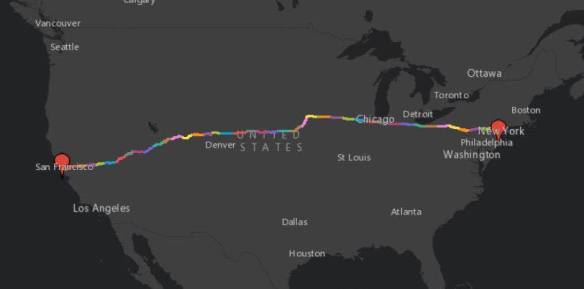
On Monday, October 24, Pete Kostelnick broke the longstanding record for running across the U.S. Kostelnick linked the San Francisco and New York City Halls in 42 days, 6 hours, bettering a 1980 46-day, 8-hour record set by Frank Giannino, Jr. Other than a lone zero-mile day early in the run, Kostelnick knocked out 70-plus miles day after day.

02:05:54 INTERVIEW PETE KOSTELNICK

UP & COMING RACES

Antartica

The Last Desert (Antarctica) | 250 kilometers | November 18, 2016 | website

Argentina

Noroeste Argentina Trail – 100 km | 100 kilometers | November 08, 2016 | website

Noroeste Argentina Trail 50 km | 50 kilometers | November 08, 2016 | website

Australia

New South Wales

Carcoar Cup Ultra Marathon | 60 kilometers | November 06, 2016 | website

SURVIVAL RUN AUSTRALIA | 50 kilometers | November 18, 2016 | website

Survival Run Australia 75km | 75 kilometers | November 18, 2016 | website

Queensland

Run to Paradise Ultra Marathon | 74 kilometers | November 06, 2016 | website

Victoria

Upstream 50km Challenge | 50 kilometers | November 05, 2016 | website

Upstream 50km Challenge | 50 kilometers | November 05, 2016 | website

Colombia

North Face Endurance Challenge Columbia – 50 km | 50 kilometers | November 06, 2016 | website

North Face Endurance Challenge Columbia – 80 km | 80 kilometers | November 06, 2016 | website

Egypt

100 Km Pharonic Race | 100 kilometers | November 18, 2016 | website

France

Haute-Loire

Trail 70 km | 70 kilometers | November 12, 2016 | website

Marne

SPARNATRAIL classique | 55 kilometers | November 13, 2016 | website

Nord

Trail Extrème Lillois – 75 km | 75 kilometers | November 13, 2016 | website

Territoire de Belfort

Belfortrail 55 km | 55 kilometers | November 11, 2016 | website

Germany

Bavaria

Chiemsee-Ultramarathon November | 108 kilometers | November 12, 2016 | website

Lower Saxony

KILL 50 | 50 miles | November 05, 2016 | website

North Rhine-Westphalia

Bottroper Herbstwaldlauf – 50 km | 50 kilometers | November 06, 2016 | website

Hong-Kong

Oxfam Trailwalker Hong Kong | 100 kilometers | November 18, 2016 | website

India

Karnataka

100 km | 100 kilometers | November 12, 2016 | website

50 km | 50 kilometers | November 12, 2016 | website

75 km | 75 kilometers | November 12, 2016 | website

Maharashtra

100 km | 100 kilometers | November 13, 2016 | website

160 km | 160 kilometers | November 13, 2016 | website

50 km | 50 kilometers | November 13, 2016 | website

75 km | 75 kilometers | November 13, 2016 | website

Tamil Nadu

Nilgiris 100 km Men-Only Ultra | 100 kilometers | November 12, 2016 | website

Nilgiris 100 km Women-Only Ultra | 100 kilometers | November 13, 2016 | website

Nilgiris 50 km Men-Only Ultra | 50 kilometers | November 12, 2016 | website

Nilgiris 50 km Women-Only Ultra | 50 kilometers | November 13, 2016 | website

Indonesia

100K | 100 kilometers | November 12, 2016 | website

50K Relay | 50 kilometers | November 12, 2016 | website

Bromo Tengger Semeru 102K | 102 kilometers | November 04, 2016 | website

Bromo Tengger Semeru 170K | 170 kilometers | November 04, 2016 | website

Bromo Tengger Semeru 70K | 70 kilometers | November 04, 2016 | website

Italy

Sicily

Etna Tour Trail | 67 kilometers | November 09, 2016 | website

Nepal

Everest Trail Race | 160 kilometers | November 06, 2016 | website

Manaslu Trail Race | 212 kilometers | November 08, 2016 | website

New Zealand

60 km | 60 kilometers | November 05, 2016 | website

Taranaki Steelformers 100 mile Around the mountain Solo | 100 miles | November 04, 2016 | website

Taranaki Steelformers 150 km Around the mountain Running and Walking Relay | 150 kilometers | November 05, 2016 | website

Oman

Oman Desert Marathon | 165 kilometers | November 04, 2016 | website

Peru

Amazon Race Forest 65k | 65 kilometers | November 13, 2016 | website

Portugal

Trail Europe Croisière | 90 kilometers | November 05, 2016 | website

Taiwan

50 km | 50 kilometers | November 12, 2016 | website

Thailand

TU50 | 50 kilometers | November 12, 2016 | website

United Kingdom

Kirklees

100 Mile | 100 miles | November 05, 2016 | website

60 Mile | 60 miles | November 06, 2016 | website

Northamptonshire

Druids Challenge Ridgeway Multistage Ultra | 84 miles | November 11, 2016 | website

Powys

Beacons Ultra | 45 miles | November 12, 2016 | website

Stirling

Glen Ogle 33 Ultra | 33 miles | November 05, 2016 | website

Swansea

Coastal Trail Series – Gower – Ultra | 34 miles | November 12, 2016 | website

Worcestershire

Halloween 7in7 | 295 kilometers | November 06, 2016 | website

USA

Alabama

Pinhoti 100 | 100 miles | November 05, 2016 | website

Arizona

50K | 50 kilometers | November 04, 2016 | website

50 mile | 50 miles | November 04, 2016 | website

Colossal-Vail 50K | 50 kilometers | November 12, 2016 | website

Colossal-Vail 50 Mile | 50 miles | November 12, 2016 | website

Pass Mountain 50K Trail Run | 50 kilometers | November 12, 2016 | website

California

Chimera 100 Miles | 100 miles | November 12, 2016 | website

CTR Lake Chabot Train Run 50 km (Nov) | 50 kilometers | November 05, 2016 | website

Mt. Tam Trail Run 50 km | 50 kilometers | November 12, 2016 | website

Regular Team (12-Person) | 200 miles | November 11, 2016 | website

Rio Del Lago 100M | 100 miles | November 05, 2016 | website

Two Cities Ultra Marathon | 50 kilometers | November 06, 2016 | website

Ultra Team (6-Person) | 200 miles | November 11, 2016 | website

Florida

Cottonmouth 100 | 100 miles | November 12, 2016 | website

Regular Team (3-6 runners) | 50 miles | November 12, 2016 | website

Ultra Team (2 runners) | 50 miles | November 12, 2016 | website

Georgia

Georgia Sky to Summit 50k | 50 kilometers | November 05, 2016 | website

Illinois

Tunnel Hill 100 Miler | 100 miles | November 12, 2016 | website

Tunnel Hill 50 Miler | 50 miles | November 12, 2016 | website

Indiana

50K 2-Peson Relay | 50 kilometers | November 13, 2016 | website

50K 4-Person Relay | 50 kilometers | November 13, 2016 | website

50K Solo | 50 kilometers | November 13, 2016 | website

Owen Putnam State Forest 50K | 50 kilometers | November 05, 2016 | website

Owen Putnam State Forest 50 Miles | 50 miles | November 05, 2016 | website

Kentucky

50K | 50 kilometers | November 12, 2016 | website

Maryland

Fire on the Mountain 50K | 50 kilometers | November 06, 2016 | website

Rosaryville Veteran’s Day 50k | 50 kilometers | November 12, 2016 | website

Stone Mill 50 Mile Run | 50 miles | November 12, 2016 | website

Massachusetts

Nougat Trail 100K | 100 kilometers | November 12, 2016 | website

Nougat Trail 50K | 50 kilometers | November 12, 2016 | website

Stone Cat 50 Mile | 50 miles | November 05, 2016 | website

Missouri

Ozark Trail 100 Mile Endurance Run | 100 miles | November 05, 2016 | website

Nevada

Ragnar Relay Las Vegas | 195 miles | November 04, 2016 | website

New Jersey

NJ Trail Series One Day – 50K | 50 kilometers | November 12, 2016 | website

The Batona 50K | 50 kilometers | November 05, 2016 | website

The Batona 50 Mile | 50 miles | November 05, 2016 | website

New York

Mendon 50K Trail Run | 50 kilometers | November 05, 2016 | website

Ohio

Fuzzy Fandango 50 K | 50 kilometers | November 12, 2016 | website

Oregon

50K Ultra | 50 kilometers | November 05, 2016 | website

Tennessee

50K | 50 kilometers | November 12, 2016 | website

Nashville Ultra Marathon 50 K Race | 50 kilometers | November 05, 2016 | website

Nashville Ultra Marathon 50 Mile Race | 50 miles | November 05, 2016 | website

Nashville Ultra Marathon 60 K Race | 60 kilometers | November 05, 2016 | website

Nashville Ultra Marathon 70 K Race | 70 kilometers | November 05, 2016 | website

Texas

Big Cedar Endurance Run 100 Miler | 100 miles | November 04, 2016 | website

Big Cedar Endurance Run 50K | 50 kilometers | November 04, 2016 | website

Big Cedar Endurance Run 50 Miler | 50 miles | November 04, 2016 | website

Muleshoe 50K | 50 kilometers | November 05, 2016 | website

Utah

Antelope Island 50K Trail Run | 100 kilometers | November 05, 2016 | website

Virginia

Mountain Masochist Trail Run | 50 miles | November 05, 2016 | website

03:09:24 CLOSE

HEADS UP – I will be in Nepal for the next two weeks so, I won’t be putting out a ‘normal’ show. However, I have something special lined up. As many of you will know, Adam Campbell had a near fatal climbing accident just 9 weeks ago. I am pleased to say the recovery and healing process is going well. I caught up with Adam and I discussed the whole process and what lessons we can all learn from this in a 1-hour special. Episode 123 of Talk Ultra will be published automatically on Friday October 18th with a simple introduction and close.


03:18:01

ITunes http://itunes.apple.com/gb/podcast/talk-ultra/id497318073

Stitcher You can listen on iOS HEREAndroid HERE or via a web player HERE

Libsyn – feed://talkultra.libsyn.com/rss

Website – talkultra.com

Pete Kostelnick looks set to break the Run Across the USA #FKT

raam

As records go, the 36-year old record of 46 days, 8 hours and 36 minutes of Running Across America by Frank Giannini Jr is a classic.

Many a runner has challenged the distance but few have close to the time.

As I write this, two times Badwater 135 winner, Pete Kostelnick, looks set to elevate the record to new level. His possible new record will not come down to minutes… it won’t even come down to hours! In reality, Pete is looking to smash the record by days. Yes, days!

Today as I write this, Pete is 38-days in and current projections are 41 or 42 days. That’s a whole new level!

Imagine it, Pete has been running over 70 miles a day for 36 days. In a recent chat for the next edition of Talk Ultra podcast, co-host Speedgoat Karl Meltzer, who just recently set a new FKT on the Appalachian Trail confirmed that Pete is on a whole new level. “He’s doing it the right way,” said Karl. “He started under the radar and momentum has picked up as the days have passed. He will smell the barn and although he may well be in pain, he will know the end is in sight. For sure he is going to break the record, it will just depend by how much. These next few days will fly by!”

With approximately 5 or 6 days to go the mental boost o knowing the finish line isn’t too far away is really keeping him motivated to keep pushing along!

“The performance by Peter is almost super human,” said Speedgoat. “I am pleased that he is a Hoka One One teammate and I am certainly looking to catch up with him after the challenge is over and found out how it went. What’s interesting is that day off he took after 7 days. The same thing happened to Scott Jurek, Jen Phar Davis and me, albeit a little later. It’s a s though the body says, hold on a minute, what are you doing? One day off or one easy day and then everything comes back. It has certainly gone that way for Pete!”

Running 70+ miles a day is a phenomenal physical and mental challenge, it’s difficult to comprehend that it is possible… but here is Pete proving how remarkable the human body is. At 29-years old maybe Pete is in that prime age target where fitness and the bodies ability to recovery is optimum? It certainly poses man questions.

However, it’s important to note that this has been know easy ride. Pete went out at a relentless pace covering 450 miles in the first week and as Speedgoat has already said, he was forced to take a day off. That day’s rest may well prove to be one of the most crucial days on this long road. Tendonitis, aches, pains, tight muscles, sore hamstrings, swollen knee, tight hips and so many more niggles… “It happens,” says Speedgoat. “But the body is a remarkable thing, one day you feel lousy and then the next day you feel great. The pain travels and moves around and let’s be clear, when you run this type of mileage day-after-day you just become numb.”

Tracie Phan (Team Manager) told competitor.com in an interview that Pete seems to be getting stronger with each day. Something that Speedgoat can relate too, “It’s all about getting into a rhythm and routine. One advantage that Pete has is that the terrain is constant and smooth. His crew can support all the time and within reason he can stop, rest, eat and drink when he wants.”

During the last month, Pete has started each day around 0400 and covered in the region of 40-miles and then taken a break before heading back out on the road aiming to finish around 5pm. “This is crucial for a successful attempt,” Speedgoat confirms. “Finishing early evening allows for quality rest, recovery, massage and it also means that eating and drinking is not compromised.”

Watch this space, we are about to witness history being made. Pete Kostelnick will set a new record for Running Across America.

Limone Extreme 2016 #SKY – Skyrunner® World Series

iancorless-com_limonesky2016-8940-copy

The 2016 Skyrunner® World Series was up for grabs but news on the start line was one of drama… Tadei Pivk was unable to start after waking with a fever, Marco De Gasperi had been delayed in Milan on a flight from the USA and last year’s winner, Remi Bonnet decided not to start after taking a fall in training just days earlier. For the ladies’ race, a likely series win would come from Laura Orgue who needed to win the race or Megan Kimmel who needed to finisher in 2nd place should Orgue win.

At the finish line on the shores of Lake Garda, Alexis Sevennec once again proved his supremacy with another stunning victory! For the ladies, Megan Kimmel confirmed her incredible mountain running and descending ability to take not only the victory in Limone but also the Skyrunner® World Series title.

We have witnessed some spectacular performances in the 2016 Skyrunner® World Series and the final race in Limone Extreme provided a special close to the 2016 season.

Laura Orgue had not started the Friday VK in a hope to give an all-out effort for victory. Using her impressive abilities at climbing she led the way on the long steep and technical first climb. Celine Lafaye followed closely in second but where was Megan? Megan was way back and was either struggling or running a tactical race… it was the latter. As Laura pushed at the front, Megan slowly closed the gap and on the final decent that drops to the lake she opened up and finally pulled away to take victory in a time of 3:17:35 and with it the Skyrunner® World Series crown. “Last year I lost the series title at Limone and this year I ran cautiously in the early stages, I was just hoping not too cautiously. When I eventually closed on Celine I was feeling good and then Laura and myself were running side-by-side. I decided to go knowing that I mustn’t let Laura win and me placed 3rd otherwise the title would go to Laura – I pulled it off!”

Laura had run much of the race out front but looked relieved to finish just over a minute slower than Megan, her time 3:18:42. Celine Lafaye placed 3rd in 3:19:22 and Skyrunner® World Champion for the ULTRA distance and the 2016 UTMB champion, Caroline Chaverot, placed 4th. An incredible result for the lady who loves and excels at longer races. Quite a year for her and she has already said that Skyrunning will be an objective in 2017.

For the men, the non-start of Tadei Pivk did provide an opportunity for Hassan Ait Chaou to ‘take’ the title, however, he would have needed to run a great race and place on the podium. Unfortunately, this didn’t happen and therefore Tadei Pivk once again (also in 2015) is the Skyrunner® World Series champion from his impressive results and consistency earlier in the year.

A race was left to run and Stian Angermund lead the charge early on ahead of Marco Moletto, no doubt reeling from missing victory the previous night in the VK by just 1-second. Although looking good early on, the efforts from the previous night and minimal recovery before the 11am start took its toll and both Stian and Marco faded opening the doorway for an in-form Alexis Sevennec who forged a final lone path to a stunning victory in 2:46:49. Brit, Hector Haines and started high up on the first climb and held on to arguably one of his best podium places stirring local heads with 2:51:41 2nd place. Bulgarian Kiril Nikolov took the final podium place in 2:52:04. Early protagonist, Marco Moletto who had looked a potential podium finisher placed 5th looking tired and Stian placed 7th.

The final ranking for the 2016 Skyrunner® World Series SKY distance has Tadei Pivk 1st, Hassan Ait Chaou 2nd and Kiril Nikolov 3rd. For the ladies’ Megan Kimmel is champion, Laura Orgue 2nd and Yngvild Kaspersen 3rd.

Roll on 2017!


Thanks to the support of our Partner Migu Xempower, Sponsor Alpina Watches and Official Pool Suppliers, Scott RunningCompressport and Salomon.

About Skyrunner® World Series
Skyrunning was founded in 1992 by Italian Marino Giacometti, President of the International Skyrunning Federation which sanctions the discipline worldwide and sports the tagline:
Less cloud. More sky.

The Skyrunner® World Series was launched in 2004 and has grown to represent the peak of outdoor running defined by altitude and technicality. In 2016, the Series, composed of four disciplines, features 23 races in 15 venues on three continents.

IANCORLESS.COM IS THE OFFICIAL PHOTOGRAPHER AND MEDIA PARTNER FOR THE

SKYRUNNER® WORLD SERIES

Social Media Logos

Facebook/iancorlessphotography
Twitter (@talkultra)
Instagram (@iancorlessphotography

Follow the Skyrunner® World Series on social media platforms

Facebook.com/skyrunning
Twitter @skyrunning_com
Instagram @skyrunning