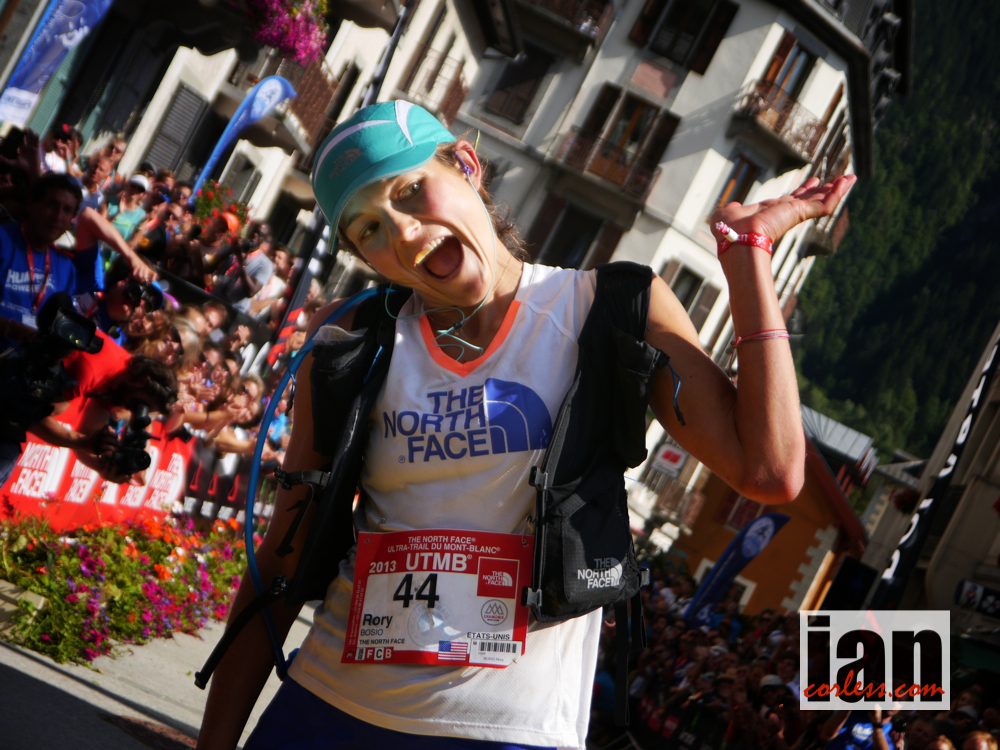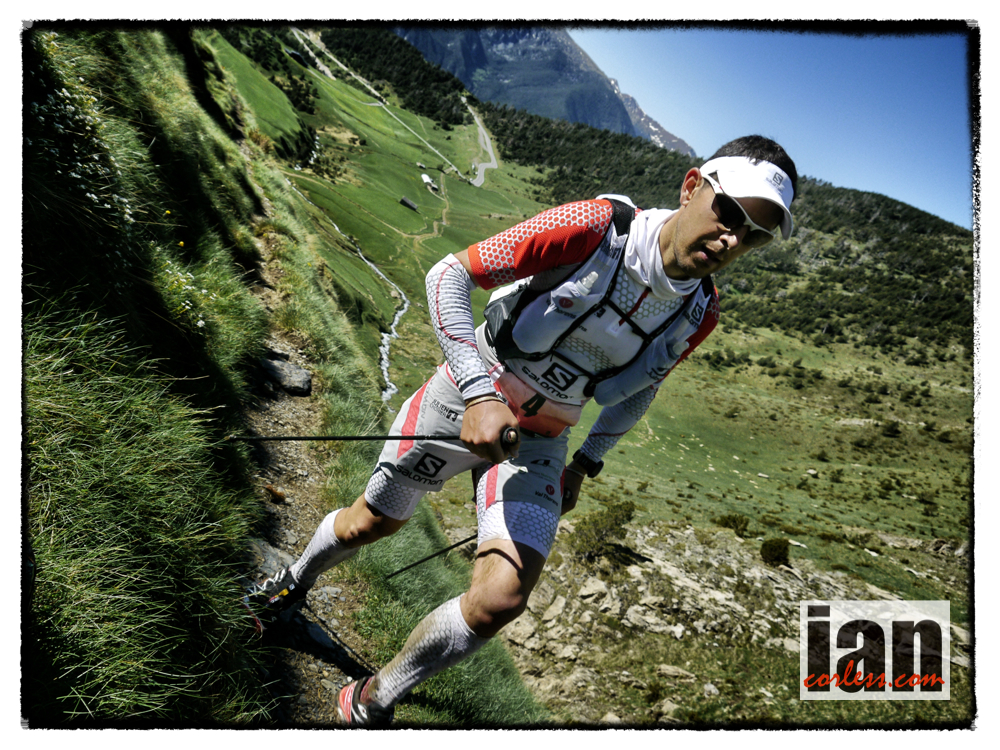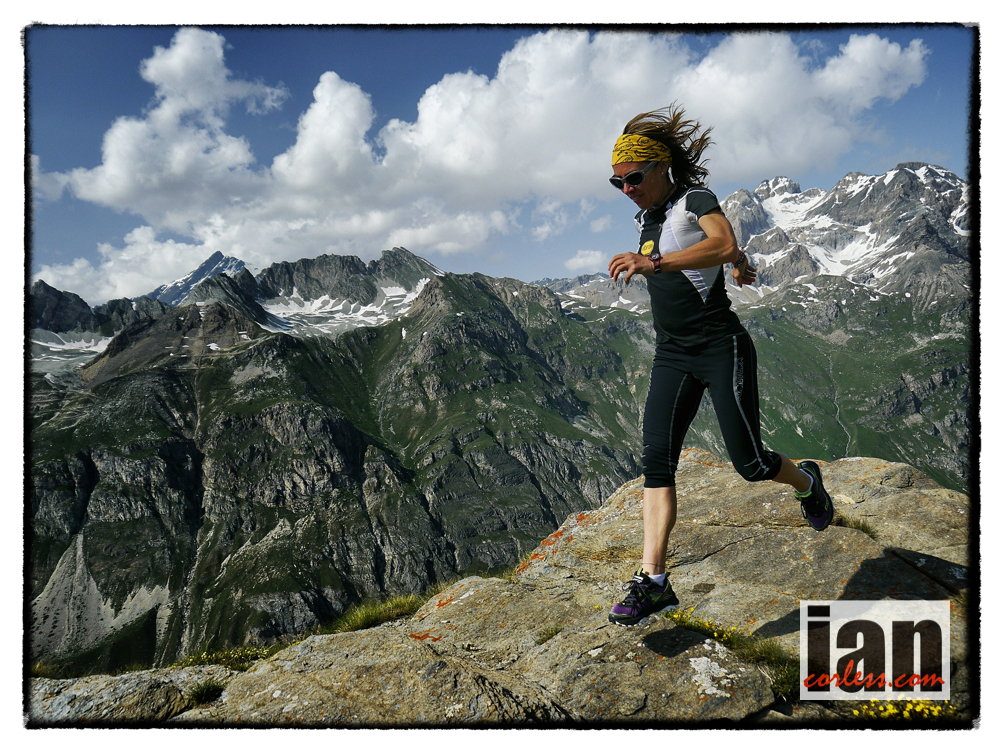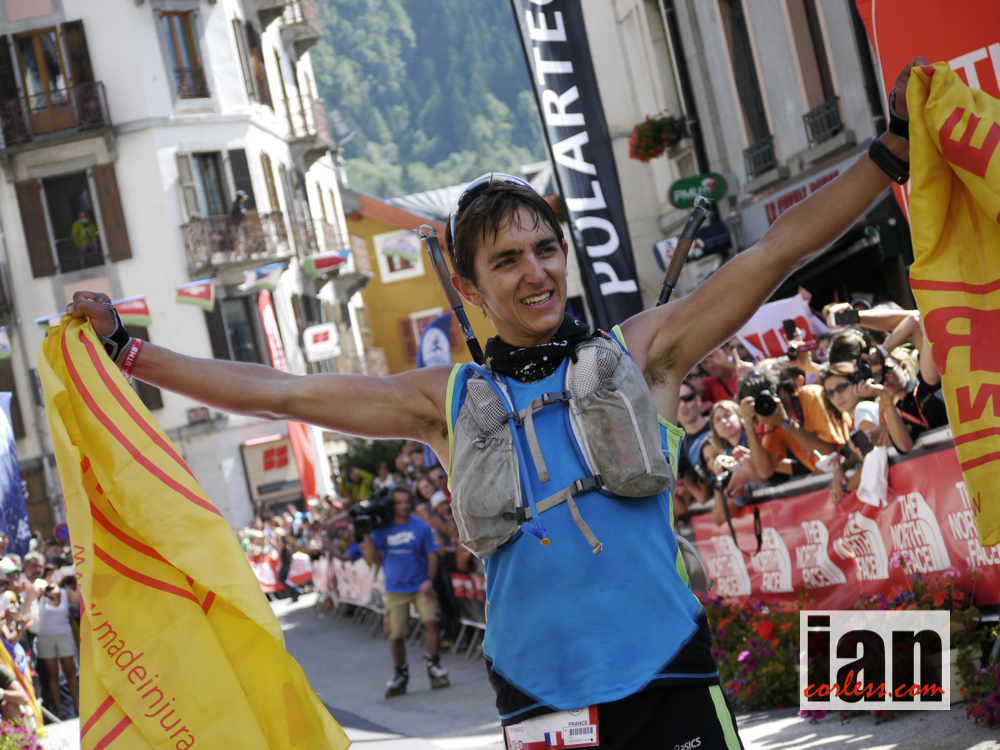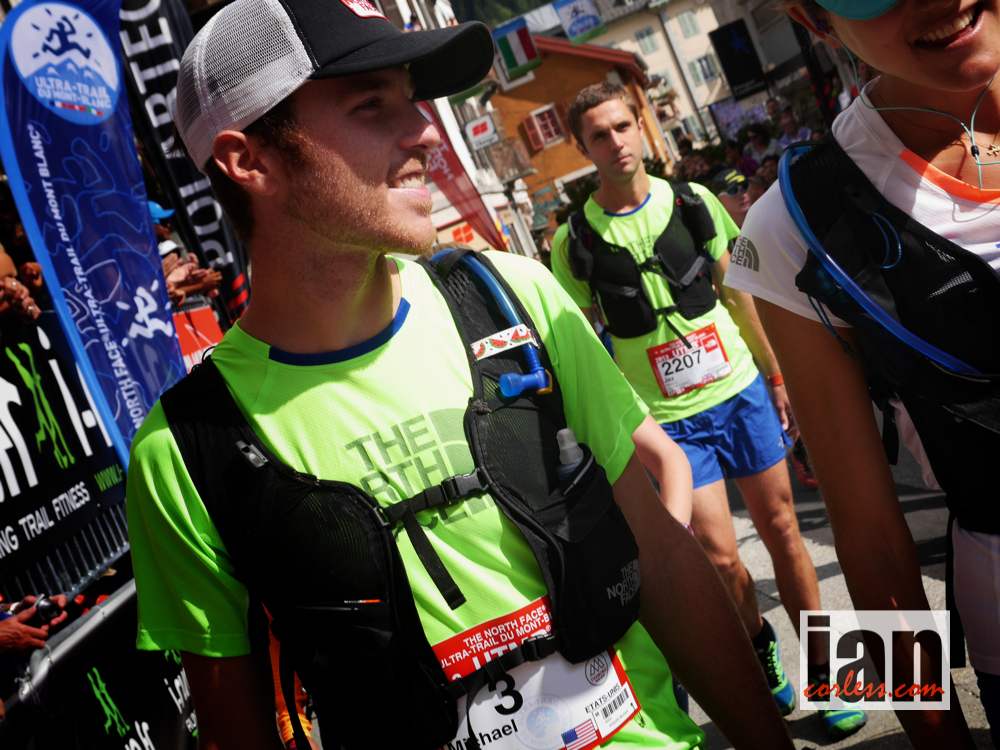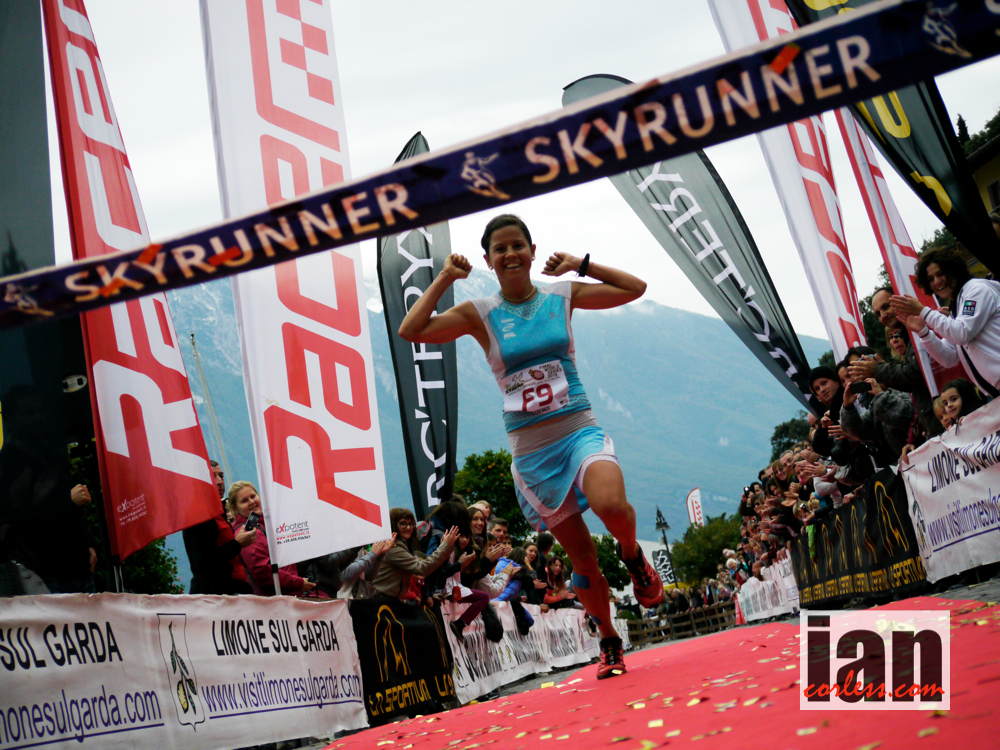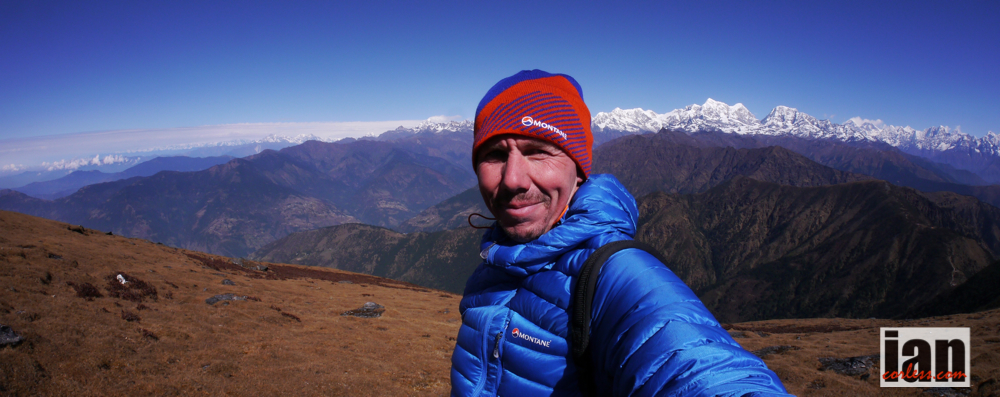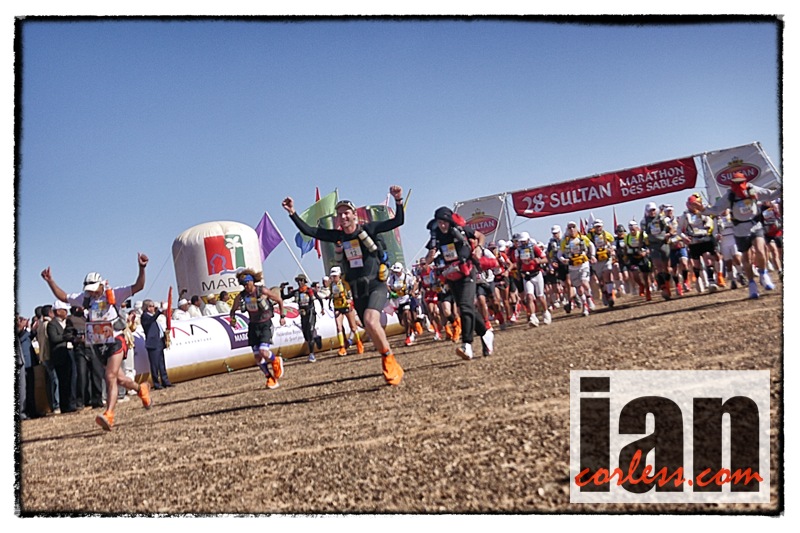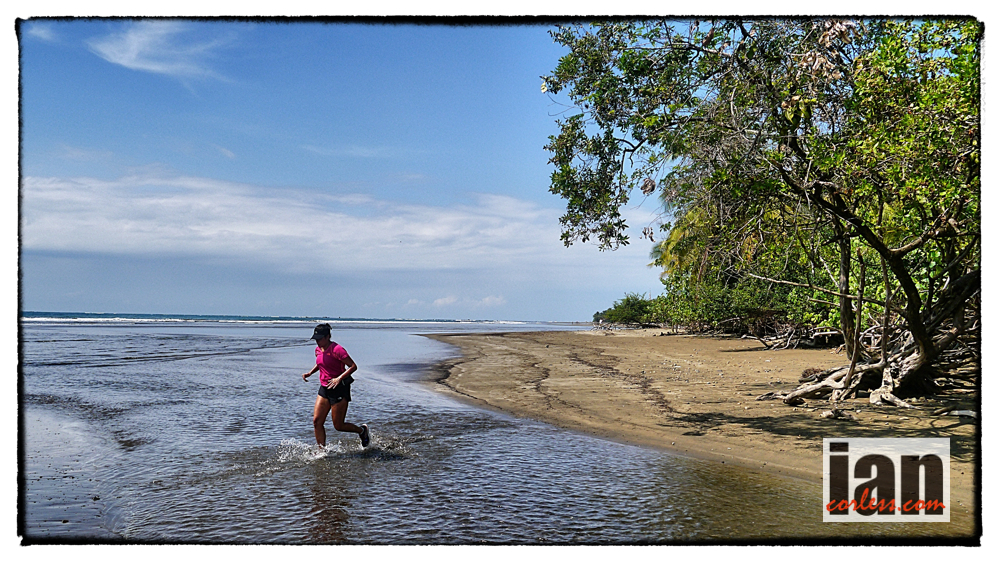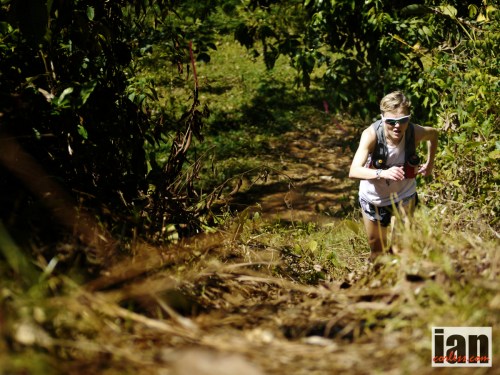
Laurence Klein, top-10 tips for the Marathon des Sables

iancorless.comP1080213

Laurence Klein (FRA) is a triple winner of the Marathon des Sables; 2007, 2011 and 2012. In 2013, Laurence returned to the Sahara looking for a 4th crown. Running a strong and dominant race, Laurence looked invincible, however, on the long-day she suffered from the heat and was forced to withdraw from the race with dehydration opening the door for Meghan Hicks (USA) to take the lead and win the 28th edition of the race.

We can all learn and here, Laurence provides her top-10 tips for the MDS.

iancorless.comP1030256

1/ RUNNING IN THE SAND

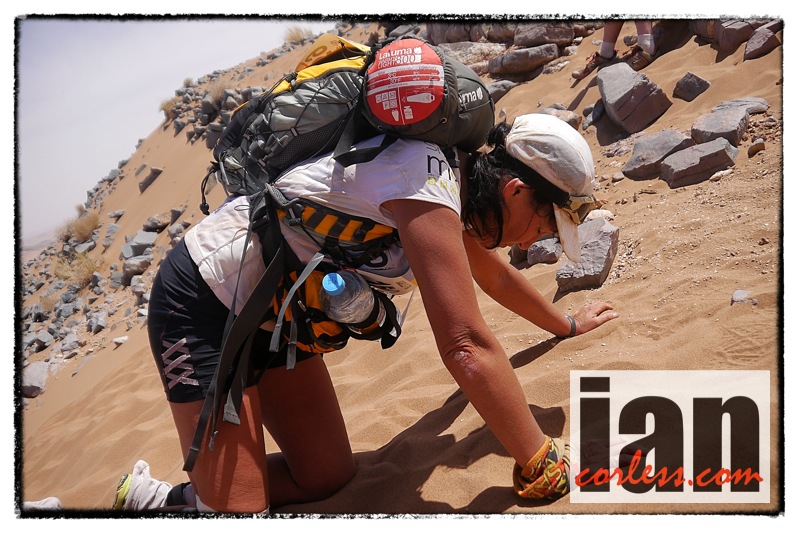
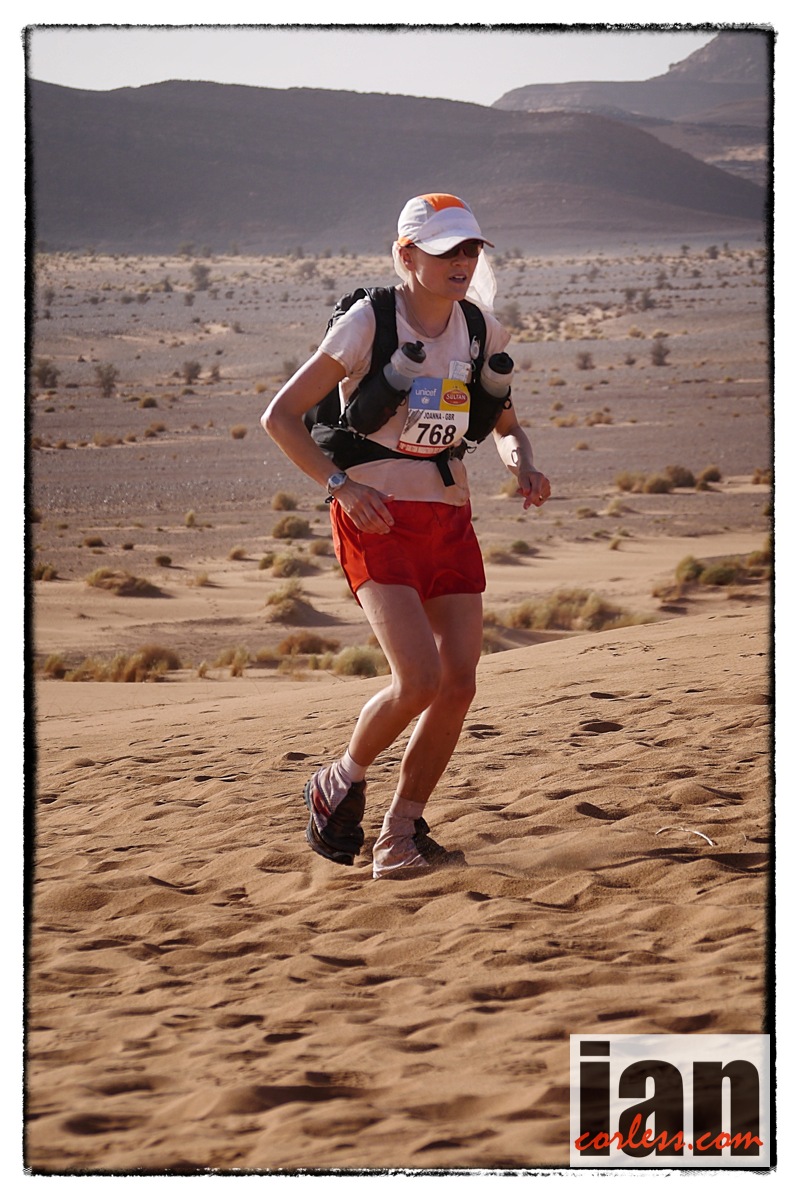
“Though sand is omnipresent along the Marathon des Sables course, you don’t just run in dunes. You also traverse stony zones, lunar landscapes and djebels. It’s important not to forget that detail in your preparation… To avoid getting tired, it’s also important to read the terrain you’re not used to. On large dunes for example, it’s best to run along the ridges and try to carve out your own wake so that you don’t sink into the sand as much. On the dunettes however, it’s easier to run in the tracks left by other competitors so as to use their footsteps like stairs. Finally, in the “fesh-fesh” (fine sand that looks like solid ground but behaves like soft mud), you really have to try to be as light on your feet as possible when you run.”

iancorless.comP1040857

2/ AVOIDING BLISTERS

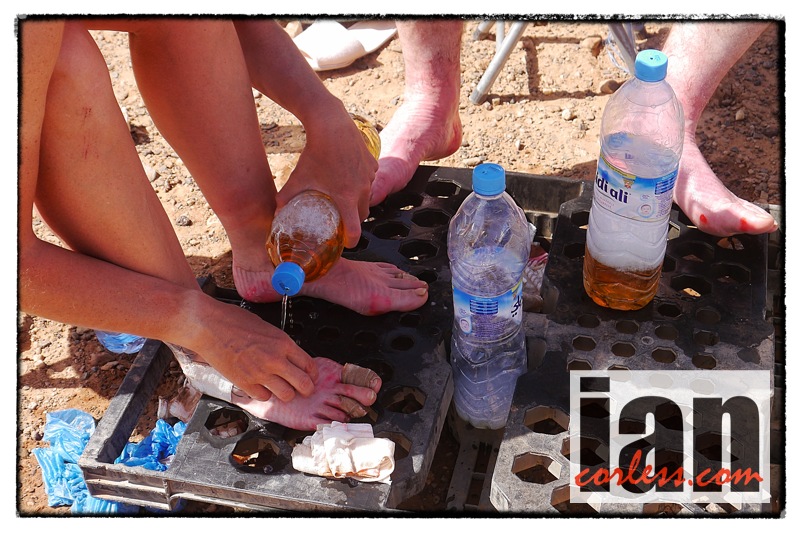
“Gaiters are essential in preventing sand from filtering through into your socks too much and causing large blisters. Those who are sensitive to them can also prepare their feet in the run- up to the event, by hardening them with special products or citric acid. On a personal level, I recommend choosing a suitable trail shoe, one or two sizes bigger than your usual town shoe, because feet tend to swell with the heat. Added to that, it goes without saying that when you have blisters, it immediately becomes a lot more painful to put your shoes back on with an additional layer of bandages if you’re already bordering on the limit of your shoe size.”

iancorless.comP1040109

3 / HYDRATE REGULARLY

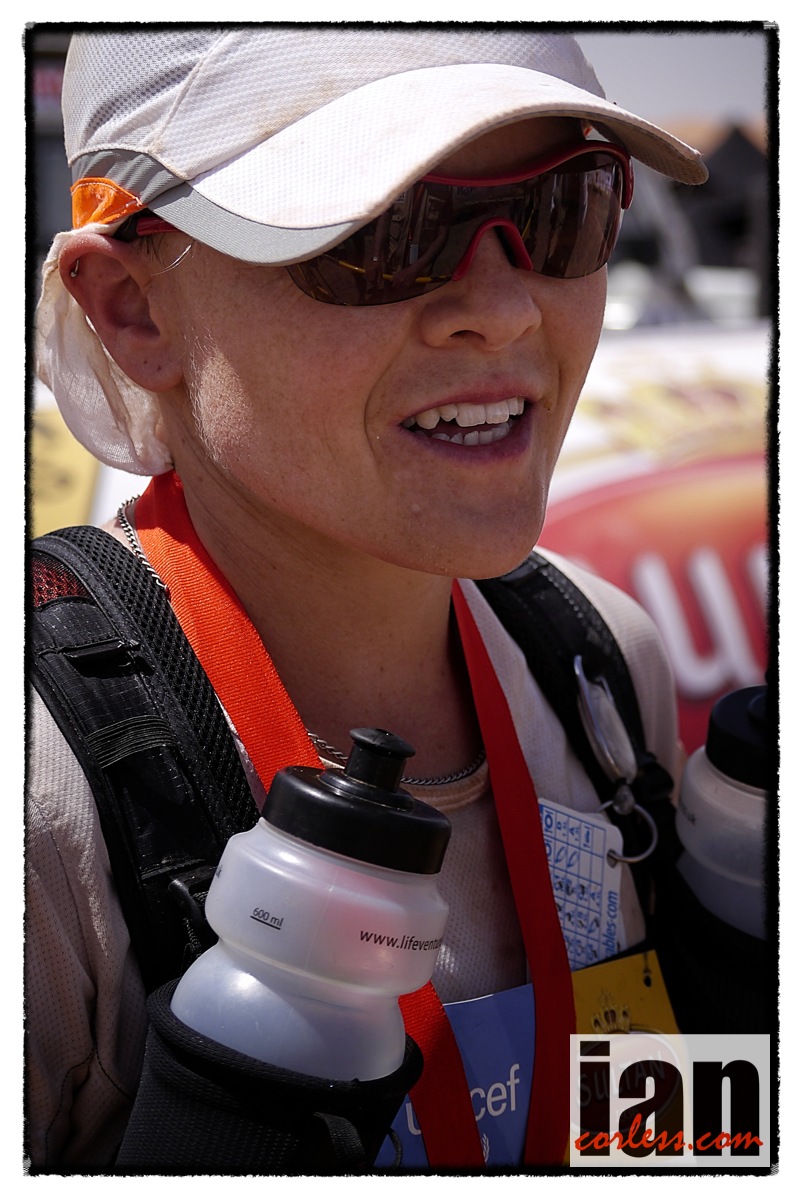
“Dehydration is one of the biggest risks in the desert. It’s imperative you don’t forget this and force yourself to systematically drink the water offered by the organisation, taking small, regular sips during the race and in the evening when you get into the bivouac. During this event, you also loose a lot of salt. As such it’s essential you remember to take the salt tablets supplied by the organisation and plan a diet rich in mineral salts.”

iancorless.comP1020957

4/ PROTECT YOURSELF FROM THE SUN

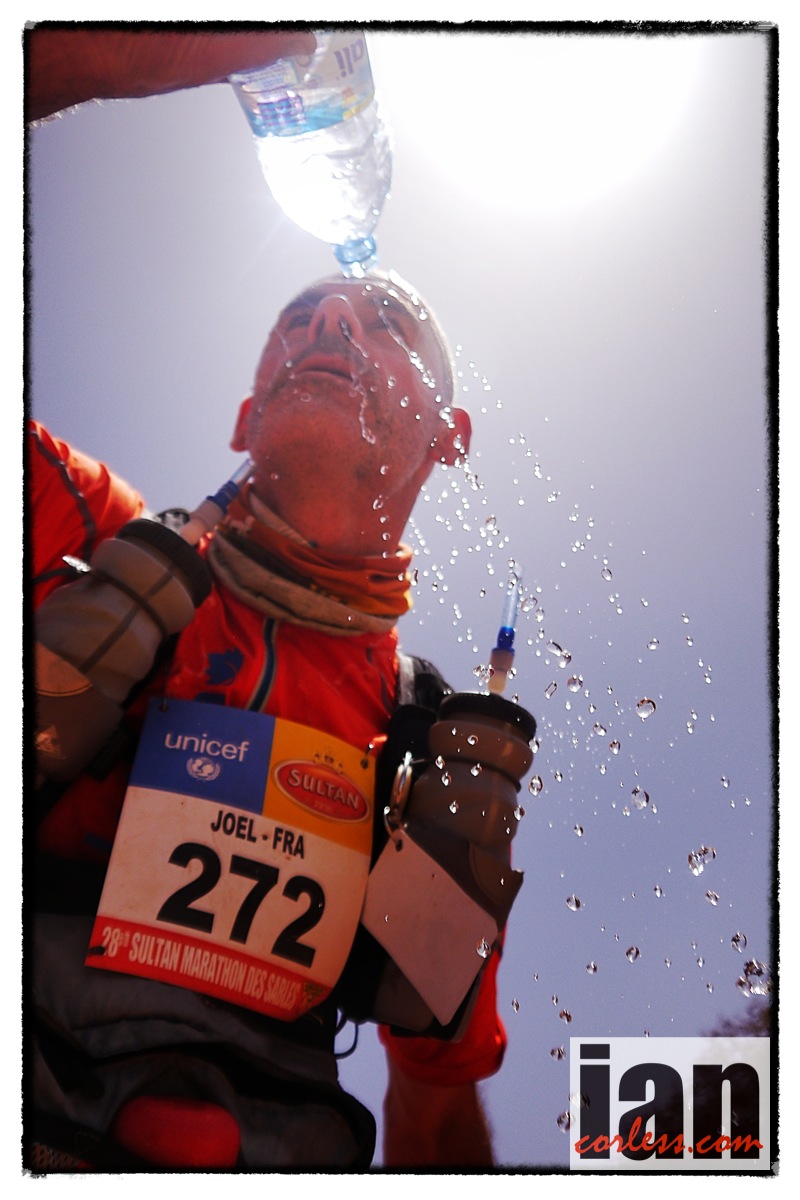
“Avoid wearing dark clothing in the desert as it tends to retain heat. Instead, opt for light clothing and white caps, which reflect the light. It can also be very useful to keep a buff around the neck or the wrist, which you can moisten from time to time to freshen up and bring down your core temperature. The best thing is not to remove too much clothing, but not to wear too much either… and to protect oneself from the sun’s rays using a very good suncream.”

iancorless.comP1020051

5/ A LIGHT, BALANCED BAG

“When you pack your bag, don’t forget that you have to add to it the litre and a half of extra water supplied by the organisation throughout the event… As such a bag weighing around 7 kilos is ideal. You also need to think about correctly distributing the weight between the front pack and the backpack, so as to remain balanced and avoid placing all the bag’s weight on your kidneys. Personally, I recommend putting everything at the front that will be of use to you during the day, energy bars, water, roadmap, compass, salt tablets, etc. That way you don’t have to unpack your bag to retrieve something that’s located at the back.”

iancorless.comP1010675

6 / GET SOME REST

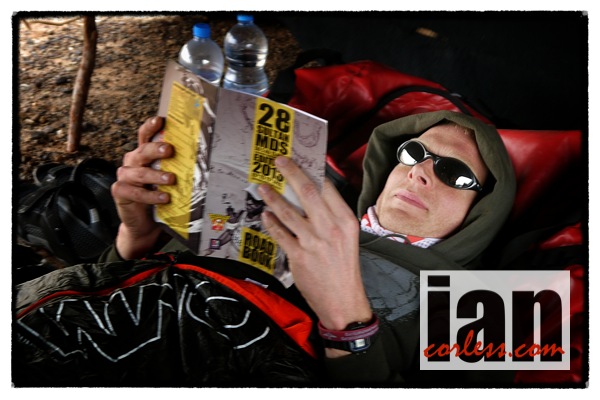
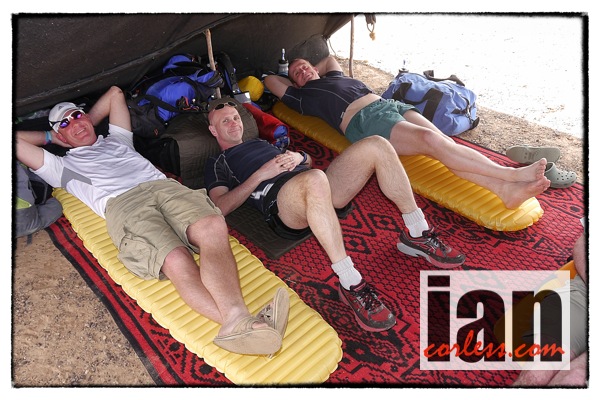
“It’s very important to get some good rest and sleep well. For this, don’t disregard the comfort of your sleeping bag and opt for a sleeping bag suited to temperatures of around zero. Indeed, even though it rarely gets cooler than that, the temperature range between day and night remains pretty significant and you can soon get cold. For the evening, the majority of runners use painters’ overalls, which keep out the cold and the wind, but you can also get very fine, very light technical clothing with long sleeves.”

iancorless.comP1010591

7/ EAT PROPERLY

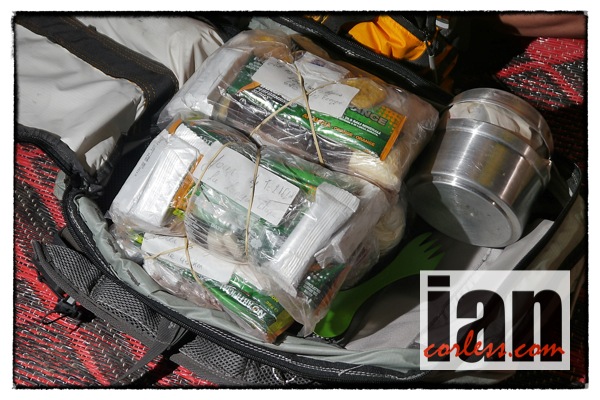
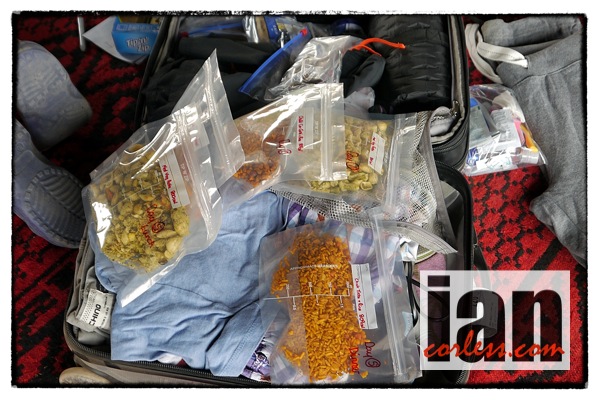
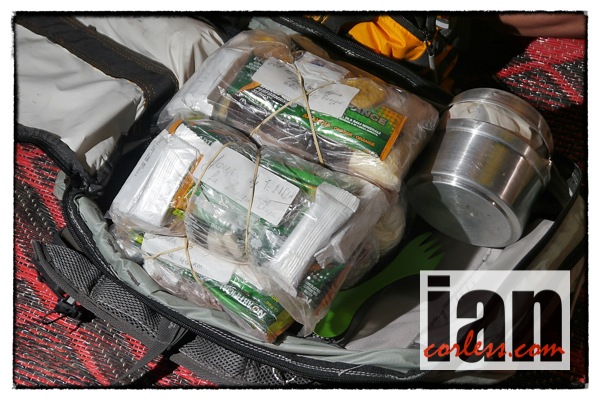
“Whether you opt for freeze-dried meals or simpler food with a rice, pasta, couscous or mashed potato base, the most important thing is to have a good distribution between protein, which are used to repair the muscles that are in such heavy demand during exertion, carbohydrates, which enable you to quickly restore your energy and speed up the body, and fats, which are essential for the body to work efficiently; especially with this type of exertion where you dig deep into your store of fat. Similarly, don’t think twice about stepping up a little on the organisation’s requisite minimum daily dose of 2,000 calories a day.”

iancorless.comP1030537

8/ FINDING ONE’S BEARINGS

“Aside from some of the dunes, where you do need to know how to use a compass to keep on course, the risks of getting lost are virtually non-existent. Indeed the marking is very well done by the organisation throughout the course and there’s substantial monitoring of the runners by the race stewards. However that’s no reason not to learn to use a compass before taking off for Morocco!”

iancorless.comP1030059

9/ MANAGING ONE’S EFFORT

“The Marathon des Sables is a long race. As such you need to spread out your effort with the passing days and, most importantly, you mustn’t set off too quickly on the first leg. Instead take the time to adapt to the different terrains you will encounter. You should also think about saving your energy so that you aren’t too tired when it comes to the long stage on the 4th day. To do this, think about getting some good rest in the evening as soon as you return to the bivouac.”

iancorless.comP1010583

10/ LIFE IN THE BIVOUAC

“Life in the bivouac is very important. To really make the most of it, I advise you not to bring along your mobile phone so you can fully benefit from each and every moment. Indeed, a whole life and sense of solidarity takes shape within it… The runners are divided up into tents of eight people and they very quickly encourage and support one another and eat together… You have to learn to be generous within it and not get annoyed, remaining open to others. The MDS is a large family. There’s a big communion between the runners and you have to know how to respect that.”

 Read a preview of the 2014, 29th Marathon des Sables HERE

Follow the race at http://www.iancorless.com and on Facebook HERE and Twitter HERE

Content ©marathondessables
All images ©iancorless.com – all rights reserved

Marathon des Sables nutrition tips w/ Rinn Cobb

MDS Logo


Rin started PND Consulting in 2012 after working in the NHS as a dietician for several years. She has covered a variety of clinical areas from nutrition support on hospital ward and intensive care to diabetes and weight management in clinic settings.

Rin has also specialised in managing kidney disease and childhood nutrition and more recently eating disorders.
iancorless.comP1010591
During her career, Rin has identified key clinical areas of improvement which has led to undertaking nutritional audits, implementing training programmes and developing evidence based nutritional guidelines and protocols.
Rin has a passion for sports nutrition and challenging the human body (including her own). Leading further studies in Sports and Exercise Nutrition, Rin now is able to assess and provide valuable nutritional advise to all athletes from all sporting backgrounds.
iancorless.comP1020320
Having explored the Arctic, Jungle and Himalaya’s both as an explorer and leader, Rin challenged herself to the ‘Marathon des Sables’. Irrespective of her experience, Rin still made nutritional mistakes whilst in the desert. Hindsight is a wonderful thing and in this brief interview, Rin provides an insight into what she learnt and how provides some key nutritional information to help each and everyone of you on your journey into the unknown.
Listen to the audio interview HERE
podcast logo
PND Consulting HERE
iancorless.comP1020051
iancorless.comP1010970

Episode 56 – Sandes, Jurek, Morgan, Chaigneau, Maciel, Kendall

Ep56


Episode 56 of Talk Ultra and on this weeks show we have a Transgrancanaria special with a whole series of interviews. We speak with Scott Jurek, Sebastien Chaigneau, Casey Morgan, 3rd place lady, Fernanda Maciel and we have an in-depth chat with race winner, Ryan Sandes. In addition, we have a chat with top Brit at the MDS, Danny Kendall who returns this year to hopefully move higher up the field. The news, a blog and of this week only, a new co-host, Niandi Carmont.

What we have both been up to?

NEWS

AUDIO with SCOTT JUREK 
 
Transgrancanaria
  1. Ryan Sandes Salomon/Red Bull : 14:27:42
  2. Julien Chorier  Hoka One One/ Compressport “14:36:28
  3. Timothy Olson The North Face : 14:39:03
  4. Yeray Duran : 15:06:54
  5. Antoine Guillon WAA : 15:17:30
  6. Sondre Amdahl : 15:28:35
  7. Javier Dominguez Vibram : 15:46:06
  8. Cyril Cointre WAA : 15:47:08
  9. Dylan Bowman Peral Izumi : 15:59:13
  10. Casey Morgan Salomon 16:00:31
AUDIO with CASEY MORGAN
 
AUDIO with SEBASTIEN CHAIGNEAU
  1. Nuria Picas Buff : 16:44:55
  2. Francesca Canepa Montura : 17:29:18
  3. Fernanda Maciel 17:31:57
  4. Ildko Wermescher Mammut :18:50:45
  5. Uxue Fraile Vibram 19:21:00
  6. Nerea Martinez Salomon 19:21:00
  7. Magdalena Ostrowska-Dolegowska : 20:27:02
  8. Ester Alves : 23:03:10
  9. Laureda Tirepied : 23:10:44
  10. Helen Allison : 23:40:48
AUDIO with FERNANDA MACIEL
ITI350 and ITI1000
David Johnton was on the last show and after smashing the Susitna 100 record just 7-days later took on the ITI350. He was on the last show if you need and insight and he will be on our next show! Amazingly, he smashed the CR thought by many to be unbeatable by an incredible, 4d 1h 38m – broke record by 13h 22m set by Steve Refenstuhl
Jeff Oatley gonna smash the 1000m in around 10-days
MSIG Sai Kung 50
 
  1. Rudy Gilman 4:51
  2. Siu Keung Tsang 5:05
  3. Brendan Davies 5:15
Brit Stu Air – 8th
  1. Cassie Scallon 6:00
  2. Allesandra Carlini 6:05
  3. Joe Joe SuiPing Fan 6:11
St Peters Way Ultra
  1. Richard Ashton – new CR 5:34
  2. Christopher Howe 5:59
  3. Keith Moule 7:03
  1. Naomi Newton Fisher 8:20
  2. Fiona McNeils 9:58
  3. Nicki Edwards 10:13
4 Refugios non-stop Argentina – 70k
  1. Dakota Jone 7:18
  2. Sergio Jesus Trecaman 7:51
  3. Carlos Galosi 8:12
  1. Laura Lucero 9:40
  2. Sonia Beartriz 10:32
  3. Yanet Guzman 11:18
 
ADDO Elephant 76km
  1. Quintin Honey 8:05
  2. Mike Els 8:45
  3. Miema Murray (lady) 9:22

INTERVIEW with DANNY KENDALL


BLOG

Zach Bitter

Big Fat Theory

Lately, I have been thinking a lot about the ratio of fat and carbohydrate expenditure while running at varying paces.”

INTERVIEW with RYAN SANDES

 
UP & COMING RACES

Australia

Victoria

Maroondah Dam 50K Trail Run | 50 kilometers | March 16, 2014 | website

Razorback 58K Run | 58 kilometers | March 15, 2014 | website

Razorback 58K Run (March) | 58 kilometers | March 15, 2014 | website

Razorback 64K Run | 64 kilometers | March 15, 2014 | website

Razorback 64K Run (March) | 64 kilometers | March 15, 2014 | website

Razorback 68K Run (March) | 68 kilometers | March 15, 2014 | website

Canada

British Columbia

Dirty Duo 50 km Ultra | 50 kilometers | March 08, 2014 | website

Yukon

6633 Extreme Winter Ultra Marathon – 120 mile | 120 miles | March 14, 2014 | website

6633 Extreme Winter Ultra Marathon – 350 mile | 350 miles | March 14, 2014 | website

France

Pas-de-Calais

Trail Bullygeois des Poilus – 55 km | 55 kilometers | March 09, 2014 | website

Hong-Kong

Translantau 100 km | 100 kilometers | March 15, 2014 | website

Translantau 50 km | 50 kilometers | March 15, 2014 | website

Hungary

BSI Lake Balaton Marathon+ Fonyód – Szigliget | 52 kilometers | March 21, 2014 | website

BSI Lake Balaton Supermarathon | 195 kilometers | March 20, 2014 | website

India

The Great White Rann – Run of Kutch – 135 Miles | 135 miles | March 14, 2014 | website

The Great White Rann – Run of Kutch – 160 km | 160 kilometers | March 14, 2014 | website

The Great White Rann – Run of Kutch – 50 km | 50 kilometers | March 14, 2014 | website

The Great White Rann – Run of Kutch – 80 km | 80 kilometers | March 14, 2014 | website

Italy

Umbria

Trasimeno Lake Ultramarathon | 58 kilometers | March 09, 2014 | website

Veneto

Ultrabericus | 65 kilometers | March 15, 2014 | website

Madagascar

Nosy Be Trail – 65 km | 65 kilometers | March 09, 2014 | website

New Zealand

Tarawera 100K Ultramarathon | 100 kilometers | March 15, 2014 | website

Tarawera 60K Ultramarathon | 60 kilometers | March 15, 2014 | website

Tarawera 85K Ultramarathon | 85 kilometers | March 15, 2014 | website

Te Houtaewa Challenge 60 km Open Ultra Marathon | 60 kilometers | March 15, 2014 | website

Triple Peaks Challenge | 50 kilometers | March 15, 2014 | website

Philippines

TRD80 Ultramarathon | 80 kilometers | March 15, 2014 | website

Portugal

Território Circuito Centro 3a Etapa – Vila de Rei – K67 – Ultra Trail | 67 kilometers | March 08, 2014 | website

Território Circuito Centro 3a Etapa – Vila de Rei – Trail Ultra | 50 kilometers | March 08, 2014 | website

Senegal

Raid Téranga 250 | 250 kilometers | March 08, 2014 | website

Slovakia

Kysucká Stovka | 120 kilometers | March 07, 2014 | website

South Africa

Om Die Dam 50 km Marathon | 50 kilometers | March 15, 2014 | website

Spain

Andalusia

Ultra Trail Sierras del Bandolero | 150 kilometers | March 07, 2014 | website

Catalonia

Marxa dels Castells PLUS | 81 kilometers | March 09, 2014 | website

UT les Fonts | 120 kilometers | March 14, 2014 | website

UT les Fonts – Trail de les Fonts | 70 kilometers | March 15, 2014 | website

Taiwan

Southern Cross-Island Road Ultra Marathon – 100 km | 100 kilometers | March 08, 2014 | website

Southern Cross-Island Road Ultra Marathon – 50 km | 50 kilometers | March 08, 2014 | website

Tunisia

100 Miles Camelus | 100 miles | March 15, 2014 | website

45 Miles Camelus | 45 miles | March 15, 2014 | website

United Kingdom

Aberdeen City

D33 Ultra | 33 miles | March 15, 2014 | website

Deeside Way Ultra | 33 miles | March 15, 2014 | website

Bradford

Haworth Hobble | 32 miles | March 15, 2014 | website

Dorset

Jurassic Coast Challenge | 78 miles | March 21, 2014 | website

Somerset

Exmoor Ultra – 40 Miles | 40 miles | March 15, 2014 | website

Wiltshire

Imber Ultra Marathon | 33 miles | March 09, 2014 | website

USA

Alabama

Delano Park 50 Mile Solo | 50 miles | March 08, 2014 | website

Alaska

Chena River to Ridge Endurance Race 45 Mile | 45 miles | March 08, 2014 | website

Arizona

Monument Valley 50K | 50 kilometers | March 15, 2014 | website

Monument Valley 50 Mile | 50 miles | March 15, 2014 | website

Old Man 52K | 52 kilometers | March 15, 2014 | website

Arkansas

3 days of Syllamo | 150 kilometers | March 14, 2014 | website

California

Coyote Cohorts Backbone Trail Ultra | 68 miles | March 15, 2014 | website

Lake Natoma 50K | 50 kilometers | March 09, 2014 | website

Marin Ultra Challenge 50K | 50 kilometers | March 15, 2014 | website

Marin Ultra Challenge 50 Mile | 50 miles | March 15, 2014 | website

Old West Trails 50K Ultra | 50 kilometers | March 15, 2014 | website

Rodeo Valley Trail Run Spring 50K | 50 kilometers | March 15, 2014 | website

Way Too Cool 50k | 50 kilometers | March 08, 2014 | website

Whoos in El Moro 50k – Race #2 | 50 kilometers | March 08, 2014 | website

Colorado

High Line Canal 100K | 100 kilometers | March 15, 2014 | website

Florida

DWD Green Swamp 50K | 50 kilometers | March 08, 2014 | website

DWD Green Swamp 50M | 50 miles | March 08, 2014 | website

Lost 118 | 118 miles | March 15, 2014 | website

Georgia

Georgia Death Race | 60 miles | March 15, 2014 | website

Kentucky

Land Between The Lakes 50 mile run | 50 miles | March 08, 2014 | website

Land Between The Lakes 60k | 60 kilometers | March 08, 2014 | website

Louisiana

Q50 50M Ultra | 50 miles | March 08, 2014 | website

Maryland

Seneca Creek Greenway Trail 50K | 50 kilometers | March 08, 2014 | website

North Carolina

Graveyard 100K Ultramarathon | 100 kilometers | March 08, 2014 | website

Graveyard 100 Mile Ultramarathon | 100 miles | March 08, 2014 | website

Reservoir Park 50K | 50 kilometers | March 08, 2014 | website

Ohio

Buzzard Day 50k | 50 kilometers | March 15, 2014 | website

Green Jewel 50K Fun Run | 50 kilometers | March 08, 2014 | website

Tennessee

Fall Creek Falls 50K Trail Run | 50 kilometers | March 16, 2014 | website

Music City Trail Ultra 50K | 50 kilometers | March 15, 2014 | website

Texas

Prickly Pear 50K Trail Run | 50 kilometers | March 08, 2014 | website

Utah

Antelope Island 100 Mile | 100 miles | March 21, 2014 | website

Virginia

Elizabeth’s Furnace Fat Ass 50K | 50 kilometers | March 15, 2014 | website

Washington

Centennial Trail Run | 37 miles | March 08, 2014 | website
CLOSE
We say this every show, but Talk Ultra is nothing without downloads and listeners so please help us spread the word.
Share us on Facebook
Tweet us on Twitter
And use good old word mouth.
Importantly, go to iTunes and subscribe so that you automatically get our show when it’s released.
Our web page at www.talkutra.com has all our links, back catalogue and it also provides access to additional downloads such as Talk Training.
He is Karl Meltzer and I’m Ian Corless
Keep Running !
LINKS

MEEK and mild – The Jo Meek interview

©iancorless.com_1120572all images ©iancorless.com – all rights reserved

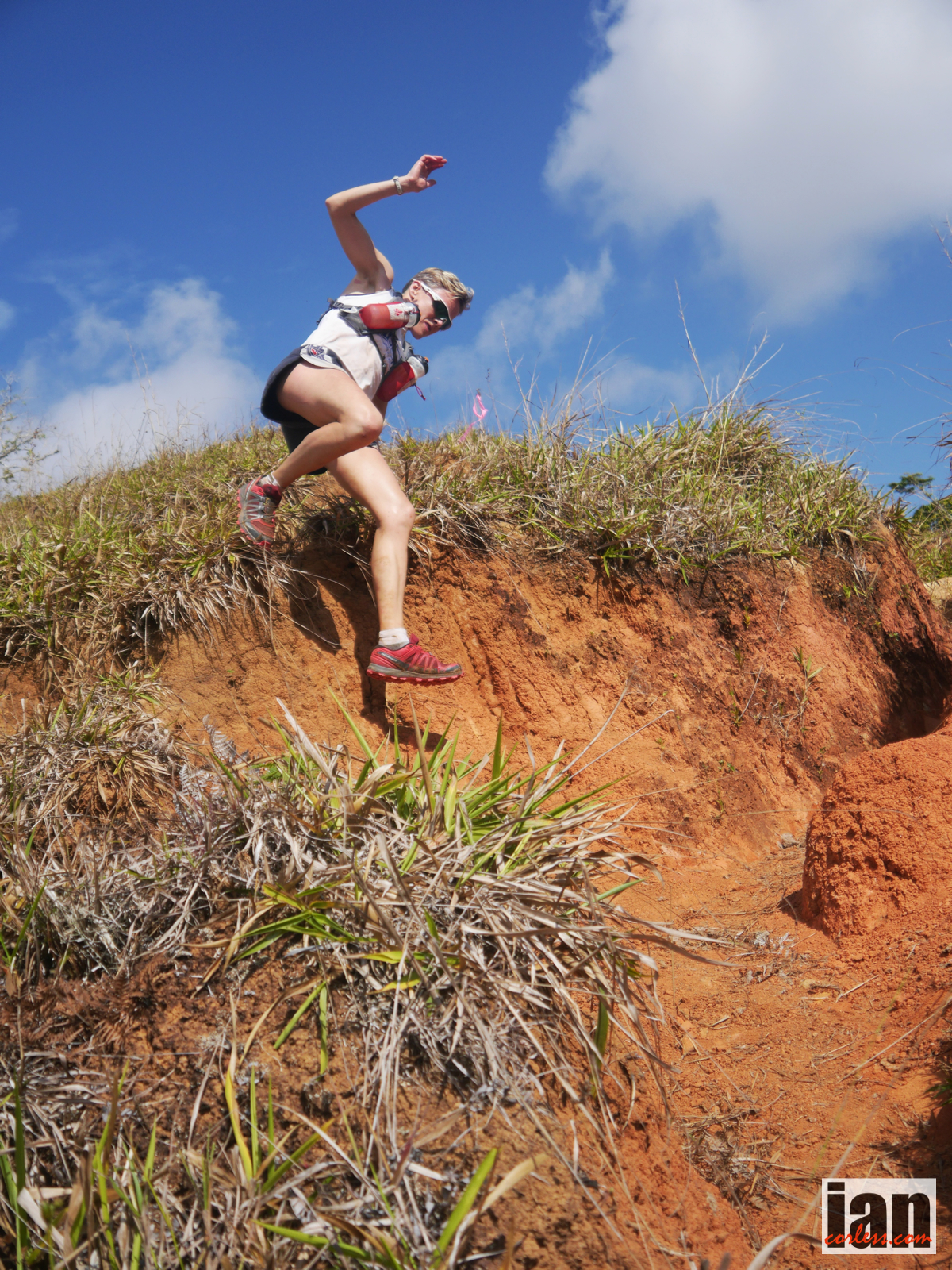
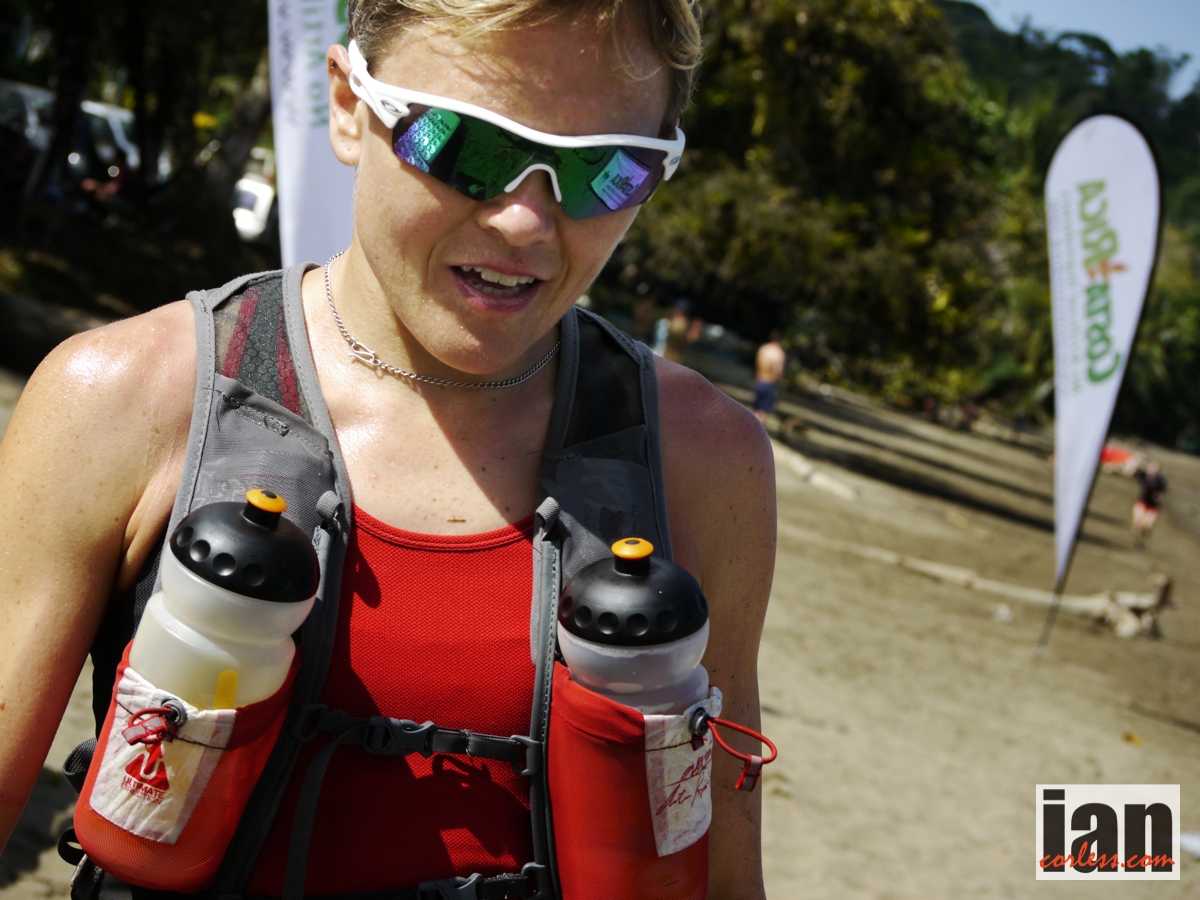
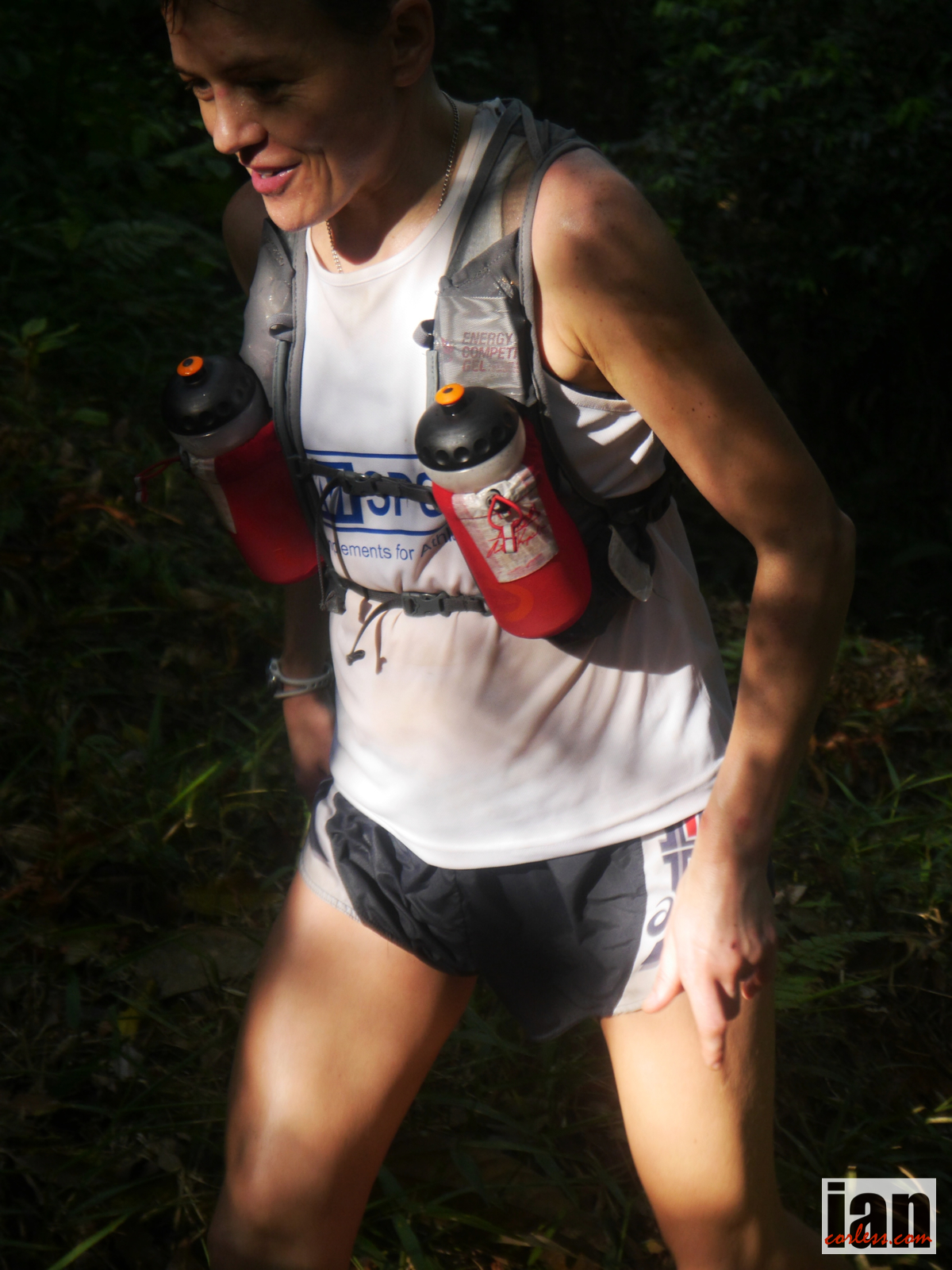
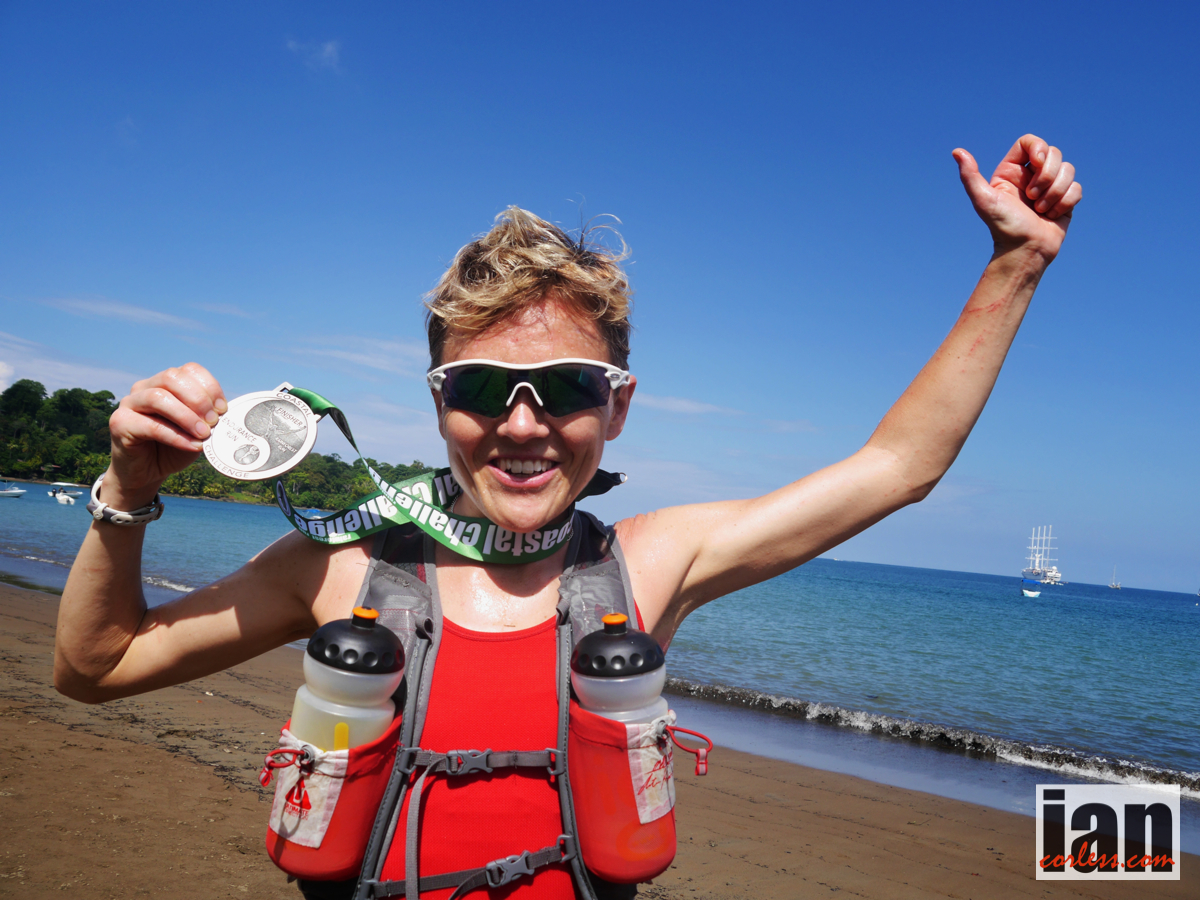
The eyes tell the story… they look through you. Deep in focus, almost blinkered like a horse, Jo Meek has only one purpose. To run as fast and as efficiently as possible over 6-days and when crossing the final finish tape, be crowned winner of the 10th edition of the 2014 The Costal Challenge in Costa Rica.

I had seen this look once before, at the end of stage-1 of the 2013 Marathon des Sables. Sitting in a bivouac, Jo Meek had just excelled on the first day of the race. I like others looked around in wonder and asked the question, ‘who is Jo Meek?’

No more questions needed to be asked, at the end of the 28th Marathon des Sables, we all were well aware who Jo was, she was the lady who had just placed 2nd overall behind Meghan Hicks at her first Marathon des Sables.

When you excel at one race it’s easy for many to look on and say, ‘It was first time luck.’ Not that Jo needed to prove anything, certainly not to me! I had seen her race; I had witnessed the dedication and focus as Jo pushed herself daily to get the best she could out of her body.

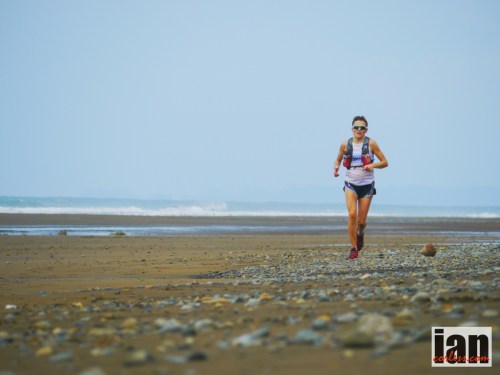
Switching from the dunes of the Sahara to the beaches and rainforest of Costa Rica was always going to be a cathartic moment for Jo, particularly when one considered the competition she would be up against; Julia Bottger (Salomon), Veronica Bravo (Adventure Racer from Chile) and Anna Frost (Salomon). Unfortunately, ‘Frosty’ had to withdraw from the race just days before the start in Quepos on doctor’s orders. Disappointed at not having the opportunity to test herself against one of the best female mountain/ ultra runners in the world, Jo focused and said, ‘It changes nothing. I am here to race and race hard. I would have loved to have Anna push me but you know what, I can push myself pretty hard.’

As we all found out, Jo can push herself pretty hard; maybe too hard at times? On day-1 of the TCC, Jo raced like a demon. Unaffected by the Costa Rican heat and humidity, she put 45-minutes into the female competition and set the platform on which to build for an incredible victory at the 10th edition of the race.

Back in the UK after a recovery week in Costa Rica, I caught up with Jo as she attempted to move house… a house that she had purchased without seeing! Yes, Jo had purchased a house she hadn’t seen. When I asked her in Costa Rica about this, Jo replied, ‘I was too involved in my training, I had one focus, to be in the best shape for the TCC. I just didn’t have time to go and look at it. I convinced myself it would be okay…’
©iancorless.com_1130144

IC: A year ago I was talking to you at your surprise 2nd place at MDS. You have now been out to Costa Rica, a very different environment in comparison to the Sahara, raced against stronger competition? And you have won an incredible victory over 6 –tough days of racing. How do you feel?

JM: I feel really pleased. I have complete satisfaction from the race. It’s possible to sometimes come away with question marks but I have none. I feel that the effort I put in was rewarded appropriately. I put a great amount of dedication into this race and sacrificed lots.

IC: Yes, you had that steely MDS look in your eyes. Like blinkers. You dedicate yourself to the task and I guess knowing in advance what the competition was going to be like at TCC and having the MDS experience inside you, you were able to be far more specific in training. I know post MDS that you thought you had maybe been a little over cautious. You could have run quicker? So, did you go to TCC with all guns blazing and take each day as a race?

JM: Yes I did. I remember listening to Ryan Sandes on Talk Ultra and he said it was amazing how quickly one recovers. I thought, I do recover well and I had nothing to loose. I know from MDS that I had been cautious, for example on the last day I pushed hard. Had I done that everyday the result may have been different but it’s difficult to say. So, at TCC I wanted to give it everything. I had prepared for the heat and my training was good.
 ©iancorless.com_1150601

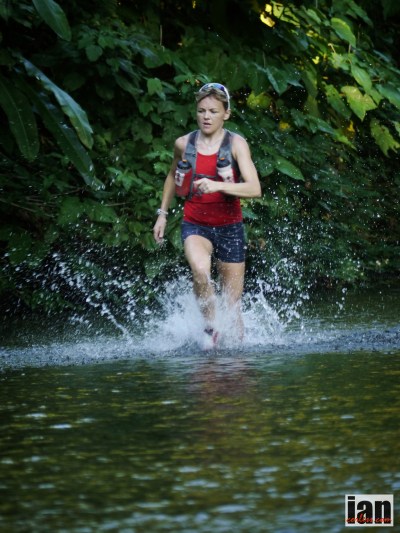
IC: You have just mentioned that you committed yourself from day-1. Needless to say, TCC day-1 was impressive. You put 45-mins into the competition, impressive, particularly when we look at the ladies who you were racing against. Of course it gave you a real buffer. A safety net. The biggest issue on day-1 for everyone (except you) was the massive contrast in European weather and Costa Rican weather. Even in Costa Rica itself, the temperatures between San Jose and the coast were remarkable. As you approach the coast the heat goes up along with the humidity. Day-1 has a later start so you are straight into the heat… mid 30’s and closer to 40 at the height of the day. But it did not affect you and the main reason for this was 10-days training in a heat chamber.

JM: Yes. I was prepared. I gave everything on that first day. I had assumed that the competition would have done the same? Using a heat chamber is only a case of contacting Universities and they are usually willing to help. I assumed some heat work would put me on a par. As it turned out it wasn’t the heat that struck me but the pace! We were running slower than I expected so I ran at what was comfortable for me and nobody ran with me. I then ran scared thinking I had made a mistake that I was going to pay for.

IC: Now you have had an opportunity to reflect on TCC can you tell us about the heat chamber, how did it benefit you, are there any crossovers between MDS and TCC prep?

JM: I did the same sort of training. I followed a marathon program but I did more back-to-back runs. Essentially you are training for the same thing. In the heat chamber I was under the guidance of the team. I told them I would do whatever I needed to do… They told me I needed 10-days. You actually don’t need to exercise in the heat chamber, you can just sit inside but it takes longer. I could sit for 3-hours or run for 1-hour. I am dedicated, I am focused, and that’s a really big thing.

IC: Lets talk about the training. When you say a classic marathon program, I guess you are talking about a speed session, hill session and then long runs. Of course, you were training for multi-day so you built from 1-long run to back-to-back long runs. What did a peak week look like; I guess this was 3-4 weeks out from the TCC?
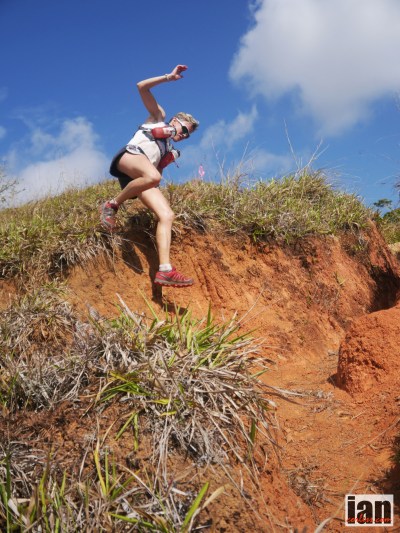
 ©iancorless.comP1130161

JM: Yes, 4-weeks out and then I would taper. You are right; I would do a speed session, a threshold run, a hill session and then long runs that would build to back-to-back runs. What you can’t afford to do is not let yourself recover in terms of, if you have done a long run and made it fast, you need to recover. It was all about balance. You need to be sensible and listen to your body. I would do 2.5-3-hours normally for a normal long session, whereas my long run for TCC was 4-hours; but at a slower pace. I wanted to make sure I could incorporate hills to prepare me for the hills of TCC.

IC: Back-to-back sessions, was that 2 x 4-hour runs?

JM: No, I did 3 back-to-back 3-hour runs.

IC: So, 9-hours split over 3-days; I presume when you did this you eased back of speed and hill work?

JM: I actually kept the sessions. In actual fact, that week I did a race. You have to remember, the long runs were really slow. It was just a case of recovering from a food and nutrition perspective. The runs actually didn’t damage my muscles. I am sensible after each run. I rest. For the 3 back-to-backs I took a day off work to make sure I had the best platform from which to build.

IC: So you planned this into work. You took a day off work and you treated this very much from a professional perspective. Feet up after the run, concentrate of food and hydration and make sure you are in the best place.

JM: Yes it was like being a full time athlete. Of course day-to-day life gets in the way; cook dinner and walk the dog for example. I just took this relaxed and in my own time.

IC: How did you break speed sessions down? Many ultra runners look at speed sessions as something that they don’t need to do. But that is not the case, you actually need endurance and speed, so, how do you work this to your benefit, how did you go about speed sessions?

JM: It is difficult to answer as we are all individual and it depends on your race. You need to target your sessions at the pace you want to achieve and then sometimes faster. I would do some track work running 400’s or I would do 1-mile reps. I guess you need to vary what you do… try to enjoy it! We all think, speed; it’s going to hurt. But if you find sessions you enjoy it makes a big difference. Also try training with others.
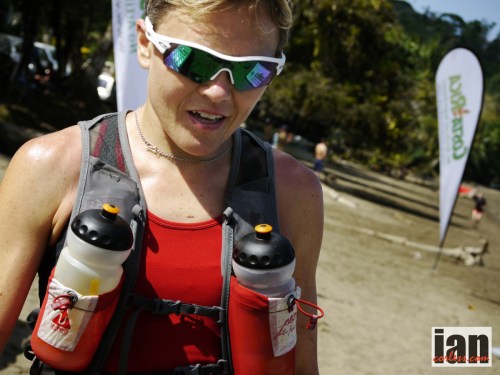
 ©iancorless.com_1160267

IC: So you had your plan, you did speed, you did strength, you did hills, you did back-to-backs but you realized that to give you an edge or in your terms an equal playing field was that you needed to adapt to the heat. It was a variable. It was one thing you couldn’t account for. You did 10-days consecutive in a heat chamber?

JM: Yes, 10-days.

IC: What is day-1 like?

JM: Oh you think I will never be able to run in this? I went in thinking that I would run at ‘pace’ but actually you run at a slow pace as they don’t want your temperature to rise too quickly. It feels bearable at the start. They monitor the core temperature and mine went too high after 30-min so then I had to walk and rest to keep it under control. It’s not as physically as hard as you may think. It’s all about core temperature.

IC: What is important is the lesson that we can all learn. You trained in the UK; you did the heat sessions, which gave you massive temperature and humidity fluctuations. You got that process over with before arriving in Costa Rica. By contrast, nearly all the runners had to go through that process on day-1 of the race… for example; Philipp Reiter had a really tough 1st day. He was overheating and red, he was trying to control himself but to no avail. However his recovery was phenomenal. He recovered so well to come back strong on day-2.

JM: That is the benefit of being 20!

IC: Yes, for sure that helped. However, had Philipp and the others got day-1 over with in a heat chamber it would have made a massive difference. It could have been the difference between top-3 and a win.

When you went back to the heat chamber how was the adaptation?

JM: Mentally I was more prepared. On day-1 I felt nauseous and tired but I guess it just gets easier. By day-3 my resting core had reduced dramatically. It gets easier and easier unless you are a moron like me and fall off the treadmill.

(Laughter)

IC: Mmmm yes, you did make a mess of your face. Not the best thing to land on in the final days of prep in the build up to an important race!

So, you adapted in the heat chamber. The process went exceptionally well and pretty much after the last session you made your way to Costa Rica. It’s a shock, isn’t it? Time changes, a day of registration, logistics and presswork, an early bed and then a very early start the following day that starts at 3am. A transfer by bus to the coast and before you know it, day-1 starts at 0930 just as the heat of the day is beating down. It’s hot, really hot, however it caused you no problems. You had that amazing first day. Post day-1 you said you felt great. You had taken the race on, you had pushed yourself and you had stamped your authority on the race. How did the rest of the race unfold for you? You had a couple of key moments; day-3 in the river section start when you struggled with the technicality, ironically, very similar to the male winner; Mike Wardian. You and he are very similar runners, you both run well on fast terrain but less so on technical terrain.  However, as the race progressed you both adapted and became far more efficient.
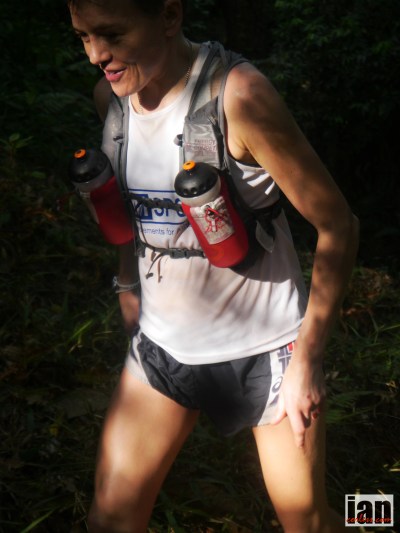
©iancorless.comP1120273

JM: Yes, without doubt.

IC: Moving up hill and covering technical ground became so much better for both of you.

Lets go back to that day-3 start when you had Veronica Bravo and Julia Bottger ahead of you, did you think you were loosing the race?

JM: When you can’t see runners you immediately think you are loosing 45-mins. It’s funny. However, when it is so technical you can’t think about anything other than what is below your feet and what is ahead. I just had to follow the course markers and cover the ground as best as I could. All the time I was thinking, I just need to get on the flat or get on a good hill and start chasing and pulling time back.

IC: You got through the section and you started to chase. You clawed back the time, you caught Julia and Veronica and then on the final beach section in 40-deg heat you pulled away and got another stage win. You re-established your dominance of the race. It must have been a great day and a great boost?

JM: The 3rd day was the longest and most emotional day. It almost felt like the end of the race. I was very emotional. Had someone been waiting for me at the end I would have cried. Even though I still had 3-days of racing ahead I had concentrated so much it had exhausted me. Having got through that it was a case of maintaining it. But as you very well know, I like to race and continued that way. I didn’t want to take anything for granted. I could have fallen and hurt myself and with Veronica and Julia chasing, I couldn’t be complacent. I raced hard to the end.

IC: Post race you said one day in particular is the day that you got things wrong that impacted on the final 2-days, was that day-4?

JM: I gave everything on day-3 and then I continued to race on day-4 when I didn’t need to?

IC: Yes, we had that conversation when I said to you, ‘you know what, you have a 60-min lead so be sensible. You have no need to put yourself in the ground. Consolidate what you have and be sensible.’ But in true Jo Meek fashion you continued to push…

Day-5 was significant. You had been in the lead and then Julia came back to you with about 10-km to go. It was the final feed station. You had a 60-min lead, so, overall victory was secure.
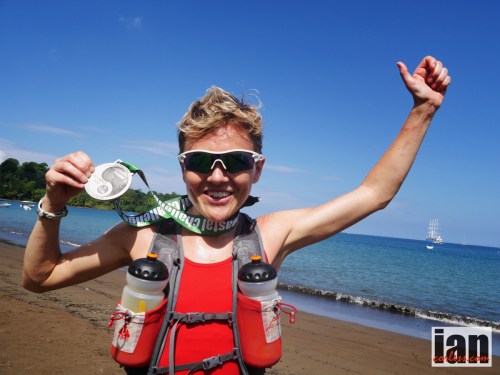
 ©iancorless.comP1130916

JM: I was at the feed and Julia arrived and I thought, ‘Oh my goodness, I thought I have to go.’ I ran, ran hard and closed out the final 10-km like a stand-alone session. I finished out of breath with hands on knees.

IC: Funny, when I saw you, you said, ‘I am an idiot.’

JM: I did.

IC: When I asked why, you explained the situation. Of course you have now reflected and I hope you realize that it wasn’t clever racing? You could have still had a bad moment on the last day and needed the reserves.

JM: Oh yes. I am well aware. What hurt me on the last day were sore quads. It was all the descending from the previous days. So I ran the last day within myself, however, had I thought Julia would have really pushed I would have found something, some extra energy.

IC: You have 2-great experiences under your belt. Marathon des Sables provided an introduction into multi-day racing and you performed maybe beyond our expectations but not beyond your own and now you have the victory at The Coastal Challenge. You have confirmed yourself as someone who can race hard, day-after-day, so, what are the hints ‘n’ tips you can provide for multi-day racing?

JM: Assess what you as an individual want from the race and then train accordingly. You must have a goal. Do you want to compete or complete? It makes a big difference. If you get your mind it the right place it is half of the battle. Prepare mentally, don’t be scared of the environment. Do what you can do and make sure that is clear. Have a great understanding of your body and how it recovers. Give yourself what you need. Without doubt eating after exercise within an hour is key, especially for multi-day racing or training. Rest when you get an opportunity; elevate your legs. For sure your feet and ankles will get tired. Relax, eat, drink and let everything settle. If you can sleep, do so. It provides great recovery. Ultimately, common sense prevails and the body is an amazing thing.

IC: TCC and MDS are very different. At MDS you had to be self-sufficient and carry a pack whereas at TCC tents and food were provided so you could run light, you just needed a hydration pack. Of course it’s a level playing field as everyone must do the same but from your perspective what are the pros and cons from both races and which did you prefer?

JM: That is very tricky. At TCC having food in abundance is obviously great. You can eat when you want and as much as you want so that makes recovery easy. However, everyone has that option so it’s not a personal advantage it’s just a different scenario. At MDS you can use this to your advantage, if you have planned well and your nutrition is optimum for your own personal needs then of course your competition may have not, so this can be something you work into a positive. It requires more planning. It’s a game of calories v weight. I like the challenge of the MDS scenario but equally your running style changes; your speed changes and you are carrying the burden of the pack.  I guess it depends if you prefer faster racing or a more expedition type of approach.

IC: It’s a crazy question but MDS compared to TCC, which race, all things considered was the hardest race?
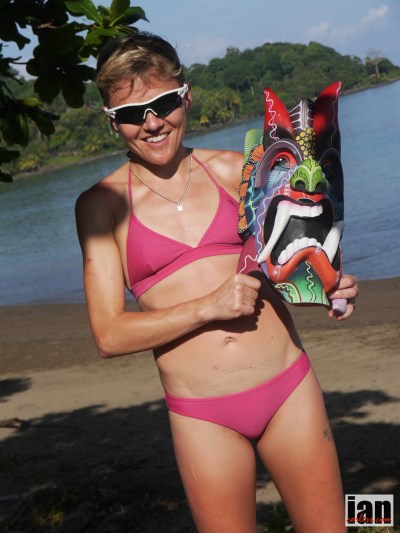
 ©iancorless.comP1140703

JM: The Coastal Challenge course. It has everything, ascending and descending, the damage the course did to my legs was far greater than the MDS. I found the MDS was harder from a food perspective, it took me 4-5 weeks post MDS to put the weight back on. The Coastal Challenge course tests the body and mind and the continual changes of terrain keep you guessing and working hard.

IC: So what is next, recovery is first and foremost I guess?

JM: I want to prove myself as an ultra runner. I want to run in a GB vest. I will try to qualify for GB in a trail race. I’d like to do more stage races and I have entered Comrades in June. That will be an interesting test and very different to what I have currently achieved.

IC: Finally, Costa Rica, what was the experience like for you, can you sum it up?

JM: The race is incredible. Where else can you run (or walk) in such an amazing place! The organizers have created a race and a route that often is inaccessible to most; riverbeds, jungle and plains. I probably didn’t look around too much while racing but I stayed for 1-week afterwards and I had a holiday. I went diving, saw a whale, I walked, went white water rafting and saw plenty of wildlife. It’s just an incredible and exciting place. Even if you did just the race you would come away with a whole new outlook. It really is incredible.

LINKS:

TCC 2014 race images – HERE

The 2015 The Coastal Challenge is now available to book. Want a discount? Use the form below for early bird booking.

Race Website – HERE

← Back

Thank you for your response. ✨

Episode 55 – Wardian, Meek, Clark, Johnston

Ep55

Episode 55 of Talk Ultra – We have a The Coastal Challenge special with an interview with male overall winner, Michael Wardian. Jo Meek, ladies overall winner talks about her training and preparation for the TCC race and Nick Clark discusses how stage racing compares to 100-milers. We have an interview with the 2013 ITI350 winner and recent Susitna 100 winner and new course record holder, David Johnston before he emarks, once again on the ITI350 just one week after his impressive Susitna win! A special Talk Training on nutrition specific to Marathon des Sables with Rin Cobb (PND Consulting). Emelie Forsberg is back for smilesandmiles and of course we have the News, Up and Coming Races and Speedgoat Karl Meltzer.

NEWS

Rocky Raccoon 

1. Matt Laye 13:17:42

2. Ian Sharman 13:38:03

3. Jared Hazen 13:57:17

Mention for Steve Spiers 15:26:25 follower of Talk Ultra and 4th – top job!

1. Nicole Struder 15:42:04

2. Kaci Lickteig 15:45:32

3. Shaheen Sattar 16:45:26

Shaun O’Brien 50

1. Dylan Bowman 6:23:17

2. Mike Aish 6:37:34

3. Mike Wolfe 6:57:15

1. Cassie Scallon 7:38:16

2. Sally McRae 8:36:25

3. Denise Bourassa 8:42:57

El Cruce Columbia

1. Marco De Gasperi 6:34:10

2. Sergio Jesus Trecaman 6:38:46

3. Dakota Jones 6:52:37

1. Emma Roca 7:59:23

2. Amy Sproston 8:11:59

3. Adriana Vanesa Vargas 9:30:26

Red Hot Moab 50K

1. Alex Nichols 3:57:11

2. Paul Hamilton 3:59:37

3. Mike Foote 4:07:26

1. Jodee Adams-Moore 4:31:28

2. Kerrie Bruxvoort 4:42:39

3. Hiliary Allen 4:52:01

Susitna 100

1. David Johnston

2. Piotr Chadovich

3. Houston Laws

1. Laura Mcdonough

2. Jane Baldwin

3. Sarah Duffy


AUDIO with DAVID JOHNSTON


The Costal Challenge

1. Michael Wardian 23:26:23

2. Vicente Beneito +0:25:32

3. Philipp Reiter +0:31:31

1. Jo Meek 29:17:19

2. Julia Bottger +0:57:02

3. Veronica Bravo +3:07:06


 AUDIO with JO MEEK


TALK TRAINING

With sports dietician Rin Cobb from PND Consulting – http://www.pndconsulting.co.uk


INTERVIEW  – TCC Special

MIKE WARDIAN

NICK CLARK


MELTZER MOMENT

Good, Bad and Ugly


UP & COMING RACES

Argentina

4 Refugios Classica | 80 kilometers | March 01, 2014 | website

4 Refugios Non Stop | 70 kilometers | March 01, 2014 | website

La Misión | 160 kilometers | February 22, 2014 | website

La Misión – 80 km | 80 kilometers | February 22, 2014 | website

Australia

NEW SOUTH WALES

Wild Women on Top Sydney Coastrek 100 km Team Challenge | 100 kilometers | February 28, 2014 | website

Wild Women on Top Sydney Coastrek 50 km Team Challenge Day: Party All Night | 50 kilometers | February 28, 2014 | website

Wild Women on Top Sydney Coastrek 50 km Team Challenge Day: Sun, Sand, Surf | 50 kilometers | February 28, 2014 | website

France

DORDOGNE

Trail en Night and Day 55 km | 57 kilometers | March 01, 2014 | website

GARD

Trail aux Etoiles | 58 kilometers | March 01, 2014 | website

LOIRE-ATLANTIQUE

Le Trail du Vignoble Nantais – 50 km | 50 kilometers | February 23, 2014 | website

PUY-DE-DÔME

Trail de Vulcain – 72 km | 72 kilometers | March 01, 2014 | website

Germany

HESSE

Lahntallauf 50 KM | 50 kilometers | March 02, 2014 | website

Hong-Kong

MSIG Sai Kung 50 | 50 kilometers | March 01, 2014 | website

Italy

TUSCANY

Terre di Siena 50 km | 50 kilometers | March 02, 2014 | website

Mexico

Ultra Caballo Blanco | 50 miles | March 02, 2014 | website

New Zealand

Bedrock50 | 53 kilometers | February 22, 2014 | website

Taupo 155 km Great Lake Relay | 155 kilometers | February 22, 2014 | website

Taupo 67.5 km Great Lake Relay | 67 kilometers | February 22, 2014 | website

Waiheke Round Island 100 km Relay | 100 kilometers | March 01, 2014 | website

Philippines

Davao50 | 50 kilometers | February 23, 2014 | website

Hardcore Hundred Miles | 100 miles | February 21, 2014 | website

Slovakia

Kysucká Stovka | 120 kilometers | March 07, 2014 | website

South Africa

South African Addo Elephant 44 km Trail Run | 44 miles | March 01, 2014 | website

South African Addo Elephant 76 km Trail Run | 76 kilometers | March 01, 2014 | website

Spain

ANDALUSIA

Ultra Trail Sierras del Bandolero | 150 kilometers | March 07, 2014 | website

CANARY ISLANDS

Transgrancanaria | 125 kilometers | March 01, 2014 | website

Transgrancanaria – Advanced | 84 kilometers | March 01, 2014 | website

United Kingdom

ESSEX

St Peters Way Ultra | 45 miles | March 02, 2014 | website

KENT

White Cliffs 100 | 104 miles | March 01, 2014 | website

White Cliffs 50 | 53 miles | March 01, 2014 | website

NORTHUMBERLAND

Coastal Trail Series – Northumberland – Ultra | 34 miles | March 01, 2014 | website

USA

ALABAMA

Mount Cheaha 50K | 50 kilometers | February 22, 2014 | website

ALASKA

Iditarod Trail Invitational 1000 mile | 1000 miles | February 23, 2014 | website

Iditarod Trail Invitational 350 mile | 350 miles | February 23, 2014 | website

ARIZONA

Elephant Mountain – 50K | 50 kilometers | February 22, 2014 | website

Old Pueblo 50 Miler | 50 miles | March 01, 2014 | website

Ragnar Relay Del Sol | 200 miles | February 21, 2014 | website

CALIFORNIA

Chabot Trail Run 50K | 50 kilometers | February 22, 2014 | website

FOURmidable 50K | 50 kilometers | February 22, 2014 | website

Montara Mountain 50K Trail Run | 50 kilometers | February 22, 2014 | website

San Juan Trail 50K | 50 kilometers | March 01, 2014 | website

COLORADO

Headless Horsetooth Fat Ass 50K | 50 kilometers | February 22, 2014 | website

FLORIDA

Everglades 50K Trail Race | 50 kilometers | February 22, 2014 | website

Everglades 50 Mile Trail Race | 50 miles | February 22, 2014 | website

Palm 100K | 100 kilometers | March 01, 2014 | website

Palm 50K | 50 kilometers | March 01, 2014 | website

MARYLAND

Hashawha Hills 50 km Trail Run | 50 kilometers | February 22, 2014 | website

MISSISSIPPI

Carl Touchstone Mississippi Trail 50K | 50 kilometers | March 01, 2014 | website

Carl Touchstone Mississippi Trail 50 K | 50 kilometers | March 01, 2014 | website

Carl Touchstone Mississippi Trail 50 Mile | 50 miles | March 01, 2014 | website

Carl Touchstone Mississippi Trail 50 Miles | 50 miles | March 01, 2014 | website

NEW JERSEY

Febapple Frozen Fifty – 50K | 50 kilometers | February 22, 2014 | website

Febapple Frozen Fifty – 50M | 50 miles | February 22, 2014 | website

Lenape Trail Run | 34 miles | March 01, 2014 | website

NEW YORK

Caumsett State Park 50K | 50 kilometers | March 02, 2014 | website

NORTH CAROLINA

Mount Mitchell Challenge | 40 miles | February 22, 2014 | website

TEXAS

A2B2: Alamo To Border 2 | 162 miles | February 28, 2014 | website

Cowtown Ultra Marathon | 50 kilometers | February 23, 2014 | website

Nueces 50K Endurance Trail | 50 kilometers | March 01, 2014 | website

Nueces 50 Miler | 50 miles | March 01, 2014 | website

VERMONT

PEAK Snowshoe 100 Mile Race | 100 miles | February 28, 2014 | website

VIRGINIA

The Reverse Ring | 71 miles | February 22, 2014 | website

WASHINGTON

Lord Hill 50 Km | 50 kilometers | February 23, 2014 | website

CLOSE

LINKS

▪   http://traffic.libsyn.com/talkultra/Episode_55_Wardian_Meek_Clark_Johnston.mp3

▪   ITunes http://itunes.apple.com/gb/podcast/talk-ultra/id497318073

▪   Libsyn – feed://talkultra.libsyn.com/rss

Website – talkultra.com

Interview Brigid Wefelnberg – Ladies in Ultra

LADIES IN ULTRA

new series of interviews about everyday women doing extraordinary things…

be inspired!

Wefelnberg Mt Everest Challenge Nov 10

“The only horrible thing in the world is ­ennui,” Oscar Wilde once wrote, suggesting that boredom doesn’t feel much better in French. “That is the one sin for which there is no forgiveness.”

And no surprise that that is Brigid’s motto or leitmotiv in life! This ultra-lady has tons of energy to spare and boredom is not part of this athlete’s vocabulary. She’s permanently on the go or shall I say “on the run”, the penultimate globe-trotting ultra-runner. But make no mistake – tough as nails and metronomically endurant she might be but Brigid knows how to remain glam, look after 2 teenage kids and incidentally hold down a full time job.

She’s run through deserts, jungles, up and down mountains all over the globe. Multi-stage, ultra-long, exotic, extreme ……those are her pre-requisites for entering an event.

Marathon des Sables, Bhutan Ultra, Cambodia Ultra, The Volcano Ultra, Kalahari Augrabies Extreme …..she’s been there, she’s done it, you can’t miss the long blonde mane amidst the pack of tough sinewy seasoned ultra runners. But enough said over to Brigid ……

KAEM021-2012-10-30-19.18.17 (1) How did your passion for running start?

I live in the Black Forest and while I was studying, I discovered hiking and trekking here, then moved on to speed and alpine walking. Somehow this was too slow for me, so I started running to cover greater distances. But it actually wasn’t until a friend called my attention to the Marathon des Sables in 2005 that my running passion really got cooking – and is still very much cooking.

What makes you tick in ultra-running?

I have a great passion for extremely long distances on difficult terrain and extreme weather conditions. Sounds strange, but that’s what “cooks my noodle” as it were. When I realized I had a talent for this, it made it easier to put up with the hard times and whatever pain my body had. Crossing a finish line after so many hard kilometers is always such bliss!

What are your criteria for event selection?

 Definitely ultra distance, difficult terrain and extreme weather conditions which usually means desert. I also love jungles and polar areas. I do not do any events that are close to home. My events have to be in far away exotic places. When I’m older and don’t have any sponsors, then I’ll have to/want to stay closer to home. But for now, the further away the better!

Tell us about your training?

I am not one of those people who has very strict training or nutritional plans. I train hard and long, but I do it at the times of the week where work and time allow. I only do long stretches, i.e. I don’t leave the house for any distance shorter than 20 km. I run anywhere between 20 and 50 kms in training, depending on how soon it is till the next race.

How do you manage to look so good and yet complete these tough events?

Oh wow, thanks for the wonderful compliment! Sport and sweating out toxins is wonderful for the skin. I am also not your typical too-thin runner. I’ve always had a few more pounds on my ribs, a bit more baby fat (I’ll call it…) which gives the skin perhaps a healthier glow.

At the moment, I’m hopelessly in love with my boyfriend Jürgen, which they say makes one look younger. A lot of people are telling me I look really good and I credit Jürgen for that.

I also think state of mind and where you put your mental energy actually play a major factor in looking good. I don’t worry about things like diet or being envious of other people or things that aren’t worth stressing about. I had quite a turbulent childhood, life seems easy now. I think that is definitely reflected in the way we look. 

You are a single mother of two – how do you fit this in your schedule?

I have a very convenient working arrangement with my employer, Nagarro Software, an Indian software company based in Delhi, and that is that I do most of my work from my home office in the Black Forest. My kids are also a bit older now (17 and 21) so they don’t need constant attention – and the days of Hotel Mama are over! I can arrange my work schedule and my training schedule as I need and can cater to everything I have on my plate at any given time.

Another factor is that I don’t spend time doing ANYTHING that does not bring me closer to my goals – no shopping sprees or sitting in cafes for hours, etc. Nothing that is just time-consuming but doesn’t get me anywhere. This gives me more time to work on things that are really important to me.  

How do you approach to diet and nutrition?

I love this question, ’cause it’s so easy to answer! I eat what I want, when I want and how much of it I want. Most of what I eat is healthy stuff, as sports tend to make us feel like eating healthy. But I don’t spend a lot of mental energy I need for high-performance sports on thinking too much about food. I basically just enjoy whatever I feel like!

What about your best running memory?

I have just completed one of the most difficult ultra-races on earth, the TransOmania, a 300 km non-stop race across the Omani Wahiba Desert. After many years of running experience, I have to say this race is best the damn running thing that has ever happened to me!

And your worst?

I’m not sure what my worst running memory is but I’m thinking of one bad memory from a race that was actually an incredible experience as well, the Cambodia Ultra which I did just this past December. Everything was going great on the first two stages – but suddenly I got diarrhea from the third to fifth stages, which totally slowed me down. I had to stop more often and longer to “enjoy the landscape” as I had ever wanted. And I often had to pit stop in front of locals, not having enough time to go behind the bushes. Was pretty embarrassing and frustrating!

You have done so many races, can you recommend a couple?

I can highly recommend the Kalahari Augrabies Extreme Marathon 250 km in South Africa, or Les Volcans de l’Extreme 250 km on Java in Indonesia. I could only recommend the TransOmania for those who really want to torture themselves over 3 or 4 days!

What events do you have coming up?

Just having finished the TransOmania so shortly after the Cambodia Ultra 220 km, I’ll be taking a break from training for a few weeks, then I’ll be preparing for the Madagascar Ultra of 250 km and the other big highlight of this year the TransArabia, another 300 km non-stop ultra across Jordan. I guess I just can’t get enough!  

2011.01.26- 088

Web: http://www.brigidwefelnberg.com/

Niandi Carmont

Niandi Carmont

Interview by Niandi Carmont 
Niandi is South African born, a former resident of Paris, she now lives in the UK. A runner for over 20-years; Niandi has completed Comrades Marathon 13-times, Washie 100 2-times and has finished well over 100 marathons and ultras  all over the world. Currently residing in the UK, Niandi splits her work life between the UK and France.
 
LADIES IN ULTRAI think this quote pretty much sums up what Ladies in Ultra is about:

I’m strong, I’m tough, I still wear my eyeliner.” – Lisa Leslie (Basketball)

Personally I have never entered any events reserved solely for women and am unlikely to do so but that is another debate. For me the appeal in ultra-running lies in the fact that it is a sport where you will find yourself on the start-line with like-minded runners sharing the same goal and passion irrespective of sex, race, gender, ability or age.

However, as an ultra ‘lady’ myself I always wear my lipstick.  And yes it’s OK to wear those pink N—trainers with the Swarovski crystals. Heck it doesn’t make me run any faster but let’s say it’s just that feminine touch – a statement. Tough, hard, sweaty, gritty and going for pit-stops on ultra-routes does not mean you can’t be or don’t feel the need to be feminine.  It does not mean that your vocabulary cannot compete with that of a paratrooper’s when the going gets tough.  Some of us feel the need to be feminine, some of us don’t.  We all want to achieve and compete either against ourselves, other women, or the whole field (and chick guys too!).

Basically, the Ladies in Ultra interviewees are from a heterogeneous background in terms of nationality, age, experience, profile. Some fit their passion in in busy schedules and juggle with personal and professional commitments. Others are sponsored athletes but the common denominator is “the fairer sex”.

So that excludes Tony, Mike, Bruce …..have I forgotten anyone?

Ladies in Ultra will be a new series of interviews about everyday women doing extraordinary things… be inspired!

Ultra Running Review of the Year 2013

Rob Krar UROC ©iancorless.com

What an amazing time to be involved in the sport of ultra running! The once niche minority sport has exploded to greater heights and distances in 2013. No longer is a long beard and ‘Buff’ a pre requisite of ultra running (unless you’re Rob Krar). Clean cut, young, fast is the new ‘ultra runner’ mixing it up with the old guard.
Just think back to this time last year, had you heard of Zach Miller (not the Zach Miller, but, the Zach Miller; confused?), Michele YatesRob Krar, Magdalena Boulet and Xavier Thevenard.
Racing and the opportunity to race has also increased to the extent that it is now possible to race pretty much week in and week out for 12-months of the year. Of course, this brings pluses and minuses, certainly from an elite level, runners need to be far more savvy and race clever. You can no longer race month on month and expect to win. Races now have much higher quality fields and the pace is going up. The growth of Skyrunning has been instrumental in enticing a world audience to test runners of all abilities on tough, technical and high-terrain and the feedback has been incredible. UTWT have launched a series of races above the 100-km distance and in doing so have created a ‘trail’ circuit that offers multiple terrain in multiple locations all over the world. It will be interesting to see how the inaugural year goes when 2014 comes around.
So, what are the highlights of 2013?
Ultra Runner of the Year – Men and ladies
Rob Krar UROC ©iancorless.com
  • Lets start with Rob Krar. I interviewed Rob just after his incredible ‘FKT’ in the Grand Canyon early in 2013 when he put the Rim-to-Rim-to-Rim record at another level. At the time we discussed Western States, he was intimidated by the ‘Super Bowl’ of ultra and his first 100-miler. “I’ll give it a shot and see what happens”. Well, if you hadn’t noticed Rob pre WSER you did afterwards. Your not supposed to run WSER and get 2nd overall in your first attempt. UROC, Ultra Race of Champions was the final of the Skyrunner Ultra World Series and for some reason they had bestowed upon themselves the title, ‘The Ultra Running World Championship’. Mmmmm well, it certainly had a quality field but ‘World Championship’? I don’t think so. In the end it came down to a head-to-head between Dakota Jones and Rob Krar. Dakota looked as though he had it sewn up but on the final descent, Rob unleashed a pace that Dakota went on to say was ‘just crazy’. Rob took the win and a pattern was forming. We were all a little surprised to see Rob’s name on the start list for JFK50, primarily with TNF50 in San Francisco just two weeks later. As it happened, Rob dropped at around the 41-mile mark and went on to say that it was either ‘a great training run for TNF50 or the worst decision he had made in a while.’ It was a great training run! Rob ran a super calm, collected and mature race in San Francisco and when he took the front in the last fifth of the race he released a pace that was just incredible. Without doubt my ultra runner of the year!
Kilian Jornet and the Matterhorn ©iancorless.com
  • Of course, you can’t talk about male ultra runner and not mention Kilian Jornet. Kilian is a phenomenon. He is the star of our sport. Once again he was crowned Skyrunner World Ultra Series Champion with wins at Transvulcania and Ice Trail Tarentaise. In addition to this, Kilian was also champion of the ‘Sky’ series with 4 wins; ZegamaMont-BlancMatterhorn Ultraks and Limone Extreme. Add this a couple VK’s, a win at Canazei Sky race for the European Championships and a win at Trans D’Havet for the ‘Ultra’ Skyrunning European Championships and you would say the deal is done! But wait-a-minute, we haven’t mentioned his records for his ‘Summits’ project. A stunning new FKT for Chamonix-Mont-Blanc-Chamonix but arguably THE highlight of the year was his Matterhorn Summit. It was a sublime and surreal performance that put going to the mountains light on another level. It was without doubt my ‘moment’ of the year. You can read my ‘Matterhorn Summits Interview’ with Kilian here. Kilian is the most complete athlete I know.
Michele Yates - iancorless.com ©bradclayton

Michele Yates – iancorless.com ©bradclayton

  • Michele Yates hadn’t run an ultra before 2013. Who would have thought that Ms Figure Colorado 2008 would be such an awesome talent? Well her history shows that she is a 2x Olympic Trials Marathon Competitor, she has 9 marathon wins and PB of 2:38:37. To say Michele burst on the ultra scene would be an underestimation. Her win at Indiana Trail 100 (17:35:18) almost went unnoticed but then taking top spot and the $10,000 prize at Run Rabbit Run suddenly made every one stop, look around and take notice. Placing 3rd at UROC was another sign that Michele was no one trick pony but just like Rob Krar, Michele sealed a quality 2013 with a win at TNF50. She started that race from the front and never relinquished the lead until the line. Is Michele female ultra runner of the year? Well, I would have said yes. That is until the weekend of Dec 13th/ 14th(Listen to interview with Michele on the Christmas show of Talk Ultra, Ep51 out Dec 27th)
  • Pam Smith victorious at Western States turned up at the Desert Solstice track meet run by Aravaipa Running and not only took out the win for 12-hours on the track but set a new female record for 100-miles, 14:11:26. Take your pick, Michele or Pam; it’s a tough call.
Emelie Forsberg ©iancorless.com
  • But wait a minute, what about Emelie Forsberg. Emelie arrived on the run scene in 2012 and instantly had success, continually placing top-3 with Anna Frost and Nuria Picas. However the break through moment came ironically this time last year, she won TNF50 in San Francisco. This seemed to change everything, Emelie arrived at Transvulcania in May 2013 and won, she followed this up with a win in ZegamaCanazeiIce Trail TarentaiseMatterhorn UltraksUROC and then went on to run her first 100-miler at the super tough Diagonale de Fous (Raid de la Reunion) and place 2nd. Do you want to vote against Emelie?
Performances of the Year
tnfutmb 2013 ©iancorless.com
  • Rory Bosio blasted around the TNFUTMB course and in the process not only obliterated the female record but placed 7th overall. Her performance was nothing short of miraculous.
  • Jon Olson set a new American record for 100-miles on the track and then just as the year came to a close, Zach Bitter broke the record with an 11:47:21 but maybe even more important, Zach set a new World Record for 12-hours (101.66 miles) beating a Yiannis Kouros record. That does not happen very often! (Zach Bitter will be in the Christmas episode of Talk Ultra, Ep 51 out Dec 27th here)
  • I have already mention Kilian and the Matterhorn but it was so good I am mentioning it twice!
  • Timothy Olson went back to Western States and won again. You can win a race once but going back and doing it again is always a true sign of a champion.
  • Seb Chaigneau took a win and CR at Hardrock 100.
  • Nickademus Hollon became the youngest person ever to not only complete Barkley but also win it. You can listen to his interview on Talk Ultra here.
Julien Chorier Ronda dels Cims ©iancorless.com
  • Julien Chorier produced a sublime and calculated performance at the super tough Ronda dels Cims. It was a joy and a pleasure to watch someone control and dominate a race from the front and look good all the way.
  • Sage Canaday, jeez I missed him out and he definitely deserves a mention for BanderaTarawera, Transvulcania (3rd), Lake Sonoma and Speedgoat 50k.
 
Francesca Canepa ©iancorless.com
  • Francesca Canepa once again had an incredible year with a great performance at Ronda dels Cims but arguably a repeat win at Tor des Geants places her well and truly at the top on ‘endurance’ lady of the year!
  • Iker Karrera nailed Tor des Geants.
  • Ricky Lightfoot went over to South Africa and raced at The Otter and not only won but put the course record at a new level, in addition he won the IAU World Title in Wales.
 
tnfutmb 2013 ©iancorless.com
  • Xavier Thevenard took everyone, including himself, by surprise at TNFUTMB with a controlled and impressive performance against some top competition.
Jez Bragg TNFUTMB ©iancorless.com
  • Jez Bragg completed the Te Araroa in New Zealand. An incredible journey from the northern tip of New Zealand all the way down to the southern tip. Listen here.
  • David Johnston completed the Iditarod trail Invitational in 4 days 19 hours 13 mins.Crazy fast.
  • Ian Sharman and Nick Clark went head-to-head in the Grand Slam of Ultra Running and produced possibly the most exciting competition of 2013. The pair of them produced incredibly consistent performances and showed us all that it is possible to race four 100-milers back-to-back. They didn’t only ‘complete’ but they competed. They both won a race and were never out of the front rankings. Ian Sharman ultimately had the icing on the cake with the overall fastest time and a new Grand Slam record. Respect! Interview with Ian Sharman here.
  • Paul Giblin at the West Highland Way race. 15:07 and good beating of Terry Conway’s previous CR.
Stevie Kremer Limone Extreme ©iancorless.com
  • Stevie Kremer doesn’t do ultras but she is a darn fine trail and mountain runner and what ‘Pocket Rocket’ achieved in 2013 is nothing short of miraculous. Can’t wait to see what 2014 has in store.
  • Ed Catmur has continued to knock out some great 100-mile performances on the GB scene with wins at North Downs Way and the Winter 100.
  • Lizzie Wraith new female CR for the Lakeland 100 in the UK.
  • William Sichel keeps running and running crazy distances and setting new records.
  • Jonas Buud didn’t win Comrades in 2013 but he ran one of the best paced races I’ve ever witnessed. He was way back in the late 30’s and slowly moved up to 3rd. Wow! Notable mention to Brit ladies, Joanna Zakrezewski and Holly Rush who placed top-10.
Surprises of the Year
  • Rob Krar – Just one word sums up the bearded warrior ‘Krarnage’.
  • Zach Miller – no, not Zach Miller, but Zach Miller. Zach rocked up at JFK50, nobody knew him and he didn’t know anyone else. He took over the lead when Rob Krar dropped at mile 41. Not only did he win but also he set the 3rd fastest time ever. Interview with Zach here.
  • Xavier Thevenard – TNFUTMB was going to be won by Anton KrupickaMiguel HerasJulien ChorierSeb Chaigneau or Mike Foote. Somebody should have told them all about CCC winner, Xavier.
  • Michele Yates – wow, what a first year in the ultra world.
Who and what to watch out for in 2014
Cameron Clayton UROC ©iancorless.com
  • Cameron Clayton has found his feet, 2013 had some mixed performances but when everything aligns he races with the best. His TransvulcaniaUROC and TNF50 performances without doubt elevates him to ‘hot’ for 2014.
Luis Alberto Hernando Haria Extreme ©iancorless.com
  • Luis Alberto Hernando pushed Kilian close at Transvulcania, Zegama, finished joint first at Trans D’havet and won at Cavalls del Vent. In 2014 he plans to race TNFUTMB, now that will be interesting.
  • Magdalena Boulet had an ultra debut at TNF50 and placed 2nd. This sub 2:30 marathon runner may turn a few heads in 2014.
  • Brit, Stuart Air may raise a few eyebrows in 2014. He had a solid Ronda dels Cims, Ice Trail Tarentaise and Tor des Geants and for 2014 he has a Hardrock 100 slot!
  • Hardrock 100 had it’s draw and suddenly much of the WSER ‘lottery’ chat shifted focus to the field up at Silverton. The 2014 race is a classic in the making with Kilian JornetSebastian ChaigneauJulien ChorierJoe Grant and more. Excited? Just a little.
  • The Skyrunning World Championships take place in Chamonix with runners from all over the world coming to race VK, SKY and ULTRA in one of the endurance capitals of the world.
  • Beards – the jury is out. Are beards fast or slow? Rob Krar, Timmy Olson and ‘Clarky’ are certainly great advocates for hairy running but Kilian, Cameron, Sage provide a strong counter argument. What are your thoughts?
And finally…
 
A review of any year is going to be personal. Without doubt we will all have our own highlights and favourite moments, so, I would love to read your thoughts.
Please use the form below.
Ian Corless ETR ©iancorless.com
On a personal note, 2013 was an incredible year, I feel blessed with all the opportunities I have had. To witness many of the moments I write about is a great pleasure. Of course, it’s nothing without you folks reading, looking at my photographs or listening to my podcast.
A very BIG thank you from me.
Happy Christmas and a wonderful 2014 awaits us all…
LINKS:
Photography from 2013 races HERE
IMAGES book HERE
Calendar HERE
Podcasts HERE
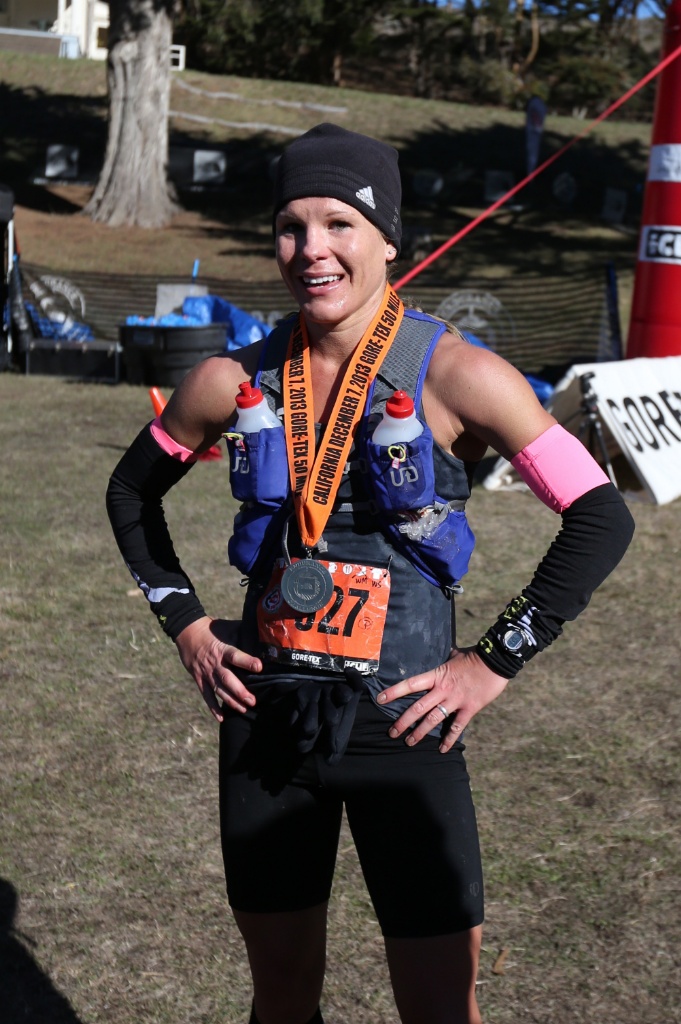
MDS to TCC – Jo Meek Interview

iancorless.comP1020412

Who would have thought it, the 2013 Marathon des Sables turned out to be a great year for British performances. Danny Kendall placed the highest ever overall placing with 10th and Jo Meek placed 2nd lady overall. It was a stunning performance by a relatively unknown. Armed with a new belief in her ability, Jo will has now planned to switch from the heat of the Sahara and test herself in the heat and humidity of a Costa Rican rainforest at The Coastal Challenge. I caught up with Jo at the end of August and we had a chat about MDS and her expectations for TCC.

IC I bet April and the Marathon des Sable (MDS) seems such a long time ago?

JM Yes, it does seem ages ago. Considering I am walking now in late August in the pouring rain. It’s wet and miserable… it doesn’t seem that long ago in regard to memories. I just watched the video that was available for download and it brought it all back.

IC So sitting at home, watching everyone running in the sand with a tear in your eye?

JM Definitely no tear, I think I am happy not be running in the sand. I am still surprised how I adapted especially considering I am now at home running on the road again.

iancorless.comP1080077

IC Amazing eh that you can be in that environment, the sand, the wind, the bivouac, no washing, you are eating dried food and you adapt and then post race when we got in a luxury hotel, you said, you wished you could go back, you loved it didn’t you! You loved being in that environment. It was preferable to the clean hotel.

JM I did. Yes, I actually think I could be quite a ‘skanky’ person really. I am far happier roughing it than in luxury. I guess it sounds romantic but I like being at one with nature, eating, running and sleeping. Perfect. But I guess the other memory is the one from those clean white cotton sheets; that was quite special.

IC I have to say, the first shower, all that fresh hot water and then all the sand starts to escape from all the nooks and crannies. As you say, no more sleeping bags and a lovely comfy bed, it is quite a pleasure.

iancorless.comP1080472

JM My roll matt was about the size of A4 to keep it light and small, so my hip was pretty sore after a week in the bivouac. I have to say the cushioning of a bed was welcome.

IC The Bristh performed really well at MDS. No disrespect to you but we had no idea who Jo Meek was before MDS. We knew Laurence Klein was outright favorite and we knew Meghan Hicks was back, she had performed well previously but outside of that it was all unknown. On the first day you were up at the front and then continued to perform at the front of the race for the whole race. You had this great battle with Meghan. Laurence had a convincing lead but it all fell apart on the long day when she had to drop with dehydration. This opened it up for you and Meghan. Meghan had a great long day but I remember standing on the finish of the final day, it was the marathon distance, you nailed it. You said the marathon was your distance and you wanted to stamp your authority on it. You placed second overall, many look at MDS as one of those iconic mult- day races, how did you go from a relatively unknown to getting second. What was it in you that enabled you to focus and become so efficient in the sand?

JM A few things really. I am very good at setting a training plan and sticking to it. When I race, I always race. I don’t just enter to complete it. So, looking at the conditions I set myself up in a heat chamber and did training that was specific. I didn’t want heat to be an issue so I acclimatized. What was interesting over the six days was that I became less scared of what the heat could do. On the last day I thought, what have I got to loose. I do think back now and wonder could I have gone harder but it was an unknown. I didn’t know what would happen so I played cautious. Meghan taught me a lot without her realizing it. I followed her on a couple of stages and I watched how she tracked across the sand looking for the hard sand, even if it was out of the way. She would deviate and look for the harder and faster sand. Also her style, it’s a definite technique to sand running. You don’t want to be a toe runner.

iancorless.comP1030672

IC For sure, you need a flat foot.

JM Yes, you also want to shuffle. You don’t want big strides. A little like being in the army again. I learnt lots. I learnt also from training. I had done some awful ultras that were definitely worse than MDS. One race, a 40-mile race across Exmoor and the weather was awful… they said 40 but it was 43-miles I am sure. The last 3-miles were awful.

IC That can be good, a bad training experience. If you have had some tough and hard training and the race works out easier then that has to be a good thing. It’s a real positive.

JM I had no doubt that I wouldn’t finish the race. I had said that I wanted the podium at MDS but I had no idea what I based that on.

IC To put things in perspective you are a 2:46 marathon runner. Ability and speed are there. Many would die for a 2:46 marathon but also you are in the army. Does the combination of those two things make a good MDS runner?

iancorless.com_1090372

JM I think the marathon pace and training was key in terms of the speed. I didn’t have the same endurance as Meghan over the ultra distance. Many of the days were shorter in terms of ultra distance so I knew I had that potential. In terms of tent life and conditions, maybe the army helped but that is me… I like that. The army helped with discipline; eating, drinking and so on… it was feet first, food and then wash. You need to look after yourself.

IC Give us an insight into your background, you are a roadrunner really?

JM Yes, but I do like cross-country. I came second in the Nationals. Essentially I have done road running. I started in my teens to loose weight and then just kept going. I wouldn’t say I have natural talent in terms of speed but I have something that works, particularly over distance.

iancorless.com_1090900

IC How long have you been running?

JM 18 years, maybe 20!

IC So you have a great base of running and plenty of experience?

JM Yes. I always thought that maybe I should do ultra earlier and I thought, no rush! Particularly with how you develop with age and aerobic capacity. It seemed like the correct time for MDS. As you know, you don’t just enter MDS you have to enter years in advance.

IC Post MDS you really wanted to improve your marathon time. You put yourself on that path and recently you run a half marathon but you were disappointed with the performance. Many factors can affect a race, a conclusion you have arrived at is that you are now going to pursue trail and ultra running. So, you are going to another multi stage in early 2014 but this time you are going to a Rainforest. It’s a race that I was at earlier in 2013, The Coastal Challenge in Costa Rica. Also known as the Rainforest Run. What’s the attraction?

Costa Rica

Costa Rica

JM I am always very attracted to a country that is hotter than the UK. That is a no brainer! It’s the challenge, the opportunity to compete in something so different. This race I don’t need to carry all my kit, so, unlike the MDS I will be able to just run but admittedly for repeated days. It will be interesting and it should mean I can go faster.

IC The race is very different to MDS. Some things carry over such as the multi day. As you say, you don’t need to carry all your kit but you do need safety kit, food, water and just essentials. But you are correct, all your clothing, tent etc is moved for you and then food is provided. It’s a hot and very humid environment and even when it rains it is not a problem, it is so warm. All the daily campsites are in beautiful idyllic places. It’s such a wonderful environment. It’s a great combination of providing daily challenging runs but with just a touch of comfort. It’s perfect for those who may want an introduction to multi day racing.

Costa Rice, The Coastal Challenge ©iancorless.com

JM In some ways it will feel easier but in an evening you will be able to eat as much as you like and so will the competition, in theory you are all the same come the following day. But at MDS it is about survival and balance. It is more about balancing and economy and how you ration your food and water.

IC The race has so much more elevation than MDS and in particular, the terrain is much more varied. You have single track, double track, rocky sections, forest, dense forest, beautiful beaches and then some tough climbs and descents. The next edition of the TCC celebrates its tenth year so it may have a little more climbing than normal, we shall see? The variety is amazing. If you are lucky, you’ll see wildlife. You hear it but don’t always get to see it.

Costa Rica, The Coastal Challenge ©iancorless.com

JM I’m so excited. I can’t wait. I have some road races to do in the coming months and then I will start my TCC training three months out. I will use a heat chamber again. The heat chamber I used for MDS prep was stuck on 80% humidity so I have an idea of what conditions will feel like and I know what my sweat rate is like.

IC Costa Rica is very humid. It is almost 100% but it is not unpleasant. You really do sweat all the time, particularly when running. You need to be on the ball and balance your hydration.

JM I like it harsh and hard conditions. In some ways, the harder the better.

Costa Rica, The Coastal Challenge ©iancorless.com

IC How do you prepare for a multi day race? In some ways you had to guess for MDS and that worked! So, what do you take away from that experience and what will you do in preparation for TCC. The longest stage is around 50k and not 80k so that will make a difference. As we have said humidity and terrain are the key differences and you won’t need to carry a heavy pack.

JM I will do far hillier off road training. For MDS I had to train with the weight too, however for TCC I will just use essential kit and I will do plenty of back-to-back training at a faster pace. I will try to replicate the race really. In some respects it won’t be too different from my marathon training. The key will be the back-to-back runs..

IC We have so many different ways to look at training. Some runner’s just head out of the door and run on feel. No time set, no distance set. It all goes on feel. Are you like this or do you have a plan that has everything planned out?

JM I work full time so I must have a plan. I don’t have the luxury to say go out and run for three hours when I feel like it. I have commitments. I get up at 05:30 and I do what I can and then I add to this at lunchtime or the evening if required. I make every session count so I fit in threshold running, speed work and so on. I need to be very specific. At weekends I have more time and if I need three days consecutive I take a day off work.

IC Do you do core stability, stretching, strength and core.

JM Oh yes, I am a proper geek when it comes to this. I am a physio too so I have no excuse. I stretch everyday, I do two strength sessions and I do two core sessions per week.

Costa Rica, The Coastal Challenge ©iancorless.com

IC Wow, you are the perfect example for all of us. So often I ask this question and I get a blank answer. We all know we should do it but few of us apply it!

JM I am disciplined and I see the benefits. You have to be disciplined but it still doesn’t stop me getting injuries.

IC Ah well, injury can be caused with so many factors.

JM For me it is usually over doing it or being tired.

IC Yes, distance and speed increase injury risk. Slower and longer has more impact but you don’t overstretch muscles or tendons. Listen to your body and all will be good.

JM I never listen to my own advice… I am lucky, we have a gym at work so it makes strength work easy. If I didn’t have that available it would maybe be harder. I have been strict with this for four to five months and I can feel the difference.

IC TCC is still months away, are you planning on doing any trail races for late season in the build up?

Costa Rica, The Coastal Challenge ©iancorless.com

JM Yes, I love to race. I will enter races, from experience, if I enter races too far in advance I get injured, so I have entered a couple of marathons on the road for training and speed. In December and January I will look for options. Of course, options are reduced and conditions will be a little different to Costa Rica.

IC Late and early season events do crop up specifically designed to help people get ready for MDS so you will have some choice. Final question, many may be reading this and they are going to MDS or they may be tempted by TCC. What advice would you give to these people?

JM It very much depends on what you want to get out of it? I shared a tent at MDS with people who wanted to just complete, they wanted to enjoy the race and that is what they did. Set an objective and train accordingly. Ultimately it is all about fun and enjoyment.

IC If you had to give three tips. Three lessons you learnt at MDS that you would take to any race.

JM Good question. I learnt specifics like running in the sand but I guess the need to watch and keep on top of nutrition. Start eating early and don’t wait. Also, keep any eye on hydration and drink to thirst and then finally enjoyment is key! You must enjoy it.

IC I am sure you’re going to really enjoy TCC and Costa Rica. Many thanks for the time and insight into your progression and have fun in the Rainforest.

JM Thanks, as you say, really looking forward to it. It will be a real adventure.

 Links and information:

  • Marathon Des Sables images available HERE
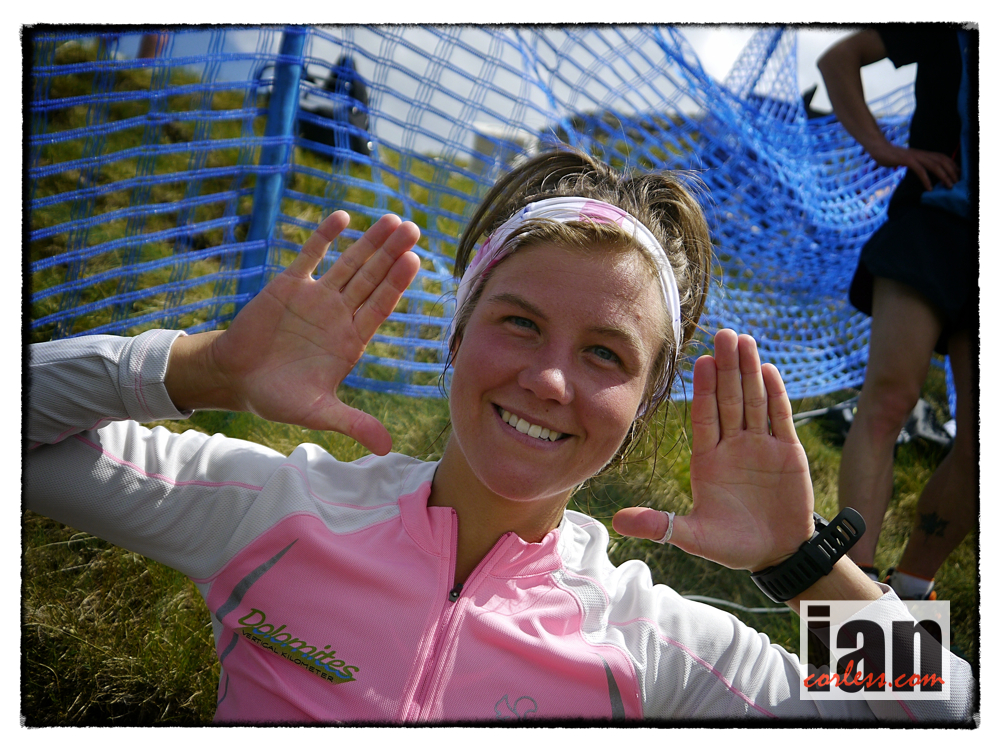
  • The Coastal Challenge images HERE
  • Entry for the Marathon des Sables is available through the UK agent HERE
  • The Coastal Challenge website HERE

WANT TO RUN THE 2014 COASTAL CHALLENGE?

5% discount available using the form below for followers of iancorless.com

← Back

Thank you for your response. ✨

*Please note I will be at the 2014 TCC reporting on the race and capturing images at the invite of the race organisation.

Ultra Trail World Tour (UTWT) response from FPerrin

Hi Ian,

I will try to answer as clearly as possible. I understand that you want the progression of the sport. Be assured that I feel the same. I am open to any discussion if it can make the project better.

1. It’s an ultra world tour over multiple distances and terrains. Therefore, does a runner need to do different distance and different terrain to be the world champion?

Maybe was I not clear enough during the presentation, sorry for that. The runner who will
have the best results at the end of the Ultra-Trail World Tour will
be the “UTWT 2014 Champion”, NOT the “Trail Running 2014 Champion”!
For me, it is a completely different vision.

2. Your criteria stipulates a minimum two editions, min 500 entrants and
open to ALL! What will happen with races like Western States? It’s
a lottery with only 20 guaranteed places and an entry limit under
500. More like 397 entries.


There was a precision of “around min 500 entrants” :-)… the first objective of the project was to bring together the most emblematic races of the world, the races of all our dreams… well… we could not imagine it without the Western States… “Open to all” means for us that elite athletes and average runners are running together, that the races are not reserved for elites. The UTWT will change nothing to the entry rules of the different races. The WS100 has its specific rules, the UTMB too, and the UTMF… each race will keep complete control over its organization.

3. How will a multi stage race such as MDS fit into this series? And
are you planning to add more multi day events?

Well, some of us ran it, and are completely sure that the MDS has all its place in the UTWT, that it shows all the diversity of trail running. The race directors all agreed on this initial list which will soon be completed with other races.

4. It would appear, at least to me that the UTWT may almost be perceived as a travel agent to a series of races over the world. What are the benefits that
UTWT will bring to elite and non-elite runners? Why would we join the UTWT?

For non-elite runners, but also for elite runners, the main reason is -for me- the “challenge” over the years, and the promise to discover different races, terrains, people, countries. The project was born at the UTMF this year: we were discussing how enriching it was for us to discover this country, the runners from Japan and from other countries, the specific trails of Mt. Fuji… We started to list the races that we had already finished, and our “wish-list” races… and it all started. This project is about culture, passion, traveling, and common values. For elite runners, I hope that they will have the same motivation than non-elite, but I think that an other reason should be -for me again-be part of a circuit which story will be told all over the year.

5. Do the runners need to purchase ‘The Passport’?

The first idea was to make it free.We will decide it with the race directors, but maybe the runners will have to pay a small participation if we send it through postal mail.

6. Does it cost each runner any extra to be part of the UTWT?

No.

7. What are the races paying to be part of the UTWT and what does that bring what are the benefits?

They pay a contribution of 15’000 EUR, which will be 100% used for the promotion of the Ultra-Trail World Tour, and the travel fares of the athletes.

8. Who is the UTWT? Who are the people involved, for example WAA, UTMB all seem involved. Can we have clarification?

The 2 main partners (and operationals) are Jean-Charles Perrin (eco-trail de
Paris race director), and myself, Fabrice Perrin. We are not relatives. Cyril Gauthier from WAA is also involved (no operational role), and we asked Catherine and Michel Polett (from UTMB) to be part of it too, but they have no operational role.

9. What are the elite packages. It was mentioned that they will get travel and hotels for Elite1. Is this open ended, will all eligible elites get this package?

We will try to help the athletes at the maximum (travel and lodging), with the money that we will be able to raise. We will discuss this fall the rules with the race organizers.

10. What prize money will be available at each race and will prizes be split. Elite and non elite?


Each race will keep its rules. Some have prizes, some not. The UTWT will not change this.

11. A world champion is awarded each year, make and female. What do they get, what remuneration will the world champion receive and in addition, will you have non elite world champions too?

No “remuneration” is planned so far for 2014. Again, I would like to precise that it will not be a “world champion”, but an “UTWT Champion”. The non-elite will be in the same ranking than the elite runners.

I would like to thank the UTWT and Fabrice for the answers to the above questions. It really does clarify some initial questions. I am sure more questions will arise and I feel confident that the UTWT will provide responses as and when required.

UTWT – Ultra Trail World Tour analysis

“We could make runners stash their own gatorade bottles (glass) and run with the horses, but it’s not 1974.” Craig Thornley, Western States race director.

It’s a good place to start. The world of trail, mountain, road ultra running is changing. In recent years we have seen rapid growth. Runners, elite and non elite want to test themselves on ever demanding courses and ultimately test themselves against each other and see who comes out on top.

However, ultra running is not quite like any other sport. It places extreme demands on the body. Pushed too hard and the body breaks… ask Geoff Roes what he thinks.

So, although an Ultra Trail World Tour sounds attractive caution is needed. But before we worry about those aspects, we first need to look at what this UTWT entails.

The UTWT was launched on September 1st amidst the Ultra-Tour du Mont-Blanc. The fact that the race was not over and that many runners were still trying to get to the finish line may well have been a touch of bad timing. Admittedly though, many press leave immediately after the event so this may very well have been a logistical issue.

One by one, the initial races were announced and with them a representative from each race came to the stage.

2014 confirmed races are as follows:

  • January 18th Vibram Hing Kong 100
  • March 1st The North Face Transgrancanaria
  • March 15th Vibram Tarawera 100km
  • April 4th to 14th Marathon des Sables
  • April 25th Ultra Trail Mt Fuji
  • June 27th The North Face Lavaredo Trail
  • June 29th Western States
  • August 29th The North Face Ultra-Trail du Mont-Blanc

So, this takes us up to August and apparently other races have been asked to participate and we can expect confirmation of these, on or before September 15th.

Of course, alarm bells initially ring at the presence of Western States. Secondary alarm bells ring at the presence on Marathon des Sables but I will come onto that later.

How does it work?

The UTWT will propose an international competitive circuit in partnership with the International Trail Running Association. The events should already be open to the widest public and will offer ‘everyone’ a unique chance, throughout each year, to participate. Question: How does that relate to Western States with limited capacity and demand far outweighing places available? Also, Marathon des Sables… UK entrants for example are on a three year waiting list.

In each race points are awarded to every runner and therefore at the end of the year, a male and female UTWT world champion will be announced. To attract elite athletes, certain events will have Ultra Trail Series status and these will offer more important weighting in the ranking. (I assume this will be for races like Western States?)

Runners will be presented with a Passport. This can be ordered online before the end of the year, it was not made clear if these passports need to be paid for? When you complete a race, you are awarded a visa, this is added to your passport and shows your completion.

The minimum race distance will be 100km, races must have had two previous editions to qualify and already have 500 minimum participants (again, Western States has less than 400). A minimum of twenty countries will be represented and be emblematic venues.

So, how do you become World Champ?

All finishers in every race will be awarded points according to his performance. These points will be added to the International ranking and updated after each race. This ranking will be available on line at the UTWT website. The circuit will be an International competitive circuit in partnership with the ITRA (International Trail Running Association).

As mentioned, a limited number of races will be called Ultra Trail Series and you may only use two best performances from these races in building up points for the world title. In total, three races score, so, you could have two UTS races and one other.

A world champion lady and male will be announced each year.

ANALYSIS

Okay, first and foremost, we don’t have the complete picture, so, you will need to be patient.

The press conference was slick, enticing and all was going well until a call for questions came. I jumped in and asked about Western States…

It’s not just ‘any’ race, it has a limited field, it’s a desirable race, what is the impact and so on a and so on.

The answer was vague and very unconvincing. In actual fact it was embarrassing. One comment that came from the stage was, “it’s early days and we haven’t worked these things out yet”. Not a good start.

One journalist asked several questions:

Will you have doping control? YES

Will you have prize money? EACH INDIVIDUAL RACE CAN HAVE PRIZE MONEY, IT’S UP TO THE RACE. We did not have clarification though if the world title had a prize, other than the ‘title’ of world champ.

What will the elites get? ELITE 1 RUNNERS WILL GET TRAVEL AND HOTELS PAID FOR. But they never clarified if that is open to all elite 1. Lets say 50 want to do Western States, will they all get hotels and travel?

The series very much seems like the Skyrunning concept, is this competition or are you offering something different?. THE RACES WILL BE 100km OR MORE AND ON VARIED TERRAIN, SKYRUNNING WORK TO A SPECIFIC FORMAT AND WITH THE ODD EXCEPTION, ALL RACES ARE UNDER 100k. I agree, the UTWT is very different to Skyrunning, it is taking some principles from the Skyrunning ethos, for example, a series of races, three qualify out of five and the winner is world Skyrunner champion but the terrain is varied. Skyrunning look at altitude and technical.

At this point, the stage participants could feel more and more questions were coming and the conference was drawn to a close quite quickly.

Overall, it started well and ended badly. It certainly appears that the UTWT team wanted to maximise the UTMB as a platform to launch but they had far too many question marks and lack of answers to leave me feeling reassured or convinced.

POINTS TO CONSIDER

I have to say, I like a championship that includes mixed terrains and distances. That will provide a true rounded athlete. However, the UTWT never specified how runners enter, so, for example, to qualify, do you have to do one 100k, one 100m and one stage race? Do you have to do one on sand, one in the mountains and one jungle for example? Without this specified, I could maybe do three 100k races on fast trail and get maximum points if that is what I was best at? We need clarification.

World destinations, iconic races are great. I can see the beauty and excitement of going to New Zealand, Hong Kong and so on, BUT these races already exist and to be honest, if I went to one it would be highly unlikely I would go to another. Far too expensive for the average pocket.

Travel and hotels for elites are all well and good but who is paying? Surely that is what sponsorship from a team is about. I am we’ll aware that places are offered and expenses paid already exists but this is very much in conjunction with a race, the RD and the athlete. Blanket travel and hotels need to be paid for and by someone and that will come down to the everyday runners and the races themselves who I am assuming are paying a yearly fee to be part of the UTWT. Transparency is needed here. Many figures have been mentioned that ravces are paying 15,000 to 30,000 euro to be part of UTWT. I believe this to be speculation.

The UTWT title needs additional incentives. Prize money! However, that has no bearing on all the other runners. I can’t help but think that only a small few (who are rich enough) will travel to several continents to experience the world tour.

What will the races get out of it? Well, recognition and exposure for one. But, I know I go back to Western States, does that race need more exposure… Does it need more entries, does it need more PR? Same applies for UTMB, you already have to get points and enter a lottery, so, if you get a ‘Passport’ does it mean you get automatic entry in a UTWT event? Confusing!

MDS is a completely different race to all the others, to have just one stage race and no others would be long term problematic. In addition, I am not even sure it should be in this series. A great race but is a unique race.

We also need to think about the runners, all the runners. The calendar is increasingly becoming larger with more and more choice. Do we really need to insist that participants run three races over 100k to be a world champion? In addition, for this to be a true championship, one of those three races would need to be a 100-miles.

Ultra is not always better when longer. I wonder if some races under 100k should be allowed?

Why not have an Ultra World Tour and include road? Comrades is an iconic race for example and surely a true ultra world champ should be able to run road too?

Are we seeing the creation of an ‘Ironman’ for trail or is this ‘just’ a series of races with quite simply a world title?

I’d like to know who is beyond this with clear transparency. I have experienced many things in the last twelve months that I have questioned and now suddenly they all add up. For example, late 2012 WAA (What an Adventure) became the official pack for MDS. At the 2013 MDS, Catherine Poletti was present at the finish in the Sahara and then WAA became the official supplier of the blue UTMB bag. Also, I believe that Catherine Poletti visited Western States to view the event… So, is the UTWT an extension of the UTMB organisation and what does it mean? Is this good or bad? I merely ask the question.

At this stage we do not have any answers. Paul Charteris from Tarawera ultra was prepared on Sunday at the press conference, although he did not attend he was online and responded to my tweets. He also had a press release ready and he has been open and transparent. Equally, Transgrancaria have been proactive and the team at Lavaredo I spoke with personally. They all want the races to be valued, increase in size and stature and be part of something bigger. I think Craig Thornley and team are having a harder time. Western States is the holy grail and change here will be difficult and in many cases not welcome. The sport must move on and grow and that means all the sport, Craig in many ways is correct when he tweeted, “We could make runners stash their own gatorade bottles (glass) and run with the horses, but it’s not 1974.”

So what do YOU think?

I don’t have the answers and I will have missed many points. Please provide some input.

*Please note, for reasons of clarity, I do work alongside the ISF Skyrunning Federation and my thoughts and comments in this posting are impartial and with the pure objective of what is the best for our sport.