THE ESSENTIAL MDS EQUIPMENT LIST 2025

Much has been written about what equipment you need and require for an MDS event. In all honesty, it’s quite simple and can be broken down into 3 key sections:

  • What you will wear
  • Equipment
  • Food

Yes, it is that simple.

What you will wear and what equipment you need is the same for all MDS events, be that the 4-day / 3 stage MDS 120 or the 7-day / 6-stage MDS The Legendary. The only difference comes with food requirements.

Take a look at the full MDS EQUIPMEMT LIST on Lighterpack.

WHAT YOU WILL WEAR

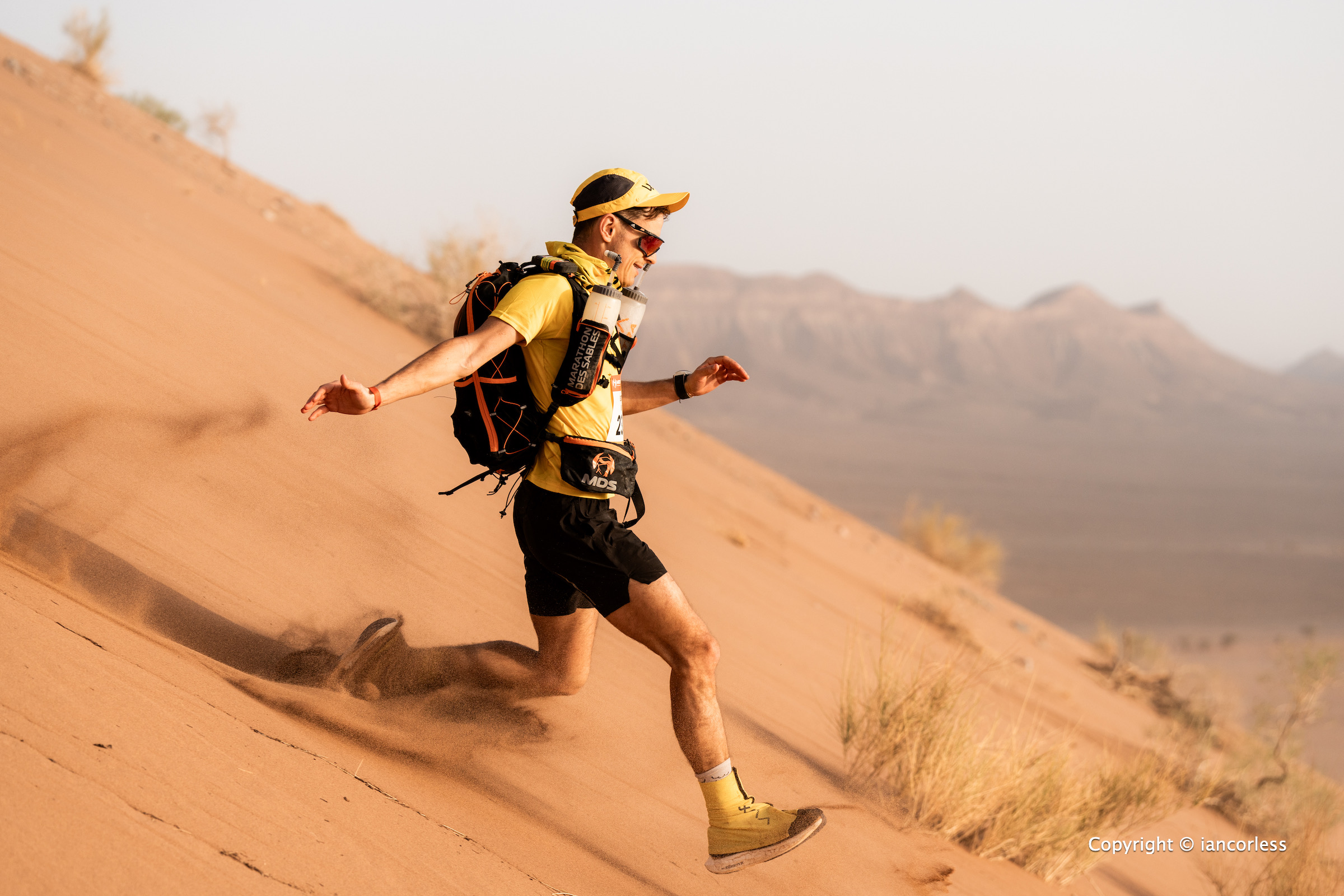
One of the many things I love about MDS is that it brings out the geek in all of us. Nothing like shopping around to find the right equipment and importantly, the lightest version. However, when it comes to clothing, there is absolutely no need to buy new items if you already have items that work and importantly cause no irritation.

A clothing list would be as below:
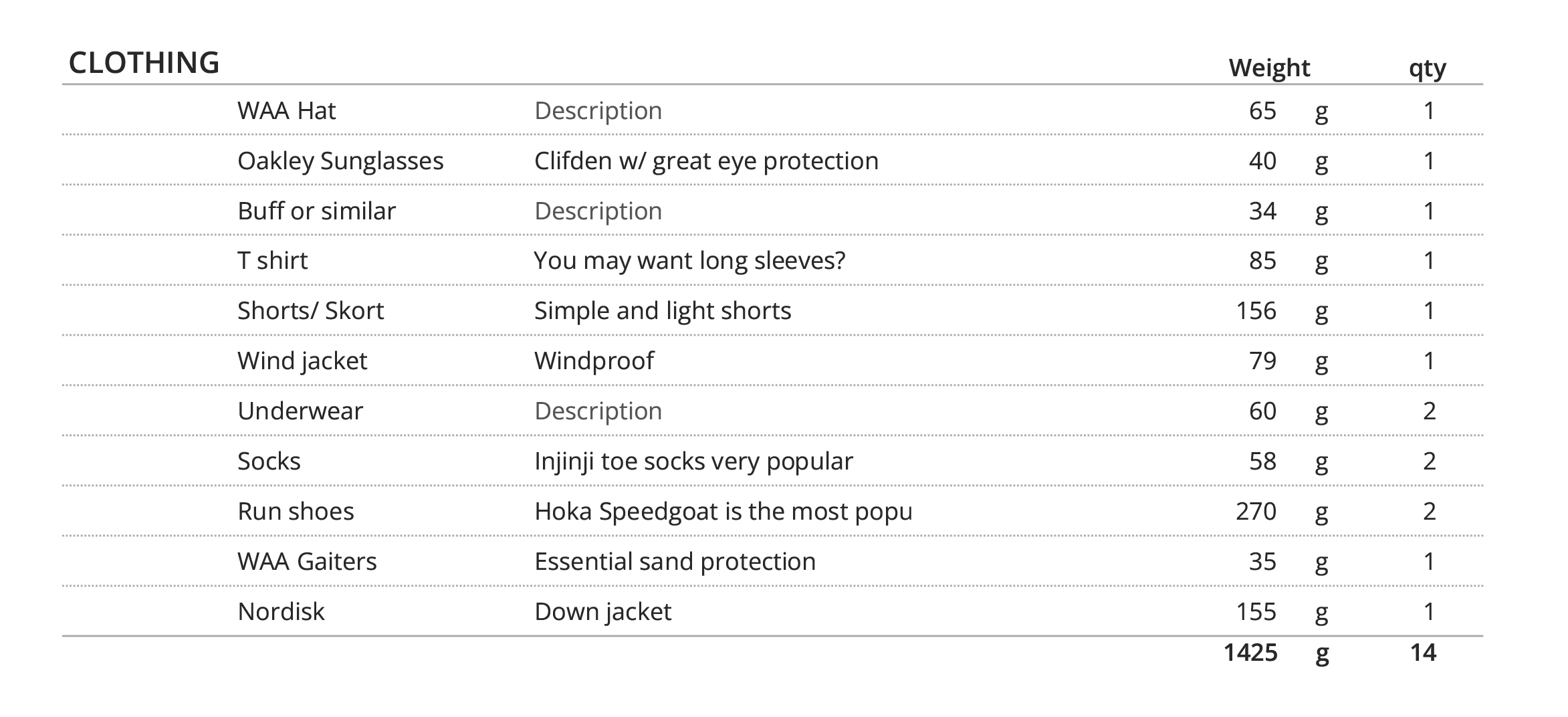
You can see from the above, we go from head to toe. With the exception of a spare pair of underwear and socks, you will be wearing all these items. Total weight 1425g.
WHAT EQUIPMENT YOU WILL NEED

Equipment can be broken down into 3 sections:

  • Mandatory
  • Desirable
  • Luxury

Quite simply, mandatory is not open to discussion and you must have all these items as specified in the MDS rules and regulations HERE
  • a backpack WAA ULTRA BAG 20L or equivalent
  • a sleeping bag,
  • a head torch (200 lumens minimum) and a complete set of spare batteries or spare batteries with external/solar charger,
  • 10 safety pins,
  • a compass, with 1° or 2° precision,
  • a lighter,
  • a whistle,
  • a knife with metal blade,
  • a topical disinfectant,
  • a signalling mirror,
  • an aluminium survival sheet,
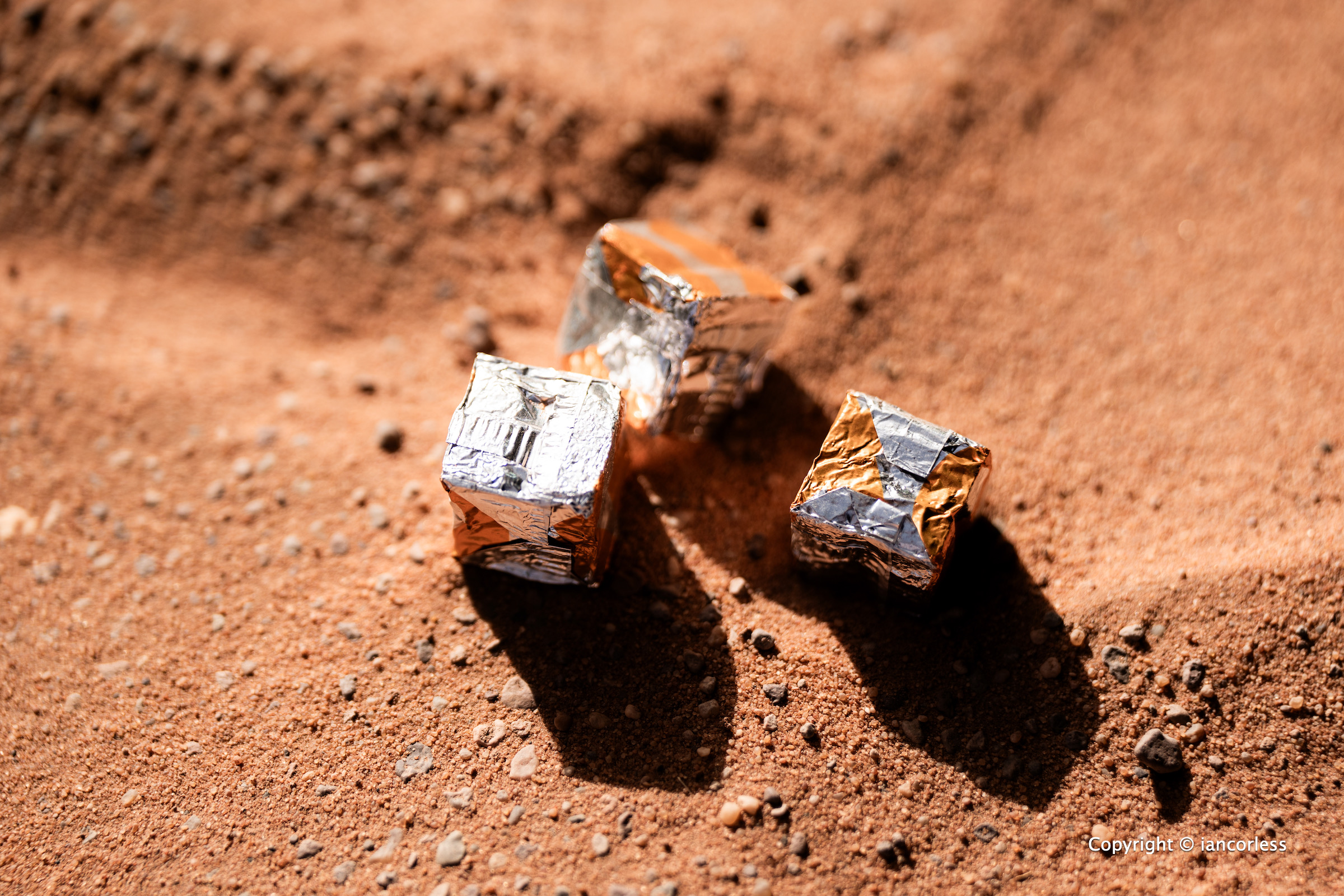
  • “Knorr” type cubes (2 per day) to favorize rehydration
  • a tube of sun cream of 50 ml minimum,
  • 200 euros or 2,000 dirhams
  • the passport or for Moroccan residents, identity card valid at least until the end of the stay in Morocco. BUT for security reasons, it is strongly recommended to have a passport valid at least one month later; failing this, AOI declines any responsibility in case of problem.
  • the original MDS medical certificate, filled in and signed by the doctor
  • the original ECG and its tracing

Sleeping Bag – Down Jacket – Waterproof

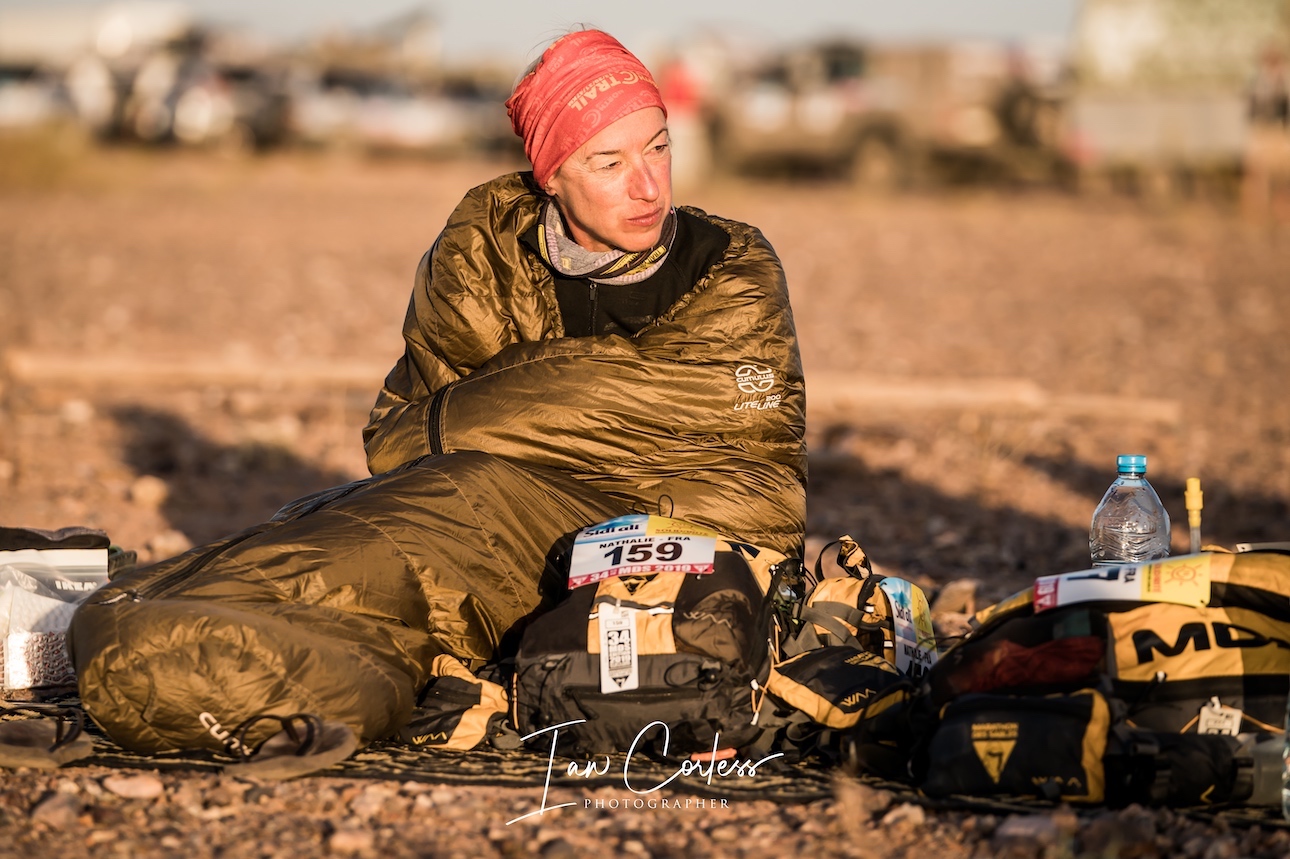
Take note that weather conditions and temperatures vary considerably. Also keep in mind, a small petit woman may well need warmer layers that a large man. Do you sleep hot? Do you sleep cold? When someone tells you you don’t need a sleeping bag, you don’t need a jacket, you don’t need goggles or you don’t need x, x, or x, take this advice and then ignore it. The best advice I can give, be prepared! Be prepared for all eventualities and then fine-tune equipment very close to the event, even at the event location on admin day so that you can make sure you have the appropriate equipment based on the current weather forecast. And yes, it can rain!

A full equipment list would look like below:
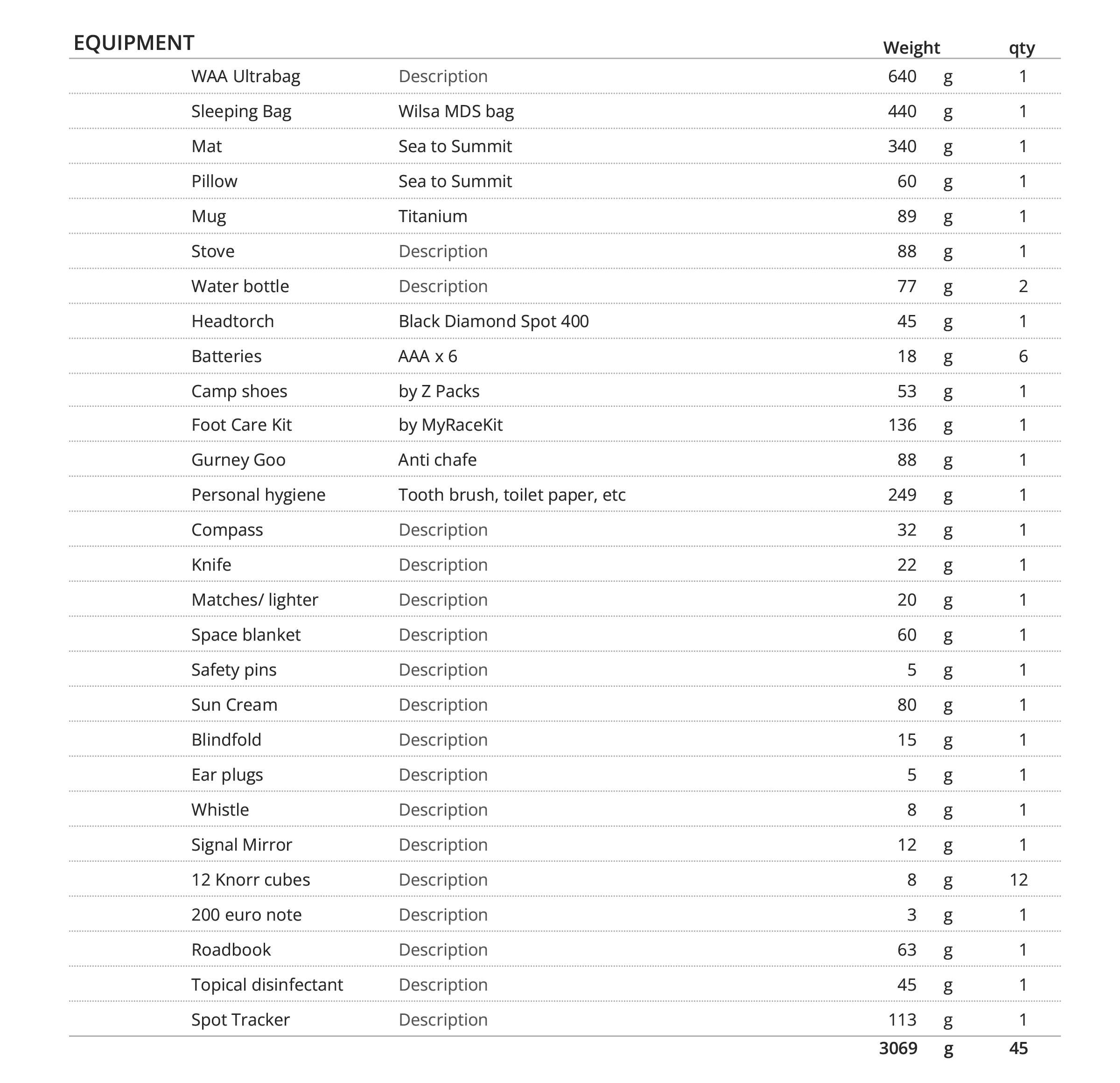
The above list weighs 3069g and this includes the MDS Road Book and the Spot Tracker, both items provided when in Morocco. You will notice there are no luxury items.

We then can look at DESIRABLE and LUXURY.
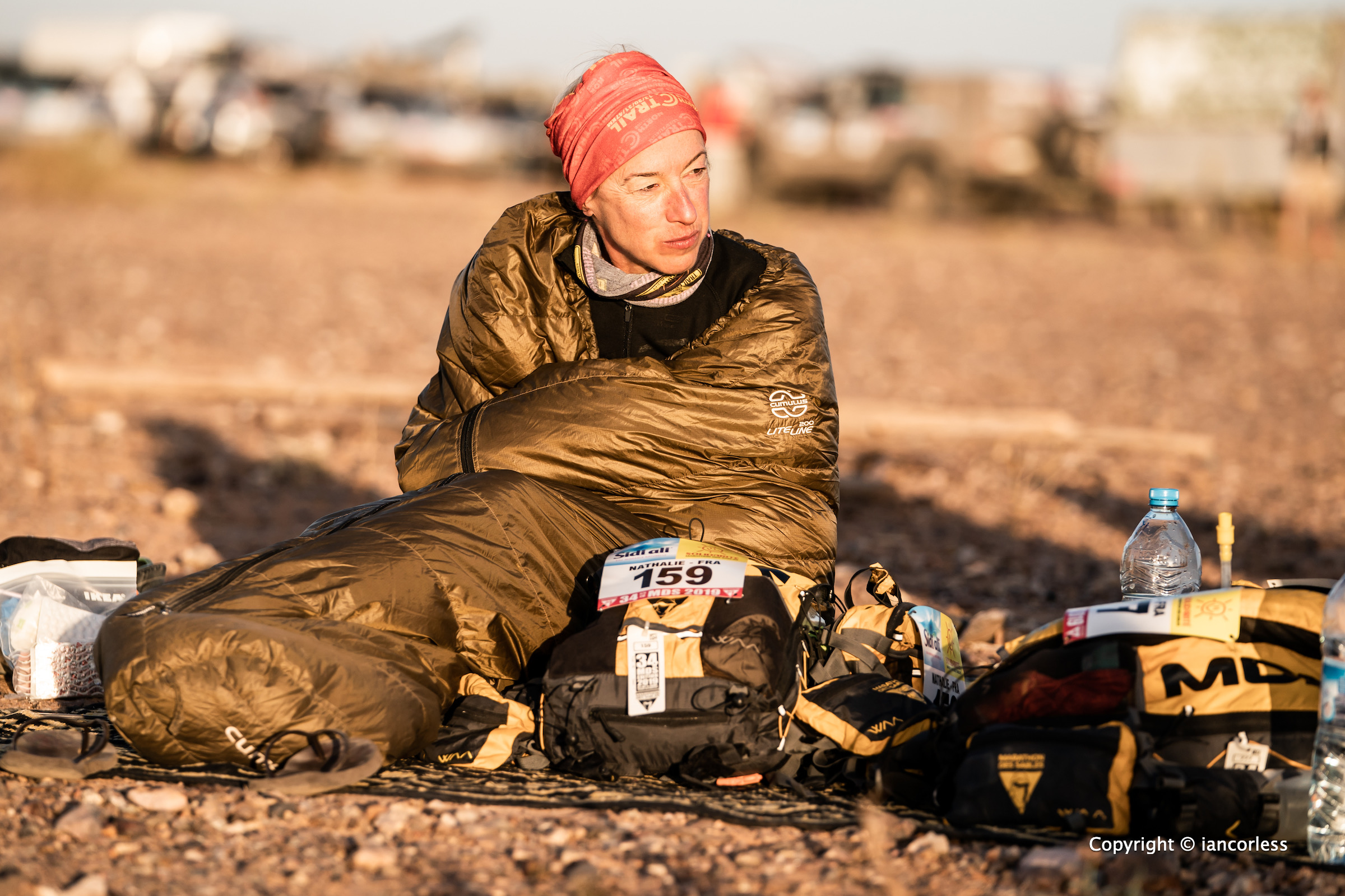
You may consider poles to be desirable, in all honesty, I think for most at MDS events, they are becoming almost essential. Of course, if you are a runner, you do not need them. Just lightweight, folding carbon poles. I recommend Leki Ultralite FX One. A watch with GPX and great autonomy such as Coros Vertix and/or Garmin Enduro. If you don’t have a watch with a good battery, you are then requiring a battery pack and for me, a battery pack falls in the luxury list.

As for luxury, you absolutely MUST keep luxury items to a minimum, I consider a phone to be luxury at an MDS event. The only item I would consider is an MP3 player with great battery life and lightweight earphones.

FOOD

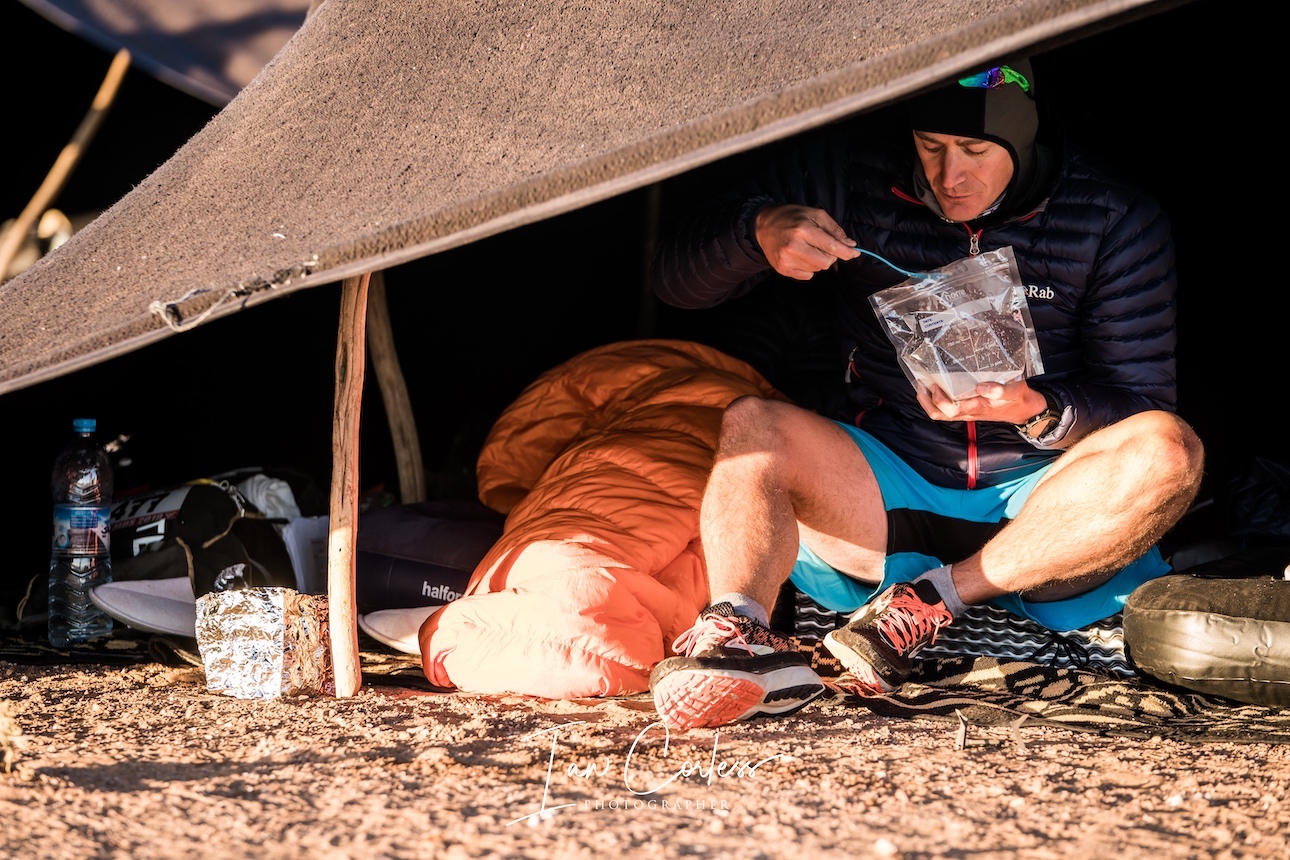
MDS 120 are 4-days and 3-stages, The Legendary is 7-days and 6-stages, so, you need to adjust the requirements accordingly. The typical rule is you must have 2000-calories per day. For The Legendary this equates to 12,000 calories as a minimum requirement, however, I think you are better assuming 14,000 calories.

Food is personal, so, make sure you understand what you require and make sure you have a balance of fat/protein/ carbohydrate and make sure you have sweet/savoury based on your taste requirements. Note that as days pass, the need for sweet tends to shift to savoury. Try and test all food before racing.

Also consider if you will have hot or cold food. Not all food rehydrates well with cold water.
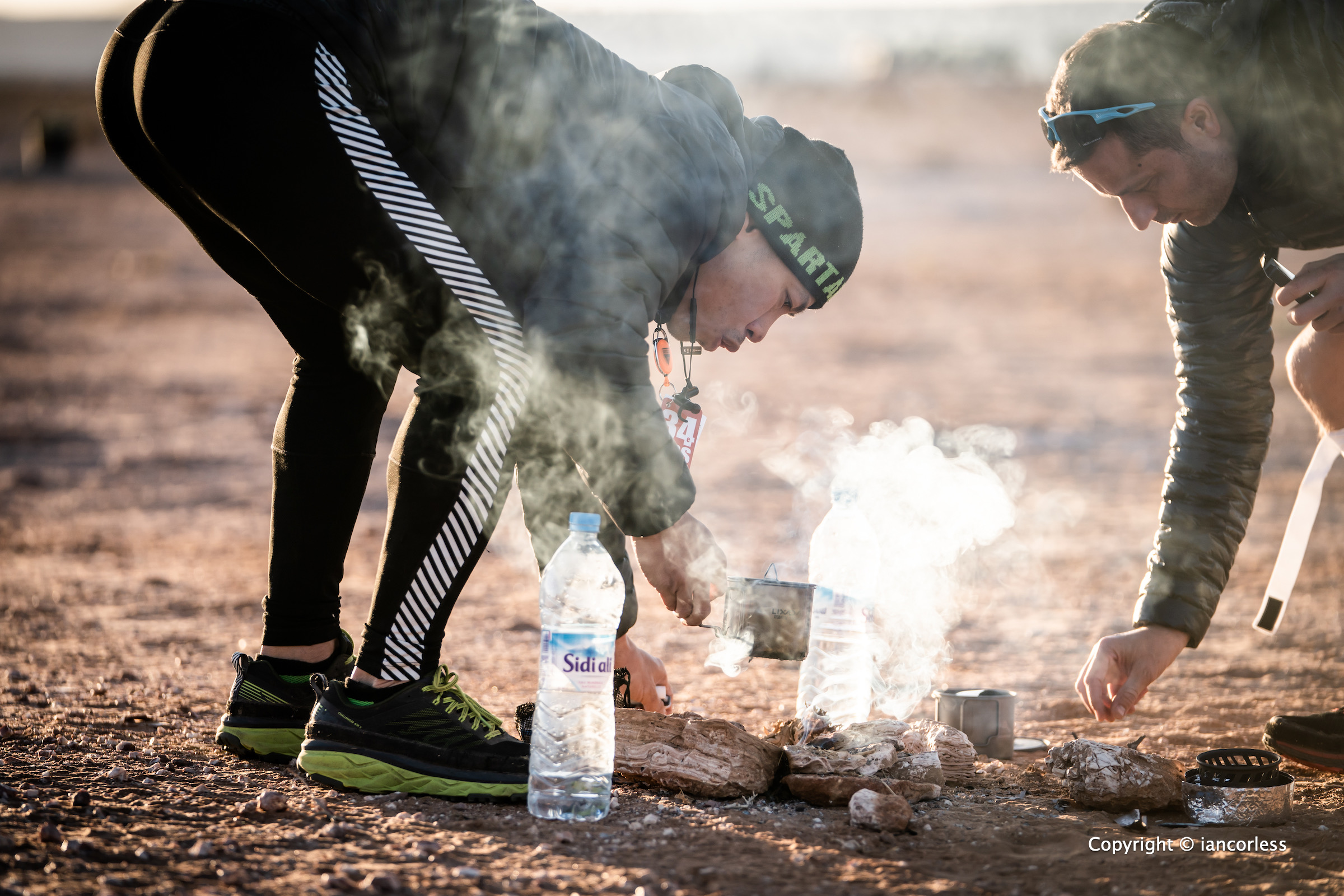
Also, a large man, say 6ft 2″ and 85kg will require far more food than a woman who is 5ft 2″ and 55kg. Keep this in mind and use the minimum 2000 calorie as a guide.
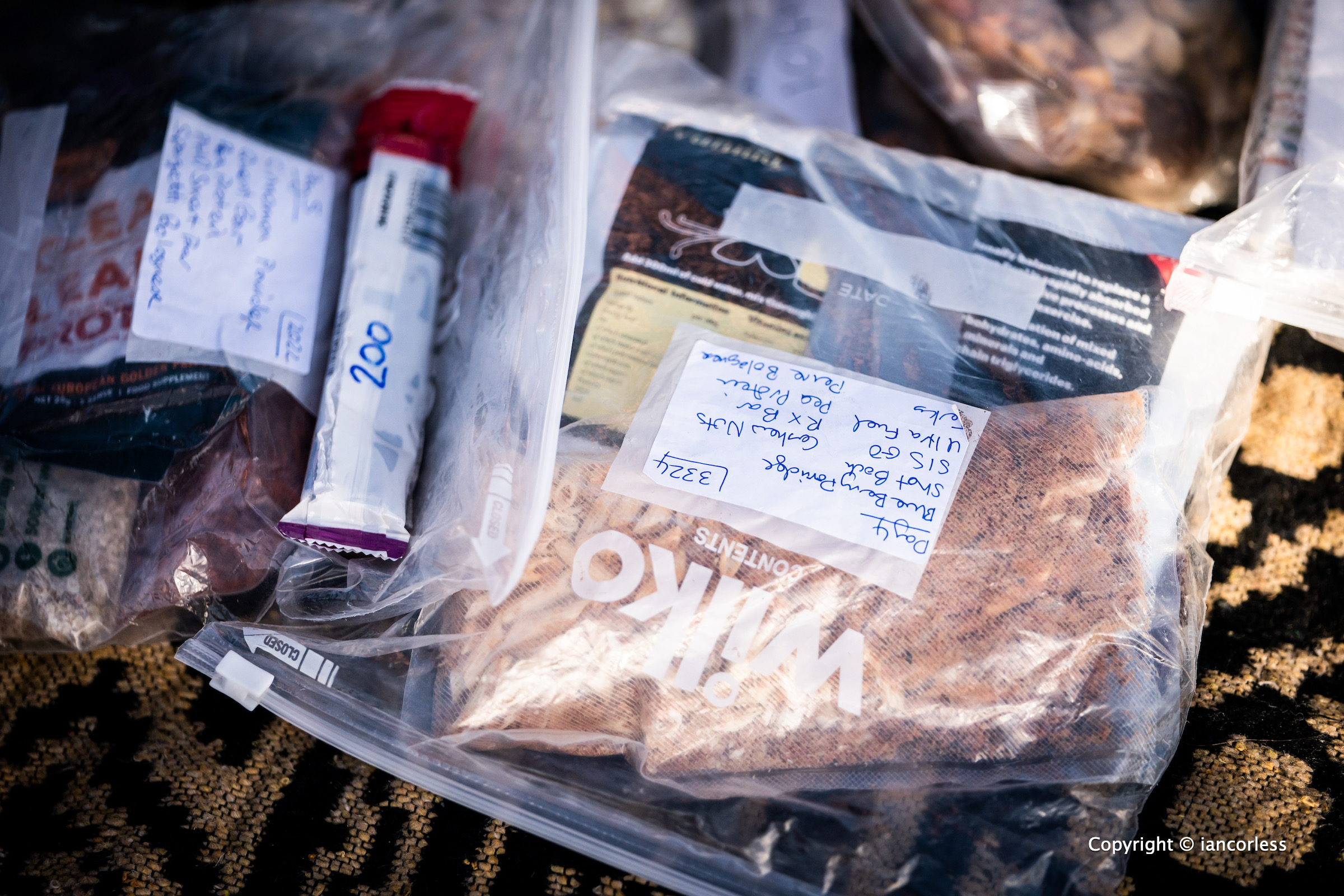
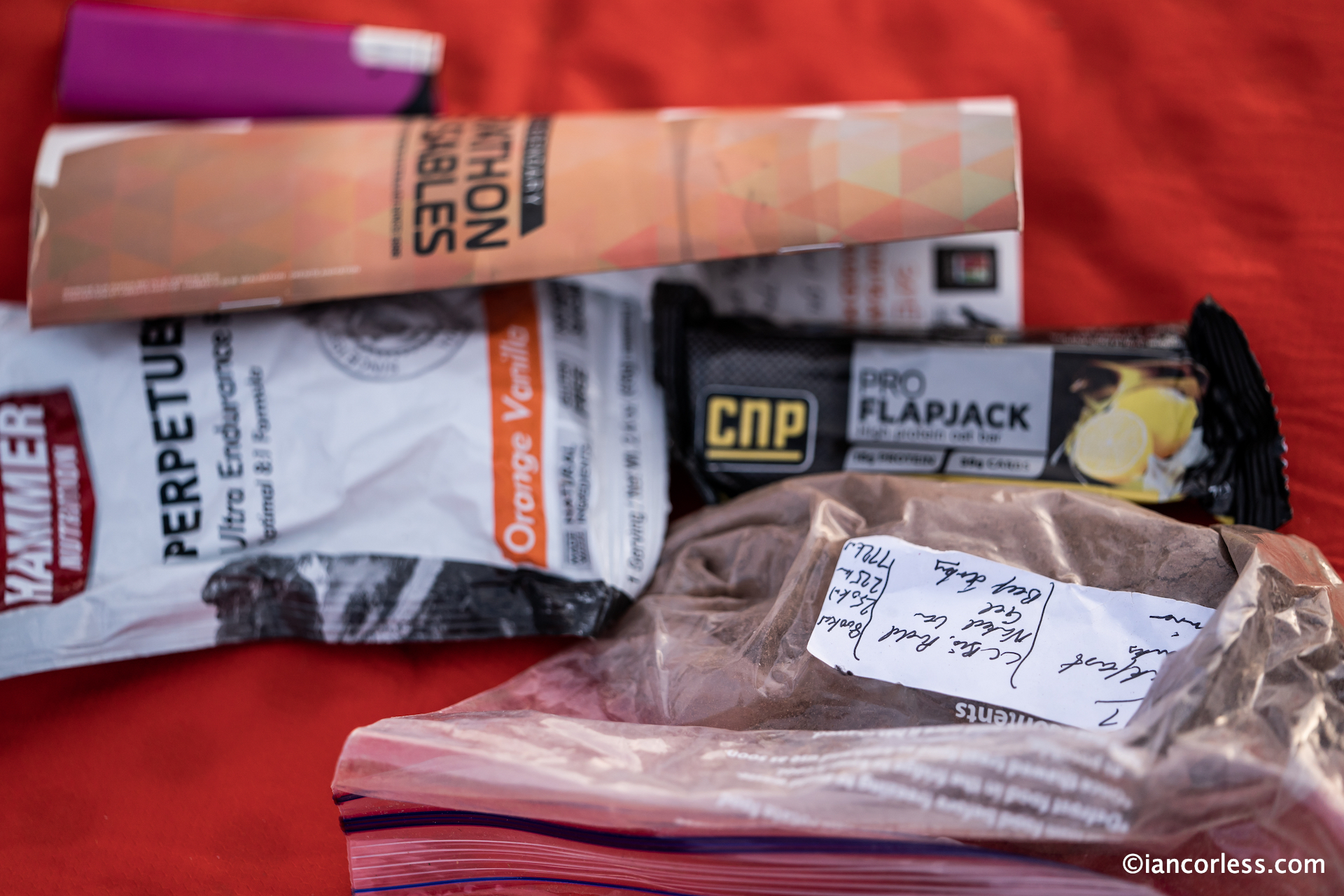
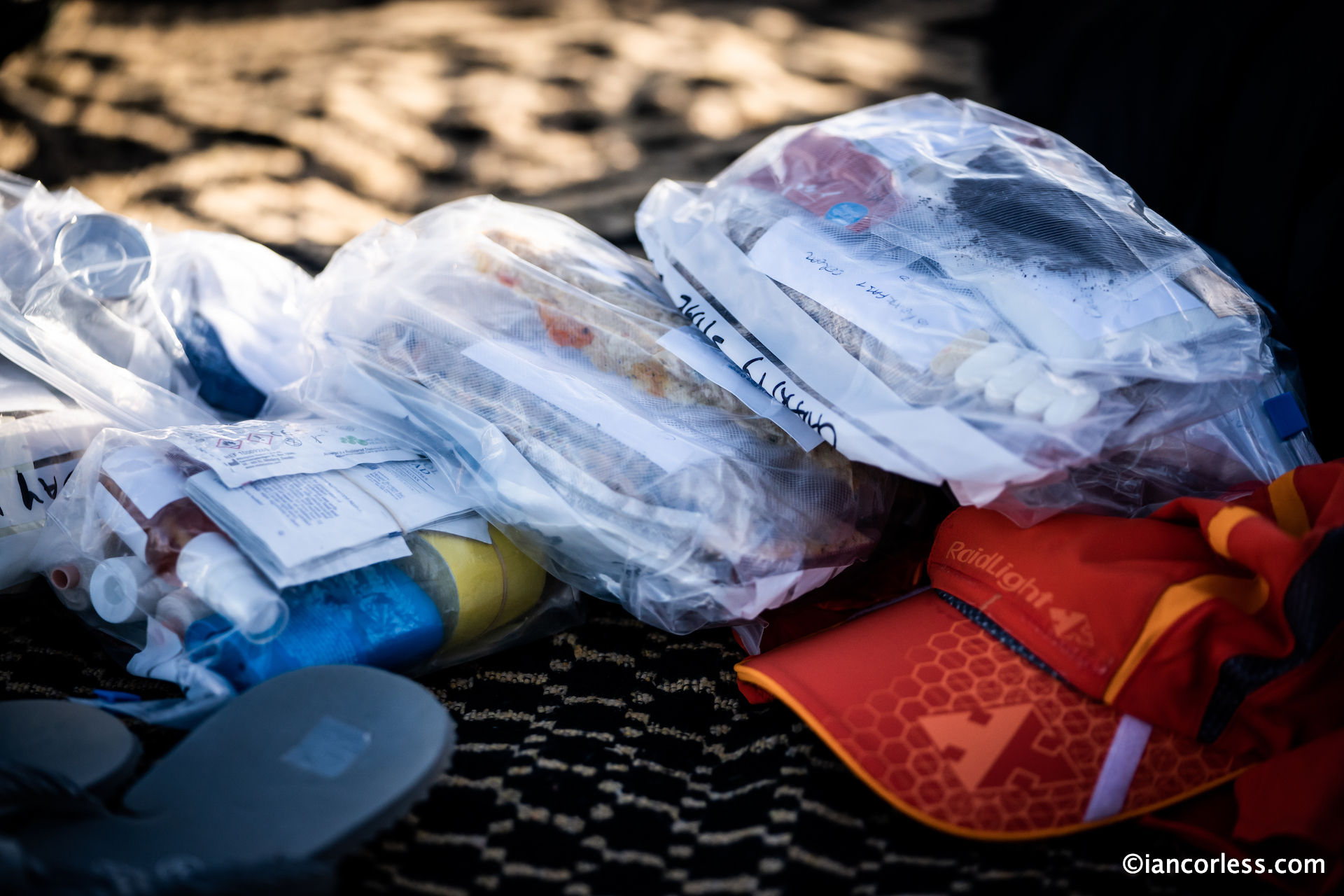
Prepare food bags, a bag per day. That way it is easy to control what you eat.

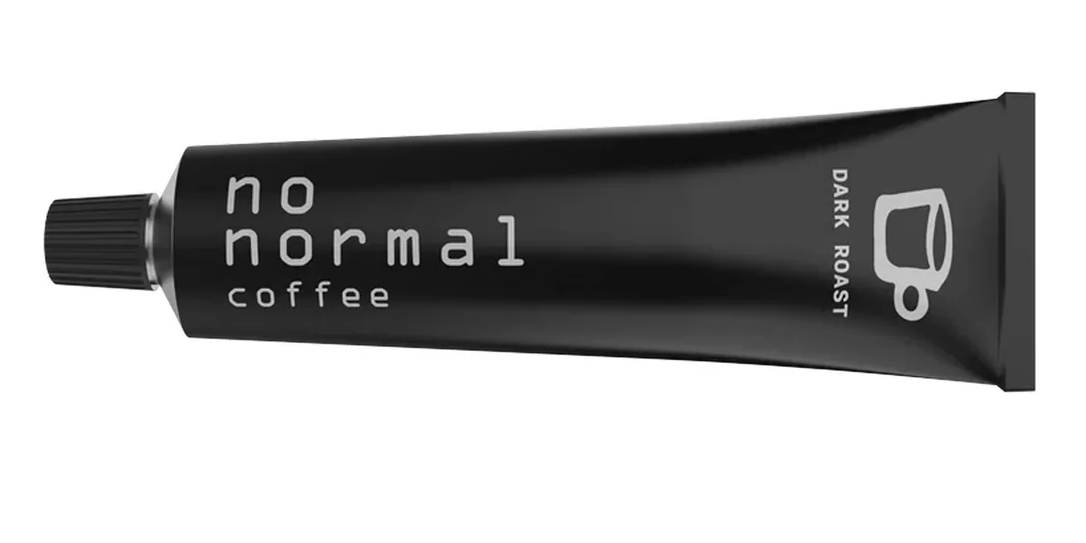
Need coffee, check out NO NORMAL. Yes, coffee in a tube.
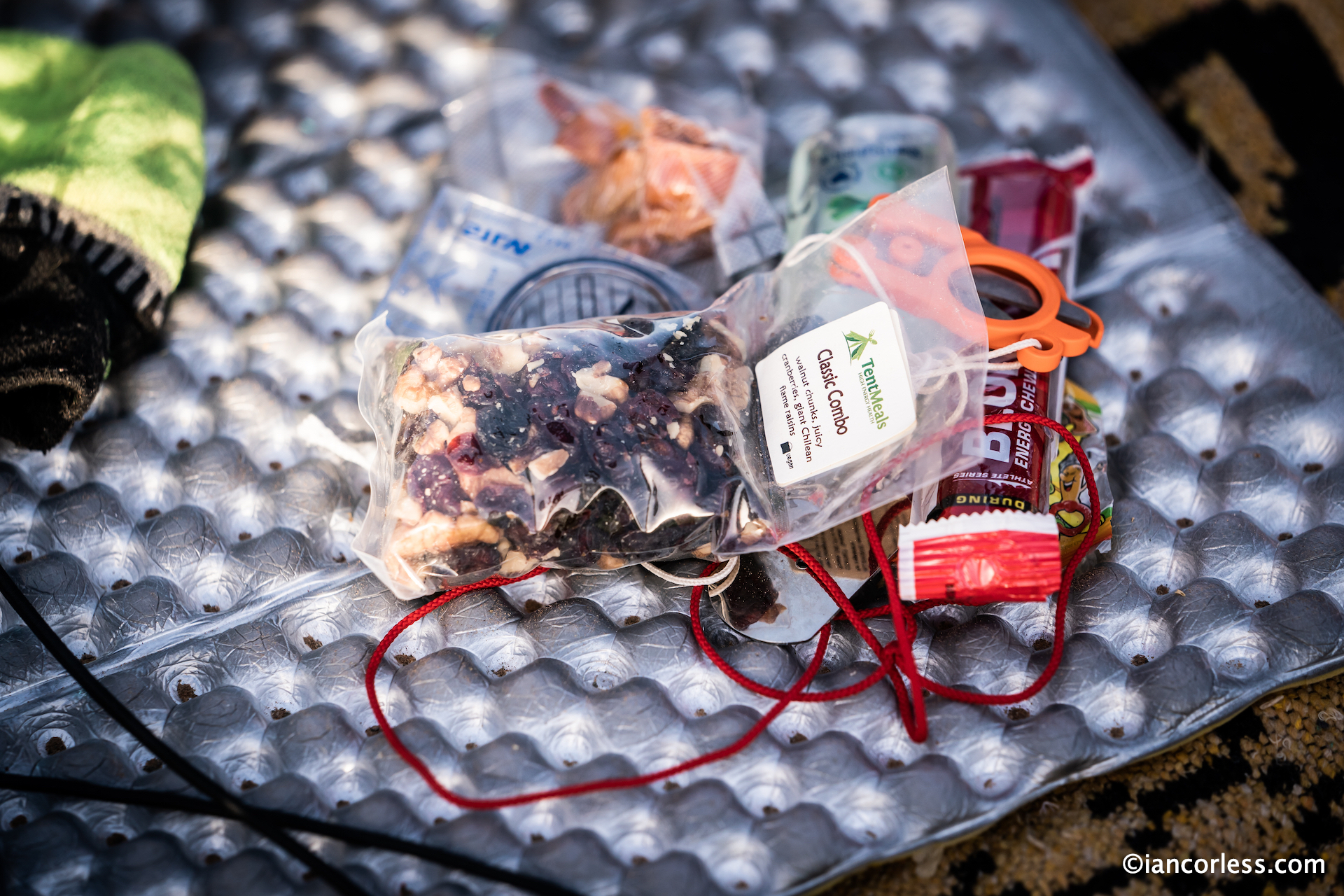
6-stage and 7-days at The Legendary could look like above with 7-dehydrated breakfasts and dinners and then a combination of snack food for during and post each stage. Typically you can expect food to be between 4000 and 4500g. My list above comes out at 4048g.

CONCLUSION
©iancorless

MDS events really are as simple as outlined above.

I recommend using LIGHTERPACK – it is a great way to collate a one-stop list for all your items and get a running total of your combined MDS weight.

Here is my list:

In summary, my MDS weight is as follows:

  • 1425 clothing I would wear
  • 3069 equipment
  • 4048 food

= 8542g (8.5kg)

My pack weight would be 7117g (7.1kg this is with road book and spot)

Without road book and spot 6941g (6.9kg)

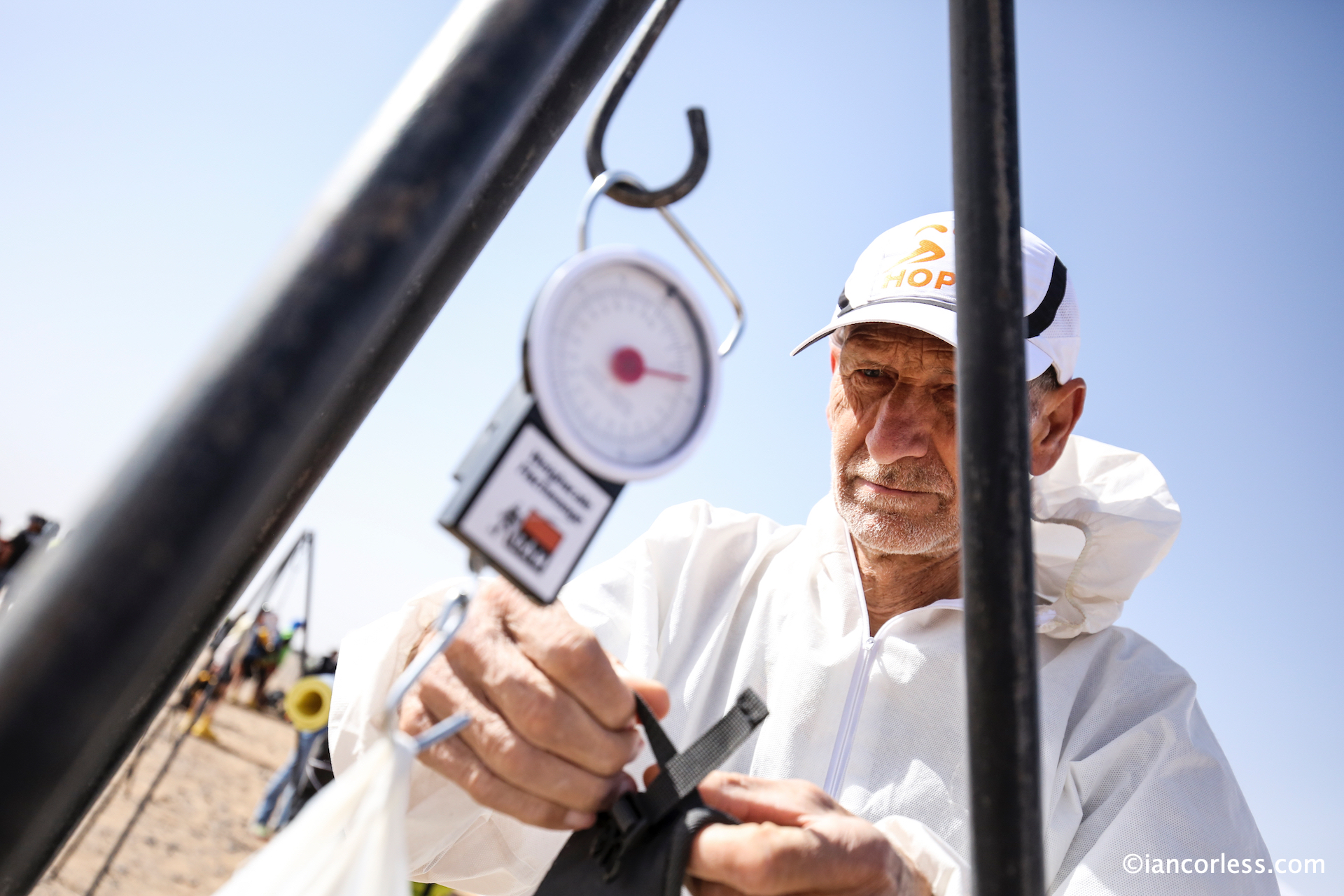
Remember, the minimum pack weight allowed is 6500g (6.5kg) – so the above would be ideal.

RESOURCES

Interested in another MDS event in 2025?

A full calendar of dates and destinations are available HERE

Instagram – @iancorlessphotography

Twitter – @talkultra

facebook.com/iancorlessphotography

Web – www.iancorless.com
Web – www.iancorlessphotography.com

Marathon des Sables – The Legendary : NEWS FIVE – Mar 2024

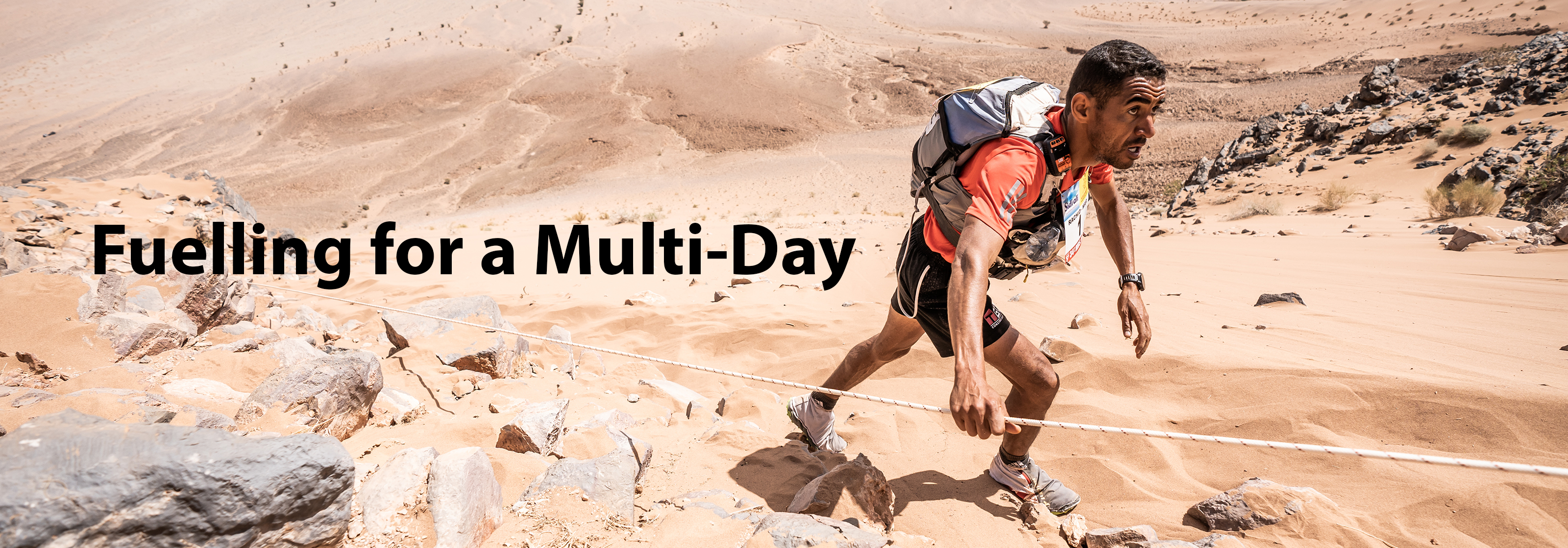
Fuelling for a Multi-DayMarathon des SablesThe Legendary

Marathon des Sables pioneered the multi-day racing format and as such is often a key starting point when discussing a fuelling strategy for an adventure that lasts a week or longer.

Multi-day adventures require fuelling and how one obtains food can vary greatly. In principle, there are several keyways:

  • Self-sufficient
  • Semi-supported
  • Supported

For many, self-sufficiency poses the greater question marks and worries as there are multiple factors to consider:

  • How many days?
  • Weight?
  • Balance of nutrients and calories?
  • Hot or cold food (or both)?
  • Access to water?
  • Environment?
Loaded up for a week in the Sahara.

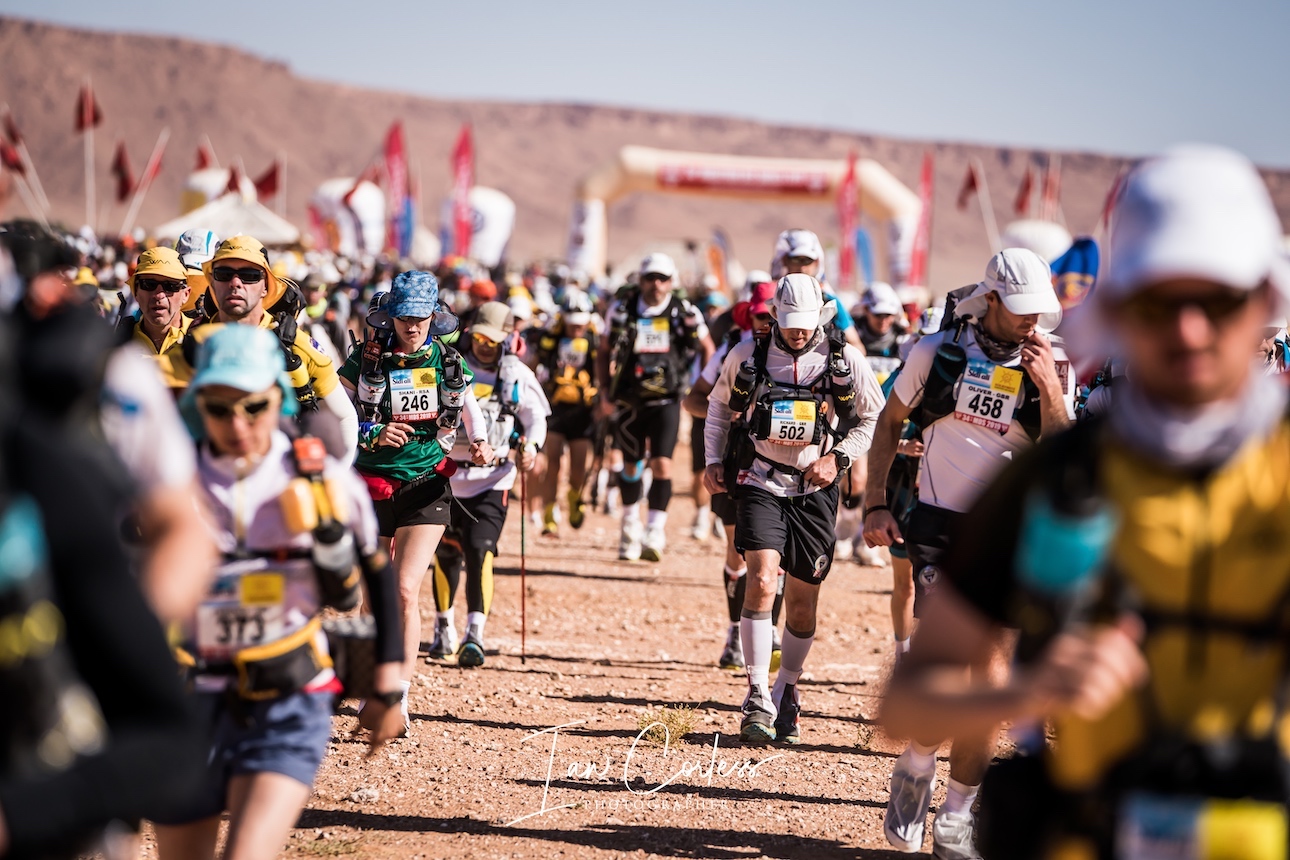
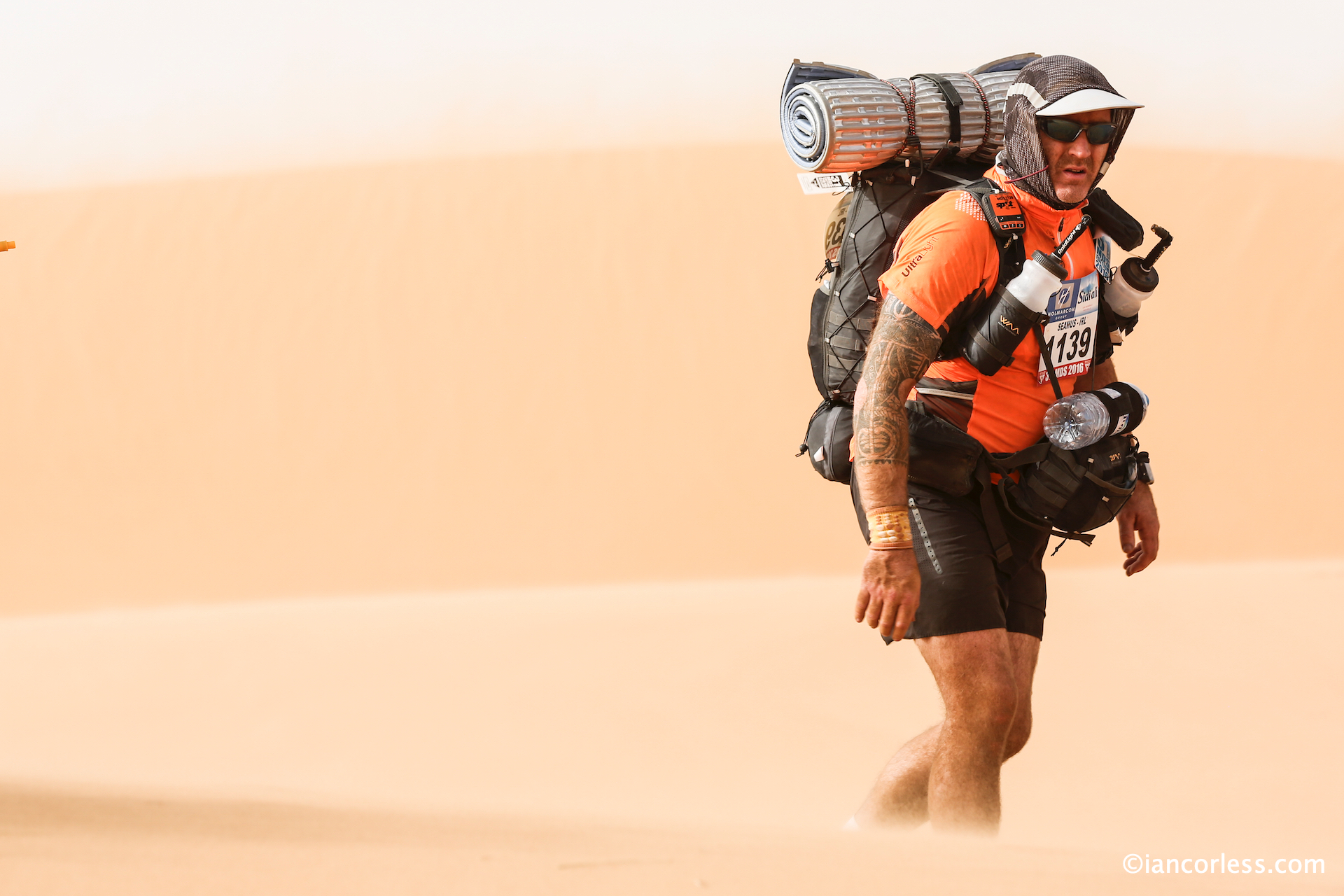
Runners are required to carry all they need to survive in a multi-day like MDS. Fuelling is essential to survive and the balance of calories v weight is a prime concern. The only things that are provided are a shelter (bivouac) which is shared with 7 other runners and water which is rationed. Since its creation in the mid 80’s, the MDS format has been copied and used as a template for other races all over the world.

Get your pack as close to 6.5kg (plus water) as possible.

Weight is the enemy of a multi-day runner or fastpacker and therefore balancing equipment, food and water is an art form in itself. Read an article HERE about the equipment required for a race like MDS.

Food will take up most of the weight on any adventure when being self-sufficient. MDS, for example, has a minimum food requirement of 2000 calories per day, a minimum pack weight of 6.5kg and then one must add water, typically a minimum 1.5 litres (1.5kg) which makes the starting pack weight a minimum 8kg.

Food for multiple days will typically be around 4 to 5kg.

*****

Quite simply, running or walking, covering 250km over 7-days will leave the runner in a calorie deficit. Therefore, it is essential to optimise the food one takes.

FACTORS TO CONSIDER

How fast one goes does greatly impact on food choice and how calories are not only consumed but chosen. The macronutrient choices will change based on the balance of carbohydrate, protein and fat. In simple terms, a runner will burn more carbohydrates and a walker will burn more fat. Humans store enough fat to survive many days and even weeks. However, carbohydrate stores deplete quickly and need to be replenished.

Body weight, age, individual needs are important for all and males may well require more calories than a woman due size and muscle mass.

Main meals will usually come either freeze dried or dehydrated. Both processes involve removing the water from food to preserve it. Freeze-drying involves freezing the food to a very low temperature and drying it in a vacuum to remove moisture. Dehydration involves passing warm air over the surface of the food to remove moisture. Dehydration creates food that tastes like it should, with plenty of texture and flavour. It is an altogether slower and gentler process than freeze-drying. Please note though, that hydration times take considerably longer with cold water and taste can change. Test meals in advance using hot or cold water.

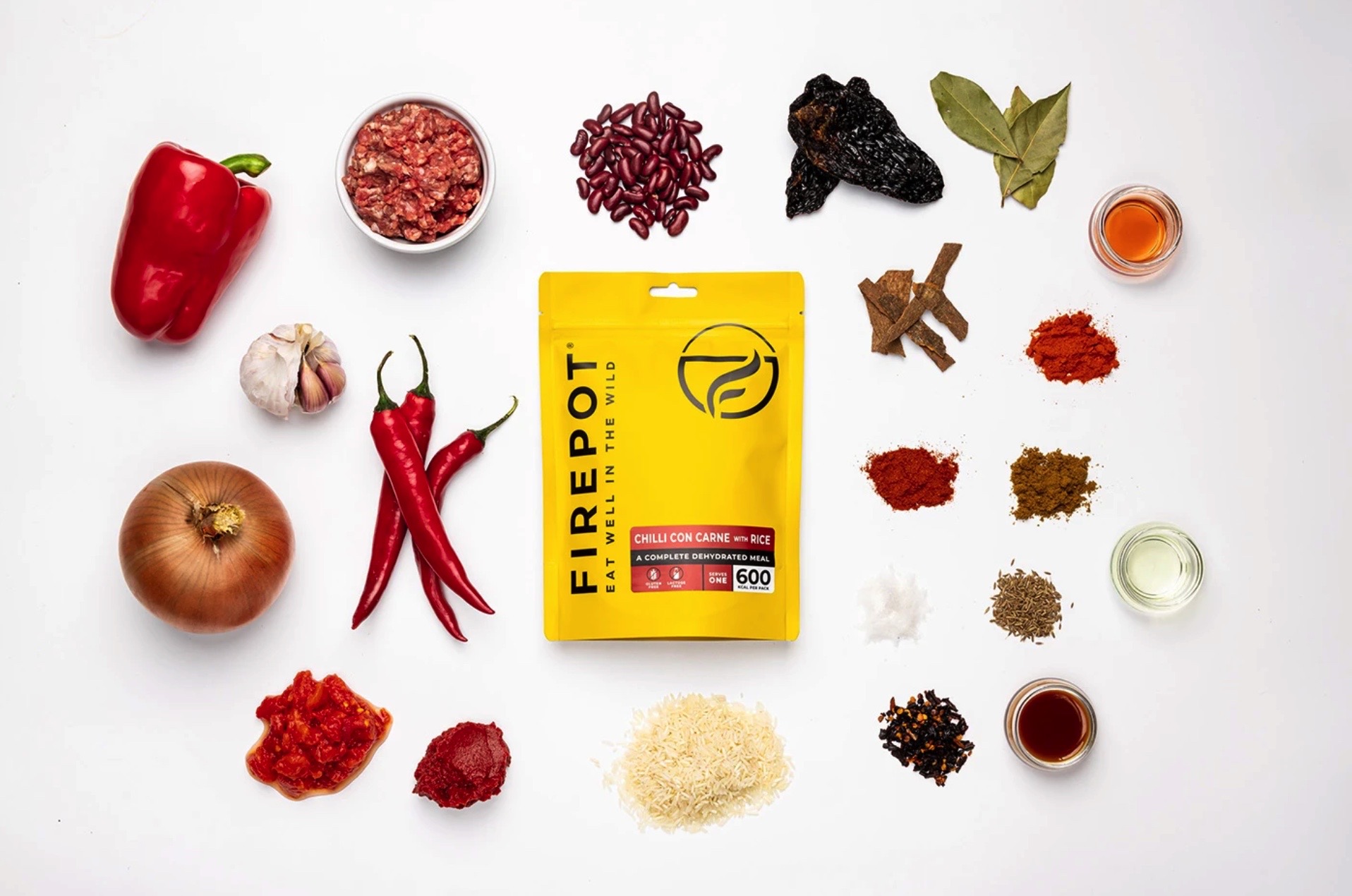
Firepot are a UK brand who create tasty meal by hand, using fresh ingredients and then dry each meal.

Carbohydrate, Fat and Protein are essential for balance and foods for an expedition are usually balanced specifically for the needs of an active individual. Typically, 55% carbs, 30% fats and 15% protein are considered balanced. As an indicator in regard to calories, carbohydrates have 4 calories for 1 gram, fat has 9 calories for 1 gram and protein 4 calories for 1 gram.

Remember, we are all individual and although any recommendations here provide a guide and a template, you the individual need to answer very specific questions and ultimately, you may need to seek the advice of a nutrition expert to fine tune a fuelling plan for a multi-day adventure.

As a rough guide, BMR is the number of calories a person burns in normal day-to-day activity.

Example for a 37-year-old, 6ft tall, 170-pound man.

(66+(6.2 x 170) + (12.7 x 72) – (6.76 x 37) x 1.55 = 2663 calories

How to use the equation: (66+(6.2 x weight) + (12.7 x height) – (6.76 x age) x 1.55 = 2663 calories

The ‘Harris-Benedict‘ formula takes into consideration daily activity.

Fat adapted athletes will have specific requirements and the nutritional plan will be different.

Answer the following questions:

  • Age?
  • Male or female?
  • Body weight?
  • Walker?
  • Walk/ runner?
  • Runner?
  • Vegetarian/ Vegan?
  • Am I typically a hungry person?
  • Am I more hungry or less hungry with exercise?
  • Food allergies?
  • Will I use hot water or cold water?

A TYPICAL DAY

Breakfast – Ideally slow-release carbohydrate, some fat and quality protein.

Starting the day with breakfast.

Running Food – This will vary on the length of the stage, up to 6-hours and you may prefer easily absorbed carbohydrates, bars and or energy in drink form. For longer stages, the addition of real food, savoury and some protein would be wise. For a very long day, for example, the long day at MDS, you may even need a meal?

Post run food (immediate) – A shake is a great way to start the recovery period as it is easily absorbed, and this should have carbohydrate and protein.

Dinner – A meal will form the basis for dinner and think about some small treats for each day, these will give you something to look forward to and help keep your palette fresh.

FOOD PLANNING AND IDEAS

Breakfast:

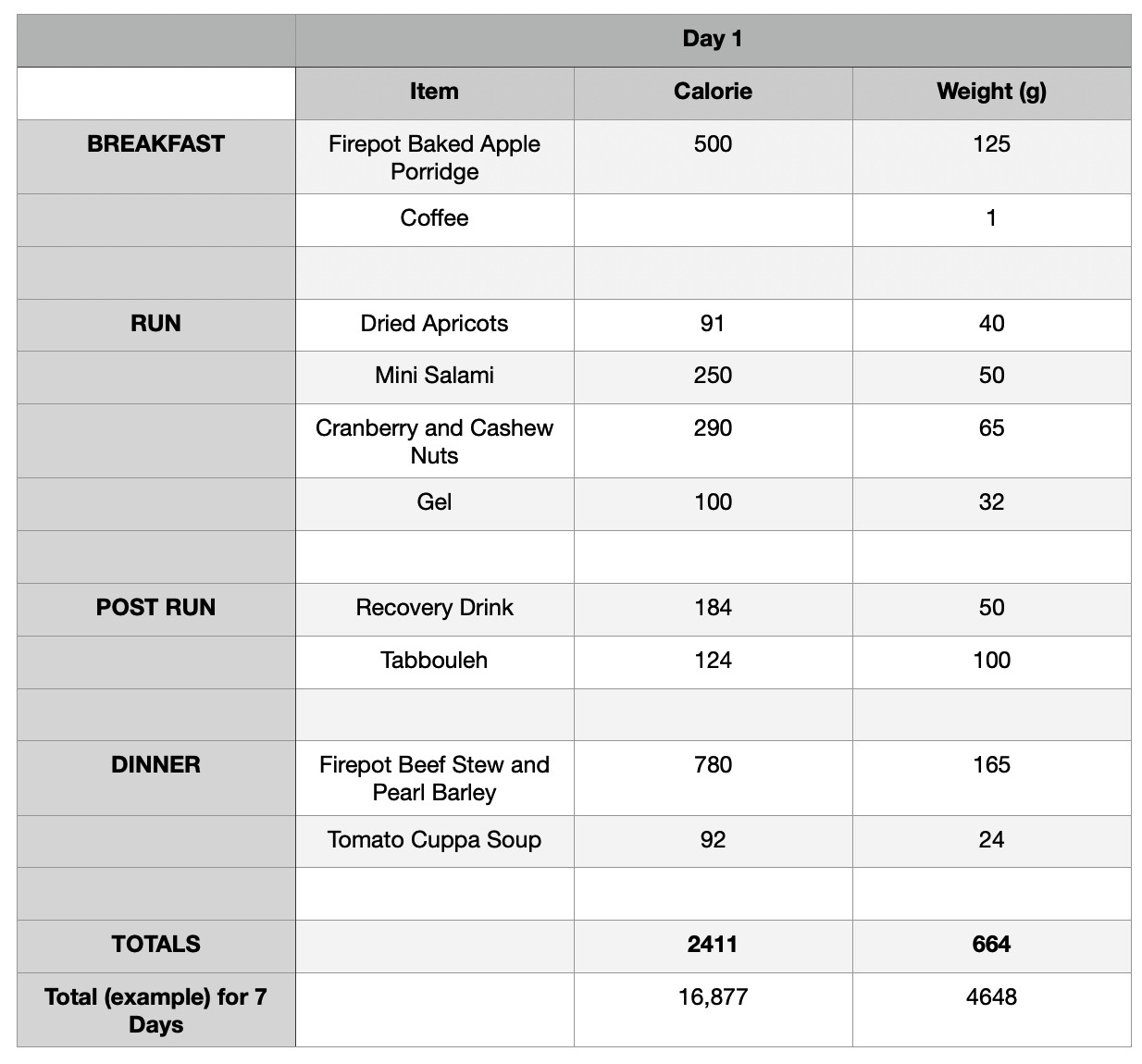
A freeze-dried breakfast is a good way to start the day. Top tip: Add the water to your breakfast at sleep time (especially if using cold water) as it will rehydrate during the night and be ready for eating in the morning. Of course, make sure it can’t be knocked over, get contaminated or damaged – that would be a disaster! Using a re-sealable plastic bag is a good idea. Example: Firepot Baked Apple Porridge is 125g with 500 calories.

Breakfast is essential to fuel the day ahead.

Muesli is popular and provides energy and fibre, it can easily be combined with a freeze-dried dairy product.

An energy bar for some works, but they often are heavy in proportion to the calories provided. However, for some, they are a perfect start to the day.

Top tip: Consider an evening meal as an alternative to breakfast. Sweet tasting food can become boring and sickly, the option to have something savoury with some spice can be a life saver.

During the run:

Runners will need typically more carbohydrate in an easy form so that they can maintain pace. By contrast, walkers will move slower, have more time to eat and easier time digesting, therefore real foods are possible. The balance is always weight v energy.  Don’t rely completely on liquids, some solid food and chewing is good for the body and mind.

Some ‘typical’ run snacks.

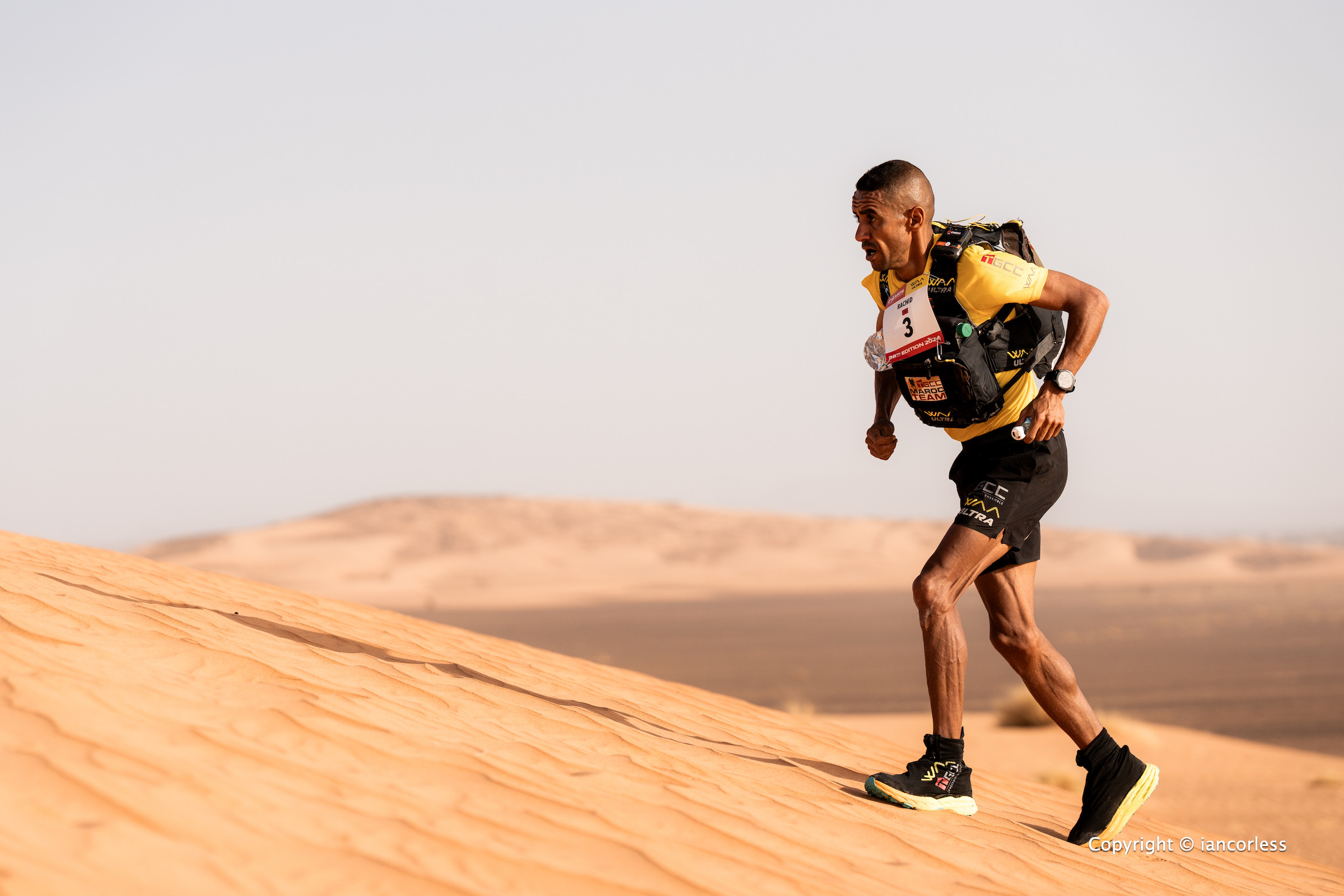
Example: Gels are around 32g each. Let’s say you took 1 gel per hour. Rachid El Morabity won the 2019 MDS in 18:31. So, 19 gels would weigh 608 grams. By contrast, if the race takes you 60-hours, 60 gels would be 1920g! Not only is the weight not feasible but also the volume size would just not work.

  • Powders (energy drinks) that one can add to water are an easy way to get calories and nutrients. They are also considerably lighter.
  • Energy bars.
  • Beefy jerky.
  • Dried fruit.
  • Nuts such as almonds are rich in fat and calories.
  • Trail mix.
  • Dried meat.

Post run:

Back in bivouac, first priority is drink and food.

A recovery drink is the quickest way to get balanced calories immediately in the body to start replenishing the body. Have this shake as soon as possible. Then do personal admin such as feet, clothes, bed, etc. One hour post the run, consider a snack like tabbouleh as this is easily hydrated with cold water and add some protein to it – dried meat a good option.

Dinner:

A dehydrated meal will make up the main calories. Depending on the person, the need for more or less calories will vary. Some companies, Firepot a good example, provide meals in two sizes: 135g with 485 calories or 200g with 730 calories for Vegan Chilli Non Carne and Rice.

A post-dinner treat is a good idea, this could be another freeze-dried option or a low-weight and high calorie option. A sweet such as a Lemon Sherbet is a simple way to add some freshness to your mouth and palette and although has little calories, it can be a nice treat.

Top tips:

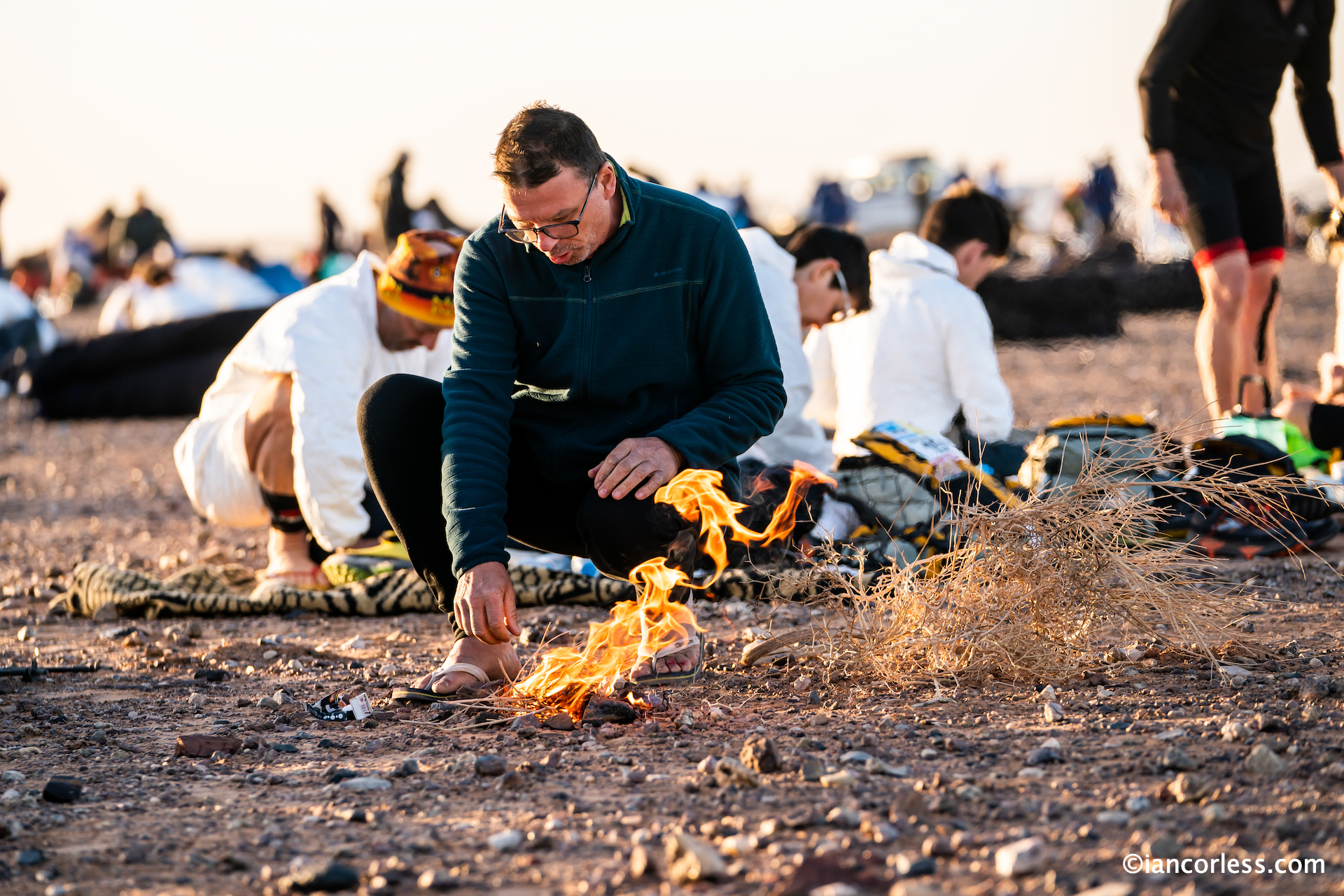
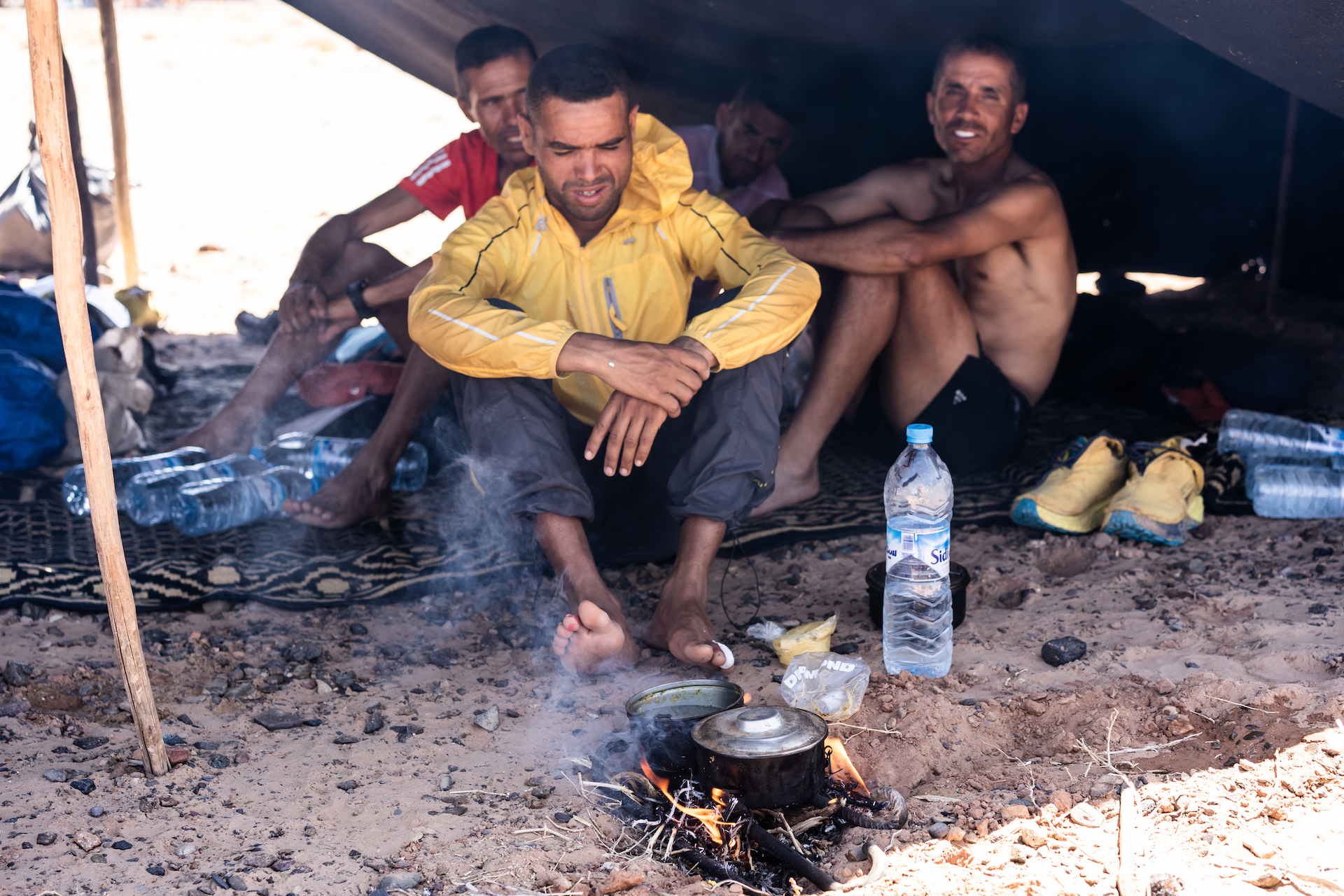
Experienced runners make a real fire to boil water.
  • Try everything out before any race or event. You need to know what works for you when tired and fatigued. Try to simulate race situations so you have a good understanding of your palette and your body. Test for taste, stomach and brain.
  • Just because you love Spaghetti Bolognese, don’t be tempted to take 7 for a 7-day race. You and your palette become bored quickly.
  • Be careful with spices and anything that may irritate or aggravate a digestive system that will already be under stress.
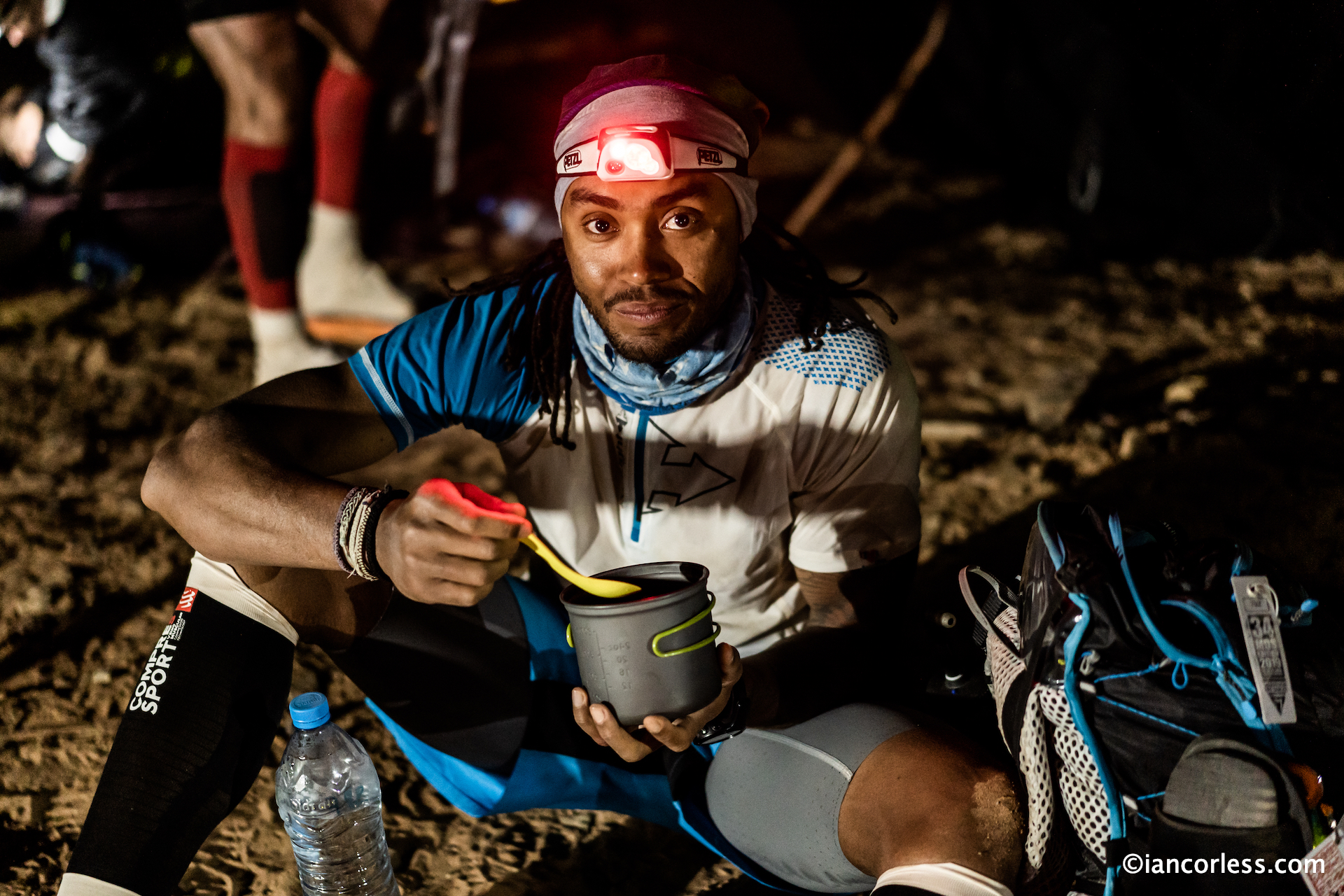
  • The choice of having hot water can be a deal breaker. For some, a hot coffee or tea is just essential! In addition, food is typically more pleasurable when hot and hydrates quicker with hot water. You cannot use any gas stoves at MDS so you must use fuel tablets and a small stove. However, here are some alternative ideas: 1. If you finish early in the day, leave a bottle in the sun and let it warm naturally. 2. Often, there are lots of shrubs, twigs and branches around bivouac, it is possible to make a fire, but you will still need a pot.
  • Water at the race is provided in 5Ltr bottle at the end of the stage this needs to last till Cp1 of the following day, so, plan water use.
  • Consider repackaging all your food to make the volume and weight less, if you do this, be sure to include the nutrition label in your new packaging.
  • Take extra food and options. When in the Sahara, you can make some final food choices.
  • The ‘Long day’ and following ‘Rest Day’ will require different fuelling strategies, take this into consideration.
  • Rules – Race rules dictate you have a minimum 2000 calories per day, that you have nutrition labels for the food that you take and that on the morning of the last day that you have 2000 calories remaining.
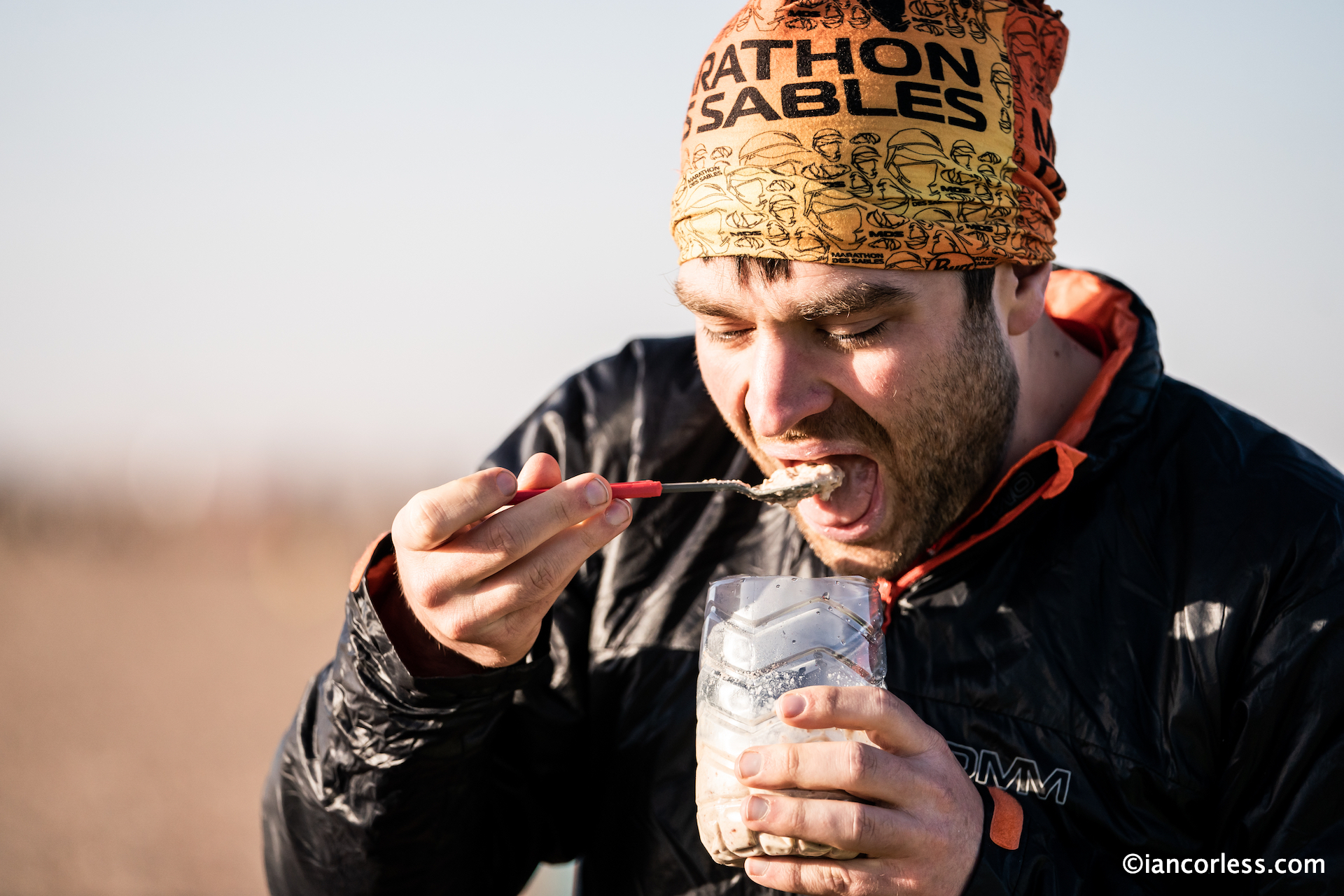
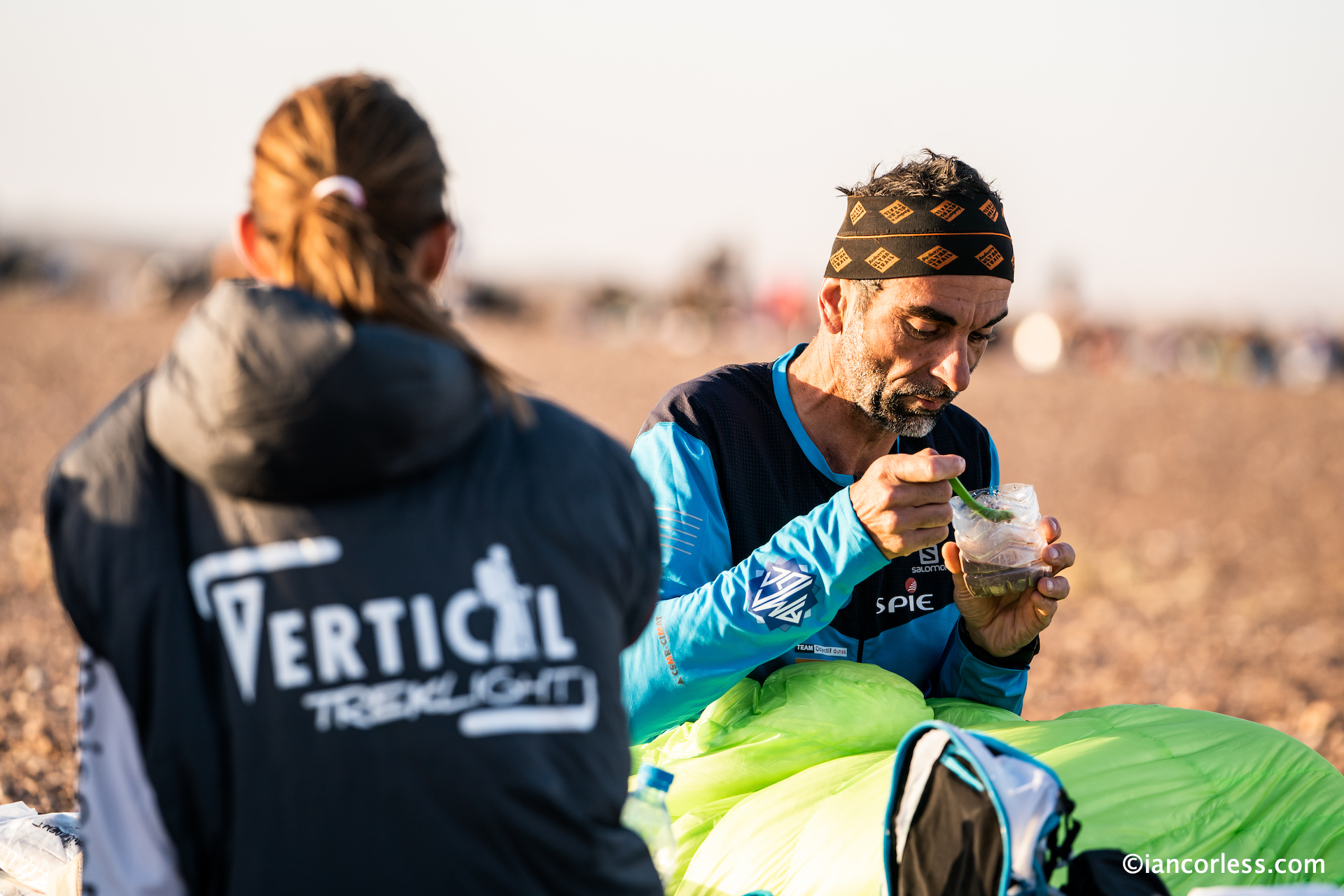
A cut down water bottle is a great food bowl.

WATER

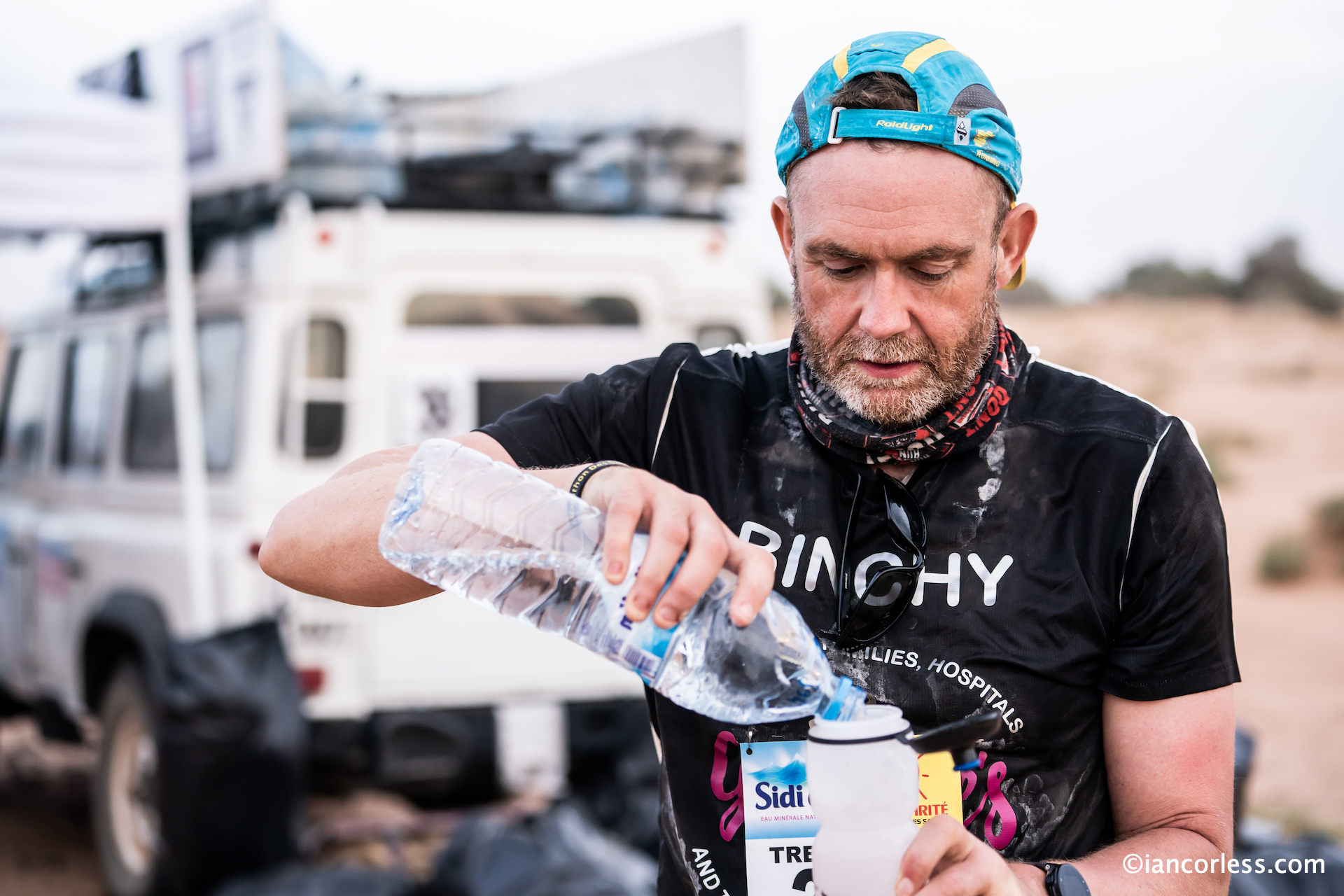
Water is the only item provided at a race such as MDS and this is rationed. You are provided water for ‘in’ camp and then this is replenished while running at Cps which are typically 10 to 12km apart. When you finish the stage, you are then allocated water to last through the night and the following morning. NOTE: This water will need to last till CP1 on the next day’s stage, so make sure you leave enough to run with.

Water is rationed and supplied at every checkpoint on the route, typically every 10km.

Water is obviously used to hydrate but you also need it for your food and if you wish to wash.

Remember you need to replace salts that are lost through sweating. Have a strategy in place. The two main reasons for a DNF are feet and dehydration.

SPREADSHEET

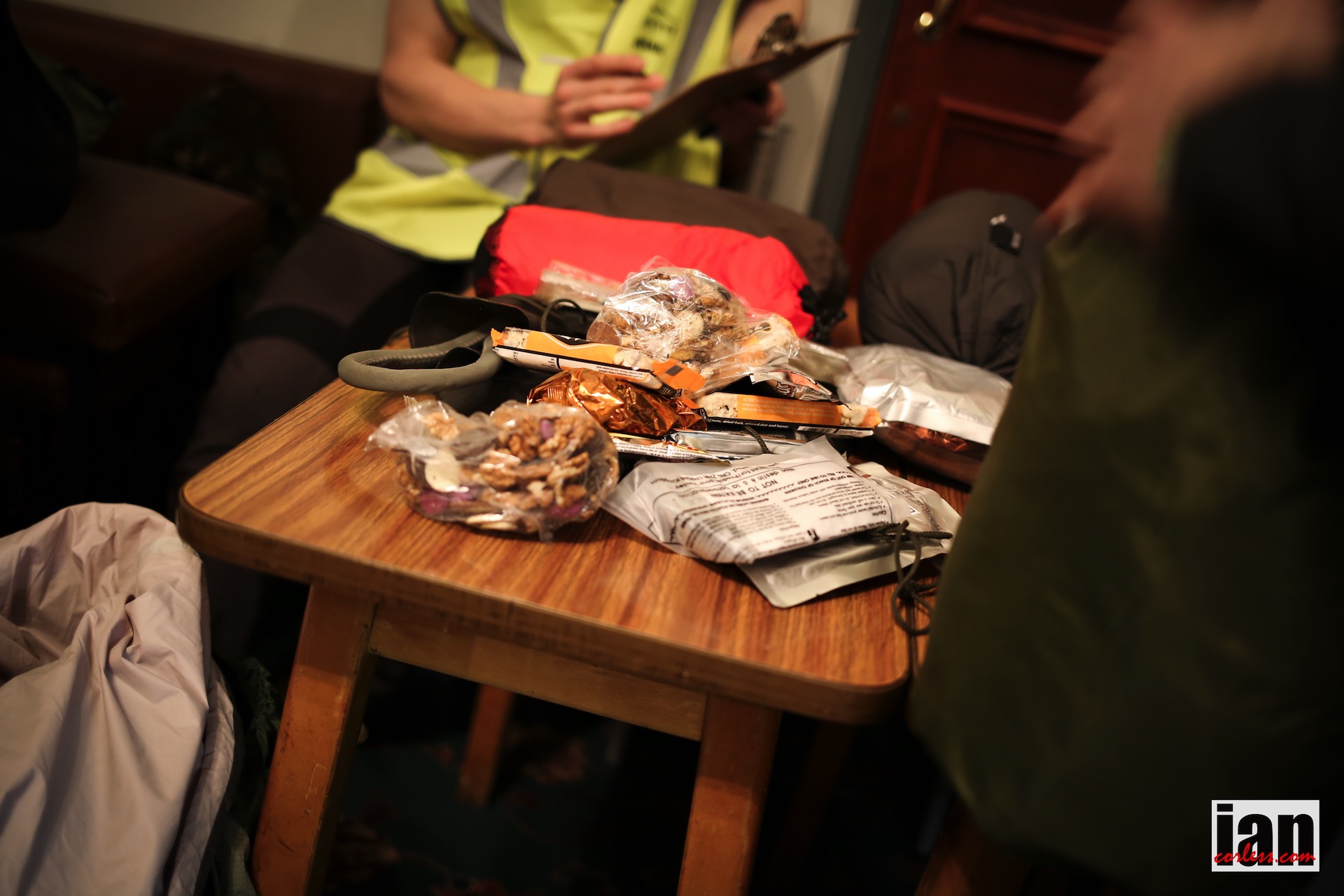
Create a spreadsheet so that you can see daily food items, how many calories and what the weight is. Not only is this invaluable for personal admin, but it is also a requirement for the race when at admin check.

Top Tip: Lay a day’s food out on the floor and look at it and analyse (visually) does this look enough for 1-day.

An example of fuelling for one day.
Use a sealed bag for each day and then add a label showing contents and calories.

CONCLUSIONS

Getting fuelling right for any multi-day is really important, so, do the research and test everything. Have a contingency plan and anticipate the need for sweet v savoury will change.

If possible, repackage food to save weight and use clear packaging and relabel adding the name of the food, what day it is for and how many calories are inside.

Make sure you have some treats and something to look forward to.

Real food is good for the brain and the chewing motion helps satisfy our natural human desire to eat and be happy.

Remember, multi-days are only about three things: running/ walking, eating and sleeping, so, make sure you are prepared for each element accordingly.

The long day, many stop and cook a meal during the night to fuel the journey.

SUMMARY

In this article, we have looked at food for a typical desert race like Marathon des Sables that lasts for 7-days. many races follow the same format. However, different race conditions may well dictate food choices, for example, a race in snow/ ice with sub-zero temperatures will require a different strategy and the balance of carbohydrate, protein and fat can be different.

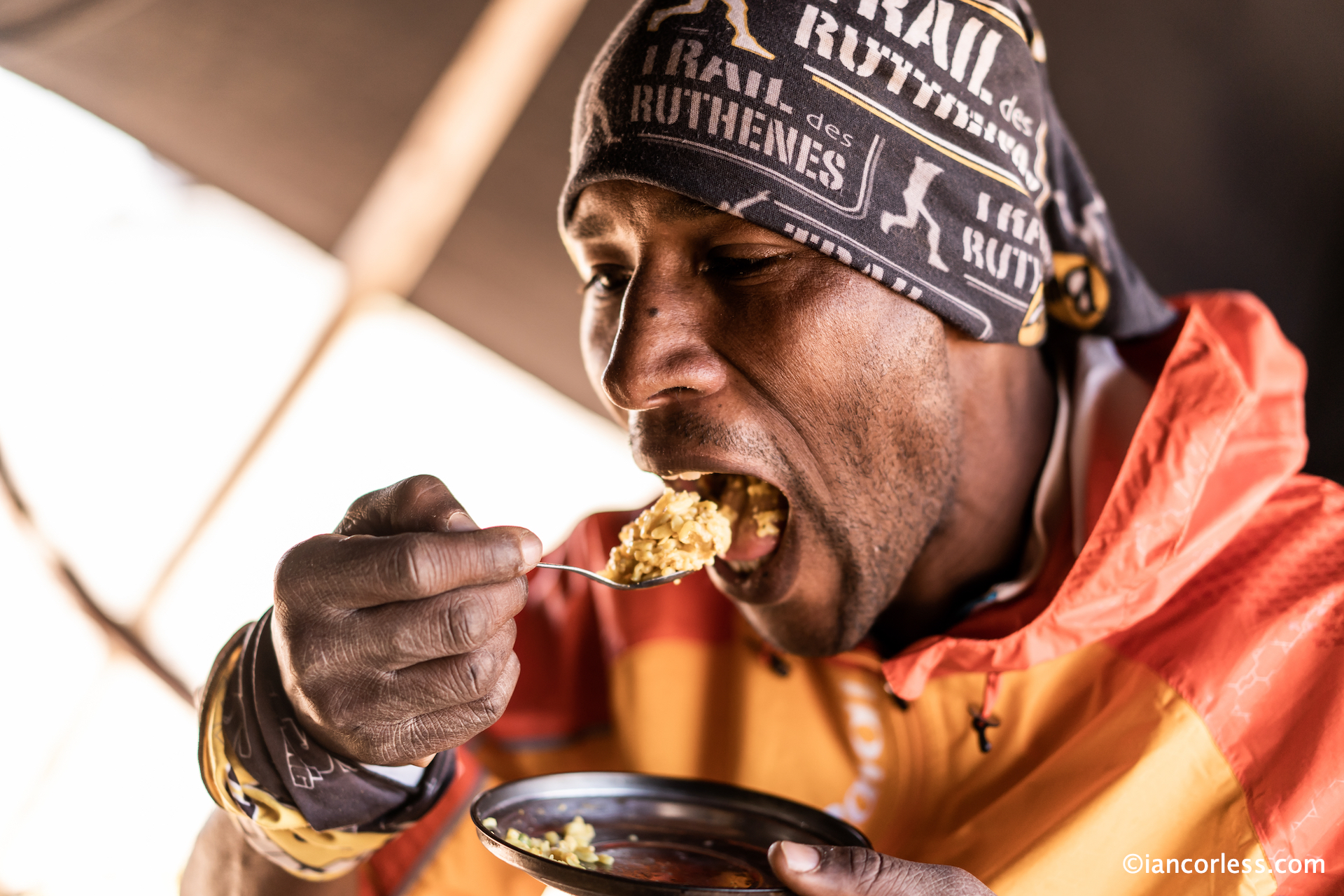
The top Moroccan runners boil water and eat hot food. Here Mohammed El Morabity.

Some races or multi-day are semi-supported, some are supported. In these scenarios, your own food may be carried for you or, it may even be provided for you? Think ahead and plan for what you may need so that you can perform as you wish with the calories you need. Especially important for vegan, vegetarian or those on specific diets. The big advantages of semi or fully supported is the not needing to carry additional weight and in most scenarios, there will be no restriction on quantity or calories. Everest Trail Race and The Coastal Challenge are two perfect examples of semi and fully-supported races,

Follow on:
Instagram – @iancorlessphotography
Twitter – @talkultra
facebook.com/iancorlessphotography
Web – www.iancorless.com
Web – www.iancorlessphotography.com
Image sales –www.iancorless.photoshelter.co

Kilian Jornet to attempt 24-Hour World Track Record

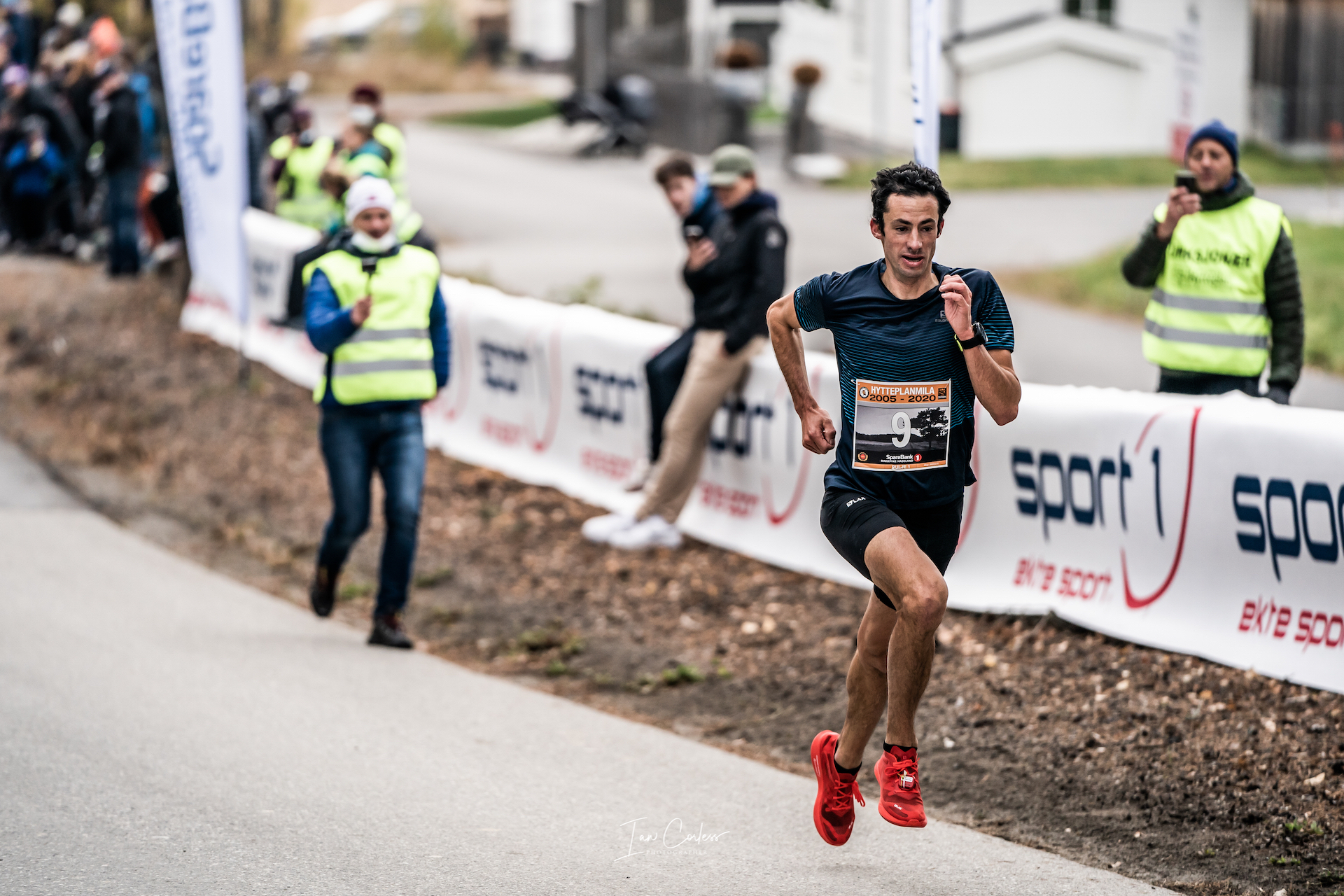
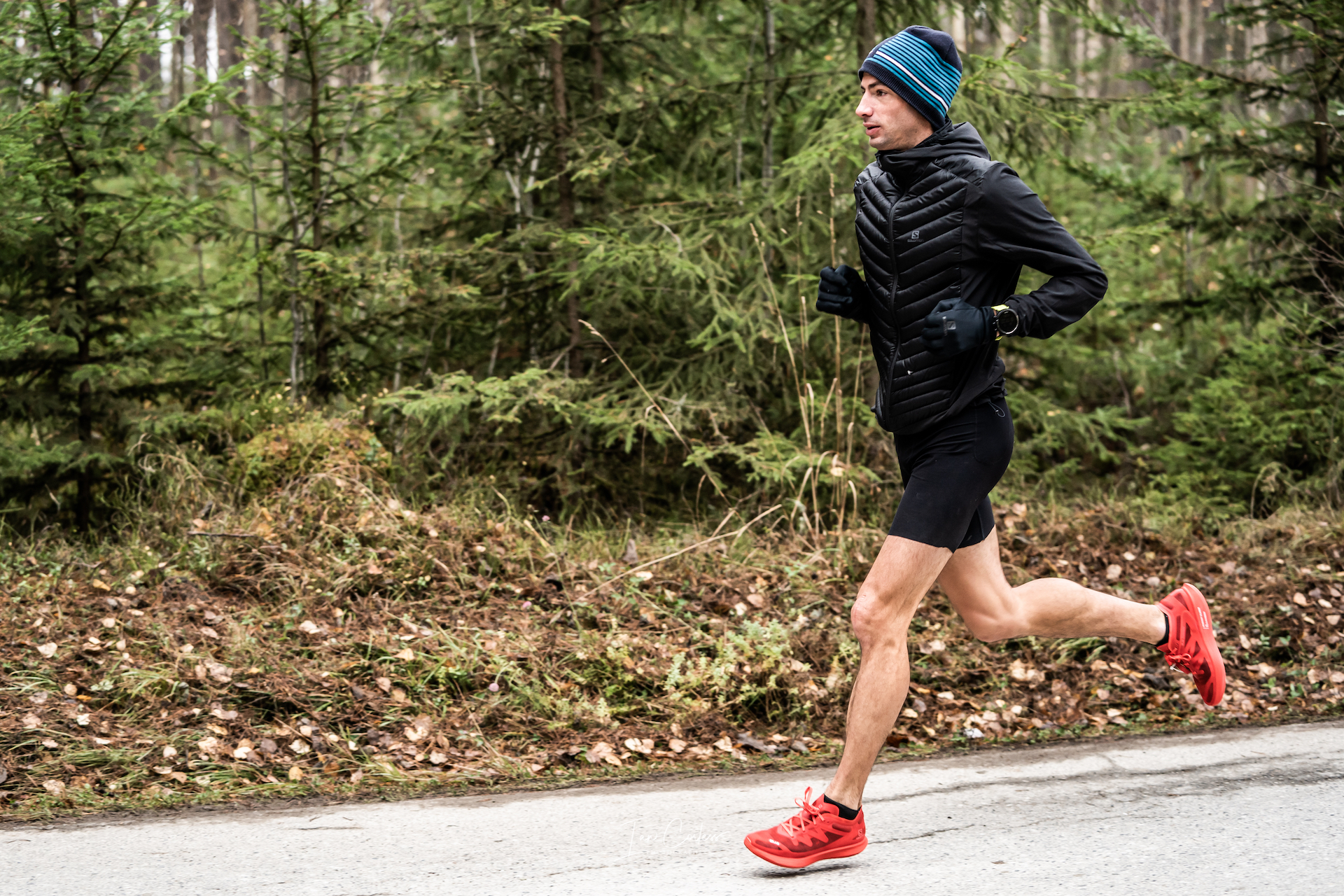
Kilian running his first official 10km on the road.

Kilian Jornet to attempt the 24-hour track record at the Moonvalley 24-Hour, Norway, on November, 8thMåndalen Stadium.

Important update: 26th October PM:

“Right now I’m pretty injured, trying to start running ok again in a week or so. I had plan to do different road distances during this year but for the moment I need to recover well 😦 Maybe in the future, if injures allow would be fun to try to run that far… :)” – Kilian Jornet via whatsapp

Kilian goes on to say… “No problem! This running roads thing is so hard to manage on staying injury free! Looking forward for next year climbing more again 😅”

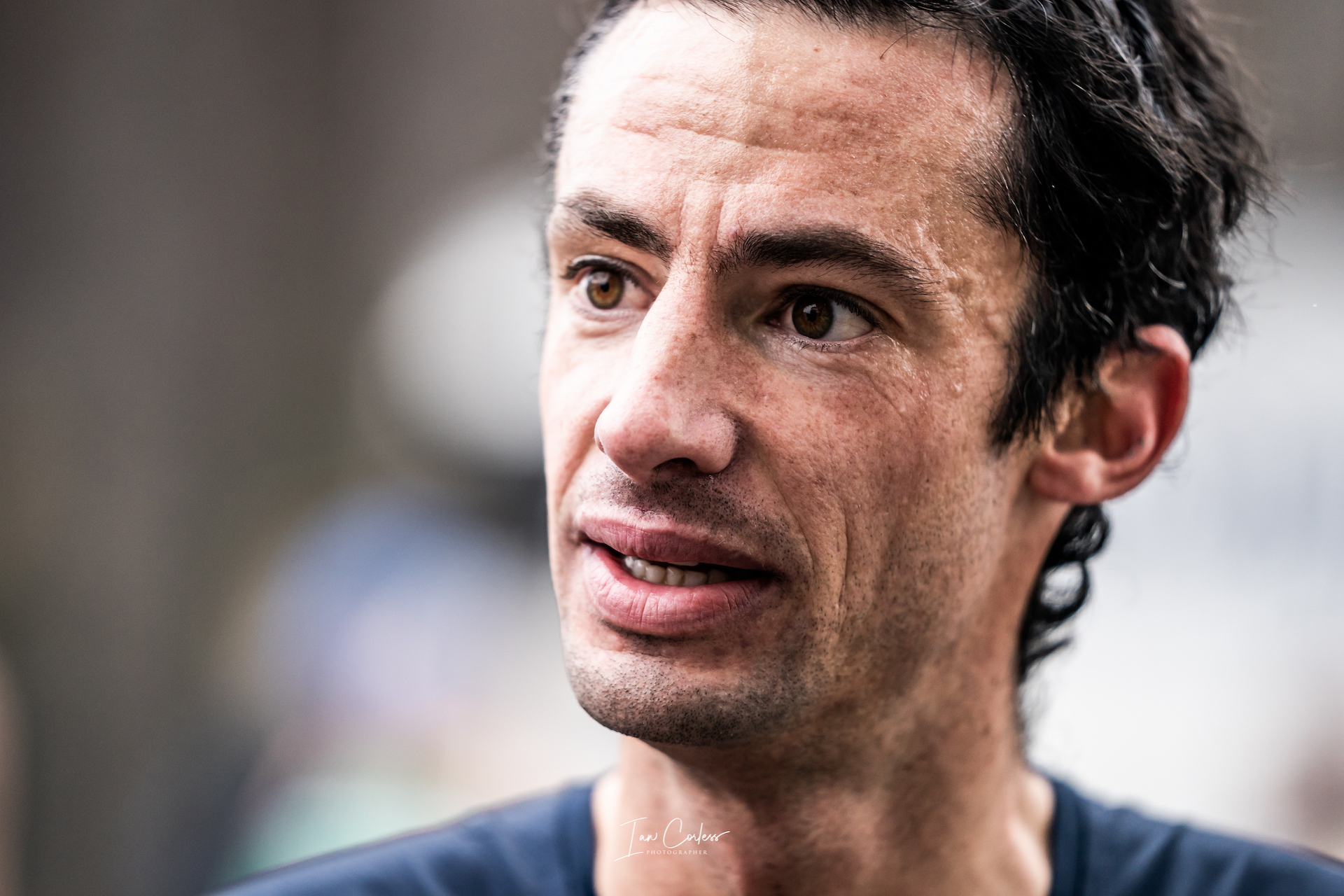
2020 has been a stange year, races have been cancelled, the FKT scene is booming and mountain running star, Kilian Jornet ran his first official 10km on the road clocking a 29:59 – report HERE.

All images copyright iancorless.com – all rights reserved

Warming up.

For many, Kilian running on the road was a surprise, only a couple of year’s ago, the thought of this was but a dream. Even Kilian himself thought a road race to be highly unlikely.

Coronavirus, restricted travel, no races and embracing new challenges seem to be the new normal. And Kilian is no exception…

Yiannis Kouros, the legend of ultra running has always been treated as a god in long-distance running, his stats speak for themselves. In 1984 he won Spartathlon in a record time. What followed set the benchmark for road and track running. His ability to run remarkabkle distances and times over 100-miles. 1000km, 1000-miles, 12hr, 24hr, 48hr and 6-days are incredible.

“When other people get tired, they stop. I don’t. I take over my body with my mind. I tell it that it is not tired and it listens.”

Yiannis Kouros stats : Image wikipedia

In 24-hours, he has run 180.335 on the road and 188.590 (1997) on the track. He has a 100-mile personal best of 11:46:37.

Camille Herron holds the women’s record 167.842 miles from the 2019 worlds in Albi. For perspective, Camille believes the record is possible and she has great ambitions for over 170-miles personally.

Scott Jurek, the ultra-running legend mixed road and trail, he ran 165.7-miles in 2010 for 24-hours. But many have come along and mixed disciplines, Mike Morton and Zach Bitter to name just two. Anatoliy Kruglikov ran 171.48-miles in 1995, besides Yiannis Kourus, he is the only one to come close on a track.

“I think 24 is unique enough and Yannis’ mark stout enough that it will likely take anyone more than one try. If anyone can get it on round one though, it’s Kilian. Norway did seem a bit strange with weather, but I suppose he is staying true to limited travel. That would be a bit cooler than I would like even with warmer clothes. Rather have that than too warm, but still not ideal.” – Zach Bitter

The news that Kilian will run a 24-hour race on a track is a real surprise. The additional news that he will attempt the 188.590-mile distance set by Yiannis Kouros is mind-blowing. To be held at the Måndalen Stadium, the race will potentially happen on November 8th with the provision of +/- 2-days to allow for weather. The stadium is outdoor and this in itself brings a whole new dynamic to any 24-hour, especially in Norway during November. Daylight will be minimal, temperatures will fluctuate greatly and the evening has the potential to be very cold.

For a any performance to stand in regards to records, certain criteria must be met and Måndalen IL and Salomon will guarantee that the necessary protocols are in place. Of course, situations my arise that make the attempt not possible.

For perspective, to break the Yiannis Kouros world record, any runner would need to be abale to cover an incredible 7.875-miles per hour. Statistics show that from the ‘test’ run by Kilian earlier in August 2020 that this objective may be possible. He ran 84.89km in 5:58:13 with an average 4:13/km pace. Many looked on and wondered, why would Kilian run on a track….? It would appear we have an answer.

Image Kilian Jornet Strava

“Progression comes from adaptations, adaptations come from training and resting. Training comes from knowledge and knowledge comes from testing. Yesterday I did a nutrition test. On a stable environment (a track) and an easy but steady effort I was testing different fueling and hydration protocols that I hope can help me to improve the energy levels during different goals….”

“…From a race where we can have access to fluid and food (almost) when we want, or, to a high climb where we have very limited food and fuel since we need to carry all. I believe testing is important to have better knowledge of oneself and to apply knowledge in training, racing or projects.”

This challenge is something I thought I would never see. I would imagine it’s a challenge Kilian never imagined he would undertake. But, here we are discussing the possibility of what may happen come early November…

The numbers speak for themselves, it’s a huge undertaking, especially on an outdoor tack. However, it is going to be fascinating to see what happens with each journey of the 400m loop at Måndalen Stadium.

Before the 10km road race in Norway, Kilian had a slight injury and that did impact on his race. However, post-race he took time off to recover. I guess the big question mark will be how that recovery has gone and what impact that will have over a 24-hour period. Maybe the injury will require to delay or cancel the attempt?

“I don’t think the injury is a real problem but I need to rest a little and get rid of it. When I run a VK the effort is typically 30-minutes but this is different. In terms of cardio, for me it was kind of easy all the time. It’s the legs, you need to feel light and keep the speed. It’s very different. The first 4 to 5km with more people was a challenge as you are almost cm’s from the other runners. I need to get used to that. I learned a great deal. I will try again, at least in the short term, but next year I want to climb… I have some specific goals. I just need more experience.”

The reality is 756 laps of a 400m track – we wish Kilian well with his new undertaking!

Please support this website. I believe everyone deserves to read quality, independent and factual articles – that’s why this website is open to all. Free press has never been so vital. I hope I can keep providing independent articles with your help. Any contribution, however big or small, is so valuable to help finance regular content. Please support me on Patreon HERE.

Follow on:

Instagram – @iancorlessphotography

Twitter – @talkultra

facebook.com/iancorlessphotography

Web – www.iancorless.com
Web – www.iancorlessphotography.com

Image sales –www.iancorless.photoshelter.com

RED-S Syndrome – What Athletes Need to Know

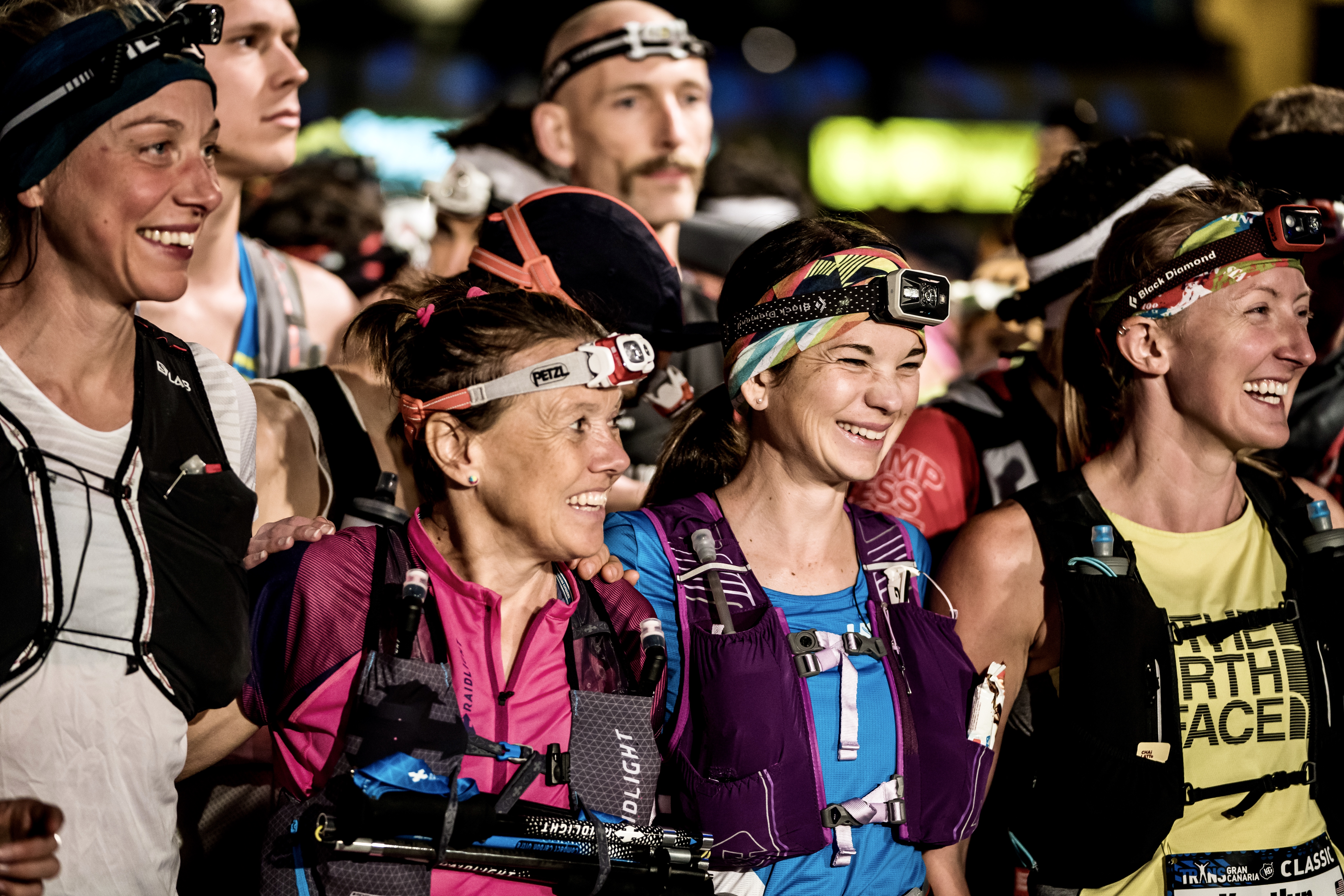
Mimmi Kotka (far left) at the start of the 2020 Transgrancanaria – (c)iancorless.com

Mimmi Kotka broke silence just last week after a string of below par performances and has acknowledged it is time to take a break from sport. In an open and honest post on social media, she clarifies:

“I have been suffering with my body since the end of 2018. I have finally connected the dots between my low immune system, anaemia, fatigue, stomach problems, lack of menstrual period, inability to run fast and my body always running in reserve: it is RED- S, Relative Energy Deficiency in Sport.”

Now for many, RED-S may well be a new term, however, the list of symptoms and problems Mimmi lists are not. In recent years we have witnessed the rise of many a runner, particularly in the ultra-world for them only to slowly disappear.

Caroline Chaverot at Limone Extreme, Italy – (c)iancorless.com

Recently, Caroline Chaverot, a dominant force and some would have said unbeatable in trail running, slowly removed herself from the sport with a string of below expectation performances. In an interview with Damian Hall for IRunFar, Caroline said, “…I want to be better. Everyone else is training a lot, so I will train like them.’ Maybe I did too much? Or maybe too soon? If training becomes like a competition, then you get tired. I probably trained too hard and fast.”

The story of Geoff Roes and his dominance, for a period over the 100-mile distance, who now runs for fun, forever fighting a battle with fatigue. “It seems like I take two steps forward and one step back. I can’t really do what I want physically, I still get pretty fatigued.” said Roes talking with Justin Mock in an article on IRunFar dating back to just April 2020.

To be clear, I am not saying that Caroline or Geoff had RED-S, I am merely pointing out that our sport, the challenges it brings, without close attention can be far more negative than positive. No runner or athlete intends to get RED-S or OTS, quite the contrary. As Mimmi says:

 “I never had the intention to lose weight, nor do I have an eating disorder. I ended up with RED-S by mistake.”

The great thing about trail and ultrarunning is that it is a sport for all. All body types are welcomed and RED-S can happen to anyone at anytime. It can creep up without your realising.

“But a mysterious training condition is suddenly plaguing its ranks, robbing a generation of top athletes of their talents and forcing victims to wonder: Is it possible to love this sport too much?”

Mike Wolfe at The Rut, he is co race director with Mike Foote – (c)iancorless.com

The above is from an article, “Running on Empty” by Meaghen Brown that starts with the story of Mike Wolfe at the 2012 Transvulcania. I was there, I witnessed the day unfold. The article goes on to say:

“The past seven years have seen the rise and decline of at least a dozen elite competitors, including Anna Frost, who won the women’s division of the North Face Endurance Championship in 2011; Anton Krupicka, two-time winner of the Leadville 100; Geoff Roes, who set a new record at the 2010 Western States 100; and Kyle Skaggs, who demolished the Hardrock 100 record in 2008. Each of them reached the pinnacle of the sport only to mysteriously struggle to repeat their best results. Transvulcania was the start of Wolfe’s own precipitous fall.”

Now the context of the above article was OTS, (Overtraining Syndrome,) but the similarities with RED-S are noticeable.

What is RED-S?

Relative energy deficiency in sport, known as `RED-S `is the result of insufficient caloric intake and/or excessive energy expenditure. For Mimmi, it was the latter, excessive energy expenditure. The condition can alter physiological systems such as metabolism, menstrual function, bone health, immunity, protein synthesis, and cardiovascular and psychological health.

For many, RED-S was known as the Female Athlete Triad and is often directly related to not eating appropriately for the amount of energy one extends. This can be a particular problem for the ultra-distance runner. “Furthermore, the RED-S model includes both male and female athletes – so if you are a male athlete, please do not stop reading! Low energy availability can impact male and female exercisers of all levels and of all ages.”

Food restriction is a worrying scenario, both for male and female athletes. A simple analogy is taking a car and restricting the fuel you add to the car. Do not add enough fuel and the car will eventually grind to a halt, the body is no different. While the condition was often thought to be one for female athletes, medical professionals are now seeing similarity in male athletes and the usage of the RED-S term now applies to male and female.

Mimmi continues to write, “I have plunged myself into this condition over the last few years. I have simply put in more and more hours of training without adjusting my calories accordingly, dragging me towards incredible fatigue.”

Mimmi was eating healthy and good quantities, however, the balance was off. Her training volume was too high and calorie intake insufficient. It was not an eating disorder of any sorts, more a miscalculation of energy burnt/ calories in.

Mimmi, was the winner of CCC and TDS and for a period of time, was considered unstoppable. A force to be reckoned with. But as she says, since 2018 she has continually suffered to find the same performance levels. This in turn brings a negative cycle that only perpetuates the problem.

I will train more.

I will lose weight.

Two common scenarios that gradually add more issues and one cannot ignore pressure from peers, fans and sponsors. In the case of Mimmi, she trained more to get better. She had no intention to lose weight.

While eating habits are an indicator of RED-S, the overall picture is much more complex and of course, the differences between male and female are marked.

The BMJ (British Medical Journal) list several key notable factors as an indicator, the first is missed periods or no menstrual cycle. Now of course, this is specific to women, but what other factors should be considered?

Stress Fractures.

Low BMI.

Strange eating habits.

Increase training.

Inability to recover.

The long-term impact if unchecked can be devastating with affects on the health system staying with the body for the rest of the athletes life.

When hormone levels are altered, the impact is potentially far reaching and why it may be common to know and understand that immunity is impacted, recovery, growth, concentration and an impact on endurance, the cardio vascular system can also be impacted which could lead to heart disease.

This is not a condition just for the “elite” of the sport, quite the opposite. We look up to our idols and we copy them. We hear stories of mega training sessions, we hear about fasted runs and we hear stories of specific diets to maintain race weight… A picture builds and is one that many try to copy and emulate. For some and in the case of Mimmi, it was about being fitter, therefore adding more training. But for others, the pressure to be thin is very real and fad diets contribute leaving a myriad of question marks that few find the answer to.

Going back to the car analogy, sports people need energy and that energy comes from food full of nutrients and variety. One should not have a troublesome relationship with food but unfortunately, sport is littered with athletes who do. How often have you heard someone say, “I need to run to earn my calories!” 

This mindset is the start of a potential problem and it needs checking.

As Mimmi says in her honest post:

“…I’ve dragged myself deeper and deeper into this condition during the last years. Just loaded on more training hours, not adjusting my calories accordingly and slugged through incredible fatigue. Being able to ignore the physical body is what makes a good ultra runner but it’s also what brought me down.”

Nutrition specialist, Dr Nicky Keay confirms in an article, “Fundamentally there is a mismatch between food intake (in terms of both energy and micronutrients) and the demand for nutrition required to cover expenditure, both of exercise training and for basic “housekeeping” tasks in the body to maintain health. If there is insufficient energy availability, then the body switches into an energy saving mode. This “go slow” mode has implications for hormone production and metabolic processes, which impacts all systems throughout the body.”

We train to get fitter, faster and stronger. But a complete athlete should look at all aspects to make a perfect picture. Food and nutrition is a key building block and without it there will be an inability to improve as expected in response to training and the risk of injury will increase. It´s a downward spiral we have seen all too often in the sport of ultra-running.

Counting calories rarely has a benefit in the long-term, however, in the short term, keeping a training diary that records food intake v expenditure can be useful. If an athlete consumes fewer than 2500/2000 calories (male/female) after taking energy expenditure in to account, your intake is likely to be inadequate

There are many fad diets out there but find a balance with nutritious food that has plenty of variety. Periodise food intake to coincide with training. For example, there is a time and a place for carbohydrate. Equally protein and fats. Eat fresh, minimally processed foods that include plenty of servings of vegetables and fresh fruit. Try not to avoid certain food groups unless advised otherwise by a medical professional and if vegan or vegetarian make sure you understand how to maximise calories paying attention to Protein, Fat, B12, Iron, Zinc, Calcium, Iodine and D Vitamin. “The No Meat Athlete Cookbook” by Matt Frazier is a great resource for all sports people

Post exercise, make sure you replenish your body with protein and carbohydrate. Protein will help repair lean muscle and carbohydrate will help restore glycogen for the next training session. How much carbohydrate you eat depends on what training you have coming up… This is where the help of a coach and nutritionist will help keep you honest.

Be sensible with training volume, less is sometime more!

To conclude, who is at risk of RED-S?

The reality is, RED-S can occur in any age or level of athlete but the greatest risk comes for those who are involved in sports that require high power. Power to weight ratio is a fickle beast and those most at risk are cyclists, climbers, triathletes, runners – yes, runners!

Ultimately, find a healthy balance between training, nutrition and rest. Go through the warning signs below and be honest with yourself. If in doubt, ease back, eat healthy and seek the advice of professionals who can help get you back on the correct path.

Warning signs:

  1. Fatigue
  2. Illness
  3. Repeated injury
  4. Mood changes
  5. Broken sleep
  6. Below par performances
  7. and of course, an unhealthy relationship with food.


Follow on:

Instagram – @iancorlessphotography

Twitter – @talkultra

facebook.com/iancorlessphotography

Web – www.iancorless.com
Web – www.iancorlessphotography.com

Image sales –www.iancorless.photoshelter.com

References:

Please support this website. I believe everyone deserves to read quality, independent and factual articles – that’s why this website is open to all. Free press has never been so vital. I hope I can keep providing independent articles with your help. Any contribution, however big or small, is so valuable to help finance regular content. Please support me on Patreon HERE.

Follow on:

Instagram – @iancorlessphotography

Twitter – @talkultra

facebook.com/iancorlessphotography

Web – www.iancorless.com
Web – www.iancorlessphotography.com

Image sales –www.iancorless.photoshelter.com

10 Top Tips for Multistage and Multi-Day Racing

Running is running yes? Anyone can do it! Well I guess the answer is yes. However, variables come in to play. Running is broken down into many different distances, from 100m to 100-miles and beyond. The longer we run, the more the challenges and requirements on a runner change. Running for multiple days or running a multistage race on mixed terrain throws up many different scenarios. Over the years I have spoken with many champions who have raced in the sands of the Sahara, the forests of Costa Rica and the mountainous paths of Nepal. They all provide me with similar hints ’n’ tips to a successful multistage race.
TOP 10 TIPS FOR A MULTISTAGE

1 – RUNNING IN THE SAND

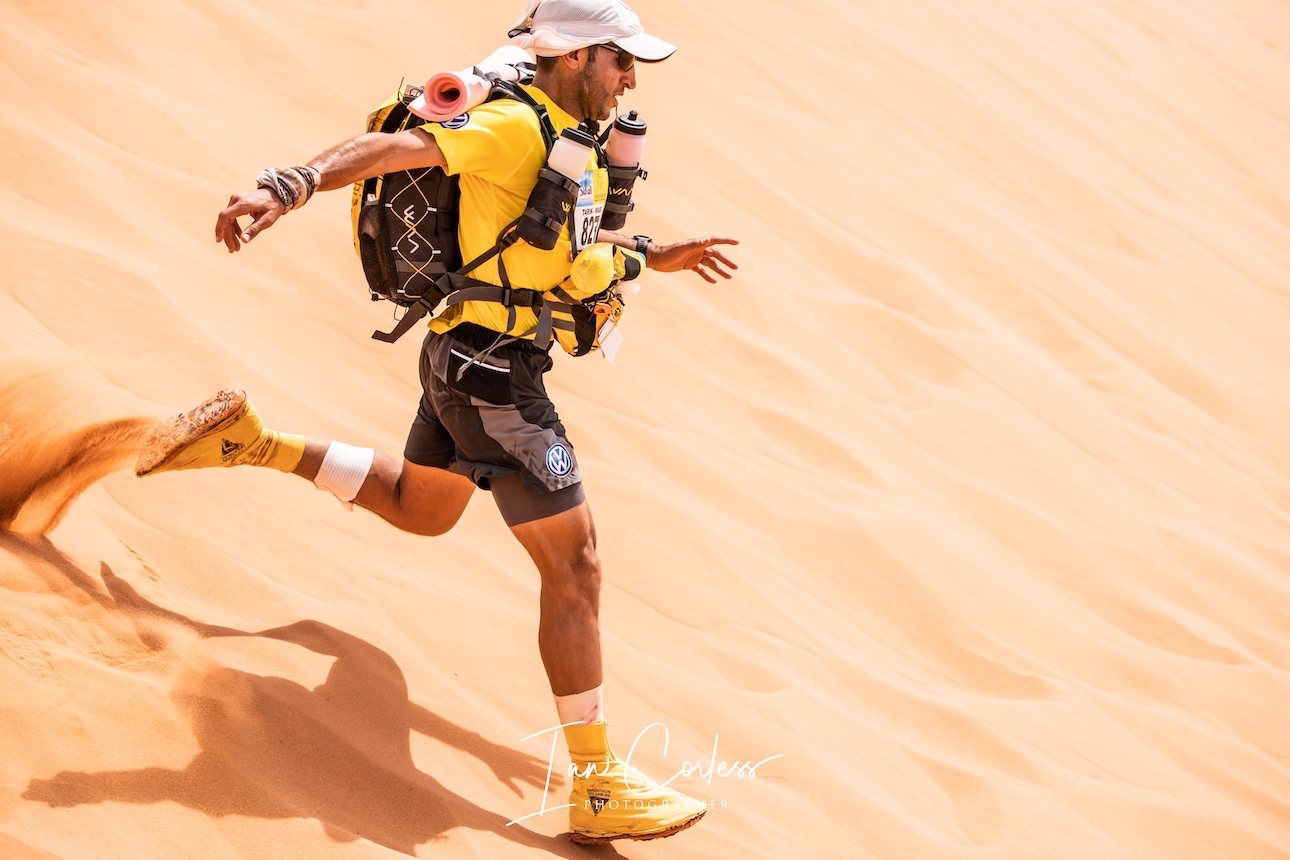
Desert races are very popular. Marathon des Sables for example is the father of multistage racing and over the years, many races have followed in the MDS format. A desert race is never all dunes but some races have more soft sand than others, so, be prepared. To avoid getting tired it’s important to read the terrain. Carve your own path running on fresh sand and when possible, run along the ridges. In smaller dunes (dunettes) it can be beneficial to run in tracks left by others, at all times, run light as though running on ice – you don’t want to sink in the sand!

2 – HYDRATION

Dehydration is a real risk in any race, particularly a self-sufficient race where water is rationed. The risks of dehydration increase when the mercury rises and a lack of cover comes. A desert for example will be open, have intense heat but humidity will be low. By contrast, a jungle such as those found in Costa Rica may well have plenty of tree cover and streams to cool off in but the humidity will be through the roof. In both scenarios it’s important to drink regularly. Take small and regular sips of water and supplement lost salt with salt tablets. Races like Marathon des Sables provide salt tablets at aid stations and they recommend dosage. Other races you will need to think of this and plan accordingly. Also think about food choices on the trail and when in camp – food rich in minerals and salts will also help you. Importantly, multistage racing is about management from day-to-day and this is what can trip people up. Think about the event as a whole and make sure you recover after each day – rehydrating is as important post a run as when running.

3 – BLISTERS

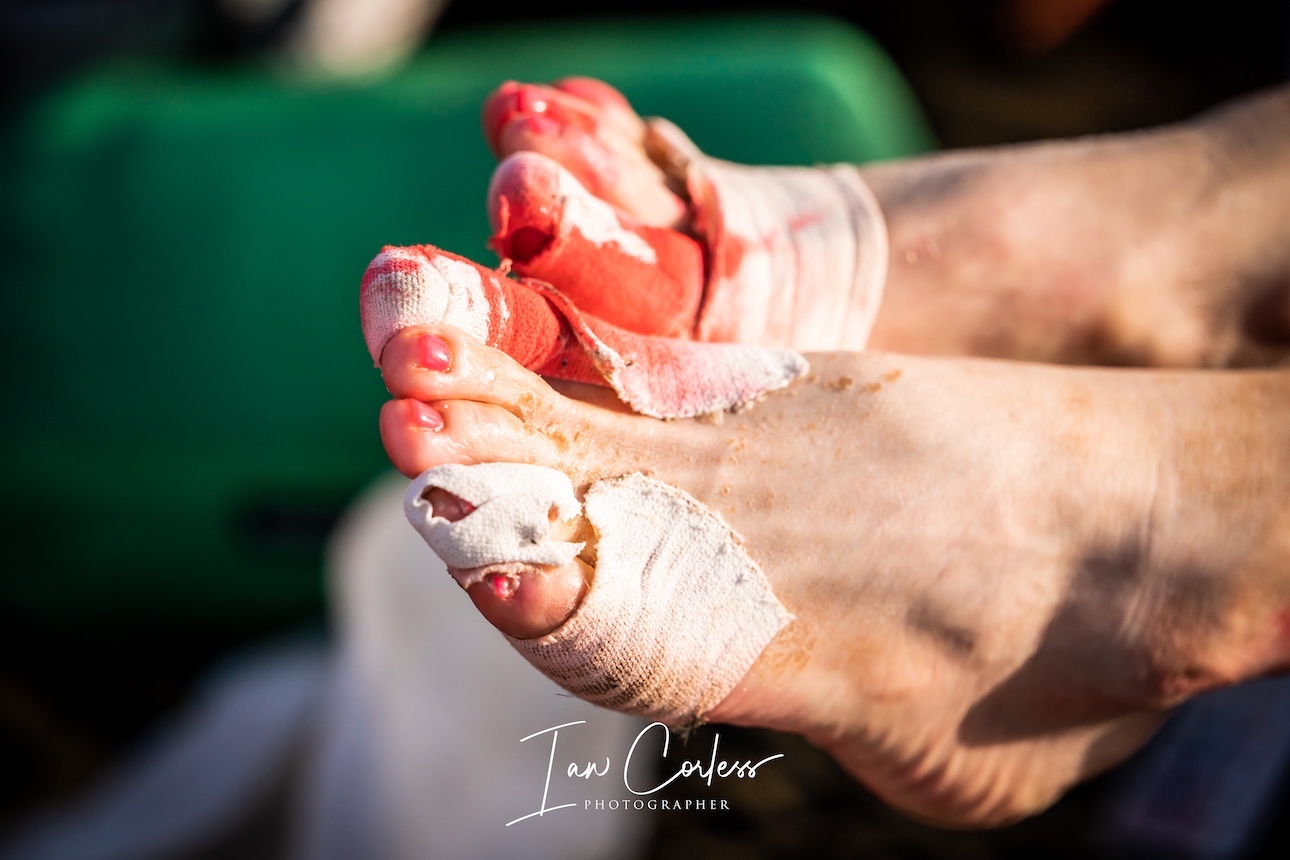
Many a multistage race is ruined by bad personal management of feet. Think about this well in advance of the race by choosing socks and shoes that work for you. Also choose shoes appropriate for the terrain you will be racing on. A shoe for MDS will be very different to a shoe for the Himalayas for example. By all means take advice on shoes from previous competitors BUT you are unique and your needs are unique. Do you pronate? Do you supinate? Do you need a low or high drop? Do you prefer a cushioned shoe or a more minimalist shoe? What about grip, do you need any? Do you need to fit gaiters? The questions can go on and on and only you can make a choice. If all this is new to you. Go to a running store that understand runners and can provide expert and impartial advice. They will assess you and your run style and provide advice. One consideration for multistage racing is that your foot ‘can’ possibly swell due to variables such as heat, running day-after-day and so on. Your foot will not go longer, but it may go wider. So, think about shoes that have some room in the toe box. Don’t purchase shoes that are 1 or 2 sizes larger – this is poor advice. Larger shoes will only allow your foot to move… a moving foot causes friction, friction increases the risk of soreness and soreness will lead to a blister. Also think about walking. Many people choose a shoe because they are good to run in… But how do they feel when you walk? Remember, a multistage race can involve a great deal of walking!

Do you have sensitive feet? If so, you can prepare your feet in the run-up to an event. Also make sure your nails are trimmed back. While racing, if you have blisters, stop and get them treated as soon as possible. Take responsibility and learn basic footsore before an event. You need to make sure you can make any necessary treatments. Finally, many races have a medical team that are provided to look after you and your feet. Don’t hesitate to use them, but remember, there may be a big line waiting. Self-care is an excellent way to make sure that you are ready to run in your own timeline.

4 – BALANCED PACK

Not all multistage races are the same. The Coastal Challenge in Costa Rica, for example, is not self-sufficient so a runner only needs to carry liquid, snack food and any ‘mandatory’ kit. By contrast, a self-sufficient multistage race requires you to carry everything. A simple rule is keep everything as light as possible and keep your pack balanced. Luxuries really are luxuries in a race over multiple days so really ask yourself, do I need to take that? You will need mandatory kit as specified by the race and in addition you will need (as a guide):

  • Sleeping bag
  • Sleeping matt
  • Warm layer
  • Spare socks
  • Food (minimum calories are specified per day)

Clothes, shoes, hat, sunglasses –  but you will be wearing these so they don’t go in the pack.

That’s it. Keep it simple and if at all possible, get your pack with its contents as close the minimum weight as specified by the race.

By general consensus, a luxury item is considered a music player (or 2) such as an iPod shuffle.

Also remember that minimum pack weight will be without water, so, if your pack weighs 6.5kg, you will have to add 1.5kg on the start line on day 1. This is where a front pack or a pack where bottles sit on the front works really well. Bottles on the front help balance the front and the back and provide a greater running experience. Also, think about items your need whilst running… it’s not a good idea having them in the back, they need to be at the front so you can access them ‘on-the-go!’

Many packs are available to choose from and you will see two or three are very popular – WAA, Ultimate Direction and Raidlight. Choosing a pack is light choosing shoes; we are all personal. However, keep a pack simple, make sure it’s comfortable and make sure it has little or no bounce when running/ walking.

Consider joining a multistage/ multi-day training camp HERE

5 – PROTECT FROM THE SUN

The sun can be a killer in any race, single stage or multistage – use sun protection and apply it daily. Also use products like arm coolers, a hat and a buff. At aid stations or whilst racing, you can keep these wet which will help cool you. Particularly the buff. If you overheat, slow down and apply cold/ water to the back of the neck. Use UV protective clothing and the jury is out on if clothing should be tight or loose. This often comes down to personal preference.

6 – EAT WELL

Any multistage race is quickly broken down into three phases – running, eating and sleeping. Food is a really important part of any race as it has to perform many functions. Most importantly, it has to sustain you so you will need carbohydrate, protein and fat. Individual requirements will vary but carbs will restore energy, protein will repair and fat is essential as this is one of the primary fuel sources for a multistage race. Remember though, our bodies have an unlimited reserve of fat. It’s important to understand that your diet whilst training may well be very different to when racing. In training you may well have eaten less carbs to teach your body to use fat, but when racing, you need to recover and be ready to run/race again the next day. Have variety in your food as your palette will change with fatigue, dehydration and heat. Real foods are good but dehydrated food also has a place. You also need to decide if you will require a stove for heating water? Don’t think twice about stepping up a little on the organization’s requisite minimum daily dose of 2,000 calories a day, remember though, it’s all weight!
7 – REST

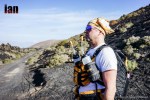
Rest is crucial and how much you get will depend on how fast you run. Front runners have no shortage of rest time, however, those at the back of the race get minimal rest. Make sure you have a good sleeping bag that is warm enough for you and is as light and packs small as possible. You can save weight by not carrying a sleeping matt – general consensus says that carrying one is worthwhile as sitting and sleeping is much more comfortable. Matts come in two types: inflatable or sold foam. Inflatable matts work really well, pack small but you run the risk of a puncture without diligence. Foam matts won’t puncture but they can be bulky.

Make sure you have a warm layer for comfort, temperatures drop with darkness. A jacket (usually down) will also allow you to add warmth while sleeping if required. A lightweight sleeping bag and down jacket is preferable (by general consensus) over a combination sleeping bag that turns into a jacket. A jacket and bag offers flexibility, weighs less and packs smaller but will be considerably more expensive.

8 – PACE

Remember that you have entered a race that lasts multiple days. Spread your effort and have the big picture in mind – pace yourself. Don’t set off too quickly and consider race profiles, distances and cut-off times. YOU take responsibility of when you need to be at checkpoints. A day with a great deal of climbing, soft sand or technical train will take longer, allow for this and be prepared. Most multistage races have a long day and it’s fair to say it is the most feared day – keep some energy back for that day. Remember, the long day often has a generous time allowance so don’t be worried by taking a sleep break midway through.

9 – KEEP ON TRACK

Most races will have markers for you to follow but be sensible and self-aware of the challenge. If a race requires you to carry a map and compass, then please understand how to use them. Carry a Spot Tracker for safety and if you use a GPS such as Suunto or Garmin, remember that these watches plot a route that you can use to backtrack. In a race like MDS it is difficult to go off course due to the volume of people, remember though that dunes are not way-marked and you will be given a bearing to run off. If you are alone or in the dark, an understanding of how this works is a positive.

10 – ENJOY IT

A multistage journey often offers so much more than any single-day race. It’s an experience like no other and friends made in the desert, jungle or mountains will stay with you forever. Also remember that this journey is a hark back to a more primitive and simple time – embrace that. Leave gadgets at home and live a simple life for a week – I guarantee it will change you!
Please support this website. I believe everyone deserves to read quality, independent and factual articles – that’s why this website is open to all. Free press has never been so vital. I hope I can keep providing independent articles with your help. Any contribution, however big or small, is so valuable to help finance regular content. Please support me on Patreon HERE.

Episode 145 – Jeff Browning and Mark Hammond

Episode 145 of Talk Ultra brings you an interview with Jeff Browning who has been dominating the 100-mile racing scene with a string of highly placed finishes – but how? Jeff tells us the secrets of his success in a fascinating interview. We also speak with Mark Hammond who placed 3rd at Western States this year. We have the news and Speedgoat Karl is co-hosting
*****
Talk Ultra is now on Tunein – just another way to make the show available for those who prefer not to use iTunes – HERE  You can download the Tunein APP HERE
Talk Ultra needs your help!
We have set up a Patreon page and we are offering some great benefits for Patrons… you can even join us on the show! This is the easiest way to support Talk Ultra and help us continue to create!
Many thanks to our Patrons who have helped via PATREON
Donate HERE
*****
00:10:10 NEWS
Speedgoat wins 50k a good sign for his next 100.
ELS 2900
Ne format for this year as alpinists took part as teams of two and they had to navigate. Lina and Sanna El Kott Helander won the ladies race and Dominic Trastoy and Lluis Sanvicente won the men’s, times 21:05 and 16:41 respectively.
Lakes in a Day UK
Katie Kaars smashed the ladies old CR in a new time of 10:46:29 for the 50-miles and bagged a £1000 bonus. She also placed 3rd overall.
For the men, Marcis Gubats took top honours in 10:18:39, Jack Casey 2nd in 10:43:49 and Nick Green 3rd man (4th overall) in 11:04:07.
Elizaveta Ershova and Liz Barker placed 2nd and 3rd ladies’ respectively in 11:52:54 and 12:50:31.
Report HERE
Limone Extreme SkyRace
Marco De Gasperi took the top honours and the 2017 SWS title, a fitting reward for the Skyrunning legend who started the sport aged 16! Tove Alexandersson, an orienteer world champ, took the female victory in an impressive and committed finish that saw her collapse on the line covered in blood from numerous falls.
Jan Margarit and Stefan Knopf placed 2nd and 3rd and Michelle Maier and Ragna Debats took the podium slots for the ladies.
Sheila Aviles joined De Gasperi as the 2017 SWS champ for the Sky Classic distance.
The COMBINED title was won by Jonathan Albon and Maite Maiora.
Report HERE
Moab 200
Courtney Dauwalter runs an incredible 57-hours and 52-minutes for an outright win. Sean Nakamura won the men’s race.
John Muir Trail FKT
Francois D’Haene obliterated the JMT FKT by 12 hours finishing in 2-days, 19-hours and 26-minutes. This result coming so soon after winning the UTMB!
*****
00:40:01 Interview with JEFF BROWNING
*****
02:04:27 Interview with MARK HAMMOND
*****
UP & COMING RACES

Argentina

Puna Inca Trail | 200 kilometers | November 03, 2017 | website

Australia

Queensland

100 km | 100 kilometers | October 21, 2017 | website
50 km | 50 kilometers | October 21, 2017 | website
Run to Paradise Ultra Marathon | 74 kilometers | October 22, 2017 | website

South Australia

105 km | 105 kilometers | October 28, 2017 | website
57 km | 57 kilometers | October 28, 2017 | website

Victoria

100 km | 100 kilometers | October 22, 2017 | website
50 km | 50 kilometers | October 22, 2017 | website

Canada

Ontario

50 km | 50 kilometers | October 21, 2017 | website

Croatia

109,8 km | 109 kilometers | October 20, 2017 | website
161.4 km | 161 kilometers | October 20, 2017 | website
57 km | 57 kilometers | October 21, 2017 | website

Ecuador

50K | 50 kilometers | October 21, 2017 | website

France

Aude

Raid des Bogomiles | 101 kilometers | October 20, 2017 | website

Aveyron

Boffi Fifty | 50 kilometers | October 21, 2017 | website
Endurance Trail | 100 kilometers | October 20, 2017 | website
Trail des Hospitaliers | 75 kilometers | October 29, 2017 | website

Calvados

Raid solo 52 km | 52 kilometers | October 21, 2017 | website

Corse-du-Sud

CCR Bleu Long | 86 kilometers | October 26, 2017 | website
CCR Rouge Court | 78 kilometers | October 22, 2017 | website
CCR Rouge Long | 166 kilometers | October 22, 2017 | website

Savoie

75 km | 75 kilometers | October 22, 2017 | website
Grand trail du lac – 80km | 80 kilometers | October 22, 2017 | website

Germany

North Rhine-Westphalia

Röntgenlauf Ultramarathon | 63 kilometers | October 29, 2017 | website

Greece

Rodopi Advendurun 100 miles | 100 miles | October 20, 2017 | website

Hong-Kong

Salomon LT 70 | 70 kilometers | October 28, 2017 | website

India

Meghalaya

70k Ultra | 70 kilometers | October 28, 2017 | website

West Bengal

Himalayan 100 Mile Stage Race | 100 miles | October 29, 2017 | website

Israel

Ultra Marathon Sovev Emek – 61 Km Run | 61 kilometers | October 26, 2017 | website

Italy

Campania

Amalfi Coast Trail | 87 kilometers | October 22, 2017 | website

Friuli-Venezia Giulia

Ert Rommel Trail 64k | 64 kilometers | October 28, 2017 | website

Piedmont

120 km | 120 kilometers | October 20, 2017 | website
57 km | 57 kilometers | October 20, 2017 | website
82 km | 82 kilometers | October 20, 2017 | website

Morocco

Race Désert Marathon | 100 kilometers | October 25, 2017 | website

Nepal

Annapurna 100 | 100 kilometers | October 28, 2017 | website
Annapurna 50k | 50 kilometers | October 28, 2017 | website
Solukhumbu Trail | 289 kilometers | October 27, 2017 | website

New Zealand

Norway

100 Miles | 100 miles | October 21, 2017 | website

Réunion

La Mascareignes | 67 kilometers | October 20, 2017 | website
Trail de Bourbon | 111 kilometers | October 20, 2017 | website

South Africa

Bonitas Golden Gate Challenge | 70 kilometers | October 20, 2017 | website
Kalahari Augrabies Extreme Marathon | 250 kilometers | October 26, 2017 | website

Spain

Andalusia

Ultima Frontera – 166 km | 166 kilometers | October 21, 2017 | website
Ultima Frontera – 55 km | 55 kilometers | October 21, 2017 | website
Ultima Frontera – 83 km | 83 kilometers | October 21, 2017 | website

Catalonia

LTSM | 66 kilometers | October 21, 2017 | website
Ultra Trail de la Serra de Montsant | 100 kilometers | October 21, 2017 | website

Principality of Asturias

Ultra Trail Oscos Natural | 55 kilometers | October 21, 2017 | website

Valencian Community

Mondúber Utrail | 66 kilometers | October 28, 2017 | website

Sweden

Markusloppet | 50 kilometers | October 28, 2017 | website

Turkey

Cappadocia Trail 60km | 61 kilometers | October 21, 2017 | website
Salomon Cappadocia Ultra Trail® | 114 kilometers | October 21, 2017 | website

United Kingdom

City of Edinburgh

50 km | 50 kilometers | October 22, 2017 | website

Cumbria

Ennerdale 50k Trail Run | 50 kilometers | October 21, 2017 | website
Original Mountain Marathon | 52 miles | October 28, 2017 | website

Oxfordshire

Autumn 100 | 100 miles | October 21, 2017 | website

Powys

Rebellion | 135 miles | November 03, 2017 | website

Suffolk

Coastal Trail Series – Suffolk – Ultra | 34 miles | October 21, 2017 | website

Worcestershire

Halloween 7in7 | 295 kilometers | October 30, 2017 | website

USA

Arizona

100K | 100 kilometers | October 28, 2017 | website
Javelina Jundred 100 Mile Endurance Run | 100 miles | October 28, 2017 | website

California

Lake Hodges 50K | 50 kilometers | October 28, 2017 | website
Ragnar Relay Napa Valley | 186 miles | November 03, 2017 | website
Reebok Ragnar Napa Valley | 200 miles | November 03, 2017 | website

Colorado

50K | 50 kilometers | October 22, 2017 | website
Indian Creek 51 km | 51 kilometers | October 21, 2017 | website
Indian Creek 52 Mile | 52 miles | October 21, 2017 | website

Connecticut

Bimbler’s Bluff 50k | 50 kilometers | October 22, 2017 | website
Scantic Valley Six-Hour Ultra Marathon | 50 kilometers | October 29, 2017 | website

Delaware

Sinnemahone Ultra Marathon 50K | 50 kilometers | October 21, 2017 | website

Florida

80 Mile Relay | 80 miles | October 21, 2017 | website
Jacks 50k Trail Race | 50 kilometers | October 22, 2017 | website
“Running for the Bay!” 50K | 50 kilometers | October 22, 2017 | website

Georgia

Running Dead Ultra 100M | 100 miles | October 20, 2017 | website
Running Dead Ultra 50M | 50 miles | October 20, 2017 | website

Hawaii

Peacock Challenge 55 Mile Run | 55 miles | October 21, 2017 | website
Peacock Ultramarathons 100K | 100 kilometers | October 21, 2017 | website
Peacock Ultramarathons 50K | 50 kilometers | October 21, 2017 | website

Illinois

Chicago Lakefront 50K | 50 kilometers | October 28, 2017 | website

Kansas

Kansas Rails-to-Trails 100 Mile | 100 miles | October 28, 2017 | website
Prairie Spirit Trail Fall Classic 50K | 50 kilometers | October 28, 2017 | website
Prairie Spirit Trail Fall Classic 50 Mile | 50 miles | October 28, 2017 | website

Louisiana

50K | 50 kilometers | October 21, 2017 | website

Maryland

Patapsco Valley 50K | 50 kilometers | October 28, 2017 | website

Michigan

Y’OPA Halloween Costume 5K Run | 70 miles | October 28, 2017 | website

Minnesota

Surf the Murph 50K | 50 kilometers | October 21, 2017 | website
Surf the Murph 50M | 50 miles | October 21, 2017 | website

Missouri

50K | 50 kilometers | October 29, 2017 | website

Nebraska

G.O.A.T.z 50K Trail Run | 50 kilometers | October 22, 2017 | website

New Hampshire

Ghost Train Ultra Race 100M | 100 miles | October 22, 2017 | website
Ghost Train Ultra Race 45M | 45 miles | October 22, 2017 | website
Ghost Train Ultra Race 60M | 60 miles | October 22, 2017 | website
Ghost Train Ultra Race 75M | 75 miles | October 22, 2017 | website
Ghost Train Ultra Race 90M | 90 miles | October 22, 2017 | website

New Jersey

100 Mile | 100 miles | October 21, 2017 | website
50K | 50 kilometers | October 21, 2017 | website
50 Mile | 50 miles | October 21, 2017 | website
The Teaneck 5K Walk/Run for Children with Cancer | 5000 kilometers | October 22, 2017 | website

North Carolina

Allison Woods Halloween Hobble | 100 miles | October 28, 2017 | website
Triple Lakes Trail 40 Mile Run | 40 miles | October 21, 2017 | website
Tuna Run 200 | 200 miles | October 20, 2017 | website
Tuna Run 70 | 70 miles | October 21, 2017 | website
Uwharrie 100K Trail Run | 100 kilometers | October 21, 2017 | website
Uwharrie 100 Mile Trail Run | 100 miles | October 21, 2017 | website

Ohio

Run With Scissors Double Marathon | 52 miles | October 28, 2017 | website

Oklahoma

100K | 100 kilometers | October 21, 2017 | website
100 Mile | 100 miles | October 21, 2017 | website
135.6 Miler | 135 miles | October 21, 2017 | website
50K | 50 kilometers | October 21, 2017 | website

South Carolina

Paris Mountain 50k | 50 kilometers | October 21, 2017 | website

Tennessee

100K | 100 kilometers | October 21, 2017 | website
100 Miler | 100 miles | October 21, 2017 | website
50K | 50 kilometers | October 21, 2017 | website

Texas

50k | 50 kilometers | October 21, 2017 | website
50K | 50 kilometers | October 24, 2017 | website
Cactus Rose 100 Mi Trail Run | 100 miles | October 28, 2017 | website
Cactus Rose 50 Mi Trail Run | 50 miles | October 28, 2017 | website
Trans-Pecos Ultra | 163 miles | October 22, 2017 | website

Utah

Atlas St. George | 40 miles | October 27, 2017 | website
Goblin Valley Ultra 50K | 50 kilometers | October 28, 2017 | website
Pony Express Trail 100 | 100 miles | October 20, 2017 | website
Pony Express Trail 50 | 50 miles | October 20, 2017 | website

Virginia

The Wild Oak Trail 100 “Hot” TWOT | 100 miles | October 20, 2017 | website

West Virginia

33 Miles | 33 miles | October 28, 2017 | website
34 Miles | 34 miles | October 28, 2017 | website
40 Miles | 40 miles | October 28, 2017 | website

Wisconsin

50K | 50 kilometers | October 29, 2017 | website

Vietnam

120 km | 120 kilometers | October 22, 2017 | website
70 km | 70 kilometers | October 22, 2017 | website
*****
02:40:06 CLOSE
02:43:19
*****
Share us on Facebook – Talk Ultra FB https://www.facebook.com/talkultra/
Tweet us on Twitter – Talk Ultra on Twitter https://twitter.com/Talkultra
Our web page at www.iancorless.comhas all our links and back catalogue.
*****
Please support Talk Ultra by becoming a Patron at www.patreon.com/talkultra and THANKS to all our Patrons who support us. Rand Haley and Simon Darmody get a mention on the show here for ‘Becoming 100k Runners’ with a high-tier Patronage.
*****
Stitcher You can listen on iOS HERE, Android HERE or via a web player HERE
Website – talkultra.com

Episode 130 – Sondre Amdahl, Jason Schlarb, Anna Comet, Cherie Soria, Dan Ladermann and Jim Mann

Episode 130 of Talk Ultra brings you some audio from The Coastal Challenge with Sondre Amdahl, Jason Schlarb, Anna Comet and an in-depth chat with Cherie Soria and Dan Ladermann. We also talk with UK based fell and mountain runner, Jim Mann.

Talk Ultra needs your help! 

We have set up a Patreon page and we are offering some great benefits for Patrons you can even join us on the show! This is the easiest way to support Talk Ultra and help us continue to create! 

Many thanks to our Patrons

Rand Hayley, Simon Darmody, Mike Hewison, Tom Flummerfelt, Rupert Hitzenberger, Derek Doran, Dan Masters, Steve Milne. Daniel Weston, Andi Dunn, Sam Wilkes, Ron van Liempd, William Sichel, Jonni Suckling, Ally Spiers, Lindsay Harmoudi, Rene Hess, Mathew Melksham, Jamie Oliver, Kent Keeler, Aaron Aaker, David H, Brian Wolfkamp, Neil Catley, Craig South, Melissa Bodeau, Mark Moromisato, Sarah Cameron, Kerstin Palmer, Nicola Scott, Rohan, Aurora, Thomas Mueller, Fredrik Rantarkyrl, LostTrailRunner, Neil Staveley, Philippe Lascar, Marc Mills, John De Martin, Brian Walters and Martin Gray.

Donate HERE

00:18:31 NEWS

Riverbank One Day

Courtney Dewaulter ran 250km (155.3 miles) to set a new American record beating Sabrina Littles best by more than 3-miles. Dewaulter will join Katlin Nagy, Traci Falbo, Jenny Hoffman and Pam Smith in Ireland for the IAU 24-Hour Championships. – That is a seriously strong ladies team!

Transgrancanaria

What a stunning race that turned out to be a Pau Calpell and Azara Garcia show. The two respectively lead from the front to take great victories. Pau (13:21) smashing the old course record set by Didrik Hermansen who placed 3rd in this years edition. Second place went to Lithuanian, Vlaidas Zlabys (13:35) who is going to be one-to-watch this year! Although Azara won the ladies’ race (16:25), she was 1-hour slower that Caroline Chaverots 2016 time. Chaverot dropped at 30km not feeling good! Andrea Huser placed 2nd (17:150 and Melanie Rousset 3rd (17:30).

The Coastal Challenge

Anna Frost won in 27:08. Anna Comet (Spain) and Ester Alves (Portugal) were second and third in 27:58 and 28:23, respectively. Tom Owens dominated the men’s in 22:29. Chema Martinez (Spain) 23:43 and Jason Schlarb 24:34 were second and third. We caught up with Sondre Amdahl, Anna Comet and Jason Schlarb for a post TCC chat.

00:25:10 INTERVIEW with Sondre Amdahl, Anna Comet and Jason Schlarb

The Coastal Challenge images HERE

At TCC Cherie Soria and Dan Ladermann were a constant inspiration to all competitors. Niandi caught up with them and ‘Coastal’ the dog, back in our hotel in San Jose.

01:30:14 INTERVIEW with CHERIE SORIA and DAN LADERMANN

Iditarod Trail Invitational

David Johnston once again won the 350-mile journey from Knik Lake to McGrath. Conditions this year were very tough with many drops. This is Johnston’s 5th victory – he finished in 5-days, 21-hours, 43-minutes. Second was Kyle Durand… 2-days later! I am not sure if any woman finishes, results don’t show this HERE

Red Mountain 55k

Once again saw ‘one-to-watch’ Hayden Hawks take another victory in 4:15. Rachel Cieslewicz won the ladies’ race in 5:38. Results HERE for the men and HERE for the ladies.

Way to Cool 50k

Cody Reed won in 3:16 and Megan Roche in 3:52 results HERE

SkiMo

Not many race results yet, still early in the calendar but if you are missing watching some of the top runners in the world, take a look at ski mountaineering. The cross over between mountain running and skimo is growing and growing – Kilian and Emelie have long been exponents but runners like Rob Krar, Nick Elson, Mike Foote, Jason Schlarb and so on are turning to skis over the winter months. Currently the iconic Pierra Menta is happening – it’s the Hardrock (on a much bigger scale) of skimo. Read here.

RUNNING BEYOND BOOK

I will be also going to Sofia in Bulgaria on the 17th, 18th and 19th March for a trail, mountain and Skyrunning expo.

Jim Mann is a low-key highly accompolished fell and mountain runner in the UK. However, he like to keep a low-profile. Recently, Jim completed all 3 UK rounds in 1 month… in winter! On the 22nd January Jim set a new winter record for the Charlie Ramsay Round completing it in 22:23. Three weeks later (11th February) Jim completed the Paddy Buckley Round in 21:37. And then theBob Graham Round in 20:26. I had to chat with him!

02:37:17 INTERVIEW with JIM MANN

UP & COMING RACES

Canada

British Columbia

50 km | 50 kilometers | March 11, 2017 | website

Yukon

Likeys Ultra 6633 – 120 Mile | 120 miles | March 10, 2017 | website

Likeys Ultra 6633 – 350 Mile | 350 miles | March 10, 2017 | website

Costa Rica

51 km | 51 kilometers | March 18, 2017 | website

80 km | 80 kilometers | March 18, 2017 | website

France

Ardèche

Trail sud ardéchois | 50 kilometers | March 12, 2017 | website

Haut-Rhin

Trail du Petit Ballon | 52 kilometers | March 19, 2017 | website

Paris

80 km | 80 kilometers | March 18, 2017 | website

Hong-Kong

Translantau 100 km | 100 kilometers | March 10, 2017 | website

Translantau 50 km | 50 kilometers | March 11, 2017 | website

Hungary

BSI Lake Balaton Marathon+ Fonyód – Szigliget | 52 kilometers | March 24, 2017 | website

BSI Lake Balaton Supermarathon | 195 kilometers | March 23, 2017 | website

Italy

Veneto

Ultrabericus | 65 kilometers | March 18, 2017 | website

Malaysia

TITI 100KM | 100 kilometers | March 18, 2017 | website

TITI 200KM | 200 kilometers | March 16, 2017 | website

TITI 250KM | 250 kilometers | March 17, 2017 | website

TITI 50KM | 50 kilometers | March 19, 2017 | website

Morocco

Morocco Tizi N’Trail | 120 kilometers | March 24, 2017 | website

Ultra Trail Chaouen 85K | 85 kilometers | March 11, 2017 | website

Nepal

Kathmandu West Valley Rim 50km | 50 kilometers | March 18, 2017 | website

Netherlands

South Holland

50km | 50 kilometers | March 19, 2017 | website

New Zealand

50 km Mountain Run | 50 kilometers | March 18, 2017 | website

Northburn Station 100 km Mountain Run | 100 kilometers | March 18, 2017 | website

Triple Peaks Challenge | 50 kilometers | March 11, 2017 | website

Nicaragua

SURVIVAL RUN NICARAGUA | 80 kilometers | March 11, 2017 | website

Norway

70K | 70 kilometers | March 18, 2017 | website

Philippines

All Women Ultra-Marathon | 50 kilometers | March 11, 2017 | website

TRD80 Ultramarathon | 80 kilometers | March 18, 2017 | website

Réunion

Caldeira Trail | 74 kilometers | March 18, 2017 | website

South Africa

100 Mile Trail Run | 100 miles | March 11, 2017 | website

44 km Trail Run | 44 miles | March 12, 2017 | website

76 km Trail Run | 76 kilometers | March 12, 2017 | website

Spain

Catalonia

UT les Fonts | 120 kilometers | March 10, 2017 | website

UT les Fonts – Trail de les Fonts | 70 kilometers | March 11, 2017 | website

Taiwan

100 km | 100 kilometers | March 11, 2017 | website

120 km | 120 kilometers | March 11, 2017 | website

60 km | 60 kilometers | March 11, 2017 | website

Turkey

85 km | 85 kilometers | March 18, 2017 | website

United Kingdom

Aberdeen City

D33 Ultra | 33 miles | March 11, 2017 | website

Andhra Pradesh

Red Rose Ultra | 40 miles | March 19, 2017 | website

Bradford

Haworth Hobble | 32 miles | March 11, 2017 | website

Dorset

Jurassic Coast Challenge | 78 miles | March 17, 2017 | website

East Sussex

Coastal Trail Series – Sussex – Ultra | 34 miles | March 18, 2017 | website

Highland

2XU Jogle | 860 miles | March 24, 2017 | website

North Yorkshire

Hardmoors 55 Ultramarathon | 55 miles | March 18, 2017 | website

USA

Alabama

Lake Martin 100 Mile Trail Race | 100 miles | March 18, 2017 | website

Lake Martin 50 Mile Trail Race | 50 miles | March 18, 2017 | website

Arizona

50K | 50 kilometers | March 18, 2017 | website

50M | 50 miles | March 18, 2017 | website

Arkansas

3 days of Syllamo | 150 kilometers | March 17, 2017 | website

California

Marin Ultra Challenge 50K | 50 kilometers | March 11, 2017 | website

Marin Ultra Challenge 50 Mile | 50 miles | March 11, 2017 | website

Colorado

High Line Canal 100K | 100 kilometers | March 18, 2017 | website

Florida

100K Individual | 64 miles | March 18, 2017 | website

100K Team ( 3-4 Person Teams ) | 64 miles | March 18, 2017 | website

50K Individual | 32 miles | March 18, 2017 | website

Cross Florida Route 40 Romp | 116 miles | March 11, 2017 | website

Cross Florida Route 40 Romp – 2 Person Relay | 116 miles | March 11, 2017 | website

Idaho

Pickled Feet 100 Mile Run | 100 miles | March 24, 2017 | website

Kentucky

50 mile run | 50 miles | March 11, 2017 | website

60k | 60 kilometers | March 11, 2017 | website

Mississippi

Spring Equinox 50K | 50 kilometers | March 18, 2017 | website

Spring Equinox 50 Miler | 50 miles | March 18, 2017 | website

Nevada

50K | 50 kilometers | March 11, 2017 | website

50M | 50 miles | March 11, 2017 | website

Vegas Moonlight Ultra 100 Mile Run | 100 miles | March 11, 2017 | website

North Carolina

Badwater Cape Fear 50 km | 50 kilometers | March 18, 2017 | website

Badwater Cape Fear 51.4 Mile | 51 miles | March 18, 2017 | website

North Dakota

Extreme North Dakota Sandhills Ultra Run Experience 100K | 100 kilometers | March 18, 2017 | website

Extreme North Dakota Sandhills Ultra Run Experience 50K | 50 kilometers | March 18, 2017 | website

Pennsylvania

Lt. J. C. Stone 50K UltraMarathon | 50 kilometers | March 18, 2017 | website

South Carolina

Palmetto200 Relay | 200 miles | March 24, 2017 | website

Tennessee

Music City Trail Ultra 50K | 50 kilometers | March 18, 2017 | website

Ragnar Relay Tennessee | 196 miles | March 24, 2017 | website

Texas

100k | 100 kilometers | March 11, 2017 | website

50K | 50 kilometers | March 11, 2017 | website

Prickly Pear 50K Trail Run | 50 kilometers | March 12, 2017 | website

The Grasslands 50-Mile | 50 miles | March 18, 2017 | website

Utah

Antelope Island 100 Mile | 100 miles | March 17, 2017 | website

Antelope Island 50K | 50 kilometers | March 18, 2017 | website

Antelope Island 50 Mile | 50 miles | March 18, 2017 | website

Vermont

PEAK Snowshoe 100 Mile Race | 100 miles | March 10, 2017 | website

Virginia

50K | 50 kilometers | March 11, 2017 | website

50 mile | 50 miles | March 11, 2017 | website

Elizabeth’s Furnace Fat Ass 50K | 50 kilometers | March 11, 2017 | website

Washington

Chuckanut 50 K | 50 kilometers | March 18, 2017 | website

03:18:10 Close

03:23:30

We say this every show, but Talk Ultra is nothing without downloads and listeners so please help us spread the word.

Please support Talk Ultra by becoming a Patron at www.patreon.com/talkultra and THANKS to all our Patrons who support us. Rand Haley and Simon Darmody get a mention on the show here for ‘Becoming 100k Runners’ with a high-tier Patronage.

ITunes http://itunes.apple.com/gb/podcast/talk-ultra/id497318073

Stitcher You can listen on iOS HEREAndroid HERE or via a web player HERE

Libsyn – feed://talkultra.libsyn.com/rss

Website – talkultra.com

Lanzarote Multi-Day Training Camp 2016 – Day 4

©iancorless.com_Lanza2016-02363

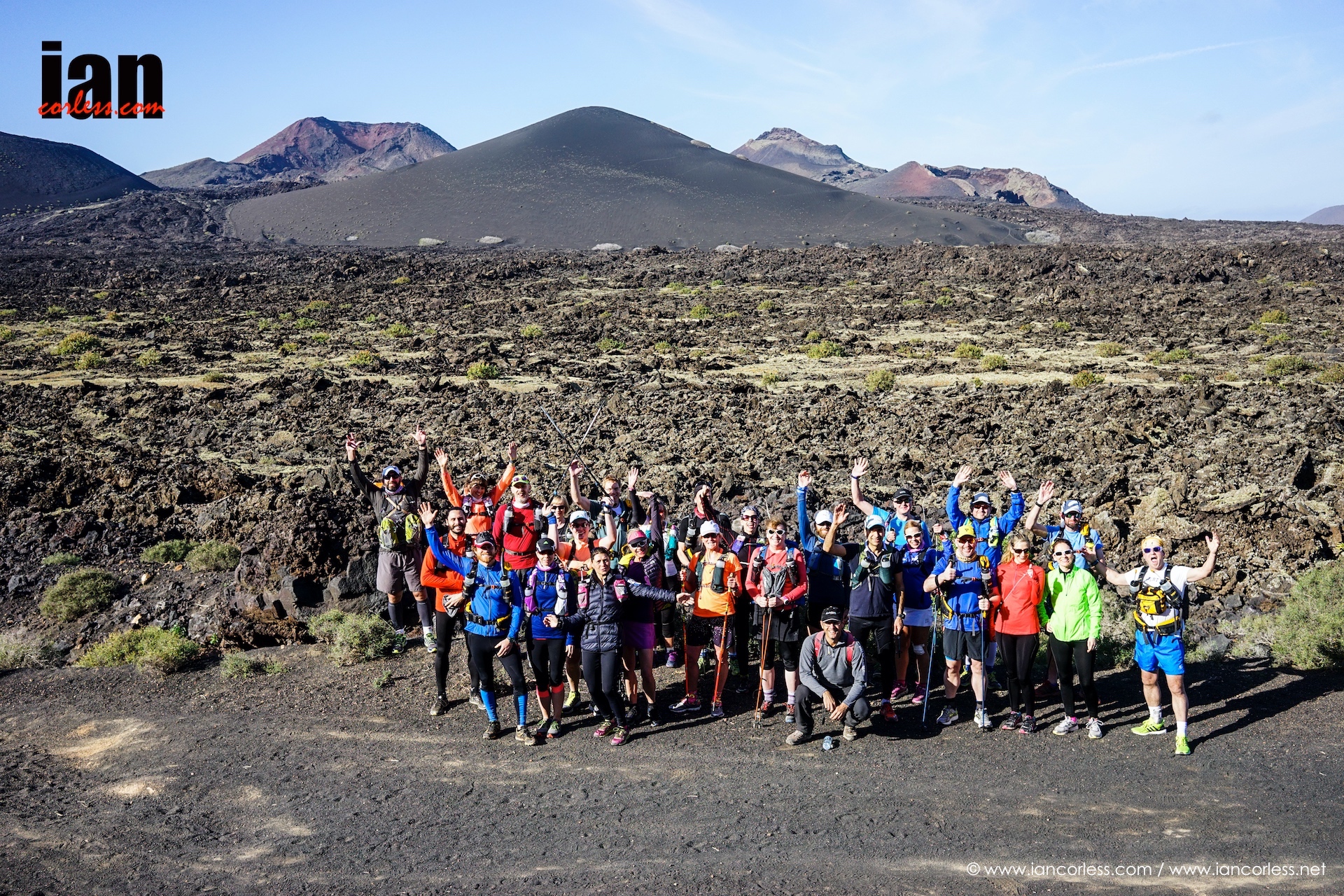
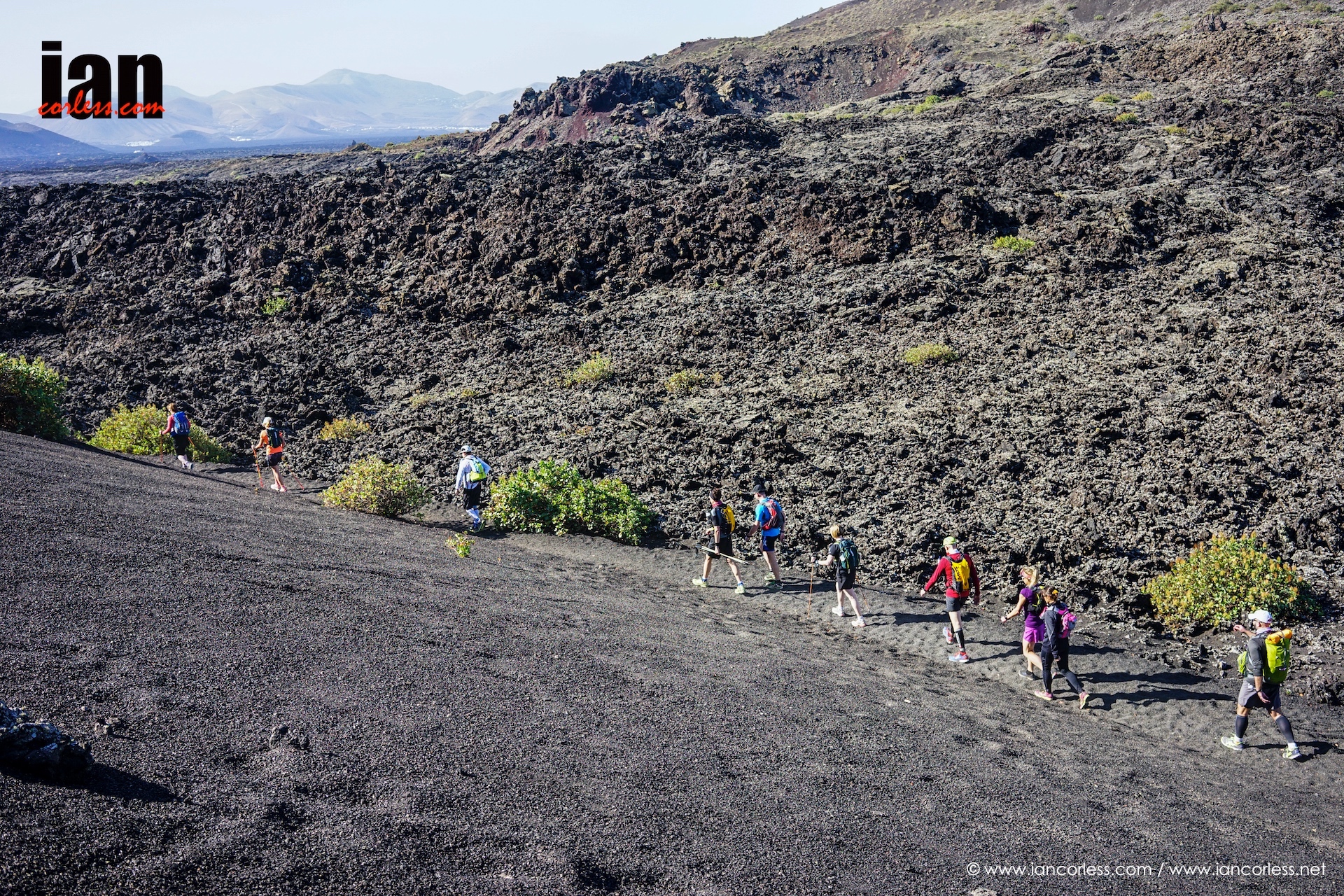
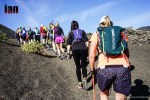
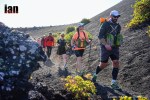
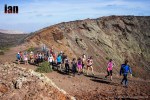
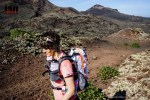
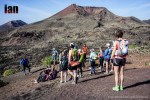
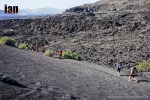
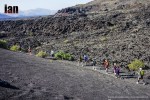
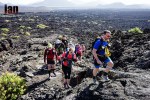
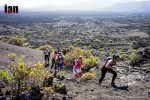
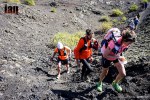
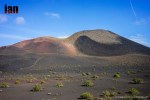
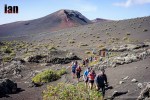
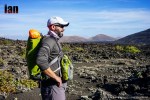
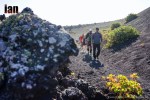
It was an active recovery day at the 2016 Lanzarote multi-day training camp. It was kicked off with a guided 3-hour walk through some of the islands most stunning volcano sections close to the Timanfaya National Park.

©iancorless.com_Lanza2016-02639

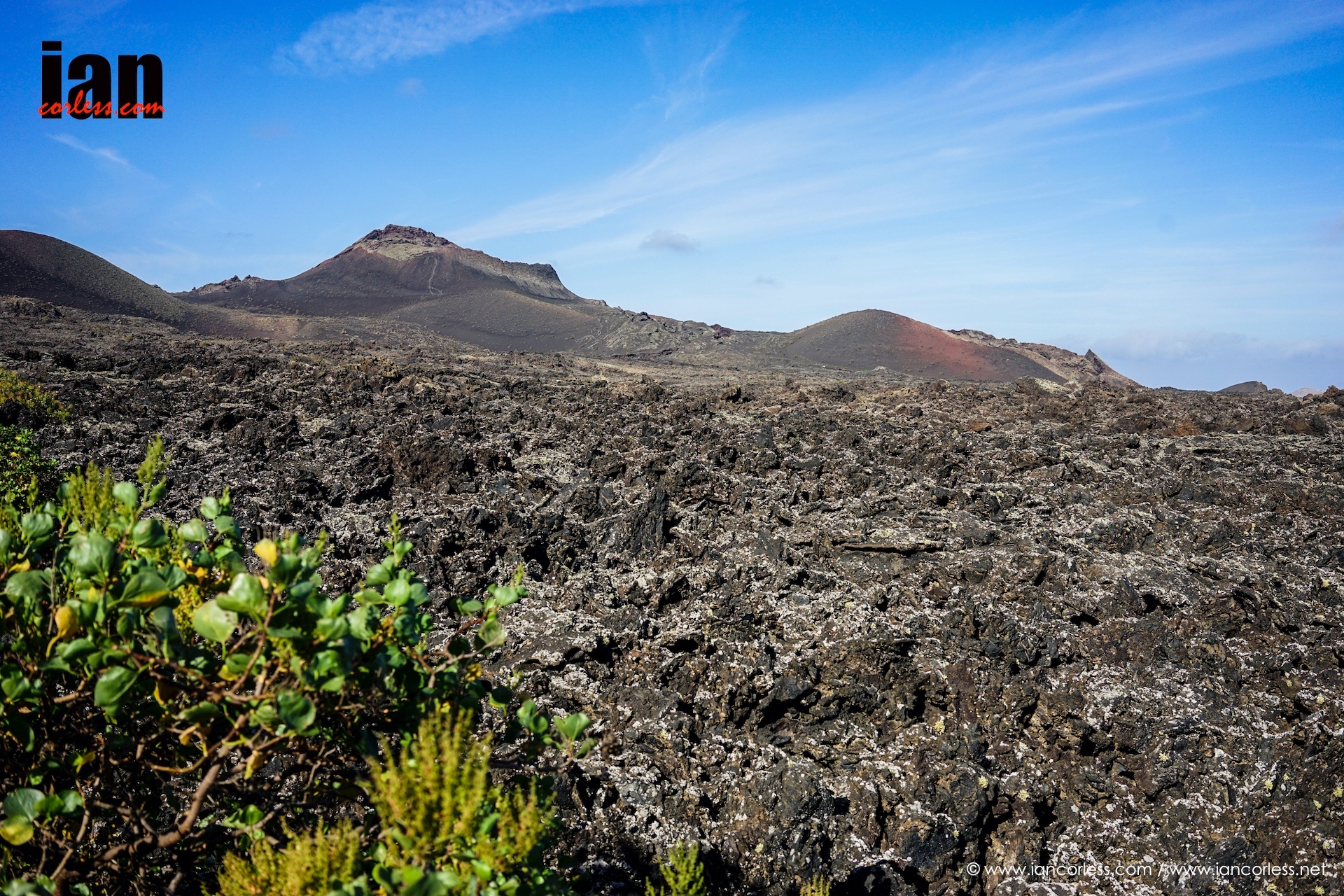
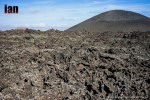
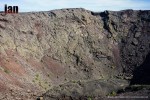
Famous for it’s volcanic landscape, today everyone was able to appreciate up close how dramatic and tough these trails can be. Black lava sand, interspersed with jagged rocks but ultimately everyone was blown away with the dramatic and somewhat eerie vistas. In the early 1700’s, this area had six continuous years of volcanic eruptions that created this stunning landscape.

©iancorless.com_Lanza2016-02533

Elinor Evans, a yoga expert undertaking Marathon des Sables for the first time in 2016 commented after the walk:

“It’s been a really special day in this environment. We have walked with our packs, covered some miles and in the process had a wonderful learning experience. It has been magical.”

It was a sentiment echoed by everyone in the camp and with 5-hours of running waiting for everyone tomorrow, the opportunity to walk today was welcome.

The evening discussion was all about food and hydration for multi-day racing and we discussed the different nutritional needs for someone who may be looking to compete, the mid-packer and the walker. Of course, it’s all very personal, but many similarities from all three scenarios crossed over providing all the participants with plenty of key and essential information that they can now take away and formulate their own strategies for their chosen race.
Tomorrow, Sunday, kicks off with a 5-hour run along a new coastal section that will involve some climbing, scrambling and of course a plethora of mixed terrain.

If you are interested in a multi-day training camp, our 2017 dates are set and you can view HERE

Many thanks to:

Raidlight, OMM, inov-8, Berghaus, PHD, MyRaceKit and Scott Running for the support with this camp.

Race Day Nutrition (Part Seven) – Marc Laithwaite

©iancorless.com_MDM2015-0251

Last week we introduced specific products used during endurance events and how they can fulfil your requirements in terms of nutrition intake.

There are 3 common sports products used during endurance racing:

  1. Drinks powders
  2. Gels
  3. Bars

This week, we’ll check out bars and gels.

What’s in them?

Unsurprisingly, gels tend to contain maltodextrin and glucose, similar to the drinks. In fact, gels are simply condensed energy drinks. They were originally designed to be carried on events where you could access only water, as a source of energy. The thickness of the gel will dictate how much energy they contain. Some gels are very thick and sticky and these contain more energy than the ones which are a thinner, more watery solution. This is based upon the simple principles we discussed a couple of weeks ago, relating to hypo, iso and hypertonic solutions.

As an example, a 41g power gel original contains approximately 27g of carbohydrate. Remember the 60g rule? That means 2 of these gels per hour would be pretty close to target intake. The remaining 14g of the gel is fluid (41g – 27g = 14g) so we can calculate the gel thickness as follows:

Total weight = 41g
Carbohydrate content = 27g
27/41 = 0.66, Therefore this gel is a 66% solution (27 is 66% of 41)

The purpose of that calculation is simply to highlight that gels are extremely ‘hypertonic’, remember that isotonic is a 7% solution. Being hypertonic is not a problem, the more hypertonic the more energy it provides, but it does mean that you need to take fluid with them.

In past blogs we stated that you should aim for no more than 10% solutions, so that means 270ml of water drank with 27g of carbohydrate will be correct, 270 / 27 = 10. It’s important to do the calculation based on the 27g of carbohydrate in the gel, not the 41g total weight of the gel. Technically if you drink 270ml the solution will actually be less that 10% as there’s already 14g of fluid in the gel as stated above. As a practical guide think about a 500ml drinks bottle generally used for cycling, it’s half of one of those with every power gel.

What about Isogels

There are ISOGELS on the market, SIS and High5 make popular versions. By adding more fluid to the gel and reducing the carbohydrate content they can reduce the thickness of the gel solution.

The first thing of note is that they contain less carbohydrate, so you’d need to take more of them every hour. They contain in the region of 22-24g of carbohydrate per gel, so that means you’d be taking almost 3 per hour to get your energy, rather than 2 power gels. That’s a lot of gels to carry if you’re racing long distances.

But ISOGELS are isotonic, so you don’t need water, right?

HIGH5 Isogel
Total weight = 66g
Carbohydrate content = 24g
24/66 = 0.36, Therefore this gel is a 36% solution (24 is 36% of 66)

SIS GO Isogel
Total weight = 66g
Carbohydrate content = 22g
22/66 = 0.33, Therefore this gel is a 33% solution (22 is 33% of 66)

So we said above and in previous blogs that isotonic solutions are 7%. The solutions for the ISOGELS above are 33% and 36%, this is not isotonic, it’s hypertonic. I may be missing something here, so I did phone High5 and ask. They couldn’t answer the question but stated that ‘they were more isotonic than other gels’. I’m not sure that is technically true, as none of them are anywhere near 7%. That’s a bit like me saying I’m tall and when questioned about by lack of height, I reply by stating ‘I’m more tall than Ste Hilton’. Whilst that may be true, it doesn’t make me tall…

Key points:

1. You DO need to drink water with ISO gels
2. If you don’t know Ste, that joke is completely lost

If there’s 24g of carbohydrate in a 66g gel, then you need to take 240ml of water for a 10% solution (240ml / 24g = 10%). However, there is already 42g of fluid in there (66g gel – 24g carbohydrate = 42g fluid). Based on this, 200ml would be sufficient, that’s still more than a third of a 500ml drinks bottle.

What about energy bars?

Bars are an alternative source of carbohydrate. They generally contains things like oats, rice, wheat etc with added sugar syrups such as glucose or fructose. In terms of ‘solutions’ a gel is solid food, so it needs mixing with a significant amount of water to digest and absorb effectively.

As an example, a powerbar energize bar (others are available!!) weighs in as follows:

Bar weight = 55g
Carbohydrate = 39g
Fat = 2g
Protein = 6g

In terms of carbohydrate content, you’d need 1.5 bars per hour to get your 60g intake. If you add up the content weight 39g + 2g + 6g = 47g. We stated that the bar weighed 55g, so there is some fluid in there also plus some other little bits to make the weight up to 55g. If you drank a full 500ml bottle of water with every bar, that would give you just less than 9% solution which is ideal (47/500 = 0.9). That means a full 750ml bottle and 1.5 powerbars per hour would be pretty much on target (remember all bars are different, these calculations are for powerbar energize).

Salt intake

We discussed sweating and hydration last week, which included salt intake. As a recap, salt and sodium are 2 different things. Salt is 40% sodium and 60% chloride. You need to know this as some products give ‘salt’ content and others give ‘sodium’ content. Remember also from last week we said that you are likely to sweat up to 1g of sodium per hour (1000mg). There’s multiple thoughts on salt replacement, regarding how much and whether you need it. I’m not going to go into depth on the matter because this is meant to be a simple and easy to read blog. If it’s warm and you sweat a fair bit, aim for 500-1000mg SODIUM per hour. If you take a bit too much, you’ll just sweat it out anyhow so don’t overly panic.

Let’s presume that you are aiming to take all of your energy by using sports gels or bars. So remember, our targets are 60g of carbohydrate per hour and 500-1000mg of sodium per hour, presuming its warm and you sweat. Here are some options:

SIS GO Isotonic Gel

Includes 22 grams of carbohydrate
Sodium = negligible

High5 Isogel

Includes 24 grams of carbohydrate
Sodium = negligible

Powergel

Includes 27g of carbohydrate
Sodium = 205mg
2-3 Powergels per hour would give you 410-615mg of sodium, we stated that 500mg was a starting target.

Powerbar Energize

Includes 39g of carbohydrate
Sodium = 192mg
1.5 Powerbar Energize per hour as suggested above, would give you 288mg of sodium, half of that provided by intake of 2-3 Powerbar gels per hour. They really don’t make this easy!!

Some key points:

  1. The amount of carbohydrate in gels and bars varies widely
  2. You need to drink water with all gels and bars for correct absorption
  3. Isotonic gels don’t exist (unless I’ve missed something)
  4. Sodium content varies widely in bars and gels and is often not included

I hope that basic overview helps you to practically apply what you’ve learned over recent weeks, feel free to call into the store and we can talk you through it before your big day.

– Marc

About Marc:

Sports Science lecturer for 10 years at St Helens HE College.

2004 established The Endurance Coach LTD sports science and coaching business. Worked with British Cycling as physiology support 2008-2008. Previous Triathlon England Regional Academy Head Coach, North West.

In 2006 established Epic Events Management LTD. Now one of the largest event companies in the NW, organising a range of triathlon, swimming and cycling events. EPIC EVENTS also encompasses Montane Trail 26 and Petzl Night Runner events.

In 2010 established Montane Lakeland 50 & 100 LTD. This has now become the UKs leading ultra distance trail running event.

In 2010 established The Endurance Store triathlon, trail running and open water swimming store. Based in Appley Bridge, Wigan, we are the North West’s community store, organising and supporting local athletes and local events.

Check out the endurance store HERE

Endurance Store Logo

Race Day Nutrition (Part Six) – Marc Laithwaite

©iancorless.com_TCC2015_Day1-9778

Having discussed carbohydrate, fluid and salt intake, I thought it would be prudent to focus a little more on application. We’ll take a look at the specific products used during endurance events and whether they can fulfil your requirements in terms of nutrition intake.

There are 3 common sports products used during endurance racing:

  1. Drinks powders
  2. Gels
  3. Bars

Aside from the ‘big 3’ there is also a selection of jelly shots or chews, in addition to traditional favourites such as jelly babies, malt loaf, flapjack and bananas. For the purpose of this blog, we’re going to focus on the big 3 and examine what they provide and what’s the difference between them?

Energy Drinks

Energy drinks generally come in powder form and you mix with water to create a solution. In past blogs we’ve discussed the isotonic issue and how it impacts upon digestion. Based upon that, a 10% solution or less is ideal (7% is isotonic). To create a 10% solution, mix 60g of powder in 600ml of water.

What’s in the powder?

Almost all energy powders are maltodextrin, this is a ‘glucose polymer’ and made up of between 3-17 pieces of glucose in a chain. It is very rapidly absorbed (almost as quickly as pure glucose) and therefore gives a rapid sugar spike and insulin response (good if you need it during racing, but not good if you don’t need it, such as steady training or just using during the day as part of your diet). All energy drinks tend to be based on maltodextrin, but they often have small amounts of glucose and fructose.

Electrolytes

We discussed sweating and hydration last week, which included salt intake. You can go back and read in full if you wish, but as a recap, salt and sodium are 2 different things. Salt is 40% sodium and 60% chloride. You need to know this as some products give ‘salt’ content and others give ‘sodium’ content. Remember also from last week we said that you are likely to sweat up to 1g of sodium per hour (1000mg). There’s multiple thoughts on salt replacement, regarding how much and whether you need it. I’m not going to go into depth on the matter because this is meant to be a simple and easy to read blog. If it’s warm and you sweat a fair bit, aim for 500-1000mg SODIUM per hour. If you take a bit too much, you’ll just sweat it out anyhow so don’t overly panic.

Let’s presume that you are aiming to take all of your energy by using sports drinks. So remember, our targets are 60g of carbohydrate per hour and 500-1000mg of sodium per hour, presuming its warm and you sweat. Here are some options:


SIS GO Electrolyte 60 grams of powder

Includes 55 grams of carbohydrate, primarily maltodextrin

360mg sodium


Powerbar Iso Active 60 grams of powder

53 grams of carbohydrate, primarily maltodextrin

756mg sodium


H5 Energy Source 60 grams of powder

57g of carbohydrate, includes maltodextrin, but 33% fructose

312mg sodium


H5 Energy Source Xtrem 60 grams of powder

57g of carbohydrate 33% fructose

306mg sodium

Approx. 175mg caffeine


Some key points:

  1. We said your target is 60g of carbohydrate, not 60g of powder, but as you can see above, 95% of the powder which goes into your bottle, is actual carbohydrate.
  1. The sodium levels vary quite widely, you can see that Powerbar Iso Active has considerably more than others (756mg) and is the only one to fall within the 500-100mg range.
  1. H5 Energy Source is the only one which uses fructose in large quantities. They use a 2:1 formula (66% maltodextrin and 33% fructose). The reason for this is that the 60g per hour rule is based on the fact that only 60g of GLUCOSE can be absorbed per hour (maltodextrin is a glucose chain). However, that doesn’t account for fructose, which is absorbed in a different manner. So basically, if you take 90g of powder per hour, that contains 60g glucose (the maximum amount of glucose you can absorb) and 30g fructose which is absorbed separately. You can use this drink to take on more carbohydrate per hour than the normal guidelines.
  1. H5 Extrem also has caffeine, approx 175mg per 60g powder. To put that into perspective a pro-plus tablet has 50mg and a filter coffee has between 50-100mg per cup. People think caffeine is a ‘pick up’ or ‘kick’, when in fact it’s real purpose is a pain killer. Caffeine can mask your effort if taken in significant quantities, it changes your perception by acting on the nervous system to make things feel easier.


What about electrolyte tablets?


H5 Zero Tabs 4g tablet

260mg sodium

Power Bar 4g tablet

250mg sodium


Some key points:

The electrolyte tablets don’t contain any energy, they are purely flavoured salt replacement. If you’re drinking a bottle every hour in warm weather and sweating, then you probably need to double them in the bottle. If you’re using energy gels and bars to get your ‘energy’ during your event, you could use the electrolyte tablets to reach your sodium target. You can generally always get water during a race, so add 2 tabs to each bottle and drinks throughout the hour in addition to taking your gels and or bars.

I hope that basic overview of drinks helps you to practically apply what you’ve learned over recent weeks, feel free to call into the store and we can talk you through it before your big day.

Next week we’ll look at energy bars and gels, which one’s to choose to best suit your needs, that’s part 7, honestly the end is in sight.

– Marc

About Marc:

Sports Science lecturer for 10 years at St Helens HE College.

2004 established The Endurance Coach LTD sports science and coaching business. Worked with British Cycling as physiology support 2008-2008. Previous Triathlon England Regional Academy Head Coach, North West.

In 2006 established Epic Events Management LTD. Now one of the largest event companies in the NW, organising a range of triathlon, swimming and cycling events. EPIC EVENTS also encompasses Montane Trail 26 and Petzl Night Runner events.

In 2010 established Montane Lakeland 50 & 100 LTD. This has now become the UKs leading ultra distance trail running event.

In 2010 established The Endurance Store triathlon, trail running and open water swimming store. Based in Appley Bridge, Wigan, we are the North West’s community store, organising and supporting local athletes and local events.

Check out the endurance store HERE

Endurance Store Logo