The Coastal Challenge 2020 #TCC2020

The 2020 ‘The Coastal Challenge’ is upon us! Six days, 230.5km of racing and 9543m of vertical gain, 9413m of vertical descent – TCC is more than a challenge!

Hugging the coastline of the tropical Pacific, TCC is the ultimate multi-day experience that weaves in and out of the Talamancas; a coastal mountain range in the Southwest corner of this Central American country.

The terrain is ever-changing from wide, dusty and runnable fire trails to dense and muddy mountain trails. Runners will cross rivers, boulders, swim through rivers, pass under waterfalls, survive long and relentless beaches and finally finish in the incredible Corcovado National Park, a Unesco World Heritage site with a stunning final loop around Drake Bay before departing for their journeys home via speedboat.

The Race:

Stage 1 34.6km 1018m of vert and 886m of descent

Stage 2 39.1km 1898m of vert and 1984m of descent

Stage 3 47.4km 1781m of vert and 1736m of descent

Stage 4 37.1km 2466m of vert and 2424m of descent

Stage 5 49.8km 1767m of vert and 1770m of descent

Stage 6 22.5km 613m of vert and 613m of descent

Total 230.5km – Vertical 9543m/ Descent 9413m

Stage 1

It’s a tough day! Runners depart San Jose early morning (around 0530) for a 3-hour drive to Playa Del Rey, Quepos. It’s the only day that the race starts late and ‘in the sun!’. It’s the toughest day of the race, not because the the terrain or distance, but because of the time of day! The runners are fresh and feel great. That is until about 10km and then they realise the heat and humidity is relentless. It’s a day for caution – mark my words! The 34.6km is very runnable with little vertical and technicality, it welcomes the runners to Costa Rica.

Stage 2 

From here on in, it is an early breakfast, around 0400, the race starts with the arrival of the sun! The only way is up from the start with a tough and challenging climb. It’s a tough day with an abundance of climbing and descending and a final tough flat stretch on the beach, just as the heat takes hold.

Stage 3

It is basically 25km of climbing topping out at 800m followed by a drop to sea and a final kick in the tail before the arrival at camp. For many, this is a key day and maybe one of the most spectacular.

Stage 4

It’s another tough start to the day with a relentless climb, but once at 900m the route is a roller coaster of relentless small climbs and descents, often littered with technical sections, rain forest, river crossings and boulders. At 30km, it’s a short drop to the line and the finish at 37.1km.

Stage 5

The long day but what a beauty! This route was tweaked a couple of years ago and now has become iconic with tough trails, plenty of climbing, sandy beaches and yes, even a boat trip. The finish at Drake Bay is iconic.

Stage 6

The victory lap! For many, this stage is the most beautiful and memorable. In just over 20km, the route manages to include a little of all that has gone before. It’s a stage of fun and challenges and one that concludes on the beach as a 2018 medal is placed over your head – job done!

THE 2020 ELITE LINE UP
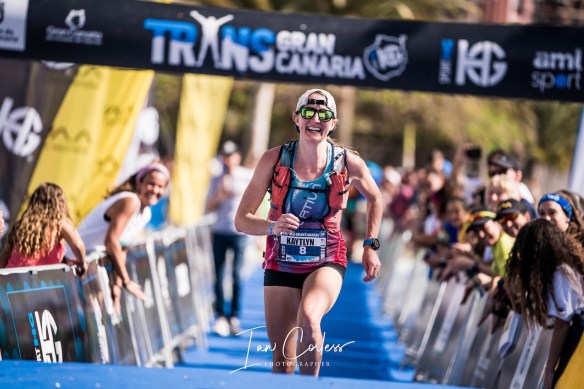
Katlyn Gerbin

Kaytlyn joins the line-up of the 2020 TCC with an extremely solid and consistent resume, known in Canada and the USA for a string of top performances, it was a podium place (2nd) at Transgrancanaria that introduced her to worldwide attention. Winner of the Pine to Palm 100 in 2016, Kaytlyn has mixed races distances for the last 3-years, excelling at 50km and 100km with victories at Gorge Waterfalls and Sun Mountain amongst others. In 2017 she won Cascade Crest 100 but her calling cards are 4th place and 2nd place at the 2017 and 2018 Western States.
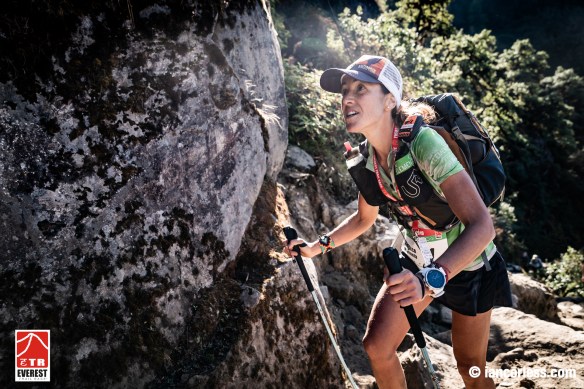
Manuela Vilaseca 

Is a last-minute entry to the race but that is no problem for the experienced ultra-trail and mountain runner. In November, she once again made the podium at the Everest Trail Race. She has two top-10 finishes at UTMB and a high-ranking in the UTWT. Born in Brazil, Manuela will embrace the Pura Vida approach of The Coastal Challenge.

Abelone Lyng

Hailing from Scandinavia, Abe has gained a reputation in just 4-years for tenacity in ultra-trail races. She recently won the 230km Ice Ultra in the Arctic wilderness and placed 4th overall. TCC no doubt will give this cold weather expert some new challenges but Abe embraces a challenge!
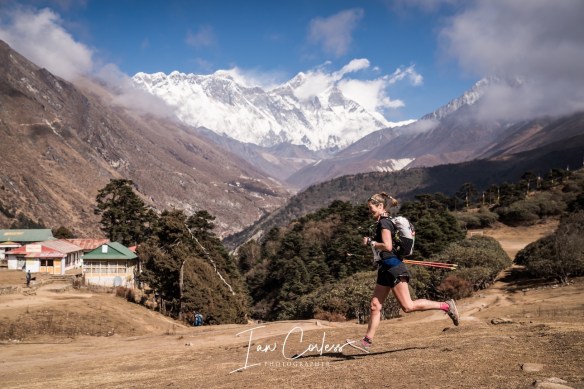
Rebecca Ferry

Becks, as she is known to her friends, has gained a reputation in recent years for achieving great results, be that Everest Trail Race or on the UK trails setting course records. She comes to the TCC with excellent experience of multi-day racing and is a prime contender for the podium.

Brittany Peterson and Kelly Wolfe were due to race and both have sustained injuries preventing participation in the 2020 race. Brittany however will still join us in Costa Rica.

MEN
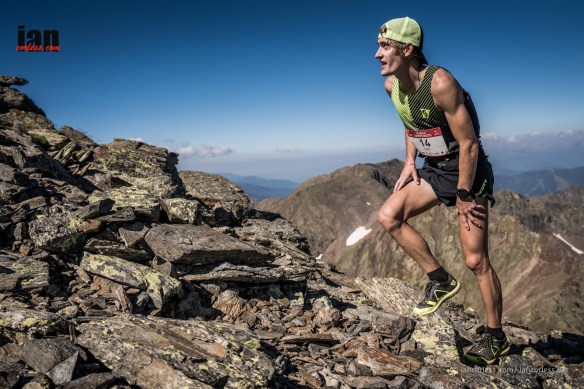
Cody Lind

Cody has been racing for some years, but may well have only come on your radar after 2017 with a very committed foray in the Skyrunning circuit – He placed 8th at Tromso in 2017 and then followed the SWS circuit racing on iconic courses throughout the world. Recently he raced them Rut in the USA and came away with victory. Cody manages to mix speed and technical ability, it’s a perfect mix for the trails in Costa Rica.

Andy Symonds 

Andy is one of the UK’s greatest mountain runners. He has traditions in fell running and has mixed Skyrunning and ultra-running throughout a long and successful career. He recently placed 5th at UTMB after 3 attempts. He has raced Marathon des Sables and placed in the top-10 but Andy will always be considered a mountain specialist. He has won Lavaredo, placed 3rd at Marathon Mont Blanc, 5th at Transgrancanaria and has represented his country at many World Championships. The technical and demanding trails of Costa Rica with plenty of climbing and descending provide Andy a perfect playground.

Mauricio Mendez

Mauricio is a rising star from Mexico who is currently an Xterra World Champion. He joins TCC as somewhat as a dark horse but no doubt he will be the hope of the locals. He started running because of his Father and in his own words, is a dreamer!

Julien Chorier unfortunately, took a fall in training and sustained a fracture and therefore is unable top race in the 2020 edition of the race. We wish him a speedy recovery and hope he can join TCC2021. Jordi Gamito should have toed the line at the 2019 TCC but injury prevented his participation and once again, while training in Africa over Christmas, he has sustained a knee injury which unfortunately will keep him away from the race.

The 2020 TCC starts in February as runners from all over the world will assemble in San Jose before transferring to the coast for stage 1 of the race starting on Saturday 8th. Year-on-year, the TCC has grown to be one of ‘the’ most iconic multi-day races. 

#TCC2020
Follow on:
Instagram – @iancorlessphotography
Twitter – @talkultra

the INTERVIEWS Season 1-Episode 6 : Dean Karnazes

Dean Karnazes born Constantine Karnazes; August 23, 1962, is an American ultra-marathon runner, and author of Ultramarathon Man: Confessions of an All-Night Runner, which details ultra endurance running.
Karnazes has completed a plethora of endurance events, most notable achievements include:
  • Ran 350 miles (560 km) in 80 hours and 44 minutes without sleep in 2005.
  • Single-handedly completed “The Relay”, a 199-mile (320 km) run from Calistoga to Santa Cruz, eleven times
  • Ran a marathon to the South Pole in −13 °F (−25 °C) temperatures without snowshoes in 2002
  • Ran a marathon in each of the 50 states in 50 consecutive days in 2006
Other athletic achievements include:
  • Winner (male), Badwater Ultramarathon (135 miles (217 km) across Death Valley in 120 °F (49 °C) temperatures), 2004 (with five other top-10 finishes from 2000-2008)
  • Winner, Vermont Trail 100 Mile Endurance Run, 2006
  • Overall Winner, 4 Deserts Race Series, 2008
  • American Ultrarunning Team, World Championships, 2005, 2008
  • 148 miles (238 km) in 24 hours on a treadmill, 2004
  • Eleven-time 100-Mile/1 Day Silver Buckleholder at the Western States Endurance Run
  • Ran 3,000 miles (4,800 km) across the United States from Disneyland to New York City in 75 days, running 40 to 50 miles (65 to 80 km) per day, 2011
Other honors include:
  • Competitor magazine Endurance Athlete of the Year Award winner, 2008, 2006, 2005
  • ESPN ESPY Award winner, “Best Outdoor Athlete”, 2007
  • Men’s Journal, Adventure Hall of Fame, 2007
  • Outside magazine, Ultimate Top 10 Outdoor Athletes, 2004
First recorded in 2012
Episode 0h 38m 46s
Talk Ultra back catalogue HERE
*****
Hosted on ANCHOR (HERE) the INTERVIEWS will also be available to listen on many other players, including SPOTIFY (HERE).
ANCHOR app on Apple HERE and Google HERE
Download links will be added in due course.
Apple Podcasts HERE
Breaker HERE
Castbox
Google Podcasts HERE
Overcast HERE
Pocket Casts  HERE
RadioPublic HERE
Spotify HERE
Stitcher
*****
TALK ULTRA podcast will be released as normal providing you long shows as it has always done with ideally two shows per month. The back catalogue will be released randomly via the INTERVIEWS and not chronologically.
*****

the INTERVIEWS Season 1-Episode 5 : Ellie Greenwood

Ellie Greenwood is a British/Canadian runner born in Scotland, and spent most of her childhood in England. She moved to Canada after graduating from university to work for a ski tour operator. Her career  began in 2008 and is a two-time 100k World Champ. winning the title in 2010 and 2014. She holds numerous course records, including those for the iconic Westerrn States. She is the first British woman to win the 90 km Comrades  in South Africa.
*****
First recorded in 2012
Episode 0h 26m 36s
Talk Ultra back catalogue HERE
*****
Hosted on ANCHOR (HERE) the INTERVIEWS will also be available to listen on many other players, including SPOTIFY (HERE).
ANCHOR app on Apple HERE and Google HERE
Download links will be added in due course.
Apple Podcasts HERE
Breaker HERE
Castbox
Google Podcasts HERE
Overcast HERE
Pocket Casts  HERE
RadioPublic HERE
Spotify HERE
Stitcher
*****
TALK ULTRA podcast will be released as normal providing you long shows as it has always done with ideally two shows per month. The back catalogue will be released randomly via the INTERVIEWS and not chronologically.

the INTERVIEWS Season 1-Episode 4 : Geoff Roes

Geoff Roes was raised in Cleveland, New York and excelled in track and cross country at Paul V. Moore High School in Central Square, NY. He competed in cross-country at Syracuse University for one year before becoming injured. Roes took a hiatus from competitive running until trying his hand at ultra marathon running in 2006 when he won his first event, the Little Susitna 50K. In 2007, he set a course record in the process of winning the Susitna 100 miler. In 2010 Roes won the American River 50 Mile Endurance Run. Roes also won the 2010 Western States Endurance Run in a record time of 15:07:04. Roes set the still-standing course record for the Wasatch 100 (a 100-mile race along the Wasatch Front range of the Rocky Mountains near Salt Lake City, UT) in 2009 with a time of 18:30:55, beating the previous course record by nearly one hour and five minutes. Roes now resides in Juneau, Alaska. (Reference wikipedia)

First recorded in 2013

Episode 0h 43m 13s

Talk Ultra back catalogue HERE

Hosted on ANCHOR (HERE) the INTERVIEWS will also be available to listen on many other players, including SPOTIFY (HERE).
ANCHOR app on Apple HERE and Google HERE
Download links will be added in due course.
Apple Podcasts HERE
Breaker HERE
Castbox
Google Podcasts HERE
Overcast HERE
Pocket Casts  HERE
RadioPublic HERE
Spotify HERE
Stitcher
TALK ULTRA podcast will be released as normal providing you long shows as it has always done with ideally two shows per month. The back catalogue will be released randomly via the INTERVIEWS and not chronologically.

Episode 181 – Gordy Ainsleigh, Kilian Jornet and Timothy Olson

Episode 181 of Talk Ultra brings you three interviews from the Talk Ultra back catalogue to launch the new show, ’theINTERVIEWS.’ We go back to 2012 and 2013 of Talk Ultra and we have interviews with Gordy Ainsleigh, Kilian Jornet and Timothy Olson.
 
Talk Ultra is now on Tunein – just another way to make the show available for those who prefer not to use iTunes – HERE  You can download the Tunein APP HERE
 
Talk Ultra needs your help! 
 
We have set up a Patreon page and we are offering some great benefits for Patrons… you can even join us on the show! This is the easiest way to support Talk Ultra and help us continue to create! 
 
Many thanks to our Patrons who have helped via PATREON
 
Donate HERE
*****

the INTERVIEWS

 
00:05:10 Gordy Ainsleigh
In 1974 Gordy Ainsleigh was the first to run the Western States Endurance Run in under twenty-four hours. Ainsleigh had finished the Western States (WSER) in 71 and 72 on horseback, but in 73 his new horse was pulled with lameness at the 29-mile checkpoint. With the inspiration and encouragement of Drucilla Barner, the first woman to win the Tevis Cup and Secretary of the Western States Trail Foundation, Gordy, in 1974,  joined the horses of the Western States Trail Ride to see if he could complete the course on foot in under twenty-four hours. Twenty-three hours and forty-two minutes later Gordy arrived in Auburn, proving that a runner could indeed, travel the 100 miles in one day. History was made…!
First recorded in February, 2012.
*****
01:06:20 Kilian Jornet
It’s the day after the Matterhorn Ultraks and just four days after Kilian Jornet’s successful attempt on the Matterhorn Summit record attempt from Cervinia. It has been quite a few days for this iconic mountain and although Kilian has excelled on both occasions, we all know, the mountain is still the boss.
Kilian arrives with Emelie Forsberg looking relaxed and fresh after a late breakfast. I congratulate him (and Emelie) once again on topping the podium at the Skyrunning Matterhorn Ultraks race and ask him how he feels, ‘I am a little tired but feel good. I was certainly tired in the race but I didn’t push too hard. I just did what I needed to do to win the race’.
Our conversation turns the TNF UTMB and we discuss how the race will unfold for the men and women. Kilian and Emelie are animated at the prospect of Julien Chorier, Miguel Heras, Anton Krupicka and the other contenders going head-to-head. Emelie gets excited at the thought of Nuria Picas in the ladies race, it’s her first 100-mile race and of course Emelie knows the Catalan well. We could talk all day but eventually I settle down with Kilian in a quiet corner and we discuss the Matterhorn.
First recorded in September 2013.
*****
01:43:16 Timothy Olson
 
Timothy Olson had won the 39th annual Western States 100 race in the record time of 14:46:44, trimming the course record of 15:07:04, set by Geoff Roes two years earlier, by over twenty minutes. In this interview, we found out about the demons of Tim’s life, drugs, alcohol and a road to ruin. Ultra-running quite literally saved his life… It still stands as one of my all-time favourite Talk Ultra interviews. 
First recorded in 2012.
 
Show Length 02:39:17
*****
Information for the INTERVIEWS – please follow the show
*****
Hosted on ANCHOR (HERE) the INTERVIEWS will also be available to listen on many other players, including SPOTIFY (HERE).
ANCHOR app on Apple HERE and Google HERE
Download links will be added in due course.
Apple Podcasts HERE
Breaker HERE
Castbox
Google Podcasts HERE
Overcast HERE
Pocket Casts  HERE
RadioPublic HERE
Spotify HERE
Stitcher
 
*****
TALK ULTRA podcast will be released as normal providing you long shows as it has always done with ideally two shows per month. The back catalogue will be released randomly via the INTERVIEWS and not chronologically.
 
 
Share us on Facebook – Talk Ultra FB https://www.facebook.com/talkultra/
 
Tweet us on Twitter – Talk Ultra on Twitter https://twitter.com/Talkultra
 
 
And use good old word mouth.
 
*****
 
Please support Talk Ultra by becoming a Patron at www.patreon.com/talkultra and THANKS to all our Patrons who support us. Rand Haley and Simon Darmody get a mention on the show here for ‘Becoming 100k Runners’ with a high-tier Patronage.
 
*****
 
 
Stitcher You can listen on iOS HERE, Android HERE or via a web player HERE


Website – talkultra.com

Lanzarote Training Camp 2020 – Day 4

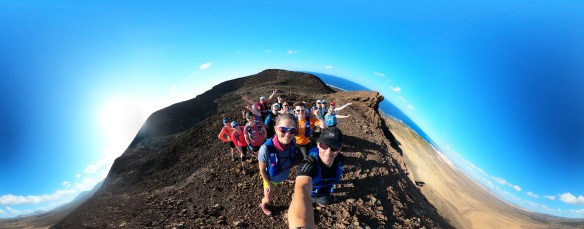
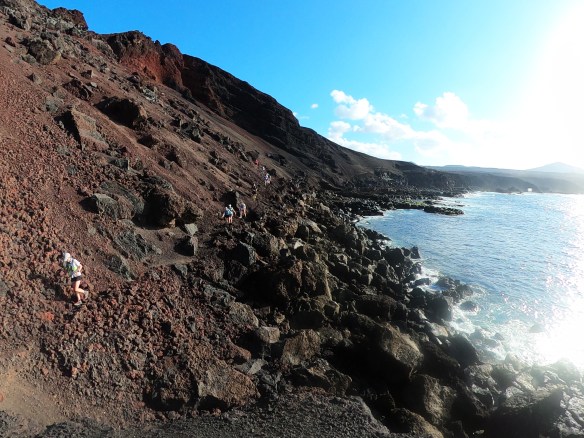
It was a double run day today in Lanzarote starting at 0800 with a really great 9-miles with sunrise with trails along the coast leading to the volcanoes around the village of Soo and then a re-route back down to Club La Santa.

We then had a very quick turnaround to a 2-hour presentation by Running Reborn coach, Shanne Benzie. Shane is a the forefront of discussing and analysing run technique to increase performance and reduce injury, as usual it was fascinating.

A break for lunch and then the afternoon was split in to two 2-hour sessions.

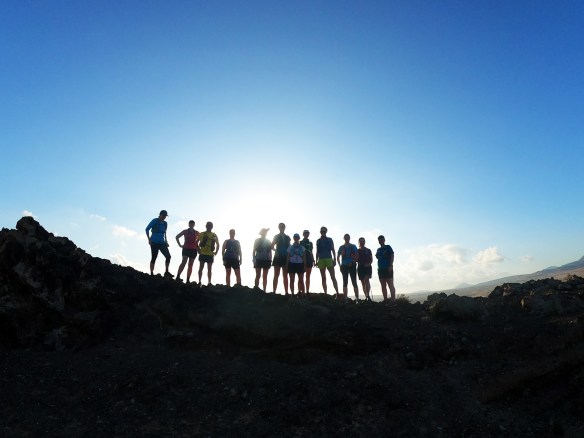
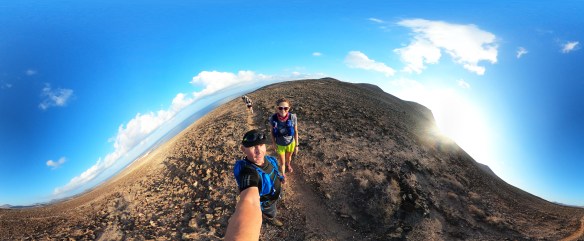
Groups 1 and 2 remained on the run track and had analysis with Shane Benzie while groups 2 and 4 ran along the coast to play on one of the volcanoes climbing to the summit and descending.

You can move around the video image by using the toggle button that appears on the left of the video screen.

And then coasteering one of the technical paths returning back to Club La Santa.

Back at Club La Santa, the groups swapped with 3/4 remaining on the track with Shane and 1/2 heading out on the trails.

The day concluded at 7pm with everyone exhausted and exhilarated after a very full day.

Dates for our 2021 Camp will be announced soon HERE

Follow on:

Instagram – @iancorlessphotography

Twitter – @talkultra

facebook.com/iancorlessphotography

Web – www.iancorless.com

Web – www.iancorlessphotography.com

Image sales –www.iancorless.photoshelter.com

the INTERVIEWS Season 1-Episode 3 : Timothy Olson

This interview goes back to 2012 and episode 12 of Talk Ultra.
Timothy Olson had won the 39th annual Western States 100 race in the record time of 14:46:44, trimming the course record of 15:07:04, set by Geoff Roes two years earlier, by over twenty minutes. In this interview, we found out about the demons of Tim’s life, drugs, alcohol and a road to ruin. Ultra-running quite literally saved his life… It still stands as one of my all-time favourite Talk Ultra interviews.
First recorded in 2012.
Episode 0h 53m 8s

Hosted on ANCHOR (HERE) the INTERVIEWS will also be available to listen on many other players, including SPOTIFY (HERE).

ANCHOR app on Apple HERE and Google HERE

Download links will be added in due course.

Apple Podcasts HERE
Breaker HERE
Castbox
Google Podcasts HERE
Overcast HERE
Pocket Casts  HERE
RadioPublic HERE
Spotify HERE
Stitcher
TALK ULTRA podcast will be released as normal providing you long shows as it has always done with ideally two shows per month. The back catalogue will be released randomly via the INTERVIEWS and not chronologically.

the INTERVIEWS by Talk Ultra

New for 2020, TALK ULTRA podcast will bring you the INTERVIEWS from the extensive podcast back catalogue.

The USP of Talk Ultra has always been long shows designed to be listened to during long journeys, or ideally, during a long run!

Over the year’s we have been asked to release the interviews that make up a show, typically 3, as stand-alone interviews. So, for 2020 and moving forward, we will release the interviews, randomly and not in chronological order.

Talk Ultra podcast will still be released and published as normal.

Released using ANCHOR, the INTERVIEWS will be available on many different formats and importantly, Spotify.

Our first show will go back to February 2012 and an interview with Gordy Ainsleigh who has a special place in ultra-history as being the first person the run the Western States Endurance Run on foot.

Listen on SPOTIFY HERE

The podcast will also be listed and available on many other outlets, as listed below (links added when appropriate):

Apple Podcasts HERE
Breaker HERE
Castbox
Google Podcasts HERE
Overcast HERE
Pocket Casts  HERE
RadioPublic HERE
Spotify HERE
Stitcher

Follow on:

Instagram – @iancorlessphotography

Twitter – @talkultra

facebook.com/iancorlessphotography

Web – www.iancorless.com

Web – www.iancorlessphotography.com

Image sales –www.iancorless.photoshelter.com

THE LONG RUN – Running Long, but how long?

We all run long, but the length of a long run can really vary depending on many factors such as age, fitness, race and training history, targets, objectives and available time. I get asked and read, time and time again, the question, ‘How long should I run?’

‘What session you doing?’ 

‘Long run today,’ the answer.

But, what is a long run and how long should a long run be?

Before that question can be answered, one needs to understand why one is running long and for what purpose. Typically this will be a long-term event that is planned in the diary that may or may not be a race.

Having a date to work too is a great starting place as it provides a deadline point. This helps focus the mind and plan the time accordingly.

Ask yourself, what your objectives are? For example, there is a difference between competing and completing?

What distance is the event? (What is the time limit, what are intermediate cut-off times?)

If you are used to running 5k and 10k events, a long run for you may well be 75-90 minutes? If you are a marathon runner, your long run may be 3 to 3.5-hours. If you are running an ultra, this is where it gets tricky.

Why do we run long?

In summary, we put an emphasis on 3 key points: 

  • Mental Strength
  • Muscular and physical adaptation 
  • Efficiency to use fat as a fuel

Mental Strength:

If you have never run for more than 1 hour in training, then 3 hours on your feet just feels like a really long time, so, you need to adapt mentally for the challenge ahead and you need to be strong to get the job done. This time on feet, needs to be appropriate to the challenge one has planned.

Muscular and Physical Adaptation:

Muscle soreness will come for everyone, however, we can train to reduce the impact or delay the process by progressively running longer in training. With recovery periods, we allow our muscles to adapt to the stress and they become stronger. Delayed onset of muscle soreness (DOMS) is not pleasant and it something that can really be painful in the 24/ 48 and 72 hour period after hard/ ;long training or racing. By running long in training we adapt to delay or reduce the DOMS.

Efficiency to use fat as a fuel:

Our bodies can only store so much carbohydrate and once those stores are used up we have only two options left: top them up or slow down and maybe even stop if they have got very low. As an endurance athlete we need to tap into our almost unlimited fat stores. We do this by teaching our body to use fat as a fuel during the long run. The more efficient you become at this, the longer you can run and the longer you can maintain a pace. Ultimately it means the whole race/training experience will be better and more enjoyable.

The Long Run

Running longer requires running slower, especially if we are going to switch fat burning on. It requires a pace that one can maintain for hours and hours and yes, that pace can be walking. The long run/ walk is specific to you and nobody else!

Running hard and faster has its place and yes, top elite runner can and will incorporate faster paces within a long run to adapt. But be specific and think of your objectives and what you are trying to achieve.

Be specific with terrain. No point for training for a 50-mile trail race with loads of vertical and technical trail and then run all sessions on the road.

Runners get stressed and worried by mileage, pace, miles per minute and so on. Relax. Think of your long run in terms of time, not distance. Particularly important if running off-road.

To help provide perspective, 3-hours on the road you may well allow one to cover 20-miles, but on the trails or in the mountains, one may only cover 12-miles.

Slow down! 

A common mistake is that we make our long run too fast and our faster runs not fast enough. We therefore end up one paced. Make longer sessions slow and make hard sessions hard. If in doubt, use RPE, Rate of Perceived Exertion. Quite simply, when running long and easy you should have a perceived effort of breathing calmly and being able to talk. If running hard, you should have a perceived effort of difficulty, shortness of breath, discomfort and an inability to hold a conversation.

The big question, how long should the long run be?

Short distance runners often run ‘over distance’ in training. For example, a 10k runner may run a long slow half marathon to build endurance. A half marathon runner may run a long and slow steady 16-20 miles in preparation for a fast race.

This all falls apart when we go to the marathon and beyond. How often have you heard in marathon training that the long run should be 21/22 miles or 3-hours 30-minutes in preparation for a race. But these generic terms do not take in to account the individual. Think of Kipchoge, if he did long runs at 3.5 hours, even running slow (7 min miles for him,) he would cover over 30-miles!

Long runs and adapting for an endurance run such as an ultra comes from not one run but a combination of all runs. It’s about your accumulative run history. They all add up to make you an endurance machine. So, typically, if you are running longer than a marathon, you will have been running for some time. 

First and foremost, consistency is key and long runs should be progressive and based on ability and experience. A long run should test you but not break you. 

What do I mean by progressive?

Let’s use a 12-week scenario based on a runner who can currently run 2-hours in a long run. I am not looking at base training here, but the specifics of a long run and how to make the long run longer. I’m a big fan of building over 3-weeks and recovering for 1-week.

Example:

Month 1

  • Week 1 – Sunday 2:30 hours
  • Week 2 – Sunday 2:45 hours
  • Week 3 – Sunday 3:00 hours
  • Week 4 – 2 hours

Month 2

  • Week 1 – Sunday 2:45 hours
  • Week 2 – Wednesday 90min / Sunday 3:00 hours
  • Week 3 – Wednesday 90min/ Sunday 3:20 hours
  • Week 4 – Sunday 2:30 hours

Month 3

  • Week 1 – Wednesday 90min/ Sunday 3:00 hours
  • Week 2 – Wednesday 1:45 hours/ Sunday 3:30 hours
  • Week 3 – Wednesday 2:00 hours/ Sunday 4:00 hours
  • Week 4 – Wednesday 60min/ Sunday 3:00 hours

The above scenario provides a structured example on how to build up from running 2 hours comfortably to 4 hours. But remember the above scenario is 12-weeks of running with over 37-hours of running, just in the long runs!. That is huge and a great place to start for any endurance challenge.

But my race is 50-miles, can I run the distance?

As mentioned above, it’s not wise or sensible to run too long in anyone session. But the 12-week plan above on a 3/1 scenario shows you how it’s possible to build time and confidence. As you gain more experience you can look at doing back-to-back sessions and plan long training weekends all as part of a long term plan (see below.) Ultimately though, running too long in terms of distance or time is something that should be very carefully planned. You will always here about runners who can do 200-mile weeks or 50-mile training runs; they are exceptions and not the norm. Don’t be lulled into a false sense of security and don’t feel inadequate, we are all individuals and this is maybe the most important aspect. 

Example:

Month 1

  • Week 1 – Saturday 2:00 hours/ Sunday 3:30 hours
  • Week 2 – Sunday 4:00 hours
  • Week 3 – Wednesday 90 mins/ Saturday 2:30 hours/ Sunday 4:30 hours
  • Week 4 – Sunday 3:00 hours

Month 2

  • Week 1 – Saturday 2:30 hours/ Sunday 3:45 hours
  • Week 2 – Wednesday 90min / Sunday 4:00 hours
  • Week 3 – Wednesday 2 hours / Saturday 3:00 hours/ Sunday 5:00 hours
  • Week 4 – Sunday 2:30 hours

Month 3

  • Week 1 – Wednesday 90min/ Saturday 3:00 hours/ Sunday 3:00 hours
  • Week 2 – Wednesday 1:45 hours/ Sunday 5:00 hours
  • Week 3 – Wednesday 2:00 hours/ Saturday 3:00 hours/ Sunday 6:00 hours
  • Week 4 – Wednesday 60min/ Sunday 3:00 hours

Running or walking long is a voyage of discovery and you need to balance long-distance with adequate recovery.

Listen to your body.

Training should be about preparing you to tackle the challenge, but it will never FULLY prepare you. There’s always going to be a bit of extra and a bit of unknown on the day of the event, but surely that’s why you’ve entered?

Follow on:

Instagram – @iancorlessphotography

Twitter – @talkultra

facebook.com/iancorlessphotography

Web – www.iancorless.com

Web – www.iancorlessphotography.com

Image sales –www.iancorless.photoshelter.com

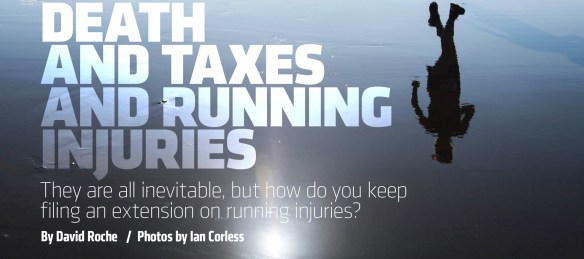
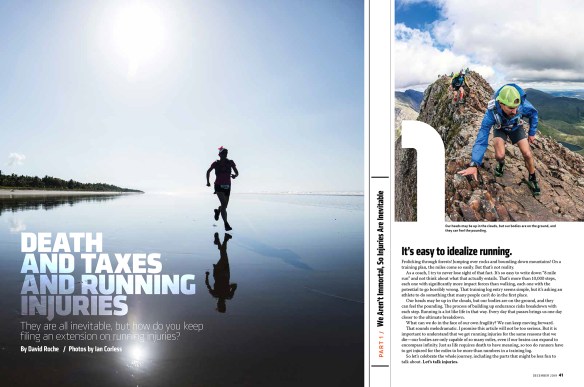
DEATH and TAXES and RUNNING INJURIES

Pleasure to provide the images to accompany the words of David Roche for the article, ‘Death and Taxes and Running Injuries’

for Trail RUNNER Mag

It’s easy to idealize running.

Frolicking through forests! Jumping over rocks and bounding down mountains! On a training plan, the miles come so easily. But that’s not reality.

As a coach, I try to never lose sight of that fact. It’s so easy to write down “8 mile run” and not think about what that actually entails. That’s more than 10,000 steps, each one with significantly more impact forces than walking, each one with the potential to go horribly wrong. That training log entry seems simple, but it’s asking an athlete to do something that many people can’t do in the first place.

Our heads may be up in the clouds, but our bodies are on the ground, and they can feel the pounding. The process of building up endurance risks breakdown with each step. Running is a lot like life in that way. Every day that passes brings us one day closer to the ultimate breakdown.

What can we do in the face of our own fragility? We can keep moving forward.

That sounds melodramatic. I promise this article will not be too serious. But it is important to understand that we get running injuries for the same reasons that we die—our bodies are only capable of so many miles, even if our brains can expand to encompass infinity. Just as life requires death to have meaning, so too do runners have to get injured for the miles to be more than numbers in a training log.

So let’s celebrate the whole journey, including the parts that might be less fun to talk about. Let’s talk injuries.

Read the full article HERE

Trail RUNNER Mag HERE

Follow on:

Instagram – @iancorlessphotography

Twitter – @talkultra

facebook.com/iancorlessphotography

Web – www.iancorless.com

Web – www.iancorlessphotography.com

Image sales –www.iancorless.photoshelter.com