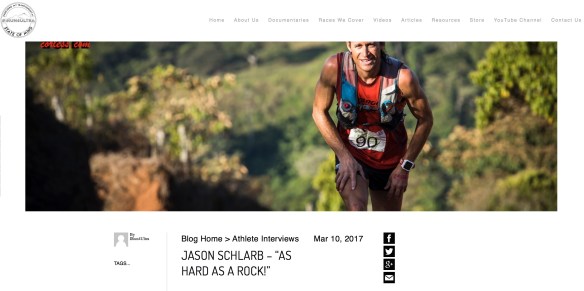
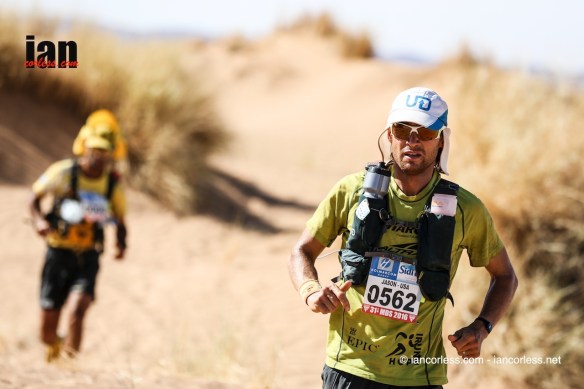
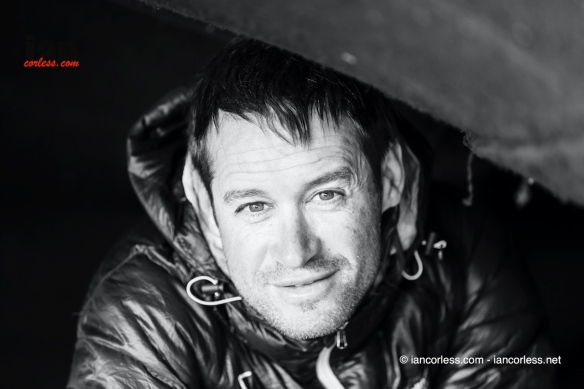
Jason Schlarb is ‘the man!’ – Let’s face it, anyone who can go head-to-head with ‘KJ’ and finish alongside him at Hardrock 100 is doing something right. Jason just placed 3rd at The Coastal Challenge in Costa Rica and while we downed one or three ‘Imperials’ we discussed what 2017 has in store.
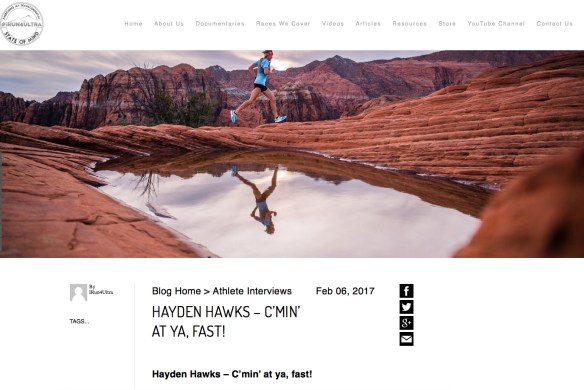
On February 18th, Hayden Hawks will toe the line of Moab’s Red Hot 50k. If I was a betting man, I’d be having a punt and naming Hawks as the victor. Yes, this guy is on fire – he proved it in December when he pushed Zach Miller all the way to the line at San Francisco 50. Zach took the day and the $10.000 prize purse but the duo both went under the old course record, as Hawks says, “I broke the course record by over 10 minutes and did everything that I possibly could today but Zach just had a little more than me.”
But who is this 25-year old from Utah? In 2016 he burst on the scene with victory at Speedgoat 50K, sponsorship with Hoka One One followed and victory at Capstone 50K in November laid the foundations for that very memorable head-to-head with Miller.
“I am excited to get going this year. To be honest with you, right now, I’m ready to race and I’m just getting anxious, I want to race so bad and I want to travel so bad but for now I need to get a good base in training and then I’m going to go out there and be ready to go…!”
Read the full and in-depth interview with Hayden Hawks on IRUN4ULTRA HERE
‘Western States definitely was the race of my life. Everything came together so perfectly that day. I had a once in a lifetime race day experience. I had only dreamed of winning Western States and wanted some day for that to happen. All the stars aligned and I could win. To be among the winners list is surreal…I admire and respect all those women and men who have won. It’s such an honour to have my name listed as a winner of Western States 100.’
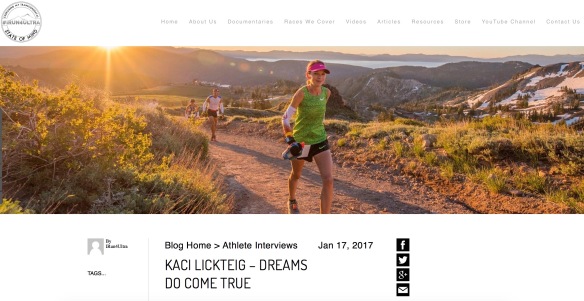
Kaci Lickteig ran her first ultra in 2012 aged 25-years. A small lady, she does pack a punch. It’s all wonderfully echoed by her nickname ‘Pixie Ninja’ – that sums up Kaci in a nutshell.
Some may say, 3rd time is a charm. It certainly is the case with Western States 100. The rise of this lady has been gradual but logical – 6th in 2014, 2nd in 2015 and yes, you’ve guessed it, top spot in 2016. The ‘WSER’ is rolling course, which begins in Squaw Valley, California. It climbs more than 5500m and descends nearly 7000m before reaching the finish in Auburn some 100-miles later. It’s the ‘Grail of Trail!’
Jason Schlarb shot to notoriety after winning Run Rabbit Run 100-mile race in 2013. What has followed is a rise through the ultra ranks. A 4th place at UTMB placed Jason as one of the most successful Americans ever to perform at the big dance in Chamonix – a race that has proven elusive for Americans to crack until recently. The true sign of a true champion is when they go back to a race and win again… Jason did this at Run Rabbit Run winning again in 2015. However, all previous results pale into insignificance after Jason crossed the line hand-in-hand with Kilian Jornet at the 2016 Hardrock 100.
Hardrock, a low-key event in comparison to some of the big ‘hundos’ is for many the epitome of the mountain ultra world – with 100 miles to cover and relentless vertical gain at altitude, it is the grandad event that all other races look up to. For Jason to win it alongside arguably the greatest mountain runner in the world is a huge accolade.
However, before Jason ran the Hardrock 100 event, in winter of the same year, he covered the Hardrock 100 route on skis – a first! It was quite the event and experience and what followed was an immersion into the heat of the Sahara.
Jason raced the 2016 Marathon des Sables and found it a real challenge, I wondered, what was it about multi-day racing that appeals to him, after all, he has a reputation of being a single stage racer.
“One of the aspects of stage racing I appreciate the most, is being able to spend quality time with other athletes over multiple days. There are great opportunities to make life long friends at stage races. I really look forward to reuniting with my Norwegian Altra teammate Sondre Amdahl at TCC. Sondre and I have raced together on a number of occasions and we both raced at Marathon des Sables, he placed 8th and I was 12th. I wouldn’t mind setting things right and beating Sondre at the Costal Challenge in February :)”
But I wondered, is racing for multiple days harder than racing for one day?
“Stage racing creates prolonged drama, excitement and amazing entertainment for both spectators and athletes alike, what is there to not like about that? Stage racing, to me, is far more difficult. One must perform well day-after-day and juggle an extended game of being patient and balancing effort.”
At Marathon des Sables I had noticed that a lack of rest and a lack of calories made the Sharan challenge difficult for Jason, although TCC is not a completely self-sufficient race, I asked Jason what are the challenges he thinks he may encounter during The Coastal Challenge?
“For me, the Coastal Challenge presents a unique obstacle of performing well in a hot and humid climate while living and training in a snowy and cold climate. I will also need to focus on speed training this winter to be ready for faster, lower altitude running verse my usual high altitude, mountain running. Staying blister and generally injury free over multiple days of racing is also a big task at the Coastal Challenge.”
Snow and cold temperatures are not ideal preparation for the heat, humidity, rainforests, long stretches of beaches and technical trail of Costa Rica – is this going to be perfect running terrain or a real challenge?
“Traveling through wild lands is always a thing of perfection in my mind, but that perfection always presents challenge – that’s why we do it! I love Costa Rica. My family lived there for 2 years while I was at University, so, I always look forward to going back.”
You have already mentioned that you will have snow and cold temperatures to deal with in the build up to TCC. You have also said that you will need some speed but will you do any specific training for Costa Rica and what are the race plans for later in 2017?
“TCC is my only winter race this year, so most all of my training this winter will be geared towards performing well at TCC. Transvulcania in May will be my next focus race followed by a return to Hardrock 100 in July and hopefully Grand Raid/Diagonal des Fous in October.”
Have you thought about equipment, shoe choices and other details for the race?
“I have not figured out my race kit for TCC yet. While I almost always race in Altra Paradigms, I am pretty confident I will be racing in a different, higher traction shoe called the Altra King MT (coming out next year). I’ll use a Ultimate Direction racing vest, but besides that, I have some work to do selecting equipment.”
TCC and Costa Rica has a reputation for being a relaxed and enjoyable race – do you think holidays that combine a race are a good idea?
“Absolutely. I’ve paired holiday travel both alone and with my family my whole trail running career. Europe, New Zealand, Iceland, you name it! Importantly though, holiday and racing can be two in the same for me, but it isn’t easy to do. I have failed before at properly managing the balance (UTMB this last summer, for example) between traveling, holiday, fun, training and racing abroad. Balancing things with clear boundaries, a plan and discipline is essential. As far as enjoying myself before and after each stage, that just depends on the day, my mood, physical condition, performance etc…”
As one season comes to an end and Jason prepares for 2017, I ask what he is most looking forward to?
“I look forward to escaping winter for a fantastic world class event in Costa Rica. I am very excited to both prepare for and experience the Costal Challenge.”
The Coastal Challenge is a multi-day race over 6-days starting in the southern coastal town of Quepos, Costa Rica and finishing at the stunning Drake Bay on the Osa Peninsula, The Coastal Challenge is an ultimate multi-day running experience.
Intense heat, high humidity, ever-changing terrain, stunning views, Costa Rican charm, exceptional organisation; the race encompasses Pura Vida! Unlike races such as the Marathon des Sables, ‘TCC’ is not self-sufficient, but don’t be fooled, MDS veterans confirm the race is considerably harder and more challenging than the Saharan adventure.
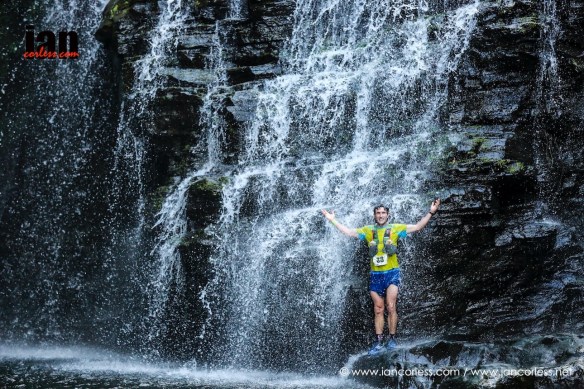
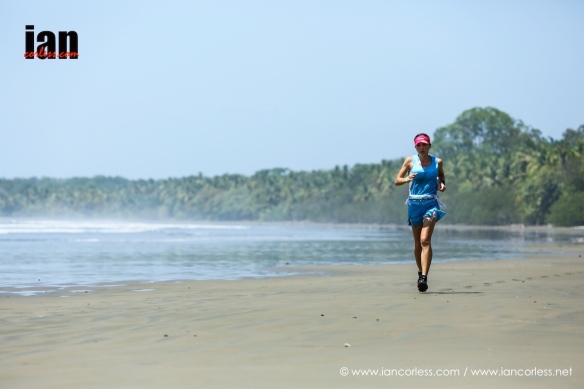
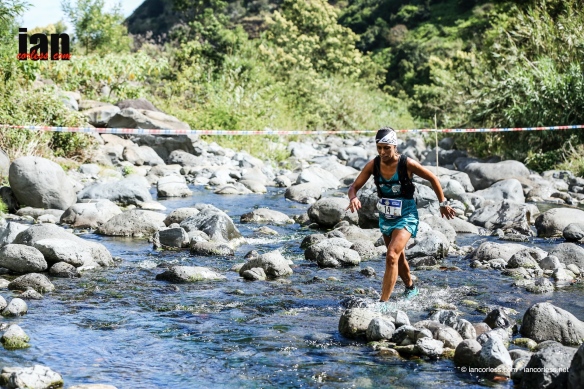
Hugging the coastline, the race travels in and out of the stunning Talamanca mountain range via dense forest trails, river crossings, waterfalls, long stretches of golden beaches backed by palm trees, dusty access roads, high ridges and open expansive plains. At times technical, the combination of so many challenging elements are only intensified by heat and high humidity that slowly but surely reduces even the strongest competitors to exhausted shells by the arrival of the finish line.
The Coastal Challenge which will take place Feb 10th – 19th, 2017.
This is Episode 118 of Talk Ultra and this week is going to be a short and sharp show… it’s all about the UTMB races and Trofeo Kima. We have interviews with Jo Meek who placed 2nd lady at the CCC and Damian Hall who placed 19th in the UTMB and recently completed a ‘FKT’ on the South West Coast Path in the UK. This weeks show is co hosted by Albert Jorquera.
Firstly, this show is being recorded in the USA on the day of the RUT VK and so therefore we are somewhat pressed for time… joining me is a co-host is my good buddy and fellow Skyrunning hack, Albert Jorquera.
If you haven’t guessed, Albert is from Spain!
Karl is on the AT as many of you will know, Speedboat has passed halfway on the AT. He really is doing great, racking up some daily mileage and as you can guess is going through some real highs and lows. We are posting 7-day updates on my website so please check out the links on the show notes. I need to give out a bog thanks to Red Bull who hooked us up with Eric, Karl’s chief crew and I had a chat with him on day 19.
Albert, what do you reckon, 2100 miles in under 50 days, trying to average somewhere between 45-50 miles a day?
RUNNING BEYOND BOOK well I have a first copy in my hand and I have to say I am somewhat pleased and happy. It’s taken a couple of years and at times it never felt quite real. The book in my hand confirms it is real and Spanish, German, Italian and UK versions will be available in the coming months. I believe Spain is first (September) Italy is October and the UK November. I don’t have a date on the German edition yet! – HERE
00:32:00 NEWS
TROFEO KIMA HERE
Bhim Gurung 6:10 new CR
Marco De Gasperi 6:12
Leo Viret 6:15
Emelie Forsberg 7:49
Ruth Croft 8:02
Emanuela Brizio 8:21
UTMB WEEKEND
OCC
Xavier Thévenard (France) won the 55k OCC race with 5:28 on the clock. Marathon des Sables sensation Rachid El Morabity (Morocco) was second, 15 minutes back. Mercedes Arcos (Spain) cruised to the front of the women’s field in 6:54.
CCC
Michel Lanne (France) in 12:10, five minutes ahead of Ruy Ueda (Japan). Mimmi Kotka (Sweden) gained the women’s victory in 13:42, 27 minutes better than second-place Jo Meek (U.K.).
INTERVIEW with JO MEEK
TDS
Pau Capell (Spain), Yeray Duran (Spain), and Franco Colle (Italy) filled the men’s podium with 14:45, 15:14, and 15:32 finish times, respectively. Delphine Avenier (France) led the women with an 18:46 winning time with Meredith Edwards (U.S.) took second 13 minutes back.
I won’t be at UTMB this year, Trofeo Kima is happening the same weekend in Italy and I wouldn’t miss this high octane extreme event for anything, especially when it only happens every other 2 years.
But UTMB has a stellar line up this year. It’s going to be a cracking race.
Just in case you didn’t know, UTMB is a 170km circular journey that starts and finishes in Chamonix passing through France, Italy and Switzerland with 10,000+ meters of vertical gain on non-technical trails. In 2014 Francois D’Haene of France set the men’s course record 20:11:44 and the female course record is held by Rory Bosio (USA) who ran 22:37:26 in 2013. Rory in the process ranked in the top-10 overall that year!
Recently, UTMB has hit the headlines after a top 10 finisher in the 2015 race, Gonzalo Calisto, was tested and found positive for EPO. This came to light in June when the IAAF added Calisto’s suspension to its website. However, UTMB were not notified of this positive test? In recent weeks and months, many investigations have been made and you can read them all on this website HERE. Ultimately, this positive test has raised alarm bells and certain aspects of the testing and notification procedure need to change. I hope UTMB will have testing once again this year and they provide data and information to the media.
Racing for the main starts on Friday August 26th at 1800hrs local time and it looks like a great weekend of weather is in store for spectators, it may be a little hot for the runners. Please also remember that many other events happen in and around the UTMB, the PTL, TDS and CCC.
MEN
Luis Alberto Hernando is in a good place! He is a new Dad, has raced less and when he has raced he has been in top form. A repeat win at Transvulcania and dominant performance at the Skyrunning World Championships for a gold medal and world title and suddenly you begin to see everything clicking into place. Luis dropped from the 2014 UTMB and then came back, one year later to place 2nd. Luis does always race from the front and hard, he tempered this in 2015 but it still may well be his achilles heel in 2016? I hope not, Luis would be a popular champion!
David Laney third at UTMB and 8th at Western States in 2015 are two very significant performances and bode well for a great 2016 UTMB. What doesn’t bode well is the most recent 20+ hour finish at Western States. It leaves a huge question mark on David’s current physical and mental ability to take on the big dance in Chamonix.
Andy Symonds for me is the dark horse. It’s his first 100 miler and that is a huge disadvantage. But Andy knows how to race, prepares meticulously and I know he’s fired up for this race. In the past he has often played 2nd fiddle at the big races but a podium at Transgrancanaria, a victory at Lavaredo and 2nd (silver) behind Luis at the Skyrunning World Championships tells me that the time is right for the Brit who lives in France. Listen to the podcast here.
Zach Miller is relatively easy to write about… we will see one of two performances: 1. An all guns blazing early race that potentially will open up a gap that he extends and holds on to take the biggest victory of his life! 2. As 1 but a major blow up that sees him lose the lead and drop substantial places or a resulting DNF. Think Max King at Leadville.
Didrik Hermansen is a potential revelation in Chamonix and I do believe that he can win. I said that at Western States after I saw his run and victory at Transgrancanaria. He didn’t disappoint in the USA and he placed 2nd at WSER. UTMB is a different playground but this guy can run and hike – he is going to need all those skills in France, Italy and Switzerland. Listen to the podcast here.
Jason Schlarb was fourth at UTMB in 2014, won Run Rabbit Run, completed Marathon des Sables. skied the Hardrock 100 course, won the Hardrock 100 with Kilian Jornet and here he is, in Chamonix, looking to do an epic double – you know what, I think he can do it! I’m not sure that he will have those extra percentages for victory, Hardrock may well have but pay to that. But I do see a potential top 5 and even the podium if the stars align. Listen to the podcast with him here.
Gediminas Grinius 5th at UTMB in 2014 and what followed was quite a rise in the sport of ultra-running. Gediminas has an interesting back story of post-traumatic stress and it is running that helped. When you have been to hell, pain in an ultra is nothing. It’s worth remembering that this guy can dig deep. A win at Transgrancanaria, a win at UTMF and a string of top 2nd places certainly elevate GG for a top UTMB place. Listen to the podcast here.
Tofol Castanyer won CCC and was 2nd at UTMB in 2014. He has a string of top performances and results but his recent form seems a question mark. On paper, he’s a podium contender but I said that last year and he didn’t finish. We will have to see?
Ryan Sandes had a tough 2015 and has patiently come back in 2016 with a 3rd place in Tararwera and 4th place in Australia at the Ultra Trail. Ryan never likes to race a great deal preferring to train and prepare meticulously for key events. He has done that in the past, Western States for example only to not race at the 11th hour due to injury or illness. Apart from FKT records, Ryan’s career highlights are his win at Transgrancanaria and top results at UTMF and WSER. Ryan has been in Chamonix for some time training and I hope he will arrive at the line fresh. He has all the potential to shake up the podium. Listen to the podcast here.
Fabien Antolinus is an under the radar runner who is known in France and not many other places. A top consistent performer at Templiers and the Ice Trail Tarentaise, Fabien backed this up last year with a 6th place finish at UTMB behind a doping Gonzalo Calisto, so, he finished 5th really. I see a potential repeat performance.
Miguel Heras could win, could finish in the top 10, may not start and if he does start, may not finish. Yes, Miguel is a class act when the stars align but neither he or us can predict when this will happen. A highlight for sure was his UTMB 2nd behind Xavier Thevenard in 2013.
Javier Dominguez just had a great run at the Skyrunning World Championships with 3rd place behind Luis Alberto and Andy Symonds. He also placed 3rd at Lavaredo. Although he will be in the mix he is potentially a top 5-10 finisher.
Julien Chorier has the long game, strength and persistence for a top UTMB performance. I’ve seen him time and time again grind out great results. His victory at Ronda dels Cims a few years back is still one of the most dominant performances of running I have seen. Julien has backed that up at Western States, Hardrock, Diagonale des Fous, UTMF and of course UTMB. His best UTMB was 3rd in 2008 and in 2013 he finished 6th.
Paul Giblin for me is a dark horse. Last year he missed UTMB and compensated with focusing on Western States in 2016, he placed 5th. That’s one of the UK’s best performances at the race. He’s a runner and the 10,000m of vertical may go against his natural abilities but don’t rule him out! Listen to the podcast here.
You have to draw a line somewhere but we also need to consider, Diego Pazoz who has illuminated several races in 2016, most notably victory at the Eiger Ultra Trail and Mont-Blanc 80km.
He could be a huge surprise as could Stephan Hugenschmidt from Germany who has had many notable results.
Zdenek Kris finished 9th at Ultra Perineu in 2015 and recently placed 5th at the Skyrunning World Championships.
Two Frenchmen, Arnaud Lejeune who was 2nd at UTMF in 2015 and Thomas Lorblanchet who has wins at Leadville and 4th at Western States will also mix things up.
Ryan Smith, Pau Bartolo, Jez Bragg, Aurelian Collet, Ludovic Pommeret, Armand Teixeira, Jordi Bes and Bertrand Collomb-Patton all have top 10 and certainly top 20 potential.
Needless to say there is a whole stack of other male talent that have experienced UTMB before somewhere in and around the top 50. Any of these runners who could make a breakthrough performance and venture into the high ranking top 20’s or even top 10. It’s what makes the race so interesting.
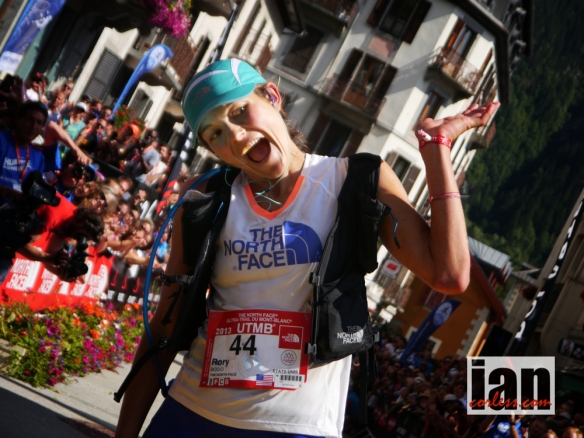
Rory Bosio holds the course record at UTMB – nuff said! Any lady that finishes in the top-10 overall rocks. But where has Rory been since her repeat victory in 2014? Well, believe it or not, she was filming a reality TV show… really, Rory is an actress! In 2015 she won the Atacama Extreme but other than that she has been relatively low key when racing. UTMB performances are backed up by 2nd, 4th and 5th at Western States so Rory needs no other boosting. I do wonder though if she is in the ‘A’ game frame of mind of 2013 and 2014? We will find out…
Caroline Chaverot for me is the lady that will win UTMB 2016. Caroline is a machine who smiles from beginning to end and her performances over the last 18-24 months have blown me away. She does race a great deal and I think that went against her at UTMB in 2015 when she DNF’d. This year though I have noticed a difference… she obliterated the Transgrancanaria course, she obliterated the MUT in Madeira and she became Skyrunning World Champion at the Buff Epic Trail – 2016 is Caroline’s UTMB year!
Nuria Picas has twice finished 2nd and I would normally talk Nuria up as the winner. Last year she dropped early and since has had very mixed performances. I do believe she has the UTWT curse of running and winning too many races in a short period of time which has left her drained. I have seen this in 2016 at Transgrancanaria and most recently at the Buff Epic Trail. Of course, Nuria may well have been savvy and kept her powder dry for Chamonix – I hope so! *August 24th, Nuria will unfortunately not run the 2016 edition due to an injury.
Magdalena Boulet will be there or thereabouts but for me, this course will not allow enough running which is Magda’s strength. No doubt she will be in the mix, her 2nd at CCC proved that but 170k and 10,000m is a big difference to CCC or Western States. Listen to the podcast here.
Uxue Fraille will be out of the mix early on and keep going and produce a solid finish. Uxue’s success is all about pacing and finishing. She lets the other ladies race and fade and then she sweeps them up in the final 1/3rd. Last year she placed 2nd at UTMB and she won UTMF.
Jasmin Paris is one lady who may well win UTMB one day. I’d love to say that 2016 will be the year but I don’t think it will happen. Jasmin runs a great deal and therefore rarely ‘peaks’ for any one race. This is sometimes a good thing but also a bad thing. Although Jasmin can run long, this will be her first big 100+ miler and the Chamonix experience may well overwhelm her. This year she blitzed the Bob Graham Round FKT to a new level and a week after getting married took bronze medal at the Skyrunning World Championships and then won Tromso SkyRace. Personally, I feel Jasmin’s forte and skill set will be best suited to the Skyrunner courses where her fell and mountain running background really shines. She will do well at UTMB but this year will be a learning curve. Don’t get me wrong though, top 5 and certainly top 3 is possible. Listen to the podcast here.
Andrea Huser like Jasmin is a non-stop racer and for me always lacks that extra 5-10% when required due to a constant element of fatigue. Her string of top 2nd and 3rd places for me confirm this. In this 2016 field, Andrea can better her 2014 7th and potentially will make the top 5 and may even challenge the podium but I don’t see a victory.
Fernanda Maciel is a another runner who mixes many sports, races regularly and is always in and around the action. Like Andrea Huser, I see her in the mix but not taking the top slot. If we look at recent results, the consistency is there – 4th at UTMB in 2010, 3rd at MDS, 3rd at Lavaredo 2016 and a string of other podium places at UTWT races.* Fernanda will not run 23rd August. News from her doctors: “They said I was in an advanced stage of injuries to my kidneys caused by my last 2 long races due to dehydration I suffered during the races. Now my blood tests from last friday done here in Chamonix seem normal but not 100% recovered, and of course I am thinking of the UTMB on friday… I’m really sad because they only told me it today!”
Emilie Lecomte has the long game, strength and tenacity for a 170km race but she lacks the speed of many of the other ladies. A top 10 is an almost guaranteed and as other ladies fade, we can expect Emilie to move up.
Francesca Canepa and Emilie Lecomte in many ways are similar runners and Francesca has a strong history with UTMB and Tor des Geants. On her day, she can be up there and in the mix. Recently her form has been questionable.
Amy Sproston has won Hurt 100 and placed 2nd at Western States. For me, Amy is a runner but then again, Hurt has some gnarly terrain on those 20-mile loops, so, is this the year that Amy puts UTMB demons to rest? Her history is not good with the race – three starts and only one finish when she placed 8th.
Aliza Lapierre is potentially the USA’s top contender behind Rory Bosio. Her list of results in all varieties of races bodes well for a solid UTMB. But at really specific races, Transgrancanaria for example the mountainous terrain has caused her to struggle a little. Aliza like to run and although UTMB has plenty of that, it also has plenty of hands-on-knee action.
Larisa Dannis likes a running race and like many of the American ladies the increased vertical causes an issue. On paper though, she has the racing pedigree for a top performance. you don’t get 2nd at Western States by accident.
Ester Alves is a good friend and races too much (sorry Ester). One day, Ester will pick a race and prepare meticulously for it and then excel. I saw this earlier this year when she won and dominated The Coastal Challenge in Costa Rica. I think what worked there was it was the first race of the season and she could therefore be specific over the winter. What has followed is a string of races in many varied locations with a list of good results but no stand out results! Ester placed 8th at the 2014 UTMB so the potential is there!
Gemma Arenas I know well in the Skyrunning circles but this will be her first 100 and it’s a tough one with strong competition. It will be a learning curve.
Like in the men’s race, curve balls will swing in and we can expect to see these ladies’ mixing it up, Silke Koester, Nicky Spinks, Sally McRae, Sarah Willis, Sophie Grant, Frederica Boifava, Joelle Vaught, Alissa St. Laurent and Manu Vilaseca amongst others.
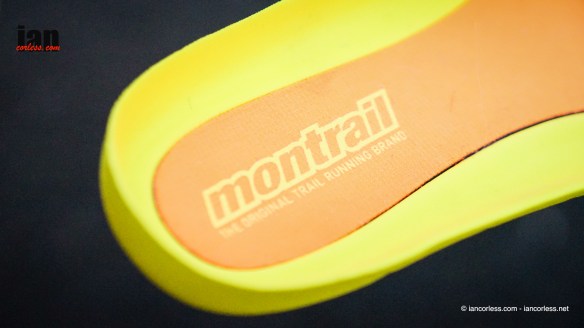
Montrail call themselves, ‘The original trail running brand!’ And to USA based runners they may very well be. But to Europeans, they are just a name and in all honesty, I very much doubt that they have seen a Montrail run shoe, let alone used one. Of course, in the last 18-24 months that has all started to change and that is directly attributable to the UTMB.
Yes, when The North Face jumped ship sponsoring the big loop around France, Italy and Switzerland the American brand jumped it. Of course nothing is straight forward and UTMB sponsorship comes in the name of Columbia, Mountain Hardwear and Montrail. All three brands are under the same umbrella and are interconnected.
Topher Gaylord is president of Columbia’s Mountain Hardwear brand and ironically he was the man who originally set up the TNF sponsorship deal – what goes around, comes around.
As one commentator said, “Montrail was once the biggest brand in the American trail running scene, but many other brands have created more buzz in the past few years. This should certainly help create more traction for Montrail, which was acquired by Columbia in 2006.”
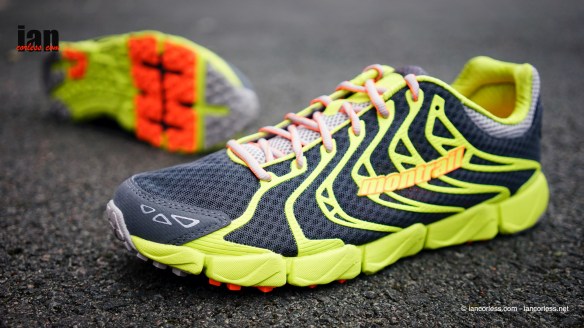
So as you see, a picture starts to form and although the above information doesn’t tell you if the Montrail FluidFlex FKT shoe is any good, what it does do is provide some perspective.
Dakota Jones, Ellie Greenwood and Max King have worn Montrail shoes in the past and I often looked on wondering how these shoes performed? Unfortunately, being based in Europe, the possibility to get hold of shoes was either extremely difficult or zero. With UTMB sponsorship, Montrail (Columbia and Mountain Hardwear too) are looking for increased exposure on a world platform.
Last year I tested and reviewed a limited edition UTMB Montrail shoe HERE and now I have the FluidFlex FKT and Trans Alps FKT (review to follow) shoes to review.
FluidFlex FKT
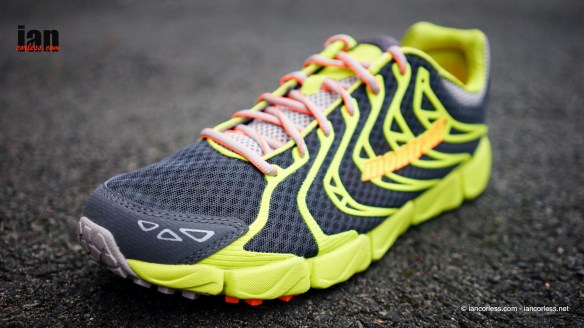
Out of the box, the shoes feel light especially when on first impressions they look heavy. Styling is somewhat retro and I have to say, this has always been the case with Montrail shoes. Current styling has definitely improved over older models but in today’s plethora of shoes, Montrail still look a little dated. Of course, looks don’t play a significant role in the performance of a shoe but it does play a huge roll if you are standing in a store, looking at racks of shoes and you are trying to narrow down which ones’ appeal.
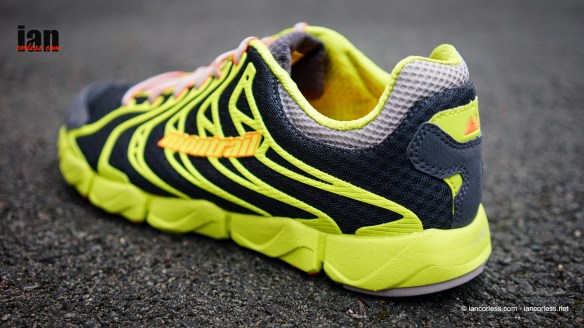
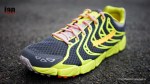
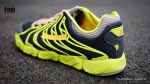
My version of the FluidFlex FKT is grey with yellow and arguably, it’s one of the more attractive shoes in the range. I do believe Rocket Red and Super Blue versions are available too. Ladies shoes are Bounty Blue and Chameleon Green.
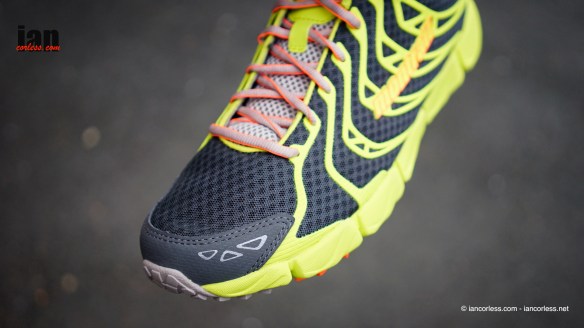
What’s noticeable immediately is that the shoe is ‘no fuss’ shoe. The toe box is clear of additional layers and moldings and has an adequate bumper for toe protection. The heel box has little to no reinforcing – just a patch on the very rear.
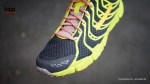
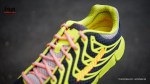
On the sides of the FluidFlex FKT, 6 -strips of pliable reinforcement have been applied that lead to the lace holes. These strips provide some structure and support to the upper when the shoes are laced up. The is a blast of fresh air, the FluidFlex FKT feels reassuringly thought out but not over engineered.
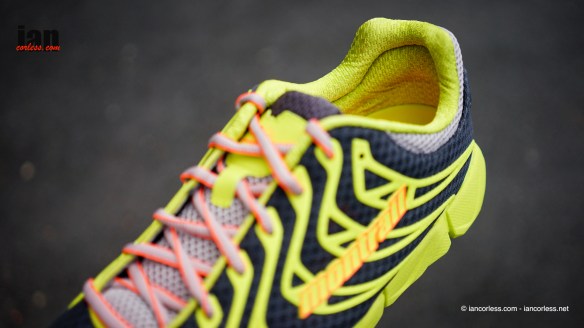
Opening the shoe up, I am happy to see that the tongue is padded but more importantly it is gusseted and stitched into the sides of the shoe. This for me is a real winner – it stops the tongue moving around excessively when running, provides a more secure hold of the foot and it also reduces what debris can enter the shoe.
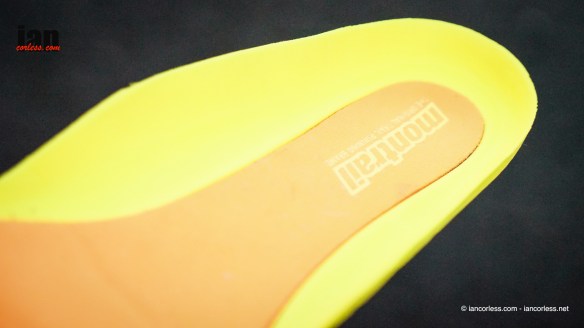
The insole of the shoe is a surprise and most certainly has been thought about. It is cupped at the heel to provide a little more hold and support and the ‘arch’ area is pronounced, again providing some additional support.
I am a neutral runner and found no issue with this ‘slight’ support, however, depending on your run style and preferences, you may wish an insole with more simplicity?
Cushioning is good with 15mm at the rear and 11mm at the front – drop is 4mm. The shoes name, FKT (Fastest Known Time) starts to make sense here as this shoe is designed to be fast, light, cushioned for a runner who bio-mechanically sound. I switch from 4mm, 6mm and 8mm drop shoes all the time and when running long, I will always prefer a shoe with 8mm drop as I firmly believe that the longer we run, the more our form fails and falters and that is when an 8mm drop shoe can be more forgiving. However, the FluidFlex FKT did ‘feel’ more forgiving and I do believe that this was directly attributable to the cushioning. They are simple shoes – No midsole gizmos, no gels, airbags or plastic parts. Just pure, responsive foam from heel to toe.
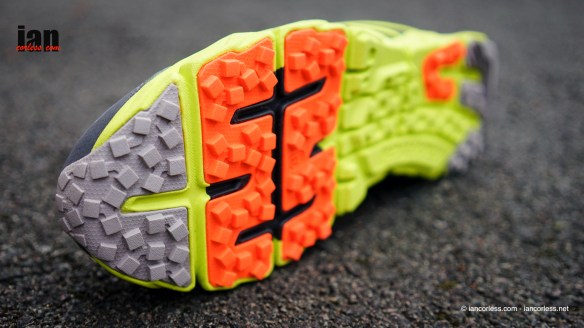
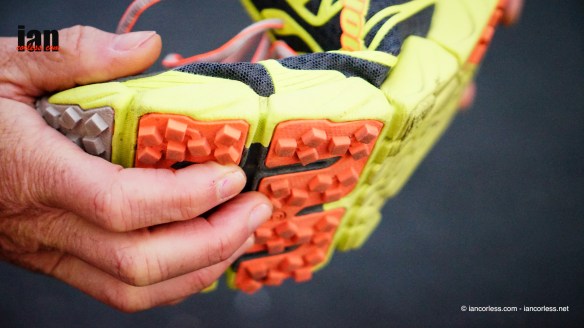
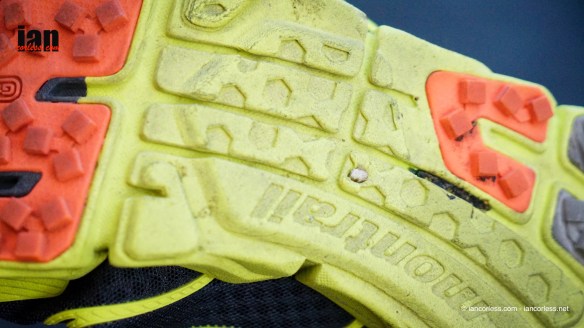
The outsole reminds me a great deal of Hoka One Ones’ original Bondi B shoe – a shoe that I used a great deal. Grip is at the front and rear but not in the middle. Grip is also split into two colours, grey and orange. the grey sections being more durable and hard wearing, the orange sections softer and provides additional grip.
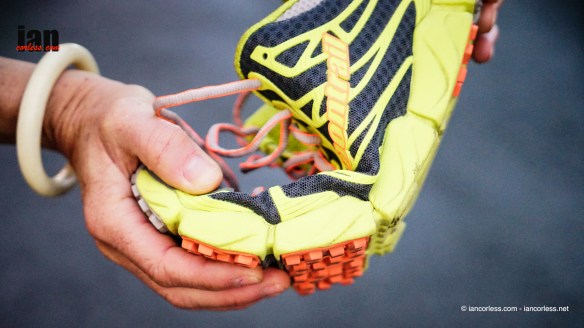
The ‘Flex’ of the sole is incredible. You can clearly see 5 ridges across the outsole and this is where the FluidFlex name comes from. These ridges bend and flex with ease give the shoe an incredible feel, bounce and propulsion when running – it’s a real winner. Like many US ‘trail’ shoes, it’s clear to see that the FluidFlex FKT is for dry, dusty, rocky and hard trails. Don’t take them to mud – it will not be a great experience! I don’t own road shoes anymore and what I have found is that the FluidFlex FKT has become my ‘go to’ shoe if I want to pop out for 20, 30 or 40min road loop. Yes, they handle the road really well.
Slipping the shoe on, the shoe immediately has a slipper like feel, directly attributable to the gusseted tongue and secure feel. The toe box is roomy and allows for a free and natural splay of ones’ toes and the heel box is snug and secure. The padded tongue allows laces to be pulled tight without causing any discomfort on the instep of the foot. I often find that when using a wider toe box, I like to compensate by lacing my shoe tighter – it’s a personal thing.
In use, the shoe was out-of-the-box comfortable and the combination of a cushioned sole, the ‘flex’ ridges and the gusseted tongue, it felt like I was on my 10th run not a first run. As time passed this improved but only marginally as they were so comfortable from the off.
The shoe is cushioned and therefore if you really like a ‘feel’ for the ground, this is compromised with the FluidFlex FKT. But that is not a criticism, it’s just a warning shot to let you understand how this shoe runs. It is without doubt a shoe for dry, hard pack trail, rocks and road. Avoid mud, the grip just isn’t up to it. With a 4mm drop and the placing of the grip on the outsole, you need to bio-mechanically good. It’s a shoe that most definitely is designed for mid to forefoot striking. Having said that, the shoe is very comfortable to walk in. Should you heel strike, the grey section of outsole on the rear of the shoe would offer some protection and grip but let’s be clear, if you are heel striking, you shouldn’t be in 4mm drop shoes!
As mentioned, the middle of the outsole has no grip or protection and it’s in this area that you may well see some early wear and tear. This could come from abrasion when running over irregular and rocky terrain or from small stones sticking into the soft cushioning. Road use will obviously wear any shoe down quicker but if running on the forefoot, the grip of the outsole should last well. Remember though, this is a trail shoe that works well on road, not an out-and-out road shoe. On wet rocks and road, providing you land on the ‘grip’ section of the outsole the shoe is reassuring, the compromise comes in the middle of the outsole where no grip exists. On odd occasions, particularly on large and/ or irregular rocks I found the shoe to slip a little. The shoe is true to size but remember it has a wider toe box so I always recommend trying a pair 1/2 size up and down to make sure you have the ‘feel’ that you like.
In conclusion, the FluidFlex FKT has thrown me a curve ball. I wasn’t expecting to like this shoe ‘that’ much and I have to say, I have been pleasantly surprised at how good this shoe is and how pleasurable it is to wear. It’s a shoe that has specific use and if you keep away from mud and sloppy stuff, you will enjoy running in it. It’s a 4mm drop shoe so it will appeal to those runners who like to get closer to the ground but not at the compromise of cushioning. The fit is slipper like and the ‘flex’ in the outsole is superb for ‘toe off’ propulsion. Feel with the ground is compromised with the cushioning but this is a personal thing. The shoe works well on the road (surprisingly well) its low weight is ideal for faster/ shorter runs but if you have good form (and can hold it) there is no reason why you couldn’t run 50k, 80k, 100k or 100-miles in these shoes.
Another week passes and it’s important not to let the momentum drop around the positive test of Gonzalo Calisto at UTMB in 2015. This is possibly even more important with the proximity of the 2016 event which is just weeks away.
If you are coming to this story new, you can read my post below:
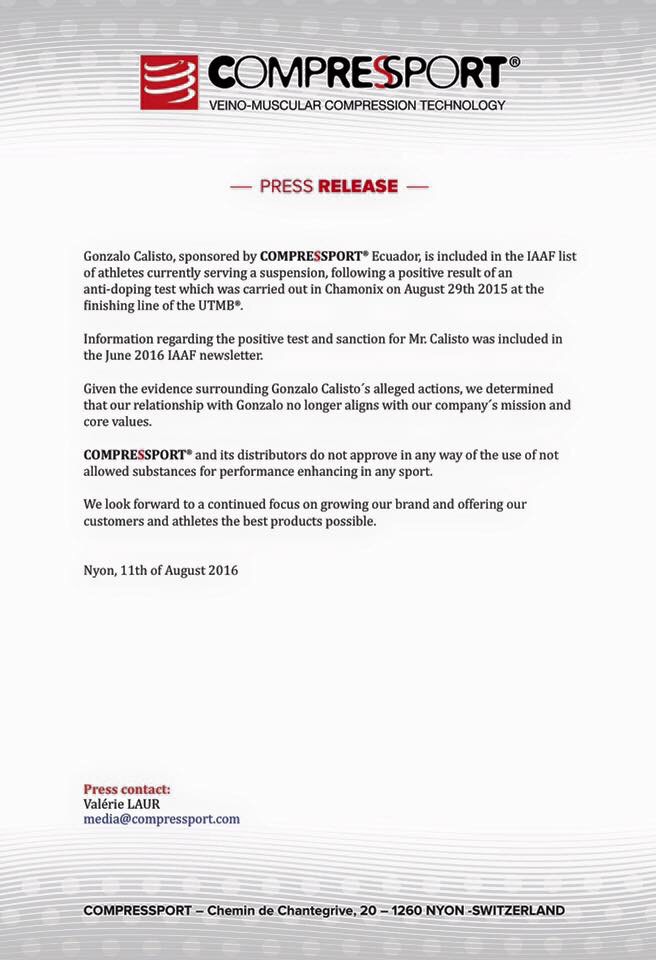
I am pleased to say, today, Compressport have replied to my emails and forwarded me a press release that I assume will be distributed through the appropriate channels in due course.
I have been vocal that brands and sponsors MUST act accordingly when an athlete is found positive and I therefore applaud Compressport for stepping up to the plate and sending out a clear message. And I quote:
“Given the evidence surrounding Gonzalo Callisto’s alleged actions, we determined that our relationship with Gonzalo no longer aligns with out companies mission and core values.”
This is a big step for Mountain, Ultra, Trail and Skyrunning and as a fellow colleague said, “Nicely worded, clear and unequivocal and shows compressport in a really good light!”
Lets be clear here, Callisto’s positive test has never really been about the individual for me. At first it was about the system, how a positive test was almost hidden, how UTMB were not notified of the positive test and ultimately what the repercussions are/ were for the sport. This is not a witch hunt!
Our sport is potentially at the early stages of doping and I can’t stress enough how important it is that we all – runners, races, sponsors, brands and so on set and send a very clear message.
We now need MOVISTAR AVENTURA TEAM (web here) who sponsor Calisto to clarify their stance in regard to this positive test and the implications for their brand and race team.
The press release from UTMB, ITRA and now COMPRESSPORT set the example.
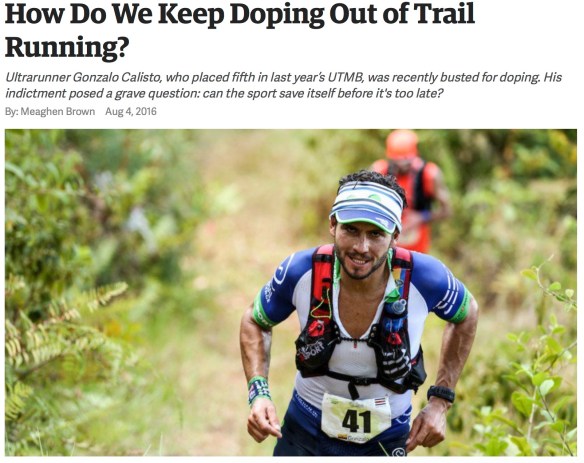
I have been very vocal lately about the doping scandal around Gonzalo Calisto and his positive test for EPO at the 2015 UTMB. Outside Magazine contacted me and and asked for my input based on my articles and research as listed below.
You can now read an article by Meaghen Brown published on Outside Online
Over the past few years, rumors have swirled in ultrarunning circles about how some frequent podium finishers seem so resilient to the endless, hard, mountain miles. But when news broke in mid July that Ecuadorian ultrarunner Gonzalo Calisto had been busted in a positive EPO test and subsequently disqualified from the prestigious Ultra Trail du Mont Blanc, it marked an important turning point for a sport that has thus far maintained a pretty wholesome image.
“To be honest, it breaks my heart,” says professional ultrarunner Mike Foote, who’s twice placed in the top five at UTMB. “The ultrarunning community prides itself on a deep we-are-in-this-together mentality, and Calisto being busted for EPO undermines this culture and this mutual respect and celebration of one another.”
Last week and the week before, EPO, DOPING and the UTMB was the hot topic after Gonzalo Callisto’s positive test. Everyone was talking about it… this week it’s all gone quiet. That can’t happen! You can catch up on my posts below.
There are far too many questions unanswered, there are far too many people being quiet and if we want to eradicate doping from Mountain, Ultra and Trail running – we need to keep talking and discussing.
I was approached by Outside Magazine and they asked me a few questions. I am pretty sure that what gets used or published will be an edited version and with that in mind here are my thoughts, un-edited.
In light of the latest news from UTMB, what you think this positive test means for the sport?
One has to embrace the positive test as a good thing as it confirms that preventative measures against doping are working. This positive was an ‘in competition’ test which only confirms the need for out of competition testing and blood passports. Of course, the answer is always that testing is too expensive. We have to act now and be proactive. I don’t have the answers but I do feel that we could start to address certain issues that would help. Maybe it’s time that we ask (for example) the top 100 male and top 50 female runners as listed on ITRA to pay for a regular medical? Sage Canaday recently released a full report on his medical status to ‘prove’ he is clean; that’s a good thing! (See below). Athletes of course may well say that they can’t afford it but this is where sponsors come in maybe? We cannot keep making excuses as to why we can’t but find ways to make sure we can! We are at the very early stages of doping in our sport and if we don’t act now it will only become worse and God forbid, we could end up like cycling or athletics.
Do you think doping is really becoming something to worry about, or is this a case of an outlier?
We need to worry, yes! This is not the first positive test, it maybe a high profile conviction, but it would be foolish to think that this is an isolated incident.
Are people starting to talk about doping more in ultarunning than before? Or maybe a better way of asking this is how are the athletes you know, talking about this subject and what it means for the sport?
I certainly have witnessed more discussion about doping and of course this was highlighted at the end of 2015 at San Francisco 50. This was a moment when the sport really looked at itself and many questions were asked. It actually became quite nasty at times and I think a sense of perspective was lost. For example, WMRA (World Mountain Running Association) and Skyrunning have been testing athletes for many years. They have very much paved the way but they acknowledge they can only do so much. In competition testing costs 1000’s of euros or dollars for one event and of course, only urine can be tested. Many say it takes an idiot to to be caught ‘in competition’ but it happens. I go back to blood passports – we really need them for elite, professional and sponsored runners. Some races do not have a ‘PED’ policy and San Francisco highlighted the need for races and RD’s to address this in the rules of the race. Western States for example has re-written its race rules to say that any runner who has had a positive conviction cannot race. Many runners have asked for a lifetime ban for any positive test and they have been vocal about this. I personally am reluctant to go down this route… I do believe that mistakes can happen in drug testing but I am not an expert. This creates a whole new debate and raises questions about the lasting effects of a doping program. For example, we used to have two positive tests and out, I liked that but apparently that has been deemed unfair?
Are people starting to test more for doping than in previous years? What has this looked like?
As mentioned previously, WMRA and Skyrunning have been testing for many years but not at all events. Skyrunning for example had its World Championships in Spain in July, they had three events, VK, SKY and ULTRA and WADA performed tests at all three race distances. The problem comes, once again with cost. At the Skyrunning World Championships, 12 athletes were tested. The make and female winner in each category (making 6) and then 6random tests. Let’s assume testing at an event is $10,000 – who pays? Do we add a surcharge on every runners entry fee? Does that race find a sponsor to cover the cost? Do we rely on a wealthy donor or do we approach all the major brands in the sport and say, you must pay! It’s a complex matter and this is why doping control is a rarity in contrast to the norm. Let’s look at races such as Speedgoat 50k, Run Rabbit Run and San Francisco 50 – these races have some substantial prize money, in some scenarios it could mean a pay check of $10,000+ for a win. Yet nobody has any idea if the winner is clean? Moving away from trail running and looking at ultra road running, Comrades in South Africa has huge prize money and it has a very chequered past with doping: Max King, Ellie Greenwood, Sage Canaday and Michael Wardian (amongst others) have all witnessed the impact of it first hand.
What is your own experience with testing?
I attend races as a photographer and a journalist so in reality, I have little experience of the drug testing process. However, I am a media partner for Skyrunning and I have been present and seen the processes undertaken at several major events where doping control has been in place by WADA. For example, I was at the Skyrunning World Champions on July, 22, 23rd and 24th. I also experienced doping control at Limone Extreme in 2015 and Mont-Blanc 80k in 2014 amongst others.
Do you think the tests, or the conversation about doping in general in ultras is lacking? What could be done better?
Certainly the positive test of Gonzalo Calisto has raised some major flaws in the communication process. I have done extensive research over the last weeks and my conclusions have been quite worrying. I will elaborate:
Gonzalo Calisto was tested after placing 5th at UTMB by French drug control – AFLD In August 2015.
AFLD have a written policy that a positive test is given to (in this case) the runner within three weeks.
The runner is then entitled to appeal and ask for a B sample test.
This process can then go backwards and forwards for several weeks and in this scenario (as I understand it) months. Don’t get me wrong, the runner has rights and it’s only fair that he or she has every opportunity to clear his or her name.
In June 2016 the IAAF released its current banned list.
On July 18/19th British Ultrarunner Robbie Britton noticed that Gonzalo Calisto was convicted of EPO and banned till March 2017.
I picked up the case and contacted UTWT and UTMB directly and asked were they aware of this conviction? I later found out, no!
Within 12 hours, UTMB released a press release disqualifying Gonzalo Calisto of doping.
The above raised so many questions for me:
1. How was it possible that Gonzalo Calisto had tested positive but UTMB did not know?
2. Why was his period of exclusion dated till March 2017 when he had been tested in August 2015?
3. Why had the IAAF only published this in June 2016?
I asked questions of the UTMB and the IAAF. In both scenarios they were both helpful.
1. To cut a long story short it would appear that when an athlete is tested positive, the testing control, in this scenario AFLD, are not required to inform the race. REALLY? A race has a runner place 5th, the runner is tested, the runner is found guilty, due process is run and then a positive is confirmed and a sanction is put in place without the race being told…. C’mon that HAS to change! Had it not been for the eagle eyes of Robbie Britton and me grabbing the bull by the horns, nobody ‘may’ have known?
2. IAAF explained the ‘due process’ to me and although they were not able to supply specifics, they did say that these things can often take much longer than we would all like and that 6 months is not unusual. Considering Calisto was tested on the last day of August, that potentially could take us to February or March the following year.
3. The IAAF then confirmed that an error had been made! As I pointed out to them, why was Calisto banned till March 2017? The answer: Calisto’s ban and records were amended from a memo dated March 2016 and it was therefore human error. Calisto’s ban dates actually run from March 2016 to March 2018. This coincided with point 2 above and a lengthy due process where one assumes Calisto tried to clear his name.
4. From the March conviction, Calisto’s records then entered the IAAF system and his conviction was uploaded to the ‘sanctioned athletes’ list in June 2016.
5. The IAAF confirmed to me that AFLD did not have to notify UTMB of a conviction but they would look into it?
So, for UTMB to be aware that an athlete had cheated at a previous edition of their race it would appear that the only option open to them is to check daily on the IAAF website for any additions to the sanctioned athlete list.
I could go on…
Why do you think the sport has stayed clean for so long, and what might be changing that would compel people to cheat?
The sport hasn’t been clean for so long. That is a naive viewpoint. Doping has existed in trail running for ages but if you don’t have testing or a blood passport, how would you know that…? I like to use an example and I must be clear here, I don’t doubt the integrity of the runner I use as an example. Karl Meltzer, my co-host for Talk Ultra podcast has won more 100 mile races than anyone. He has even won Run Rabbit Run and he took home $10,000+ He has been running ULTRA’s for 20+ years. You know how many times he has been tested for PED use? NEVER. Need I say more… This is why our sport has bean ‘clean’ for so long, no testing!
For the most part it seems like the conversation around doping in ultras is relatively new, and also that cheating might be a new thing too. Do you think there’s a chance for race directors, athletes, etc. to get out in front of this and keep the sport clean before it becomes the kind of large-scale issue it is in some other sports?
The Calisto case has raised eyebrows, we need to latch on to that momentum and we need to consider many of my points above but let’s be clear, Calisto is not the first!
On a final note we need to keep this discussion open, we need to keep asking questions and we need to find answers and solutions. It’s too easy to say it’s too expensive, too difficult and so on. We could start by:
Blood passports for runners
Regular in and out of competition testing
Positive results MUST be sent to a race or RD as soon as possible if a positive test came from a race.
IAAF need to find a way to communicate ‘new’ sanctioned athletes to the relevant sport discipline. This is where ITRA or maybe an athlete commission could be set up.
We, as runners, journalists, sponsors and so on must be loud and clear that doping is not welcome and we must do all we can to work together. In the Calisto case I have still not seen or heard any public statement from his sponsors, Movistar and Compressport. Compressport did contact me to say that they were ‘looking into it!’ What does that mean…? They also said that Callisto’s sponsorship with Compressport was with a local distributor and not the International division. As far as I am concerned, local or International, Calisto is still representing a brand and that brand gains attention. And also what about the races that Calisto has run and placed in in post August 2015? The IAAF now confirms the suspension dates back to that time and until March 2018. Not one word, not one public statement from any race that I have seen… do these races condone doping? What about the runners who placed top 5 or top 10 only to loose a place… come on, speak up!
Update August 12th and Compressport respond
A great place to start is here, Sage Canaday has just recently posted his results online for all to see. Let’s lead by example!


 You have already mentioned that you will have snow and cold temperatures to deal with in the build up to TCC. You have also said that you will need some speed but will you do any specific training for Costa Rica and what are the race plans for later in 2017?






 IAN CORLESS