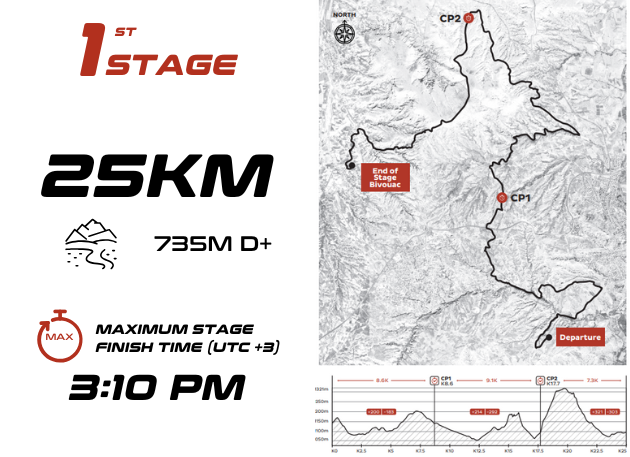
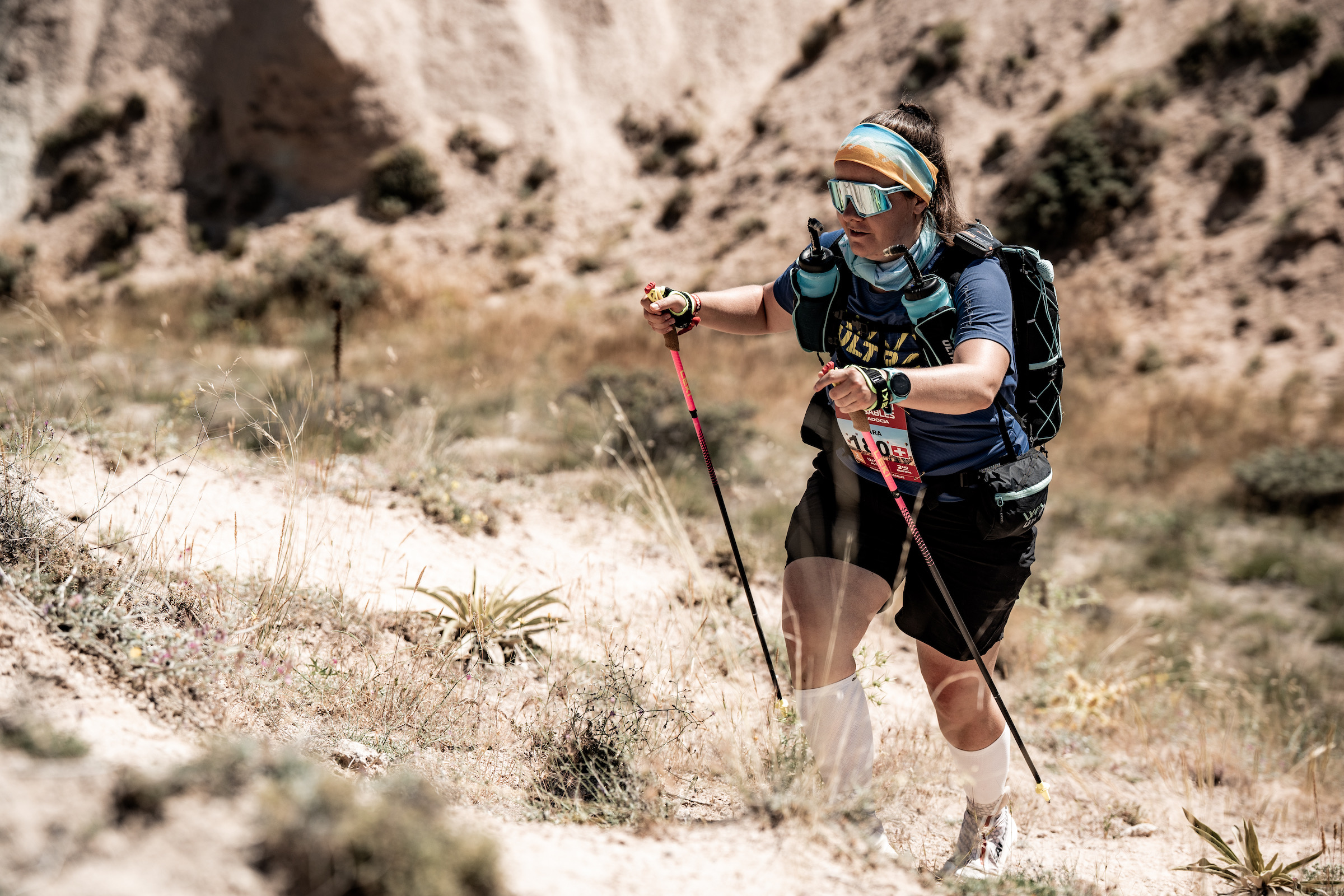
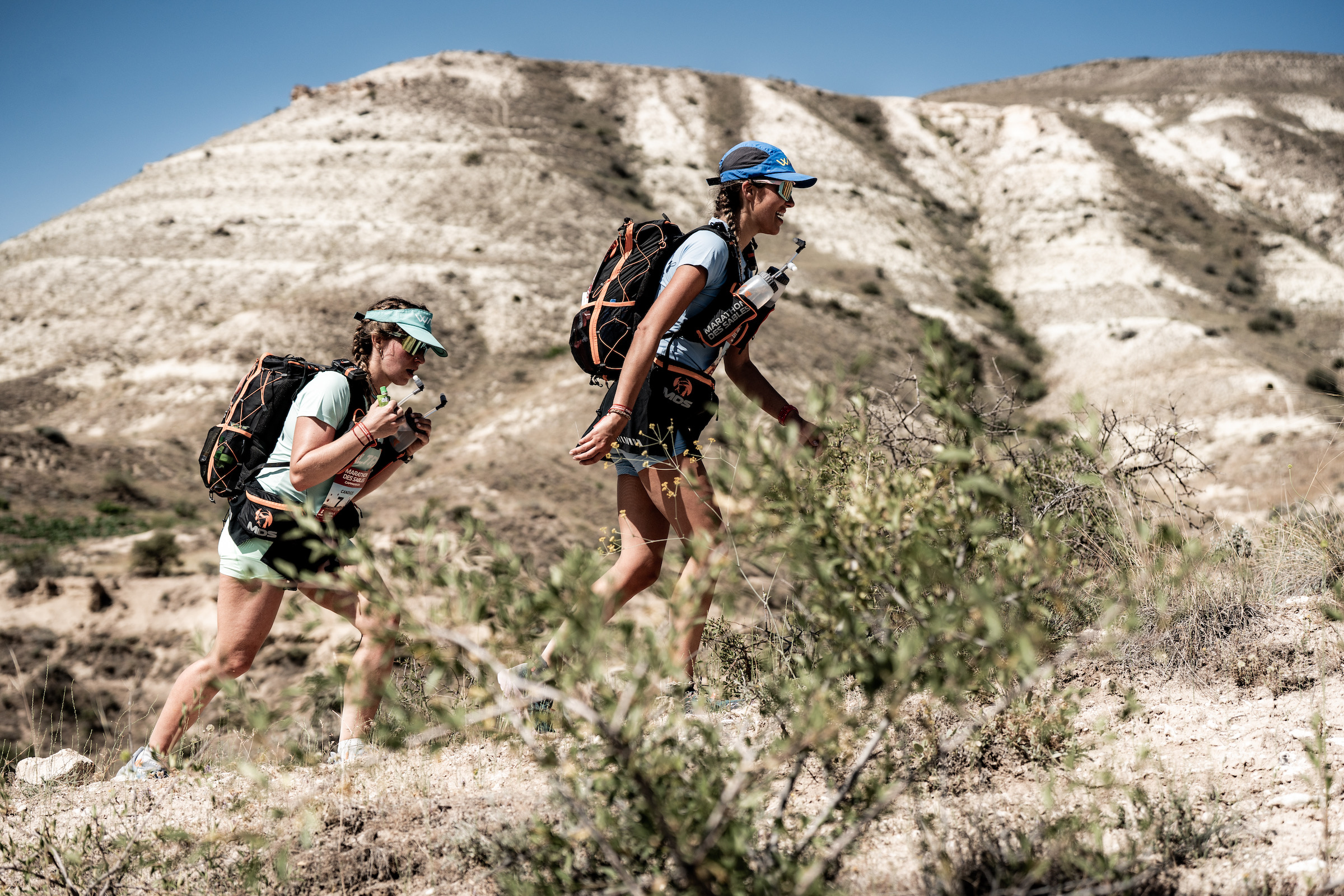
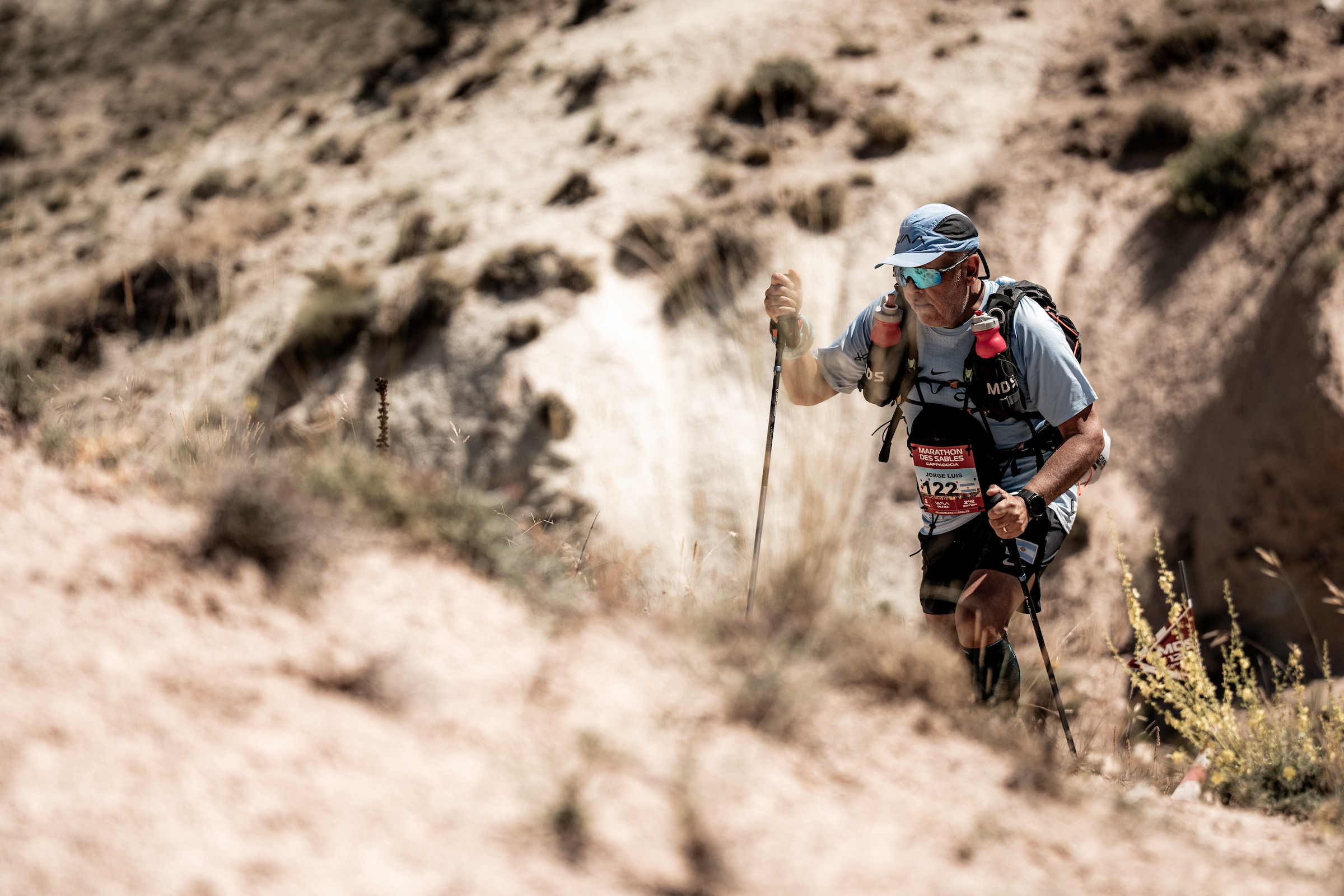
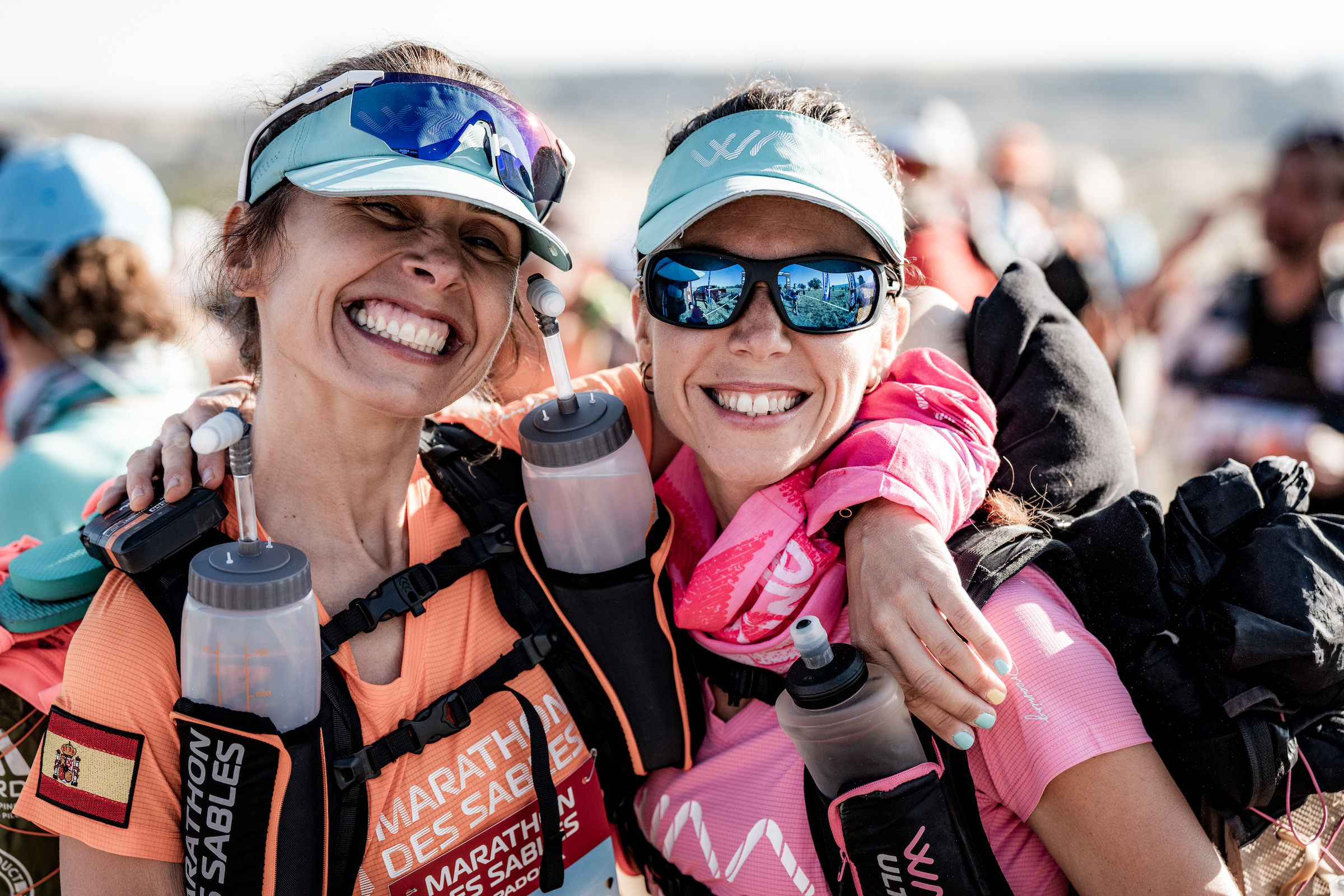
Stage 1 of the 2nd edition of MDS 120 Cappadocia kicked off under the early light of an Anatolian sunrise, with 25 km’s of raw terrain waiting to test the field. A race drawing runners from 25 countries, with 62% of the field made up of women, the stage offered more than just a test of fitness. It celebrated resilience, international camaraderie, and the wild beauty of one of Earth’s most spectacular landscapes.
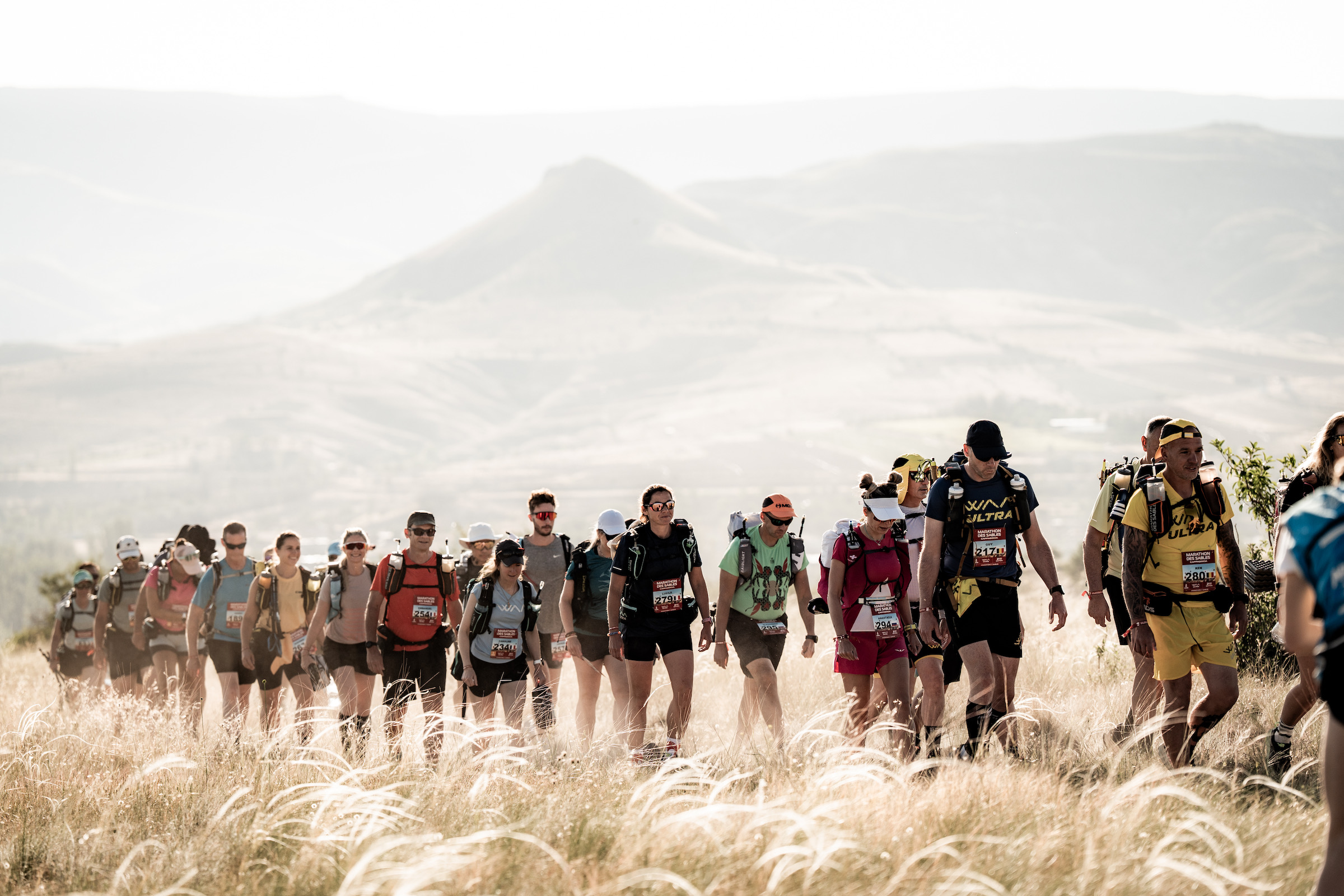
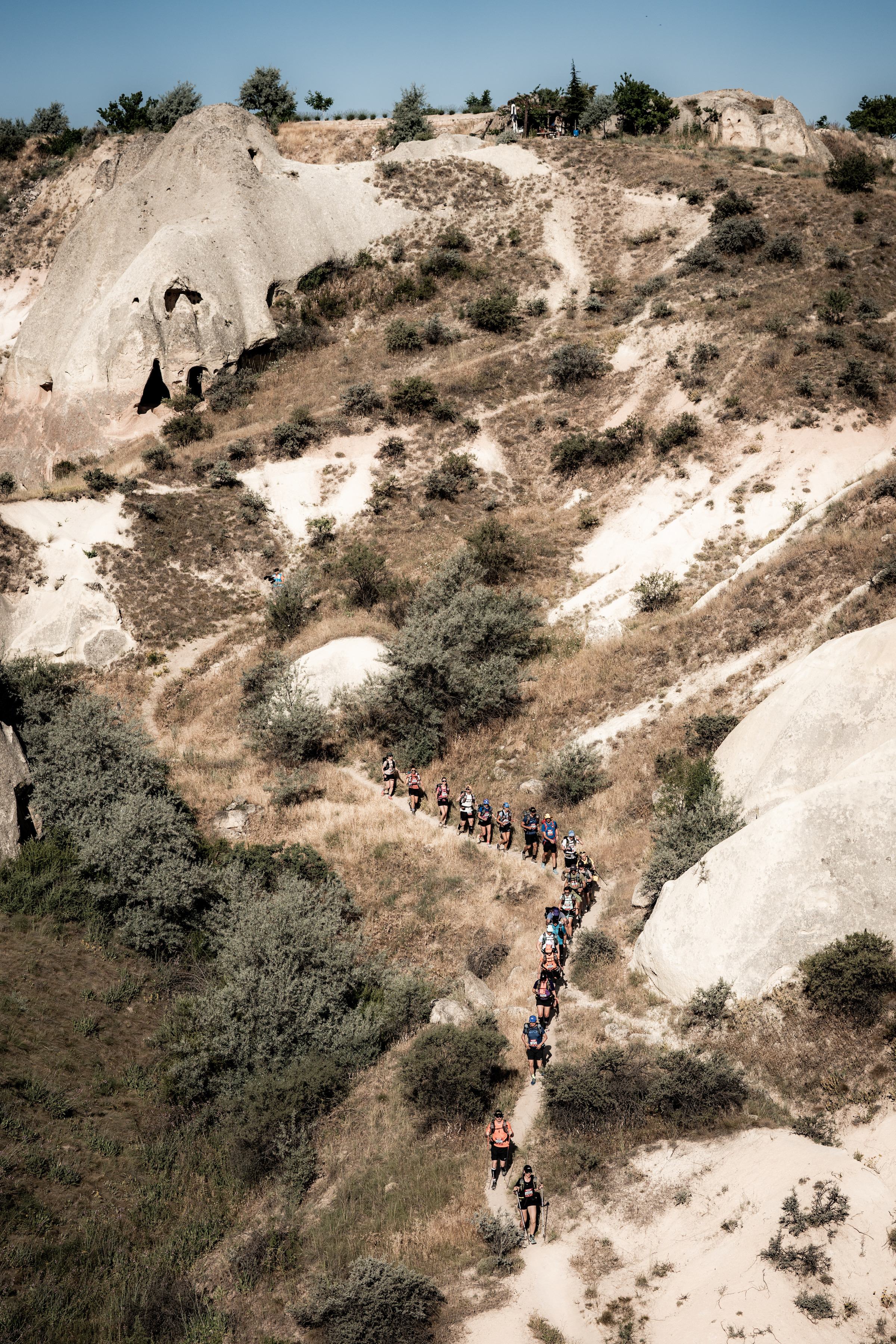
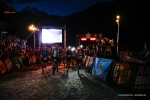
At 08:00, runners surged forward through soft dust and rising heat, chasing not just the finish line, but the promise of the valleys, ridges, and canyons that make Cappadocia a runner’s dream.
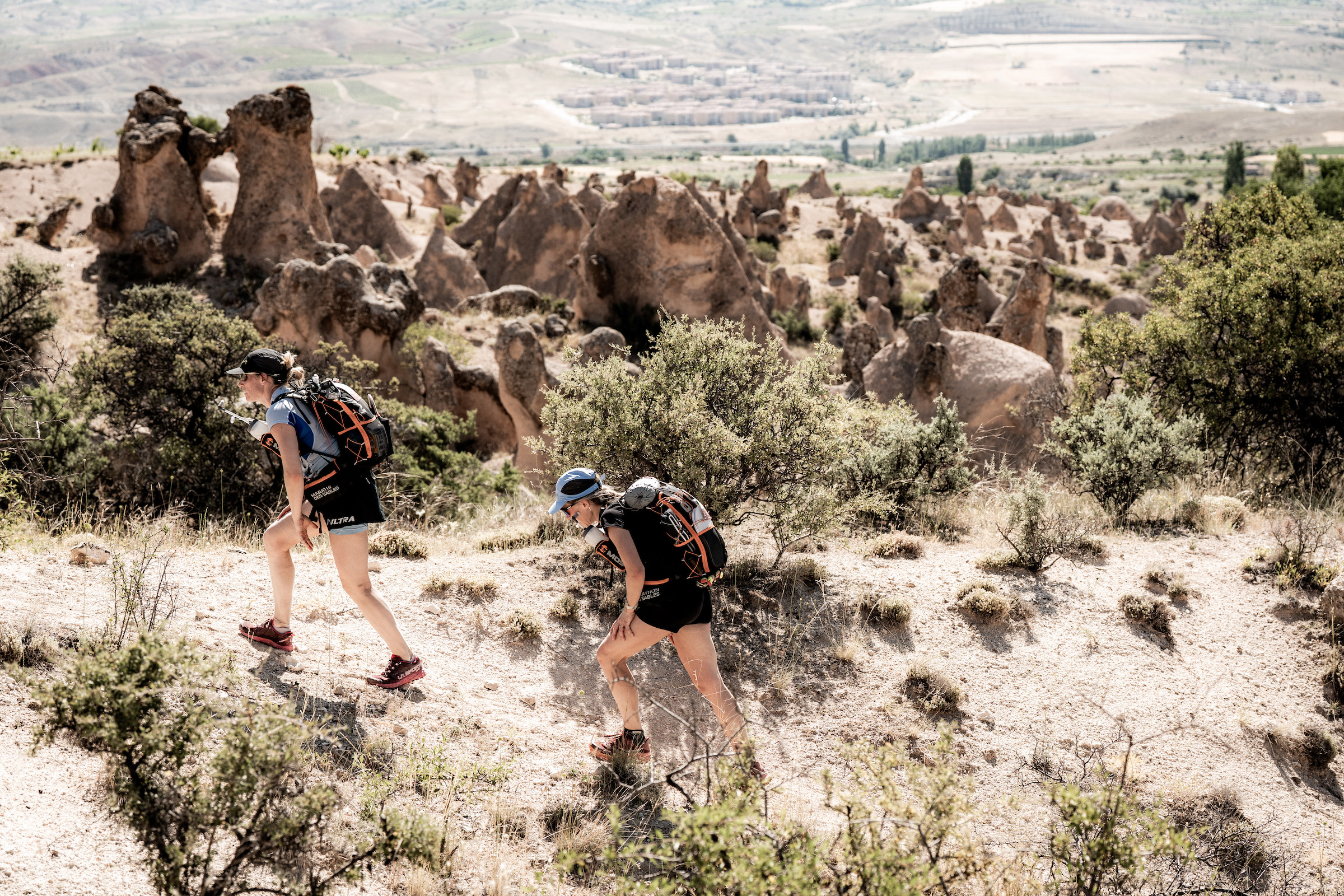
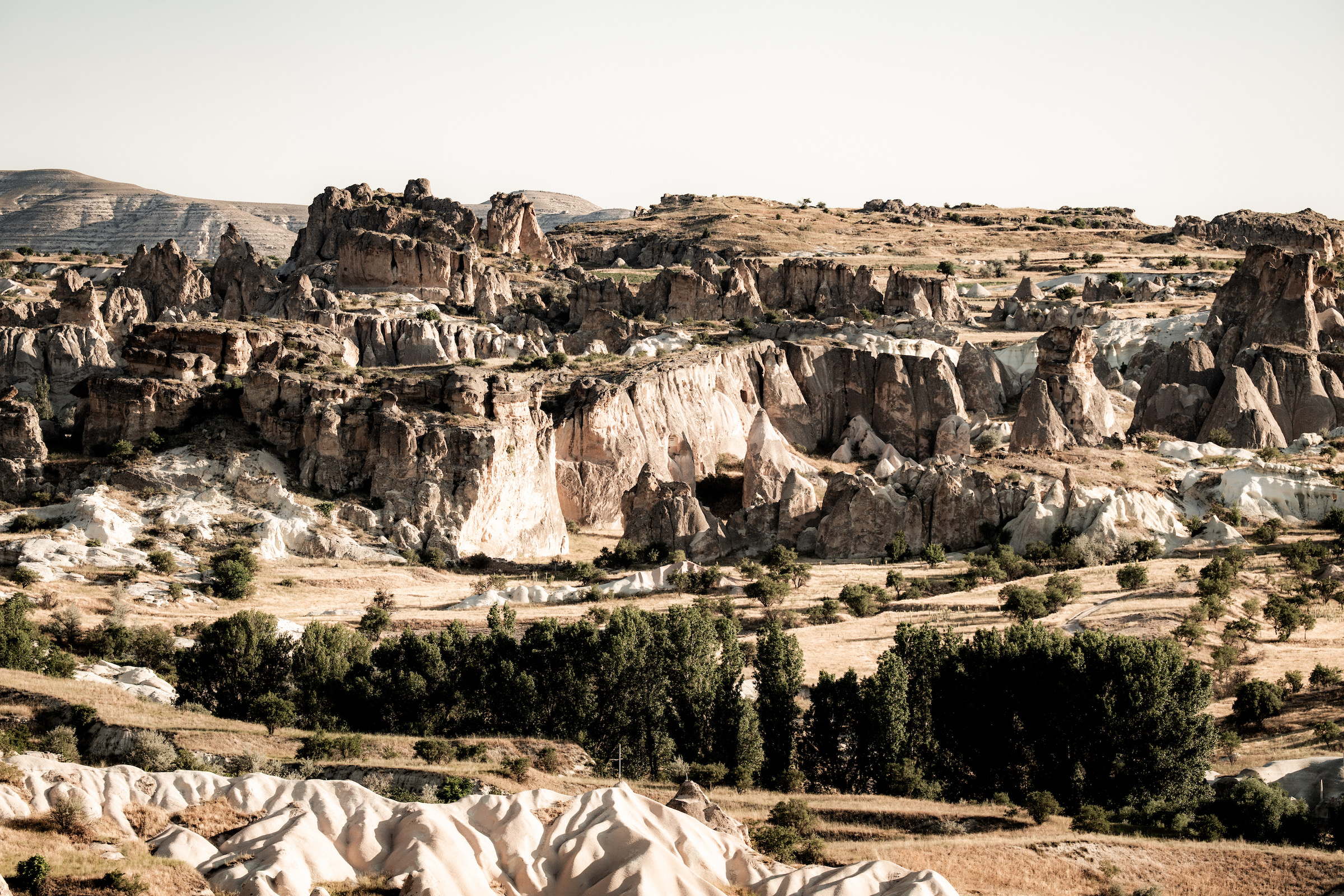
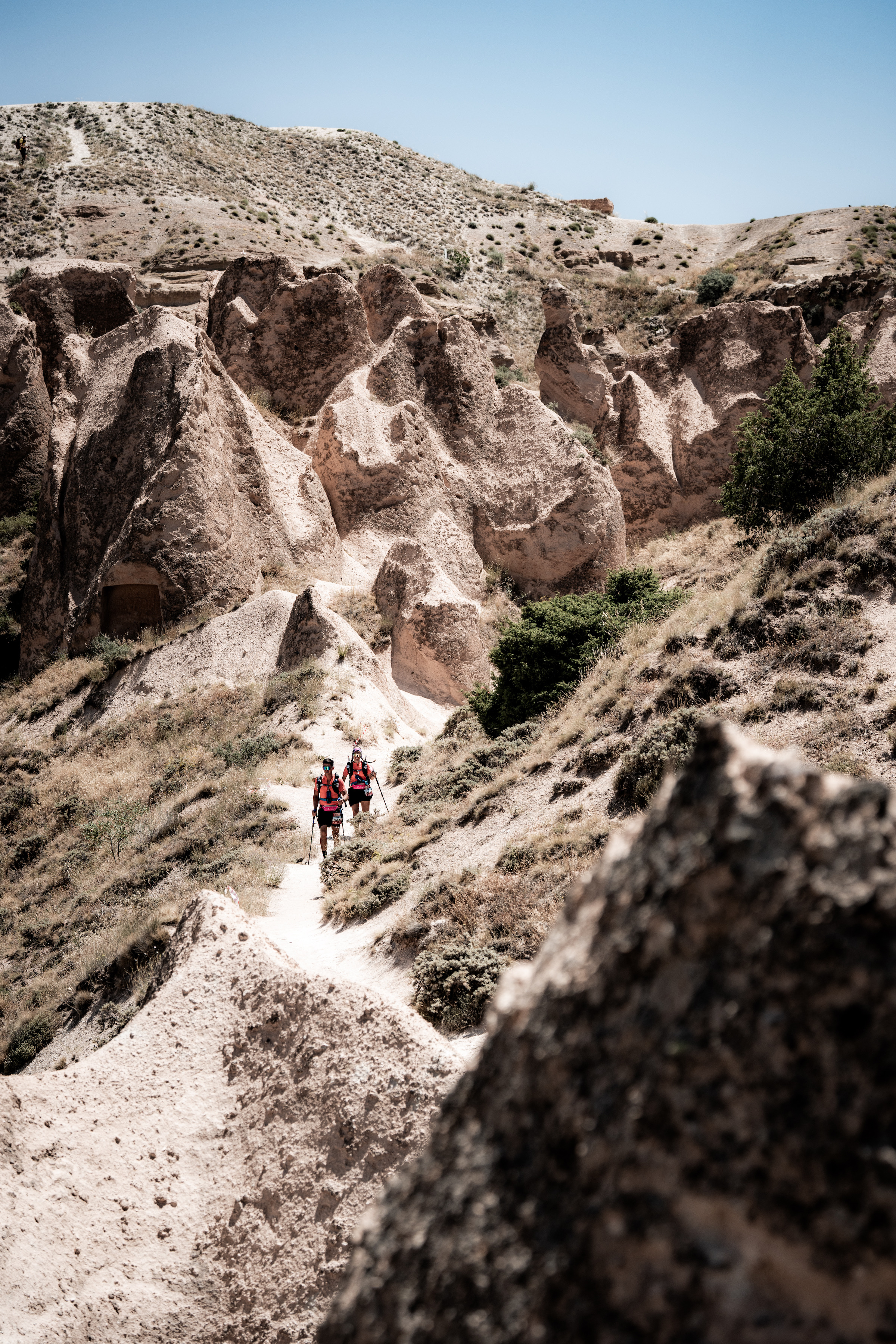
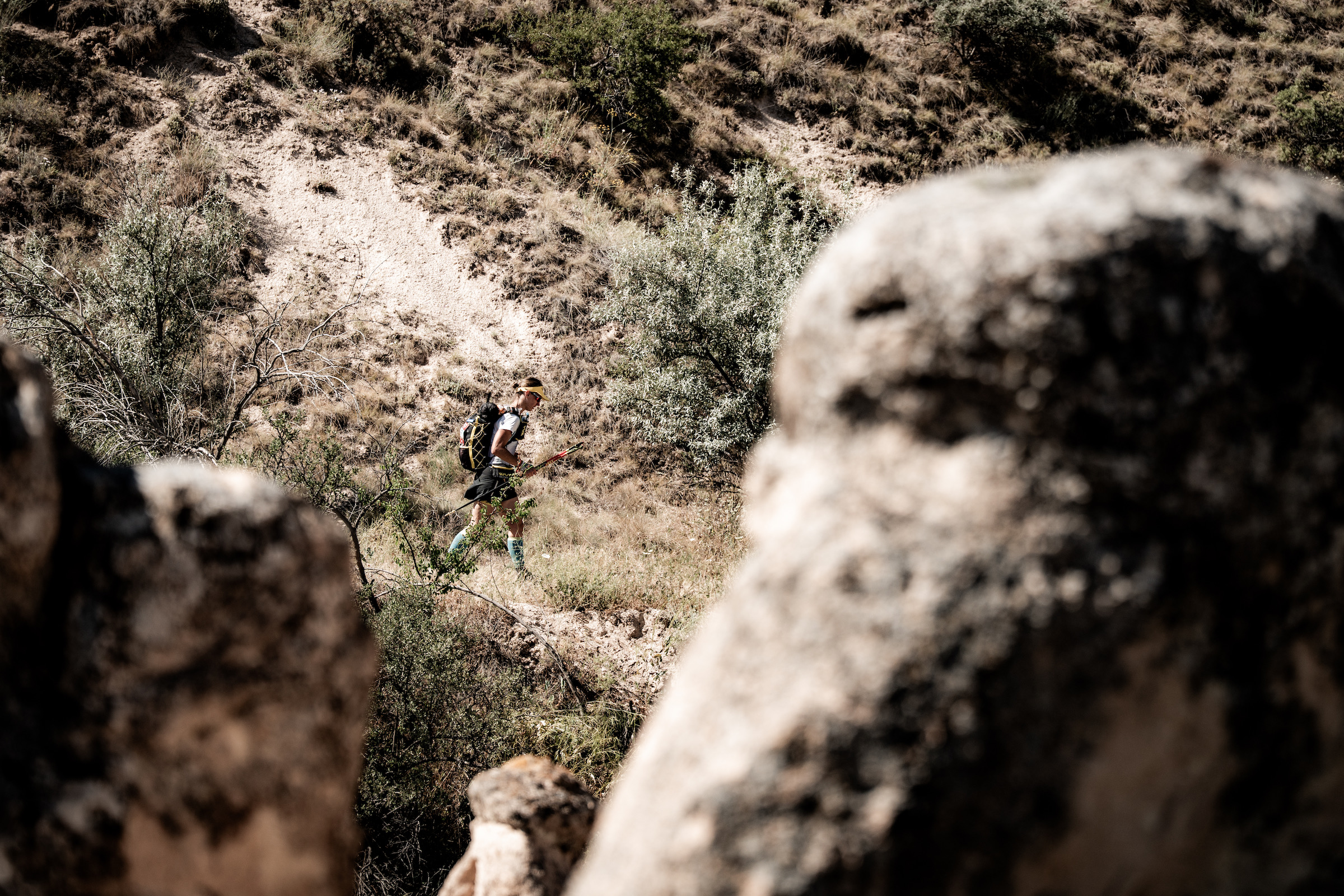
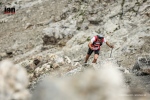
A perfect introduction to this region’s surreal terrain. Cappadocia’s sculpted rock formations and ancient pathways aren’t just scenic, they’re alive underfoot. The ground shifts from soft tuff to jagged stone without warning. Trails wrap through fairy chimneys, drop into hidden valleys, and climb ancient volcanic ridges that defy rhythm and punish pacing mistakes.
In Sword Valley, the finish line was framed by tall rock blades that towered like silent spectators. But before that moment of glory, runners had to earn it, through a twisting, relentless route that refused to give them anything for free.
This stage, at 25km’s, may have been short by ultra standards, but it made up for that in technicality and vertical grind.
“That climb? That was a truth serum to the CP,” said one British runner, laughing between gulps of water.
“I’ve raced ultras all over the world, and I’ve never seen terrain like this,”
This was only the opening round, but already the stage has shaped expectations for the rest of the MDS 120 Cappadocia: With deeper valleys, hotter days, and longer distances on the horizon, strategy will start to matter even more. Pacing, hydration, and mental grit will be required in abundance, especially with increasing hotter temperatures.
Equal parts brutal and beautiful, it gave runners a taste of what’s ahead: unpredictable terrain, and heat. The landscape demands respect. The heat punishes the arrogant. And the first finish line felt like a small rebirth.
One stage down. Two to go. Cappadocia has opened the door and it’s not letting anyone through without a fight.
Home of the Giants 2024 has just come to a conclusion. And what a week it has been.
This trip came about through personal adventure in the Jotunheimen mountains of Norway and the desire to share and showcase this magical playground.
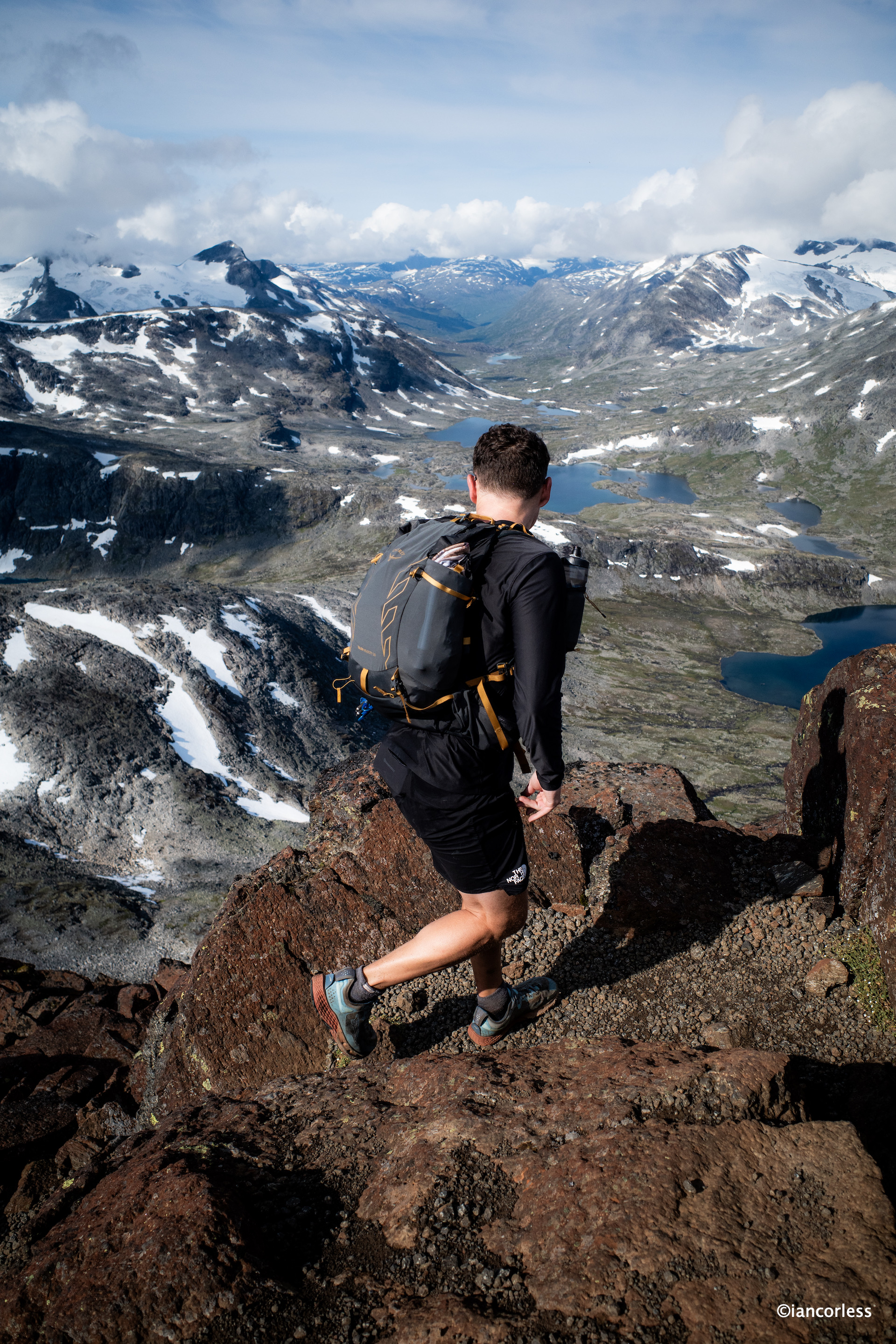
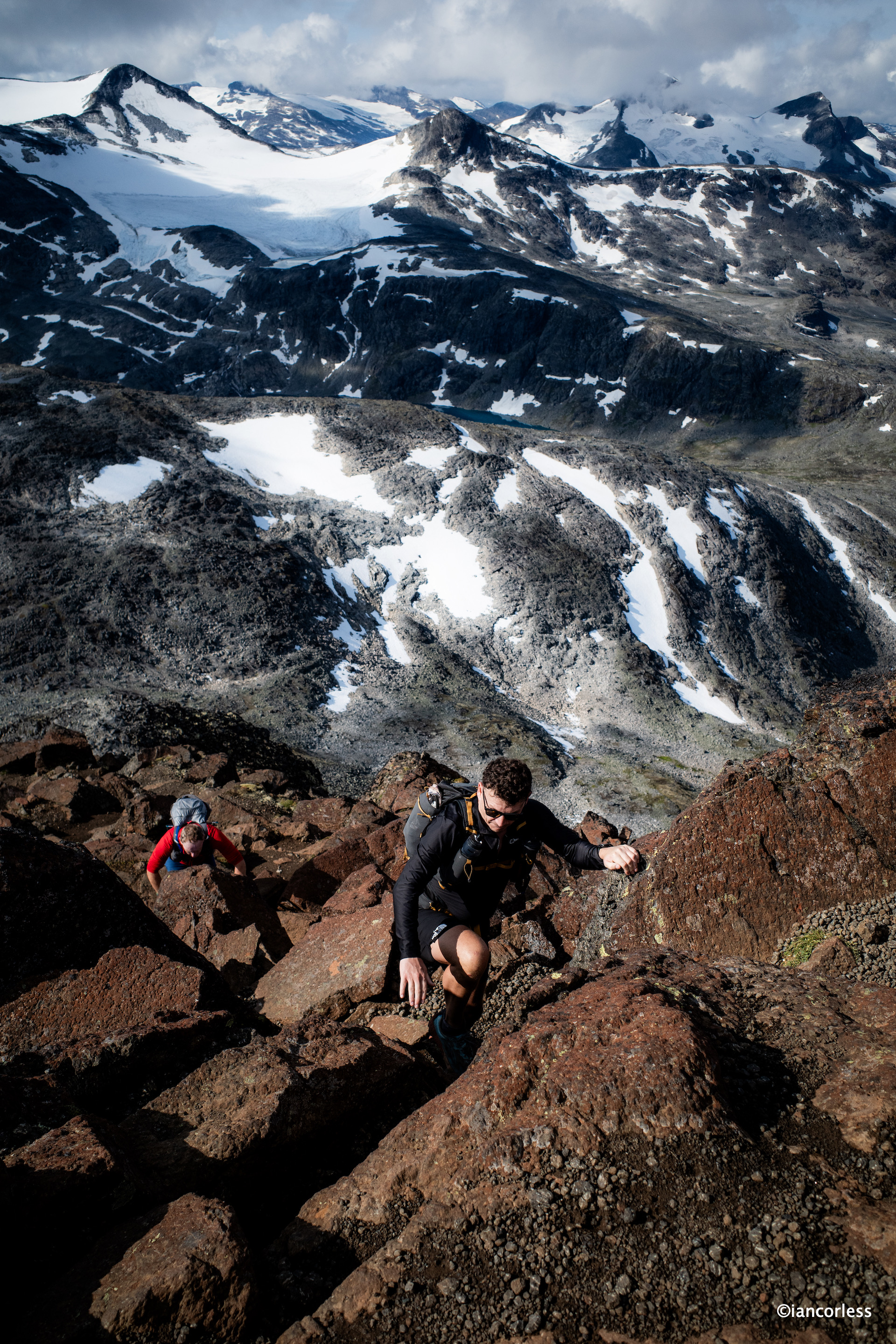
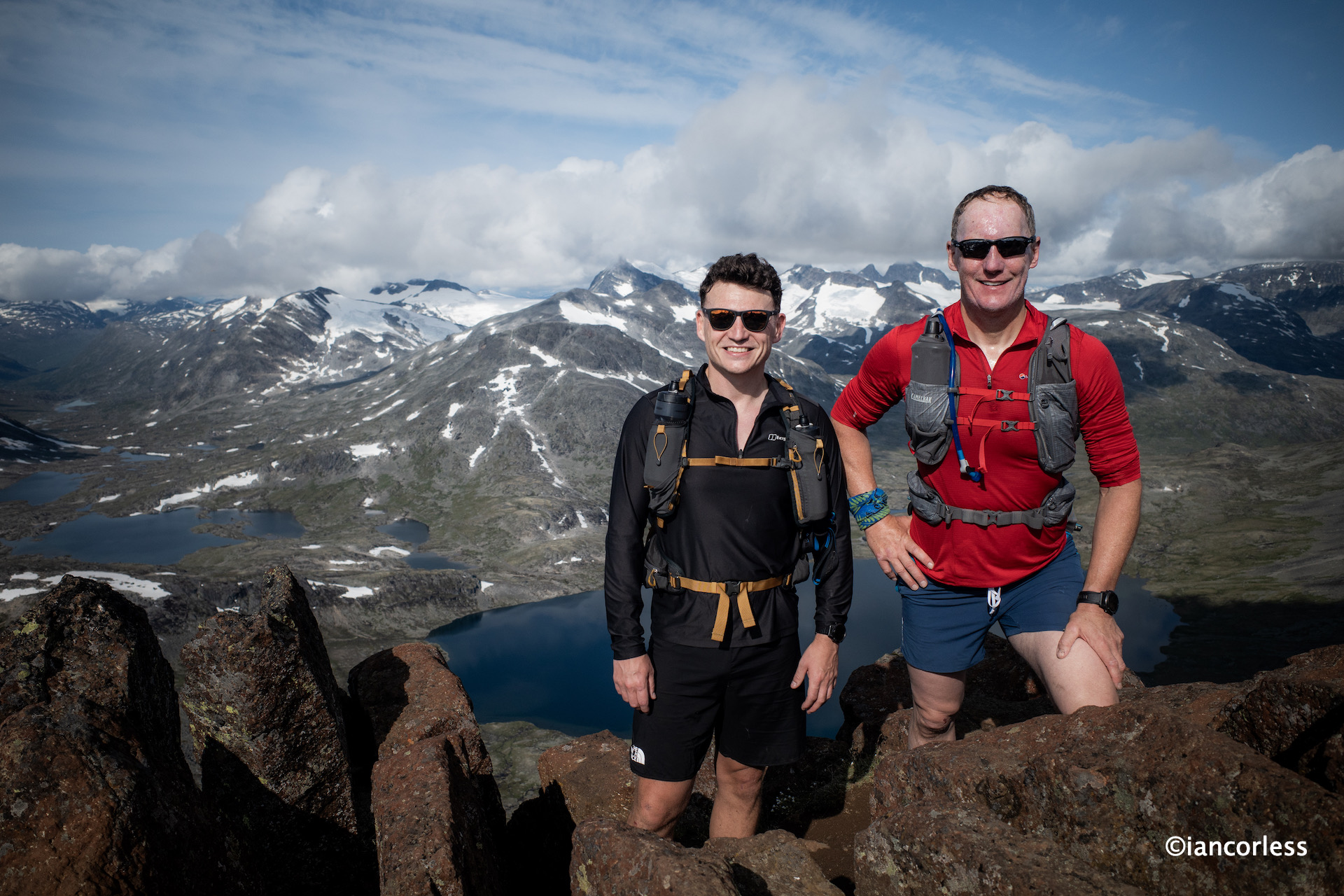
Baz at the summit of Kyrkja
What is Home of the Giants?
A multi-day adventure, 6-days in total, through a magical and challenging landscape. Unlike a race, this journey was created as a finely balanced exclusive trip for up to just 12 participants. A challenge at a more relaxed pace, taking in an amazing route whilst moving light in a semi self-sufficient mode using DNT cabins for overnight accommodation.
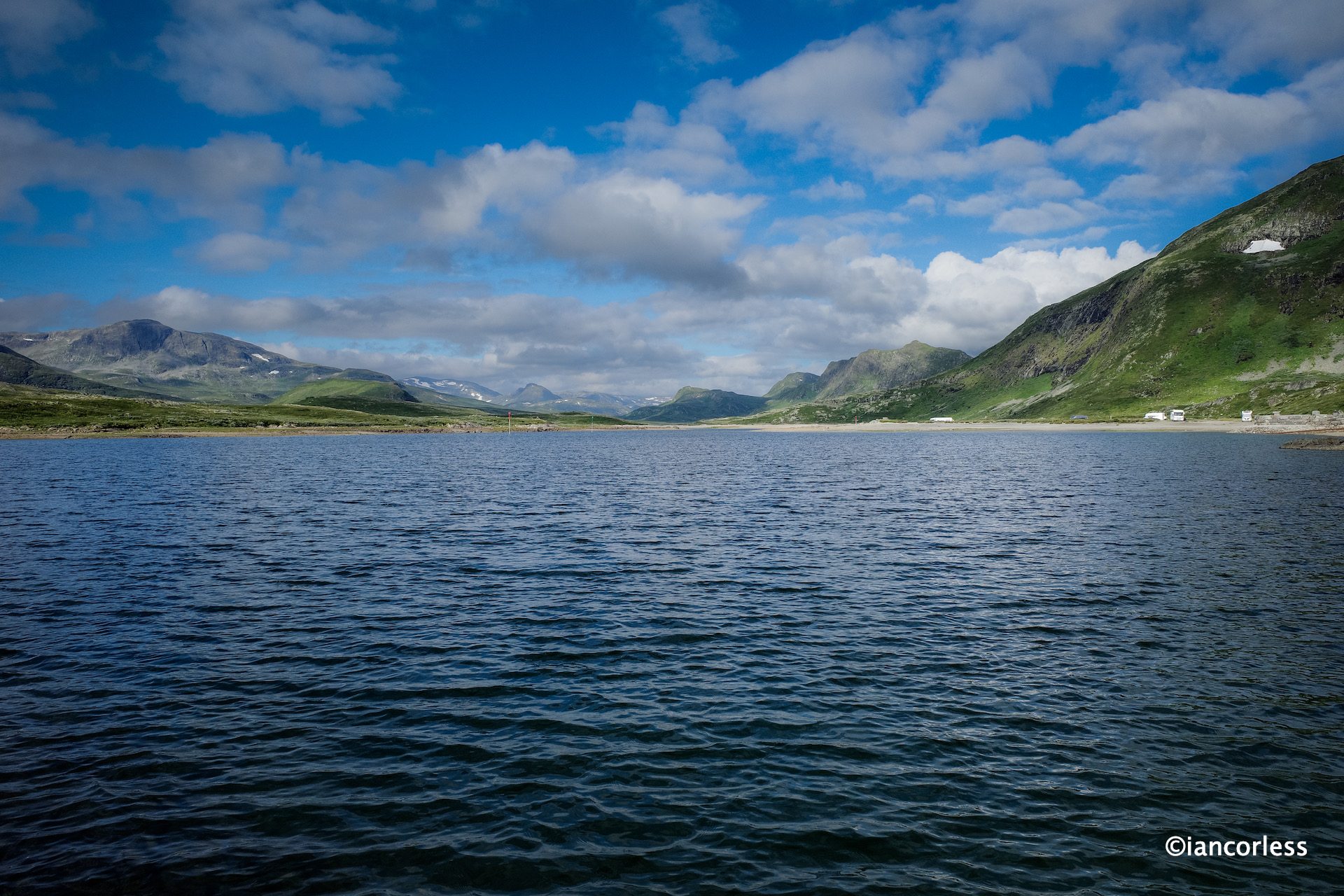
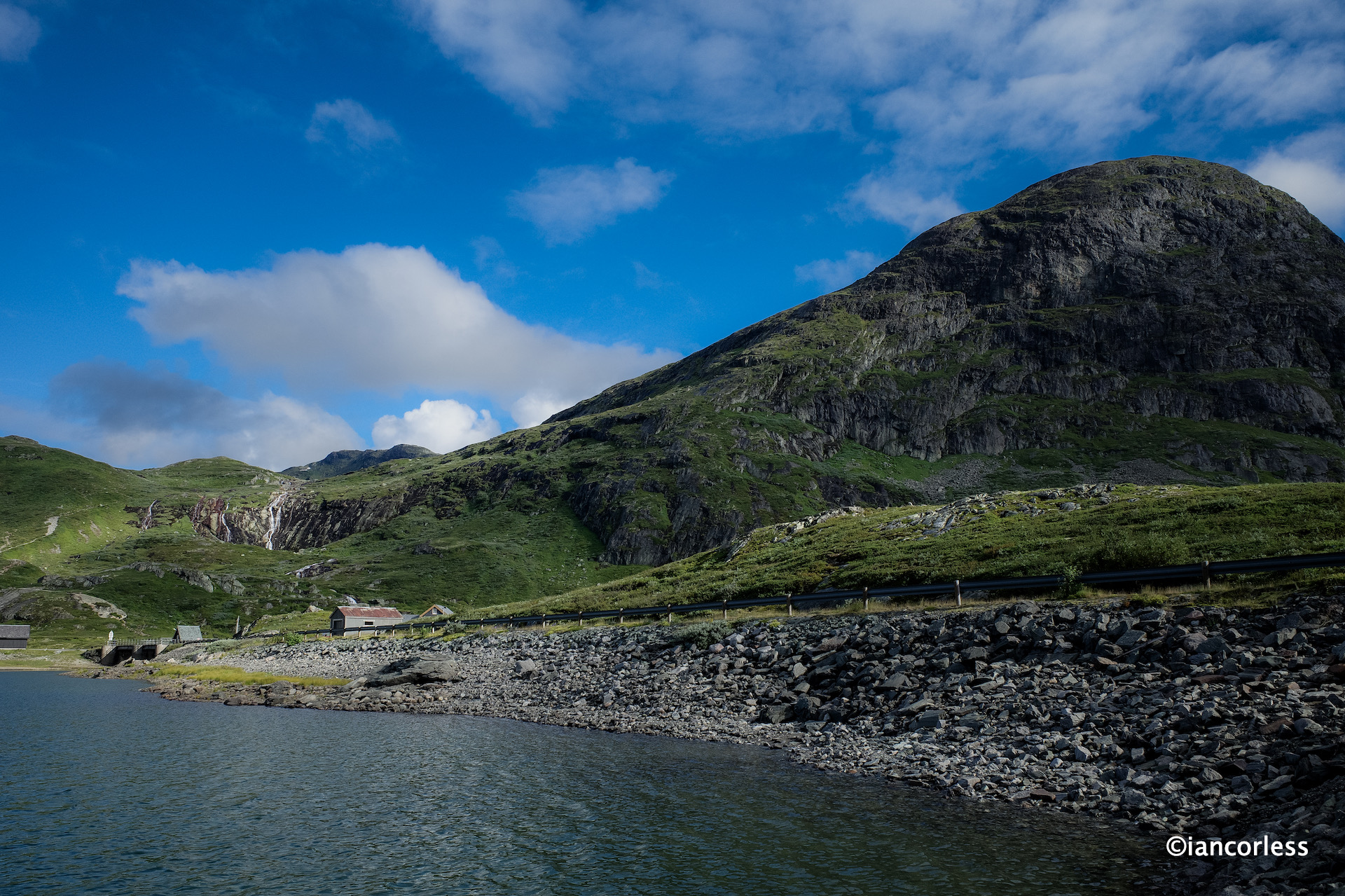
Lake Bygdin
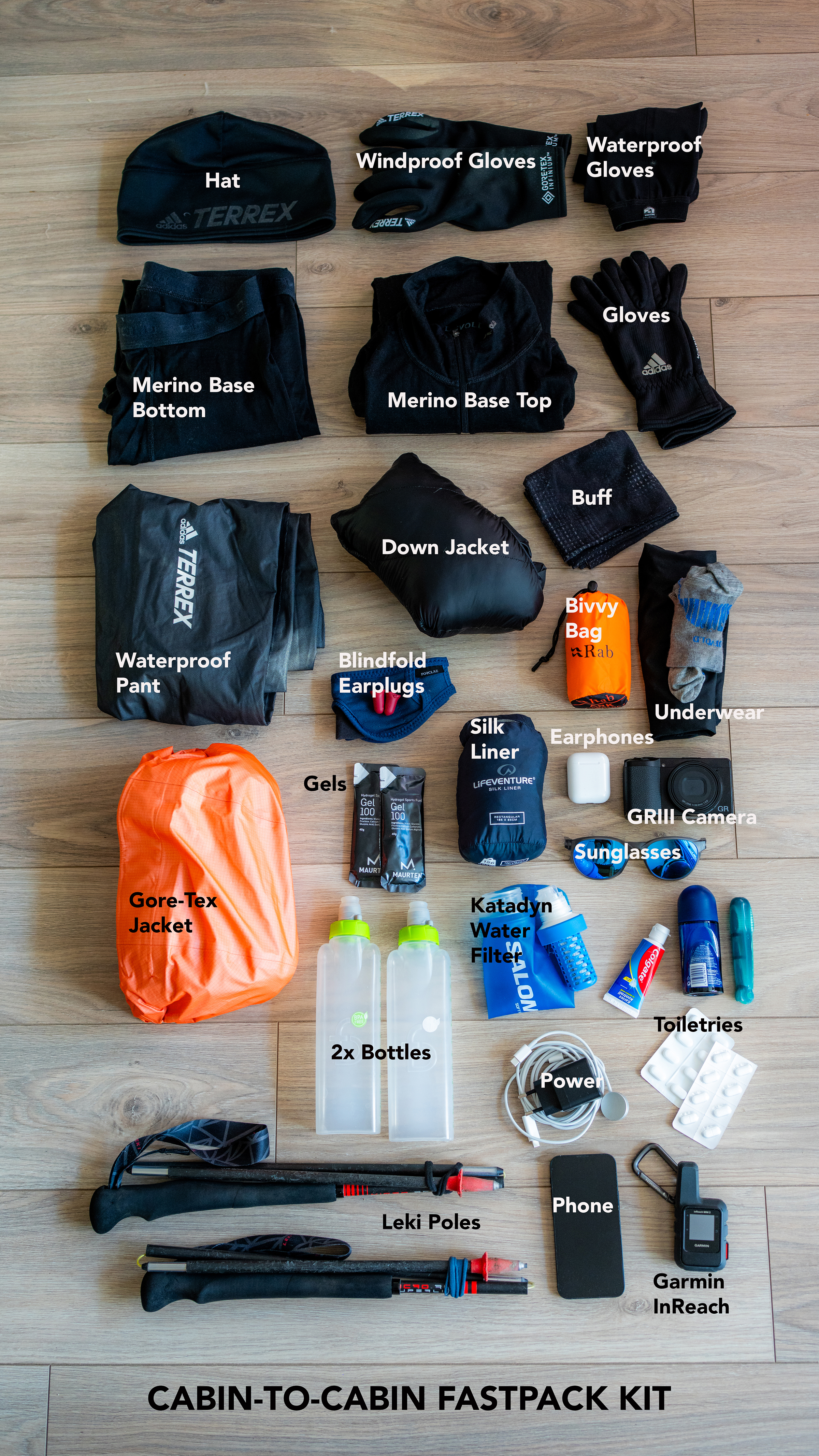
Based around the concept of stage races, Home of the Giants is about moving lighter and therefore faster with a minimum amount of equipment without compromising safety. All we needed could be carried in a small pack weighing approximately 3kg (plus liquid).
It is important to emphasize that Norway can have spring, summer and winter in one day. Never underestimate the challenge of the environment. It is all well and good being light IF you can move fast. You also need to consider the ‘what if’ scenario and should you become slow or a worst case scenario, injured and waiting help/ rescue. At a minimum you MUST have merino top and bottom, warm insulating layer (down or PrimaLoft) waterproof jacket and pants, hat, gloves and a bivy bag. I also strongly recommend a product such as Garmin InReach. Much of Jotunheimen has no phone connection, an InReach with emergency SOS button, for me, should be mandatory.
You can see an example of my pack below and the details are as follows:
Camelbak Octane Pack 600g
adidas hat 32g
adidas gloves Infinitum 52g
Hestra waterproof gloves 53g
adidas gloves 41g
Devold merino base top 193g
Devold merino base bottom 166g
Buff 43g
Haglofs down jacket 163g
adidas waterproof pant 125g
adidas Gore-Tex jacket 272g
Rab bivvy bag 110g
Underwear 98g
Gels 81g (for emergency)
Silk liner 126g
Blindfold/ earplugs 22g
Earphones 44g
Ricoh GRIII camera 251g (a luxury)
Sunglasses 18g
Bottles x2 90g
Katadyn water filter 52g
Toiletries 196g
Power supply 138g
Phone 136g
Garmin InReach 108g
Leki poles 250g
3379g
Staying at DNT staffed cabins provides the best of both worlds, they provide a bed for the night, dinner, breakfast, a packed lunch and they have additional facilities such as relaxation areas, showers and a bar. It’s the ultimate way to travel light in the mountains. Beds are in dorms or private rooms that depending on the cabin can be solo, double, triple, quadruple or five plus. Most DNT’s have a rule that irrespective of if you arrive and there are no beds, you will not be turned away, so, rest assured, a safe haven is always available.
OUR JOURNEY
Day 1 –Oslo to Bygdin
We departed Oslo bus terminal at 0830 Monday for a direct trip to Bygdin Fjellhotel. The journey taking 4-hours with a 15-minute break ideal for a midday arrival. The weather was grim with torrential rain for most of the way. It was an ominous start and constant glancing at weather apps confirmed that our week ahead would have mixed weather. It’s Norway after all!
Synshorn summit
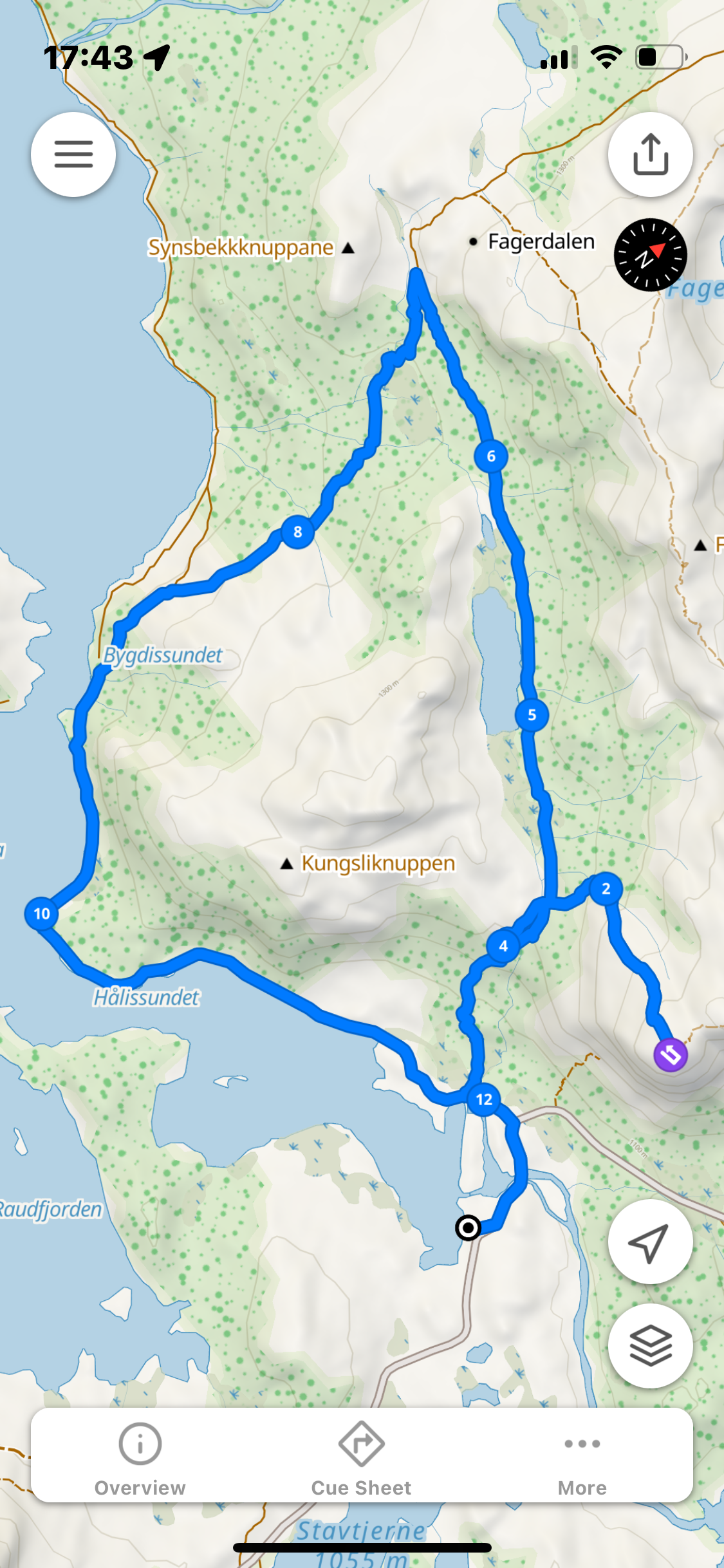
Arrival at Bygdin was seamless and after a break at 1500 we departed in the rain to take in the summit of Synshorn (1464m) which is a great introduction to Norwegian mountain terrain. The plan was initially to just summit and return, a 75-minute journey at a steady pace. However, the weather, although still wet, was not cold and after long travel, we all decided to continue for a back-up and planned 12km route. We followed the ridge north to Heimre Fagerdalshøe (1510 m above sea level) with a great view over Bygdin to Falketind. We then continued in the direction of Synsbekk and connected to the ’T’ marked trail that would bring us back to Bygdisheim and the lake for a short gravel road section back to the hotel.
Day 1 loop
It was a great intro to the week and then we could enjoy the benefits of Bygdin Fjellhotel – a warm shower, sauna and a lovely traditional Norwegian dinner.
Day 2 – Bygdin – Eisbugarden – Skogadalbøen
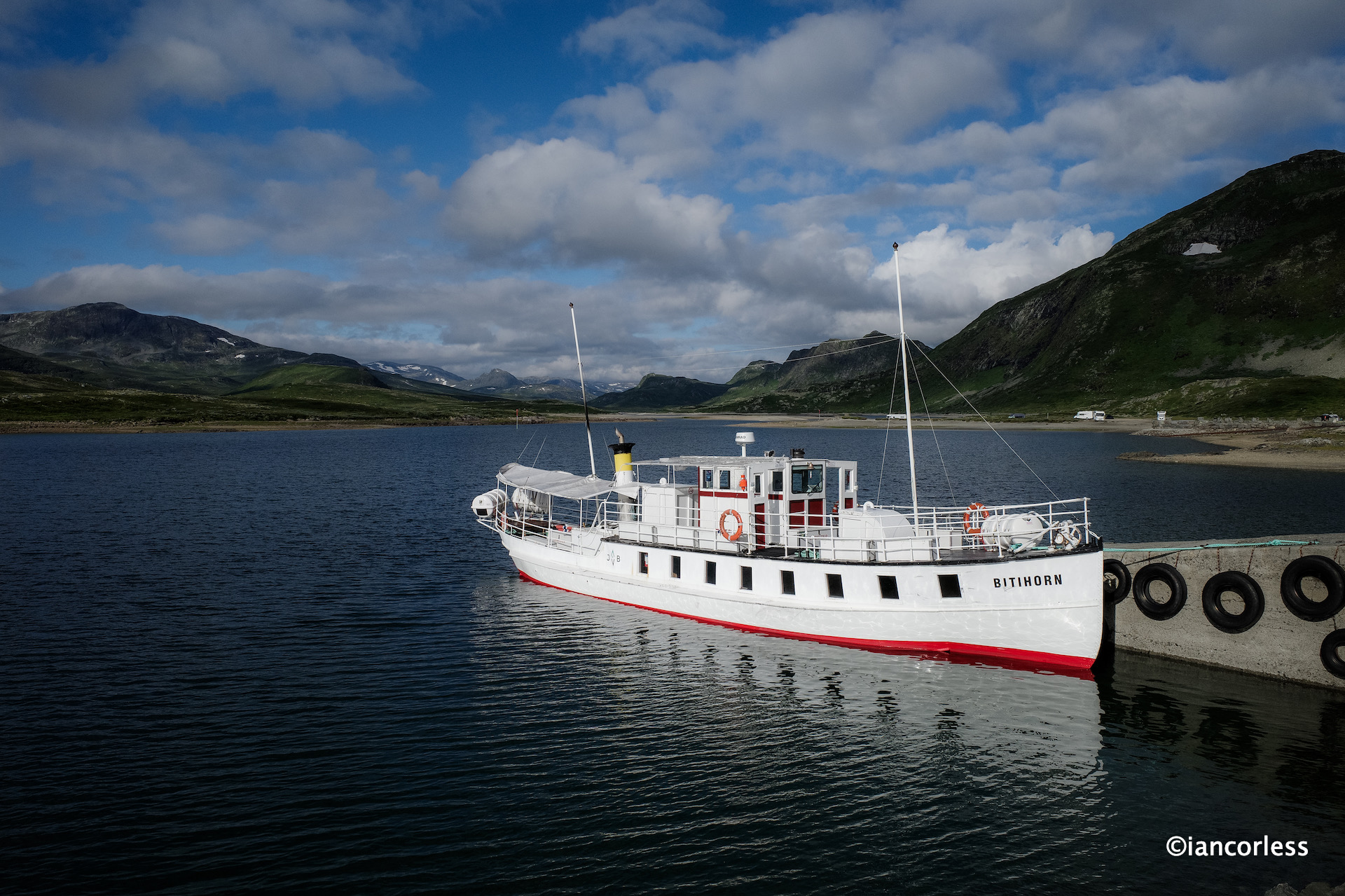
M/B Bitihorn
It was a casual start to the day with a hearty breakfast and then meeting the M/B Bitihorn boat at 0900 for a transfer the length of Bygdin lake (stopping at Torfinnsbu) and then continuing to Eidsbugarden.
Lake GjendeTorfinsbu self-service DNT
By 1100 we were ready for our first full day, Eidsbugarden to the remote Skogadalbøen DNT cabin. The route is considered very demanding due to the nature of the terrain. It’s very important when looking at routes in Norway that you never focus too much on the distance but more the time it will take to cover the distance. Depending on the time of year, this route can have a great deal of snow, so, be careful and do research in advance. For us, we had several snow fields to cross and all were in good condition.
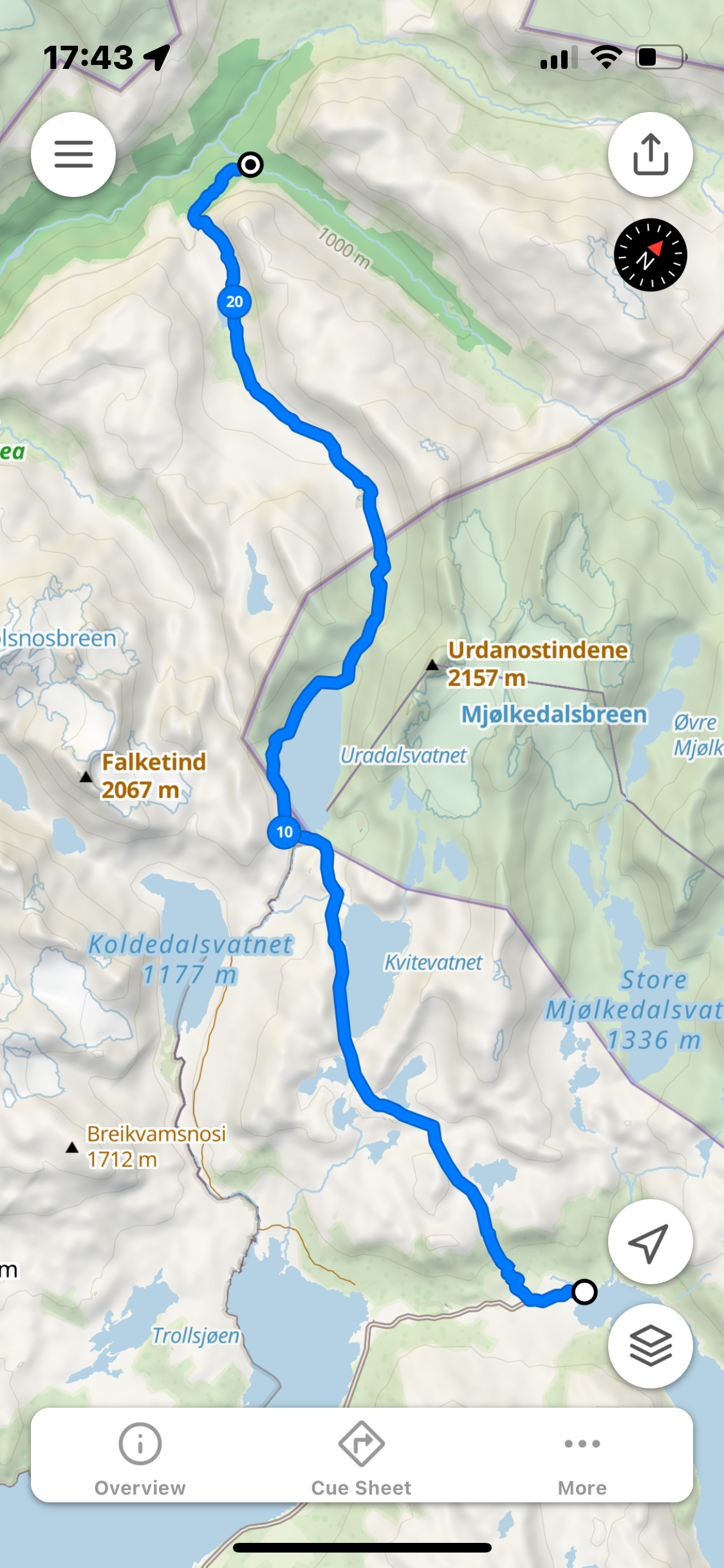
Eisbugarden to Skogadalbøen
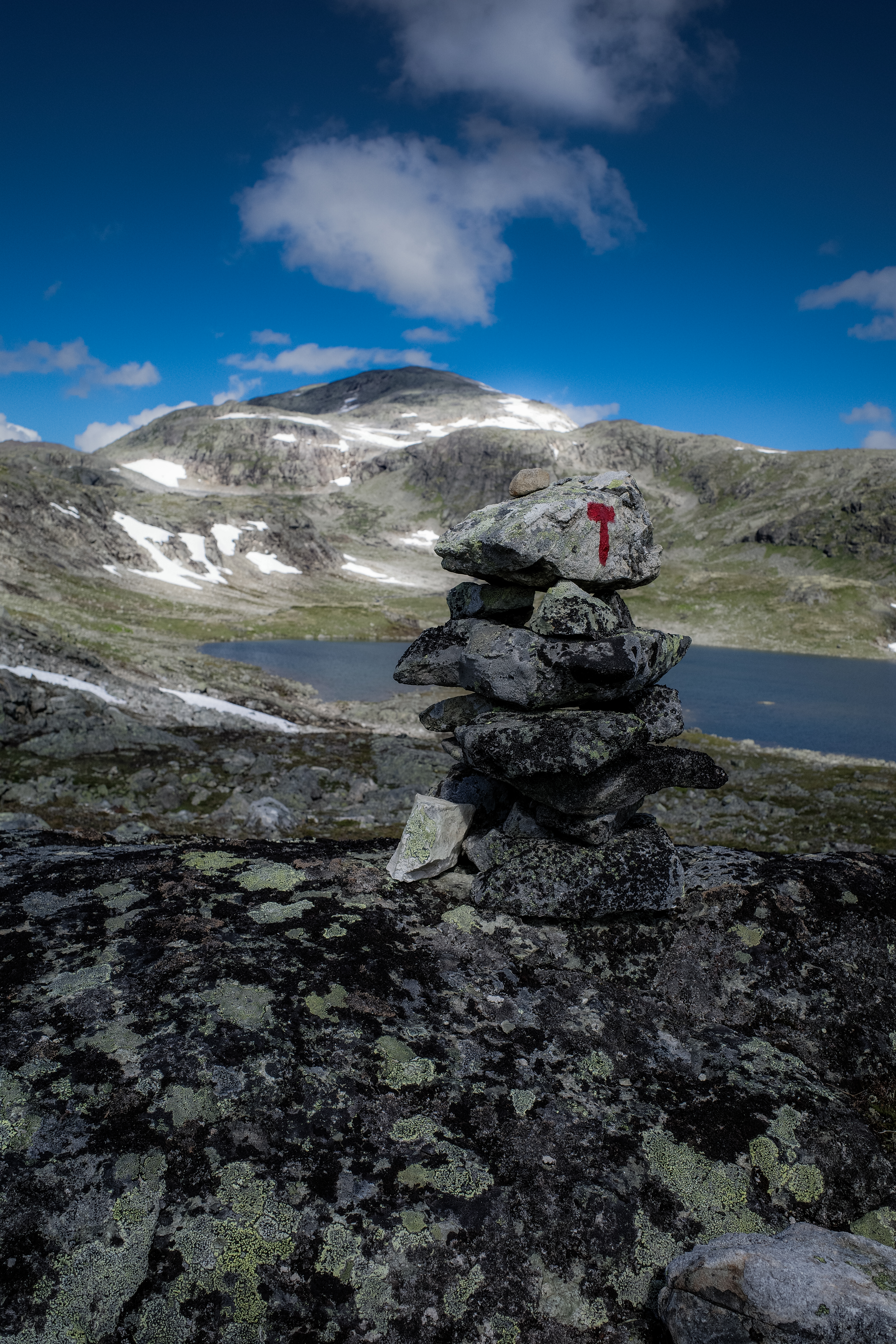
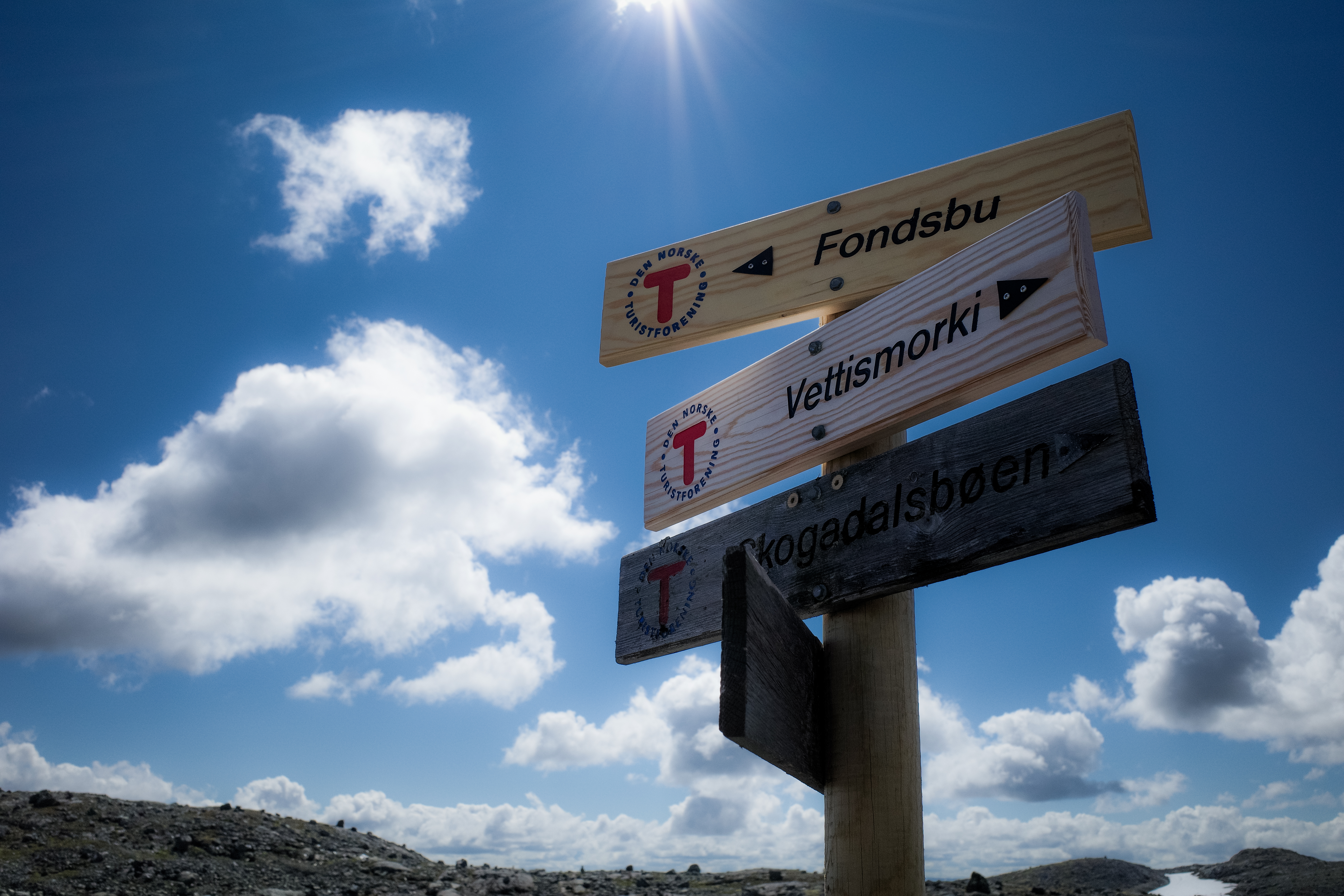
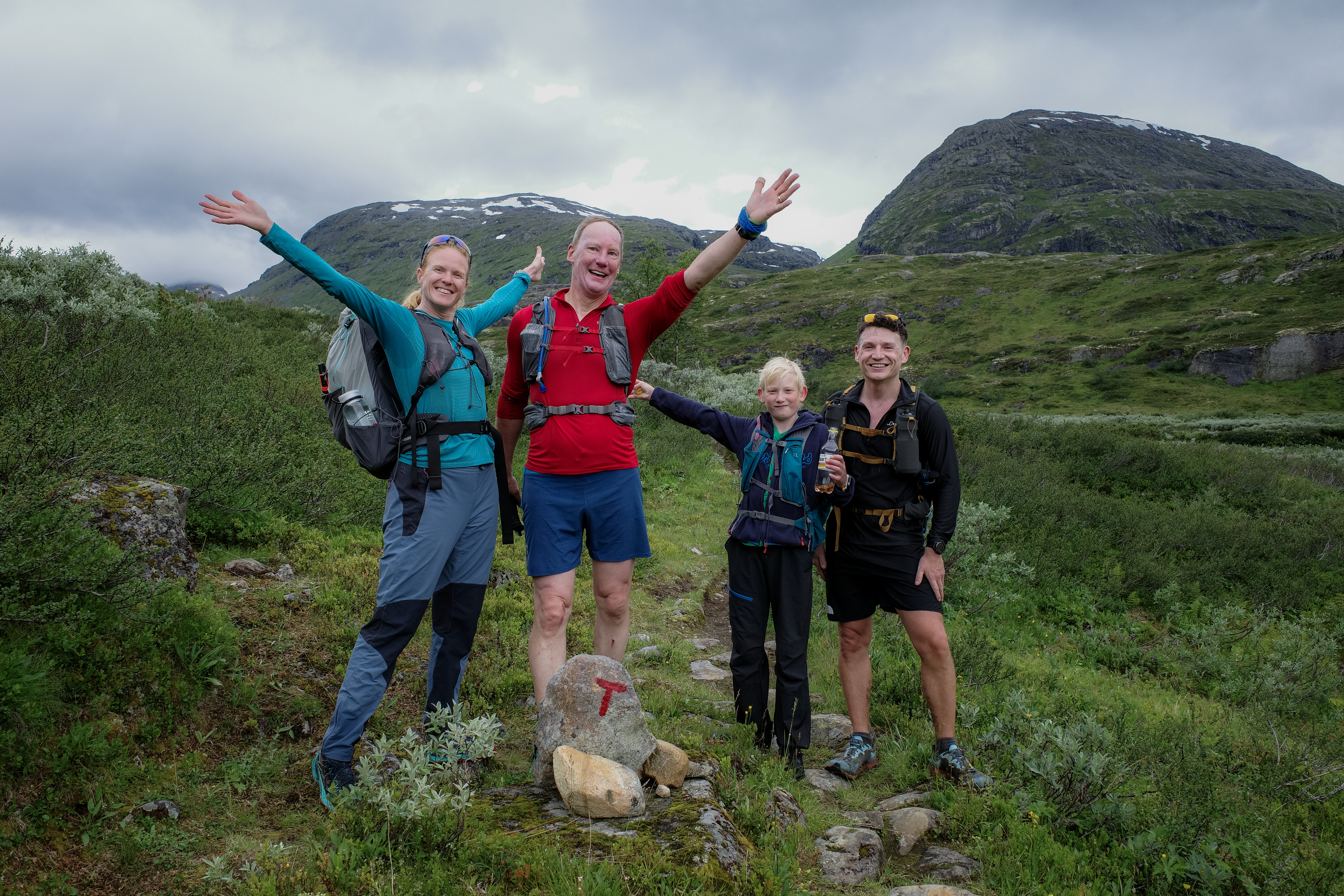
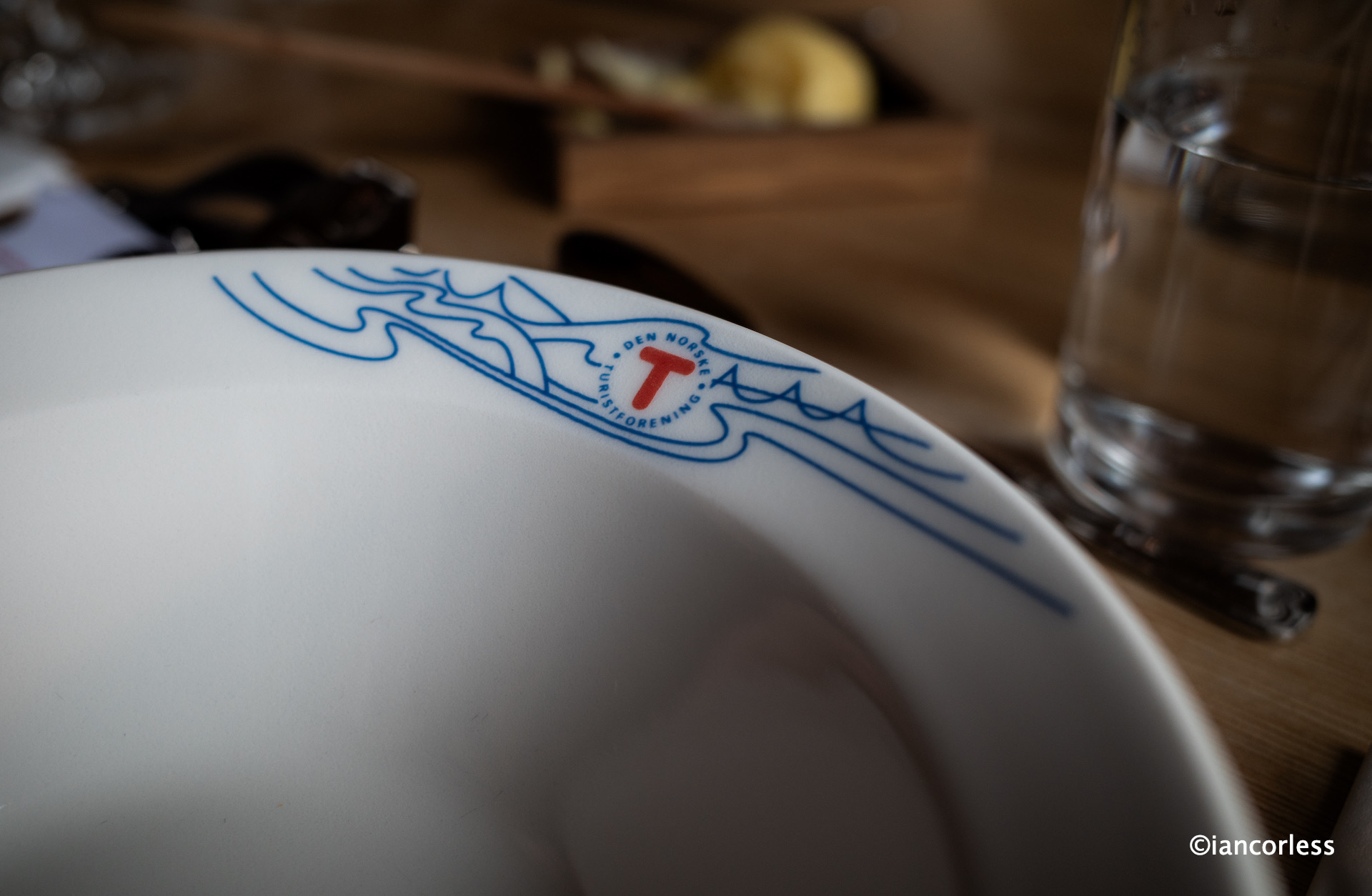
DNT mark the routes with red Ts
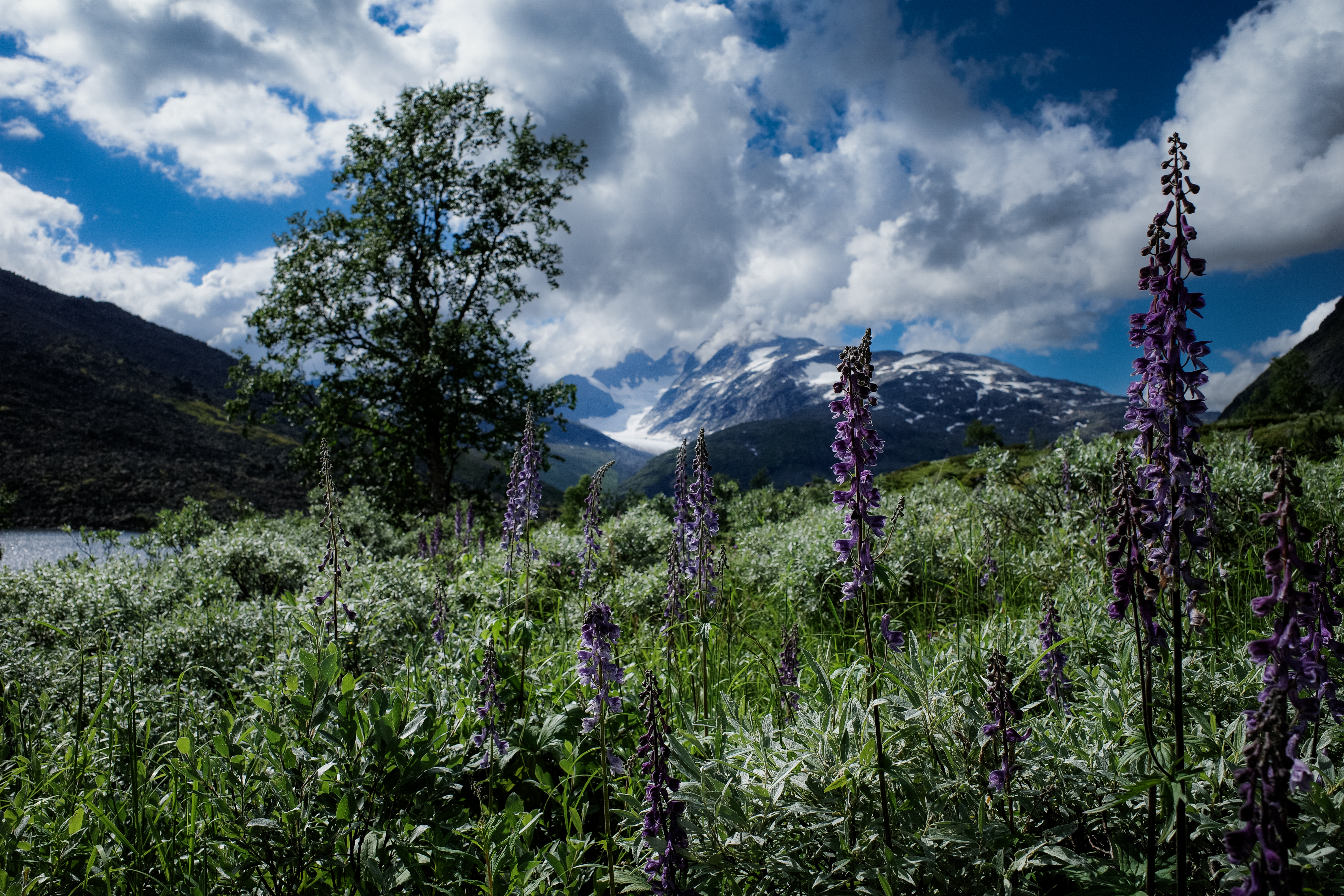
Our weather was glorious, blue skies, white fluffy clouds and amazing views.
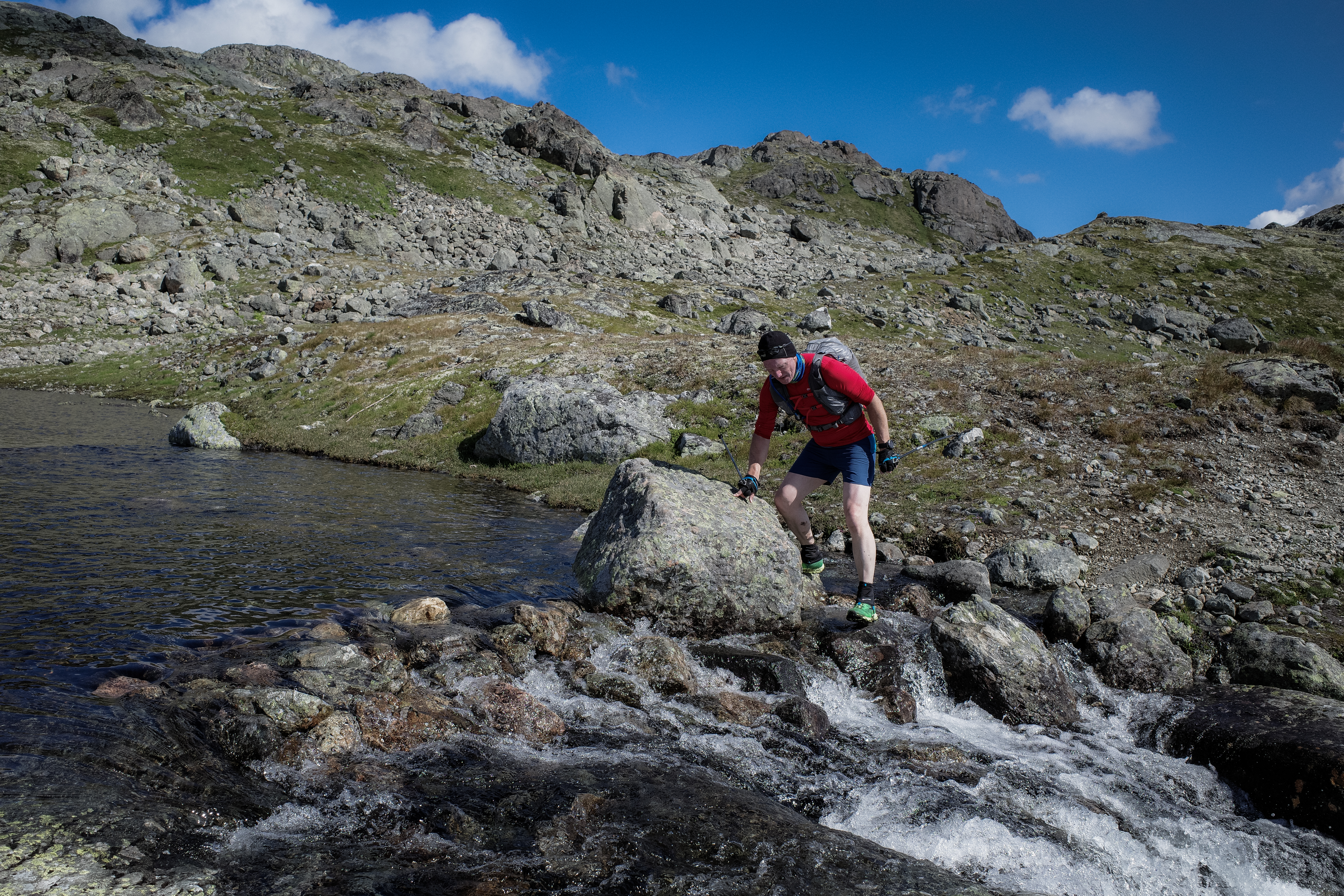
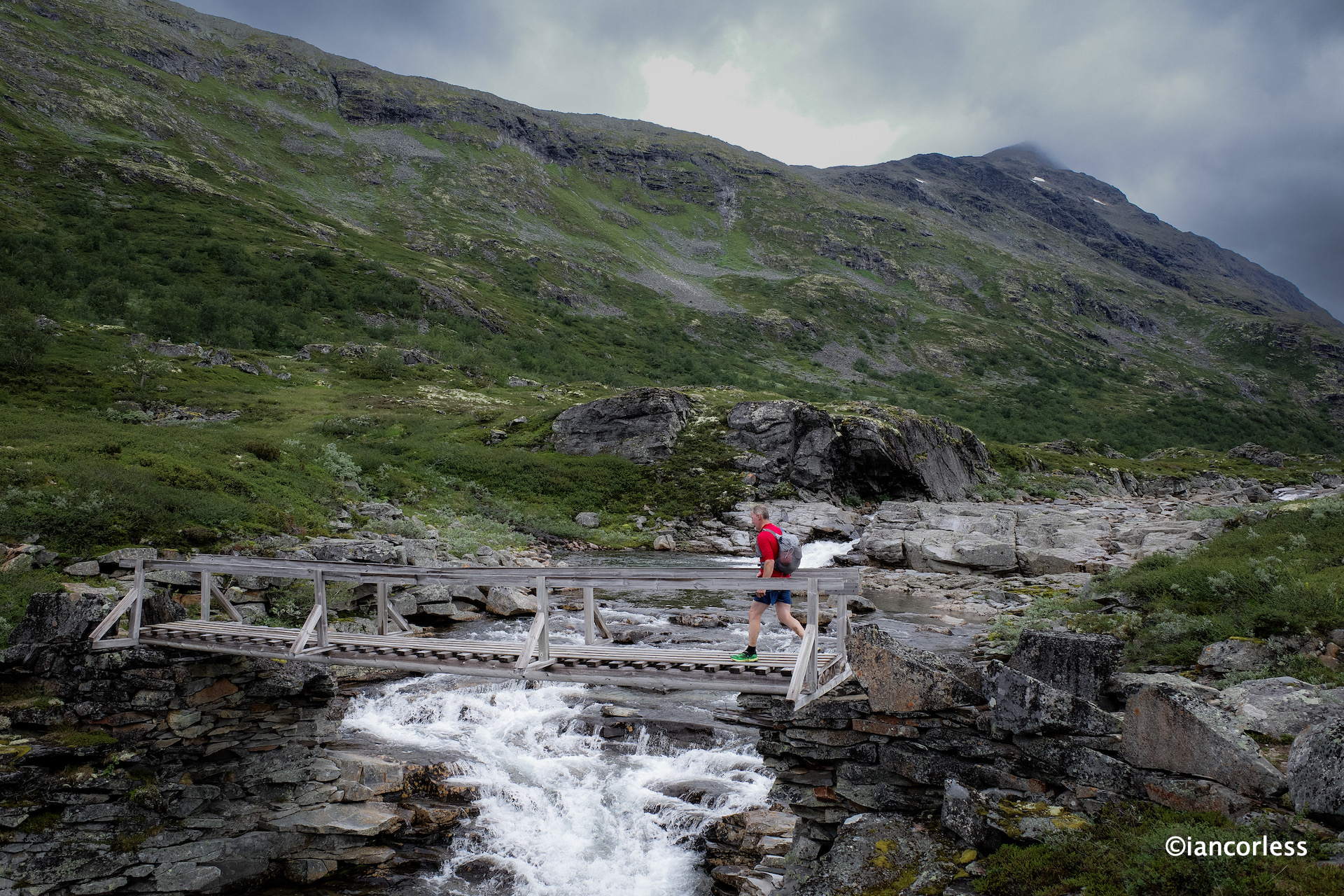
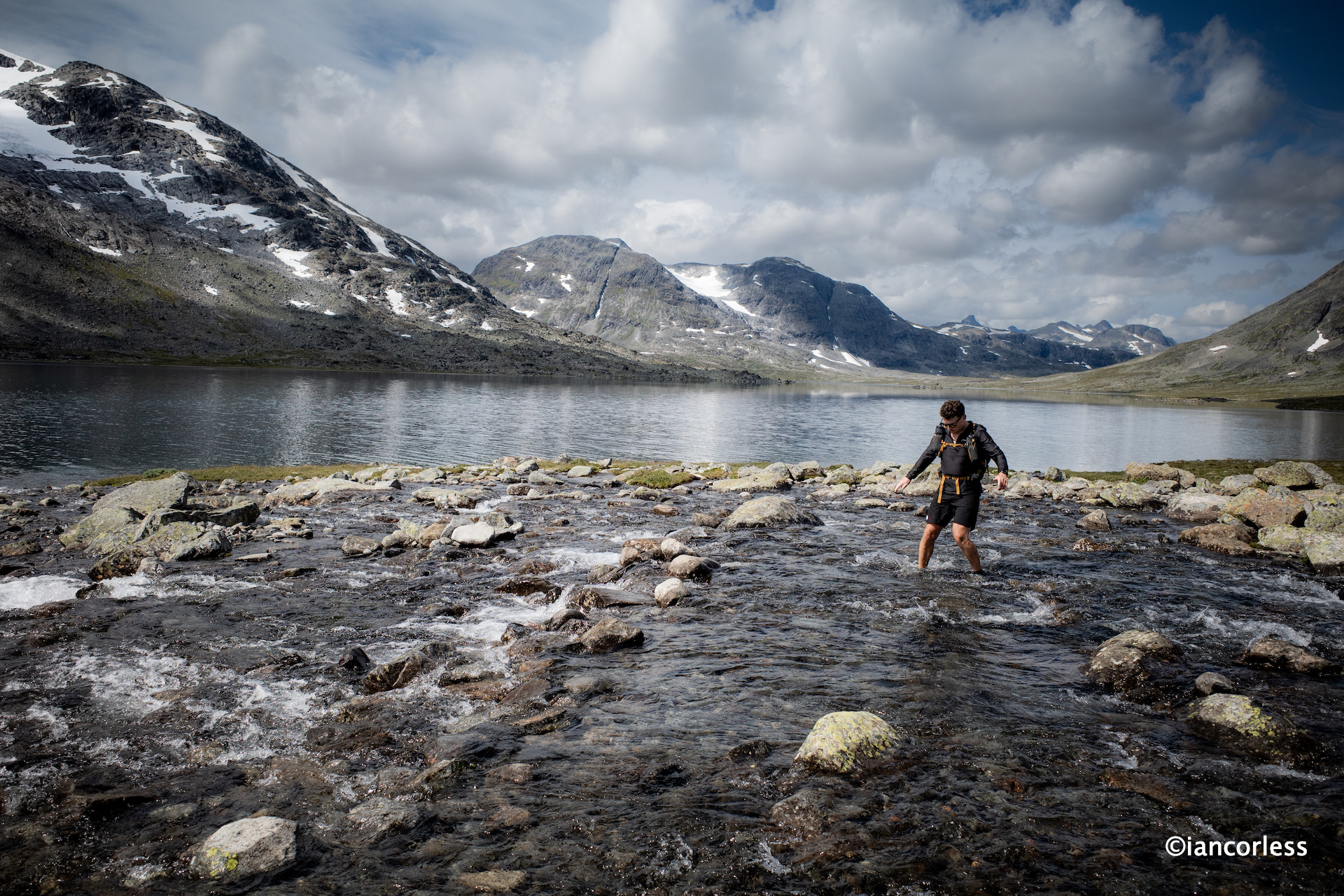
Plenty of water crossings
A short road section and a right turn and we were already climbing through saturated and boggy ground to Sløtafjellet. Then the rocks and boulders started.
Beautiful but hard terrain
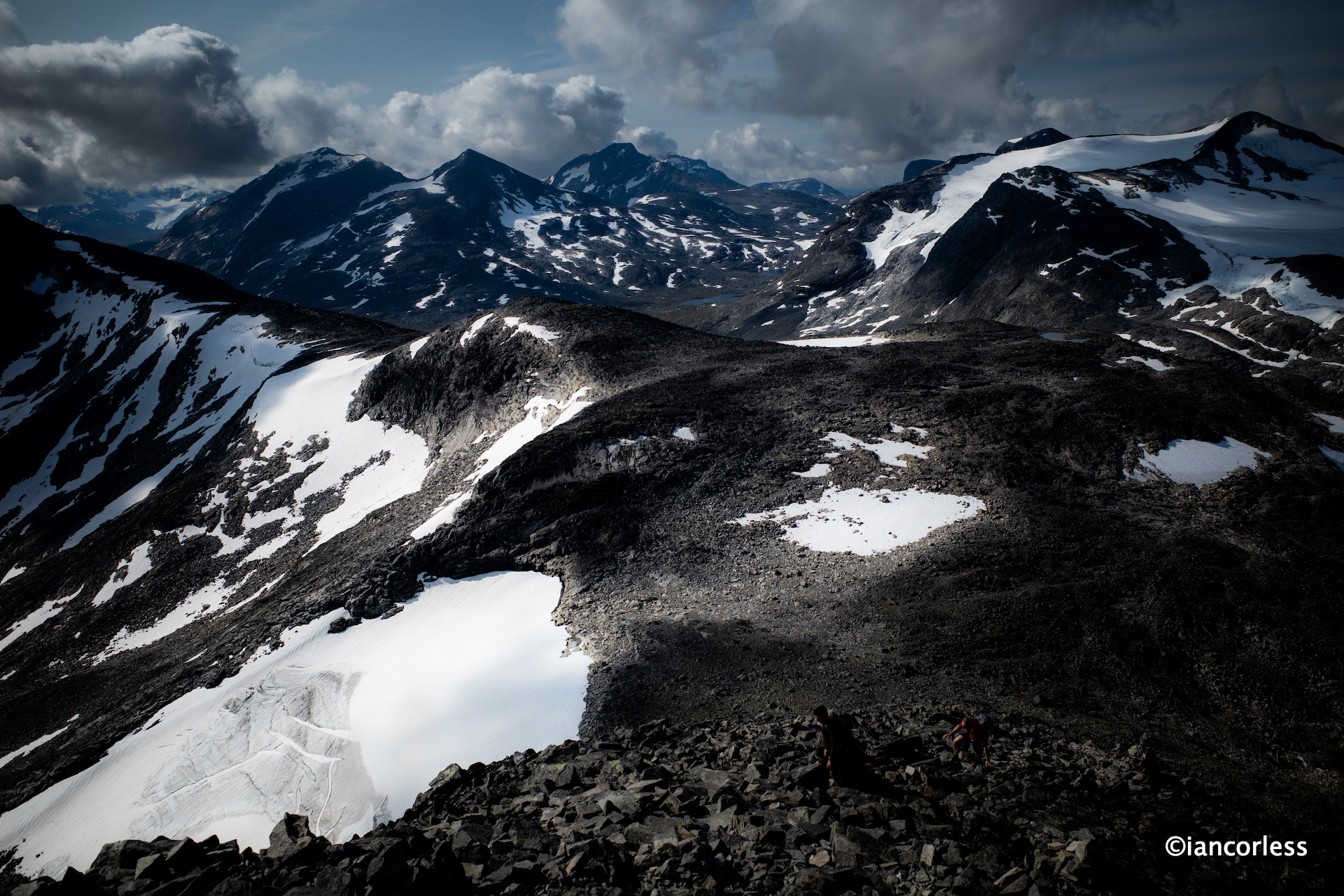
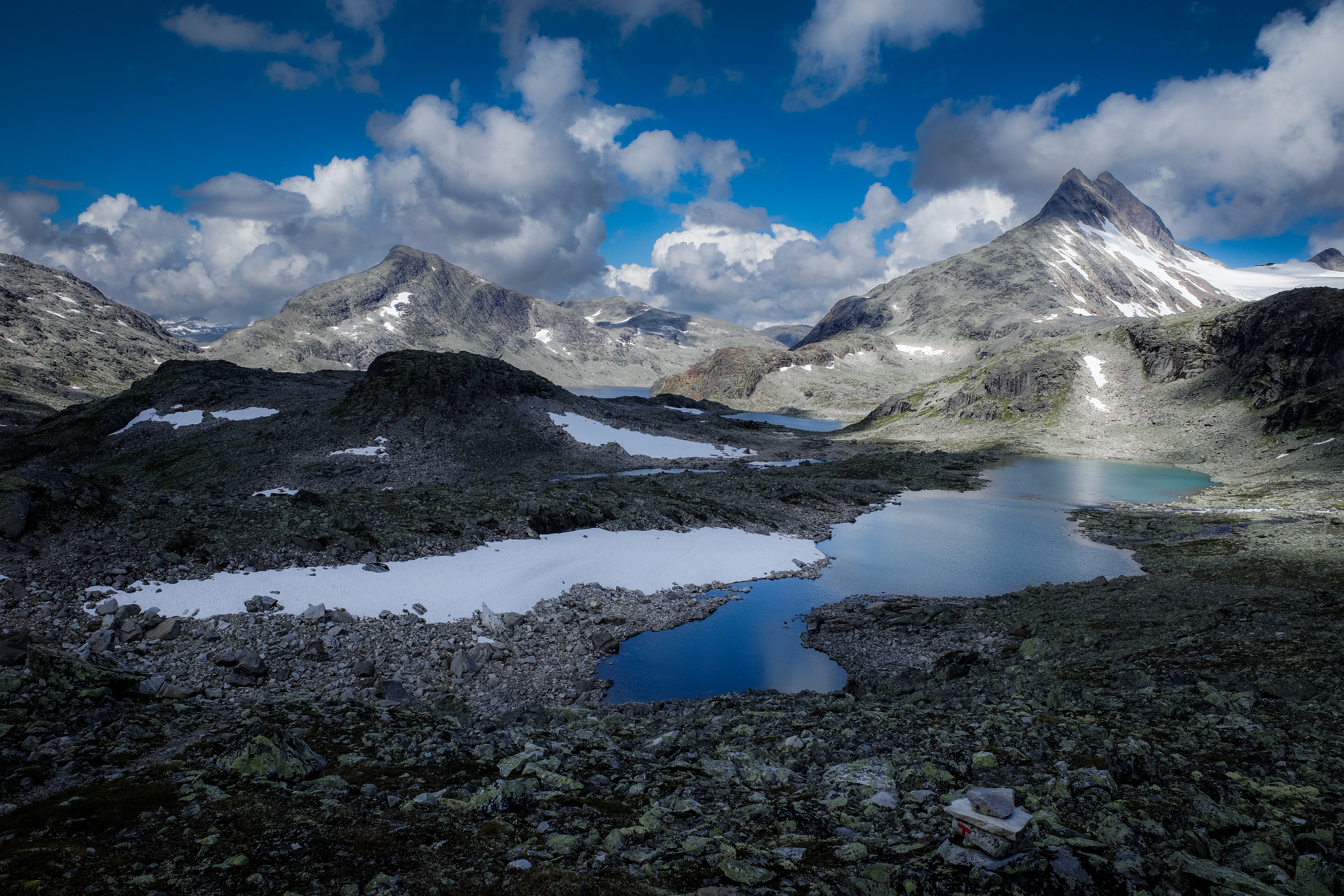
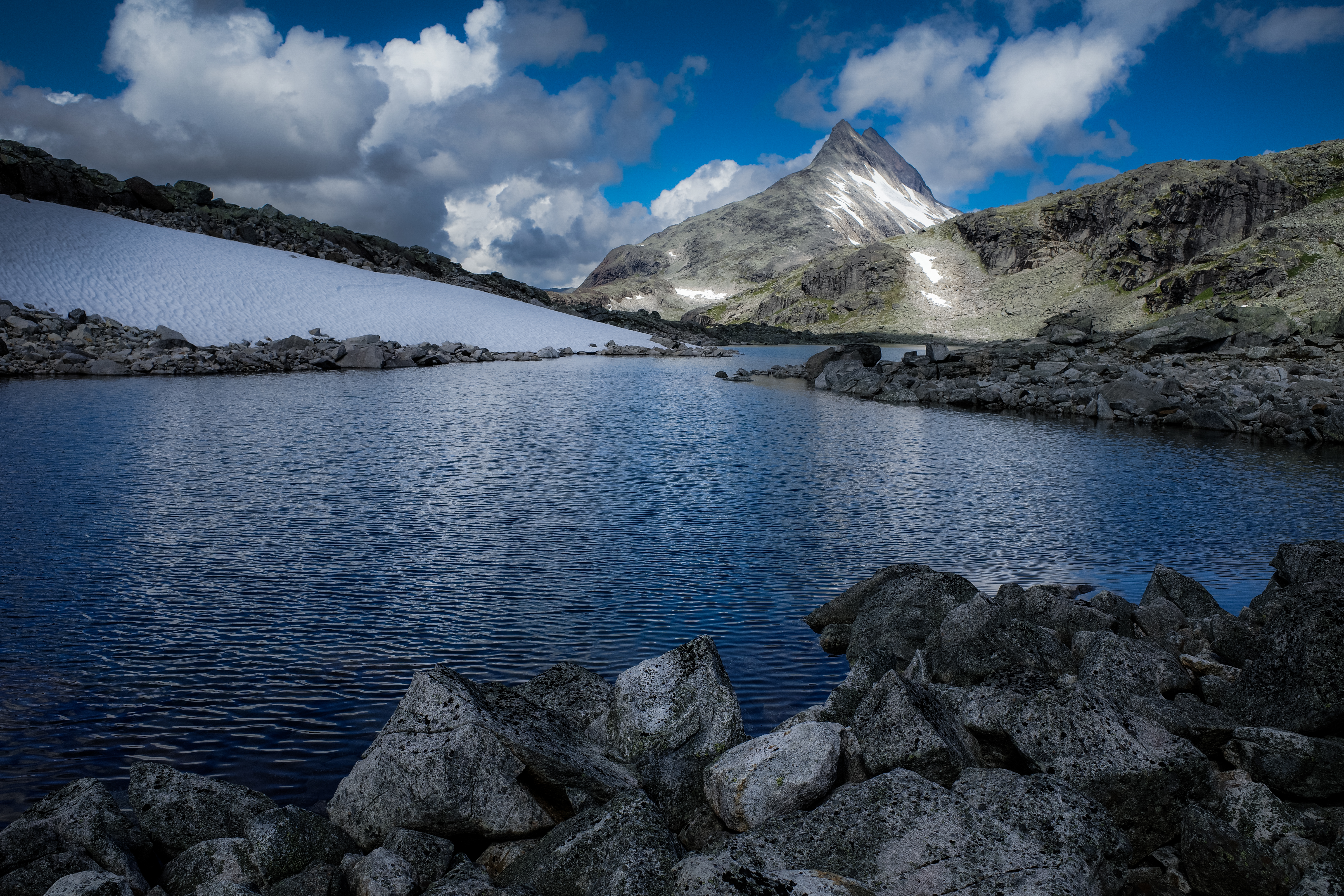
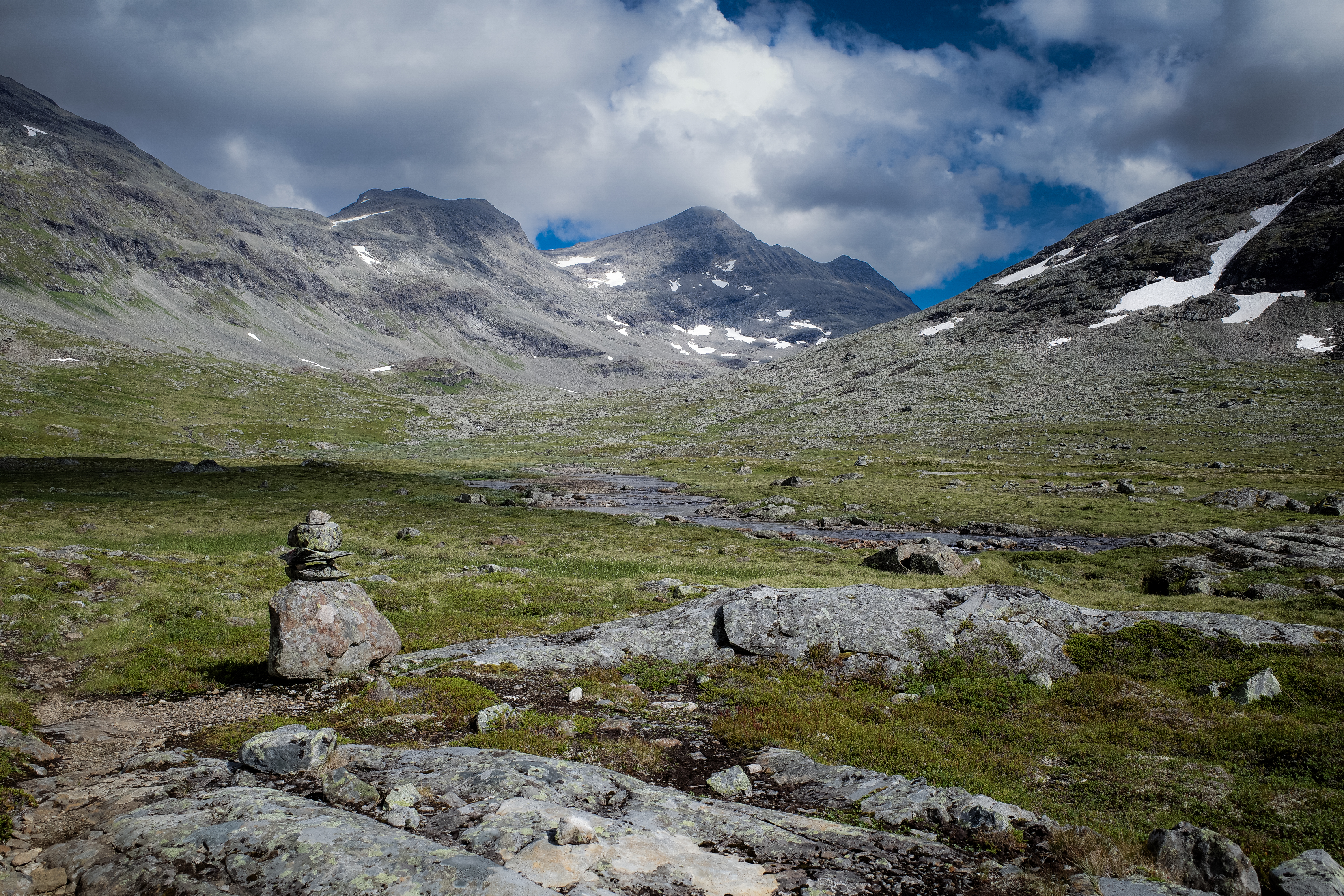
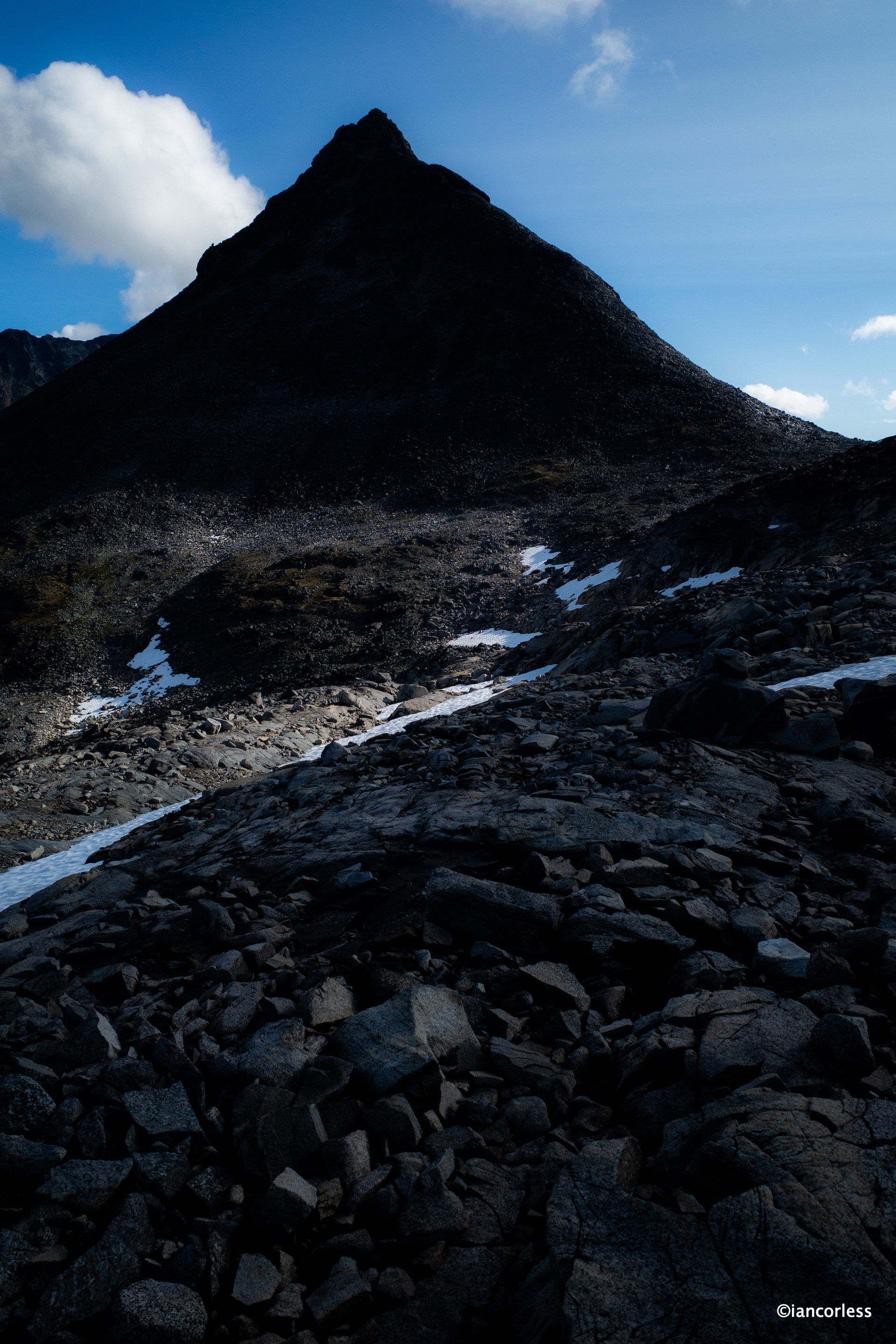
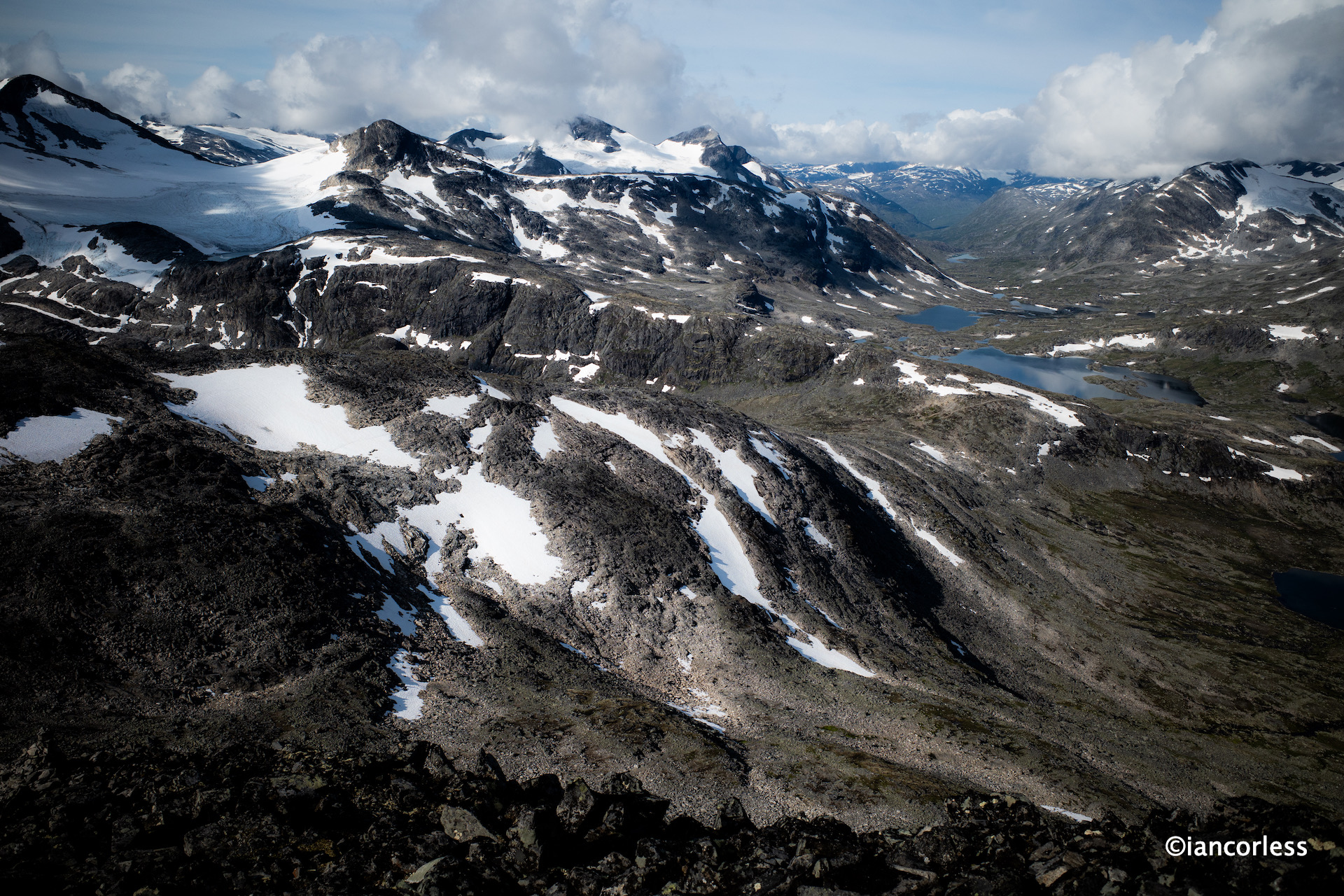
This route has a ‘reputation’ for the rocky terrain and hence the difficulty rating. It’s hard to move fast! The route climbs up passing lakes and at all times you are surrounded by stunning snow-covered peaks – magical.
sign posts help keep you on track
Arriving at Kvitevatnet lake you keep to the left and at the end climb up towards Uradalsvatnet lake, againkeepin to the left.
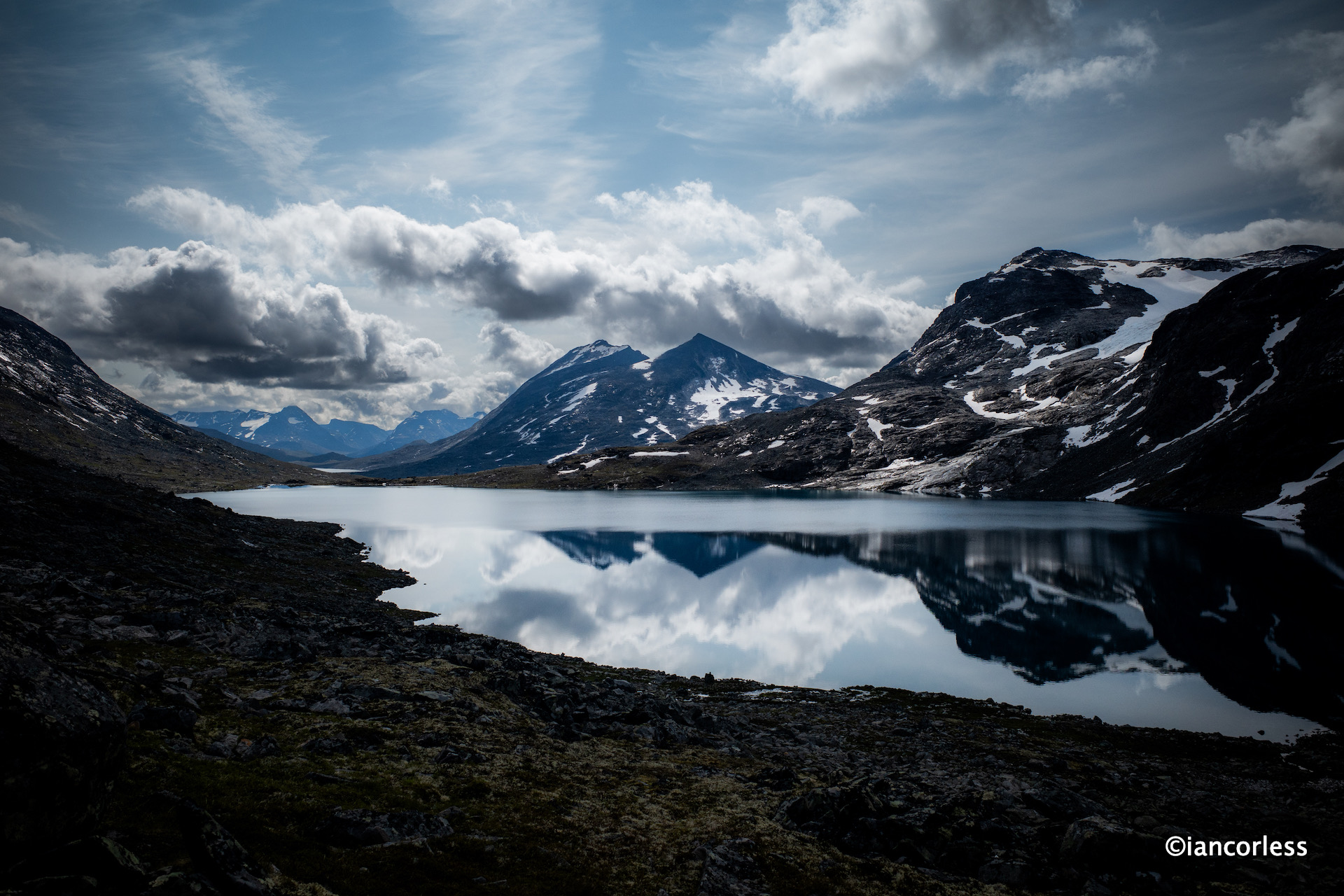
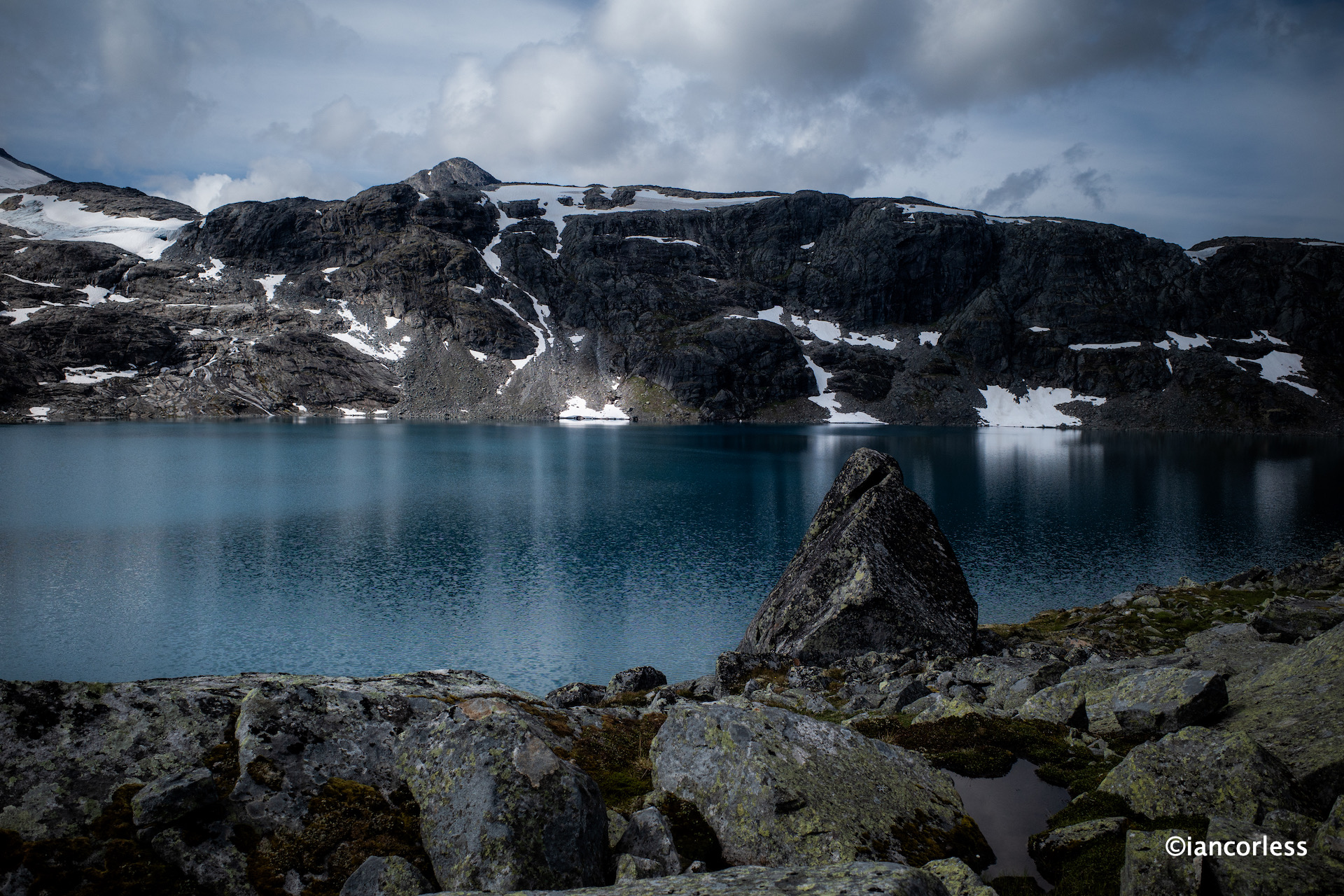
Lakes, rocks, snow and mountains. Perfect!
Passing through Uradalen the route eventually reaches its high point and then the descent starts through more ‘runnable’ terrain towards Skogadalsbøen.
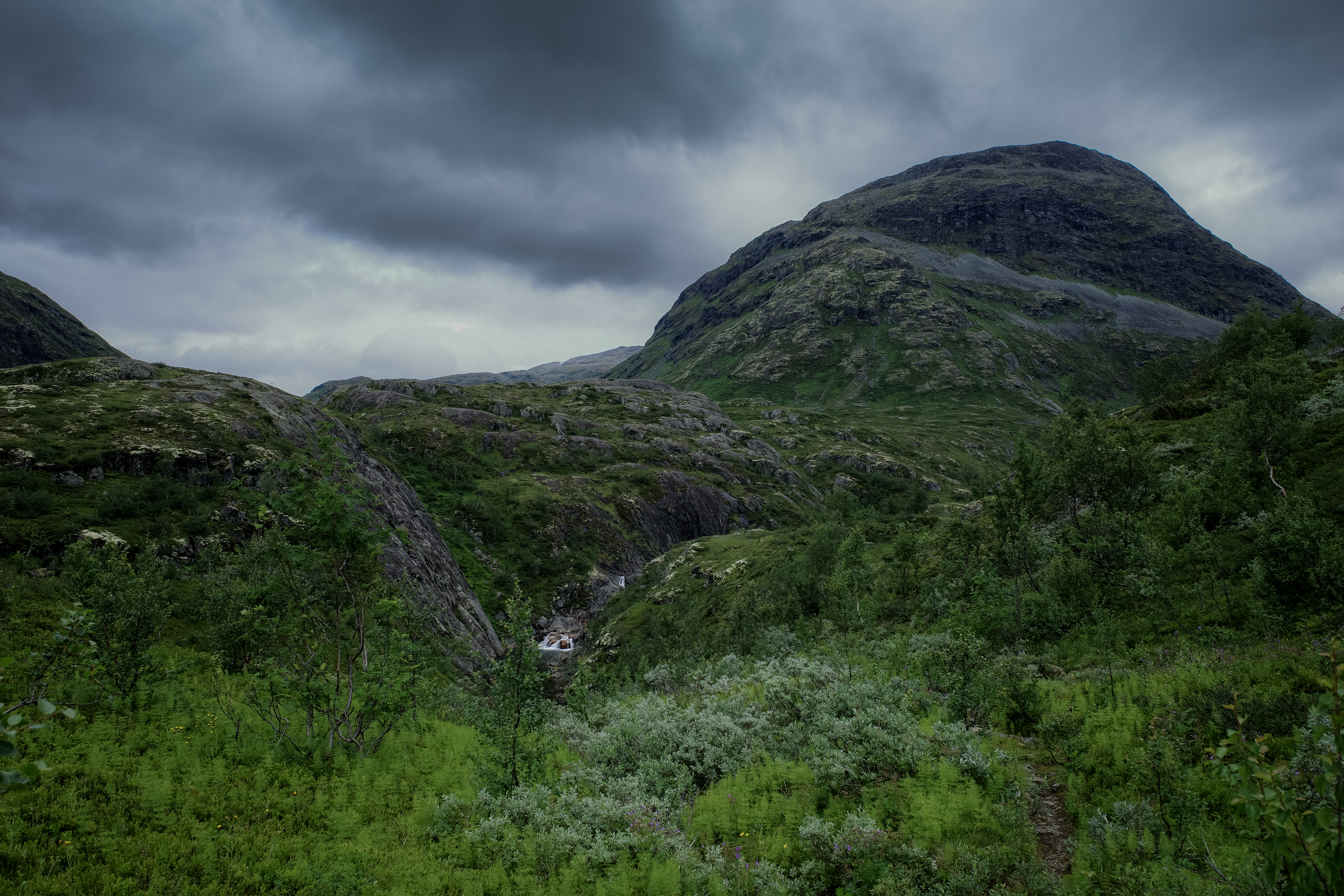
The terrain became ‘easier’ towards the end of the day.And more vegetation.
Of course, there is a kick in the tail with more rocks and very closed in and dense single-track with lots of mud. We covered 24.5km, 670m+ in 4h 55m. Geoff and Baz were pretty tired at the end, and I think it’s fair to say that Baz had seen and experienced enough rocks and boulders to last a lifetime. My reply was always, 1this is Norway, this is Jotunheimen!’
A nice sight after a long day
My girlfriend, Abelone, had initially planned to join Home of the Giants. Our intention, two groups of 4/5-people. However, in the buildup to the event we had 6-people cancel – not ideal. These cancellations caused many logistical problems and of course, there was never any risk of cancelling, but it did mean that Abelone was not needed to guide a group. However, she was on holiday with her son Håkon (10) and after summiting Fannaråki they joined us at Skogadalbøen DNT.
As usual, we had an amazing three course dinner, a lovely evening of banter and then a good night’s sleep.
Day 3 – Skogadalbøen to Leirvassbu
Day 3 with a moody start.
Skogadalbøen to Leirvassbu
Skogadalbøen to Leirvassbu is in comparison to the previous day, an easy route. Even though UT.NO describe it as a ‘very demanding summer route.’ Håkon had decided he enjoyed the group dynamic so much he wanted to also do the 19km route. He and Abelone got underway and some 30-minutes later we started.
Passing them early in the trail we had a group photo and pushed on. Today was a running day, albeit steady and relaxed. Geoff and Baz had big smiles; I think they almost considered it a rest day after what had been experienced the day before.
Green valleys surrounded by mountains
The ground constantly wet and boggy, the weather was overcast and cloudy with occasional light drizzle.
Many water crossings
Passing through Storutladlen and onwards to Gravdalen it was a great feeling day. The views and landscape ever changing. After passing Gravdalsdammen, we soon joined an undulating gravel road that took us to Leirvassbu DNT.
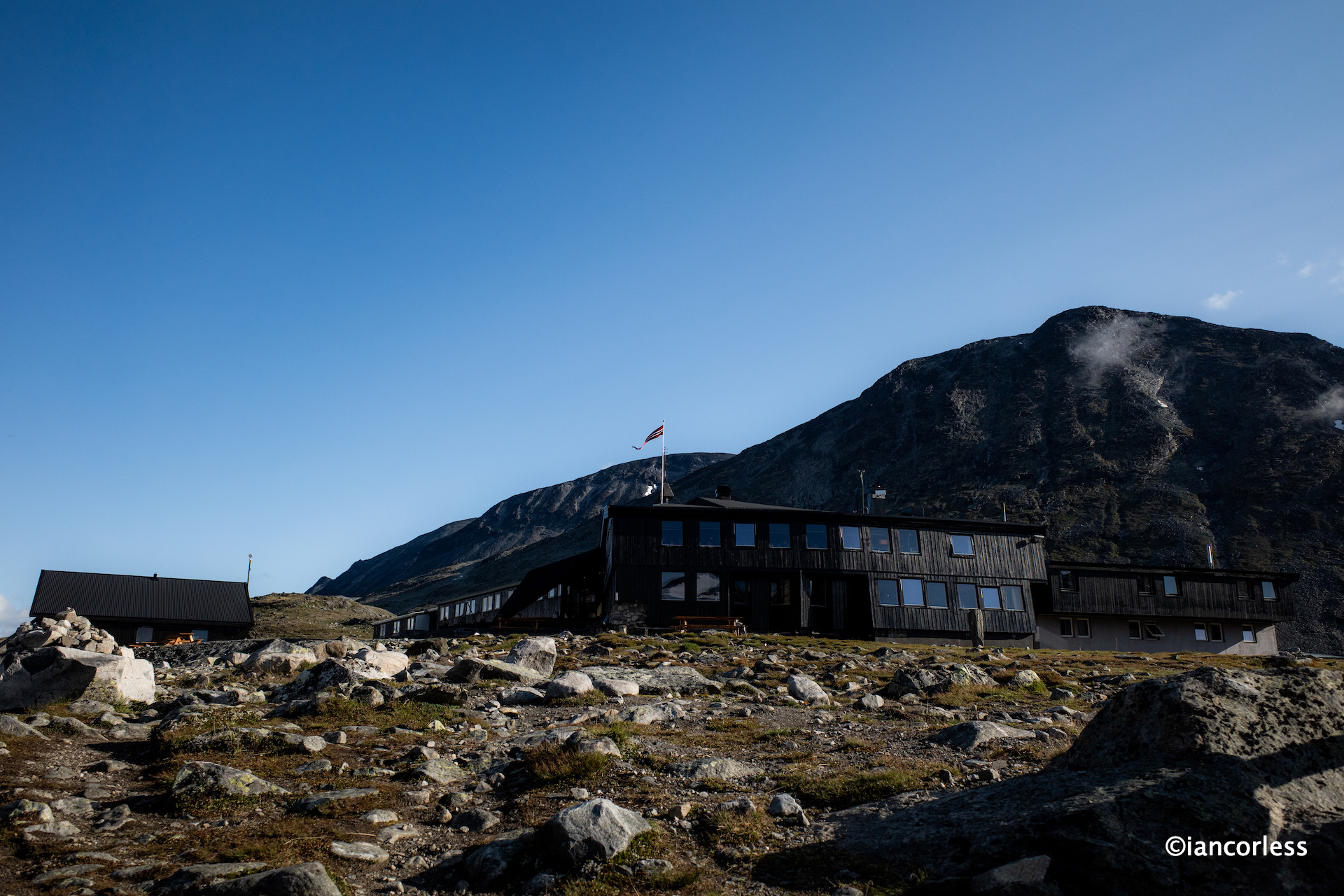
Leirvassbu DNT
On the approach, Kyrkja (2032m) was to our right, shrouded in mist and clag. Today was not the day to attempt the summit. After 19.68km, 811m of vert we finished in 3h 34m. Abelone and Håkon arrived a couple of hours later, Håkon sprinting ahead with a smile. What a joy to see. Geoff and Baz were blown away by Håkon’s speed, enthusiasm and commitment.
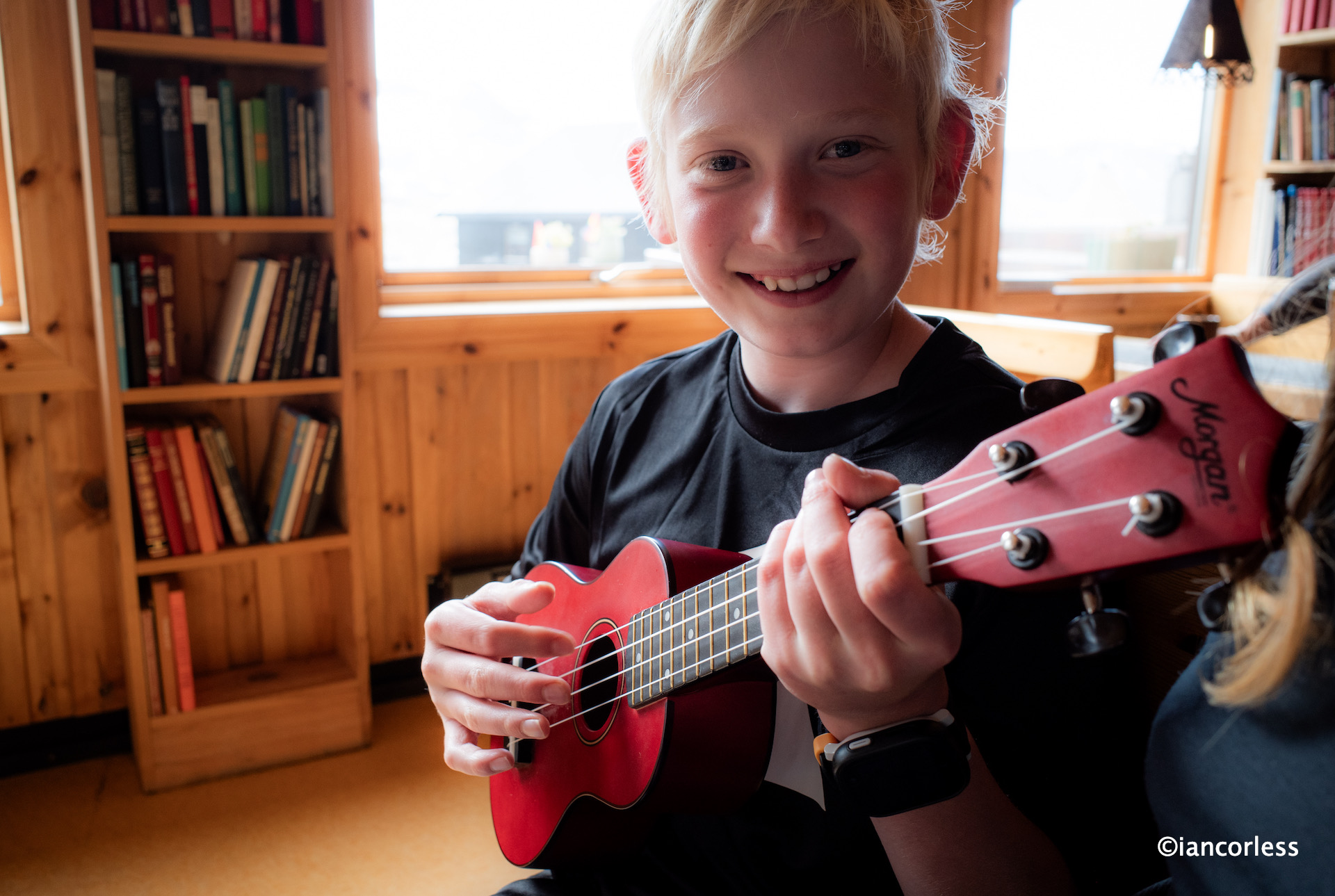
Entertainment by Håkon
Early finish and we could then rest, relax, enjoy the Leirvassbu DNT and prepare for the following day. Leirvassbu DNT is a large and modern cabin with no dorms, a large bar area and an excellent restaurant. A stunning location surrounded by mountains, a great place for staying more than one night as there is lots to explore. It has road access, so, it can be accessed by private car or bus, worth knowing just in case you need a contingency escape option.
DNT dinner always a highlight
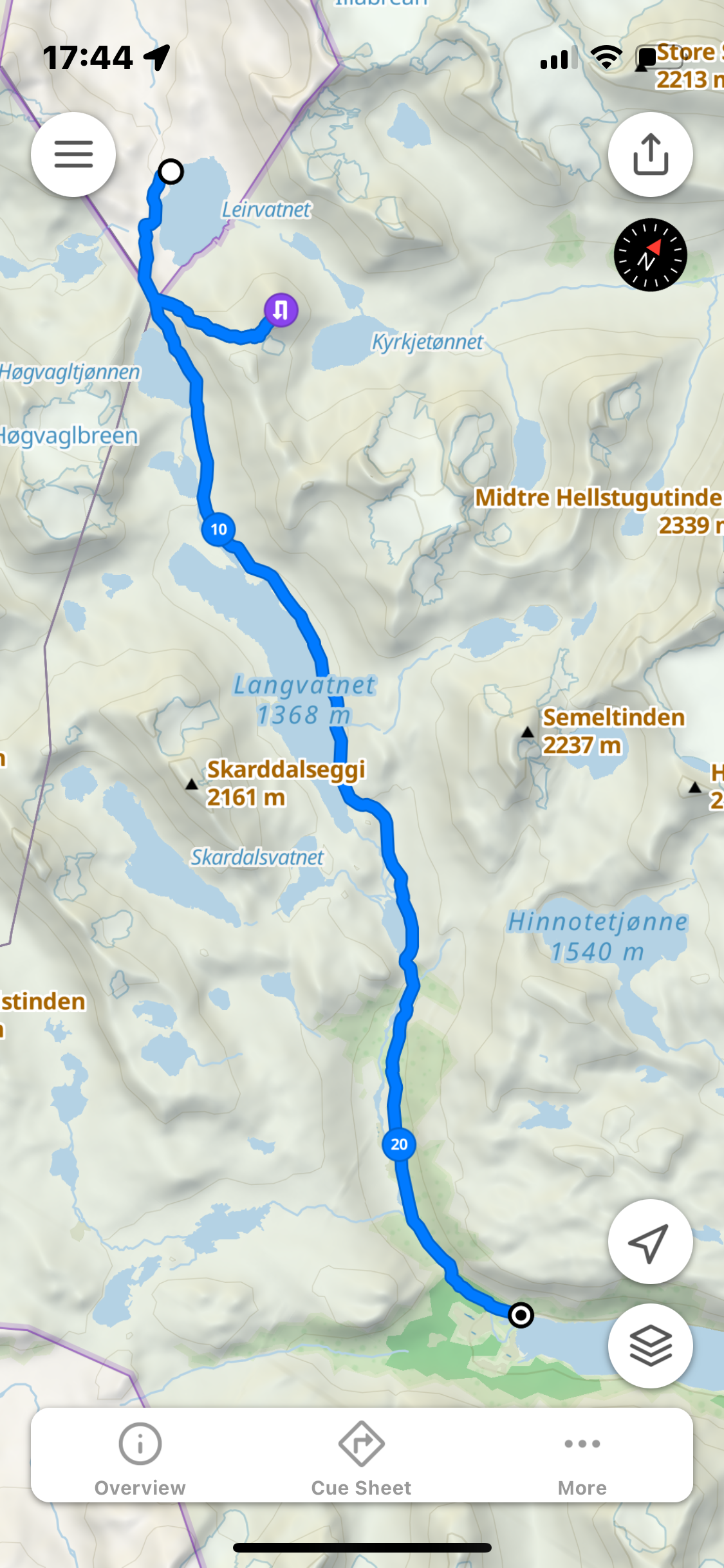
The weather forecast for the following was good and it was therefore decided we would summit Kyrkja first and then continue to Gjendebu. Abelone and Håkon would miss the summit go straight to Gjendebu and therefore miss out on the 2 to 3h detour.
Day 4 – Leirvassbu to Gjendebu via Kyrkja
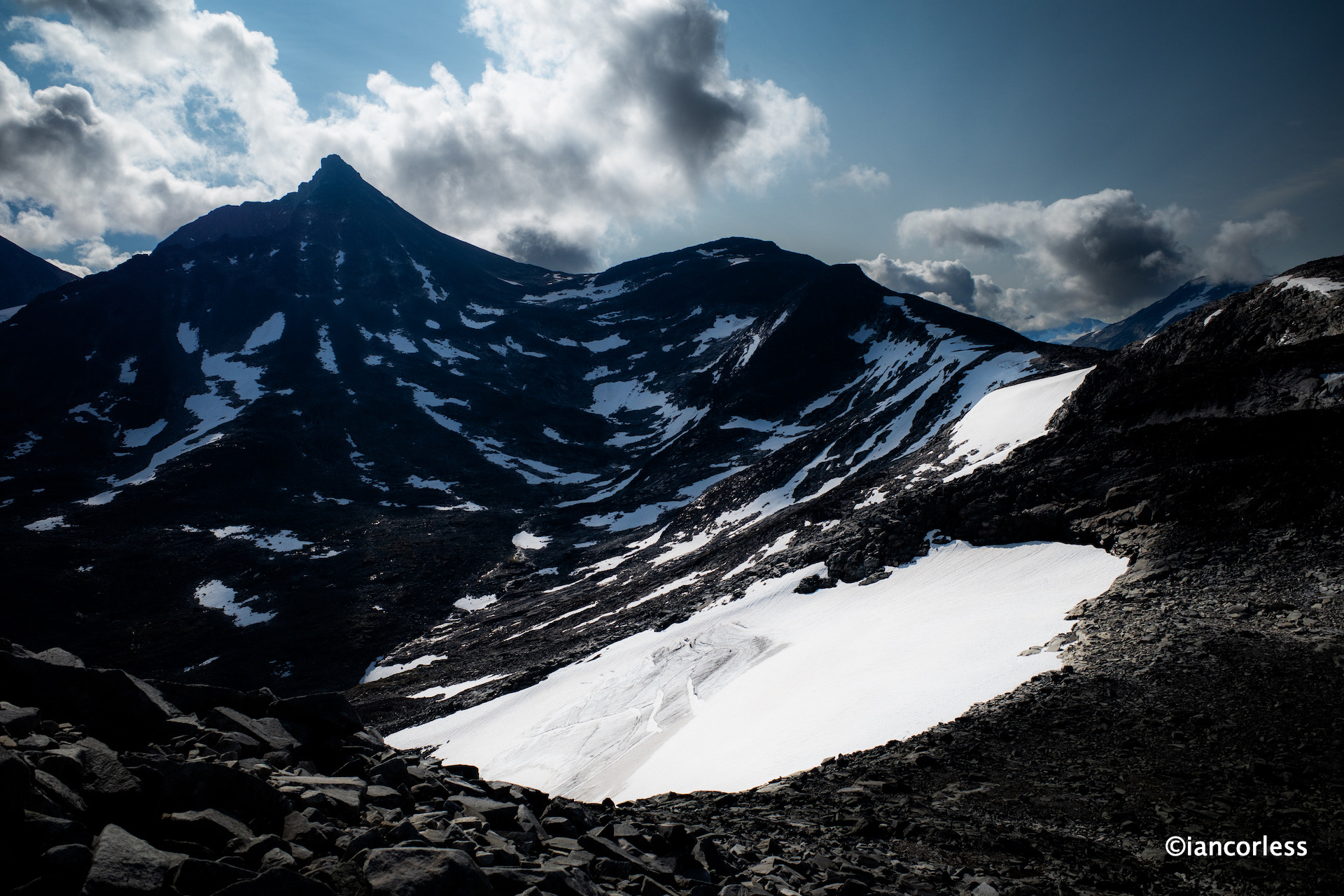
Kyrkja
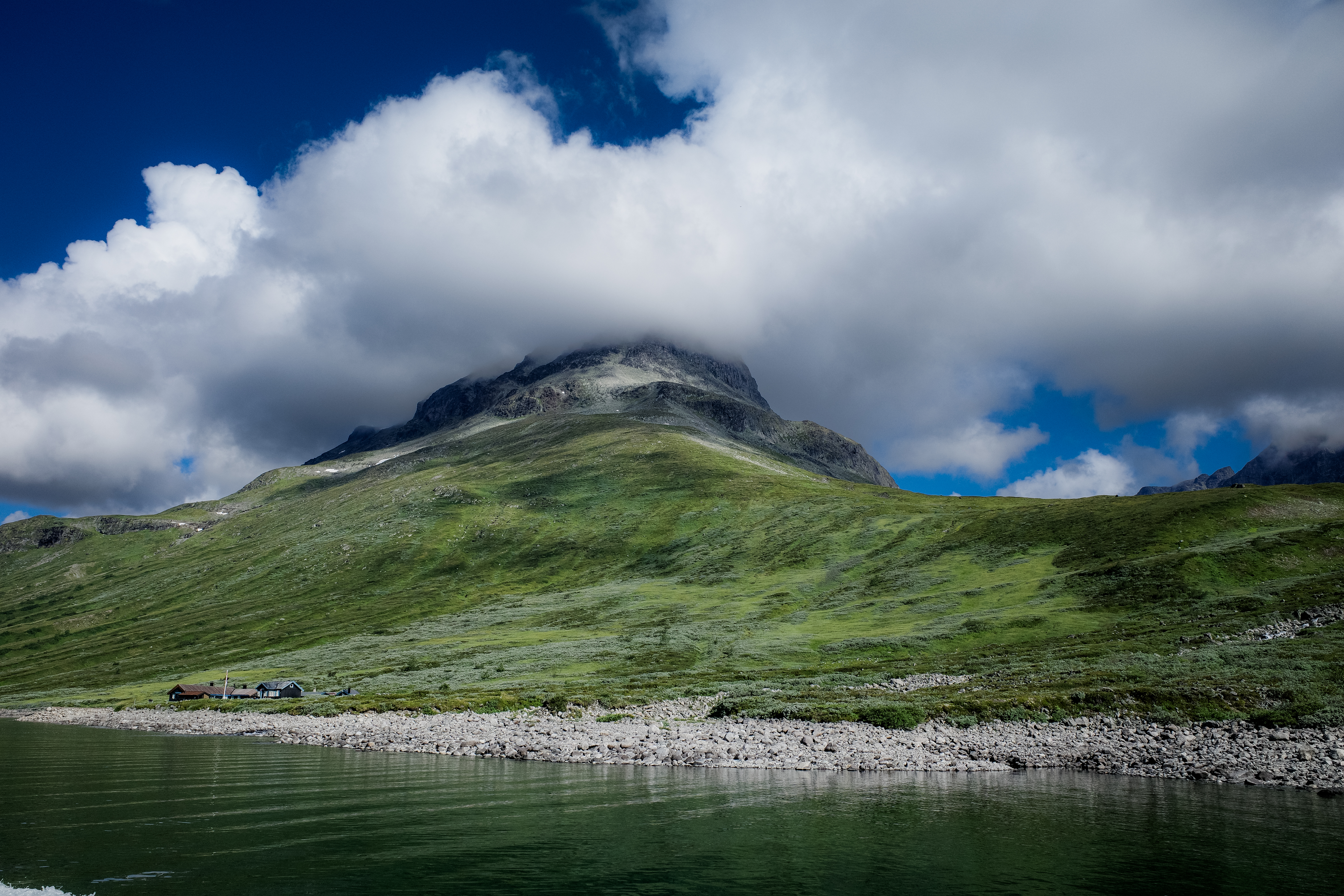
The weather gods did not disappoint. It was a stunning day and a perfect morning to climb Kyrkja.
Leirvassbu to Gjendebu via Kyrkja
The early slopes to Kyrkja, Leirvassbu on the right
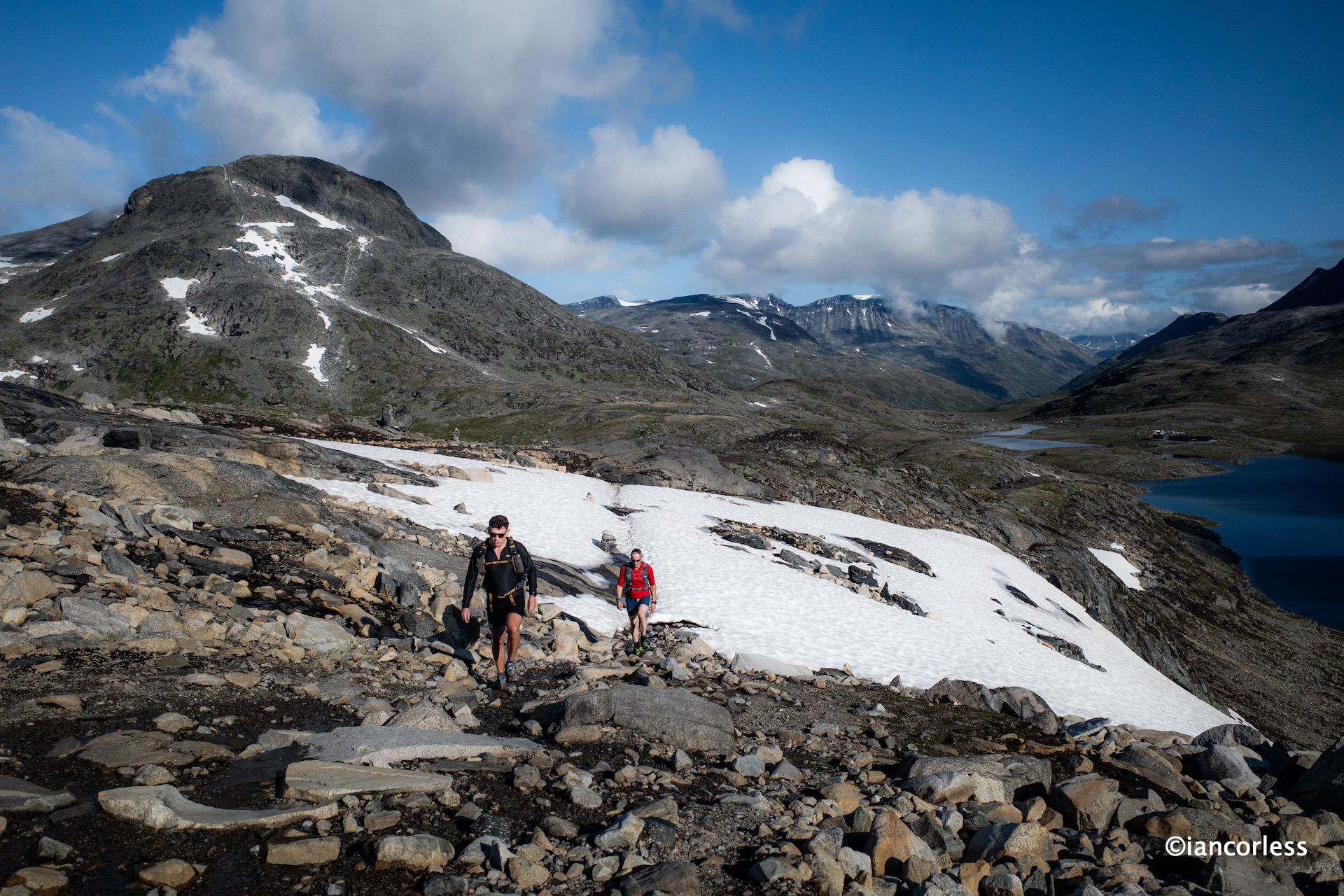
Abelone and Håkon left just before us they made their way to Gjendebu, we soon caught them, passed and then we started the climb to the summit. The early slopes mix trail, rock and snow crossing with boulders everywhere.
And up we go
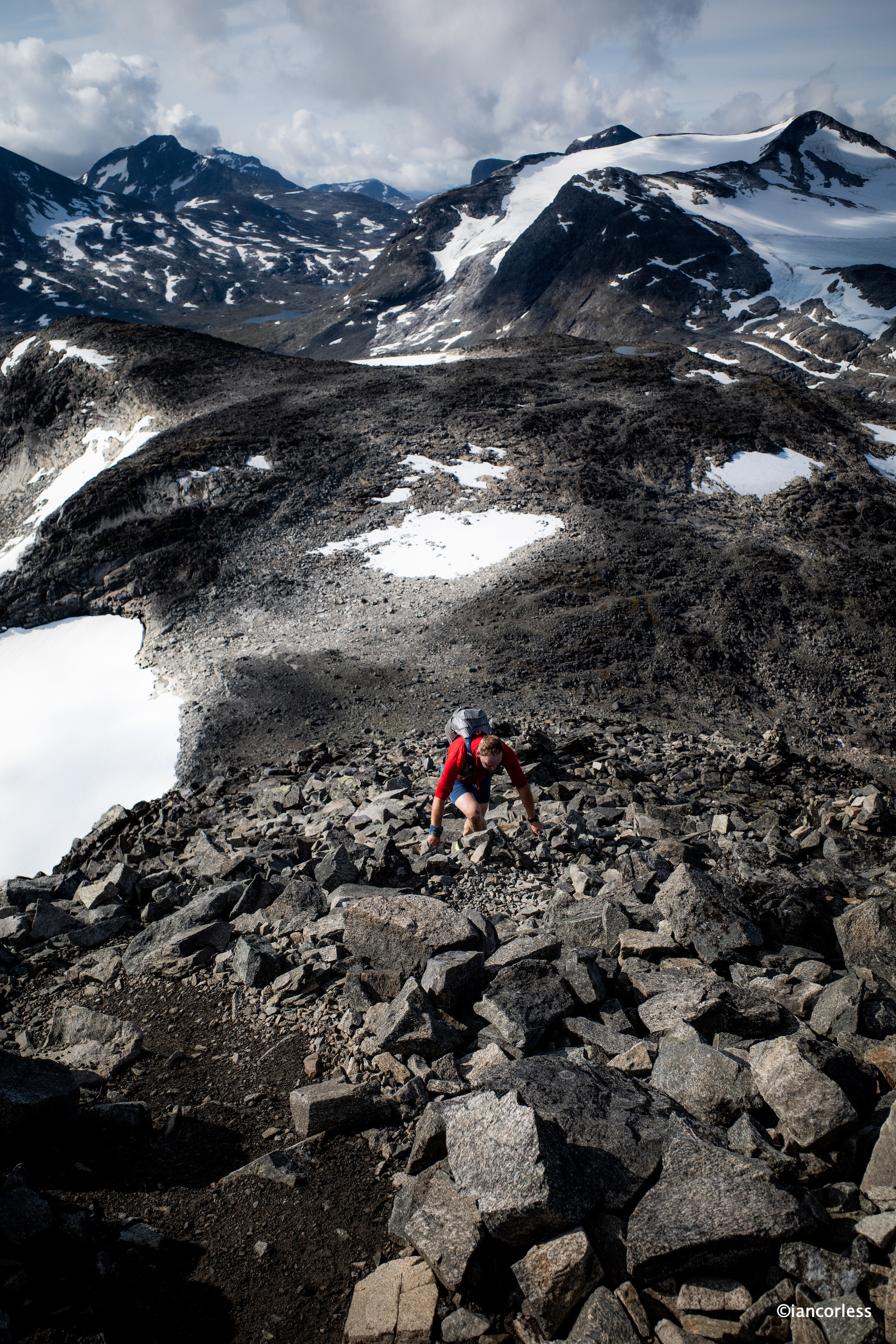
Once at the base of Kyrkja, the climb really starts and it’s a hands-on scramble to the summit. Cairns are placed regularly and at times the route is obvious. Other times, the route is vaguer.
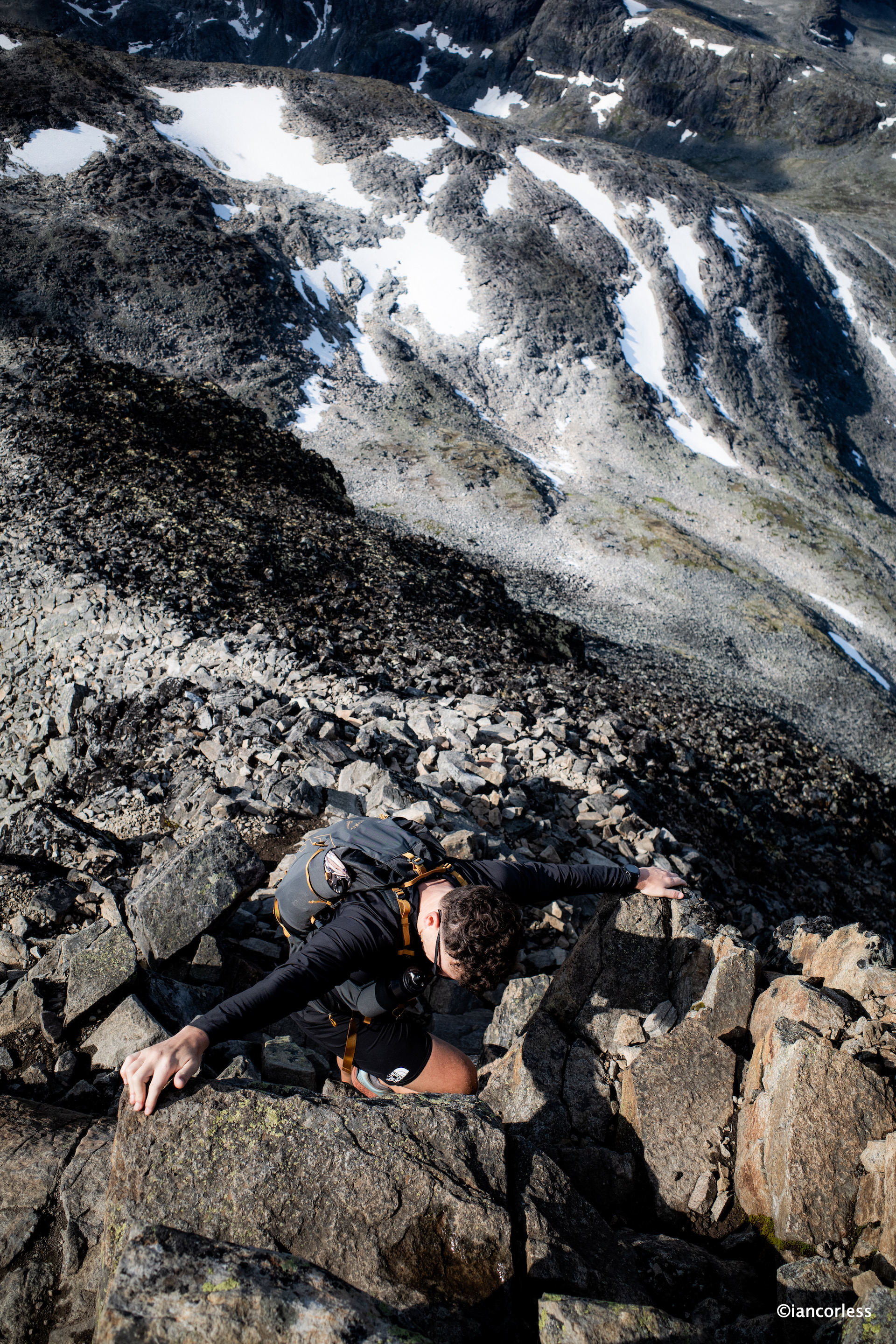
Good hand and feet placement important.
There are several sections with more exposure when sound had-holds, and secure foot-placing is essential. It’s not a difficult scramble but as with all these things, going at a calm and steady pace reaps rewards.
Slow and steady
Geoff certainly felt pushed here. He is not too happy at heights, but he pushed on, listened to to best route options and before he knew it, he was with Baz at the summit.
Job done!
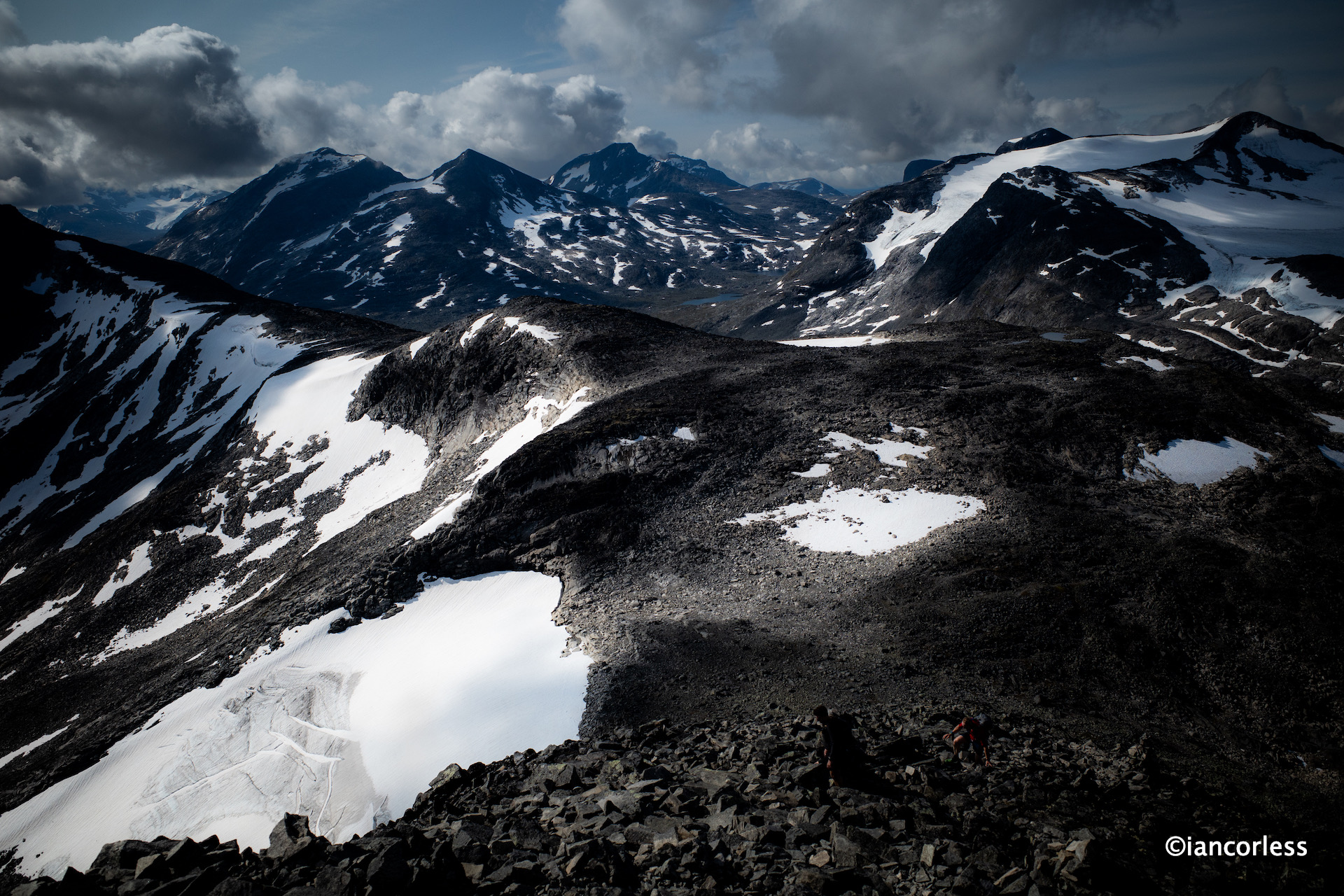
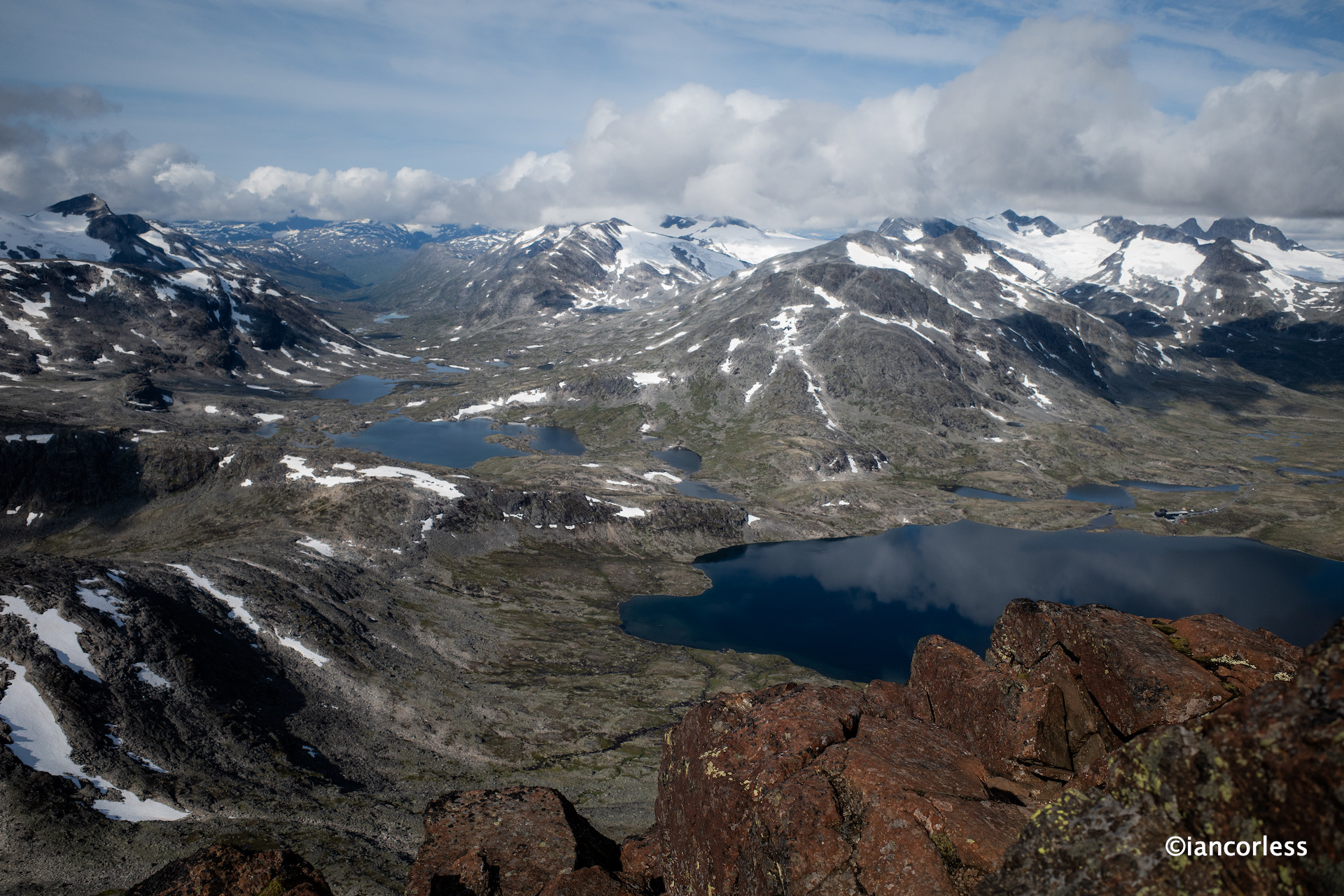
The 360 views here are quite magnificent. What goes up must come down and depending on your ability, head for heights and skill level, the downward route can be harder than the climb.
Coming down easier than going up?
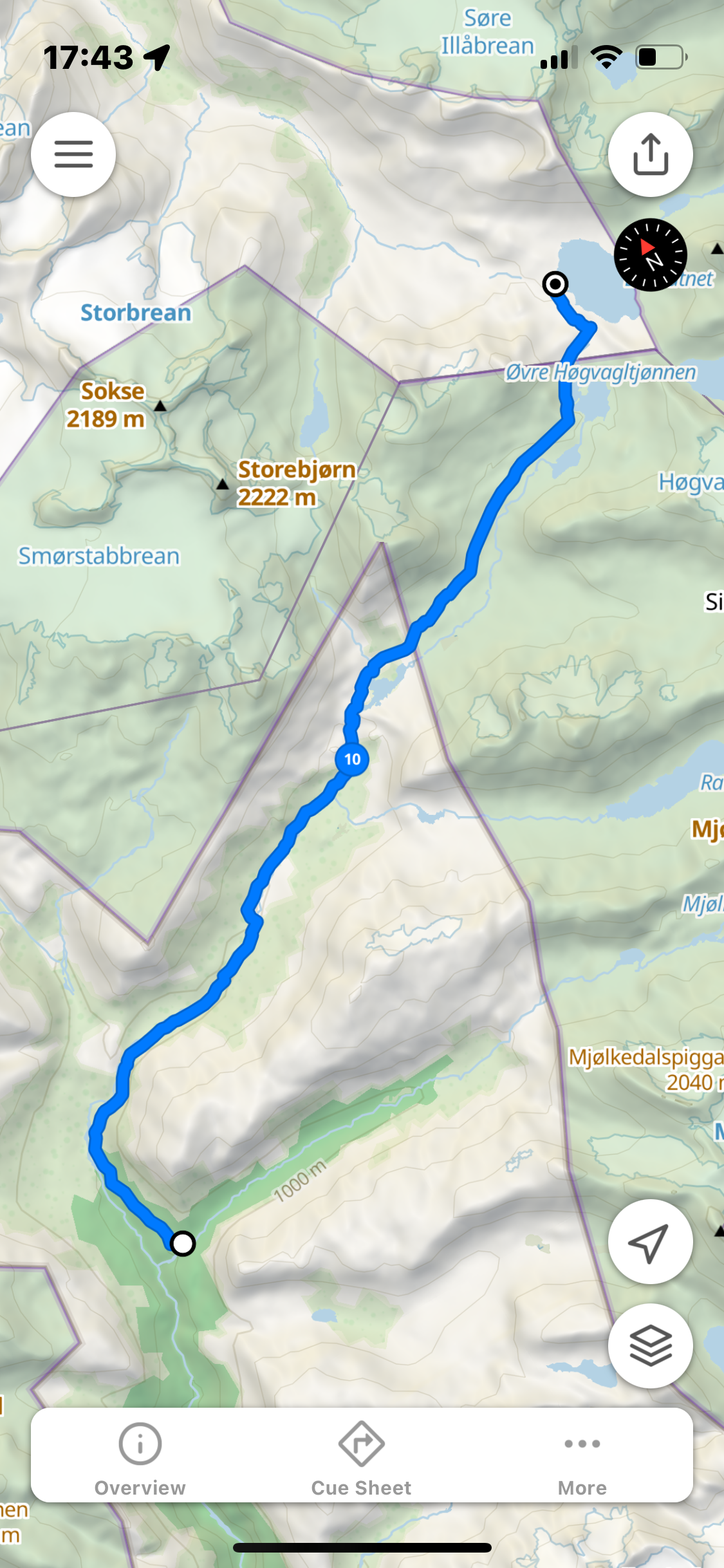
All three of us were soon at the bottom and re-tracing back on the trail to Leirvassbu and then at Høgvaglen we turned left and started to follow the red Ts on the route to Gjendebu.
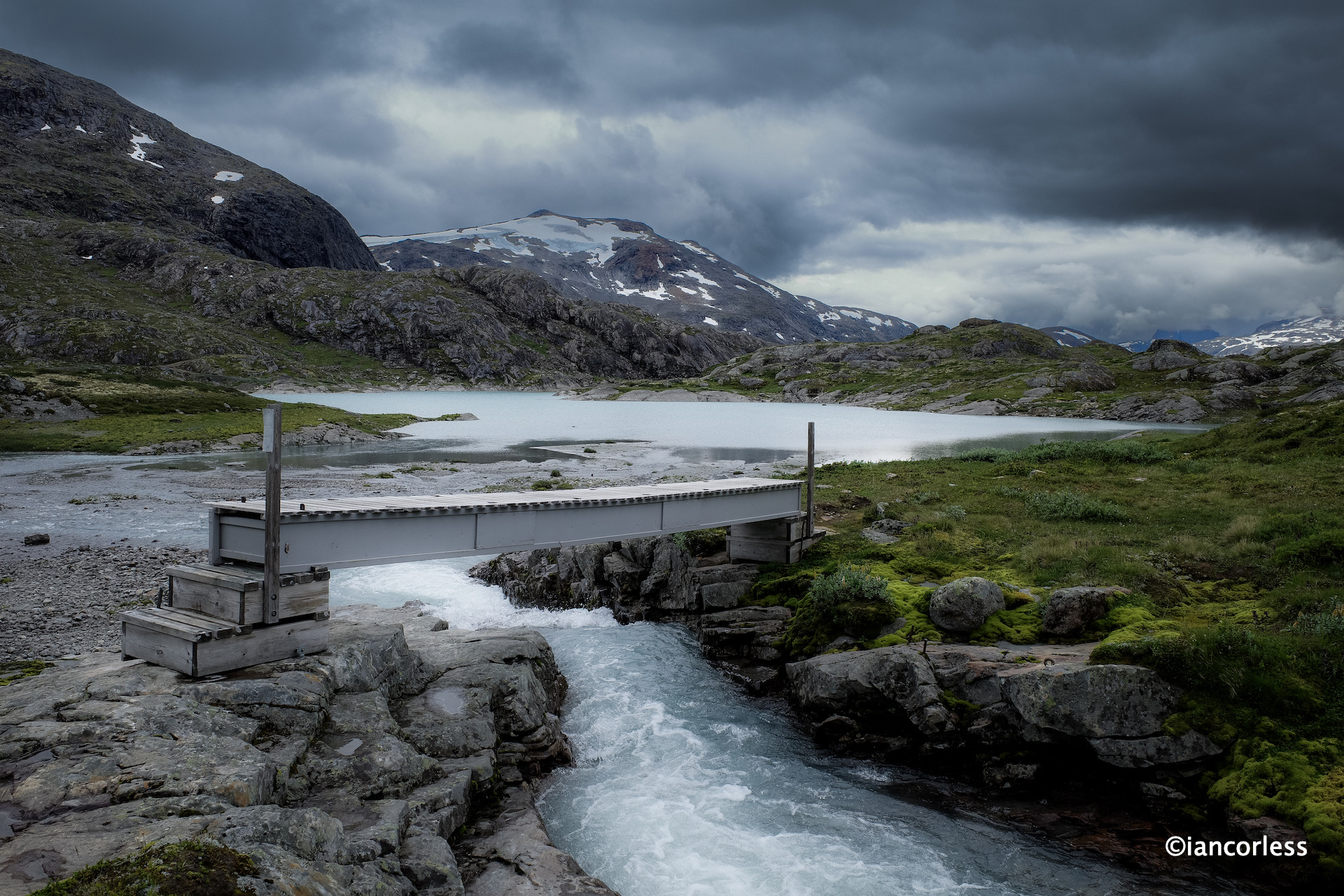
Øvre Høgvagltjønnen
The route now is more runnable mixing rocky terrain, water crossing, fjell, single-track and of course mud.
Passing three key lakes, Øvre Høgvagltjønnen, Nedre Høgvagltjønnen and Langvatnet we were soon descending next to Hellerfossen waterfall and then passing through Storåddalen.
Make sure you follow the correct Ts
The trails now were saturated and muddy and considerably greener than what we had experienced earlier in the day. There was also plenty of cows.
You never have dry feet!
Before we knew it, we were running into Gjendebu after a stunning day of 25.69km, 741m of vert and 4h 42m on the clock. Baz and Geoff jumped in the lake, I got the beer in.
Day done.
Sitting in the sun, I wondered where Abelone and Håkon where? I had absolutely expected them to be here before us BUT there had been a chance that we may, have caught them in the last km or so… Apparently, Håkon was on a mission to beat us, and he ran the final 3km! What an effort by him, incredible. We had expected them to take 6-hours, and they had taken 5, bravo!
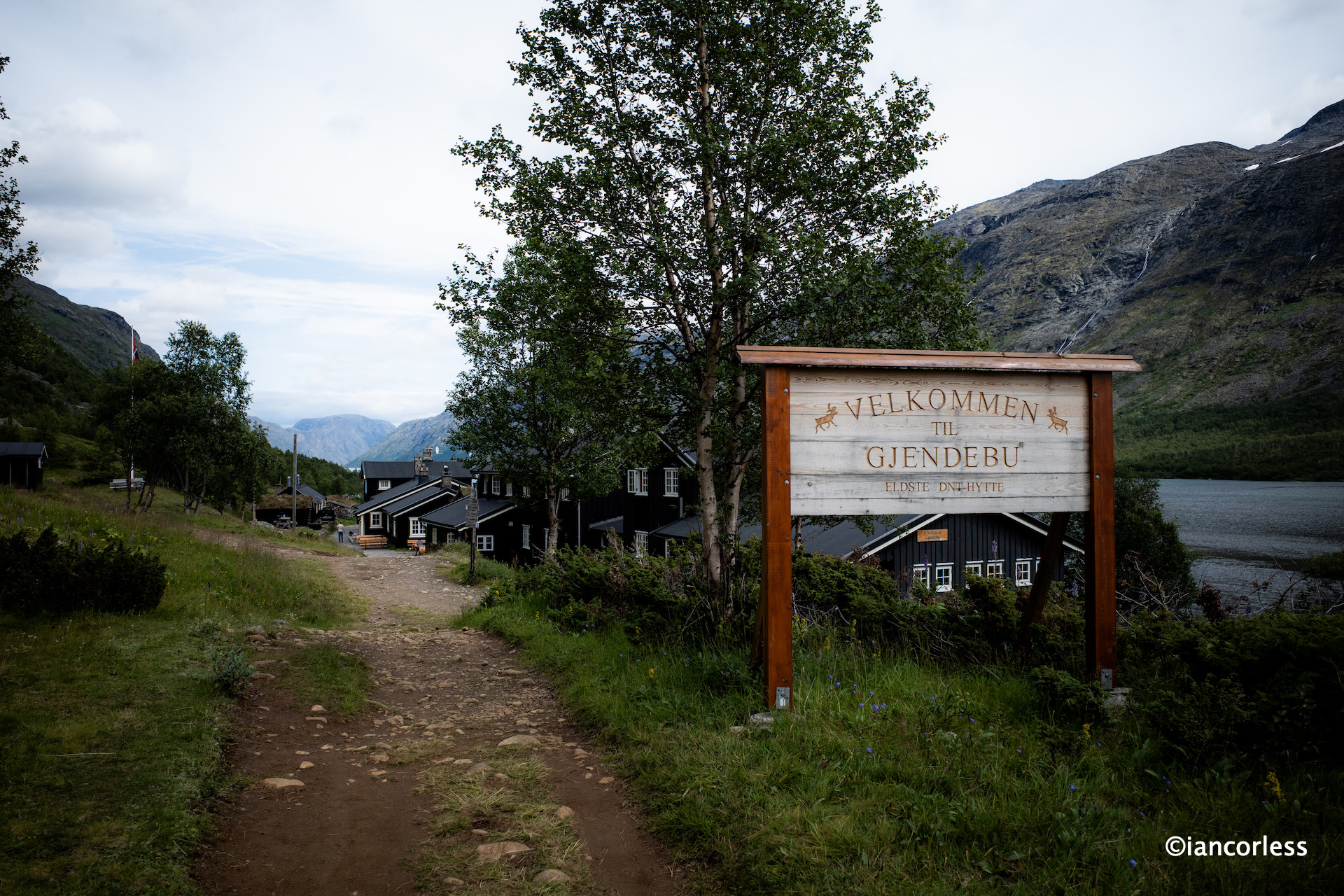
Gjendebu is a wonderful DNT and the oldest. It’s wonderfully traditional and recently refurbished. Comfort level is high, service superb and food excellent.
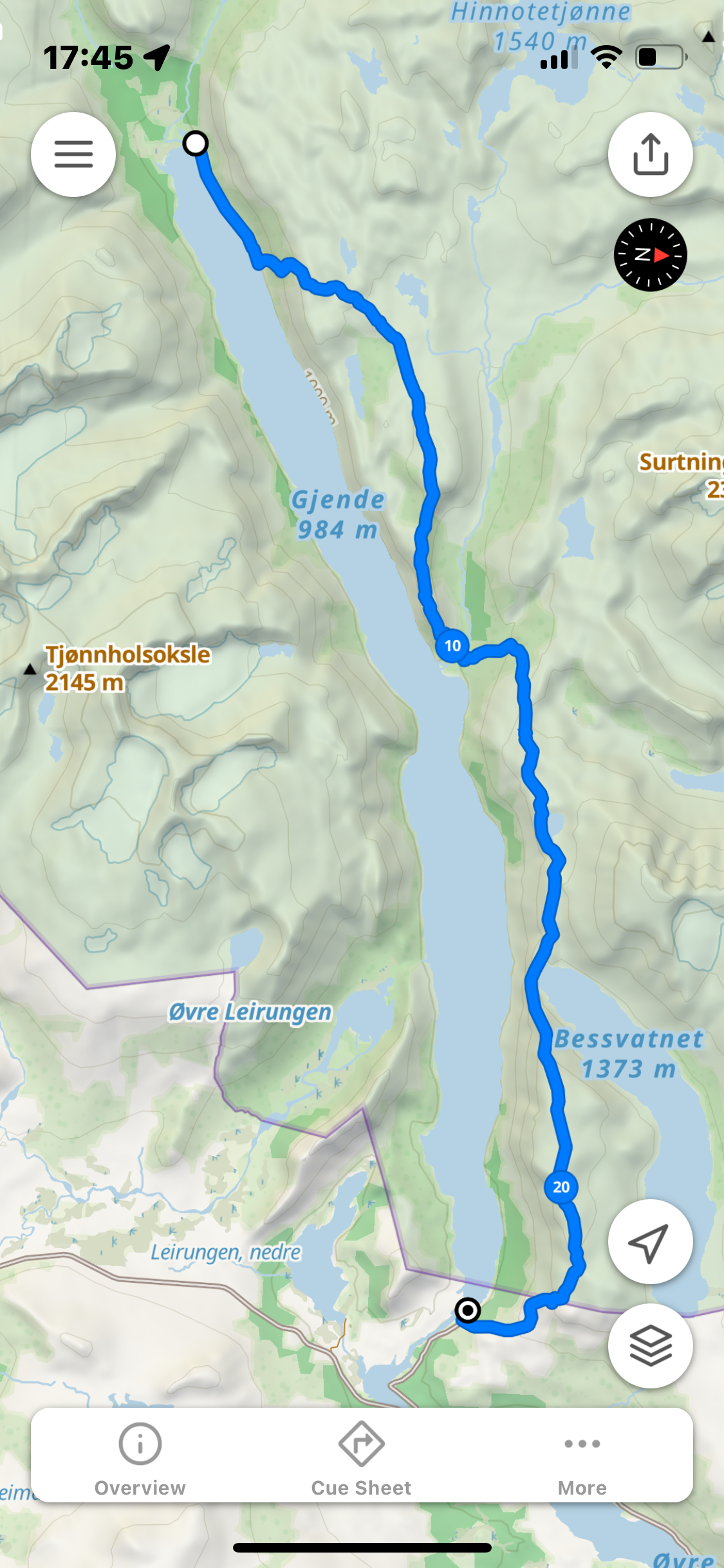
Day 5 – Gjendebu to Gjendesheim via Bukkelægret, Memurubu and Besseggen
The view from the iconic Besseggen Ridge
Leg 1 Gjendebu to Memurubu
Gjendebu to Gjendesheim
I took no photos for this day, the weather was too bad, so, enjoy the image above of a considerably better day with Abelone.
Our longest day ahead and the weather forecast was rain all day. We were committed with our route BUT as always, sense and forward thinking was key. Our route was a two-day route, Gjendebu to Memurubu one day and then Memurubu to Gjendesheim day two. To do the whole lot in one day does require a fast and light approach.
The first leg is 11km and at Memurubu we had the option to pick up the boat to our finish, should conditions deteriorate.
The early km’s follow a single-track rocky and muddy trail next to Gjende lake. After 4km you turn left and then steeply climb. This section, Bukkelægret, is renowned as being difficult, especially in bad weather due to the gradient, slippery rock and the multiple chain sections. UT.NO say, ‘Chains and railings in exposed places. NB: Do not go outside the marked path! It is the only possible decrease. It is better to walk in the opposite direction if you are afraid of heights or choose the longer route around Storådalen.’
The route up was fine and although the rain was constant, we were all warm and enjoying the climb.
Once at the top I made a silly navigation error. I turned right following a trail that leads towards Kjuklingen. Within less than a km I knew I was wrong. I stopped, took a moment and then Baz, Geoff and I backtracked. While running I looked to the right and could see the trail up the other side of the mountain and eventually, we picked back up the red T’s and we were back on track. A frustrating mistake but these things happen!
Travelling northeast into Lågtunga, between Grunnevatnet and Sjugurdtinntjønne and down over Sjugurdtinden. We had a stunning moment when we were confronted by a large male Reindeer. We dropped to a walk and approached slowly. At the time I expressed how unusual it was to see one alone. But, as we crested the summit, a herd of maybe 20-30 reindeer were visible, what a sight!
The final descent to Memurubu is steep, rocky and slippery – care is needed, especially in torrential rain.
At Memurubu we entered the cabin and took an ‘aid station’ break of warm coffee and buns. I changed base-layer to a dry merino top and prepared for the next section.
We had had rain all day so far, but it had been pleasant in type 2 kind of way. Baz and Geoff decided to wear tights, I stayed in shorts. The option to pull out and take the ferry was not really an option, we were committed to the task.
Leg 2 Memurubu to Gjendesheim
The climb out of Gjendebu is steep and I soon removed my jacket, there was a hint of better weather coming and I loudly said, ‘it is clearing up!’ Famous last words…
The jacket soon came back on, and the rain increased. I was now on my second set of gloves, good old Raynauds in the hands brutal in bad weather.
This route is one of the most popular in Norway. Many take the early boat to Memurubu from Gjendesheim and then return via Besseggen, an average time taking 7-hours. On a good day there are many, many people. Today, hardly anyone.
The terrain is hilly and rocky as we headed to the foot of Besshøe and then on to Bjørnbøltjønne, the highest point on the route before heading down to the southern end of Bessvatnet.
Now we were at Besseggen, the steep climb ahead of us and Geoff loudly saying, ‘Are we going up there…!’
I reassured him it was not as bad as it looked. However, the steep rock face has an extra challenge in the rain. We stared the climb and soon came across a group of teenagers frozen on the mountain unable to proceed. They were questioning the decision to come this way, and they asked Geoff what time the last boat was at Memurubu! Unfortunately, they would not make the last boat if they backtracked, however, the cabin would look after them.
Ahead I heard screaming and crying. It got louder as I climbed only to find a mother trying to climb with a young girl who was beyond terrified. I offered help but it was refused. ‘We will be fine; she is just very anxious and scared.’ No shit I thought to myself. As I climbed up, I saw her husband and another child. They had back-up help but I stopped multiple times to make sure that I was not leaving a potentially disastrous situation.
Geoff and Baz were making good headway, every 5 to 10m I would stop and make sure their line was good.
The 350 meter climb up to the top cairn on Veslfjellet 1743m soon passed and now the weather was wild.
Wind was raging in from the right, the rain was torrential and the visibility poor.
We regrouped and I clearly expressed that we NEEDED to move. It was no stopping and all running now down the, at times, steep and rocky descent to Gjendesheim.
This was without doubt the hardest hour of the whole week and clearly demonstrated how Norway, as beautiful as it is, can turn wild and violent.
Soon we were on the final stone steps that lead to the DNT and lake Gjende.
We were absolutely soaked and exhilarated with the day. It was true Norwegian mountain day, and we had completed the whole 26.1km with 1800m vertical in 6h 30m on what was a very tough and slow day.
All three of showered for a good 15-minutes. A cold beer followed quickly and before we knew it, we had another wonderful 3-course meal with Reindeer as the main course.
The evening was chilled and relaxed. We had a short concert of traditional music, and we discussed the completed adventure.
My offer for a following morning run was very quickly turned down.
A good sleep and the following day we departed at 1400 for a direct bus to Oslo and onward travel.
What a stunning week!
Thoughts and Summary
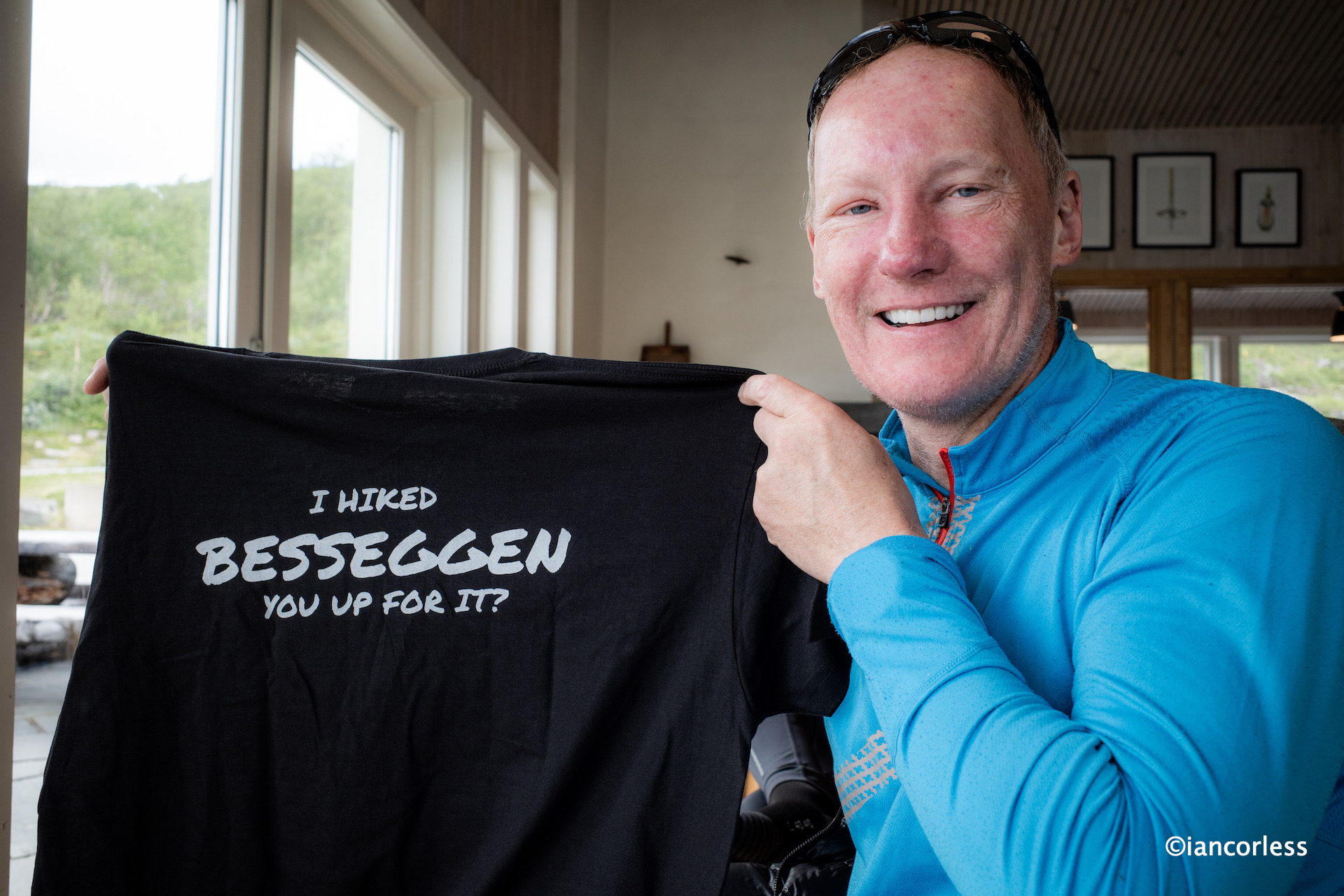
He got the T shirt 🙂
For me, there is no better way to travel through the mountains of Norway than by cabin-to-cabin. What the DNT offer is a five-star service and it really is a privilege to have this available. A shower, a bed, hot meals and a drying room for apparel and shoes is stunning.
Few people travel fast and light, they prefer to move at a slower pace with loads of equipment and take long stops and plenty of sight-seeing.
However, fast and light allows for a faster pace, the option to cover more distance and ultimately, more relaxation times in the cabins.
You do need to be experienced and prepared to move in this way.
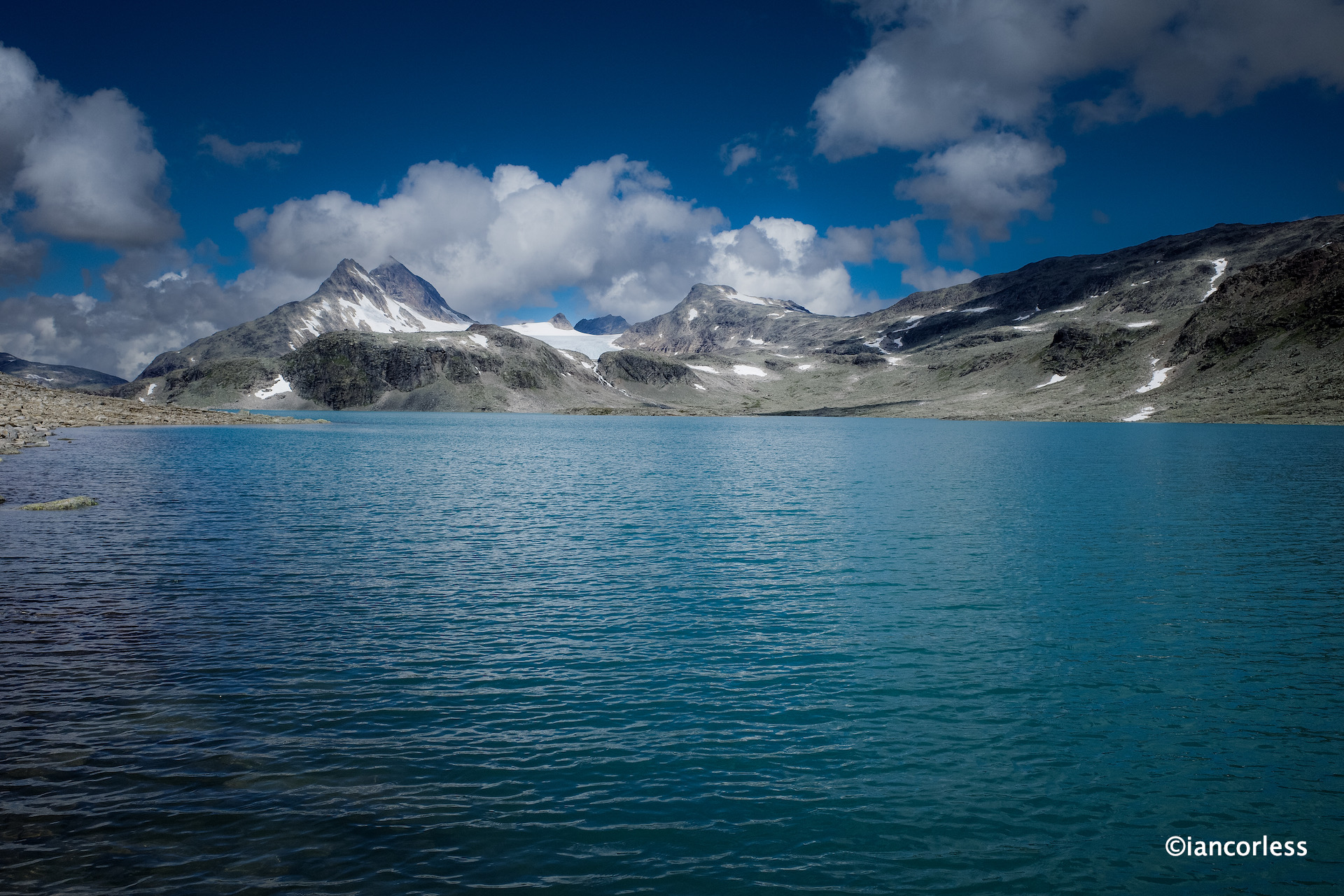
Magical
In sunny and beautiful weather, fast and light is easy. In bad weather you need to be prepared, constantly making judgement calls and adjusting speed so as to ensure you are safe. Our final day a prime example.
We were well prepared and all three of us had the right and correct equipment for the planned adventure. The option to change a base layer at Memurubu for me was spot on, as was the decision for Baz and Geoff to move out of shorts and into tights. Despite the torrential rain, wind and colder temperatures, all three of us still had emergency layers of insulated jacket, waterproof pants and a bivvy bag available in our packs.
We all brought poles and on day 1 we used them a great deal, less so after. Geoff broke a pole on day 1 which was frustrating. However, when finished, Geoff said he would not bring poles next time. I understand his thought process, but, the additional weight of just over 200g is an excellent security blanket if moving slower or picking up an injury. Just learn how to use pols before.
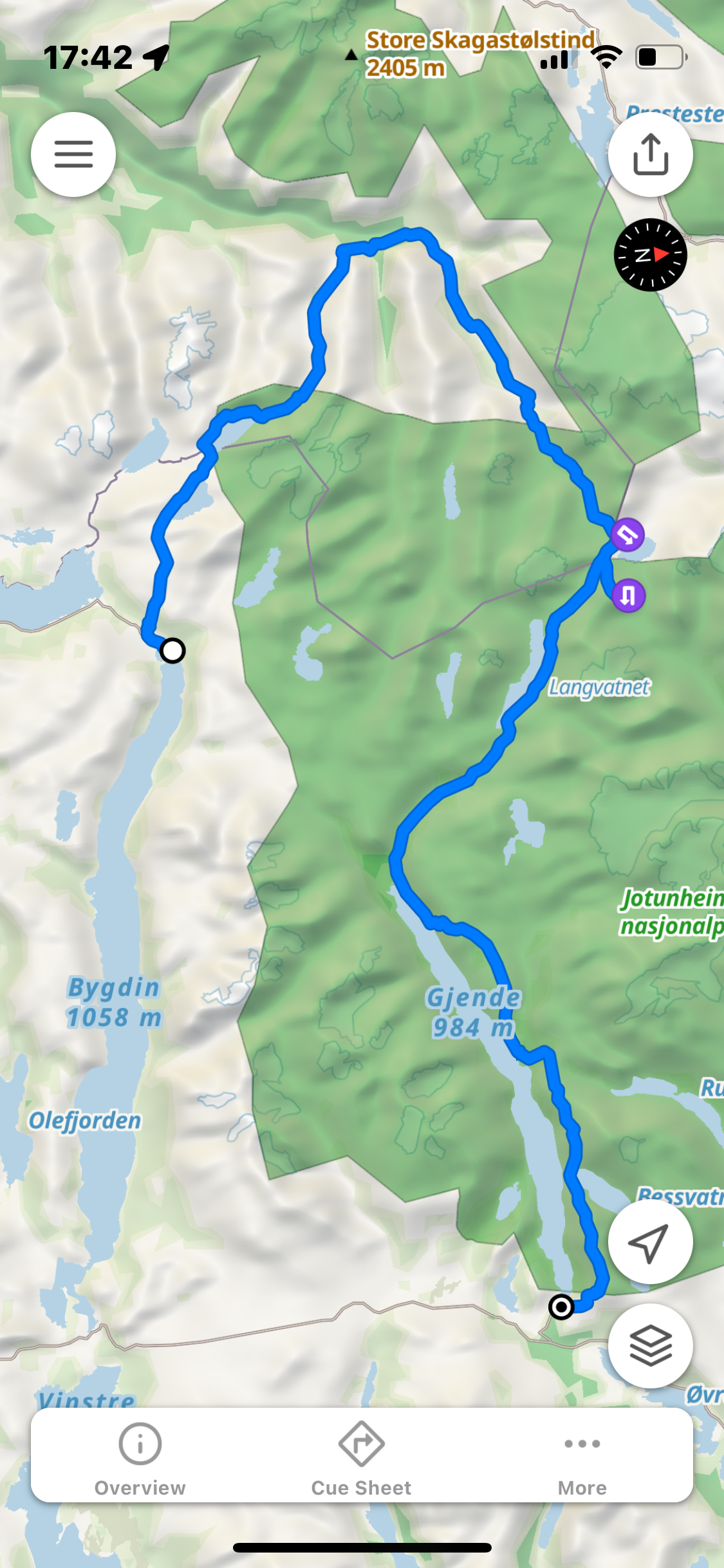
The full route
Due to the nature of the DNT layout, sometimes we were not in the main building, and we all wished we had brought some very light flip-flops. I am now searching the internet for the lightest and most practical.
Good shoes are essential and normally I would never say YOU MUST get these shoes, but VJ Sport shoes and the amazing Butyl outsole are the only run shoes that can be relied on for Norwegian rock, especially when wet. Geoff and I wore VJ, me in the MAXx2 and Geoff in the Ultra. Gaz wore Altra and he had no grip – it compromised his enjoyment.
Norwegians have a saying, there is no bad weather, just bad equipment. It’s very true. We had mixed weather for our trip and in all honesty, it made the trip better. I never took my camera out on the last day as the weather was so bad, but I absolutely loved the challenge of making that route in bad conditions. Just a shame Geoff and Baz did not get to see those iconic Besseggen views down the lake and the surrounding area.
Finally, if you are interested in joining us in July 2025 for a similar journey, please get in touch. We will have 8-places available.
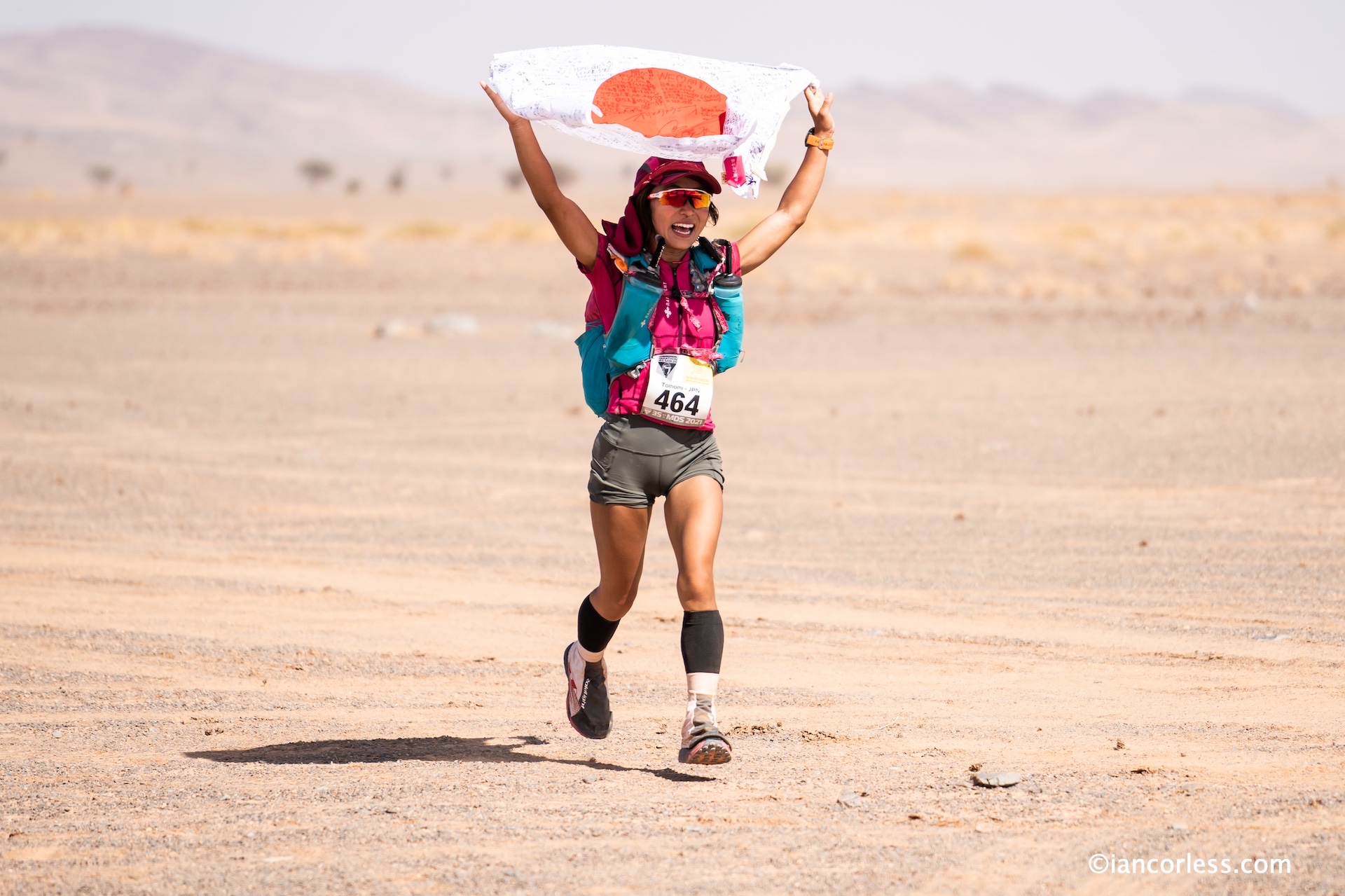
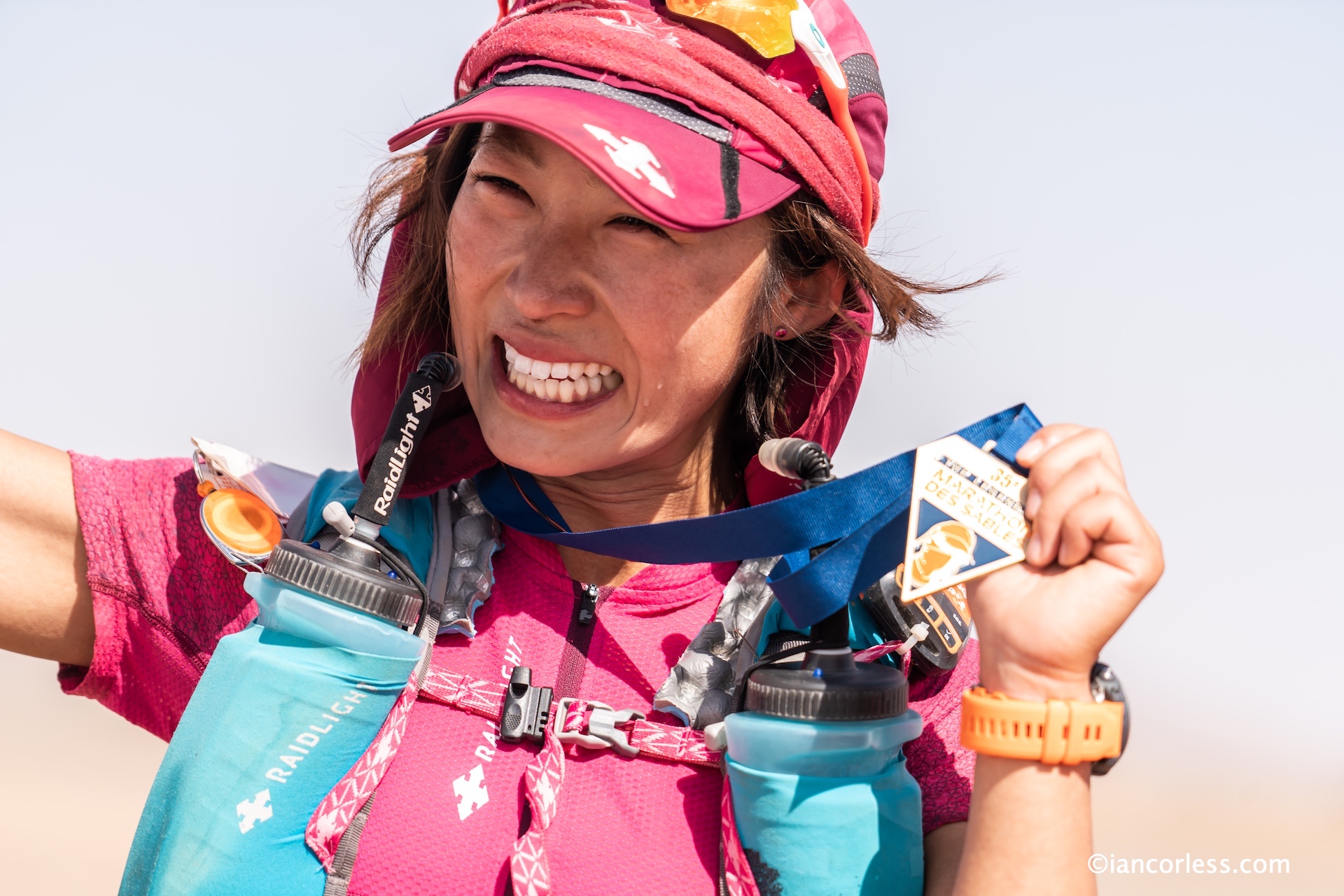
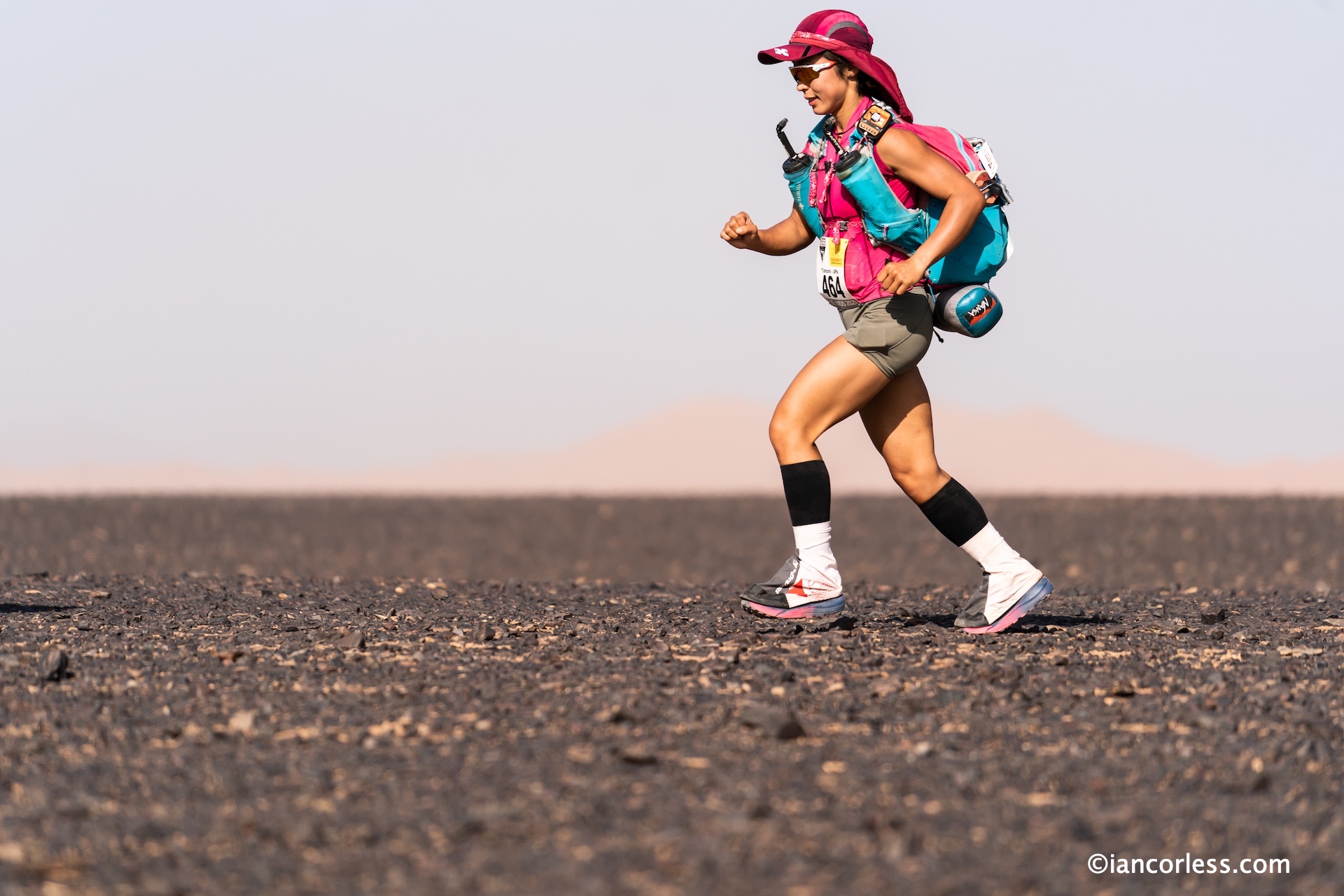
A second-place finish at the 35th Marathon des Sables in October 2021 has set Japans Tomomi Bitoh up for The Coastal Challenge that will take place in Costa Rica, February 2022.
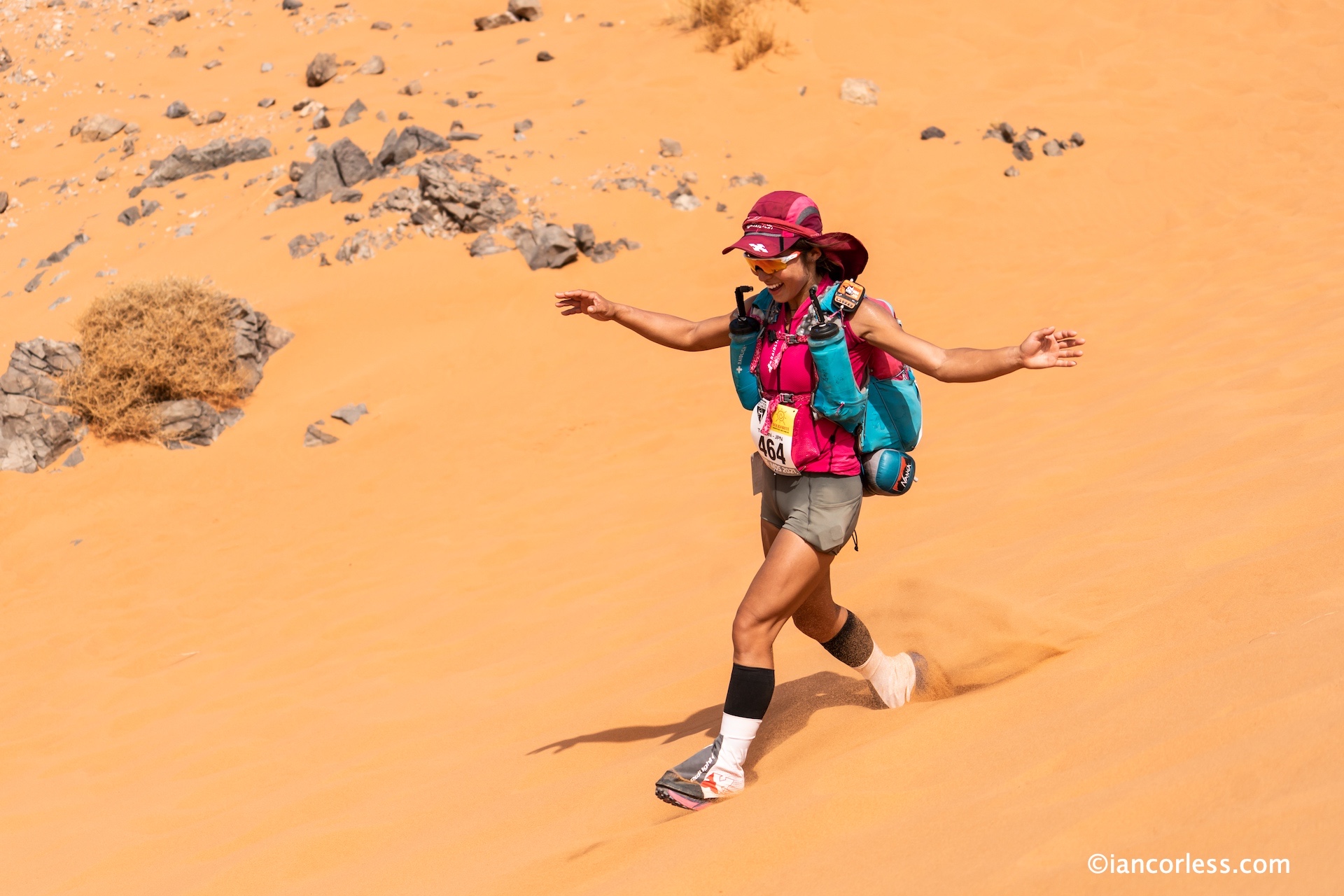
A relatively unknown when standing on the start line of MDS in Morocco, it soon became apparent that Tomomi was ‘one-to-watch’ as the race unfolded. Her relentless smile, positive attitude shone through resulting not only in a victory of the final stage marathon distance but 2nd overall.
Tomomi is new to the sport, in 2018 she became a freelance professional trainer and in April that year ran her first marathon, she now has a PB 2:59:32. Winner of the Fuji Five Lakes Ultra Marathon and the Fuji Goko Ultra Marathon 118km, Tomomi also races at a competitive level in Spartan events. Spartan will provide Tomomi a great level of skill sets that she will be able to utilize at TCC, especially with the mixed and challenging terrain.
Marathon des Sables was a breakthrough performance and the multi-day format of TCC in Costa Rica will bring a new challenge.
The Race
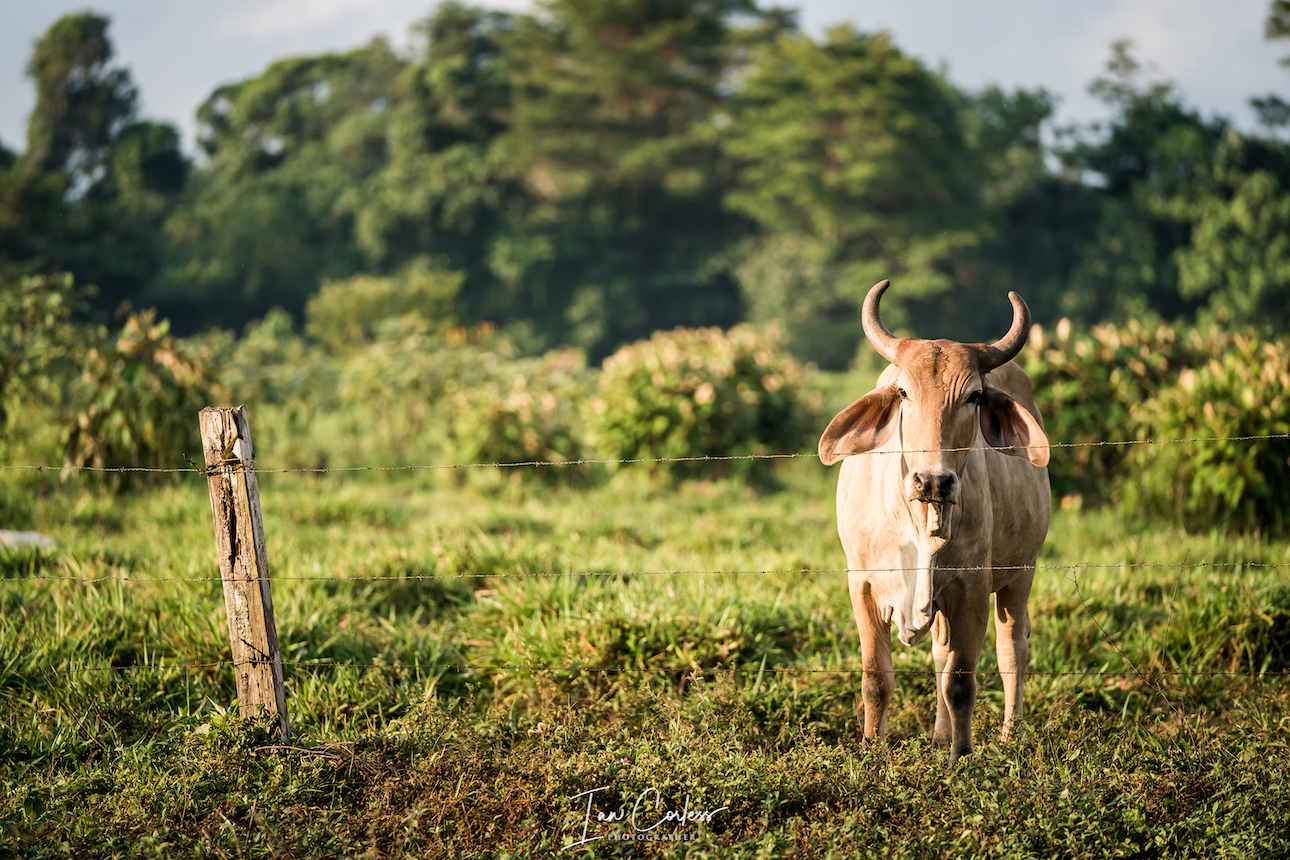
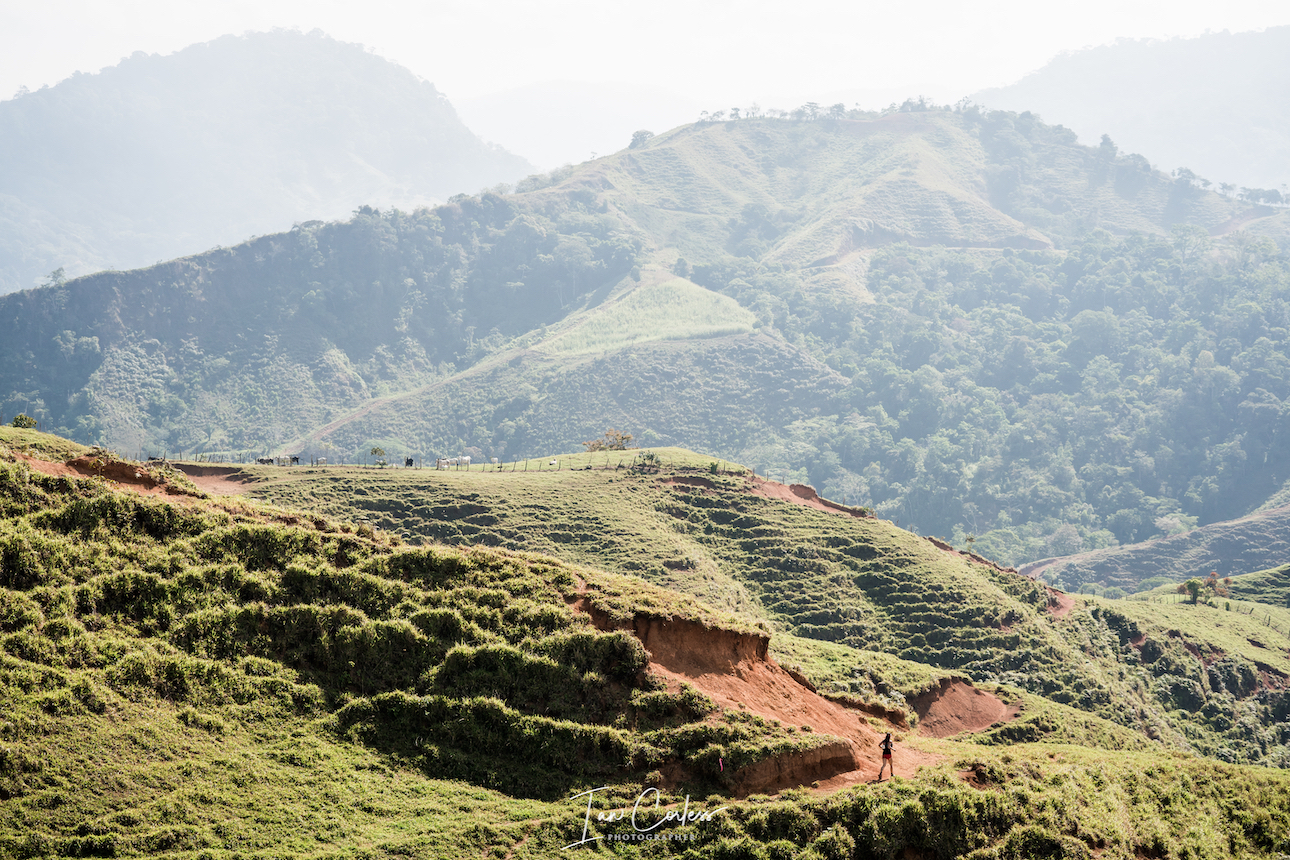
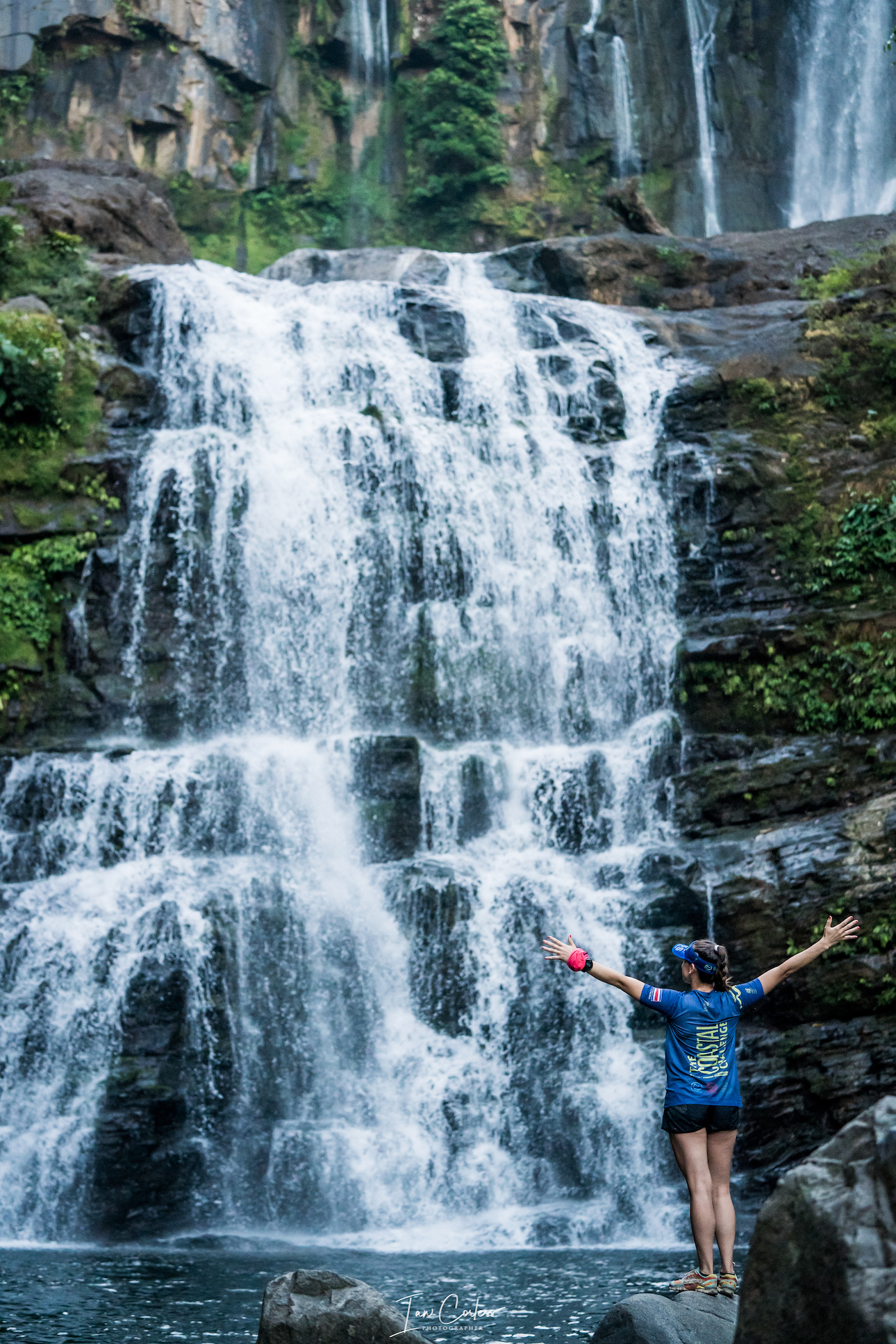
Hugging the coastline of the tropical Pacific, The Coastal Challenge is the ultimate multi-day experience that weaves in and out of the Talamancas, a coastal mountain range in the Southwest corner of Central America. The terrain is ever-changing from wide, dusty and runnable fire trails to dense and muddy mountain trails. Runners will cross rivers, boulders, pass under waterfalls, survive long relentless beaches and finally finish in the incredible Corcovado National Park, a Unesco World Heritage site with a stunning final loop around Drake Bay.
With two races available, an Expedition Run of 230km and an Adventure Run of 155km – TCC is a race not to be missed!
230km and 10.000m+
Join the race in 2022, February 5th to 12th, registration HERE
Please note, TCC requires full vaccination and documented proof will be required.
Please support this website. I believe everyone deserves to read quality, independent and factual articles – that’s why this website is open to all. Free press has never been so vital. I hope I can keep providing independent articles with your help. Any contribution, however big or small, is so valuable to help finance regular content. Please support me on Patreon HERE.
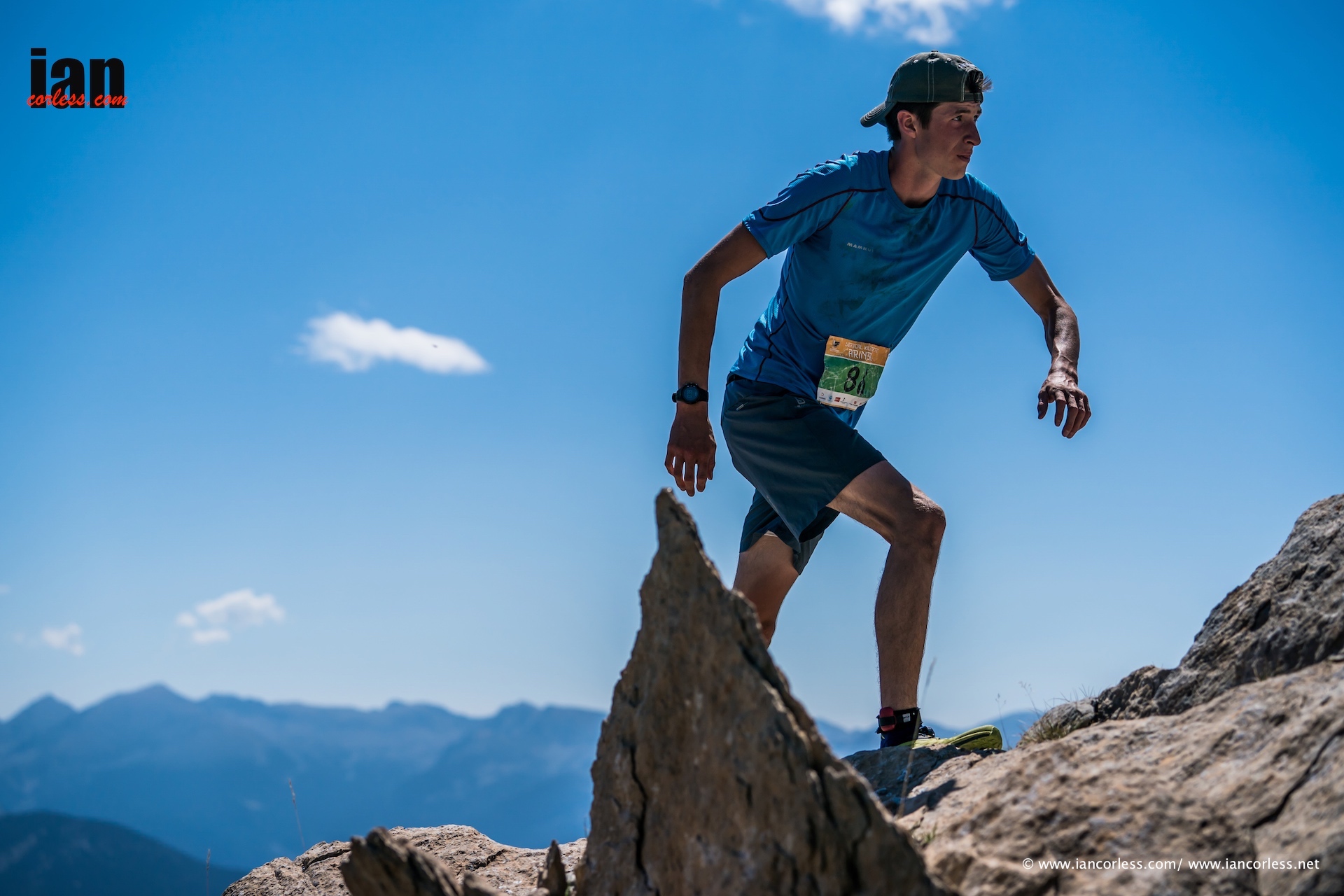
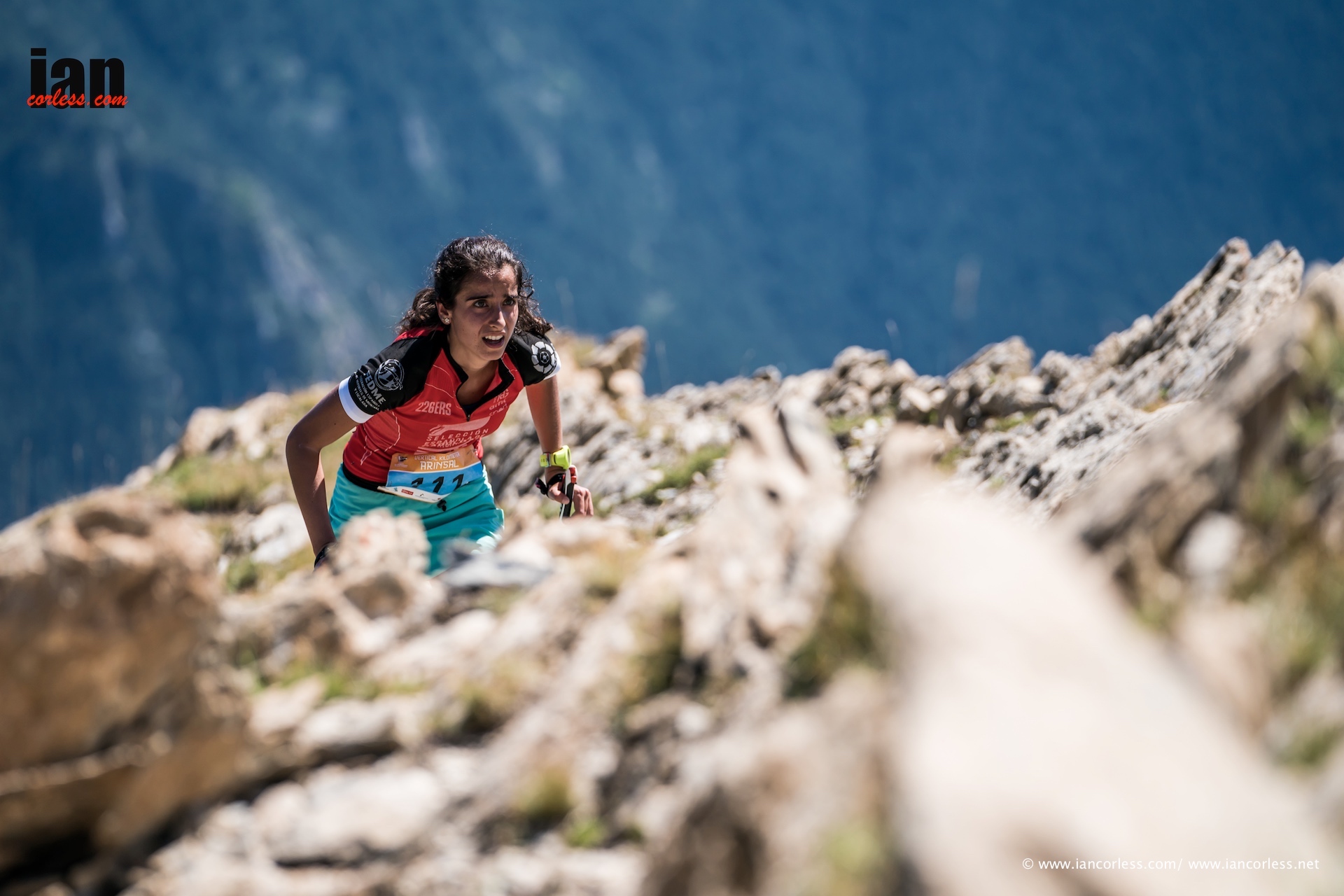
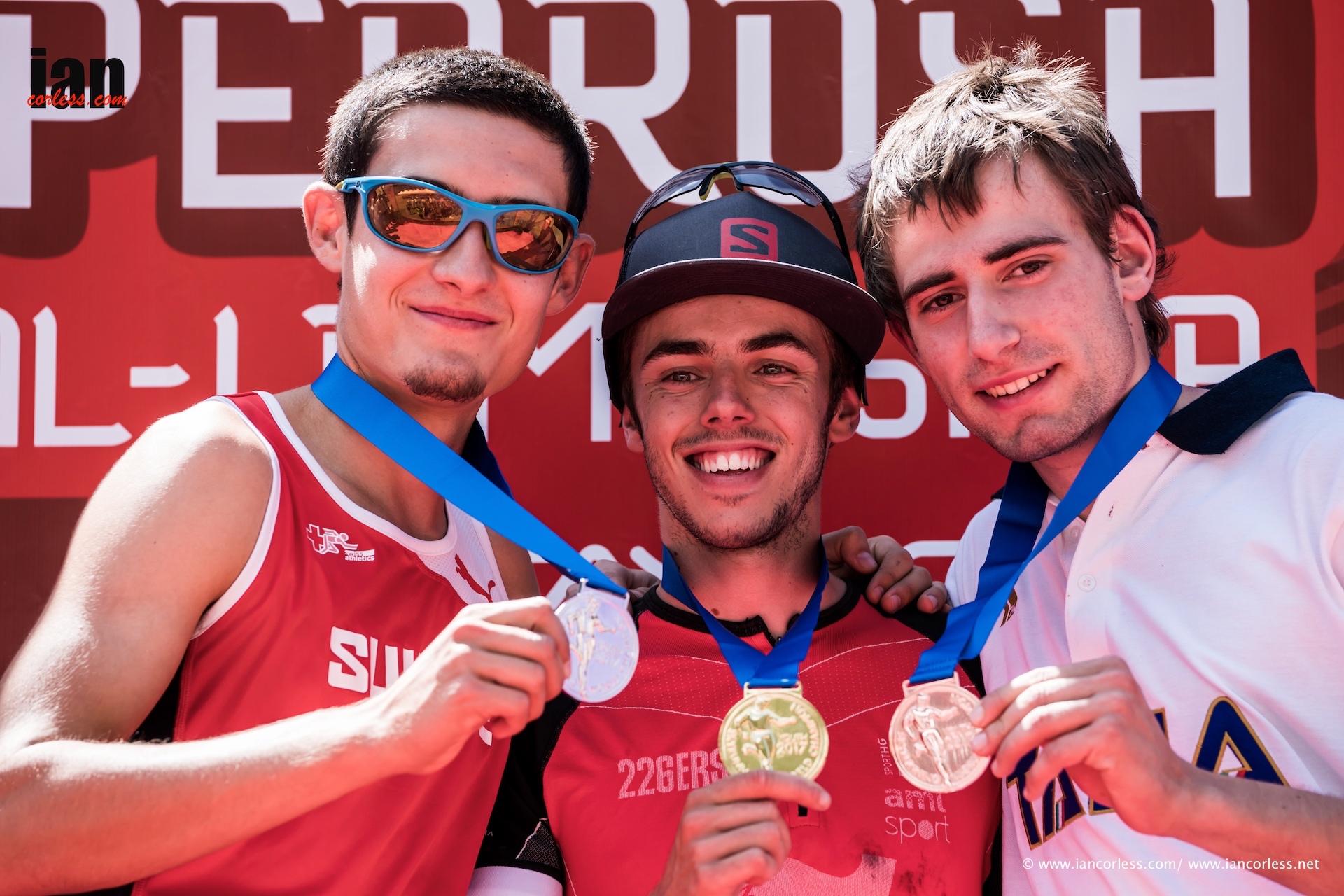
The KV Arinsal kicked of the 2017 ISFYouth Skyrunning World Championships in the Principality of Andorra following on from the success of the inaugural event held in Italy in 2016.
Sixteen countries (double the 2016 number) from four continents participated. Competing in three age group categories:
A (16-17 years)
B (18-20 years)
and U23 (21-23 years)
18 medals were at stake – Gold, Silver and Bronze.
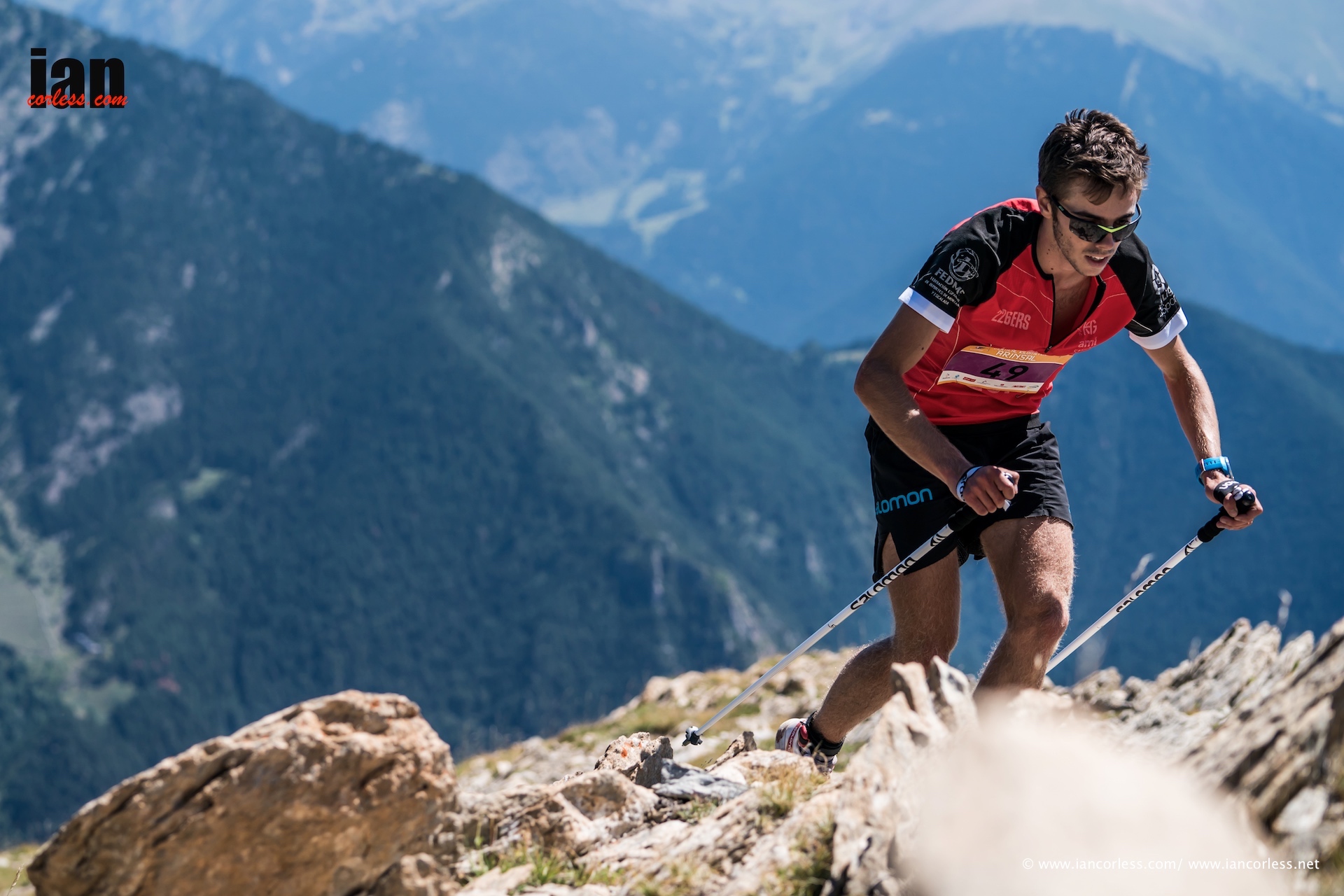
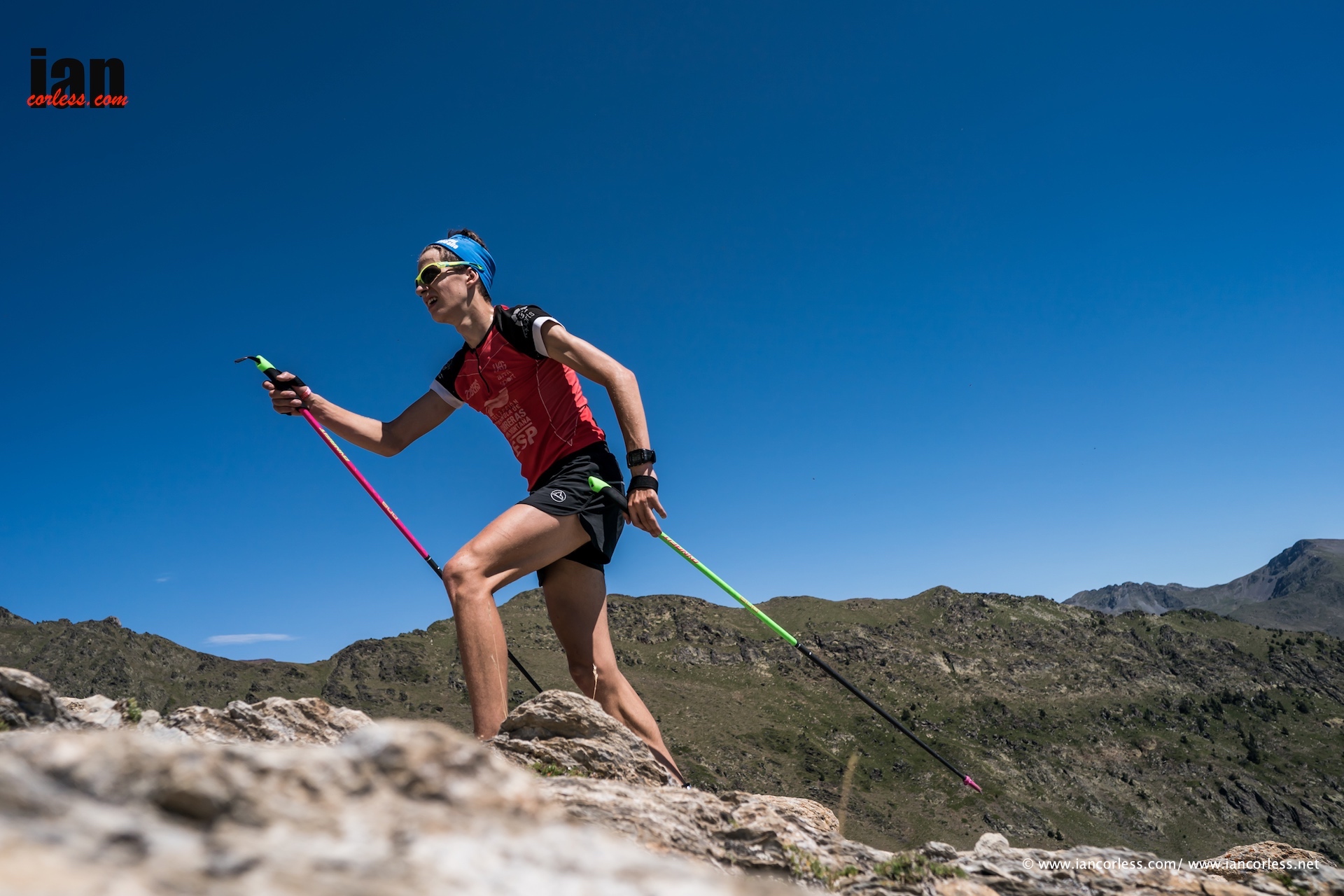
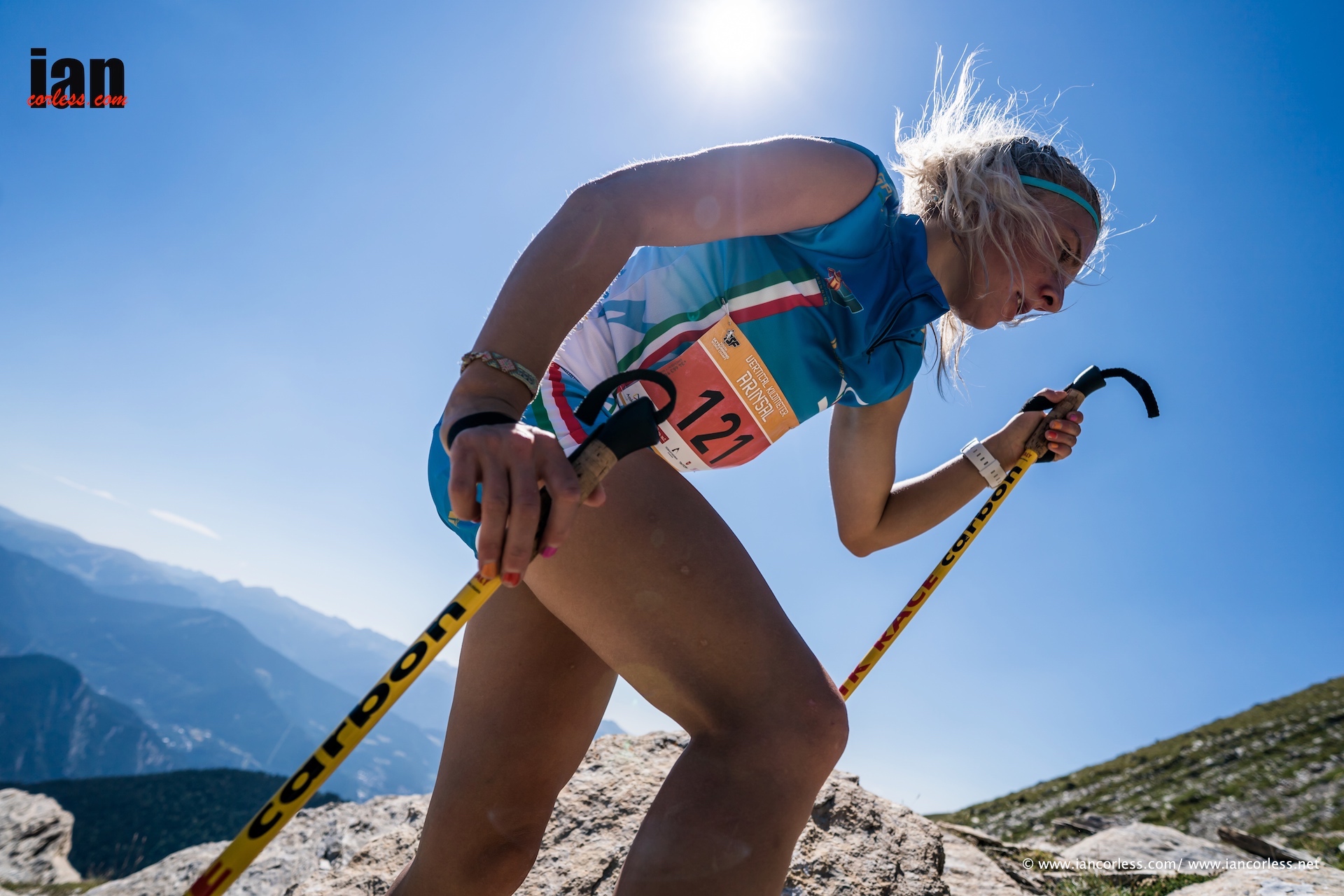
The KV Arinsal is a 3.5 km long Vertical Kilometer® which started in the town of Arinsal and finished at Alt de la Capa summit, 2,570m altitude.
RESULTS
16-17 age group category A
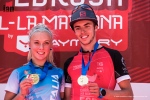
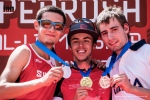
Nicolas Molina (ESP), Arnau Cases (ESP), Diego Gomes (POR), Jana Aguilar (ESP), Erin Margill (USA), Andreu Sinfreu (AND).
18-19 year-old B category
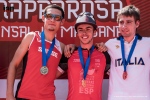
Jan Margarit (ESP), Roberto Delorenzi (SUI), Luca Lizzoli (ITA), Giorgia Felicetti (ITA), Sora Takizawa (JPN), Irati Zubizarreta (ESP).
U23 category
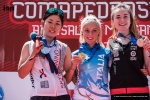
Alex Oberbacher (ITA), Antonio Alcalde (ESP), Daniele Felicetti (ITA), Fatima De Diego (ESP), Claudia Sabata (ESP), Barbora Chica (CZE).
Countries competing in the 2017 Youth Skyrunning Championships are: Andorra, Austria, Bulgaria, Czech Republic, France, Greece, Italy, Japan, Portugal, Peru, Romania, South Africa, Spain, Switzerland, UK and USA.
The Youth Skyrunning World Championships are held annually in different countries with a view to developing and promoting the sport and to highlight young skyrunners, giving them an opportunity to shine on the international stage.
With thanks to the La Massana Ministry of Tourism, Federaciò Andorrana de Muntanysme (FAM) and SkyRace® Comapedrosa organisers Ocisport.
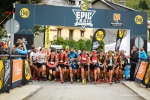
For the short and steep specialists, the BUFF® EPIC TRAIL VK is 2.8 km long with 1,030m positive climb. The average incline is 30.7% and reaches a mean 50.4% at the steepest point. It is capped at 250.
SKY
The rugged BUFF® EPIC TRAIL 42KM is a point-to-point race with 3,200m positive vertical climb. Again, a highly challenging extremely technical race with a nine-hour time limit capped at 500 runners.
ULTRA
The BUFF® EPIC TRAIL 105KM, with a grueling 8,000m elevation gain and a maximum gradient of 56%, is as tough as they come. Strict qualification standards were enforced for participants, which were capped at 250.
UTMF will be a VERY different race this year. First and foremost, the race date has moved from early in the year to late in the year; this is significant! Another important factor is the course. For 2015 (the 10th edition) the race will be run counter-clockwise and as such all the climbing and difficulty will come in the early stages and therefore leave the more runnable sections for later in the race; again significant!
With around 8500m of climbing and a distance over 100-miles (105) this race is a real challenge.
However, for me this years UTMF may very well be all about the UTMB.
Yes, UTMB was only 4-weeks ago and we all know the devastation that took place in and around Chamonix. It was carnage!
Much has been discussed about the DNF’s and failures at UTMB and unfortunately I think it’s a sign of the times. The racing calendar is full and race series like the UTWT encourage runners to race regularly 100km+ and 100-miles often; is too much? Francois D’Haene and Nuria Picas dominated the calendar in 2014 and where have they been in 2015?
Exhausted?
Just look at the start list here at UTMF. Many of the key players are runners who had tough, below par or DNF’s at UTMB.
Fernanda Maciel dropped with 2/3rds of the race done with severe foot pain.
Amy Sproston dnf
Gediminas Grinius dropped with over 90-miles completed.
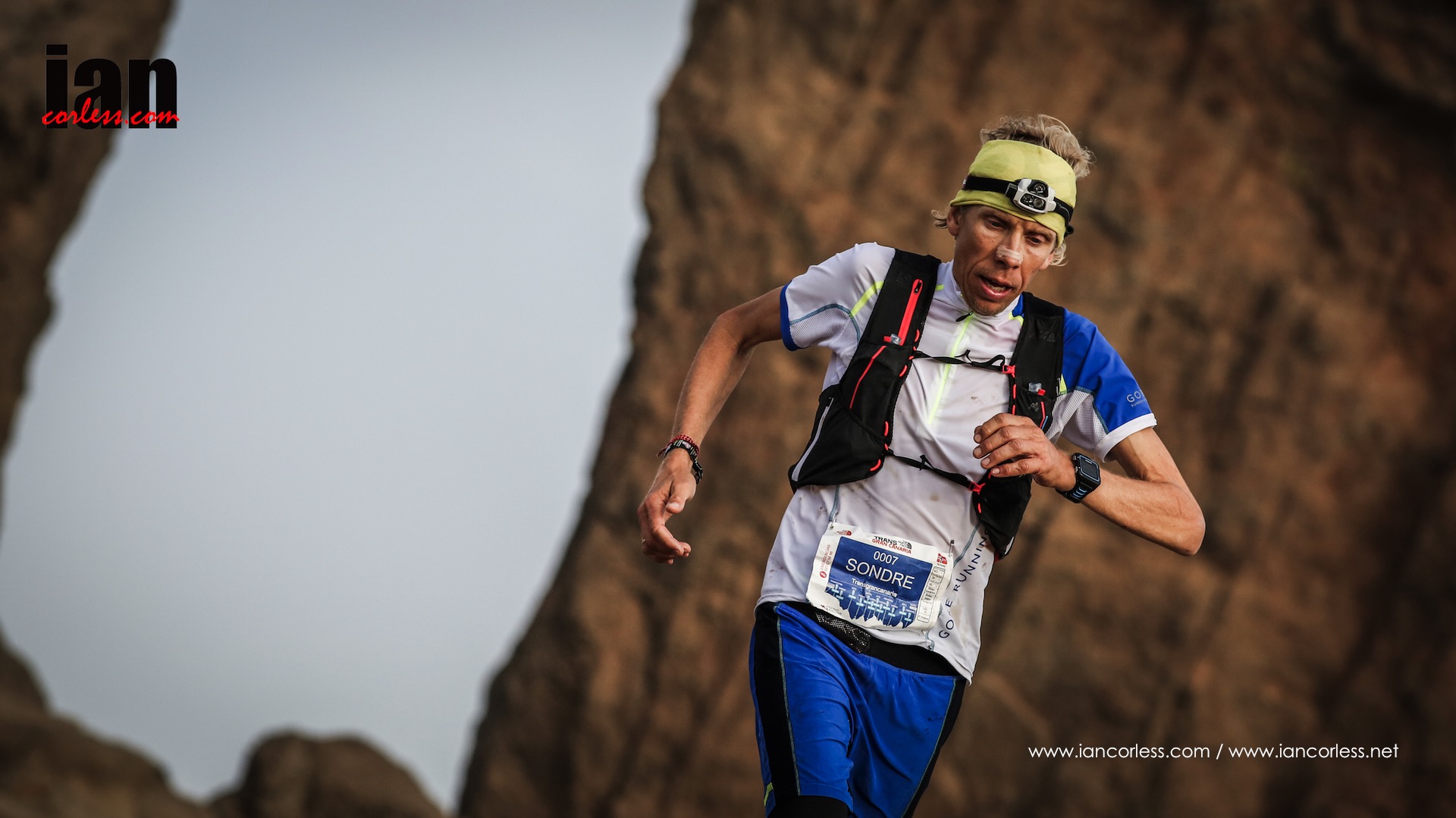
Sondre Amdahl dropped with just over a marathon covered.
Jeff Browning dropped with a twisted ankle.
Of course, this is not all the favourites at UTMF but a pattern may be forming? All of the above have raced at one or more of the following: Lavaredo, HK100, Transgrancanaria, Western States, UTMB and now they line up at UTMF and I wonder how many post UTMF will travel to Reunion Island to take on the Diagonal des Fous (Raid de la Reunion). For many of the runners that will be 3 big 100-milers or a combination of 100-miles and 100km+ in relatively quick succession. The body may take it in 1-year but can it take year-after-year?
I merely raise the question?
So who is going to win?
THAT is a million-dollar question. Keeping in mind what I have said above, we can still expect Grinius, Amdahl and Browning to figure at the front of the race providing they have no issues. Sondre Amdahl(interview on Talk Ultra) should be the freshest of the 3 as he dropped early at UTMB and therefore it was probably just like a typical training run for him. However, what caused the ‘failure’ of his hamstring at a race that he obviously prepared meticulously for?
Jeff Browning (interview on Talk Ultra) loves the long and hard races. He dropped at UTMB but I am pretty sure he will be recovered here. He lacks some of the speed of the competition so although I think he will be in or around the top 5-10 I don’t think the podium could be his.
Gediminas Grinius (interview on Talk Ultra) has continually impressed. He loves the long hard races and he closes like a demon. I do worry that he is just tired though? I may be wrong. He has the race and skill set for UTMF, pretty sure he would have prepared the course the other way around but Transgrancanaria finishes with a very runnable last 20km and look what he did there!
Okay, so that is the UTMB contingent done and dusted and arguably I am now talking about who may win the race?
Gary Robbins has had a steady year with a great FKT (interview on Talk Ultra) and becoming a new Dad just a few weeks ago. He just missed the podium in 2013 and I think a podium slot may well be his this year.
Brendan Davies is a runner who I should add to the exhausted list above! He just ran the Worlds 100k and this year he did TNF100, Western States and Transgrancanaria where he had a really tough day out. He has potential to be on the podium BUT….
That leaves Didrik Hermansen for the top slot and if all things go well I think he can do it. He has the running legs for the latter half of the race and as he showed at Transgrancanaria and more importantly Lavaredo (where he won) he knows how to get the job done!
As one would expect the start list is extensive at UTMF and I have picked out some key names. For sure I will have missed some other key players, in particular the local talent who I am less familiar with.
Anyone we should look out for who can take a podium place?
Uxue Fraile made the podium at UTMB and considering my thoughts at the beginning of this article, can she be recovered? Actually, I think yes? I saw Uxue at the weekend spectating at Ultra Pirineu and she looked fresh, enthusiastic and excited for the race ahead. Her talent lies in the waiting game and more often than not she picks up the pieces as others fall by the wayside. I think we will see a similar strategy here at UTMF. Don’t be surprised with a podium place!
Fernanda Maciel was also spectating in Catalonia at the weekend! Her UTMB experience was far more dramatic and maybe traumatic that Uxue’s. Without a doubt, Fernanda has the race for UTMF as she proved last year with 2nd. Can she put the record straight so soon after UTMB?
Amy Sproston dropped at UTMB with approx. 100km in her legs. She can recover from that I think. Significantly (like Gary Robbins) she is a HURT 100 winner and that will be useful here at UTMF. It’s going to be a long day out!
Victory may well come from Aliza Lapierre. Her 8th at Transgrancanaria was off the lead ladies pace but significantly she placed 4th at Western States and has raced little since. At this point in the year with a whole bunch of tired legs around her, Aliza may well be the best option to fade the least.
Dong Li placed 3rd at Transgrancanaria with a breakthrough performance, she was 2nd at HK100 and won TNF 100. Add to that a 4th place at Mont-Blanc 80km and like Aliza she may well have fresh legs for the UTMF. She is going to need them though… as far as I know, this is the first time she will race 100-miles. This is a tough debut for the distance!
Shona Stephenson has raced well here in the past and with fresh legs she may well be a contender for the podium if not for the win if everything goes well.
Nora Senn may well turn a few heads and then like the men’s race a whole wealth of local talent will infiltrate the top 10.
Episode 60 of Talk Ultra – This weeks show has an interview with one of the best ‘closers’ in the ultra scene, Mike Foote. We have a series of interviews from the Iznik Ultra series of races, Marcus Scotney from the 130k, Jo Meek from the 80k and Robbie Britton from the marathon. We speak to British Bulldog, Steve Spiers. Marc Laithwaite is back for Talk Training. News, a Blog, Up and Coming Races and of course, Speedgoat Karl Meltzer.
NEWS
UTMF
Francois D’Haene 19:09:13
Ryan Sandes 20:18:59
Mike Foote 20:54:16
Nuria Picas 23:27:34
Fernanda Maciel 23:46:24
Maria Semarjian 27:16:13
ONER
Rob Sartin 18:19:29
Tom Sutton 18:40:08
Max Woods 20:13:19
Nicky Taylor 18:40:10
Erica Terblanche 20:36:34
Melanie Hawker 21:56:54
Iznik Races
130k
Marcus Scotney (Montane) 12:53:59 new CR
Mahmut Yavuz 13:11:55
Zhikica Ivanovski 13:53:41
Bakiye Duran 19:09:39
Svetiana Stojanoska 22:27:08
AUDIO with Marcus Scotney
80K
Jo Meek (Scott Running) 6:52:17 new CR first lady and first overall
Aykut Celikbas 7:41:34
Firat Kara 7:46:07 (tbc)
Jo Meek (Scott Running)
Yasemin Goktas 9:45:34
Ayse Beril Basliqil 9:54:45
AUDIO with Jo Meek
Marathon
Robbie Britton (inov-8) 3:08:19 new CR
Benoit Laval (Raidlight) 3:30:38
Duygun Yurteri 3:31:56
Elena Polyakova 3:47:26
Aysen Solak 3:51:01
Helen Southcott 4:14:07
AUDIO with Robbie Britton
Highland Fling Race
Sondre Amdahl (Norway) 07:29:15
Justin Maxwell 07:46:35
Neil Macnicol 07:49:08
Jo Zakrzewski 08:30:29
Sally Fawcett 08:38:41
Elaine Omand )8:49:33
SDW50 – correction to results
Louise Waterman Evans 7:06:08
Edwina Sutton 7:09:21
Sarah Perkins 7:19:43
**correction – Gemma Carter re SDW50
Oh Ian, that is really very kind of youI know it will mean a lot to Eddy and of course, it means a lot to me (I’m not in the big league YET, so every little result counts!) thank you… See below: 1st.Edwina Sutton- 7:09:21 2nd. Sarah Perkins-7:19:43 3rd. Gemma Carter-7:32:42
Transvulcania is next week… what a showdown awaits! In-depth previewHERE
Mike Foote has a great reputation for starting steady and moving his way up through the field. At UTMF he gave another prime example of how to do this….
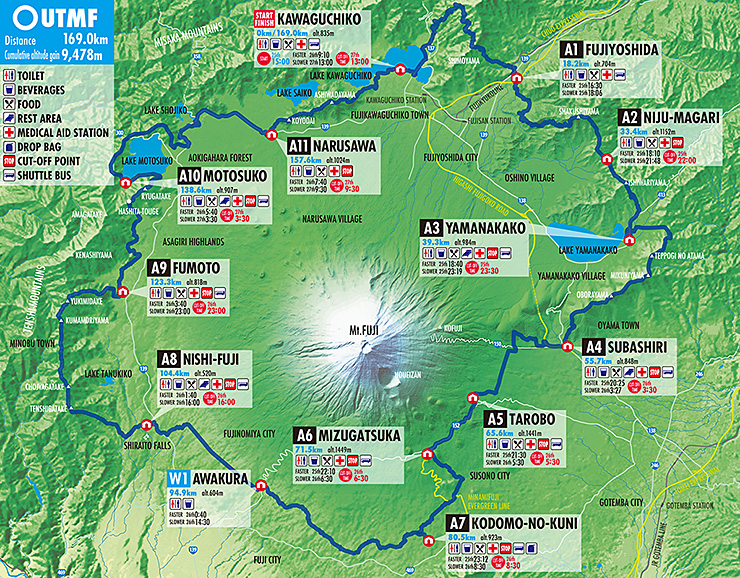
The UTWT rolls on and Japan will host what will arguably be one of the most competitive 100-mile races we will see this year… certainly over a tough course (Hardrock excluded). I say a 100-miles but actually the course is 105 with approximately 10,000 meters of altitude gain. The fifth race in the UTWT (Ultra Trail World Tour) in reality, UTMF is a follow on race from Transgrancanaria as many of the big hitters will re-assemble in Japan, to do battle once again for key ranking points. Nuria Picas was always going to race on the clockwise loop around Mount Fuji, by contrast, Ryan Sandes after his success in the Canaries has shifted focus from Australia and placed his emphasis and efforts on this tough and challenging race.
Without doubt, at the stroke of 3pm (local time) on Friday 25th April a battle royal will unfold both in the ladies and men’s respective races. Dropout rates are usually around 30% to give an indication of how tough this race is.
Race statement:
‘The ULTRA-TRAIL Mt. FUJI is an unparalleled event that challenges the human spirit through the outdoor sport of trail running. By connecting mountain trails, local footpaths and forest roads around the foothills of Mt. Fuji, this 168km course allows participants to enjoy majestic 360 degree views of Mt. Fuji while experiencing the stunning natural beauty and culture of this region.’
Nuria Picas; would you want to bet against her? Nuria has transformed herself in the last 24-months into one of the most competitive and focused female mountain, trail and ultra runners in the world. Her skill, dedication and focused attitude has seen the Catalan excel over every distance and terrain. Her only nemesis has been her good friend, Emelie Forsberg. In 2013, Nuria raced TNFUTMB, her first 100-mile race and placed 2nd behind an unstoppable Rory Bosio. Earlier this year at Transgrancanaria we once again had a master class in how to prepare for, run and win a race! Without doubt, Nuria is a hot favourite for UTMF.
Francesca Canepa excels at tough, long and hilly races when the terrain is not too technical. To be honest; the longer, the better. A 100-km race is very much a warm up for Francesca as her impressive victories at Ronda dels Cims and Tor des Geants confirm in 2013. However, Francesca is no one trick pony. She has placed highly at shorter and faster races such as Speedgoat 50k and UROC. UTMF will without doubt suit Francesca’s running style and after her win at HK100 and second at Transgrancanaria earlier this year, Francesca will without doubt be looking for a consistently strong repeat performance and important UTWT points.
Nathalie Mauclair burst onto the scene in 2013 with a stunning top placing at Transvulcania La Palma. A relative unknown, Nathalie went on to impress her female competitors (especially Emelie Forsberg) and not only did she become IAU World Trail Champion that required pace, she also was crowned Raid de le Reunion (Diagonale des Fous) champion. Her diversity of pace, endurance and technical ability earmarks Nathalie as ‘one-to-watch’ at UTMF.
Shona Stephenson placed 2nd at UTMF last year but had a very mixed 2013. Shona dropped from TNFUTMB and Ice Trail Tarentaise and just recently placed 6th at Vibram Tarawera Ultramarathon (also a UTWT race) where I expected her to place top-3, so, the jury is out. She will be in the game early on pushing at the front, let’s hope she can hold on and keep the momentum going.
Fernanda Maciel after a 3rd place at Transgrancanaria is looking for more UTWT points to boost her overall rankings. Her Everest Trail Race win in late November 2013 would appear to have boosted Fernanda’s running after a troubled 2013 season. Certainly Fernanda’s 7th at TNFUTMB and Transgrancanaria win in 2012 shows that she has all the required armory to compete with the best-of-the-best; she will just need a little luck!
Nerea Martinez like Francesca Canepa like races that are long and tough. Winner of the inaugural UTMF, Nerea won’t repeat that performance in 2014. She has all the required abilities but lacks the pace required that Picas, Mauclair and Canepa have in abundance. However, if it comes down to survival and pushing on through to the line, Nerea will be around and ready to mop up the places. Her 2nd place at the 2012 Tor des Geants proves that she cannot be ruled out in any race.
Julia Boettger had a solid start to 2013 placing 2nd behind Jo Meek at the tough multi day race, The Coastal Challenge in Costa Rica. However, she was DNS at Transgrancanaria due a potential niggling injury. Recently she has been working on and providing instruction on several training camps. If in form, UTMF will suit Julia’s skill set and we can expect a top-10 performance and if she has ‘one of those days’ we may well see her top-5.
Nora Senn placed 3rd at UTMF in 2012 behind Nerea Martinez. Taking into consideration that result and the ladies previously mentioned, Nora can hope for top-10.
Hitomi Ogawa along with Kumiko Amikura and Akemi Ban may well have the hopes of Japan in their legs, placing 3rd, 4th and 6th respectively in 2013; they all have the knowledge and understanding of what UTMF requires from a race and survival aspect. Top-10 is possible for all-3 and top-5 with this quality of field would be an incredible result.
MEN
Yoshikazu Hara gets the nod first as last years UTMF champ. One could arguably say it was a lucky day… but hold on a minute, you don’t beat Julien Chorier and Seb Chaigneau on luck alone! Had Hara excelled at the 2013 TNFUTMB I would be hailing him as a potential 2014 champ as he does seem able to use some seriously fast 100km speed (6:33) on long courses. However, Hara dropped from Tarawera with injury and this leaves some huge question marks in this quality of field.
Ryan Sandes is on a roll… having spent a great deal of time with him on Gran Canaria and getting a great understanding of the man, his training and his thought processes, I’d find it difficult to bet against Ryan at UTMF. As we are all aware, his 2013 season was one to forget but his 2012 season had moments of brilliance and his 2014 victory at Transgrancanaria and then subsequent FKT on the Drakensberg Traverse with Rhyno Griesel will either mean ‘Sandman’ will be in the form of his life or a little jaded. What do you think?
Seb Chaigneau placed 3rd at UTMF in 2013 so knows the course. A tough competitor with a unique and endearing view of our sport, he is a true champion. His win at Hardrock 100 and CR in 2013 was a popular result and without doubt he would be a popular champion in Japan. His recent drop from Transgrancanaria leaves a couple of question marks but I don’t have the answers… you see, dropping from a race whilst in the lead leaves the door wide open. I think we will see Seb pushing top-3.
Iker Karrera is understated and arguably one of the best ultra distance runners out there. His quiet, modest, no nonsense approach of arriving, winning and leaving a race often leaves a void in this media savvy world. However, you would have to have been in an ultra void not to notice his impressive victory at Grand Raid des Pyrenees in 2013 and then his follow on victory at Tor des Geants. Potential winner!
Francois D’Haene has a vineyard and that has taken a priority. His run season now evolves around seasons, grape picking and bottling, however, it hasn’t affected Francois’s performances. When Francois races, he races in top form. His 2nd at Ice Trail Tarentaise where he raced side-by-side with fellow teammate, Kilian Jornet shows he has all the skill and speed required to win any race. He proved this with a great victory at the tough and technical Raid de la Reunion (Diagonale des Fous). This race amongst all his experiences, even his victory over a shortened UTMB course, will put him in a great place for success at UTMF.
Nick Clark; enough said really! Tough as nails, really competitive and one of the best 100-mile runners out there; his consistent performance over the ‘Grand Slam’ in 2013 was a joy to behold. Nick kicked off 2014 with a tough outing at his first multi day race at The Coastal Challenge in Costa Rica, a race that provided Nick with a new perspective on how tough running back-to-back, day-after-day can be. With some solid training behind him and experience on tough courses such as Hardrock 100, one has to give a nod to Nick and put him on the ‘hot’ list for this race.
Mike Foote has been super consistent at TNFUTMB with 3rd place at the shortened race when Francois D’Haene won and 5th place in 2013. Don’t expect to see him up front in the early stages… Mike has a canny knack of almost being out of the race and then in the latter third applying the afterburners and moving up through the field. In addition to great climbing ability, he also has speed. This natural speed will be extremely useful on the faster section of the UTMF course.
Gary Robbins 4th at UTMF in 2013 and recent winner at HURT100 will bring his adventure racing background, the love of the tough and gnarly and some pure old grit back to Japan and armed with knowledge, I can’t help but think that Gary will be a force this year. Of course, one must consider that this field is super stacked and to repeat 4th or move even in higher in 2014 will be a supreme effort, but Gary on his day can do it.
Thomas Lorblanchet looked to be about to break into the big time after winning Leadville 100 and placing highly at Transvulcania whilst running under Salomon colours. However, since moving to a new sponsor, Thomas appears to have been in a running wilderness. Surely a win at the highly competitive ‘Templiers’ was a great result in late 2013 but I have little else to go on… he may well surprise us.
Joe Grant recently won Alaska White Mountains 100 with a new CR; a great result! However, it is extremely difficult to say how this performance will set up Joe for UTMF. Post his impressive Iditarod performance in 2013, Joe struggled to find form (more due to fatigue) and even at his beloved Hardrock 100, he had to drop (whilst in 2nd place) with medical issues. Regularly training with Anton Krupicka, Joe is very much a new breed of ultra runner, inspired by Kilian Jornet, who combines running, climbing and time in the mountains to fulfill his passion. UTMF in principal will suit Joe 100% and if in form, we can expect him to be a main protagonist at the front of the race.
Brendan Davies 5th at UTMF in 2013 has plenty of speed but lacks true mountain experience. He openly said that the 2013 edition of the race was a shock to the system and the time he lost going up, he pulled back on the fast flatter sections. I am sure Brendan will come to UTMF with more vertical training. However, this field is stacked with out-and-out mountain men. It’s going to be a tough race to keep in touch with the top-5 and repeat his 2013 performance.
Antoine Guillon 4th at Reunion and 5th at Transgrancanaria will be hunting UTWT points. I think he will be in the mix but not top-5.
Dave Mackey was one of the first runners to embrace the UTWT and I am sure we will see his presence throughout the series. One of the most respected ultra runners out there, had this been a 100km race he would be a hot favourite. But over the 100-mile distance and on this terrain, I don’t see Dave making top-5 despite his success at Western States. But he is due a big performance…
John Tidd to many will be a complete unknown, I first met him at Transgrancanaria in 2013 when he went on to place 6th running a strong and consistent race. Later in the year he repeated this consistency with 6th at UTMF and then 10th at TNFUTMB. I very much doubt he will make top-5 but top-10 is a distinct possibility.
Emmanuel Gault recently won the Eco Trail de Paris in a quick 5:40, so, he’s in good shape. However, even dating back to 2007, I am not sure he has raced over 100km. So, he may be up front in the early stages but past 80km he may well fade. It’s an unknown? Without doubt, Emmanuel specialises in French races such as Templiers, SainteLyon, CCC and so on, his recent 22bd place at Transvulcania gives us little insight into what may be achieved at the tough UTMF.
Stone Tsang from Hong Kong will potentially be a ‘one-to-watch’ after solid UTMB and HK100 performances, but he will need a great day to break top-5.
Minehiro Yokoyama,
Kenichi Yamamoto,
Koji Yamaya,
Minehiro Yokoyama,
Shougo Mochizuki
And Shinsuke Isomura have all raced UTMF in the past and in reality it is about as much insight as I can provide.
If I had to pick one runner it would be Kenichi Yamamoto. Kenichi raced against Julien Chorier in 2013 and placed 2nd. A happy and talented guy (expect film crews following him) he has had success with a top-3 at UTMF in 2012 but not against a field of this quality.
The 2014 UTMF will be quite a race. In addition to all the above, several other notable runners are taking part and it almost feels rude not to mention the ever present Christophe Le Saux, Jeremy Ritcey or Timo Meyer. But I have tried to preview who will contend top-5.
SPARTATHLON is a historic ultra-distance foot race that takes place in September of every year in Greece. Arguably, it is one of the most difficult and satisfying ultra-distance races in the world because of its unique history and background.
The Spartathlon revives the footsteps of Pheidippides, an ancient Athenian long distance runner, who in 490 BC, before the battle of Marathon, was sent to Sparta to seek help in the war between the Greeks and the Persians. According to the ancient Greek historian Herodotus, Pheidippides arrived in Sparta the day after his departure from Athens. Inspired by the report of the Greek historian, in 1982 five officers of the British Royal Air Force (RAF), who were also long-distance runners, traveled to Greece, led by Colonel John Foden. Their purpose was to ascertain whether it was possible to cover the 250 kilometers separating the two towns in one and a half days. The enthusiastic British team showed that the report by Herodotus was entirely plausible.
A man is indeed able to cover 250 km in less than two days and in fact in less than 40 hours. After the success of the project, the architect of the feat, John Foden, began to envision the establishment of a race that would bring long distance runners to Greece from around the world to run on the trail of the ancient runner Pheidippides. The next year a multinational team of British, Greek and other enthusiastic supporters of the idea, led by Michael Callaghan, a philhellene, organized the First International Spartathlon (Open International Spartathlon Race), wherein the name for the race combines the Greek words for Sparta and Feat.
The race was held with the approval and supervision of the Athletics Federation with the participation of 45 runners from 11 countries and included the participation of women. The organizational success of this inaugural race and its broad appeal were decisive to the subsequent establishment of the annual race.
Accordingly, in 1984 the International Association “Spartathlon” was founded. Since then a yearly race has been organized each September. Why September? Because that is the time reported by Herodotus for Pheidippides run to Sparta.
The 2013 edition of the race will start on Friday 27th September with 350 participants and for any last minute dropouts; this entry list will be topped up from a waiting list of 160 runners.
UK entrants:
Mark Woolley
Robert Pinnington
Lindley Chambers
Claire Shelley
James Adams
Drew Sheffield
Martin Ilott
Philip Smith
Mathew Mahoney
Mimi Anderson *
Paul Ali
Mike Blamires
Cat Lawson
Steve Scott
Pat Robbins
Martin Bacon
Mark Hines
Laurence Chownsmith
Robbie Britton *
Jonathan Hall
Peter Johnson
James Elson
Countries represented:
Sweden, Poland, Australia, Japan, Germany, Italy, Hungary, Denmark, France, Spain, Netherlands, Finland, Argentina, Portugal, China, Malta, United States, Uruguay, Belgium, Austria, Brazil, Mexico, Czech Republic, Faeroe Islands, Switzerland, Russia, Serbia, Slovakia, Hong Kong, United Kingdom and of course Greece.
Spartathlon, for many is a bucket list race. It has a magic that cannot be found at other races. The distance, strict cut-off times, the heat and so on all add to the drama. The course is conducted point-to-point and elevation ranges from sea level to 1,200 meters (3,937 ft), over tarmac road, trail and mountain footpath. Aid stations are placed every 3 to 5 km and are provisioned with food, water and other refreshments as well as the runners’ personal supplies. The race is run under police and medical supervision with doctors, physiotherapists, and emergency vehicles being on call throughout the 36-hour race duration. The race is very demanding.
The course is not the most spectacular and 153 miles of roads may not appeal to many, particularly if coming from a trail or mountain running background. However, I’ve yet to meet anyone who has run this race and not loved it. For sure, the Greeks, French, Japanese, German and now a growing UK participation love this race and demand is continuing to grow.
Lizzy Hawker raced in 2012 and not only won the ladies race in 27:02:17 but placed third overall. The outright winner was Stu Thoms from Germany in 26:28:19.
For the 2013 edition of the race, all entrants are of interest. For many, Spartathlon is a journey about completion and not competition. However, two people are of interest and for opposite reasons. Firstly, Robbie Britton from the UK is coming to Spartathlon for the first time but he is potentially an exciting prospect for the overall with a solid 100-mile result at the South Downs Way 100 in a time of 15:43:53 and 239.008km at the World 24-hour championships. Robbie has said in his blog, “I’m right excited about getting to Sparta now and can’t wait for the great challenge of this historic race. We’ve got a solid British team heading out there; including a few Grand Union Canal Race winners, one of whom is attempting a double Spartathlon and it should be a great atmosphere out there. After a strong showing from the Brits at UTMB and The Grand Slam of Ultra Running, I guess we best put a bit of effort into Spartathlon now too…” Bog here
Secondly, Mimi Anderson will be doing Spartathlon her own way in 2013… she raced in 2011 and surprised herself with her performance. So much so, this year she is coming back to do it twice! Yes, twice.
Mimi’s press release:
‘Marvellous’ Mimi Anderson, the 51 year-old grandmother from Smarden in Kent who is a triple long distance running Guinness World Record holder and already the legendary finisher of several ‘doubles’ of extreme long distance races for which the one-way normal run would be beyond most mere mortals, is about to attempt probably her most daring double – a two-way run of the iconic Spartathlon race held in Greece each year.
Traditionally there are about 20 runners from the UK each year and Mimi first ran the race in 2011 when she finished 3rd lady overall and the 1st UK finisher in 32 hours 33 minutes 23 seconds. She has decided to return in 2013 and having completed the normal race on her previous visit, she will be attempting the double this year (a distance of 306 miles), which is believed to have only ever been done once before. It has certainly never been done by anyone from Britain and no female has ever attempted it.
Mimi’s plan is to do the race first then, all being well, start the return leg at midnight on Saturday night. She will be running the race itself to achieve the best time she can and then attempting the return leg in in the same tough 36 hours maximum time allowed for the race.
Her husband Tim and friend Becky Healey will be crewing for her during the event and the reason for starting the return leg at midnight on the Saturday is to enable the crew to get some sleep – otherwise it becomes too dangerous for them to be driving safely!
Mimi will be running to raise money for her usual cause – the 10 Million Metres Campaign, which was set up by Alex Flynn when he was diagnosed with Parkinson’s disease 4 years ago. People can donate on the Justgiving site at www.justgiving.com/marvellousmimi1
The 2013 event for sure will be exciting for all involved and for those watching. If you would like more information, please go to the race website.
I will try to answer as clearly as possible. I understand that you want the progression of the sport. Be assured that I feel the same. I am open to any discussion if it can make the project better.
1. It’s an ultra world tour over multiple distances and terrains. Therefore, does a runner need to do different distance and different terrain to be the world champion?
Maybe was I not clear enough during the presentation, sorry for that. The runner who will
have the best results at the end of the Ultra-Trail World Tour will
be the “UTWT 2014 Champion”, NOT the “Trail Running 2014 Champion”!
For me, it is a completely different vision.
2. Your criteria stipulates a minimum two editions, min 500 entrants and
open to ALL! What will happen with races like Western States? It’s
a lottery with only 20 guaranteed places and an entry limit under
500. More like 397 entries.
There was a precision of “around min 500 entrants” :-)… the first objective of the project was to bring together the most emblematic races of the world, the races of all our dreams… well… we could not imagine it without the Western States… “Open to all” means for us that elite athletes and average runners are running together, that the races are not reserved for elites. The UTWT will change nothing to the entry rules of the different races. The WS100 has its specific rules, the UTMB too, and the UTMF… each race will keep complete control over its organization.
3. How will a multi stage race such as MDS fit into this series? And
are you planning to add more multi day events?
Well, some of us ran it, and are completely sure that the MDS has all its place in the UTWT, that it shows all the diversity of trail running. The race directors all agreed on this initial list which will soon be completed with other races.
4. It would appear, at least to me that the UTWT may almost be perceived as a travel agent to a series of races over the world. What are the benefits that
UTWT will bring to elite and non-elite runners? Why would we join the UTWT?
For non-elite runners, but also for elite runners, the main reason is -for me- the “challenge” over the years, and the promise to discover different races, terrains, people, countries. The project was born at the UTMF this year: we were discussing how enriching it was for us to discover this country, the runners from Japan and from other countries, the specific trails of Mt. Fuji… We started to list the races that we had already finished, and our “wish-list” races… and it all started. This project is about culture, passion, traveling, and common values. For elite runners, I hope that they will have the same motivation than non-elite, but I think that an other reason should be -for me again-be part of a circuit which story will be told all over the year.
5. Do the runners need to purchase ‘The Passport’?
The first idea was to make it free.We will decide it with the race directors, but maybe the runners will have to pay a small participation if we send it through postal mail.
6. Does it cost each runner any extra to be part of the UTWT?
No.
7. What are the races paying to be part of the UTWT and what does that bring what are the benefits?
They pay a contribution of 15’000 EUR, which will be 100% used for the promotion of the Ultra-Trail World Tour, and the travel fares of the athletes.
8. Who is the UTWT? Who are the people involved, for example WAA, UTMB all seem involved. Can we have clarification?
The 2 main partners (and operationals) are Jean-Charles Perrin (eco-trail de
Paris race director), and myself, Fabrice Perrin. We are not relatives. Cyril Gauthier from WAA is also involved (no operational role), and we asked Catherine and Michel Polett (from UTMB) to be part of it too, but they have no operational role.
9. What are the elite packages. It was mentioned that they will get travel and hotels for Elite1. Is this open ended, will all eligible elites get this package?
We will try to help the athletes at the maximum (travel and lodging), with the money that we will be able to raise. We will discuss this fall the rules with the race organizers.
10. What prize money will be available at each race and will prizes be split. Elite and non elite?
Each race will keep its rules. Some have prizes, some not. The UTWT will not change this.
11. A world champion is awarded each year, make and female. What do they get, what remuneration will the world champion receive and in addition, will you have non elite world champions too?
No “remuneration” is planned so far for 2014. Again, I would like to precise that it will not be a “world champion”, but an “UTWT Champion”. The non-elite will be in the same ranking than the elite runners.
I would like to thank the UTWT and Fabrice for the answers to the above questions. It really does clarify some initial questions. I am sure more questions will arise and I feel confident that the UTWT will provide responses as and when required.











 IAN CORLESS