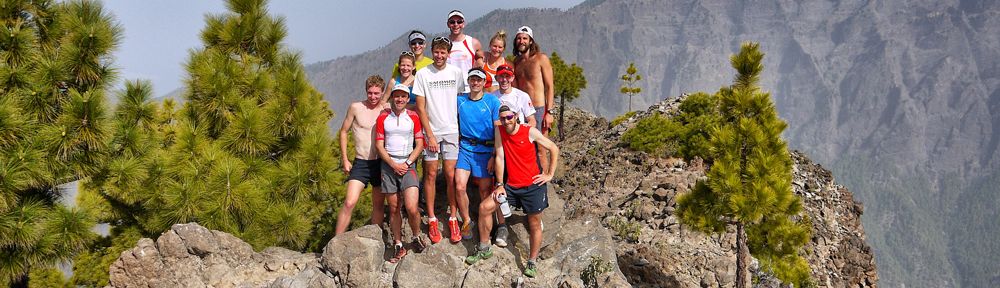
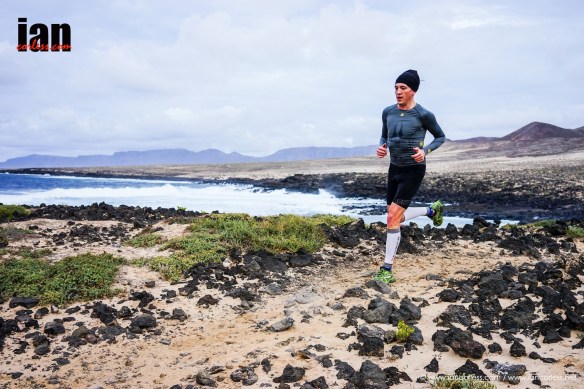
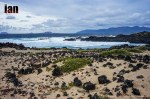
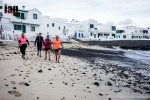
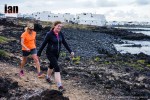
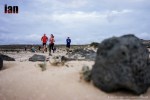
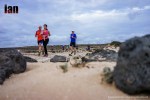
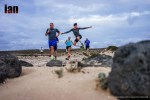
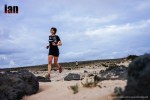
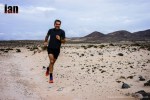
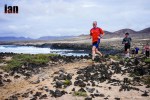
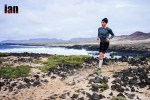
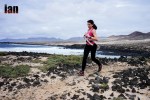
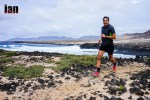
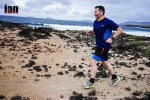
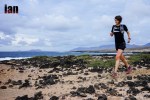
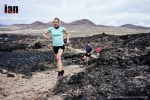
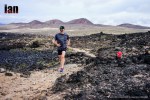
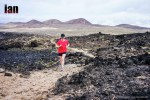
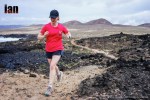
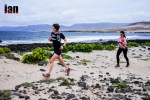
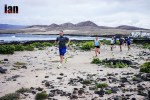
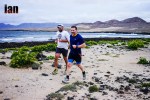
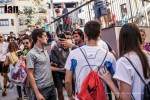
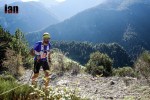
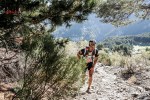
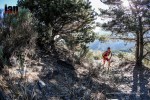
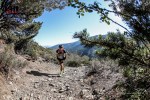
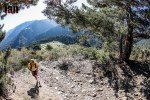
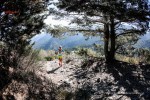
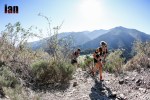
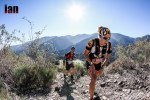
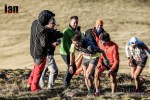
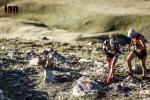
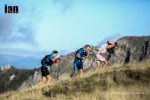
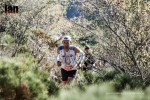
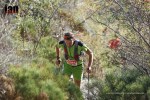
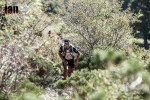
The Lanzarote 2016 multi-day training camp got underway today with an easy 1-hour run along the coastal trails of La Santa to Famara.
In total, we have a group of 27 runners with a broad range of 2016 objectives such as Marathon des Sables (Morocco), The Coastal Challenge (Costa Rica), Big Red Run (Australia), Cape Wraith Ultra (UK) and the Everest Trail Race (Nepal).
It’s always great to see so many runners of mixed ability come together with one goal in mind; completion of a challenging multi-day race!
Tomorrow, 4-hours of classic desert terrain awaits the runners as they depart in three groups lead by Elisabet Barnes, Niandi Carmont and Marie-Paule Pierson. Ian Corless, camp co-ordinator and planner, will move through the groups, running out-and-back to ensure that everyone is on track and comfortable.
In the afternoon, a group talk and discussion followed with an easy 30-60 min run.
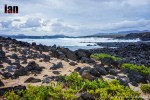
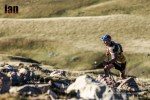
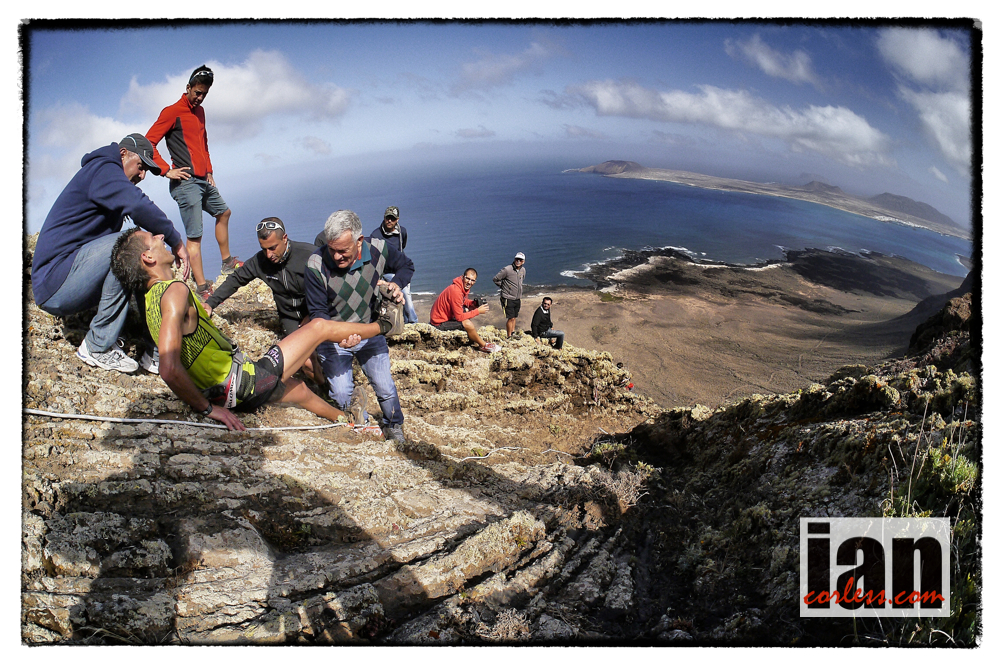
Lanzarote, situated off the coast of Morocco provides the perfect environment to simulate many of the conditions that runners will experience in a classic multi-day race; wind, sand, rocks, tough terrain, climbs and maybe even a little scrambling.
If you are interested in a multi-day training, dates for 2017 have been set and you can view HERE
Many thanks to the following brands for helping with this camp:
MyRaceKit, OMM, inov-8, Berghaus, PHD, Raidlight, Scott Running
Episode 98 of Talk Ultra is a packed show, we speak with Mike Wolfe about his epic Crown of Continent Traverse with Mike Foote. Shirt Leventhal, ladies winner of Atacama talks about racing multi-day races and Sarah Cameron tells us how cycling made her a excel at running. The News, Up and Coming Races and Niandi co-hosts.
00:01:35 Show Start
00:10:21 NEWS
Help Nepal – Nepal images ‘FACES of NEPAL’ – order a print and all funds donated to Nepal charities HERE
TRAINING CAMP in Lanzarote with Elisabet Barnes 28th Jan to Feb 4th HERE
TEMPLIERS
1 – Ellie Greenwood 7:58
2 – Jasmin Nunige 8:04
3 – Anne Lise Rousset 8:24
1 – Benoit Cori 6:44
2 – Nicolas Martin 6:47
3 – Tofol Castanyer 6:48
RAID DE LA REUNION
1 – Antoine Guillon 24:17:40
2 – Sebastien Camus 24:41:50
3 – Freddy Thevenin 25:17:48
1 – Nuria Picas 28:11:14
2 – Emelie Lecomte 28:12:32
3 – Andrea Husser 28:38:53 and on the last show we mentioned that she won UTAT
In summary old system required 9-points from 3-races for UTMB, new system will be 15-points from 3 races. CCC/ TDS was 3 from 2 and now 7 from 2 and OCC was 1 from 1 and now 3 from 2.
00:24:28 INTERVIEW
SHIRI LEVENTHAL
01:13:30 TALK TRAINING
with SARAH CAMERON check out Cycling for Runners HERE
01:56:40 INTERVIEW
MIKE WOLFE
CROWN OF THE CONTINENT TRAVERSE
Mike Wolfe and Mike Foote run an incredible 600-mile FKT from Missoula to Banff. We will have both Mike’s on the next Talk Ultra to tell us all about it. Read HERE
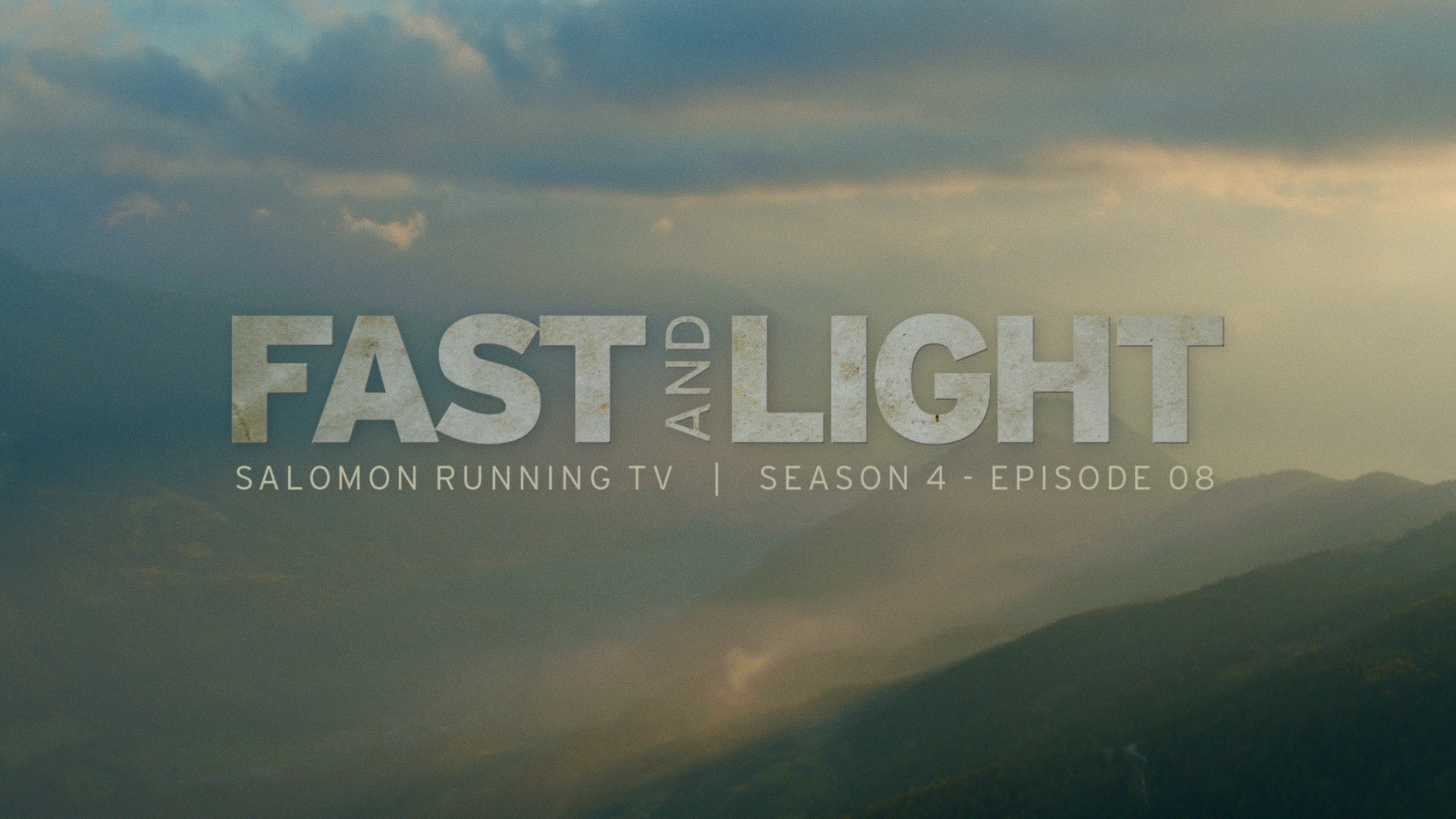
Watch the film, Fast and Light at the bottom of this article
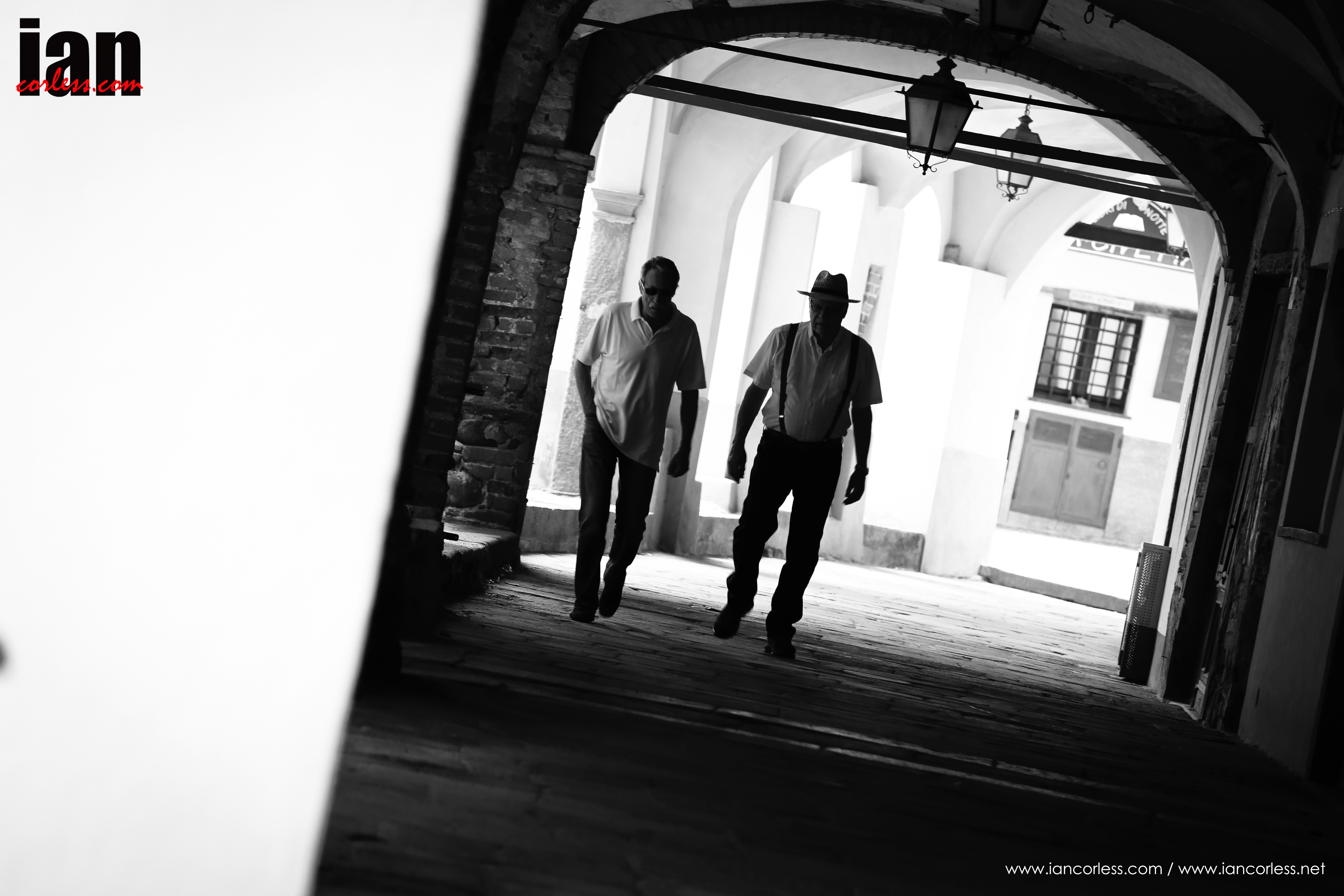
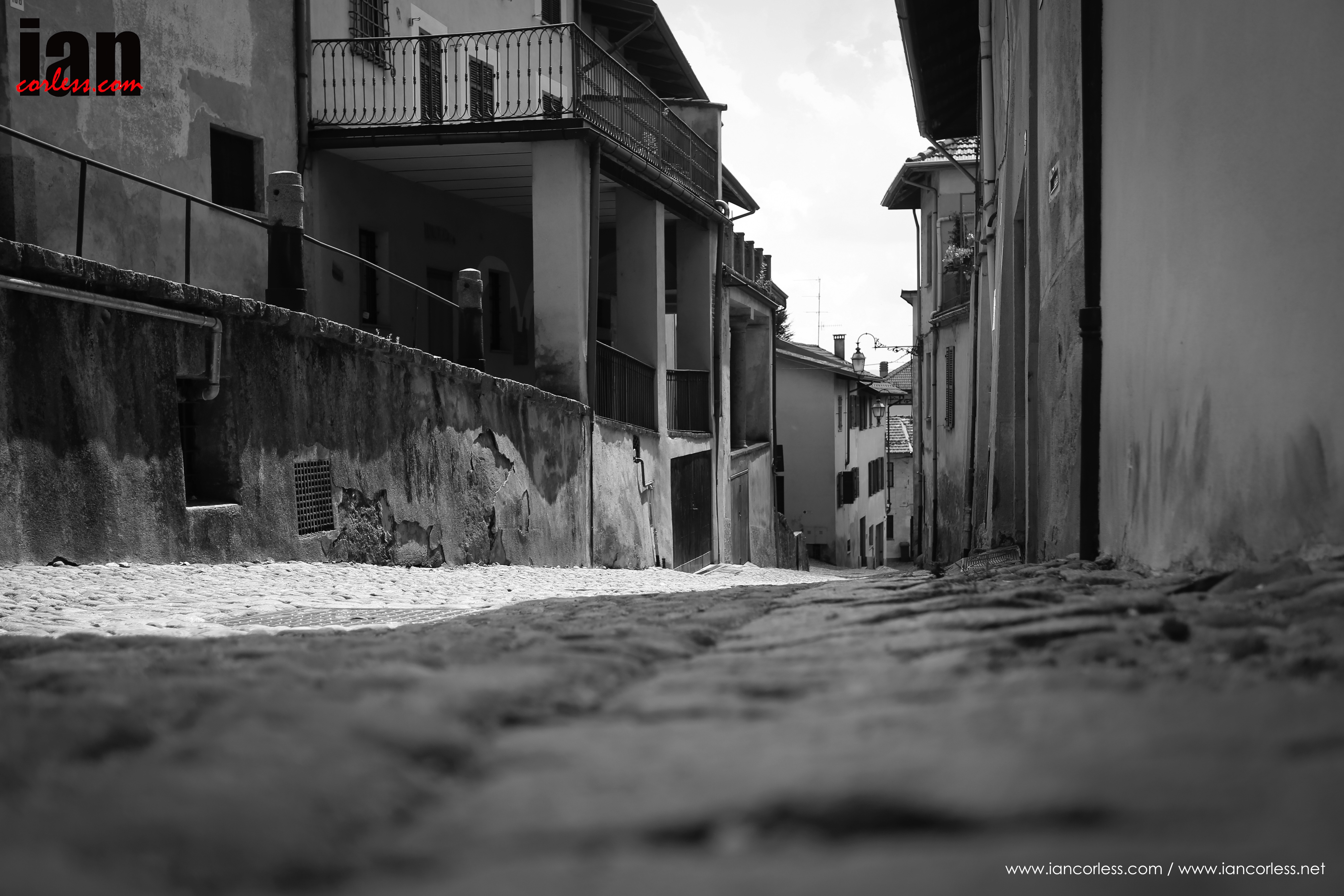
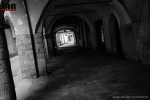
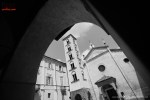
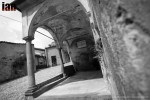
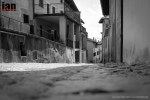
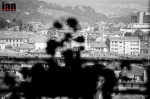
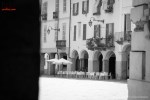
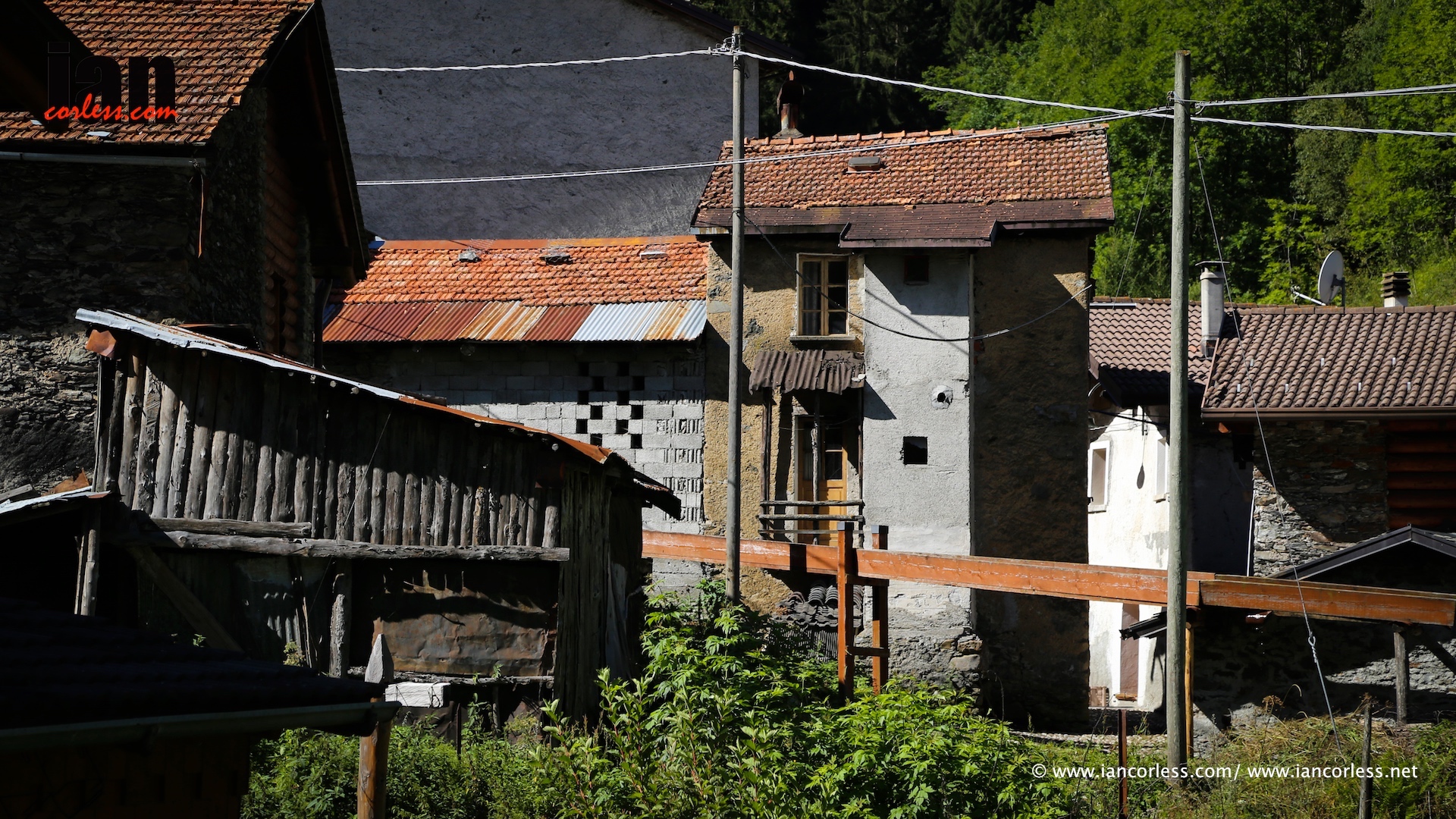
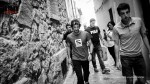
A trickle of piano noise from the local music school weaves its way through open window shutters left ajar to allow some breeze… the heat of the day can be stifling. It feels and sounds like a scene in a movie. Cobbled streets, stone arches, a wonderful old square, the chatter of children playing and the smell of a freshly brewed cappuccino in the air.
Biella, or should I say, the International Skyrunning Federation HQ (and home of Lauri van Houten and Marino Giacometti) is atop a hill in a walled village close to the Aosta valley, just over an hour from Chamonix and in close proximity to Monte Rosa and the Matterhorn. It seems the perfect location for the home of pure mountain running. Biella lies in the foothills of the Alps in the Bo mountain range near Mt. Mucrone and Camino.
It is midway through the 2014 season, between Ice Trail Tarentaise and Trofeo Kima, I spend time with Lauri and Marino in Biella at their home in the mountains (Casina) Corteno Golgi and at Trofeo Kima to get an inside look at what makes this couple tick and how the Skyrunning calendar and its logistics fall into place. The African Attachment with Greg Fell, Dean Leslie and Kelvin Trautman were also filming for Salomon Running. Today, 20th Oct the preview film will be made live. #FastandLight is for me a special moment. I hope you enjoy the film and the related articles and images that are currently published worldwide to coincide with the films release.
Mountains dominate the life of Marino and Lauri. It’s not a job; it’s a passion that dominates 12+ hours of every day. You will see the dynamic duo at all the Skyrunner® World Series races every year. In total, that is 15-events in 3-disciplines, VK, SKY and ULTRA. But these worldwide events are just the visible face of what the ISF does! Behind the scenes it’s a frenetic highly pressured scene of telephone calls, emails, logistical planning and negotiations that make the Skyrunner® World Series tick.
“We moved here as the sports brand Fila were based here. In the 90’s they were a key sponsor for Skyrunning,” says Lauri van Houten, Executive Director for the International Skyrunning Federation, “When Fila folded, we were left with a dilemma; should we stay or should we go? Stay we did and it feels natural and relaxed to be here now.”
It’s a scenario far removed from 1989 when Giacometti set a record running from the village of Alagna to the summit of Monte Rosa. 25-years of mountain running and today, iconic names such as Bruno Brunod and Fabio Meraldi are once again being talked about in the same breath as Kilian Jornet.
Bruno Brunod
“Older generations were already Skyrunners. My grandfather crossed the mountains working for example. ‘We’ as Skyrunners added more speed but in essence it has always been the same thing, Skyrunners have always existed.” Bruno Brunod says.
“What I liked was going quickly to the summit. I felt the same when I was a kid in the pastures, I always ran up and down the summits that surrounded me. It is something I felt inside, something I liked.”
In 2012, Skyrunning went through a revival. After careful and strategic planning, the ISF launched the new Sky Ultra Marathon Series with Transvulcania La Palma and a seminar, ‘Less Cloud, More Sky.’ The sport moved up a notch and became something that runners all over the world aspired to. It’s been called the ‘the next big thing’ but as Giacometti explains:
“There is nothing new in Skyrunning. It is just now that everyone is catching up with our vision from so many years ago.”
BIELLA
Biella is a wonderful place. Calm and relaxing, to me, it is typically Italian. Located opposite a music school, the ISF headquarters and home of Marino Giacometti and Lauri van Houten resonate a calm and tranquility that seems far removed from the full-on days in and around and Skyrunner® World Series.
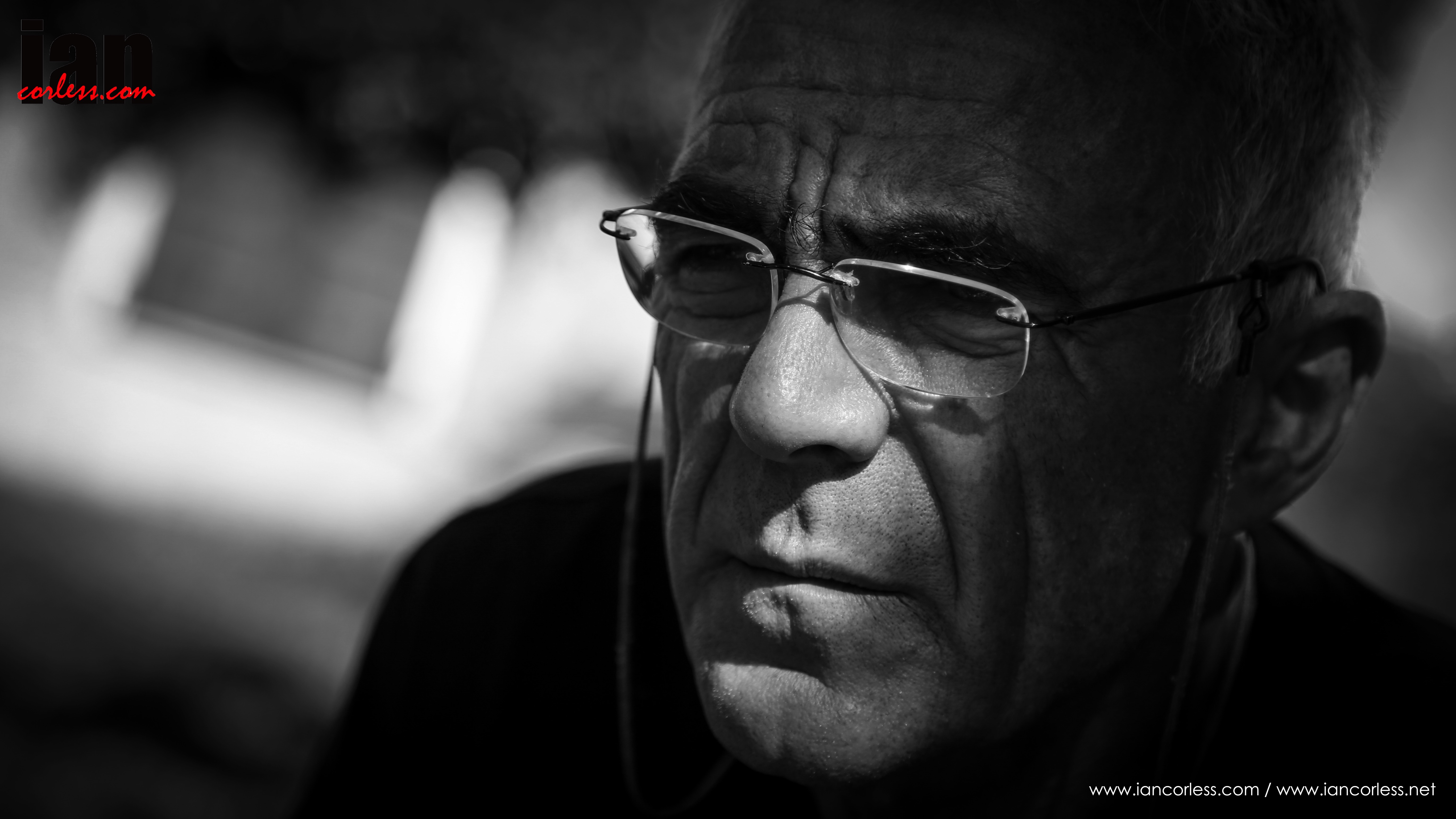
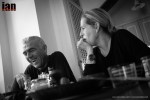
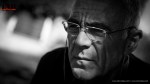
The sun shines and the daily bustle of Italian life provides a wonderful soundtrack that penetrates ones’ mind. Cars rumble over cobbled streets as they scoot off to work, mothers are heard chastising their children as they amble to school. The click of an espresso machine and that wonderful noise as pressured water works its way through fresh coffee and the smell, oh the smell! Nothing beats a fresh coffee in the morning. It’s 7am and Marino is kicking off his day with a good strong shot of the dark stuff before donning glasses and opening his computer.
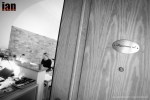
The office is adorned with memorabilia from 20+ years of travel and racing. The door plaque sums it up’ Skyrunners.’ In the corner, magazines are stacked in chronological order documenting a lifetime in sport.
Lauri joins us looking a little tired. Yesterday was another 18-hour day. It’s normal… it shouldn’t be but it is!
“What does a normal day look like for you Lauri?” I tentatively ask, knowing full well the answer.
“How long have you got? I have no idea; I am speechless. I am a person that gets bored easy. This job is NEVER boring! I may have 5-spreadsheets open, 50 e-mails to look at, and a schedule of things to address and amend and then I need to coordinate with athletes, teams, team managers and race directors and media. My day starts with email. I often think oh my goodness and then the first forty or so emails arrive and then a daily grind starts. In addition to this, sometimes language is a challenge. I speak English, Italian, German but I have emails from Russia, Turkey, Greece, Afghanistan and so on. As I said, my day is never boring.”
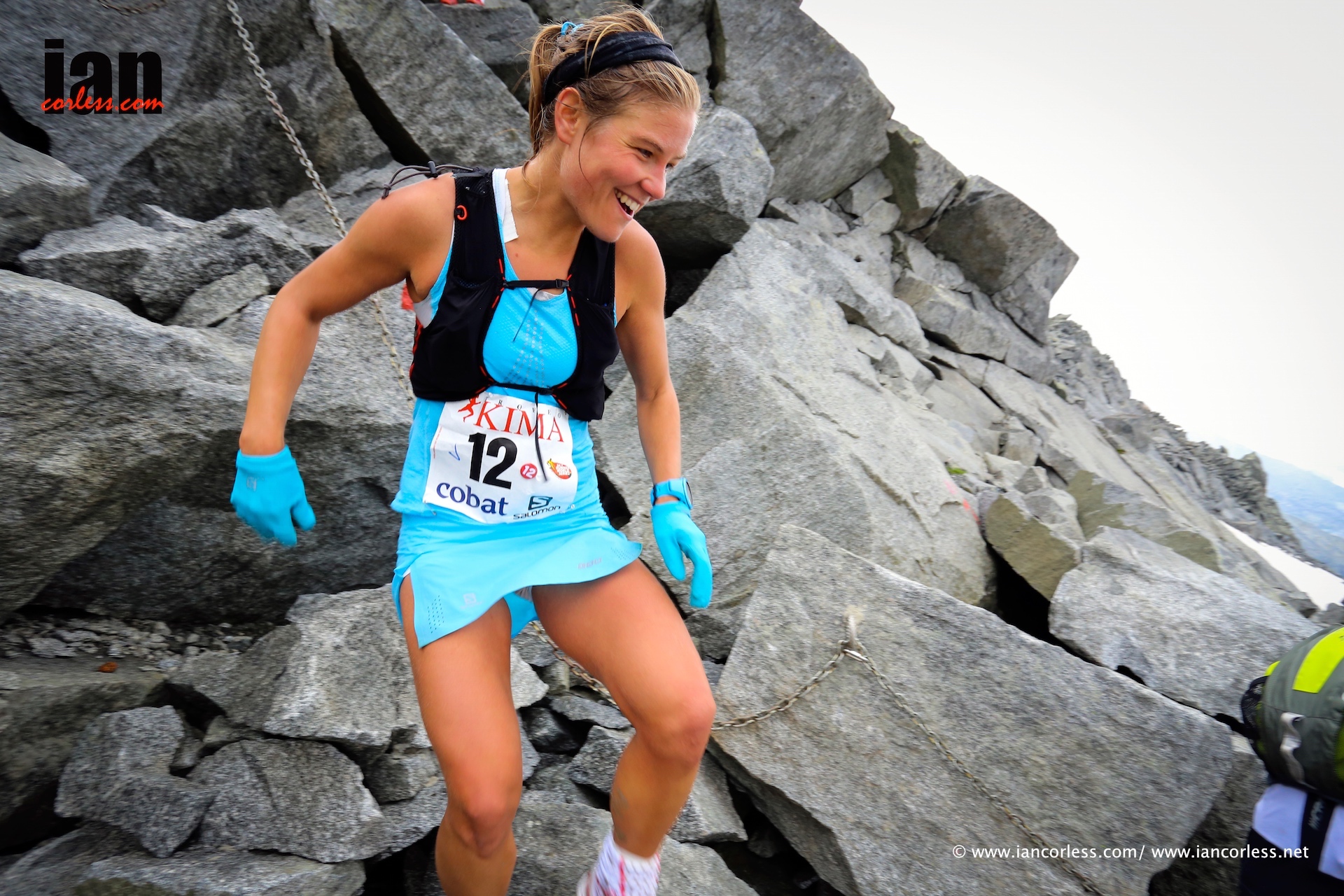
Trofeo Kima is just around the corner. For many, me included, ‘Kima’ is the epitome of Skyrunning. Kilian Jornet sums it up well when he says:
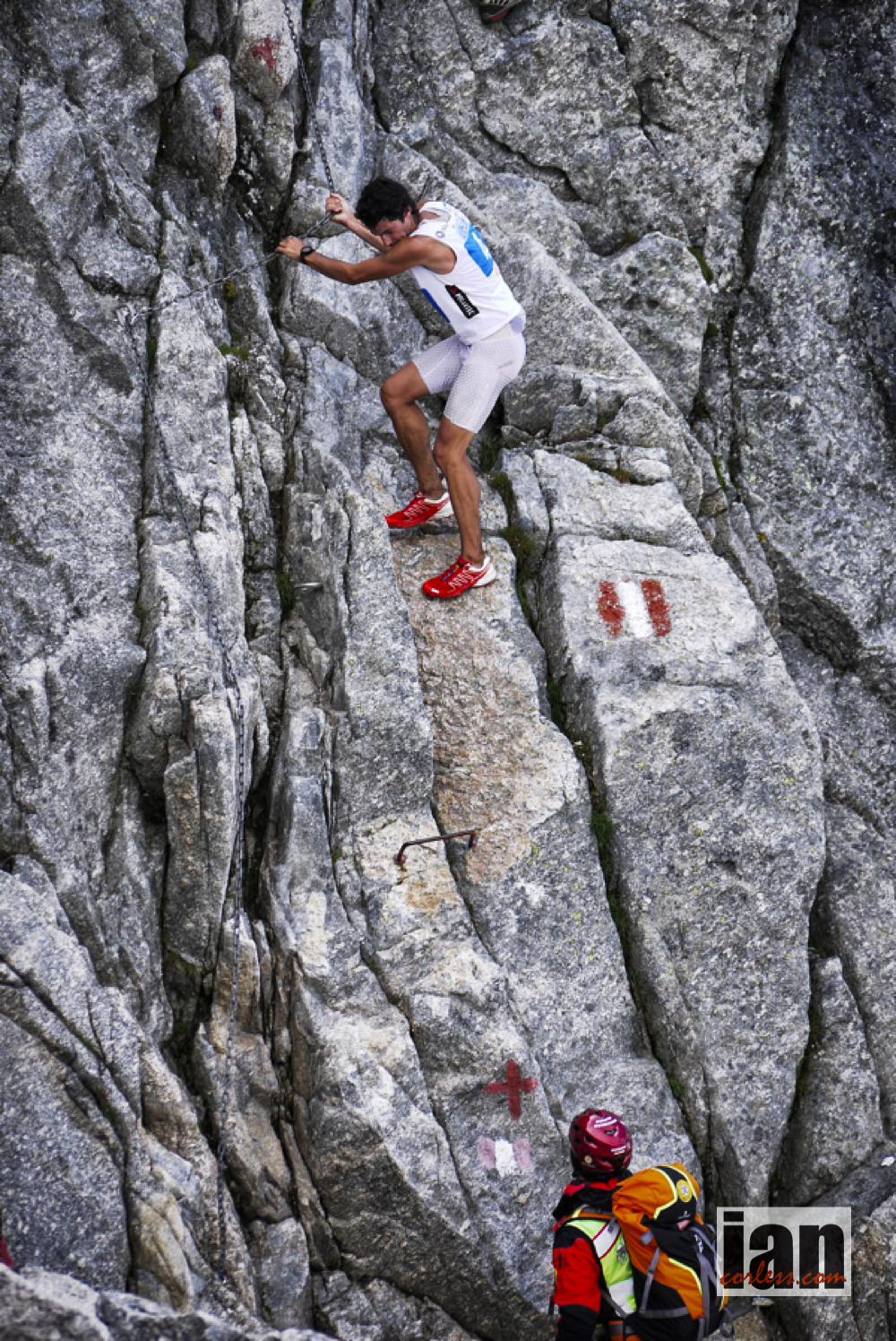
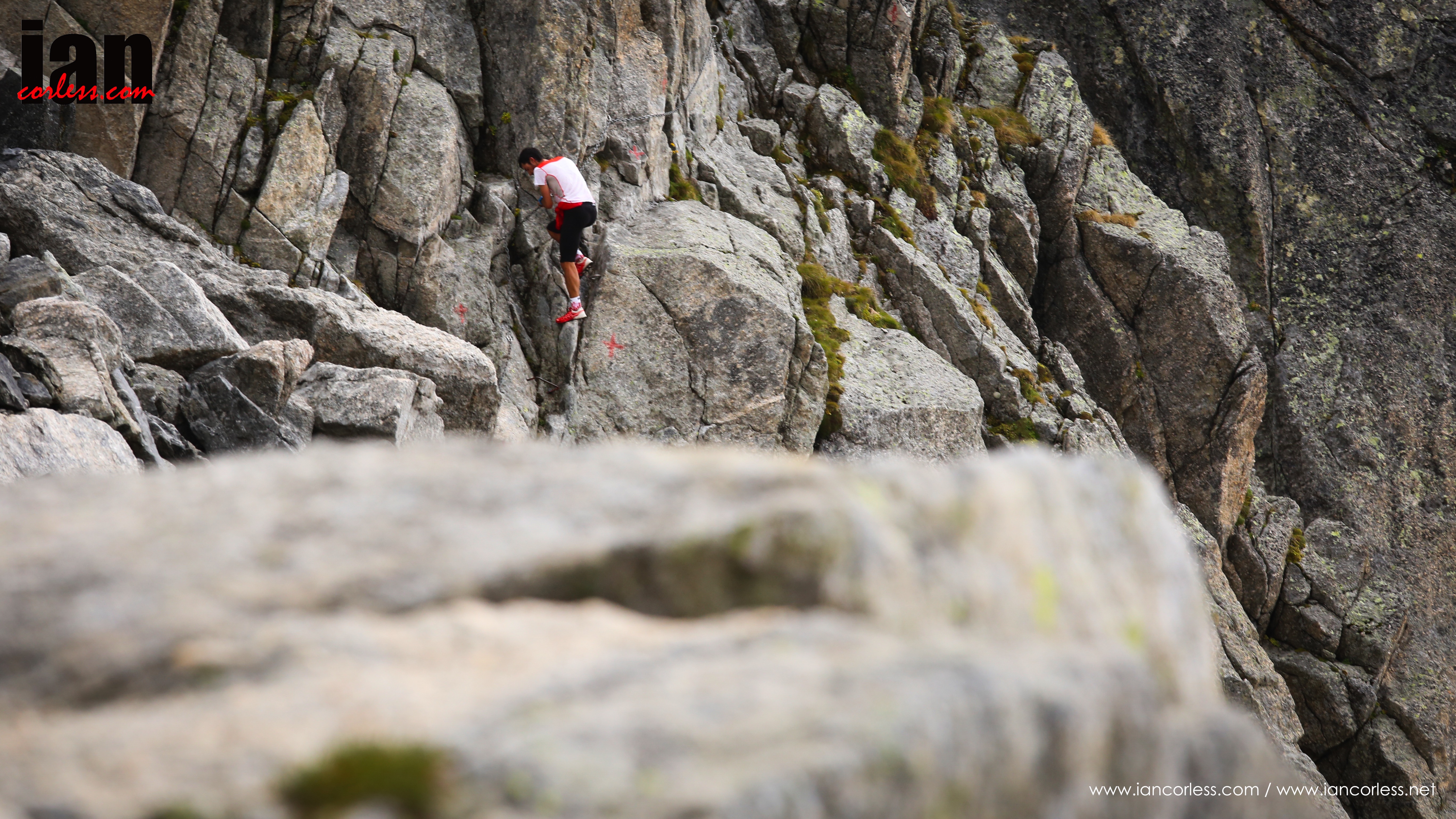
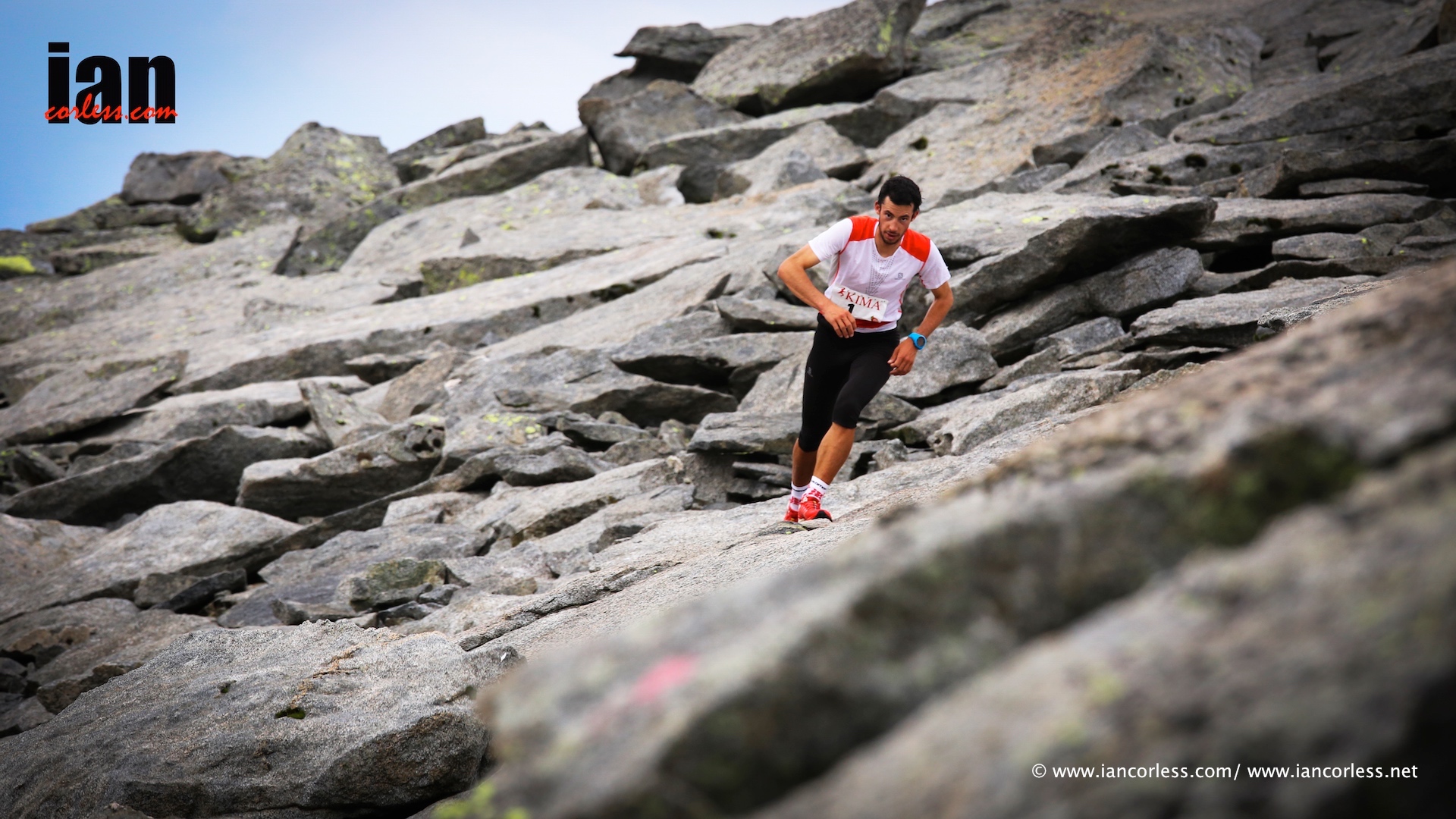
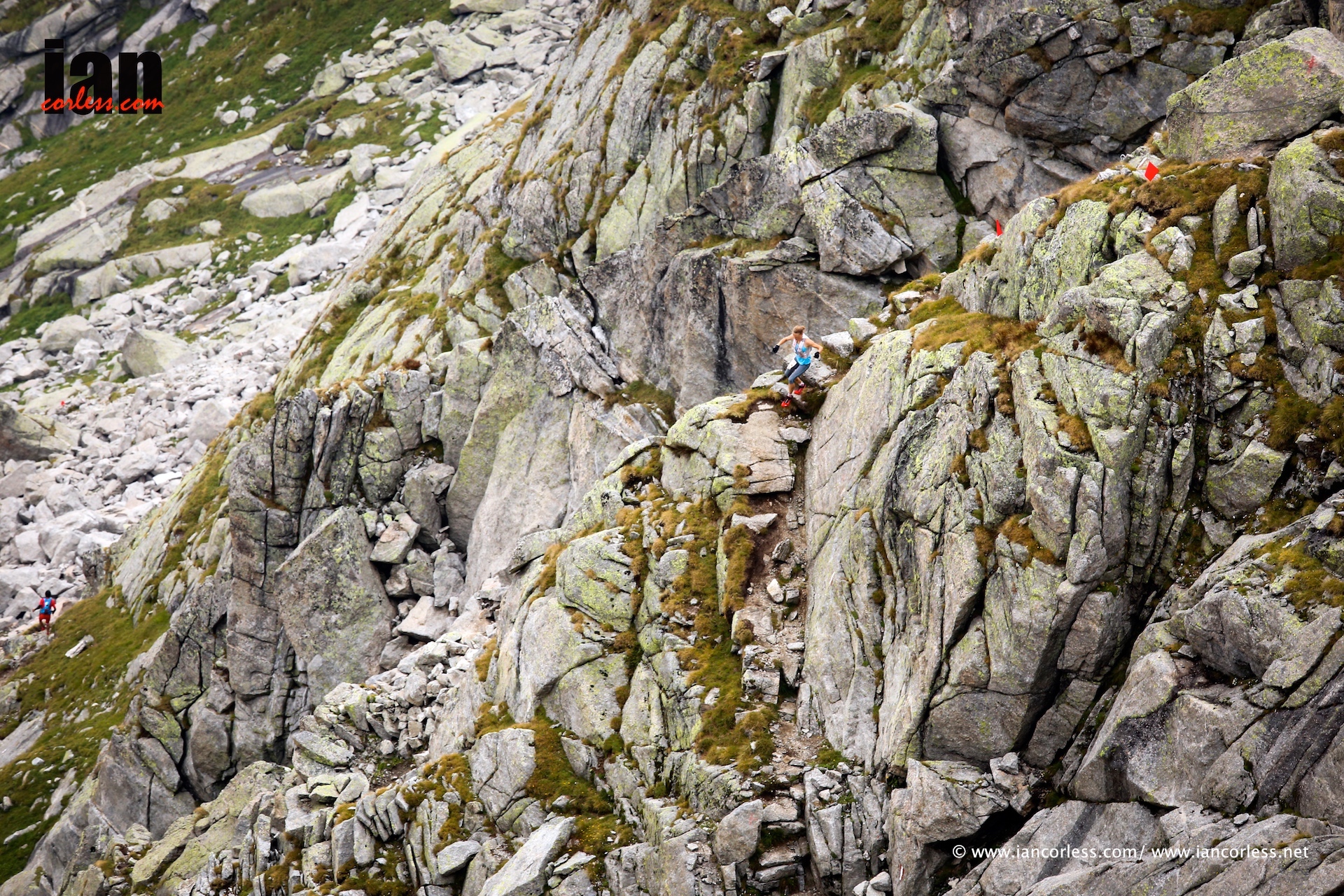
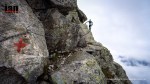
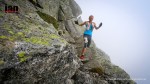
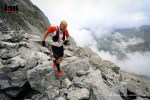
“Picture a mountain terrain that has no paths, amidst glaciers; it is all crests, rocks, stretches of via Ferrata and all over a course that stretches 50-km. Kima is not athletics, it is mountaineering; pure Skyrunning!”
Preparations are well underway for the race and in just 24-hours we will all need to travel to Milan for a press conference and then a journey will follow to the mountains, to Corteno Golgi and a stay at Marino’s mountain house, the ‘Casina’ before an onward journey to the Kima race itself.
“I m a hub, the person in the middle,” says Lauri. “But often you can’t plan how a day will unfold. I have a ‘to do’ list that obviously needs to get done but then things happen daily that need to be addressed immediately. It’s all about time management and you just can’t stick to a too rigid schedule as the guidelines constantly move and change. Kima is imminent and therefore many questions and problems arise. We also have a press conference in Milan, that requires work.”
Marino looks over at us, he peeps over his glasses and smiles. My question. “Tell me where you come in Marino?” Seems to suggest that I am implying he does nothing.
“Now it’s difficult. We have so many races. I look at race profiles initially and it is easy to see from a quick glance what will and will not make a good Skyrunning race. Remember, my experience was mountaineering but we had to adapt my dreams for a worldwide audience. I look for mountains and mountains provide races and opportunities. I also need to consider locations, countries and how the schedule comes together.”
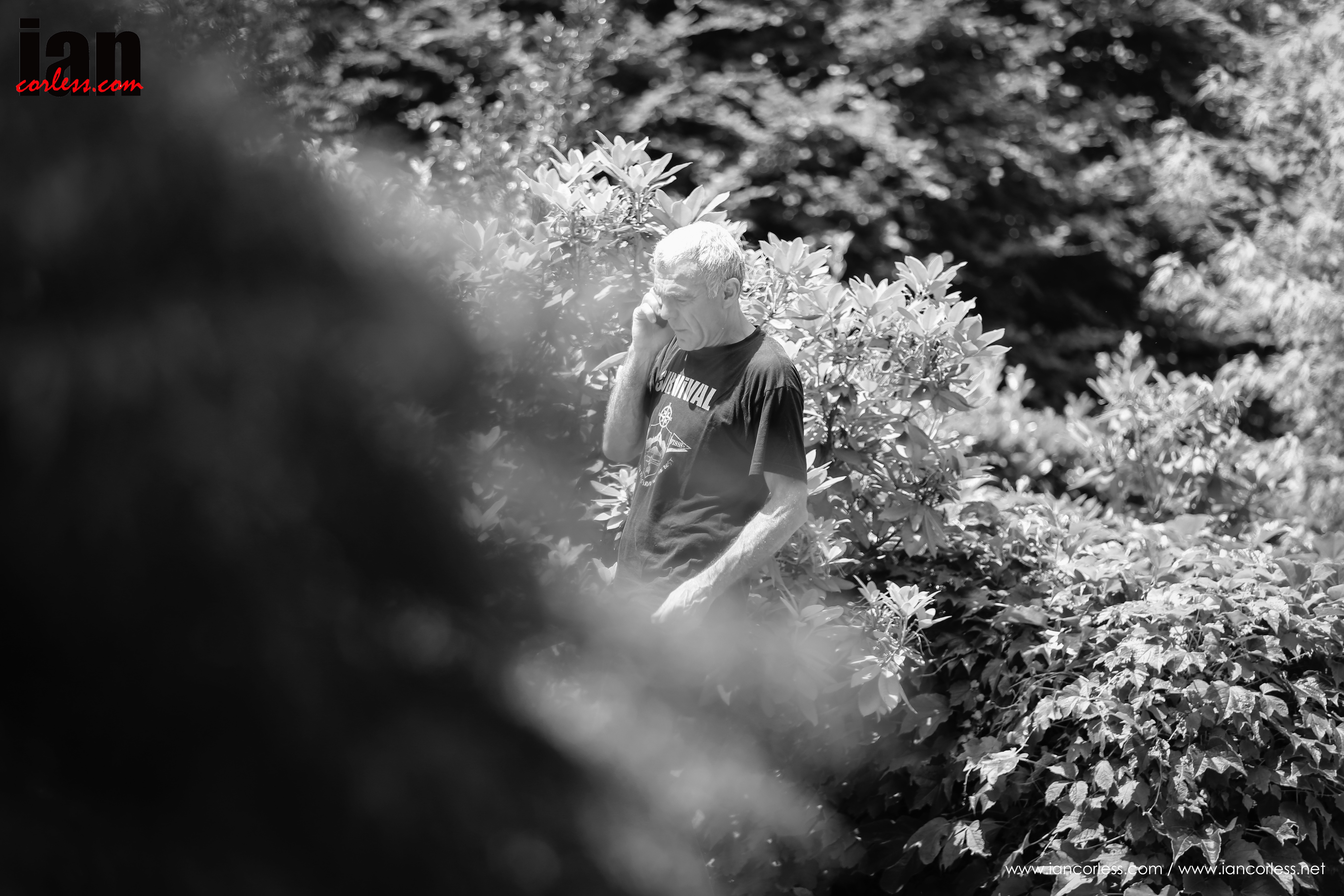
The phone rings and Marino joins Fabio Meraldi in a conversation. Walking out of the office into the sunlight, Marino strides around the garden in animated discussion. The Italian sounds like bird song and with arms waving and gesticulating, plans are made for Kima and a series of interviews that will be filmed by The African Attachment on a new film about Skyrunning called, ‘Fast and Light.’
“Tell me about Trofeo Kima, because you designed this course, yes?”
“Kima is on the course of the Sentiero Roma. It’s a well known via ferrata route. It crosses the group of technical mountains in the area and passes through all the 7-refuges. We did the race in reverse for safety reasons but it is still a very technical race and ultimately it has become a beacon of Skyrunning. Ironically, for a Skyrunning race the course does not go to the summits! It is just not possible. However, it is a pure expression of Skyrunning.”
It is easy to look at the ISF calendar and see the Skyrunner® World Series and think easy! However, it takes 365-days to make those 15+ days happen. When one season ends, plans start immediately, if not before for the following season.
“We are no longer race organisers.” Lauri says, “We did in the past! We organised many races in logistically difficult places, such as Tibet, Mexico, Nepal and so on. I think we organised over 80-races! The World Series is a collection of races that we coordinate.”
Marino was a visionary and many like to call him the ‘Father’ of Skyrunning.
“Skyrunning differs to other sports and this is the discipline we launched in the late 1990’s. Skyrunning has always existed; all across the world it is just that it became a formalised sport. I therefore consider myself the father of Skyrunning for the aspect of race organisation because when it started 25-years ago nobody talked about this.”
Emails ping on arrival, the phone rings repeatedly and I suddenly realise that our day is going to be way too busy to continue discussing the working life of the ISF. Taking a place at my desk, I open my laptop and get on with my work in preparation for Kima. I sneak an opportunity pre lunch to stroll around the town, take in a cappuccino and photograph Biella. Lunch provides a break and in true Italian fashion, everything stops. It provides an opportunity to relax, take in a glass of wine and eat fresh and wholesome food in a meze style.
“Marino is brilliant,” Lauri says as she pours white wine into my glass. “He took on the role of food shopping and preparation to allow me more time to work on logistics. It really is a life saver.”
Marino is a fit man, he is lean, dark skinned from many hours outdoors and one may well think that is to be expected from someone who heads up the ISF and the sport of mountain running. It would be easy to assume that Marino spends 4 to 8-hours a day on the mountains, fulfilling his dreams and working his ISF role in and around his passion! In reality, Marino cycles or runs for 30-minutes a day. Somewhere deep inside I wonder, does he have regrets and then I find myself asking the question, “Do you regret the decisions you made all those years ago, to race direct and not race?”
“I made my choices. What can I say, for 2 to 3-years I was very disappointed with myself. I had run around Everest for example, but not to the top. Now I can’t go back. It’s a question of mountain mentality; I was born in a small valley, a small village with no sun in winter. You try to survive everyday and this forms your mentality. In my next life I hope to relax and enjoy simple pleasures.”
“But you must have dreams, aspirations. Do you have a bucket list; do you want to achieve anything else?”
“I want to go back to the mountains… it is just a dream! In 2016 I would like to go to the Everest North Face with Bruno and Kilian. I know it is impossible… but I can dream.”
It’s not often that I am stuck for words, but as I look into his eyes I feel sad. To me it seems as though Marino has given up on his personal dreams.
“Do you believe you can only live your dreams when you leave Skyrunning behind?”
“Skyrunning is our baby. But the baby has grown up. We would be lost without Skyrunning and we will be on board for as long as we can but obviously, in the near future we will hand over more duties to other people. Many of the people we work with are all very knowledgeable and passionate. That is stimulating and exciting. Skyrunning is here to stay, as we both are, have no fear!”
BIELLA gallery:
MILAN – Trofeo Kima press conference
Milan is not far away and it’s on our way to the ‘Casina’ thus making the Kima press conference logical and workable into a day of travel. We are late but Marino drives like an Italian! A clean white shirt, Armani jeans and Mr ISF looks pretty darn dapper. Lauri is dressed in black with large shades. I suddenly feel very British. Italians do ‘style’ with ease and of course, where better to look sharp than Milan. I have no choice, I am on a working trip and my wardrobe doesn’t extend to looking cool.
It’s hot in the city and the traffic irritates me after the quiet of Biella. Walking into a large office block we are escorted to the 4th floor and Kima delegates greet us. It’s all kisses and handshakes. Old friends meet new friends and the banter is relaxed.
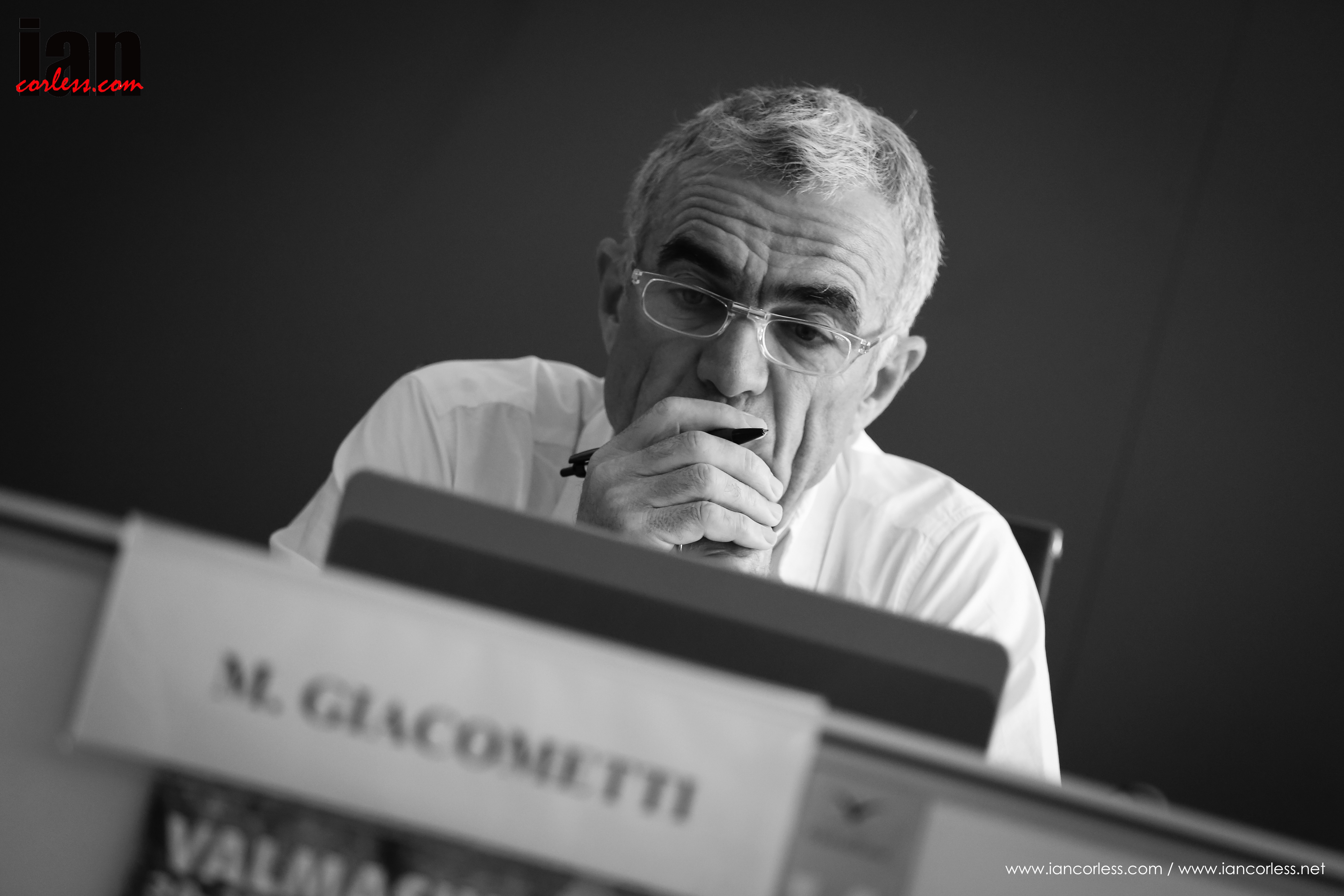
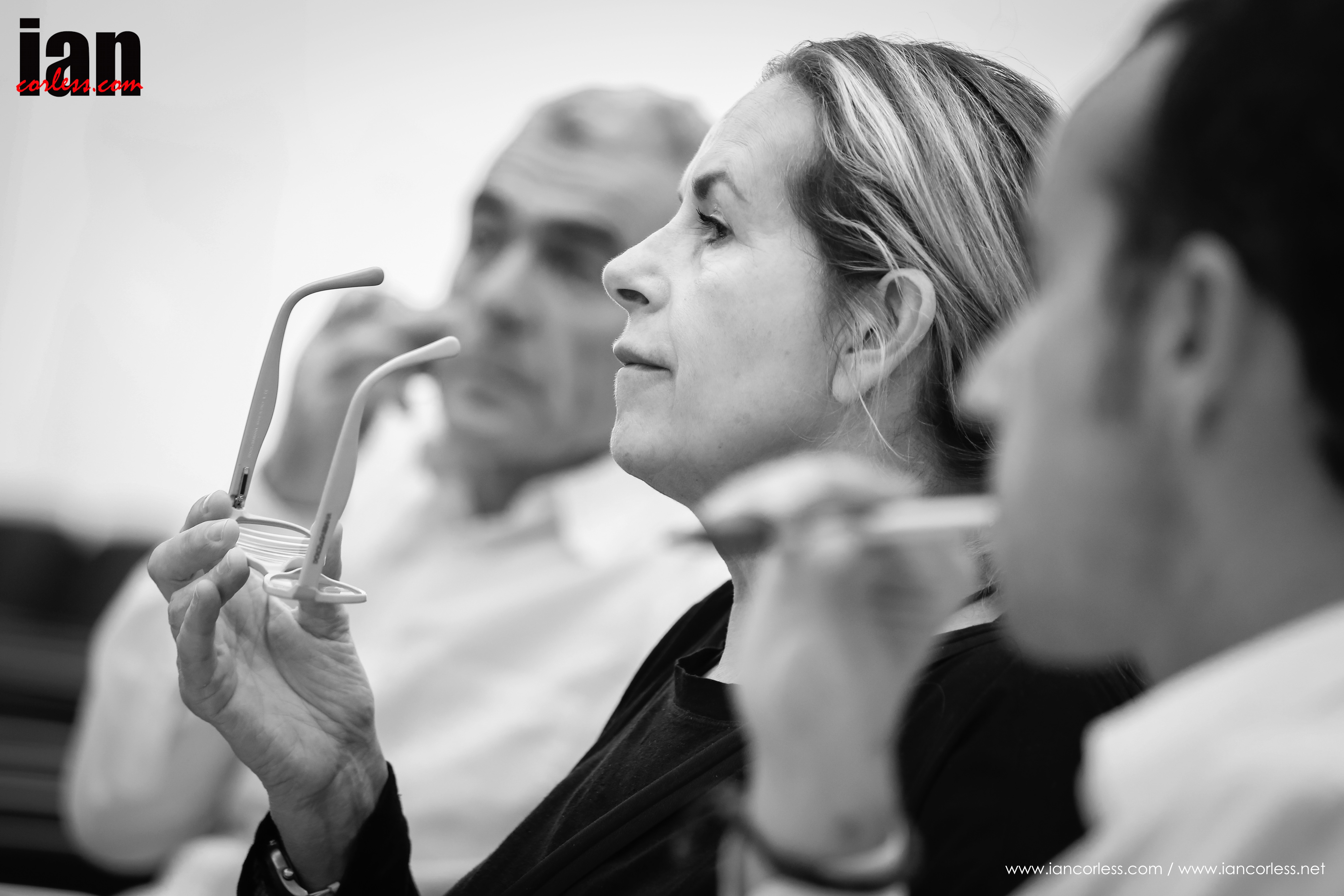
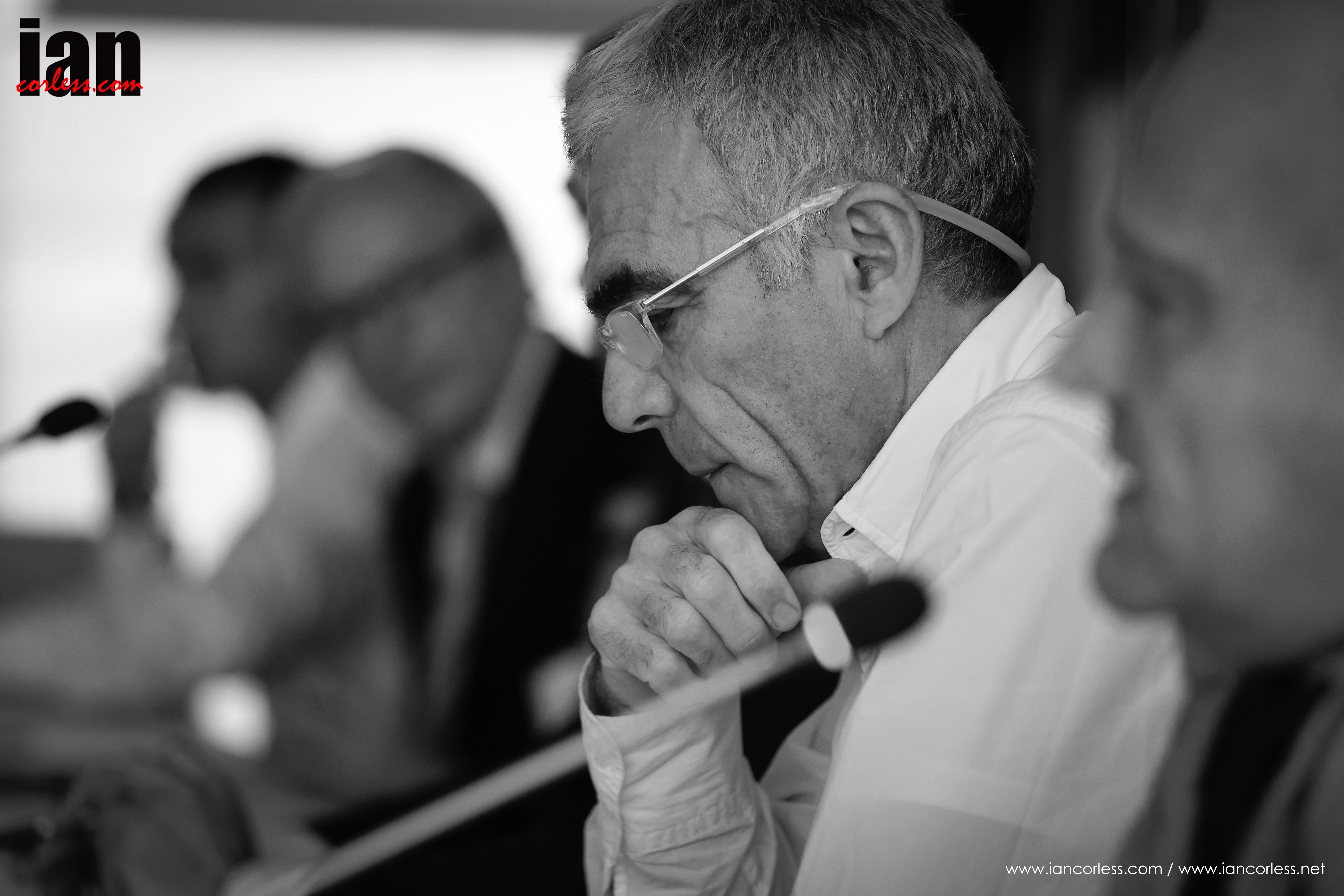
A large table with place names adds formality to the event. Marino takes his place and the conference begins. It’s a show for local press and global papers and all part of the valued process to promote the ISF, Skyrunning and give valued exposure to race sponsors.
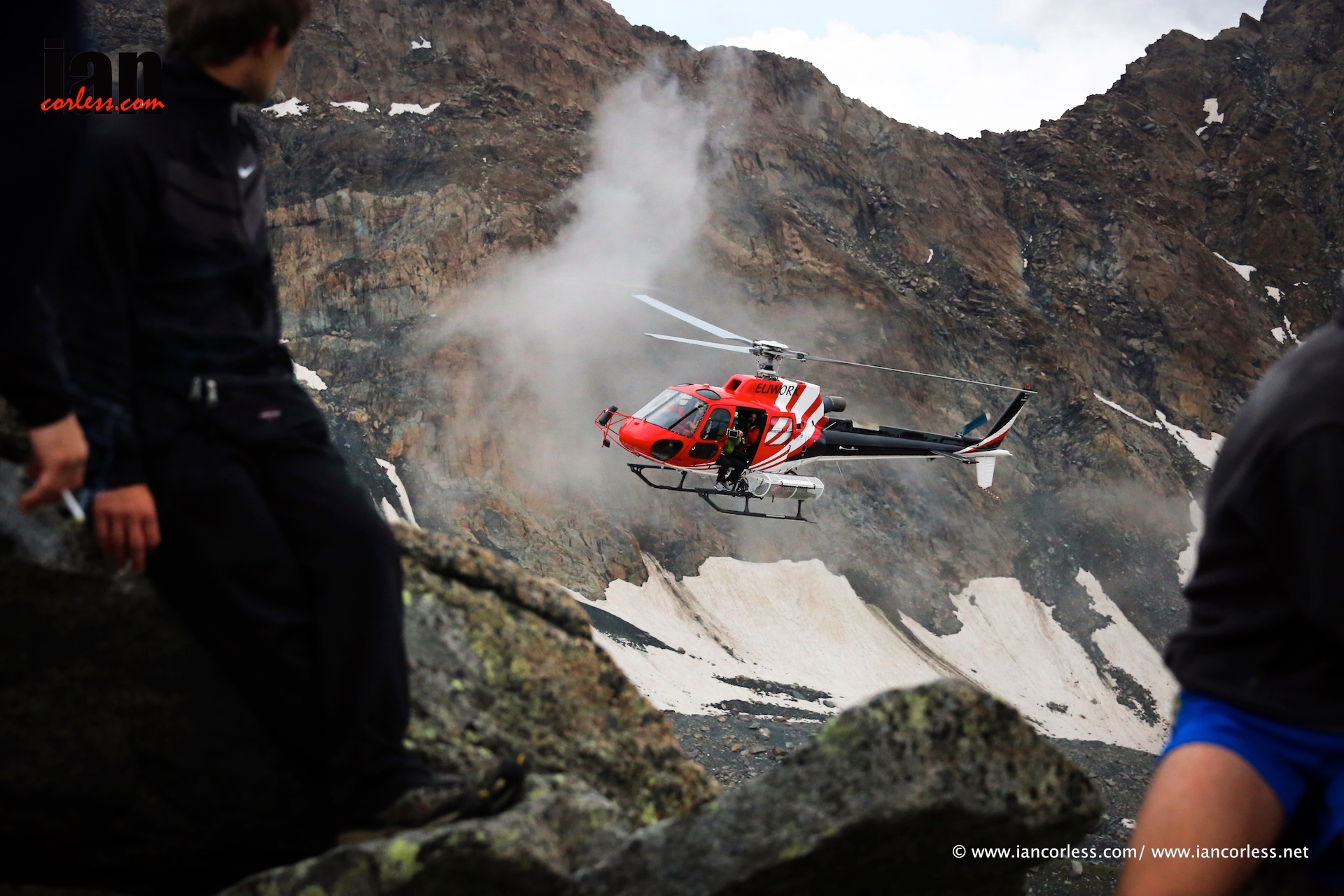
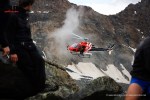
Post the conference, a meeting takes place and Kima is discussed. Great emphasis is placed on schedules in regard to the helicopter. Kima is so technical and demanding that a helicopter is the only way to transport media around the event. Bad weather; no media!
Helicopters are expensive but at Kima we often have 2-helicopters at our disposal for 8+ hours. It may well be why I enjoy the race so much. It’s an adventure. Believe me, to be afforded the opportunity to see the worlds best runners on arguably the best course is something I will never take for granted.
“We have to do these press conferences, it’s important for all concerned but it’s a drain on our valuable time and for every hour, minute and second we are here, more and more emails and questions flood into our respective in-boxes,”Lauri says as we rush to the car for our onward journey to the Casina. “It has a knock on effect for tomorrow and the days after, what can you do?”
CASINA – Corteno Golgi
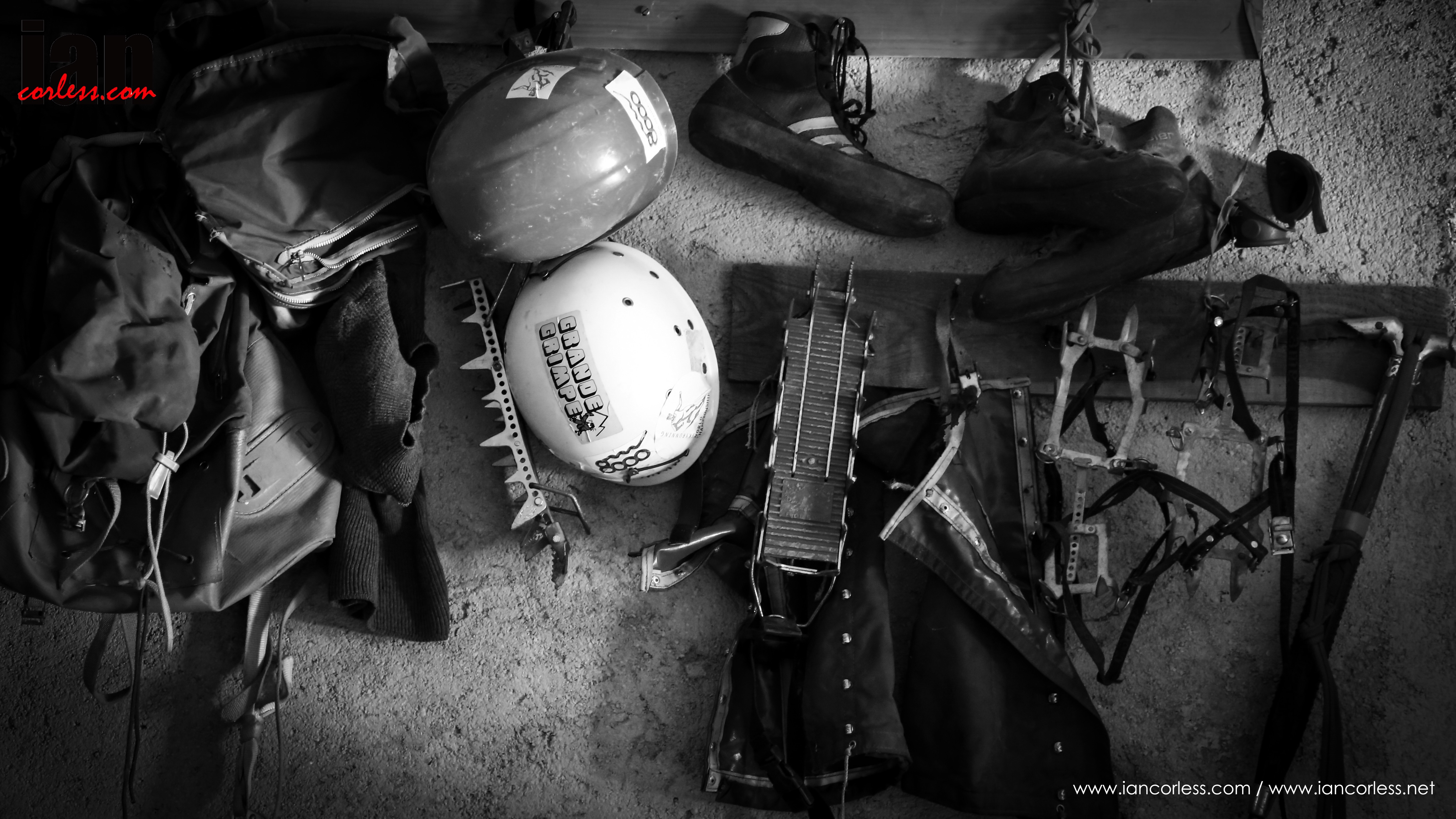
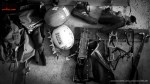
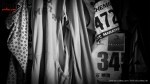
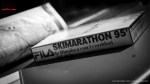
The ‘Casina’ is a mountain house in Corteno Golgi close to Marino’s birthplace of San Antonio. Spread over 2-floors it is almost two completely different buildings. Upstairs is all wood, a combination of rustic/ modern and a wonderfully relaxing place that has been heavily influenced by Lauri. Downstairs is the original building, un-touched for years and one that harks back to Marino’s past. The garage is a Skyrunning museum of ice axes, helmets, shoes, race bibs, clothing, videos and old slides.
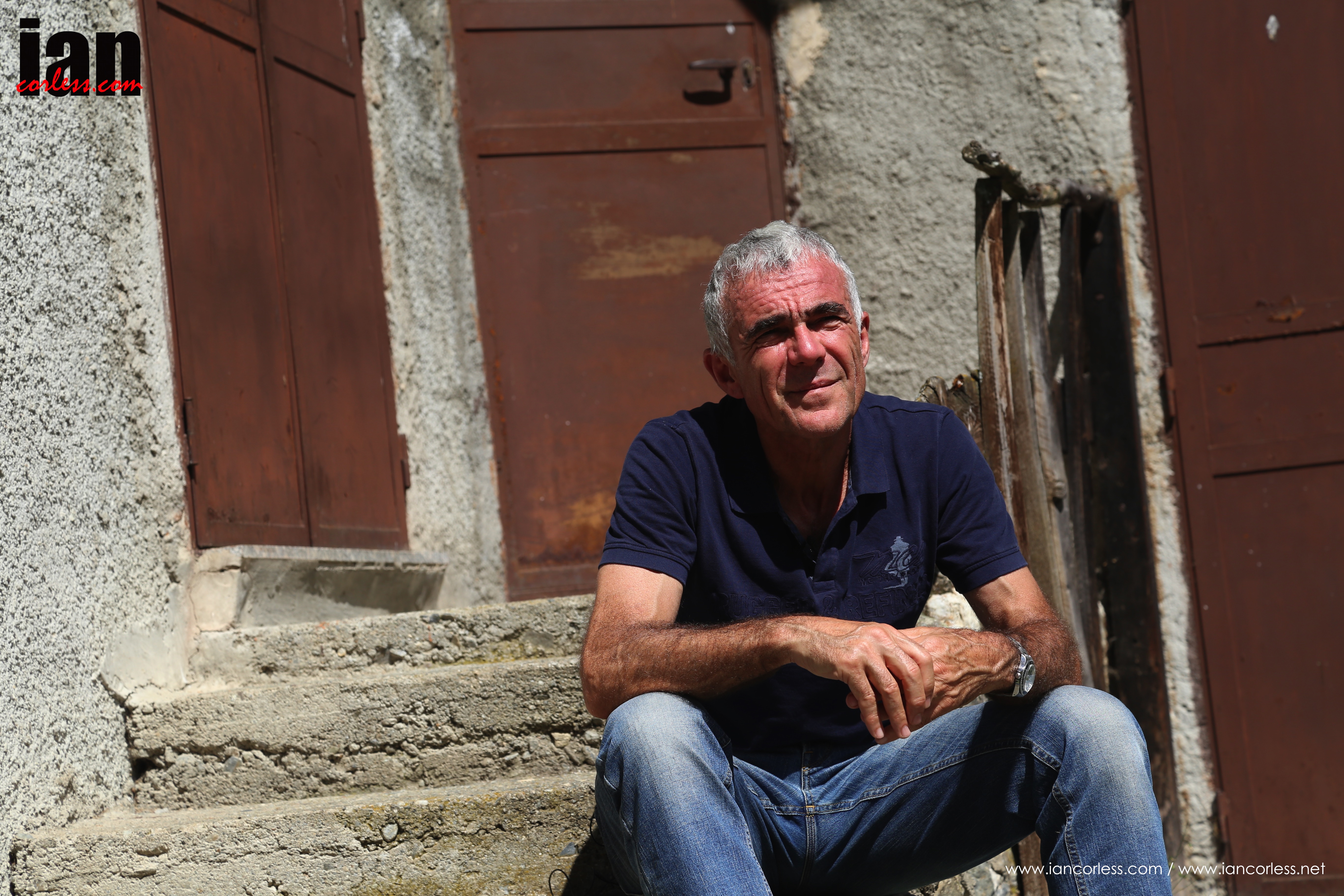
Surrounded by green fields and mountains on either side I suddenly see Marino in a new light. He his home! He points at peaks and explains his childhood; his passions and I suddenly feel very honoured and privileged.
“The African Attachment (TAA) arrive tomorrow Ian and you are going to be able to spend a couple of days in the mountains with Marino. They are filming a piece on Skyrunning and they want to take Marino back to his childhood, revisit old haunts and film Marino running in the mountains.”
I met Dean Leslie and Greg Fell from TAA at Transvulcania La Palma back in 2012 and since then we have kept in-touch and often crossed paths at races all over the world. I am excited at the guys arriving and the opportunity to work alongside them and shoot stills, a real perk of the job. Photographer, Kelvin Trautman is directing the film and although I haven’t met him before, we soon hit it off and I realise that what is in store; two awesome days in the mountains.
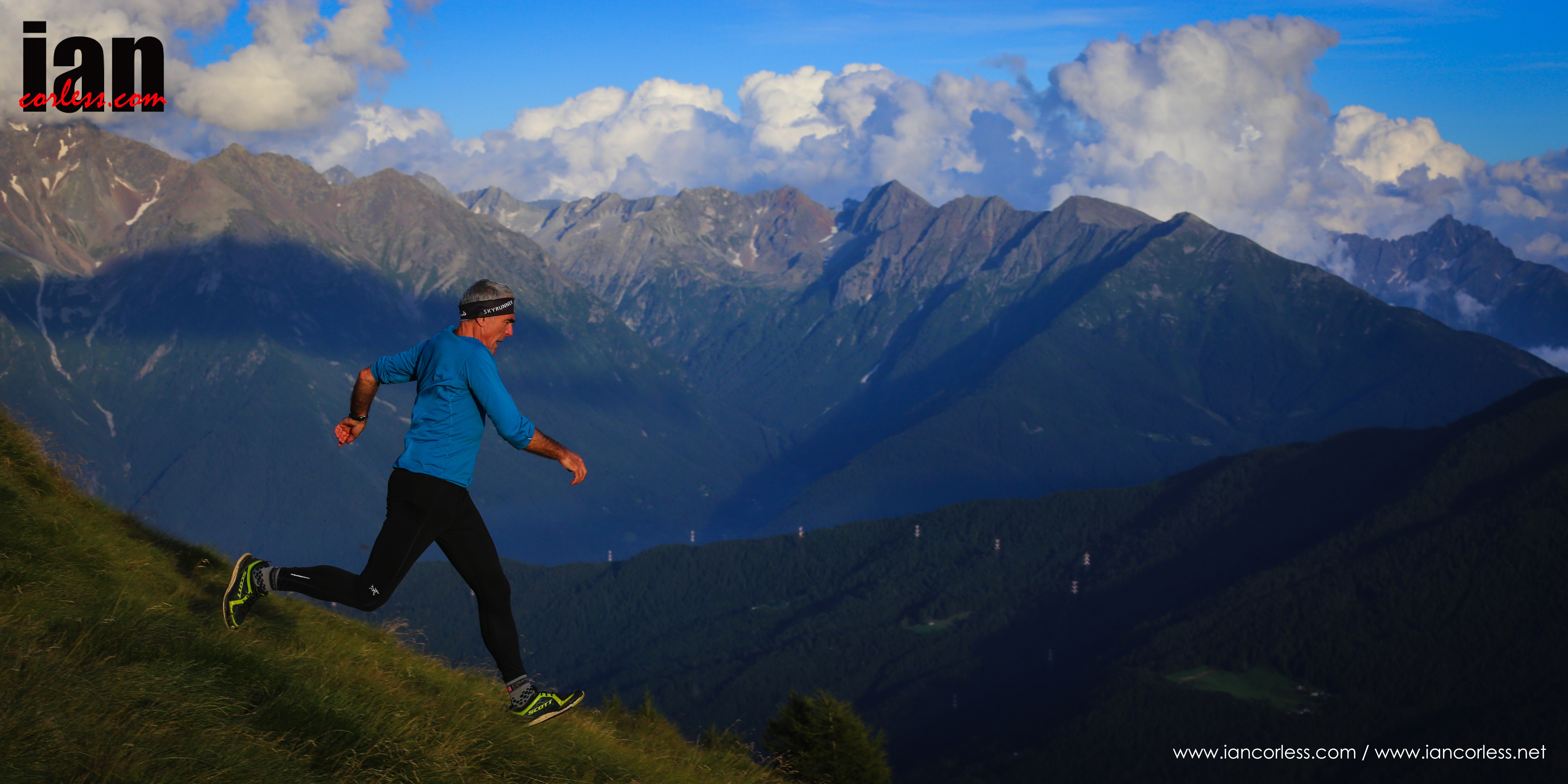
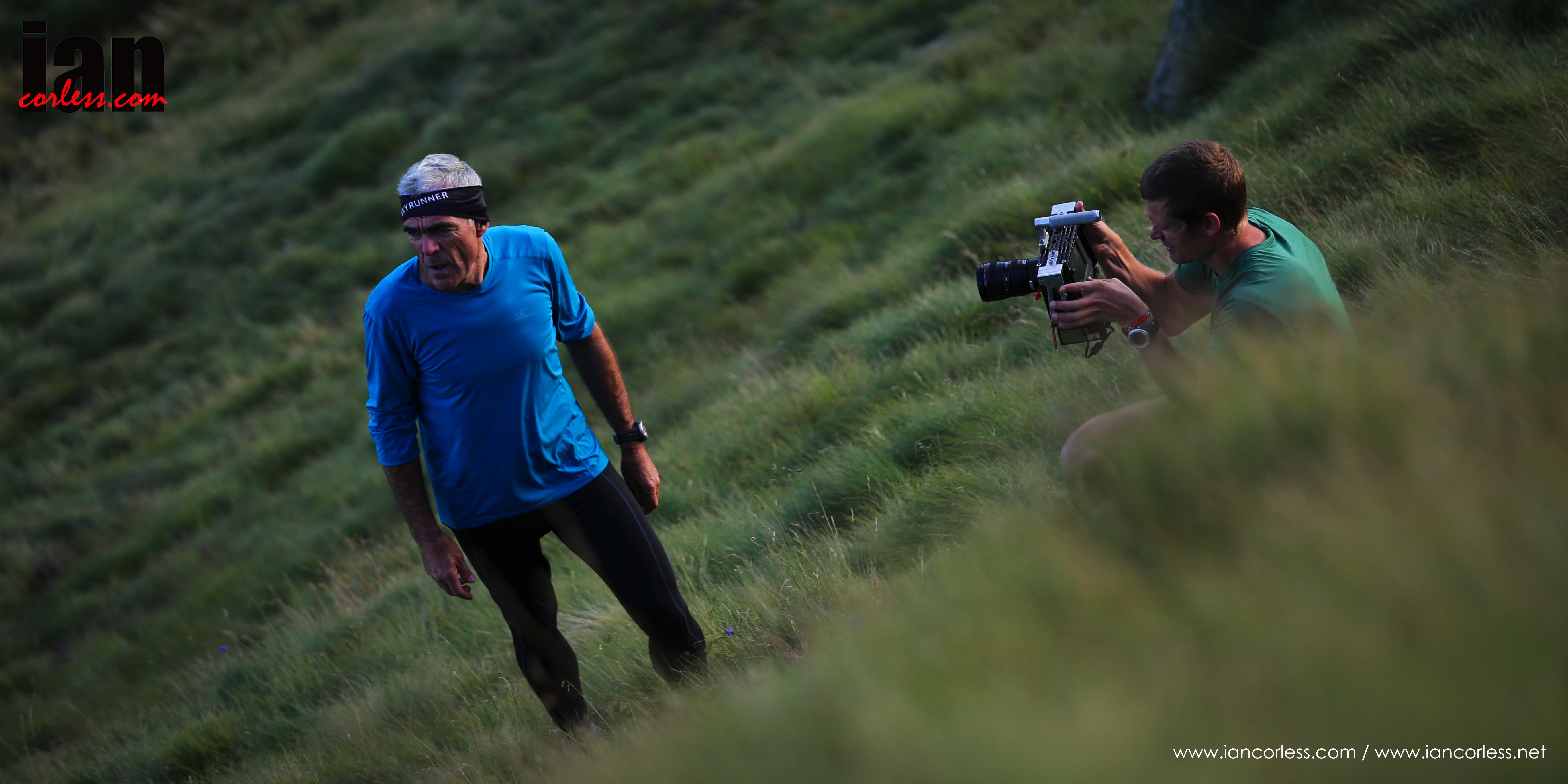
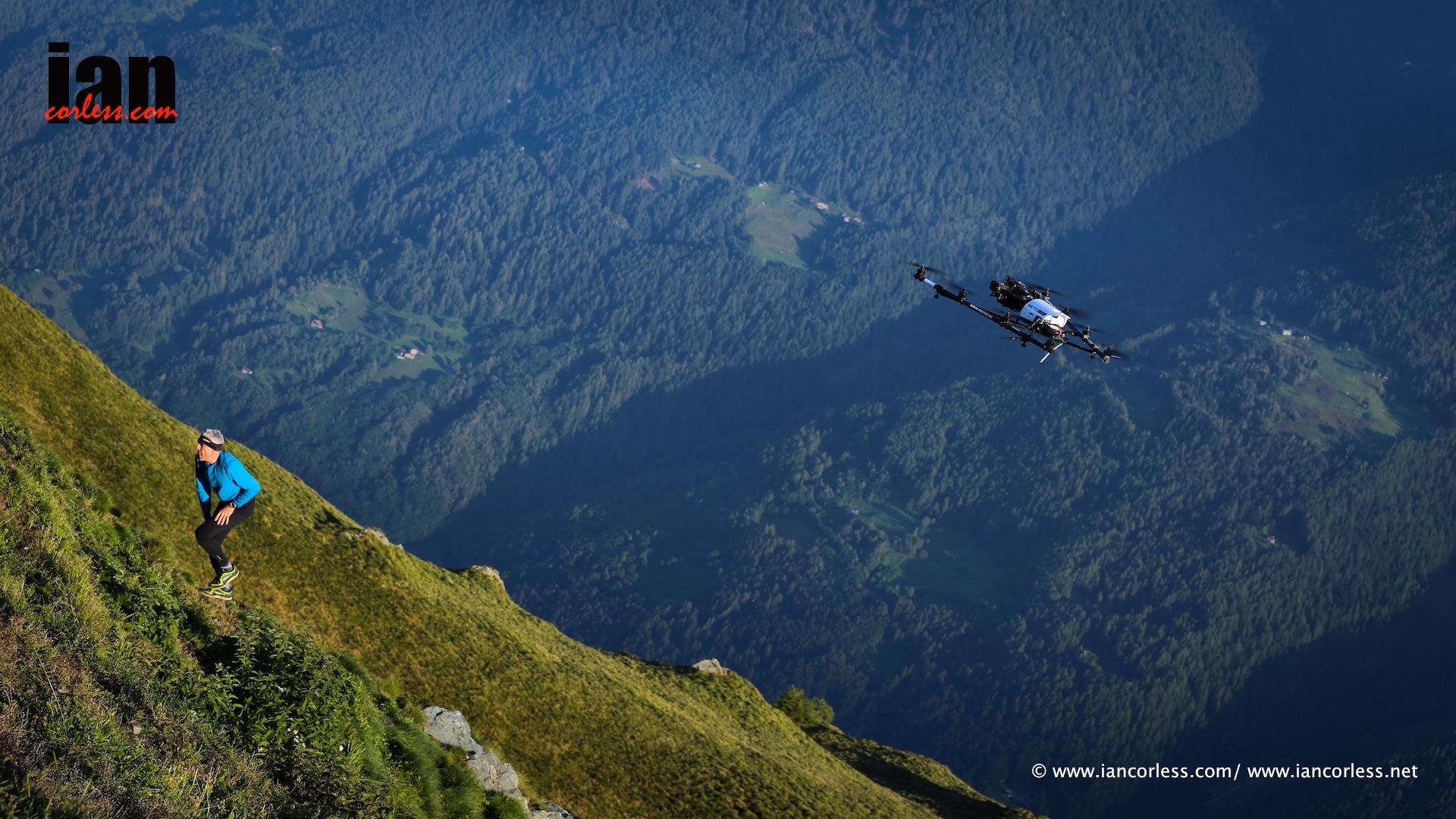
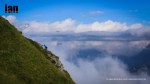
The evening is amazing. The sky is adorned with clouds and as we climb with cameras, Marino runs to the instructions of Kelvin.
Looking for ridges and technical lines, Marino embraces the challenge and is arguably having the most fun he has had in ages.
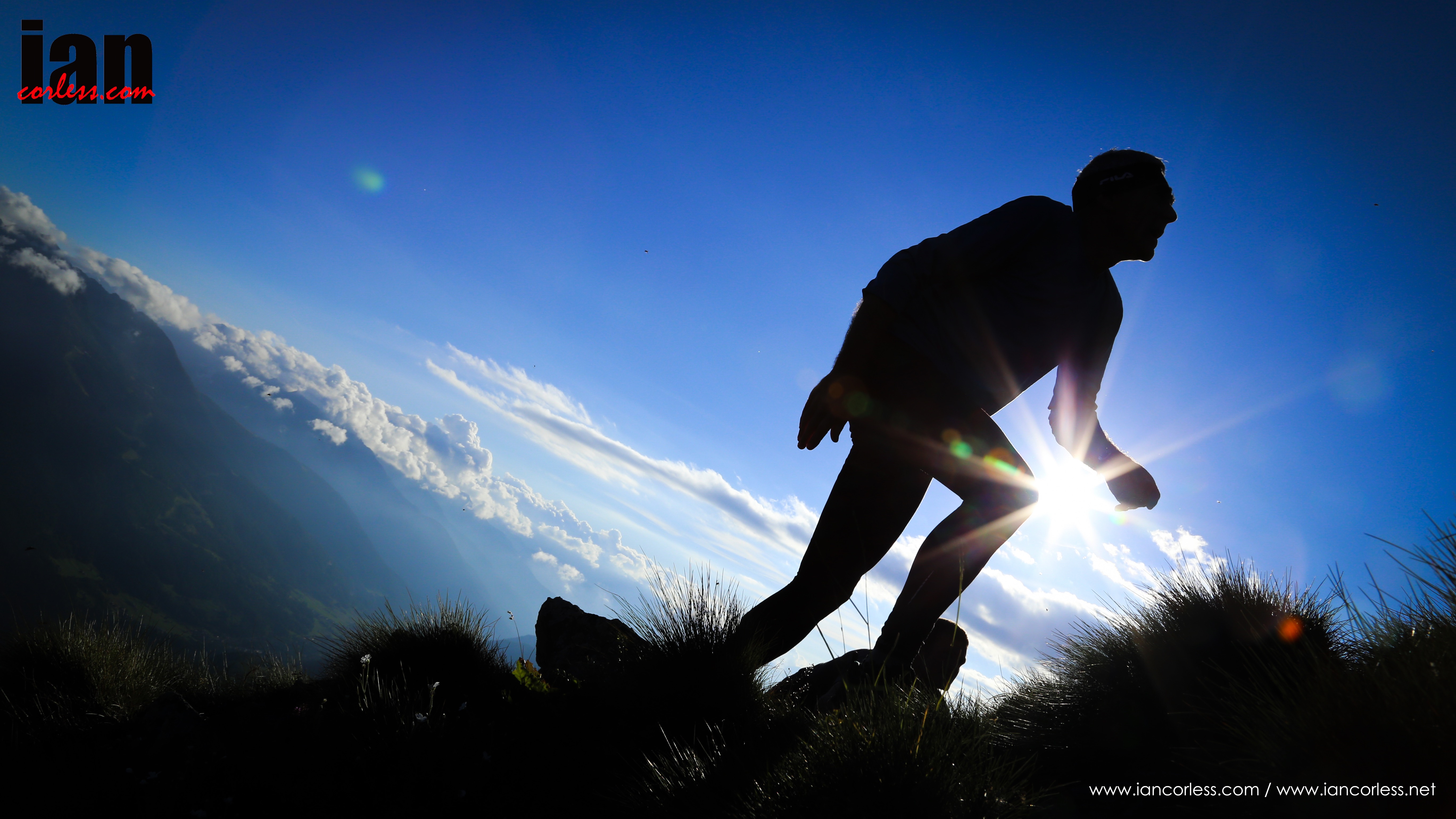
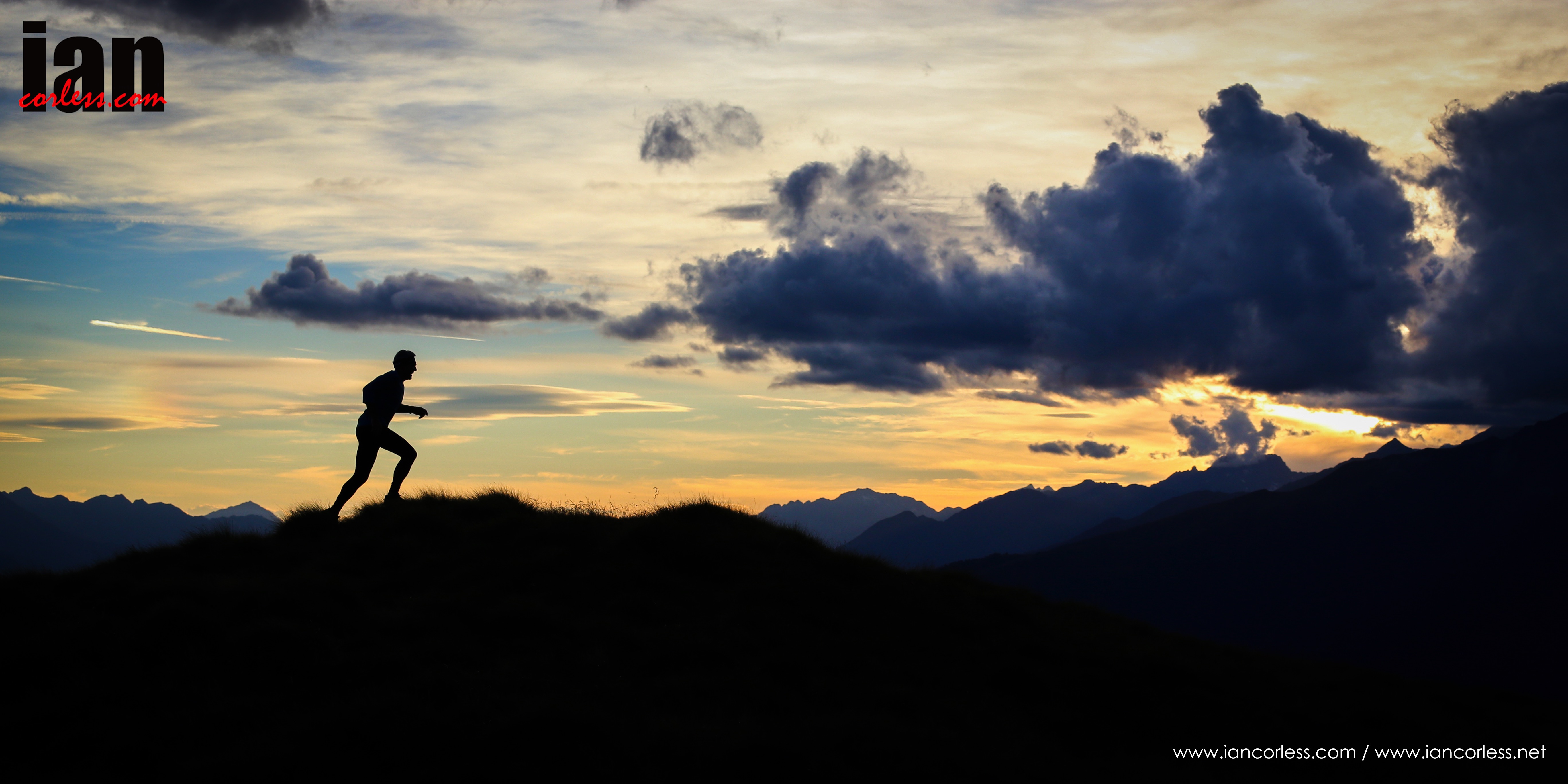
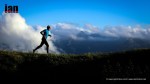
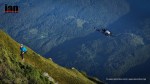
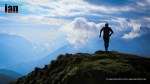
Days don’t get much better than this… at the summit of Monte Padrio the light is incredible and as the sun disappears for the day we are rewarded with a colour palette of orange, red and gold. Marino is in silhouette on the Skyline and I realise I am in a moment, a moment that I won’t ever forget.
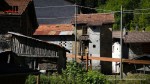
Sleep is not something you need when working with the ISF. The following day starts early with a short drive and we are suddenly looking at Marino’s childhood home.
Marino’s childhood home
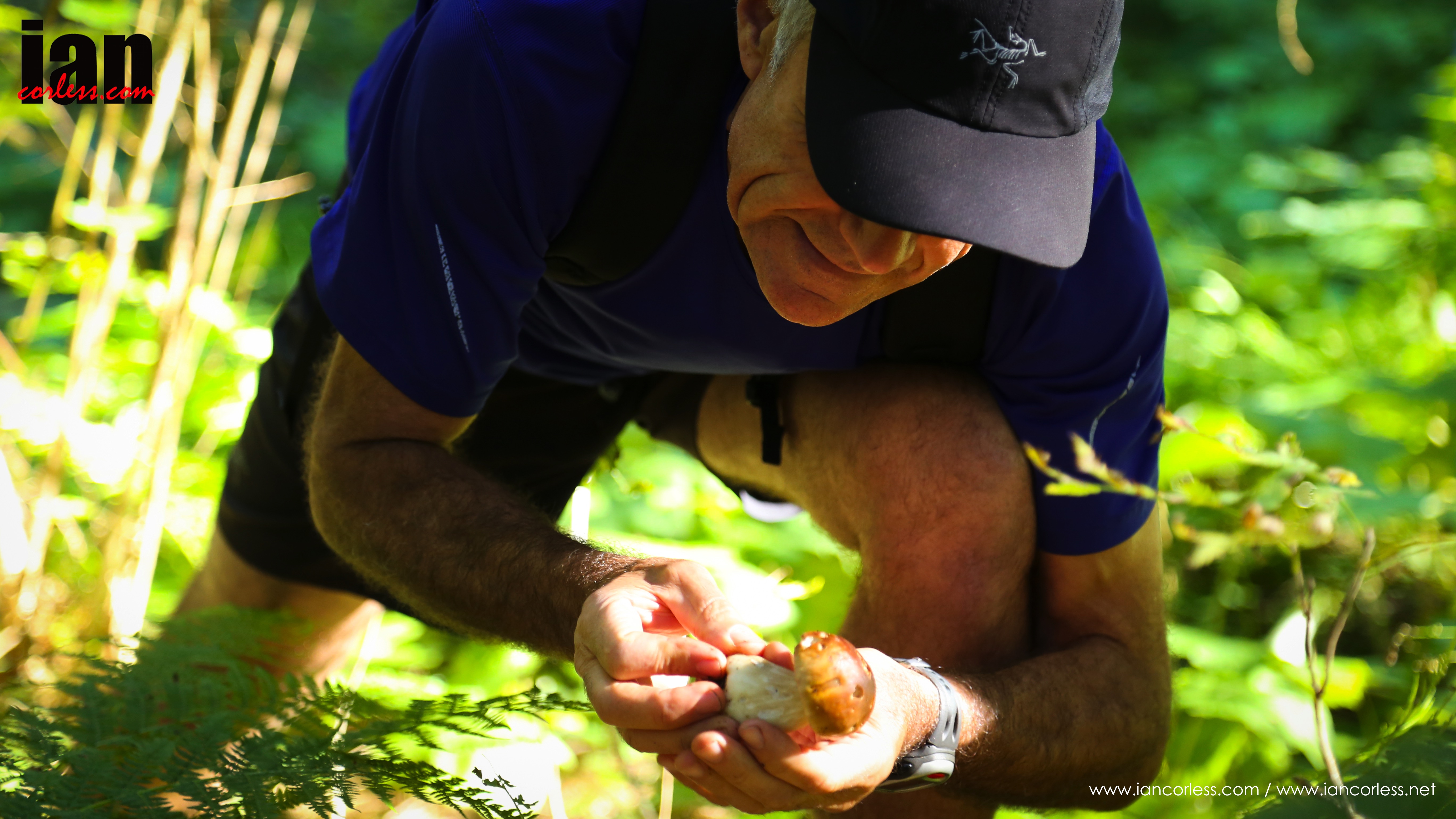
Marino laughs as he recounts boyhood memories. “I used to go mushroom picking in this area.”
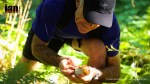
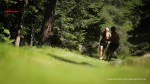
Following him up the trail, Kelvin wants Marino to go back 50-years to those mischievous days as a boy. Immediately Marino finds a mushroom, he removes his Buff and ties a knot in one end to create a cloth bag. Moving left to right on the trail, the bag slowly fills with the rewards from the land.
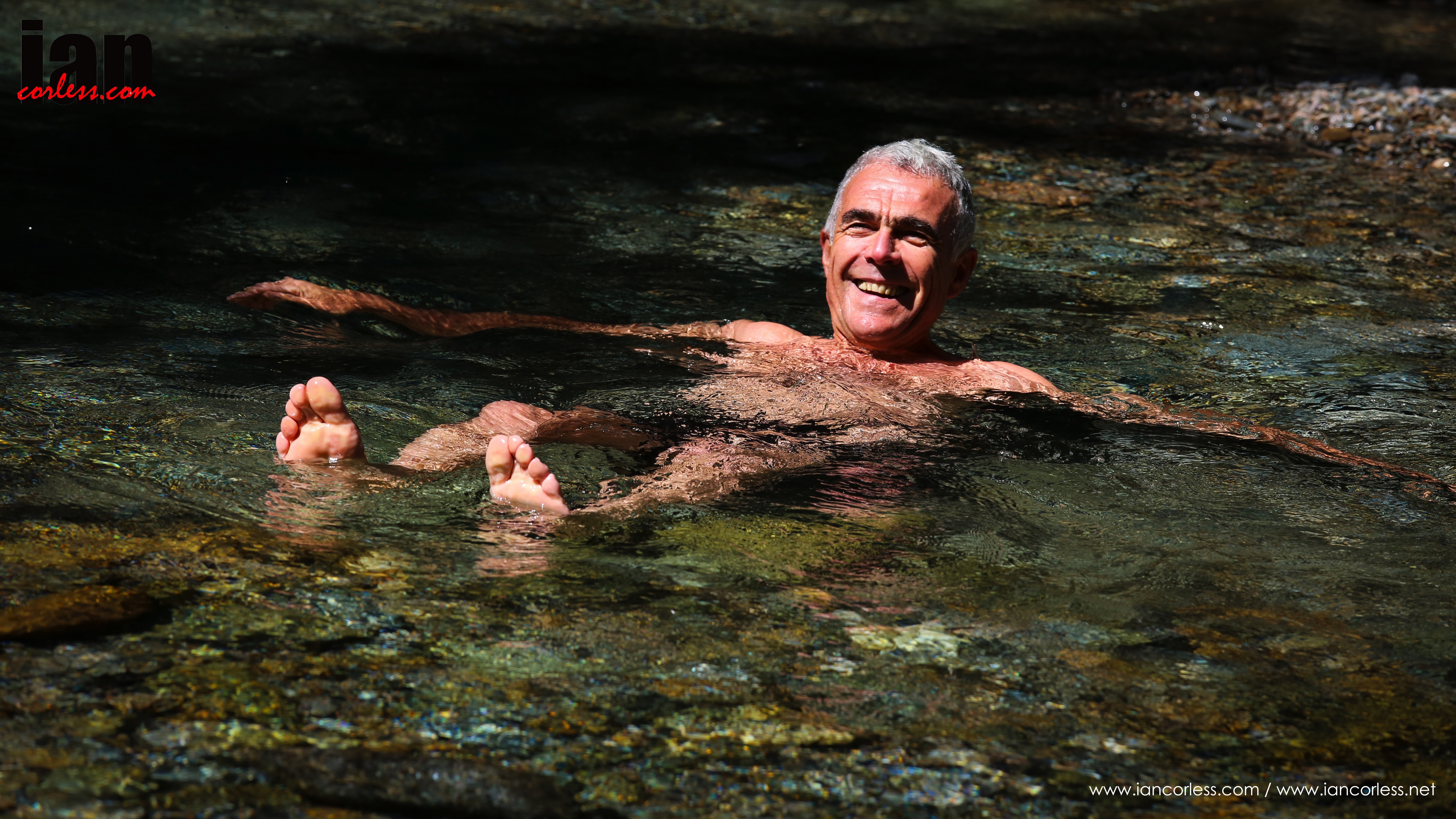
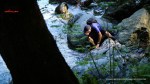
“In the Valle Campo Vecchio I would go skinny dipping in the river.”
Marino may well have regretted this sentence as just an hour later he was running along grass banks barefoot and then submerging himself in the ice cold river water from the mountains.
Today, Marino may well have fulfilled some of those dreams that he thought might not ever come back. It was special.
The warmth of the log burner in the Casina provided that ultimate feeling of contentment that one longs for after a day in the mountains. Marino’s body was aching, his legs heavy from the repeated running but beneath a tired façade I knew he had had a good. Red wine had been decanted to glasses and dinner was moments away.
As we relax into the evening, the Casina provided a very different ambiance to Biella. It’s more relaxed. The pressures and deadlines still exist, they have not gone away but the mountains and mountain life make us all realize why we are here. It provides perspective.
Eager to resume my questions from the previous day, I hold back. Now is not the time… it has been a great day, a great couple of days and we need to savour the moments.
“We have plans for some very exciting races at high altitude that will be very technical in future years. 2012 was an important stepping-stone. Less Cloud. More Sky was an important phase in the development of Skyrunning. One thing that was apparent is the desire from runners for technical and high altitude sport. So, here we are following our heritage for a new era.”
My concerns of talking shop are eroded away as Lauri brings our conversation to present day.
“So, am I correct in assuming that we won’t see races like Templiers or UROC in future ISF race calendars?” I ask.
“We needed to expand, to grow and introduce Skyrunning to a new audience. Templiers and UROC allowed this to a certain extent but we will go back to our roots moving forward. In America it is harder to find courses but we are working on this. UROC was a high altitude race just not technical. The Rut has shown we can find the correct style of course. We would love to do a race from Cervinia or Chamonix to the summit of Mont-Blanc but we can’t do this for everyone!”
“Do you think it is a happy coincidence that the revival of Skyrunning coincides with the rise of Kilian Jornet?”
“Absolutely, however, it is no coincidence. Bruno Brunod was Kilian’s hero. Kilian followed his dreams and the inspiration Bruno provided, Kilian is now the epitome of Skyrunning. When we first met Kilian in 2006, he impressed immediately. He was a natural Skyrunner. We all know the history; he was born in the mountains and as such he has just developed in an organic way. As I said, a natural.”
Conversation turns to the day’s events; Lauri is eager to enquire how filming went. We laugh as Marino explains in detail his plunge in the ice-cold water of the river and how his fingers turned blue.
“Kelvin worked Marino hard today with his demands but it was great fun. This area, the mountains and the small village are all quite special. I can understand completely why Marino loves to escape here.”
Another fried mushroom is removed from the platter and added to my plate. To think, just this morning Marino was collecting these very mushrooms from his childhood haunts. He had prepared them in the traditional manner and the simple delicacy provided the perfect accompaniment to the surroundings and company.
The Casina gallery:
Filming with The African Attachment gallery:
TROFEO KIMA
Emelie Forsberg looked into the lens of the TAA camera, smiled in a way that only Emelie can and with a nervous and infectious giggle whispered the words:
“Two years ago in my first year of racing I was fortunate to race at Trofeo Kima. I looked at this course and thought; really… you can run a race on this course?”
I too had found my first Kima experience equally mesmerising. My breath had been taken away by the drama and severity of the course. I had never seen anything quite like it and the impact was profound. Hopping from one section of the course to another via helicopter added some serious icing to the Kima cake.
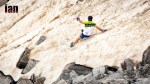
A vertical wall of rock and suddenly a flash of red and white. Kilian appears, hand-over-hand as he descends via chains and then flies past us with a wave as though running a 5k. He looks so incredibly relaxed.
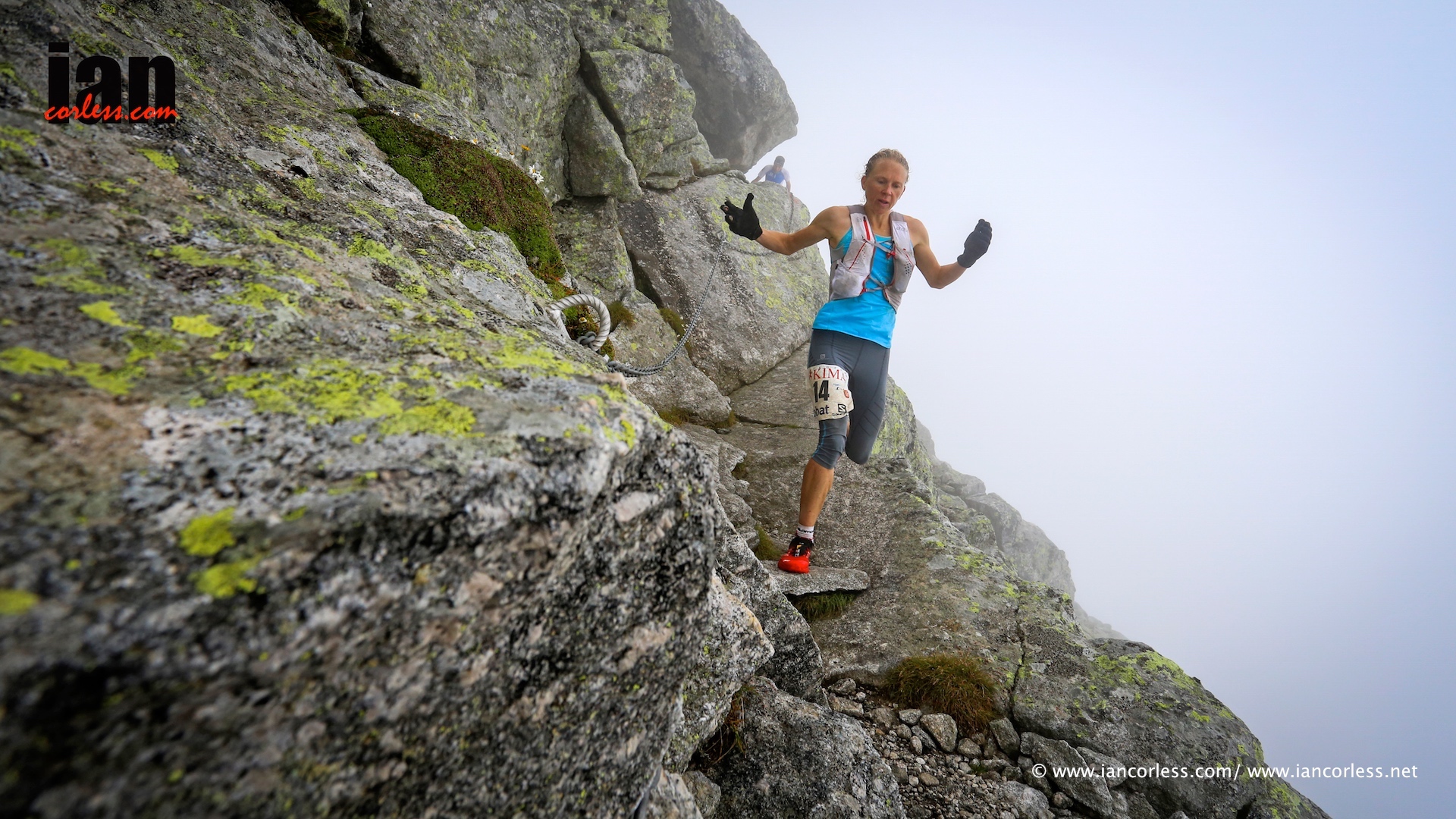
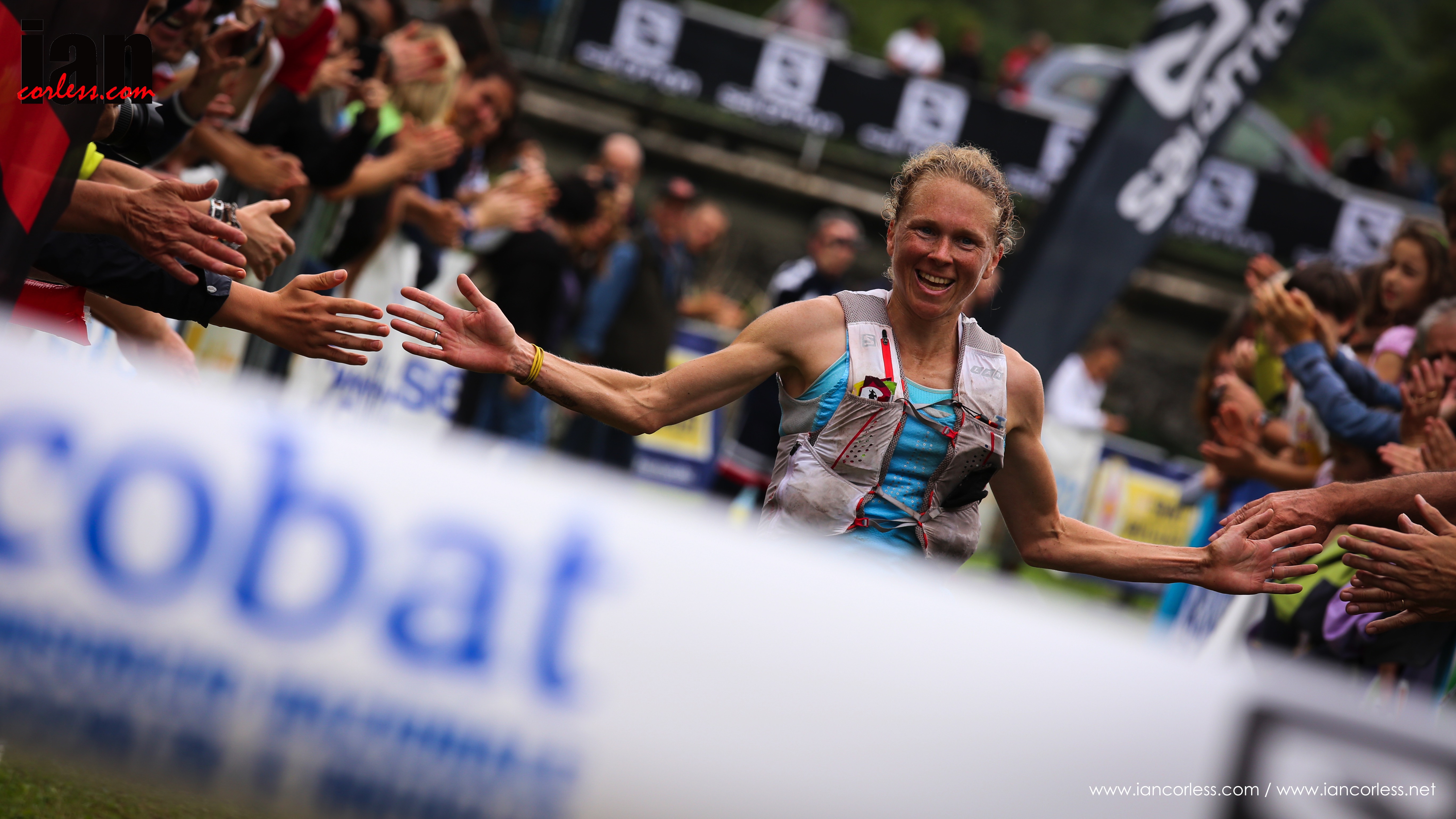
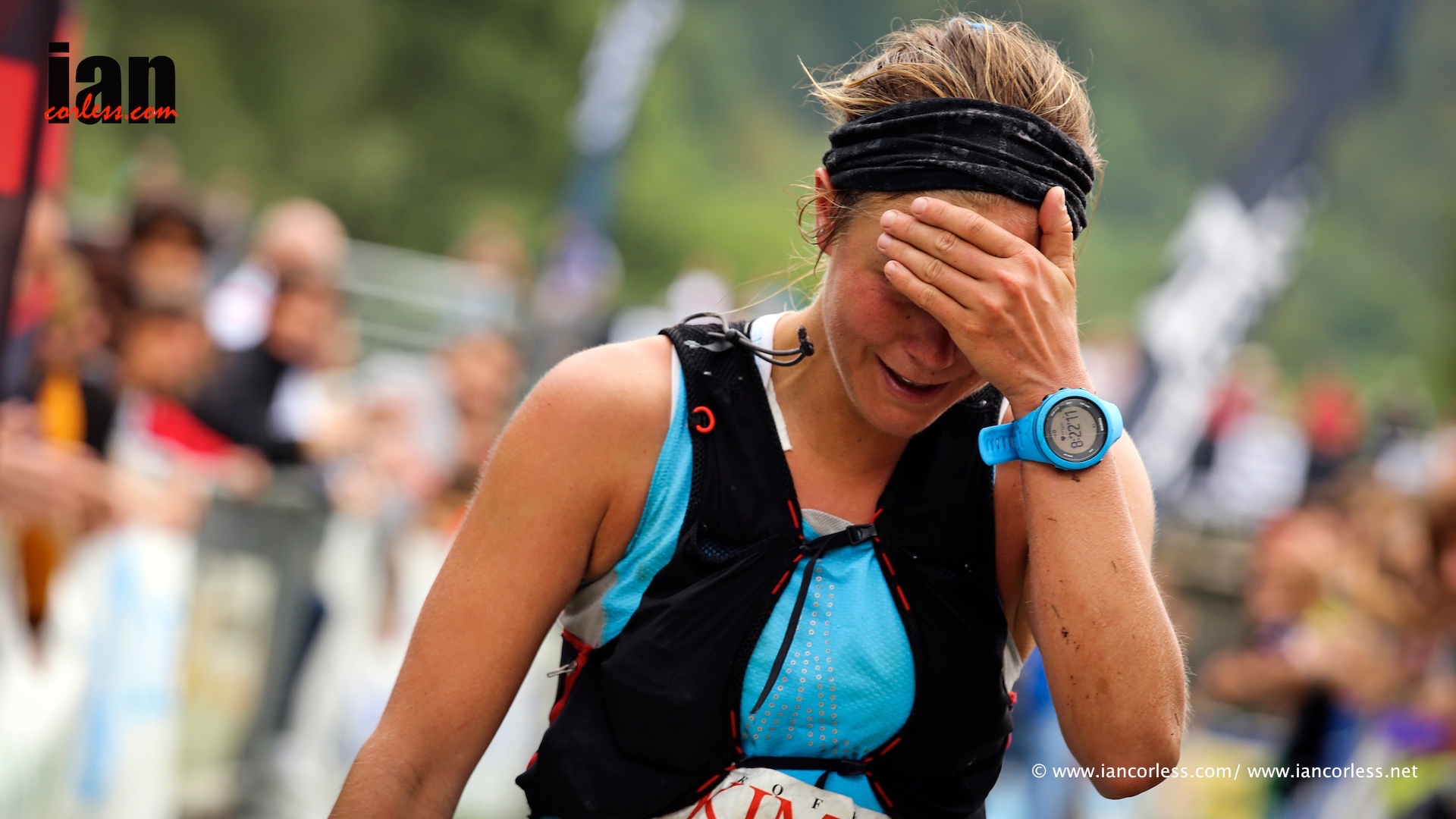
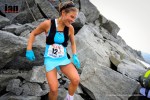
Kasie Enman is the first lady and this provides some confusion. Emelie Forsberg had had a convincing lead; what had happened? Finally, Emelie arrives 5th lady, in tears but running like a demon. She had gone off course and lost almost an hour. Trying to claw back time she takes risks; 4th place, 3rd place and then 2nd, was it possible to take back victory?
Unfortunately, no! Kasie Enman held on to a convincing lead and the records will show that the American was the 2014 Kima ladies champion. In the male race, Kilian Jornet had the race of his life and in doing so broke his own course record.
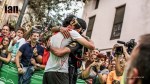
Fabio Meraldi makes an appearance and like a long lost son is embraced into the arms and hearts of the Skyrunning throng:
“I remember the feeling, like a drug, feeling this moving energy… I still get goose-bumps just talking about it.”
The party atmosphere continues and minutes after the award ceremony, clouds turn from grey to black and a warning clap of thunder alerts everyone that a change is coming. The heavens open and rain falls from the sky like a series of rods being thrown. It’s a biblical storm and we all look at each other and simultaneously shake our heads. Lauri relays our thoughts, “Wow, thank god this rain and storm did not arrive during the race.”
Another race over, another successful event but there is no rest. This evening a glass of red and a nice meal but tomorrow it’s back to the grind. Another race is only weeks away and like déjà vu the process will repeat itself.
“Lauri, and you, your dreams?”
“To expand Skyrunning and see the growth continue with the collaboration from those who love the sport as we do.”
“Will you ever be able to let go?”
“Why, why would I want to let go? This is my life: I love it. Maybe I would like less stress but I like challenges, I like work and I don’t like to be bored.”
I smile knowing full well that her words are true and that in all honesty, I already knew the answer.
“One thing is for sure, I won’t be in the Bahamas filing my nails everyday, I can guarantee that will never happen.”
The KIMA galleries:
******
Fast and Light is released on October 20th 2015 at 1600 via Salomon SRTV HERE
A series of articles will be published worldwide to coincide with the release of Fast and Light and I would like to take the opportunity to thank all the editors and creatives involved in this process.
Look out for articles in: Adventure Types – Australia/ NZ, Canadian Running Magazine – Canada, Trail Chile – Chile, TRAIL Magazin – Germany, Ski Alper – Italy, Trail Run – Japan, Poland, ALERG – Romania, Running The Cape – South Africa, Outdoor Fitness Magazine – UK, Like The Wind – UK, Nature Trail – France, Spain and many more.
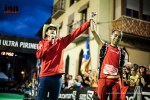
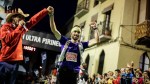
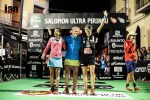
Nuria Picas was looking to defend her ‘home’ crown in a race that she has won for the last 4-years. Luis Alberto Hernando, champion in 2013 and 2014 was returning looking to make it a triple but more importantly the Skyrunner® World Series title for the ultra distance was at stake. Add to the mix Kilian Jornet and Emelie Forsberg, the last time the duo raced here in Baga was 2012. Kilian won that year ahead of Anton Krupicka and Dakota Jones, Emelie placed 3rd behind Nuria Picas and Anna Frost.
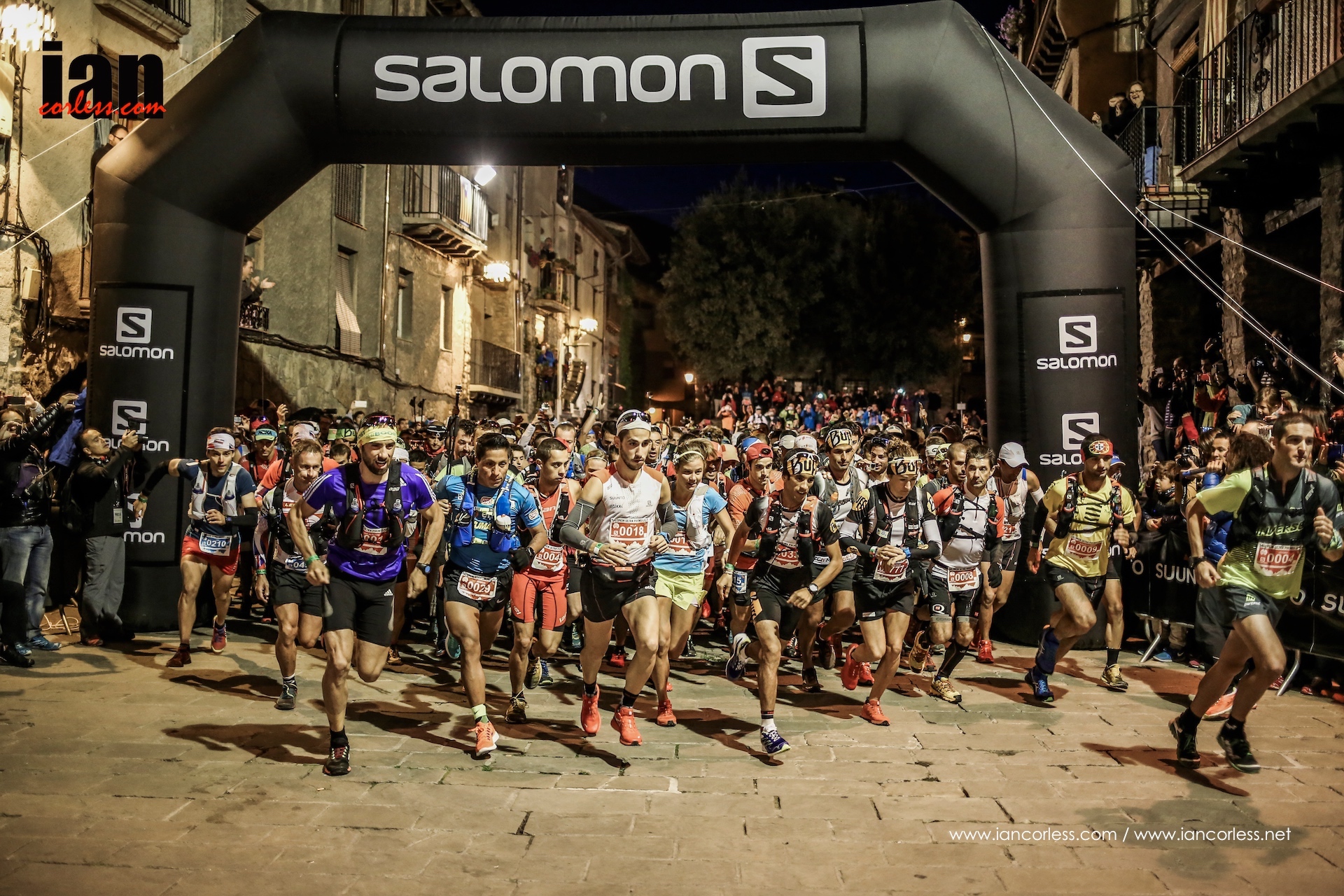
Starting at 0700 in the center of Baga, one has a full appreciation of how important running has become in Spain and I guess more importantly here in Catalonia. Kilian and Nuria are as important if not more important than football stars here in this part of the world. Autographs, photographs, shaking hands, pats on the back and the noise; wow the noise is incredible! Yes, they are the ‘Messi’ of the running world in these parts.
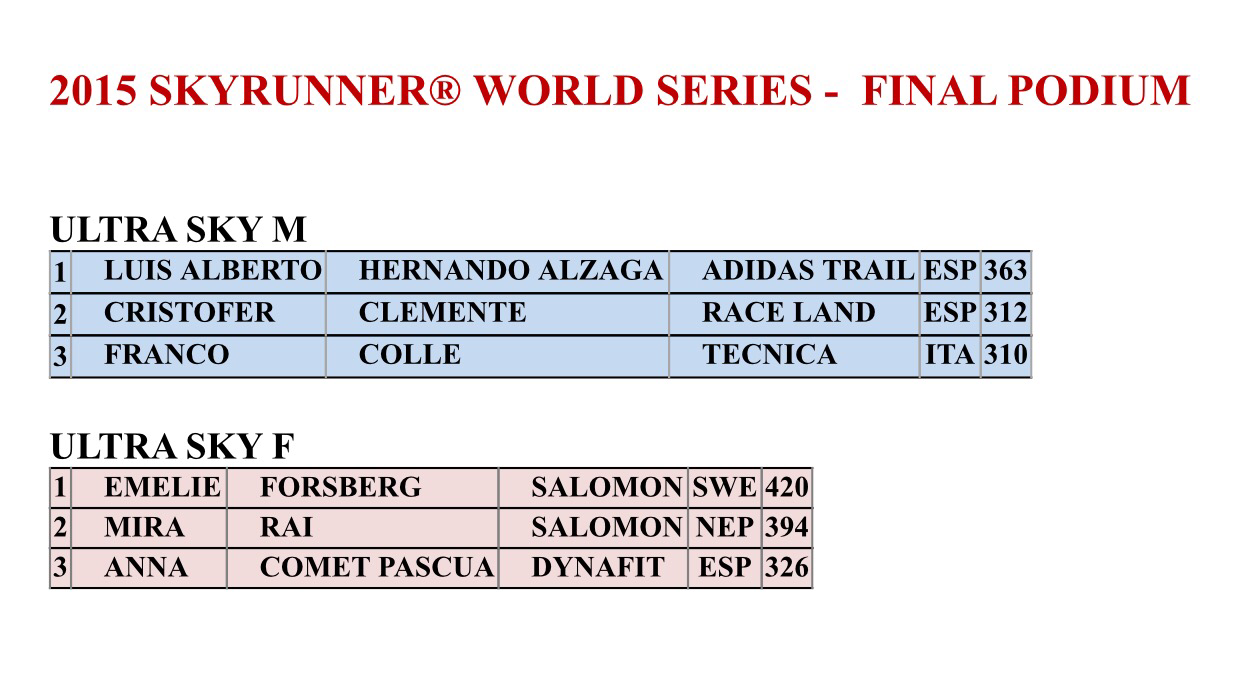
The day was always going to be one full of drama and battles. We had a race within a race and as such one had to keep an eye not only on who was running in the top-3 but also who was running in the top overall rankings. Coming into Ultra Pirineu Franco Colle was 1st in SWS rankings followed by Cristofer Clemente in 2nd and Luis Alberto Hernando in 3rd. It was all up for grabs. For the ladies the battle was relatively straight forward; if Emelie won the race she would be SWS champion. If Mira Rai won the race, she would become champion.
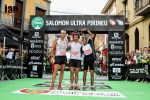
From the gun Emelie made her intentions clear and took hold of the race from the front and it stayed that way for the whole 110km. Although the story changed a little behind the dominant Emelie, the writing was on the wall; Mira Rai would place 2nd and Nuria Picas would place 3rd. At times Mira looked to close the gap and then it would extend whereas Nuria looked resigned to a solid 3rd place.
The men’s race was a little more unpredictable! I say unpredictable but in all honesty, did we (I) ever think anyone other than Kilian Jornet would win the race? I know I shouldn’t say that; anything can happen in 110km but barring an accident or some unforeseen problem, I really didn’t see any other scenario playing out.
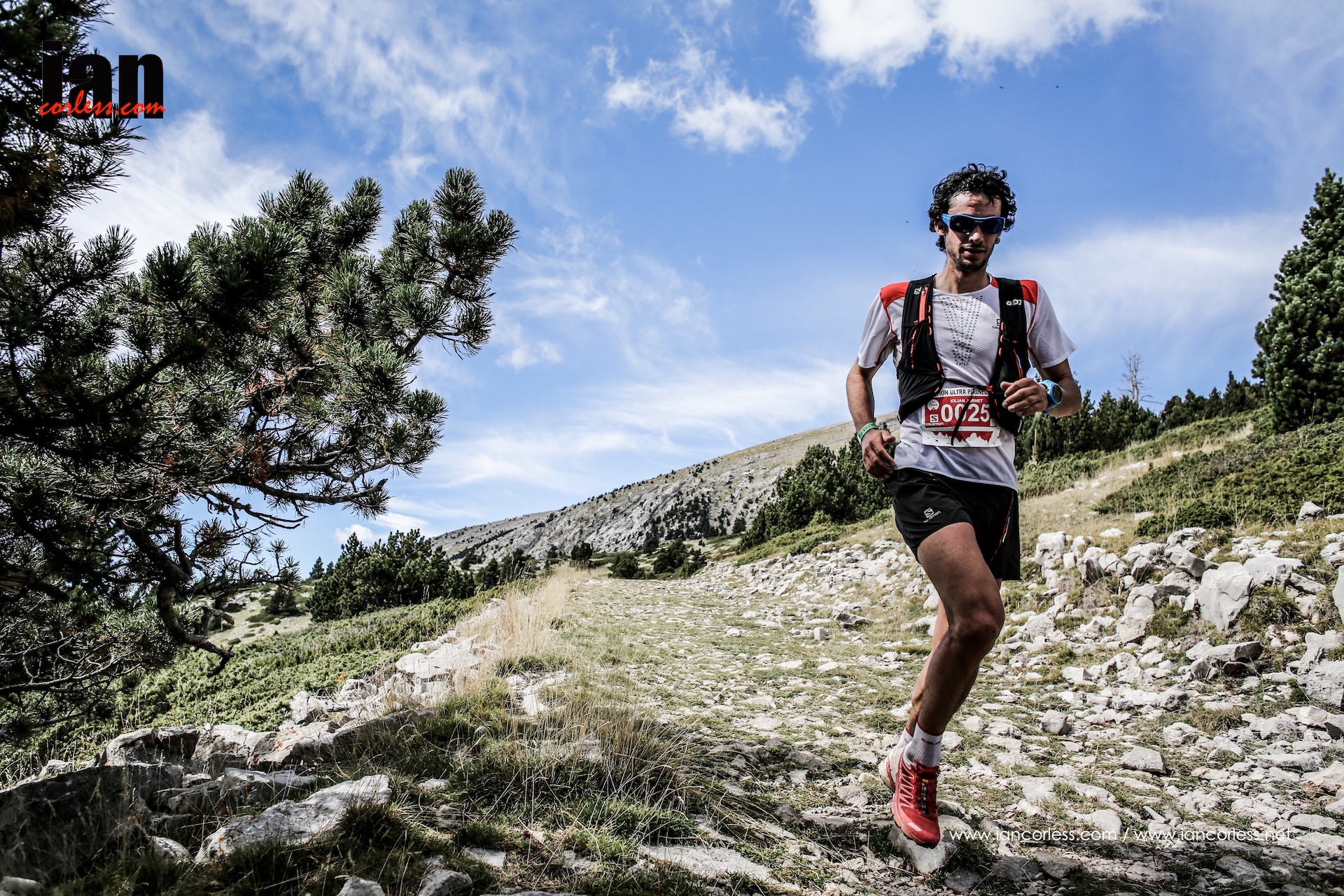
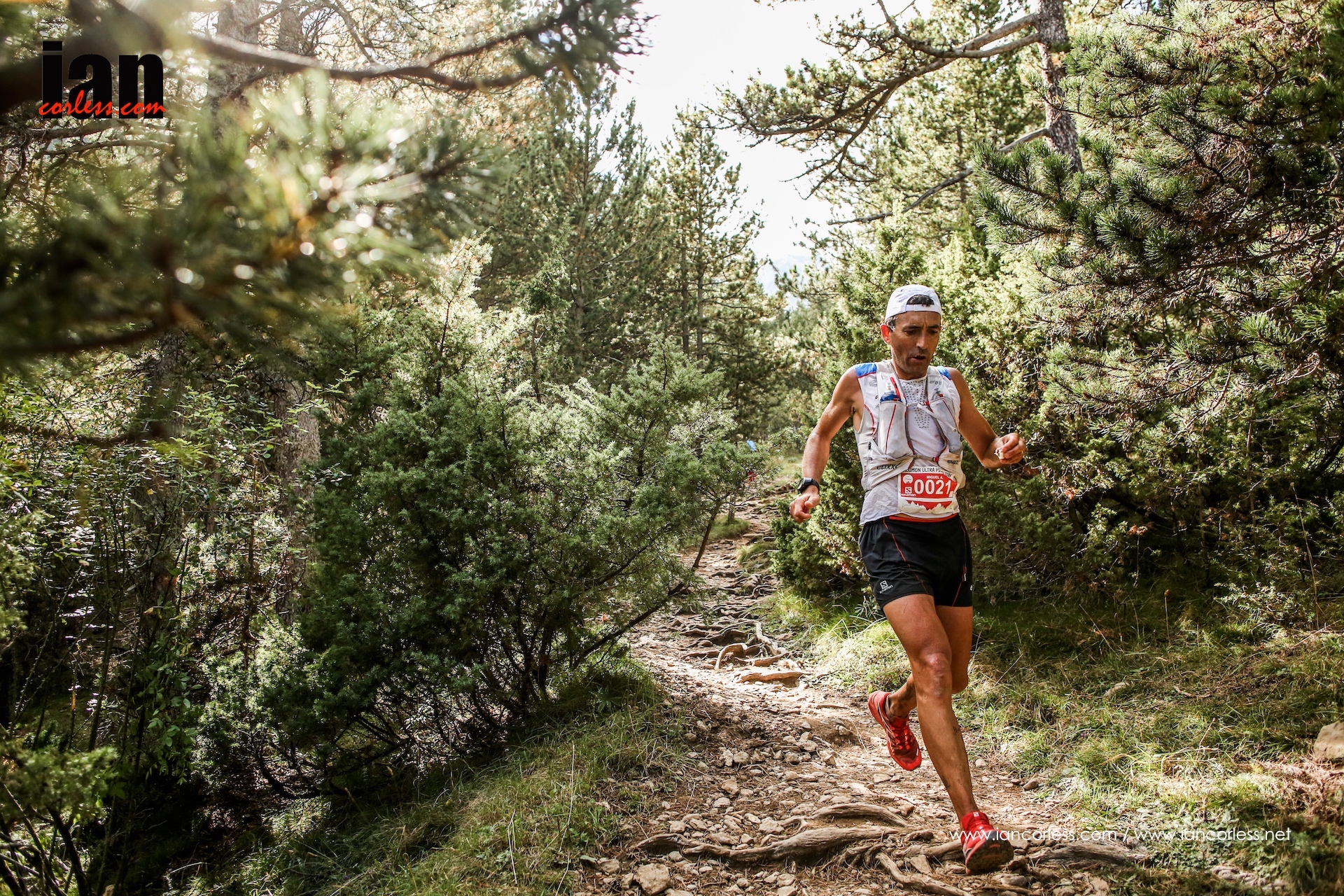
In the early stages Jessed Hernandez, Miguel Heras and Zaid Ait Malek accompanied the Catalan over the undulating terrain. Kilian always looked relaxed and in control. The protagonists changed at the front of the race, Miguel and Zaid would take a turn to pace and all the time Kilian would run in 2nd keeping his powder dry. The elastic finally snapped with Zaid and Kilian taking the front and opening up a gap over Miguel.
Behind the lead trio a battle was unfolding. Franco Colle SWS leader coming into the race dropped with sickness; his 2015 SWS chances over! Cristofer Clemente was running in 4th and Luis Alberto Hernando clearly tired from his 2nd place efforts at UTMB just 3-weeks earlier was running in and around the top-10 battling to win the SWS title.
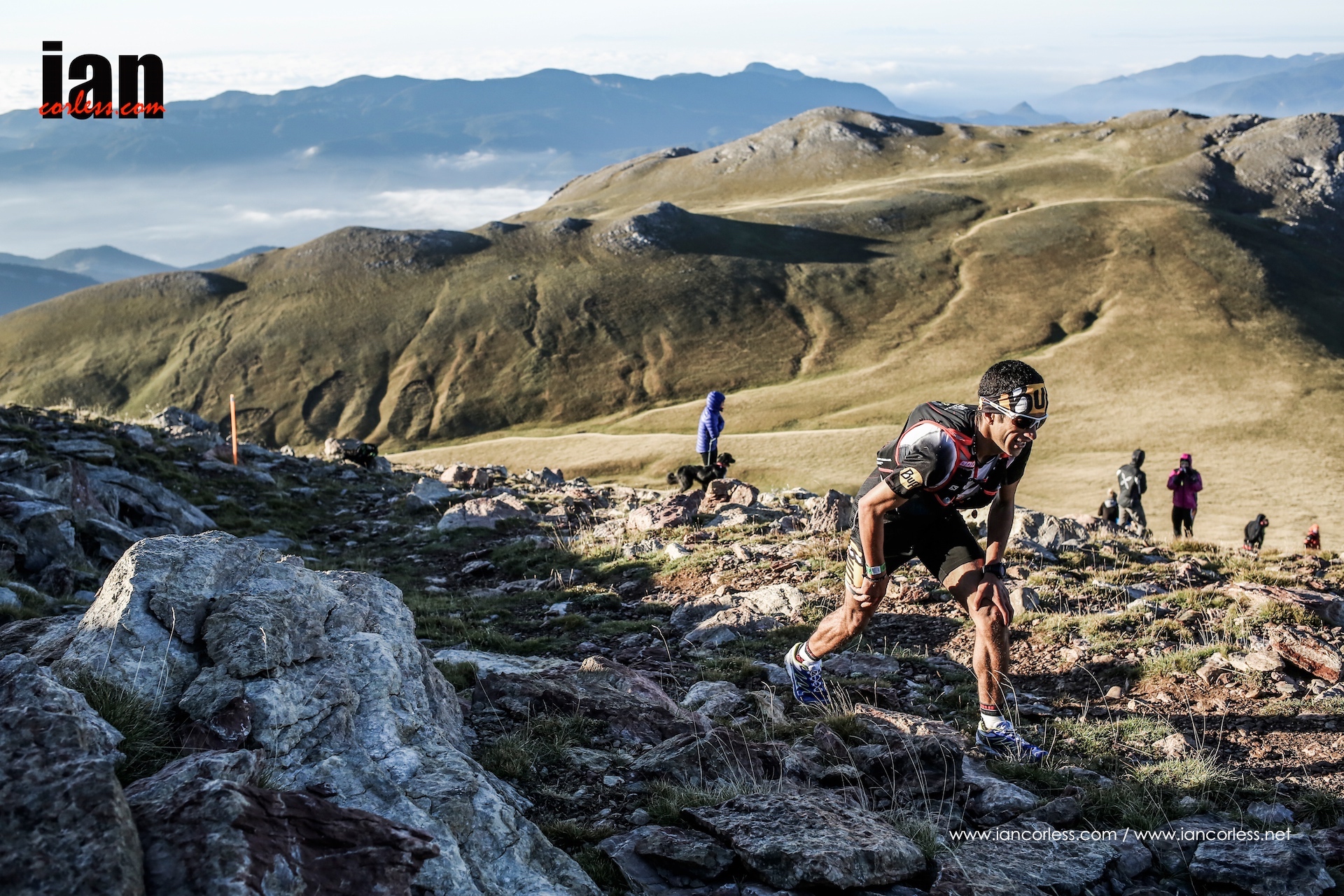
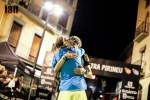
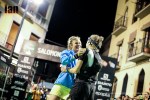
Miguel didn’t give in though, he found some internal strength with 85km’s covered and closed the gap to then take over the lead with Kilian as Zaid faded. Over the final km’s, Kilian put his foot on the gas on one of the final climbs and quickly opened up a 6-minute gap over Miguel. The writing was on the wall, Kilian would win the 2015 Ultra Pirineu and he would be welcomed by a home crowd like a long lost son.
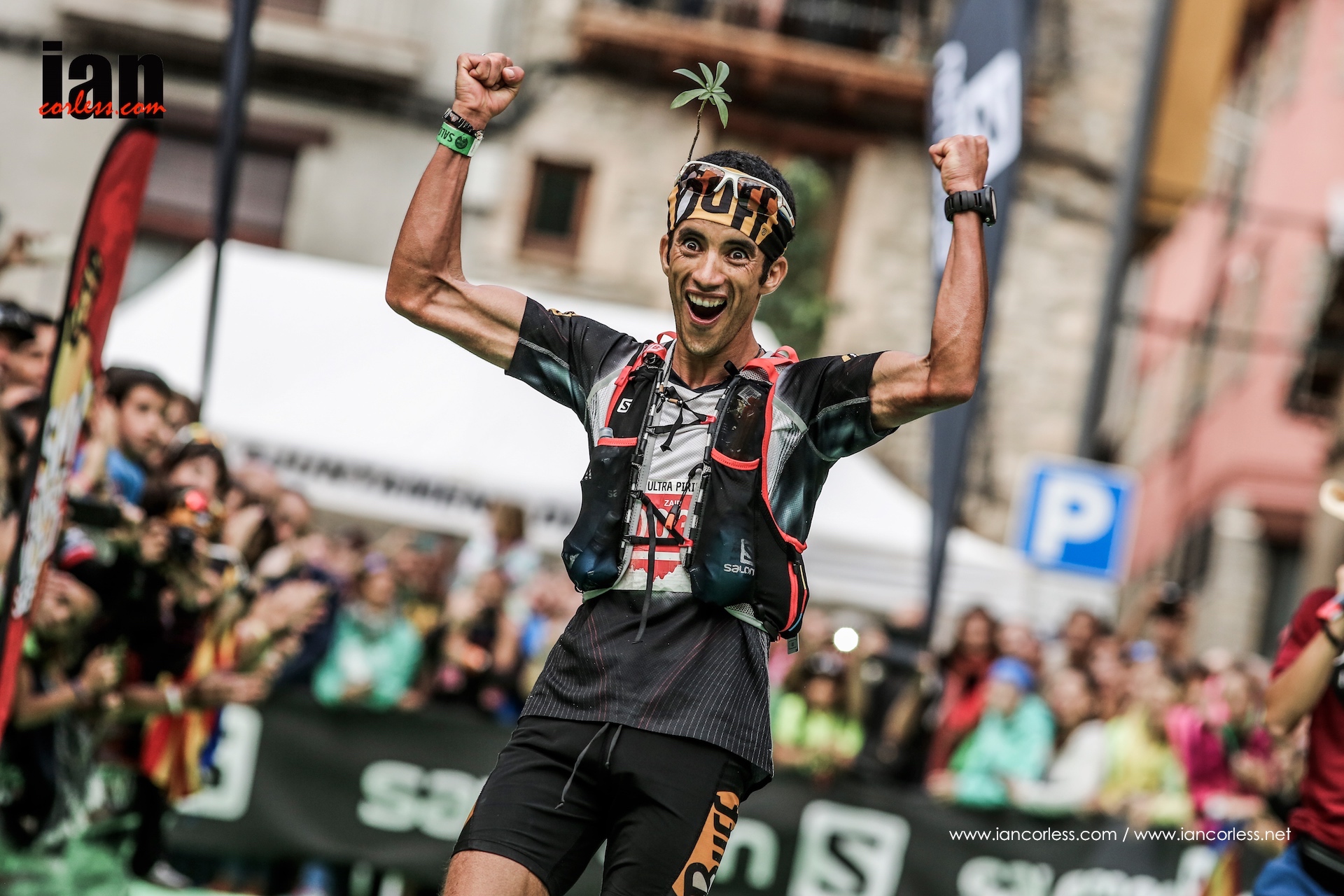
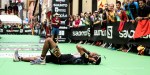
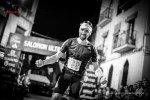
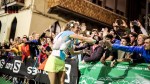
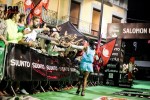
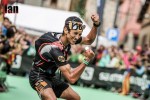
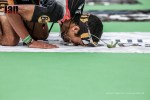
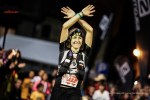
Behind the drama unfolded, Zaid refused to give in. He once again caught Miguel and this time pulled away and never looked back. He finished 2nd and produced one of the most impressive display finish line antics I have witnessed. Miguel took the final podium place and then attention turned to the SWS ranking.
Cristofer Clemente finished 4th and Luis Alberto Hernando had to finish in the top-15 to take the SWS crown; he did it! It has been quite a year for Luis. A series of high ranking victories and podium places, 2nd at UTMB, Skyrunning European Champion and now the 2015 Skyrunner® World Series Champion. Bravo!
Attention now turns to Limone Extreme for the respective SWS titles in VK and SKY.
Episode 92 of Talk Ultra – We speak with Tromso SkyRace winner, Jonathan Albon and we have an inspiring chat with ladies Hardrock 100 winner, Anna Frost. The news and Speedgoat is back after a really busy month racing and working.
Following on from Marc Laithwaites’ series of articles (HERE) that covered many aspects of our sport (butter in coffee? Posture? Hydration?) we now have series of articles on ‘Tips for the TRAIL’ – from Marc and Ian.
TRAIL Tips 1: Choose the Shoes
We get a lot of questions about footwear for trail running. There is no single pair of shoes which will be suitable for every race. Fact! You may have to compromise grip for cushioning, or cushioning for grip and your shoe selection will be based various factors such as the following:
The kind of terrain you are running or racing on.
The distance you are racing and the time on feet.
Your running style.
Risks to injury
What drop?
Minimal or maximal?
Here’s our simple guide to selecting shoes:
1. Shoes can generally be split into ‘TRAIL’ or ‘FELL/MOUNTAIN’. Trail shoes tend to have more cushioning and are designed for hard packed trails such as canal towpath and forest track. Fell/Mountain shoes tend to have less cushioning but a more aggressive grip and are more suited to muddy tracks or running ‘off the paths’ on rough terrain. Wearing Fell/Mountain shoes could potentially cause problems on hard packed tracks due to the repeated impact and Trail shoes for example could potentially have insufficient grip and stability for severe ‘off track’ running.
2. Stability (how likely are you to twist your ankle) is better in Fell/Mountain shoes as they are lower to the ground (less cushioning), thereby improving balance, control and feel. However, Trail shoes don’t always need the same level of stability and control as a fell shoe as hard pack tracks and trails provide a more even and predictable surface than rocky, ‘off track’ routes.
3. Minimalist or ‘barefoot’ shoes have been popular in recent years, due largely to the book ‘Born to Run’. There is a current shift by shoe manufacturers away from the minimalist trend, towards over-cushioning. Minimalist shoes were popular as a means of encouraging runners to land on their forefoot, rather than their heel. But think carefully before going to an ‘over’ cushioned shoe or a minimalist shoe! This article may add perspective HERE.
4. You don’t need to buy ‘minimalist’ shoes to encourage forefoot running. Forefoot running may well be natural for you but a shoes ‘drop’ will encourage and promote a running style. The drop is the difference between the thickness of the heel and the thickness of the forefoot. For example, if the heel cushioning is 12mm thick and the forefoot 8mm thick, the drop is 4mm. The lower the drop and the more likely you are to run on the forefoot. The higher the drop, the more likely you are to heel strike. It’s not the amount of cushioning (minimal or maximal) which dictates forefoot or heel strike, it’s the difference between heel and forefoot. But be careful, don’t fall in to the trap of thinking low drop is best just because you see so many elite runners using this type of shoe. If in doubt, go for a 8mm drop shoe which sits nicely in the middle ground.
5. The current trend for over-cushioned shoes can include the ‘rocker system’. This encourages heel striking and a smooth roll onto the forefoot, rather than a harsh braking normally associated with heel striking.
6. Road shoes (and some trail/ mountain shoes) tend to fall into 2 distinct categories: Neutral V Support. People who pronate (roll in) excessively wear support and those who don’t wear neutral. Trail and Fell shoes tend not to come in both options, almost all are neutral and there are very few support options (but some do exist, the Salomon Seedcross a good example). If you are running over uneven terrain, your ankle position is rarely neutral, it’s only when you are repeatedly running on hard/flat surfaces (road or treadmill) that you can control your foot by choosing support or neutral shoes.
So when you head off to the store to purchase a pair of run shoes for off road, ask yourself some key questions.
What terrain will I be running on?
Do I require good cushioning or less cushioning?
What drop do I want (zero, 2, 4, 6, 8, 12 are standard) ?
Do I require a ‘precision’ fit in the toe box which provides more control or do I require a roomy toe box?
How far am I going to be running in these shoes?
Do I require any stability and support?
Remember, no one shoe will do all things well. That is why so many different shoes exist on the market. However, we don’t all have an unlimited budget. So in many scenarios, we often look for a one shoe fix. Some shoes are out there that do fit that ‘one shoe does all scenario,’ you just have to remember that usually when the trail gets very wet, very muddy or very technical, this is when the biggest compromise is made.
You only need to look at the recent ‘City Trail’ shoes or ‘Door to Trail’ shoes that are available and it doesn’t take long to realise that manufacturers also want to help you with that magic one shoe does all.
This website has many shoe reviews and here is a few of our most recent favourites:
The stunning alpine village of Val d’Isère is the official home of the next two races in the Skyrunner® calendar, the Ice Trail Tarentaise which is the Skyrunning Continental Championship for the Ultra distance and the Bellevarde Vertical Kilometer the first VK in the Skyrunner® World Series.
Val d’Isere is a haven for alpinists wanting to test themselves on the iconic slopes of Meribel, Val Thorens, Courchavel; it is affectionately known as the ‘Le Trois Vallees’. The Ice Trail Tarentaise (ITT) starts and concludes in this beautiful mountain retreat.
The ITT has over 60 km’s above 2000m altitude and with a highest point of 3653m at ‘Grande Motte.’ In just a couple of years, the race has gained a reputation for being one of the most ‘extreme’ races in the Skyrunner® calendar, it is a race not to be taken lightly!
Traversing glaciers, ascending and descending summits such as ‘Aiguille Pers’ at 3386m, ropes, ladders, way markers, peaks at over 3000m and 5000m +/- ascent and descent guarantees that not everyone will see the finishing tape. The ITT is very true to the heritage of Skyrunning and it harks back to the late 80’s and early 90’s when ISF President, Marino Giacometti pioneered a new form of Alpinism.
Who is running?
Men
ITT has always had a high quality field assemble and 2015 is no different. Luis Alberto Hernando heads up the men’s field after his recent victory at Transvulcania Ultramarathon and placing 2nd at the IAU World Trail Championships. Luis ran ITT last year but pulled out whilst in 2nd place. I am convinced that we won’t see that happen this year and for me, Luis is the hot favourite for victory. He is without doubt in his element on tough courses (with snow) between the 50-100km distance.
Manuel Merillas is a rising star in Skyrunning and had an incredible 2014. He placed 5th at ITT in 2014, which will most definitely provide him with a great deal of experience coming into the 2015 edition. The recent Transvulcania Ultramarathon did not go well for Manuel; he looked primed for the podium in the first half of the race but then struggled in the latter stages to finish outside the top 10. He showed amazing powers of recovery by bouncing back just 1 week later at Zegama-Aizkorri and placing 2nd. One to watch!
Fabien Antolinus had a great race in 2014 and placed 2nd behind Francois d’Haene. He does however seem to blow hot and cold and can be a little unpredictable. For sure, he has all the skills and talent required to perform at the highest level. He may well be a podium contender but I don’t see him toppling Luis.
Pablo Villa shot to our attention in 2014 when he had a great run at Transvulcania Ultramarathon. Shifting sponsors (now Salomon) he backed that performance up with 8th at the 2015 edition of the race. Pablo is a top 10 contender and should he have a great day, the top 5 may well be a possibility.
Fulvio Dapit has all the potential to make the podium at ITT. On his day, he is a superb mountain runner and he excels when the terrain is ‘challenging.’ He placed 4th at ITT in the last edition. Recently though he had a tough performance at Lavaredo, however, he did pull out and that may well have saved his ITT performance.
French champion (2013), Sebastien Spehler had victories at TTN and 6000D in 2014. His recent form is a little unknown but he may well make the top 10?
Benoit Cori placed 13th at the IAU World Trail Championships and won Templiers in 2014. The ITT course is far removed from both those courses but Benoit obviously has speed.
Marcin Swierc is another runner who will make his presence felt in the top 10. He placed 8th at Mont-Blanc Marathon and 9th at Templiers and 4th at the recent Mont-Blanc 80km. So it is clear to see that he has speed and strength. ITT adds other aspects and his final result will very much depend on how he can handle snow, ice and additional technical running.
Christophe Perillat is not a runner I know a great deal about. However, he did place 2nd at the 2014 CCC. So with that in mind, he is no slouch in the mountains.
Cyril Cointre may well start the race? I need to have this confirmed. If he does, he will be a contender at the front of the race. He races extensively, some may say too much but despite this, he always pulls out the results. Recently he finished ahead of Anton Krupicka at Transgrancanaria.
Franco Colle knows how to run in the mountains; look at his results at Tor des Geants. The ITT terrain will suit him but will it be too short and too fast? He certainly performed exceptionally well at Mont-Blanc 80k when he placed 2nd behind Alex Nichols.
Several other names on the start sheet jump out at me:
Zigor Iturrieta has been there and done it in racing. I was last at a race with him in Nepal when he ran Everest Trail Race (he placed 3rd) and he always manages to pull out the stops for strong consistent results.
Pavel Paloncy is a renowned adventure racer, 2-x winner of the UK’s Spine Race and recently raced The Dragons Back and would have placed well overall had it not been for a bad fall on day 1. Pavel is a strong and gritty runner. I do wonder though if this race may be too short and too fast for Pavel?
Stuart Air from the UK has run well at ITT before and top 10 would be a great result.
Ones to watch:
Daniel Garcia, Jessed Hernandez, Robert Niewland, Pawel Dybek,
Ladies
Emelie Forsberg has won ITT 2 x and I have no reason to doubt or question that she will do it again. It’s a course she loves, the terrain suits her and she has great memories. Last weekend she won and set a new course record in Alaska at Mount Marathon. It was 50-minute race but just today (Tuesday) she said her legs are tired! I think they will be okay for the weekend. Her performance and victory (off ski’s) at Transvulcania Ultramarathon in 2015 confirms that Emelie is the one to beat!
Anna Comet Pascua is on fire at the moment. I witnessed Anna win Everest Trail Race at the end of 2014 and she said then that she planned to race the Skyrunning circuit in 2015. A podium place at Transvulcania Ultramarathon and then a follow up podium behind Mira Rai at Mont-Blanc 80km confirms that Anna is doing something right. Just as in La Palma, I don’t think Anna has the race to beat Emelie but anything can happen?
It will not be an easy ride for Emelie and Maud Gobert will make sure of that. Maud placed 2nd at ITT in 2014 and although she races lees now than in the past, on her day she can still make her presence felt.
Anne Lise Rousset placed 4th at the IAU World Championships and although she has great potential for top 5 or maybe even the podium, I don’t see her coming close to Emelie on a course like this.
Magdalena Laczack however may well prove to be the dark horse of the race and is my top tip for 2nd place and should Emelie falter, Magdalena could possibly take the victory? Her 3rd place behind Emelie and Frosty at the Skyrunning World Championships (80km) in Chamonix confirms this.
Nuria Dominguez is an ever present on the Skyrunning circuit and always gets the job done. She has placed top 10 at Transgrancanaria, Zegama-Aizkorri, Dolomites SkyRace, Trans D’Havet, Limone Extreme and so on. Top 5 is a distinct possibility and most certainly a podium contender on a good day!
Beth Cardelli is one of the strongest runners in the Southern Hemisphere and won one of the shorter races at ITT in 2013. Climbing and long distance running is her forte and I am sure if she is making the journey from Australia she will be fired up for a great run. Recently she placed 4th at Mt Difficulty and 3rd at Buffalo Stampede when Landie Greyling topped the podium.
Ester Alves seems to be running everything at the moment. I would say ‘too much’ for her to have any potential for the podium at ITT but she may well make the top 5 and top 10 should be guaranteed if all goes well. Recently she placed 2nd behind Stevie Kremer at Ultra SkyMarathon Madeira.
Ones to watch:
Ragna Debats, Frederica Boifava, Anna Strakova, Sarah Vieuielle and Virginie Govignon.
*****
The Ice Trail Tarentaise weekend is also renowned for the Bellevarde Vertical Kilometer, which was reintroduced in 2014.
The course is a tough one, which may include snow although this looks unlikely after recent high temperatures throughout Europe. This race may well prove to be very exciting, as Francois Gonon will run after his recent excellent CR on the vertical slopes in Chamonix.
Ones to watch:
Men
Francois Gonon
Nejc Kuhar
Marco Moletto
Ferran Teixido
Xavier Teixido
William Bon Mardion
Eirik Haugsness
Remi Bonnet
Ladies
Laura Orgue
Stephanie Jimenez
Emelie Forsberg (tbc)
Azara Garcia
Therese Sjursen
Erika Forni
Serena Vittori
Ekaterina Mityaev
Zhana Vokueva
Follow the racing in images and words on this website, on Facebook.com/iancorlessphotography on Twitter @talkultra and on Instagram @iancorlessphotography
Race Tweets will come to you via @skyrunning_com and on the Skyrunning Facebook page.
Okay, so we’re now onto part 3 of the series and this week we are looking at exercises to correct anterior tilt of the pelvis, which creates the lordosis posture. If you’ve not yet read the last 2 week’s posts, you should read them first. Pt1 HERE and Pt2 HERE.
Why are these exercises important?
Anterior tilt occurs becuase specific muscles may be weak, tight or you simply don’t know how to activate / use them properly. The exercises will therefore strengthen, stretch or activate control of those muscles. By doing this, you will be more aware of correct posture / pelvic position and you will be better able to maintain correct posture / pelvic position during exercise and daily life.
What are the limitations of these exercises?
Don’t presume that by doing these exercises, you will automatically hold perfect posture whilst you are training and racing. The exercises will make it possible to CONTROL your posture, but you must consciously make it happen when you are exercising. I’ve seen many swimmers and runners completing endless drills in the pool or on the track, presuming it will impact on their performance. The reality is that they become awesome at performing the drills and it seems to make no difference to the actual stroke or running stride. The same applies to these exercises, you have to make the transfer happen in a practical setting. Drills and exercises are pointless unless you try to implement them when you actually exercising.
How do I implement them when exercising?
Simple, when running you should always try to run in a pelvic neutral position. The first step is being aware that you’re NOT in a neutral position, then you should be able to use your stomach muscles to rotate the pelvis into the correct position. It might help to do the same cycling, some simple posterior rotation mid ride can prevent hip flexors tightening too much.
What about open water swimming? How many of you get a bad back swimming in a wetsuit? Simple explanation, the stomach muscles are not strong enough and your lower back arches too much (bit like doing a BAD plank exercise and sagging in the middle). Couple this with the fact that a wetsuit gives you buoyant legs and a high head and your body is in a ‘U’ shape position in the water. You need to contract your abdominals and lift your stomach (GOOD plank) to straighten you out and get a level position in the water. The big issue is going from this position in a wetsuit to a complete opposition position leaning forwards on your aero bars, a postural nightmare.
Stop banging on, what are the exercises….
These are the simple exercises which should be done every day without fail. We thought the bext way to show you would be a little youtube video.
NEXT WEEK, we’ll look at the stitch and breathing issues. We’ll also have a look at some of those cramping issues and suggestions to stop calf cramps when swimming etc.
Please pardon by pelvic tilting, it’s not the best viewing. IF YOU FIND THE VIDEO TOO SMALL, click on the YouTube icon, bottom right hand of the video player, it’ll open in YouTube. HERE
About Marc:
Sports Science lecturer for 10 years at St Helens HE College.
2004 established The Endurance Coach LTD sports science and coaching business. Worked with British Cycling as physiology support 2008-2008. Previous Triathlon England Regional Academy Head Coach, North West.
In 2006 established Epic Events Management LTD. Now one of the largest event companies in the NW, organising a range of triathlon, swimming and cycling events. EPIC EVENTS also encompasses Montane Trail 26 and Petzl Night Runner events.
In 2010 established Montane Lakeland 50 & 100 LTD. This has now become the UKs leading ultra distance trail running event.
In 2010 established The Endurance Store triathlon, trail running and open water swimming store. Based in Appley Bridge, Wigan, we are the North West’s community store, organising and supporting local athletes and local events.
So last week we introduced the subject of ‘lordosis’ or ‘anterior pelvic tilt’ and how it impacts upon runners and triathletes. In the blog I stated that from my experience, athletes with lordosis or anterior tilt are at high risk of suffering the following injuries or problems:
Lower back pain (pretty much always a link between lower back pain and anterior tilt of the pelvis).
Constant tightness in the hamstrings (certainly can’t touch your toes!).
Possible pain or tightness in the front of the hip/groin area.
Potential cramp or spasm in the quads (front of your thighs), more common running downhill.
Running ‘stitch’ (bearing in mind that a stitch is a word used to describe and pain in the abdominal region when running!!).
Problems breathing (can’t breathe deep and have to breathe rapid and shallow), sometimes but not always coupled with stitch.
For triathletes, these problems are worse when running after cycling (when running immediately after cycling your hamstrings are tight, get quad cramps and breathing difficulties or stitches).
The aim of today’s blog is to explain the potential reason why each of the above happen, linked to lordosis posture.
Some basic things to understand:
In last week’s blog we discussed that the pelvis can tilt forwards or backwards, dictated by which muscles are pulling and in which direction. The 4 muscle groups we discussed were:
1. Core abdominals
2. Lower back
3. Hamstrings (rear of thigh – including glutes)
4. Hip flexors (front of thigh / hip)
when you have lordosis posture we said that the hamstrings and hip flexors are tight, as are the lower back muscles. The core abdominals are generally weak.
Why are muscles tight?
It’s important to understand why muscles are tight, as there is more than just one reason. If you stretch a muscle and make it longer, you will inevitably make it tighter. It’s simple to understand, imagine a muscle is like an elastic band. Pull the elastic band and lengthen it, it gets tighter. However, muscles can become tight because then are shortened, NOT lengthened. Initially this doesn’t make sense, think about the elasatic band, if you stop pulling it and allow it to shorten, then it relaxes. Generally muscles will get tighter when stretched and lengthened and relax when shortened, but not in every case.
Shorter and tighter
Imagine if you put your leg in a plaster cast for 6 months with your knee bent at 90 degrees. When you bend your knee, this shortens the hamstring. When the day finally arrives to have the cast cut off, it’s unlikely that you will be able to straighten your leg. The reason for this is that the hamstring muscle has spent so long in a shortened position, it’s now stuck at that length! Here’s the critical thing, if muscles spend a long time in a shortened position, they eventually get used to that length and it becomes relatively permanent. The irony is that they were initially shortened, which made them relax. They got used to that shortened position, adjusted in length and eventually that makes them feel tight!!
Confused?
Let’s simplify this, some muscles get ‘stretched’ which makes them feel tight and some muscles get ‘shortened’ which makes them feel tight. It just depends on whether you lengthen it (stretch it) or shorten it (and leave it shortened for a long period of time). Check out our image which we used last week, here’s what happens to our 4 muscle groups:
1. Hamstrings get pulled upwards (stretched) and this makes them feel tight.
2. The hip flexors are shortened and over time they adjust in length (feel tight)
3. The lower back muscles shorten and over time they adjust in length (feel tight)
4. The abdominals are stretched (you won’t feel this like stretched hamstrings)
Why am I getting the symptoms you’ve written above?
Ok, so at the start of this blog I listed the possible symptoms of lordosis. I think the 4 points directly above explain the reason for lower back pain, tight hamstrings and tightness in the front of the hip / groin area. Let’s just take a closer look at the lower back pain. How does the lower back pain feel? Does it feel tight (like a tight hamstring) or is it more of a sharp, disabling ‘spasm’?
Spasm or cramp?
We’re going off into weird territory now, but this is a really worthwhile discussion. When a muscle contracts very sharply (often painfully), we refer to this as a ‘spasm’ or sometimes we call it a ‘cramp’. They may sound different to you, but we tend to use the words interchangeably for the same thing, largely because we’re confused and really don’t fully understand what’s going on.
When people get cramp in running races, generally they are in a state of fatigue and often they blame a lack of salts. It’s unlikely that loss of salt is causing cramp, but that’s a whole scientific discussion we’re not going to have in this blog. Back to the point, when people are knackered, they start to cramp. Whether it’s 22 miles into the marathon, 95 miles into a bike ride, it happens when you’re tired, ran out of fuel, feel dehydrated and generally in an all round bad state.
Here’s an interesting question then, why do people sometimes get cramp in their feet whilst they sleeping? How vigorous is your sleeping? Do you need to be waking at regular intervals to take on board electrolyte drinks? If you’re a triathlete, you may well have suffered from calves cramping during the swim, especially in open water. How dehydrated and fatigued can you really be during the early stages of a triathlon swim? That doesn’t make sense at all.
Geeks will love this…
I’m not pretending to give you the definitive answer to this question, but here is an opinion and some ideas. At this point let’s introduce the subject of ‘stretch receptors’ and the ‘stretch reflex’. You have receptors in your muscles and they detect how much and how quickly a muscle is stretching. If they believe a muscle to be stretching too much and too quickly, they trigger a contraction to protect the muscle. The best example of this (you will all have experienced the action of the stretch receptors), is running along happily and suddenly going over on your ankle. As you roll your ankle, the muscles on the outside of your lower leg contract and pull the foot back into position. You hobble for the next few steps, before realising that you got away with it and the ankle is still in one piece. What happened in that split second was not a conscious decision, you didn’t note that you had rolled your ankle or think about trying to correct it, the whole episode ‘just happened’, it was a contraction triggered by the stretch receptors.
What’s this got to do with cramp (or spasm for that matter)
When cycling, your hip flexors are in a shortened position (if your thigh is close to your stomach, hip flexors are shortened. The more aero, the more they’re shortened). Sometimes if i’ve been riding my bike for several hours, when i unclip, step off and stand upright, i get a ‘spasm’ in my hip flexors. I usually ‘crunch forwards’ immediately and then in goes. The likely cause of that small hip flexor spasm is the fact that the muscle has been working in a very short position for several hours. Over that time, the stretch receptors become accustomed to that shortened length. At the end of the ride I suddenly stand up vertical and the hip flexors lengthen dramatically. The stretch receptors are confused, causing a panic response which is a sudden sharp contraction (my little spasm) and it’s done to try and stop me lengthening the hip flexors too much or to quickly.
I’ve had this response before. My saddle height was too high which meant that I cycled with my toes pointing down slightly (posh term is planter felxtion, you can have that one for the next pub quiz). As my toes pointed down slightly, the calf was in a shortened position until the end of the bike ride. When I jumped off and started to run, the calf was suddenly lengthened and my stretch receptors (who had become comfortable with the shortened position during the bike) were alarmed by this sudden change, so reacted the only way they knew how, they initiated a sharp contraction (my calves cramped). It’s worth pointing out that most triathletes will cycle with a slightly ‘toes down’ position, so this problem is common.
Another example, a slightly shorter friend of mine, who is often referenced in this blog did the Ironman triathlon a few years ago. During the swim his calf kept ‘cramping’ and when he got out of the swim onto dry land, it cramped severely to the point where he could not walk! If fact, the cramp was so severe, he coudn’t run the marathon later in the race (to be fair, he probably wouldn’t have been able to run it under any circumstances). During open water swimming, the toes are pointed (it’s that plantar flextion thingy again), this means the calf is in a shortened and relaxed position. It’s probable that the stretch receptors become comfortable to that shortened position and perhaps become a little confused with this sorter length. When the calf is suddenly lengthened or sometimes when it isnt’t legnthened at all, this confusion in muscle length means that the stretch receptors trigger a sudden contraction. Sometimes the contraction is so strong, it can tear the calf muscle (or any other muscle), this is why severe ‘cramp’ as people often refer to it as, can lead to pain for several days.
How is this linked to the subject of lordosis?
In the original list of symptoms, we listed hip flexor cramps and quadricep cramps. Anterior tilt causes shortening of the hip flexors and the spasm I mentioned above, when I get off my bike is caused by lordosis / anterior tilt. In terms of quad cramps, one of the 4 quadricep muscles acts as a hip flexor. It’s called Rectus Femoris and if it’s tight, it tilts the pelvis forwards. In fact, there’s a strong research link between Rectus Femoris and back problems. If you have an enterior tilt of the pelvis (e.g. running after cycling) the Rectus Femoris muscle is in a shortened position. Running downhill encourages an anterior tilt of the pelvis and I’ve spoken to several people who in triathlon events, have suffered ‘cramp’ in the quads, in particular running downhill. It generally involves both legs completely locking.
Here’s the thing. All of the above scenarios are relatively common and advice tends to favour ‘salts and electrolytes’ to prevent the ‘cramp’. There is a real case of cramp or spasm caused by fatigue and dehydration, such as the 22 miles point in a marathon, but that’s not the simple answer. If you take the common example of cramping calves in open water swimming, there’s no way on earth that’s caused by fatigue or salt loss, all of the above can be explain by unnatural shortening of muscles and confusion of the muscle spindles and nervous system, resulting in a sudden contraction.
Okay, I haven’t touched on the stitch or breathing issues. I’d not anticipated on rambling so much. I could get 4 weeks out of this, it’s turning out better than expected. Next week we’ll talk about corrective exercises and ways to stop these problems. The following weeks, we’ll look specifically at breathing issues and the dreaded ‘stitch’.
If you suffer from calves cramping during swimming, hip spasms getting off the bike during long rides, quads cramping or any of the above, then reply and let us know with a single line. We can then tailor next weel’s exercises to the reponses and problems you have.
If you found this blog useful or interesting, we’d really appreciate a share, re-post or retweet on social media.
Until next week, stay relaxed.
About Marc:
Sports Science lecturer for 10 years at St Helens HE College.
2004 established The Endurance Coach LTD sports science and coaching business. Worked with British Cycling as physiology support 2008-2008. Previous Triathlon England Regional Academy Head Coach, North West.
In 2006 established Epic Events Management LTD. Now one of the largest event companies in the NW, organising a range of triathlon, swimming and cycling events. EPIC EVENTS also encompasses Montane Trail 26 and Petzl Night Runner events.
In 2010 established Montane Lakeland 50 & 100 LTD. This has now become the UKs leading ultra distance trail running event.
In 2010 established The Endurance Store triathlon, trail running and open water swimming store. Based in Appley Bridge, Wigan, we are the North West’s community store, organising and supporting local athletes and local events.
The term D.O.M.S. is used frequently within the world of endurance, it represents the ‘Delayed Onset of Muscle Soreness’. The name refers to the fact that sometimes you don’t actually feel the effects of a training session or race until the following day when you step out of bed. Those who have ran a marathon will understand the sensation. You cross the line and undoubtedly you’re tired but there isn’t a great deal of physical pain. However, the next morning, or perhaps even the morning after that, your attempts to walk downstairs backwards provide the family with the highest level of entertainment they have ever experienced.
The same may be said of the inexperienced cyclist who decides to enter a 100 miles hilly cycle sportive, despite a poor training background. Aside from the embarrassment of being unable to sit down for a week, the morning after generally requires a family member to assist their descent to breakfast. So what’s happened? Has someone been repeatedly battering your tired legs throughout the night whilst you failed to wake from your exercise induced, coma like sleep? The answer lies with D.O.M.S. and the inflammation process.
The inflammation process
During a marathon running event the muscle tissue is damaged due to repeated stress and this triggers the inflammation process. The damage occurs ‘during’ the marathon but the inflammation process takes 24-48 hours to reach its peak, so the pain you feel the following morning was actually happening ‘real time’ during the second half of the race.
An important note to make here is that when people slow down in the final 6 miles of the marathon, we generally assume it is caused by low carbohydrate stores, often termed ‘hitting the wall’. However, there is likely to be a significant amount of muscle tissue damage by this stage in the race which will undoubtedly have an impact upon performance. Due to the D.O.M.S. effect, we rarely discuss the significance of tissue damage during the event. It’s important to recognise that the pain you experience 24-48 hours after the race is caused by damage which happened ‘real time’ in the second half of the marathon. That’s why you were getting slower!!
*Part of the inflammatory process involves fluid build up in the damaged area, due to this fluid build up you may weigh more 24-48 hours after the marathon that you did before, perhaps even 1-2kg extra in weight! Don’t worry.. it’s just water and it will pass.
How do I know if I’ve got tissue damage as opposed to simply having tight muscles?
It’ll be very ‘tender, warm and swollen’ and if someone squeezes your leg you’ll instinctively want to punch them (NB: they never see the funny side of your response).
When you stretch, it makes no difference to the tenderness, the pain still exists (it’s not tight, its damaged) and its probably better if you actually don’t stretch!
*Myth explosion – the pain and tenderness the day after the event has absolutely nothing to do with lactic acid in the muscles. It’s an old wife’s tail and I’m not even open to discussion on the matter.
How does damage affect performance?
You don’t have to be a rocket scientist to understand that a damaged muscle will not work as effectively as a healthy muscle. However, aside from the actual physical damage directly affecting performance, it’s possible that the inflammation process is acting on a much higher plane and going straight to the governor.
The central governor
There are various theories regarding ‘why we slow down’ and one of the most prominent in recent years has been the ‘central governor’. This theory suggests that fatigue is controlled by the brain (which can effectively switch off nerve signals to muscles) rather than fatigue being controlled by ‘peripheral factors’ such as the ‘actual muscle damage’.
Okay, here is a simple example:
The muscles is damaged and therefore doesn’t work well, as a result you slow down. That is ‘peripheral control’, the muscle is damaged and the muscle doesn’t work, at no point is the brain involved.
The muscle is damaged and somehow the brain’s monitoring system detects this. As a result the brain blocks nerve signals to the muscle so it can’t function fully and you are forced to slow down, that’s central governor control.
Why are we talking about central governor and gone off track from inflammation?
Yep, I was hoping you’d ask that. When we damage a muscle we kick start the ‘inflammatory process’ which is a chain of events involving a series of chemicals, each having a different purpose and action. One of the most widely researched in a chemical known as Interleukin-6 (IL-6) which is released into the blood stream during early stages of muscle damage and inflammation. Research suggests that IL-6 is detected by the brain and as a consequence, the brain then acts to slow you down in some way. In an old study (completed by Tim Noakes 2004) runners completed 2 separate 10k runs a week apart. They were healthy during both but prior to the second run they were injected with IL-6 and ran almost a minute slower.
Just stop and think about this for one second
Look at the 2 examples given at the top of this page for ‘peripheral control’ and ‘central control’. These 10k runners did not have muscle damage prior to either 10k, they were healthy, fuelled and ready to go until injected with IL-6. Their slower time cannot be explained by muscle damage, low fuel or any other form of peripheral control. The only possible explanation is the circulating chemicals. The chemical IL-6 has even been suggested as a possible cause for the lethargy associated with ‘chronic fatigue’ or ‘chronic overtraining’. We know that all general illnesses and all forms of stress kick start the inflammation process and that in turn creates IL-6.
How does energy and nutrition relate to tissue damage?
VERY IMPORTANT: In previous blogs we have talked a great deal about carbohydrate and fat use during exercise and how to refuel. There is a presumption that if you refuel correctly and use fat as a fuel source, you will be successful in endurance events. As a consequence, when people fail to hit their target times, the first thing they turn to as an excuse is ‘failing to get the nutrition correct’. We treat nutrition as some kind of magic wand and if it’s done correctly, you can cycle and run forever, but the reality is very different. It doesn’t matter how much fuel you pour into a broken car, it isn’t going to drive anywhere fast. Without the conditioning which comes from running long miles on hard surfaces, even the most fuel efficient athletes will break down due to tissue damage. CONSIDER THIS: The energy used when cycling and running at a steady pace are not significantly different (slightly higher for running). However, many people who can cycle for 6 hours with little issue, will find themselves in pretty bad shape after as little as 2 hours of running. So ask yourself this question, is it fuel intake or is it damage causing the issue?
What causes the damage?
Damage will be far greater if you’re not conditioned to the distance and terrain. In simple terms you need to spend time on your feet and do the longer sessions.
Harder surfaces are more likely to cause damage, although this isn’t always strictly true as runners do become accustomed to the surface they train on.
Running down hill is the real killer as the muscles contract eccentrically, braking your speed, thereby causing much greater damage.
This isn’t limited just to running. Cycling for several hours and repeatedly performing the same pedal action will lead to muscle tissue stress and damage.
How can you avoid the damage?
As above, you need to complete longer sessions, including downhill running if relevant.
It’s possible that damage may be reduced, by using compression clothing. Research is very poor but ‘subjective’ feedback suggests that it certainly helps.
Your weight will have an impact upon damage, if you have a few KGs to lose, it will help!
Whilst this is a subjective / commercial / controversial addition to the list, specific shoes such as HOKA which are specifically designed to reduce impact can reduce damage and associated DOMS.
What should I do if I have tissue damage?
Rest and let your legs recover for a few days.
Avoid very deep post event massage or stretching, sticking fingers into or stretching damaged tissue is never a good idea, wait a few days at least.
After a few days do some light exercise such as cycling to encourage blood flow to the area and assist the repair process.
If you found this article useful, it would help us a great deal if you share on Facebook, Twitter and social media.
Until then, limit the damage…
About Marc:
Sports Science lecturer for 10 years at St Helens HE College.
2004 established The Endurance Coach LTD sports science and coaching business. Worked with British Cycling as physiology support 2008-2008. Previous Triathlon England Regional Academy Head Coach, North West.
In 2006 established Epic Events Management LTD. Now one of the largest event companies in the NW, organising a range of triathlon, swimming and cycling events. EPIC EVENTS also encompasses Montane Trail 26 and Petzl Night Runner events.
In 2010 established Montane Lakeland 50 & 100 LTD. This has now become the UKs leading ultra distance trail running event.
In 2010 established The Endurance Store triathlon, trail running and open water swimming store. Based in Appley Bridge, Wigan, we are the North West’s community store, organising and supporting local athletes and local events.








 ren as they amble to school. The click of an espresso machine and that wonderful noise as pressured water works its way through fresh coffee and the smell, oh the smell! Nothing beats a fresh coffee in the morning. It’s 7am and Marino is kicking off his day with a good strong shot of the dark stuff before donning glasses and opening his computer.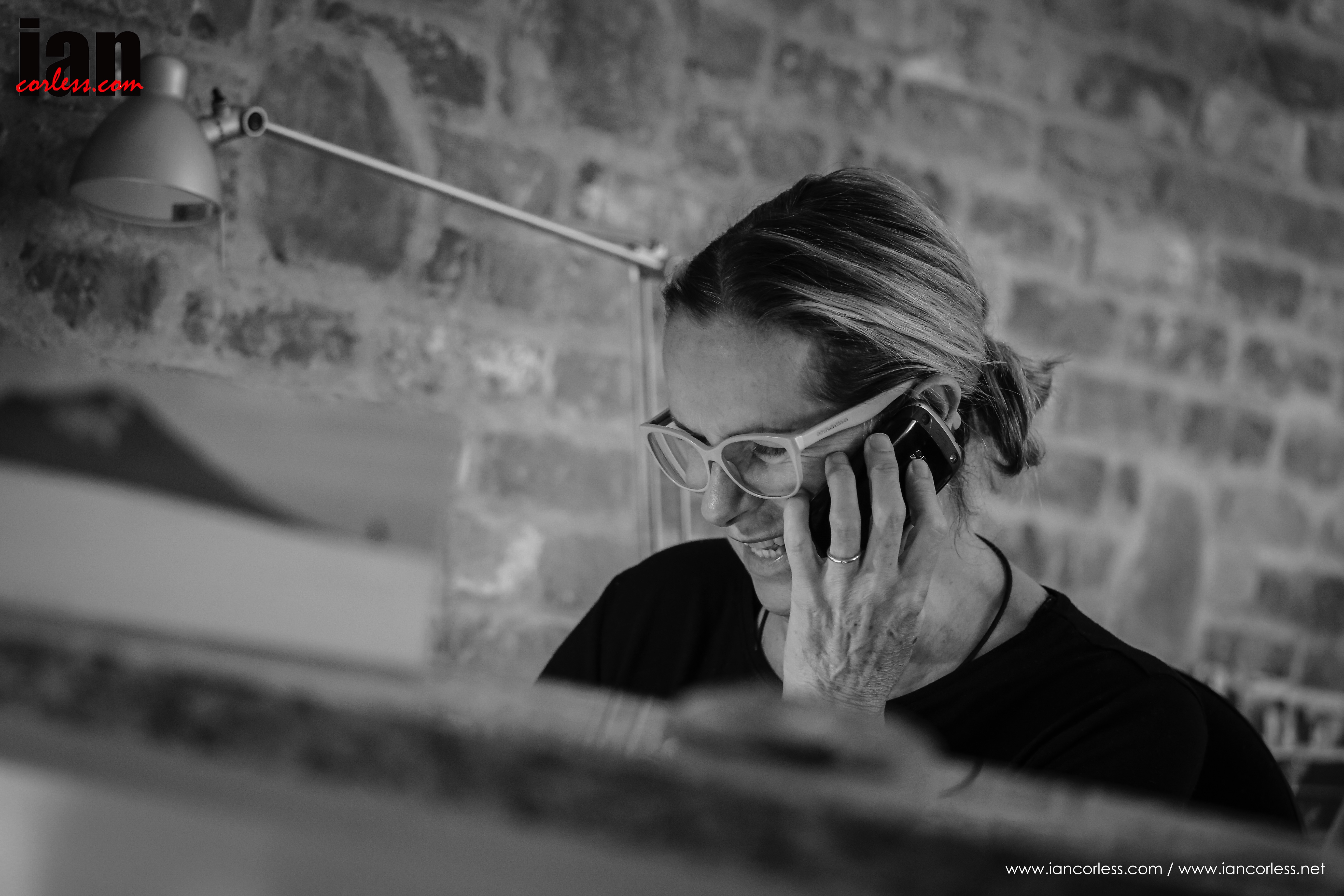






















 IAN CORLESS