The Lake District, some ‘RnR’

©iancorless.com_1160465

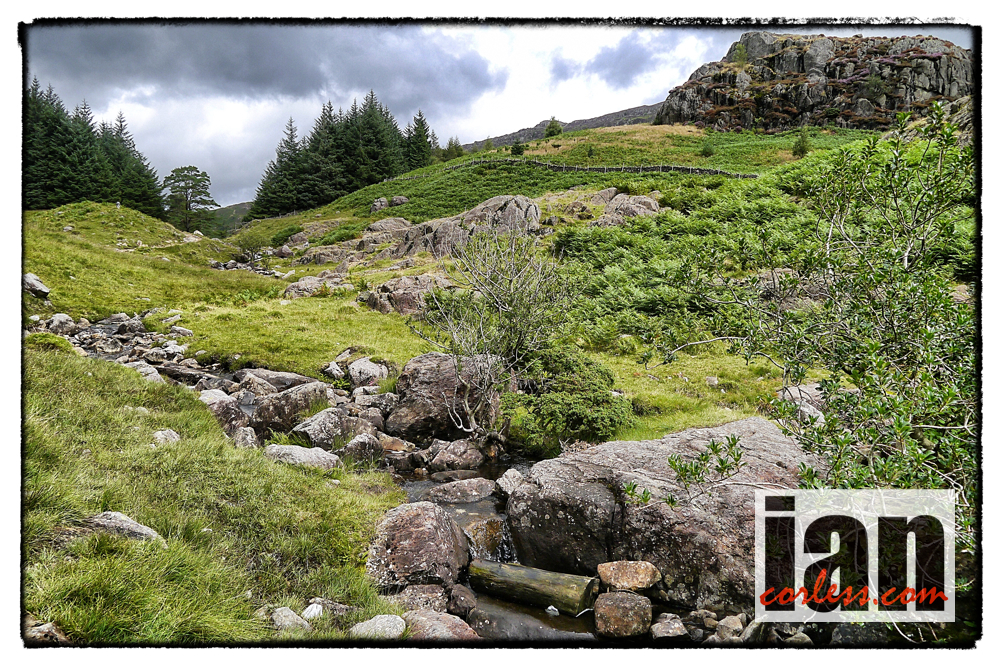
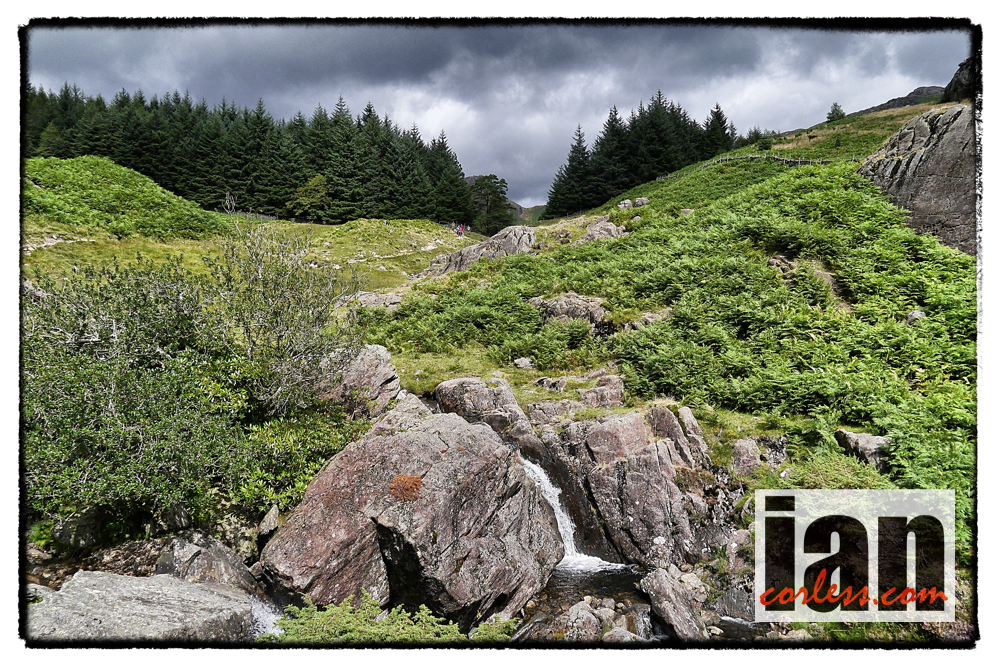
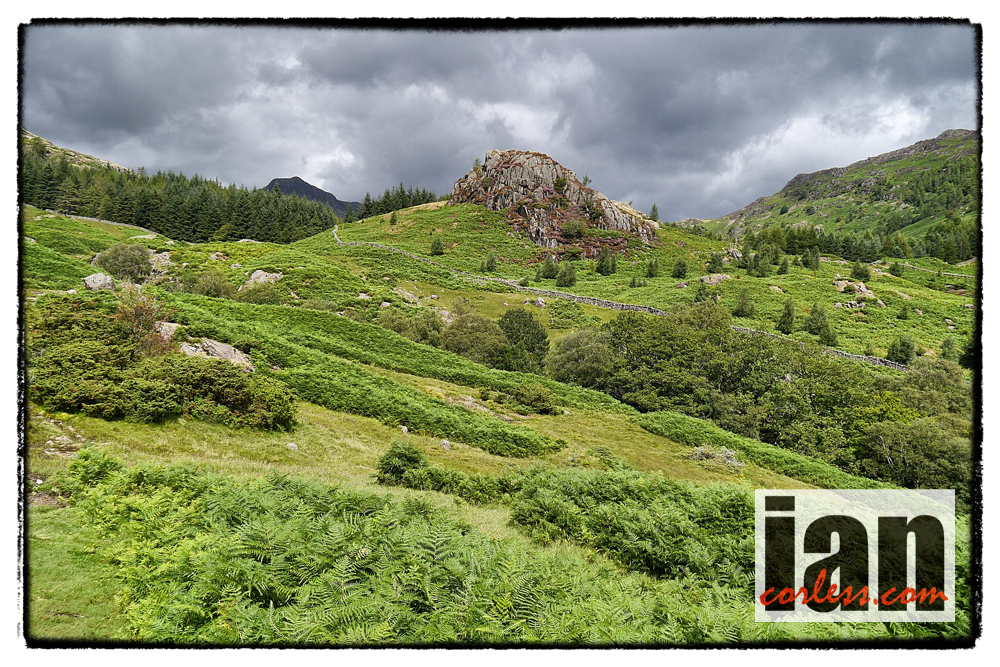
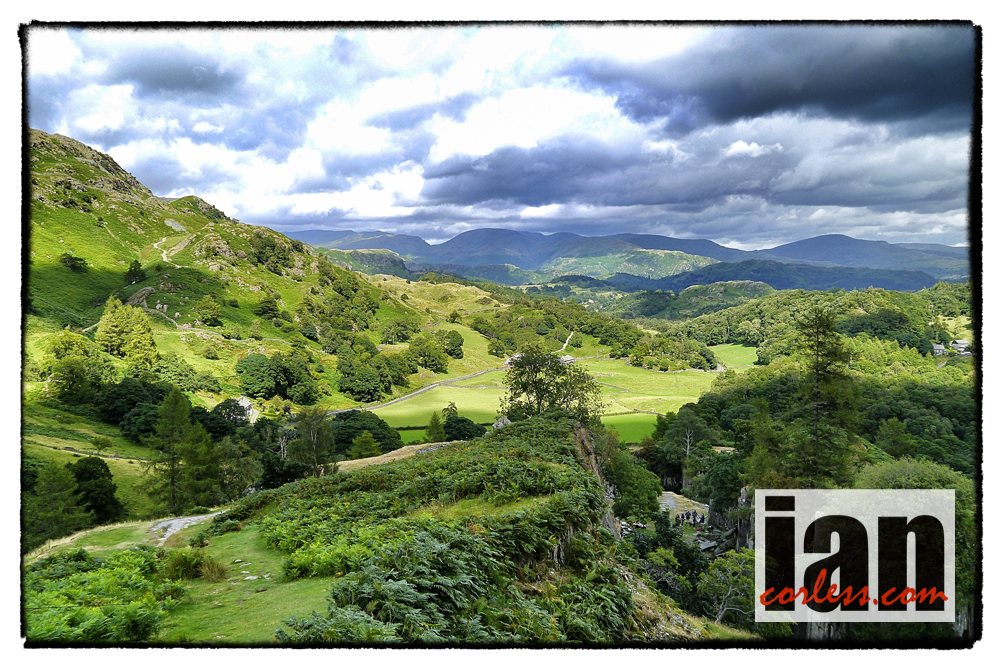
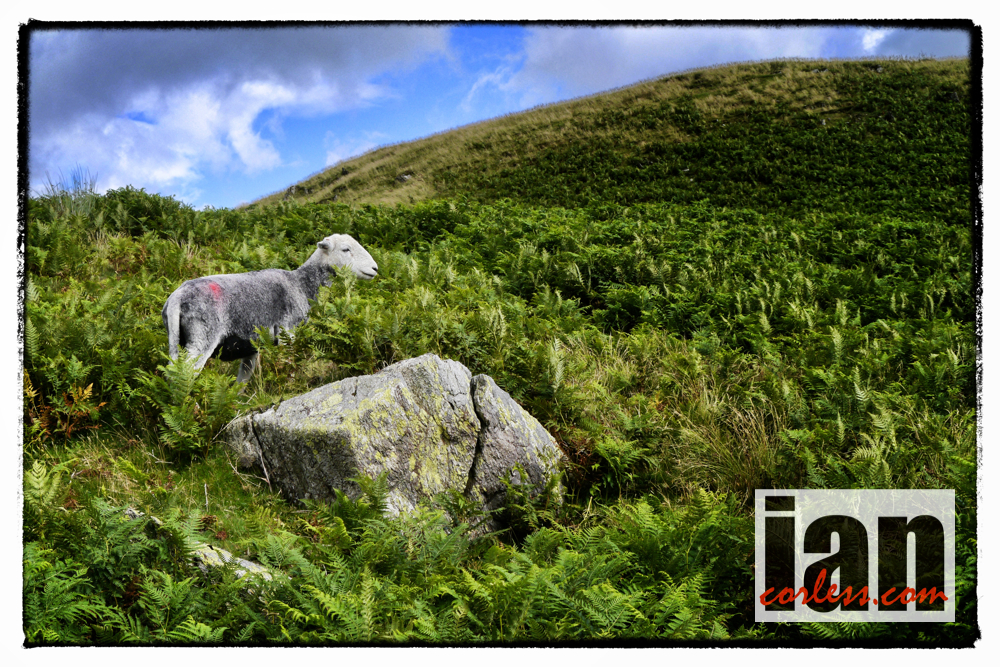
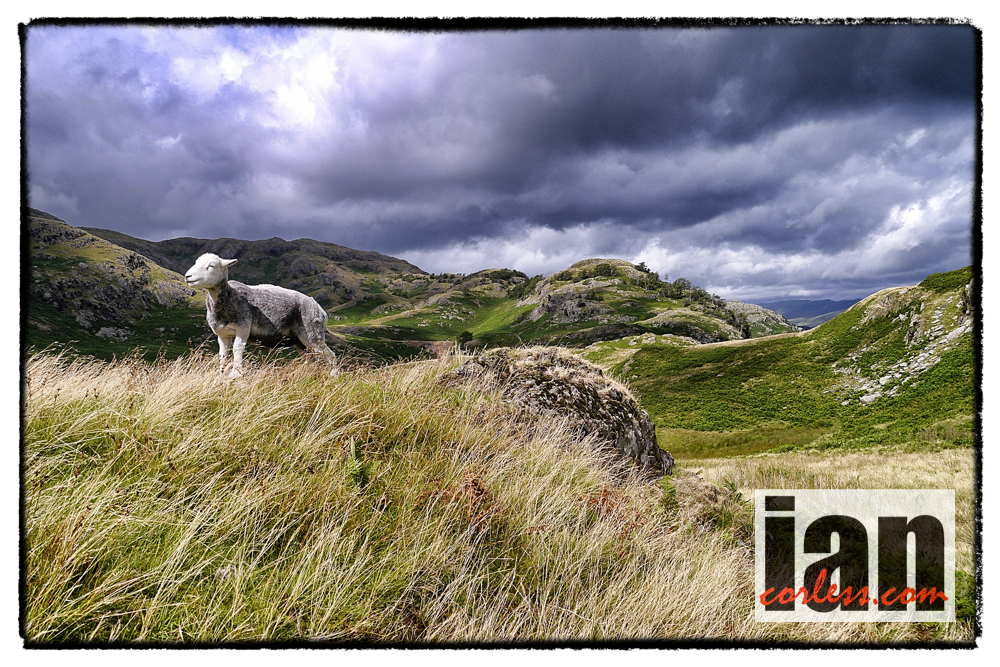
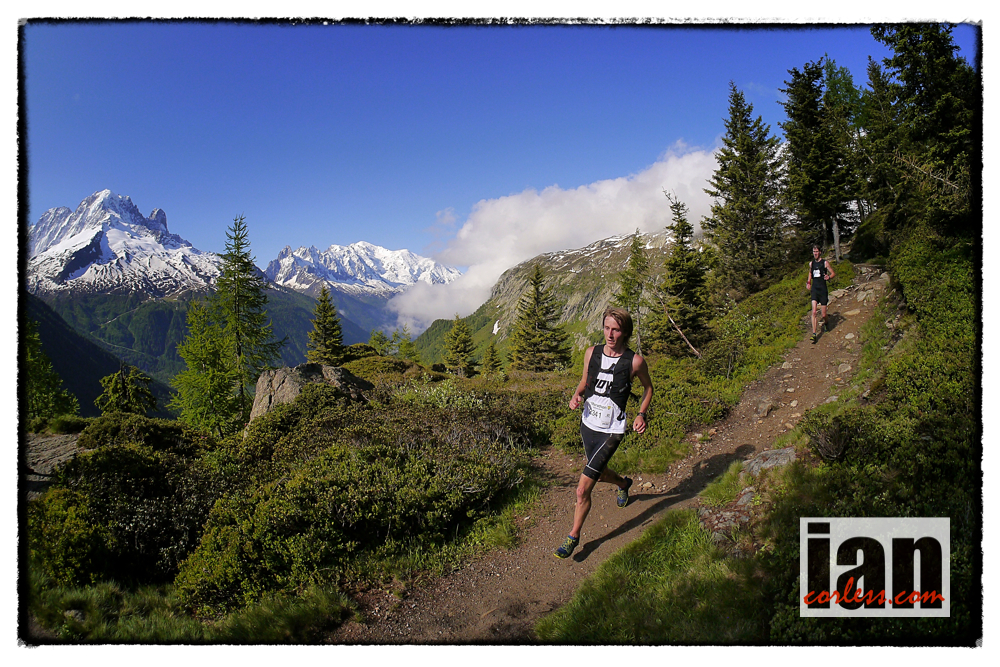
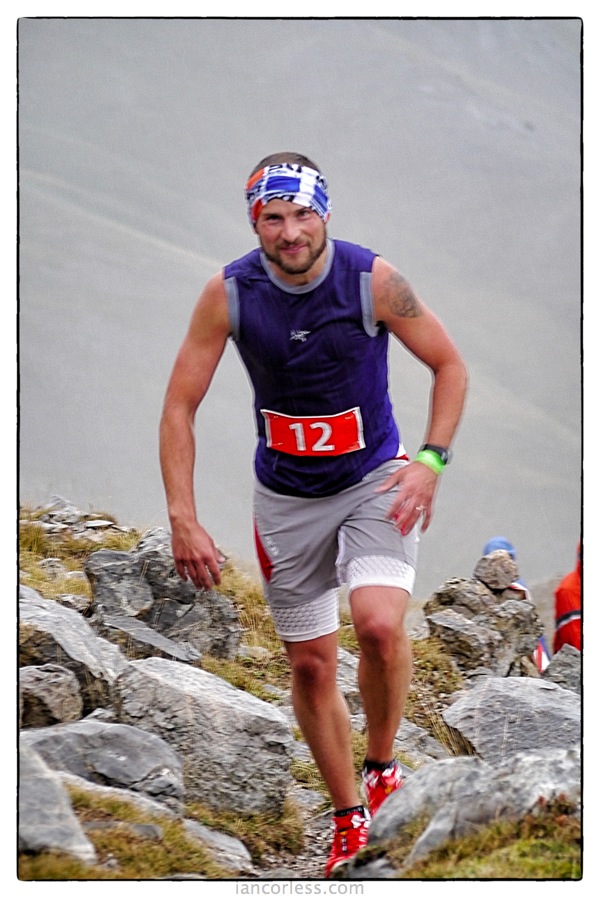
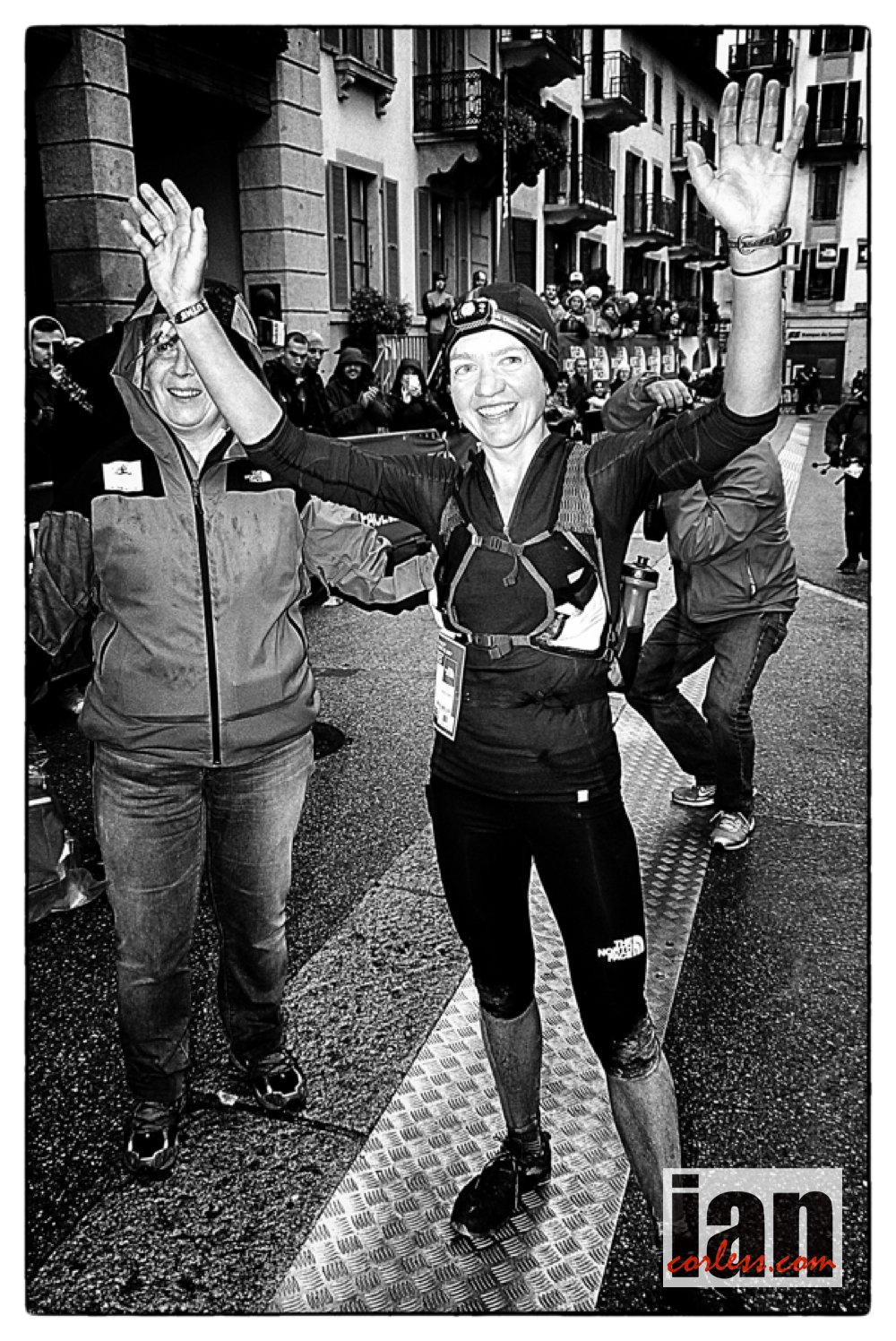
After several weeks of travelling, it was lovely to get out in the Lake District at the weekend. Some hiking, camping and basically just being with the people I love to be with. Even the rain (every now and again) couldn’t stop me appreciating the beauty that is at home.

If you have never taken time out to appreciate this part of the UK, do so, you will not be disappointed.

©iancorless.com_1160468 ©iancorless.com_1160478 ©iancorless.com_1160480 ©iancorless.com_1160487 ©iancorless.com_1160497 ©iancorless.com_1160502

©iancorless.com_1160529 ©iancorless.com_1160537

Eirik Haugsnes joins inov-8

bilde

 Prior to the Skyrunner World Series event in Chamonix, France, six weeks ago, Eirik Haugsnes was a relative unknown in the sport of athletic superhumans.

Two outstanding performances under the shadow of Mont Blanc, however, changed all that.

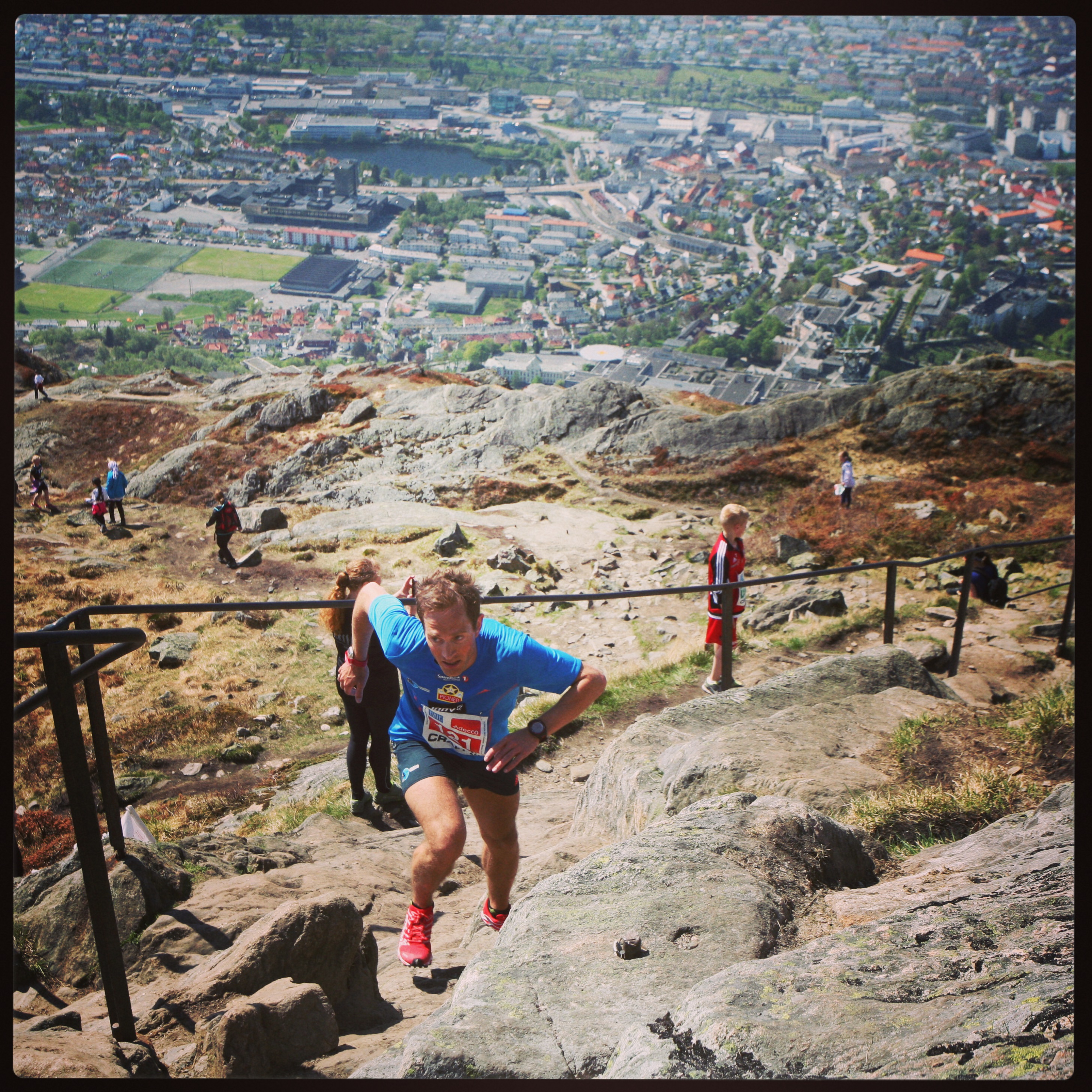
First the 32-year-old Norwegian, who lives in one of Europe’s most northerly outposts, far from the skyrunning hub, claimed the scalps of many top mountain runners when placing third in the brutal Mont Blanc Vertical Km race.

Less than 48 hours later Eirik was at it again, this time finishing fifth in the elite-stacked Mont Blanc Marathon, which sees athletes tackle over 2,500m of grueling mountain ascent.

Having never previously raced in the Alps or over the marathon distance, suddenly he found himself as one of the hottest properties in skyrunning.

It’s therefore no surprise to learn of inov-8’s delight at recruiting Eirik to their talented international team, beating off interest from rival brands in doing so.

“The weekend in Chamonix was an incredible one for me,” says Eirik, who wore inov-8’s X-Talon 190 shoes in the vertical km and Trailroc 245 footwear for the marathon.

“I’ve done a lot of uphill-only races in Norway over steep and technical terrain and knew the Mont Blanc Vertical Km would suit me.

“As a relative unknown I was given an early individual start time, while the guys expected to clock the fastest times set off later.

“I just went for it. I pushed hard right from the beginning and maintained that intensity all the way up the climb.

“To get the third fastest time (35:02) and be within 30 seconds of the winner (Saul Antonio Padua Rodriguez) was really pleasing.

“I wasn’t supposed to be doing the Mont Blanc Marathon two days later, but on the back of my result in the vertical km race I was offered a place.

“Again, I gave it absolutely everything in the race and maintained a really good pace.  The last 10km, however, were really tough. My body was in pain but I pushed through it.

“It was my first race over the marathon distance so to clock 3:47:59 and finish fifth over such a tough course was great.

“I also did it without any support. I had no team on the course to help me and drank only what was at the aid stations.

“I noticed inov-8 had a big team in Chamonix and was really impressed to see five of their runners place in the top-10 men and women for the marathon.

“I have always loved the brand, its philosophy and their big ambitions, so to now join the inov-8 team is really exciting for me.”

Living in Finnsnes, Troms, Eirik was brought up on a diet of cross-country skiing and was one of the best juniors in Norway, recording many podium places in national competitions.

In 2002, he achieved a then-world record for the fastest time skiing unsupported across Greenland, enduring terrifying whiteouts on route – something he says has aided his mental toughness for mountain running.

Eirik began running just five years ago and has since become one of the best mountain exponents in Norway, where many races are uphill-only, featuring ascent of between 500m and 1,800m.

This year, prior to his Chamonix double-header, he finished fifth in two very different races – first the Empire State Building Run-up in New York, which he completed in 11 minutes and four seconds, and then the 83km Transgrancanaria ultra-marathon on the Spanish Island of Gran Canaria, for which he clocked 8:55:24.

“The Empire State Building Run-Up involves scaling 86 floors and 1,576 steps as quickly as possible,” he said.

“In the town where I live the tallest building I could find has five floors. I did a lot of repetitions of those five floors in training!

“Before Transgrancanaria the only off-road races I had done were uphill races in Norway, so it was a totally new experience for me to be competing both up and down big mountains.

“I also went there having only trained in the snow, which every year covers our town between November and May – I think I live closer to the North Pole than the Canary Islands!

“I was therefore happy to finish fifth on the hard-packed trails, especially as for the last 30km I was totally wasted and running on empty.”

The Matterhorn Ultraks is part of the Skyrunner World Series and will see athletes battle it out over a stunning course that includes 3,600m of ascent.

And as for being the new kid on the skyrunning block, he adds: “I rise to it. I think it gives me an advantage. There are no big expectations on my shoulders, except those I put on myself.

 “I will continue to run for adventure and to challenge my limits.”

LINK:

inov-8 HERE

Episode 41 – Kremer, Clark, Mills, Whitehead

TU41

Episode 41 of Talk Ultra – We speak to Stevie Kremer 12 months on after she burst on the Skyrunning scene with a 2nd at Sierre-Zinal. We have 15 mins of fame with double leg amputee, Richard Whitehead. An interview with Lakeland 100 winner, Stuart Mills. A catch up with Nick Clark on the Grand Slam of ultra. Smiles and Miles with Emelie Forsberg. The news, a blog, up and coming races. Marc is back for Talk Training and of course, Speedgoat co hosts!

00:07:30 NEWS

Speedgoat 50k

  1. Sage Canaday  5:08:07
  2. Anton Krupicka  5:09:36
  3. Jason Schlarb 5:19:34
  4. Max King 5:29:02
  5. Justin Yates  5:42:24
  6. Luke Nelson  5:47:09
  7. Timothy Olson  5:47:10
  8. Jason Loutitt  5:49:35
  9. Michael Barlow  5:53:37
  10. Ryan Smith  5:53:51
  1. Stephanie Howe  6:17:02 
  2. Jodee Adams-Moore  6:18:06
  3. Ruby Muir   6:25:54
  4. Emma Roca  6:41:21
  5. Krissy Moehl  6:43:54
  6. Becky Wheeler  6:48:43
  7. Silke Koester  6:52:16
  8. Erica Baron  6:55:46
  9. Anita Ortiz 7:02:18
  10. Francesca Canepa  7:05:14

Stockholm 100k

Steve Way 6:40:14, Linus Holmsater 7:24:18 and Frijof Fagerlund 7:29:01

Trans D’Havet

Men

  1. Kilian Jornet (Spain) 08:59:47
  2. Luis Alberto Hernando (Spain) 08:59:49
  3. Casaba Nemeth (Hungary) 09:43:25

Ladies:

  1. Emelie Forsberg (Sweden) 10:21:32
  2. Nuria Picas (Spain) 10:33:34
  3. Uxue Fraile (Spain) 10:34:20

Lakeland 100

  1. Stuart Mills 22:17:50
  2. Charlie Sharpe 23:02:45
  3. Ed Batty 23:07:40
  1. Lizzie Wraith 24:15:06 (smashed old CR)
  2. Debbie Martin Consani 26:02:00,
  3. Julie Gardner 28:16:47

Lakeland 50

  1. Ben Abdelnoor 7:39:26
  2. Riichard Ashton 8:20:58
  3. Robin Houghton 8:33:30
  1. Katherine Brougham 9:44:10
  2. Alice Briscoe 10:35:42
  3. Rachel Ball 10:43:43

WMRA – 10. WMRA World Long Distance Mountain Running

Mitjia Kosovelj won Andrew Davies from Wales 2nd and Ionut Zinca 3rd

Antonella Confortola won Omella Ferrara 2nd and Anna Celisnska 3rd. Have to give a shout out to Claire Gordon from Scotland who was 4th and Anna Lupton from England who was 5th

Hal Koerner and Wolfe – FKT on JMT –HERE 

Ann Trason to run a 100 in September – Idaho Mountain Trail Ultra Festival – HERE

Now the iconic Sierre-Zinal is coming up this weekend. I remember being at this race last year… pre race I got chatting to this shy girl who just seemed a little uncomfortable being surrounded by some of the best in the world. Needless to say, this shy girl performed out of her skin and finished second on the podium. One year on, I catch up with Stevie Kremer and find out what the last 12 months have been like and what the future holds.

00:42:38 INTERVIEW Stevie Kremer

01:16:20 BLOG

We have given Stuart Mills, the Lakeland 100 winner plenty of coverage this week with a long interview, however, his interview does go very much hand-in-hand with his blog… so, this weeks blog is ultrastu.blogspot.co.uk

You can read his very unique and in-depth analysis of how he races. Word of warning… make yourself a coffee. It’s a long one!

Blog HERE

01:17:00 15 MIN OF FAME with Richard Whitehead – http://www.richardwhiteheadrunsbritain.com/

HERE

01:32:40 TALK TRAINING – Marc Laithwaite is back after a busy couple of months. Not only has he been training for an Ironman but also he is the RD for the Lakeland 50 and 100.

01:57:55 SMILESandMILES with Emelie Forsberg – smilesandmiles@yahoo.com

02:20:40 INTERVIEW

This week’s interview is with Brit, Stuart Mills. Stuart as you will hear has a very unusual approach to running… or should I say, training and racing. Without doubt it works! Just the other week, Stuart once again won the Lakeland 100 for a second time. In this in-depth interview we discuss everything. I am sure you will find it fascinating.

03:23:30 MELTZER MOMENT – It’s good, good, good this week

03:29:52 CLARKY’S CORNER – It’s two down and two to go for Clarky and the other ‘Slammers’. Leadville is just around the corner. We catch up with Nick, discuss how Vermont went and what lies ahead…

03:44:22 RACES

Belgium

Trail des Fantômes – 50 km | 50 kilometers | August 17, 2013 | website

Canada

British Columbia

Arc’teryx Squamish 50 | 50 miles | August 10, 2013 | website

Arc’teryx Squamish 50K | 50 kilometers | August 10, 2013 | website

Ontario

Iroquoia Trail Test – 50K | 50 kilometers | August 17, 2013 | website

Quebec

XV de la Vallée- Trans Vallée | 66 kilometers | August 16, 2013 | website

Denmark

Hovedstaden

Ultra Marathon Bornholm | 100 kilometers | August 11, 2013 | website

France

Hautes-Pyrénées

Grand Raid des Pyrénées – l’Ultra | 160 kilometers | August 23, 2013 | website

Isère

Ultra Tour des 4 Massifs | 160 kilometers | August 23, 2013 | website

Ultra Tour des 4 Massifs – 90 km | 90 kilometers | August 23, 2013 | website

Savoie

Tour de la Grande Casse | 62 kilometers | August 18, 2013 | website

Trail du Galibier | 55 kilometers | August 18, 2013 | website

Germany

Bavaria

Allgäu Panorama Ultra Trail | 69 kilometers | August 18, 2013 | website

Berlin

100MeilenBerlin | 100 miles | August 17, 2013 | website

Ireland

Ulster

Quadrathon | 169 kilometers | August 15, 2013 | website

Kenya

Kenya Highlands Race | 75 kilometers | August 10, 2013 | website

Mongolia

Mongolia Sunrise to Sunset 100K | 100 kilometers | August 17, 2013 | website

Sweden

Björkliden Arctic Mountain Marathon 50 km | 50 kilometers | August 16, 2013 | website

Björkliden Arctic Mountain Marathon 70 km | 70 kilometers | August 16, 2013 | website

Trans Scania | 246 kilometers | August 10, 2013 | website

Switzerland

Grisons

Swiss Irontrail T141 | 136 kilometers | August 23, 2013 | website

Swiss Irontrail T201 | 201 kilometers | August 23, 2013 | website

Swiss Irontrail T71 | 66 kilometers | August 23, 2013 | website

Trail Marathon 70 KM | 70 kilometers | August 10, 2013 | website

Obwald

MOUNTAINMAN full | 80 kilometers | August 17, 2013 | website

Vaud

Ultra Trail du Barlatay | 81 kilometers | August 17, 2013 | website

United Kingdom

England

ashmei 33 Mile Trail Run | 33 miles | August 18, 2013 | website

North Downs Way 100 | 100 miles | August 10, 2013 | website

USA

Alaska

Resurrection Pass 100 Mile Ultra Trail | 100 miles | August 09, 2013 | website

Resurrection Pass 50 Mile Ultra Trail | 50 miles | August 10, 2013 | website

California

Rattlesnake 50K Ultramarathon | 50 kilometers | August 17, 2013 | website

Run-de-Vous 100M | 100 miles | August 17, 2013 | website

Run-de-Vous 50M | 50 miles | August 17, 2013 | website

Run on the Sly 50K Trail Run | 50 kilometers | August 18, 2013 | website

Colorado

GORE-TEX TransRockies Run – Run3 | 59 miles | August 13, 2013 | website

GORE-TEX TransRockies Run – TRR6 | 120 miles | August 13, 2013 | website

Leadville Trail 100 Run | 100 miles | August 17, 2013 | website

Michigan

Marquette Trail 50 Kilometer | 50 kilometers | August 17, 2013 | website

Marquette Trail 50 Mile | 50 miles | August 17, 2013 | website

Minnesota

Ragnar Relay Great River | 200 miles | August 16, 2013 | website

Nevada

Extraterrestrial Full Moon Midnight 51 km | 51 kilometers | August 17, 2013 | website

New Jersey

Wildcat Ridge Romp 100k | 100 kilometers | August 10, 2013 | website

Wildcat Ridge Romp 50k | 50 kilometers | August 10, 2013 | website

Wildcat Ridge Romp 50M | 50 miles | August 10, 2013 | website

New York

Beast of Burden Summer 100 Miler | 100 miles | August 17, 2013 | website

Oregon

Where’s Waldo 100k Ultra | 100 kilometers | August 17, 2013 | website

Utah

Kat’cina Mosa 100K Mountain Challenge Run | 100 kilometers | August 10, 2013 | website

Vermont

100on100 Heart of Vermont Relay | 100 miles | August 18, 2013 | website

Washington

Angels Staircase 50K | 50 kilometers | August 11, 2013 | website

Angels Staircase 60K | 60 kilometers | August 11, 2013 | website

Wyoming

El Vaquero Loco 50K | 50 kilometers | August 10, 2013 | website

03:46:44 CLOSE

03:51:01

LINKS

ITunes http://itunes.apple.com/gb/podcast/talk-ultra/id497318073

Website – talkultra.com


Mont Blanc Marathon and inov-8

©copyright .iancorless.com._1130936

Team inov-8 placed five athletes in the top-10 men and women at the 2013 Mont Blanc Marathon – a brutal Alpine route which included 2,511m of gruelling ascent and 1,490m of daredevil descent. Watch their story of exhaustion, elation and commitment.

Video by Dave MacFarlane (website)

on YouTube HERE

Read the Mont Blanc Marathon race report HERE

Read all about the inov-8 athlete retreat and apparel testing HERE

Images from Mont Blanc Marathon HERE

Terry Conway pre race interview Ronda dels Cims 2013

Terry Conway at Cavalls del Vent copyright iancorless.com

Terry Conway at Cavalls del Vent copyright iancorless.com

Lakeland 100 winner and course record holder, Terry Conway speaks to Ian ahead of the 2013 Ronda dels Cims. This will be Terry’s biggest race challenge yet. A race over 100 miles with altitude gain over 12,000m is not something that is easy to prepare for while living in the UK. However, Terry has paced his home in the English Lakes and has trained hard to prepare himself for the challenge ahead.

YouTube HERE

Links:


Episode 37 – Rob Krar, Holly Rush, Ellie Greenwood, Nick Clark

37

Episode 37 of Talk Ultra: Rob Krar talks to us about his running history, hiw incredible Rim-to-Rim-to-Rim run and what his expectations are for Western States. Holly Rush talks marathon running and Comrades. Ellie Greenwood makes a guest appearance for Talk Training and provides an insight into running injuries. Nick Clark joins us for a reguar slot as he attempts the ‘Grand Slam’ of ultra running. We have the news, a year in the life of, and we find out: You know you are an ultra runner when… ?

00:00:00
00:00:45 Start
00:17:40 A year in the life of with Amanda Hyatt. Amanda has been injured but she is back on the road to recovery and some consistent running.
00:31:20 News from the ultra running world
00:52:20 Holly Rush is an incredible marathon runner, however, she has recently ventured into ultra running. At her first attempt at the iconic Comrades Ultra Marathon she placed 2nd Brit and 7th overall. She tells us about her story.
Profile from : HERE

I started running as a fun runner when I was at University but didn’t start formally training until 2005 when I met my coach and now husband martin rush. I had a break through run at London Marathon improving my time by 10 minutes.  Since then I have run over 20 marathons all over the world and been lucky enough to represent Great Britain and England 6 times, something that I never dreamt I would do as a non-exercising beer swilling student.  I wouldn’t say i am the most talented or natural runner but I think I have plenty of endurance and just love the feeling that running and training gives me.  In between training I work full time doing sports massage and working in my local deli.  I have been struggling with a painful hamstring for over 2 years now and after 2 failed injections I am now backing off my training to receive intensive treatment for 2 months so that I might be able to run pain free again.  Fingers crossed!.As well as talking about all things running I will most probably ramble on about my two other passions – food and my training partner Mr Mole (the dog).

01:31:18 Back to News
01:34:06 Blogs – No blog this week… we have some great answers to our FB post: ‘You know you are an ultra runner when… ?” Link to post HERE
01:36:40 Talk Training with Ellie Greenwood. Ellie is currently injured and has missed Comrades and will now miss Western States. She provides a great insight and provides some lessons that we can all learn from in regard to injury rehabilitation and assessment.
Ellie Greenwood’s blog: HERE
02:10:10 Interview with Rob Krar. Rob has spent some considerable time away from the sport but has returned in style. His recent Rin-to-Rim-to-Rim run has turned heads… in a few weeks he will line up at Western States. Post on iRunFar here
02:46:12 Meltzer Moment with Speedgaot – Good, Bad & Ugly of ultra running
02:54:40 Clarky’s Corner – US based Brit Nick Clark provides a regular slot as he builds up th the Grand Slam of ultra running. In this weeks show we talk Western States.
Nick Clark’s blog HERE
03:07:55 Races – Up and coming races for the next two weeks.
03:10:50 Close
Finish
O3:17:30
LINKS:

Lizzy Hawker – Interview

Lizzy Hawker, 2012 UTMB copyright Ian Corless

Lizzy Hawker, 2012 UTMB copyright Ian Corless

Lizzy Hawker is arguably one of the greatest female runners of all time. She has transcended what we all think is possible in running. Her versatility over multiple distances and terrain has without doubt made her one of the most respected ultra athletes of all time. She has dominated the UTMB, she is a 24-hour champion and she has set numerous course records. I was fortunate to catch up with Lizzy in early 2013. She had just had a very successful latter half to 2012 but was recovering from an injury before embarking on another full year of racing and personal challenges.

IC: Lizzy, it’s a real pleasure to finally chat, we have been trying to coordinate this for sometime.  Firstly, can we go back to how you got into running, you say you always remember running but at what point did you realize you had ability?

LH: Well going back, I can’t remember NOT running. I guess we all run as children, you know, just running around. I always remember at school that I preferred running in contrast to netball or similar sports. I don’t know how really but it just became normal to run everyday. It was only for fun though. It never crossed my mind to race or join or club. It was just my way to be outside and in nature. It was a balance to school, university and all other distractions. It’s just something that has always been there for me and I don’t think it was really until 2005 when I entered a couple of long races that I realized that I had something that I should really pursue.

IC: Pre 2005 is that when you where travelling doing expeditions. You were in Antarctica. An Oceanographer, yes?

LZ: I was actually finishing off my PHD and then I had a job with the British Antarctic survey.

IC: Running was very recreational then, a way to keep fit?

LZ: Absolutely, it was my way to be outside and an escape.

IC: Did you do any competitions, half marathons, marathons etc.?

LZ: I did London Marathon just because I felt I should… you know, it just seemed logical. I remember it was several years before I actually got a place due to the ballot. This was prior to my PHD but I was working at the Antarctic Survey when I got a place. I was actually at sea for six weeks. It was only a month before London that I got back on land. Not ideal preparation! It was my first race…

IC: How was that, how did it go?

LZ: I enjoyed it but my time wasn’t special.

IC: Time?

LZ: 3:40 ish

IC: Wow, considering how fast you now run that was a humble beginning. Nice for us all to hear… 3:40 for many is a good time but it was a very modest start for you. How did you progress?

LZ: From London a friend suggested that if I love hills then I should do a marathon in a hilly place, you know, somewhere nice. So, I did Snowdonia marathon in Wales for a few years and then the same friend suggested going ‘off-road’. You know, going across hills instead of around them. So, I entered the Welsh 1000’s. Because I didn’t have fell-running experience at all, I couldn’t enter the fell class, so, I was in the mountain class. It meant a heavy pack, long trousers and walking boots. I enjoyed it and did it a couple if times… that was the only experience I had prior to 2005.

IC: In 2005 what changed, what was it that you then did that paved the way to were you are now?

LZ: Two things really. I was visiting friends in South Wales to escape my PHD for a weekend. They were running a 40-mile track race in Barry. So I just entered it. Primarily because they had. I think that was March and then I was selected for the England team for the UK 100k champs. That was based on my time at the 40-mile race. The 100k was a month later and in-between that I went to Turkey to SkiMo (Ski Mountaineer). Not conventional prep! Also, I had read an article about the Ultra Tour de Mont Blanc (UTMB). UTMB did not have the prestige it has now and it had no wait list, so I entered. I was due to finish my PHD and it was a great excuse to go to the Alps. I would goo climbing and then race at the end. That was my first mountain race.

IC: So in 2005 with little or no experience, you go to UTMB. That is quite a step up eh?

LH: I had no idea what I was letting myself in for. I had nothing to gauge it against. I had no idea even if I would get back to Chamonix after starting. I certainly expected not to make one of the cut offs… I was on the start and I thought about a quote from Alice in Wonderland, you know, the one about starting in the beginning and stopping when you get to the end. That was my goal. To start and keep going until I stopped or was stopped.

IC: What was that first experience like?

LH: I loved it. I started in the masses. I was way back at the start. I was on the Church steps way back from the front. It was a long long time before I even started to run. Just the sheer number and volume of people slowed everything down. I can remember, after about 15 to 20k I was somewhere between about 500/600th place. I actually finished 25th or 26th overall by the time the end came. I just worked my way past everyone… I just loved it. It was my first experience of running at night and I can remember after one of the feed stations, I was running up  a climb and I could feel the beauty of the mountains. I knew then that I would have to go back. Yes, it was magic.

IC: You have won that race (UTMB) five times…

LH: Well, kind of five times…

IC: Ok, yes, five variations of the race! We spoke after the 2012 finish and you said you still had unfinished business. You want that ‘time’* on the course. Will that mean you will be back?

*Lizzy is very keen to set the fastest ladies time in the UTMB course.

LH: Yes, I am mulling over my plans. I can’t confirm for 2013 but I almost certainly will be back to UTMB, if not this year then maybe next. I do have unfinished business.

IC: Do you think the plans that the UTMB organization have made for 2013 and moving forward to correct issues* in the past will work?  *by issues, we refer to the race being shortened due to unpredictable weather.

LH: I don’t know. What I would like to see is a sliding start time. So that they have the possibility to bring the race forward or delay by 24 hours, this will allow for good weather windows. I am not sure how that would work with the other races (CCC and TDS) going on but it seems to me that the weather systems work through quite quickly and this window may very well be ideal to allow the full race to go ahead. We want the race to be as it should be, a full tour of Mont Blanc. That is 160km. If I were taking time of work, paying money to get there, I would much prefer to add one extra day either side and have that possibility to race for what may very well be moderate additional expense. I don’t think they (UTMB organization) have taken this as an option but it is what I would like to see.

IC: I think many would agree with you. The race is a ‘tour ‘of Mont Blanc. Not a 60k, 100k or 140k. You want to go back and do the race and get the time* but your variety of races are extreme, you know, you run on the track, you run on the road, you run mountains, you run trail, you do multi stage, how do you apply yourself in your training, do you literally just go out and run and enjoy it?

LH: Pretty much I guess. I think over the years I have kind of built up a high level of base endurance so depending on the race I am targeting next I kind of focus training to that specific event. But because of the way I came into running, running was part of my daily routine. I wanted to be outside, I wanted to be moving and I just love running, So, that is really the backbone of my training even now I guess. I just like to run.

IC: For someone who loves the mountains so much, You are passionate about Nepal for example, what is it in your mind that allows you to run on a 400m track, time and time again for 24 hours?

LH: I haven’t done that yet!

IC: Yes I know that, but I am curious what it is within you that will allow you to do this?

LH: I can remember back to my first track race in 2005. I hadn’t been on a track since school. It was funny, I couldn’t get lost, I couldn’t fall down a crevice, I had no avalanches to think about and it basically just simplified the process. I could think about the running movement. I could just focus. Almost like meditation.

IC: Do you use meditation when running?

LH: I use mediation for it’s own sake. But that is just during the last 12 months or so. But I have realized that most of my running is kind of a meditation. Or at least  it is my quiet time. Time alone with myself. Not every case obviously but when I am alone it is a relaxing and spiritual time.

IC: I followed you at UTMB in 2012. I had the benefit of being in the feed stations with Keith (Lizzies crew from The North Face). You would arrive; Keith would have everything laid out. It looked planned with a definite strategy. Get you in and out ASAP. But I remember you said to me that it isn’t that planned.

LH: No not at all. I never know what I want but if I have the options I can choose what I want. I need to move through as quickly as possible.

IC: Do you find that you turn yourself off? Do you almost become metronomic?

LH: Not really. It’s a body and mind connection. It has to be very strong. You need to know what is going on; particularly with your body but at the same time you need to be able to cut pain off. You need to hang on in and sort it out. It’s two sides of the coin if that makes sense.
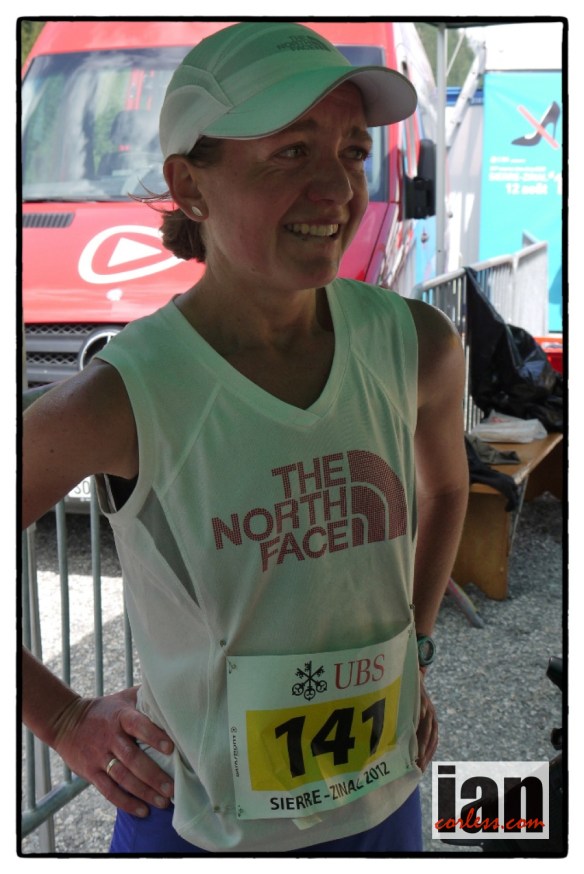
Lizzy Hawker at Sierre-Zinal 2012 copyright Ian Corless

Lizzy Hawker at Sierre-Zinal 2012 copyright Ian Corless

IC: If we look at your achievements, UTMB, 100k champs, 24-hour world record and in 2012 you had a golden period… UTMB, Run Rabbit Run and then Spartathlon. If we look at all these things, what are your highlights?

LH: Ultimately it is the running. It is an essential part of my life. The races are stepping stones within that. I think it is funny though, I look at what you call the ‘golden period’ and I don’t feel I raced at my best! I could have done so much more… It is kind of funny; I am always trying to improve. Go faster, go longer. I want to be so much better. I was happy with those three races but I felt I could have given more.

IC: Lets take Spartathlon. It is an iconic race in the ultra calendar. It is a race that has a different variety of people who take part, we often look at that race as giving some significant performances, and for example we talk about Yiannis Kouros and Scott Jurek. You raced for the first time in 2012. Did the race live up to its billing?

LH: It is an iconic race. The atmosphere is amazing. The route is not that wonderful, not so much the route but the fact that you are on busy roads and they don’t close them. I had times during the night with lorries passing me that were less than comfortable. It is an incredible race to be a part of though.

IC: Of course you had a pretty darn good race. You set a women’s course record, you were on the podium overall but yet you say it wasn’t good enough! Did you want to win outright?

LH: yes!

(Joint laughter)

IC: Funny. I love the standards that you set yourself. Will you go back?

LH: Yes, I am not sure in 2013 but I will go back and try again one year.

IC: After Spartathlon I guess you had a cleansing period in Nepal. You did Manasulu Trail. Is that type of race more for you, a personal race?

LH: Half and half. Of course, I love to be in Nepal. Nepal gives me so much back, to be in that place is rewarding but those Nepalese guys can really run, it is not easy.

IC: I love you say that you mention the men and the fact that you are not racing the women.

LH: It’s a small race!

IC: Yes, but women usually race women. You always race for the overall instead of racing for first lady. Are you very competitive?

LH: I guess I am competitive but the competition is within. I want to be the best I can be. I can win a race and not be happy or I could come way down the field but be happy because I did my best on that day. That is the way I feel about racing. It is a personal thing.

IC: You love Nepal. You attempted a full crossing, which unfortunately didn’t go to plan… you lost your sat phone amongst other things!

LH: Or the permits! Just a few things… (laughs)

IC: Will you try again; I know the rules have changed on how you can now do these crossings?

LH I definitely want to go back. It is my dream journey. To cross the Himalayas keeping as high as possible and moving fast is what really motivates me. I would love to go back.

IC: How long is that journey?

LH: About 1,000 miles.

IC: A long way!

LH: Yes, a pretty long way.

IC: A race has been announced that will take this whole route for 2014.

LH: Yes, Spring 2014 and 2016 I think.

IC:  Is that of interest to you or would you prefer solo?

LH: I can do both! (Laughs) I still want to do my solo journey because it will be so different. The race will miss the high passes. You can’t really compare the two. They both have validity and I would like to do both.

IC: 2013 is here, what does it have in store for you?

LH: Good question. I am mulling that over. Nothing is definite, not that it ever is. I am formulating race plans at the moment.

IC: Western States, Skyrunning, and UTMB?

** Please see UPDATE below

LH: Ronda del Cims 100m Skyrunning race is looking very likely in June. I hope to do Hardrock 100. I am on the wait list so I hope to race.

IC: You are high up on the wait list for Hardrock 100 if I remember correctly?

LH: Not sure it is high enough though? I will try to do those two and then we shall see what the rest of the year holds for me.
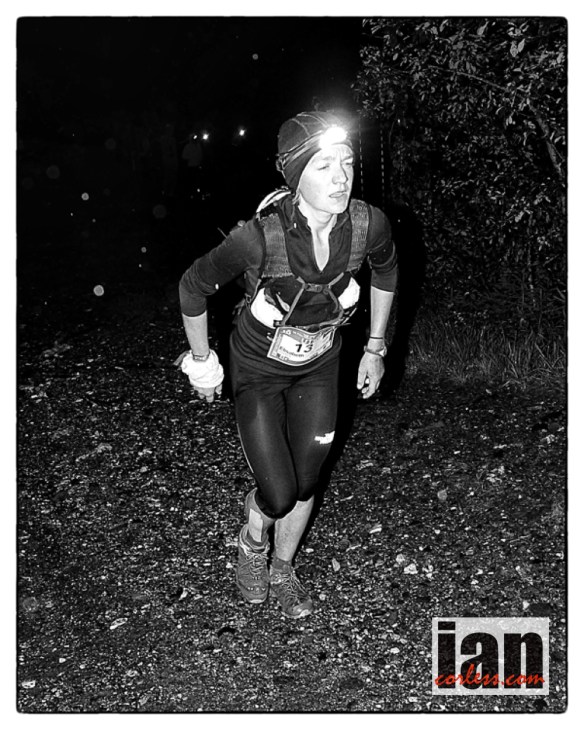
Lizzy Hawker copyright Ian Corless

Lizzy Hawker copyright Ian Corless

IC: Ronda del Cims is a tough course. It has plenty of climbing and altitude.

LH:  Yes. I am looking forward to it. It will be a real challenge and a great race.

IC: Well Lizzy as per usual, it has been an absolute pleasure to talk to you. Without doubt you are an inspiration to all. I really appreciate your time and I look forward to seeing you and following you around the Ronda del Cims course in late June.

LH: Thanks so much Ian.

*To get 2013 rolling, Lizzy raced at Annapurna 100k and won the ladies race. She then decided to break her own personal record running from Everest base camp to Kathmandu (319km/ 198m) in 63 hours and 08 minutes (here) smashing her previous record. Not content with running for 63 hours, Lizzy then raced the 277km Mustang Trail Race and was 2nd overall. However, just recently she entered the 24-hour championships and pulled out. Apparently all is well with Lizzy and her focus is now on Ronda dels Cims. I have to say, that Lizzy has not only the potential to win the ladies race but the race outright. Race preview HERE

UPDATE June 6th, An email from Lizzy “As it turns out I’ve just had an MRI confirming a stress fracture in my foot. So, Hardrock would have been off the cards, and now I also have to pull out of Ronda del Cims.”

Links:
Sarah Ridgeway Zegama pre race interview

Sarah Ridgeway Inov-8 copyright Ian Corless

Sarah Ridgeway Inov-8 copyright Ian Corless

Sarah Ridgeway needs no introduction to the ‘Zegama’ experience. She raced here in 2012 and placed 6th overall. She loves Zegama and she feels very privileged not only to be back racing at Zegama again but also to be part of the Inov-8 International Skyrunning Team.

Last years race was cold, wet and we had snow. Sarah hopes she gets similar conditions this year… one of the advantages of being a fell and mountain runner in the UK!

YouTube HERE

Links:
Patrick Bauer – The Interview

MDS LOGO

Patrick Bauer has a passion and a love for the Marathon des Sables that the passing of the years has not suppressed. Back in 1984 he ventured into the Algerian Sahara to cover 350km’s alone in a self sufficient manner. Little did he know that his journey would not only change his life but also so many lives of so many others…

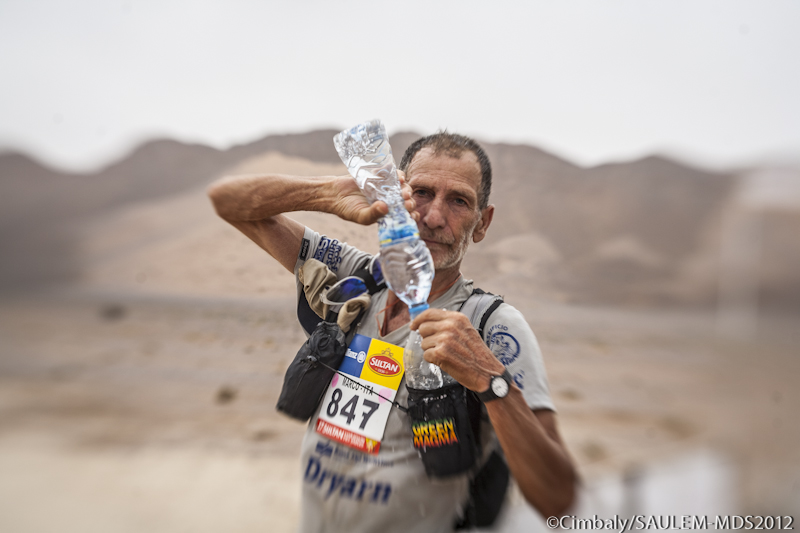
DRAYMDS2012-04-14-7436

Translation services provided by Niandi Carmont

IC Patrick, welcome. In 1984 you took a solo journey across the Algerian Sahara. Why, what inspired you?

PB In 1984 I decided to take a self-sufficient journey of 350km. It took me 12 days; because of my self-suffiency my pack weighed 35 kilos. I needed enough food water for the whole journey. I had no help. It was an incredible undertaking.

IC What was the motivation, It must have taken some planning?

PB I had lived in West Africa for two years. I was employed to sell Encyclopedias to teachers and books on medicine to doctors and pharmacists. Returning to France was difficult. I had no desire to stay… I just wanted to leave again. During my 2 years in Africa I had crossed the Sahara five to six times by car but I wanted to cross on my own, on foot. I remember it well, I had returned to France, I had no apartment so I returned to my parents. I was back sharing a room with my brother. I woke up one morning and said

“I am going to cross the Sahara on foot”

My brother said, “Ok, go to sleep… you had a nightmare”

I said to my brother you must help with a camera and sponsors. Just three weeks later I left to take the journey.

IC That journey influenced the rest of your life but importantly it changed your immediate life in the mid 80’s. In 1986 you decided to share that experience and create Marathon des Sables. What gave you the confidence to create such a race? How did you know you would have a market?

PB I realized when I did a presentation to my village. I had friends and sponsors present. It was a thank you but I had awoken curiosity and interest. Local runners did not want to make the journey alone, so, I decided to organize it. No other event compared, maybe Paris-Dakar. It was a ground breaking moment.

DRAYMDS2012-04-08-8439

IC In the early years, was participation mainly French?

PB Yes, French with the exception of one Moroccan. We had 23 runners at the first edition. It took 24 months to plan and create. Little did those 24 know that they would be the pioneers of one of the most beautiful stories that will soon be 30 years old?

IC In the early 1990’s you contacted ‘The Best of Morocco’ to introduce British and Irish runners, was this a long term plan to expand the race?

PB We already had contact with this agency (Best of Morocco) but by 1990 I had already done 5 editions of the Marathon des Sables. I wanted to expand internationally and I wanted as many countries present as possible. We started in a tentative way and today we have as many English runners as French and potentially more in the future.

IC British entries have reached 250+. The race is known worldwide. Did you know it would become so big?

PB I would never in my wildest dreams have imagined it would be what it is today. When a race is over, I start immediately on the next year. I have a passion and I don’t think about it all the time.  I want to be more strategic with my long-term vision. 2015 is the 30th edition; I like to plan 3 years ahead so I already anticipate higher demand for 2015.

IC What is it that makes the race so special. You appeal to novices and experienced runners. It is a difficult balance but you do it so well.

PB I think it is the concept. The cocktail of the desert, running and the self-sufficiency. Nobody at the beginning thought it would be possible to run with a pack. The expedition was an extra bonus…. You need to manage everything; calories, water, clothing, rest etc. All these elements combine to create the ultimate experience. It was new! Today we have additional security. Runners tell us that the safety element is key. Believe it or not, the average age is 40yrs+. These participants have families and children so risk is not negotiable. We want to offer security and safety for all these participants. We have helicopters, planes and insurance to make sure everyone is protected. Finally, it is about testing your limits; in our busy lives we find going back to basics a wonderful experience. Under the stars with friends, sat around a campfire, simple conversation and no luxuries. It is primal. It brings out true values that we may have forgotten. Because the desert facilitates all that is around us, the stars, the universe, you don’t need a book to tell you that ultimately we are all insignificant.

DRAYMDS2012-04-12-0683

IC What is it that makes runners that go back year after year?

PB Yes, we have some people returning for the 22nd or 23rd time. But it is not the same for all. If everyone came back we would have the same race, this would not be good. But we have a faithful family that we have created from the start. We have affinity and we love to find each other in the desert. We are also happy to find new friends. Maybe we have people return years later to celebrate a key moment such as a 50th birthday. We have a fraternity side, we share values. We have a respect for difference and other countries. All the languages that are spoken. These are the experiences that make the event. It is the combination of so many elements that make it great. We have an edge I think and that brings people back.

IC What is the future of the race? Will the race become bigger with more runners?

PB Yes, I think we will have more participants in 2013. We will have 350 from the UK. We had a meeting with worldwide representatives some time ago and it was decided that we would all work together on a communication strategy and we discussed the 30th edition. We have had great demand; we have refused more than 2,000 entries. I get messages about the 30th edition asking if it will be 300km as the 25th edition was 250km. Because of the worldwide economic crisis we may need to take more entries so that we can ensure the quality of the race such as safety. This is why we prepare 3 years ahead.

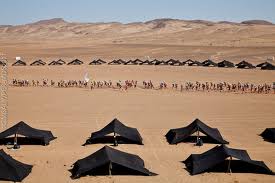
camp

IC As a race director can you give us an insight into the Marathon des Sables?

PB The advise to the runners is repeated every morning, like, hydration, protecting your head, sun block and more specific advice concerning the course. Storms can just arrive and then last a half-day or even 4-5 days. A few years ago we had floods… that year we had to plan from day-to-day. It wasn’t easy. The biggest problems are usually weather related. For the rest of us, it is a safe country. We have government backing should we have a problem, for example we have military assistance. We have trucks and soldiers who transport the tents everyday and we have 400 people who work on the event. If you add journalists, drivers, volunteers etc. then we have more like 450 people.  I have 110 people who directly report to me.

JPCERVELMDS2012-04-08--4466

IC It is so impressive, the tents, the staff, and the helicopters. A circus!

PB It is a little like the circus. Up and down, load up and move. I am always impressed. It is fantastic.

IC Since the beginning can you pinpoint any highlights?

PB The feeling you get from every event. We have an extraordinary experience. We share values with participants and it creates a bond. Some say ‘never again’ and then two years later we see them again. We all strive for equilibrium to balance the experience and we all strive for positive thoughts. If we have them then we can share beautiful things.

IC In 2005 you had an Opera singer to sing before the start. A magical experience.

PB Yes, for the 20th anniversary we had a spectacular start with an Opera singer and musicians. She was Japanese. It was a moving experience. Classical music is in harmony with the desert. At the beginning the runners are still fresh so they can enjoy the experience.

IC What do you think of Olympian James Cracknells performance at Marathon des Sables, he is not your ‘typical’ desert runner?

PB He was an excellent champion, a top-level athlete who understood how to test the limits. So I think he had a new experience in the Sahara. He asked himself what he was doing at the race several times I think. Discovery Channel did a documentary on him. He demanded respect as an athlete. As a man I did not get to know him but as a sportsman I am sure he has great values.

IC Has the race become easier over time or have you made adjustments to make the experience more challenging?

PB The race is not easier. The distance has increased over the years but water can be a key issue and we now have great water supplies which was not so in the past. In the past water was an issue. But we all have short memories. We forget the hardships. Every year has new demands. We now have more positive incline. We used to spend time in the valleys.

DRAYMDS2012-04-11-9798

IC True, we all forget hard times very quickly. We always remember the good times and they are our memories.

PB At the end you have sore feet and blisters… but your mind is selective. We filter the negative to retain the good. The human and sport experiences. We forget the soreness and remember the positive.

IC Do you still run, do you have the time?

PB Yes, I run after the sponsors, I run after my planes, I run after my trains… I started cycling a little and I do a little running. It’s not a good time for me. But then again, I always have an excuse. It is difficult but I am motivated to try to be more regular with my own exercise.

IC Patrick, it really has been excellent to get an insight into such an iconic race. Thank you so much.

PB Merci beaucoup

2013 RACE PREVIEW HERE

Patrick Bauer, Marathon des Sables copyright www.lest-eclair.fr

Patrick Bauer, Marathon des Sables copyright http://www.lest-eclair.fr

MARATHON DES SABLES 2013 Preview

copyright Marathon des Sables

copyright Marathon des Sables

MARATHON DES SABLES 2013

The 2013 edition of the Marathon des Sables is a self-sufficient race in the South of the Moroccan desert, the event will take place from 5th to 15th April 2013. For the 18th consecutive year, it will be run under the patronage of his Majesty King Mohammed VI.

Since its creation in 1986, the Marathon des Sables has attracted over 13,000 competitors over 27 editions. From humble beginnings, the race is now the most prestigious multi-stage race in the world.

The 2013 Marathon des Sables will see 1,091 entrants toe the line. With 45 different nationalities and a strong presence from France and the UK, the 28th edition will be a memorable one.

Taking place in South Morocco, in the provinces of Errachidia and Tinghrir the race will cover 223.8km over 5 stages. It will encompass some of the most beautiful terrain in the Moroccan desert. Eagerly awaited by one and all, the dunes, ergs and dried-up wadis will delight the thousand or so entrants from the fifty plus countries across the globe.

MDS LOGO

Race Programme:

5 April 2013: Leave country of residence for Morocco (UK entrants leave on the 4th) – Arrival in Ouarzazate, bus transfer to the 1st bivouac.

6 April 2013: Administrative, technical and medical checks – Day to acclimatise.

From 7-12 April 2013: Race in progress. (The self-sufficiency begins from breakfast on the 1st leg).

12 April 2013: Prizing ceremony in desert.

13 April 2013: Charity leg for UNICEF– Transfer to Ouarzazate.

14 April 2013: Day of relaxation, festivities.

15 April 2013: Return to country of residence.

Race Logistics

Patrick Bauer affectionately describes the Marathon des Sables as a big circus. It’s like moving a city everyday… just look at what is involved.

Race management : This team comprises more than 100 people including a race HQ, race marshals, controllers, timekeepers and ranking compilers. Since 2010, the official ranking has been achieved using a “transponder” for all the competitors.

Supervision : 400 people: technical, logistical and medical skills, 100 vehicles, 2 helicopters, 1 CESSNA plane, 4 dromedaries… and the active support of the Royal Armed Forces: 21 lorries (6×6) and 40 men to supervise logistics.

Medical Assistance : A team of 50 people under Dr Frédéric COMPAGNON, DOC TROTTER supervises the runners as much on a medical level (care of feet, resuscitation…) as a mental level, both of which fail sometimes in front of the toughness of the event and the hostility of the climate.

In the 27th SULTAN MARATHON DES SABLES, 3 tonnes of gear was transported and the medical team used : 5km of Elastoplast, 2,700 second-skin patches, 125 litres of disinfectant, 230 litres of drip solutions, 15,000 compresses, 2,800 pairs of surgical gloves,…

The Team

  • 115 volunteers on the course itself
  • 400 support staff overall
  • 120 000 litres of mineral water
  • 270 berber and saharan tents
  • 100 all-terrain vehicles
  • 
2 “Squirrel” helicopter and 1 “Cessna” plane
  • 6 “MDS special” commercial planes
  • 23 buses
  • 4 dromedaries
  • 
1 incinerator lorry for burning waste
  • 4 quad bikes to ensure environment and safety on race
  • 
52 medical staff
  • 6.5 kms of Elastoplast, 2 700 Compeed, 19 000 compresses 6 000 painkillers, 150 litres of disinfectant
  • 4 editing stations, 5 cameras, 1 satellite image station
10 satellite telephones, 30 computers, fax and internet

Marathon des Sables

Marathon des Sables – how did it start?

Patrick Bauer interview available HERE

1984 : At the age of 28, Patrick Bauer decided to make a journey into the Sahara. His objective was to traverse 350km’s of uninhabited desert, on foot, alone and without any possibility of encountering a single village, oasis or watering place. Totally self sufficient, Patrick entered the desert with a pack weight of 35kg containing all his water and food. The journey lasted 12 days and it was the starting point of what has now become the MARATHON DES SABLES.

Patrick Bauer, Marathon des Sables copyright www.lest-eclair.fr

Patrick Bauer, Marathon des Sables copyright http://www.lest-eclair.fr

1986 : The creation of the first MARATHON DES SABLES in the Moroccan Sahara. The 23 pioneers who took the start never imagined that their footprints would mark the start of a legendary event, which today has become unmissable on the schedule for major adventure sport meets.

1989 : 170 competitors take the start of the race and the rest is history.

I caught up with Patrick Bauer at the MDS UK expo in late 2012. You can listen to that interview (lasts 13 minutes):

talkultra.com

LISTEN HERE

The 2013 Race – who will be taking part?

1,090 competitors aged 20 to 76 are expected to take the start (definitive number on 6 April following administrative and medical checks) representing 45 different nationalities: Algeria, Argentina, Australia, Austria, Belgium, Bulgaria, Canada, China, Costa Rica, Czech Republic, Denmark, England, Finland, France, Germany, Holland, India, Ireland, Italy, Japan, Jordan, Kuwait, Latvia, Luxembourg, Morocco, New Zealand, Norway, Poland, Portugal, Republic of El Salvador, Romania, Russia, Saudi Arabia, Scotland, Singapore, Slovakia, Slovenia, South Africa, South Korea, Spain, Sweden, Switzerland, Turkey and the United States.

The participants are men and women with various and varied profiles (Doctors, farmers, coppersmiths, pilots, builders, chefs, servicemen and women, students, professional athletes and retired persons…).

The 2013 MDS Challengers for the overall win

DRAYMDS2012-04-08-7945-1

The Female contenders for the overall win :

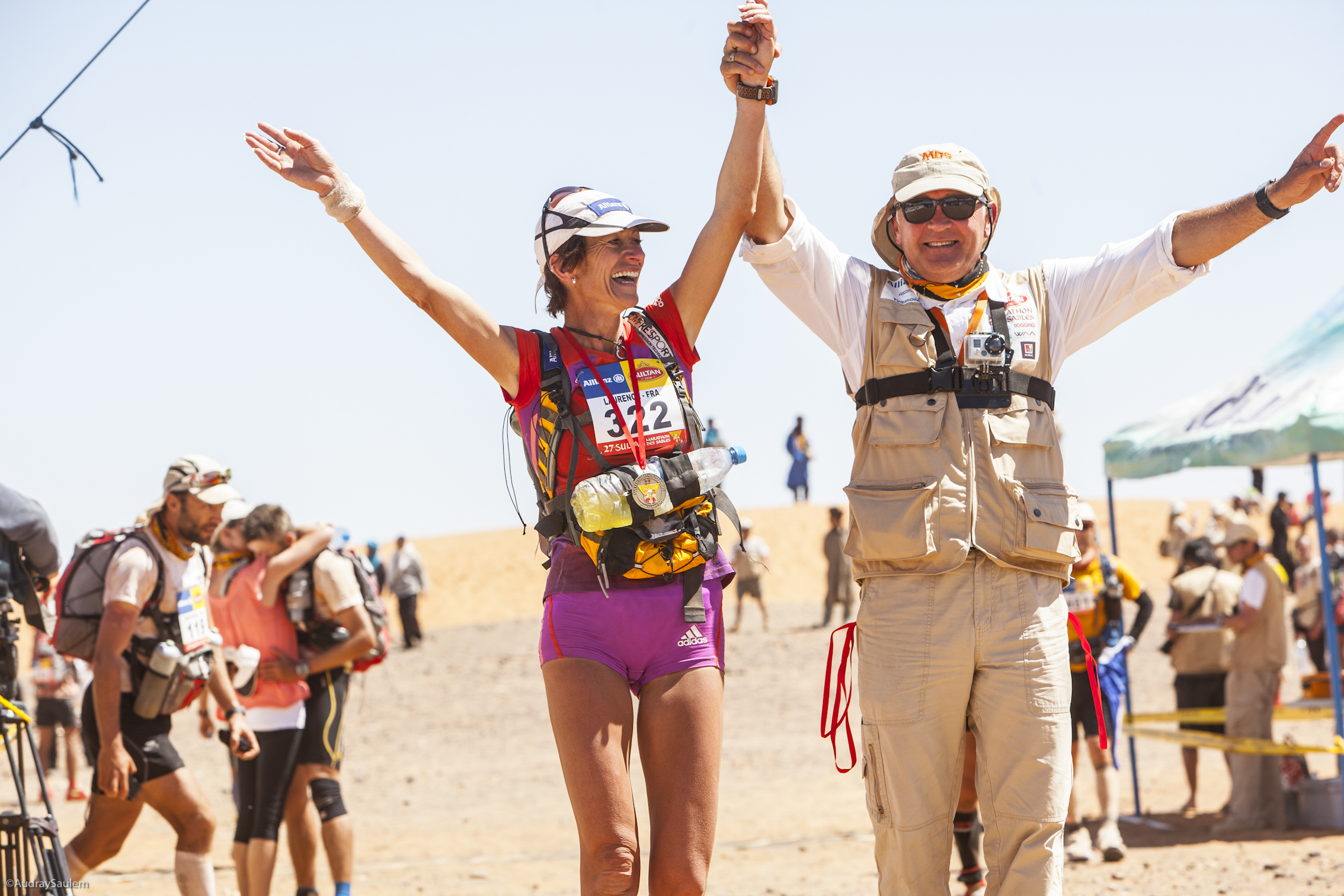
Laurence Klein 2012 MDS

Laurence Klein 2012 MDS

  • Laurence KLEIN (FRA) – 1st woman in 2007, 2011 and 2012, European 100km Champion.
  • Meryem KHALI (MAR) – 2nd woman in 2012. N°1082:
  • Megan HICKS (USA) – 2nd woman in 2009.
  • Simone KAYSER (LUX )– 3 victories in the MDS.


The Male contenders for the overall win : 

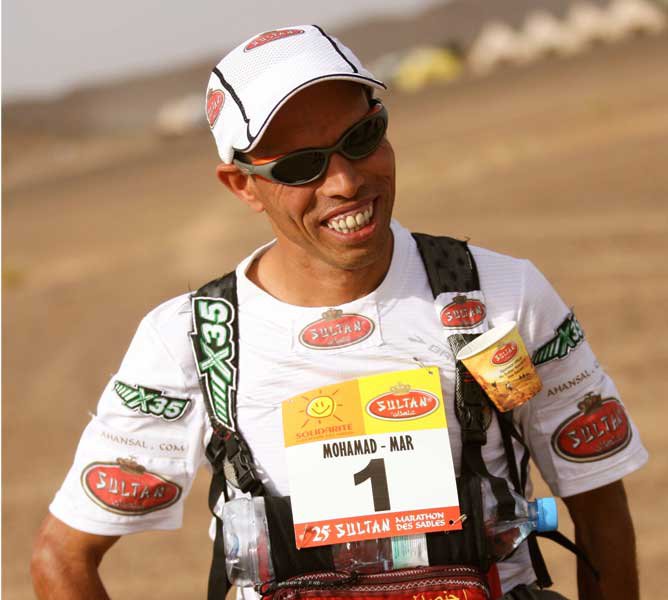
Mohamad Ahansal

Mohamad Ahansal

  • Salameh AL AQRA (JOR) – 1st in 2012, 2nd in 2008, 2010, 3rd in 2009, 2011.
  • Mohamad AHANSAL (MAR) – 4 victories and 2nd place 9 times.
  • Samir AKHDAR (MAR) – 6th in 2011, 7th in 2009.
  • Rachid EL MORABITY (MAR) – 1st in 2011.
  • Aziz EL AKAD (MAR) – 2nd in 2009 and 3rd in 2008 and 2012.
  • Christophe LE SAUX (FR) – 6th in 2012, 1st Guyan’trail 2011 and 2012.
  • Anton VENCELJ (SLO) – 4th in 2010, 8th in 2012.
  • Abdelaaziz TAYSS (FR) – French Cross-Country champion 2008 and 2011
  • Vincent DELEBARRE (FR) – 9th in 2005, 1st UTMB, Réunion, Templiers, etc
  • Martin FIZ (SP) – World Marathon Champion in 1995.
  • Carlos GOMEZ DE SA (POR) – 4th 2012 and 8th in 2008, 4th UTMB 2012.
  • Marco OLMO (ITA) – Top 10 in the MDS, 2 UTMB victories.
  • Antonio Filippo SALARIS (ITA) – 7th in 2012.

In 2013 I followed two runners in the build up to the 2013 Marathon des Sables. Tobias Mews placed 21st overall in the 2010 race and Stuart Rae is toeing the line for the first time in 2013. Each interview alternated on episodes of Talk Ultra but they have been joined together in one episode (lasts just under 1 hour)

talkultra.com

LISTEN HERE

2012 results (for reference)

1st : Salameh Al Aqra (JOR) in 19h59’21’’
 2nd : Mohamad Ahansal (MAR) 21’02’’ behind 3rd : Aziz El Akad (MAR) 1h38’56’’ behind

1st : Laurence Klein (FRA) in 26h15’40’’ 2nd : Meryem Khali (MAR) 1h19’38’’ behind 3rd : Karine Baillet (FRA) 1h31’07’’ behind

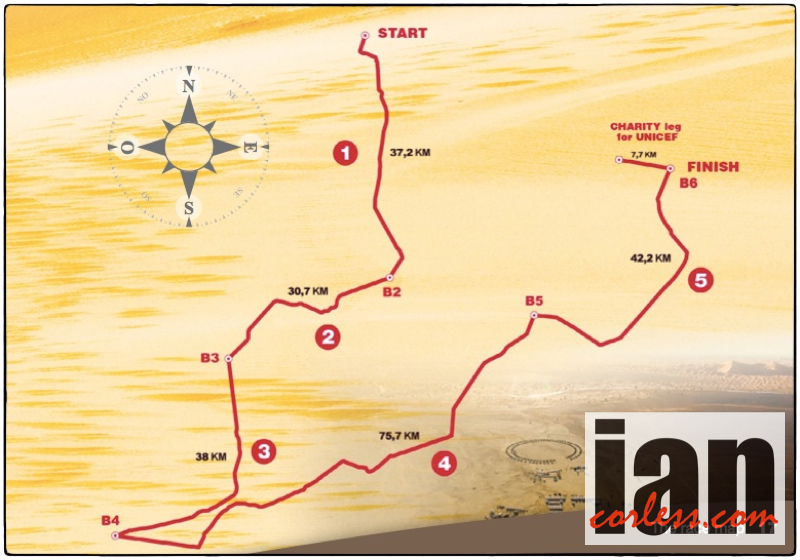
iancorless.comscreenshot_217

The 2013 race route

  • 1st leg – 37.2k Undulating terrain, interspersed with small ergs representing 5km of small dunes (dunettes).
  • 2nd leg – 30.7km 3 djebels with 10 to 25% gradients – exceptional panoramic views.
  • 3rd leg – 38km 2 djebel sections, 2 dried-up lakes and lots of sand.
  • 4th leg – 75.7km a total of 13km of dunes and around 30km of sandy terrain.
  • 5th leg – 42.2km the final leg is a marathon with ergs, regs, a dried-up lake and wadi beds…
  • Total Distance – 223.8km

Mandatory Kit

One of the key aspects of the Marathon des Sables is what kit to take? Here is a list of ‘mandatory’ kit. Of course, you need to add to this food requirements, cooking equipment and any additional luxuries.

  1. Distress flare: For use in the event of an extreme emergency. A range in excess of several dozen metres once activated.
  2. Knife: Equipped with a metal blade, it’s obviously useful in the bivouac and it can be of service when useful in the bivouac and it can be of service when running too.
  3. Compass: Surpassing both intuition and signposting, the compass is the marathon runner’s signposting.
  4. Whistle: Slowed by problems with your health or astray of the initial route, it enables other competitors or the organisation to be alerted to your whereabouts.
  5. Lighter: An important ally after a day’s running, whenit’s time to make a fire to heat up your meal.
  6.  Anti-venom pump: Even though it’s rare to have an unpleasant encounter with a snake, the anti-venom pump is compulsory and can enable action to be pump is compulsory and can enable action to be taken quickly.
  7. Antiseptic: As the days go by, all kinds of injuries can crop up, even during the race sometimes. So whilst awaiting assistance from a Doc Trotter, antiseptic can be important prior to linking up with the medical team.
  8. Sleeping bag: To be carried for seven days, ideally it shouldn’t exceed 400g and should be suitable for temperatures of between 5°C and 10°C. Indeed, the nights are cold in the desert.
  9. Survival blanket: In the event of serious problems, the survival blanket enables you to protect yourself from both the cold and sun. It weighs in at no more than 60g.
  10. Signalling mirror: If lost, someone competing in the Marathon des Sables will want to signal his or her presence. Playing with the sun and a mirror may be an alternative prior to using a distress flare.
  11. Salt tablets: Not exactly pleasant tasting, they are nonetheless essential for avoiding dehydration.
  12. Glow sticks: The perfect marker during the long leg.
  13. Headtorch: once night falls or when wandering around the bivouac, the headtorch is essential.

I will be reporting from the 2013 event as the race unfolds and providing I am able to gain adequate access to internet, I will update my website, Facebook and Twitter with reports and images as often as possible. So please keep checking!