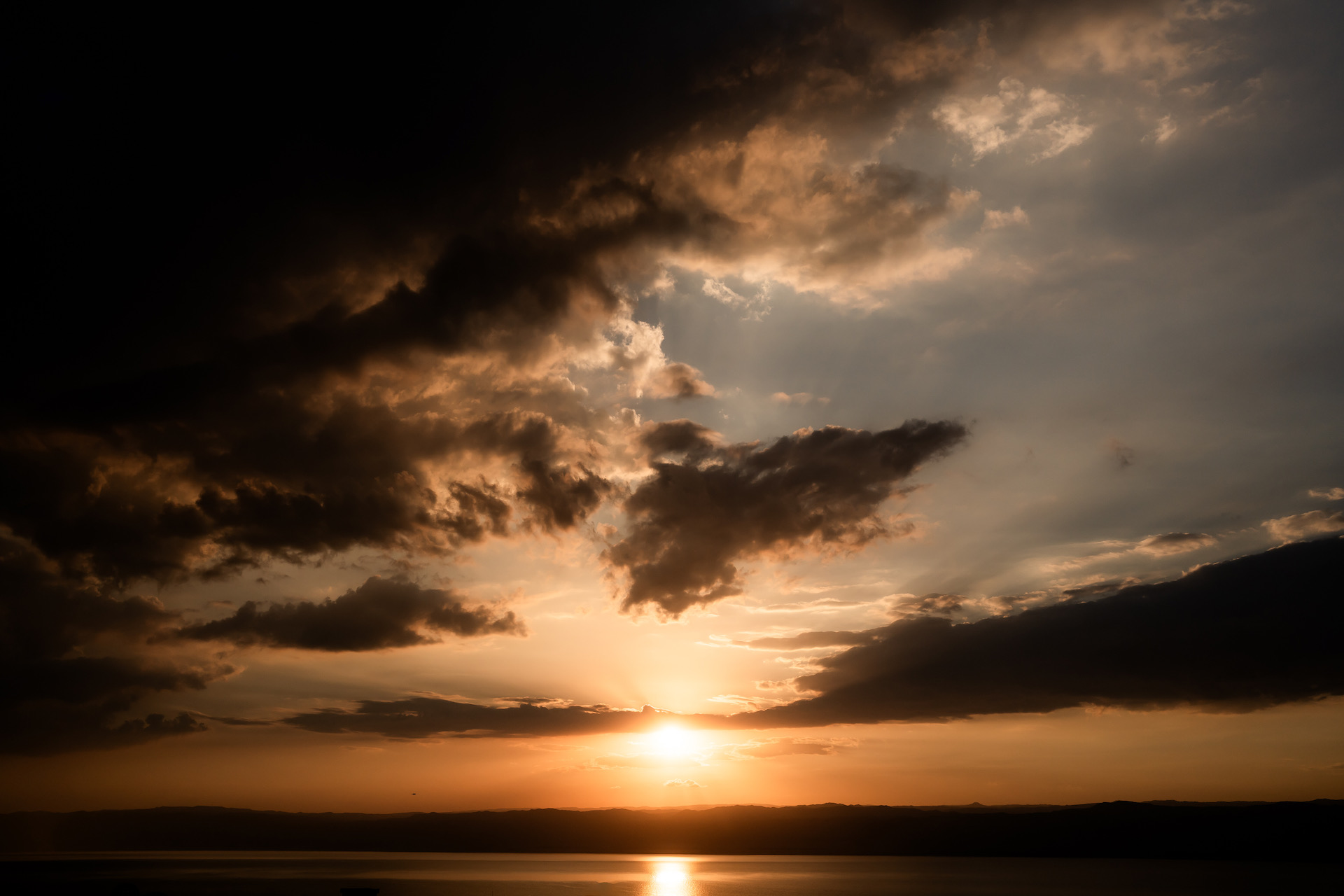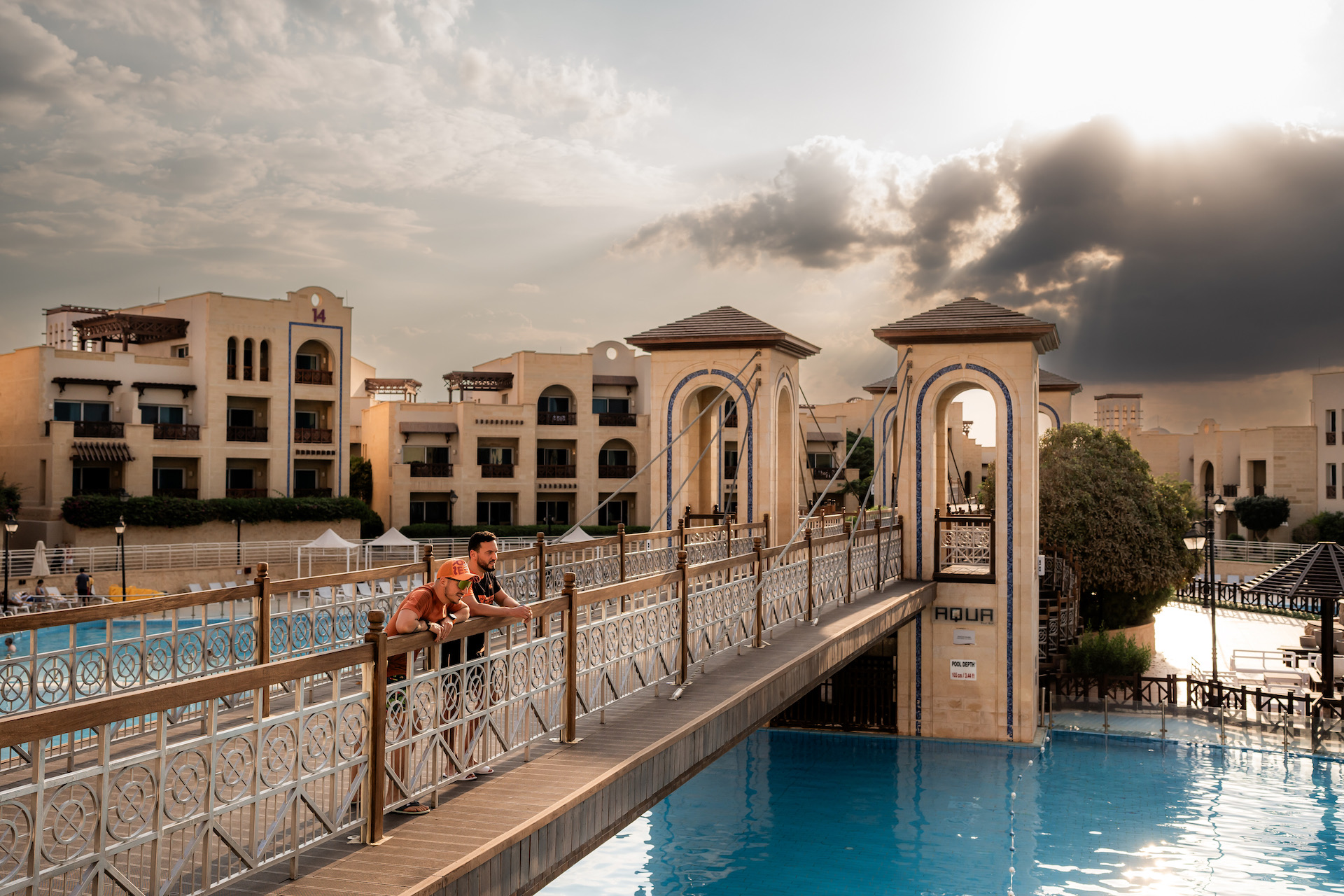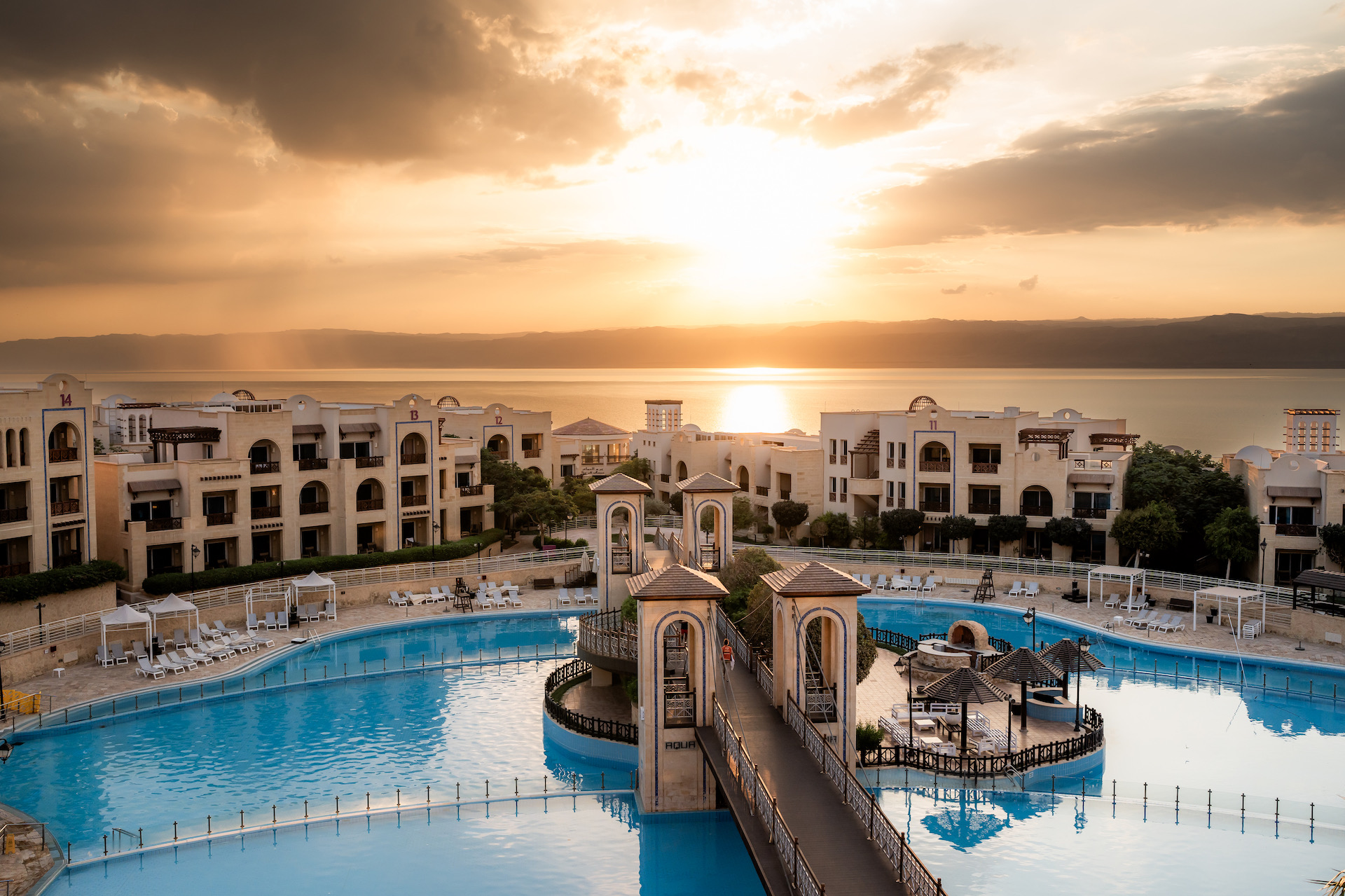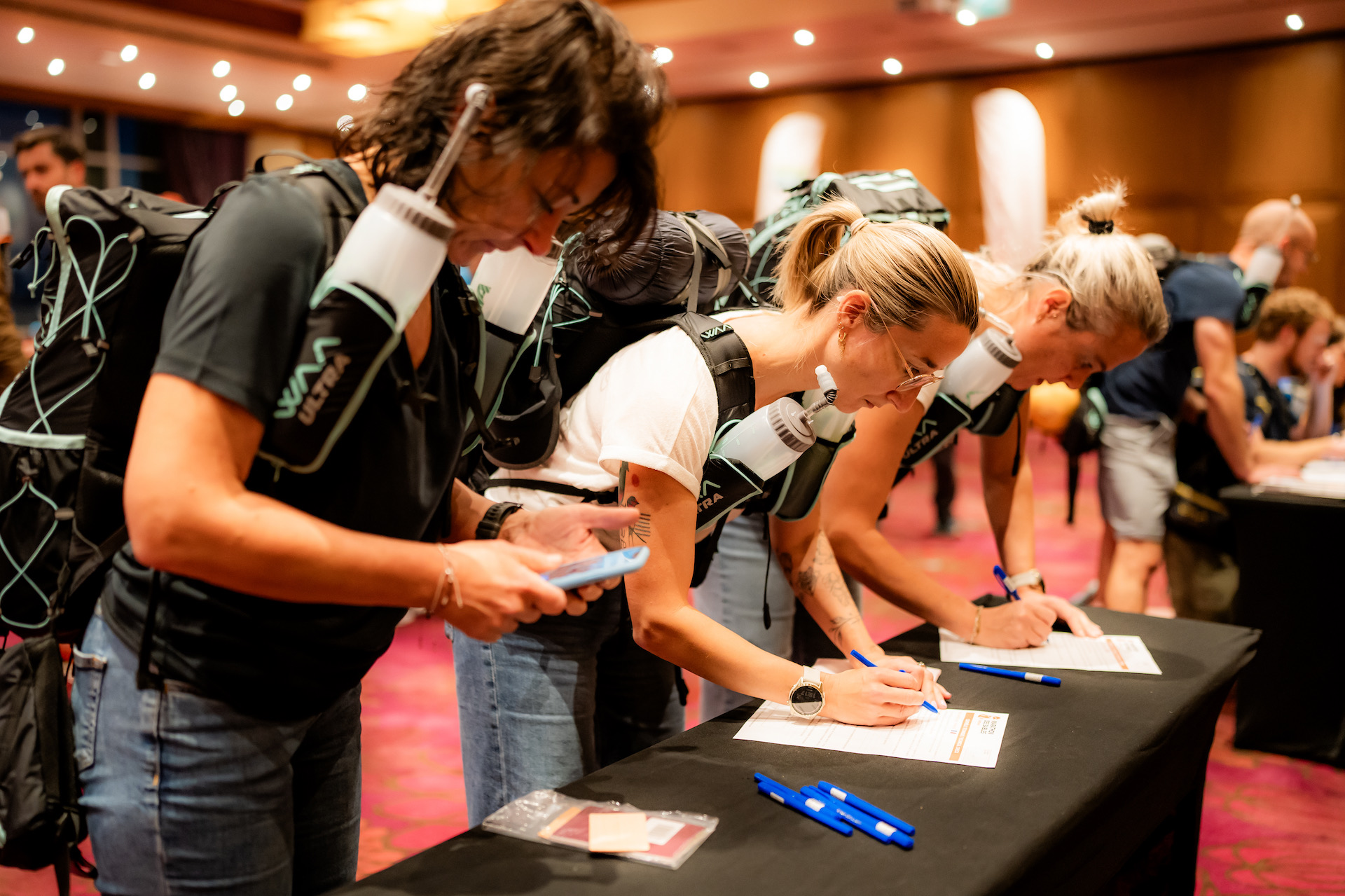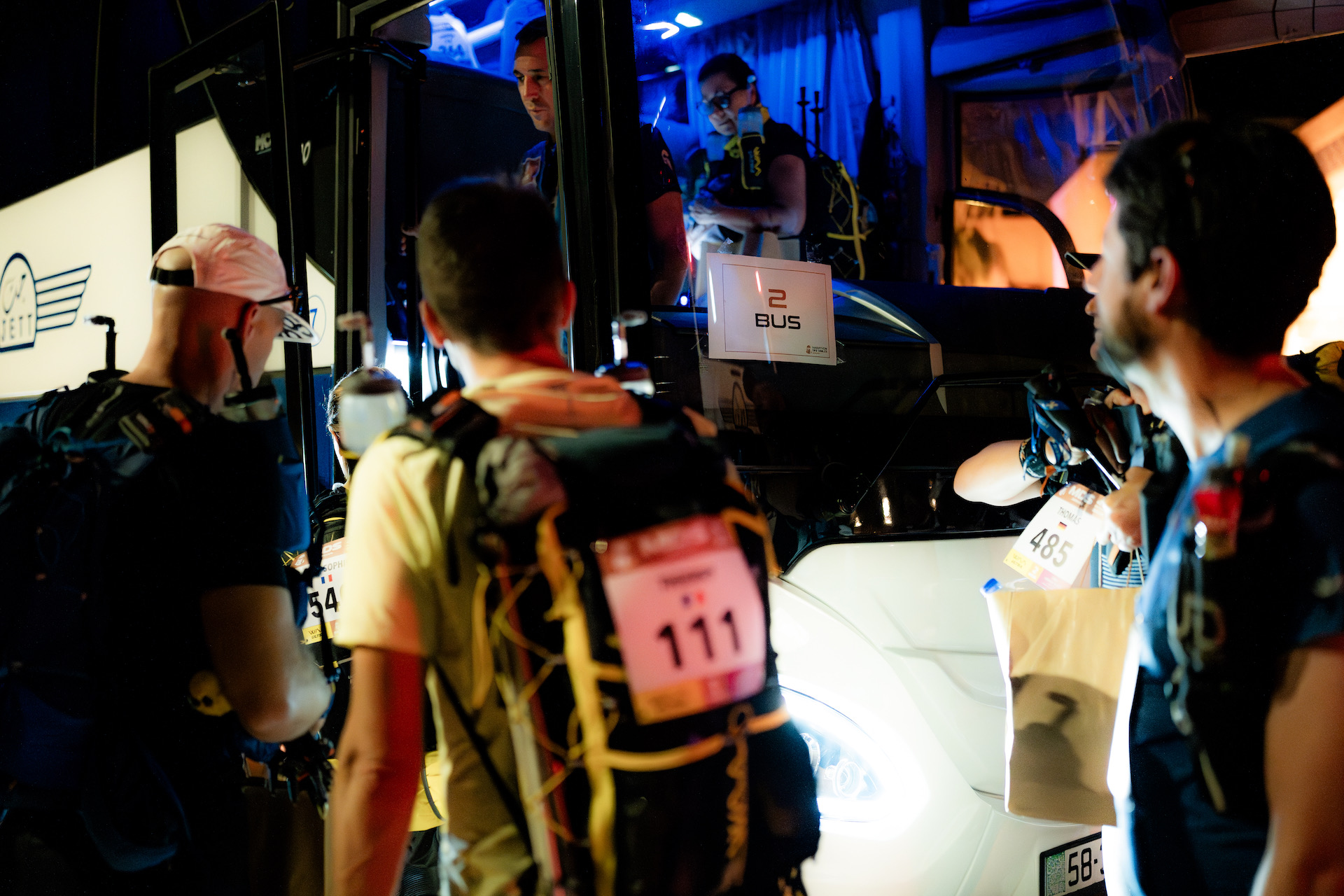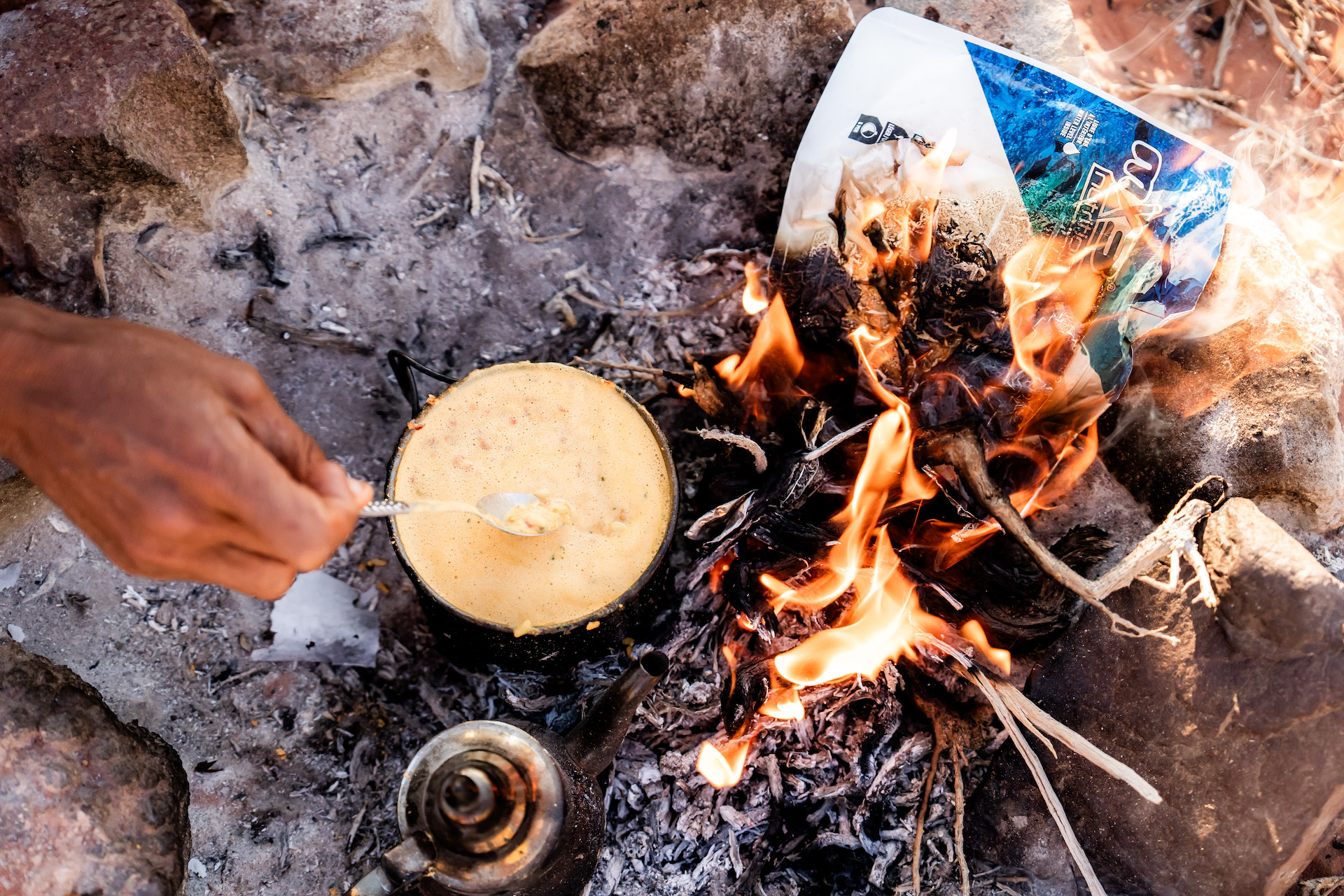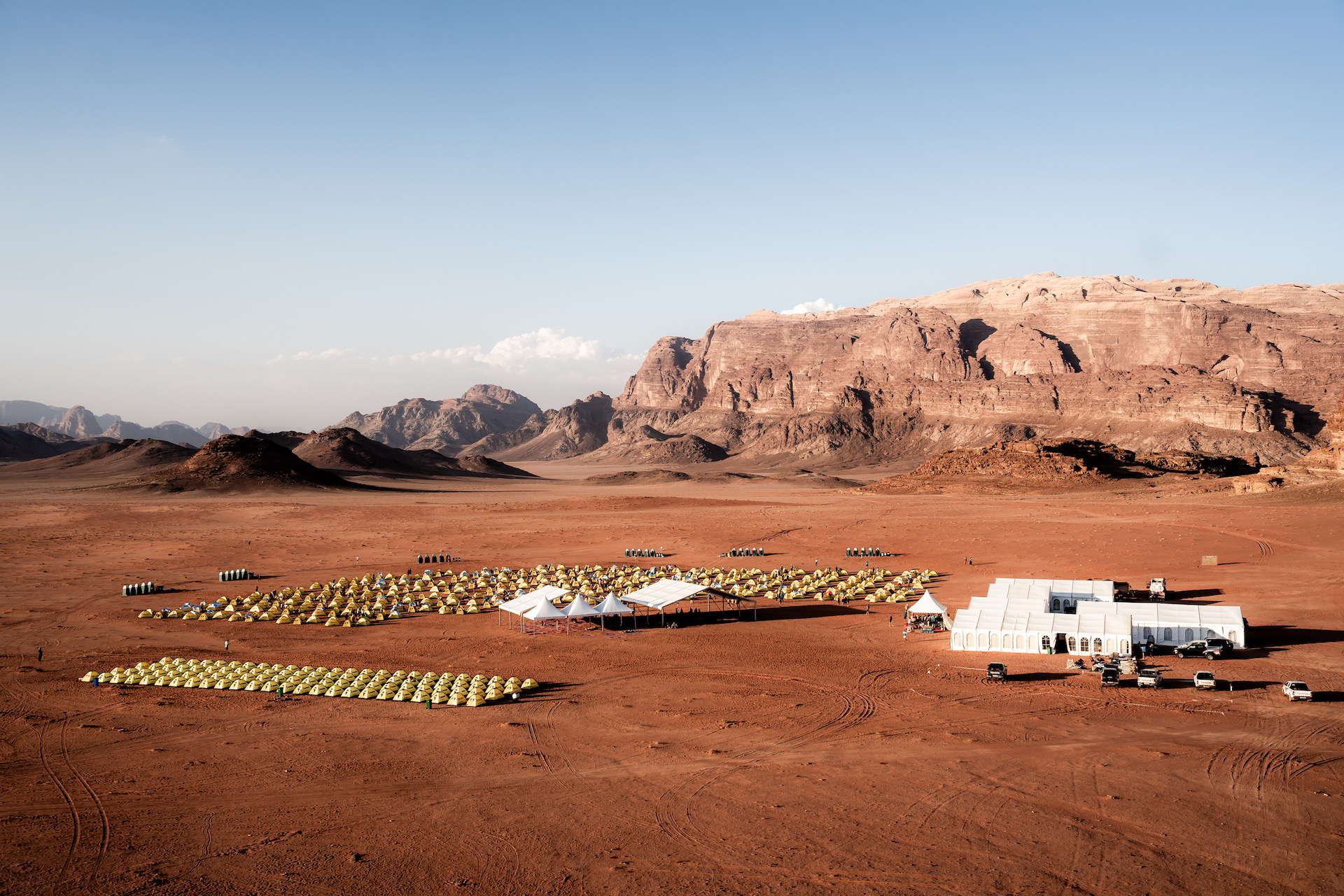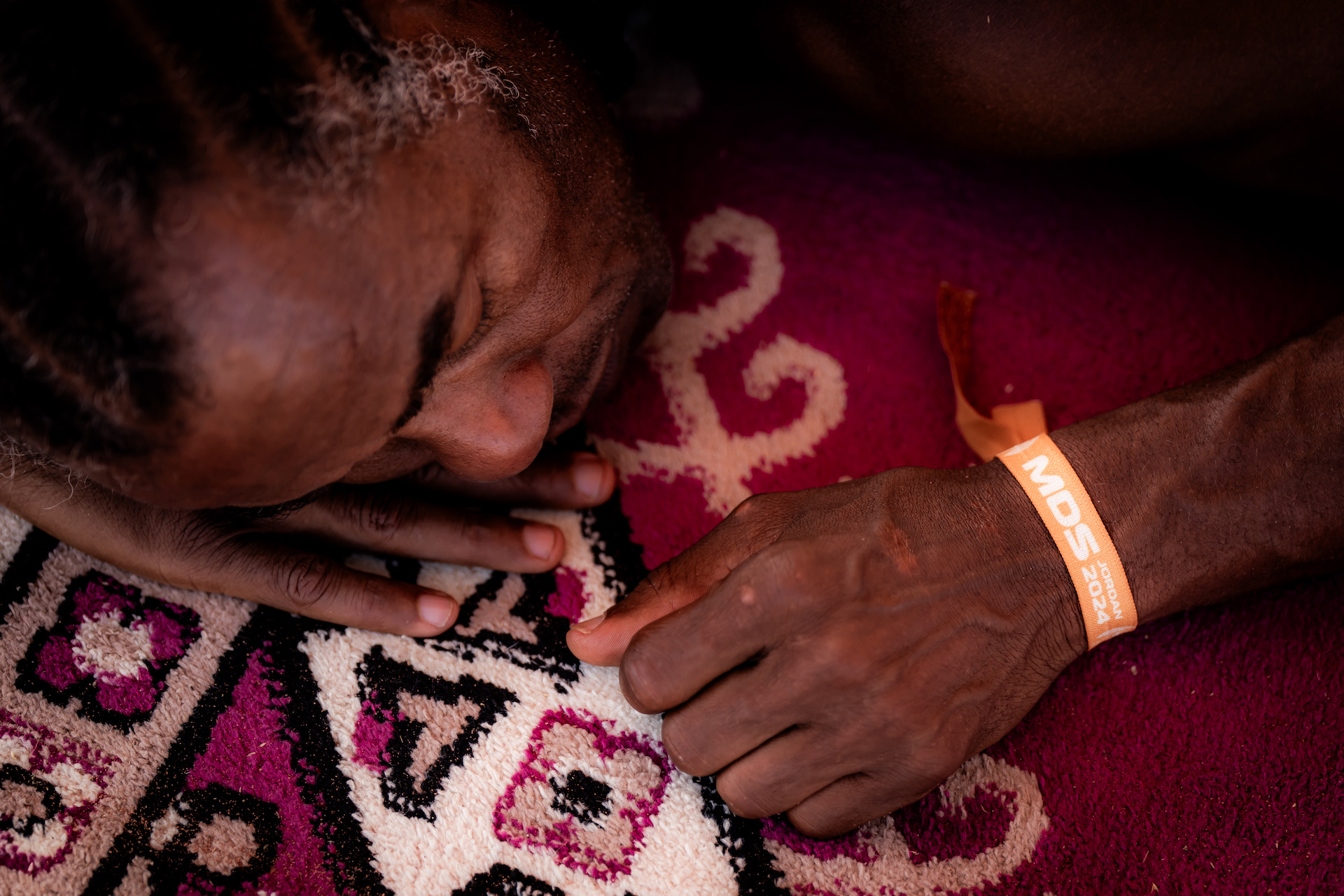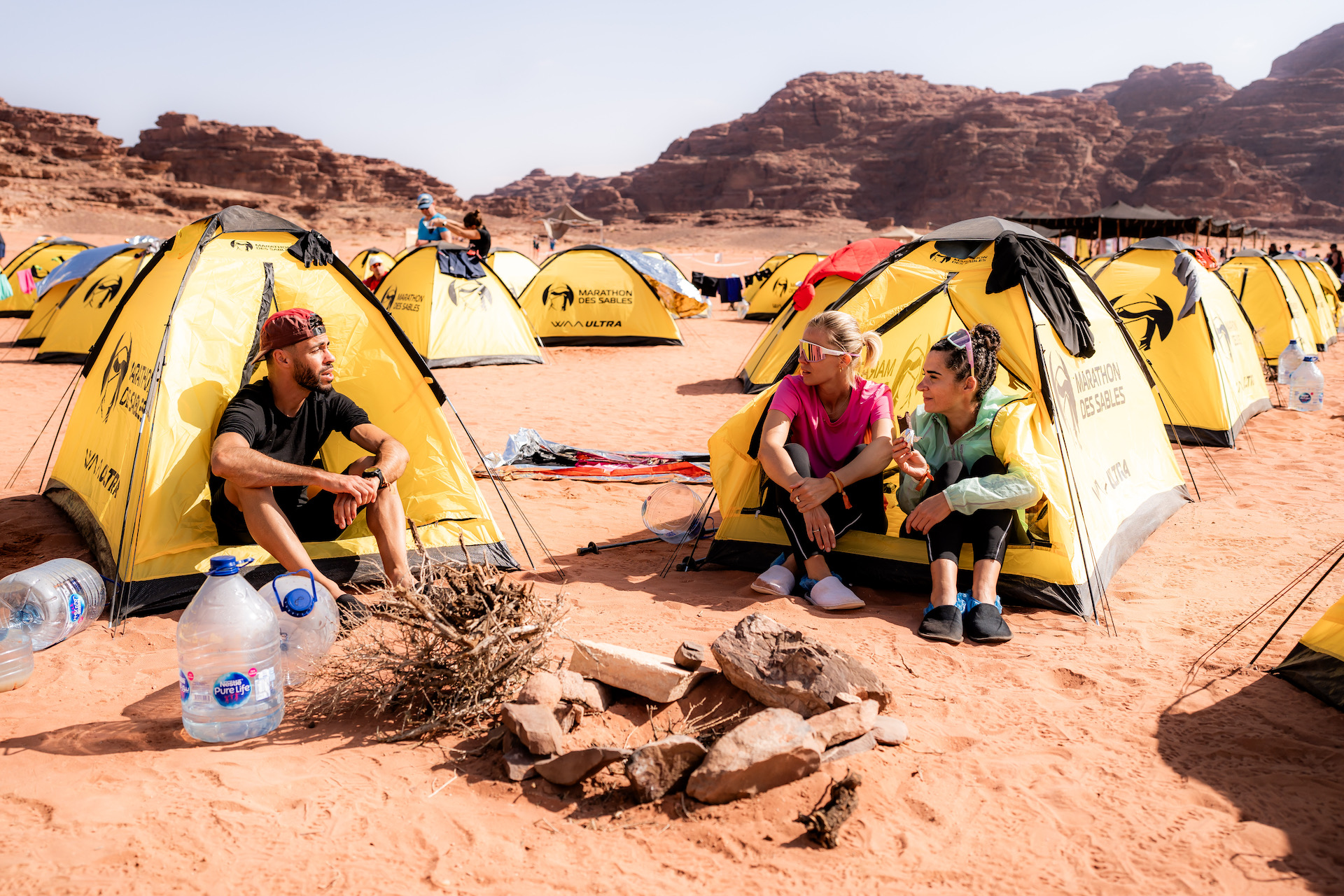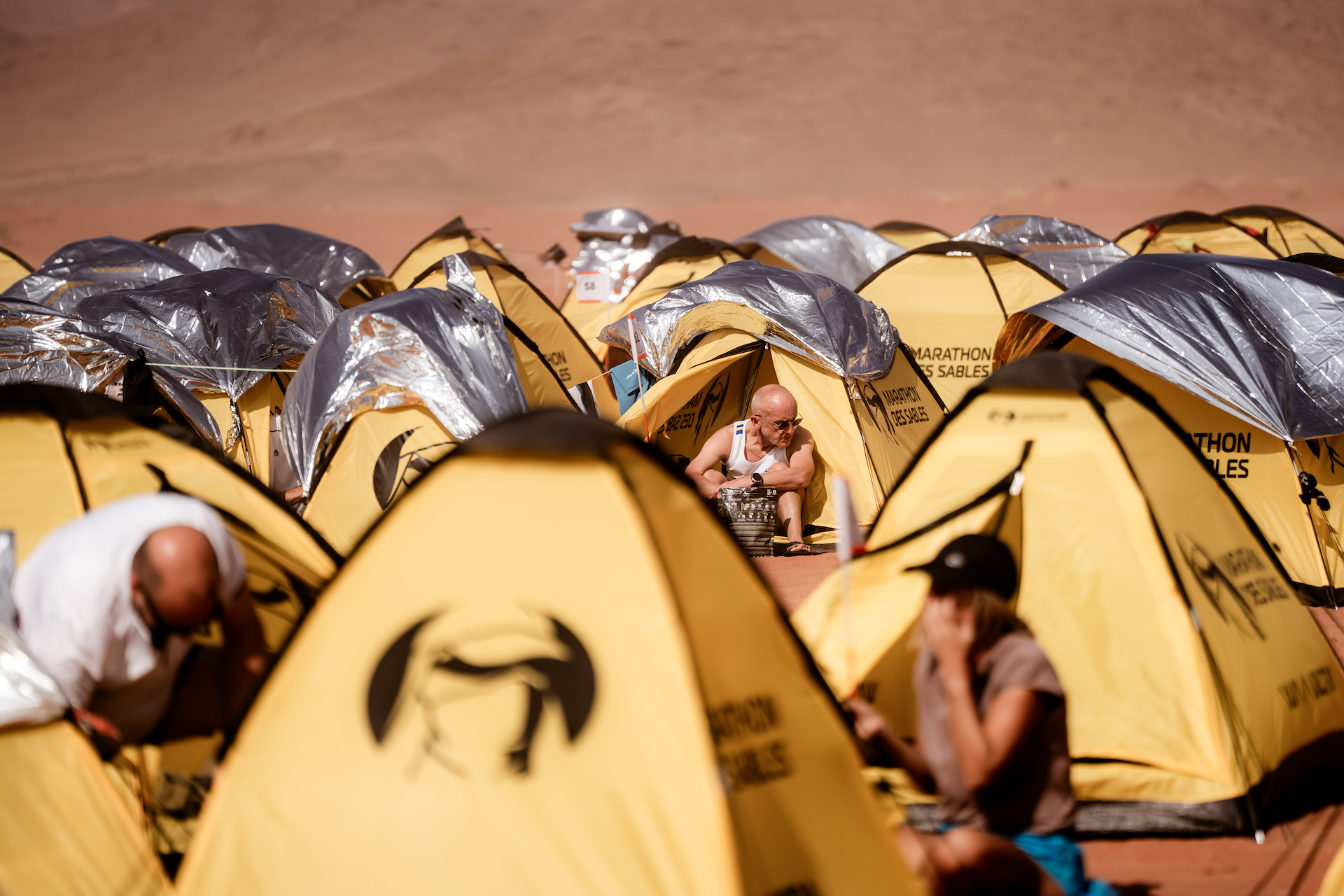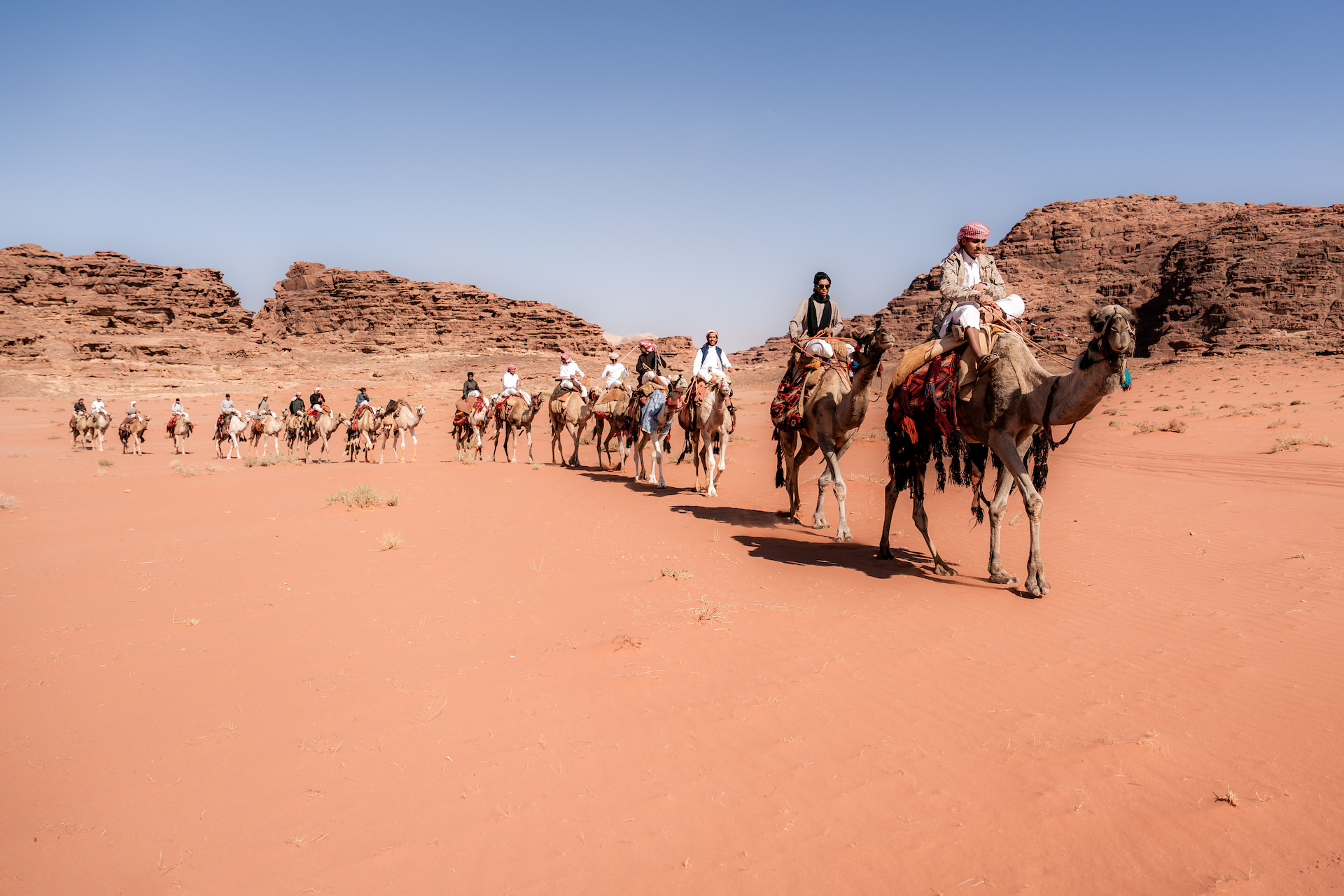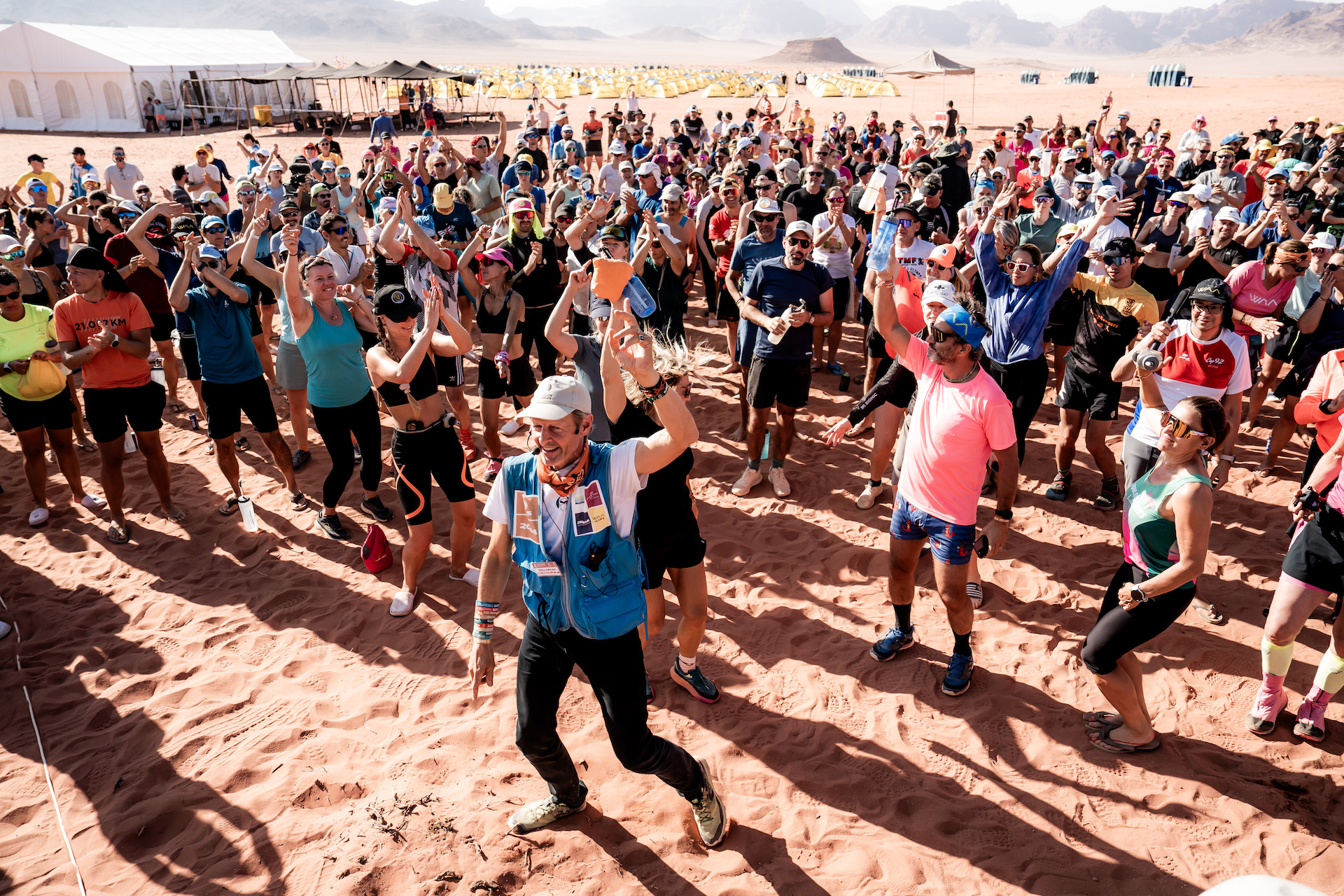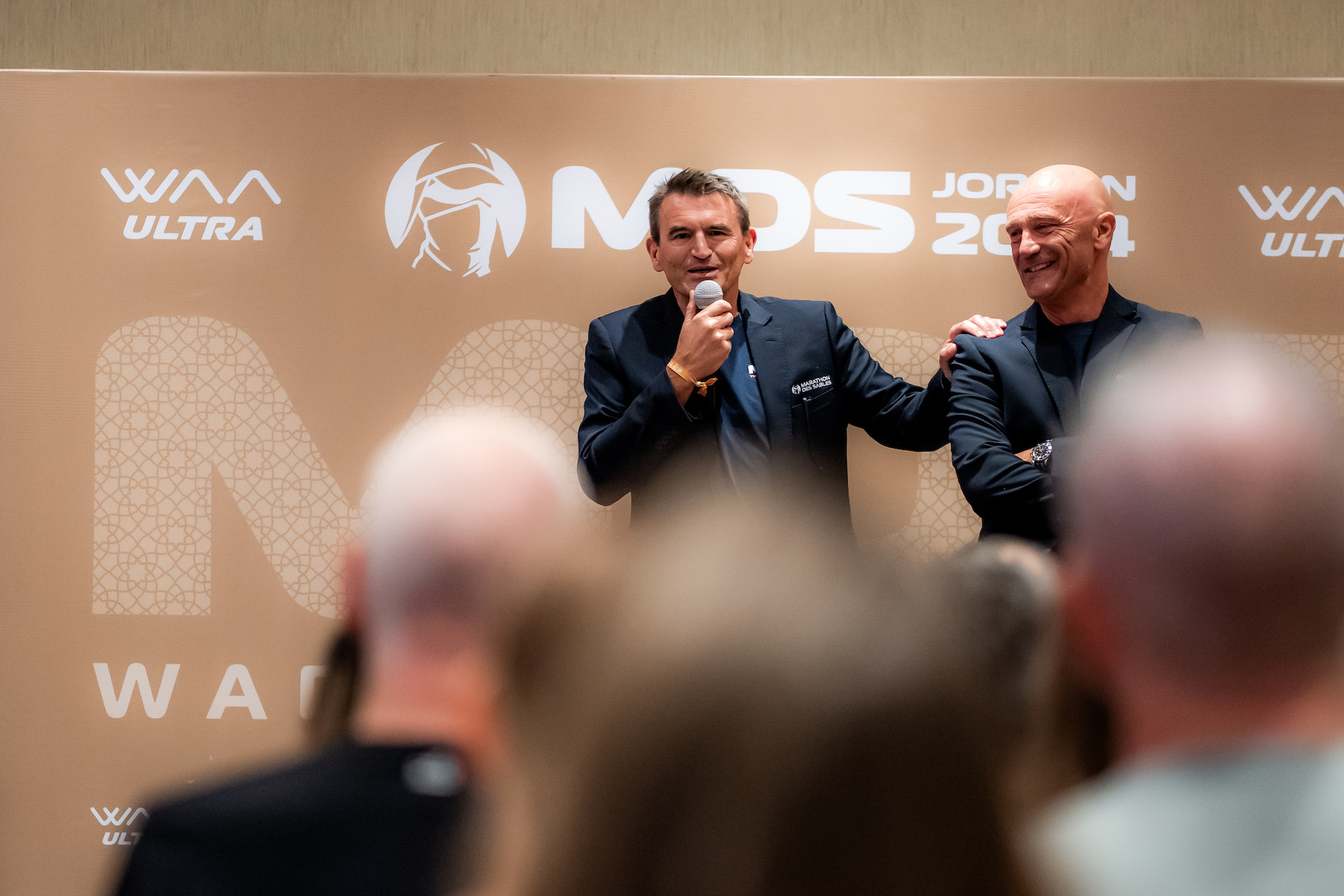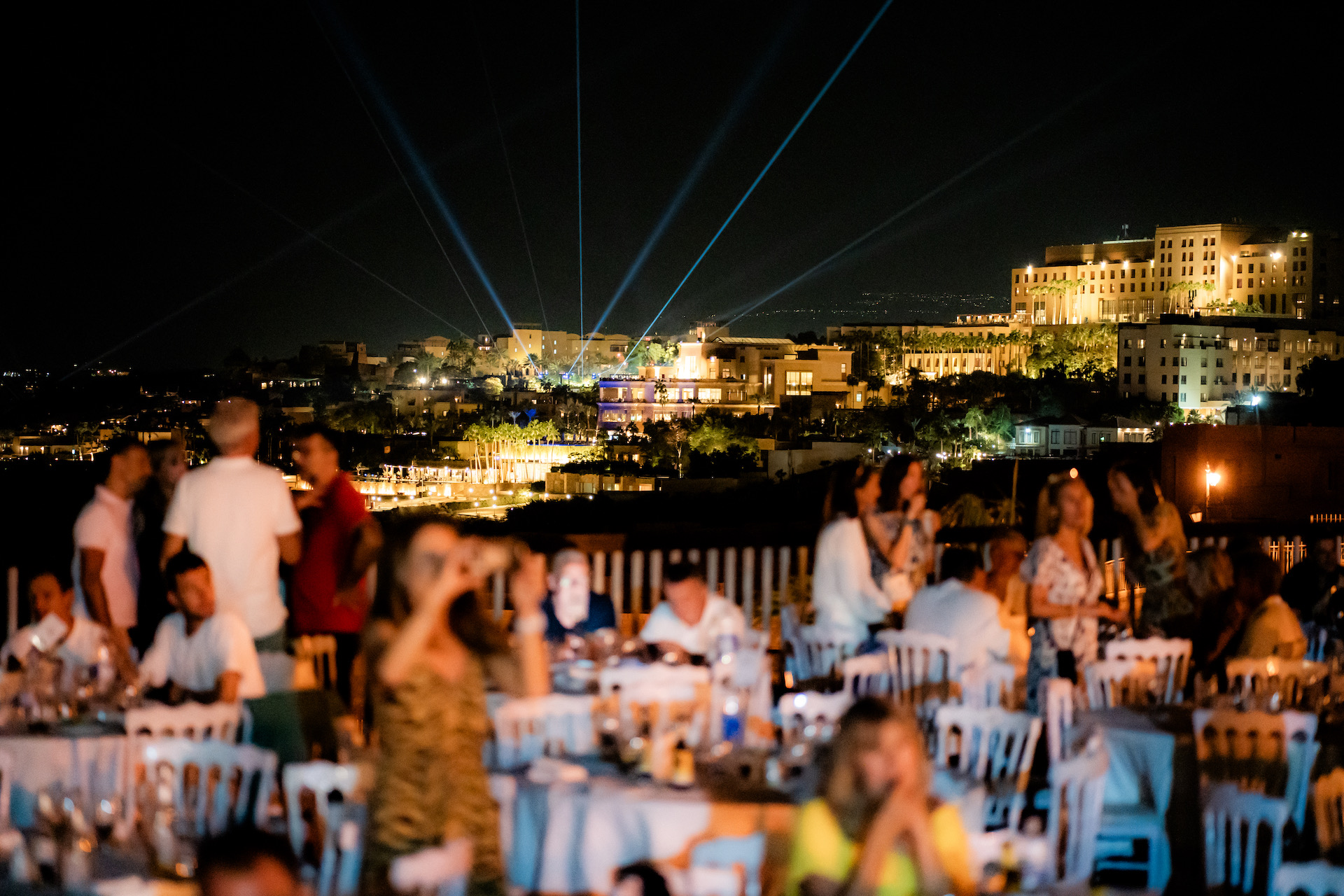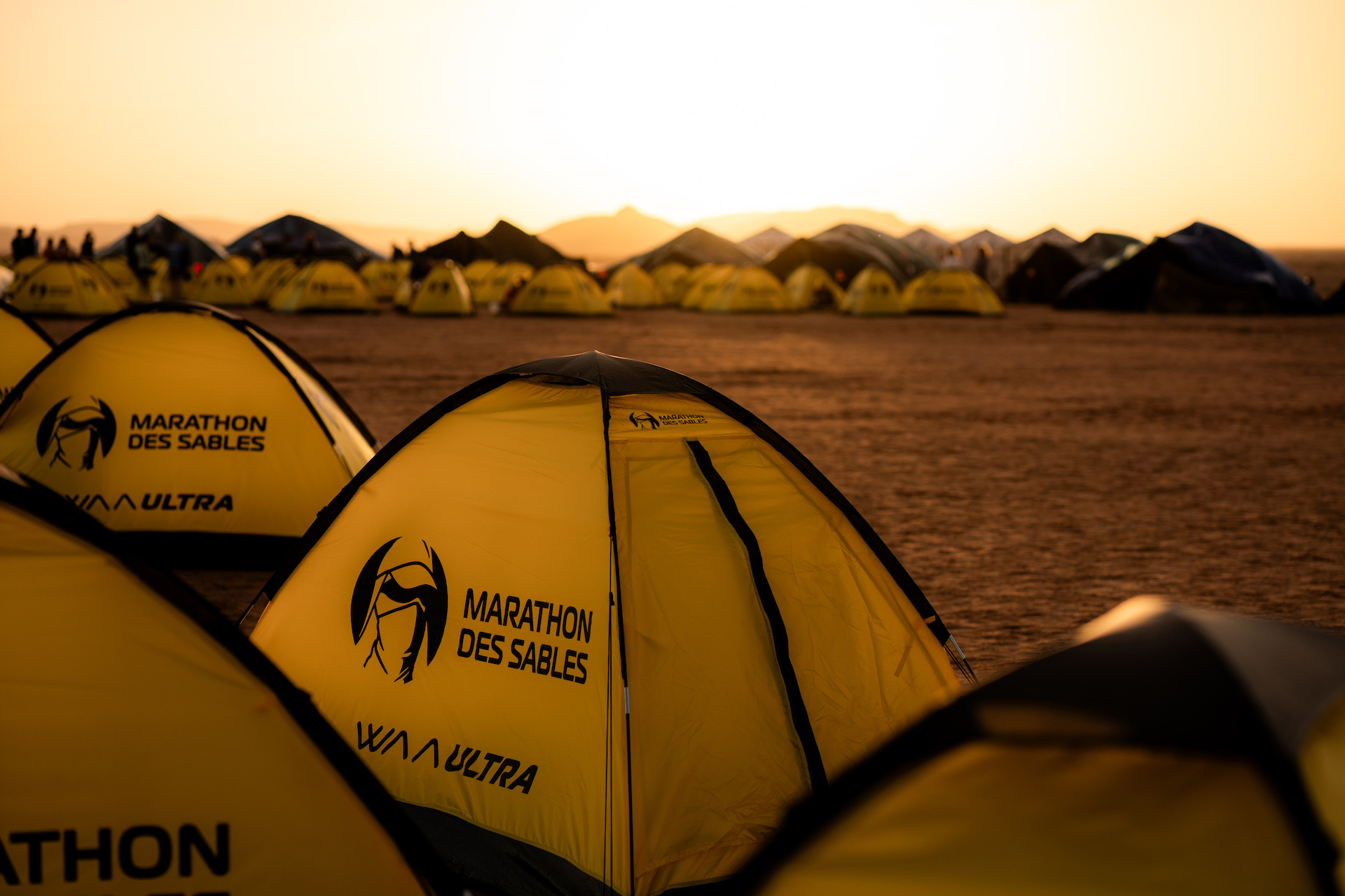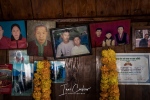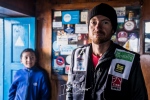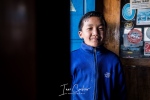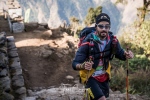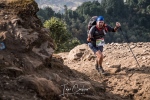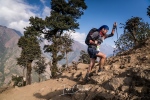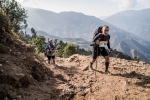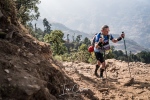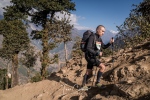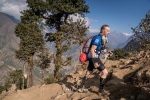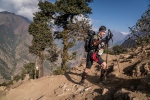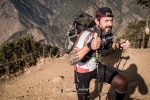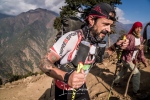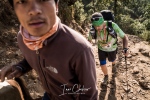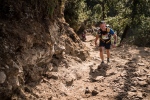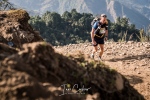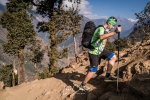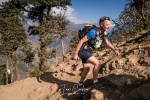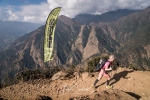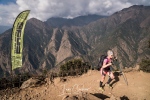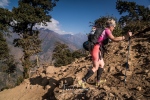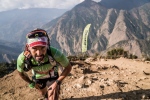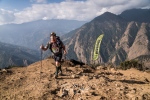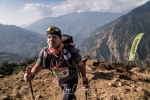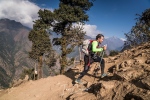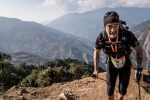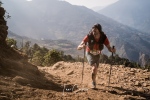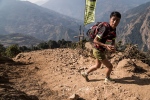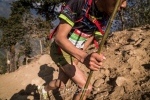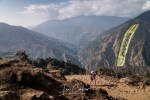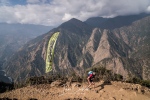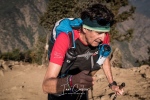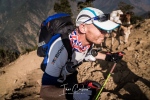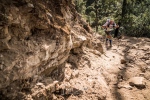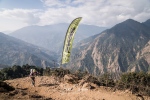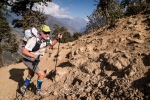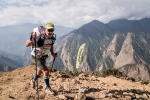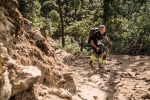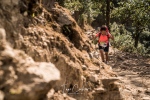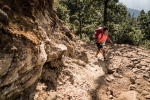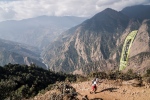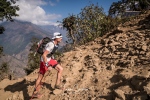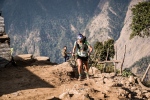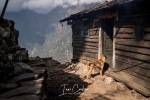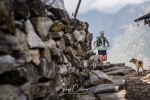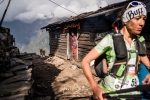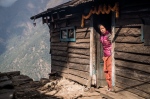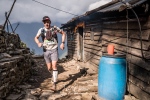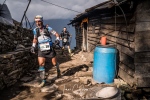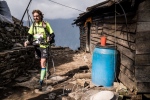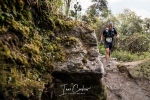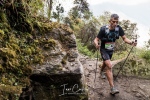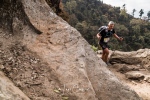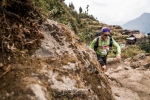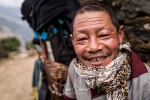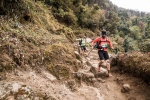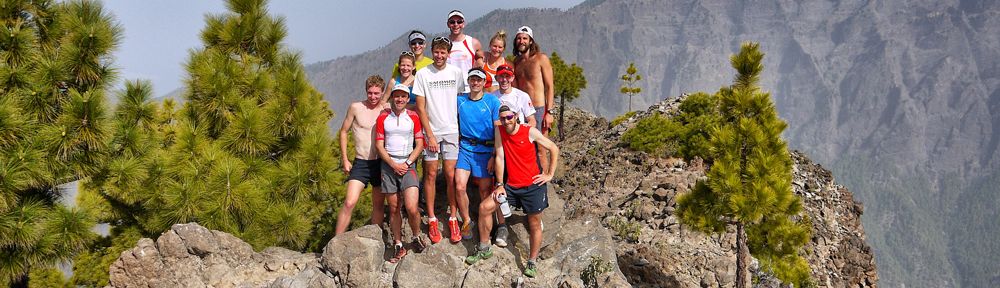
A sunny afternoon, some heat and strong winds brought a welcome end to stage 1, however, on the horizon, storms were visible from bivouac. Gladly, they never appeared and everyone had a calm night after a beautiful sunset.
Camp life
The impact of the weather on stage 1 however, caused a complete re-working of the stage 2 route, as key sections were still under flood water.
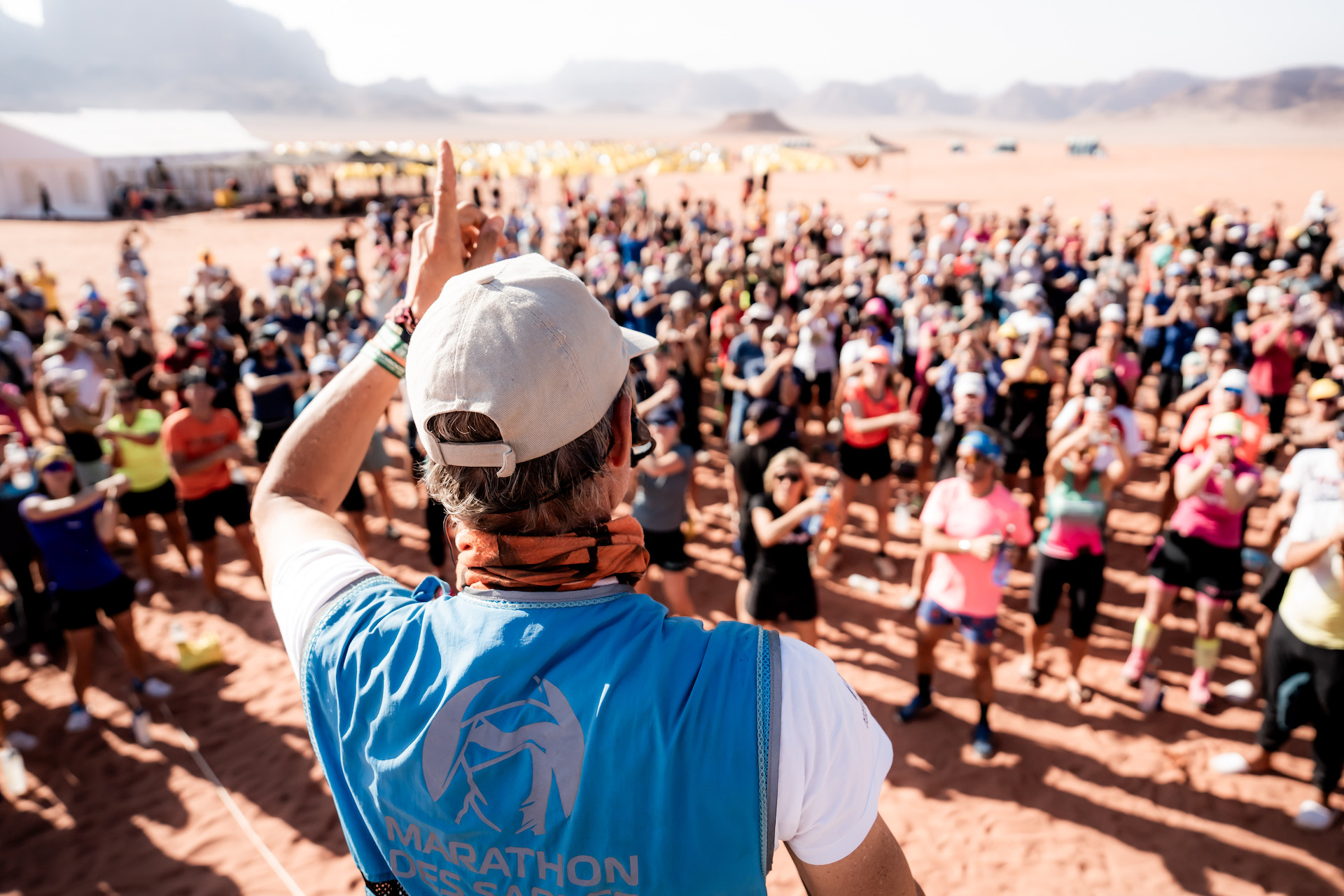
The 0800 start.
With two starts for stage 2, 0800 and 1000 (for the top 50) the day started with some light rain, needless to say, there was concern within the whole bivouac. However, after a cloudy start, the weather started to clear and by mid-afternoon, we were back to a normal Sahara day with temperatures close to 30deg and blue skies. The main difference coming with some extra humidity.
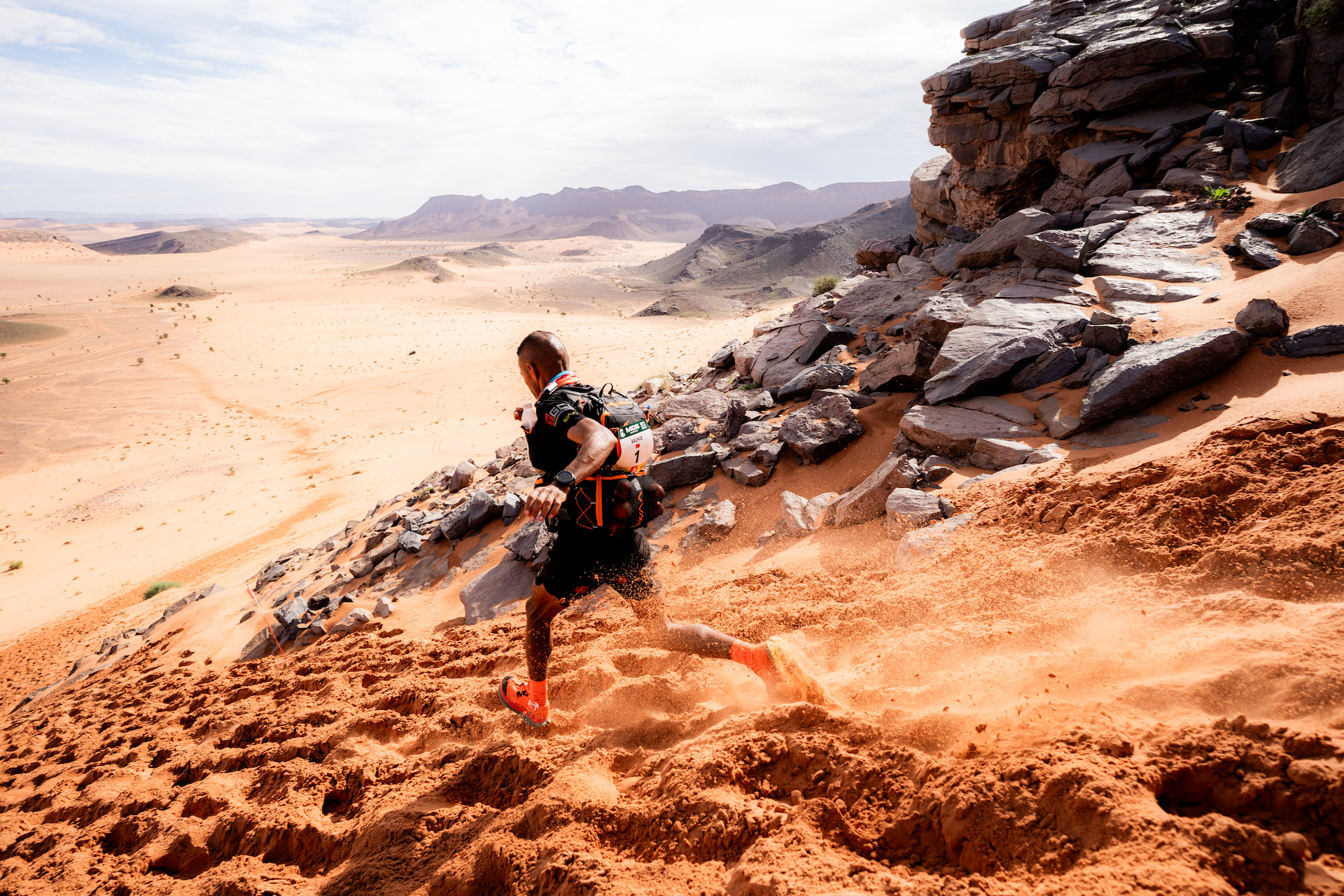
The route was a wonderful mix of climbs, soft-sand, stoney plateau all in an area that is considered a highlight of the Sahara.
The heat returned
With three route options available, 20km, 40km or 60km the full results from the day will only be known when all participants have finished and the timekeepers have collated the data, so, please check the results via the link below.
Full MDS Morocco results are available to be viewed HERE
One thing we do know is that Rachid El Morabity crossed the finish line, hand-in-hand with Abdekkader Elmouaziz.
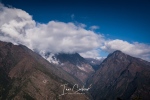
The landscape in the Sahara is very different at the moment
The HANDI race started with the masses as they did on stage 1 and proceed for 1km before transferring via vehicle to Cp1. They then raced to Cp2. Once at Cp2 they then transferred back to the final km to finish under the MDS arch.
Tomorrow is a rest day and an opportunity to re-charge before stage 3 on Thursday.
Since 1986, the MARATHON DES SABLES has crossed the world’s most stunning deserts with several unique concepts: the MARATHON DES SABLES THE LEGENDARY (252 km in the Sahara Desert in Morocco), the MARATHON DES SABLES (70, 100, or 120 km spread over 3 stages), and the new 2024 concept, the MDS TREK (4 stages with a total distance of up to 120 km), offering an accessible adventure with optimal comfort. These international events have seen over 50 editions in various countries such as Morocco, Fuerteventura Island, Peru, Jordan, Turkey, and offer adventures that combine running/hiking in the desert with tourism.
As I get deeper into my love for photographey, I want to speak to those whose work is not only technically profound but unique. Being unique is the key to unlocking a world of opportunities and experiences that others can learn from and see what is possible. That is why I reached out to connect with Ian Corless.
Photography enthusiasts, if you’ve ever scrolled through Ian Corless’s Instagram feed, you’ll understand why I was eager to connect with him. His extraordinary work stands out, but it’s not just his talent that sets him apart. Ian’s remarkable willingness to engage and network, both with clients and during this interview, is a testament to his character. He takes photography to the extreme, whether it’s capturing high-profile commercial assignments, scaling a mountainside for a passion project, or sharing as much knowledge with the photography community as he can. Check out his work and the words he shared with me about his journey in photography.
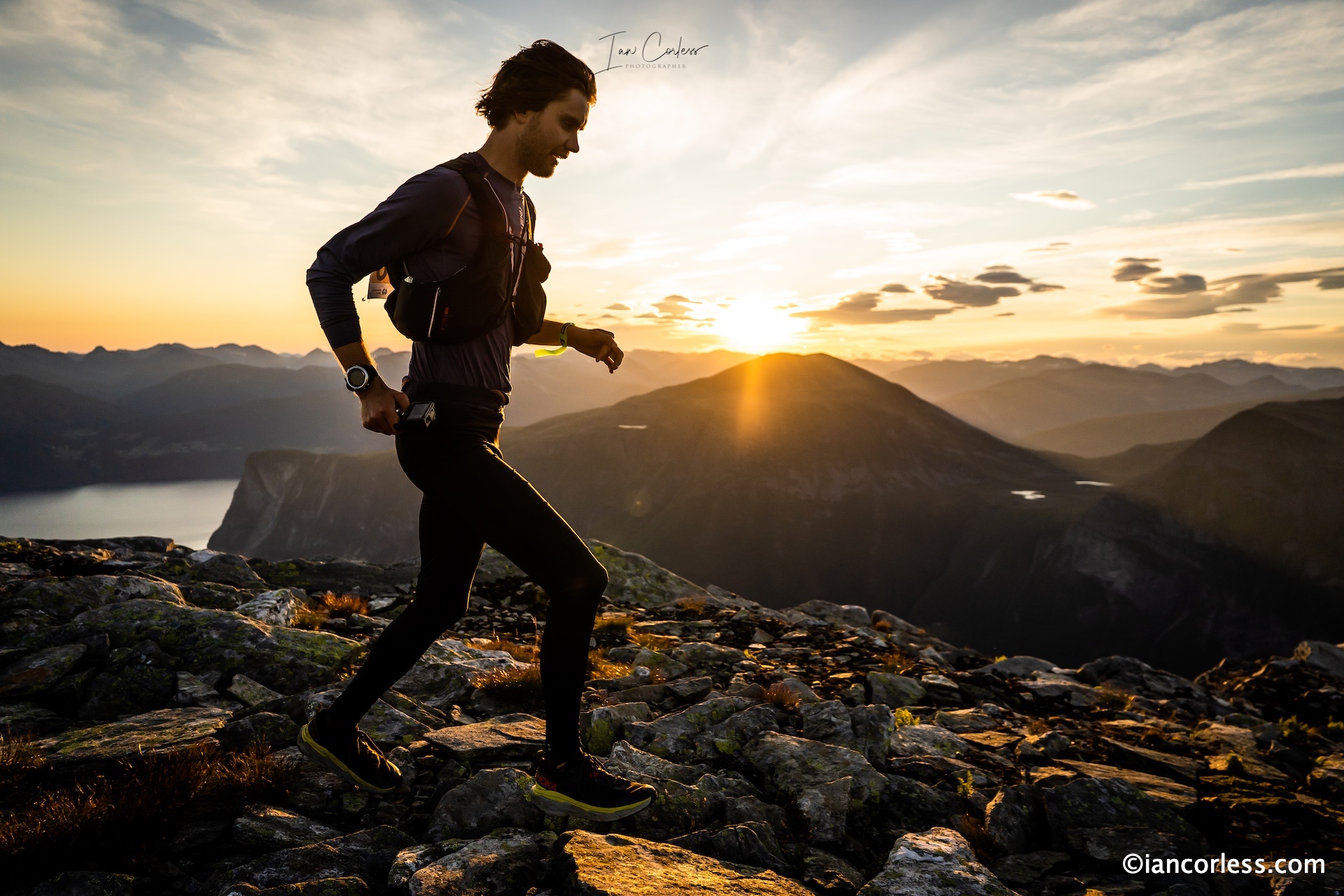
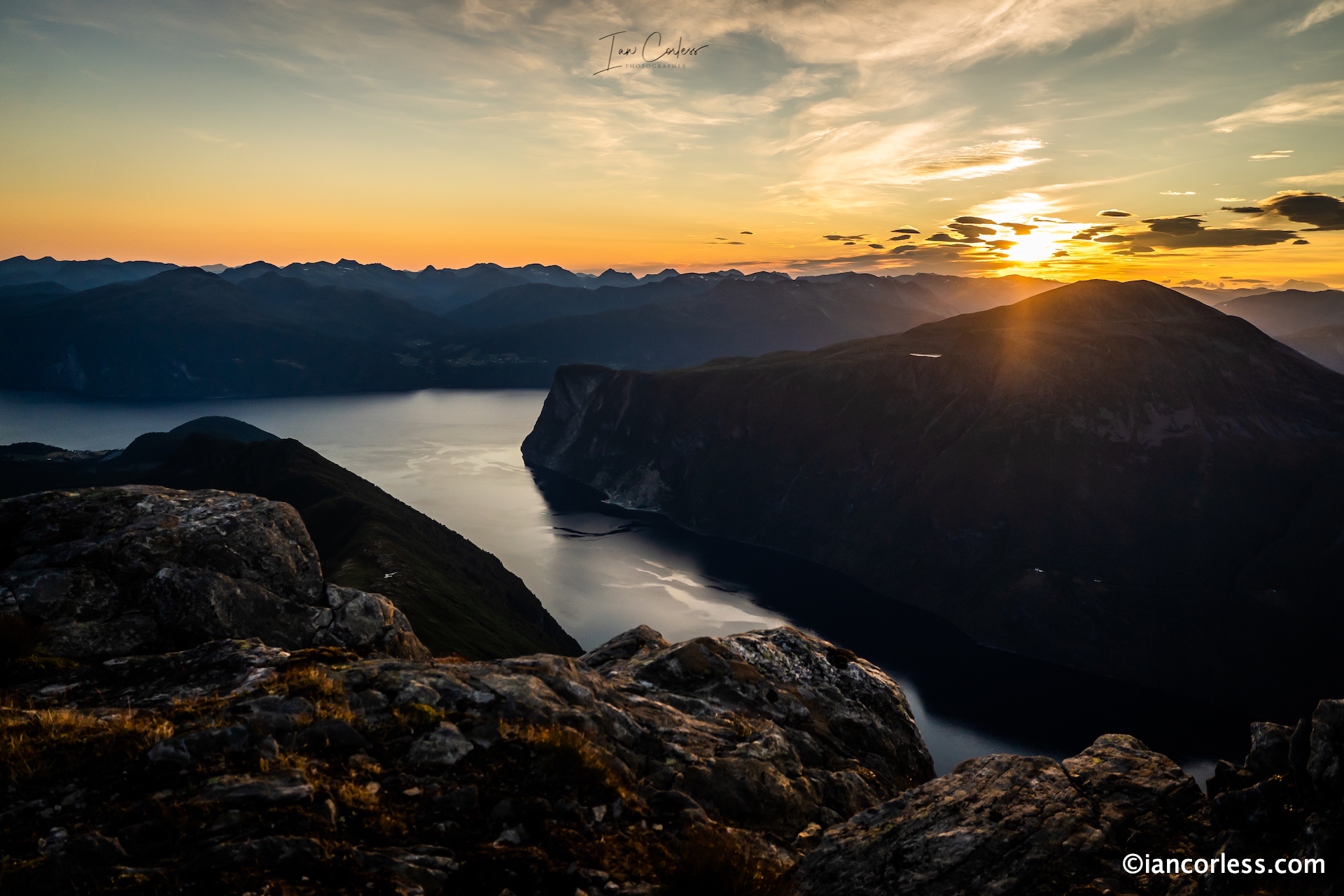
It was burned in my memory, waiting at Fremste Blåhornet at 0430, daylight was already arriving, but the sun had not risen, there was just a promise of what was to come. The first runner arrived quite literally as the sun peaked over the mountains and a glow of orange started to come illuminating Stranda Fjord, the mountains ahead and the runner. It was one of ‘those’ days you wish for as a runner and photographer.
Sunrise 2021
The 2021 Stranda Fjord Trail Race and, the 100km event was truly magical. Norway, Stranda, Slogen and the whole route has never looked so good.
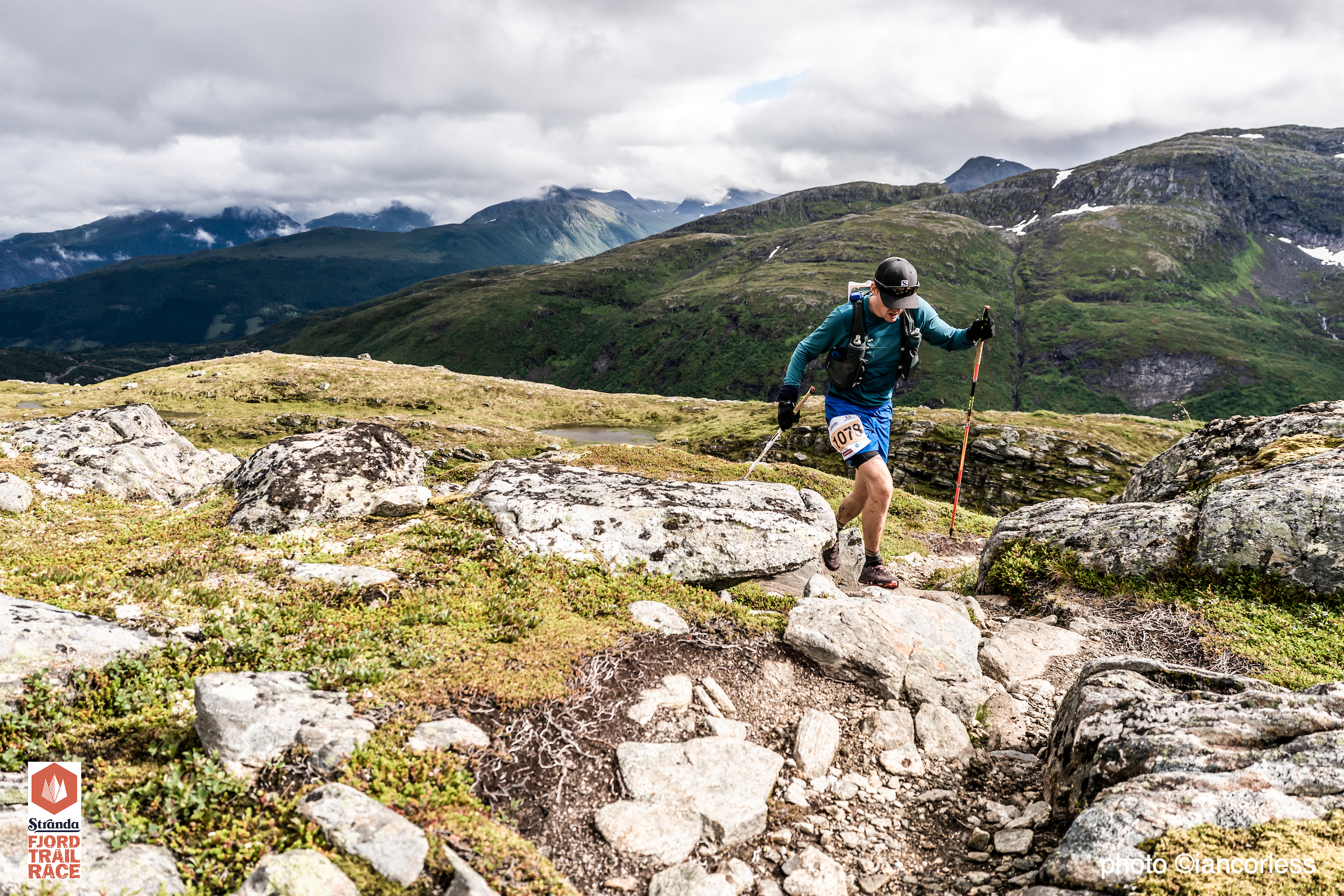
Jump ahead one year and the 2022 edition was a completely different story. Ahead of race day, the weather forecast was greatly discussed both by runner’s and race team. A decision was made, the 48km and 25km races would go ahead as planned but the 100km event would have two key sections removed, the technical and airy ridge after Fremste Blåhornet would be removed and the out-and-back to the summit of Slogen – both considered too risky and dangerous in the expected weather.
With all the attention on the Golden Trail Series 25km event, the 100km was very much a secondary event. Starting at 0200, the 100km race would have already been going for 9-hours before the start of the GTS race. Yes, the 100km event is THAT tough.
Epic, beautiful and brutal are three words that sum up the racing and route here in Stranda, that is in good weather. In bad weather… Well, you can work it out. The physical and mental challenge is huge.
However, the Stranda Fjord Trail Race located in Møre go Romsdal, is one of the most truly spectacular experiences. The 100km distance offering a full and immersive 360 experience of what this magical area of Norway has to offer.
The 25km, 48km and 100km races are tough, challenging, and brutal and should not be underestimated. There is little easy running here, the climbing is hard and steep, the descents even on a dry day can be horrendous, in the wet, they are as one person said, “Terrifyingly slippery despite what shoes you use!’
Let’s be honest, Norway as a location is arguably one of the most beautiful places in the world, and as a runner or outdoor enthusiast, the options and possibilities are endless, be that in the south or north.
Stranda is located on one of the west Norwegian fjords, part of the Sunnmøre region, often accessed via ferry from Liabygda. It can also be accessed by road via Lom. For most, the easiest way to travel is to fly to Ålesund and then travel 50km by bus.
2022 was significant with the 25km being a stage of the Salomon Golden Trail Series, this event alone brought in more than 600-participants and many of the world’s best mountain and trail runners. The 4000 population of Stranda increased by approximately 30% over race weekend, an amazing boost for the local community. GTS brought a European razzamatazz to the event with live broadcasts, commentary, interviews, group runs and huge social presence – it was arguably the biggest promotion of trail running in Norway since the inception of the Tromso SkyRace which ironically was taking place on the same day further north.
There was huge anticipation of how the racing would go, key favourites such as Sara Alonso and Manuel Merillas would have a hard job of beating ‘local’ favourites of Jon Albon (Brit living in Norway) and Emelie Forsberg (Swedish) who has been living and running in Norway for many years. The inclement weather, challenging conditions and brutally slippery rock only played into the hands of those with local knowledge.
Jon Albon won the race in a new course record – amazing in the challenging conditions. Manuel Merillas (Esp) and Bart Przedwojewski (Pol) placed 2nd and 3rd ahead of Frederic Trancard (Era) and Davide Magnini (Ita)
For the women, we saw the rise of Sophia Laukli (USA) who won the event ahead of Elise Poncet (Fra) and Emelie Forsberg. Blandine HIrondel (Far) placed 4th and Sara Alonso 5th.
The stories post-race was truly mud, sweat and tears. Arguably the most challenging and technical race of the GTS and what a way to shine a light on Norway and its incredible landscape. I am sure there are many runners now thinking and planning future adventures in this epic playground.
The 48km race, a big challenge but considerably more achievable than the 100k uses much of the opening miles of the 100km route, however, after reaching the summit of Fremste Blåhornet at 1478m returns to Stranda via Heimste Blåhornet, Løfonnfjellet and Rødesthornet. The route passes through Stranda start/ finish and continues on another loop summiting at Roaldshornet at 1230m and then following on to Blåfjellet and Skurdahornet before descending all the way down to the finish line.
Lasse Aleksander Finstad placed first ahead of Tolga Rambovski Olcay and Torbjørn Breansœter, 6:34, 6:50 and 7:07 respectively.
Mirjam Saarheim placed 7th overall and clinched female victory in 7:26. Jingling Tang and Anna Louise Astand Sørlie ran 7:50 and 8:02 to round out the podium.
Offering a 360 counterclockwise experience of this stunning area of Norway, the 100km route is a beast. It is quite simply stunning, even in bad weather. However, the physical and mental tenacity required to complete the race cannot be fully explained. This is reflected in only 33 participants finishing.
The course does contain some areas where you can switch off and just run, but they are few and far between. The opening miles may offer an illusion of the severity to come. The hard work starts to really kick in with approximately 20km covered at Liavarden. What follows are walls of grass, rock, scree, stone slabs, technical ridges, relentless vertical climbing, and challenging descending.
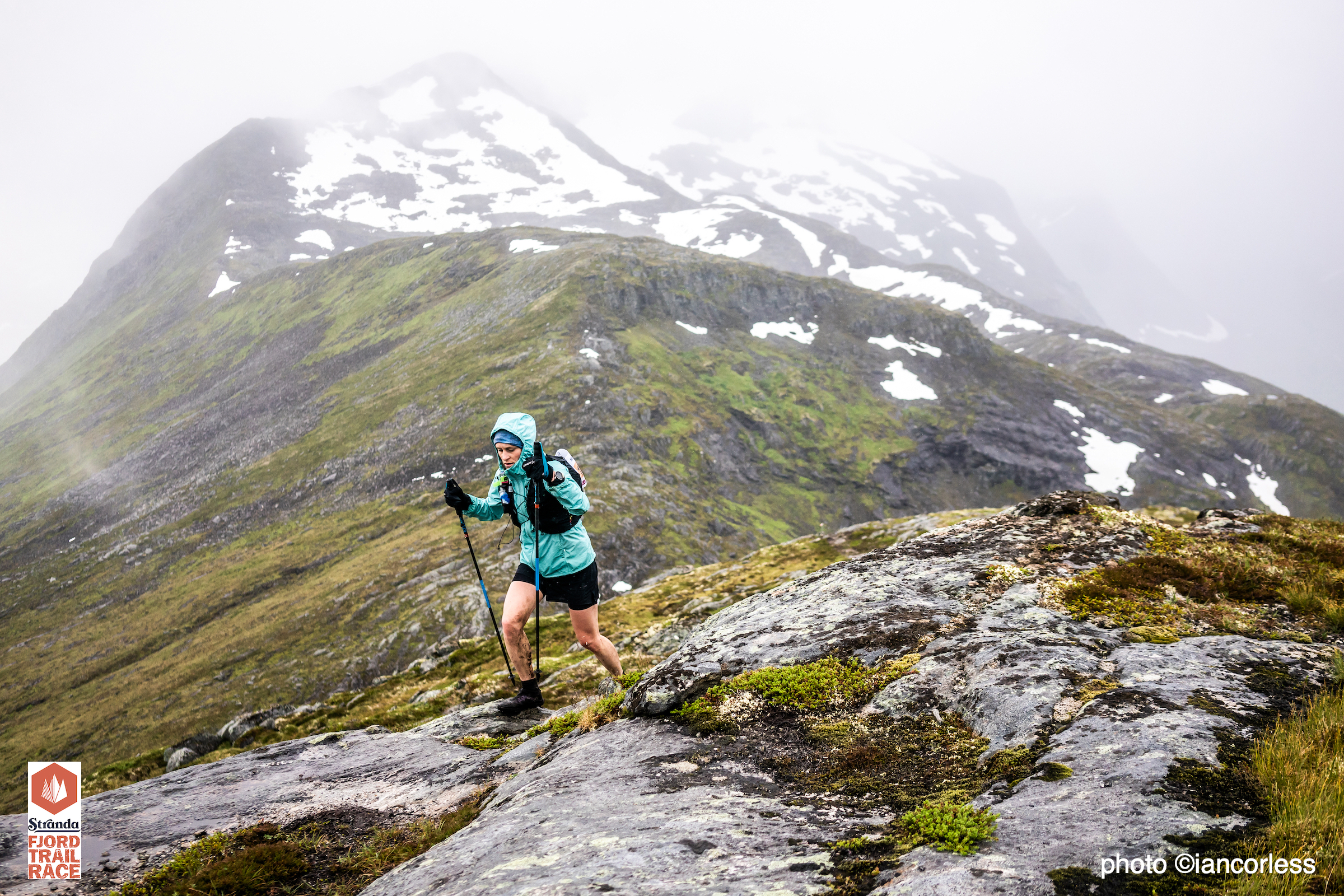
Reaching the summit of Fremste Blåhornet at 1478m and 23km the route was changed to avoid a technical ridge. The terrain that followed was rocky, slow, and brutal especially in the persistent rain and cold temperatures.
The aid station on the road of Dalevegen at 28km distance was followed by easy running before an extremely steep and challenging out-and-back climb to Storhornet at 1309m.
Liasætra aid station followed and then easy trail running to Patchellhytta DNT cabin. Here, the out -and-back to the summit of Slogen was removed – a shame but absolutely the correct call in the conditions.
Left in the valley and runners make their way to Velleseter, Brunstadsætra, Storevatnet, and then the road section crossing and aid station that leads to the final section of the course, 80km covered.
The climb to summit Roaldshornet at 1230m is long and relentless, the summit at 86km and it would be easy to think it’s all downhill from here. Considering what has gone before, it’s fair to say that it is. Eventually the 100km joins with the final section of the 48km track and the run in to the finish is welcome and hard earned.
Mathis Dahll Fenre battled with Vermund Upper Garden for victory, the duo separated by just 1-minute, 16:00 and 16:01 respectively. Thomas Wallin-Andersen placed 3rd in 16:59.
For the women, Wenfei Lie had led the early sections of the race ahead of Alexandra Narkowicz and although the duo was together on the climb to the final summit at Roaldshornet, Alexandra had more reserves to take victory in19:13 to 19:55 for Wenfei. Margrethe Fjetland rounded the podium.
One thing is for sure, running 25km, 48km or 100km in this area of Norway is not easy, ask anyone who toed the line of the respective distances. There is something truly magical here, 2021 opened up this area of Norway to the world, 2022 has elevated Stranda as a ‘must go’ location. I can only encourage and emphasise that you ‘need’ to add Stranda Fjord Trail Race to your bucket list. You will not be disappointed with the experience, BUT come prepared, you are going to earn that finish medal.
Nobody is going to forget 2020. For most of us, the year did not go as planned or as expected. It was a year of survival and already, the ‘I survived 2020’ tee-shirts are available.
teepublic.com
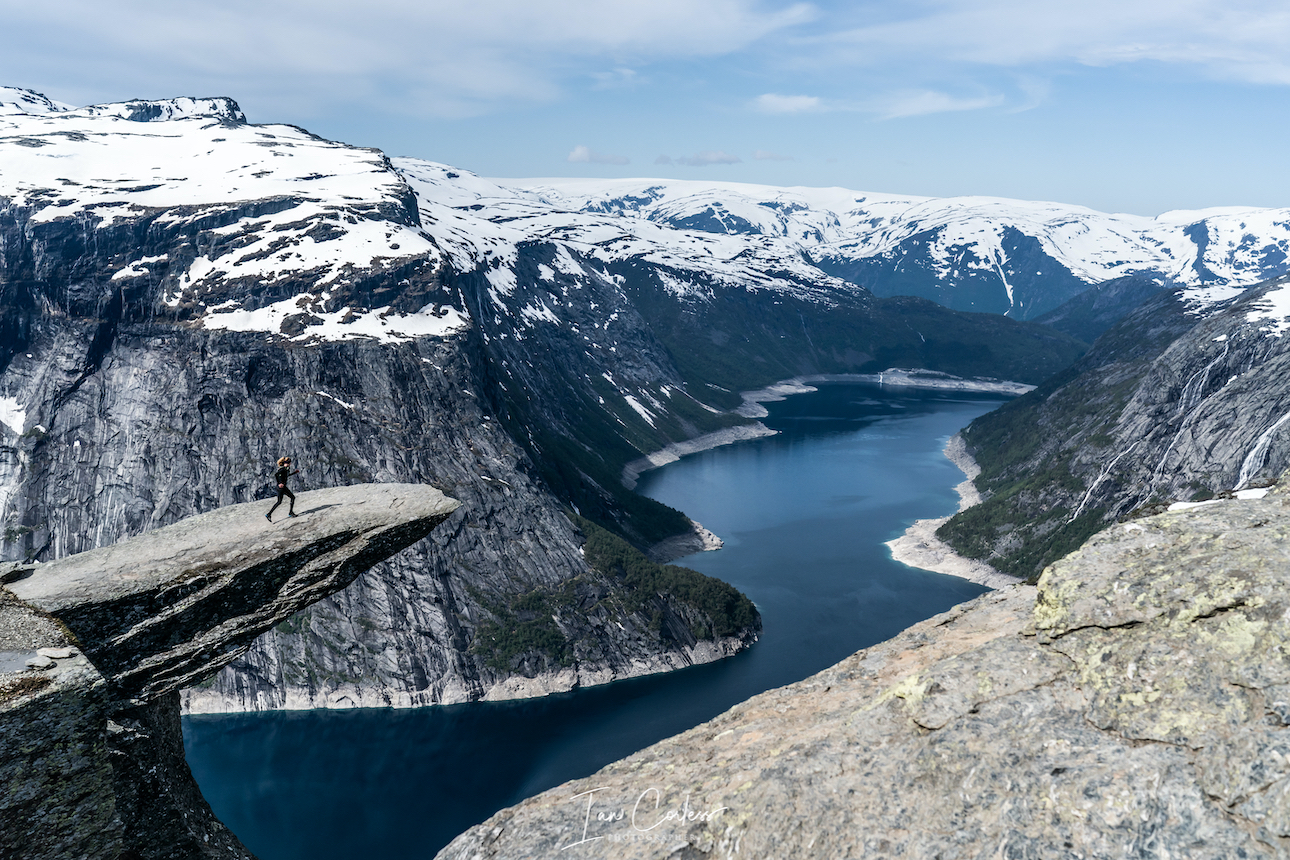
It has been a rollercoaster of highs and lows.
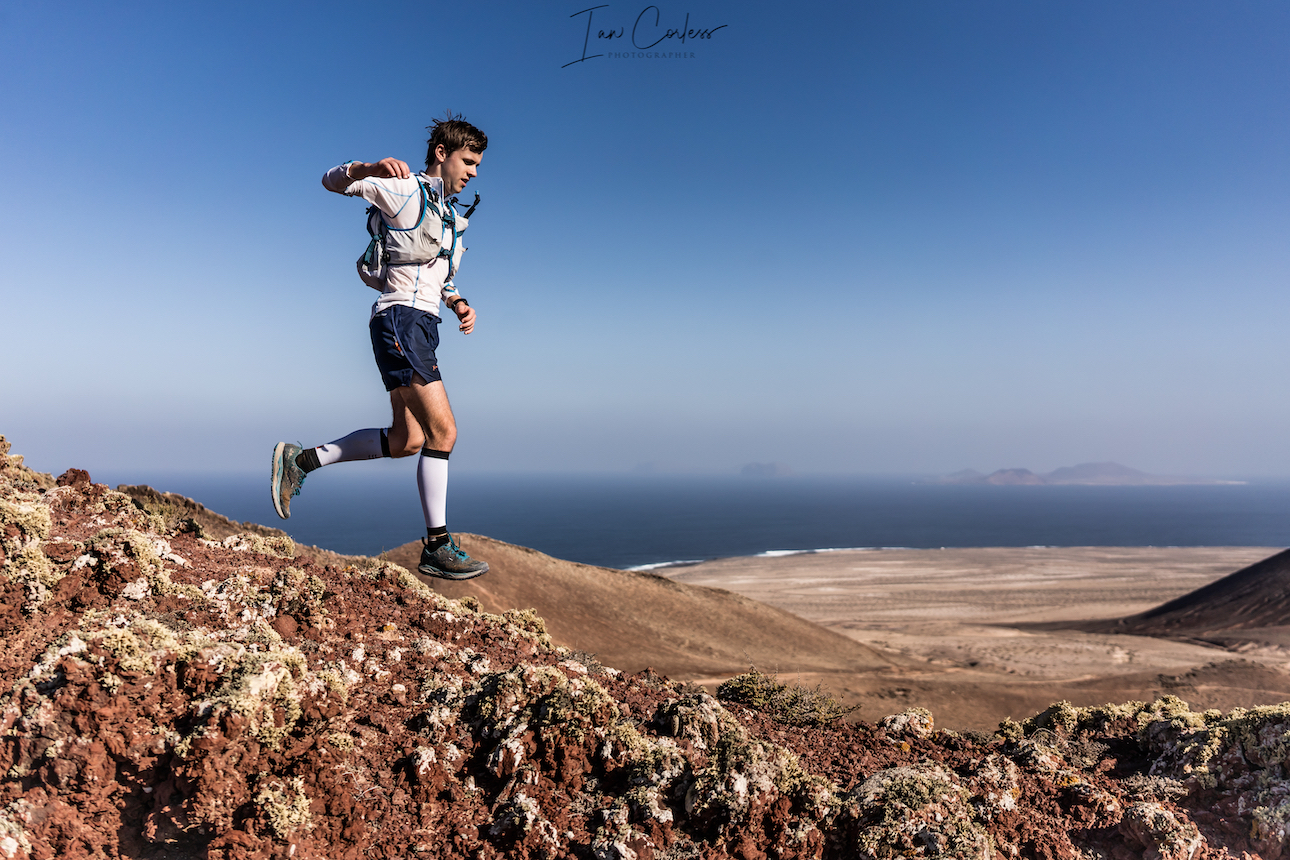
I started the year ‘as normal’ with my Lanzarote Training Camp… We had 40-athletes join us at Club La Santa and life was good, just like normal!
Running high in Lanzarote
From here I travelled to Morocco with Abelone, we had a few days in Marrakech and then climbing planned in the Atlas Mountains summiting Toubkal and the surrounding peaks. It was a perfect kick-start to what looked like was going to be a perfect year. This trip alone was a highlight of 2020.
One of the many summits in the Atlas Mountains with Abelone.
Late January, I was on a flight to Hong Kong for another year working on the 9 Dragons. As I departed the UK, rumors about a virus were escalating but the level of concern, at this stage was still very low. As I arrived in Hong Kong, I settled with my friends Mo and Janine and that evening we had a dinner planned with race directors, Michael and Steve. By the end of the dinner, the race was almost certainly going to be cancelled.
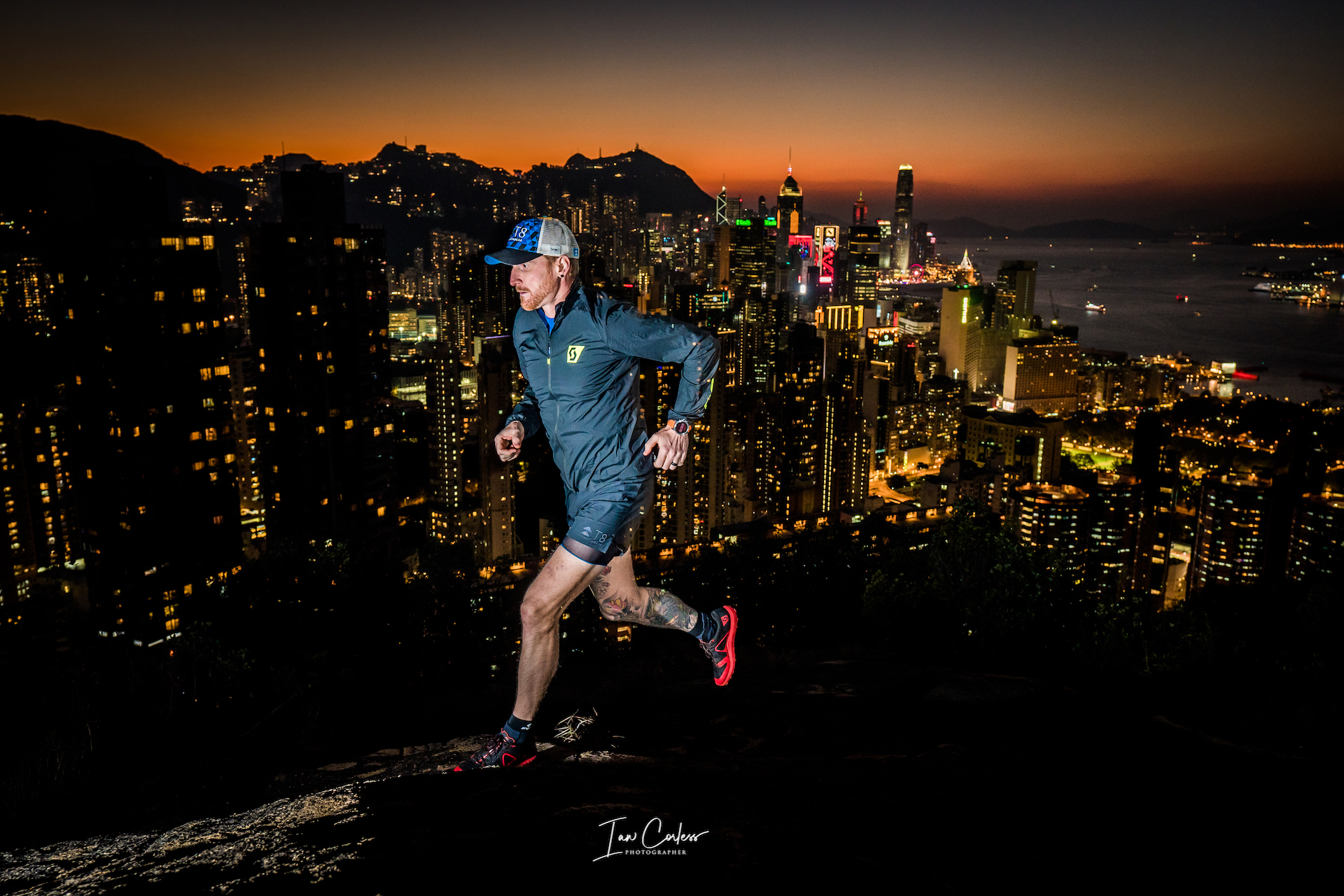
Michael McLean high above Hong Kong
This set the stage for 2020. Race cancellations, disappointment and an escalated level of worry and concern.
Leaving Hong Kong on and empty flight back to London, January 2020.
Information provided by the UK Government as I landed in London from Hong Kong, January 2020.
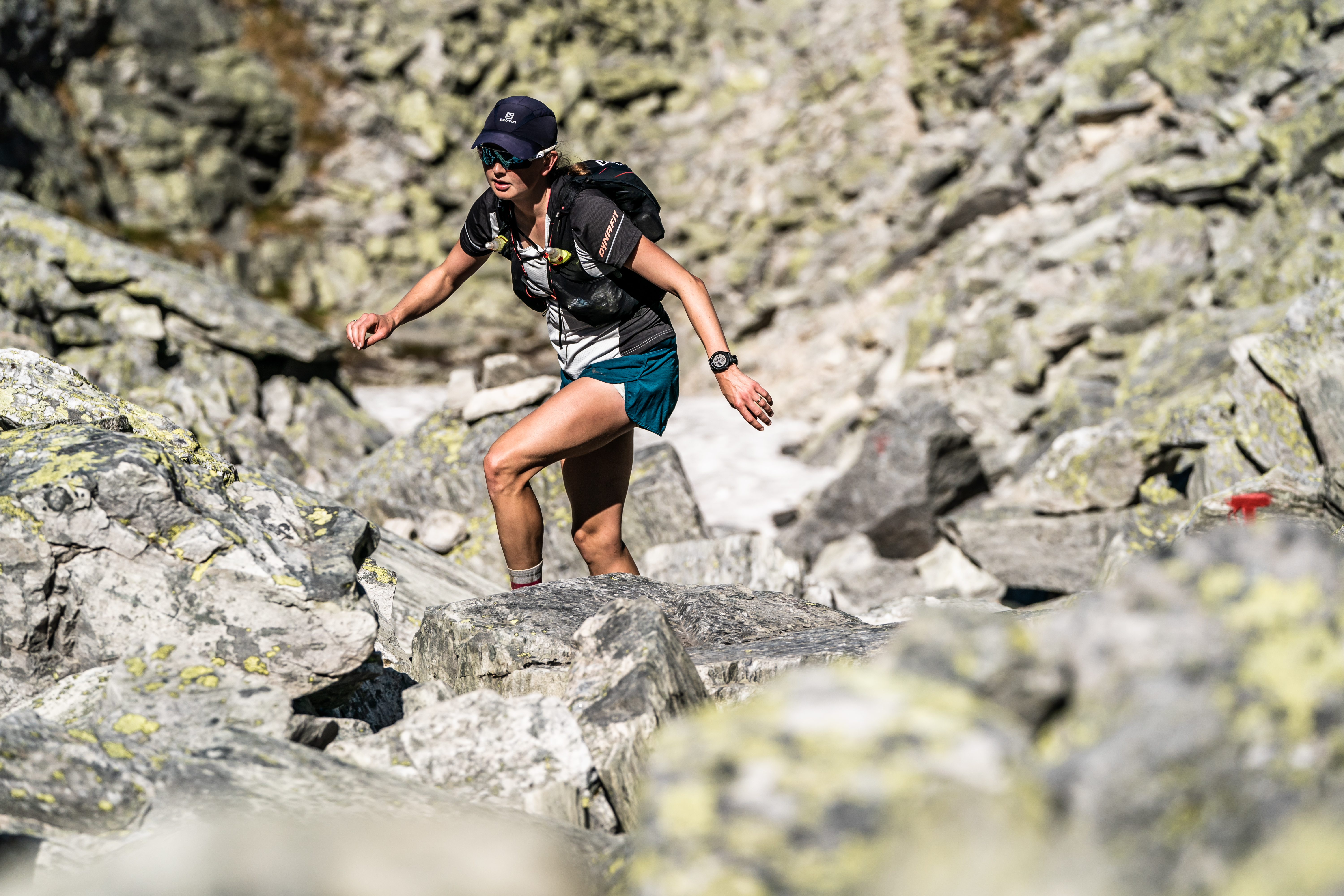
My immediate concern was firstly getting out of Hong Kong, the lockdown came quickly and while face masks are a regular sight here, they came compulsory. I changed my flights and made my escape.
February I once again returned to The Coastal Challenge in Costa Rica. The race was normal. We discussed Covid-19, we expressed concerns but many of us were of the mindset it will be okay, Spring should be fine! How wrong we were!
TCC2020 went ahead as normal.
Transgrancanaria concluded February and now, the impact of Covid-19 was becoming very real.
Pau Capell at 2020 Transgrancanaria
March signified a lockdown of the world.
I have to say, I cannot complain about 2020. My work life was pretty much shut down but on a personal level I made the most of free time that I would never normally have. I became elastic constantly stretching and contracting as situations around the world changed.
Needless to say, as the pandemic took over the world, it was hard to remain positive with the rise of infection and deaths globally.
One constant was my website, my podcast, photography and writing articles. I thought it timely to look back and list all the content from the past 52-weeks.
If you enjoy the content provided here on this website and in other media, please consider supporting me on Patreon. For as little as the cost of a take-away coffee, a monthly stating donation of £3.00 helps me to keep the content free for all.
Fuelling for a Multi-Day like Marathon des SablesHERE
And finally, on a personal level, a big thank you to Abelone Lyng who made 2020 a very special year. We shared countless trails, many mountains and countless summits.
Please support this website. I believe everyone deserves to read quality, independent and factual articles – that’s why this website is open to all. Free press has never been so vital. I hope I can keep providing independent articles with your help. Any contribution, however big or small, is so valuable to help finance regular content. Please support me on Patreon HERE.
“…For Ian, Ultra Running is not about the race, so much as the race is an excuse for the real limelight that is the humility of the people in the locations of the races. In his photographs, the runners become a part of the landscape; creating an honest vision of unison between earth and person. The runners do not dominate the pictures but rather majestically intertwine with the scenery; showing how the runners are simultaneously merging with their location and going beyond the landscape. The runners are found to be a discrepancy to the sites they are in; it is this discrepancy that highlights the nature of running as natural and yet an oddity to what is natural. The dichotomy between natural and unnatural is a demonstration of basic human life, where we live our routines, yet we aim to achieve more and to become better versions of ourselves. Running, as such, becomes a representation of life. Running is not a reaction to the natural but an enhancement of it. To run is to evolve and to become better than your previous self.” – Yara Kair
WHY WE RUN
It’s 6 pm on a Wednesday, and a keen audience gathers in London’s The Conduit to listen to Lizzy Hawker and Ian Corless talk about their experiences as runners, Lizzy as a competitive long-distance runner and Ian as an extreme sports photojournalist. Most, if not all, of the people in the room, were either runners themselves or interested in becoming runners. Whichever the case, the theme of the evening was to understand the reason behind running.
Many thanks to Lizzy Hawker for her inspiration, hosting by Sophie and the support of myRaceKit for an incredible evening in London with like-minded people at The Conduit.
You can view highlight portfolio of my photography on the HOME screen of my website
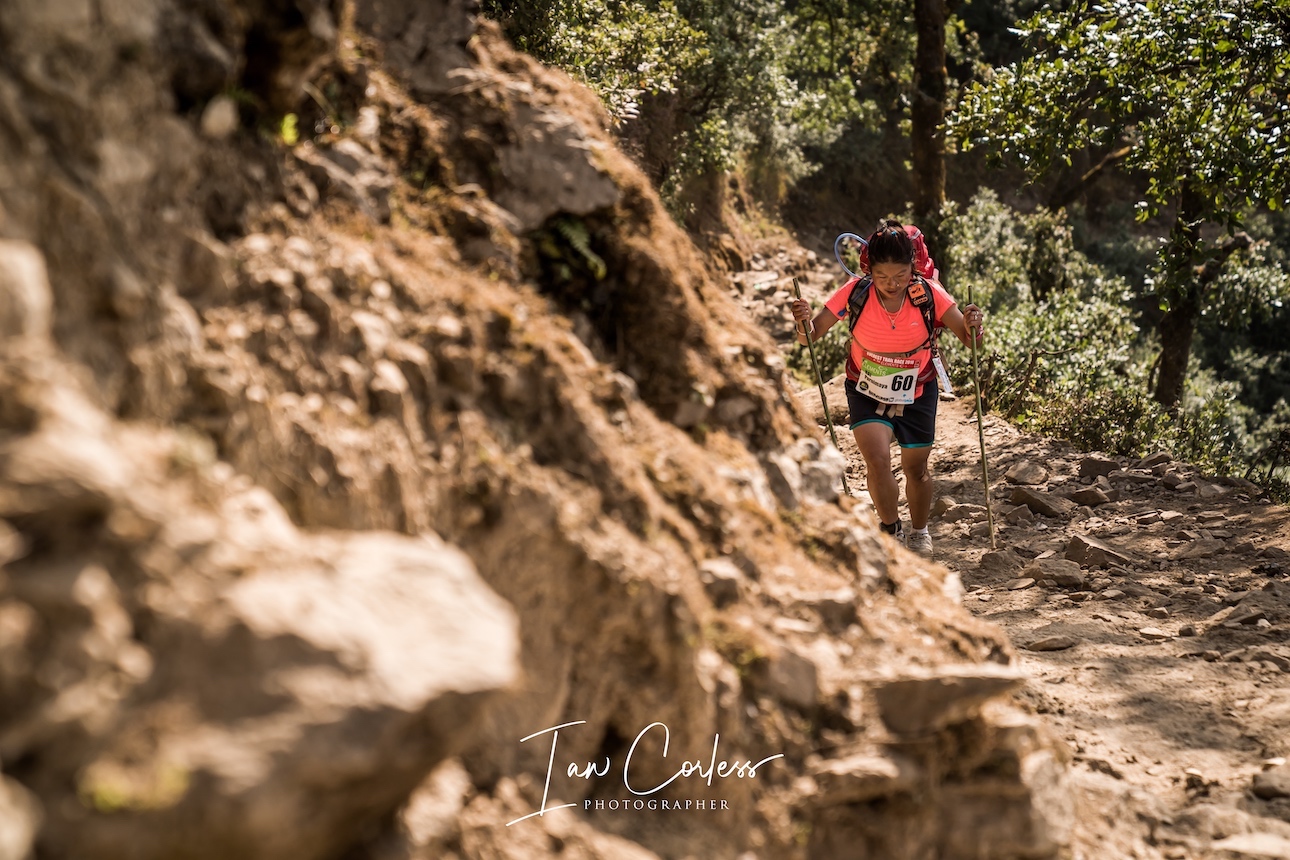
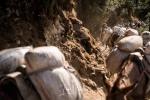
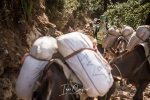
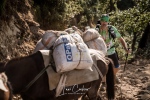
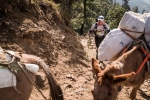
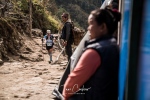
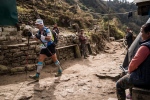
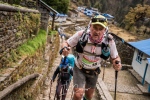
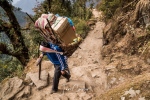
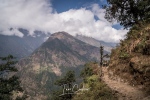
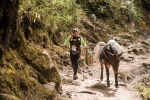
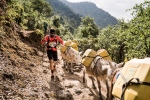
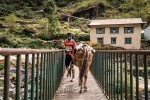
Kharikola to Phakding is very much a transition stage. The first 3-days have been quiet with an occasional glimpse of life. From here on in, the experience changes, the trails become busier – mules and yaks are seen regularly and they must be respected… It can be a confusion for a runner, as they force a slower pace and one must wait for the correct time to pass. In addition, Porters are seen regularly, these people are the hub of this area of Nepal, without them, supplies would not reach the lodges and shops.
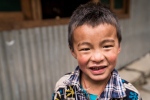
The diversity is incredible. Children play, parents work and the runners navigate a way through this section to finish at what many consider to be the gateway to Everest, Phakding.
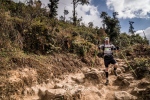
At just under 30km’s, stage 4 of the ETR is arguably the most runnable. Leaving the monastery, a short twisting descent leads to the river and a long climb to aid station one at Kari La. It is here that the first real glimpse of the high peaks becomes real. They are no longer distant specs but now feel very real and surprisingly close.
The descent to Surke (Cp2) is a 17km rollercoaster series of switchbacks of technical trail with occasional short climbs to sap the legs and lungs.
From Surke, the trail now flattens a little, with a series of small climbs and descents that lead all the way to the finish at Phakding.
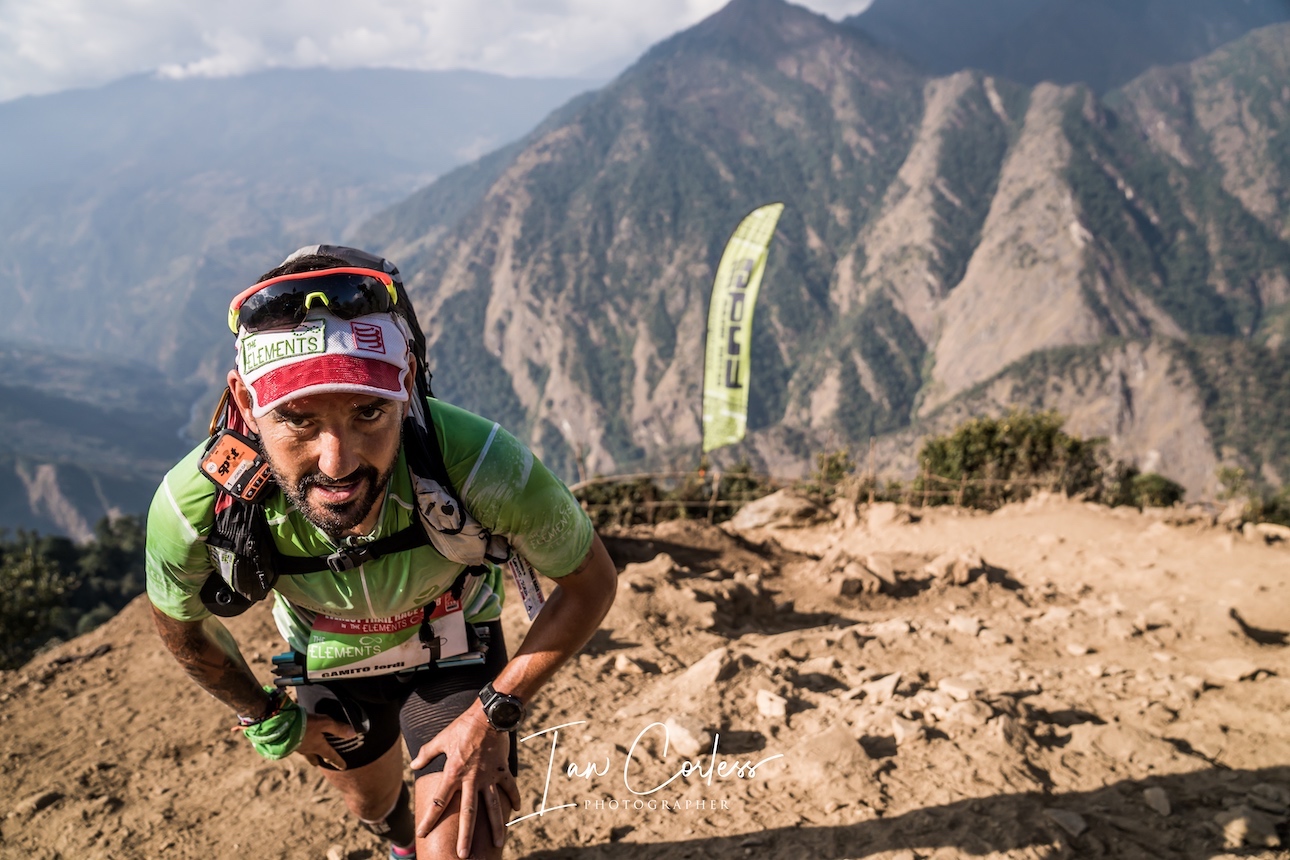
Today was once again all about Jordi Gamito and Rai Purnimaya, the duo led from the front and were untouchable, they crossed the line in 3:34 and 4:25 respectively and now have strong leads for overall victory with two stages to go.
Joan Soler and Sergio Arias once again were 2nd and 3rd, 3:52 and 3:58 for the men and Manuela Vilaseca was 2nd in 4:49 ahead of Becks Ferry in 5:31 who picked up and injury on stage 3.
Tomorrow, stage-5 is a short day of just 20km’s and 2124m of vertical gain. It culminates at the monastery at Tyengboche with Everest, Lhotse and Ama Dablam providing arguably the most impressive finish line of any race!
I was recently approached by LIFE OUTSIDE to provide a little insight into what it takes to, ‘Get the Shot!’
To be honest, it something that cannot be answered in just a few words.
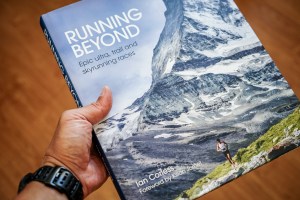
It would be impossible to introduce Ian Corless, and describe his passion for photography, and involvement with ultra running better than Killian Jornet’s words in Corless’ recent book Running Beyond…
However, HERE is the article. I hope you find it of interest.
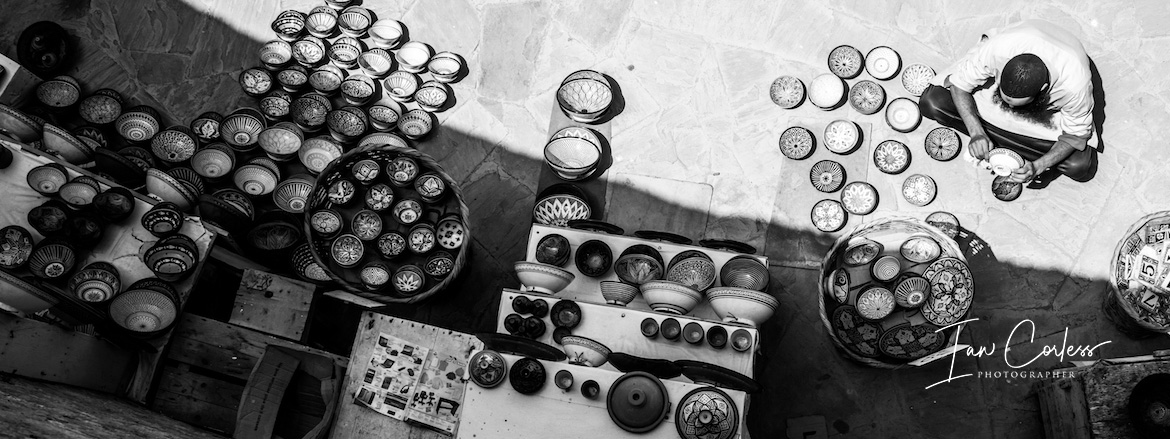
I recently also wrote an article on shooting in Morocco, HERE.
For those who may be looking to travel. I am speaking in October at TRF – Trail Running FestivalHERE (in Poland) – Be great to have you come and say hello!
The 2018 Transgrancanaria HG started as planned at 2300 hours from a new start in Las Palmas. In the 24-hours before the race, it had been touch and go if the race would have a delayed start due to storms that were rolling in to the island. For example, the marathon was postponed from Friday to a Saturday start.
In the hours before the start, rain storms moved through the island bringing with it strong winds and torrential rain. However, in Las Palmas it was all calm… was it the calm before another storm?
Live music, thousands of people and on the stroke of 11pm, the runners departed along the beach for one of the toughest races in the world – 125km with over 7000m of vertical gain. As the name suggests, the route is ‘Transgrancanaria’ starting n the north-east and passing all the way down the spine of the island to conclude in the south at Maspalomas. Key moments come at Arucas, Teror, Fontanales, Presa de los Perez, Artenara, Tejeda, Garanon, Tunte, Ayagaures, Parque Sur and finally the finish line in Maspalomas.
The ladies’ race was dominated by Polish runner Magda Laczak who pushed from the front right from the start. She opened a gap early on and pulled away as the miles past to finally finish 40-minutes ahead of the ever present and indestructible Andrea Huser, their times 15:18:37 and 15:58:11. Third placed lady was Ekaterina Mityaeva who is new to the UTWT ranks but over the past years has gained a strong reputation in the Skyrunner Works Series. Her form was good to close strongly and pass Fernanda Maciel for the final podium place. Fernanda had run a strong race early on but faded in the last quarter to finally finish 6th being passed by Beth Pascall from the UK and Eva Sperger. The ladies race had notable drop outs with some key favourites haveng a tough night, in particular Caroline Chaverot, Francesca Canepa and Emilie Lecomte.
For the men, Pau Capell as defending champion was the man to beat and he looked relaxed with expectation on his shoulders. He ran smart, calm and cool as Frenchman Aurelien Collet dictated the pace from the front. At the iconic Roque Nublo the duo were less than a minute apart and Aurelien must have felt like a hunted animal. Pau eventually made his move and he opened a gap immediately which he extended to the line finishing in 12:42:08 ahead of Aurelien’s 12:56. A strong attack had been expected from the USA’s Tim Tollefson and certainly over the first third of the race his presence was felt, however, a recurring injury kicked in and he was forced to drop. Cristofer Clemente took over the reigns and running his longest ever race he surprised himself taking the final podium slot in 13:22. Daniel Jung placed 4th.