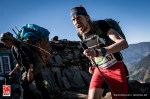
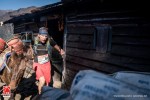
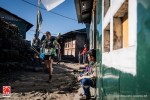
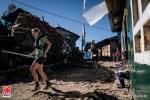
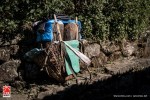
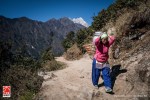
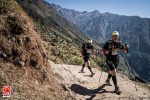
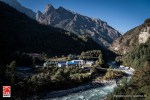
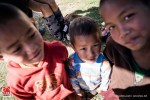
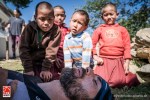
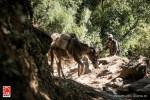
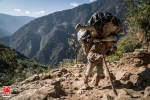
Kharikola to Phakding is very much a transition stage. The first 3-days have been quiet with the occasional glimpse of life but now the runners are on the motorway of Nepal. Porters are transporting all manner of goods from food and drink to 8’x4’ sheets of wood and even fridges! In and amongst this frenetic relay of goods are mule and yak trains and a plethora of tourists moving up and down the trails.
The diversity is incredible. Children play, parents work and the runners navigate a way through this section to finish at what many consider to be the gateway to Everest, Phakding.
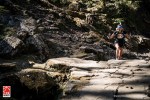
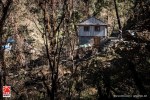
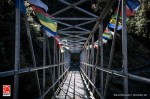
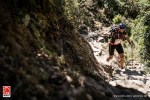
Leaving the sleepy monastery of Kharikola, 29.5 km’s awaited the runners and after a short and twisting technical descent, a vertical kilometre of elevation to CP1 (Kari La) provided a great way to start the day and brush off the cobwebs. The descent to Surke (Cp2) is a 17km ankle twisting and knee swelling series of switchbacks of technical trail. But there is no rest, more climbing, more technical trails and finally the wire bridge at Monjo offers the ETR finish line.
It may come as no surprise that Suman Kulung and Luis Alberto Hernando dictated the pace from the start and arrived at Cp1 in less than 1-hour, Suman with a slender lead over the Spaniard. It was a ridiculous time considering the technicality and elevation of the course. Sondre Amdahl was holding his ground but the writing was already on the wall. The Nepali runner was pushing hard and making Luis Alberto chase hard to retain his overall lead. It was a brave effort by both runners. At the line, Suman took the victory in 3:15:23 a 3+ min margin making the final 2-days of the 2017 ETR very exciting with it all to fight for between the Nepali and the Spaniard. Luis Alberto finished in 3:18:52 and still holds the number 1 slot on GC but it is close, really close! Sondre finished 3rd in 3:42:34 and Jordi Gamito 4th in 3:51:14
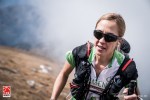
Chhechee Sherpa is one seriously impressive lady! She has a look of focus and determination that is softened by a smile. After a slow start in the 2017 ETR, this Nepali lady has been a force to reckon with. Once again, she was first to CP1 with a strong lead over Ester Alves who was chasing hard and then Elisabet Barnes who was further back. As the day unfolded though, Chhechee slowed. Firstly, Elisabet caught Ester and then the duo closed on Chhechee. For once, the first 3 ladies were separated by minutes and it remained that way all the way to the line. The Nepali crossed the line first in 4:45:04 and just 34-seconds later Ester crossed with Elisabet just 22-seconds later – that is a close and hard-fought race! The overall GC remains with Chhechee 1st, Ester 2nd and Elisabet 3rd – this is unlikely to change over the following 2-days.
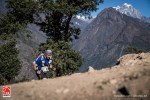
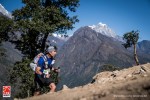
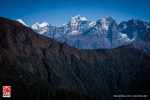
Tomorrow, stage-5 is a short day of just 20km’s and 2124m of vertical gain. It culminates at the monastery at Tengboche with Everest, Lhotse and Ama Dablam providing arguably the most impressive finish line of any race!
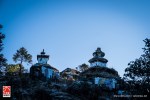
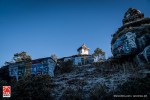
After yesterday relentless uphill struggle today, day-3 of the Everest Trail Race was all downhill, well, sort of. Starting in Jase Bhanjyang runners passed through Jumbesi, Phurteng, Salung, Taksindu and then from Jubhing the race finishes with a tough climb to the stunning monastery at Kharikola. At 37.4km in length the total descent is a quad busting 4110m in contrast to 2512m of ascent.
Many thought today would be an easier day, however, for those in the know… although descending may be a little kinder on the lungs, descending 4000m+ on tired legs is no easy task. Especially when the terrain has added technicality and steepness.
Suman Kulung and Luis Alberto Hernando led from the front once again and the stage looked all set for an epic battle. Suman a super-fast descender, has Luis Alberto worried before the start. He knew it was going to be tough. Over the early miles they ran together but eventually the Nepali runner broke the elastic and the Spaniard was left pursuing. Although a gap opened, Luis Alberto did an incredible job of holding Suman and then with a tough and relentless final climb, he closed to reduce his losses and still retain the lead. Suman crossed in 3:47:27 and Luis Alberto 3:55:58.
In third place, Sondre Amdahl and Jordi Gamito run together, Sondre using Jordi’s descending ability as a guide to help him down the trails. On the final climb, they stayed together and crossed the line 1-second apart, Sondre remaining 3rd overall.
Chhechee Sherpa, like her male counterpart has an incredible reputation for running downhill. She put this to great use on day 2 basically opening a gap from the moment the race day started all the way to the line. Despite Ester Alves’ incredible mountain experience, she couldn’t match the Nepali runner, Ester crossed the line in 6:03:36, an incredible 36-minutes slower than Chhechee who crossed in 5:27:27.
Elisabet Barnes is not known for her downhill ability and today it tested her to the max, so much so, it opened the doorway for Rebecca Ferry to take 3rd on the stage in 6:28:19 and Elisabet crossing in 6:40:35. However, Rebecca did start in the 0700 wave when she was listed to start in the 0800 wave, therefore, Elisabet was unaware of Rebecca’s position when running. Elisabet still retained her 3rd overall position and now Chhechee has the overall lead just ahead of Ester by 4-minutes 45-seconds
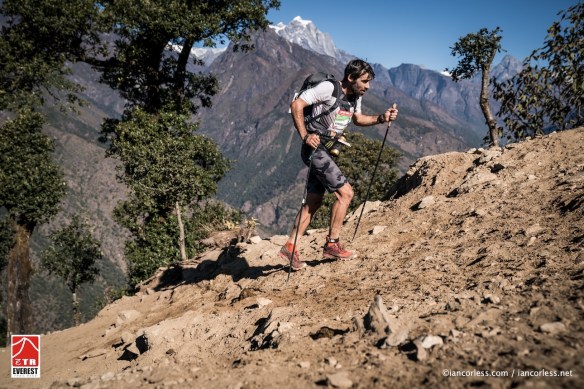
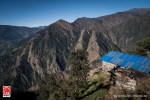
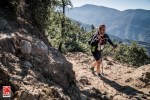
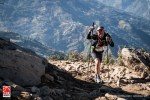
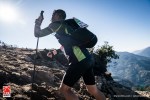
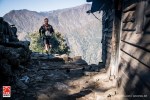
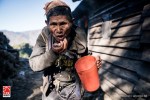
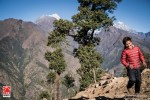
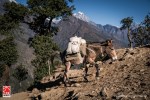
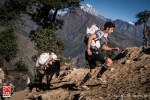
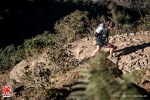
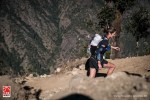
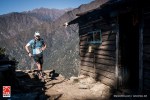
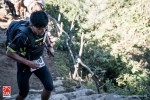
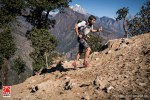
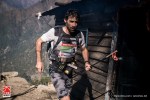
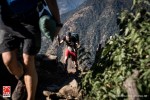
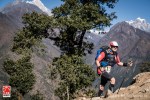
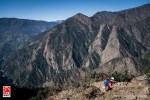
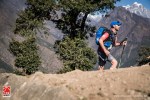
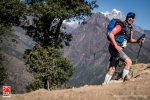
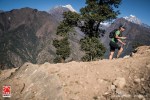
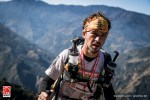
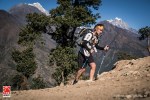
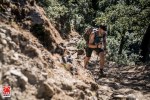
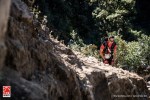
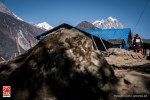
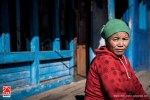
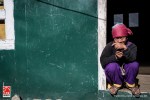
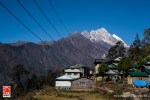
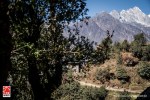
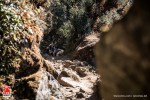
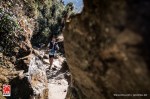
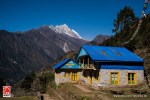
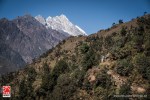
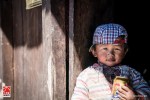
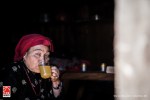
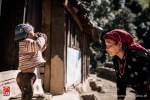
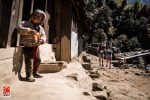
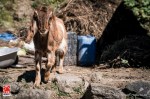
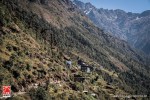
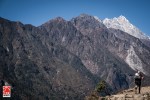
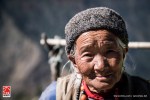
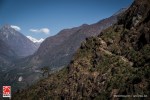
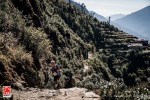
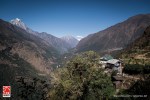
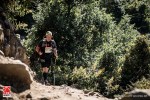
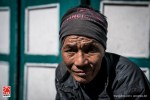
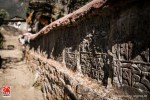
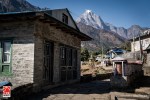
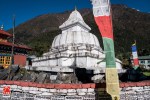
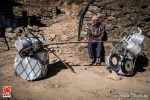
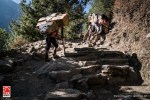
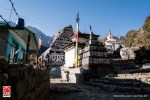
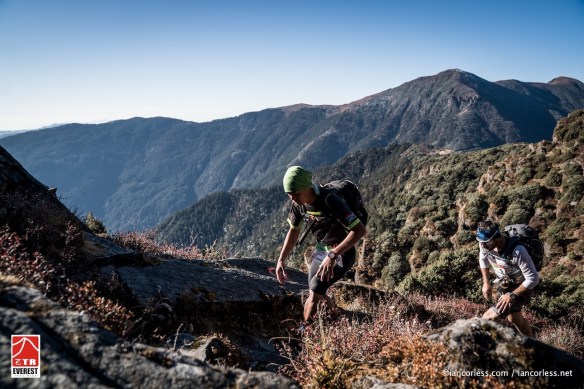
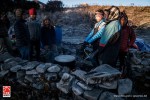
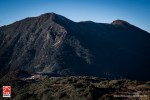
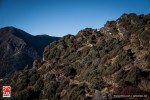
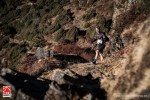
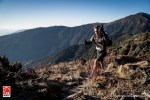
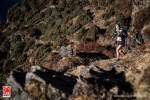
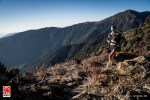
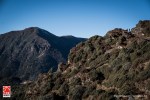
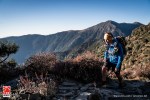
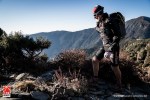
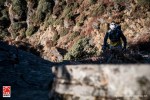
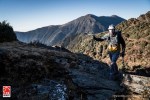
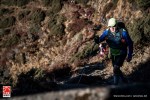
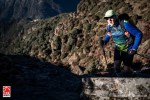
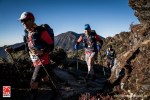
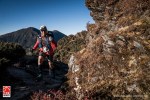
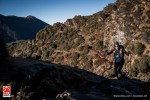
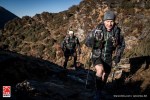
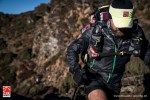
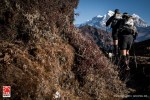
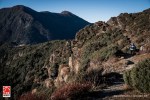
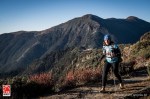
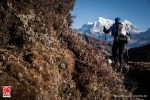
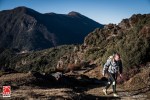
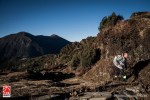
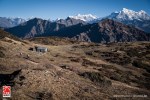
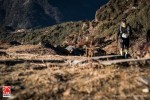
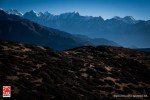
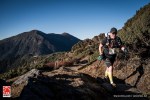
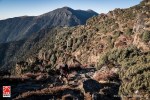
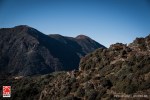
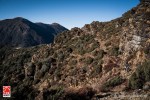
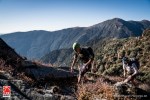
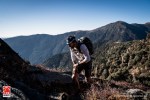
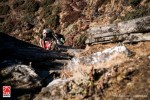
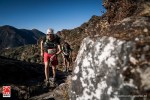
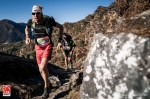
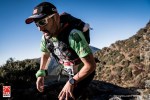
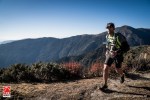
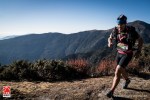
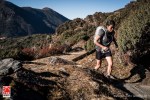
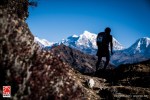
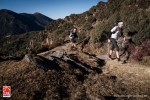
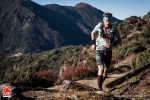
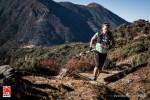
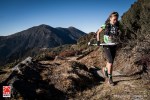
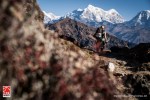
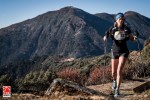
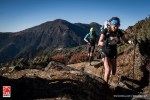
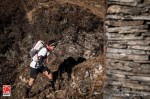
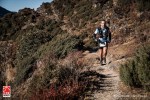
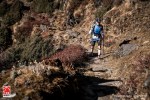
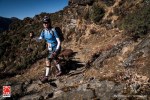
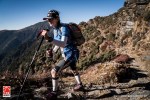
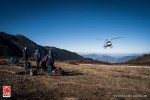
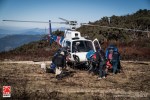
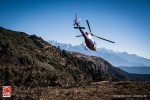
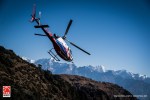
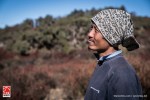
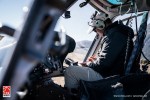
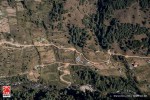
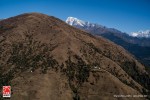
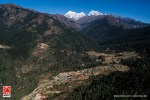
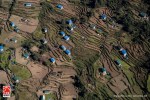
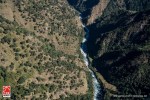
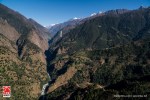
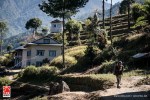
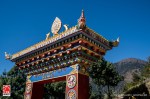
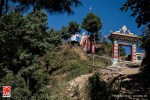
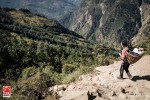
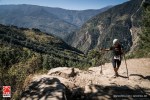
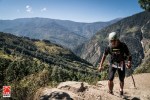
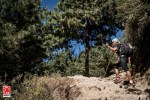
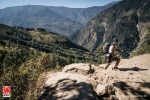
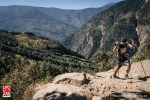
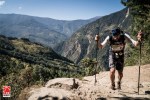
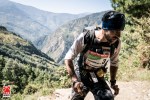
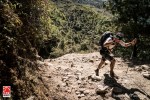
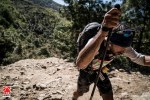
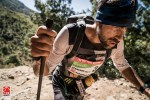
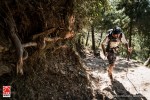
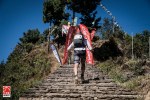
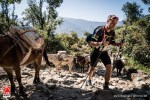
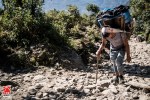
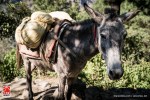
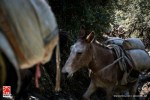
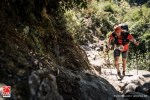
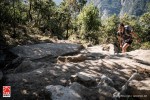
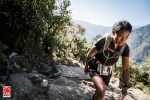
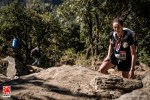
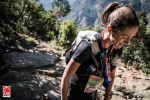
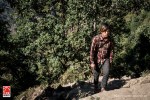
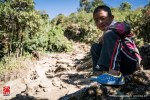
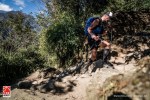
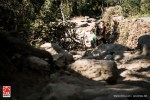
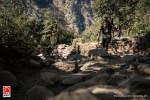
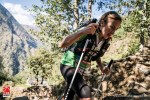
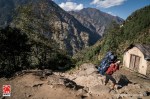
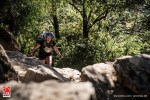
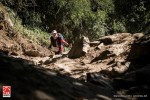
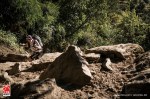
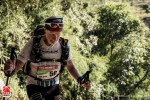
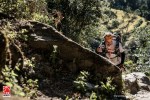
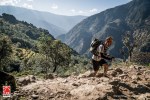
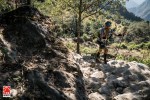
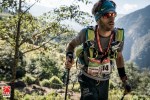
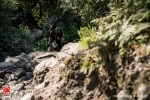
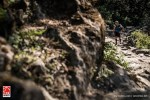
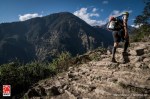
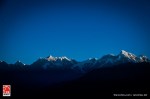
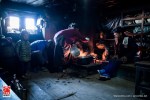
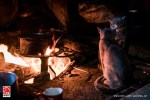
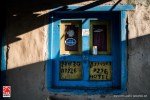
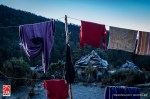
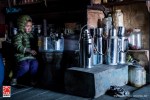
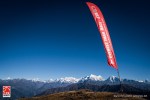
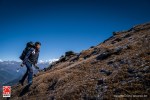
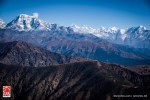
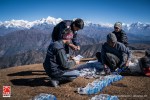
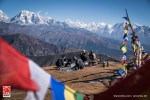
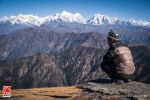
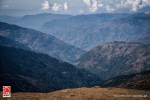
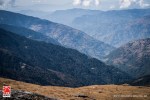
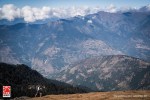
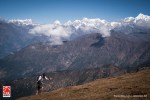
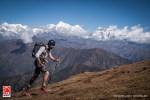
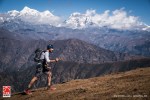
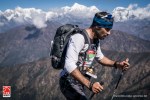
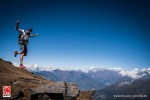
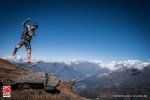
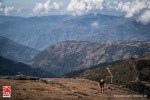
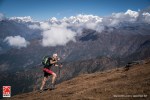
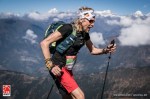
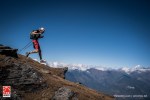
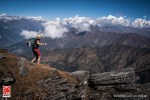
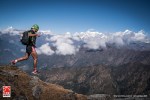
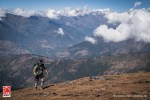
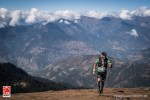
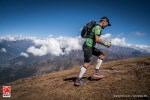
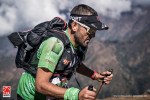
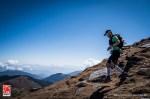
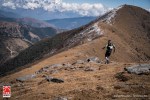
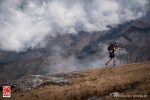
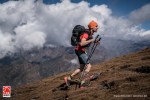
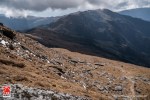
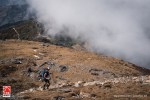
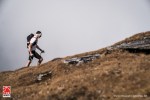
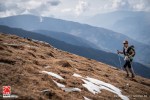
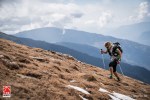
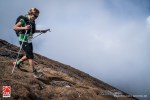
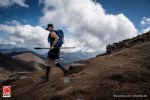
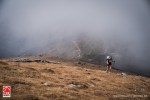
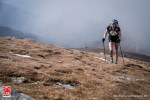
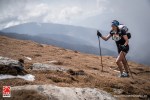
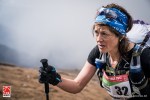
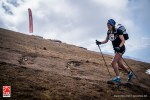
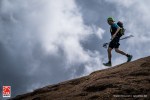
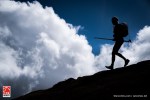
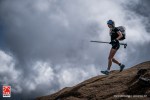
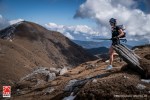
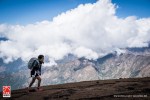
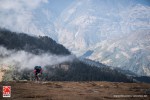
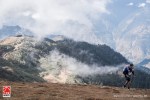
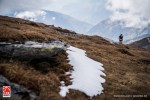
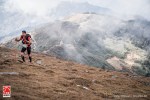
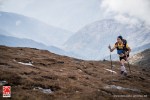
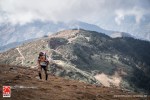
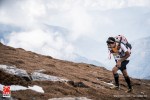
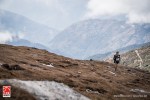
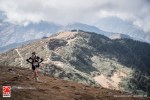
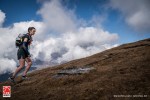
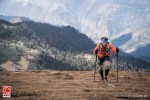
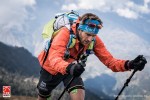
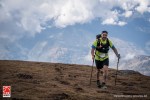
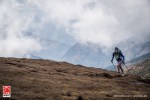
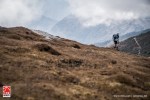
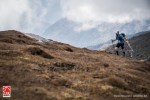
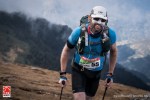
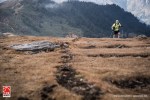
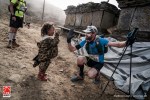
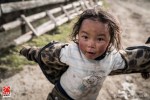
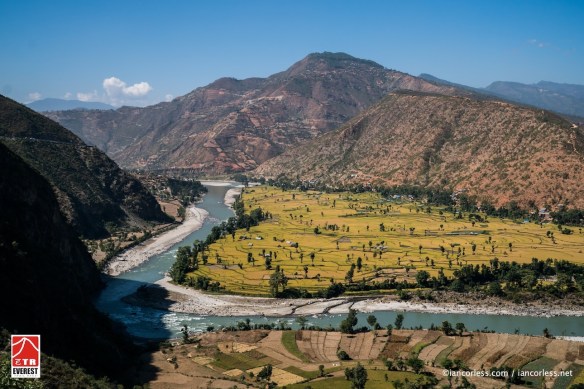
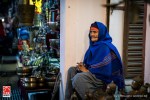
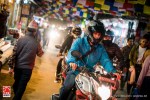
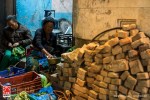
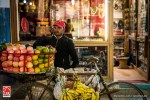
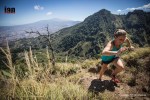
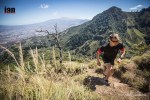
The trails and route for the ETR from Kharikola to Tyangboche and back to Lukla are now on the main trekking routes and in addition to this it is the main transport route for all supplies. Porters, mules and yaks are like cars on a motorway as they move up and down the trail carrying loads that are often beyond comprehension. It’s amazing to see life unfold and I for one feel very privileged for the opportunity to see it and record it in images and memories.
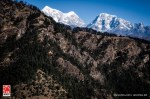
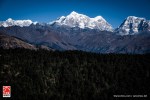
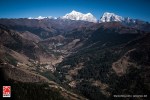
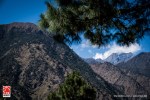
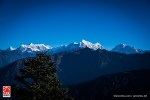
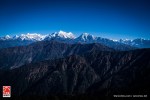
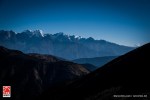
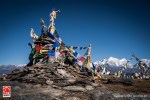
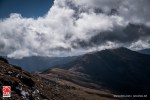
Starting in Bhandar runners have the pleasure of running downhill along some twisting and technical trail before crossing a suspension bridge that stretches over Kinja Khola River. What follows is a lung busting and leg-sapping climb to Golla at just over 3000m. A little respite and then climbing starts again firstly to Ngaur and then onward to the highest point of the ETR; Pikey Peak at 4063m. From the summit at Pikey Peak an amazing Himalayan vista awaited but the runners had to work for it… really work for it! Dropping down a tough technical descent for several kilometres, a tough short climb is the sting in the tail to the arrival at Jase Bhanjyang at 3600m.
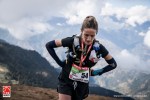
Day 2 of the Everest Trail Race is the toughest of the race: fact! It’s a brutal exercise in climbing and one that takes place at attitude stretching each and every participant to the limit. However, despite its severity, today, Luis Alberto Hernando dare I say, made it look it easy! He smashed the old course record and in the process set a new time of 3:35.
It’s difficult to comprehend how the Spaniard climbed to Pikey Peak and climbed 2700m in the time that he did. He arrived at the summit in 3:10 and then flew down the final technical descent and climbed to the finish line in 25-minutes – incredible!
It wasn’t all Luis’s day though, in the early stages he was pushed by Sondre Amdahl. The duo traded the lead over the early climbing and Nepali Suman Kulung tried to hold the pace but the other two were too strong.
Eventually Luis made his move and Sondre new that he could not match the pace, but he arrived 2nd at the summit less than 10-minutes behind. Suman arrived 3rd and then used his incredible downhill ability to not only catch Sondre but pass him, finished 2nd and Sondre was 3rd. Jordi Gamito once again placed 4th, he is running a strong race but just doesn’t have the pace or the form of the top-3.
In the ladies’ race. Ester Alves used her mountain experience and climbing to forge ahead but the Portuguese lady didn’t open up the possible huge gap many had expected. At the Pikey Peak summit, she had only a handful of minutes over Elisabet Barnes. Elisabet the two time MDS champ is not known for her mountain ability but in 2017 she has honed her skills and in particular, she has trained a great deal at altitude.
On the technical descent, Ester extended her lead, her technical running ability is still better than Elisabet’s but the gap is closing. Post-race, Elisabet said, ‘I am really happy with my race, I climbed really well, handled the altitude and after 3400m I was really strong, the training paid off!’
Chhechhee Sherpa was the 3rd lady and I guess somewhat surprisingly couldn’t match Ester and Elisabet on the climb – unusual for a Nepal native. However, she ran a strong race for 3rd with the UK’s Becks Ferry placing 4th.
It was a tough day with many runners coming close to the cut-off time. Eight runners were forced to take the short cut route and avoid Pikey Peak and as the day comes to a close, it looks like we may have one runner who will not make the cut-off.
Results top-3
Luis Alberto Hernando 3:35:14
Suman Kulung 3:49:25
Sondre Amdahl 3:53:04
Ester Alves 5:21:07
Elisabet Barnes 5:33:57
Chhechhee Sherpa 5:41:48
Day 3 Jase Bhanjyang – Karikola
A brutal day that is a stark opposite to day-2, at 37.4km it has more descending (4110m) than ascending (2512m).
Starting in Jase Bhanjyang runners will pass through Jumbesi, Phurteng, Salung, Taksindu and then from Jubhing the race finishes with a tough climb to the stunning monastery at Kharikola.
Four 16-seater mini buses departed Kathmandu for the 8-hour drive to Jiri and camp one of the 2017 Everest Trail Race. The distance is only 200km but the roads are very slowly and often only wide enough for one vehicle. It can be a rollercoaster ride of twisting left-to-right and up and down, all with a constant soundtrack of car horns.
There is a lack of road rules, which actually makes the journey very safe as drivers are constantly expecting the unexpected.
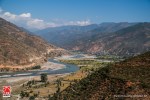
Taking regular breaks, a prolonged 30-minute break came at two-thirds through the journey and picnic stop next to the river that flows through the impressive valley through which we travel.
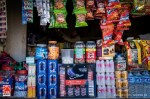
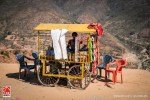
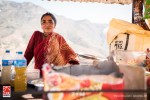
Along the road, small refreshment stops appear with locals selling wares from small carts; anything from a vegetarian rice meal to crisps, chocolate and even Red Bull! As is normal in Nepal, the locals are always friendly – they beam with laughter and smiles.
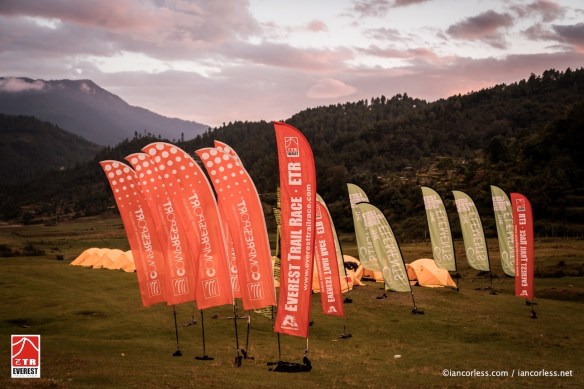
Back on the bus the ride continues for 3 more hours and finally our arrival at Jiri came. The glow of yellow tents was a warm welcome as the day began to lose its light.
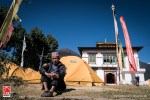
Arriving in camp, water and tents were allocated to the runners. These tents are home for the next 6-days as we all make our way towards Everest. Runners settled in and made final preparations as the reality hits home that tomorrow, the 2017 Everest Trail Race starts. The heat of Kathmandu soon disappeared with the arrival of darkness and t-shirts were replaced with down jackets.
Day 1 commences at 0900 Thursday 9th November.
Jiri (1850m) to Bhandar (2050m) – 21.5km 3795m+/-
The stage has two summits, one at 2400m and the high point of the day at Deurali Pass 2700m before descending to the finish at Bhandar.
Long-haul flights, red-eye and a journey through the night saw the 2017 ETR runners arrive in Istanbul, Turkey in the early hours of Monday 6th November. But the journey wasn’t over, departing at 0200 an onward flight of 7-hours to Kathmandu waited.
It was midday when everyone arrived in Nepal and visa and immigration went relatively smoothly, it is often a tiresome process! But the noise, colour and sounds of Kathmandu soon impacted on everyone as two small buses fought through the chaos to Hotel Shanker.
aA quiet oasis soon provided some tranquility and an opportunity for the runners to be officially welcomed and taken through a simple briefing ahead of tomorrow’s equipment checks and official race registration and number collection.
Eager to explore on foot, most dropped bags, freshened up and were soon meandering around the streets of Thamel, a commercial neighbourhood in Kathmandu, that has been the centre of the tourist industry for over four decades.
Tomorrow, two excursions are planned. One exploring the Monkey Temple and the other an opportunity to walk around historical Patan.
Excursions are followed by the official proceedings of equipment checks, bag drop and number collection.
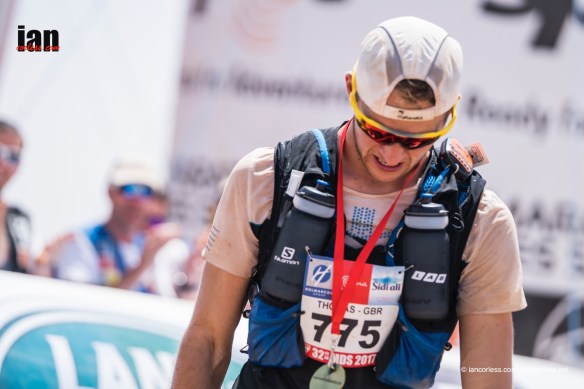
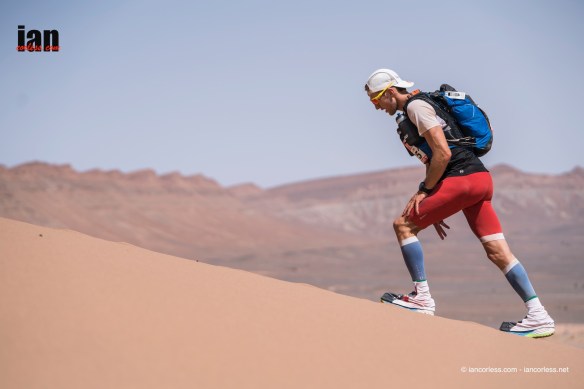
Tom Evans placed 3rd at the 2017 Marathon des Sables, the highest ever placing by a British male. His result was a complete surprise. He arrived on the start line an unknown, by the end of day one he was a dark horse turning the heads of journalists and runners.
It was no one day wonder. Evans matched the Moroccans stride-for-stride and pushed them all the way to the end. His result was a breakthrough performance!
Not happy to become a multi-day specialist, Evans has since tested himself in mountain races, the Eiger Ultra 101km and the CCC – in both races he placed 4th. With a road marathon coming up, Evans now looks ahead to 2018 and a multi-day training camp in Lanzarote (HERE) where he will coach and run, quickly followed by the 2018 The Coastal Challenge in Costa Rica.
I caught up with Evans and fired of ten quick-fire questions.
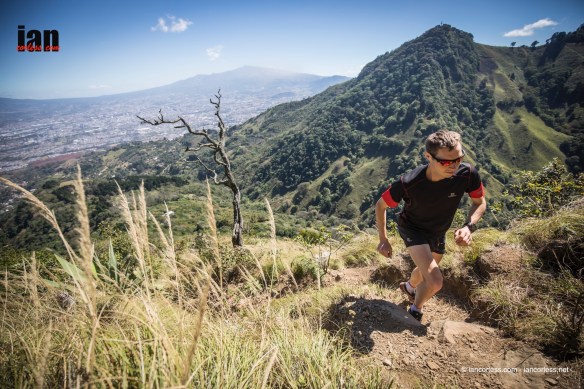
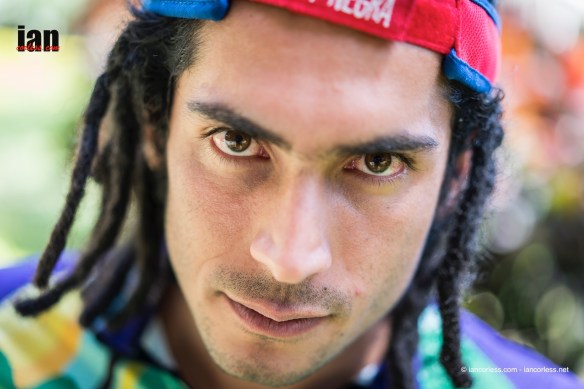
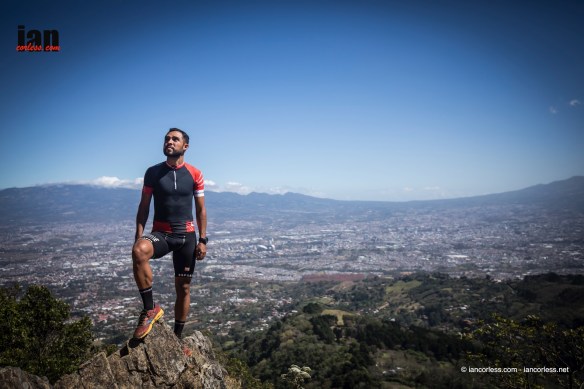
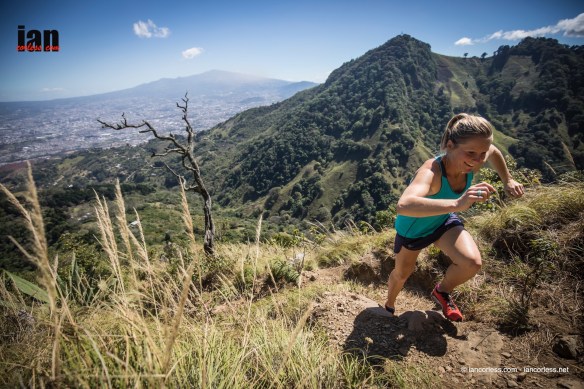
Images from the 2017 TCC with Anna Frost, Anna Comet, Ester Alves, Jason Schlarb, Sondre Amdahl, Elisabet Barnes, Chema Martinez, Tom Owens and many more.
You placed 3rd at MDS this year, quite a result, what has the following months been like for you?
It’s been pretty crazy since that surprise result at MdS. This year, I wanted to find out more about my running and really learn what my strengths and weaknesses are. I raced in the Eiger 101km and the CCC. Both went really well considering 95% of my training is done in and around London. I have been juggling my military career with my new-found love of running.
How did you train for MDS and what top 3 tips worked that you can pass on?
My training for MdS was pretty limited as I was away with the Welsh Guards in the build-up to the race. I managed to get a week long trip to Lanzarote to focus on the race and get some quality miles in my legs. My top 3 tips are:
Train how you race. Train with the kit and food you are going to use.
Heat acclimatisation is so important. It can be done anywhere hot eg Bikram yoga!
Stay injury free. If you start developing a niggle, get it sorted ASAP! Better to turn up less fit but injury free.
You have followed MDS with mountain races, the Eiger and CCC, is this to broaden your skill set – what is the attraction?
Yes. I wanted to develop my running skills in all different environments. I love being in the mountains and discovering new places. The mountain races have really pushed me outside my comfort zone. I think to be a top quality ultra-runner you have to be a well-rounded athlete. I have learnt so much in the mountains that I will use in the rest of my career.
Technical trails, climbing and challenging terrain will be in abundance in Costa Rica, is that one of the attractions of the race?
I have always wanted to go to Costa Rica. I love traveling and I also love running so thought that this was a perfect opportunity. I am really looking forward to the varied terrain in the race and pushing myself to the limit.
What else attracts you to TCC?
TCC is an iconic race that attracts a great crowd. I have loved spending time getting to know lots of different athletes in the past 6 months. I love that everyone has come from a different background and all have such different stories to tell.
Heat and humidity in Costa Rica is brutal, very different to MDS and other races you have done – how will you prepare?
I am going to be doing lots of my winter training at St Marys University who have got one of the best chambers in the country. This will help me to understand the effect of humidity and heat on my body. I am also going to Lanzarote for the Pre-MdS training camp. This will give me a great opportunity to do some heat training in great company.
You are not self-sufficient at TCC so you can run free – is that an appeal or do you like self-sufficiency?
I am really looking forward to being able to run free and use the aid stations. I have heard great things about what is on offer at the aid stations, especially fruit, which is far more appealing to another energy gel! Having said that, I do like all the preparation for the self-sufficiency races. I am a bit of a sports science nerd and like doing all the research before the races.
Any races before TCC?
Yes, I am in my final block of training for Frankfurt Marathon. I am using this to focus on my speed and efficiency before going back to the longer distances. There are a couple of great UK races in December and January that I will probably look to use for training. I will also be racing the XC season, I think the fast training is really important, even for ultra-runners. I don’t want to race too much though, I want to make sure that I am fit and injury free on the start line in Costa Rica so I can give it my all.
What does the future hold beyond Costa Rica?
There are a couple of big races that I am targeting for 2018. The first being the World Trail Championships in Penyagolosa in May. After that, I am going to be focussing on fast 100k races, with ambitions to race in the 100km World Championships in September. I will also be doing a couple of UTWT and Skyrunning races, but haven’t fully worked out which ones. There are so many amazing races all over the world but I don’t want to race too much too soon!
And finally, Michael Wardian from the USA has won TCC and placed 3rd at MDS – he is back in 2018, is the battle on?
Michael is a fantastic athlete and one of my inspirations to get into running. It will be a honour to be on the start line with him in Costa Rica. I am really looking forward to the journey and I guess we will have to wait and see what happens!
The 2018 edition of TCC is already looking like a stunning race. Two-time MDS champion Elisabet Barnes will return to Costa Rica and the UK’s Marcus Scotney who won the Cape Wrath Ultra and the Dragons Back Race has his first TCC experience ahead of him. – read HERE.
TCC as it is affectionately known is a multi-day race starting in the southern coastal town of Quepos, Costa Rica and finishing at the stunning Drake Bay on the Osa Peninsula. It is an ultimate multi-day running experience that offers a new challenge even to the most experienced runner. Taking place over 6-days, the race hugs the coastline of Costa Rica, traveling in and out of the stunning Talamanca mountain range. Even the strongest competitors are reduced to exhausted shells by the arrival of the finish line due to the combination of technical trails, dense forest, river crossings, waterfalls, long stretches of golden beach, dusty access roads, high ridges and open expansive plains.
You can read and view images from the 2017 edition HERE
Episode 130 of Talk Ultra brings you some audio from The Coastal Challenge with Sondre Amdahl, Jason Schlarb, Anna Comet and an in-depth chat with Cherie Soria and Dan Ladermann. We also talk with UK based fell and mountain runner, Jim Mann.
Talk Ultra needs your help!
We have set up a Patreon page and we are offering some great benefits for Patrons… you can even join us on the show! This is the easiest way to support Talk Ultra and help us continue to create!
Many thanks to our Patrons
Rand Hayley, Simon Darmody, Mike Hewison, Tom Flummerfelt, Rupert Hitzenberger, Derek Doran, Dan Masters, Steve Milne. Daniel Weston, Andi Dunn, Sam Wilkes, Ron van Liempd, William Sichel, Jonni Suckling, Ally Spiers, Lindsay Harmoudi, Rene Hess, Mathew Melksham, Jamie Oliver, Kent Keeler, Aaron Aaker, David H, Brian Wolfkamp, Neil Catley, Craig South, Melissa Bodeau, Mark Moromisato, Sarah Cameron, Kerstin Palmer, Nicola Scott, Rohan, Aurora, Thomas Mueller, Fredrik Rantarkyrl, LostTrailRunner, Neil Staveley, Philippe Lascar, Marc Mills, John De Martin, Brian Walters and Martin Gray.
Courtney Dewaulter ran 250km (155.3 miles) to set a new American record beating Sabrina Littles best by more than 3-miles. Dewaulter will join Katlin Nagy, Traci Falbo, Jenny Hoffman and Pam Smith in Ireland for the IAU 24-Hour Championships. – That is a seriously strong ladies team!
Transgrancanaria
What a stunning race that turned out to be a Pau Calpell and Azara Garcia show. The two respectively lead from the front to take great victories. Pau (13:21) smashing the old course record set by Didrik Hermansen who placed 3rd in this years edition. Second place went to Lithuanian, Vlaidas Zlabys (13:35) who is going to be one-to-watch this year! Although Azara won the ladies’ race (16:25), she was 1-hour slower that Caroline Chaverots 2016 time. Chaverot dropped at 30km not feeling good! Andrea Huser placed 2nd (17:150 and Melanie Rousset 3rd (17:30).
The Coastal Challenge
Anna Frost won in 27:08. Anna Comet (Spain) and Ester Alves (Portugal) were second and third in 27:58 and 28:23, respectively. Tom Owens dominated the men’s in 22:29. Chema Martinez (Spain) 23:43 and Jason Schlarb 24:34 were second and third. We caught up with Sondre Amdahl, Anna Comet and Jason Schlarb for a post TCC chat.
00:25:10 INTERVIEW with Sondre Amdahl, Anna Comet and Jason Schlarb
At TCC Cherie Soria and Dan Ladermann were a constant inspiration to all competitors. Niandi caught up with them and ‘Coastal’ the dog, back in our hotel in San Jose.
01:30:14 INTERVIEW with CHERIE SORIA and DAN LADERMANN
Iditarod Trail Invitational
David Johnston once again won the 350-mile journey from Knik Lake to McGrath. Conditions this year were very tough with many drops. This is Johnston’s 5th victory – he finished in 5-days, 21-hours, 43-minutes. Second was Kyle Durand… 2-days later! I am not sure if any woman finishes, results don’t show this HERE
Red Mountain 55k
Once again saw ‘one-to-watch’ Hayden Hawks take another victory in 4:15. Rachel Cieslewicz won the ladies’ race in 5:38. Results HERE for the men and HERE for the ladies.
Way to Cool 50k
Cody Reed won in 3:16 and Megan Roche in 3:52 results HERE
SkiMo
Not many race results yet, still early in the calendar but if you are missing watching some of the top runners in the world, take a look at ski mountaineering. The cross over between mountain running and skimo is growing and growing – Kilian and Emelie have long been exponents but runners like Rob Krar, Nick Elson, Mike Foote, Jason Schlarb and so on are turning to skis over the winter months. Currently the iconic Pierra Menta is happening – it’s the Hardrock (on a much bigger scale) of skimo. Read here.
RUNNING BEYOND BOOK
I will be also going to Sofia in Bulgaria on the 17th, 18th and 19th March for a trail, mountain and Skyrunning expo.
Jim Mann is a low-key highly accompolished fell and mountain runner in the UK. However, he like to keep a low-profile. Recently, Jim completed all 3 UK rounds in 1 month… in winter! On the 22nd January Jim set a new winter record for the Charlie Ramsay Round completing it in 22:23. Three weeks later (11th February) Jim completed the Paddy Buckley Round in 21:37. And then theBob Graham Round in 20:26. I had to chat with him!
We say this every show, but Talk Ultra is nothing without downloads and listeners so please help us spread the word.
Please support Talk Ultra by becoming a Patron at www.patreon.com/talkultra and THANKS to all our Patrons who support us. Rand Haley and Simon Darmody get a mention on the show here for ‘Becoming 100k Runners’ with a high-tier Patronage.
Runners have arrived in San Jose and the 2017 of The Coastal Challenge is now building up to what is anticipated to be one of the most competitive editions of this race ever.
Chema Martinez – San Jose
The men’s race sees the return of Chema Martinez who raced in 2016. He has experience of the course, the heat and the humidity and that will prove invaluable. However, Sondre Amdahl from Norway and Tom Owens for the UK arrived in Costa Rica one week ago to spend time on the coast and adjust to the heat – they will provide strong competition.
Tom Owens
Hardrock 100 winner, Jason Schlarb arrived just 1-day before the race from the snows of Colorado, he may be in for a surprise on day 1 as the heat hits.
Jason Schlarb loosening up on San Jose trails.
Local competition is expected to come from Ashur Youssefi-Dizagetakieh who has raced at TCC on several occasions, he knows the course, is adopted to the heat and will be a strong presence at the front of the race.
Ashur Youssefi-Dizagetakieh
Erick Agüero
An unknown to Europe audiences, Erick Agüero from Costa Rica will take part in his first multi-day experience here at TCC and race director, Rodrigo Carazo says, ‘he’s one to watch!’
Of course, a surprise can come from anywhere… the 2017 edition of the race has the most Costa Rican’s ever entered in the race and strong representation comes from Spain and the UK.
Anna Frost
For the ladie’s last minute entry of Anna Frost has certainly made the other female competitors, stop, look and ask questions about the form of the New Zealand. This is ‘Frosty’s’ third time racing at TCC and is third a charm?
Ester Alves
2016 champion, Ester Alves has returned and without doubt she will be looking for repeat victory. She will have her hands full with the return of the 2015 champion, Veronica Bravo from Chile and 2015 Marathon des Sables champion, Elisabet Barnes who also raced here in 2016.
Elisabet Barnes
Anna Cometi from Spain has won the Everest Trail Race on two occasions so she knows how to race over multiple days, the big question will come in regard to her adaptation to the heat and humidity. One last name to look out for will be Katelyn Tocci.
With 22-countries represented, the 2017 edition of TCC is going to be a classic! Will it be the most memorable? Time will tell.
With registration taking place today, Saturday 11th. Runners have loosened up on the local trails to freshen up from travel. Race briefing is this evening and then tomorrow it’s a 0400 start to head to the coast and the start of the race.
Daily reports and images will be posted on this website when connection allows.
You can also follow on Facebook HERE, on Twitter HERE and on Instagram HERE
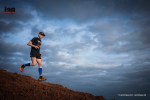
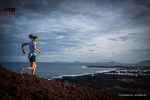
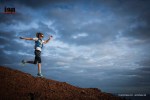
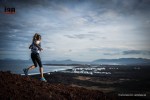
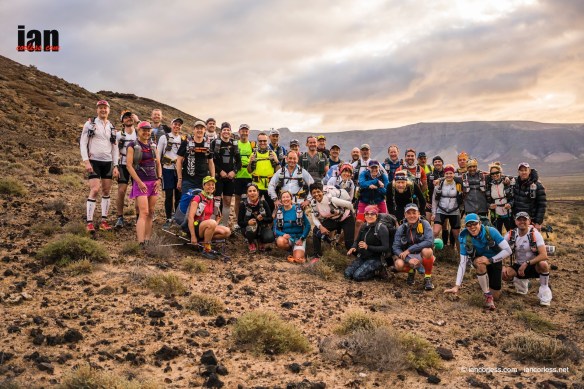
All good things come to an end and today, unfortunately, was the last full day of the 2017 #multidaytrainingcamp.
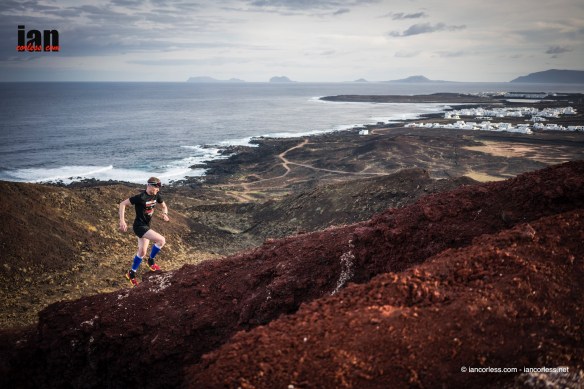
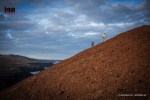
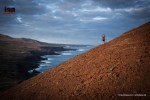
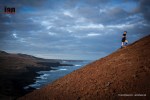
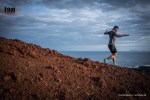
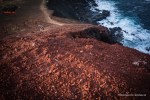
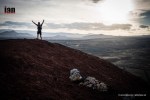
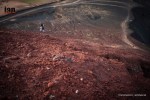
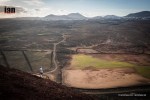
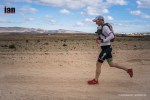
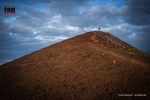
It started at 0800 with a run to our hill rep volcano (by popular demand) and after a 30-minute easy run, we then played on one of the most amazing natural obstacle courses that provided everyone with a great workout and stunning views.
A short break and then at 1100 we had a 2-hour talk on nutrition looking at the day-to-day needs of a runner at a typical self-sufficient multi-day race. All aspects were covered and of course a few surprises made many of the camp attendees raise an eyebrow and then quickly write a note to make sure they didn’t forget these pearls of wisdom for the future.
Lunch was followed with our last group runs. By popular demand they were easy, really easy. Elisabet ran 8km at ‘long-stage’ pace to provide an insight for the ‘faster’ runners of how to pace an 80+km stage. Niandi and Ian ran nice and easy for 12-15km and Marie-Paule took the walkers out for a long 5-6 hour hike.
That’s it.
I will update more in the coming days on the many highs of the 2017 camp.
As I write this, the bar is open and many camp attendees are practicing re-hydrating… it would be a shame to miss out!
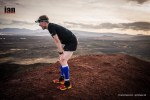
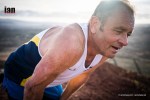
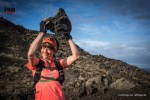
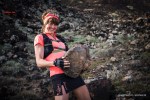
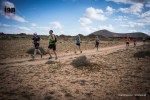
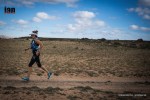
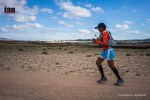
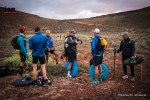
Day 7 started with two sessions – a tempo/ fartlek run of 5 to 8-miles or a technique session on using poles. Both were valuable sessions. Sondre Amdahl (9th overall at the 2016 Marathon des Sables) lead the fast men in a hard tempo session, Elisabet Barnes (2015 MDS ladies champion) pushed the pace for the second group and then Niandi Carmont lead group three with Marie-Paule leading the walkers. At the run track, Ian Corless provided a technique session on using poles. Many had the question answered, ‘should I take poles?’ Yes! was the unanimous answer. The awkward 20-30minutes of adapting to the technique required was rewarded with a faster pace for less effort.
At 1100, Marie-Paule talked, ‘Zero to Atacama’ where she told the story of how she went from little interest in endurance sport to completing the 2016 Atacama without running a step! The power of walking!
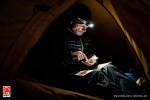
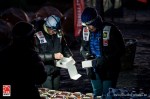
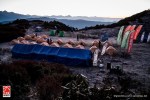
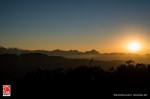
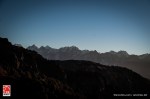
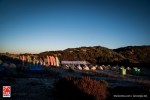
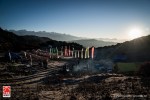
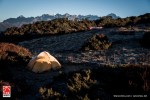
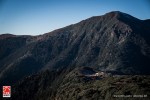
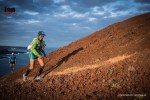
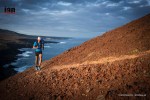
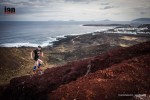
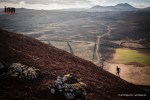
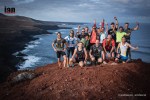
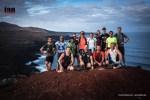
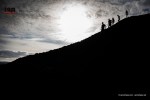
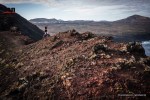
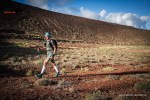
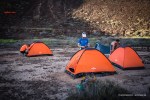
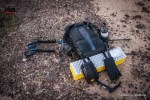
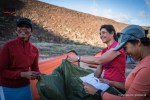
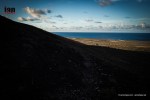
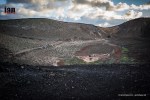
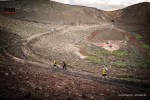
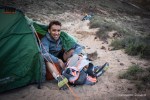
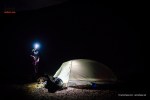
Lunch was followed with arguably one of the highlights of the #multidaytrainingcamp – a walk, run/ walk or run of 20-30km to an overnight bivouac inside a volcano.
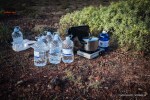
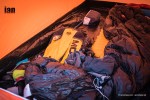
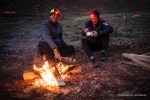
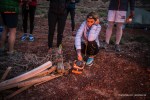
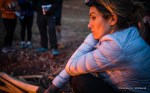
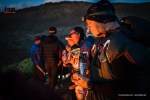
It’s this ‘real’ experience that provides everyone on the camp a true understanding of what will lie ahead at future multi-day race. For many, it was the first time running with a pack that had food, sleeping bag, mat, clothing etc. A learning curve. For some the experience was rewarding and a confirmation they had made the correct choice of items. For others, alarm bells were ringing… the wrong pack, the wrong sleeping bag, the wrong sleeping mat, the wrong food and so on! This experience is invaluable in making sure that all the questions marks, all the potential problems are eradicated now so that the race experience is a good one!
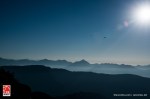
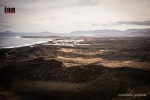
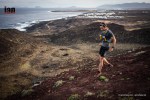
A windy but relatively warm night under the stars and it was a self-sufficient breakfast before another 20+km run that included dunes.
As everyone arrived back at Club La Santa, there was a buzz. The last 24-hours had made the future ‘race’ a reality.
Interested in joining out Multi-Day Training Camp in 2018? Go HERE








































































































 IAN CORLESS