the INTERVIEWS by Talk Ultra

New for 2020, TALK ULTRA podcast will bring you the INTERVIEWS from the extensive podcast back catalogue.
The USP of Talk Ultra has always been long shows designed to be listened to during long journeys, or ideally, during a long run!

Over the year’s we have been asked to release the interviews that make up a show, typically 3, as stand-alone interviews. So, for 2020 and moving forward, we will release the interviews, randomly and not in chronological order.

Talk Ultra podcast will still be released and published as normal.

Released using ANCHOR, the INTERVIEWS will be available on many different formats and importantly, Spotify.

Our first show will go back to February 2012 and an interview with Gordy Ainsleigh who has a special place in ultra-history as being the first person the run the Western States Endurance Run on foot.

Listen on SPOTIFY HERE

The podcast will also be listed and available on many other outlets, as listed below (links added when appropriate):

Apple Podcasts HERE
Breaker HERE
Castbox
Google Podcasts HERE
Overcast HERE
Pocket Casts  HERE
RadioPublic HERE
Spotify HERE
Stitcher

Follow on:

Instagram – @iancorlessphotography

Twitter – @talkultra

facebook.com/iancorlessphotography

Web – www.iancorless.com

Web – www.iancorlessphotography.com

Image sales –www.iancorless.photoshelter.com

AZORES and JORDAN 2020 with ULTRA X and MYRACEKIT

With a New Year looming it’s finally great to announce that in May 2019 I agreed to join forces with ULTRA X and myRaceKit to work with them in promotion of two events on the 2020 calendar:

Azores April 23rd to 26th

Jordan October 3rd to 11th

ULTRA X have had a great 2019 with events in Sri Lanka, Jordan, Mexico and the Azores, in 2020 they move forward:

  • Sri Lanka – March
  • Azores – April
  • Jordan – October
  • Mexico – November


  • Bolivia – tbc
  • China – tbc

ULTRA X have brought a new experience to the multi-day world offering race entry at accessible prices, easy registration, a global series, a community and club for all and uniquely, they a proposing a ULTRA X World Championship that will take place every 2-years, starting in 2021.

Although new to the multi-day world, ULTRA X had significant growth in 2019 and now with the help of myRaceKit, specialist equipment supplier for multi-day races, 2020 looks set to be a great year.

Rebeca from myRaceKit is an accomplished ultra-runner, here at the 2019 Marathon des Sables.

Many will know myRaceKit through two-times Marathon des Sables and multi-day specialist, Elisabet Barnes. Elisabet was the owner of myRaceKit until she sold to the new owner, Rebeca Ehrnrooth, Elisabet remaining as a shareholder.

Moving in to 2020, myRaceKit are the exclusive equipment partners for ULTRA X events including pre-race weekends. At the Azores and Jordan races, Elisabet Barnes and Sondre Amdahl will fly the myRaceKit flag amongst two hotly contested races with runners from all over the world attending.

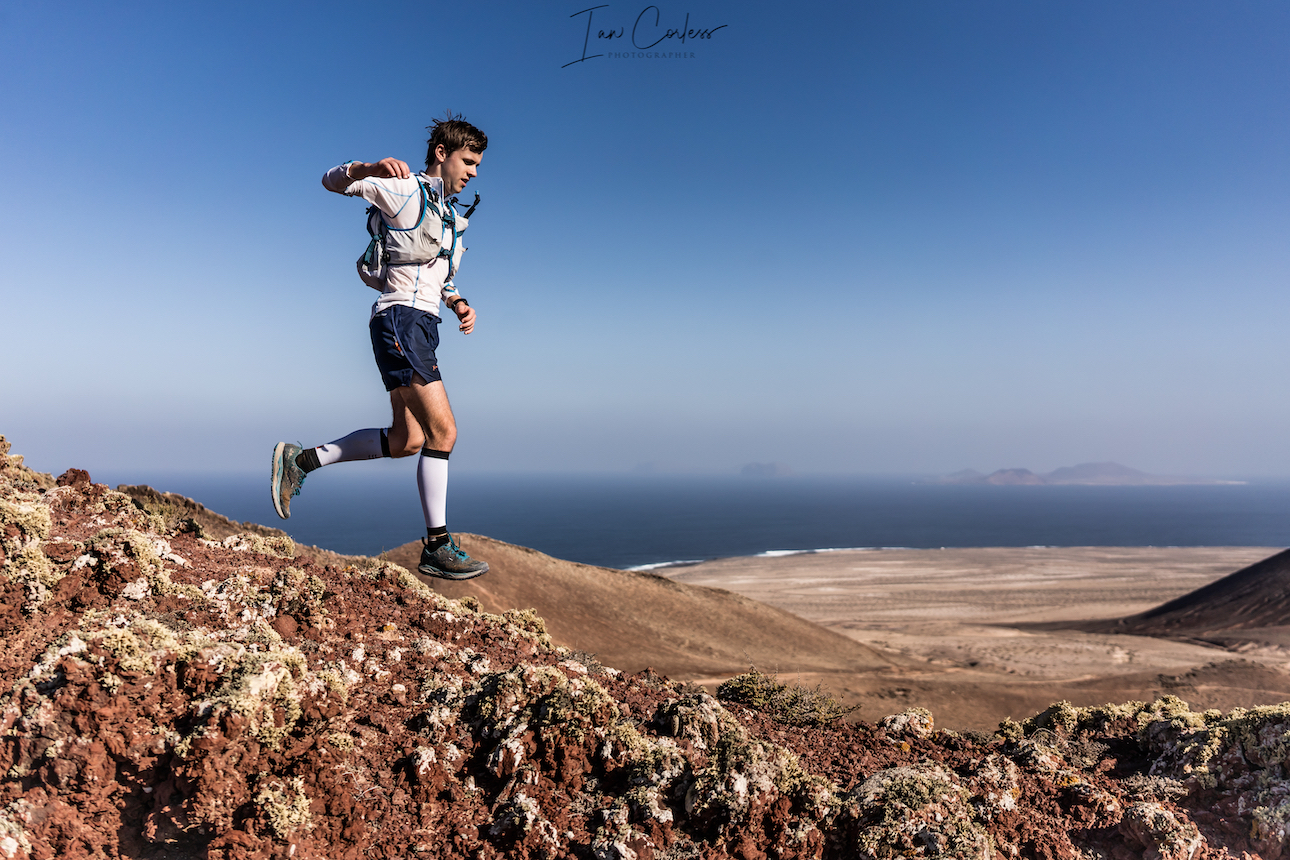
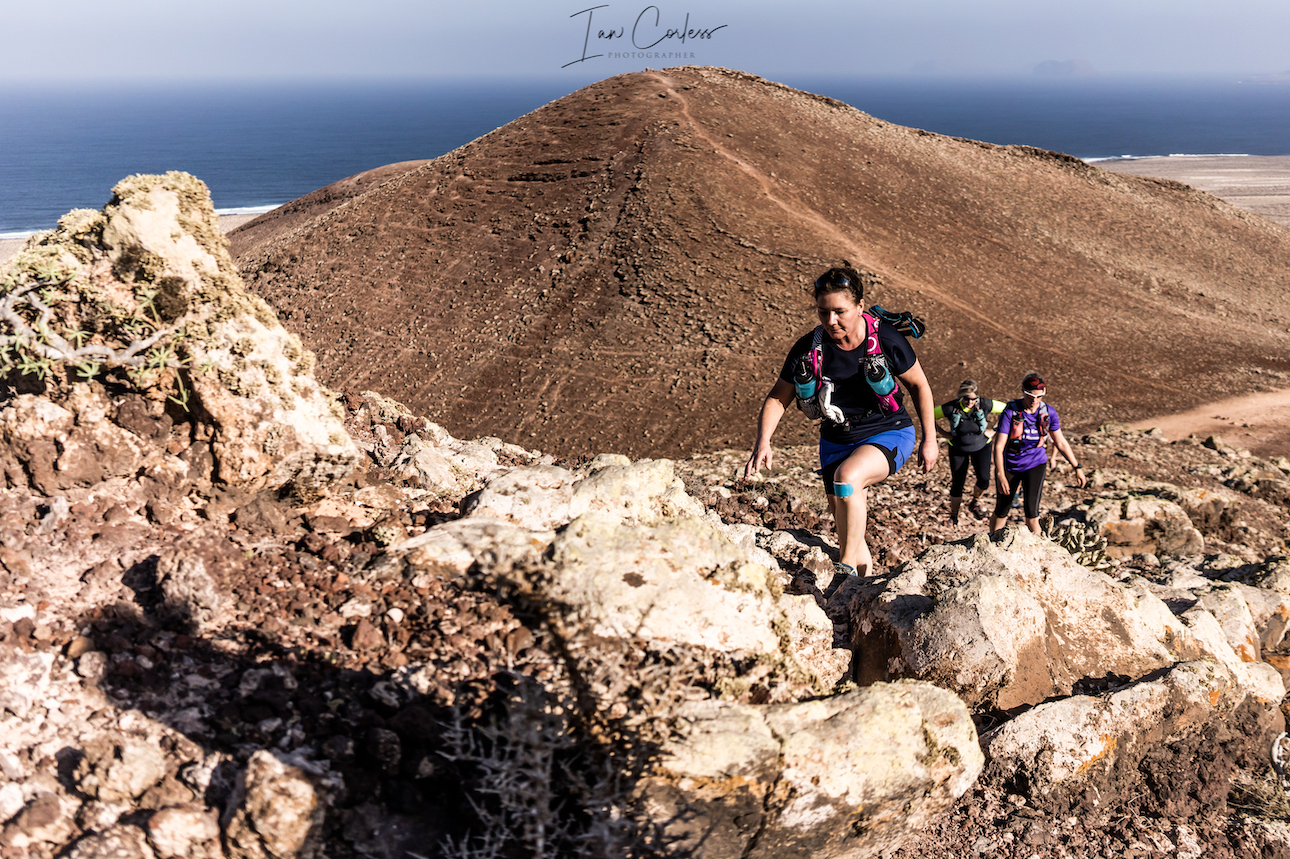
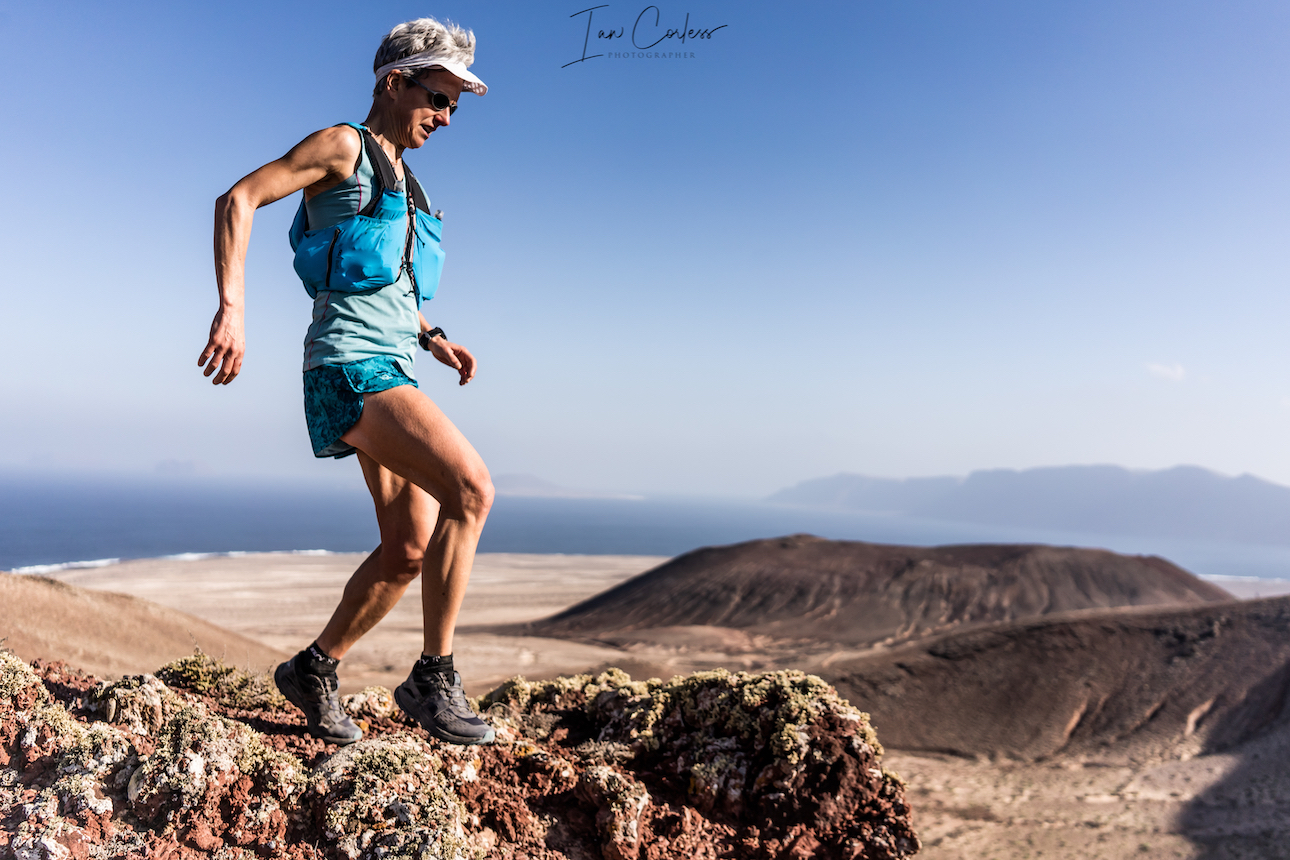
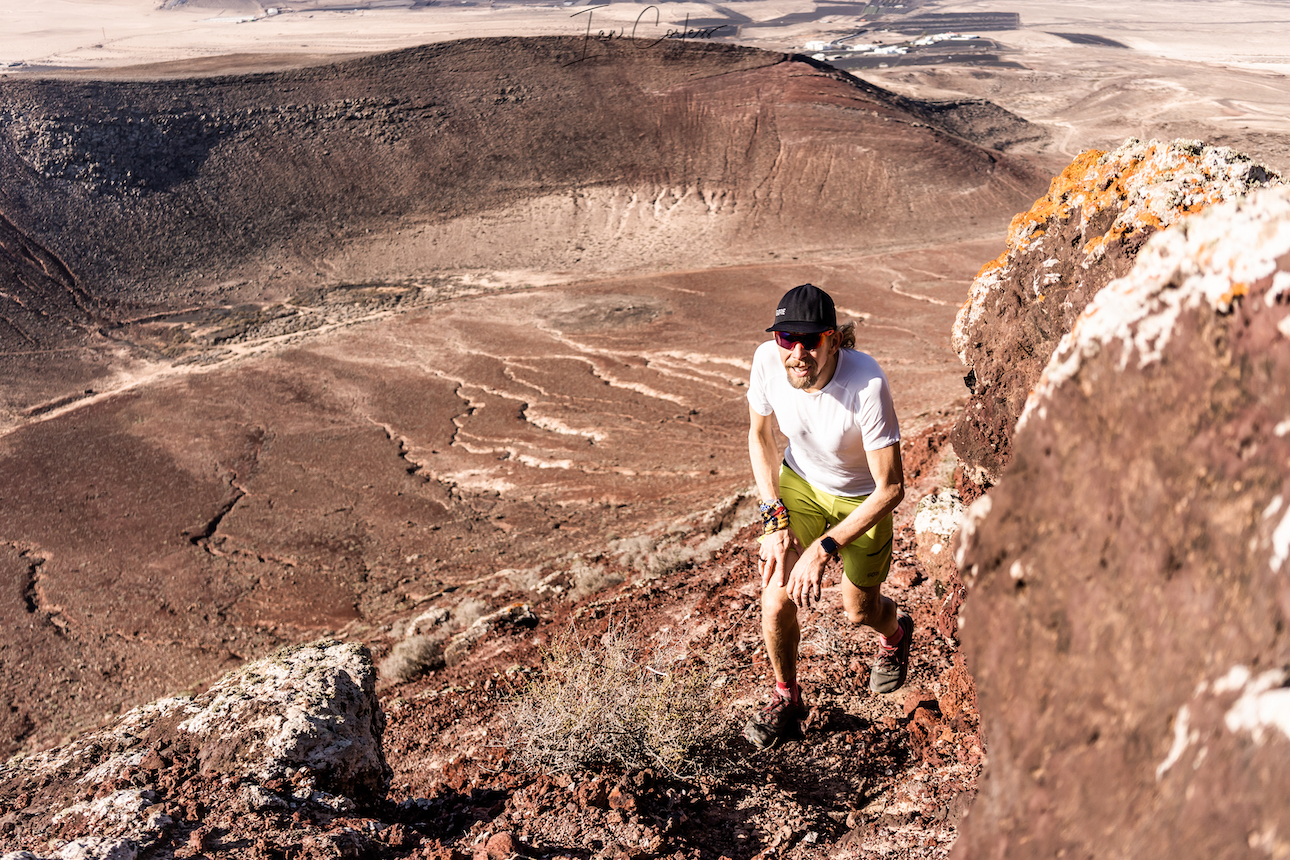
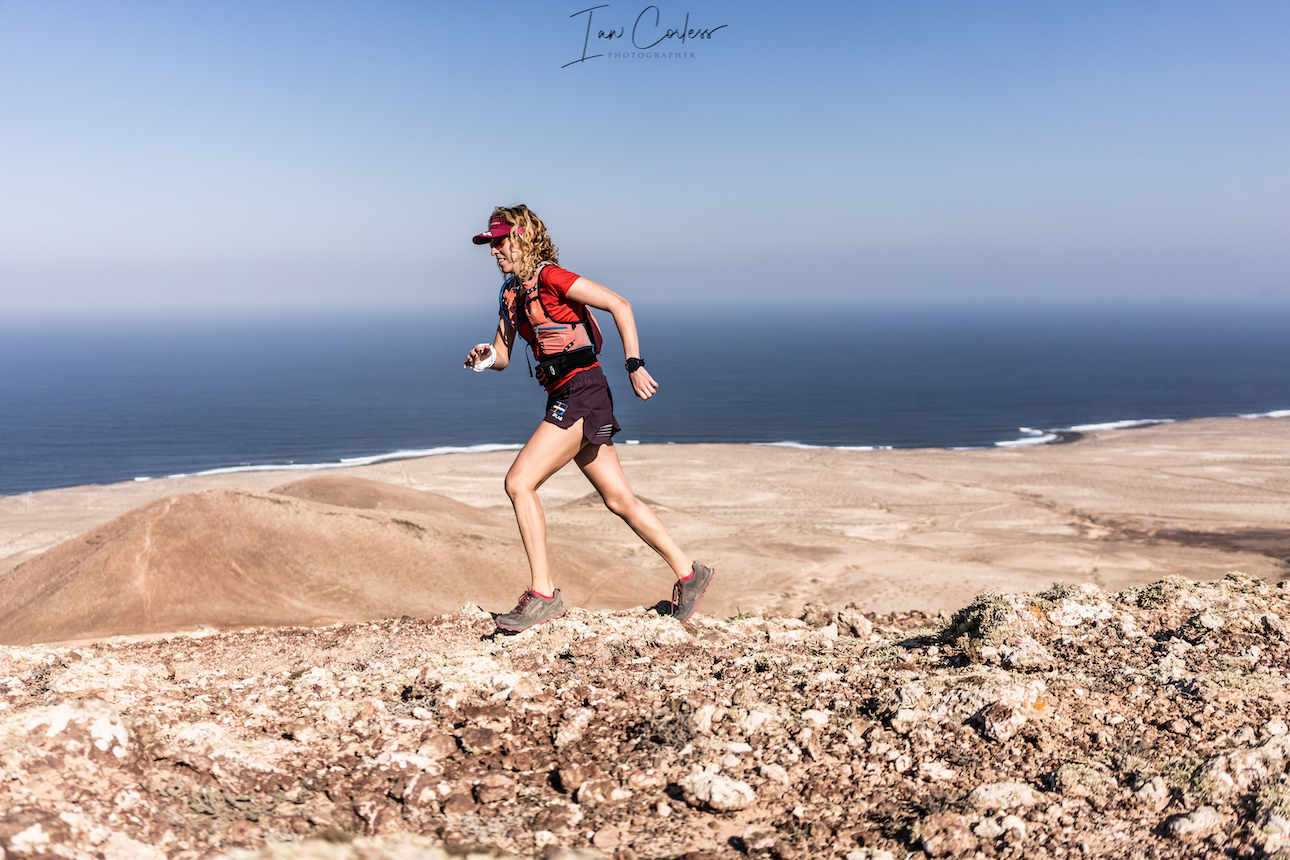
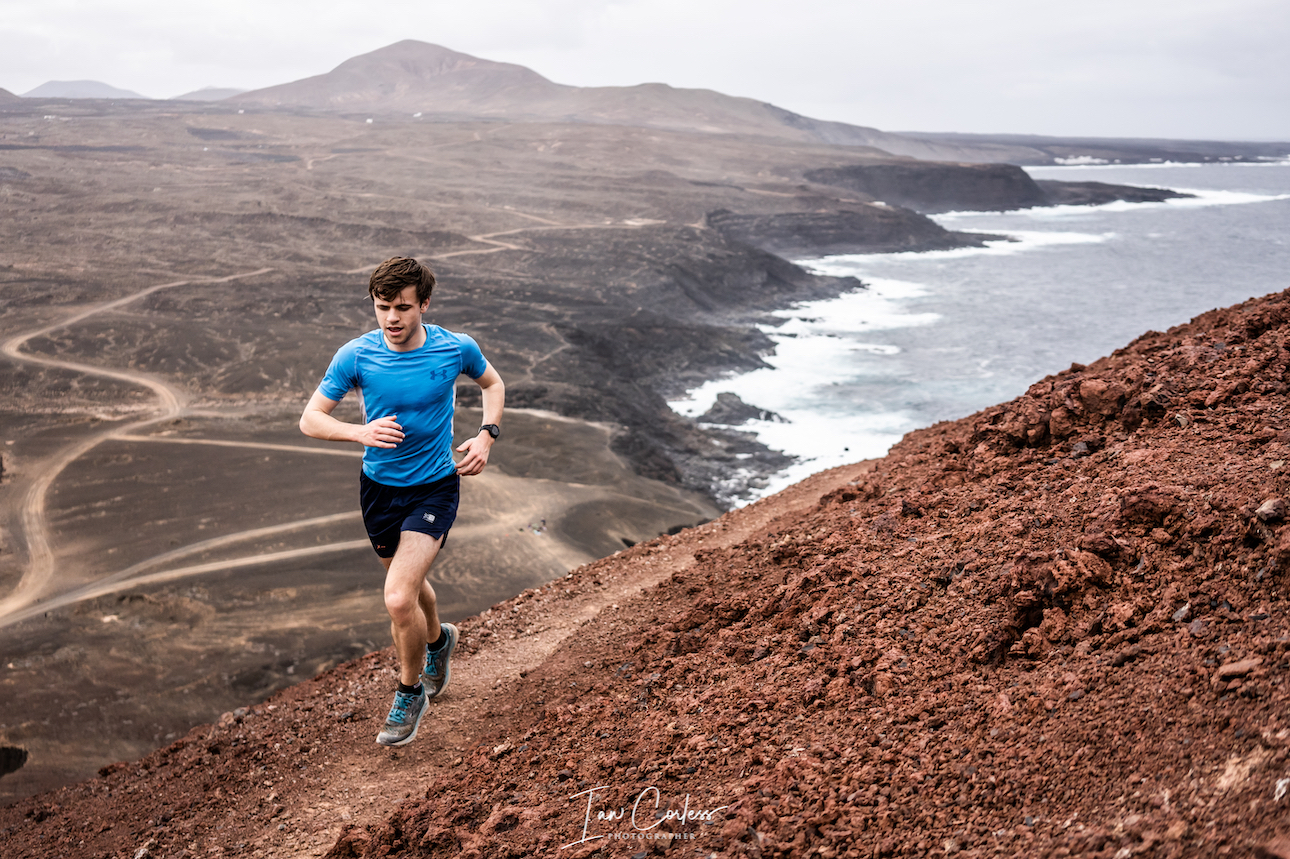
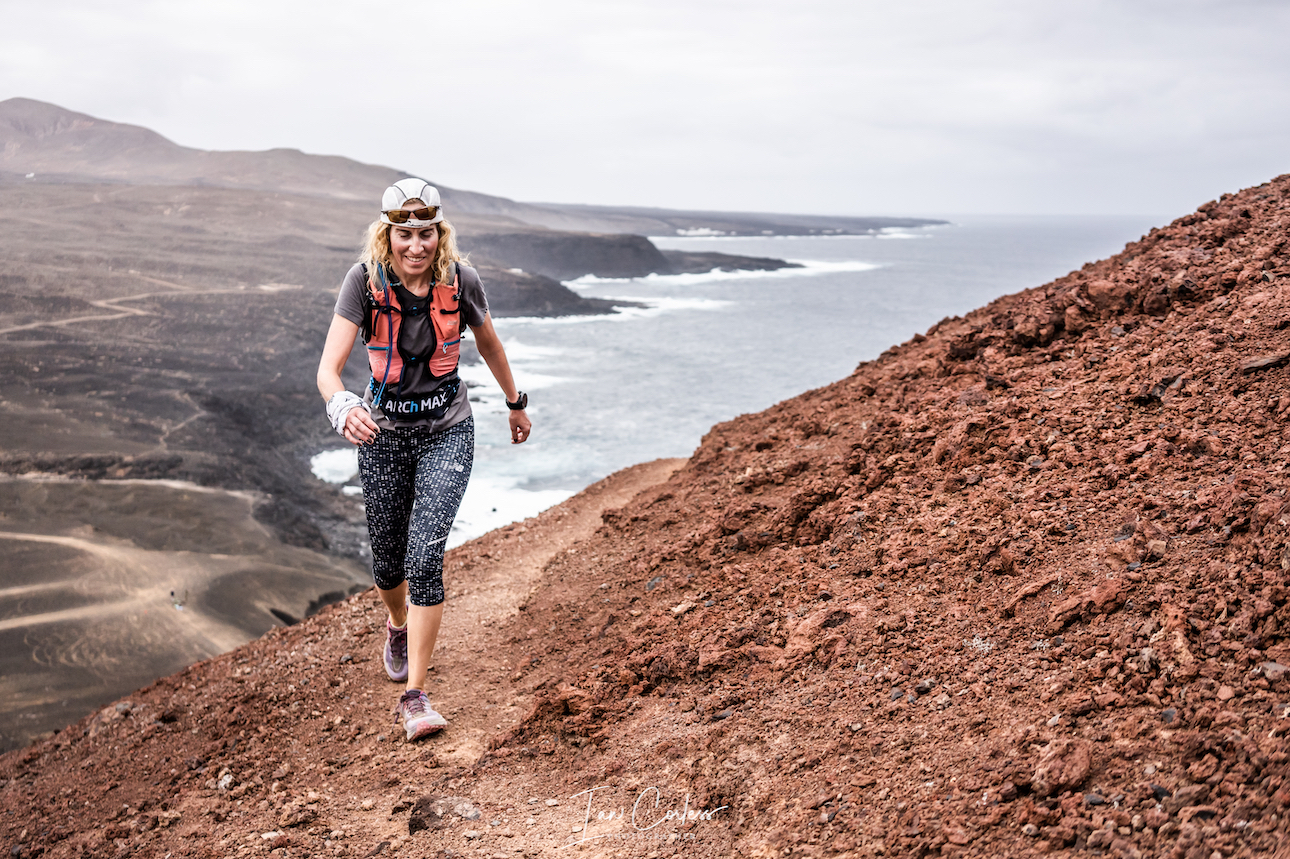
Elisabet and Sondre training in Lanzarote in 2019. They will return again, January 2020.

AZORES

The ULTRA X Azores 125 is 2-day event  in April and is designed as introduction to the multi-day format. It is the first half-distance race Ultra X have offered. The Azores are truly spectacular situated 1000-miles in the Atlantic Ocean. Close to Portugal, this tiny archipelago of islands offers incredible trails along volcanoes, through amazing green valleys and past stunning lagoons.

Taking place on the island of Sao Miguel, nicknamed “the Green Island”. It is one of the nine volcanic islands based out in the Mid Atlantic. Governed by Portugal, this wild and remote archipelago is characterised by dramatic landscapes, fishing villages and green pastures. The climate of the Azores is very mild for such a northerly location, due to the marine influence, temperatures remain around 20c all year-round.

Racing takes place over 2-days, with 83km to cover on day-1 and 42km to cover on day-2. It’s not an easy challenge! Included in entry is accommodation during the race, race entry, rationed water, medical team, ground assistance and a medal at the finish. The race is self-sufficient, so runners must come prepared to survive for the duration of the race.

Enter here https://tickets.trumin.com/ultra-x-azores-2020 £295.00

JORDAN

Ultra X Jordan (previously the Wadi Rum Ultra) takes participants through the land of Lawrence of Arabia. The mystical course takes competitors through historic sites, into dramatic Wadis and over magnificent sand dunes.

Wadi Rum’s nickname is ‘the valley of the moon’ and you will see why.

Its landscape, characterised by unique towering rock formations will truly blow you away, as will the challenge. As locations go, this place is unrivalled in its beauty.

A 5-day race, the race will cover daily distances of 46km, 50km, 70km, 46km and finally, 38km. As will all ULTRA X races, the event is self-sufficient, so, runners need to carry food, clothes, sleeping bag and all they need for the event. Rationed water and a tent is provided.

Enter here: https://tickets.trumin.com/ultra-x-jordan-2020-deposit Deposit is £300.00

Speaking to Sam Heward from ULTRA X in October, I expressed how happy I was to be joining in 2020:

“It is great to see that Ultra X are creating new races, in new locations around the world. Ultra X 125 Azores is something a little different with it being just a two day race, this will appeal to many as a mini adventure and an opportunity to test themselves before stepping up to a 5-day format. I have heard much about the Azores and it’s a place I am keen to visit and explore.”


Roll on 2020, some new trails and experiences.

Contact ULTRA X https://ultra-x.co/

Contact myRaceKit https://www.myracekit.com/

Follow on:

Instagram – @iancorlessphotography

Twitter – @talkultra

facebook.com/iancorlessphotography

Web – www.iancorless.com

Web – www.iancorlessphotography.com

Image sales –www.iancorless.photoshelter.com

DEATH and TAXES and RUNNING INJURIES

Pleasure to provide the images to accompany the words of David Roche for the article, ‘Death and Taxes and Running Injuries’

for Trail RUNNER Mag

It’s easy to idealize running.

Frolicking through forests! Jumping over rocks and bounding down mountains! On a training plan, the miles come so easily. But that’s not reality.

As a coach, I try to never lose sight of that fact. It’s so easy to write down “8 mile run” and not think about what that actually entails. That’s more than 10,000 steps, each one with significantly more impact forces than walking, each one with the potential to go horribly wrong. That training log entry seems simple, but it’s asking an athlete to do something that many people can’t do in the first place.

Our heads may be up in the clouds, but our bodies are on the ground, and they can feel the pounding. The process of building up endurance risks breakdown with each step. Running is a lot like life in that way. Every day that passes brings us one day closer to the ultimate breakdown.

What can we do in the face of our own fragility? We can keep moving forward.

That sounds melodramatic. I promise this article will not be too serious. But it is important to understand that we get running injuries for the same reasons that we die—our bodies are only capable of so many miles, even if our brains can expand to encompass infinity. Just as life requires death to have meaning, so too do runners have to get injured for the miles to be more than numbers in a training log.

So let’s celebrate the whole journey, including the parts that might be less fun to talk about. Let’s talk injuries.

Read the full article HERE

Trail RUNNER Mag HERE

Follow on:

Instagram – @iancorlessphotography

Twitter – @talkultra

facebook.com/iancorlessphotography

Web – www.iancorless.com

Web – www.iancorlessphotography.com

Image sales –www.iancorless.photoshelter.com

Planning A Running Year

As a racing season comes to an end it is time to look back over your achievements and yes, your failures over the last 12 months.

What went right, what didn’t go right? It is a question we should all ask ourselves.

  • What were my strengths?
  • What were my weaknesses?

Once you know the answers to the above, you have an idea of what to do over the winter months to make the following year a better one, not only in racing but training.

Planning is key. You need to periodize training so that you get the most from it.

  • Do you lack endurance?
  • Do you lack strength?
  • Do you lack speed?
  • Do you lack an ability to run on technical terrain?
  • Can you climb well?
  • Are you mentally strong?

The above list can go on and on.

Certain key elements should be present in any training plan and by answering questions similar to those above, you will start to understand what you need to do.

Winter has often been thought upon as time to do ‘base’ miles. These were long and steady miles with many hours building endurance. It is easy to fall in a trap and do too much of this. Don’t do what everyone else is doing, instead do what you need to do. Ultra-runners often have loads of endurance, after all, they race long distances all year. But with all that endurance, they can lack some strength and speed.

You need to look at yourself and ask, ‘What do I need to do?’

Decide on objectives for the following year and yes, you can even decide on plans for the year after too. Sometimes our long-term goals are so big or challenging that we need longer than a year to prepare!

Decide on A, B and C races, please remember that you can have multiple A goals, you just need to make sure that you can train, race and recover. The best thing to do here is to get a planner that shows the whole year and then add objectives marking them A, B and C – you will soon see if your targets are achievable. This is an invalidly process and actually takes very little time.

A target needs blocks of training and depending on the A-Race, that block will vary in length based on the challenge and the experience of the individual. A classic marathon plan may be 12-16 weeks, whereas for 100-miles you may work on 28-weeks.

In our scenario, we are saying that our A race is a 100-mile race, 28 weeks away.

Yes, its a long way off but dont be fooled into thinking you have plenty of time. Key races have a habit of sneaking up on you.

Go through the questions again.

If this is your first 100, training will be very different to someone who is running there 20th for example. Endurance may well be a primary target, whereas the experienced 100 runner will have endurance but may well want to go quicker?

100-miles is a long way so *base training and getting the miles in is key. We have allocated 8 weeks for this in the plan below. Hours of easy miles progressively building up to a C race (marathon or 50k). It is always good to have a goal and a target to aim for. The C race is a training race and will have no taper, you would race through it as a training long run.

*A traditional pyramid training plan starts with base and then typically adds speed as an event comes closer. However, we are ultra-runners and it is important to be specific. High intensity training creates a lot of fatigue and this is why I am a huge fan of reversing the pyramid and getting speed work done during the winter so that the training plan that leads into an A race is specific to the demands of the race.

So, if you are an experienced ultra-runner looking to improve with years of running and loads of endurance, think about making weeks 1-8 speed based with a fast marathon as a C (or maybe even A) race objective at the end of this block.

When you enter your racing season this will be in the build phase so its a good idea to place a B race objective that will allow you to progress to the A goal or multiple A goals.

As you come to the end of the build phase, you should be in form and race fit. What you want to do now is fine tune that form, tweak it and hold it for the A race. If you are cramming long runs in or looking for speed, its too late. You basically misjudged the planning or started training too late.

Maintaining what fitness, you have is also about being specific to the A target. 

   1    Is your 100-mile target race on groomed trail with little elevation gain?

   2    Is it an out-and-out mountain race with gnarly terrain and plenty of elevation gain?

Its important to be specific now, the two races above require very different approaches. This is something that you will have understood in January (or earlier in the year) when you looked back at last year, looked ahead to this year and understood your strengths and weaknesses so that you could plan accordingly.

       Scenario 1 requires running, good form and leg speed.

       Scenario 2 requires hiking, climbing, leg strength and plenty of endurance.

You cant perform well at every event and this is why A, B and C races are important. Yes, I know the elite runners manage to race several key races a year but look at the training and look at the planning. We have all seen top runners turn up at early season races and place just inside or outside the top-10.

– Francois D’Haene

Francois dHaene always provides a good examples of how to:


       Build

       Peak

       Win

       Recover

       Build

       Peak

       Win

       Recover

       Build

       Peak

       Win

       Recover


In 1 racing year, Francois won 3 x 100-mile races.

That is an incredible skill and for sure as racing becomes more aggressive, faster and more brutal, this training approach is going to become far more important for those who want to race to their own potential and maybe more importantly race year-on-year. We have all witnessed the damage that racing and training too much can do at an elite level runner. Listen to my podcast with Geoff Roes HERE as he provides a great insight into potential problems. 

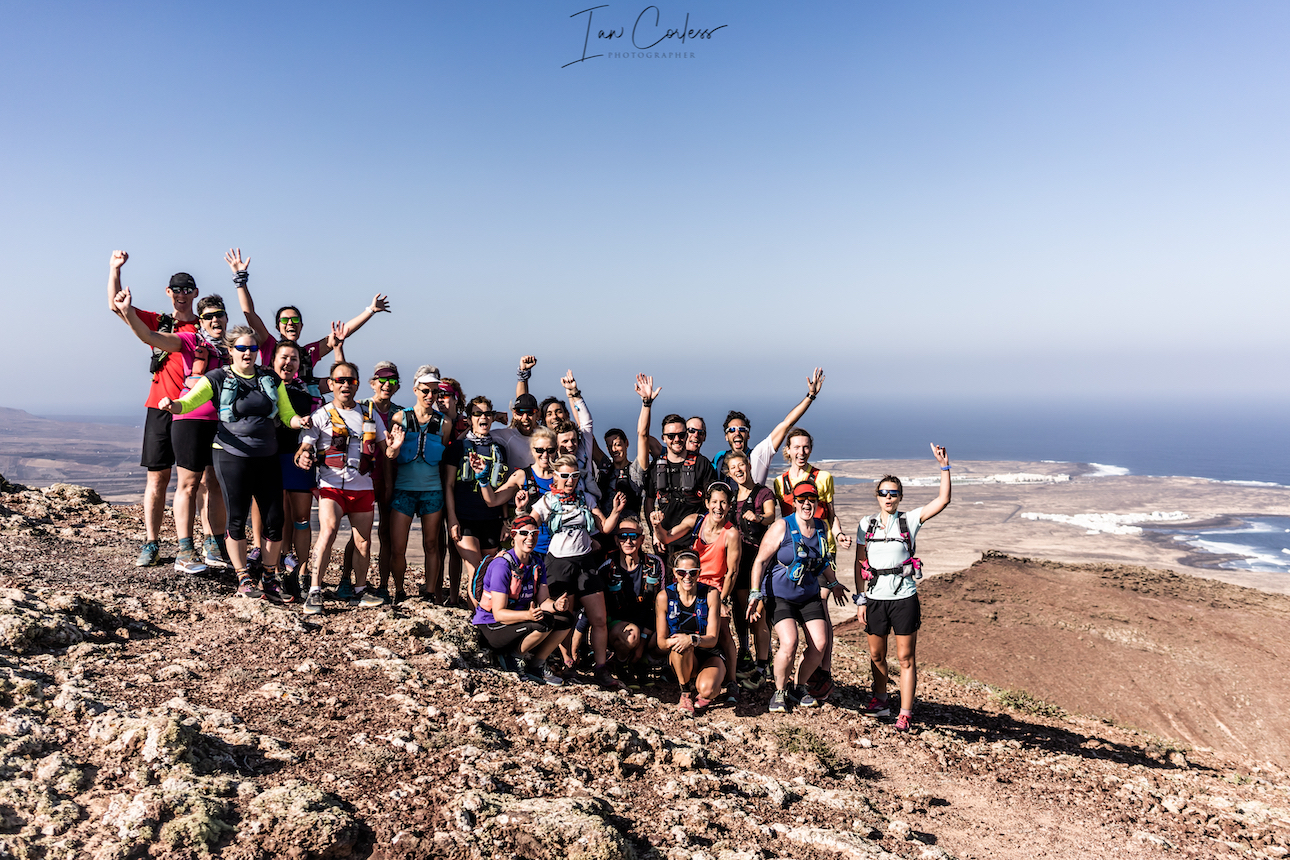
JOIN OUR TRAINING CAMP IN LANZAROTE HERE

Ask questions such as:

   1    Do I race every weekend?

   2    Do I rest?

   3    Do I allow easy and recovery weeks?

   4    Do I cross train?

   5    Do I sleep well?

   6    How is my nutrition?

   7    Am I constantly tired?

   8    Do I feel alive and full of beans?

   9    Hows my resting heart rate?

   10  Is my pace good?

   11  Hows my strength?

   12  Hows my recovery?

   13  Do I have a plan?

   14  Have I structured my plan to an A race?

The above questions are a starting point. Read through the list and add your own questions to appraise what type of runner you are. It may well be that running for you is an escape and social thing, you may be happy to race week in and week out and you are not worried about gaining a PB or improving; if that is you, great. Id still say planning some RnR is a good thing to avoid burn out.

If you are someone looking to perform and improve, you need to be more self-critical. Plan your training and periodize your training so that you are able to (hopefully) predict good form on 1 or multiple A race days in a year. This is not easy.

Carefully plan races in terms of importance,Abeing the most important. Also make the races progressive and in line with your A race. For example, if your A race is a 100-mile race, a C race may be a marathon, a B race may be a 50K or 100K and then the Ais the big step of 100-miles.

Remember you can only hold form for a limited length of time and if you want to peak, you need to make sure that this planning stage is done early so that you understand what you are trying to achieve. Its all about steppingstones.

Ask yourself, what is the purpose of the training blocks you are planning:

       Are you laying base training?

       Building fitness?

       Maintaining fitness?

       Racing?

A training block with 2 x A races (the 2nd race being 100-miles) may look like this:

Base Training Phase

Week 1 – Base or Speed

Week 2 – Base or Speed

Week 3 – Base or Speed

Week 4 – Base or Speed (with the addition of a longer run)

Week 5 – Base or Speed (with the addition of a longer run)

Week 6 – Base or Speed (with the addition of a longer run)

Week 7 – Base or Speed (with the addition of a longer run)

Week 8 – Base with C Race probably a marathon.


Build Training Phase

Week 9 – Build

Week 10 – Build

Week 11 – Build maybe a C Race just as a long run?

Week 12 – Build

Week 13 – Build

Week 14 – Build with B Race 50K.


Maintain

Week 15 – Maintain/ Specific

Week 16 – Maintain/ Specific

Week 17 – Maintain/ Specific

Week 18 – Maintain/ Taper with A Race


Recovery

Week 19 – Recovery

Week 20 – Recovery easing back into Build.


Build

Week 21 – Build

Week 22 – Build

Week 23 – Build

Week 24 – Build

Week 25 – Build

Week 26 – Build

Week 27 – Taper

Week 28 – Taper and A Race (this scenario 100-miles)


Recover, Recover and Recover.

This article is not a hard and fast plan, its a guide for you to go away, look at your targets having assessed past targets and hopefully it makes you think about future objectives so that you can plan for a successful, injury free year of running and racing.

Follow on:

Instagram – @iancorlessphotography

Twitter – @talkultra

facebook.com/iancorlessphotography

Web – www.iancorless.com

Web – www.iancorlessphotography.com

Image sales –www.iancorless.photoshelter.com

*article first published in 2016 and has been updated.

Lorena, Light-Footed Woman

The Tarahumara have long gained a reputation for being incredible runners, we can thank Chris McDougall and his book, ‘Born to Run’ for this.

But I have fond memories of watching documentary, made by a friend of mine that told the story of the Tarahumara racing at Western States with Ann Trason back in 1995. I still have a copy of the movie that one day I hope to gain permission to re-release.

So, standing on the start line of Tenerife Blue Trail a few years ago, my radar was finely tuned to the Tarahumara on the start line. Notably, Lorena Ramirez in a green dress with touches of red, a Salomon vest and jelly bean shoes. Her brother was standing next to her, almost as a guardian. He wore a mixture of traditional dress and modern shoes.

She came back once again in 2019, this time with a different dress, but the same shoes.

NETFLIX on the 20th November started to stream, “LORENA, LIGHT-FOOTED WOMAN” a short documentary 0f just under 30-minutes.

John Serba of decider.com had this to say after watching the film for the first time:

“Netflix may have another serious Oscar contender on its hands with Lorena, Light-Footed Woman — or Lorena, la de pies ligeros in its native Spanish… The film may be short, but it’s long on inspiration and breathtaking cinematography…”

Lorena lives along the Tarahumara mountain range in Chihuahua, Mexico. She has a simple life, shares a shack with her family. She is a shy person. I have met her multiple times and shared few words with her. For the camera she is reserved, and one can almost feel as though one is invading her space with a camera. She has assured me I am not.

The movie shows an abbreviated version of Lorena’s life. Actions speak louder than words, and with Lorena that is really important. I draw parallels to Mira Rai and how ‘training’ is not really a requirement in such a harsh environment, just living and functioning is enough.

Lorena does not laugh or smile much, bit in one scene, she opens a box with new Salomon shoes. She smirks, laughs and then says, “They feel wrong I am not used to running in them… I don’t think I will use them. The people who do are always behind me!”

Her brother then jokes about her sandals and adds up she has about 300-miles on them. Here, Lorena open up and laughs.

The scene changes and as a family, six of them go for a run. “Look we run up here with food..” says the Father. “…taking care of owls, running all over the place, up and down.”

As Chris McDougall coined in his book, Lorena was born to run…

If you love the pure art of running, the simple inspiration that running can bring (moving from one place to another via foot), then Lorena and he story will enlighten your life.

“How would you feel if you had to live in another country?” Her brother asks.

“I would miss it here a lot,” Lorena replies.

One can almost feel the tension, the dilemma that her running and travel brings. But she laughs with her brother when he asks and questions how serious she takes it.

Running up a steep hill, a cameraman almost falls as she whispers about fireflies, “I will keep running as long as I can, and as long as I have the strength.”

Enjoy on NETFLIX HERE


The Elements EVEREST TRAIL RACE #ETR2019 – Race Day 6

Leaving Tengboche the race retraces elements of stage-5 to Phakding but as opposed to previous year’s, at Sensa the runners did not go right to the Kumjung Valley. Instead they followed the main route Namche Bazaar the ETR then re-traces stage 5 all the way to Phakding and then as the trail heads back to Kharikhola, a left turn leads to the final climb and the swinish line in Lukla.

The stage is mostly downhill with 3183m of descent in comparison to 2105m of ascent over the 30km course. It’s a tough way to finish a race, but the rewards are worth it! After the high elevation from the previous day, the additional oxygen made the km’s easier.

Both Suman and Anna have been on fire all week and on the final day, it was no difference. The duo pushed and pushed but at all times looked in control and relaxed. Suman actually just looked to be having fun… Playing in the mountains. The pace of them both was quite ridiculous.

Behind Anna, Manuela and Nuria once again traded blows, pushing each other and in doing so, found greater individual performances.

For the men, it was a real battle with Hans, Miguel and Gerard not taking things easy and all fighting for the 2nd and 3rd places on the overall podium.

At the finish line, Manuela beat Nuria, 4:10:45 to 4:19:22 and in doing so, secured her overall 2nd place just as in 2018.

Hans was the first home after Suman, then Miguel and Gerard together. Suman crossed the tape in an incredible 2:46:25 and then the respective times were 3:01:24 and 3:06:39. 

Suman Kulung and Anna Comet are crowned the 2019 Elements Everest Trail Race champions but all credit goes to each and every finisher. At 170km, this race may not be the longest but it is surely one of the toughest! The combination of tough technical terrain, relentless climbing and descending and of course altitude, all combine to make the ETR a race to do!

IMAGE GALLERIES HERE

Day 6 Results:

Suman Kulung Rai 2:46:25

Hans Smedsrod 3:01:24

Miguel Heras and Gerard Morales 3:06:39

Anna Comet 3:45:33

Nuria Dominguez 4:10:45

Manuela Vilaseca 4:19:22

The 2019 Elements Everest Trail Race final classification

Suman Kulung Rai 20:51:36

Gerard Morales 23:28:29

Hans Smedsrod 23:54:13


Anna Comet 26:20:56

Manuela Vilaseca 29:29:05

Nuria Dominguez 30:03:47

Follow on:

Instagram – @iancorlessphotography

Twitter – @talkultra

facebook.com/iancorlessphotography

Web – www.iancorless.com

Web – www.iancorlessphotography.com

Image sales –www.iancorless.photoshelter.com

The Elements EVEREST TRAIL RACE #ETR2019 – Race Day 5

EPIC was all the runner’s had to say as they finished stage 5 of The Elements Everest Trail Race at  the Monastery at Tengboche, the Himalayan backdrop of Everest, Lohtse, Nuptse and Ama Dablam providing context to the journey undertaken.

For the first time in ETR history, the race went beyond Tengboche taking a stunning high route to Pangboche and return to the iconic Monastery finish line.

Starting in Phakding the runners climbed to Namche at 3402m, proceeded to Syangboche at 3760m passed through Kumjung, Mong La, Phortse and then took a high pass at 4000m to reach Pangboche at 4100m. Finally the finish 3875m, 32km later with 2850m of ascent and 1650m of descent – beyond epic!

It was a feared day, everyone was aware of the challenge and under taking!

It may sound a similar story, but Suman and Anna was at another level. The Nepali completing the journey in just over 4-hours….!

Racing was hard and relentless and today Miguel Heras placed 2nd fighting off injury with a stunning performance making the podium battle once again exciting.

Hans and Gerard once again battled each other hard and the duo were separated by just minutes.


Behind Anna in the women, Nuria Dominguez once again fought hard for 2nd ahead of Manuela.


Today though, the race was all about the route and the best of what the Himalayas have to offer. It was a brave move to re-vamp stage 5 of the ETR with added distance, a new route and extended period at elevation. It’s a decision that the runners loved despite how hard and difficult the journey was.

Tomorrow, the runners return to Lukla via Namche and Phading in the final finish line of the 2019 ETR.

IMAGE GALLERIES HERE

Day 5 Results:

Suman Kulung Rai 4:04:35

Miguel Heras 4:27:03

Hans Smedsrod 4:43:01


Anna Comet 5:17:11

Nuria Dominguez 5:47:42

Manuela Vilaseca 5:50:23

Follow on:

Instagram – @iancorlessphotography

Twitter – @talkultra

facebook.com/iancorlessphotography

Web – www.iancorless.com

Web – www.iancorlessphotography.com

Image sales –www.iancorless.photoshelter.com

The Elements EVEREST TRAIL RACE #ETR2019 – Race Day 4

Day 4 of the 2019 The Elements Everest Trail Race was the same as all previous editions, starting at the stunning Kharikola Monastery and concluding in Phakding 27.5km away and in the process gaining 2423m of positive incline and losing 1907m.

Along the route, runners pass through Kari La (2820m), Paiya, Choutok La, Surke (2310m), Chaurikharka, Cheplung and finally Phakding.

In comparison to the previous day’s, day-4 is a low altitude day allowing the runner’s some recovery from the intense 3000m+ day’s. However, the course is relentless with a rollercoaster of up and downs on mostly technical rocky trail. Here the route now has Yak’s and Mules and that in itself brings its own challenges.

It is a stunning day that finally leaves the remoteness of the first three day’s and slowly introduces the competitors the main trekking routes that lead people to Namche, Tengboche and the EBC routes.

It may come as no surprise that once again, Suman and Anna showed the race a clean pair of heels as they both set a pace that could not be followed. In the early stages, Miguel Heras fought hard to the first highpoint at Kari La, he was only seconds behind the Nepali. But when the descending started, Miguel could not maintain the pace with his injury and relinquished his place to Gerard Morales and Hans Smedsrod.

Gerard was pushing hard and looked motivated to gain time and secure his top podium place. Hans in comparison to the previous three days looked a little more tired and this was reflected at the finish line with Gerard 2nd and Hans 3rd.


Anna as in the previous day placed 4th overall. Her performance this year has been off the scale! Manuela ran a solid day no doubt using her 2018 experience to run a smart day, she placed 2nd but the 1st place of Anna was well out of her reach.

Nuria Dominguez showed great consistency placing 3rd once again.

IMAGE GALLERIES HERE

Day 4 Results:

Suman Kulung Rai 3:32:20

Gerard (Blacky) Morales 3:56:04

Hans Smedsrod 4:10:50


Anna Comet 4:13:09 (4th overall)

Manuela Vilaseca 4:44:09

Nuria Dominguez 4:59:52

Day 5 Preview

What an epic day lies ahead. For the first time in ETR history, the race will go beyond Tengboche with a stunning loop of 32km reaching a highpoint of 4100m at Pangboche and stunning views of Ama Dablam. With 2850m of positive gain and 1650m of negative gain, day-5 will be a stunning and tough day.

Follow on:

Instagram – @iancorlessphotography

Twitter – @talkultra

facebook.com/iancorlessphotography

Web – www.iancorless.com

Web – www.iancorlessphotography.com

Image sales –www.iancorless.photoshelter.com

The Elements EVEREST TRAIL RACE #ETR2019 – Race Day 3

At 30km with 2232m of vertical gain and 3164m of vertical loss, the day was all be about energy management. The relentless downhill today pounding tired legs. Technical and relentless as one runner said on the finish line.

After the start in 5km the runners reached 3400m, from here they drop down and climb to Taksindu La at 3071m. Chhulemu follows, Hewa, Jubing and then the final tough climb to Kharikola at 2100m.

The day was all about Suman Kulung Rai and Anna Comet who today put on masterclass performances. 

Suman covered the distance in a ridiculous 3:49:53, 25-minutes quicker than Hans Smedsrod who ran a great race to close the gap on the overall podium places and place himself in contention for a top-3 at the finish line in Lukla.

Gerard Morales realised the risk and marked the move finishing in 4:17:46 to Hans’ 4:15:58.

Unfortunately, the injury woes of Miguel Heras plagued him today and he finished in 6th losing his grasp on the top-3 overall.

Anna Comet is relentless and strong this year. She finished the stage in 4:41:54 and placed 4th on the stage. Manuela Vilaseca once again fought hard today to finish 2nd woman in 5:17:29 to Nuria Domguez who placed 3rd in 5:28:43.

With the three stages covered and three to go, although nothing is guaranteed, it certainly looks like Suman and Anna have leads that will be impossible to beat. However, the 2nd and 3rd placed for both women and men is all to fight for.

IMAGE GALLERIES HERE

Day 2 Results:

Suman Kulung Rai 3:49:53

Hans Smedsrod 4:15:58

Gerard Morales4:17:46


Anna Comet 4:41:54

Manuela Vilaseca 45:17:29

Nuria Dominguez 5:28:43

Follow on:

Instagram – @iancorlessphotography

Twitter – @talkultra

facebook.com/iancorlessphotography

Web – www.iancorless.com

Web – www.iancorlessphotography.com

Image sales –www.iancorless.photoshelter.com

The Elements EVEREST TRAIL RACE #ETR2019 – Race Day 2

At 26km with 1916m of vertical gain and 1819m of vertical loss, day 2 of The Elements Everest Trail Race was a tough one.

In previous year’s Pikey Peak at 4100mm had appeared late in stage 2 with a loom and relentless climb to its summit. This year, with the course changes, the high summit would occupy the first 8km of the day – a tough way to start any day!

The change in direction brought the runners from the complete opposite direction and the usual magical vista visible at the summit and on the way to the summit was even more spectacular. Everest was mo longer hidden and clearly visible.

From the summit a technical descent that twists and turns to Jase Bhanjyang, here in previous editions, camp 2 would be located. Not today, the runners split to the left and then encountered new terrain that few people visit. It was technical with relentless boulder fields not allowing any opportunity to relax.

From Lamjura La and 8km decsnt, again technical until the final km would lead to Jumbesi and the final checkpoint. With just 4km left, the runners I am sure they were home and dry with just 4km to go… It was all uphill on steep narrow trails all the way to Pungmucheat at just over 3000m.

With two starts, 0700 and 0800 (faster runners starting later) the ascent to Pikey Peak was littered with runners of varying ability, but Suman Kulung Rai  and Miguel Heras made easy work of the climb arriving at CP1 in under 50-minutes. Suman taking time to point out the mountains to Miguel. They left at pace make the altitude and gradient look easy. Gerard Morales followed and then Hans from Norway.

For the women, once again Anna Comet set the pace chased by Manuela Vilaseca and then Nuria Dominguez.

At the summit it was all to fight for with 18km’s still to go, considerable technical trail, long hard descents and tough climbs.

Unfortunately disaster struck for Miguel with an injury forcing hime to ease off the pace opening the door for Gerard and Hans. Miguel would eventually finish 4th. Suman though was relentless making a tough stage look easy.

The women’s race took a twist from the previous day with Anna winning once again and Nuria finishing ahead of Manuela.

IMAGE GALLERIES HERE

Day 2 Results:

Suman Kulung Rai 3:34:03

Gerard (Blacky) Morales 4:09:46

Hans Smedsrod 4:21:44


Anna Comet 4:37:46

Nuria Dominguez 5:13:04

Manuela Vilaseca 4:15:57

Day 3 Preview

At 30km with 2232m of vertical gain and 3164m of vertical loss, the day will all be about management. In 5km the runners reach 3400m then drop and climb to Taksindu La at 3071m.m From here Chhulemu follows. Hewa, Jubing and then the final tough climb to Kharikola at 2100m

Follow on:

Instagram – @iancorlessphotography

Twitter – @talkultra

facebook.com/iancorlessphotography

Web – www.iancorless.com

Web – www.iancorlessphotography.com

Image sales –www.iancorless.photoshelter.com