How to Find Your Running Shoe Size and Fit.

Run shoes should be specific.

It shouldn’t be complicated, but it is. Go on any run forum and I will bet you that daily, someone will ask a question about run shoes.

I want a shoe that will allow me to run muddy trails and road?

Can anyone recommend a shoe for fell running?

I have Hobbit feet and I need cushioning and grip – what shoe?

I could go on and on. The thing is, while it may be okay to ask a couple of question like:

  1. How does a specific shoe perform in mud?
  2. How is the wear and tear of ‘x’ shoe?

Asking for a specific shoe recommendation can be a recipe for a disaster, the reason being, we are all individual and shoes are very personal based on a multitude of factors. Nobody on social media knows you, your needs, how you run and what type of running you do.

So, please do not ask for a shoe recommendation on social media unless you are specific. A good example being:

“I am male, aged 44. I have been running for 23-years and I have extensive history in cycling, triathlon, road running and now I am moving to trail running… I am 5ft 9. A little overweight. In regard to shoes? I am looking for a trail shoe that will provide great grip on muddy trails. I need support for my arch and cushioning but not something as cushioned as say a Hoka. In regard to foot width, I am in the middle, neither needing precision or wide fit. On a scale of 1-5 I would be a 3!’

With the above we have information from the runner and therefore suggestions and recommendations can be specific and targeted. Even then, the runner should go to a run store, albeit now he has a shortlist of options and then try on the shoes to find the one that best suits him, his feet and his needs.

IF THE SHOE FITS

Firstly, and importantly, not all shoes are equal and not all feet are the same.
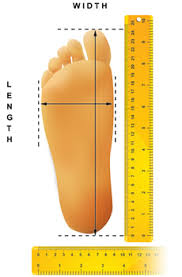
Measure your foot.
Measure your foot.
  • Foot length.
  • Foot width.
  • Foot shape.
  • Pronation.
  • Supination.
  • Neutral.

Quite simply, the better a shoe fits, the more specific to the type of running one will do in that shoe, the more likely you will feel better. The foot will be happier and the miles you run will be more comfortable.

Our bodies are supported by our feet; they are the first point of contact with the ground and therefore, they are incredibly important. Getting a correct fitting shoe that is specific for purpose is crucial.

When I say specific for purpose, let me provide some simple clarification now and then explain in-depth later. Shoes come in categories; I see the main list broken down as 6 main groups:

  • Road
  • Road to Trail
  • Trail
  • Ultra-Running (with sub heading of Ultra Road and Ultra Trail)
  • Fell Running
  • Mountain Running

Now, one could break down the categories even more with very, very specific needs such as, “I need a mountain running shoe with an aggressive outsole with great grip in wet and dry conditions and superb traction in mud.”

But before we get into the discussion on the shoe for the job, getting a correct fitting shoe is vital.

HOW DO WE FIND A CORRECT FITTING SHOE?

Image ©blitzresults.com

Please don’t fall in with the generic advice that a run shoe should be one size bigger than say your every day casual shoe! For a start, this assumes you have the correct size casual shoe and trust me, from experience, very few people do. The recommendation for sizing up also comes from the assumption that a foot swells when running. From experience, feet rarely go longer but can go wider with repeated impact and stress; think of races like Marathon des Sables when a runner is in a hot/sandy environment. So, one may need a wider shoe but not a longer shoe. This comes down to getting the specific shoe for the job.
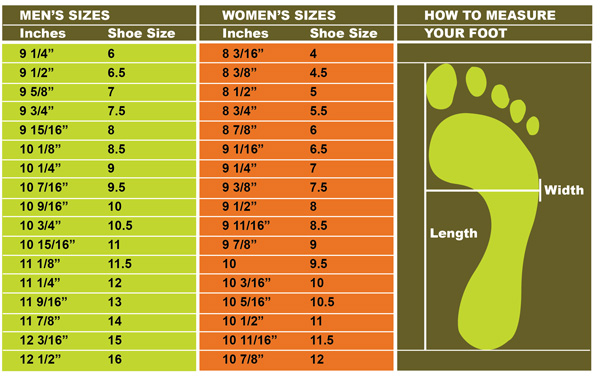
©custom fit.me

I wear the same size run shoe as my casual shoes (typically) but to clarify, I go for the ‘same fitting’ shoe.

Shoe sizing between brands is variable and inconsistent, an EU 44 in say Salomon is not necessarily the same as an EU 44 in inov-8. So, first and foremost, always try shoes on!

Length and foot width does change so it can be a good idea to have your feet measured if you are new to running with little experience. Some specialists suggest getting feet measured yearly, but for me, this still only gives a guideline to shoe size as comfort, feel and specificity come in to play.
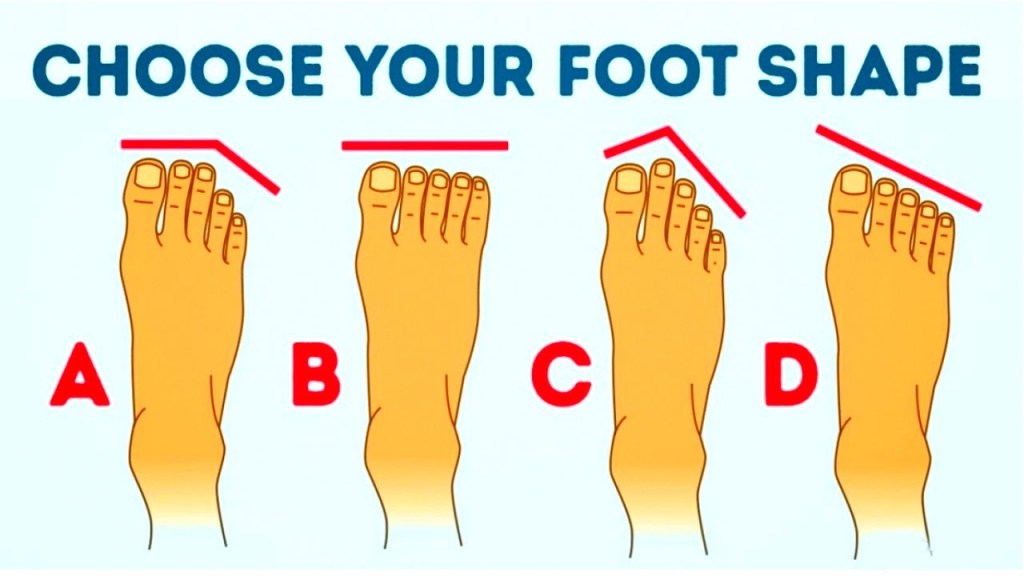
Foot shape and how you get the thumb nail of space.

“As a rule of thumb,” I have consistently found that a thumb nail of space above one’s big toe is usually ideal for sizing. This is classic for an ‘Egyptian’ foot shape (D). I say usually because I have seen some feet where the second toe is longer than the big toe, known as ‘Greek’ foot shape (C), so, this would require an individual approach. There is also ‘Square’ foot shape and the thumb nail width above the big toe usually applies here, but, a wider toe box may be required.

Remember, both feet are usually not the same size, so, take this in consideration. Go for fit and feel with the bigger foot!

NOTE: Specifics come in to play such as foot width and specificity of the shoe. As an example, If you are running technical trail, you will need a more ‘precision’ fit. If running long/road ultras, you may well prefer a wider fit that will allow toe splay. More on this later.

Wear socks that you typically run in and if you normally wear two pairs of socks, then wear two pairs when testing and trying. Two pairs of socks may require you to go a half or full size larger depending on the sock thickness. Note:nYou may wear the same shoes for Summer and Winter, but in Summer you use light and thin socks but for Winter you use thick Merino socks. This may well mean you need a different size shoe for Summer in comparison to Winter.

Insoles can give a good indication of the shoe size and its width. As a guide, the insole should match the shape and size of your foot.

With the insole back in the shoe, place your foot inside and firstly check for the space at the front. If you have the required space, lace up and tighten. On the top of the foot you have the ‘Navicular Bone’ and the shoes should be tight here but not so tight to restrict blood flow.

Stand up and move around. Key checkpoints are: 1. Thumbnail width between longest toe and edge of shoe. 2. Check pressure on your little toe. 3. Check pressure and feel on your big toe.

Ideally, you want to be able to run in them and most good run shops have a treadmill to try out shoes. Key checkpoints: 1. No slippage in the heel area. 2. No pressure on toes. 3. Instep feels secure and pain free. 4. You have support or a lack of support as needed.

If you see material bulging because of tightness you may need a bigger shoe, or you have the wrong width. If you see an excess of fabric, you may have a shoe that is too large or too wide.

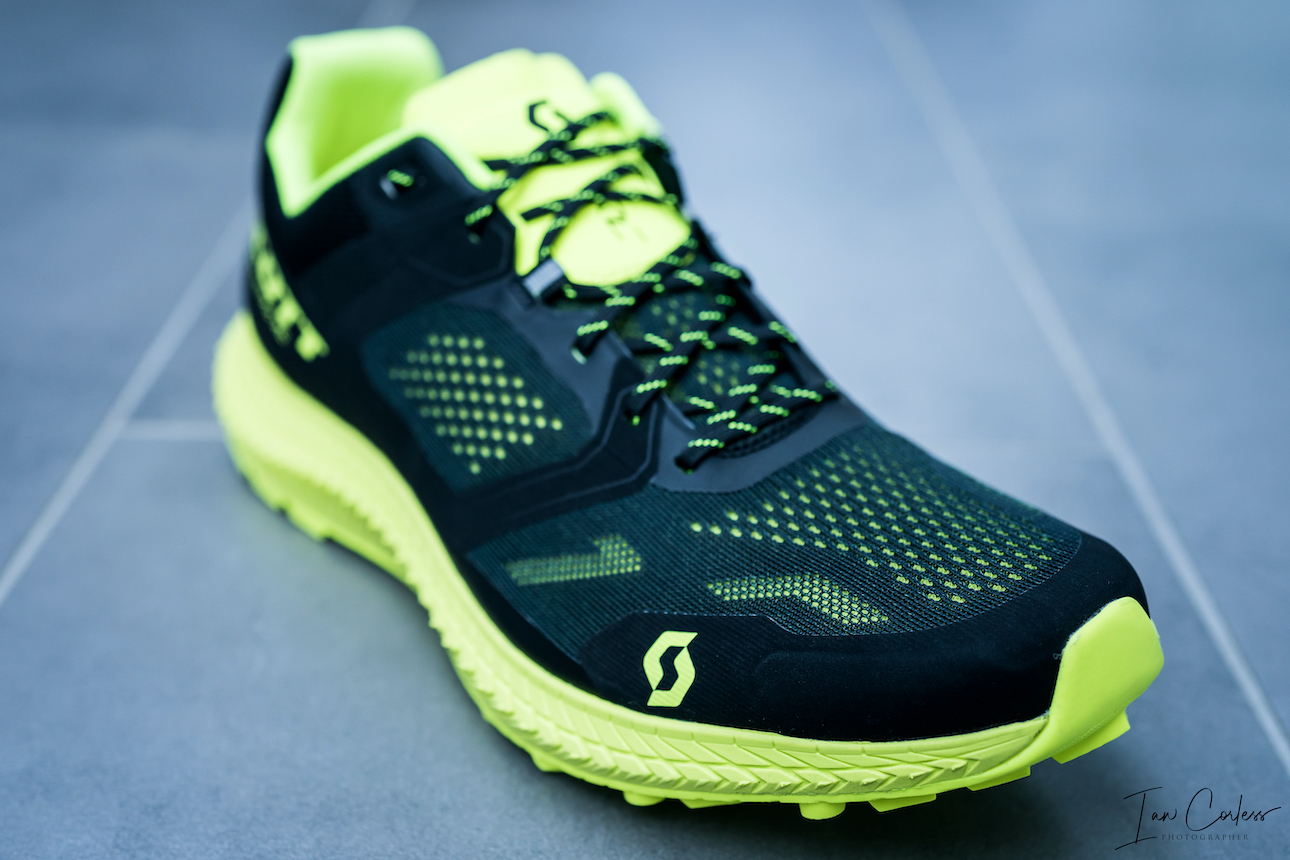
Check the fabric of the shoe and the seams. Will they be breathable for your needs? Will they protect you for your needs? Does the toe bumper have enough protection?

Remember shoes flex when you run. In the propulsive phase, the shoe will bend behind the metatarsals and this can be a troublesome area if the shoes are the wrong size. Often a sign of a shoe that fits incorrectly is this area will crease and often tear causing failure in the shoe upper. If running uphill, think mountain, fell and trail running, this area of a shoe gets a great deal of stress.

A good running store with professional staff will help you with shoe choices and they should discuss the pros and cons of the specific brands and models available. However, gut feeling and how you feel goes a long way. Always be careful of ‘sale’ shoes! Don’t be influenced in buying the wrong shoe just because it is a good price.

WHAT CAN GO WRONG?

Marathon des Sables has some foot horror stories and the general story is because of the heat, the sand and how brutal the race is. The truth is, the issues (usually) arise through runner’s choosing the wrong shoe and the wrong size. 

Old advice has said size up, go bigger as your feet will swell.

However, a shoe that is too big allows the foot to move inside the shoe. A moving foot causes friction. Friction causes blisters. The rest is self-explanatory. In addition, with each sliding of the foot, the toes may impact with the front of the shoe and result in bruising. Think of running downhill with shoes that are too big, your toes will be crammed at the front with room behind the heel.

Having said this, feet can swell through impact and heat. So, using Marathon des Sables as an example, one consideration may be going for a shoe with a wider toe box but still that thumbnail of space at the front. What often happens is a runner has a favourite shoe and decides they need more room, so, they just buy a larger shoe (than needed) because it increases the width/ space. Actually, what they should do is change the shoe. It goes back to specificity.

Shoe that are too tight and/or too small will result in black toenails but more importantly can damage ligaments and possibly result in damage to the metatarsals. Stress fractures are a real risk. Also, you will have foot fatigue and pain. The foot is full of nerves and bones. As an example, the soles are extremely sensitive to touch due to a high concentration of nerve endings, with as many as 200,000 per sole. *The foot receives its nerve supply from the superficial peroneal (fibular) nerve, deep fibular nerve, tibial nerve (and its branches), sural nerve, and saphenous nerve. These nerves come from peripheral nerves that arise from the L4 to S3 nerve roots and contribute to the somatic motor function, general sensory information, and the cutaneous sensation of the foot. In regard to bones, each foot is made up of 26 bones, 30 joints and more than 100 muscles, tendons and ligaments, all of which work together to provide support, balance and mobility.

If you require stability shoes, the wrong size shoe may well put the support in the wrong place and instead of providing help, it will create onward issues and problems. Plantar Fasciitis is a risk.

Quite simply GET THE CORRECT FITTING SHOE!

IMPORTANT FACTORS TO CONSIDER

Okay, so we have given a guide to how you find the correct size of shoe. But now we need to be specific and address and look at some fundamental questions before going to any run store:

GAIT

Supinate – Your weight tends to be more on the outside of your foot.

Pronate – Your weight tends to be more on the inside of your foot.

Neutral – Your weight is distributed evenly.
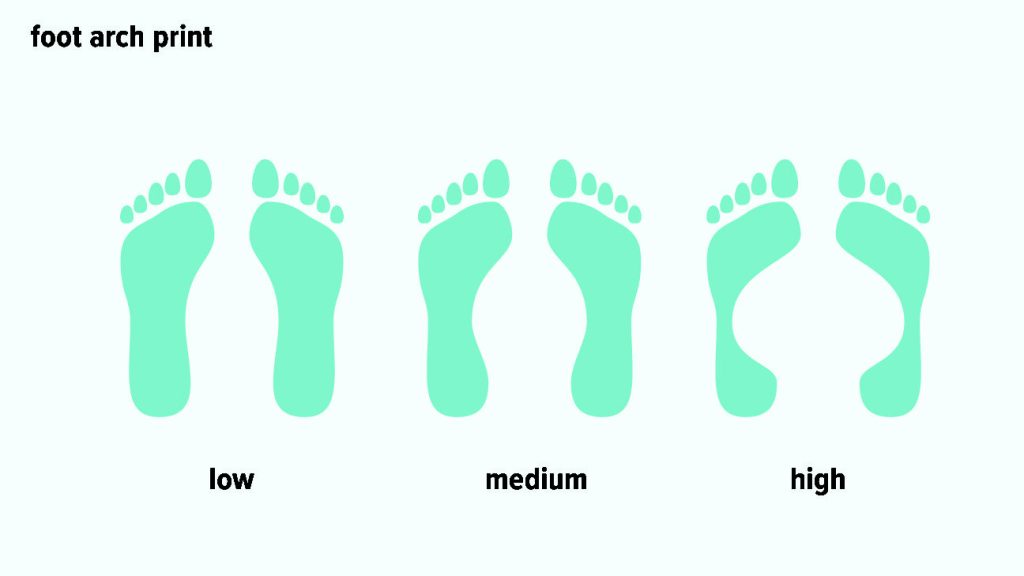
Foot arches, low, medium and high.

You need to know which of the above you are, as all brands and manufacturers produce shoes to answer these three specific needs. If you do not know the answer to this question, look at the soles of shoes you have worn for some time – you will see how they have worn. In a proper stride, your foot should roll forward and pronation should be neutral. Shoes that are geared towards supination or pronation are designed to bring you back to neutral.
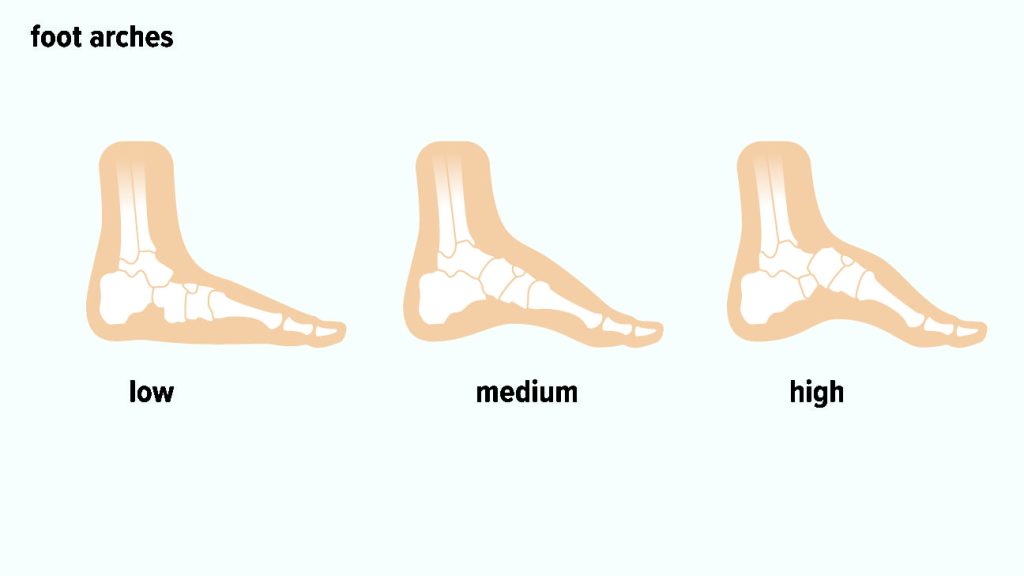
Side view.

Many runners who need specific support often see a Podiatrist and have Orthotics made that are transferable to any shoe. In this scenario, you should purchase neutral shoes. 

**If you supinate, it can cause excess strain on your ankles. It may lead to shin splints, calluses, or bunions on the outer side of your foot, and pain in your heels and balls of your feet. Excess over pronation, means that as you walk, your foot rolls toward the inside and your arch tends to flatten out. Your shoe will show uneven wear on the inside part of the sole.

CUSHIONING
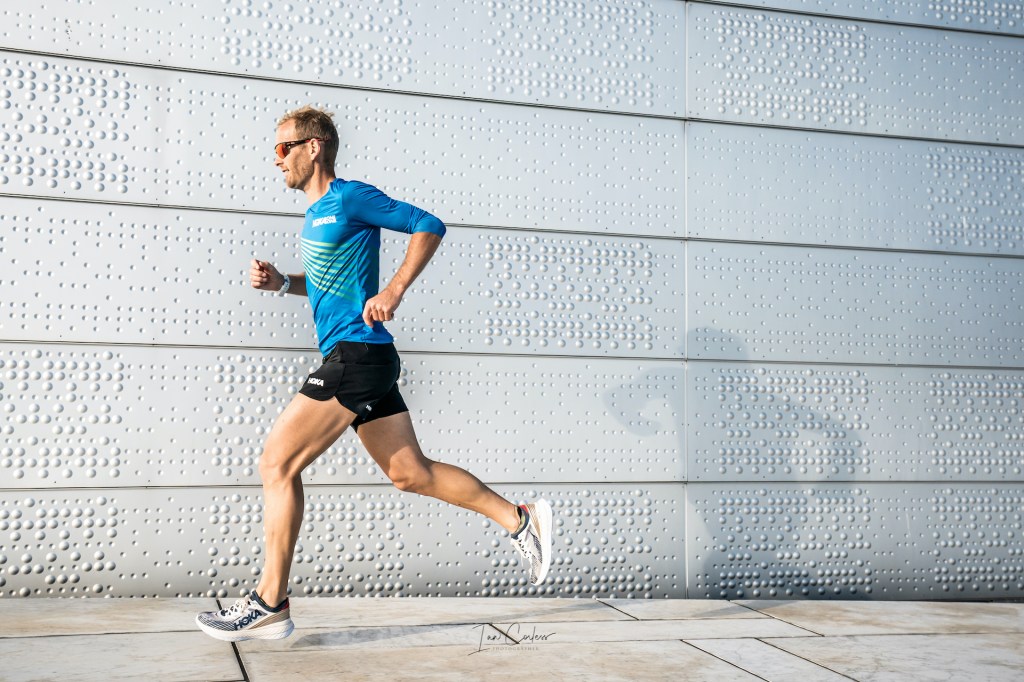
Hoka One One are very cushioned.

From barefoot running to bouncy marshmallow shoes, there is a plethora of cushioning options available to choose from and what is best may just come down to personal taste…

However, I beg to differ. I feel cushioning or a lack of cushioning should be applied based on what type of running one is doing and what conditions.

Examples:

Fell running – Fell running often takes place in soft, boggy and wet ground. A feel for the ground is essential so that you can respond with ever-changing terrain. A shoe with too much cushioning will remove that feel, place you higher off the ground and may well increase the risk of injury. A sprained ankle being one of the most obvious.

Road running – Road is hard, it can jar the body, muscles and tendons and therefore a shoe with a little more cushioning may be preferable. For some, they require sofa like comfort. Others prefer some cushioning but not at the expense for the feel for the ground.

When purchasing shoes, look at the cushioning typically shown as, for example – Midsole Stack 8mm/ 14mm. This is 8mm cushioning at the front and 14mm at the rear. The higher the numbers, the greater the cushioning.

Some shoes include a rock plate which offers protection from sharp objects, useful when trail running.

DROP
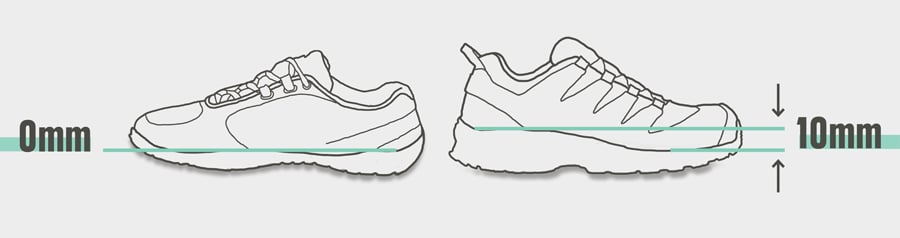
Image ©rei.com

Shoe drop is essentially the difference between the height/ thickness of the midsole under the heel compared to the same measure under the ball of the foot. Years ago, drop was not a consideration. On a personal note, thinking back say 8-years, I never considered shoe drop. Now, it’s all important.

Importantly, do not be confused by cushioning here. You may well look at say a Hoka One One and think it has a high drop. On the contrary, they typically have a low drop of 4mm. ***Drop refers only to the difference in thickness between the front and back of the shoe and is not a narrative on the magnitude of the thickness.

From experience, I do not consider that any runner has an ideal drop. I see drop as something that can played around with based on the needs and requirements of the shoe and the conditions it will be used. But I must clarify that I have been testing shoes for 8+ years and switching drop on a daily basis has been no problem, on the contrary, I actually consider it to be beneficial.

As a way to explain, I use 0 drop shoes all the way through to typically 8mm. I do have one pair of shoes at 10mm, but they are an exception.

Zero drop or barefoot advocates will argue and argue that zero is the only way to go and if you are adapted and have no injury issues, that is awesome. However, most people have not experienced zero drop and suddenly to do all runs in zero will almost certainly result in some injury. Zero takes adaptation.

Pure Sports Medicine are clear, “What we do know is that human tissues can be sensitive to sudden changes in the way they are loaded, and that it is biologically coherent (and in keeping with the laws of physics) that differing shoe drops may load certain tissues differently. As such, if you are currently uninjured there is no justification for changing the drop of your shoe, but should you want to then be mindful of allowing the body time to adapt to such changes (although many runners may be able to interchange between shoes of different drops we would usually advise being over cautious if this is not something you have done before).

So, if you typically run in 8mm drop shoes without injury, it makes sense you purchase shoes with 8mm drop. Equally, if 4mm is your thing, purchase 4mm.

Specificity of drop.

I personally (and others like me) see drop in conjunction with cushioning, or, a lack of cushioning as a tool to get the most from my body and my runs. For example, if running a muddy fell run, I will use a lower drop, say 3 or 4mm with less cushioning. By contrast, if I was doing a long trail run, I would prefer 8mm drop and more cushioning. 

A certain drop may be beneficial in reducing sensitivity and complementing your overall management strategy – so consider this. ****Changing the drop of your shoes (or using multiple shoes which have varying drops in a rotation system) is not to be discouraged or feared, but be sure your body’s tissues can tolerate this, and are given the necessary time to adapt and attain the capacity if needed.

GRIP

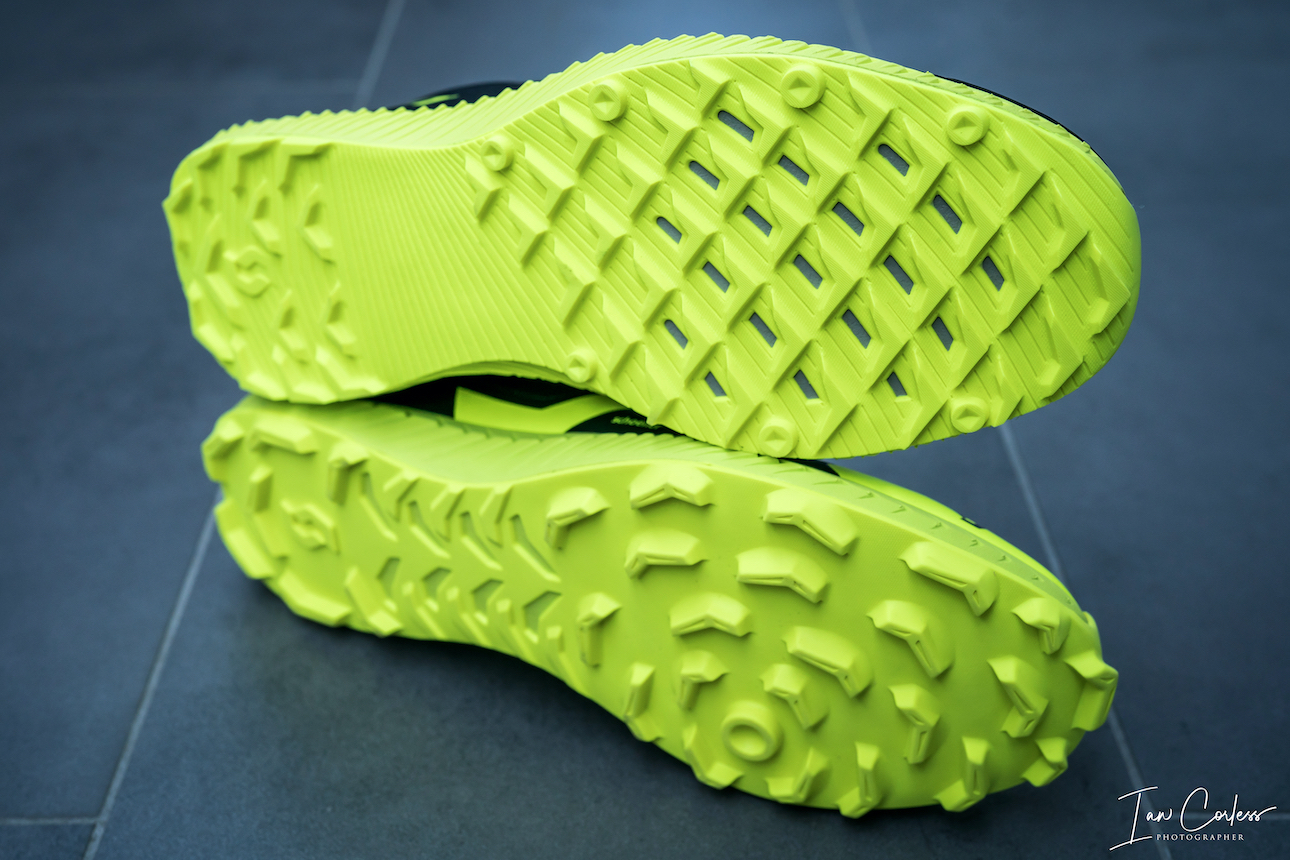
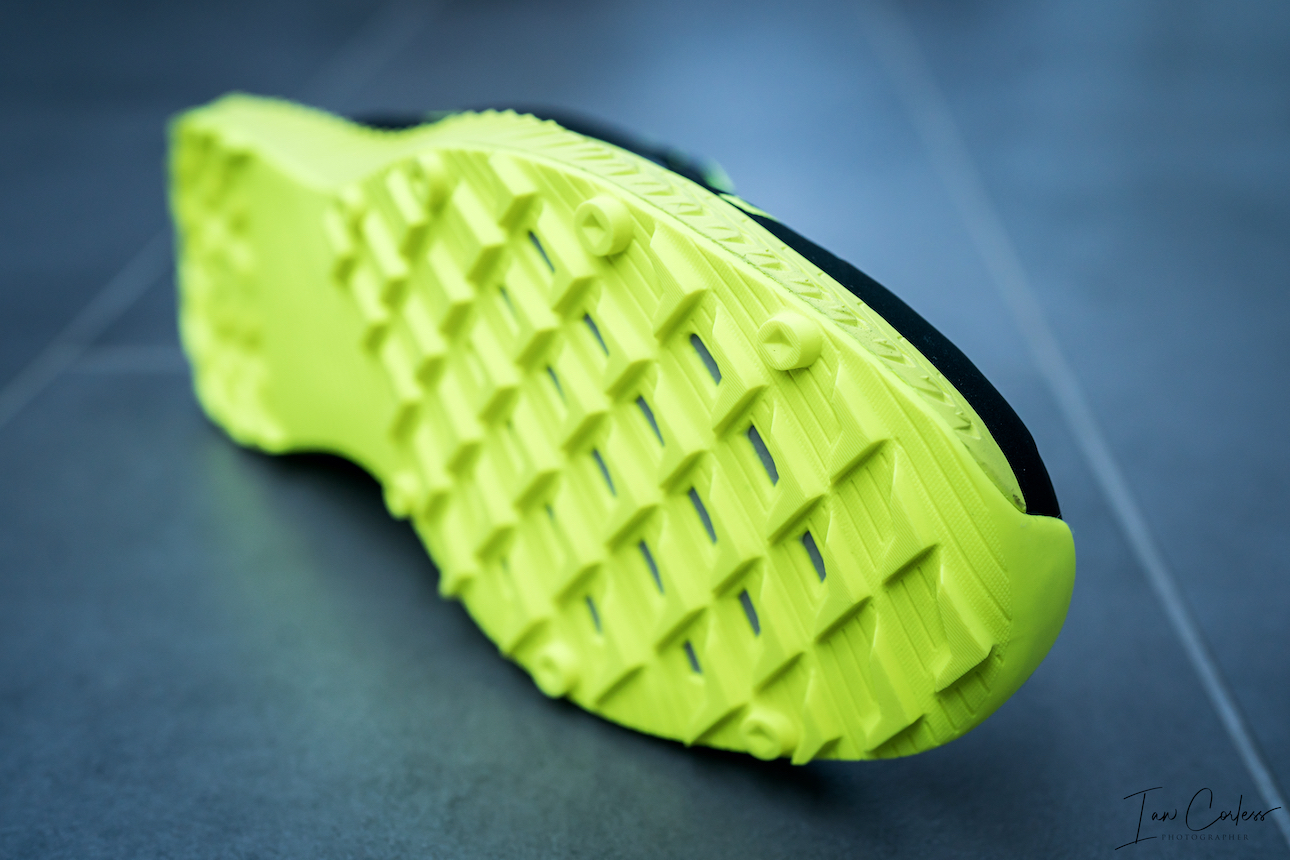
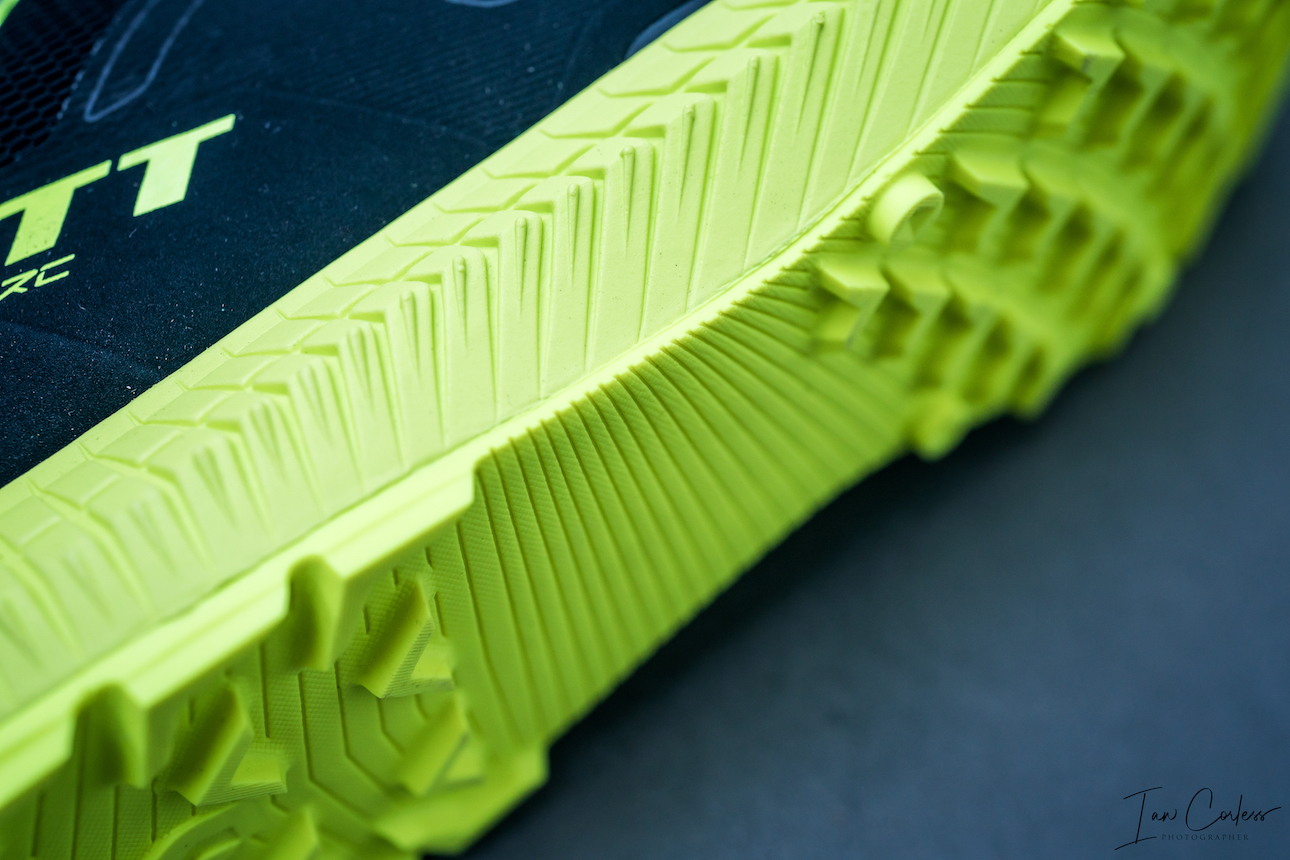
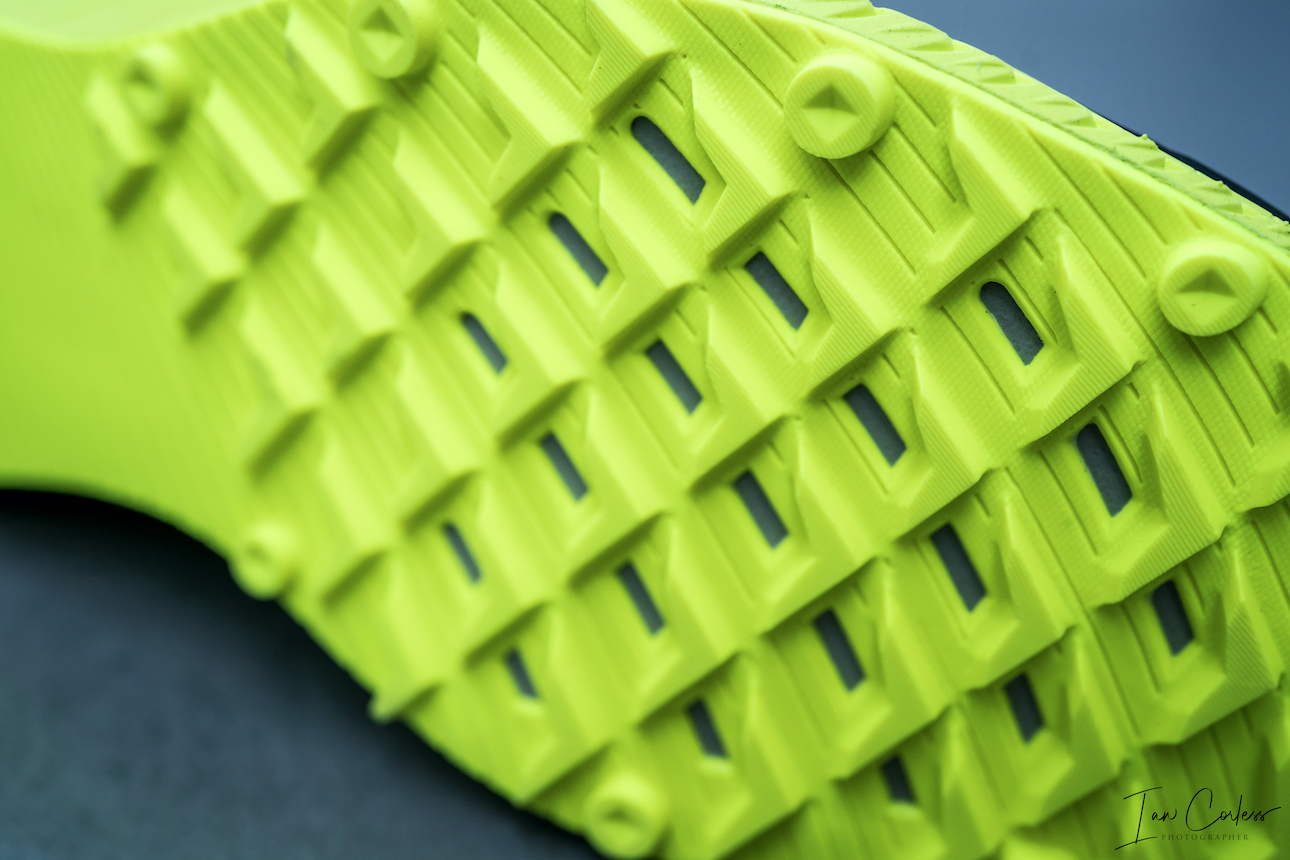
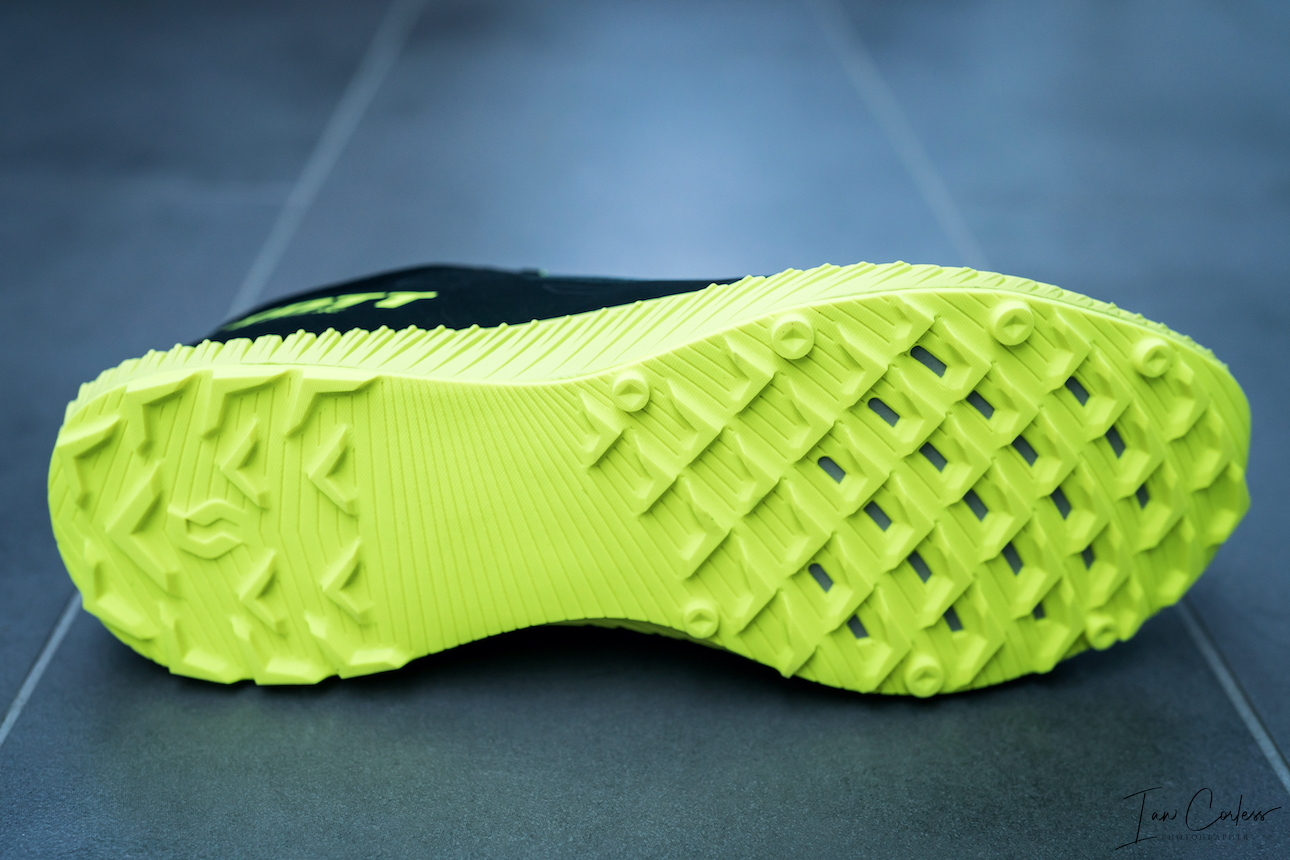
The outsole of a shoe is key as this is the point of contact with the ground on which you are running. Again, specificity is key. There is no one outsole that will do all jobs well and therefore the need for multiple shoes with specific tasks is an essential armory to a runner’s shoe cupboard.

Road shoes – Typically need little grip, just a good rubber.
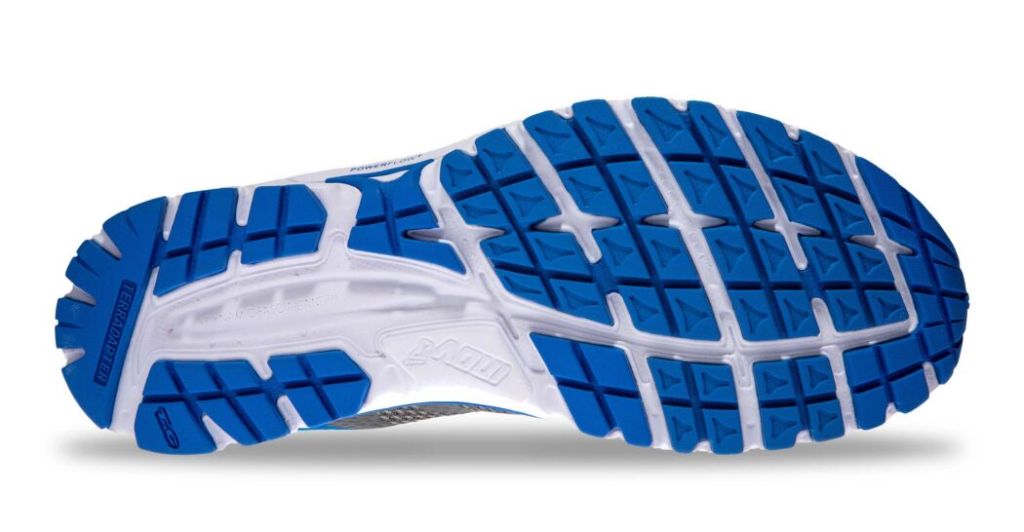
Road outsole

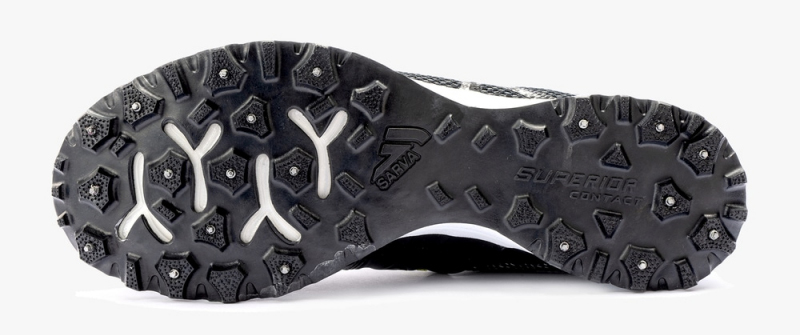
Trail shoes – Typically require a good outsole that is durable and has grip, say 4mm studs.
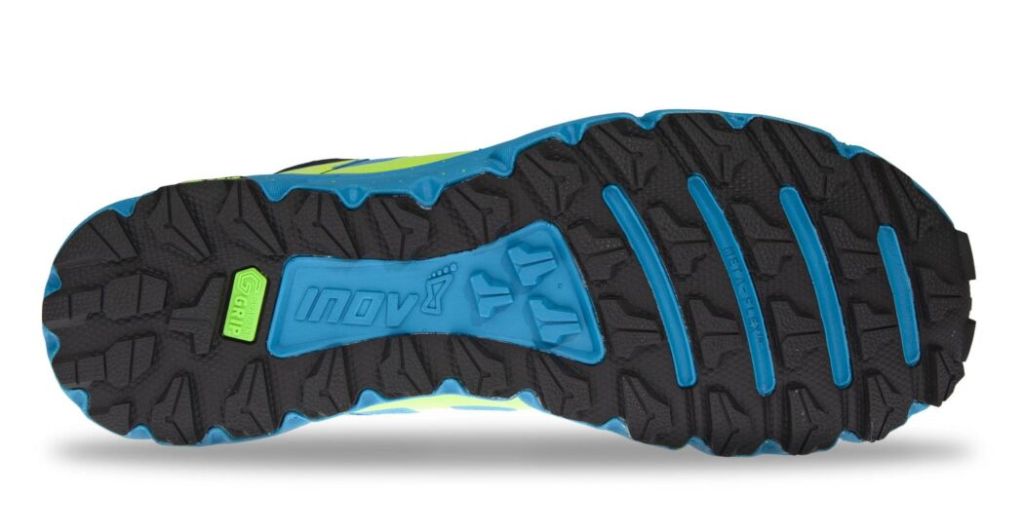
Trail outsole

Fell shoes – Typically will be aggressive and on first looks may look like football boots with 6 or 8mm studs.

Mud/ fell outsole

Mountain shoes – Typically will be a mixture of trail and fell shoes and the outsole will be sticky to provide good grip in wet and dry conditions.
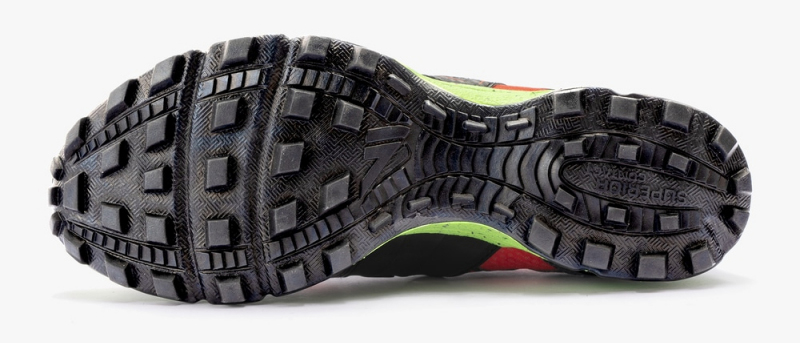
Mountain outsole

In an ideal world, if you ran all of the above scenarios, you’d have a pair of shoes for each scenario. However, shoes are expensive and many runner’s need to make some compromises. Brands realised this and for example, some offer road to trail shoes that provide a best of both worlds’ scenario. The inov-8 Parkclaw is a great example. “the perfect shoe for runners wanting to run on paths and trails, or those looking to make a transition from road running to trail running.” – inov-8

If you need grip for mud, you need to be specific, there is no compromise.

WIDTH

Like drop, shoe width can create many an argument. Simply put, if you have a slimmer/ slender foot, you can probably wear any width shoe providing you have the correct size and they hold you securely.
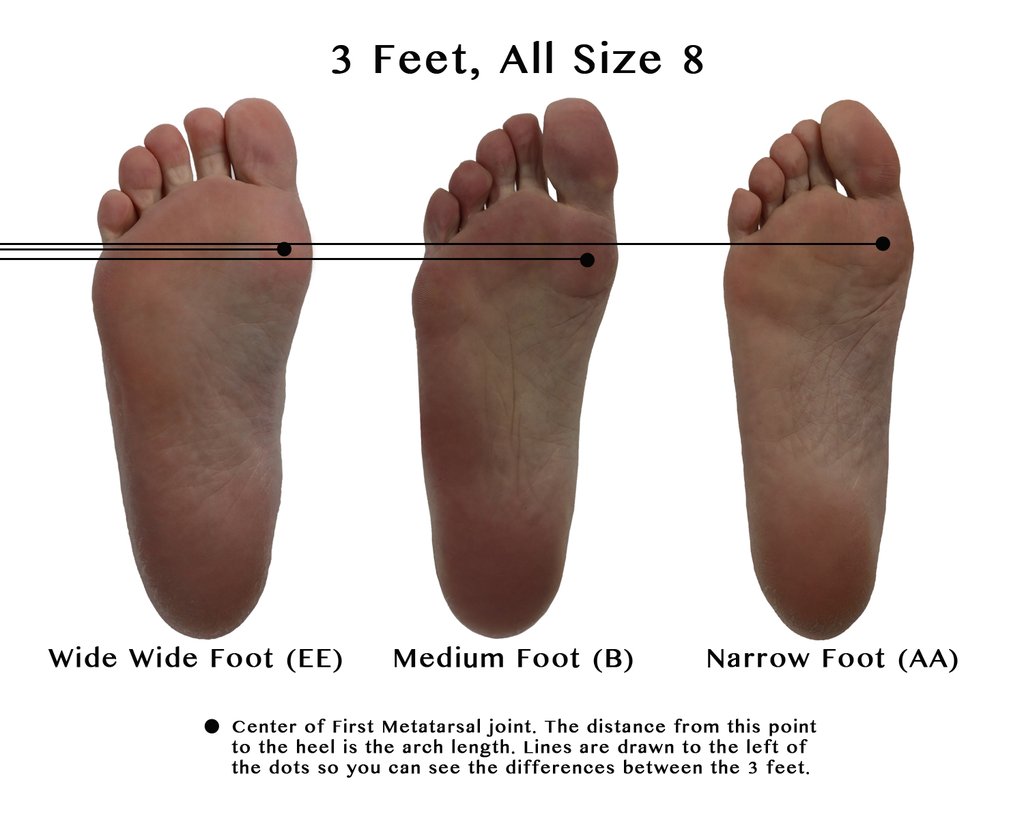
Image ©wive.com

But if you are a Hobbit, shoe choice may well be compromised as you will need to look for a wider fitting shoe.

Shoe width is also a consideration based on other factors: 1. What terrain are your running on? 2. How long will you be running?

On a personal note, if I am running on technical and challenging terrain, I want a shoe that fits and holds my foot. I am not worried about toe splay – precision is a priority. By contrast, if I was running on groomed trail for multiple hours, a shoe with more width may will be preferable to allow my toes to splay and relax.

Like drop and cushioning, I mix the width of my shoes based on my needs.

Some companies, inov-8 for example provide a width guide to steer runner’s to shoes that will specifically answer their personal needs. This a great system that takes some guess work away. The system is simply rated 1-5; 1 being a tight/ precision fit, 5 being wide and spacious.

Brands such as Altra only offer one foot shape and believe that a wide toe box is essential, in conjunction with 0 drop. It is a toe shape foot box that allows toes to relax and splay. The big toe has space and in principal, this foot box helps reduce overpronation and increases stability. On a personal note, Altra has a place for long road, ultra or trail runs, but when the terrain gets challenging, they feel way to sloppy for me – but this is a personal thought. Altra fans or wide toe box fans will disagree.

WEIGHT AND FABRICS

Shoe weight can be an important consideration. Certainly, when racing, a runner may well prefer a lighter shoe so that they feel faster. However, if running an ultra, added cushioning and a little more weight will be worthwhile for comfort.

Shoe fabrics, seamless uppers, sock-like fits, Gore-Tex and other considerations may influence a shoe choice. Make a decision based on specificity.

A lighter shoe will typically not last as long – this may be an important consideration too.
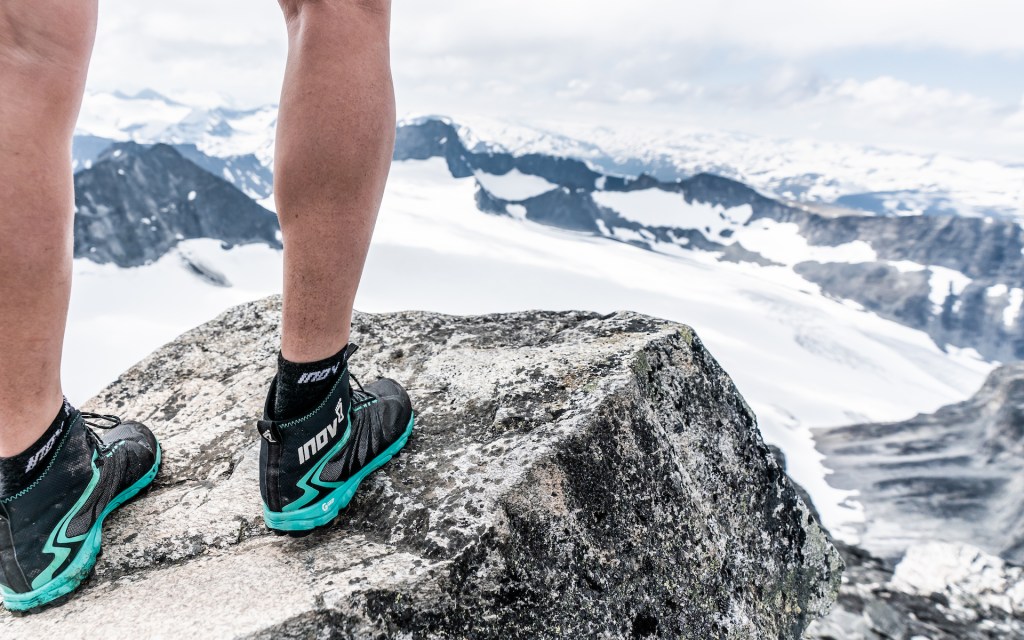
The correct shoe is one that fits correctly and is specific for the job.

CONCLUSIONS AND SUMMARY

Be specific.

Is choosing a run shoe really THIS complicated?

I suppose, yes! But once you understand the basics purchasing new shoes should not be too complicated. Below is a summary and process to follow:

  1. Measure your foot.
  2. Use a conversion chart to get your shoe size.
  3. Understand gait and what you need. If using orthotics, you need neural shoes.
  4. Ask yourself what terrain the shoes will be used on – This refers to what outsole.
  5. Ask yourself how long typically you will run in these shoes – This refers to cushioning.
  6. Do you need the shoes to be more precision fit or wider?
  7. Look at brands/ options and based on the above make a shortlist.
  8. Use socks.
  9. Try the shoes on using the size provided from points 1 and 2 but then size up or down based on the thumb nail space rule.
  10. Check the heel for slipping.
  11. Check the instep and confirm a good foot hold.
  12. If possible, try the shoes running.
  13. Reduce the choices down to 3, then 2 shoes and then make an informed and educated decision.
  14. Do not be influenced by the colour or the price.

Lacing can make a huge difference to how a shoe holds the foot. Lock lacing for example is very popular for off-road and challenging terrain as the shoe holds the foot more securely.

FINALLY

Compromise is a killer when it comes to run shoes. The more specific you can be, the better the shoe will be. But, if you have correct fitting shoes with appropriate cushioning, correct width and a good outsole, you will be able to head out the door and enjoy the process.

And yes, there are exceptions to the rule and somebody will use shoes that are too big and get away with it. Just as someone will run in sandals and get away with it. These are exceptions to the rule and not the norm.

Reference – https://www.ncbi.nlm.nih.gov/books/NBK537292/

** Reference – https://www.healthline.com/health/bone-health/whats-the-difference-between-supination-and-pronation#the-foot

*** Reference – https://puresportsmed.com/blog/posts/what-is-shoe-drop-and-why-is-it-important#:~:text=The%20%E2%80%8B’drop’%20of%20a,the%20ball%20of%20the%20foot.

**** Reference – https://puresportsmed.com/blog/posts/what-is-shoe-drop-and-why-is-it-important#:~:text=The%20%E2%80%8B’drop’%20of%20a,the%20ball%20of%20the%20foot.

Please support this website. I believe everyone deserves to read quality, independent and factual articles – that’s why this website is open to all. Free press has never been so vital. I hope I can keep providing independent articles with your help. Any contribution, however big or small, is so valuable to help finance regular content. Please support me on Patreon HERE
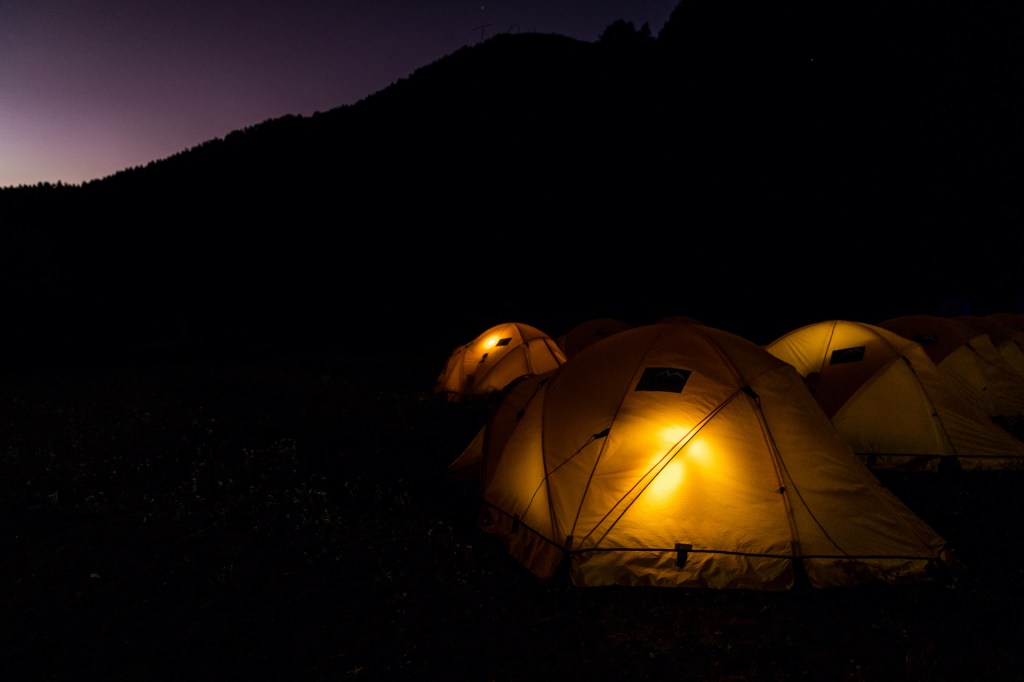
Fastpacking and Camping in Winter

December in the Himalayas at Everest Trail Race

Embrace winter, mercury dropping in the thermometer is no excuse to put outdoor adventure on hold. On the contrary, the new season brings a whole new set of adventures that could not be entertained during the months of Spring and Summer – read an article HERE on ‘Embracing Winter for New Adventures.’
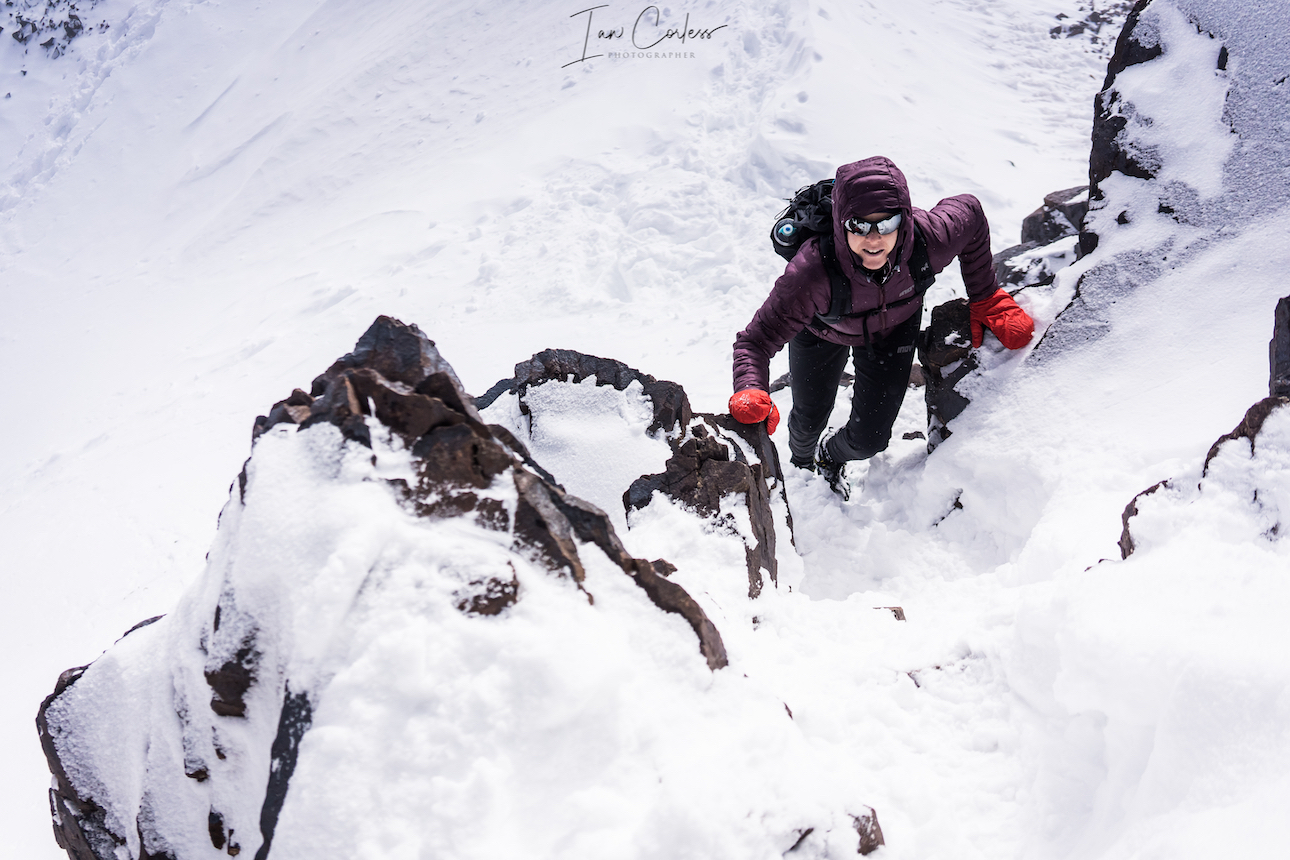
Fastpacking is often looked upon as a good weather activity and not something that can be entertained or planned for the winter months. I disagree! Winter brings multiple possibilities and although fast packing in spring/ summer has many carry overs to autumn/ winter, some distinct differences are notable and important. 

I have produced two articles on Fastpacking, one HERE and the other HERE looks at going lighter. Quite simply, fast packing is about finding the perfect and optimal balance between equipment and weight. To move fast, one’s pack needs to be as light as possible. In spring and summer, that job is easier as one requires less equipment. For example, sleeping bag will be lighter, tent will be lighter, clothing will be reduced and so on. Winter brings added challenges of balance and if you get it wrong, not only can it mean a miserable time, it can also be extremely dangerous.
WHAT TYPE OF TRIP?

I like to think of winter fast packing adventures primarily falling in two categories:

1. Self-sufficient with tent.

2. Self-sufficient and staying lodges, cabins, tea houses or even hotels.

To clarify, when I say ‘self-sufficient’ I mean carrying everything one needs for the adventure you are undertaking. If one is travelling with a tent, you will almost certainly be carrying all your food too. However, if staying in lodges, cabins, tea houses or hotels, then access to food will be possible and therefore the need to carry such items will be reduced.

For the purposes of this article, I am going to look at point 1 as this requires more planning, more equipment and a great deal more thought. For point 2, the equipment list would be as point 1 with the ability to remove items.

A fastpacking trip can be as simple as two days with one overnight stop or it can be a lengthy trip of multiple days or even weeks. As an example, in recent years I have taken myself to Nepal in December and fastpacked for ten days plus using tea houses for accommodation. Read an article on the ‘Three Passes Trek 2018: Ultimate Trek in the Everest Region’ HERE.

Any length of trip is valid and if new to winter adventures, it makes sense that maybe a first trip involves just one overnight so that you can fine tune what does and does not work for you.

Do you need a 12-week and/ or 24-week Multi-Day Training Plan perfect for a multi-day adventure or a race like Marathon des Sables? They are designed to provide you with a structured weekly plan culminating in a target event.  

View a sample week HERE from the 12-week planPurchase HERE. (£14.50 pw)  
View a sample week HERE from the 24-week planPurchase HERE. (£12 pw) 
EQUIPMENT

Weather in Autumn can still be warm but one needs to be prepared.

Fastpacking in winter is the same as summer, but the need for more substantial equipment increases. Key is multi-purpose so that as mentioned previously, balancing minimal weight with equipment is optimal.

Planning is also essential so that one understands what equipment is needed and required. It goes without saying that winter conditions can bring anything, so, being prepared is an absolute no1 priority. 

Ask questions:

Will I have rain?

Will I have snow?

Will I have ice?

Am I going to high altitude?

Is the terrain technical?

Will I be climbing?

Questions as above are a starting point when deciding what to take. A prime example being that an ice axe, crampons and maybe even a harness will be required on a fastpack trip – If you don’t have them, that could be a BIG problem!

Do the research, understand the trip, understand the distance you will be covering and understand the amount of days the journey will take.

Once you have answers to the above, you can plan the equipment.

Top Tip: While solo adventuring is exciting and exhilarating, winter adventures with another person make a trip safer and, in my opinion, more enjoyable. It also means you can share the additional tent weight and supplies weight.

TENT

©Hilleberg – Nallo 3 Tent

A winter tent will be heavier and more durable as the impact of the weather is greater and the need for protection is increased. The first question, is size? Many of us will not have the option or luxury to have several tent options that allow us to choose a solo, two or three-person tent. So, if purchasing for the first time, the best option would almost certainly go for a 2-person tent.

The tent needs to be 4-season unless you know in advance that your winter adventure will not have weather extremes. If the latter is the case, you may well get away with your 3-season tent.

Heavier fabrics, more substantial poles and less mesh make 4-season tent shopping a challenge. Budget is also a key consideration. A tunnel tent is optimal and if pitched correctly, it will withstand strong winds and harsh weather. Use a well-insulated, all-season tent designed to withstand strong winds and the weight of snow, as well as a full nylon inner to prevent as much heat loss as possible.

My favourite tent is the Hilleberg NALLO which comes in several sizes, 2,3 and 4 person and the ‘GT’ versions have greater storage which is not a consideration for me but could be a consideration if bike packing? The NALLO 3 is 2.6kg and one of the lightest all-season tents on the market.

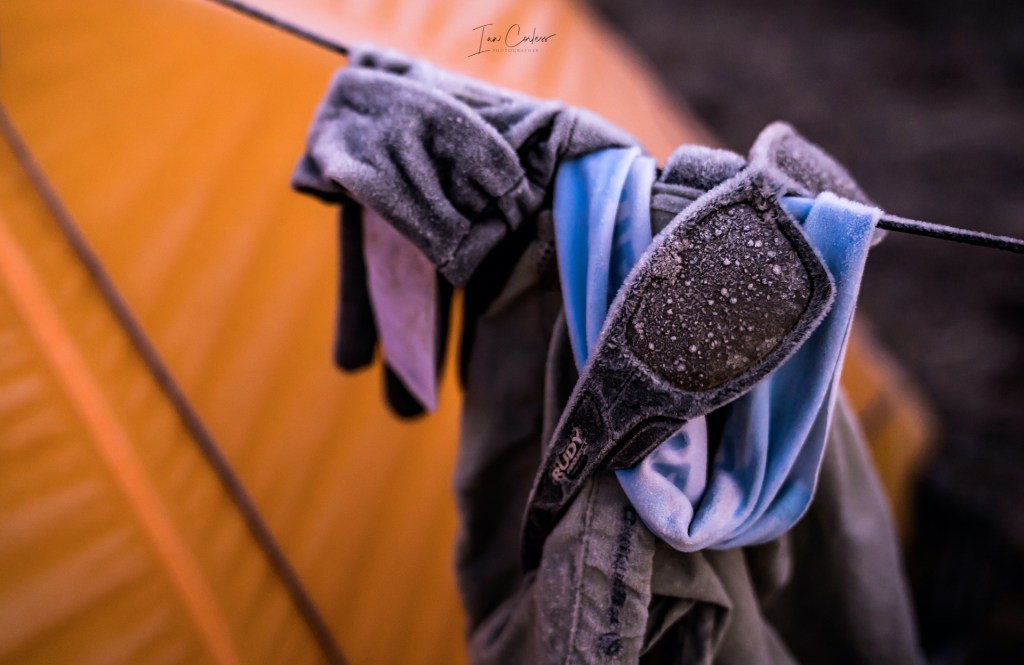
A cold winter morning.

2.6kg may sound heavy, especially when fastpacking but if you divide that weight between 2 (1300g each) or 3 (866g) it compares with lightweight solo tents such as the NEMO Hornet which would not stand winter conditions.

Ultimately invest in a tent as it will serve you well and last a great deal of time. Cutting costs early on will only come back later and bite you later.

Using a Tarp or Bivvy bag is not a consideration for me in winter unless in an emergency.

PACK

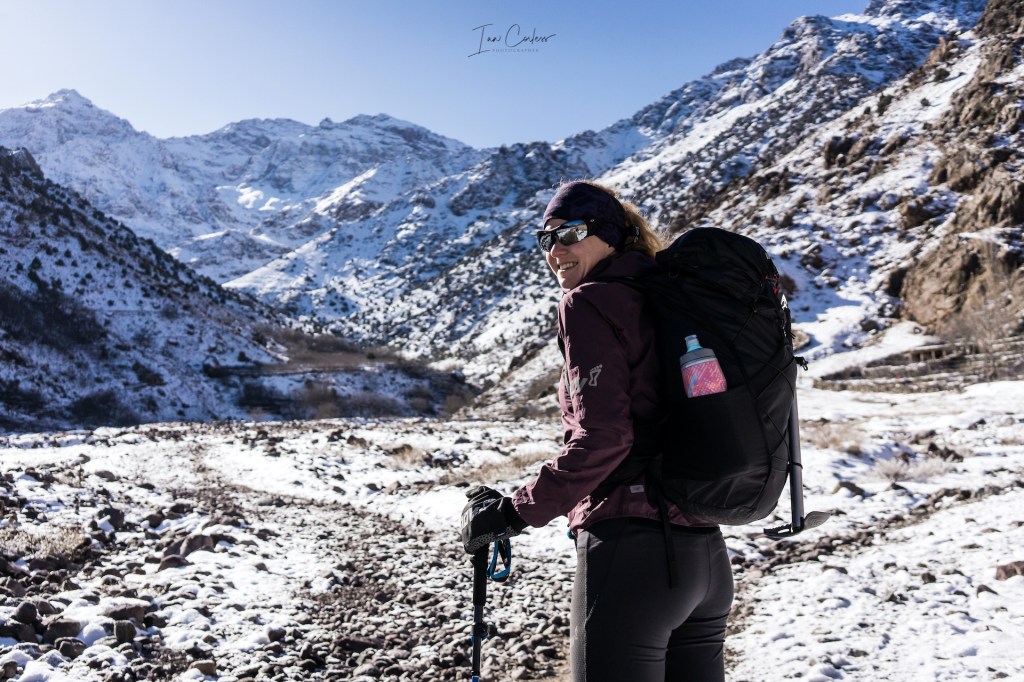
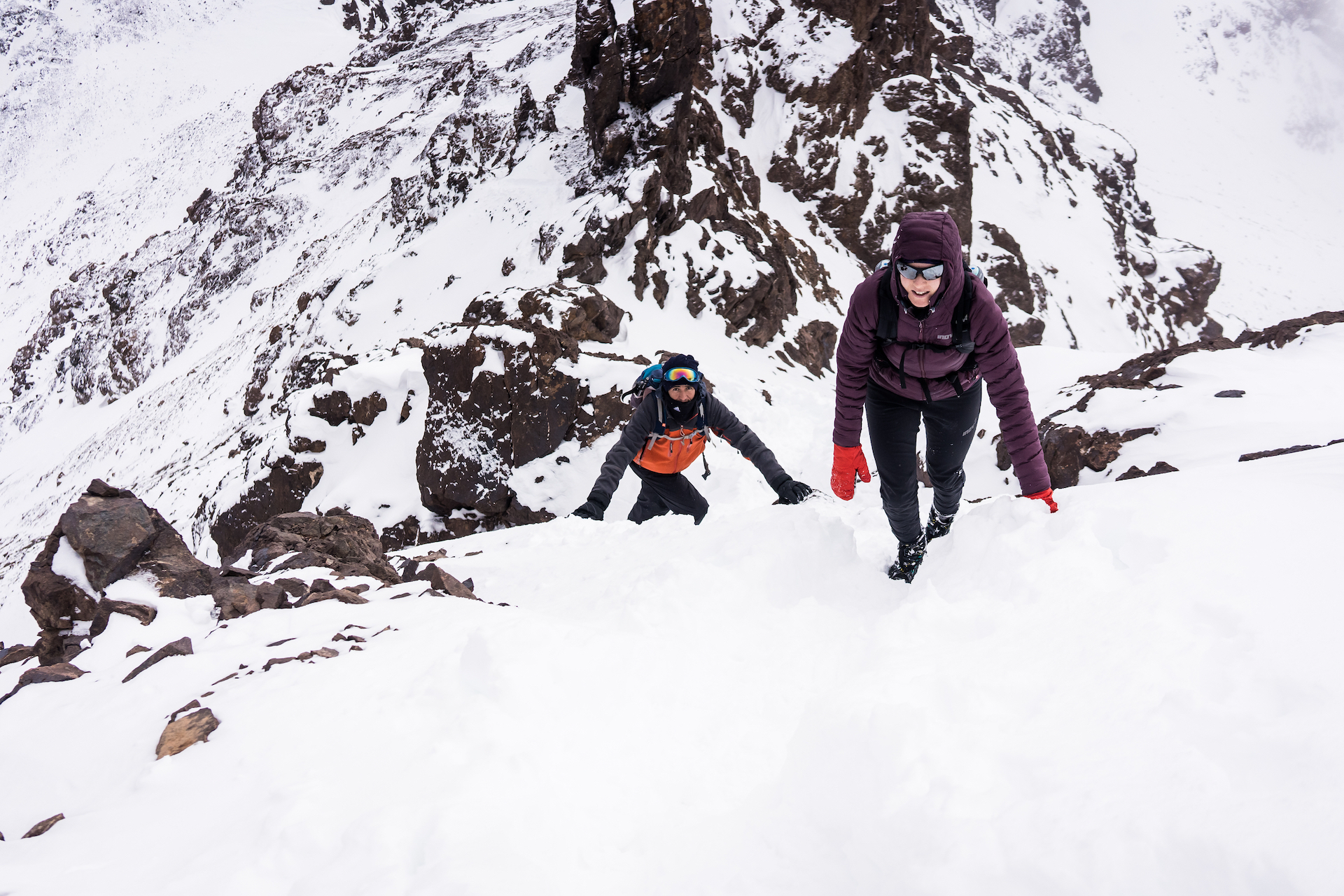
A multi-day fast packing trip to the Atlas Mountains, Morocco.

Packs are very personal and the correct one for you comes down to too many variables. I have said previously that I feel the ideal fastpack size to be 20-25 ltr. However, in winter, I usually go to 30 ltr and in Nepal I have gone to 40 ltr.

Montane Trailblazer 30 is a personal favourite as it fits like clothing with a vest-like fit and it has a waist belt.

Think about simple and effective storage space, minimum fuss, good fit and comfort.

Options:

Ultimate Direction Fastpack

Six Moon Designs

Inov-8

OMM

Terra Nova

SLEEPING BAG

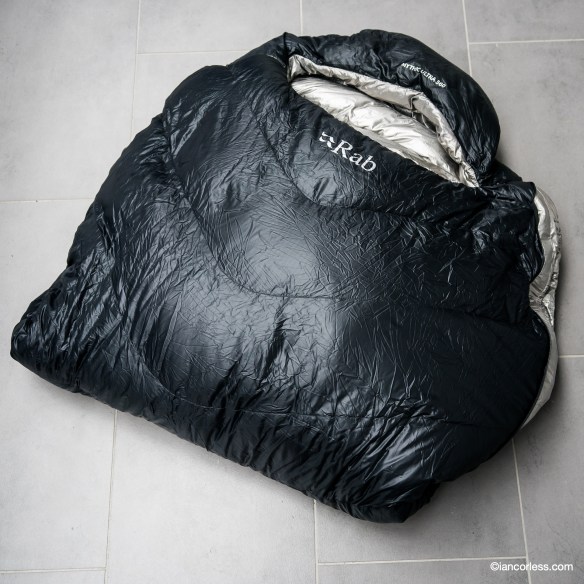
RAB Mythic Ultra 360

After the tent, the sleeping bag is going to be the next largest and heaviest item. However, think cleverly about sleeping bag and also consider the key phrase, multi-purpose.

Because you may experience -15 at night during a fastpack, this does not mean you require a -15 sleeping bag…. Personal favourite is the RAB Mythic Ultra 360.

Smart lightweight campers have been using their clothes to boost the warmth of their sleeping bags for years and climbers do it when they have to. Yet most of us are still carrying bags much bulkier and heavier than we need.” – Peter Hutchinson Designs

Layering in a sleeping bag (just like in clothing) is key to regulating temperature and a perfect way to carry a lighter sleeping bag without compromising on warmth and comfort. Read an in-depth article HERE on ‘Choosing a Sleeping Bag for an Adventure.’

Key points to consider:

  1. Am I using the sleeping bag in a dry or wet climate?
  2. Is the weight of the bag really important? Normally the answer here is, if you are carrying it, yes, the weight is important.
  3. Do I need the sleeping bag to pack as small as possible?
  4. Do I need the bag to work in one or more situations? Another way of looking at this is, do I need to compromise on points 1-3 to get value for money.

Ask some personal questions:

  1. Do I sleep warm?
  2. Do I like to be warm and if not warm, am I miserable?
  3. Am I prepared to be a little cold to be as light as possible?
  4. Do I need a full-length zip, half-zip or am I happy to have no zip?

Consider other factors:

  1. If you are tall, wide, have big shoulders etcetera, etcetera then some sleeping bags will just not work for you as they will be too small.
  2. If you are small/ petite an off-the-shelf sleeping bag actually could be too big for you, this is not a huge problem, but if you wanted the bag to be as small and light as possible, you could go custom made.

Top Tip: Down is the lightest and packs the smallest. However, down cannot get wet. If it does it loses warmth and effectiveness. Some brands now offer ‘treated’ down that can withstand weather variables, so, consider this. If you are going to be in a wet/ damp climate, a synthetic filling may well be the best choice. Do not put your head inside the sleeping bag – make sure you breath out and not inside the bag as the moisture is not good.

SLEEPING MAT

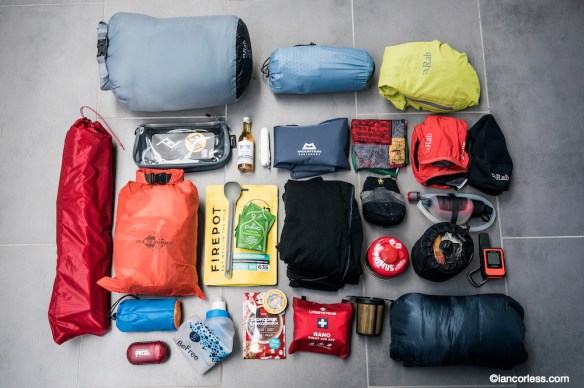
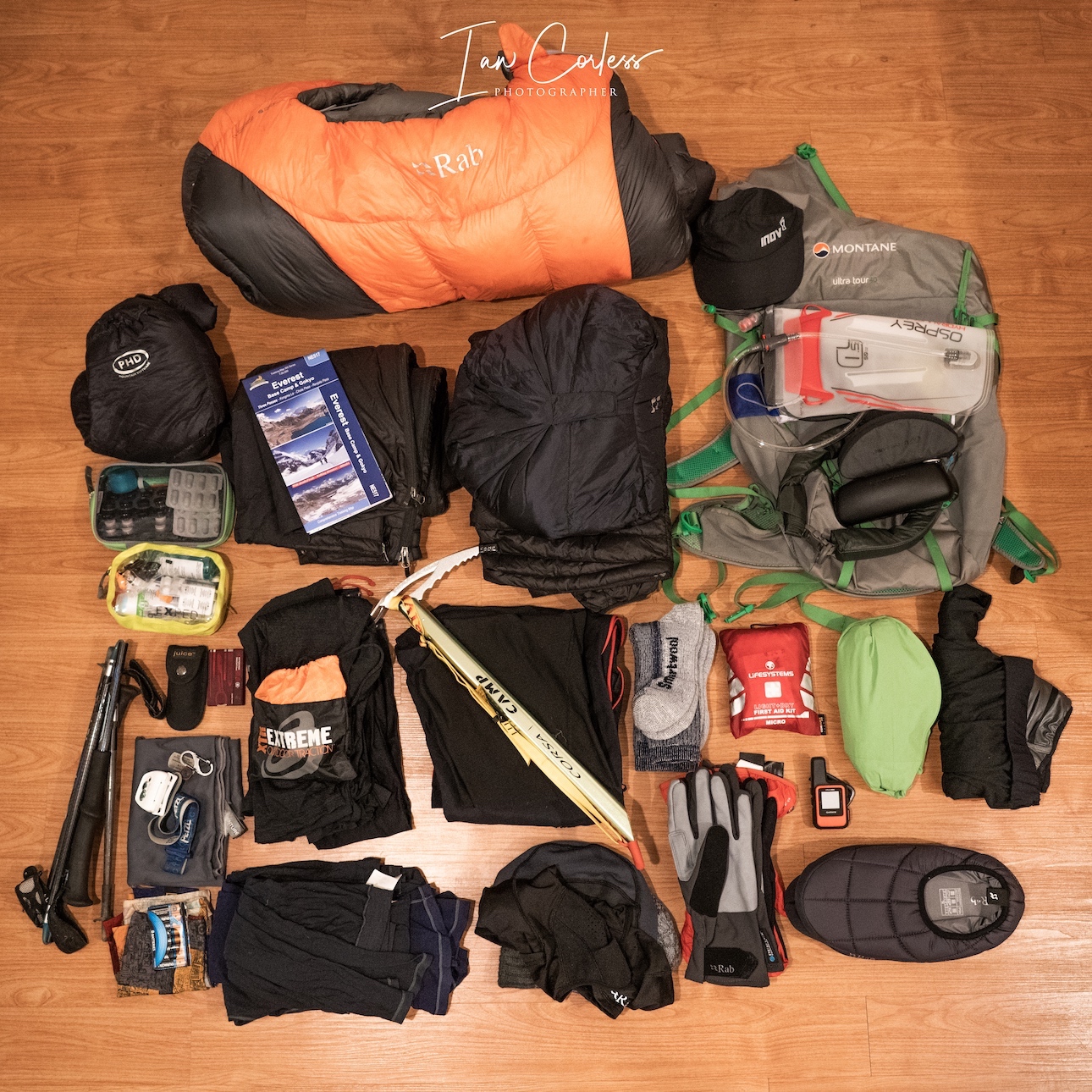
Typical fastpack kit set up.

If you are in a tent during the winter, you NEED insulation between you and the ground. Do not compromise here. No matt and you are guaranteed a cold, sleepless and restless night. There are many variables to look at and while weight is crucial, so is warmth. The weight of one’s body presses a sleeping bag flat when sleeping and therefore the warming properties are reduced. Cold comes up from the ground, which can be very dangerous.

It is possible to purchase insulated matts and they are obviously heavier. Ask questions about your personal needs and self-asses. Do you sleep warm? 

Look at the ‘R’ number of a sleeping mat. The higher the R number, the more insulation it gives.

If you are going to be pitching a tent on snow or ice, the R needs to be 3 at a minimum and ideally 4 or higher.

Sea to Summit produce an Ultralight mat with an R of 3.1 at 480g in regular length. By contrast, the Comfort Plus XT with an R of 4.7 is over 1000g

COOKING SYSTEM

While your spring/ summer gas canister system will work in winter, many choose to use a liquid fuel system as the pressure in the bottle can be maintained by pumping. MSR do a product called WhisperLite that can use gas or liquid fuel.

I personally use a Jetboil Flash or my MSR WindBurner which both boil water very quickly and work exceptionally well in windy weather.

I simply need to boil water and/ or melt snow.

FOOD

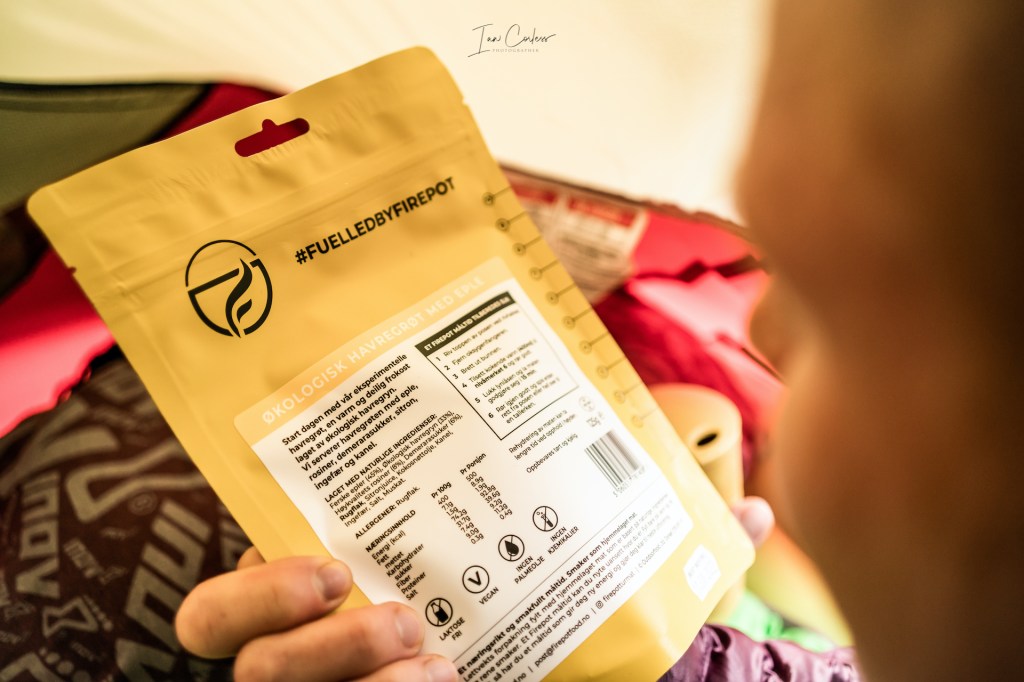
Firepoot food tastes great and is well balanced.

Food is a significant consideration for winter and personally the need for warm and nutritious food increases. Dehydrated food is a staple both for breakfast and dinner and while many brands are available, Firepot Food is my favourite. A *typical meal is around 125g in weight and offers upwards of 500 calories. Baked Apple Porridge is superb in the morning and Chili Con Carne has spice and great taste. Options are available for larger packs. Taking Chili Con Carne as an example: the 135g pack has 600 cals and they have a 200g pack with 890 cals.

I take coffee for the morning and sachets of hot chocolate for the evening.

CLOTHING

Hat and buff great for keeping the warmth in.

There is no one answer to clothing and many questions to ask. To start, I will assume for the purpose of this article that you are a runner who will be moving fast (er) than a hiker.

Key considerations re weather:

Will it be dry and cold? 

Will it be wet and cold? 

Will it be wet/ dry and cold?

Understanding the answer to the above helps clarify clothing choice. For example, Nepal in December will be cold and dry (usually) therefore the need for wet weather clothing can be reduced. It also means that down will be the main insulating layer. By contrast, if exploring the mountains of northern Norway, you will potentially experience all weather variables and therefore the need for synthetic insulating layers may be preferable to down and the requirement for waterproof jacket and trousers almost essential.

I see apparel in three scenarios:

What I wear in the day.

What I wear when I have finished for the day.

What I wear to sleep.

Remember the key word, multi-purpose.

Layering is essential to regulate temperature and at all costs, you need to reduce sweating, especially in subzero conditions as the sweat can freeze against the skin. Accept that you will need to move slower and that you will need to be diligent in stop/ starting to add and remove layers. It’s easy to feel too warm or a little cold and not stop because it impacts on your rhythm, this can be a really bad decision. Make sure you add/ remove as required.

DAY

Long sleeve Merino, run tights and gloves is a great starting point for warmth.

Head: Hat.

Eyes: Wear glasses, especially in snow.

Neck: Buff

Body: Long-sleeve merino base layer top.

Hands: Merino base layer gloves.

Legs: Winter run tights.

Feet: Merino socks.

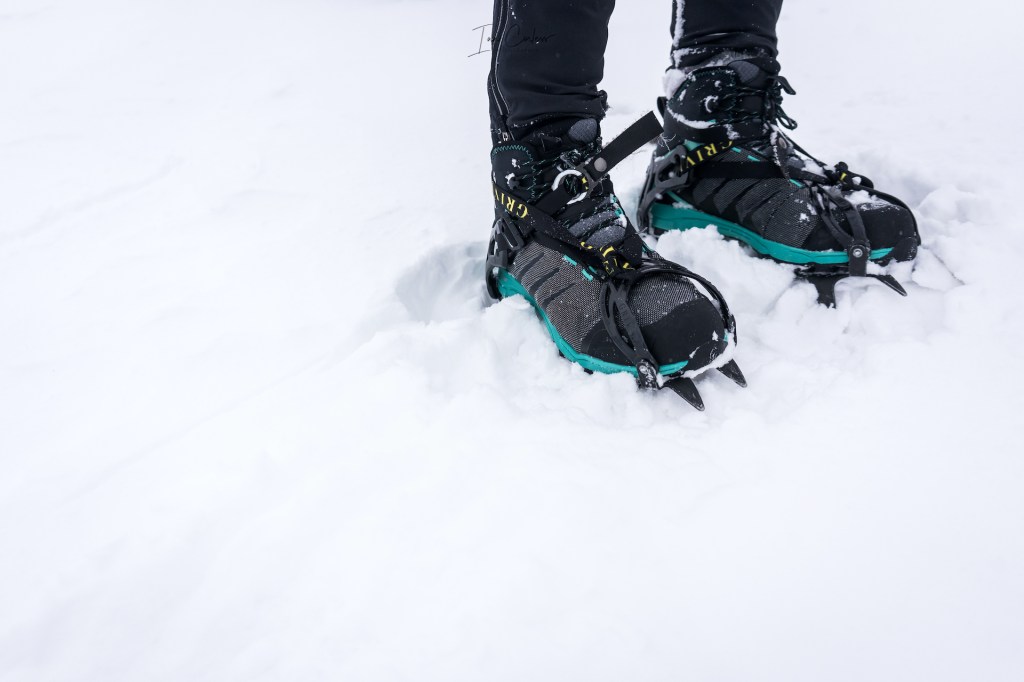
Shoes – These will be specific to the task and weather conditions. Obviously, I will not be carrying options (unless climbing,) so, my shoe choice will be based on the most demanding conditions. As a starting point, my standard trail running shoes with aggressive outsole would be ideal for mud and soft snow. If I was going to encounter ice I would either take micro-crampons to use on my trail shoe or use a specific shoe such as the Arctic Talon by inov-8. Extreme cold, challenging conditions and many variables and I would use a boot but a lighter option that is designed with a runner in mind, Roclite (370 or 400) by inov-8 works exceptionally well.

inov-8 Roclite boots with crampons.

WARMTH and WATERPROOF

Add and remove layers based on the weather and conditions.

Using the above as a starting point, the need to add layers will depend on the conditions you are experiencing.

Head: You lose a great deal of heat through your head, so simply adding and removing a hat is a simple way to regulate temperature. There are many options here that typically fall in 3 categories:

Peaked hat

Beanie

Head band

I often like the head band option as it keeps my ears warm but still allows some heat to escape through the top of my head. If it is really cold, I will use a beanie.

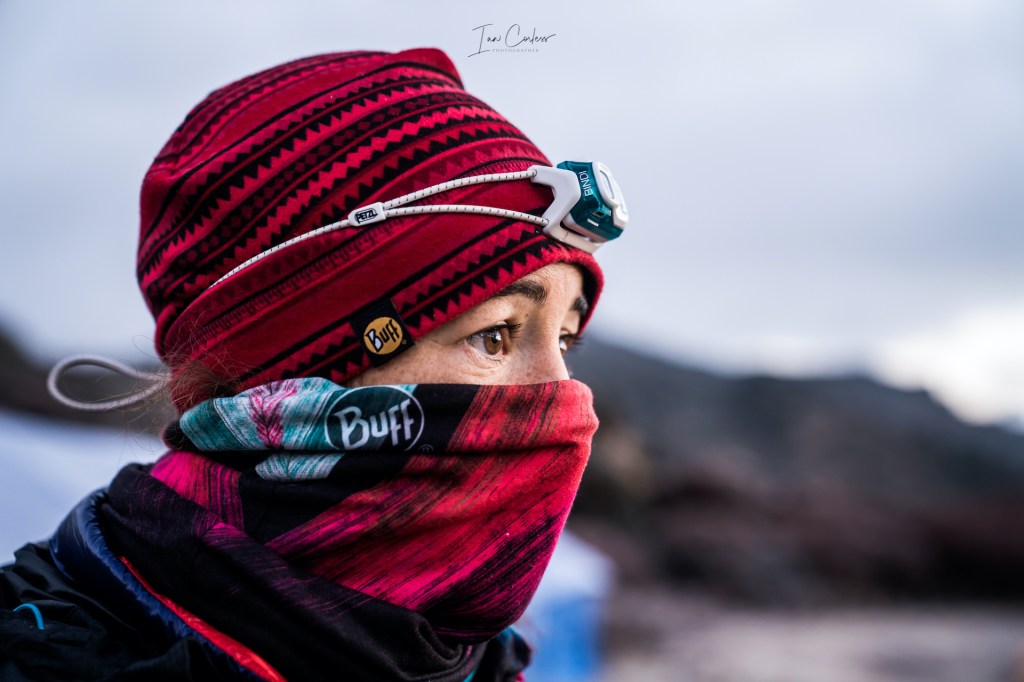
Neck: In colder temperatures I like to have a Buff/ wrap around my neck. This is especially useful as the temperature drops as you can pull the item over your mouth and nose. They can also be used as a hat if required.

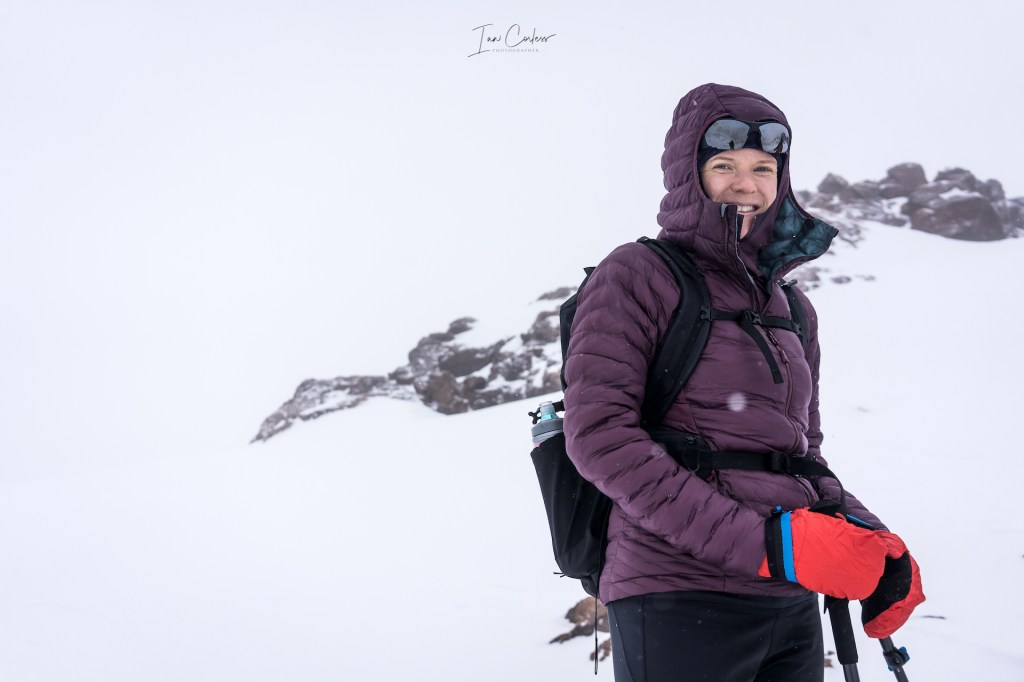
Hat, glasses, buff and layers provide great protection.

Body: A simple and extremely light windproof is great for adding and removing to regulate temperature. In colder conditions, the need to add insulation will be required and as mentioned, this can be down or synthetic. Ultimately, this layer, especially if still moving fast does not need to be too bulky or too warm. A Rab Kaon is a current favourite which has the best of both worlds by using treated down in a small and lightweight package. Rain, wet conditions and strong wind can make any trip miserable, so, a good and lightweight jacket with taped seams is essential. The Stormshell by inov-8 is perfect. Top Tip: Consider the size of the waterproof jacket, sometimes going one size bigger is better to allow for insulation underneath.

Hands: I struggle with my hands and particularly with my fingers, so, I do not compromise. I wear Merino wool base layers and then Mitts over the top by inov-8. If I need the use of my fingers, I will use a Gore-Tex glove by Rab. Importantly I carry a spare set of Merino base layer gloves and even a pair of more substantial mitts if conditions dictate. My hands are my weakness!

Legs: Winter run tights such as the inov-8 Winter Tight are ideal in all conditions and they are my ‘go-to’ for all runs. In rain I will use just the run tight. However, if the temperature drops to zero or below and the wind gets up, the need to add another layer becomes important and I use the Trailpant by inov-8 over the top.

Feet: Merino socks are essential as they work extremely well when wet. I often use an Injini 5-finger Merino as a base layer and then a Smartwool Merino sock over the top. On occasion I have used Neoprene socks as an extra warm layer.

Shoes: As discussed above but if going to extreme conditions and climbing I use La Sportiva boots, the G5 is perfect for snow conditions with crampons. Also consider that maybe you need snowshoes?

AT THE END OF THE DAY

The end of a long day at Tengboche, Nepal.

You have finished fast packing for the day, you are warm, and the priority is pitching the tent. Before you do that, make sure you:

Add an insulated layer.

Add a windproof.

Wear a hat.

Put on gloves.

Once you have done the above, pitch the tent and get inside.

Priority is to remove layer and importantly remove base layers if they are damp or wet. Putting on a dry base layer is essential to keep warm

Replace run tights with Merino base layer tights.

Remove socks and put on dry socks.

Now add the insulated layers such as jacket, hat and gloves. If extremely cold, get inside your sleeping bag and retain the heat you already have.

Depending on the conditions and the environment, you may very well have additional warm layers that were not mentioned above. Three essentials for me in extreme conditions are:

Warmer down jacket

Down trousers.

Down/ Primaloft socks.

The above 3 items can pack small and the warmth to weight ratio can make a huge difference. Trekking in Nepal or a similar place in winter and they are essential items.

Hut/tent slippers are a great addition for warm feet and allow you to get out of run shoes/ boots. They are light and can roll up. They fall in the luxury category but if you have space and don´t mind a little extra weight, they can be very worthwhile.

Be specific with the choice of insulated layer. There are many options available that balance weight/ warmth delicately.

SLEEPING

First and foremost, make sure you are warm when going to sleep. If not, you will waste energy trying to get warm. If conditions allow, don’t hesitate to do some press ups, jog on the spot, do star jumps and so on before getting in a sleeping bag.

As a start point, I will wear:

Beanie.

Buff.

Long sleeve Merino base layer top.

Long leg Merino tights.

Merino socks.

Merino liner gloves.

The above provides me with a starting point. Of course, if conditions allow, I can remove some of the items above to regulate temperature.

If it is cold, I will wear a down jacket.

Extremely cold and I will wear my down pants and socks.

It all goes back to layering, multi-purpose and why I initially said that a lighter and less warm sleeping bag can often work providing you have the options to add warmth.

A good night’s sleep is essential.

Top Tips: Put clothes inside the sleeping bag to stop them getting cold and damp. Put all batteries/ phone etc inside the sleeping bag, they will last longer. Need a heat boost? Boil some water, add it to a very secure water bottle and put inside sleeping bag – the ultimate hot-water bottle! Have a bottle for taking a pee in or a FUD if you are a woman. Getting out of a tent in the middle of the night in wind, rain and/ or snow is not a good idea.

TOP TIPS FOR THE WINTER

Climbing Slogen in Norway. We pitched our tent in the valley and travelled light to the summit.

Prepare and plan a trip meticulously understanding the weather conditions you will encounter.

Have the correct equipment for the trip.

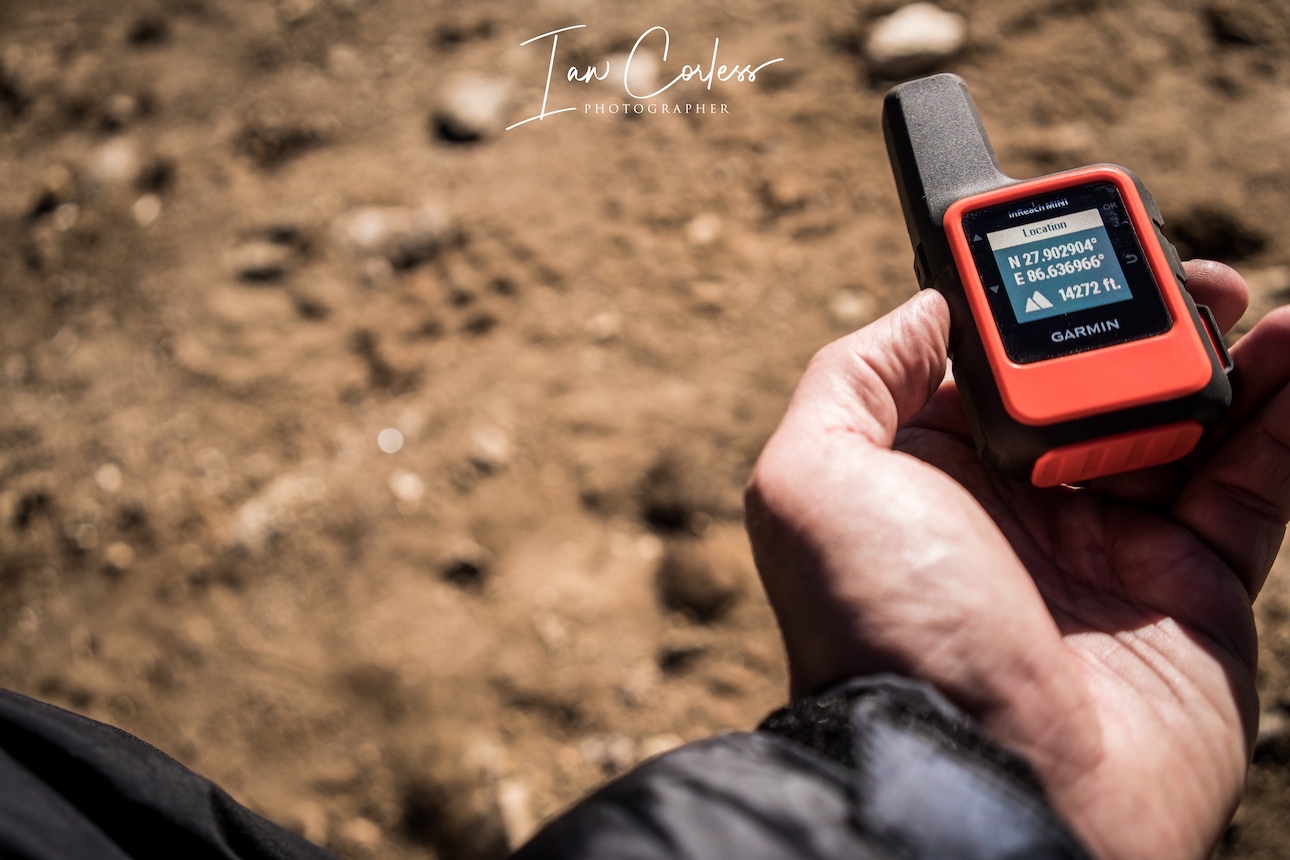
Make sure you have a phone, the ability to charge and re-charge it and have a tracking device such as a Garmin InReach.

Tent must be durable and correct for the conditions.

A tent can be made warmer by reducing ambient space – use packs etc around you and don’t be afraid to ‘spoon’ a tent-mate.

Prepare ground for camping, particularly important in snow/ ice conditions. If possible, clear snow to reveal the ground underneath.

Use a mat as insulation between you and the ground.

Layer and regulate temperature.

Add hot water to a drink bottle for the perfect sleeping bag warmer.

Put clothes inside sleeping bag.

Have ear plugs and blindfold.

Eat and drink warm food and snacking in the middle of the night is a great idea.

Have a pee bottle or suitable device if a woman. Holding a pee in is not a good idea as this will waste energy and heat,

Insulated bottles are essential to stop water freezing. Turn bottle upside down.

Poles are great in the mountains.

Use poles when conditions dictate.

Use dry bags to keep all clothing dry.

Have plastic zip-lock bags for emergencies.

Make sure you have a first aid kit.

Zip ties, Gorilla tape and a small tube of super glue can go a long way for ‘on-the-go’ repairs.

Carry a multi-tool knife.

Use a long-handled spoon for dehydrated meals.

Remember it gets cold at night.

Eye protection is crucial.

Take a pillow.

Decide on the correct fuel for the stove. Subzero, go with liquid fuel.

Melt snow for water.

Carry a water filtration system.

Have a method for removing toilet paper and waste.

Have wet wipes or similar.

Sunscreen in snow is essential along with lip balm.

If possible and allowed, make a fire.

Camp fires are great as long as it is safe and friendly to the location/ environment.

If possible and allowed, make a fire.

Take insoles out of shoes and put inside sleeping (providing they are not wet)

A second stove option and backup may be worthwhile. If using gas canister, the MSR pocket rocket burner is super small and light.

Ventilate your tent.

Keep hydrated.

Protect extremities. Hands and feet. Consider hut/tent slippers.

Headtorch and spare batteries.

Headtorch is an essential item.

LUXURIES

Depending on the length of the trip, luxuries are best kept at a minimum. However, on a lengthy trip in Nepal I did take an iPad mini as it allowed me to write, provided the option for movies and music and I could re-charge in tea houses. If I was self-sufficient camping, I would leave this at home.

Take a phone. Maybe use an old-style phone and not the latest smartphone. The latter is power hungry.

iPods and fancy earphones are great, but you cannot beat a pair of simple wired earphones as they do not need re-charging.

Take a notebook and pen (if not taking an iPad mini).

A battery for re-charging.

Remember, you need to carry any luxury so be ruthless.

AVOID

Hypothermia 

Frostbite

Embrace winter and the challenges it brings.

Please support this website. I believe everyone deserves to read quality, independent and factual articles – that’s why this website is open to all. Free press has never been so vital. I hope I can keep providing independent articles with your help. Any contribution, however big or small, is so valuable to help finance regular content. Please support me on Patreon HERE.

Follow on:

Instagram – @iancorlessphotography

Twitter – @talkultra

facebook.com/iancorlessphotography

Web – www.iancorless.com

Web – www.iancorlessphotography.com

Image sales –www.iancorless.photoshelter.com

Episode 196 – Kristian Morgan and Jon Albon

Episode 196 – Kristian Morgan talks about setting an FKT on the South West Coast Path and multiple World Champion, Jon Albon, talks about ‘Finding My Feet’ for Endurancesports.tv.

*****

Talk Ultra is now on Tunein – just another way to make the show available for those who prefer not to use iTunes – HERE  You can download the Tunein APP HERE

Talk Ultra needs your help! 
We have set up a Patreon page and we are offering some great benefits for Patrons… you can even join us on the show! This is the easiest way to support Talk Ultra and help us continue to create! 
Many thanks to our Patrons who have helped via PATREON

Donate HERE

****

NEWS
FKT’s posted on last show:
* Franco Colle new FKT on Monte Rosa from Gressoney* Nadir Maguet – Gran Paradiso FKT 2:02:32* Erik Clavery GR10 9 days 9 hours and a few minutes* Davide Magnini Ortles FKT 2:18:15* Kim Collison 24h Lakes achieves 78 Peaks* Sabrina Verjeee Wainwrights (wishes not to claim)* Dylan Bowman Loowit Trail 5:11:49* Josh Pulattie Oregon Coast Trail 12 days 10 hours 25 min* Candice Burt Tahoe Rim Trail 2 days 12 hours 47 min* John Kelly Pennine Way 2 days 16 hours 40 min* Sarah Hansel (57:43) & Joey Campanelli (41:00) for Nolans 14* Tom Hollins Dales Mountain 30 (130 miles, 30 summits) 41 hrsAdam Kimble new FKT on Tahoe Rim Trail, USADamian Hall new FKT for the Pennine Way, UKAdam Jacobs new FKT for Hertfordshire Way, UKCarla Molinaro new FKT for the JOGLE, UKBeth Pascall new FKT for the Bob Graham Round, UK and set 5th fastest time.Rhys Jenkins sets new FKT on the Wales Coastal Path #fkt! 870 miles. Time TBC but 20 days 9hrs 35 mins – 2hr 20mins off the record. Lindsey Ulrich new FKT Pacific Crest TrailMarilyne Marchand-Gouin new FKT Clorado TrailMikaela Osler new FKT Colorado TrailWouter Berghuijs new FKT Via Alpina SwitzerlandChristof Teuscher new FKT Eagles 33
Pau Capell runs UTMB in 21:17Finlay Wild runs the Ramsey Round 14:42Carol Morgan 24hr Lakeland record with 65 topsWonderland Trail in the USA, Kaytlyn Gerbin set a new female FKT. Dylan Bowman (16:58) set the FKT only to have it broken 1-week later by Tyler Green, now 16:40:55Kirsty Hewitson Steve Parr Round 62 fells 117mDiego Pasoz on the Via Alpina new FKTDan Lawson JOGLE 9d 21h 14mRyan Sandes 13 Peaks Challenge 13:41:10Donnie Campbell continues his Munro challengeKilian does a VK in less than 30 min and then follows up with 10km on the road in sub 30 min

NEW UPDATES: Check FKT website for latest updates https://fastestknowntime.com/

ARTICLES:

Embrace Winter HERE

*****

INTERVIEW : KRISTIAN MORGAN

*****

INTERVIEW : JON ALBON

endurancesports.tv

With the NEW documentary featuring Jon Albon (Finding my Feet) live on www.endurancesports.tv as of Friday 2nd October.

We’ve created a special code so that our listeners can access the documentary, and everything else on the channel using a limited edition 50% offer lasting 6 months, click this link http://bit.ly/50offReward and enter the code “50_Reward”.

*****

Please support Talk Ultra by becoming a Patron at www.patreon.com/talkultra and THANKS to all our Patrons who support us. Rand Haley and Simon Darmody get a mention on the show here for ‘Becoming 100k Runners’ with a high-tier Patronage. 

*****

Spotify HERE

 ITunes HERE 

Stitcher 

You can listen on iOS HERE

Android HERE or via a web player HERE 

Libsyn – HERE 

Tunein – HERE 

Website – talkultra.com

Embrace Winter for New Adventures

The passing of September and the arrival of October can signify dread and a sense of despair in many as daylight disappears and the weather changes. However, one of the secrets of ‘surviving’ this new season is to embrace it. Don’t look at the negatives, on the contrary, the perceived negatives are actually positives. Seasons exist for a reason.

Lethargy, low mood and the perceived feel to hibernate are all characteristics we feel during the winter months and first off, don’t fight it, accept that winter brings an opportunity to recharge, relax, read a book, catch up on some movies, light a fire, get a blanket and yes curl up on the sofa and relax. There is no harm or guilt in this.

SAD (Seasonal Effective Disorder) is something we all can feel and yes, some feel it considerably more than others, particularly if Serotonin is reduced and this is often treated with drugs. But light, or the lack of it, is a great contributor. Top tip – Look at changing the bulbs on your lights to ‘daylight’ balanced and when required, adjust brightness throughout the day to help simulate the natural passing of light. It’s a great and easy way to help simulate the variable light intensity changes in one normal day.

Mindset is a key factor to a successful winter and once you get the mind tuned, you will soon appreciate and embrace the possibilities that the winter season can bring, especially as a runner or someone who enjoys outdoor life and activity.

As in all things, we are individuals and as such, we all treat circumstances and changes in different ways. I personally see winter as an opportunity to do things I could not do in spring and summer. I see the challenges that winter will bring as a test, both physical and mental and I look upon it as an opportunity to learn and adjust. Resources and circumstances do go a long way in making my ability to adapt successful, so, to start off, look at these aspects and put yourself in a good place before the cold, wet and dark hits.

In a discussion with a friend over a glass of wine, I was surprised to hear our discussion begin to deteriorate…

“I just hate this time of year. The daylight is leaving us earlier and earlier each day, the light is already arriving so late in the morning and I can feel the damp starting to creep into my body. It will be only a matter of weeks before I am in perpetual cold and dark, I cannot wait for spring!”

It is easy to see from the above quote that before winter has begun, my friend is defeated. I smiled and laughed with him and turned the conversation around.

“Yes, the darkness is coming as is the cold, the wet, the snow and the ice,” I replied. “But what a remarkable opportunity this brings. Just think about it. Cozy nights at home with candles and a movie. Adventures in the snow. Running with a head torch. Learning a new skill. Reading and yes, I could go on and on. Winter for me is just a wonderful opportunity and I cannot wait for it to begin.”

I already felt like a winner as mentally I was prepared and excited for the opportunity, whereas my friend, was already starting the hibernation process.

EMBRACE THE WINTER

I strongly believe that embracing winter and making the most of the season starts with mindset. With a good mindset as outlined above, you will already be in a great place to start.

Marino Giacometti, founder of skyrunning also made the summit on race day – ‘for fun!’

As runner’s and outdoor enthusiasts, we are all at different abilities and yes, we all have different reasons why we do what we do. A great example being an elite runner may well look at winter as an opportunity to address weaknesses and maybe spend more time in a gym working on strength and core.

Monte Rosa Skymarathon

A running enthusiast may well just want to tick over, keep fit and maintain a healthy weight during winter months. And then there is the outdoor enthusiast who may well accept that running is something that will go on a back burner for the coming months and accept that walking, indoor cycling, skiing, gym work and so on is the way forward. Whatever group you fall in, take a couple of hours with a pen and paper and self asses how the last year has been and what you want to achieve the following year, this will help provide some specific goals over the winter to keep focused. This planning and assessment can be as simple as complicated as you wish.

As an example, mine is to embrace the season and the weather and to seize every opportunity. I will hone my head torch running. I will practice my ice and snow running. I will experience my first snow shoeing and I look forward to multi-day snow adventures that will carry me from one point to another in a self-sufficient way. But I also want to write more. I want to read a couple of books that I have never found the time for and I also want to embrace the downtime to rest and recover. My connection with nature and breaking from the digital world is integral to a healthy existence and that cannot stop just because the season has changed.

CLOTHING

We have all heard it before, “There is no such thing as bad weather, just bad clothing.” It’s true I am afraid. Clothing is one of the key essentials that makes any winter adventure not only bearable and enjoyable. As outdoor people, we have never been as lucky. Technology in apparel has now progressed to a level that we can be warm and dry in super-light products. The downside of course is cost and yes, gearing up for winter can be expensive.

Layering is key with apparel, starting with warm layers against the skin, insulating layers on top and then waterproof and windproof layers as the final touch that will protect from the elements. Merino is great as a base layer and I have a long sleeve top and legs as a starting point. Now of course, I may or may not use them as this depends on the outdoor exercise I am doing. As an example, I would wear the top if running but not the legs. A mid-layer is more often than not either Primaloft, down or synthetic. Each has its place but if you could only choose one, Primaloft (or similar) would be the most versatile due to its ability to retain warmth when wet and still be lightweight. The outer layer should be waterproof and windproof with taped seams and again, it is essential to have jacket and trousers.

The above looks at the core, but if you are like me, the extremities are my most vulnerable in winter and after getting frost nip both in my toes and fingers on the summit of Monte Rosa several years ago, I know need to ensure that I have multiple options for keeping my feet and hands warm. I use Merino base layer socks and gloves which are very thin. For my feet, I then add thicker Merino socks over and inn certain scenarios I have even used Gore-Tex or Neoprene over socks. For my hands, mitts always provide the most warmth and I will use them as first choice. If I need finger dexterity, I often purchase gloves several sizes too big that will allow for multiple layers to retain warmth.

A hat, buff and glasses add the finishing touches. A good hat is one of the easiest ways to retain heat inside the body. A Buff is perfect for around the neck, pulled over one’s nose and mouth to keep out cold air or you can use as a hat. Glasses are an essential to keep out the elements from my eyes and particularly essential if doing any outdoor activity in snow.

Finally, footwear is an absolutely key element to make any outdoor activity successful. There is no one-stop solution here and as a runner, your everyday trail shoes may be ideal for a bulk of your runs, however, specific conditions require specific shoes.

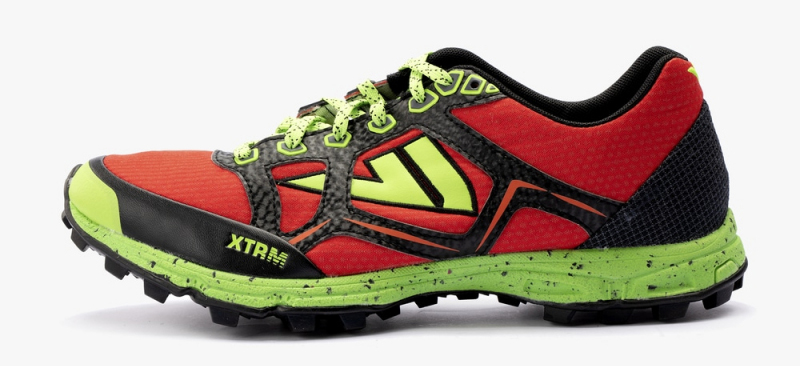
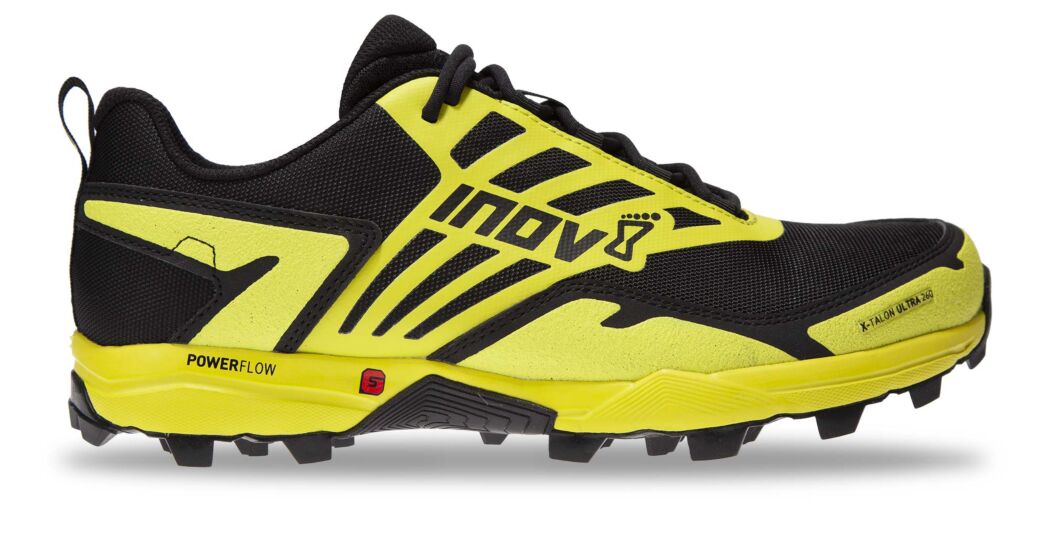
Mud/ Wet – You need an aggressive outsole that will grip and gain traction not only of sloppy wet mud but also on tree routes, rocks, gravel and a multitude of other surfaces. Top recommendations are VJ Sport and inov-8 who have been producing shoes to handle the elements for years. Personal favorites are the XTRM (here) and X-Talon(here.)

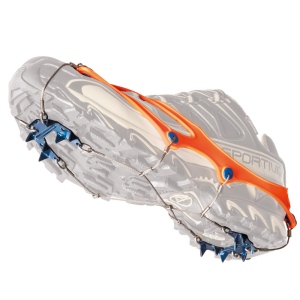
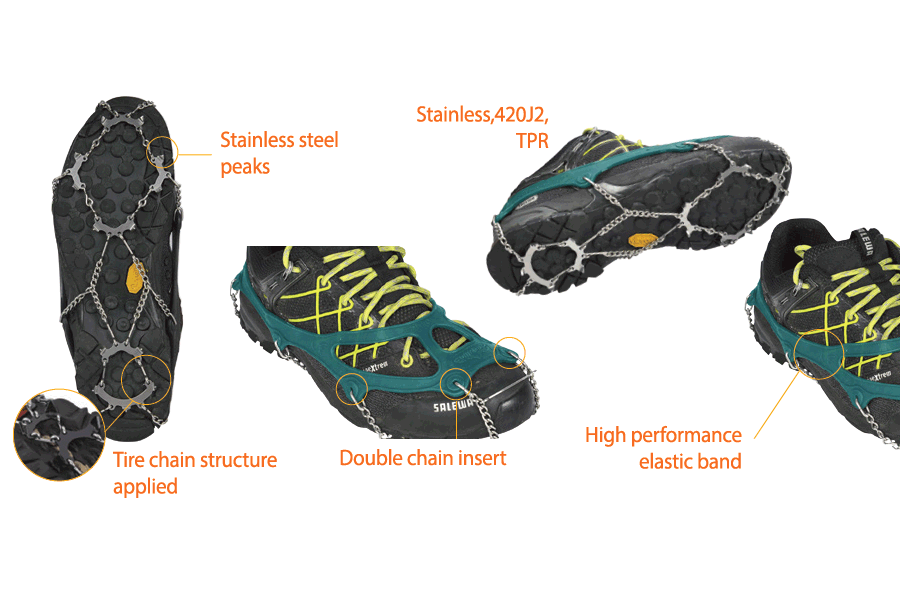
Snow/ Ice – In soft snow, the shoes that you use for mud/wet will usually work fine providing adequate grip. However, ice brings new challenges and many runner’s avoid ice at all costs. However, products exist that allow for running in such conditions. Firstly, you can micro-crampons (Snowline or Nortec as examples) that simply adapt any running shoe for ice.

I personally prefer a specific shoe, such as the VJ Sport Xante (here) which as all the attributes of my favorite trail shoes and the added grip from 20 studs. Or the Arctic Talon (here) by inov-8.

Xante

Arctic Talon

As a final note on footwear, I use boots and more substantial crampons when venturing in to more alpine and challenging terrain. Read about a trip to the Atlas Mountains here. There is no one answer here but if moving fast and light, the new inov-8 Rocltite Pro G 400 (here) is a great cross over and then I use two specific mountain boots, La Sportiva G5 (here) or the Trango Extreme (here.)

There is no one solution here and having the options to adjust clothing based on weather conditions is key.

Top Tips:

  • Carry a pack that will allow you to carry options of clothing. For example, it may well be dry when you leave but rain could come at any time, make sure you have waterproof layers with you.
  • Take off and add clothing as you exercise. When it’s cold, we often start with many layers as the first 15 min can feel uncomfortable. However, our core soon warms up. Take the layers off early to avoid sweating. Sweating is not your friend in cold climates. Be prepared to add and take off as required. One of the many reasons many people do not, is because it can disrupt the flow of exercise, however, a little time stopping pays dividends in the long term.
  • Avoid getting base or mid layers wet.
  • Carry an extra base layer.
  • Protect extremities – hands, feet, nose, ears and lips.
  • Protect skin with sun block as and when required and post-exercise use a moisturizer – winter is hard on exposed skin.
  • Start easy and build into any outdoor activity allowing for a gradual warm up.
  • Have appropriate footwear.
  • Don’t forget to drink.
  • Take snacks/ food and even a flask or consider the option to obtain hot drinks.

SAFETY

Even at the most basic level, winter brings extra challenges and risk. A simple road run has increased danger due to increased challenges not only for you as a runner, but for those who are sharing the outdoors with you – drivers! Reduced visibility, challenging conditions under foot and on the road can make that simple road run feel like an assault course, so, accept that sometimes staying indoors and or going to the gym is a better option. But we don’t want to be forced to stay indoors and why should we? If you have the correct apparel and footwear, all is good, yes? Well, nearly… Running on the road and I would most definitely consider adding the following:

  • Wear bright clothes or wear a reflective vest such as the Ultra Performance (here) which is minimal and light.
  • Add a flashing light to your arm and ankle. Example here.
  • Use a head torch.
  • Take a phone.

Moving from road to trail and the risk from traffic is reduced greatly especially if one can start immediately on trail with no road running involved. Therefore, the need to wear reflective clothing can be reduced. But the risk of falling is greatly reduced and depending on where you are, that risk can be potentially life threatening. So, adjust safety measures based on:

  • When you are running.
  • Where you are running.
  • The duration of the run.
  • If running alone.

Running for 1-hour on a local trail is very different than a multi-hour adventure. I personally have a standard kit list and I take the basic on every run. It’s an overkill for the 1-hour runs and for the longer sessions, I add to it as required and dictated to by location and conditions.

  • Spare Merino base layer.
  • Spare gloves.
  • Lightweight waterproof jacket.
  • Lightweight waterproof pants.
  • Space blanket.
  • Head torch.
  • Mobile phone.
  • First aid.
  • 500ml water.
  • Snack

The above, is my absolute basic kit that will go in a lightweight pack.

I then add equipment based on:

  • What am I doing?
  • Where am I doing it?
  • When I am doing it?
  • What are the options exist to cut short my adventure?
  • How remote will I be?
  • What are the risks involved?
  • What weather can I expect?
  • What is the worst-case scenario?

The above is a great start point. Even a local run has great risk if one is alone. Imagine running in the forest with snow on the ground, the temperature is just below zero and you are at least 30-minutes from anyone else. If you hit the deck, sprain an ankle, break a bone or whatever, you are suddenly stationary in subzero temperature. This is high risk.

Adapting to the environment, conditions and challenges is not something to be feared. It is actually fun! I go back to the mindset approach at the beginning, I see this as an opportunity, an experience to learn and a great potential to be taken out of my comfort zone.

What equipment/ advice can make a run/ adventure safer and address the list of questions above?

  • If possible, share any trip with another person. It’s more social and you have a backup.
  • Check weather conditions.
  • Tell a friend/ family member where you are going and when you will be back.
  • Have a phone and if necessary, an additional charger. It’s worth considering purchasing a phone that is not a smartphone – battery life is usually amazing.
  • Carry a tracker such as Garmin InReach or Spot.
  • Think layers and have base layer, warm layers, waterproof layers, hat, gloves and buff. On a personal note, I take spare gloves, socks and a base layer should I get wet and need the comfort and warmth of dry layers.
  • Know where you are going and have a map and compass. A GPX file is also a great option for watch/ smartphone.

Specific equipment:

  • Carry micro-crampons if you think snow/ ice is high risk.
  • Carry a bivvy bag which can be a life saver if stuck in a remote location with an inability to move.
  • Goggles are better than glasses if you are in a blizzard or strong winds.
  • Carry an ice axe if venturing anywhere with winter conditions.
  • Hand spikes for ice (more details below).
  • Snowshoes (more details below).

In many scenarios, common sense comes in to play and quite simply, a little extra weight and safety is far better than the alternative. Accept in winter that you will move slower and in a different way.

WHAT OPTIONS EXIST IN WINTER

This question can be asked in two ways, firstly, one’s head can be lowered, shoulders dropped, hands below the waste, a look of desperation on the face and, “What options exist in winter…?” The person asking this question has already decided that the answer is none!

For me, the way to ask this question is standing upright, huge smile on my face and the question, “What options exist in winter?” Already has me ready and primed to list a plethora of activities to keep even the most hardened sport enthusiast occupied for quite some time.

  • Night running.
  • Snow running.
  • Ice running.
  • Road running.
  • Climbing
  • Ice climbing.
  • Hiking
  • Fastpacking
  • Snow shoeing.
  • Learn something new.
  • Spend time with family and friends.

And the list goes on! Location, finances and available time all have a bearing on what is and what is not possible. One thing is for sure, possibilities are endless.

Night Running.

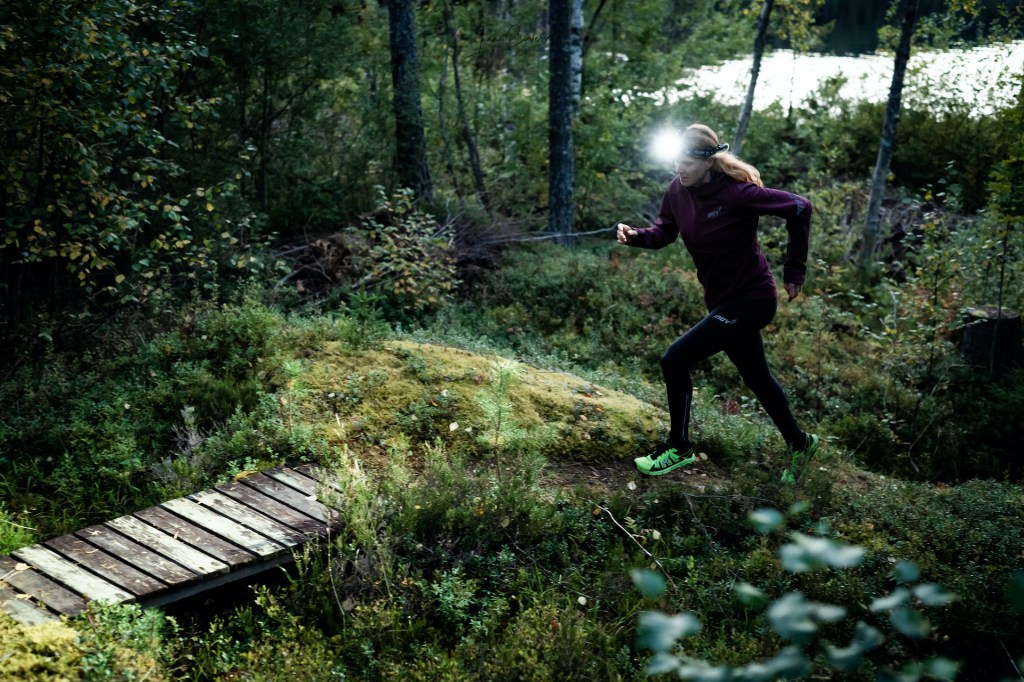
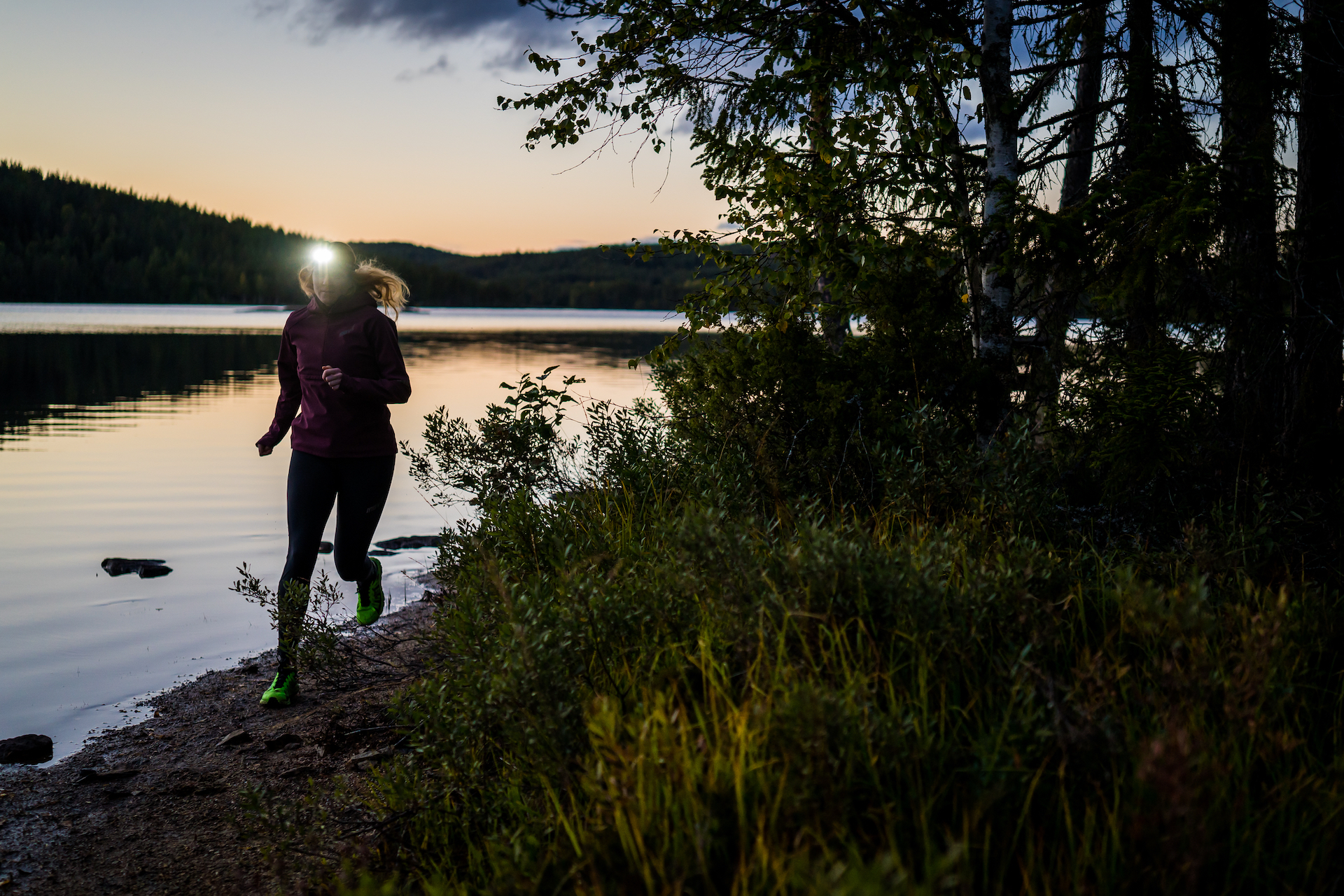
Quite simply, you need your run apparel and appropriate equipment as listed above. Importantly you need a head torch. Not all head torches are the same and an investment in the right kit early on saves money later. If you are running in the city with a great deal of ambient light and just the odd foray on trail, you may well get away with a budget torch and something around 200 lumens would work. However, if you are heading into the pitch black, running in forest, venturing into the mountains and pushing the darkness envelope, you are going to need a specific tool for the job. As an example, Norwegian lighting company Moonlight (here) provide head torches from 700 to 7000 lumens. Be specific on your needs and requirements and importantly consider autonomy, beam direction and spread, options for spare batteries and the option to keep the battery in apparel while still using the head torch, especially important in very cold environment when warmth will make the battery last longer.

Snow Running.

Layer up so that you have the flexibility to reduce heat and get warm as required. In many scenarios, particularly soft snow, a good aggressive trail shoe will work. However, consider the risk of ice so carry micro spikes. If in the mountains, knowledge and experience of snow conditions would be advisable. Be prepared with additional equipment such as poles and ice axe. Needless to say, gloves are really important.

Ice Running.

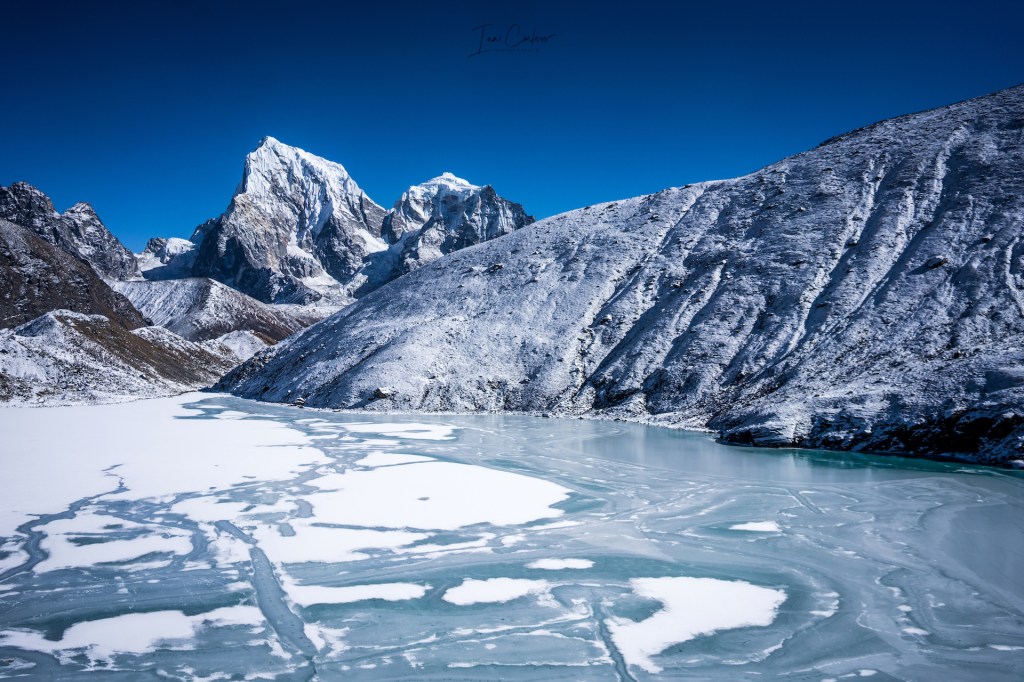
Use micro spikes for specific shoes as mentioned previously to ensure that you have grip and traction. In some places, Norway and Canada a good example, summer lakes freeze over and they become an incredible playground. Caution, safety and experience is required and if you have never run this way before, take advice from those that have. Importantly run with hand spikes (pictured below) available at all times should a disaster happen – these help you get out of a situation.

  • Measure the ice.
  • What is a safe thickness? 4 inches or more is ideal.
  • Check the ice colour – clear blue or green is good.
  • Fresh ice is best.
  • Know rescue techniques.

Climbing.

Mountains in winter offer an incredible playground and if you are new or inexperienced, the first option would be to sign up for a weekend trip with experienced professionals. The equipment requirements, techniques and safety measures vary considerably.

Ice Climbing.

No need to venture outside. In 2019 as an example, I started on a series of indoor ice climbing lessons which has now set me up for experiencing ice climbing outdoors. There is obviously a need for specific equipment: helmet, glasses, harness, ice axes, boots and crampons. However, most places, indoor or outdoor, offer the option to hire equipment as part of the lessons.

Snow Shoeing.

Fimbulvetr Hikr-X

A great winter exercise that provides an alternative to skiing or snowboarding that is an extension of running. Snowshoes basically allow you to float and not sink in the snow. But there is a difference to snow hiking and snow running, both in the shoe used and the type of snow. Run snowshoes are smaller, allow for a more natural gait and require the snow to be har packed. Whereas in soft snow, you need a much larger snowshoe to stop you sinking in the ground. Either option provides a great challenge and workout. Of course, races exist that require snow running both with and without snowshoes, so, if you are signed up or plan to race like this in the future, seize the opportunity. Abelone Lyng (here), winner of the Ice Ultra does winter snow shoeing trips in Norway.

Fast Packing.

Peak Design Field Pouch attached to a Montane Pack when Fastpacking in Nepal.

Snow, ice and cold weather doesn’t mean that multi-day adventures need to stop, on the contrary. Find a route, plan accordingly, have the correct equipment and off you go. These adventures can involve winter camping (you need a 4-season tent, appropriate matt and sleeping bag) or you can run/ hike form hut-to-hut or hotel-to-hotel. You are only limited by your imagination. Accept that you will move slower. Nepal is a magical playground for winter adventures.

Hiking.

Wrap up and include the family. Sport and our pursuit of it can often be selfish, not purposely, but we can get engrossed in challenge and adventure and often exclude the ones we love. Share the journey.

Training Camp.

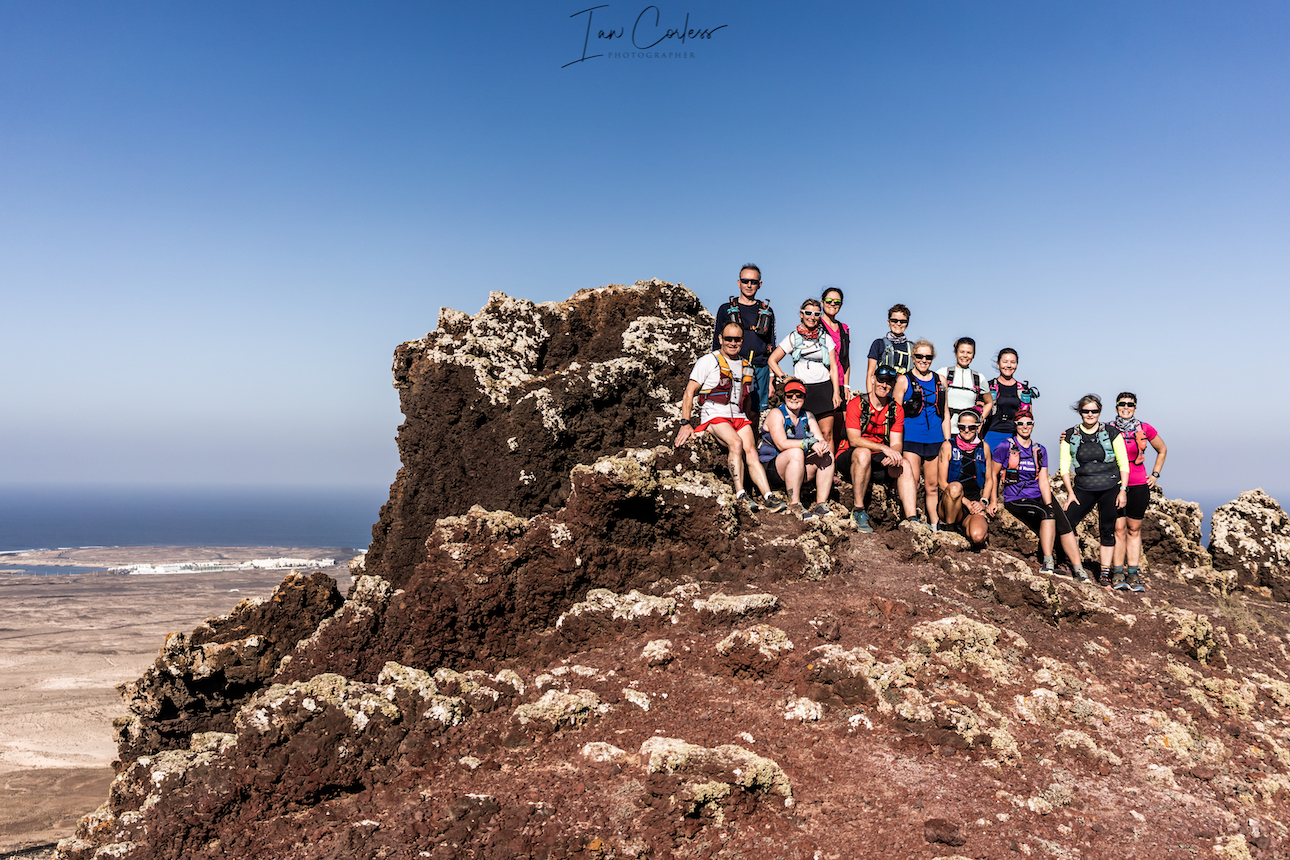
Consider a training camp, maybe this could be something in warm weather to break up the winter months. I have been organizing a warm weather camp every January in Lanzarote for over 10-years, info here.

Other options:

  • Sign up for a challenge.
  • Make it social.
  • Add variety.
  • Train in the home.
  • Rest.
  • Learn something new.
  • Enroll in a class.

CONCLUSION

Ultimately, don’t letter winter get you in a spiral of mood swings, depression and locked indoors. It’s all about the mind and understanding that the variety winter brings is actually far more exciting and challenging than good weather and dry predictable trails.

Seize the conditions. Plan accordingly. Have the correct equipment. Test yourself with something new and trust me, by the time Spring comes around you may well be a little disappointed.

Please support this website. I believe everyone deserves to read quality, independent and factual articles – that’s why this website is open to all. Free press has never been so vital. I hope I can keep providing independent articles with your help. Any contribution, however big or small, is so valuable to help finance regular content. Please support me on Patreon HERE.

Follow on:

Instagram – @iancorlessphotography

Twitter – @talkultra

facebook.com/iancorlessphotography

Web – www.iancorless.com

Web – www.iancorlessphotography.com

Image sales –www.iancorless.photoshelter.com

Ultra-Trail® Snowdonia 2020 Preview

Coronavirus has pretty much wiped out the 2020 racing calendar, but in recent weeks, we have seen the emergence of some events, albeit in a new format with measures in place to help reduce the risk of infection.

Scandinavia has had multiple events, we have witnessed events in France, Switzerland and even the USA.

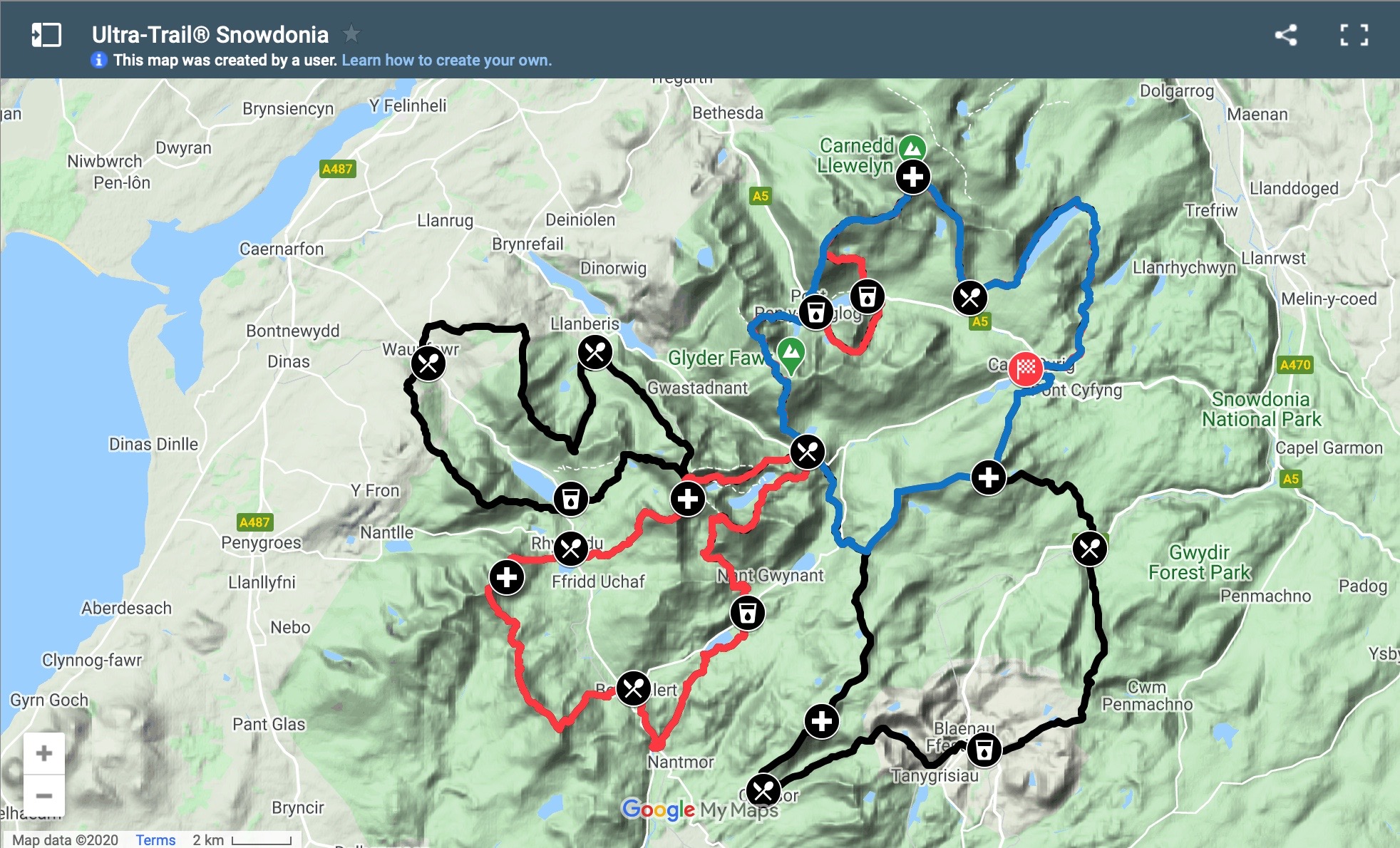
So, it’s a great relief to see the 2020 Ultra-Trail® Snowdonia (UTS) taking place with very strict protocols and an ‘invitation’ only 50km, 100km and 165km.

Michael Jones of Apex Running Co is a runner himself, so, he has understood the need and desire to race, but also abide by government guidelines and provide a safe race – a thankless task one may think!

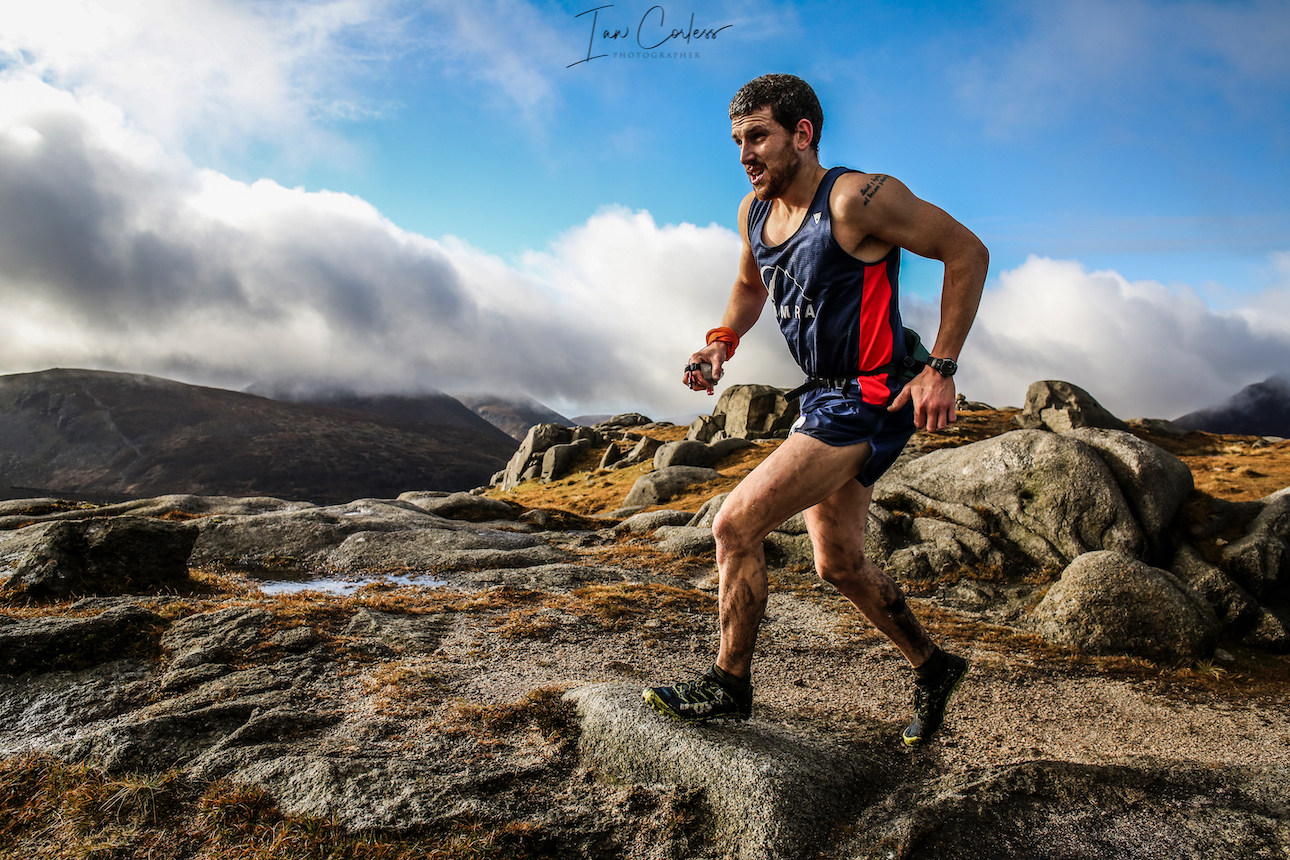
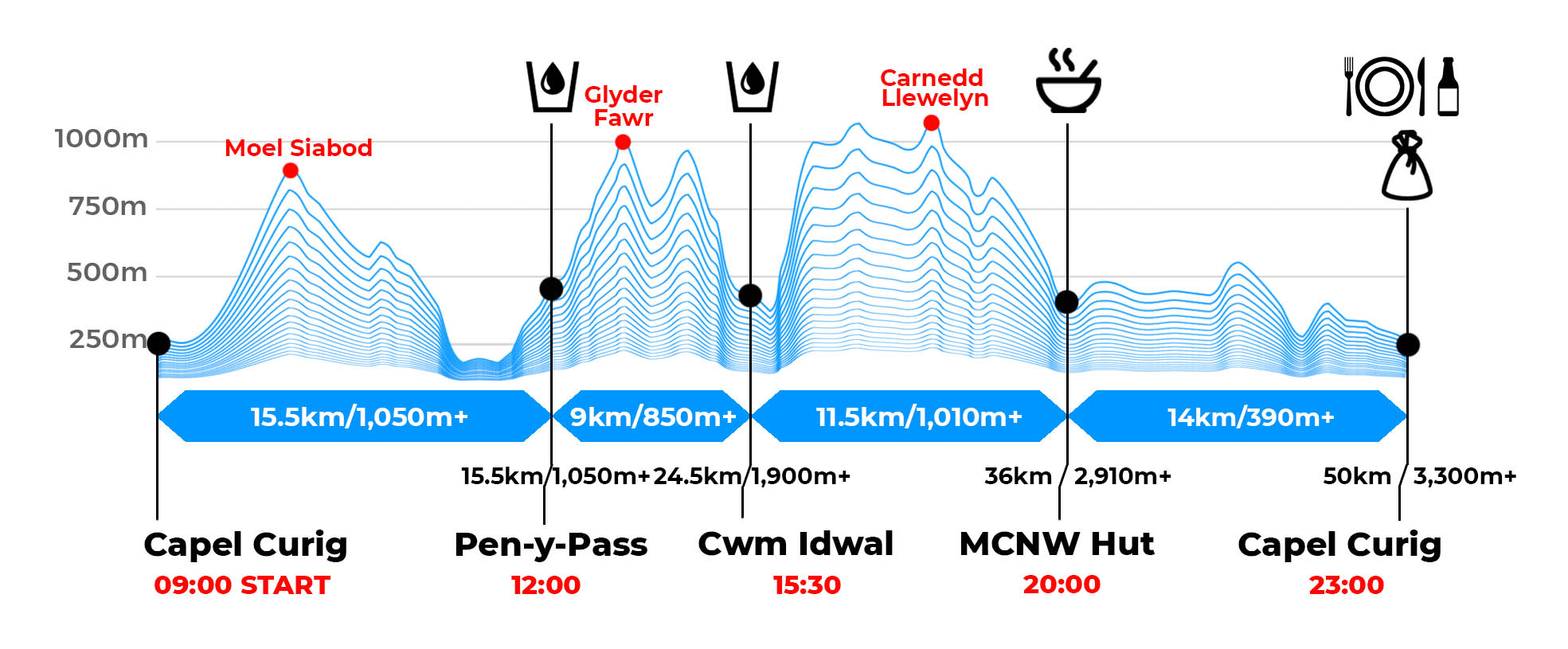
The 50km has a 14-hour cut-off, the 100km 33-hours and the 165km a whopping 50-hour limit. Needless to say, 3 very tough events in a tough and challenging part of the world.

Paul Tierney

The 165km event will see 10 women and 30-men toe the line with the Wainwrights record holder, Paul Tierney heading up the field. Most participants are UK based, but the event does have entries from Sweden, South Africa, Ireland, Poland, Spain, Philippines, France and Hungary.

The 100km event has 9 women listed, headed up by fell and mountain running legend Nicky Spinks. Harry Jones is the stand out name in the men’s field of 22-runners.

Georgia Tindley

The 50km event has a very interesting line-up with Georgia Tindley, Carla Molinaro and Kasia Osipowicz the leading names amongst a field of 14 women. Damian Hall fresh from setting a record on The Pennine Way heads up the men’s field of 22.

Kasia at Snowdon Skyline

UTS Facebook HERE

UTS Instagram HERE

UTS Twitter HERE

The events, are designed to bring Alpine style racing to the UK on a scale of the UTMB. Each of the three events are extremely challenging and bring 3300, 6700 and a whopping 10,000m+ of vertical gain for the respective 50/100 and 165km distances.

Originating in 2018, the 50 and 100-mile races were an instant success and with huge demanding, three races are now on offer providing a distance and challenge that all can undertake. But as Jones’ says, ‘Beautiful beyond belief. Savage beyond reason.’

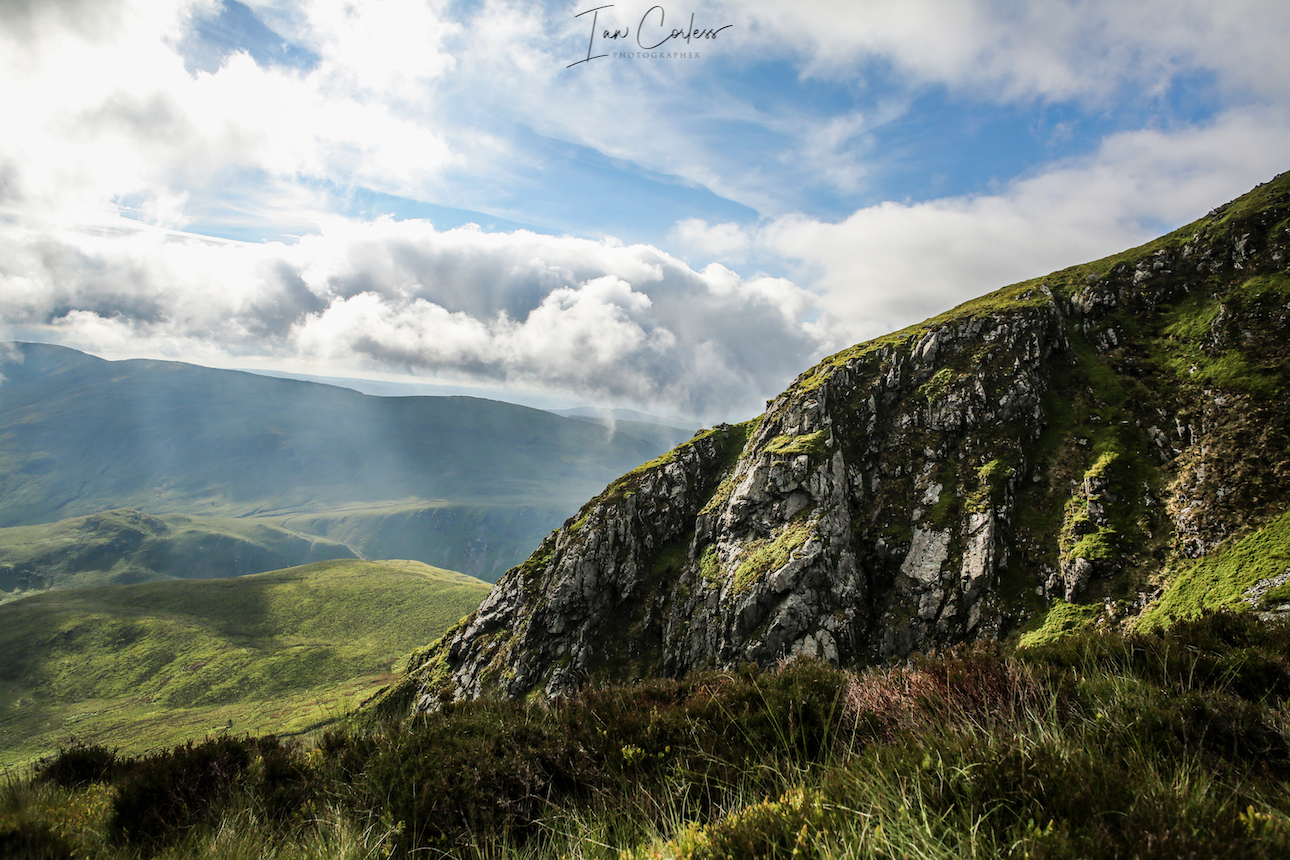
The UTS 165 is the stand-out and flagship event offering a stunningly brutal and beautiful tour of the Snowdonia National Park. Starting in Capel Curig, the route takes in the most notable peaks of north Wales.

UTS 100 has technical trails, epic views and is a highlight tour of north Wales.

Arguably, the UTS 50 is an entry level race but still requires respect for the challenges that Wales and its mountains can bring.

Route information is available here and relevant GPX downloads are available.

Race director, Michael Jones of Apex Running


Follow on:

Instagram – @iancorlessphotography

Twitter – @talkultra

facebook.com/iancorlessphotography

Web – www.iancorless.com

Web – www.iancorlessphotography.com

Image sales –www.iancorless.photoshelter.com

Exploring Norway – Møre og Romsdal

Norway has long been a desirable location for the mountain enthusiast. One only needs to add the word ‘Norway’ to a Google search engine and you will be rewarded with photos that make the jaw drop. 

At roughly 33% bigger than the UK and 1/3rd the size of USA, one begins to understand the scale of this Scandinavian country and its 5.3 million inhabitants.

Just think about it, Norway is 33% bigger than the UK, but the UK has 66.6 million inhabitants.

Needless to say, outside of Oslo (681,000), Bergen (271,000) and other key locations such as Trondheim and Stavanger, open space and amazing landscape is available for all to explore.

In a series of articles and posts, we intend to introduce you to the magic of Norway. 

Norway is the longest country in Norway and therefore, travelling anywhere is not a quick process. It has 60.000 miles of coastline, towering mountains and dramatic fjords. Remarkably it has 2-300 peaks over 2000m+, Galdhøpiggen the highest at 2469m closely followed by Glittertind at 2464m. There are over 1000 peaks over 1650m, so, if you love mountains, Norway should be at the top of the ‘to-do’ list!

We started with HARDANGER (HERE) and followed up with JOTUNHEIMEN (HERE).

In this article we explore Møre og Romsdal 

Image galleries HERE

The list will grow as we progress through Norway, but expect additional posts on: 

  • Stavanger
  • Senja
  • Tromso
  • Lofoten Islands
  • Lyngen
  • Svalbard

And more…

Møre og Romsdal 

 The name Møre og Romsdal was created in 1936. The first element refers to the districts of Nordmøre and Sunnmøre, and the last element refers to Romsdal. The three districts still have their own identities in many ways. Due to its difficult terrain, Møre og Romsdal has been very dependent on boat traffic, and its main car ferry company, MRF.

In terms of distance and travel, the entry to the Møre og Romsdal region is roughly 7.5-hours of driving from Oslo and 9-hours+ from Bergen. Møre og Romsdal is served by nine airports, of which only four airports have regular domestic flights. The largest airport in the county is Ålesund Airport, Vigra, which offers the only scheduled international routes from any airport in Møre og Romsdal.

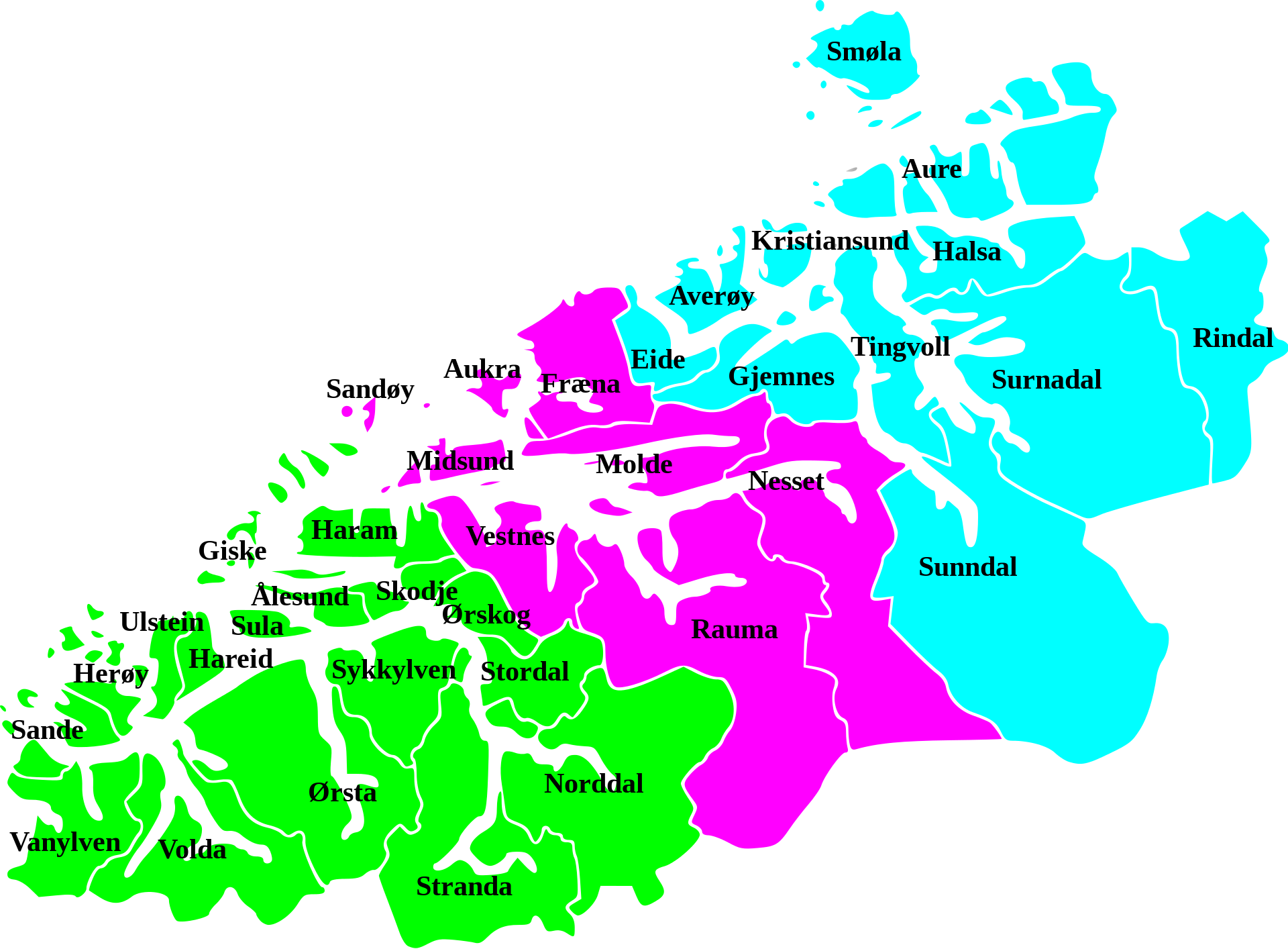
The area is vast with 26 municipalities. Travel around the area, at times, can be lengthy and time consuming and if travelling by car, the need to use ferries may be required. We will look at the following areas: 

Stranda

Stranda is a municipality in Møre og Romsdal county, Norway. It is part of the Sunnmøre region.

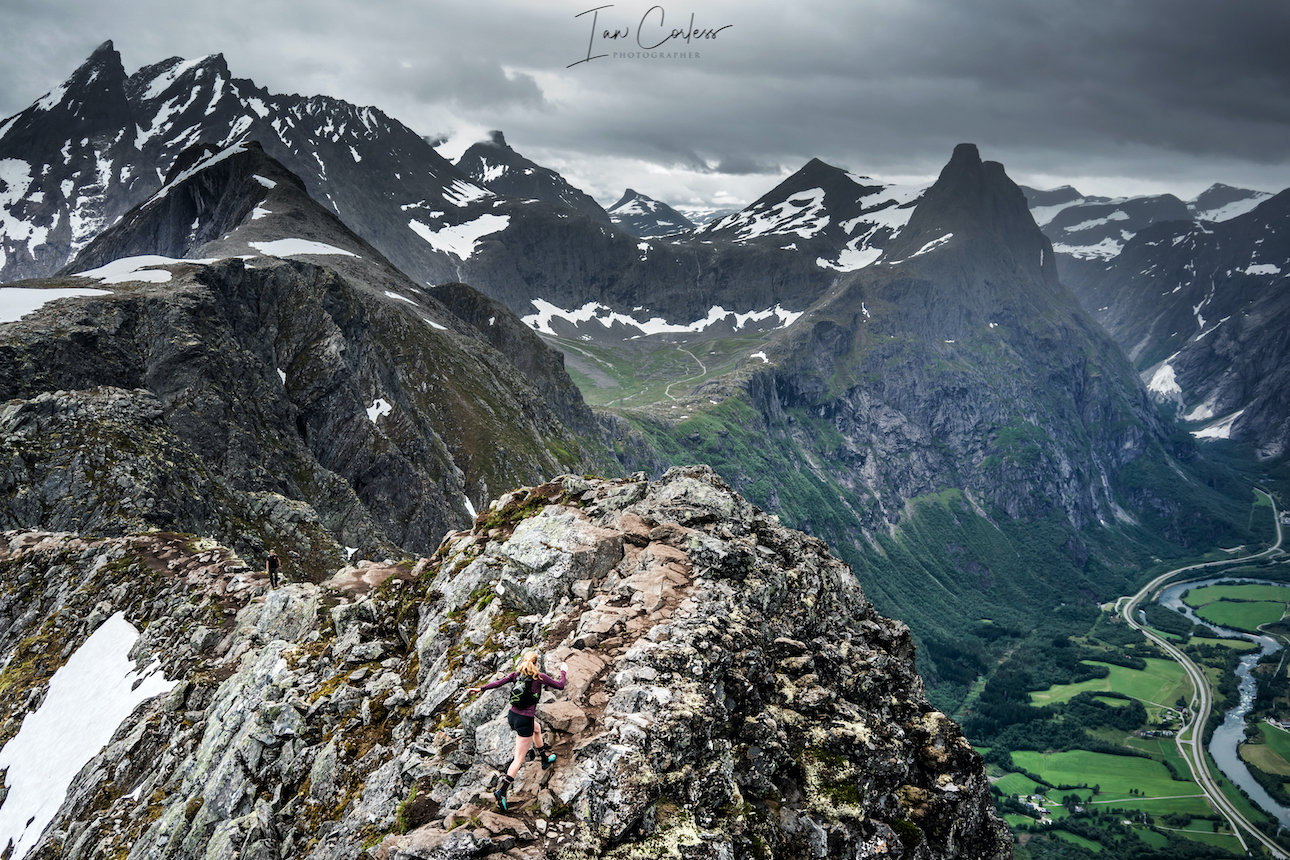
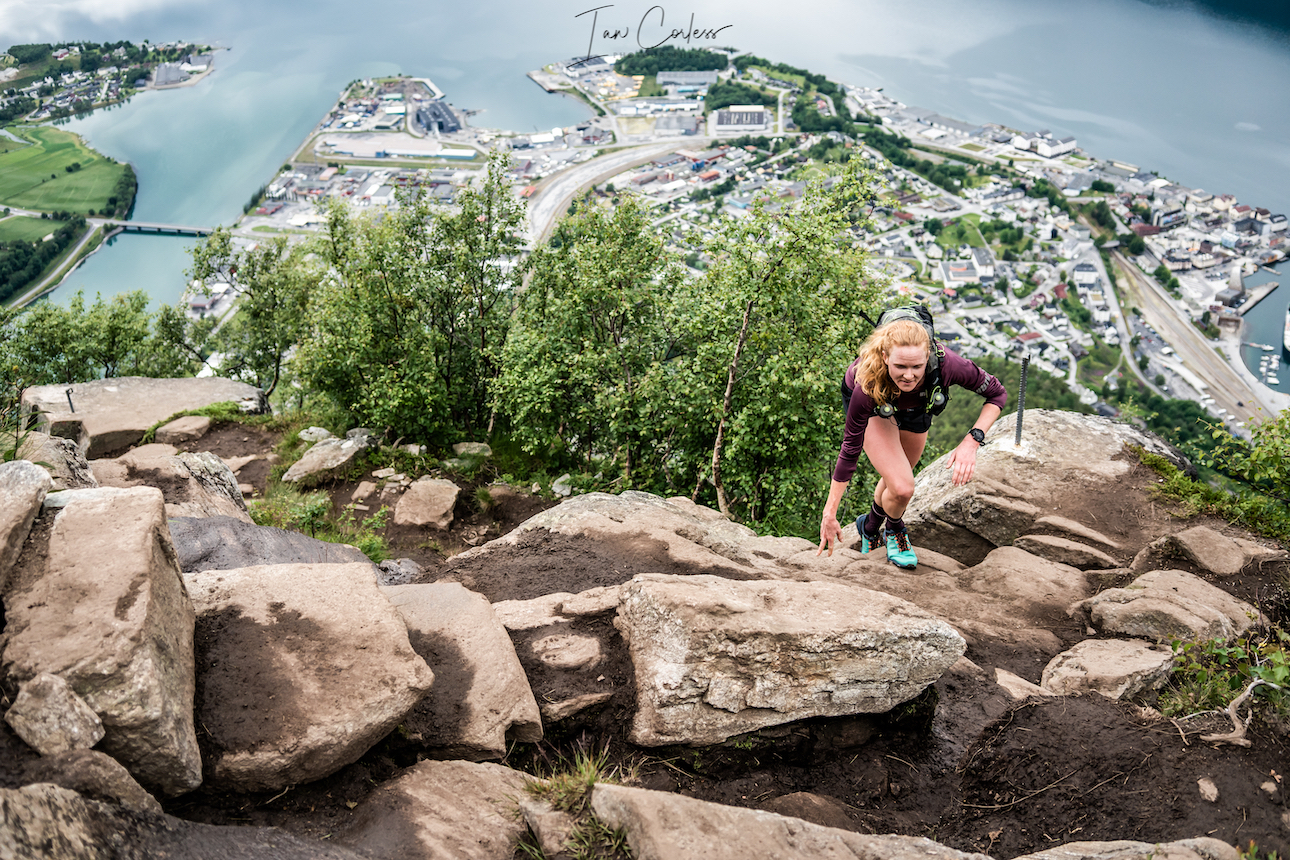
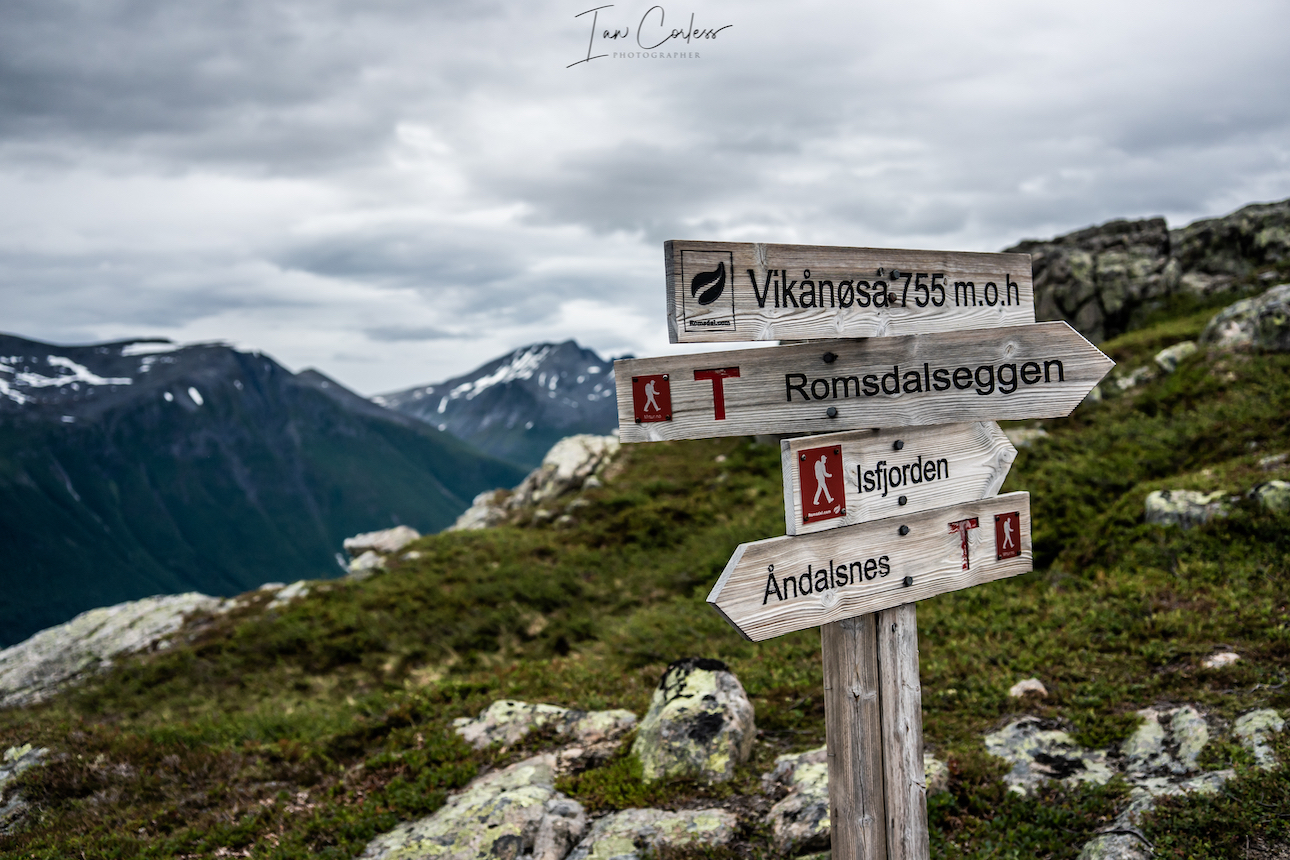
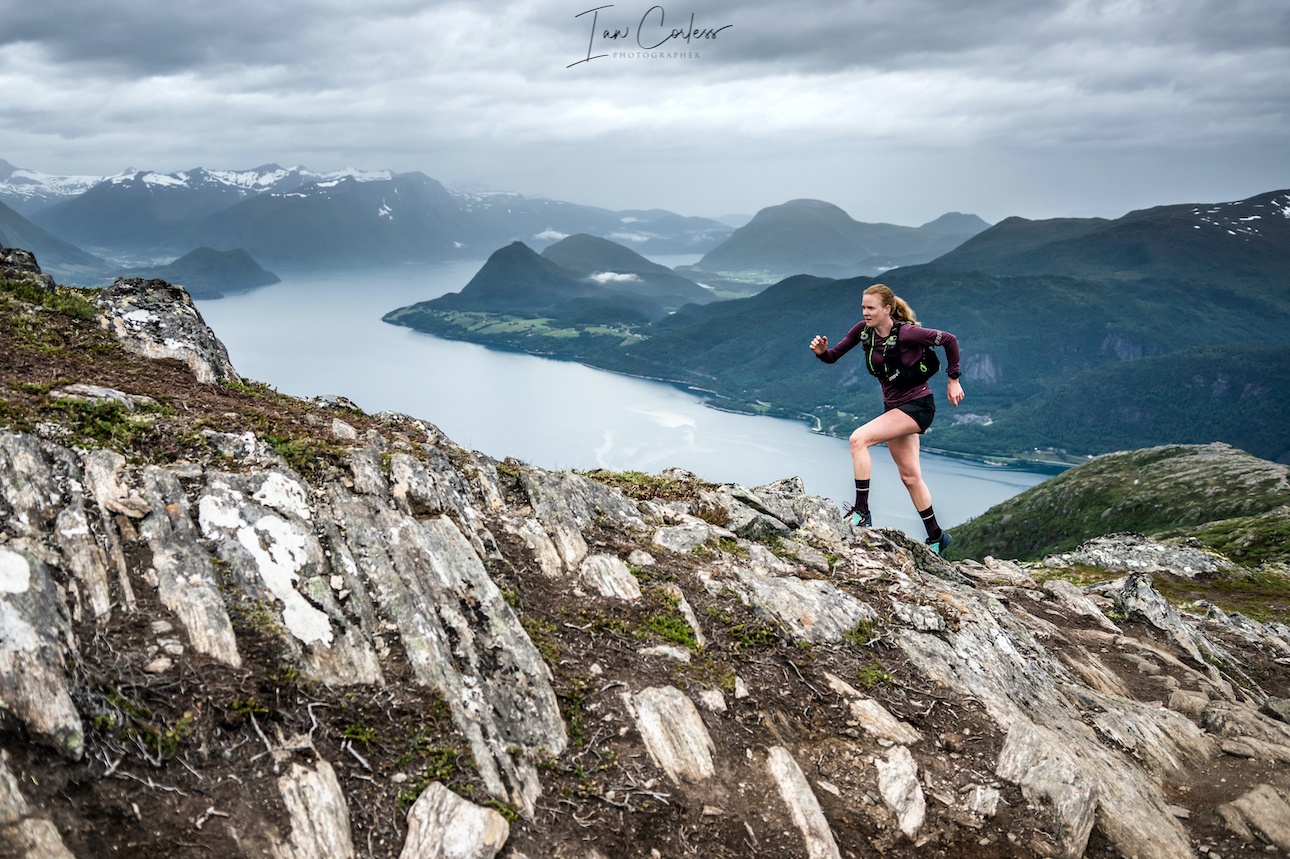
Romsdalseggen

Romsdal is a traditional district in the Norwegian county Møre og Romsdal, located between Nordmøre and Sunnmøre. The district of Romsdal is named after the valley of Romsdalen, which covers part of Rauma. 

It is a popular area and in the months of June, July, August and September, you can fully expect routes to be popular with hikers, climbers and tourists. July and August being the key months due to more stable weather.

PRACTICALITIES

First and foremost, this is an introduction to Møre og Romsdal and we hope that you will read this article, digest the information and then plan your own adventure. There is much to explore in this area and countless trips will be required.

Møre og Romsdal ideally requires a vehicle, especially if you wish to travel say, from Romsdal to Stranda. However, you can take mini-breaks and stay in one area. Romsdal being a prime example, there are many route options.

In regard to accommodation, the best options are camping or using a hotel/ cabin. Remember, the word ‘cabin’ in Norway will often refer to an individual building (amongst many) on a campsite (different to a DNT Cabin). A cabin may well combine the best of both worlds, a cross between camping and a hotel. Please check details for each cabin, often, you need to bring your own sheets (silk liner for sleeping bag?) and towels. Trollstigen Resort (here) is an excellent example of what is on offer. On a personal perspective, camping is preferable with the option to stay 1, 2 or maybe 3 nights in a hotel (depending on the trip) to shower/ freshen up and then camp again. Also helps keep costs down. Although wild camping is allowed in Norway, some areas have less options than others. For example, on arrival in Åndalsnes the option to wild camp was limited, so, we stayed on an official site called Soggebru Camping which was a short drive from Åndalsnes but much quieter than others on offer.

OVERVIEW

Looking down on Åndalsnes

Åndalsnes is the start point for our journey and provides a central hub from which to explore. However, if you have a tent, the opportunity to wild camp is a ‘must do’ for several of the routes. (More information to follow below.) 

Dramatic landscape of Stranda

In Stranda, we used the option to stay one night in a hotel (Strand Hotel), this allowed us an opportunity to shower, launder clothes, have a good dinner/ breakfast and we then resumed wild camping. 

Climbing to summit Slogen.

Our final location Urke Møre og Romsdal, we camped at Urke Camping which provided access to Slogen and Saksa peaks. However, should you wish, there is an excellent hotel called Hotel Union Øye or there is a DNT Cabin (self-service cabin with provisions) that is ideal for the ascent/ descent of Slogen, Patchellhytta cabin.

Proposed Trip:

As mentioned, Møre og Romsdal has many options here are our ‘must do’ routes.

Areas to explore: 

  • Romsdalseggen (inc Blånebba)
  • Romsdalshornet
  • Store Venjetinden
  • Trollstigen
  • Trollveggen
  • Stranda Fjord Trail Race route.
  • Saksa
  • Slogen

 Schedule:

Day 1 – Travel to Åndalsnes and overnight.

Day 2 – Åndalsnes and the complete Romsdalseggen (inc Blånebba) out and back route. Drive to Vengjedalssetra Valley and wild camp. Camp near Venjesdalsvatnet lake or take the small climb to Litlefjelletand have a stunning wild camp with the Toll Wall facing you-

Day 3 – Store Venjetinden and wild camp as previous night.

Day 4 – Romsdalshornet and then drive up the impressive Trollstigen route, options for sight-seeing and walking if required. Wild camp.

Day 5 – Trollveggen via out and back route. Starts at the tourist center. Onward drive to Stranda for night in hotel.

Day 6 – Stranda Fjord Trail route and wild camp.

Day 7 – Drive to *Urke Møre og Romsdal and then climb Saksa.

Day 8 – Slogen climb and then overnight camp or onward travel. 

*options for camping, cabins, hotel or DNT cabin.

Please note: 

Some roads on this route are one way in and one way out. They often have a toll charge which is payable via a bank card. Many also need a mobile phone. A system is used in Norway called Vipps it may be worth doing some research to see if you can use this system, as I understand it, you need Norwegian bank account and phone number.

THE ROUTES 

Romsdalseggen

Romsdalseggen Ridge

This route is often undertaken as a point-to-point starting at Vengjedalssetra and finishes at Åndalsnes. To do this, the best option is to take the bus which leaves 08:30 or 09:30 (June 15 to August 30.) If this is your plan, you are strongly advised to book in advance.

However, our recommendation is a full day out, starting and finishing in Åndalsnes. This is a tough and challenging day and includes the highest point Blånebba. 

The route includes, Mjølvaskaret , Mjølvafjellet 1216m and Halsaskaret ridge.

The route starts in Åndalsnes next to a parking ground and immediately rises up with the first highlight being the Rampestreken viewpoint. This is a metal platform that allows you to walk out with stunning views over Åndalsnes (weather depending.) Romsdalstrappa rock steps lead upwards and finally everything opens up. A stone cabin Ottarbu is situated on Nesaksla should you need shelter in bad weather. From here, the route becomes more challenging and exposed depending on experience. The ridge narrows at Mjølvaskaret. Mjølvafjellet follows and now the terrain is more challenging with fixed chains and some exposure. Halsaskaret ridge is steep in places and in the wet, care is needed.

Progressing along, follow directly ahead to Blånebba. Any turn to the left here will take you to the valley where the bust takes the point-to-point hikers. The terrain steepens and is extremely rocky, Blånebba is the high point at 1320m. It is possible to explore here, look around and of course take photos. At all times take care.

The return route is via the way you came and although backtracking, it has a very different feel. What was down climbing is reversed and vice versa providing a great stimulus. The route is 20km+/- and the time it will take depends on many factors, for example we had rain and snow. However, a good pace and 4-hours would be achievable with photo stops. 

Store Venjetinden

Wild camp close to Vengjedalssetra, we suggest you go near Venjesdalsvatnet lake, there are some great camp spots at the top closer to Romsdalshornet and you have access to water.
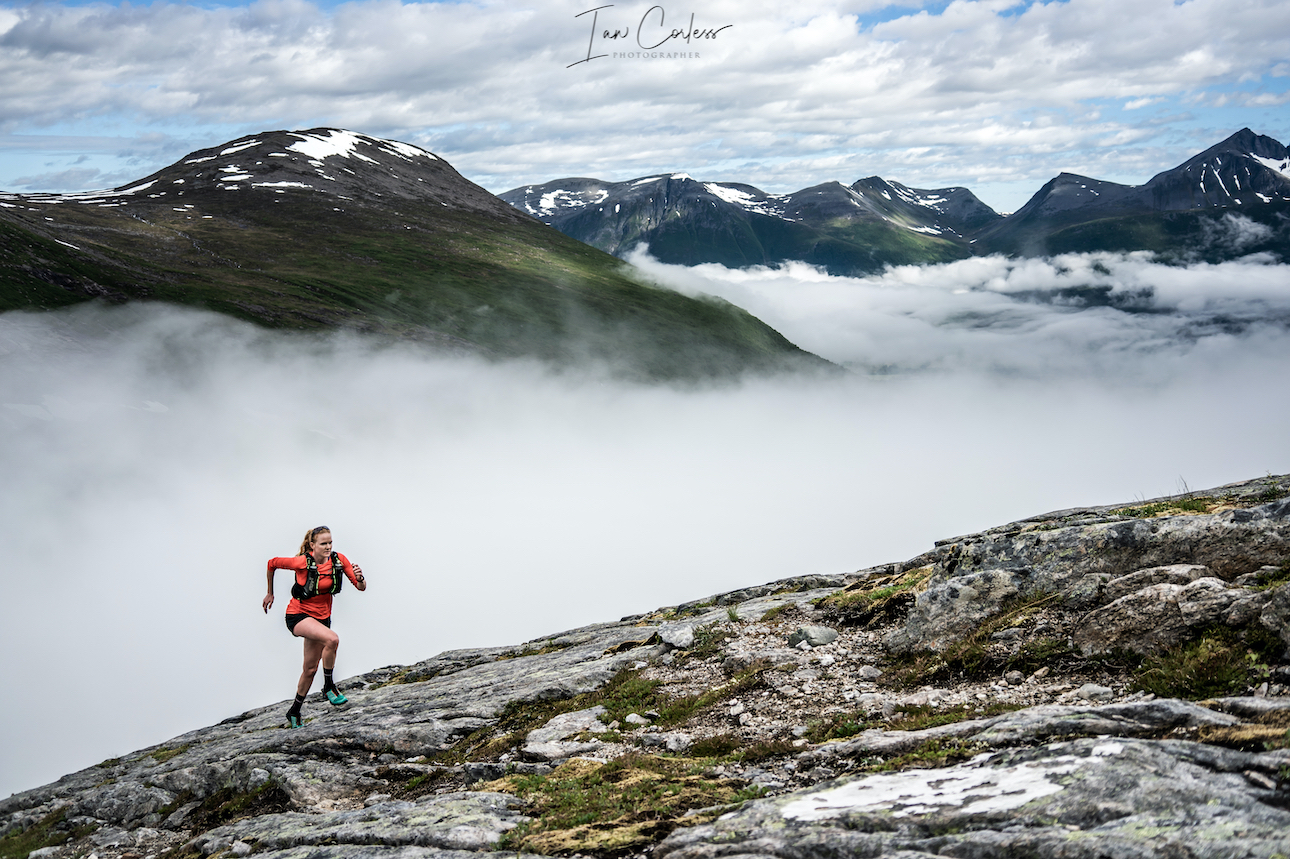
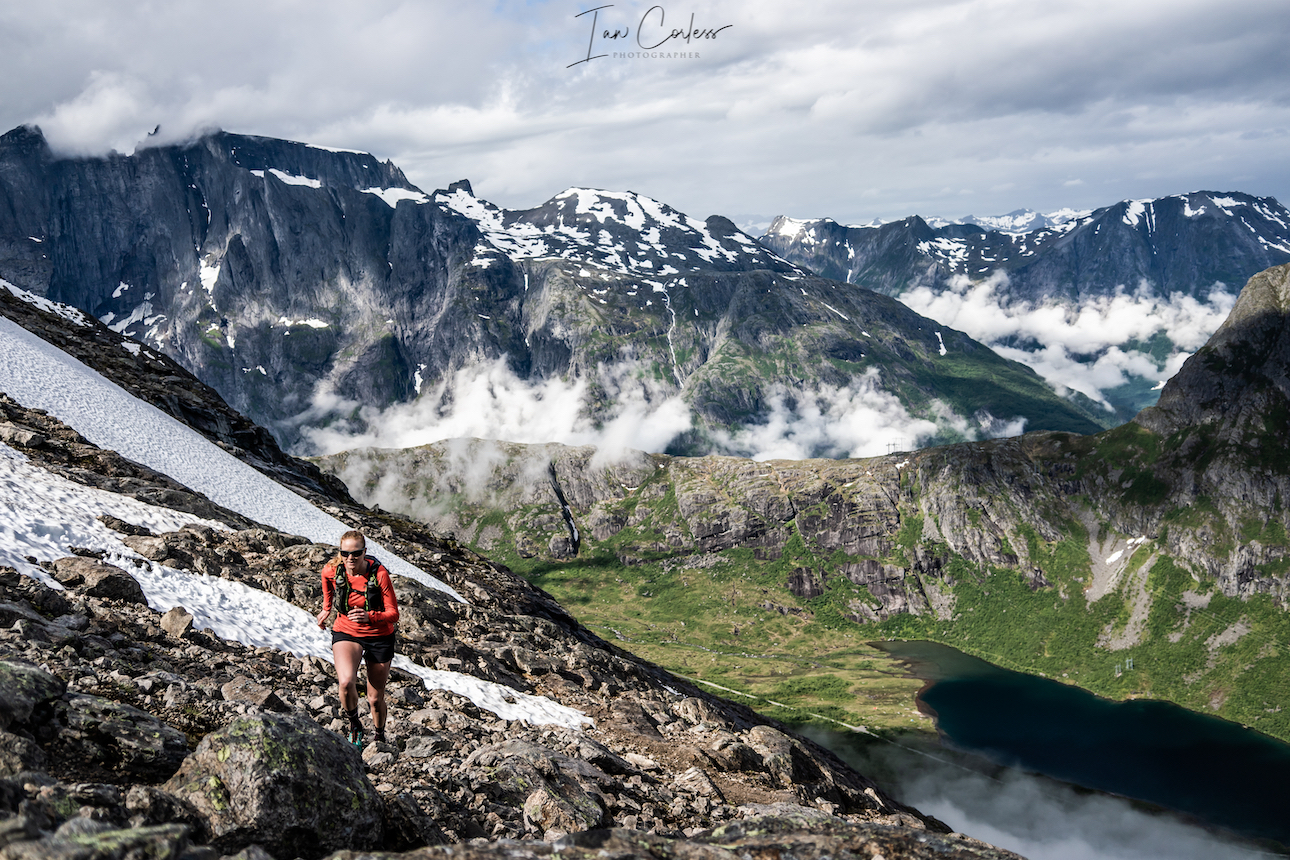
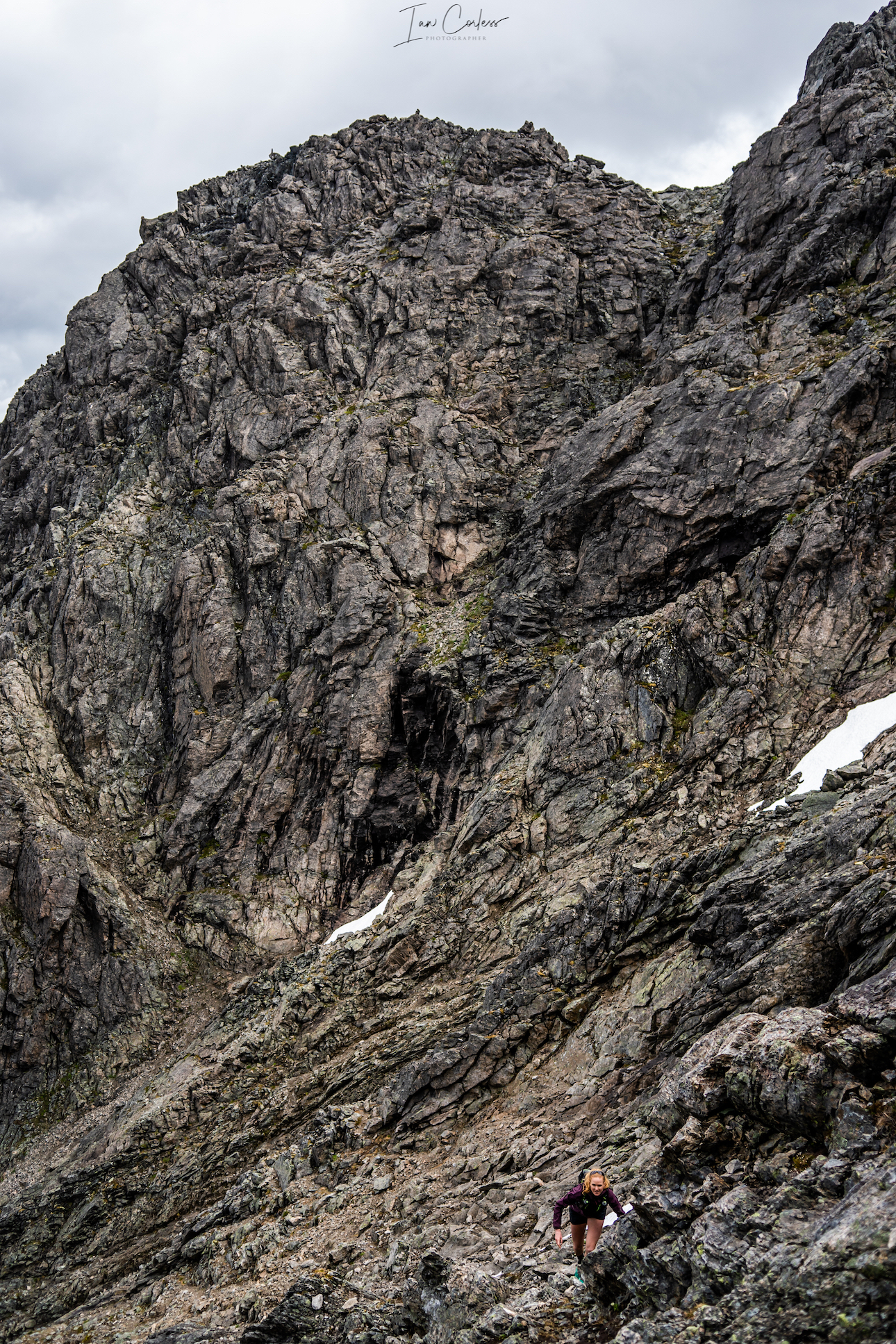
The route to Store Venjetinden on the face of it looks like a straight out and back. Starting just off the road the start of the route is easy to miss due to overgrown trees. Expect your feet to get wet early on. 

You start climbing right from the start and continue to do so all the way. You need to feel comfortable moving over rock. Much of the rock is loose here, so, at all times take care. Snow may very well be present the higher up you go, so, be prepared with micro crampons and ice axe.

The higher you go, the more challenging the route becomes and some scrambling and climbing skills are required. At all times, keep asking, ‘can I go down the way I have come up?’ There is no shame in turning around.

The views on a clear day are remarkable providing stunning vistas over all the surrounding area. 

The route down is the same as the way you came. Again, care is needed on all the loose rocks. 

Romsdalshornet 

You can access Romsdalshornet route from the same wild camping place next to the Venjesdalsvatnet lake. However, if you are going to have a clear and calm night, we strongly recommend that you start the climb to Romsdalshornet and wild camp close to Litlefjellet. There are a couple of small pools here and stunning views of the ‘Troll Wall.’ Amazing at sunset and sunrise.
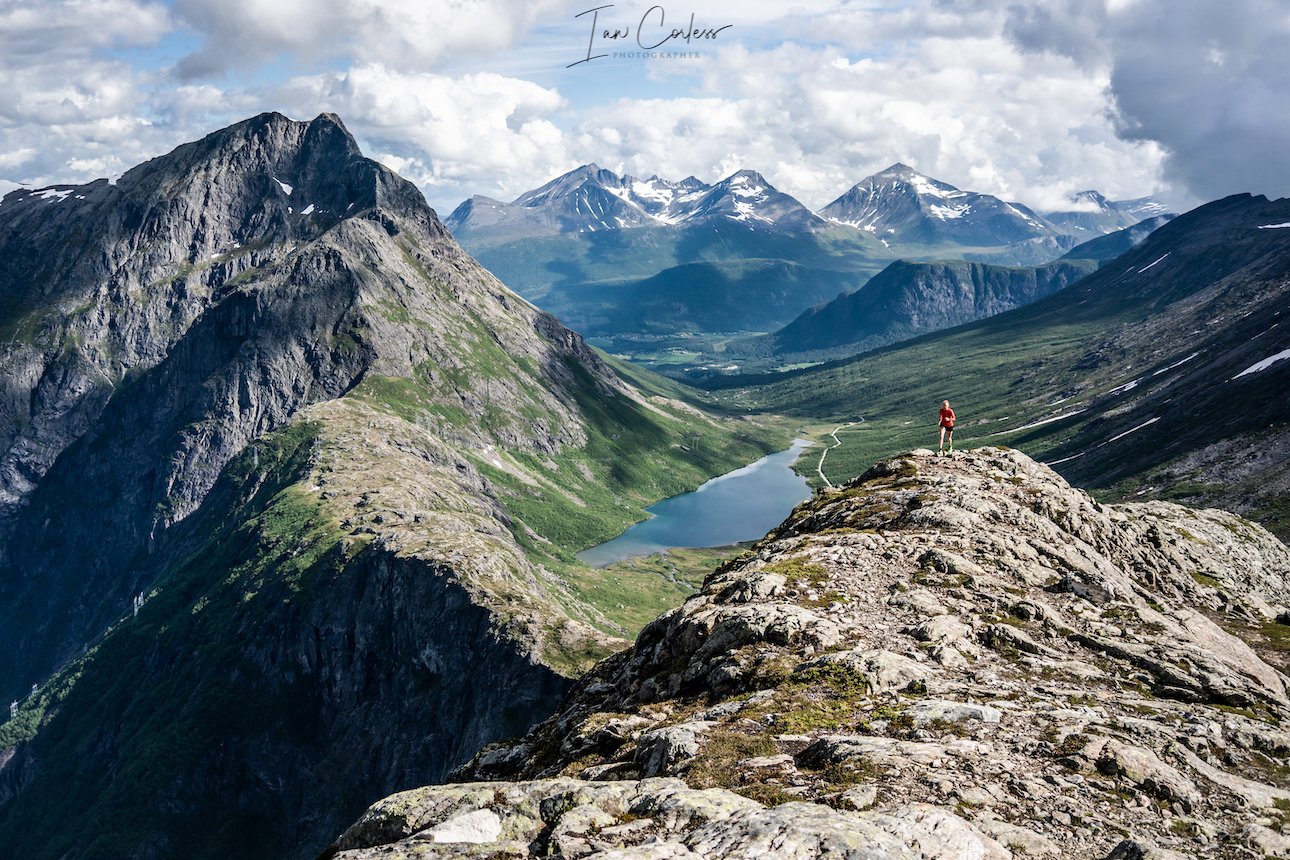
In the morning you can start the upward climb to Romsdalshornet which requires some climbing and scrambling at easy level until you arrive at the base of the horn. Continuing on very much depends on skill level and if you have climbing and mountaineering experience. Most people use ropes here, however, someone like Kilian Jornet considers this an easy scramble. 

“Fortunately – for most people – it is experienced as more demanding and dramatic from a distance than when you actually start climbing. From afar, it looks almost impossible, but as you get closer and closer, more and more formations appear and you see that the mountain is not so steep. Romsdalshorn is still a real challenge for most people. And an experience of a lifetime.” – Fjellguide.no

Trollstigen

It is a popular tourist attraction due to its steep incline of 10% and eleven hairpin bends up a steep mountainside. Visually spectacular, there are options to stop and soak in the views. Should you wish, there is a trail that starts in the valley and goes all the way up. Stigfossen falls is a highlight of the region which drops 320 metres down the mountainside. 

Trollveggen 

Trollveggen is the main reason why you would take the hair pin bends of Trollstigen. At the plateau once you have finished driving upwards, you will see a large parking area to the left. Here is a tourist center, cafe and several options for viewing platforms.

It also provides a wonderful out-and-back route to Trollveggen.

The Troll Wall is the tallest vertical rock face in Europe, about 1,100 meters (3,600 ft) from its base to the summit of its highest point. At its steepest, the summit ridge overhangs the base of the wall by nearly 50 meters.
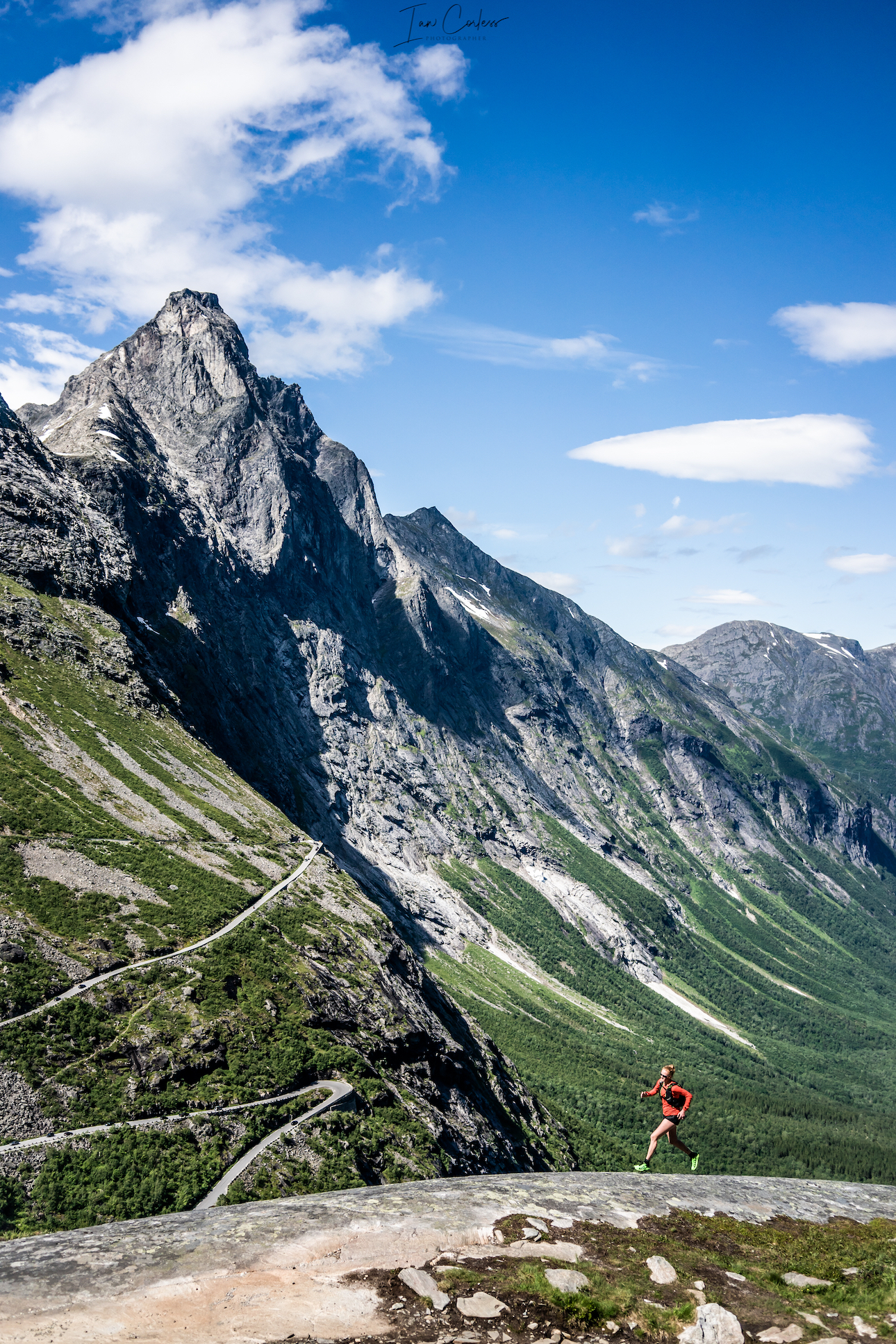
The wall has an incredibly history of climbing, however, it is extreme and requires great skill. The route we take is a run/ hike and depending on time of year and conditions, much snow can be encountered. 

The route is an uncomplicated out-and-back over initially easy terrain, however, there are some significant boulder fields to cross and in the latter stages, a great deal of potential for snow. Be prepared for all weather.

The route is not long, at most 12km however, the terrain can be slow and all the way out, you are climbing. The return is much quicker. 

Stranda

The journey to Stranda should not take to look from Trollstigen, expect 90-minutes, however, you will need to take a ferry on the final leg. After many day’s camping and the mountains, now is a good time to spend a night in a hotel.
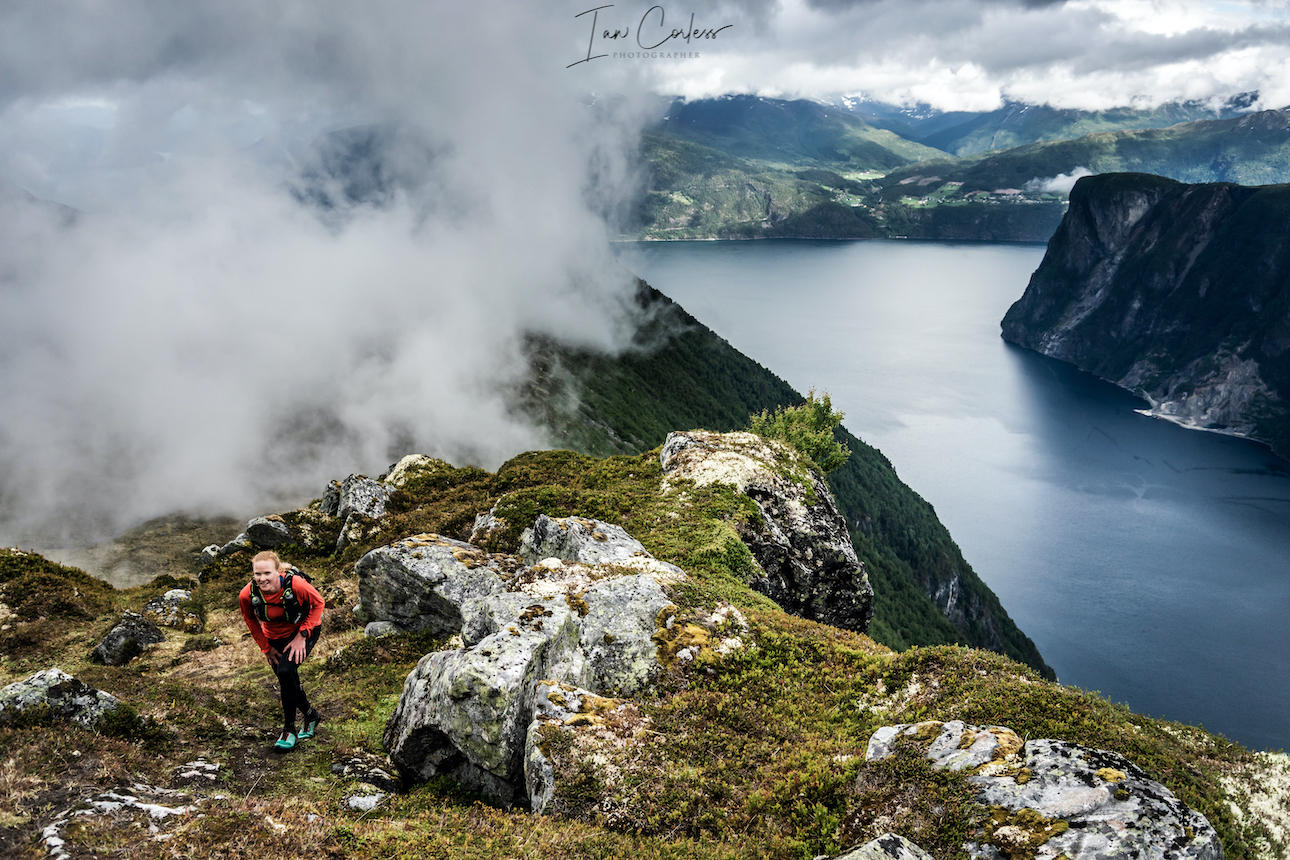
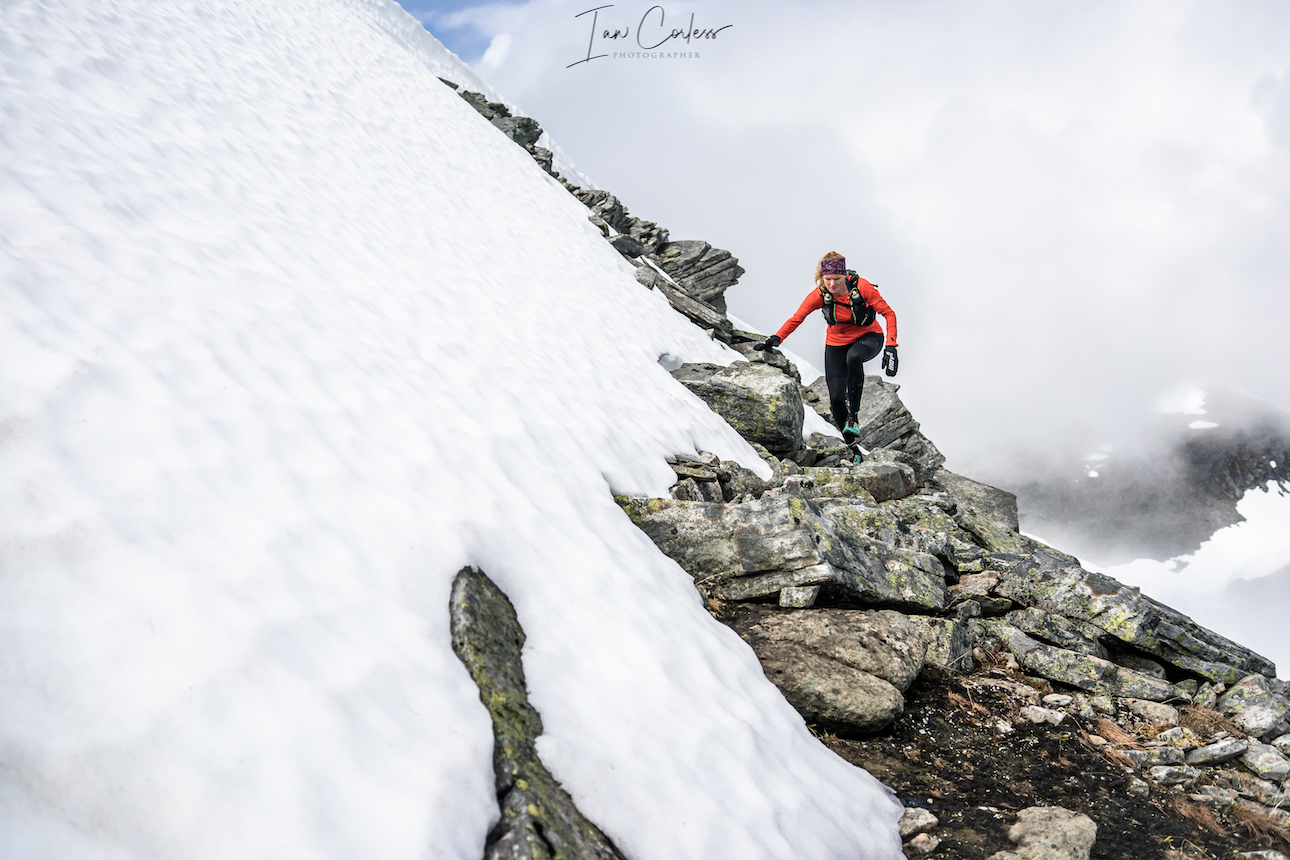
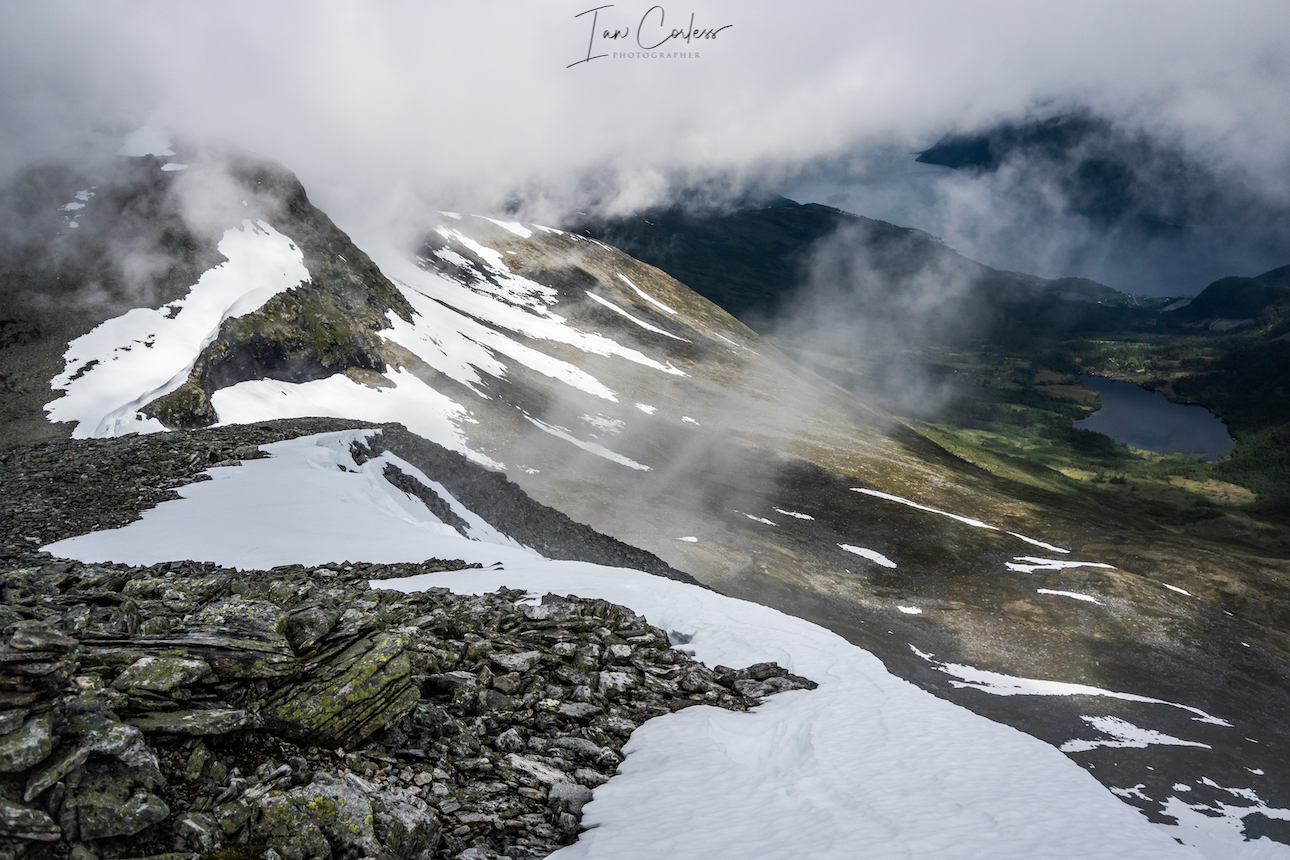
The Stranda Fjord Trail Race has several route options 25km, 48km and 100km. Our recommendation is the 48km and there are options to make this a fastpack over 2-days or, you can cut the route short finishing at Stranda. Slogen which appears in our schedule later was also part of the 100km route, so, you get the best of both worlds. A GPX track is available here. 

The routes here are stunning and challenging. Be prepared for tough terrain, changeable weather and stunning views. There will most likely be snow at times.

You have the option to start in Stranda adding km’s or take a bus to the race start point at Opshaug.

The early sections of the route are easy and at times runnable. Forest trail opens up with stunning views of the Fjord. Eventually, the trail will become steeper and steeper and you will climb an almost vertical wall of green moss. 

Once through this, the terrain turns to rock and boulder and you will climb and climb all the way to Fremste Blåhornet 1478m. At the summit, you will turn around and retrace but instead of turning right and taking the path you came up, you will continue on. Heimste Blåhornet is the next peak. The terrain is at all times challenging and although the route has markers, you are advised to follow a gpx.

Lofonmfjellet is the next significant peak at 1178m but what is between is no means easy, the terrain constantly asks questions of you. 

Rodsethornet 1085m follows. This section has some great ridges and exposure with stunning views below. 

Now you make your way back to Stranda with approximately 30km covered. You have the option to end the day, or continue on for the additional loop which takes in 3 significant peaks at 1230m, 1144m and 849m. 

Note – This whole route is a challenge!

Saksa 

The drive from Stranda to Urke Møre og Romsdal takes approximately 1-hour and the final section is stunning. Please note it is a dead end at Urke, you need to return via the way you came.

There are many possibilities for wild camping in this area, both in the valley and when out on the trails. We decided to stay at Urke Camping as it was very close to the climb of Saksa.

While Saksa may be one of the lower peaks in the area, it’s a wonderful little climb up and down that can be fitted in to any day. On a clear day, the views apparently are magnificent. For me, it was wind, rain, mud and pretty much no visibility. 

The route is like a classic VK winding up the mountain, at times on good single-track, other times, Nepali steps. In the wet, the trail gets very muddy and the rocks slippery. The final push to the summit is steep but there is little difficult terrain to worry about. 

Slogen

At 1564m, Slogen is a straight up climb from sea level and as such, this route brings its own challenges. You can break the climb up by staying at Patchellhytta Cabin, however, our choice was up and down in the same day. 
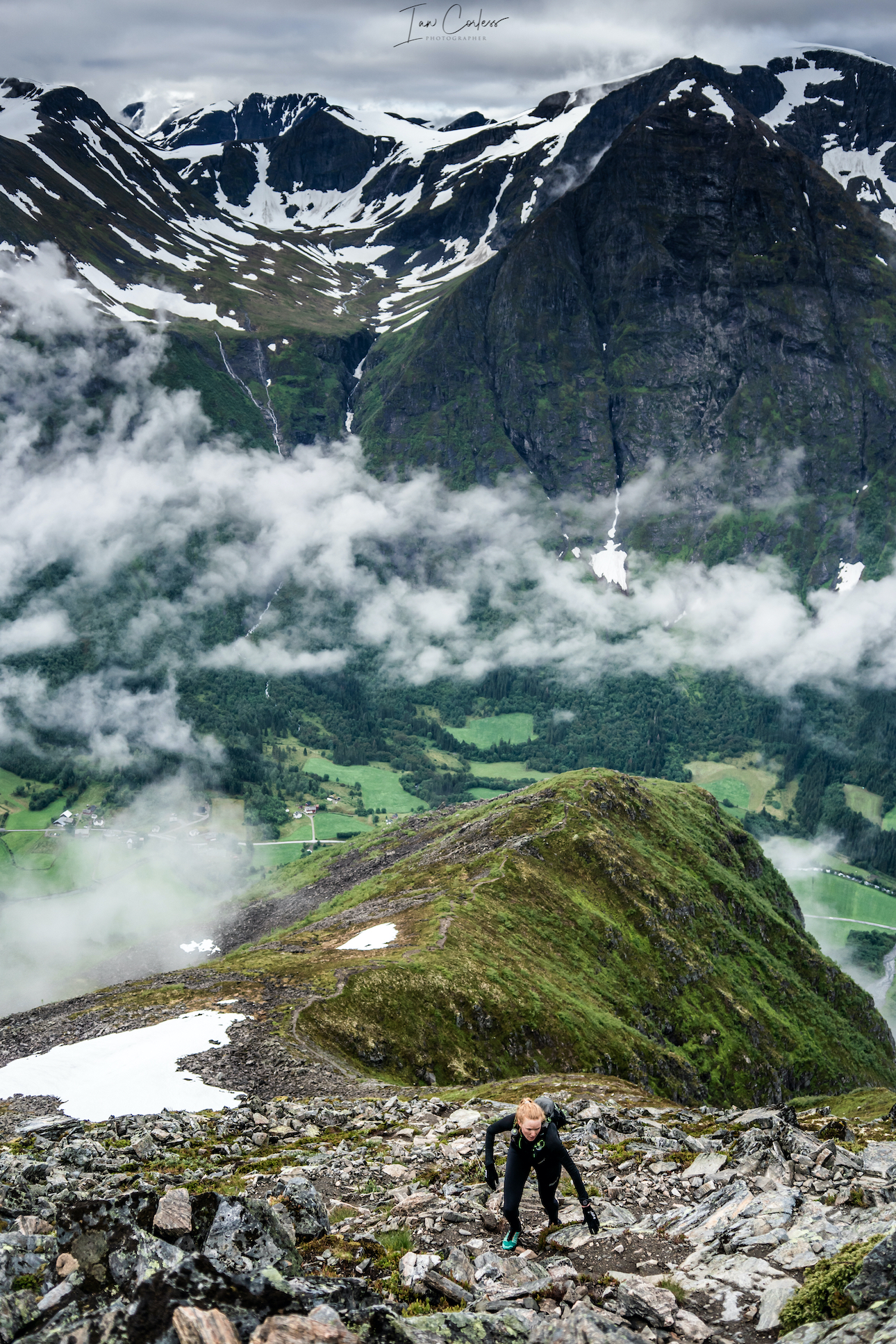
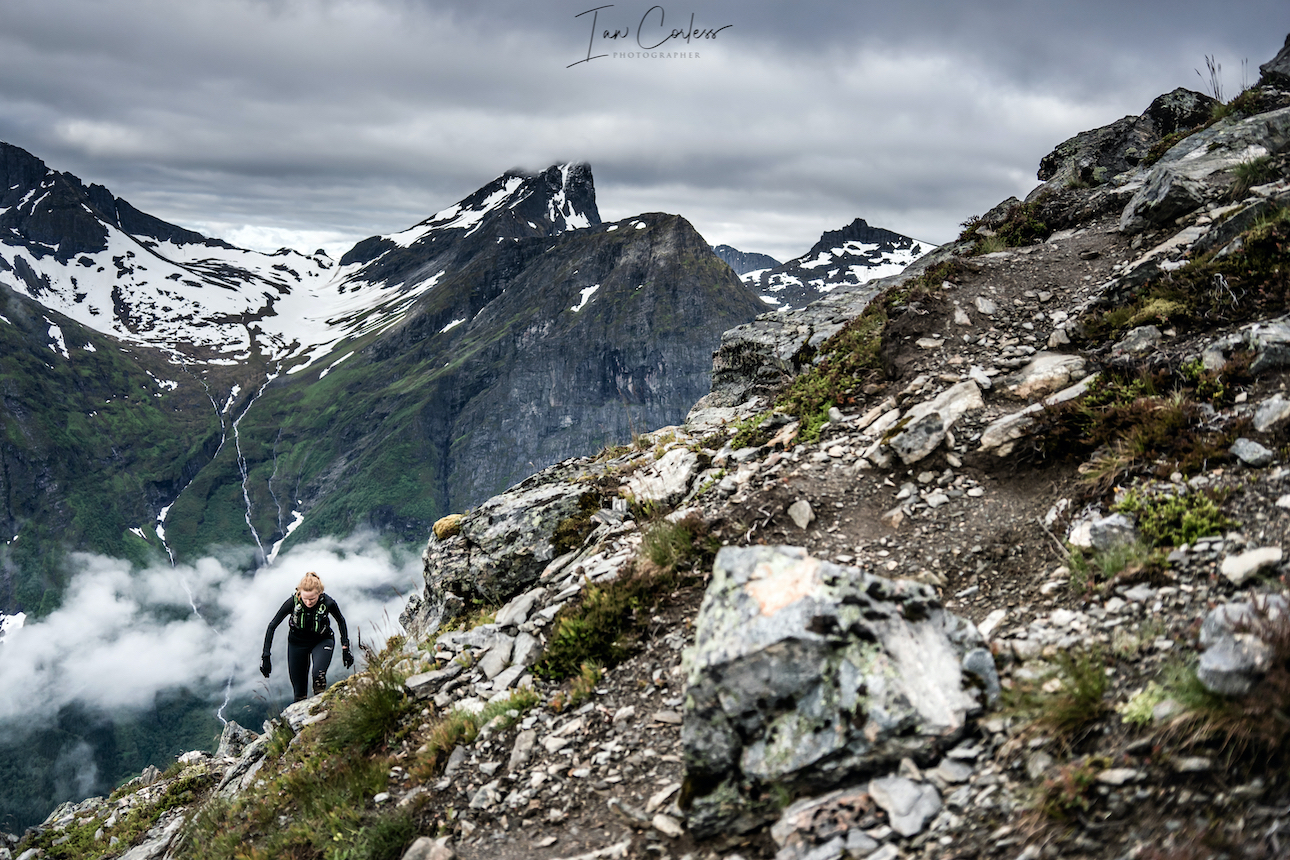
We chose the steeper and direct route starting near Øye.

Early climbing is in forest and once out of the tree line, the views and trail open up. At times it is steep but not technical. Eventually you will arrive at a ’T’ junction, almost certainly a snow field will be ahead of you. Here you go left to the summit. Notably, right will take you to Patchellhytta Cabin – this will be the route down.

From this ’T’ to the summit, the challenge increases as does the difficulty. For our ascent, snow had fallen over night adding to the challenge. Experience and comfort with some mountain exposure is recommended but not essential. Moderate climbing and scrambling skills are required; and the challenges increase closer to the summit. As always, self-check and ask, ‘can I go down what I have come up?’

Even though it is not among the highest peaks in Norway, the mountain is rated among the top ten mountain hikes in Norway. This is largely due to its beauty, view, and the fact that it’s rising directly from a fjord.
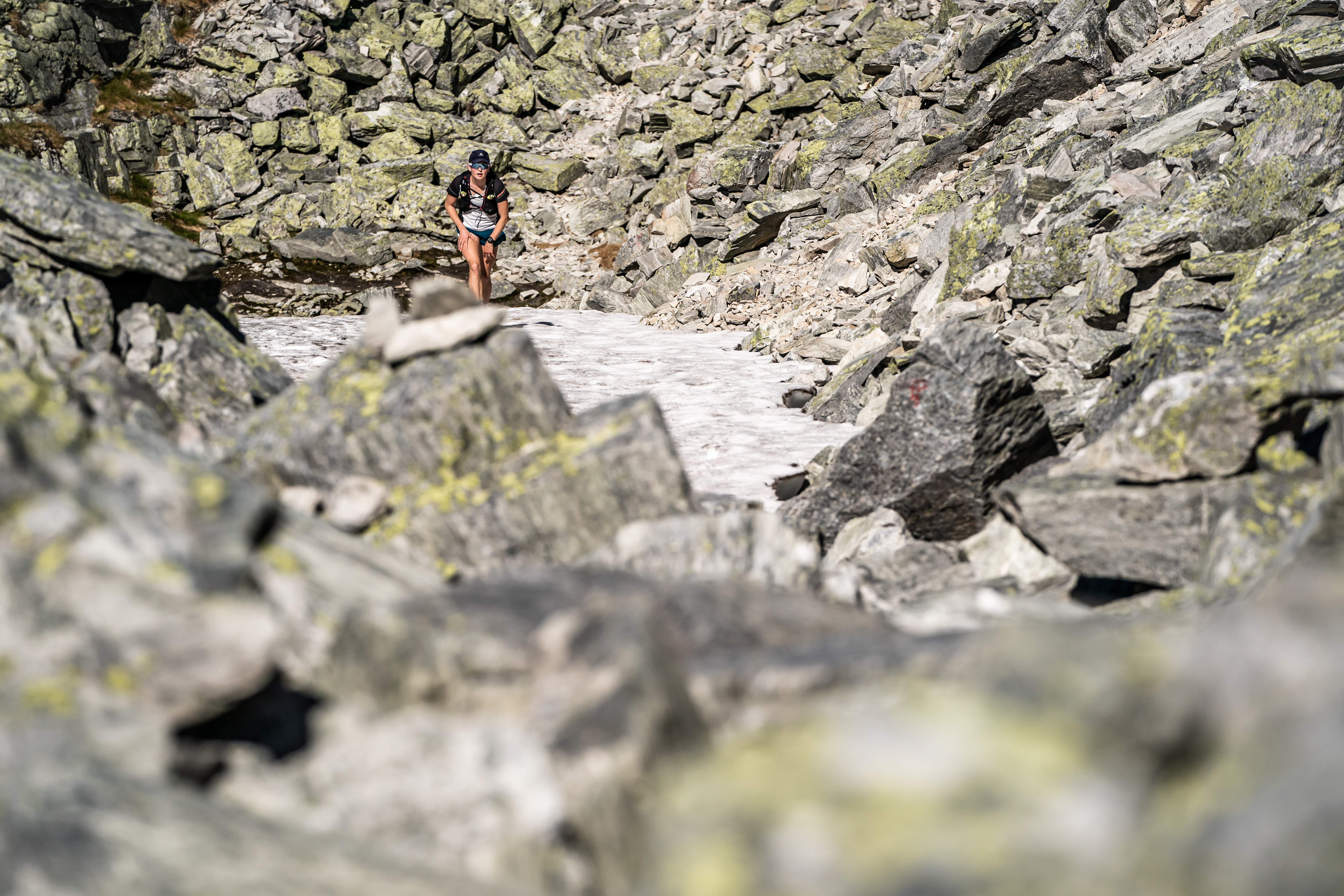
At the summit, there is a box and you can sign the book. On a clear day, views are amazing. 

On the descent, continue in a reverse direction as to the way up. At the ’T’ continue on along the ridge and follow the markers. In the distance you will see Patchellhytta Cabin. 

At the cabin, turn right and then follow the trail back down to the main road at Skylstad. The route down is rocky at first and then transitions to forest trail. If there has been a great deal of rain, expect mud and slippery conditions. 

It’s a stunning round trip route. 

As a recommendation, start early. We were on the trail up by 6am. 
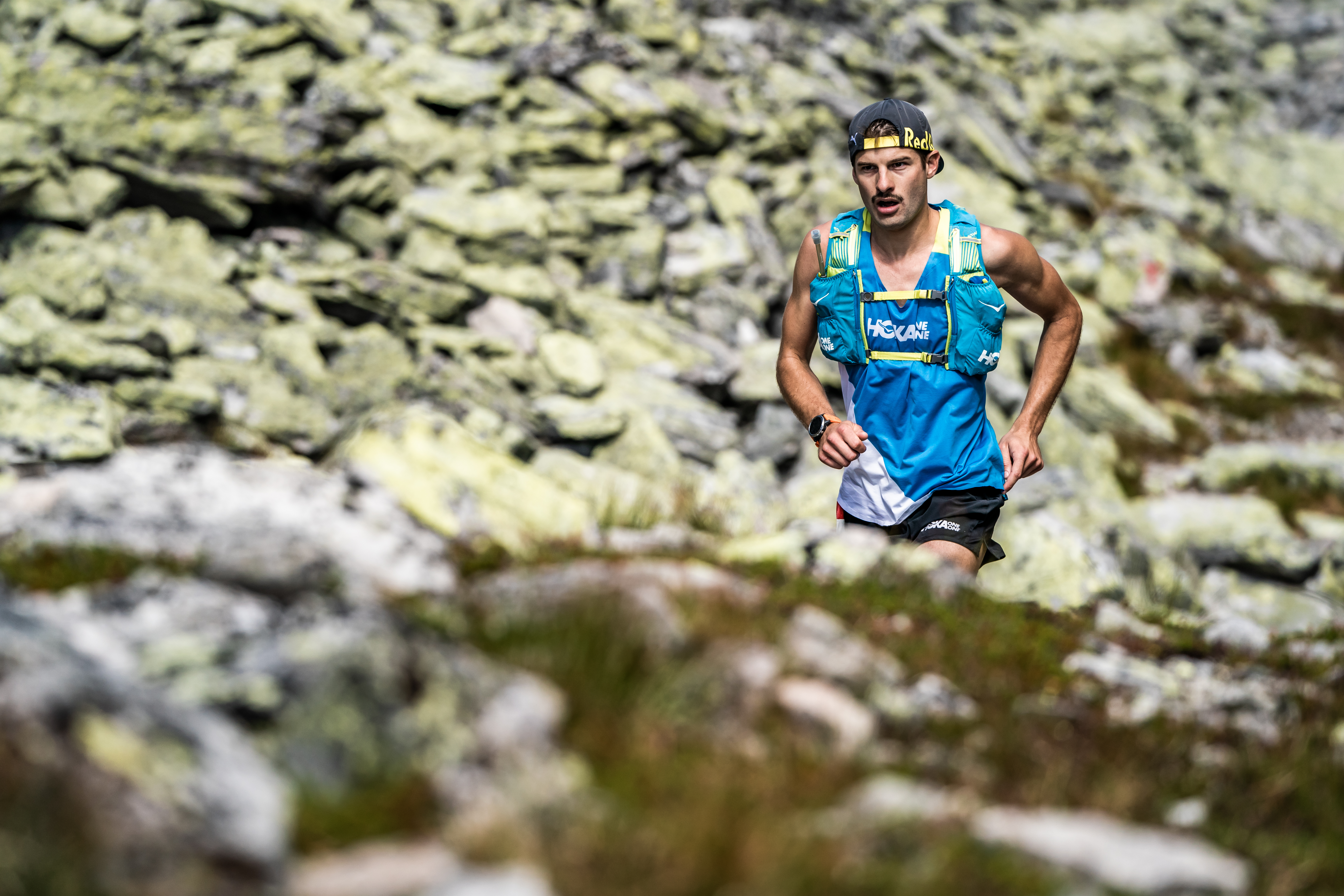
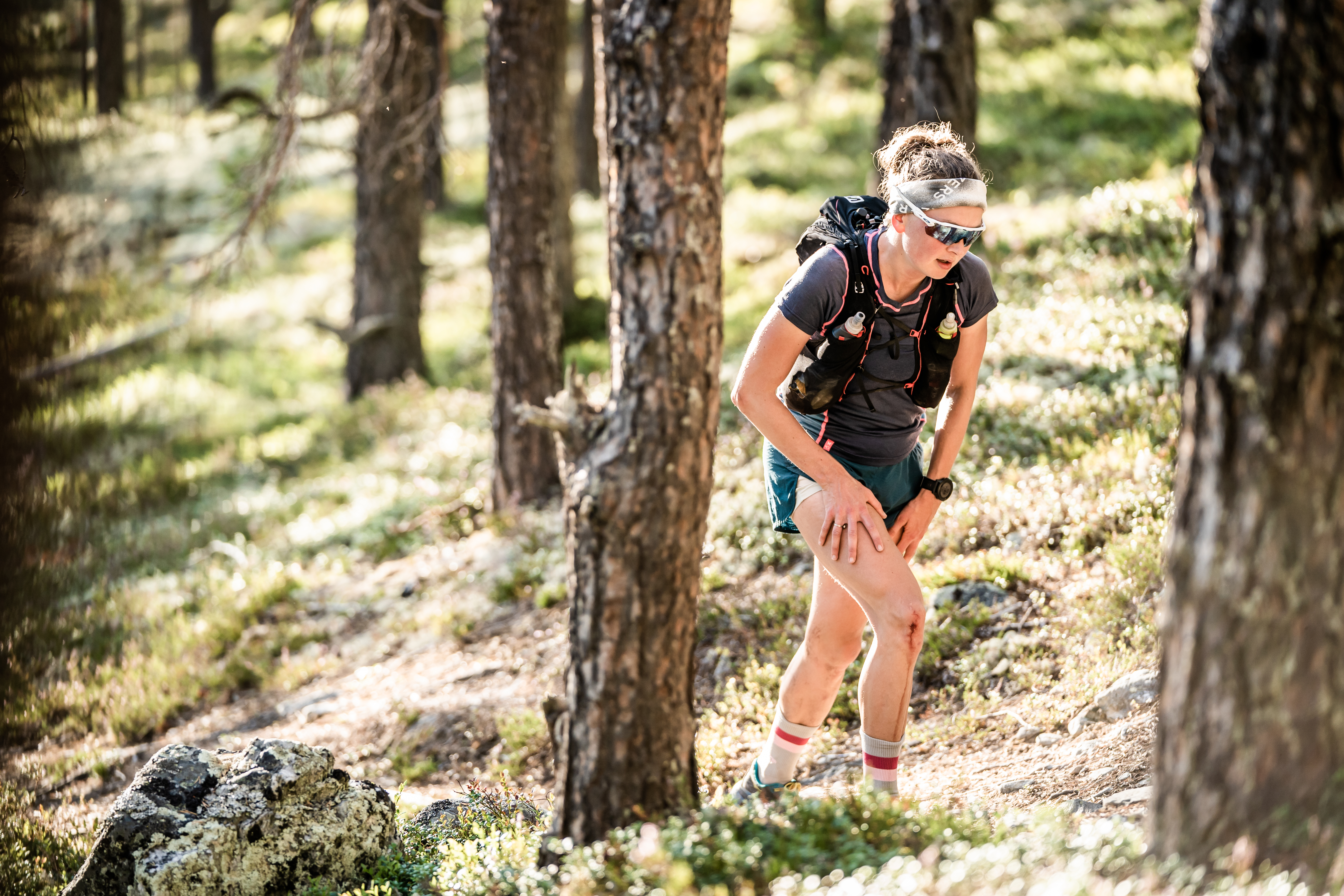
RECOMMENDATIONS 

Never underestimate the mountains and the environment in which you are exploring. Snow can be a factor on all of the above routes and in July, we had some snow on every route. In particular Slogen. It is advisable to have micro crampons and an ice axe as a back-up for some of the routes.

Weather is crucial and many of the above routes would become very dangerous in bad weather. I cannot emphasize enough that grip is essential! You need an outsole that works on wet and dry rock. Running shoes are very personal but recommendations are VJ Sport MAXx and XTRM, Scott Supertrac RC2 and inov-8 Roclite. 

Be prepared, Norway can throw 4 seasons at you in 4 hours. 

  • Suitable pack
  • Hat
  • Gloves
  • Warm insulated layer
  • Warm trousers
  • Waterproof jacket/ pants
  • Food for the duration of the hike and some contingency
  • 1,5 ltrs of water (which can be replenished on all the routes via streams/ waterfalls)
  • Take water purification tablets as a just in case and consider a water purifier such as MSR Water purifier
  • Map/ Compass
  • Charged mobile phone with a suitable App such as ‘Footpath’ (here)
  • Cash/ Card
  • Garmin InReach or similar
  • Bivvy bag
  • Sunglasses
  • Suncream

Plan your routes, be realistic on timings and always start early. One of the huge advantages of outdoor activity in Norway is daylight. In June, July, August you have plenty of light.

CONCLUSION

Møre og Romsdal  has a great deal of variety and has something for experience and relatively inexperienced.

We touch on the possibilities available and trust me, you can spend months and months here and still have plenty of routes and options to keep you occupied. 

This article is created as a gateway to the area knowing only too well that it will whet your appetite for other adventures.

A car is advisable to get around and facilitate more exploration but of course, it is not essential. 

In comparison to our other articles on Exploring Norway, Hardanger and Jotunheimen, Møre og Romsdal is more extreme and on a par with Jotunheimen.

We cannot emphasize enough the role of weather and the impact it has on all of the above recommendations. The mountains will always be there, cancelling a planned route or turning back is acceptable and wise.

PERSONAL NOTE 

Special thanks to Abelone Lyng who has extensive knowledge of the area, her experience was invaluable in planning routes and making a workable itinerary.

Please support this website. I believe everyone deserves to read quality, independent and factual articles – that’s why this website is open to all. Free press has never been so vital. I hope I can keep providing independent articles with your help. Any contribution, however big or small, is so valuable to help finance regular content. Please support me on Patreon HERE.

Follow on:

Instagram – @iancorlessphotography

Twitter – @talkultra

facebook.com/iancorlessphotography

Web – www.iancorless.com

Web – www.iancorlessphotography.com

Image sales –www.iancorless.photoshelter.com

Episode 195 – John Kelly #thegrandround

Episode 195 – Is all about the epic Grand Round by John Kelly and the show is co-hosted by Damian Hall.
*****
Talk Ultra is now on Tunein – just another way to make the show available for those who prefer not to use iTunes – HERE  You can download the Tunein APP HERE
Talk Ultra needs your help! 
We have set up a Patreon page and we are offering some great benefits for Patrons… you can even join us on the show! This is the easiest way to support Talk Ultra and help us continue to create! 
Many thanks to our Patrons who have helped via PATREON
Donate HERE
*****
NEWS
FKT’s posted on last show:
  • * Franco Colle new FKT on Monte Rosa from Gressoney
  • * Nadir Maguet – Gran Paradiso FKT 2:02:32
  • * Erik Clavery GR10 9 days 9 hours and a few minutes
  • * Davide Magnini Ortles FKT 2:18:15
  • * Kim Collison 24h Lakes achieves 78 Peaks
  • * Sabrina Verjeee Wainwrights (wishes not to claim)
  • * Dylan Bowman Loowit Trail 5:11:49
  • * Josh Pulattie Oregon Coast Trail 12 days 10 hours 25 min
  • * Candice Burt Tahoe Rim Trail 2 days 12 hours 47 min
  • * John Kelly Pennine Way 2 days 16 hours 40 min
  • * Sarah Hansel (57:43) & Joey Campanelli (41:00) for Nolans 14
  • * Tom Hollins Dales Mountain 30 (130 miles, 30 summits) 41 hrs
  • Adam Kimble new FKT on Tahoe Rim Trail, USA
  • Damian Hall new FKT for the Pennine Way, UK
  • Adam Jacobs new FKT for Hertfordshire Way, UK
  • Carla Molinaro new FKT for the JOGLE, UK
  • Beth Pascall new FKT for the Bob Graham Round, UK and set 5th fastest time.
  • Rhys Jenkins sets new FKT on the Wales Coastal Path #fkt! 870 miles. Time TBC but 20 days 9hrs 35 mins – 2hr 20mins off the record.
  • Lindsey Ulrich new FKT Pacific Crest Trail
  • Marilyne Marchand-Gouin new FKT Clorado Trail
  • Mikaela Osler new FKT Colorado Trail
  • Wouter Berghuijs new FKT Via Alpina Switzerland
  • Christof Teuscher new FKT Eagles 33
NEW UPDATE:
Pau Capell runs UTMB in 21:17
Finlay Wild runs the Ramsey Round 14:42
Carol Morgan 24hr Lakeland record with 65 tops
Wonderland Trail in the USA, Kaytlyn Gerbin set a new female FKT. Dylan Bowman (16:58) set the FKT only to have it broken 1-week later by Tyler Green, now 16:40:55
Kirsty Hewitson Steve Parr Round 62 fells 117m
Diego Pasoz on the Via Alpina new FKT
Dan Lawson JOGLE 9d 21h 14m
Ryan Sandes 13 Peaks Challenge 13:41:10
Donnie Campbell continues his Munro challenge
Kilian does a VK in less than 30 min and then follows up with 10km on the road in sub 30 min
Check FKT website for latest updates https://fastestknowntime.com/
****
In other news…
Rondane 100 – Read the report here
*****
Articles:
RED-S here
Scott Kinabalu Ultra RC shoe here
*****
INTERVIEW : JOHN KELLY
*****
Share us on Facebook – Talk Ultra FB HERE
Tweet us on Twitter – Talk Ultra on Twitter HERE
Instagram – HERE
And use good old word mouth.
Importantly, go to iTunes and subscribe so that you automatically get our show when it’s released we are also available on Stitcher for iOS, Android and Web Player and now Tunein. We are also on Spotify too.
Our web page at www.iancorless.com has all our links and back catalogue.
Please support Talk Ultra by becoming a Patron at www.patreon.com/talkultra and THANKS to all our Patrons who support us. Rand Haley and Simon Darmody get a mention on the show here for ‘Becoming 100k Runners’ with a high-tier Patronage.
*****
Spotify HERE
ITunes HERE
Stitcher You can listen on iOS HERE, Android HERE or via a web player HERE
Libsyn – HERE
Tunein – HERE
Website – talkultra.com

RED-S Syndrome – What Athletes Need to Know

Mimmi Kotka (far left) at the start of the 2020 Transgrancanaria – (c)iancorless.com

Mimmi Kotka broke silence just last week after a string of below par performances and has acknowledged it is time to take a break from sport. In an open and honest post on social media, she clarifies:

“I have been suffering with my body since the end of 2018. I have finally connected the dots between my low immune system, anaemia, fatigue, stomach problems, lack of menstrual period, inability to run fast and my body always running in reserve: it is RED- S, Relative Energy Deficiency in Sport.”

Now for many, RED-S may well be a new term, however, the list of symptoms and problems Mimmi lists are not. In recent years we have witnessed the rise of many a runner, particularly in the ultra-world for them only to slowly disappear.

Caroline Chaverot at Limone Extreme, Italy – (c)iancorless.com

Recently, Caroline Chaverot, a dominant force and some would have said unbeatable in trail running, slowly removed herself from the sport with a string of below expectation performances. In an interview with Damian Hall for IRunFar, Caroline said, “…I want to be better. Everyone else is training a lot, so I will train like them.’ Maybe I did too much? Or maybe too soon? If training becomes like a competition, then you get tired. I probably trained too hard and fast.”

The story of Geoff Roes and his dominance, for a period over the 100-mile distance, who now runs for fun, forever fighting a battle with fatigue. “It seems like I take two steps forward and one step back. I can’t really do what I want physically, I still get pretty fatigued.” said Roes talking with Justin Mock in an article on IRunFar dating back to just April 2020.

To be clear, I am not saying that Caroline or Geoff had RED-S, I am merely pointing out that our sport, the challenges it brings, without close attention can be far more negative than positive. No runner or athlete intends to get RED-S or OTS, quite the contrary. As Mimmi says:

 “I never had the intention to lose weight, nor do I have an eating disorder. I ended up with RED-S by mistake.”

The great thing about trail and ultrarunning is that it is a sport for all. All body types are welcomed and RED-S can happen to anyone at anytime. It can creep up without your realising.

“But a mysterious training condition is suddenly plaguing its ranks, robbing a generation of top athletes of their talents and forcing victims to wonder: Is it possible to love this sport too much?”

Mike Wolfe at The Rut, he is co race director with Mike Foote – (c)iancorless.com

The above is from an article, “Running on Empty” by Meaghen Brown that starts with the story of Mike Wolfe at the 2012 Transvulcania. I was there, I witnessed the day unfold. The article goes on to say:

“The past seven years have seen the rise and decline of at least a dozen elite competitors, including Anna Frost, who won the women’s division of the North Face Endurance Championship in 2011; Anton Krupicka, two-time winner of the Leadville 100; Geoff Roes, who set a new record at the 2010 Western States 100; and Kyle Skaggs, who demolished the Hardrock 100 record in 2008. Each of them reached the pinnacle of the sport only to mysteriously struggle to repeat their best results. Transvulcania was the start of Wolfe’s own precipitous fall.”

Now the context of the above article was OTS, (Overtraining Syndrome,) but the similarities with RED-S are noticeable.

What is RED-S?

Relative energy deficiency in sport, known as `RED-S `is the result of insufficient caloric intake and/or excessive energy expenditure. For Mimmi, it was the latter, excessive energy expenditure. The condition can alter physiological systems such as metabolism, menstrual function, bone health, immunity, protein synthesis, and cardiovascular and psychological health.

For many, RED-S was known as the Female Athlete Triad and is often directly related to not eating appropriately for the amount of energy one extends. This can be a particular problem for the ultra-distance runner. “Furthermore, the RED-S model includes both male and female athletes – so if you are a male athlete, please do not stop reading! Low energy availability can impact male and female exercisers of all levels and of all ages.”

Food restriction is a worrying scenario, both for male and female athletes. A simple analogy is taking a car and restricting the fuel you add to the car. Do not add enough fuel and the car will eventually grind to a halt, the body is no different. While the condition was often thought to be one for female athletes, medical professionals are now seeing similarity in male athletes and the usage of the RED-S term now applies to male and female.

Mimmi continues to write, “I have plunged myself into this condition over the last few years. I have simply put in more and more hours of training without adjusting my calories accordingly, dragging me towards incredible fatigue.”

Mimmi was eating healthy and good quantities, however, the balance was off. Her training volume was too high and calorie intake insufficient. It was not an eating disorder of any sorts, more a miscalculation of energy burnt/ calories in.

Mimmi, was the winner of CCC and TDS and for a period of time, was considered unstoppable. A force to be reckoned with. But as she says, since 2018 she has continually suffered to find the same performance levels. This in turn brings a negative cycle that only perpetuates the problem.

I will train more.

I will lose weight.

Two common scenarios that gradually add more issues and one cannot ignore pressure from peers, fans and sponsors. In the case of Mimmi, she trained more to get better. She had no intention to lose weight.

While eating habits are an indicator of RED-S, the overall picture is much more complex and of course, the differences between male and female are marked.

The BMJ (British Medical Journal) list several key notable factors as an indicator, the first is missed periods or no menstrual cycle. Now of course, this is specific to women, but what other factors should be considered?

Stress Fractures.

Low BMI.

Strange eating habits.

Increase training.

Inability to recover.

The long-term impact if unchecked can be devastating with affects on the health system staying with the body for the rest of the athletes life.

When hormone levels are altered, the impact is potentially far reaching and why it may be common to know and understand that immunity is impacted, recovery, growth, concentration and an impact on endurance, the cardio vascular system can also be impacted which could lead to heart disease.

This is not a condition just for the “elite” of the sport, quite the opposite. We look up to our idols and we copy them. We hear stories of mega training sessions, we hear about fasted runs and we hear stories of specific diets to maintain race weight… A picture builds and is one that many try to copy and emulate. For some and in the case of Mimmi, it was about being fitter, therefore adding more training. But for others, the pressure to be thin is very real and fad diets contribute leaving a myriad of question marks that few find the answer to.

Going back to the car analogy, sports people need energy and that energy comes from food full of nutrients and variety. One should not have a troublesome relationship with food but unfortunately, sport is littered with athletes who do. How often have you heard someone say, “I need to run to earn my calories!” 

This mindset is the start of a potential problem and it needs checking.

As Mimmi says in her honest post:

“…I’ve dragged myself deeper and deeper into this condition during the last years. Just loaded on more training hours, not adjusting my calories accordingly and slugged through incredible fatigue. Being able to ignore the physical body is what makes a good ultra runner but it’s also what brought me down.”

Nutrition specialist, Dr Nicky Keay confirms in an article, “Fundamentally there is a mismatch between food intake (in terms of both energy and micronutrients) and the demand for nutrition required to cover expenditure, both of exercise training and for basic “housekeeping” tasks in the body to maintain health. If there is insufficient energy availability, then the body switches into an energy saving mode. This “go slow” mode has implications for hormone production and metabolic processes, which impacts all systems throughout the body.”

We train to get fitter, faster and stronger. But a complete athlete should look at all aspects to make a perfect picture. Food and nutrition is a key building block and without it there will be an inability to improve as expected in response to training and the risk of injury will increase. It´s a downward spiral we have seen all too often in the sport of ultra-running.

Counting calories rarely has a benefit in the long-term, however, in the short term, keeping a training diary that records food intake v expenditure can be useful. If an athlete consumes fewer than 2500/2000 calories (male/female) after taking energy expenditure in to account, your intake is likely to be inadequate

There are many fad diets out there but find a balance with nutritious food that has plenty of variety. Periodise food intake to coincide with training. For example, there is a time and a place for carbohydrate. Equally protein and fats. Eat fresh, minimally processed foods that include plenty of servings of vegetables and fresh fruit. Try not to avoid certain food groups unless advised otherwise by a medical professional and if vegan or vegetarian make sure you understand how to maximise calories paying attention to Protein, Fat, B12, Iron, Zinc, Calcium, Iodine and D Vitamin. “The No Meat Athlete Cookbook” by Matt Frazier is a great resource for all sports people

Post exercise, make sure you replenish your body with protein and carbohydrate. Protein will help repair lean muscle and carbohydrate will help restore glycogen for the next training session. How much carbohydrate you eat depends on what training you have coming up… This is where the help of a coach and nutritionist will help keep you honest.

Be sensible with training volume, less is sometime more!

To conclude, who is at risk of RED-S?

The reality is, RED-S can occur in any age or level of athlete but the greatest risk comes for those who are involved in sports that require high power. Power to weight ratio is a fickle beast and those most at risk are cyclists, climbers, triathletes, runners – yes, runners!

Ultimately, find a healthy balance between training, nutrition and rest. Go through the warning signs below and be honest with yourself. If in doubt, ease back, eat healthy and seek the advice of professionals who can help get you back on the correct path.

Warning signs:

  1. Fatigue
  2. Illness
  3. Repeated injury
  4. Mood changes
  5. Broken sleep
  6. Below par performances
  7. and of course, an unhealthy relationship with food.


Follow on:

Instagram – @iancorlessphotography

Twitter – @talkultra

facebook.com/iancorlessphotography

Web – www.iancorless.com

Web – www.iancorlessphotography.com

Image sales –www.iancorless.photoshelter.com

References:

Please support this website. I believe everyone deserves to read quality, independent and factual articles – that’s why this website is open to all. Free press has never been so vital. I hope I can keep providing independent articles with your help. Any contribution, however big or small, is so valuable to help finance regular content. Please support me on Patreon HERE.

Follow on:

Instagram – @iancorlessphotography

Twitter – @talkultra

facebook.com/iancorlessphotography

Web – www.iancorless.com

Web – www.iancorlessphotography.com

Image sales –www.iancorless.photoshelter.com

SCOTT Kinabalu Ultra RC Review

I recently reviewed the new SCOTT Supertrac RC 2 (here) and I was excited. I had been using the original Supertrac as a regular shoe when going to the mountains, particularly when on technical terrain. Although I loved the shoe, there were just a couple of niggle points. Gladly those niggle points were removed in the RC 2 and I went on to say:

“The Supertrac RC 2 is a great shoe and for anyone who loved the original Supertrac RC, I think now they will have an even bigger smile on their face. For those who were tempted by the black and yellow shoes previously but decided that the toe box was too narrow, the cushioning compromised or the feel was a little flat, you should now go back and check these out. It’s rare I compare shoes to other brands and models, however, for those who have read my reviews, they will know that VJ Sport are my ‘go-to’ shoes for the mountains, be that the XTRM or MAXx models. Now, I firmly believe that Scott have a shoe that can compete.” 

Several months on, the RC 2 has only got better and I am now looking to get another pair, I have really given my current pair some abuse. Gladly, I was able to share the workload on the RC 2 with the Kinabalu Ultra RC, also a new shoe.

I received the RC 2 and Kinabalu Ultra RC at the same time and on first impressions, it appeared they were the same shoe but with two major differences. The upper and outsole.

I was wrong.

Don’t get me wrong, there are great similarities between both shoes and it is fair to say, if you like the RC 2 then you will like the Kinabalu Ultra RC and vice versa.

So, what are the differences?

The RC 2 is designed for the mountains with an aggressive outsole using radial traction, a new and extremely durable upper by Schoeller called Coldblack® and a 3XDRY® material. Cushioning is 22.5mm at the rear and 17.5mm at the front providing a drop of 5mm. It’s a great shoe when you need grip and durability in tough terrain. But, if you were out for a long run and trail, the RC 2 would probably be too aggressive…

Step in the Kinabalu Ultra RC.

The RC badge connects the RC 2 and the Kinabalu Ultra RC and confirms a build quality and attention to detail. RC quite simply confirms that this is the ‘best’ that we have to offer.

I have used many Kinabalu shoes by SCOTT (HERE) in the past and I have liked them. If you have tried them, you may agree or disagree? However, whatever your experience of a Kinabalu you have had in the past, please forget it. This new incarnation has nothing to do with the previous incarnations, even the Kinabalu RC 2 (here).

The black and yellow look confirms the ‘new’ shoes pedigree and as stated, on first look, it appears very similar to the RC 2.

The upper is much more breathable on the Kinabalu Ultra RC with an ultra-mesh that allows yellow to show through and the outsole is very different with a less aggressive hybrid traction. Notably, to fulfilling the ‘ultra’ intentions of the shoe, cushioning is 29mm at the rear and 21mm at the front providing a more relaxed 8mm drop.

THE SHOE

Sizing is true to size but like the RC 2 model, I use an EU 44 which should be UK9.5, on the inside of the shoe it says UK9. So, just make sure on fit when purchasing.

Interestingly, there is only 2g difference in weight between the RC 2 and Kinabalu Ultra RC with both shows just under 300g for an EU44.

Foothold is really superb. When you slide your foot in the shoe, there is immediate comfort and hold. This comes from the engineered tongue which is amazingly comfortable, the lacing which can be really pulled tight to hold the foot secure and also the way the lace eyelets are placed. There is also the option to lock-lace or similar with the inclusion of an additional eyelet. The tongue does not have a sock-like fit which surprised me, however, after extended use (400km) I have had no issues at all, on the contrary. The upper, tongue and lacing configuration hold the foot wonderfully tight. Although the Kinabalu Ultra RC is not intended for technical terrain, the shoe handles it surprisingly well, especially when switching and changing direction, a credit to the upper, lacing and foothold.

The heel area is padded, snug and importantly when climbing does not allow for any slipping.

Notably, the toe box is wider allowing a little more toe splay. Toe protection is minimal echoing the shoes intention of non-technical trail.

Cushioning is notable. Kinetic foam, eRide midsole, rock plate and a racing footbed make these shoes wonderful for long runs. SCOTT have always used eRide (rocker) to help with technique and cadence.

The outsole is a classic trail grip that provides enough traction when running a variety of terrain, be that hard pack dirt, gravel or rock. In the middle of the outsole, grip is removed. There is an emphasis here that this is a shoe that tempts you to go faster.

IN USE

I firmly believe that SCOTT have pushed to a new level with the RC 2 and this new incarnation of the Kinabalu.

If I was only to purchase two shoes, the SCOTT’s would be high up on the list. They complement each other perfectly, the RC 2 for hard, tough, technical mountain days and the Kinabalu Ultra RC for less technical and challenging trail days.

Comfort level is high for 1-hour fast runs and day-long adventures. Feel for the ground is great. Cushioning has life and provides great energy return. The upper is breathable, light and durable.

The outsole performed as expected offering grip then required on rocks, tree roots and trail both in the dry and wet conditions. This is not a shoe for mud!

Despite the shoes intentions, they handle technical trail superbly well. This is a credit to the tongue and lacing; it really does hold the foot securely providing a reassuring hold that provides confidence.

The Kinabalu Ultra RC has wider toe box but it is not super wide. Depending on your needs, you’d have to try them on and see if they provide the room you require. In my opinion, they feel very similar to the RC 2 which is great for me, but I wonder with the ‘ultra’ intentions if the toe box could be a little wider?.

CONCLUSIONS

The Kinabalu Ultra RC is a great shoe for any trail run and I include more technical runs too. It is not for mud! Quite simply, in conjunction with the Supertrac RC 2, SCOTT have produced two shoes that cover a plethora of uses. Although the name ‘ultra’ suggests that this shoe is just for long runs, I would most definitely say no. It’s light, responsive and wonderful on 1-hour trail runs; they feel fast. When running longer, the added cushioning, rock plate and 8mm drop provides all-day comfort. I have over 400km in mine, the uppers are in great condition, the outsole is still good and the comfort level is as good, if not better than when I first used them 3-months ago (June 2020).

Please support this website. I believe everyone deserves to read quality, independent and factual articles – that’s why this website is open to all. Free press has never been so vital. I hope I can keep providing independent articles with your help. Any contribution, however big or small, is so valuable to help finance regular content. Please support me on Patreon HERE.

Salomon Rondane 100 Race Summary – 2020

‘We want as many runners as possible to enjoy Norwegian wilderness and Norwegian mountains.’

All images copyright iancorless.com - all rights reserved.

Established in 1962, the Rondane National Park is the oldest national park in Norway. Covering 963 square km’s, the park contains ten peaks above 2000m, the highest peak being Rondeslottet at 2178m.

Folldal, an old mining village, is the hub for the race with the start and finishing taking place in the same location.

Race day started at 0500 and it was clear from the clear skies that a beautiful day lay ahead for the runners. Maybe too good some would say… 

Although a chill penetrated the early morning air, the arrival of the sun and the early miles warmed the runners up quickly and by the 10-mile point, the format of the racing that would come started to take shape.

Pre-race favourite, Sebastian Krogvig did not hold back early on, opening up a 12-minute lead over the hot favourite, Paul Ogier with 10-miles covered.

For the women, Molly Bazilchuk eased herself in to the day, allowing the early miles to save energy and settle, knowing that a big day lay ahead. She was shadowed by Katrine Andersen.

By 0900, with 4-hours covered, the day was already hot and with a long and tough race ahead, the early miles were best taken easy. With five key aid stations, Nygruva, Dørålseter, Straumbu, Breijøseter and Grimsbu, an ability to be self-sufficient for long periods is an essential characteristic of this race.

A land full of reindeer, mining heritage and traces from the last ice-age, Rondane  provides an opportunity to experience 2000m summits that are very unique and it contast to Jotunheimen, completely different both in look and feel.

At Nygruva, Sebastian was well ahead of the predicted pace and although there had been much talk of 20-hours winning the race, based on the first aid station, sub 16 looked possible. Paul Ogier, running his first 100-mile race had recced all but 5km of the 100 route and with that experience, he paced himself allowing Sebastian to run his own race. Behind, Marius Stengle-Håkonsen, Elvind E Gjøystdal, Staffan Bengtsson, Vegard Triseth and Samuel Fredriksson chased.

Molly, was now taking hold of the women´s race and making her way through the men´s race as was Liv Richter.

Marius Stengle-Håkonsen

Dørålglupen, a wonderful gully of rocks was a significant marker in the race and now Sebastian and Molly were showing there strength. By the aid station Dørålster, Sebastian had opened a lead of over 45-minutes on Paul.

Molly pushing up Dørålglupen

Molly was more metronimic, steady and slowly stretching the elastic over the competition. Liv equally looked relaxed using her poles to climb and descend. Inger Aarberg was looking strong, Katrine Anderson looked to paying a price for the early pace with Molly and Kari Forbrigd, Gro Siljan Hjuske and Inger Haugland looked ready for the long fight ahead.

At all times, the landscape was rewarding the runners with spectacular views. Nestles between rolling mountains, the green landscape was broken with single-track, gravel roads and lakes. The intense blue sky contrasting nicely.

Straumbu was a significant aid point and for many, the key aid before the night section with drop bags available. Sebastian arrived but it was clear that all was not well. Post-race he would confirm that his legs had never felt better, but he had somehow managed to get his electrolyte blance wrong… Sitting in a chair, his heart raced. On medical advice, he withdrew from the race.

Paul Ogier now took the reigns at the front. He looked relaxed leaving the aid station and as he climbed through the forest with the golden sun leaving the day, he looked set for Rondane victory. Marius Stengle-Håkonsen pursued, as did Staffan Bengtsson and Elvind E Gjøystdal.

But Molly was looking increasingly strong with the passing of time and it was clear that the predicted overall podium slot was in contention. Behind, Liv and Inger were having a close battle.

Night is always tough. The leaving of one day, the body naturally craves sleep and rest, for the 100 runner, night time is something to be endured, pushed through and the welcome of a new day brings new life. Luckily, Norwegian nights are not as long as in other places!

Paul and Molly would not welcome the new light on the course, they would both finish their runs in darkness, 20:59:23 and 22:39:07 respectively. Marius would split them in 2nd place overall in 21:42:29. For Molly, it was a 3rd overall placing; an incredible run.

Staffan Bengtsson rounded out the male podium in 24:00:02, placing 4th overall.

Liv fought hard for her 2nd place in 25:26:27…. So hard, she collapsed at the finish and was taken to hospital with a potential stress fracture or kidney issues. It was later confirmd to be kidney issues brought on by a hot day, dehydration and well, running 100-miles! Inger Aaberg completed the women´s podium in 27:33:42.

Coronavirus has stopped racing globally, the impact has been huge. But here, in Norway, a relatively low-key race brought a fierce battle over a truly incredible and beautiful course. 

How beautiful? Well, in some respects, the story of one participant sums it up. He unfortunately took a tumble on the rocks and broke his ankle. After receiving medical attention, he waited for a helicopter rescue and cheered on the runners. Due to demands on the five helicopters that cover the area, he had a long wait… Finally, when back in Folldal, race director Erik Haugland, apologised for the delay. The response was clear, ´Don´t be silly… If you are going to break an ankle, I did it in a perfect place. The scenery was incredible, the waether glorious and I got to cheer on the competitors. I will be back next year!´

Full results are available at racetracker.no

VIEW THE RACE IMAGES HERE

IMAGES CAN BE PURCHASED HERE

Top 5 Male and Female:

  1. Paul Ogier
  2. Marius Stengle-Håkonsen
  3. Staffan Bengtsson
  4. Elvind  E Gjøystdal
  5. Sanuel Fredriksson
  1. Molly Bazilchuk
  2. Liv Richter
  3. Inger Aaberg
  4. Kari Forbrigd
  5. Gro Siljan Hjuske

Please support this website. I believe everyone deserves to read quality, independent and factual articles – that’s why this website is open to all. Free press has never been so vital. I hope I can keep providing independent articles with your help. Any contribution, however big or small, is so valuable to help finance regular content. Please support me on Patreon HERE.

Follow on:

Instagram – @iancorlessphotography

Twitter – @talkultra

facebook.com/iancorlessphotography

Web – www.iancorless.com

Web – www.iancorlessphotography.com

Image sales –www.iancorless.photoshelter.com